
I organised a day out for a friend who needed a small pick-me-up, making plans for two. Again, the main issue getting to Madrid was transportation. For once my train was pretty much on time (ish. I’ve grown desensitised to whether 15 minutes are actually a delay), but hers was late despite it being a shorter ride.
We got reunited at the station and together walked to CaixaForum Madrid, a few minutes away from Atocha on foot. They were running one of the British Museum travelling exhibition of part of the Assyrian collection – Soy Asurbanipal. Rey del mundo, rey de Asiria, a direct translation from the original name “I am Ashurbanipal: king of the world, king of Assyria” – obviously someone wanted to make sure the visitors were aptly informed that this had been an important figure in Assyrian history.
Assyria existed from around 2600 BCE to 240 CE. Its golden age was the Neo-Assyrian Empire (911 – 609 BCE), which at is maximum extent comprised most of the Middle East, what is historically called Mesopotamia: from today’s Turkey to the Persian Gulf, and to Egypt to the south. Ashurbanipal ruled the Empire from around 669 to 631 BCE. He is considered the last great king of Assyria, as the imperial structure collapsed during the reign of his heir, Ashur-uballit II
Ashurbanipal reigned for almost 40 years after being appointed heir by his father. His ruling was marked by wars, including battles against his brother the king of Babylon, the massacre during the destruction of Elam (Persia) and the squashing of any rebellion in the bloodiest ways possible. However, more important than his warring campaigns were his efforts related to arts and cultures. He built the Library of Ashurbanipal, considered the first great library in history. As cuneiform writing was already spread, he was able to assemble over 100,000 texts, out of which almost a third have survived to the present. They include fragments of the Epic of Gilgamesh, possibly the oldest form of literature in the world, maybe even dating back from 2100 BCE.
Ashurbanipal’s palace and library were in Nineveh (modern Mosul, Iraq), on the bank of the Tigris River. The Nineveh archaeological site was first excavated between 1845 and 1852, though it had been recorded as early as 1761. The British Museum’s collection dates back from the works of Austen Herny Layard, a British diplomat who explored the ruins in 1847, looting everything he could to send it home. He was the one to dig up the palace and the library. The British did most of the work on site until WWII, when Iraqi archaeologists took over. Unfortunately, IS decided to destroy the archaeological remains of Nineveh during the time they controlled Mosul, but new excavations have been carried out since the liberation of the modern city, starting in 2018.
Most of the travelling exhibition is composed by large slabs that comprised the palace walls. These limestone artworks are covered in bas-reliefs depicting the life of the king – from great deeds such as fighting lions, to victories in war campaigns, and more domestic ones, such as what happened in the gardens. These reliefs would have originally been painted in bright colours, but today only a few specs of pigments remain.
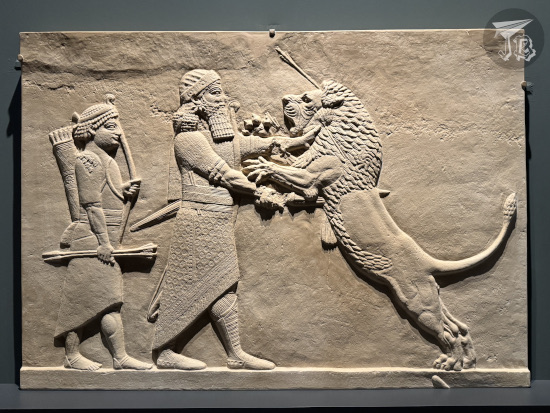
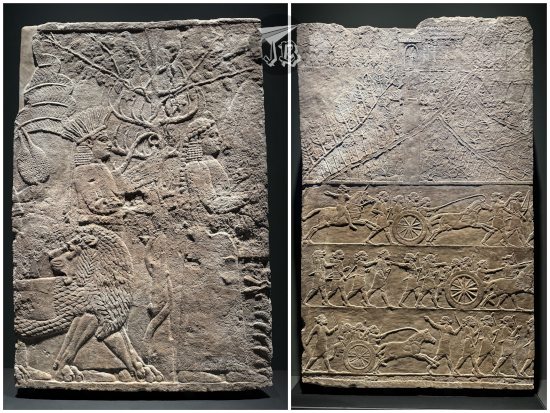
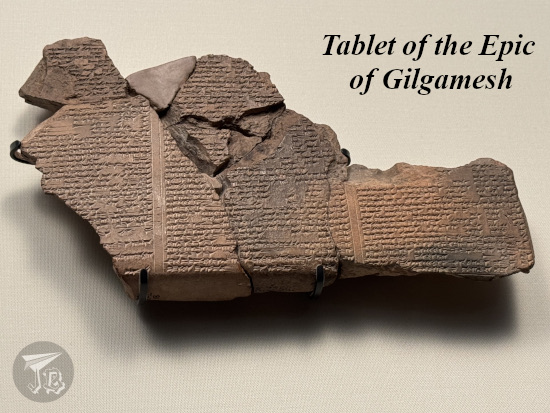
The exhibition is really cool and once again presents an ages-old debate. On the one hand, the British Museum is exhibiting artefacts that were obtained in a way that we consider unethical today. On the other, how much of the material on display would have been destroyed or sold for profit anyway during the IS and Daesh rampage between 2014 and 2017, had it remained on site?
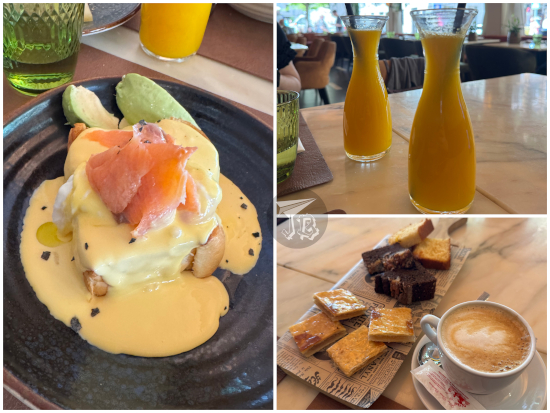
Since the weather was nice, we took a short walk from the gallery to the place where I had booked brunch. Not that I’m obsessed with brunches lately, but that timing worked perfectly for my friend. I had booked a Late Brunch at Café de la Ópera. We started off with a natural orange juice as my friend decided that we would have the coffee and sweets at the end.
The savoury treats included a basket of rye and seed bread with butter, jam and tomato sauce. Then we had a huge tray with a fruit skillet, Greek yoghurt (which was supposed to come with oats, but had some fruit instead), Iberian ham, roasted turkey (which was not roasted), semi-cured cheese with nuts (the cheese was advertised as Gouda though), veggie sticks to dip in reported blue-cheese sauce that was just cheese cream, smoked salmon, grilled avocado, and homemade ham croquettes – all that to share. For the main dish, I chose eggs Benedict with truffle. Finally, we got a selection of cakes with our coffee.
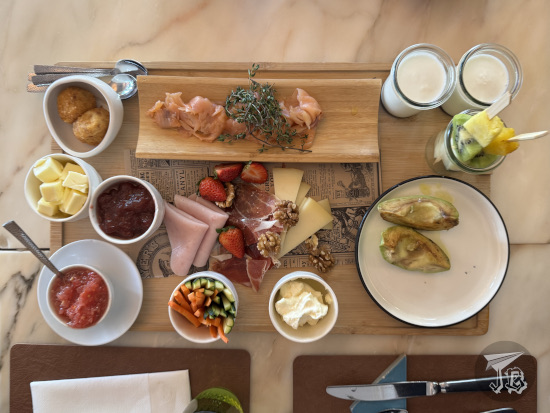
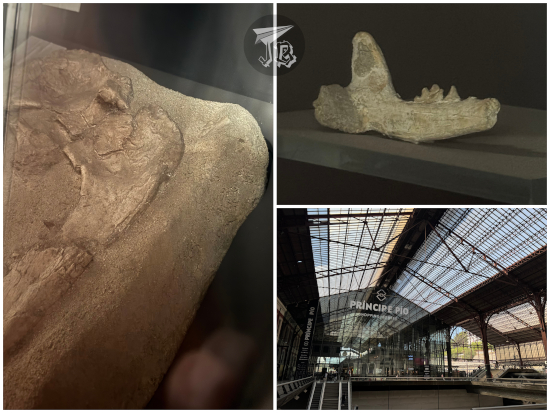
Afterwards, we walked towards Casa de Campo for a sit-down and chat, and later to the transport hub Príncipe Pío, because I had read they had made a palaeontological display. Unfortunately, someone had placed an orange juice machine dispenser in front of the two key pieces – the reproductions of a jaw of the rhinoceros Hispanotherium matritense and a jaw of the mustelid Magerictis imperialensis, and massage sofas in front of the illustration panels. Thus, the Yacimiento Paleontológico de Príncipe Pío was nothing extremely impressive to see.
My friend took the bus home there, and I made my connecting train by pure chance. The train was at the other platform when I arrived, I made a dash for it, and the doors started closing when I was a few steps away. The person running in front of me threw their purse in, blocked the doors, and I jumped in behind them.
I either need to run faster, or get a purse to block train doors…

