24th March 2026: Sort of a graduation trip (Madrid, Spain)

From September 2025 to February 2026, I took an online course in the long-distance-learning university, UNED. As it was financed by the European Union, it was free. The name of the program was “Digital Skills for Culture and Creation Professionals” – Competencias Digitales para Profesionales de la Cultura y la Creación and I chose the specialisation “Digital Creation of Cultural and Creative Content” – Creación digital de contenidos culturales y creativos.
I thought it would be nice to have a reference or even a benchmark for JBinnacle. The biggest downside was that they wouldn’t let you work at your own pace, despite the program being online. The tutors wanted a regular schedule and daily connections, especially during the second module. Whenever I spent several days offline, they messaged me demanding I went online. I repeatedly explained that I was taking the course in bursts, but during my November France and Monaco escapade, the tutor wrote every day. Even after I had handed in all the projects necessary to pass the module, I would get messages of “you haven’t been online for X days. Remember this course is free because [Sponsoring European Funds] is paying for it. Let me know if you have problems connecting” – I was offline for a whole week out of four months. I didn’t have issues, but apparently others did – especially those who had trusted the student licences for the software, which ran out a month too early. The forum was plagued with messages by people who were absolutely lost with how things worked – when they worked. Contents did not always do so and if a tutor sent you feedback in the platform, you couldn’t see it.

I chose to focus on social media for my third module and final project, in hopes of developing a strategy. While the tutor was knowledgeable, the general advice was “post often, and make quality content”, but I didn’t get info on how to achieve that. Despite liking technology, the mechanics of the course actually put me off working on the whole thing for a while. Nevertheless, I managed to pass all three modules, so I was invited to the closing ceremony or “graduation” in Madrid. And you know what? I decided to just go, even if it was a stupid decision. I would have to get out of work, drive to the train station and hope for decent connections, about two hours each way. No time to go home and change clothes, so I would have to work in formal(ish) clothes – which of course drew way too many comments.

The ceremony would happen in one of the UNED buildings in Ciudad Universitaria, the Education Building Facultad de Educación. The area is called the “University City” because bunch of faculties are homed there, alongside dorms and other facilities. It is not a convenient area for me to either drive or reach by public transport.

I was able to catch a train twenty minutes ahead of schedule, and my connections went smoothly, so I reached the area around 16:10, which was great. The ceremony was at 18:00 and we had to be there at 17:30. I had a snack, then started walking. Between 18 minutes by bus and 22 on foot, I prefer the latter if the weather is good. Furthermore, I could make a stop on my way.

The botanical garden Real Jardín Botánico Alfonso XIII belongs to one of the University bodies (Universidad Complutense de Madrid), and it’s thus only open during schooldays. It is not really convenient to get to, but since I was around, this was my chance to visit. King Alfonso XII came up with the idea of building Ciudad Universitaria in 1927, including the garden, nestled between the Science and the Pharmacological sciences buildings. It would not be until 1997 that engineer Fernando Gil-Albert created the space, which remained closed until 2001. Nowadays, it is free access.

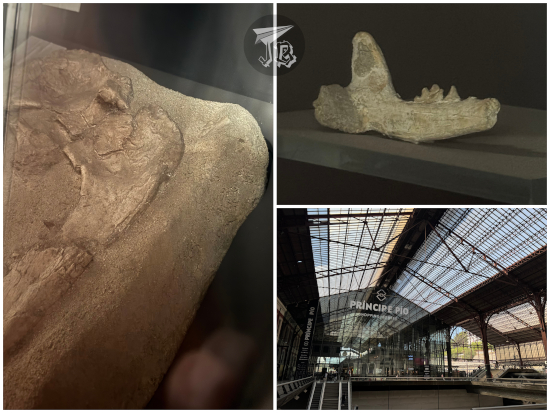
The garden has a central rotunda that aims to represent a geological calendar from the origin of earth to the current eras (trust me to find the fossil replica in a botanical garden), traversed by one large avenue, and surrounded by a circular path. There are around 1,000 plants, grouped in several collections around three particular “topics”: ethnobotany (plants that are important for people, mainly medicinal ones), gymnosperms (“naked seed plants”, mostly pines in this case), and Mediterranean flora.

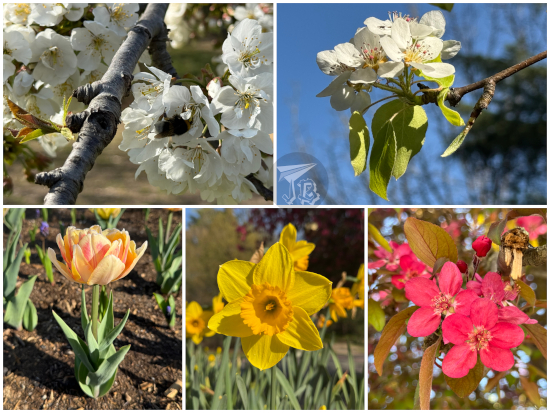
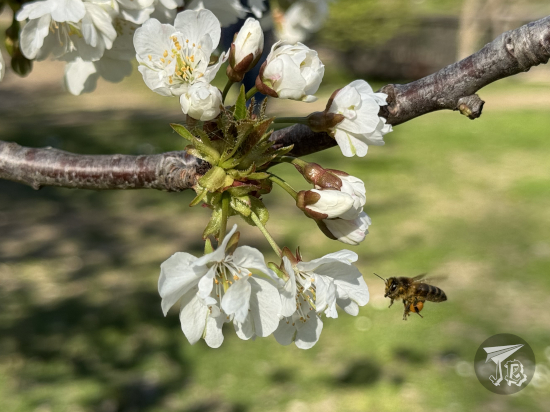
Flowering trees and plants, one of them with a bumblebee

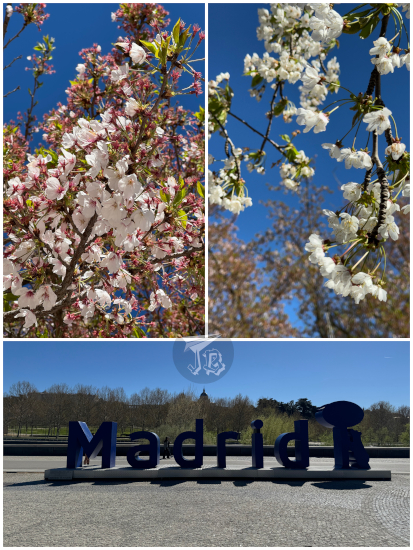
The end of winter had been really rainy, followed by some sudden warm days, so a lot of the flowering plants were in full bloom, which made for really pretty pictures. The collection of ornamental bulbous plants was in full display – especially the narcissuses and tulips. Several trees were doing their best too, such as the almond (Prunus amygdalus) and pear (Pyrus communis) trees, along with the Japanese flowering crabapple (Malus floribunda) – which I had never heard about before.

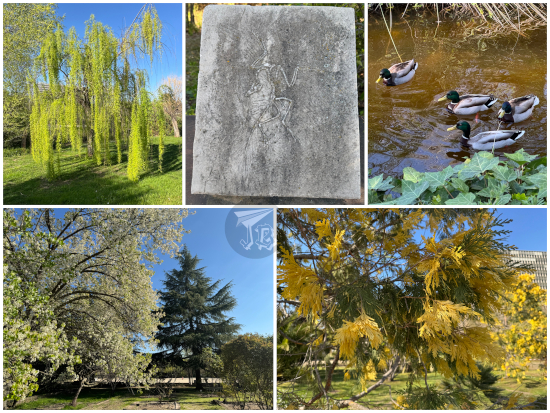
Collage showing non-flowering plants, a small flock of mallards and a reproduction of an archaeopteryx slab.

The pollinators were pretty chill, too, gorging themselves in nectar without being bothered by people taking pictures. I found more than a couple of bumblebees, and one particular very hard-working Spanish bee (Apis mellifera iberiensis) who did not mind me taking pictures one bit. She was more cooperative than the bunch of mallard drakes (Anas platyrhynchos) living in the pond, who would not stay still for the pictures – actually I managed to take a photo of one of them in flight… but my phone focused on the trees behind him.

A bee carrying a blob of nectar flying into a flower

I spent over an hour in the garden, exploring around, and then headed off towards the ceremony. I was there at 17:30 sharp, after a walk following the phone’s directions. Once there, however, I did notice that on my way back I could cut through the parks as there were walkable paths that the maps app did not consider.

Upon arrival, the security guard was unfriendly as hell, annoyed that we were there, apparently. Then, the organiser wanted to call people in one by one, and allowed “companions” to sit on the same rows as the attendees were assigned – which made it for very awkward walks to pick up the diplomas. The worst thing about it though was realising that even through the University network and with my student ID, I could not access the Science website. There were a few articles I wanted to get access to – I eventually figured out the method to do it.

The organisers had been very insistent on punctuality. However, we started late because it turned out that the representative from the Ministry who had to open the ceremony had gotten lost and gone to another building in a completely different district. We could not start without the guest of honour, I guess. After she arrived, we got the typical “pat ourselves on the back” from the her, and the university themselves.

Afterwards came a talk by special guest Ana Beltrán Porcar, an artist whose works centre mostly around the visual and performance arts. She explained her career and work process whilst she drew a hand and a blue bird, using a video presentation, which she timed so at the end, the hand-drawn bird became animated and flew away.

The bunch of people who had decided to attend the ceremony – as the course had been online, there were many who did not sign up, and even some of them who had did not get there – received their diplomas in a bit of a chaotic moment (why were they taking attendance if they were going to call people who had not come?). Then there was more self-back-patting by the course coordinators. Finally, we had a performance by Clara Olóndriz, an indie pop singer who won the 2025 “Best Message in a Pop Song” recognition in the Premios Latinos (Latin Awards, sort of like the Latin Grammys but organised by Spain and Latin America). She sang three songs – Corona de Rey (King’s Crown), Brindis Eterno (Eternal (glass) Toast) and Huracán (Hurricane). While she wouldn’t usually be my cup of tea, she sounded really cool, and her voice was incredibly clear. She seemed like a nice person, too.

Finally, there were official pictures, and I did not stay for the cocktail as there were a few trains to take. I left the university a bit after 19:00 and did not make it home till around 22:00, even if I was quite lucky with transport. There was junk food, and also a long shower before bed, because I had to work the following morning (who organises a graduation on a Tuesday anyway?). No rest for the wicked, but a diploma and some pretty photographs of a botanic garden in spring.

22nd March 2026: Father’s day in Madrid (Spain)

Spain celebrates father’s day on the 19th of March (Saint Joseph’s Day), but my parents were scheduled to be out of town. As a family, we’ve recently decided to try and repurpose Christmas presents into trips and smaller celebrations into experiences. My sibling had a look at different options and after weeding them out, we presented our father with a couple of ideas. When he decided to “leave it to us”, I suggested a closed-menu brunch with a singer, which felt different enough from the one we had done for my sibling’s birthday.

Thus, we booked a table at Gran Hotel Inglés (Grand English Hotel) for their Show brunch at 13:30, an hour after it had started. Not the time I would have chosen for a “brunch”, but I can’t get my family off the Spanish timetables. We took a train to Madrid and arrived with an hour’s time. It was early, but it gave us some wiggle space in case there were railway delays. I had proposed just showing up at the hotel, but the family did not agree, so we started wandering around. We ended up at the nougat artisan Casa Mira, a patisserie established in 1842, distinguished with the honour of being a “royal supplier”, meaning the Royal Palace used to buy from them. We ended up heading towards Gran Hotel Inglés around 13:10.

Established in 1886, Gran Hotel Inglés is considered the oldest hotel in Madrid. Other historical “firsts” include being the first hotel with its own restaurant, and one of the first buildings to use electric lights in the city. It was opened by businessman Agustín Ibarra, who by then already owned a famous café. His vision was offering high-class hospitality and lodging at European levels – a hotel with a restaurant might something normal today, but in the 19th century, Spain was considered an “exotic and slightly dangerous” country to travel to – meaning “uncivilised” in the Grand Tour mentality. Part of the marketing included every room having both cold and hot running water, phone and heating. Latest technology and comfort at the time!

The hotel became popular amongst intellectuals, both Spanish and international, from Valle-Inclán to Virgina Woolf. However, as many things did, its popularity faded away during the 20th century, what with the two World Wars and the Spanish Civil War and subsequent dictatorship making luxury… well, unaffordable. The hotel reopened in 2018 as a five-star member of the Hidden Hotel brand, a high-end hotel cartel that specialises in luxurious hotels in heritage buildings.

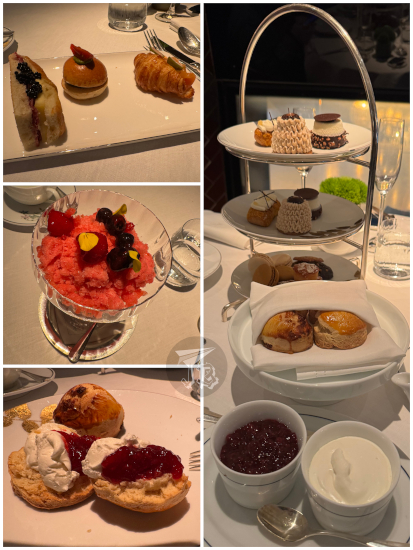
The café / restaurant area in the hotel is called LobbyTo, a pun between the word lobby and a reference to lobo, Spanish for wolf, because the street it stands on used to be called that. Even if we were a bit early, the table was ready for us. The “show” had already started – a lone male singer with a boom box of sorts, singing classics in a sultry voice, from Disney to Oasis. He managed okay in Spanish, but his English was lacking. He did have the voice to sing almost non-stop for three hours though.

The first impression I got when I walked into the area was a definite “whoops”. The table next to us had a small dog with them – my family is not too keen on pet the pet-friendly fad. I did my best to block view of the animal – fortunately, although spoilt as hell (at one point it ended on its master’s lap, cuddled in a napkin), it remained quiet and did not bother us. For a second, I thought that we would turn around and leave. Fortunately, my father did not notice, and we manoeuvred so he was sitting the farthest away from the critter.

The menu was pretty much closed, with just a couple of choices to make. It started with a juice – since I had studied the menu in advance, I knew I wanted the Antioxidante drink, made with lots of things ending in “berry”. Not that much of a strong flavour, but nice nonetheless.

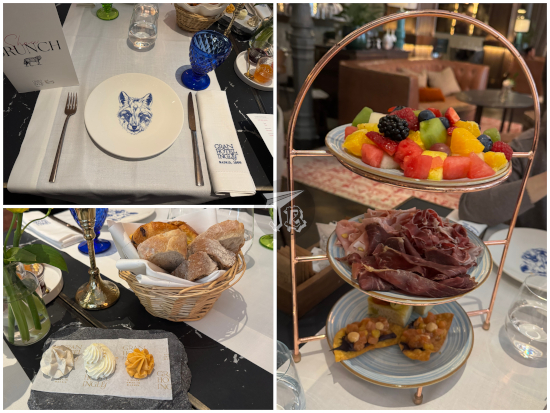
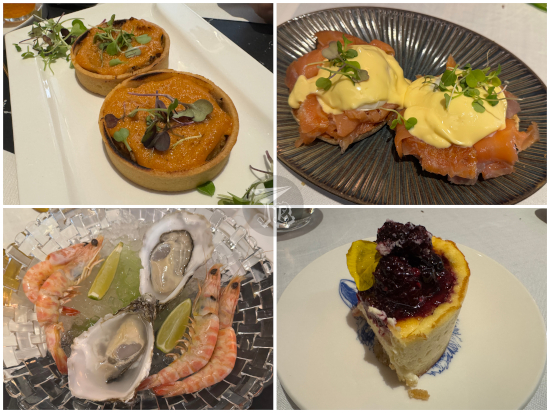
The first dish was already waiting for us at the table when we arrived – Assortment of bread & pastries accompanied with grated tomato, homemade jams and butters (Surtido de pan & bollería, acompañado con tomate rallado, mermeladas y mantequillas caseras). There was actual bread, pastries, a croissant or two, way too little tomato, bitter orange marmalade, strawberry jam and three types of butter with slightly different colours and textures. Then came the tray tower – two towers for four people with the first set of appetisers. The lowest plate contained the seafood snacks: Salmon and Mango Tartar Taco (Taco de tartar de salmón y mango) and Tomato focaccia with homemade pesto and smoked sardine (Focaccia de tomate con pesto casero y sardina ahumada). Before we had even had the time to start on that, an independent plate with the warm Spider crab Tartlet with king prawn velouté (Tartaleta de txangurro y velouté de carabineros) was brought.

Back to the trays, the middle was a Selection of national cured meats and cheeses: Iberian ham, Italian mortadella and a Spanish smoked cured beef named cecina (Selection of national cured meats and cheeses), which unfortunately lacked any cheese. The upper serving was a Seasonal fruit bowl (Bowl de fruta de temporada), which included grapes, strawberries, blueberries, blackberries, and chunks of watermelon, pineapple, orange and kiwi.

But, this was not the end! Next came another plate of seafood, with a Gillardeau Oyster No. 5 (Ostra Gillardeau Nº 5) and two striped prawns (Langostinos tigre). Gillardeau oysters are supposed to be amongst the best in the world. They are farmed by the Gillardeau family under the commercial name of Maison Gillardeau in Ireland, Normandy (France), and Portugal. The company was founded in 1898 and it has cultivated Pacific oysters (Crassostrea gigas) since then, with an extremely curated process that involves moving the oysters through different farming areas in different stages of their lives in order to improve meatiness and flavour. Number 5 identifies a small oyster (the smallest commercial size), between 30 and 45 grammes. It honestly did not feel small… I just wish I had hidden away a shell to see if it had really been engraved with a laser G, which is something the company claims to do to avoid counterfeiting. I might have accidentally stolen the menu though, I thought it was going to be a disposable one…

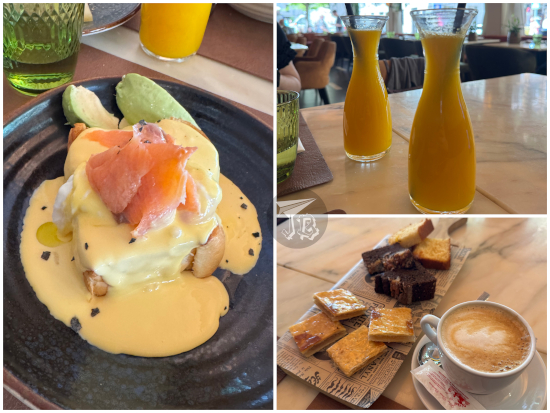
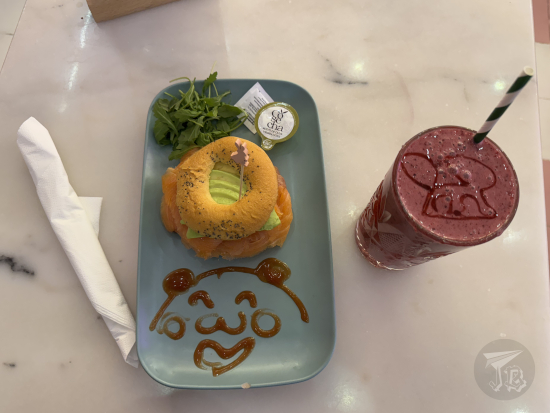
All this was the set part. There was still a main to choose, and dessert. For my main, I had ordered Eggs Benedict on English muffin with smoked salmon (Huevos Benedictinos sobre English muffin con salmón ahumado), because it is not brunch if you don’t have Eggs Benedict, or at least some kind of poached egg. There was a lot of salmon on them! So much fish made it a little tricky to let the muffin soak on the egg yolk, but they were really nice, I’m not going to complain!

Finally, we could go to the dessert display carrito de postres, a side stand full of confectioneries, to choose a sweet treat. I went with cheese cake, and a decaf latte on the side, to wash it down.

Food as described in the text - tray tower with fruit, sausages and fish snacks, bread and butter

Food as described in the text - crab tartelet, prawns, oysters, eggs Benedtict, cheesecake

All in all, it was a good experience. I do think the wait staff was not as ready as they should be – a bit on the clumsy side. The entertainer was not top-notch either. He did not do badly though, and held his ground for three hours. He was far away enough so we could have a conversation along his singing, but he did not really add to the atmosphere much, except for him dedicating Happy Birthday to someone in another table.

It did draw my attention how pet-friendly the lobby was, with as many as four or five dogs inside at the same time. I might have to come back for afternoon tea at some point, as Gran Hotel Inglés has been in my radar for a while – however, the machine translation of the website had put me off…

After we had settled the bill, we had a nice walk towards the station to take the train back.

7th March 2026: Minerals, ukiyo-e and paella (Madrid, Spain)

It might very well be that Madrid’s Expominerales is my favourite drop-in convention – free, easy-to-reach, and full of (literal) shiny stuff, most of which I can’t afford anyway, but I can gape at. For the 2026 edition, I informed my parents I was coming, and they decided to tag along. Ideas for the day included Expominerales and a Japanese wood-prints exhibition. One of my parents decided to add lunch to the mix, and we had a complete plan drawn up. From my previous trainless Expogema experience, I knew that the right time to leave the ETSIME is noon, so we planned to be there around 10:30, since that put us on the most convenient train.

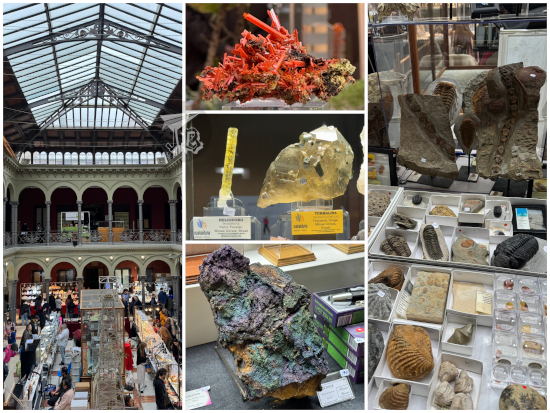
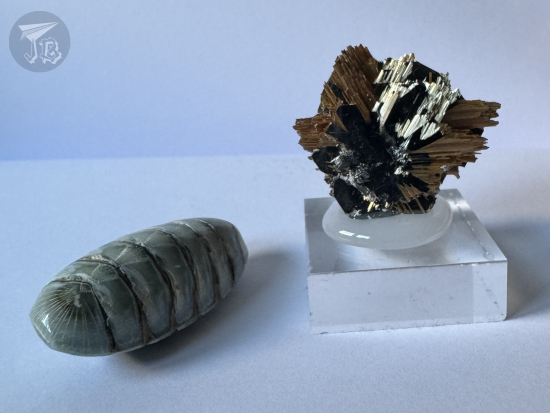
Expominerales is held once a year, usually on the second weekend of March, in the Mining and Engineering School Escuela Técnica Superior de Ingenieros de Minas y Energía (ETSIME). The main event is a literal rock fair – vendors from all over the world (but mostly Madrid) head there to sell their items at the cloister of the university: minerals, fossils, gems, meteorites, or items related to geology, such as magnifying glasses. Sometimes there are conferences or extra activities, and it is always a great moment to visit the little mining and mineral museum Museo Histórico-Minero Don Felipe de Borbón y Grecia. I’ve come to recognise a few of the vendors by now, there is a lady who always has very random shiny things, one who sets a large stand of marine fossils, and a seller who will talk your ear off just because you say hi. One I did not know had brought some rutile (titanium dioxide, TiO2) from Brazil. This mineral is a titanium ore and it is used as a bright white pigment, and also as an ingredient of sun lotion, as it absorbs UV light. I however was just taken by how pretty it looked – and got myself a piece.

Collage showing expominerales and close-ups of a few displays

Something else I got is a “fossilised” chiton – I’m not completely sure whether it is an actual fossil and not just a cleaned out shell, it’s very light. Chitons are marine molluscs belonging to the class Polyplacophora. There are around 900 extant and 400 fossil species, all native to salt water, usually intertidal and sub-tidal areas. Chitons have one articulated dorsal shell with eight valves, usually composed of aragonite. Early Polyplacophora appeared in the Late Cambrian or Early Ordovician (around 487 million years ago), maybe stemming from a mutated limpet. Their current form evolved during the Paleozoic, having changed little since the Mesozoic (252 – 66 million years ago). Most are herbivorous grazers, scraping algae from the rocks they live on. They can glue themselves to surfaces, or roll into a protective ball if needed.

Fossil and rutile mineral

Of course, we all know that what I really wanted was a huge megalodon teeth that cost as much as I make in three months, but that I did not fall for it. After an hour or so, we headed out towards the underground towards the Real Academia de Bellas Artes de San Fernando, one of the most important cultural institutions in Spain – the Royal Academy of Fine Arts.

The Academia was founded by Felipe V in 1752, right in the middle of the Absolutist period. It was conceived as a “trustee of knowledge and transmitter of the artistic tastes”, to mirror the Paris Academy for the Arts. It became a vehicle to promote Neoclassicism, the “correct” ways to create art (instead of Baroque, which had fallen out of grace), the teaching of the artistic protections and the research on the distant past – including Roman history, such as Pompeii, as at that time Naples was part of the kingdom of Spain. Today, it aims to “promote artistic creativity alongside the study, spreading and protection of cultural heritage, especially painting, sculpting, architecture, music” and whatever is meant by “the new imaging arts”. To be honest, I am not too sure what they do nowadays besides organising exhibits, concerts and conferences. It was running the exhibition “Beauties of the floating world – Bijin-ga in the golden age of ukiyo-e” Bellezas del Mundo Flotante. Bijin-ga en la edad de oro del ukiyo-e.

While the Museum of Zaragoza (Saragossa) is closed down, a lot of its collections are travelling or on loan. One of the strengths of that museum is its Asian Arts collections, part of which is the personal property known as Colección Pasamar Onila (formerly Colección Víctor Pasamar Gracia).

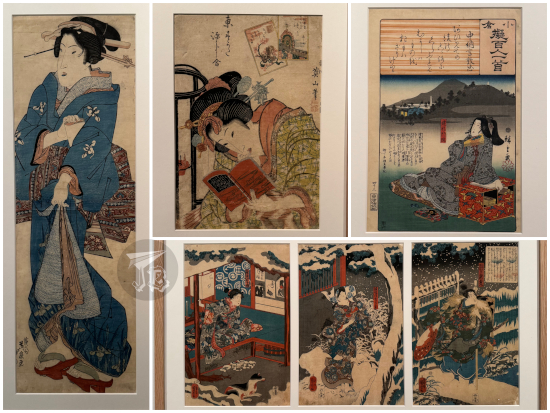
The collection comprises almost 300 pieces of Japanese woodblock printing [木版画, mokuhanga], specialised in the bijin-ga [美人画] topic within the ukiyo-e [浮世絵] genre. Ukiyo-e – images of the floating world – flourished between the 17th and 19th centuries. They were produced en masse, stamping rice paper with successive ink-coated wood blocks that created the final picture. The images represented landscapes, travel scenes, mythology, the passing of the seasons, and famous people – including kabuki actors, sumo wrestlers, members of the nobility, and courtesans. The term bijin-ga [美人画], literally means “images of beautiful people”, mainly beautiful women (美 is a gender-charged kanji, kind of more similar to pretty).

The exhibition organised by the Academia hosts 77 prints that span the whole history of ukiyo-e. Most of them depict beautiful women with different focuses – noblewomen, courtesans, ladies at home, and snippets from the Tale of Genji (one of the classical works in Japanese literature). One of the important details about the collection is that a lot of the prints were originally published by female artists, making it unique in Europe.

My favourite piece of the exhibition was a print from 1823 (Edo Period) by Kikugawa Eizan [菊川英山筆] Momiji no ga [紅葉賀] (“Atumn leaves”, one of the chapters in the Tale of Genji) from the series Azuma sugata Genji awase [東姿源氏合] Eastern Figures Matched with the Tale of Genji, which just shows a woman reading the book looking absolutely absorbed in the story. However, a lot of the prints were extremely impressive, especially considering how rare it is to see so many together, spanning all the ukiyo-e golden age. It does make me wonder the need to announce that the exhibition “contains explicit images” as there are… a whole two erotica wood-prints.

Japanese blockprints depicting ladies doing different activities in traditional clothes

The exhibition is located next to the Goya collection Gabinete Francisco de Goya. Francisco de Goya was one Spain’s most important painters, and he also did several collections of prints in aquatint and etching. The plates that he originally engraved are preserved in the Academia. Unfortunately, these happened in his era of being disappointed by any and everything, so they are gory at best, disgusting at worst – they show humanity at its lowest, to the point that the witchcrafts motifs might be the less disturbing ones.

Afterwards, we crossed over towards Galerías Canalejas, which now features a not-so-small art gallery selling contemporary art. There were no prices, but nothing I would feel drawn to… except some… doughnut-like art with people presented as ants… which was weird, but colourful. Hey, it was cold and rainy, so it was just a pastime out of the winter weather.

We headed to La Casa Gallega for lunch. This is a place that my parent likes, which is always tricky due to family dynamics. In the end, I got away with a dish I wanted, empanada gallega (tuna pie). We also ordered some smoked cod carpaccio carpaccio de bacalao ahumado and one of the Spanish rices they prepare paella marinera, with seafood (prawns, mussels, squid and clams). It was really good, and I enjoyed it much better than the steakhouse we tried in January.

Paella - large pan with cooked rice with mussels and prawns

Finally, we headed back towards the railway system and headed home. Or nap on the train while digesting the rice.

8th February 2025: La Cúpula – “Opera & Brunch”, Hotel Palace (Madrid, Spain)

When I have a “big oh” birthday, I go climb a volcano, when my sibling does, we go for high-end brunch. Not that I am going to complain, at all – I get to tag along. The day, however, could have started better. We left 30 minutes behind schedule, then we ran into a traffic jam in the highway and finally, when we reached Madrid, we could not access the parking lot we had planned because not all the street closures had been published on the town hall’s website. We managed to find a different place to drop off the car, fortunately, but none of us was really wearing walking shoes…

Everything got better when we reached The Palace Hotel, officially The Palace, a Luxury Collection Hotel, Madrid, colloquially El Palace. This five-star hotel was established in 1912. It is both a Spanish Cultural Asset (BIC) and part of the Unesco Heritage Site Paseo del Prado and Buen Retiro, a landscape of Arts and Sciences. The Palace is recognised as the first luxury hotel built in Spain, erected as an early 20th response to the new ways of travelling and King Alfonso XIII’s efforts to modernise Spain, which had previously been considered an “exotic and a bit dangerous” country to travel. The building was designed by architect Leon Eduard Ferrés i Puig in the Beaux-Arts style, one of the multiple “neo” fads from the 19th century, drawing from French Neoclassicism, Renaissance and Baroque whilst at the same time using new building materials – reinforced concrete, iron, steel and glass (another grand example of this style is the Casino in Monte-Carlo).

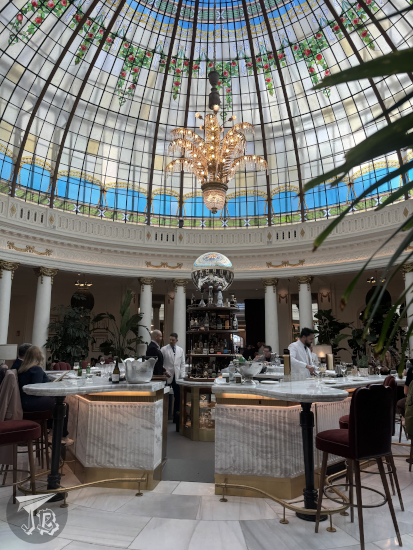
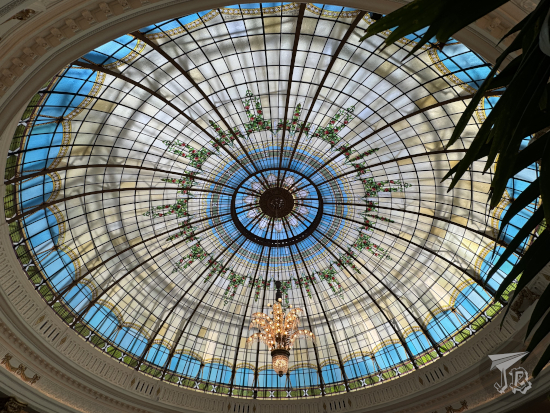
Historically, The Palace Hotel has hosted national and international names of renown – Spanish artists such as Picasso, Dalí and Lorca, composers like Igor Stravinsky and Richard Strauss, scientist Marie Curie, and showbiz personalities including Josephine Baker, Rita Hayworth and Ava Gardner. Today, El Palace is part of one of the Marriott brands, and after an integral renovation between 2023 and 2025, it comprises 470 rooms and 51 suites across 6,000 square metres on six floors. It is also home to several gastronomic spots: a high-end Chinese restaurant (China Taste by El Bund), a cocktail bar (27 Club) and a flexible restaurant and bar – La Cúpula, so called because it sits in a rotunda underneath the iconic stained glass dome (cúpula in Spanish) and skylight that has become the “heart of the hotel”.

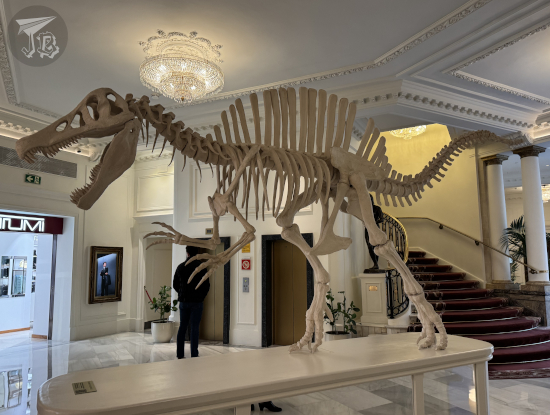
There are also several works of art scattered around the hotel, and just past the lobby, I almost walked into one I was not expecting at all – “The Palace Dino”, El Dino del Palace, a sculpture by Lázaro Rosa-Violán depicting… a spinosaurid dinosaur. The piece is a scaled-down marble skeleton of an outdated interpretation of Spinosaurus aegyptiacus (Cretaceous period) with a thick tail and a bony crest. I say “outdated” because Spinosaurus was discovered in the early 1910s and for a while, it was described as bipedal theropod. Two skeletons were recovered in Egypt but kept in Nazi Germany and destroyed during WWI, so nobody could study them further. Later, in the 21st century, a proposed neotype was unearthed, this time in Morocco. Subsequent discoveries hinted that the animal was actually both quadrupedal and semi aquatic. In 2005, a Spanish spinosaurid was discovered in La Rioja area and named Riojavenatrix lacustris (Lake huntress from La Rioja) – I may have worked on a fossilised piece of bone of this animal in Loarre. I was really surprised to find any dinosaur connection in such a place, but I have exactly zero problems with it.

simplified skeleton of a dinosaur with a sort-of-sail

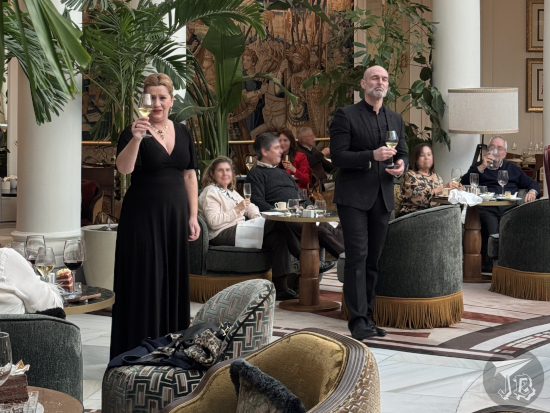
Dinosaur hype aside, every Sunday afternoon between 13:30 and 16:30, La Cúpula offers an event called Opera & brunch, with a self-service buffet and professional opera singers popping up to delight the attendees with several arias by famous maestros. The crowd was extremely diverse – from middle-aged couples to families with children to solo-diners. When I grow up, I want to be like the lady sitting on her own at the next table, whom both waiters and singers stopped to greet and welcome.

Bar in the centre of a rotunda, covered by a skylight

For now, however, I don’t think I can afford the price tag, which might be steep for some pockets – but as I said, milestone birthday. We had chosen the Deluxe Opera & Brunch, which is 125 € per person. There is a more expensive option which includes a lot more alcohol. Despite its given name, the affair is not really a brunch, but a full-blown lunch.

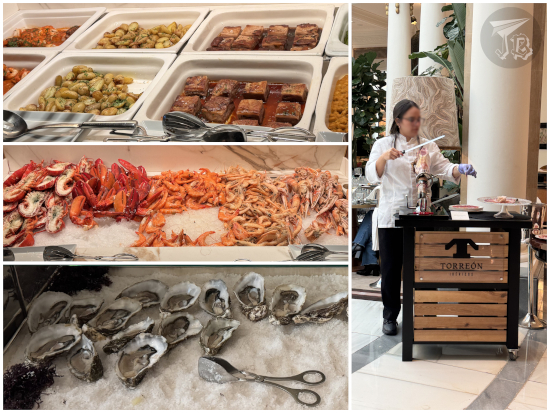
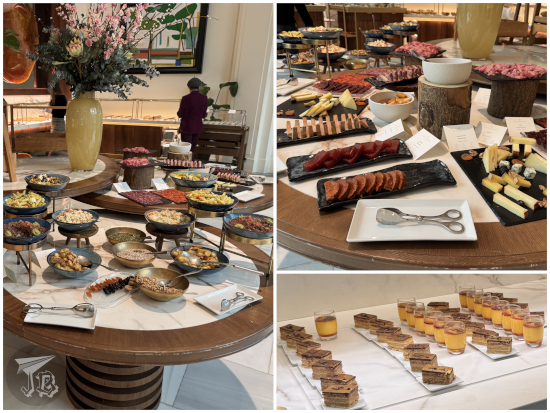
Waiters serve sparkling wine (cava) and water, and they focus more on the wine than the water, which is slightly inconvenient for a non-alcohol-drinker like myself. Food is organised in a buffet-corner, divided in three spaces. The first one is the “self-service area”: artisan cheeses, Iberian sausages – including a hand-cut ham leg (100% acorn-fed Iberian breed) – baked goods, seafood and raw bar, with lobster and oysters, salad bar and a “hot buffet” with roasted suckling pig and side dishes of potatoes, peppers and chickpeas. In another area stood the live cooking stations, manned by people serving the food: roasted sea bass, beef Wellington and a rice station (paella); an egg station was advertised, but it was not there – hence not a brunch: no option of eggs Benedict. Finally, there was a desserts table with mini cakes, pies, tartelettes, verrines, chocolates, and macarons. I learnt the names of so many desserts that day…

Lady cutting a cured pork leg, and several stations of a buffet, including cooked meat, seafood and oysters

Cold meats and cheese, salad, and dessert stations in a buffet

The music program included a pianist, a soprano and a tenor, and we had a little sheet of paper with the setlist:
 Non ti scordar di me (Don’t forget me) by Ernesto de Curtis (1935).
 Ebben? Ne andrò lontana (Well, then? I’ll go far away) from La Wally by Alfredo Catalani (1892).
 Musica Proibita (Forbidden Music) by Stanislao Gastaldon (1881).
 Io son l’umile ancella (I am the humble servant of the creative spirit) from Adriana Lecouvreur by Francesco Cilea (1902).
 Eri tu (It’s you) from Un ballo in maschera by Giuseppe Verdi (1859).
 Il bacio (The Kiss) by Luigi Arditi (1860).
 Mattinata (Morning) by Ruggero Leoncavallo (1904).
 Die lustige Witwe Waltz (Waltz of the Merry Widow) by Franz Lehár (1861).
 Amapola (Poppy) by Joseph Lacalle (1920).
 O sole mio (Oh my sunshine) by Eduardo Di Capua (1989).
 Granada by Agustín Lara (1932).
 Nessun dorma (Let no one sleep) from Turandot by Giacomo Puccini (1926).
 Brindisi (Toast or Driking Song) from La Traviata by Giuseppe Verdi (1853).

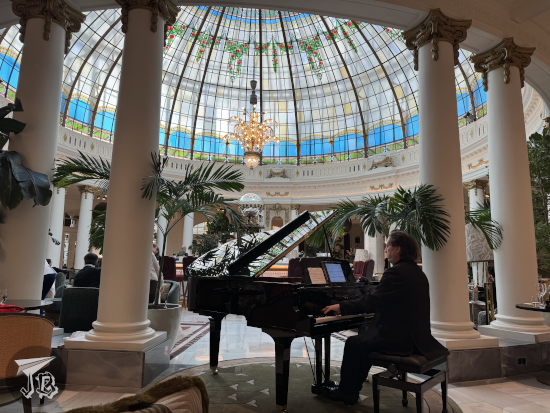
Man playing a grand piano

Tenor and soprano singing The Toast from La Traviatta. The soprano is saluting the camera with her glass

The singers and the pianist were excellent. The only complaint I could have is that we were seated right behind the piano, and the artists were on the other side, so their voices did not carry that well, but once the soprano came to sing to us and that was great. I moved at some point so I could hear them better, too (and take pictures). The food was abundant and quite good – I even tried an oyster for the first time. Truth be told, I would have liked to taste a bit of each dish – everything looked delicious – but there was just too much! The sitting and bar area looked beautiful, and there was even a bit of a Chinese New Year decoration (since China Taste is doing a special menu to celebrate). I particularly loved the skylight dome above the bar.

Skylight with a hanging lamp

It was a great event that we could have complemented with something else nearby – the Naval Museum, or the Palace of Cibeles. However, my parents had been so stressed by the drive that they did not want to stay over. Besides, we had eaten a lot. The most reasonable course of events was heading home for a food coma, after deciding that maybe – just maybe – Sunday mornings were not the best to drive around Madrid.

31st January 2026: Mistakes were made around the Tercios (Madrid, Spain)

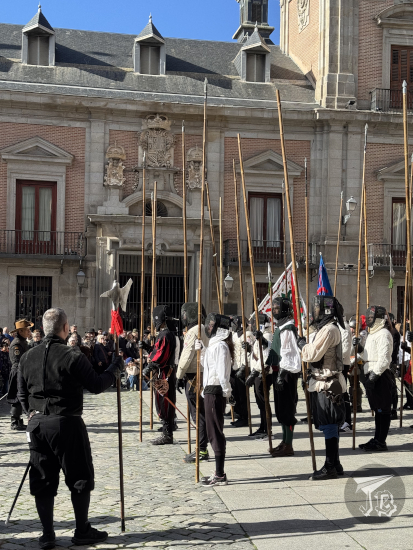
A local cultural association organised a day trip to Madrid on the 31st of January to witness the historical re-enactment Día de Los Tercios (Tercios Day). Tercios (thirds) were the Spanish Empire’s infantry force, usually considered to be the origin of modern European armies. They were formed by volunteers-turned-professional soldiers, the elite of the Spanish military.

Despite their 1534 establishment as an actual unit, the strategies and structure of the Tercios can be traced to the 1480s, when the Christians were trying to conquer Grenada from the Arabs. They were known for effectively mixing bladed weapons, usually pikes, and firearms (primitive rifles known as arquebuses). They had a very characteristic hierarchy system in which old soldiers trained newcomers. They had rankings amongst themselves, medical staff, chaplains, even their own justice system. Their most recognisable symbol was the Cross of Burgundy on different backgrounds.

Tercios battled all across Europe with the expansion of the Habsburg house. They fought in Italy, and most famously in the Belgian region of Flanders – there are several monuments in Antwerp hailing the locals who opposed them. Velázquez painted the most famous work of art around the Tercios, La Rendición de Breda – the “Surrender of Breda”, an Italian city conquered in 1625. As world and war changed, their battlefield tactics became obsolete in the 18th century, and they eventually dissolved away, transformed into regiments, as the figure of the pikeman was dropped.

The name Tercios survives in naming the Spanish Navy and Legion units. The historical recreation association 31 Enero Tercios appeared (as far as I have been able to find) around 2020, formed by history professional and amateurs who wanted to remember the Tercios units, organising re-enactments and activities all around the country. Their website is a bit chaotic, and might be slightly problematic with its language at points, but most people just seem to enjoy dressing up, playing with fake weapons, and going home to their phones after they wrap up.

One of the goals of the association is to establish the 31st of January as Tercios Day Día de los Tercios, organising activities and re-enactments throughout the country. It sounded interesting enough so we thought we would sign up the aforementioned day trip… only for it to be cancelled a couple of days later due to general lack of participation. Since there was no forecast of rain or snow, but sun for a change, we thought we could drop by on our own.

There were two main stages for the activities in Madrid: one was Plaza de la Villa (site of the historical town hall), the other Main Square Plaza Mayor. We walked through the latter on our way to the former, and there was absolutely no indication of anything going on. When we arrived at the Plaza de la Villa, they were still setting up camp (literally), so we went to have breakfast somewhere in order to be out of the cold. We had decided to join the “theatre visit” at 11:00, which was difficult as inscriptions were chaotic.

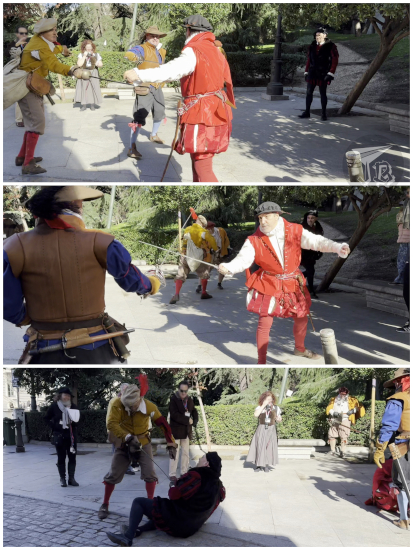
I’m not a guided-visit person, but this was… bad. My parent, who actually likes them, concurs. The “theatre” part came from three people tagging along in period dresses and a two-minute “assassination” in the end, after walking through a number of alleyways and stopping in the most awkward and windy points to see… unrelated buildings. I was completely unable to follow the theoretical plot line of the visit and how it… was any kind of plot, really. I’m still even unclear on who or why was assassinated and their relation to the Tercios.

Sequence of a "theatre play" showing the assassination of some Medieval character, complete with swordplay

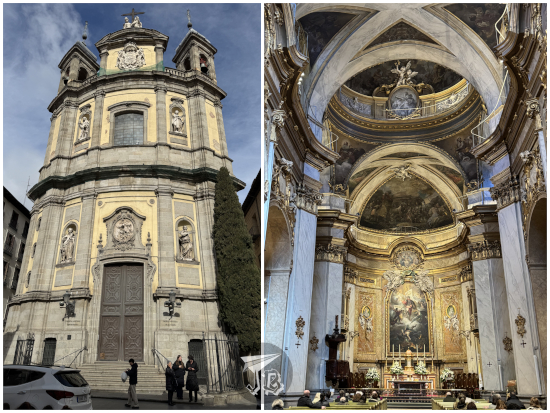
The visit ended near the Army cathedral Iglesia Catedral de las Fuerzas Armadas, so I asked my parents if they minded stopping by St Michael’s church Iglesia de San Miguel, which had been closed the previous time I had been around. We were able to snoop inside, but just a little, as they were holding mass.

Neoclassical church

We then headed back towards the Plaza de la Villa, where there was a demonstration of how the pikers would train. This is the kind of thing I like to watch, but my parents don’t, especially in the cold. After a few minutes, they wanted to move on. By the time we reached the Plaza Mayor, the event there had finished and I only managed to get a photo of the ensemble.

Re-enactment of pikers formed at attention

We then headed off to a high-end traditional grill Asador de Aranda that my parent wanted to try. I can’t say I’d recommend the place, as they broke my heart. First, the menu promised baked potatoes and the waiter brought microwaved ones. As we were sitting near the actual wood oven, I had really hoped for oven-baked potatoes. The meat was all right, maybe a bit overcooked, and finally the advertised “five-star pudding” was not-at-all stellar. In general, it felt overhyped and overpriced.

After lunch, I debated whether to stay in Madrid or head back with my parents, but the next event on the Día de los Tercios schedule was a parade at 20:00… too long to wait in the cold. Hence, I decided to just make a note in my calendar for 2027, and quietly slip out to see all the re-enactments on my own. Knowing in advance that this event exists, I can keep an eye on it and plan for down time between the different activities.

27th January 2026: The calm in-between the storms (Madrid, Spain)

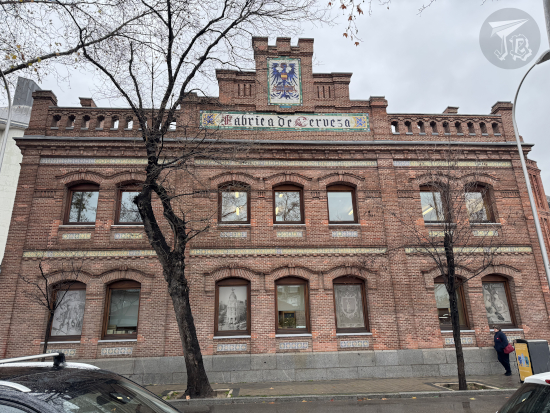
I had arranged to meet my sibling in Madrid for a late lunch when they got off work. Before that, I had a free morning that I could invest in checking out an interesting-sounding exhibition, and as it seemed that the weather was going to give us a small reprieve, I headed out on the train. Upon reaching town, I stepped out of the station and walked towards a former brewery, now turned cultural centre – Complejo Cultural El Águila.

The original brewery was established around 1900 under the commercial name “El Águila” (The Eagle), aiming to become one of the first large-scale beer producers Spain. The location was chosen due to the nearby Delicias station – then an important transportation hub, and the high quality of the water in Madrid – as apparently water is the key ingredient in the making of beer, even more important than the malt. The building was designed by Eugenio Jiménez Corera, in the Neomudejar style. It was expanded between 1915 and 1935 as El Águila managed to take over a quarter of the beer market during the 20th century. In the mid 1980s, production was moved to more modern facilities, when the brand was overtaken by Heineken. At the turn of the century, the factory buildings were repurposed into the Regional Archive, a library, and an exhibition hall.

Old brewery built in brick with an eagle mosaic as logo

It was raining when I walked in, and the security guard came towards me, looking annoyed. I said I was there for the toys exhibition and he directed me to the – very visible – signage. I thanked him even though I had seen the information. He came at me. I would have found my way on my own.

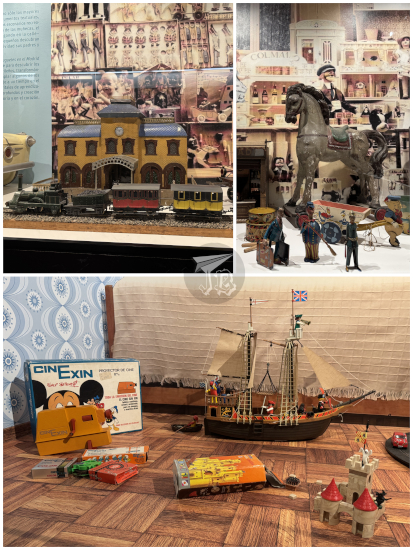
The exhibition ¡Me lo pido! Juguetes en el Madrid de nuestra infancia (I’ll ask for it for myself! Toys in our childhood’s Madrid) is a collection of classic toys, from the beginning of the 20th century to the late 1980s or early 1990s. While during the years after the Civil War toys were an absolute luxury, the 1960s saw Spanish urban society thrive. It became common amongst children to write their letters to the Three Wise Men (or the Three Magi, in Spanish the Wizard-Kings, Reyes Magos) with their gift requests – no Father Christmas then. Kids would also voice (still do) those wishes out loud using the expression ¡Me lo pido!. It’s difficult to translate it, but maybe it could be “I’ll ask for it for myself”. The “myself” is actually key, because it sets some sort of “claim” over the item somehow. It is a sort of spell that seems to ban all the other kids in the friends group from wanting it, or something. I guess that makes sense if you are five…

The Magi are actually figures in the Bible who present offerings to Infant Jesus in Jerusalem. In the Spanish folklore, each has a distinct personality and appearance – they are called Melchor, Gaspar and Baltazar. Melchor is usually characterised as Northern European with a long white beard, bringing gold to Jesus as King – he sort of resembles Santa Claus. Gaspar is supposed to be Persian and sports a gold-brown beard, he presents Baby Jesus with frankincense, symbolising his Godhood. Finally, Baltazar, the dark-skinned Magus, brings myrrh to the mortal man. For a decades, before the black population in Spain grew after the dictatorship, it was an honour for men to paint their faces black in order to portray Baltazar, who is the most popular of the Magi! Nowadays, Baltazar is usually portrayed by an actual black man.

All the items in I’ll ask for it for myself! Toys in our childhood’s Madrid belong to the private collection Colección Quiroga-Montes. They range from extremely high-end, such as the doll Mariquita Pérez and metal reproductions of vehicles, to the more popular like marbles or spinning tops. In the middle, the most famous toys throughout the century – the Meccano, Nancy, Disney stuff – and my absolute favourite, the Lego before Lego, Exin Castillos (which I still use to build castles when I am stressed out). There were also photographs, some chronicling the children outside their houses – staring at toy shop windows – some intimate, after the Magi had done their yearly job.

The whole thing was endearing and I loved every bit, especially the toys dating from my childhood. It was extremely interesting to see how toys changed from metal and wood to plastic all around. However, it was also a bit unsettling to see the rigid divide between “girl presents” and “boy presents” for so long, even more than “inside presents” and “outdoors presents” any more.

Old toys - tin train station and horse, a plastic castle and a plastic pirate ship

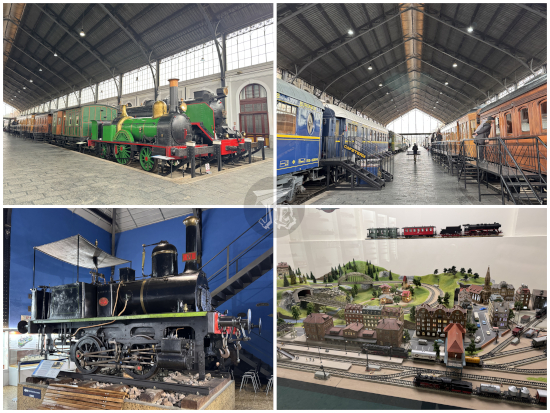
When I finished, I walked outside again. It had been raining hard while I was inside, but now it was cloudy but dry. I mentioned before that the brewery was near Delicias station. Today, the original station is no longer in service, but it has become the railway museum Museo del Ferrocarril, a project that was created to salvage the building. Madrid-Delicias was the first monumental station built in the city. It was however short-lived: inaugurated in 1880, it closed down less than a century later, in 1969. There is a widely-believed rumour that it was designed by Gustave Eiffel, but it was actually Émile Cachelièvre who drew the blueprints. The building was erected in iron, glass, and red and black bricks, maybe trying to echo some Neomudejar touches. During its prime, it was the terminus of trains that went to the west, including Lisbon, Portugal.

In 1984, Delicias became the Railway Museum, and it hosts a number of artefacts including whole tractors – steam, diesel and electrical – and cars, along with smaller rooms dedicated to specific pieces. The main ward, which would have made up the platforms, is occupied by real trains that have long gone out of service. The side rooms host smaller collections, either historical or thematic – such as the clock room, the infrastructure room or the model room. On the upper floors, the largest train model in the country is kept running when there are visitors to snoop around. There were many things to see that were closed off when I was in the museum for the flea market Mercado de Motores (despite no running mini-trains).

Collage of the train museum, showing old trains and models

I had planned to stay for longer, but it was cold – the gates were open and the wind came through, so in the end, I decided to go wait for my sibling at their underground stop, which would be much warmer. I was lucky enough that I skipped the two downpours of the day though, as I was inside when the heavy rain came – twice.

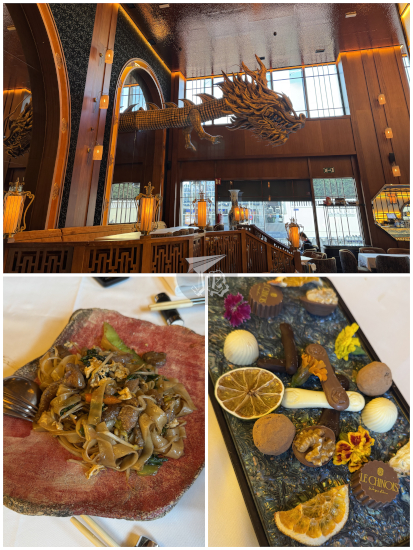
Once my sibling was done with work, we rode the underground towards Le Chinois. This high-end Chinese restaurant advertises itself with a different name in Chinese [梦香楼 | Mengxianglou]. It claims, in Spanish, to offer a mystic experience that transports patrons to Ancient China. In Chinese, it asserts to seek authenticity before beauty in food, using the best ingredients. Either text sounds a bit pretentious, honestly, quite on par with the decoration. Everything is wooden and there is an actual dragon model running above the dining area.

We ordered a few dishes to share. We started with some dim sum – an assortment of small one-bite dishes, aptly called “Dim Sum Assortment” [点心拼盘]: Sum Siu Mai (猪烧卖; steamed, handmade dumplings with spring onion, charsiu sauce, and quail egg), Xiao Long Bao (黑猪肉灌汤小笼包; bao stuffed with Iberian pork and chicken consommé), Ha Kao (大海水晶虾饺; Steamed dumplings stuffed with tiger prawns and dehydrated bamboo) and Jiao Zi (牛肉饺子; Chinese garlic, sautéed with fresh ginger, carrots, and chives). We also ordered some Soft Shell Crab [椒盐软壳蟹] (crispy, battered, and sautéed with salt and pepper) and Rice Noodles (干炒牛河; Stir-fried noodles with black soy-marinated beef, roasted ginger, wok-fried free-range egg, and seasonal vegetables). I think – I swear none of the noodles description matches the dish we got. For dessert, we shared an selection of chocolates and tea.

Chinese food at a restaurant with a giant wooden dragon decorating the ceiling

While the food was all right, none of it actually blew my mind. Furthermore, the experience itself did not feel up to par with the pricing, especially considering that the service was not that great. A beer slammed on the ground just next to us and splattered my coat – the staff only noticed when I cleaned it up. We ordered water, but they kept the bottle away and did not refill it as needed. We had to ask for it every time. All in all, way overpriced for “just okay” dishes, so I don’t think I will come back.

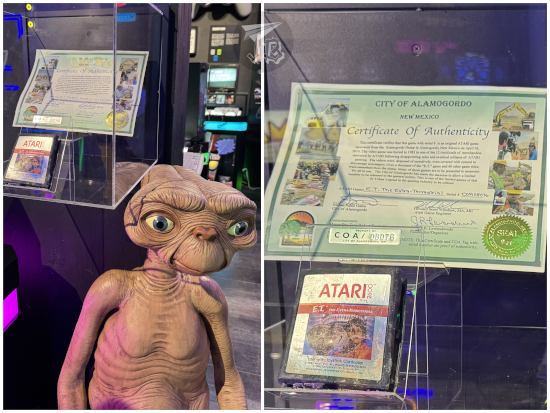
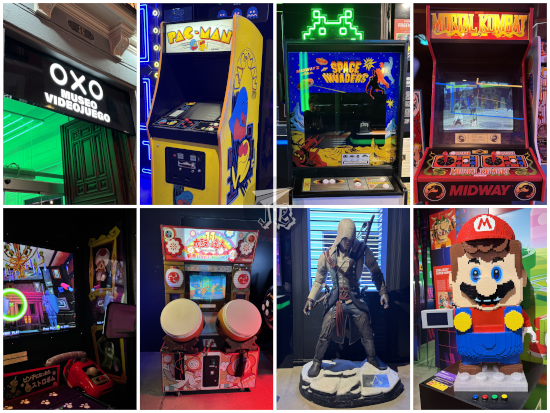
After the restaurant, I had booked a ticket at OXO Museo, the museum of video games. It features old-time games, arcade machines, and even a copy of the Atari ET video game. The game, released in 1982, was a massive failure. Urban legend had it that Atari buried all the unsold copies in the middle of the desert in New Mexico – and for once, the urban legend turned out true! A stash of games was found in Alamogordo, and a bunch of them (not only ET, also Pacman, Space Invaders…) and dug out in 2013. Around 1,300 cartridges were recovered, and one of then is exhibited in the museum.

An Atari video game cartridge and a figure of ET, along a certificate of authenticity

The museum is set up as 100% interactive – you can basically play with any video game in display – form the classics on arcade machines to the more modern Play Stations. There was even a taiko game. Decoration features sculptures and holographic displays. On the upper floor, there is a Lego and Video Games exhibition, where you can participate in creating a huge Sonic mural. It’s a pity that one can only stay in the museum for two hours at a time, there are a lot of things to do! The museum is so much “for all ages and skill levels” that even I managed to win a game or two.

Old arcade games at OXO

We made the most out of our time there, and then headed off to the train to try to head back home. There were delays, so we took forever, but eventually we made it. And again, I did not get rained on!

24th January 2026: Short visit to FITUR 2026 (Madrid, Spain)

Madrid is the seat of the United Nations World Tourism Organisation (UNWTO), so it makes sense that the city hosts a yearly International Tourism Fair – Feria Internacional del TURismo, or FITUR. For years, I had been hearing how amazing it was, and how many networking opportunities for travellers there were.

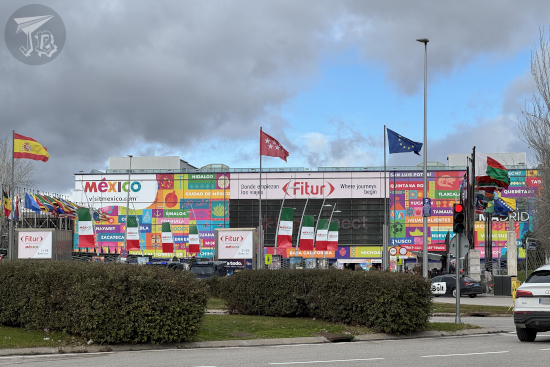
I had wanted to snoop around for as long as it came on my radar, but timing never worked out until this year. I bought a general entry ticket and hoped for decent enough weather to be able to drive to IFEMA – where I can get in 40 minutes on my car or 3 hours by public transport. I’m not even kidding. IFEMA parking lot is chaotic, and so is the nearby Parque Juan Carlos I one. However, if you’re willing to add a 10 minutes’ walk to the experience, there is another convenient lot nearby you can use, where I directly headed upon seeing how traffic was. That should’ve given me an idea of the mayhem and overcrowding I was going to find inside.

Fitur entrance, decorated with Mexican flags

FITUR takes up most of IFEMA, which makes sense considering how much money tourism makes around the world. According to the UNWTO, there were 1.52 billion international tourists around the world in 2025, and 2.2 trillion US dollars in revenue from the industry. The catchphrase of this year’s FITUR edition was “where journeys begin”, so I thought that worst case scenario, I would come back with a bunch of leaflets of cool places I wanted to visit.

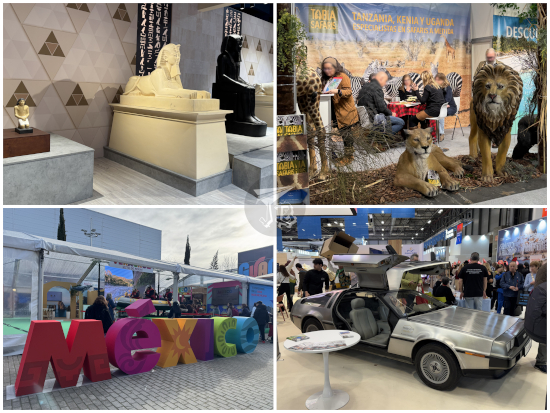
Upon entering the convention centre, the first thing I found was a recreation of the new Egyptian archaeology museum in Cairo. However, the reproductions of the pieces were… bad, almost childlike. I walked into the first pavilion – Europe. There I found a lot of stands, but the catch was that very few of them held actual information about countries, most were travel agencies advertising their products. I secured some information about Sardinia, because I have wanted to go there to see the Mont’e Prama Archaeological site since I learnt about the Giants. The lady was nice enough to give me a tote bag, though I was carrying my own.

The Africa pavilion had about twenty stands of companies organising safaris, some of them even playing into the Great White Hunter stereotype! I got a few leaflets from them too. In Asia Pacific I was scolded for calling Australia an “island” and not a continent (hm, hello Oceania?) and the business pavilion was so empty it looked like a completely different fair.

Collage - Egyptian archaeological artefacts (replicas), lion sculptures in front of a safari stand, Mexico written in bold colours, and a Delorean car

Next, I headed off towards the three interconnected pavilions that made up Spain. Here I started encountering mini-parades representing different tourist resources in the country. At one point I found myself surrounded by a re-enactment of the Crucifixion (Holy Week), the ladies from Valencia’s Fallas festival and a small batallion of Napoleonic troops. Here I did find actual information stands about regions and not travel agents’, but when I had questions about specific recommendations, I was irrevocably directed to “check the website”. There were never-ending queues whenever any stand gave out anything – blocking the ways and aisles – and whenever there was anything related to food, such as samples, visitors almost came to blows. I did my best to avoid all of them.

At one point I did come across a company that prided itself in “solo travel” – they even had it in the name. Upon a slight enquire, I found out that they… charge supplementary fees to solo travellers. Like, what? However, it was the Americas pavilion that broke me in the end. I got shoved twice, almost to the ground, around the Argentina stand, only to be unable to find any information regarding Patagonia’s MEF (the reportedly most important dinosaur collection in South America, and where the Patagonian Dinosaur Exhibition originated).

Collage: racing car, a group of people dressed in white carrying olive branches, parade of drummers, and ladies wearing dresses representing different monuments of the Castilla y León area

All in all, my FITUR experience felt bizarre and extremely overcrowded. It was like paying to have the right to be bombarded by travel agency commercials. Not disappointed, but having realised that FITUR was not for me, I decided to head back to the car and drive off. I had been there for around three hours, and taken a walk around the whole fair. At first I thought I would stop for junk food, but it was too cold even for that, so I just headed home, with a bunch of leaflets and a list of websites to look at. Most of the brochures are still sitting on the shelf…

22nd January 2026: The workshop that wasn’t (Madrid, Spain)

A while back I visited the printing museum Imprenta municipal in Madrid. I’ve since learnt that they have book-binding workshops, and I would very much like to attend one. So would at least one of my parents, and I was asked to sign them up online for one on the 22nd of January, a day when I was supposed to be at work. My project got delayed, so I ended up workshop-less and a bit envious. Just a bit. There’ll be other chances.

On the 21st, I received a notification that I could pick up some paperwork in town, so we arranged we would have lunch together after I had my documentation and they were done. We would all be taking the train, and I was a bit uneasy. I’ve complained about the railway system before, but just a few days before there had been a horrible train accident that killed over 40 people, and a slightly less horrific one that killed one person.

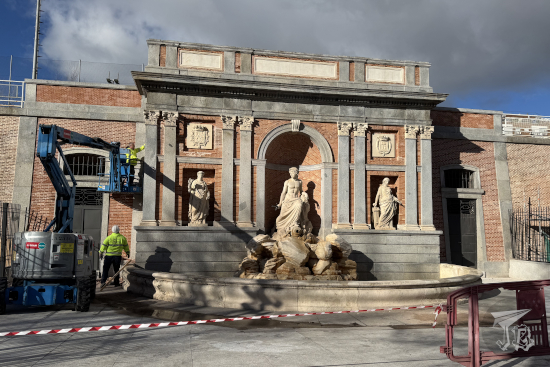
Though it did feel a bit uncomfortable when the train shook within the rails, we reached Madrid just a few minutes late, and I hopped off. It was extremely cold, not only because it was January, Spain had been hit with a string of storms just one after the other. After getting my documents, I realised I was rather close to the fountain I had missed when I was in the Bravo Murillo area exploring after Expogema, Fuente del Río Lozoya, which honours the river Lozoya, the source of the city’s drinking water. It was my third time trying to find the fountain and… it was getting cleaned, and thus empty and fenced off. I felt it was hilarious.

A fountain with female allegory decorations

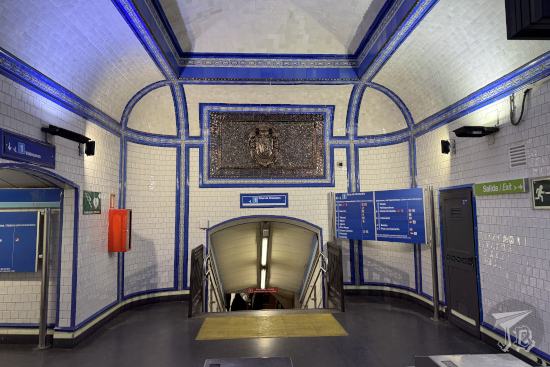
I headed towards the underground and headed towards Tirso de Molina station. The station opened in 1921, and one of the halls retains the original tiling and decoration, the historical hall – Vestíbulo Histórico de Tirso de Molina, which is considered part of the underground museum network Museos de Metro de Madrid. The station has a bit of a black urban legend / history. It is located underneath the square Plaza de Tirso de Molina, which honours a Spanish friar, dramatist and poet. The square named after him used to be home to his own convent, a building that was expropriated and demolished during the Ecclesiastical confiscations in the 19th century. Apparently, there was a small graveyard associated to the convent, and human remains were found (and quietly reburied behind the walls) during the construction of the station. Creepy.

The historical access hall to the underground station - white with blue decorative tiles

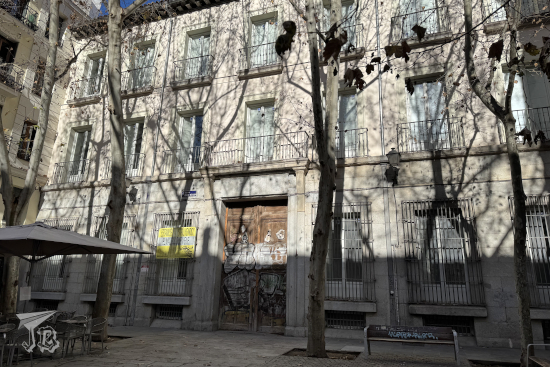
Quite close stands the manor known as Palacio de la Duquesa de Sueca, an Age of Enlightenment building which was for a while featured in one of the most successful fictions on Spanish TV – El Ministerio del Tiempo (The Ministry of Time). It has been abandoned forever, it seems, and nobody quite knows what to do with it, so it is slowly wasting away.

Façacde of a manor with many windows and balconies

I walked to the small metropolitan museum Museo de San Isidro, which was running a special exhibition about the Temple of Debod and the town it used to stand on, fittingly called Debod. 1954-1964. Debod is the only free-standing Nubian temple outside Egypt. The building was dismantled during the International campaign to Save the Monuments of Nubia between 1960 and 1980, as the rising waters from the Nile, turning into Lake Nasser, swallowed them.

The exhibition did not only focus on the temple Templo de Debod, but put a lot of emphasis on the town of Debod itself, whose people were forcibly relocated to Kom Ombo. The region of Nubia stood between today’s Egypt and Sudan. It was home to the Kerma culture from around 2500 BCE until the area was conquered and incorporated to the New Kingdom of Egypt around 1500 BCE. Kerma culture is regarded as one of the earliest civilisations of Ancient Africa. A lot of knowledge about the region, including culture and customs, was lost with the move. It was a bit heart-wrenching, surprisingly even more than hearing about it in Egypt itself. The exhibit comprised a lot photographs and videos that showed the people who left, and you could see the desperation in their eyes.

A good part of the items shown were photographs of how the temple stood and how it was documented before getting dismantled in order to rebuild it – which in the end, they did wrong, as one of the entrance pillions was placed backwards. The building was originally erected in the 2nd century BCE, dedicated to the God Amun, creator and King of the Gods. He would later be merged with Ra, hence the Amun-Ra denomination for the Sun God. The small structure would be later expanded by Kings and Roman Emperors. It reached the Nile through a processional walkway that ended at a quay.

The temple was gifted to Spain in 1970, dismantled in 2,300 pieces. The whole thing was reconstructed as well as it could be, filling up the gaps with newer material in a process called anastylosis, and experts say it’s not even a good one. Today, the Templo de Debod stands in a park in the middle of Madrid, and can be accessed at weekends. Unfortunately, the sandstone is getting weathered, which threatens the integrity of the whole structuture. What is surprising is the contrast between all the photographs in the exhibition, and the complaint that there was not enough good documentation to re-erect the building.

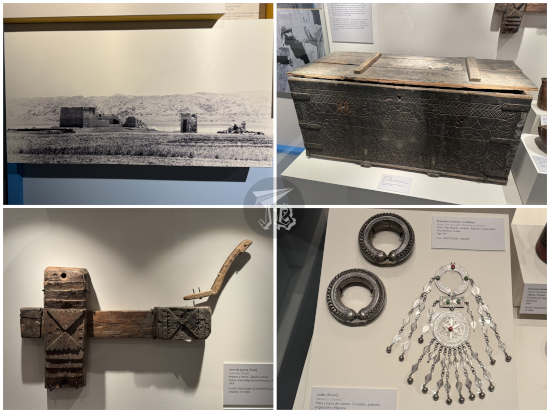
Numibian archaeological artefacts (a chest, a hammer, bracelets and necklaces), and a b/w photograph of a small temple next to the Nile

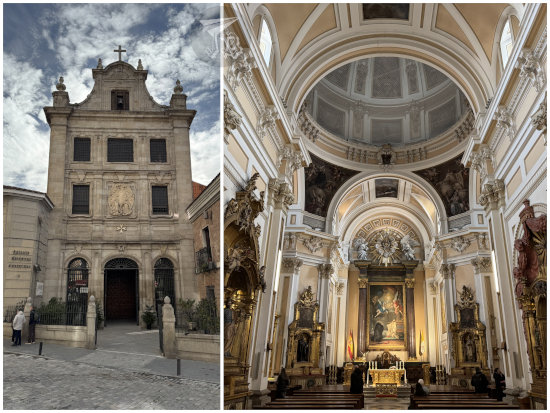
After the exhibition, I walked around the museum once, then went out in the cold again. At least it was sunny, and after noon, so not that bad. During a conversation about Madrid must-dos, someone had mentioned two churches I did not know, which happened to be rather close. The first one I found was the Cathedral Church of the Armed Forces Iglesia Catedral de las Fuerzas Armadas (also known as Church of the Sacrament Iglesia del Sacramento). Though Spain is technically a non-religious country, this has not always been so. For a long time it was an officially Catholic country, and there is a strong catholic tradition amongst the armed forces. As a matter of fact, there is even a Military Archbishopric of Spain (Arzobispado Castrense de España), with seat in this cathedral. I am not sure how one can be an soldier and a priest, much less a bishop / colonel, but I am not an expert.

The cathedral is a Baroque building designed by Juan Gómez de Mora, with a Neoclassical altarpiece and many frescoes. It was built between 1671 and 1744 to be the church of a convent that has since disappeared. The main façade was built by Pedro de Ribera towards the end of the construction period. Today it belongs to the Ministry of Defence – I did not know state agencies could own churches in Spain.

Inside and out of a Baroque church

Nearby stands another important church, the Pontifical Basilica of Saint Michael Basílica Pontificia de San Miguel, another Baroque structure – actually it is considered one of the most important buildings in the Spanish Baroque. It is attributed to Italian architect Giacomo Bonavia and dates from the 1730s. Unfortunately, it closed at 13:15 and it was 13:13, so I could not come in.

In front of the church there is a sculpture called The Reader El Lector, a bronze statue by Félix Hernando García. The statue was recently moved there as part of the urban sculpture program, since a library was installed there in 2011. It is apparently a homage to Carlos Cambronero y Martínez, apparently one of the first “Madrid Historians”.

I headed back towards where I had to meet with my parents, and though I was early, so were they. Their workshop, which was scheduled to finish at 14:00, wrapped up at 13:20, so in the end I had to head there in a bit of a hurry. Once I picked them up, we walked to “a random restaurant” in theory. In practice, one of them had a very specific place in mind – Museo del Jamón. Self-described as a “family chain of restaurant”, the idea of a ham-focused restaurant was born in 1978. Since then, they have opened seven different eateries specialising in ham and other pork products, alongside several typical tapas.

The Spanish word for ham is jamón. It is obtained from the hind leg of a Black Iberian pig, usually. The ideal ham-producing swine lives range-free in oak groves (the dehesa) so it can feed on acorns, as they lead to the best meat, apparently. After the animal is slaughtered, the hind legs are salted and left to dry, in a curing process that may take up to 48 months. How much acorn the pig consumes as part of its diet, and whether or not this is supplemented, determines the quality of the final product, with the best hams being “100% acorn fed” – jamón 100% ibérico de bellota, marked with a black label.

Of course, many other products might be obtained from a pig – the most important sausages are lomo, chorizo and salchichón. Lomo refers to the tenderloin, the piece of meat underneath the ribs and along the spine, cured for about four months after being marinated in spices – normally oregano, garlic and paprika. Chorizo is a sausage made from pork meat and fat with added garlic, and can be either cured or fresh (the former is eaten as is, the latter is usually cooked). The meat is seasoned with smoked paprika (pimentón), which determines how spicy it becomes, and gives it a bright red colour. The best chorizo comes in natural casings, usually the intestines of the pig, and the curing process can take several months. Salchichón is similar to cured chorizo but there are more spices added – salt, pepper (often black grains), oregano, nutmeg, and garlic – and curing can last for three months. If the animal was an acorn-fed black Iberian pig, the monicker ibérico de bellota is added to the name.

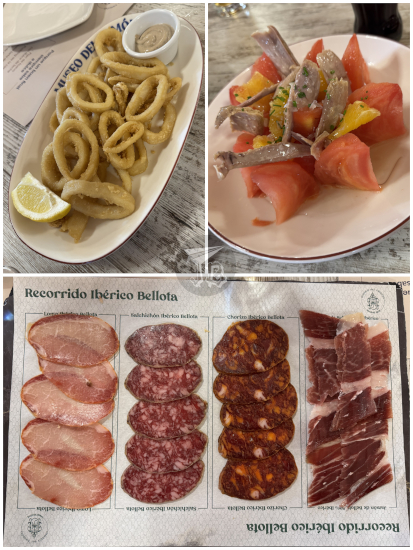
We shared a salad (Ensalada de tomate y ventresca de atún), with tomato, tuna and orange – because my parents are unable to be in a restaurant without ordering a salad. We also ordered some battered squid Calamares a la andaluza, and a dish called “Recorrido Ibérico Bellota” – with bits of the different pork cuts: jamón de Bellota 50% Ibérico, chorizo Ibérico de Bellota, salchichón Ibérico de Bellota and lomo Ibérico de Bellota. Despite Madrid being dead in the centre of Spain, battered squid is an extremely typical dish, especially in sandwich form.

Lunch - breaded squid, salad, sausages and ham

I had been extremely lucky that the rainy weather had given a reprieve and I could carry my paperwork around safely, but it was windy and not that nice. Thus, after lunch we headed back towards the train, and we were rather lucky with the connections, so we were home rather early. During the train ride, I learnt hat someone from the binding workshop had decided to leave in a huff because it was “too basic”. I could have totally taken that spot!

18th January 2026: Industrial Heritage around Entrepeñas Reservoir (Spain)

Weather warnings, work, and a nasty stomach bug seemed to conspire against me for a lousy start of the year, and what I had originally planned for the 2nd of January had to be delayed a couple of weeks until I caught a break from everything. Eventually, the plan just became a “grab the backpack and go” when the stars aligned – and actually, I just required one star and the only thing it needed to do was shine. Whilst I’ve been around the reservoir Embalse de Entrepeñas before, I had never been aware of the not-so-hidden hiking route that departs from the parking lot, heading downstream. I found its description in a book about walking routes in the province, it was not a difficult drive, and the route could be expanded to include a couple of spots the guide did not consider.

Spain has long had a complicated relationship with freshwater. Despite being a majorly dry country, it has developed a wide net of water-intensive agricultural hubs. The cyclic droughts and low-quality soils in the centre do not help – the areas with a nice temperate climate and good soils don’t have water. Thus, once the technology was readily available (the first dams date back from the late 19th century), the first Hydrological Plan (Plan Hidrológico Nacional) was developed during the years of Franco’s Dictatorship. The government designed and built an extensive network of reservoirs in order to, well, store freshwater. Water transfers were designed to feed the eastern orchards. Of course, these were controversial on several fronts. First, the environmental one. Second, the social one – once a dam is built and the water rises, it swallows everything that had previously grown on the riverbanks, be it healthy ecosystems, entire villages, or historical buildings. And third, of course, the moral one – dictatorships are not good, so well-meaning people have to oppose anything such a system devises.

In addition, the reservoir Embalse de Entrepeñas has a bit of a bad reputation. During the 1980s it became popularised as an inland sea, along other reservoirs in the Spanish central plateau, as what became known as the Castilian Sea – El Mar de Castilla. However, despite the extensive security network decades of beach tourism had impulsed along the coast, inland water bodies were left unattended. I grew up on reports of people drowning in Entrepeñas. Everybody seemed to know someone who died there. Adult perspective says most people knew the same victim, or they were just repeating hearsay. As a kid, I really believed that the reservoir might actually been an evil entity feeding on swimmers.

The reservoir Embalse de Entrepeñas was built between 1946 and 1952, during Franco’s Dictatorship, but the plan dated back from 1902. The goal was to regulate the flow of River Tagus to keep drinking and agricultural water in storage, along with producing electricity. During the mid-1960s, the 813 square hectometres of water became a holiday spot. However, soon a “ghost” hovered over the reservoir, the dreaded Tagus-Segura Water Transfer, Trasvase Tajo-Segura. The Segura River is used to water the orchards in the east of Spain, but its flow cannot cope with the demand. Thus, water is carried from the Tagus to one of the tributaries of the Segura, in an engineering feat that was built between 1968 and 1971. The transfer established the region of Murcia as a strategic agricultural area. However, it dried up the Tagus reservoirs, killing off the water-tourism, not even mentioning the environmental consequences of the whole project.

However, as tourism dwindled, something else happened. Entrepeñas became a hotspot of conservation success when threatened griffon vultures (Gyps fulvus) started nesting in the rocky walls. Child-me was very concerned about birds of prey going extinct but had no idea about ecology, so I was halfway worried about vultures disappearing, halfway low-key worried they would make a meal out of me. Considering that during a couple of hikes I’ve actually had raptors circling me, child-me might have been onto something.

Back to the present, though. I woke up and even before pulling up the blinds, I looked at the weather app. Being January, the day was going to be cold, but the temperature would not go below zero, and the sky would be clear. To be honest, I was desperate to do basically anything, but at the same time, there was this wave of exhaustion going through me. I kicked myself into gear and got onto the car. I filled up the tank and set on my merry way towards the parking lot / viewpoint that the guidebook described as being “on the right, before the tunnel”. Dear book, there are two tunnels. You mean the second one. If you go right before the first one you end up… somewhere else. Yes, talking from experience. You can turn around in one of the parking lots on the side of the road. If you dare, of course.

I dared, else I would have had to drive an extra 9 km. I found the almost empty parking lot, parked the car, and set off onto a closed-road-turned-trail. It was around 11:00, the air was crisp and the sun was shining. When I thought in November that hiking season was over, I had not realised there are routes recommended for winter, and this is one of them, as the trees being devoid of leaves allows for a great view of the Romanesque bridge downstream.

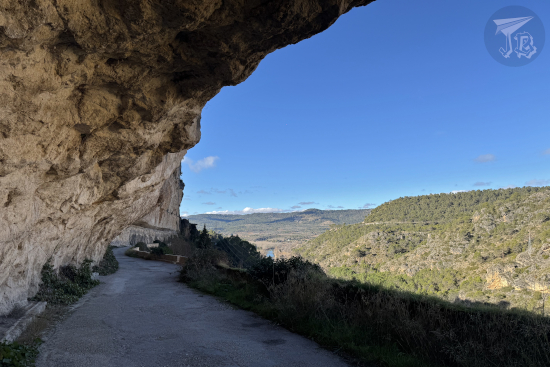
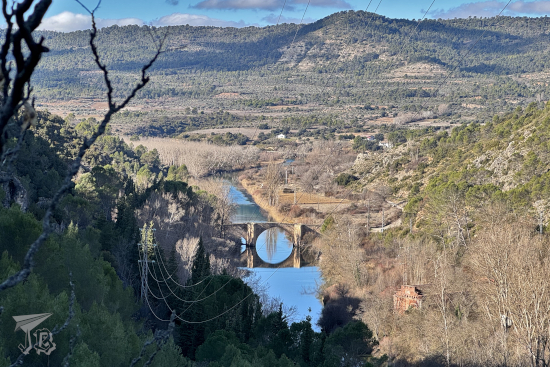
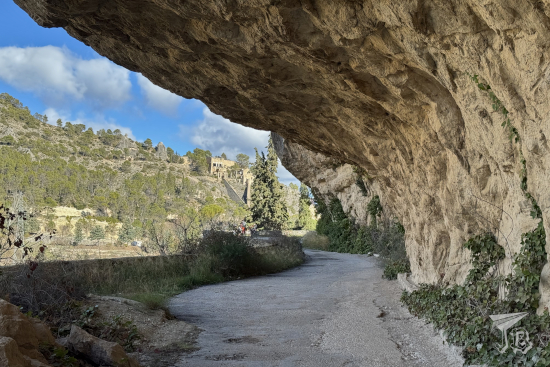
The first part of the hike runs between the river Tagus Río Tajo and a vertical wall, eroded at trail level to form a rock shelter. The vultures were already active, treating me to some nice flights. The trail was slightly downwards, and it did not take long to catch a glimpse of the so-called Roman Bridge – actually Romanesque Puente Románico. This area of Spain tends to confuse Roman and Romanesque. The original bridge was erected in the 14th century, but it was rebuilt in the 19th, and that is the structure which remains today.

Rock shelter formed by brown rock

View from above of the valley, with the river crossed by an old bridge. The arch of the bridge and its reflection create a perfect circle

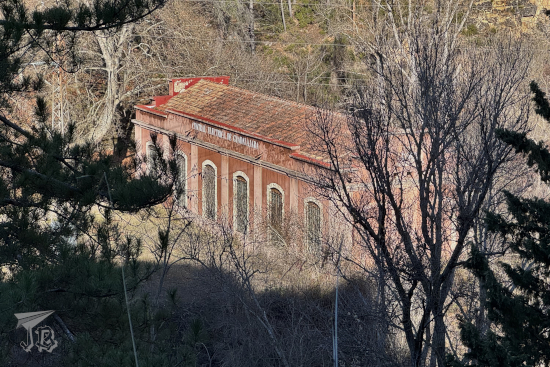
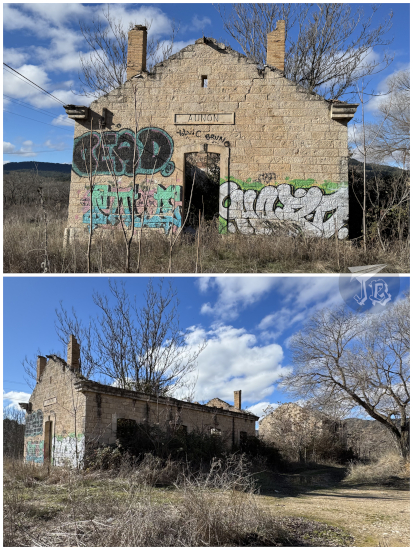
Near the bridge stands the original hydroelectrical station Central Hidroeléctrica de Guadalajara, but it was harder to see it across the river. It was not long before I reached the bridge itself, and the route said to turn right then. Instead, I crossed over and continued downstream, as I had seen that there was an abandoned train station nearby, Antigua Estación de Ferrocarril de Auñón. The original building was part of the former railway network Ferrocarril del Tajuña, a line that was originally designed to join Madrid and Aragón in order to transport people and freight, However, it was eventually dismantled since it was too expensive to maintain and yielded to too little revenue. The station was in use between 1919 and 1953. After 1946, due to the works on the reservoir, Auñón became the terminus. Today, the actual rail is gone, and there are only ruins of the passenger and warehouse buildings, and the loading docks. Unfortunately, the whole thing was covered in graffiti, and the vegetation rather overgrown.

Abandoned hydroelectrical central

Abandoned station building

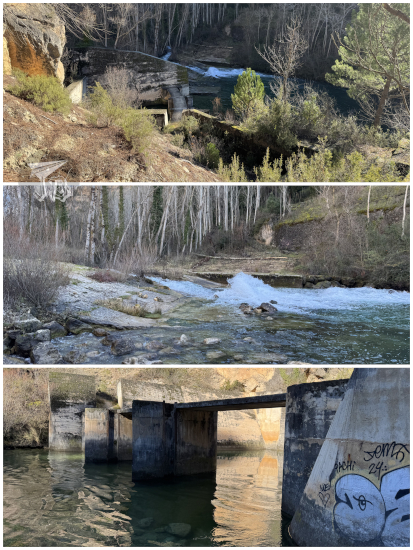
I backtracked and headed upstream. It did not take long to reach the former hydrological station Central Hidroeléctrica de Guadalajara, a brick building erected in 1909. Not much further, I found the remains of the original dam over the Tagus, with a rather impressive water sprout remaining – and a makeshift bridge over the water, made with wooden logs, that I looked, photographed, and no way in hell I was going to try to step on.

Remains of the former dam

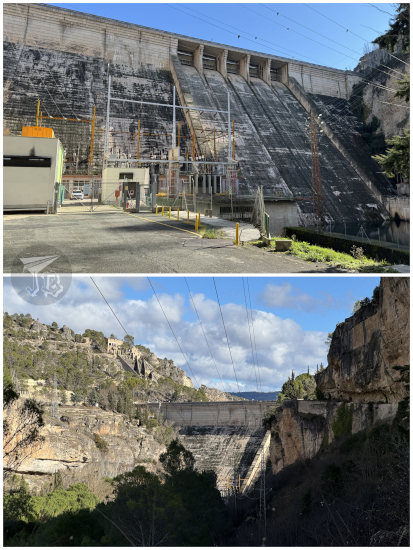
I continued upstream until I reached the modern gravity dam Presa de Buendía, a huge structure made of reinforced concrete that holds back the water. It’s a very different sensation when you look at the dam from this perspective, upwards, from the “empty” side than what I had always experienced – from the top.

Humongous river dam

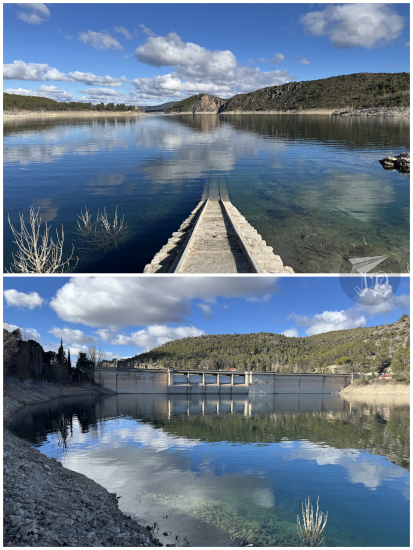
I turned back towards the bridge, which I had to cross to return to the parking lot. I still had a bit of time, so I wandered towards the actual reservoir area. There’s a structure there that fascinates me… a small building with remains of a railway that goes right into the water. I have never been able to figure out what it was made for.

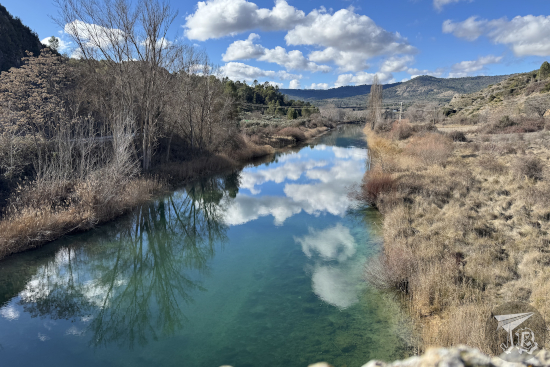
Tranquil river in a crisp winter morning

Rock shelter alongside a river course

Tranquil reservoir. Some stairs disappear into the water.

And that was it for the day trip, a short hike I dragged for about three hours during the one good weather day we had for a bit and that turned out to be my first outing of 2026. Afterwards, it was just a matter of hopping onto the car and heading back home, feeling recharged.

28th December 2025: Sabre-toothed cats in Alcalá de Henares (Spain)

For my last escapade of the year 2025, I chose a nearby low-effort one – Alcalá de Henares. I was checking out dates for upcoming events in Madrid when I saw that the palaeontology and archaeology museum Museo Arqueológico y Paleontológico de la Comunidad de Madrid (MARPA) had opened a special exhibition on sabre-toothed cats called Dientes de Sable.

I drove to Alcalá de Henares and parked a bit farther away from the centre, then walked. I really don’t enjoy driving there, especially now that they’re having construction in the main arteries of the city. On my way in, I followed the music to find one of the traditional parades displaying giant puppets – Pasacalles de los gigantes y cabezudos, which happens around Christmas.

I arrived at the MARPA just behind a family, who were told that the sabre-tooth cat exhibit was “good for kids”. I jokingly asked if it wasn’t good for adults and I was told that “kids enjoyed it more”. When I got to the temporal exhibition room to see Dientes de Sable (Sabretooth), I have to say that… no, it was not good for kids. The panels were interesting but… extremely technical. I have some knowledge of science, zoology and palaeontology, and way too much information flew over my head.

When I was in primary school, everything was either an animal, a plant or a rock, and nobody knew what to do about mushrooms. It turns out that biology is slightly more complicated than education in the 1980s tried to convey. Let’s start with what an animal is: an organism comprised by more than one cell, and these cells have a nucleus (which holds DNA) enclosed by a membrane. Having more than one cell allows animals to get pretty big.

Some organisms look more alike than others, which in general (though sometimes it is a fluke) means they are in a way “related”. These relations are scientifically called “taxonomy”, and the groups are bigger or smaller according to the shared characteristics. From more general to more specific they are: domain, kingdom (animals comprise one of these), phylum (for animals) or division (for plants), class, order, family, genus, and finally species. There are “clades” in-between which refer to groups of organisms composed of an identifiable common ancestor and all its descendants, and sub- and super- prefixes for many of the categories.

Mammals – which are animals with milk-producing glands, for feeding the young, among other characteristics – are a class (Mammalia). An order of mammals are Carnivora, creatures which specialise in eating flesh (hence the idea of a “carnivore”, literally meat-eater). Most of them are land-dwelling predators. Within them, we find two suborders – Feliformia (cat-like) and Caniformia (dog-like). For what is worth, seals belong in the dog-like category and hyenas in the cat-like one… so this is a bit more complicated and I am summarising.

Within Feliformia we find the family Felidae, which appeared around 25 million years ago, at the end of the Oligocene. Five million years later, there were two large types of felid groups – some had conical teeth and others developed sabre-shaped teeth – hence being collectively known as sabre-toothed cats. Conical-toothed cats are divided in Felinae or “small cats”, which includes anything smaller than a cheetah, including the domestic cat, and Pantherinae or “big cats”, which comprises leopards, tigers, lions and so on. The subfamily Machairodontinae held all the sabre-toothed cats, with three main subgroups or tribes, all extinct nowadays: Metailurini, Smilodontini and Homotherini or Machairodontini. I hope that was not too confusing, I made a schematic life tree chart to try and help…

The most famous genus of sabre-toothed cat is Smilodon, which jumped to fame hand-in-hand (paw-in-paw) with Diego, from the 2002 animated film Ice Age (also, the squirrel-character Scrat, from that same movie, might have sabre-shaped teeth, but it is a fictional animal, not a Machairodont). Smilodon is a very well-studied genus in science since the species Smilodon fatalis has been found in abundance (over two thousand individuals) in the Los Angeles palaeontological site of La Brea Tar Pits. For millennia, tar has been seeping from the underground, creating a pit so deep that it could (can) swallow an animal whole. However, this was not a fast process. When an animal wandered onto the pits, which were covered with leaves or dust, it became stuck and sank slowly. The dying animal attracted predators, which would also get stuck and end up sinking along after starving to death. This process generates what is known in palaeontology as a “predator trap”.

Spain did not have Smilodon or Tar Pits, but the palaeontological site known as Cerro de los Batallones has turned out to be another predator trap which yielded to many remains of Machairodonts, out of which apparently Machairodus aphanistus is the one getting better PR. The trap was different than the tar – the site was an underground structure or cave with round walls, opened at ground level. Animals fell into the hole and starved, and the stench attracted carnivores, which jumped in, but could not get out again, eventually dying themselves. The cave ended up filled with sediment, maybe in a mudslide or something similar that buried the skeletons. Some of them have even been found articulated, despite the geological phenomena that have affected the area – one of the skulls in the exhibits shows shearing, even.

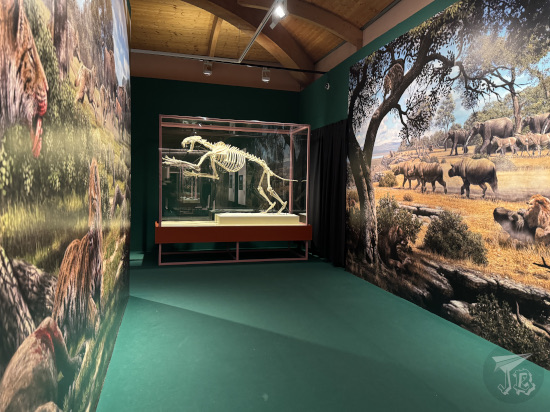
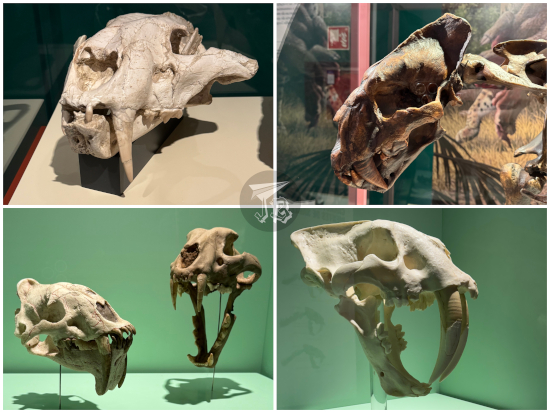
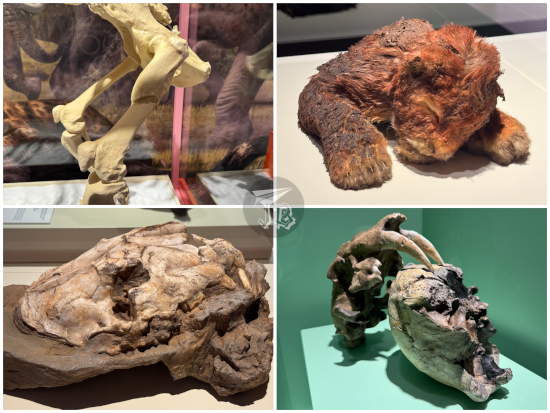
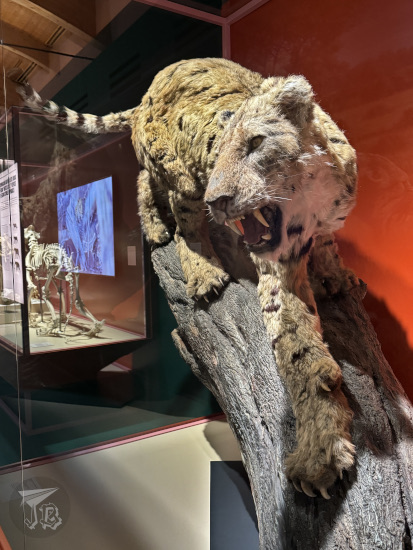
Confusing still? Try to condense all this informational dump in a few panels with drawings and schematics… I would not call this exhibition child-friendly at all. There is a lot of writing on the walls, along with life-like illustrations about how the animals and their environment would have looked. Regarding the actual items, there were a few replicas of skeletons, and several real pieces, mostly Machairodus from Cerro de los Batallones, as any palaeontological item recovered would be deposited in this museum. Actually, the first skeletal reconstruction you see on display is the one from MARPA’s permanent collection. I really wish they had taken that one out of a glass case, because I can never seem to take a good photography of it.

A room with a reconstruction of a sabretoothed cat skeleton and palaeoart on the walls, depicting the animal in real life.

Dientes de Sable (Sabretooth) exhibition is divided in several sections – taxonomy, environment, palaeoecology, illness, restoration and reconstruction. There are a lot of explanatory panels and artists’ reinterpretation of the animals and their environment. There are three or four complete reconstructions of skeletons, a few skulls – real and casts – and a handful of actual fossils. One of the skeleton casts shows a healed fracture in the hind leg, which seems to imply that the animal lived in a pride and it was relatively taken care for by other members – as it did not starve to death.

Collage: Real sabretoothed cat skull and different reproductions. In all the cases the fangs protude way under the jaw.

There is also a reconstruction of a mummified cub that was found in Siberia in 2020, and a guess of how it would have looked in real life. Having an actual piece of fur helps cement the image of how any of the animals would have looked alive. However, most of it is speculative.

Collage: broken sabretoothed hind leg, mummified cub reproduction, skull fossil, reconstruction of the cat's bite on a hominini's skull.

Sabre-toothed cats coexisted with humans, or at least early Hominini, and maybe the two species even hunted each other. Dmanisi Hominini lived in the modern-day Georgia (country) area of the same name around 1.80 million years ago, so they are amongst the earliest Hominini fossilised in Eurasia. They created simple stone tools, but did not use fire yet, and probably lived in social groups. The scientific consensus is that they belong to the Homo genus, maybe Homo habilis or Homo erectus. One of the skulls found at the site presented unhealed wounds that are consistent with the fangs of a Machairodont animal of the genus Megantereon.

In order to flesh out the exhibition, there are comparisons with modern-day big-cat skeletons, such a tiger or a lion, but one needs to know way more comparative anatomy than myself in order to appreciate much more than the clear difference in the skulls and fangs.

Reconstruction of a sabretoothed cat.

After I left the museum, my plan was to see a couple of the nativities in town, as Alcalá de Henares has a large association dedicated to the dioramas. I went to the exhibition hall and former hospital Antiguo Hospital de Santa María la Rica, where they had set up one of the nativity scenes, Gran Belén Tradicional, along with a few collections and miniatures they were displaying. Nativity scenes are a huge tradition around Christmastime in Spain, with hundreds of displays across town and cities, one in every church, and usually one from every government level.

Spanish nativity displays tend to be structured in scenes, which are not always concurrent. They represent the birth of Jesus according to the Bible (Gospels of Luke and Matthew). There is an area with Mary and Joseph, baby Jesus, a mule, and an ox – usually a cave-like structure to represent the stable. Shepherds are represented heading towards the portal, starting from the Annunciation scene. The Three Wise Men approach, often riding dromedaries (usually referred to as camels though) from a different direction. Many scenes feature a village to show daily life, and usually a snapshot of Mary and Joseph running away to Egypt. Other snippets that might be represented are King Herod – either meeting the Magi or ordering the massacre of the Innocents – or Mary learning she is pregnant.

Bethlehem portal int he Nativity scene.

Since I was in town, I thought I’d check out the other famous nativity scene set up Gran Belén Monumental. I came across a modern felid on a hunt, too – a domestic cat prowling around a hotel garden. When finally I reached my destination, there was a long queue. I was not going to wait for 40 to 60 minutes to see a nativity scene, even if the day was not extremely cold – I was just there out of curiosity. Ergo, I turned on my heels and left. I did not feel like eating out, so I just headed home to munch on some Christmas leftovers.

House cat jumping onto the grass.

26th November 2025: Ningyō Exhibition (Alcalá de Henares, Spain)

Dolls have probably existed for as long as humans have been humans. The earliest known were found in Egyptian tombs from the 21st century BCE. Romans had rag dolls already around 300 BCE, and dolls with moving parts and removable cloths existed around the 200 BCE. They are not just children’s playthings, throughout history they have been used to teach, in rituals, and / or been infused with magical and spiritual meanings. The oldest Japanese dolls date from the Jōmon Period [縄文 時代], probably as early as 8000 BCE. The country has had an extremely long and strong connection with dolls for millenia.

Ningyō: Art and Beauty of Japanese dolls is a travelling exhibition by The Japan Foundation, designed to broadcast that connection. The word ningyō [人形] is composed of two kanji: 人 nin, which means human or person, and 形 gyō, form, shape or figure. Together, they translate as doll, puppet or marionette, particularly when referencing the traditional Japanese dolls, but literally mean “human shape”. It is not a bad description.

If one were to relate Japan with a religion, this would probably be Shinto – though it is more a philosophy rather than a religion. Shinto is greatly based on symbolism along with the respect of nature. From early times, paper dolls with vague human shapes were used in its purification or protection rituals. Later on, wooden dolls became decoration, depicting Imperial weddings or armoured heroes, to wish good growing to children.

As dolls grew more and more popular, craftsmen and artisans became more prominent. Different shapes and styles were particularly favoured by royalty, and the different Japanese regions developed their unique doll fashion. Complex traditional dolls are still made by hand – artisans create the individual parts and a final craftsman assembles them. More simple shapes are created and hand-painted by the same expert. Tradition spread to modern times with the arrival of plastic dolls imported from the US, which eventually gave way to the industry of collectible figures.

Dolls depicting the Renjishi (Two Lions) a kabuki dance with two men wearing long wigs, one white and one red, and bulky kimono.

Fuji Musume (Wisteria maiden), a Japanese doll wearing a pretty kimono.

The Japan Foundation has two sets of dolls circulating throughout the world. November saw one of the sets in Alcalá de Henares, in the exhibition hall and former hospital called Antiguo Hospital de Santa María la Rica. The hospital was established in the late 13th or early 14th century bringing together several already-existing houses. It later passed onto a religious brotherhood and focused on tending to pilgrims until in the 19th century, it closed down. In the year 2000 it became the seat of the Cultural Council, and it is now used for travelling exhibitions.

Wooden Kokeshi dolls.

The exhibition displays about 70 pieces, all of them modern and mainly created by the same artisan, Mochizuki Reikou, whose studio was established in 1936. There was also a video explaining the same information that was displayed on the signs, but accompanied by testimonies of actual doll-makers and experts from the Tokyo National Museum (Tōkyō Kokuritsu Hakubutsukan [東京国立博物館]). I quite enjoyed it, but I would not like to be in that room alone with dimmed light… some of the dolls could be creepy.

Japanese wish dolls - you draw an eye when you make a wish, and the other when the wish is fulfilled.

Japanese dolls depicting the chold Oniwakamaru catching a fish, and an oiran (courtesan).

There was not much going on in town, as it was a weekday in that period in which everyone is getting ready for Christmas. However, it was the only free time I could muster within the month the exhibition was open due to work and other trips. I did not even stay for lunch, but headed home right after.

22nd November 2025: Expogema & Wicked: For Good (Madrid, Spain)

Wicked: For Good was released on Friday the 21st of November, and this time around I decided not to hit the cinema on opening day as I did for the first part, but to head out on Saturday. That way I could make a day out of it, combining the film with a mineralogy and gemology event. I had to work on Friday morning anyway, so there was no way I could make it to the first session even if I tried. Unfortunately, the weekend coincided with planned railway maintenance – which meant no trains whatsoever.

Getting to Madrid with the train system out (albeit scheduled) was not an odyssey, but close to it. I got to the coach station with 20 minutes to spare, and I had to queue up in a long line. Fortunately, I made it to the bus – good, because I had a timed ticket I had bought online. I learnt later that you can buy a ticket “for the next bus” on site and it’s actually cheaper… There were extra coaches running at the same time to make up for the lack of trains, which makes sense. The train company had arranged coaches of its own, but it charged “train money” for “bus service”. Well over a hundred people had decided, just like me, to take a bus at bus price.

The trip was uneventful with few stops, and I reached the terminus Avenida de América before I had to take the underground to get to Ríos Rosas. That placed me at the ETSIME Escuela Técnica Superior de Ingenieros de Minas y Energía around noon, total peak time. The place was packed with people who had heard about the Expogema event but had no idea what they were getting into – and were therefore “upset” that the event only had “rocks”, and that they were expensive (“lady, I cannot sell you a 400-euro tourmaline for 60 quid” was one of the sentences that echoed in the chambers). I had to take three walks around the fair in order to just see what was on display. I could not afford most of what was being exhibited anyway and for a change, I left without buying anything. I would make up for that on the 2026 Expominerales in the end…

Expogema is the fair dedicated to exhibiting and selling gems and gem-adjacent items such as jewellery. It is organised yearly by the Spanish gemological Institute, Instituto Gemológico Español IGE is a non-profit organisation, created in 1967, as a jewellers’ association. Today it independently certifies and appraises gemstones and jewels, especially diamonds. It works with individual owners, insurance companies, and anyone who is interested in a particular piece. It emits super-complete certificates which describe any gem to boot. Unfortunately, since their analyses are purely physicochemical, the one thing that cannot be certified is the ethical origin of the rocks.

The ETSIME hosts two big fairs a year, Expominerales and Expogema. I missed Expogema last year, because while it’s usually held in late-November or early-December, it happened in September. This year, I wanted to have a look, and I could combine it with other events happening that weekend. Besides, I like the ETSIME, with its little classic museum of mining and geology (Museo Histórico-Minero Don Felipe de Borbón y Grecia) and its eclectic architecture by Ricardo Velázquez Bosco. The building seems to be in perpetual renovation though, but it has a beautiful cloister, which this time around was packed with curious onlookers.

Interior of the ETSIME - two floors of arcades and a glass and iron ceiling.

I left the school and walked out towards a former water cistern, now turned into an exhibition hall Sala Canal de Isabel II. The public company Canal de Isabel II manages the water supply in Madrid, which includes the structures around the River Lozoya. In 1858, the first water deposit was inaugurated in Madrid, designed by engineer Juan de Ribera Piferrer. Three more deposits were constructed, even though an accident during the works on the third one caused 30 fatalities and 60 wounded.

This last deposit was not built underground. It was designed by engineer Diego Martín Montalvo and materialised by Luis Moya Idígoras in 1907. It was a tower made out of mostly brick, and with a height of 36 metres. At the top there was a metal sphere which could hold up to 1500 cubic meters of water. It was used until 1952 to store water, then abandoned, and eventually turned into an exhibition hall in 1986.

In the year 2000, maybe as an operation to improve the reputation of the entity, the foundation Fundación Canal was established, to divulge culture, art, environmental knowledge and the importance of water. Legally, a Spanish foundation must serve “general interest” purposes and must be a non-profit. It might have served as a cover-up or money laundry point, considering that during the 2010s, Canal de Isabel II was involved in several monetary scandals and corruption cases.

The former deposit was hosting photography exhibition, a sample of the archives they have, called 14 millones de ojos. Colección, fotografía, público (14 million eyes. Collection, photography, public). It was a great excuse to explore both the building and the adjacent park, though most of the area was closed off as it was the weekend. The exhibition was a bit strange, with images all over the place, but some of them were very cool. It is apparently… a collection of pictures that people have taken of items that have been exhibited in the venue before? I am not completely sure… There was a disturbing amount of portraits of people pretending to be naked though…

Water deposit turned into exhibition venue - high brick tower with a spherical top.

After a walk around the park, I took the underground and headed towards the central district of Madrid. Since I had started a Christmas ornament collection, buying one in Paris and one in Monaco, I decided to try my luck at finding one for Madrid too. The quest was… surprisingly difficult, but I found a bauble in the seventh souvenir shop I checked.

Afterwards, I found a spot at Kawaii Café for a light lunch. Though they were extremely busy, they had a spot for me and given the choice, I actually like their food. Plus, they’ve got discount cards now. I had a smoothie and a salmon bagel which was more than worth its price. Once I was done, I had the time to check out a couple of shops before I headed to Yelmo Cines Ideal to watch Wicked: For Good, the second part of the Wicked film duology, starring Cynthia Erivo and Ariana Grande. I like Ideal because most of the individual cinemas have enough of a slope that I manage to see above the head of the person in the row in front of me.

Bagel and smoothie from Kawaii Café.

I ended up with conflicting feelings about Wicked: For good. On the one hand, the film felt about 45 minutes to an hour too long. There were reprises of scenes and extra focus on interactions – especially the love triangle – that I could have done without. Also, random spotlight on characters that I know, but don’t even remember if they were even featured in the first part, such as Elphaba’s nanny. On the other hand, there was no way the “ham” could have fit into just one film, considering how long the first part was already. Nevertheless, I do have the feeling they wanted to delve a little further into the authoritarian dystopia of Oz, and the character of the Wizard. After all, if you have Jeff Goldblum around, you want to feature him as heavily as you can. Either that, or the film-makers tried to show the power of propaganda in some modern societies. And not-so-subtly aim for an Oscar or two – the first instalment competed on ten categories and took home two statuettes, but the second one was not even nominated once.

Wicked: For good focuses on the second act of the Wicked musical, based on The Wonderful Wizard of Oz. If the first half tells the story of how Elphaba “becomes” the Wicked Witch of the West, the second focuses on how that affects her. It surprises me though how come people were not anticipating the hit the Wicked film was going to be. When I went in for the first movie, it was just a regular release. This time around, we had a photocall and staff wearing witch hats and handling magic wands.

Wicked photo-op cardboard with all the main characters.

Cynthia Erivo does a good job on Elphaba, but in the end, it’s not that hard to portray her as a sympathetic character, since the watcher is the one privy to all her struggles and goals. However, Ariana Grande delivers a fantastic performance – I had watched the musical thrice at this point (four times now), and it is the first time that the character of Glinda has actually touched me. Grande’s approach gives a depth to the “good witch” that it’s often overlooked. The spotlight on her did not feel as a filler to me, and her voice breaking during I couldn’t be happier is a fantastic touch.

There is something I have realised though – if they decide to turn this into a franchise, I don’t think I’ll follow it. I would not have developed such a big emotional connection with Wicked if my first contact with it had been the films – they are way too long. The musical is just the bare minimum to tug at your heart, no fillers. How I wish I had seen the original New York production though…

The film has a few strokes of genius, mostly homages to the 1939 movie The Wizard of Oz, especially how the character of Dorothy, who is only insinuated, is a carbon copy of Judy Garland’s rendition, down to the dress and hairstyle. Furthermore, the wink to Margaret Hamilton’s cackling laughter and Glinda’s reaction – akin to what new generations would have, being absolutely flabbergasted by it – is hilarious.

Speaking of new and generations. On my right, a group of university students who spent most of the film bawling. On my left, a couple – one of them was a fan, the other one had no idea what was happening, and guessing along the way. Further on that side, a little girl loudly wondering what was going on half of the time. The joys of going to the movies at the weekend.

Upon leaving the cinema, I would have usually walked to the train station, but I had no trains. Thus, I had to go to Puerta del Sol to catch the underground. It was packed. I had not realised that they were turning on the Christmas lights that evening! When I had to change, the crowds in the corridors actually felt dangerous, and I was relieved when I could get to the platform in the opposite direction. That was stressful for a few minutes. I was lucky, though, that the first station was not closed and I could get in.

Once in the Avenida de América hub, I bought a coach ticket to get home – thus learning about the “next bus” tickets. Afterwards, I boarded the first scheduled service, which was on time, direct and ran into no traffic jams. I had been fortunate enough to park near the coach station, so I was home within a little over an hour after boarding. All in all, despite the lack of trains, transportation worked smoothly. I saw everything I wanted to, and I had time to spare, the weather was nice and I saw the film spoiler-free. A rather successful day, I’d say.

2nd November 2025: Chasing autumn (Guadalajara & Yebes, Spain)

I tend to judge the advance of autumn from the tree in front of my windows, but I’m starting to suspect it’s an early adopter. Mid-October it was completely gold, and when I left the house, about one third of its leaves had fallen and another third was completely brown. I thought I might get lucky with the forest Bosque de Valdenazar, and see it in its acclaimed fall colours (Spoiler: I didn’t). There had been a recent press release about the restoration and upcoming reopening of the nearby Poblado de Villaflores, so I decided to go check both out, telling myself that it was the last visit to the oak forest this year. Let’s see if I keep it up (Spoiler: I did).

I got on the road mid-afternoon. I reached the entrance / detour / clearing where you drop off the car to Poblado de Villaflores, which technically belongs to the city of Guadalajara, around 14:00. The village was designed by architect Ricardo Velázquez Bosco in the 19th century, and though called a village, it is one of the few agricultural colonies ever built in Spain. The colonies were production units etected on fertile soils, usually designed to be self-sustaining. It’s debatable whether the actual place is located on fertile soil, but rumour has it that the Duchess of Sevillano, an important noblewoman and owner of the land, was more concerned with the actual construction, in order to have something to pay her workers for.

The village has a large farmhouse, several small building blocks, a chapel, and the most recognisable building – a dovecote. All structures were built combining limestone and brick. After the duchess died, the village became abandoned and almost forgotten, and it changed hands several times. Local politicians announced their intention to rehabilitate it in 2002. Nothing happened, even when the area was declared Important Cultural Property (BIC) in 2015. In 2016, the clock tower that crowned the façade of the main house collapsed. An emergency restoration project was finally approved in 2022, with an investment of over two million euro, but there was no serious work on the site until 2023.

I walked through a small oak tree forest and the cow path Cañada Real de Las Matas, and soon I found myself within the village limits. Of course, all the buildings were fenced off, but the restoration looks really good! The last couple of times I visited, everything was ruined and overgrown. It’s still overgrown, but the clock tower has been rebuilt (though the shield that was recovered from the collapse has not been replaced), doors at the houses have been installed, and the chapel completely re-erected. The buildings look clean and stable.

Farming house in brick and mortar, with a belltower at the centre.

Construction finished about a year ago, and the security warnings still look pretty new, but the restoration information sign has already been vandalised. There is no informational signage yet, and I fear the whole thing will end up all derelict again – nobody really knows what to do with the village. It would be such a pity, the whole thing is an interesting unit, though I am not sure what can be done with it. Maybe yet another perpetually-closed interpretation centre… Seriously though, with all the urban orchards boom and rural depopulation, along with the cow paths nearby, something related to actual agriculture or livestock would be fun. Or homing pigeons! I mean, the dovecote is there for a reason, right?

Buildings in Villafloes, in brick and mortar, by Ricardo Velazquez Bosco.

Afterwards, I crossed the road to explore the not-so-small Portuguese oak (Quercus faginea) forest along the cow path. The trail also goes above the main road, and it’s not accessible by car. It felt like a very nice place to explore in spring, though I can’t tell how many cows one would run into these days (and I’m okay with no more encounters of the moo kind). I wandered around for a bit, then headed back towards the car.

The cow path, still in summer colours.

There was still a serious lack of autumn colours, but that was over when I reached Ciudad Valdeluz itself, a neighbourhood of Yebes. The local park Parque de la Paz y los Derechos Humanos did have trees that had turned gold, brown and red. There was also a pond full of fish and waterfowl, particularly a couple of very opinionated geese who quacked their disapproval that I was not carrying any snacks for them – the pond had until recently been quarantined due to avian flu, but the sanitary cordon had been taken down now.

Lake in the public park.

Geese and ducks. One of the geese is honking and almost launching itself at the camera.

I continued on towards the Bosque de Valdenazar, mainly composed of Portuguese oaks (Quercus faginea), holly oaks (Quercus ilex) and a few riverbank species. The only animals I’ve ever seen are red squirrels (Sciurus vulgaris), but I’ve spotted some deer and boar tracks. The Portuguese oaks actually seem to just be a continuation of the part that I had seen on the other side of the road, along the cow path. It strengthened my idea that I need to explore the Cañada Real de Las Matas better. Unlike that area, the little forest was packed, including couples taking romantic pictures and families with young kids. The weather was nice, so there were quite a few people having a picnic. The colours were slightly more golden than the previous time, but not much. Since it was a Sunday and there were people around, there was no chance to catch a glimpse of any wildlife, so after taking the standard walk, route Ruta SPG-24, I left, hoping not to catch much of a traffic jam on my way back to the city.

The Valdenazar forest in autumn, seen from the viewpoint, halfway through turning gold

16th October 2025: Ruta del Agua (Patones, Spain)

This day trip happened because of a fortune cookie, really. A couple of days prior, I had gone to the supermarket and found they already had fortune cookies, which is scary because they usually only have them around Christmastime. But I like them, so I bought a pack. When I came back from Alcalá de Henares on the 15th, I opened one. It told me to take a relaxing break to recharge. I don’t really do relaxing, so I decided to take a hike instead. Two day trips in a row? Why not? The weather was being uncharacteristically mild, but it was autumn after all. The landscape should look pretty, and the weather could turn any day now. Furthrmore, I had a project starting the following week, so I decided to tackle what would probably be the last hike of the season.

When back in August I decided that I was tired of waiting for people to come hike to the gullies Cárcavas de Mingo Negro and just headed there, I discovered there is another route along the other side of the river Río Lozoya. This route is maintained by the public company that manages water supply in the Community of Madrid, and by extension the dam, Canal de Isabel II.

The main reason I decided upon this route was the fact that I did not need to plan anything. Coordinates to the parking spot were right on my Sat-Nav and the route has its own app, with its map, GPS location and videos you can watch at every stop. It offers two options , the short and the long routes. Ironically, the time for both is almost the same: the long circular route takes around four hours, and the short one only takes a couple of hours… but it is linear, and then you have to return. I tried to reason with myself that I’d do the short route and when I reached the end, I would decide whether I would turn back (on known terrain) or venture through the circular hike. I also know that I would need to be very tired in order not to explore the complete route.

I waited for sunrise before I left the house, and I reached the parking lot around 9:30, earlier than I thought I would. I changed into my hiking shoes and set off. The dam Presa del Pontón de La Oliva, where the route starts, belongs to the municipality of Patones. It was originally designed to gather drinking water from the river Río Lozoya, and built between 1851 and 1856, though it failed shortly after, as water seeped around and underneath the structure.

After Madrid was made the capital of Spain (as early as 1561), it grew in size and population, and in 1848 the government started a project to increase the water supply to the city, which until then had been just covered by public fountains. The physical canal that would carry the water from the river Río Lozoya was named after the then-queen Isabella II (Isabel II) – Canal de Isabel II. After the failure of the Presa del Pontón de La Oliva dam due to percolation, a new one (Navarejos) was built in 1860, and a reservoir (El Villar) created further upstream in 1882.

The Canal de Isabel II project expanded throughout the 19th and 20th centuries. In 1977, the entity became a public business. It was then weirdly semi-privatised. Since 1995, its main stakeholder is the actual Community of Madrid, so besides drinking water, it is in charge of residual water treatment and “improvement and protection of rivers”. It manages 13 reservoirs which hold almost 950 million square metres and 78 access points to underground water.

The hiking route Ruta del Agua is part of the wider outreach and cultural plan of the company. It runs along the Río Lozoya river bank, and then back along the service paths and some of the water management buildings. The app is ridiculously easy to use, it is actually a map that pings your location so you know where in the path you are. There are specific points with videos which explain details about the flora, fauna and geology, nifty ARs, and a friendly voice congratulating you on your achievements aka reaching the predetermined spots.

I started at the dam, and there were two surveyors there. I let myself be noticed, but apparently they were not paying attention and I startled them. I asked if it was all right  for me to proceed, and they said I would do so under my own responsibility. As if… there was anything else. The first bit of the route runs parallel to the river on the dam structures, and you see the stream underneath. From the path, I checked for cattle since the last time I was there I saw grazing cows. Being free range and all, they might end up in my way. However, most importantly, I wanted to make sure I was not in their way – cows are amongst the deadliest animals in the world, no point in bothering them unnecessarily.

Walkway alongside the vertical rock wall.

Once I left the man-made bit behind and stepped onto the actual dirt track, I was standing between the two vertical walls that create the valley, the porous limestone that allowed water to seep through it, making the dam project fail. A little upstream from this area, geology changes, and black slates compose the walls and soils. This metamorphic rock is not permeable, so it is great to hold the river course.

The Lozoya valley

This, as well as the high purity of the water that streams down Río Lozoya, was the reason to choose the area for Madrid’s drinking water. Long before that, it influenced the landscape, creating an uncharacteristic riverbank forest, more typical of the north than the centre of Spain. Where there should be shrubs and bushes, trees grow, particularly ash trees.

I admit that during this part of the hike I went off track twice. Both times I used animal trails though, and tried not to disturb anything. The path was well maintained except for a small landslide which had taken down a few metres. I was slightly annoyed that I could not manage any photographs of birds, especially the very-common Eurasian crag martin (Ptyonoprogne rupestris, a rock-dwelling bird). I did spot some blue blurs which I want to think were kingfishers, but were probably Eurasian blue tits (Cyanistes caeruleus).

The Lozoya river

The cows I’d seen last time were on the other side of the river, or so I thought. As I turned on the path, I came eye to eye with one of them, just a few metres away. We stared at each other for a couple of seconds, neither sure of what to do. I stepped to the side to clear the path so she could do whatever she wanted. Since I was not in a hurry I thought I could wait for her to go on her way rather than walking past. She grazed for a few more minutes, then went to meet her friends. I guess it was a close encounter of the moo kind.

Free range cows grazing

The path alongside the Lozoya, covered in golden fallen leaves.

Free range cow right in the middle of the path, staring at the camera.

I continued walking and found the enclosure where the cows are kept when not roaming free. I’ve only seen a handful of them both times, but it was big enough for a decently-sized herd. The cows are there – I think – more for historical / sentimental reasons than actual farming. The area used to be criss-crossed by cow paths so the cattle moved around during the year, chasing better pastures. Today, these cows live here all year round, and they get extra hay when they need it.

The Lozoya river

After I had reached the enclosures, I walked onto a wider trail, one fitted for cars. This was about half point, and I’d been walking for about an hour and a half. I had no idea whether actual vehicles would be coming by, so I stuck to the left. The trail went slightly upwards, but it was not hard at all. I was on the slate rock now, and flora was bushy due to deforestation. I was hoping for some pretty autumn colours, but I did not get many of those, unfortunately.

At some point I reached a sign reading “working bees, please take detour”, which placed me in the right position for my best wildlife photography (which was still rather bad, I need lots of practise) of the day – a leaping roe deer (Capreolus capreolus). After the detour, I started coming across other hikers, amongst them a group of deaf people whom I remembered to greet in sign language. I felt proud of myself for that.

The Lozoya valleu from above, including the dam.

The last leg of the hike runs through tall grass and drinking water structures, including aqueducts, pipes and deposits. The water still comes from the river Río Lozoya’s reservoir Embalse del Atazar. This last kilometre or so goes down the hill again, and I got to see gliding vultures and the gullies from afar.

Water channeling pipes

The Lozoya valley hiking track with the gullies in the background.

As the route is circular, towards the end I reached the start point. I had seen the small ruined hermit church Ermita de la Virgen de la Oliva. From the original path it just looked like a ruined hut, but from this perspective, I saw that it was actually an interesting building. It is one of the oldest of its kind in the area – it was erected around the 12th century, in a mix of Romanesque and Mudejar styles, using brick and mortar. Though it is ruined now, it is still an noticeable sight.

Ruined hermit church in the middle of the field.

Afterwards, I just headed back towards the parking lot. I took three hours to hike the circular route – 8 km, 360 metres up and down, and quite a bunch of photographs. I will come back to the area again, I think. I want to see the village, a nearby wind mill, and the large reservoir nearby, El Atazar. But I guess it’ll have to wait till next hiking season…

15th October 2025: The Antiqvarivm at Complvtvm (Alcalá de Henares, Spain)

Though October is usually my holiday month and I can go on long trips (such as Türkiye in 2024), this year I came across an unexpected project. That means extra money, but less time, and even though I had a blast in Loarre and Zaragoza, it was not really a holiday. I decided to take a day trip before the weather turned and work took over. I mulled over several ideas, and in the end I came down with two – basically an urban day trip or rural day trip, and in the end, I decided to go for the urban trip. A while back (longer than I thought), I visited Complutum, the archaeological remains of the Roman town which stood underneath what today is Alcalá de Henares. That time, one of the main buildings was closed off due to archaeological works, but it was now open. Furthermore, the city has recently opened a new museum. These factors pushed me to go there in the end. It helped that I needed to do some shopping.

The Romans first established provinces in Hispania around the 200 BCE, after the second Punic War. In the year 19 BCE, the first Roman Emperor, Augustus, formally added the Iberian Peninsula to the Empire. Despite some strife, Spain remained part of the Roman Empire until the latter collapsed in the 5th century CE. There’s a lot that Spaniards owe to the Romans, including a good road system, aqueducts and waterways, and lots of mosaics, a good number of them in the MARPA.

The city of Complutum was founded in the 1st century CE, and greatly expanded through the 3rd century. At the turn of the 2nd century, during the Christian persecution, two children were killed and are now considered martyrs. Unlike other sites, the city was never really abandoned, just gave way to newer civilisations and it was built over. During the 19th century, the archaeological sites were pillaged, and between 1970 and 1974 a lot of the remains were destroyed to build new dwellings. The archaeological site received protection from the 1985 Heritage Law, and further recognition as Cultural Asset (BIC) in 1992.

I did not feel like driving in the chaotic Alcalá de Henares traffic, especially now that they’re having construction along the main avenues, so I parked the car a bit away and walked – this is something I do when I go to the centre. The weather was nice so the 40 minutes did not feel long. I visited the three main spots: the larger archaeological site Ciudad Romana de Complutum, the new museum Antiquarium and, since I was not crazily far, the house Casa de Hippolytus.

I first headed off towards the Antiquarium, the “new” museum. I call it new because it has opened in 2025, though the building had been erected over a decade earlier at the very least. It is a large space which hosts some of the elements recovered in recent excavations – though due to the general pillage of the site in earlier centuries and all the losses due to modern construction, it is not as rich as it should be in its own right. There are two key elements in the museum – room F of the House of Griffins, and the mosaic of the Winning Chariot Racer.

The House of Griffins, Casa de Los Grifos, is considered the best example of Roman mural painting in Spain. It was a large domus of 17 rooms at least. It was built in the 1st century CE, but it burnt and collapsed in a fire at the beginning of the 3rd century. Outside of Pompeii, it’s probably one of the best preserved houses I’ve ever seen, even if it is in two places. The room moved to the Antiquarium names the house. Amongst other mythological representation, the entrance is guarded by two griffins, animals with the head of an eagle and the body of a lion, facing each other.

(Collage) Casa de los Grifos - Roman chamber painted in yellow and black. The upper part of the collage shows the two griffin that name the house facing each other.

The other key exhibit is the mosaic El Auriga Victorioso, which was found in an outskirts villa where Romans bred horses. The museum has woven a whole story around the mosaic, to the point that you could actually believe that everything they tell you about the hypothetical character is based on facts instead of just speculation.

Roman Mosaic of an auriga, missing a chunk. The art depicts the auriga and four horses.

Outside the building there is a fountain Fuente del Juncal, part of the water distribution system of the city, channelling water from the nearby river Río Henares. It was heavily restored in the 19th century, so there is no way to know how it looked originally.

Old fountain with a small pond in front

After the museum, I headed to the actual city to see the rest of the House of Griffins in situ, in the Ciudad Romana de Complutum Roman city. The vermilion walls which still stand were probably painted with cinnabar from Almadén. However, it was difficult to see from afar what parts were original and what had been restored. Other spaces that can be seen throughout the city are the foundations of a dwelling block, the forum and the therms. Two spaces require a lot of imagination – a piece of wall is supposed to be where the child martyrs Justus and Pastor were killed, and the restored auguraculum, where the oracles worked.

Casa de los Grifos in situ - a red chamber with painted columns

Ruins of the Roman City of Complutum

The last time I visited Complutum, the Antiquarium had not opened and the House of Griffins was closed due to excavation works there. I did visit the other house Casa de Hippolytus, which was completely accessible. However, since I was nearby, I decided to get there again. They have a very cool mosaic with Mediterranean fishery themes, including a moray eel, an octopus, a dolphin and a very-accurate lobster. Interestingly enough, Hippolytus was not the owner of the house, but the artist who signed this mosaic.

Fish mosaic, Casa de Hyppolitus

I headed back towards the shopping centre where I had left the car and went into a The Good Burger there, because I am very partial to their Cheese Lovers hamburger (and their soda refill policy). They had a menu option so I decided to go with the chips – I had the choice between chips with salt and chips with salt (and that’s not my typo). The burger in question is garnished with American cheese, goat cheese, Gorgonzola cheese, poached onion and honey-and-mustard sauce. Lots and lots of cheese, for real.

Actual cheese burger - a burger with a lot (and I mean a lot) of cheese, and chips.

I did not do much afterwards. I bought a few items I needed and headed to the car to drive home.

10th October 2025: Too early for autumn: Bosque de Valdenazar (Yebes, Spain)

A friend phoned me for a day out, and I gladly agreed. Their idea was to check out the small forest Bosque de Valdenazar, in Yebes. We were hopeful for some nice autumn colours, but as it turned out, we were a tad bit too early for them.

We both had done the route before, myself back in May. The forest is supposed to be astonishing in fall, with plenty of gold and red leaves. Unfortunately, weather in 2025 has been crazy, with summer-like temperatures right up to late October, so most trees were still green, and they would probably just lose their leaves before they could turn gold. I am not a fan of autumn weather, but the colours are pretty – I ended up taking another go later, even.

The route Ruta SPG-24 has recently gained traction as a pretty spot since the town hall fitted it around the neighbourhood called Ciudad Valdeluz. The population of the area has been steadily growing lately due to lower housing prices and an increase of services offered. But maybe, the biggest impulse that the Route had might have been that the local park has been quarantined due to an avian flu outbreak – everything was cordoned off.

During the walk, which takes less than an hour, we spotted some red squirrels (Sciurus vulgaris). These rodents live on trees and enjoy nuts. In Spain, it is said that they love acorns – or at least, hoard them in autumn so they can feed through the winter. As a good part of the forest is composed of oaks, these two have a good chance to survive. We thought they might be a couple, but it turns out that squirrels just mate sporadically when they’re in season, so they were just neighbours, as red squirrels are not territorial.

A view of an oak forest. Most of the trees are greyish green, but osme of them have started turning a bit yellow with autumn.

A path in an oak forest. The trees seem to arch over it. Some have started losing their leaves, which has carpeted the path with them. The trees have started showing yellow, brown and reddish colours, but the leaves on the ground are all brown-grey.

A red squirrel looks at the camera from a tree trunk.

A red squirrel peeks at the camera from behind a tree trunk, only its upper body is visible, but it seems to be smiling.

A red squirrel gathering acorns from a leaf-covered ground.

A path in an oak forest. The trees seem to arch over it. Some have started losing their leaves, which has carpeted the path with them.

We did not let the lack of autumn disappoint us, and grabbed the car to go back to town and enjoy some pancakes in a local café.

3rd & 4th October 2025: Wicked Madrid (Spain)

I am not a big fan of musicals – not because of the genre, but because in general the stories don’t seem to appeal to me. However, I like Wicked. Just before the first instalment of the movie duology was released, it was announced that the musical was getting a Spanish version. I was on the fence as to whether buy tickets or not, because I have often come across horrible translations into Spanish. After a lot of pondering, I decided to get an opening-day ticket, which I purchased in late November 2024. If in the end I backed up from attending, I could always give it to someone else, as it was sure to be a full house. Thus, I got a spot for Wicked: El Musical in Nuevo Teatro Alcalá in Madrid. However, once the film was released and I got to read the subtitles – I’m a visual person, I can’t ignore subtitles no matter how much I try – I became a bit more apprehensive.

In March 2025, I received an email advertising the option to get a VIP upgrade, Experiencia Premium Wicked, which included early entry, the booklet, a guided tour of the theatre, and what was de-facto dinner in the VIP lounge (which had its own private toilets). It was convenient, so I purchased it. Since I had originally bought the ticket on presale, some kind of discount was applied to it. I can’t be sure how much due to the anything-but-transparent Spanish ticket pricing. The nice seat on row 13 had a face value of 84.90 €, there was a fee of 6.79 € and a discount of 17.98 €, yielding to a final price of 74.71 € for the seat. The Premium upgrade was 29.90 €, value for money for the convenience only. Thus in total, I paid 104.61 €, without even being sure I was going to attend – I think my nibling was praying I would back out in the end and gave them the tickets…

I was not completely sure what to do with myself that day. I got a hotel because the 21:00 session would wrap up late, especially on opening day. The theatre Nuevo Teatro Alcalá was not in a convenient point to drive to. Trains would not be running any more when I reached any station, but the underground would. The only affordable but private room I found was 20 minutes away on said underground, but a big city would still have reasonably-full trains around midnight on a Friday in what is climatologically late-summer. The hotel was relatively close to the largest cemetery in Madrid, Cementerio de La Almudena, which reportedly holds some masterpieces of funerary architecture. I thought that it being October, it might be an appropriate visit, following a cultural itinerary provided.

On the day of, I set towards Madrid so I could reach the hotel a bit around check-in time, at 15:00. I dropped my luggage and set off towards the graveyard. Cementerio de La Almudena is the largest cemetery in Western Europe. It opened in 1884, though it was officially inaugurated in 1925. There were several architects involved in the design, but the current appearance is due to Francisco García Nava, who substituted previous styles with different Modernisme trends. Looking from above, the cemetery is designed as an adorned Greek cross, a design that eventually yielded to the creation of a secondary civil cemetery across the street.

I had wanted to visit for a while, but once there, I found Cementerio de La Almudena oppressive. Though there are green areas, it had nothing on the nature feeling northern Europe cemeteries give off. The niche walls felt overcrowded and cold, and the paved paths seemed designed just for vehicles and not people. I mean, the cemetery is big enough that it has its own bus stops inside, but there was something off about it. It was not a Victorian Garden, I guess. Since I was not enjoying myself, I decided to cut the visit short. I left after an hour, and headed towards the Central District.

La Almudena graveyard, with some neobyzantine decoration and traditional cross-decorated graves

When I reached my underground stop, I saw there was a matcha bar nearby, but upon reaching it, there was long a queue outside – it turns out that it belongs to a TikTok influencer – and I decided to just go to Starbucks instead. I had a vanilla drink sitting at a park, then headed out to one of the few buildings representative of Modernisme in Madrid, the manor Palacio de Longoria. It was running an exhibition on the history of Spanish comedy cinema. I am not a fan, but exhibitions are the only way to visit the manor. The building was designed by José Grases Riera and built in 1902. It features a central staircase with a colourful skylight which is always cordoned off, but it is incredibly beautiful.

Longoria Palace, a Modernisme building with a stunning skylight with a red stair in a sun and a blue stela. It is over a staircase with an intrincate railing.

My next stop was the national library Biblioteca Nacional de España for an exhibition I wanted to see in July, but it was not running. It turns out that the temperature control in the room had broken down, and the exhibits were removed for safety. The exhibition El papiro de Ezequiel. La historia del códice P967 (The Ezekiel Papyrus. History of Codex 967) displays part of the oldest surviving document preserved in the National Library of Spain, and discusses its history. The document is a Greek translation of some of the books of the Bible, copied on papyrus probably in the 3rd century CE. It was discovered in the necropolis of Meir (Egypt), probably in the 19th century, and sold by the page to different institutions and collectors around the world between 1930 and 1950. Its excellent conservation is probably due to it being sealed in a vase until it was dug up.

The Spanish National Library is depositary of several sheets, which were originally bought by private collector Pénélope Photiadès. Upone her death, her collection of around 350 papyri, now called Papyri Matritensis, was bequeathed to the cultural organisation Fundación Pastor de Estudios Clásicos. As for the rest of the original codex, 200 out of 236 pages are accounted for in different places around the world. The pages in deposit in Madrid contain the oldest version of Ezekiel’s prophecies

The Book of Ezequiel is part of the Hebrew Bible [Tanakh, תַּנַ״ךְ] and the Christian Old Testament. Ezequiel was an Israelite priest, considered one of the 46 prophets to Israel, who lived around the 600 BCE. His prophecies or visions revolve about the fall of Jerusalem and its eventual restoration. In-between, there are prophecies against other nations or rulers who had wronged the Israelites.

Regardless of the importance of their contents for the Abrahamic religions, it was really cool to see something that old. Especially considering that all those centuries ago, someone thought the writing was important enough to have it preserved and protected for the future. The exhibition is held in a round room, with photographies of all the known pages and their location. At the moment, there are five collections – Cologne, Princeton, Dublin, Madrid and Barcelona.

The exhibition displayed five sheets mounted over mirrors so both sides could be seen. Alongside, there are other translations of the Bible, and a small display on how to write on papyrus. The whole collection was displayed in a circular room, so it felt really immersive. It was really cool.

Ezequiel papyrus - two pieces of papyrus with ancient writing on it

The weather was nice and I still had time, so I headed out to the park Parque del Retiro. This large park in the centre of Madrid originates in a Royal possession in the 15th century, and it opened to the public in 1767 under the reign of Charles III (Carlos III). Today there are several buildings remaining, alongside the royal gardens, now the large green area. There are ponds, fountains, sculptures and extremely old trees – which end up being a potential hazard when it’s too hot, too cold or too windy. This yields to quite the controversy when the park closes during summer due to the risk of collapsing branches. Parque del Retiro is considered a historical garden and part of the Unesco Heritage Site Paseo del Prado and Buen Retiro, a landscape of Arts and Sciences.

I finally headed off towards the nearby theatre Nuevo Teatro Alcalá. I ended up joining a loose group of people waiting for the theatre to open, and I got shoved away by a group coming out from a taxi. Later, one of the ladies would claim that she was there before anyone else – everyone who had seen them pushing me knew she was lying, but obviously her group needed to go in first. Ironically, though they made it to the hall first, I ended up reaching the theatre and the VIP lounge way before them. The irony.

Teatro Nuevo Alcalá with the promo of Wicked for the musical.

Upon entrance to the hall, I received my VIP lanyard and booklet. I am not well-versed in Spanish musical theatre actors, but I’m told the cast is really popular. First, we were shown inside the hall, where we had an introduction to the building and the play. Wicked is the musical adaptation of the eponymous book by Gregory Maguire (1995). The novel is in turn based on the world created by L. Frank Baum, The Wonderful Wizard of Oz (1900). While the original book is aimed to children – I read somewhere that it was conceived as the first “US-based fairytale”, later adaptations would take a turn towards more mature audiences.

In The Wonderful Wizard of Oz, a normal child from Kansas, Dorothy (with her little dog too), ends up in the magical world of Oz after being flown away by a tornado. There she partners up with a Cowardly Lion, a Tin Woodman and a Brainless Scarecrow. Together they travel to meet the eponymous Wizard, who promises to help them if they kill the Wicked Witch of the West.

The book has been both praised and reviled throughout its history. While the original story gives no room to think that the Wicked Witch is anything but gratuitously evil, the very way the protagonist party is just sent to kill her may sound… strange. It did to me when I was young and read the story for the first time. Other versions just have the Wizard tell the party to bring him the Witch’s broom.

It might have also been like that for Maguire, whose novel focuses on the evil witch, whom he names Elphaba. In the novel, Elphaba is ostracised and radicalises as she grows up, which leads to her fall into evil. In the musical, she is not really evil, but the circumstances around her life and powerful people’s manipulations make her a scapegoat. She chooses her own path rather than either give in or become a victim.

The original musical features music and lyrics by Stephen Schwartz and book by Winnie Holzman. It first opened on Broadway (after a San Francisco try-out) in 2003 – and it has run since then, except during the Covid pandemics. In 2005, it went on tour in the US, staying on different cities for literally hundreds of performances. The London production opened in the Apollo Victoria Theatre in 2006 – I have seen that one twice, in 2018 and 2022. There have been two German productions (2007 – 2011 and 2021 – 2022). There have also been runs in Australia, New Zealand, Japan, South Korea and Brazil. Between 2013 and 2015, the first Spanish adaptation was staged in Mexico City, though I cannot be sure the translation is the same as the Mexican one. The Spain version is considered a “non-replica production” as the setting is different. For starters, there is no dragon hanging above the stage and no map of Oz on the curtain.

Wicked stage, surrounded by a circle of runes and a stylised Z in the middle

We did not hear any of this at the small explanation, but we learnt that they have 140 pairs of shoes. Then, we could go up the stage to get our picture taken with the giant Z on the curtain. I was amongst the first to get up there, so I also was lead to the VIP room quite early – remember the lady from before? I beat her every time, I did not even try, but it amused the hell out of me to realise it. To be honest, I had chosen the VIP experience not only because I’m a snob, but because it included what could be counted as dinner – cheese, ham and breadsticks with a drink before the play. And also the private bathroom, which was great. Ten minutes before curtain the waiters started telling us, along with taking orders for the drink during the break.

VIP package at Teatro Nuevo Alcalá - cheese, ham, breadsticks, soda, a commemorative grass, the program, and the menu.

I was at my seat at 20:55, and the theatre was not full yet. The play started a little late, and I was a bit apprehensive, to be honest, because as mentioned before Spain has a less than stellar record with translations, but adaptors David Serrano and Alejandro Serrano have done a general good job. Main singers included Cristina Picos as Elphaba; Cristina Llorente as Glinda (that must have been confusing during rehearsals); Guadalupe Lancho as Madame Morrible, Javier Ibarz as the Wizard and Xabier Nogales as Fiyero. The latter was, in my totally-non-expert opinion, the weakest performance. When trying to sing with both the witches, his voice was barely audible, and he just did not have the… charm nor the presence. There is more to Fiyero’s character than choosing a cute actor, I think. There is one line that defines Fiyero in Dancing through life, which hints that there is more to him than the deeply shallow character he plays. After babbling about being brainless and shallow, when the “Ozdust ballroom” is mentioned, he sings that in the end “dust is what we come to”.

The play was well carried by the main characters, despite a couple of wardrobe malfunctions with Glinda’s dress and Chistery’s wings. The translations of the songs and the jokes were mostly on point. An exception was “magic wands, are they pointless?” – that one either completely flew over the translators’ heads, or they tried to localise it – and failed. The lyrics were well-chosen, carrying as much parallel in form and meaning as the originals. Unfortunately, the song that suffered the most was Defying Gravity, which just… can’t be easily done. It was decent though. In general, I’d give the effort an 80%.

The main cast of the Spanish Wicked musical greeting after opening day

During the break, I returned to the VIP lounge to skip the bathroom lines, and have a snack (popcorn) and my second drink. I have to say that the VIP experience is much more value for money than the London one, even if it catered to way more people – maybe because it was opening day. After the event was over, I made it to the nearby underground station and… the trains were crowded. I’ve seen fewer people on the platforms on a random weekend morning. Maybe in the future, I can drive closer to Madrid and park somewhere with an underground station so I won’t need to book a hotel.

However, staying over had a few advantages. When I woke up in the morning, I headed towards a cosy café (as cosy as a franchise can be), Santa Gloria, to order a “glorious latte with vanilla” whipped cream and cinnamon, and a salmon-on-avocado toast, which was delicious. Afterwards, I took the underground to meet up with some family members (amongst them my very-disappointed nibling). Their house is actually quite near the Museo del Aire y del Espacio, Museum of Aeronautics and Astronautics and we headed there to spend the morning.

The Museum of Aeronautics and Astronautics is a space where the Spanish Air Force preserves historical aircraft. It is located in the neighbourhood of Cuatro Vientos (Four Winds), close to the military air base. Since it was established in 1975, the site has expanded its collection to 200 aircraft. There are seven hangars full of stuff and almost 70,000 square metres of exhibition. Along with all the actual preserved items, there are reproductions of important planes in history, models, engines, uniforms… I know next to nothing about the history of aeronautics, but it was really cool to see all the machinery and even go inside a couple of planes. There were even a few items from space exploration.

We were there from around 11:00 until closing time, 14:00, and it was barely enough to have a quick look at everything. There are guides who show you around, and it might be interesting to take a visit with one of them in the future.

Several aircraft at the Cuatro Vientos - helicopters and military planes, along with a historical biplane.

I had seen there was a big shopping centre nearby, but we got lost and then caught in a traffic jam, so we ended up having a very late lunch before everyone headed home for the day. Oh, but the mall had a Lego store where I could get stamps on my passport. When the salesperson asked me how many I wanted, he was somewhat surprised that I said I wanted all of them…

21st September 2025: Alarcos on the way back {Road Trip & Almadén, September 2025}

The lady in Almadén had recommended a pretty hermit-church-castle place in the nearby village of Chillón, but when I reached there, it turned out to be closed and expecting a bike race, so if I stayed… well, I would have to stay till the race was over. I left as fast as I could, so I was not able to see the church Ermita Virgen del Castillo and the Bronze-Age paintings nearby. I just stopped for a quick picture of the mining park Parque Minero de Almadén.

A general view of the town of Almadén. It shows that it is located on a hilltop. The main structures seen are the mining complex on the left (a grey mass on top of a black gorge) and the castle at the very top.

I stopped for fuel, then went onto the road. It took a couple of hours until I reached the village of Alarcos. Nearby stands the archaeological site Parque Arqueológico de Alarcos, which displays three historical periods – there are remains of an Iberian town, a ruined castle, and a Reconquista battlefield. The Iberian town was built around the 6th century BCE, located all over the hill. There are remains of a neighbourhood, a sanctuary, and further away, a necropolis.

Remains of house blocks in the Iberian village - foundations built in rock.

Remains of the Iberian sactuary with the Medieval wall in the background.

During the Middle Ages, there was a project to build a town and a castle. The town would have been protected by a wall, and the castle would have stood at the highest point. However, Alfonso VIII decided to fight a battle against the Almohad Caliphate there before the castle was finished. The battle of Alarcos happened in 1195, and the Christians lost miserably. The castle was then turned into an Almohad town until the battle of Las Navas de Tolosa recovered the whole area in 1212. However, nobody wanted to live in the town any more, so eventually its population would be moved to “The Royal Villa”, later the Royal Town – Ciudad Real, the current capital of the region.

Alarcos Battlefield with the sign that positions the troops.

Ruins - more like just the foundations, actually - of the 11th century Medieval castle. It would have been huge, perched atop a hill, but the most one sees is the intention of a tower, and it's not even the keep.

There is also a small hermit church, but that was locked away behind a fence. The castle is extremely derelict, though some of the Moorish houses can be guessed on the blueprint. Any archaeological findings have been taken to the museum in Ciudad Real – which I still have to visit, but timing was not on my side today. Fortunately, that is doable on public transport – if I ever decide to trust Spanish long-distance trains again.

On my way out, the nice person at reception gave me a bag of goodies – a booklet about the site, some brochures, a magnet and a Medieval music CD. She recommended my trying to reach a hermit church on the other side of the motorway to find the interpretation centre about the prehistoric volcanos in the area, but that is for another, focused trip.

I just hit the road to get home. There was an accident on the way and the subsequent traffic jam added an hour to the drive. The last 40 minutes or so, I felt very tired, so even if I had wanted to have lunch somewhere, I also had the feeling that if I stopped, it would be harder to keep driving. I made it home around 15:30 and had a very late lunch.

I consider the trip was a success. I saw the Mine, which is something I have been wanting for years. Food in Almadén was horrible, and maybe future road trips should be broken with a night in-between, so lessons were learnt. More supermarkets, more overnight stops. But I only had a long weekend, so I made the most of it. And splurged on a mercury vial for my mineral collection.

20th September 2025: The Mercury Mine in Almadén {Road Trip & Almadén, September 2025}

My lodging in Almadén included breakfast, so I had a coffee and a toast – better than dinner the previous night, but this time there was the hotel lady working the bar. Afterwards, I just grabbed my things and redid half of my tour from the previous night, and re-visit all the spots inscribed as World Heritage Heritage of Mercury. Almadén and Idrija.

The former mining school, the first one created in Spain, Antigua Escuela de Ingeniería de Minas was still closed – it is not open to visitors due to its poor conservation state. It is a Baroque building erected in the 1780s, with a sober façade and wooden interior with basements and semi-basements to deal with the steep street outside, the whole building designed around a master staircase.

I climbed up towards the castle Castillo de Retamar. Historically, the Romans were the first to intensively exploit the mines, as they used cinnabar for pigments. Later, the Moors started distilling mercury, which they used for decoration. There are testimonies of fountains of mercury running in Al-Andalus – let’s face it, quicksilver is a fascinating thing. As the Moors wanted to protect their dominion over the mine – and the whole territory, including the water sources – they erected the castle in the 12th century. The building was later reinforced by the Order of Calatrava, but today there are only a few remains: the brick foundations of what could have been the keep, topped with a 14th-century bell tower.

I finally headed out towards the mining complex Parque Minero de Almadén. When the mine closed down in 2003, it had been the largest producer of mercury in the world throughout the current era – it is calculated that one third of the mercury used in the world comes from Almadén. The catch? Several of them, actually. First of all, mercury is toxic. Second, the exploitation of the mine was less than stellar – at a point in history, digging in the mine was a punishment for capital crimes, considered worse than being sent to row in the navy, with workers being little more than slaves. Third, the mine is surrounded by underground water reservoirs that percolated slowly into the tunnels, which reach 700 metres deep, threatening to inundate them. If breaking down rock was hard, so was carrying the mineral, along with bags of never-ending water, up and out. Since the mines closed, the water has flooded most of the 19 under-levels of the mine, rising up until the third one.

With the mine closed, life in Almadén dwindled down. The area opened to visitors in 2008. When the Unesco Heritage Declaration came in 2012, it breathed a bit of a new air into the town, turning it into a tourist destination, but lack of management makes it, in the end, barely worth a day’s visit. Visits to the mine are only guaranteed at the weekends, when the museum located in the university is closed down. Reservation of activities is confusing, and unless you’re a whole group there is no way to book a complete visit. I had booked the guided visit to the mine at 10:30 in the morning and a visit to the museums in the afternoon. I was not sure that I could do both before Spanish lunch time, but figured out I would be able to talk my way into the museums early if both things could be combined in one go. It was actually the cashier’s idea to have me do so, even better. One of the museums was closed and there was no warning about it anywhere but Google Maps, which feels a bit like cheating.

The main entrance to the mining complex Parque Minero de Almadén is locked down. There is a side building with an open door and a sign reading “we don’t have any information about tourist visits”, which leads to the Visitors’ Centre. That was confusing. As I came in, there was a large group who had not booked in advance because they were afraid they’d feel claustrophobic, and now they had no tickets. The cashier managed to fit them into the afternoon visit. I talked to him about my bookings and he told me to go to the museums after my mine visit, and to wander around while the rest of the group came together.

The lift that reaches inside the mine (modern lift in old encasing)

Of course, there was a family with young children absolutely in the wrong mind frame to get into a poorly-lit underground tunnel for a couple of hours. Fortunately, there were two groups organised and I made sure to insert myself into the child-free one. I didn’t want a repeat of the Cueva del Viento, where a bunch of information was lost due to kids being kids. And I understand that kids are kids but… for me it’s hard enough to focus on the information from a guide without the added distractions.

The visit into the mine only goes down to the first floor and an upper sub-gallery, after which you ride out in the “mining train”. Before starting, you need to get your helmet, and some lanterns are dealt out to each group to improve visibility in the tunnels. The rules are simple: distribute the lanterns throughout the group, keep light pointed at the floor. Apparently, those pointers are too hard to follow – my group had three lights together in the middle of the group, pointed upwards all the time. Good thing phones have torches now.

The descent to the mine is done through a modern-times lift installed in a former shaft Pozo de San Teodoro, down 50 metres to the gallery. It did not feel claustrophobic to me, and surprisingly, I was more impressed about knowing about the water creeping up than the rock above my head. The visit took about two hours and a half. Along the walk we saw areas that were worked on from the 17th to the 19th centuries, along some of the machinery that came into play in the 20th.

Inside the Almadén mine - corridors and mining galleries and a well to extract the water.

Inside the Almadén mine - corridors sustained by brick. In one of the pictures there is a bat flying but you can't see it.

Don’t get me wrong, back in the day mining those tunnels must have been beyond horrible. It is impossible to describe the history of mine without considering the harsh conditions the workers had to endure, especially the prisoners that were all but enslaved there for decades. The most intense exploitation of the mine happened during the age of the Spanish Empire and its expansion to America. Mercury became a key ingredient in the production of gold and silver in the New World.

Inside the Almadén mine - corridors sustained either by brick (newer) or wood (older).

Inside the Almadén mine - corridors and an image of the Virgin Mary.

Throughout the works in the mine, various exploitation strategies were used, digging both horizontally and in angles. We saw different methods and tools, from plain old pickaxes to modern hydraulic hammers, and the room where the mules would work to help extract the cinnabar. We were shown corridors held up by wooden beams – which were discontinued after in the mid 1750s there was a fire that lasted two years – and later brick ones. We saw shafts that had water at the bottom, and in the end we rode a little mining train to come up to street level. The visit ended with a brief lookout and explanation of the furnaces used to purify the mercury.

A piece of cinnabar embedded in the rock within the Almadén mine.

The mining train that used to transport cinnabar and now transports tourists out of the mine.

Rusted distilling equipement, metres high, where mercury was produced from cinnabar when the mine was in operation.

Afterwards, I had my visit to the museums. One of them has an explanation of the mining procedures, the same thing we had heard within the mine itself. The second held the former workshops, which displayed machinery to keep up with the maintenance of all the apparatuses used within the mine. I was the only person who had booked those tickets, so it was a quiet visit. I was also allowed to amble around the outer part of the mining park, seeing all the heavy-duty machines.

I left the mining park and tried to find the historical gates. The entrance to the mines has always been walled off – historically to protect the valuable resources it held. I could see the restored Puerta de Carlos IV. This gate would have taken me to the Mercury Museum, currently closed. There was another gate, but the overgrown vegetation made it impossible to do more than glimpse it.

Mining equipment and buildings on the outer part of the mine in Almadén, including an excavator, the mechanical shop and the classic door, in red brick.

My next step was heading back downtown until I reached the bullfighting ring Plaza de Toros de Almadén. During thirty-month fire of the mine, which started in 1755, the miners had to work on anything, anywhere, to raise some money. One of their ways to get income was converting the communal garden into a bullfighting ring – at least that is one theory. Today, it is considered the second-oldest ring in the world, with the characteristic that the coso (the actual bullring) is not a circle but a hexagon. It is an important national monument and part of the Heritage Site.

Bullfighting ring in Almadén. The sand pit is hexagonal, which is its main characteristic.

In front of the entrance to the bullring stands the Monument to the Miner Monumento al Minero, which takes a new meaning after having visited the mine itself and heard about all the hardships and dangers within its galleries.

And then came the hard job to find a place to grab a bite. I wanted to try a typical dish from a restaurant with a typical name, but they had run out… For real. At least they let me have lunch at the bar… It made me decide to buy something from the local supermarket to have dinner later on. After lunch, I went back to the hotel to wait for 17:00, when the last monument would open.

This was the former hospital Real Hospital de Mineros de San Rafael. It was built between 1755 and 1775 – started during the fire – in order to treat miners who became ill or had an accident in the mine. The most common malady was hydrargyria – mercury poisoning – though of course there were physical accidents, especially loss of fingers after dynamite was introduced.

The visit has three parts of sorts. On the right there is a bit on the history of mining medicine and mercury poisoning. On the left, a very humble display of what is called “the archive” – documentation related to the mine and mining operations. Upstairs, a ward with some archaeological items and an exhibition about how the layman lived outside the mine, with a chilling panel explaining that the work in the mine was considered so dangerous that children would not be allowed to play when there was a relative in the galleries.

Mining hospital - a baroque building with some exhibits inside, amongst them cinnabar, mercury (sealed away) and a wagon

Afterwards, I moved towards the current university, which has been built around and over the former prison Real Cárcel de Forzados, but there was nothing to see from the outside, and the campus was closed as it was a weekend. However, I was on a small hill, so I decided to continue upwards and see if I could get a general view of the mining park. I ended up at a small forest-park, but did not get a great view.

A general view of the town of Almadén. It shows that it is located on a hilltop. The main structures seen are the mining complex on the left (a grey mass on top of a black gorge) and the castle at the very top.

I headed downtown again and I headed towards a tobacco shop I had seen in a small side street. They had souvenirs in the window, so I hoped that they would sell some mercury. Technically, you cannot buy mercury in Europe – both the Mining Park and the Hospital staff had told me so – but this little shop had a little for sale. So yay me, now I officially own some Almadén mercury.

I found the side entrance to the church Iglesia de Santa María de la Estrella, but no other shops open – I wanted to buy some local cheese. Not even the supermarket had anything that I would not find in my local one. I did buy some dinner and snacks though, and a thermally insulated bag because mine is old and is not working that well any more. It helped keep dinner fresh until I reached the hotel and could use the small fridge there. Pity about the cheese though.

Baroque church in Almadén, showing the exterior in and the main altar.

I turned in afterwards to decide what I would do on my way back, and study the routes.