Beppu is, as I said before, known for having a lot of volcanic vents. It has decided to exploit this as a tourist resource. Beppu is still trying to open up to foreigners. It’s trying, at least partially. So cheers to the nice people.
The main attraction are the Jigoku [地獄] or hells, which are, depending on who you ask, seven, eight or nine. I visited eight of them. They are spectacular hot springs and vents which are too hot for bathing but really interesting to look at. The whole pack is called Beppu Jigoku Meguri [別府地獄めぐり]
I got myself a map, bought a ticket pack and a bus pass, and set off to the bus. Most of the jigoku are located in the Kannawa [鉄輪] District, but two of them are pretty far away, in Shibaseki [柴石] (2 km is far in the boiling summer, if the weather had been nicer, I would have walked back and forth).
I visited the Onishibozu Jigoku [鬼石坊主地獄] (Hell of the Demon-monk) which is a boiling mud puddle and a strong sulphur smell. I did not manage to get any bubble exploding, but the idea is that the bubbling mud looks like a monk’s shaved head.

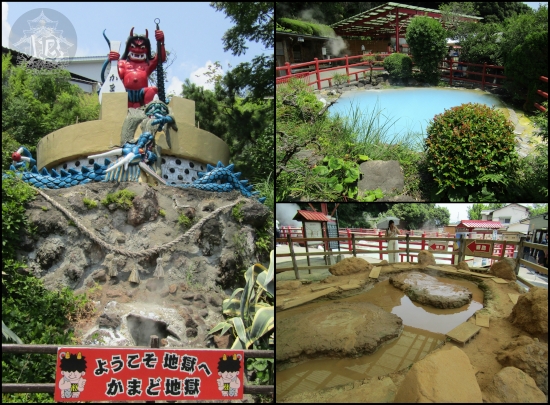
Second I headed walked into the Umi Jigoku [海地獄] (Sea Hell), which is a turquoise pond of boiling water with a small shrine. It also has a smaller reddish pond to one of the sides.

After this I took a break to have a made-in-hot-spring-water pudding and have something to drink, just because I could. It was delicious.

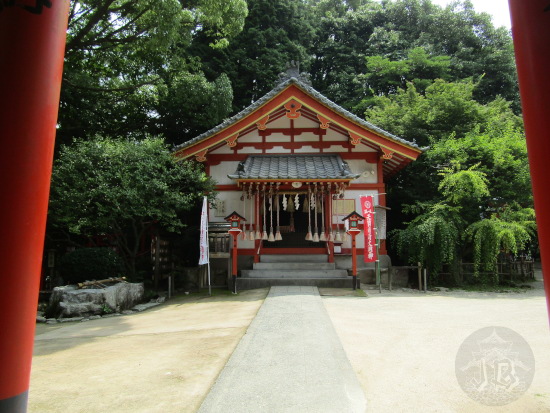
And there was Onsen Jinja [温泉神社] (Hot Spring Shrine) to snoop around, too!

Third, I dropped by the Yama Jigoku [山地獄] (Mountain Hell), which comes off from the mountain slope and complements that it is not the most spectacular one with having a small petting zoo, where I somehow ended up feeding a capybara. Don’t ask me XD (This hell is independent, so you have to pay extra to come into it).

Fourth, I went to the Kamado Jigoku [かまど地獄] (Cooking Pot Hell) which has a big oni cook to greet you.
Fifth, I found the Oniyama Jigoku [鬼山地獄] (Devil Mountain Hell) which for some reason breeds crocodiles, and what the hell, that was scary for a second. Even if they were behind bards, the crocs would follow you under the water and snip at your shadow and some of them were enormous! Creepy! The hot-spring itself was not that impressive but basically because it was steaming too much to see any of it.

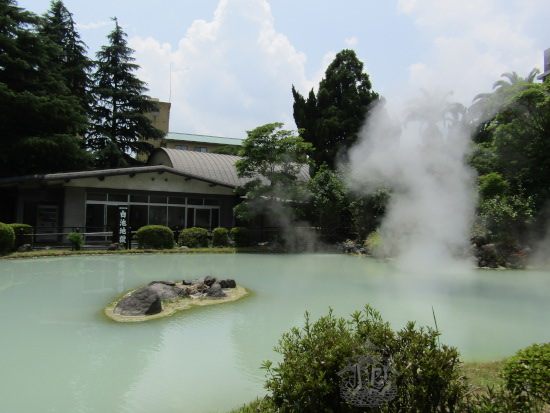
Sixth, I went to the Shiraike Jigoku [白池地獄] (White Pond Hell) where there was nobody to take my ticket. A nice old couple explained that I was to cut it myself and put it in a jar over there. We were talking a little and they asked where I was from. Then they continued on their way and I stayed petting a random cat who decided I was to scratch it right then and there. In this jigokku they also have a small aquarium with several tank of freshwater fish, among them “man-eating piranhas”…
I took the bus then to Shibaseki where the other two remaining hells were. Had the weather been more agreeable I would have walked, but I had the bus pass anyway and it was very hot. As I stepped out of the bus I came across the same couple from before. they explained that they had visited Spain before when they were younger and told me that they were from Osaka. We parted ways to go into the Chinoike Jigoku [血の池地獄] (Blood Pond Hell) which is a boiling red pond. Here I decided to take a foot bath as the area was empty and I was tired.

The final hell was Tatsumaki Jigoku [龍巻地獄] (Spout hell), a geyser you have to wait for, as it has its own timing. Here the old couple brought me a lemonade because they were adorable. And after the geyser it was over, or so I thought.

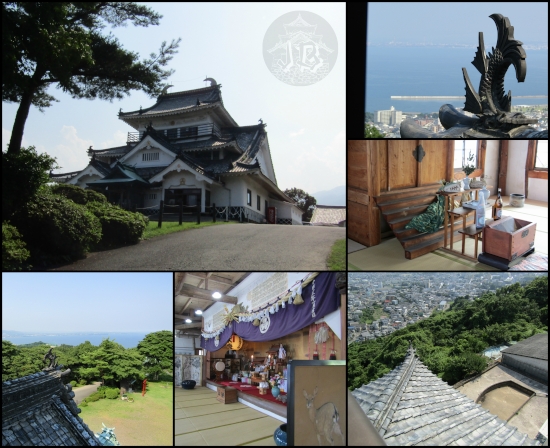
I had decided to give the aquarium a miss, because I was very tired but when I was taking pictures of the “castle” from afar I decided… I could not miss the chance, so I took the bus again towards Kifune-jo [貴船城] (which is quite new but pretty enough). Unfortunately the bus stopped right at the foot of the hill, so I had to go up and climb all the slope. I arrived just in time to pray to a snake which is supposed to bring happiness to whomever pats it.
After the castle I headed back downtown and took the train to backtrack to Kokura / Kitakyuushu [小倉 / 北九州]. While it is true that I had passed Kokura on my way from Fukuoka to Beppu, the idea was always to spend the minimum time on a train per day, but I wanted to combine Kokura with Okayama and make the following day a “castle day”.
Once in Kokura I checked in and went to see Kokura-jo [小倉城] by night.





 JBinnacle – A Travel Logbook