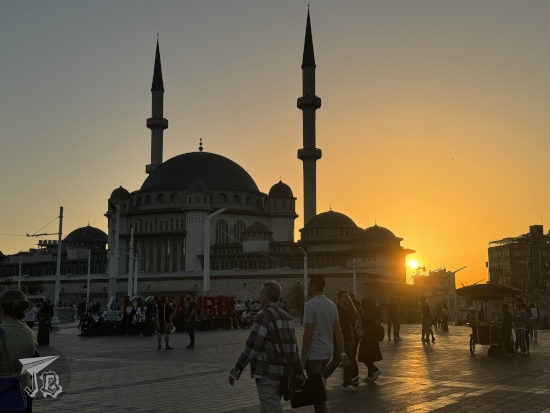
11th October 2024: Istanbul Airport {Türkiye, October 2024}

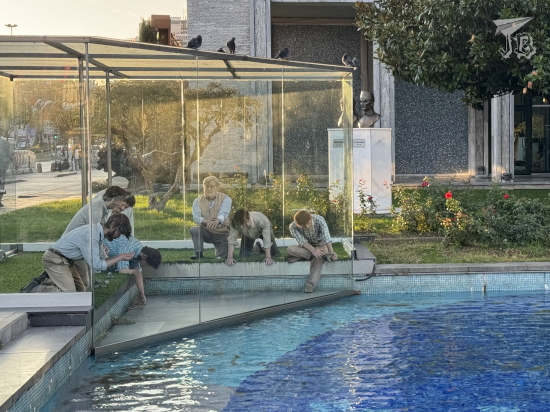
Since I had woken up early the previous day, I had also woken up early today, and I was caffeinated and ready about one hour before pick-up time. Considering that they were picking me up at 8:30 for a 13:45 flight, I decided to go for a walk in Istanbul | İstanbul before I got stuck at the airport. The Aqueduct of Valens was close to my hotel, and to get there I had to walk in front of the building of the Istanbul Metropolitan Municipality T.C. İstanbul Büyükşehir Belediyesi Başkanlığı. In the town hall yard there is a fountain with a glass case and several figures inside, reaching for the water. It is the July 15 Sarachane Monument Saraçhane 15 Temmuz Anıtı, which recreates a picture taken on the 15th of July 2016 during a coup attempt. It is supposed to represent a group of civilians Muslim men performing ritual ablution before facing off the rebel military forces at the call of President Erdogan. I was not sure if taking pictures of it was a security risk, but there were no guards around…

July 15 Sarachane Monument

I continued on towards Bozdoğan Kemeri (Aqueduct of the Grey Falcon), the part of the Aqueduct of Valens Valens Su Kemeri that can be driven and walked underneath. I stepped through the arches, and then turned towards Sarachane Park Saraçhane Parkı, which was empty except for a few cats and hooded crows (Corvus cornix) which expected me too feed them…

Aqueduct of Valens

cats and crows from istanbul

I went back to the hotel, gathered my things and came down to reception – both my driver and I were there at the same time, around 8:20. I guess we managed to avoid all traffic jams, because we reached the airport about 9:30. Upon entering the terminal, there was a first security control which X-rayed all the luggage, then I could access the check-in counters. I had done my check in online, but I printed my boarding pass in the kiosks anyway, and dropped off my luggage. The employee at check-in, holding my passport and boarding pass in her hand, asked me if I had a boarding pass. Obviously, she was not having the best of days, either.

I then went to passport control to clear immigration, which took about half an hour, and then the standard airport security check, which was fast because I found a “no need to take your electronics out” queue. Everything was extremely expensive in the airport. I did buy a bottle of water, but the prices put me off an ice cream, so I munched on some crisps that I had not eaten for dinner the previous night and I had packed exactly for this.

Truth is that Istanbul airport has a museum, but entrance was 13 € (note, not Turkish lira – 13 €). And at that point I decided that I was done feeling like a cash cow and introducing euro into the economy. I spent my remaining lira in the duty free shop, and found a copy of The Little Prince in Turkish for my and my parent’s collection.

We boarded around 13:00, and the process was not as efficient as the way in, but it was easy. We got lunch on the plane – happy to report I have finally internalised that pasta on planes tends to have peppers in the sauce and that upsets my stomach, too. I watched a movie and a half, and spent the rest of the time with one I had watched before as I would not have time to finish it.

Landing was smooth, but it took 61 minutes exactly from touchdown to getting out of the arrivals lounge, what with waiting for the luggage and so. And that was the end of the trip.

Maybe the bad project I mentioned at the beginning of the report was cursed, and thus the circuit was doomed, but it has been honestly one of the most disappointing trips I’ve taken – rushed, with bad information, and horrible customer service. I complained to my travel agent, who was horrified. It has really, really put me off anything organised for a while, and left me with a bad taste in my mouth. Of course, there have been good times, and awesome places, so it was not a complete disaster. Just not what I wanted, or what I thought I was buying when I chose it.

Would I come back to make up for it? I don’t know. As I was writing, I did wish I could go back to Cappadocia and Pamukkale to satisfy the geology nerd in me. Istanbul was not a city that made me feel particularly welcome, so I could skip that. Maybe in 20 years or so, if Türkiye is still a somewhat laic place, I might consider it. But the world is big, and there are many other places to explore… And the Turkish guide kept complaining that “all the good stuff was taken to Germany” so… that might be an option.

10th October 2024: The Trojan Horse & Bursa {Türkiye, October 2024}

We had to leave by 5:30 to go see the Trojan Horse. The reason why I had chosen this particular circuit was because it included “Troy”. The only thing I got to see of Troy was the Truva Heykeli Trojan Statue, – the horse which was used by Warner’s Bros to film the movie Troy in 2004. Not a damn ruin, not a damn rock, let alone be near the archaeological site. Damn it, did I choose the circuit badly or what? I do wonder what people thought of us taking structures of the stupid thing at 6:40 in the morning. As we drove north, we saw the Galipoli Peninsula, place of a huge battle between the Ottoman Empire and New Zealand and Australia regiments belonging as part of the British troups.

Çanakkale Trojan horse

We continued towards the city of Bursa, the first capital of the Ottoman Empire, and another of the World Heritage Sites – Bursa and Cumalıkızık: the Birth of the Ottoman Empire. It started off as a settlement around 5,200 BCE, which evolved into a Greek city. Under the Byzantine reign, it was a city known for its garrisons and its silk manufacturing centre. It is considered the origin of the Ottoman Empire, and throughout the period, it flourished through its local silk production. Following the foundation of modern Türkiye, it became an industrial city.

Our first stop was the Grand Mosque of Bursa Bursa Ulu Cami. Its first stone was set in 1399 an important building in the early Ottoman architecture as it found its own style. It is a rectangular building with a fountain from the 19th century at the centre – originally this area was open but it is now closed with glass, forming a skylight. It has two minarets. The interior is mostly white, but at the same time, quite decorated with calligraphy, medallions and vegetal themes.

Interior of the Great Mosque Bursa

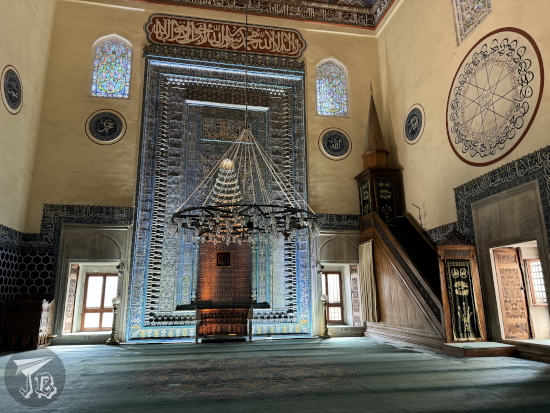
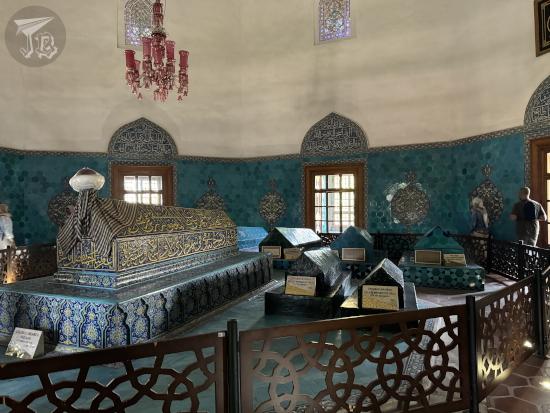
Then we drove to the Green Mosque Yeşil Camii complex. It was commissioned in 1412 by Sultan Mehmed I Çelebi, who is buried in the adjacent Green Tomb Yeşil Türbe – along with his children and their caretakers. Both the mosque and the mausoleum have beautiful decoration in blue-green tiles with gold inserts, which create the motifs and calligraphic inscriptions.

Mihrab of the Green Mosque Bursa

Bursa Green Tomb

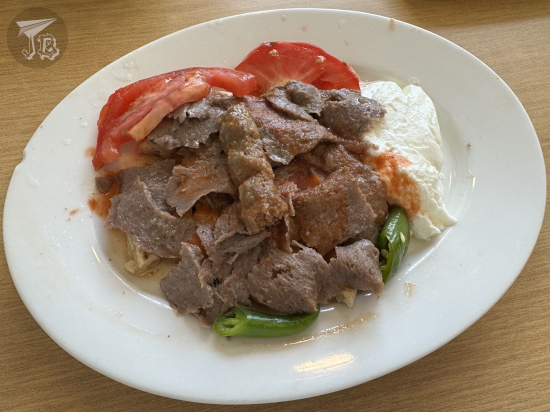
Next to the mosque stands a building which calls itself a Silk House, but is just a huge souvenir shop, nothing even close to the actual Silk Bazaar. Afterwards, we went for lunch, lentil soup and a traditional Bursa kebap İskender kebap, making this another sort-of actual Turkish meal. It uses meat cooked on a vertical rotisserie (döner kebap) on pita bread, with tomato sauce, yoghurt and sheep’s milk butter – which was poured at the table. Dessert was a honey pastry.

İskender kebap

Then we continued off back to Istanbul | İstanbul. We got there around 16:00 and I was considering maybe heading out to a church-turned-mosque to see some of the most important museums but… at that point it felt more like a self-imposed obligation that something I really wanted to do because I would enjoy it? It was more of a feeling of “you should do it because you are not going to come back to this country”. But the truth was that I really did not want to do it. I was disappointed in the whole trip experience, and in a way, I did not… I don’t know… care anymore? No balloon over Cappadocia, not enough time for Pamukkale travertines, no Troy. Whatever.

The nice group from the trip invited me to hang out with them for a walk. Together, we walked to the Grand Bazaar Kapalı Çarşı. Then we continued towards Sultanahmet Square Sultanahmet Meydanı, from where we crossed Gülhane Park Gülhane Parkı until we reached the coastline İBB Sarayburnu Parkı, the point in which the Golden Horn and Bosphorous Strait come together. On our way back, we stopped around Sultanahmet Square Sultanahmet Meydanı to take some pictures.

Gülhane Park at night

Bosphorous at night

Sultanahmed square at night

Finally, I headed back to my hotel – Hotel Bi·setun, the same as the first two nights – to order dinner, have a shower and get ready for the return trip.

5th October 2024: From Istanbul To Cappadocia {Türkiye, October 2024}

The alarm clock went off at 5:40 and I was ready for pick up in 15 minutes. The guide had changed my pick-up time from 6:25 to 6:00, but apparently was the only one who had been informed about the rescheduling. The travellers in the rest of the hotels in the area had no idea, which made it absolutely pointless because we had to wait for them anyway.. For this leg of the trip we were 16 people, and the description of the day said we would “visit the Atatürk mausoleum in Ankara and see the Salt Lake” on our way to Cappadocia. A quick calculation yields to about 733 km of trip from Istambul to Avanos.

We left Istanbul and went on the road. We took a couple of breaks on the way, and around 12:30 we reached Mustafa Kemal Atatürk’s mausoleum Anıtkabir in Ankara. Mustafa Kemal Atatürk is often called “the founding father of modern Türkiye”, and served as the first president of the Republic, between 1923 and 1938. The Ottoman Empire had participated in World War I, and after its defeat, the Allied powers wanted to divide the country among themselves. Atatürk spearheaded the Turkish War of Independence, and upon victory, he abolished the Sultanate and proclaimed the Turkish Republic. He made a lot of changes – primary education became free and compulsory, the Latin alphabet replaced the Ottoman writing, women obtained equal rights, the country became secular and started industrialisation, the language was strengthened, and surnames were adopted.

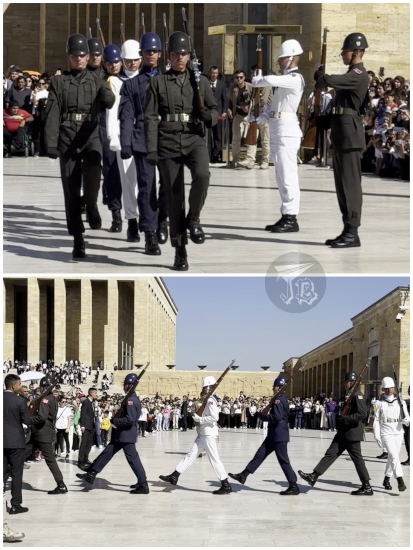
Upon Atatürk’s death, it was decided to build a mausoleum in Ankara – Anıtkabir. There was a design competition which was won by Emin Onat and Orhan Arda, though modifications were added later on. It is a massive complex with a courtyard, stairs, the tomb hall, and exhibition rooms. The theoretical entrance to the area is an avenue lined with lions and trees, though due to security, you enter from the opposite side. The Hall of Honour holds a symbolic sarcophagus, and the actual tom is located 12 metres underneath. On the corners, there are small ethnographic exhibits. The whole complex is made out of reinforced concrete and is decorated with marble, travertine, reliefs, frescoes, carvings… Everything looks golden. Around 13:15, we saw the changing of the guard in the ceremonial courtyard.

Mausoleum of Mustafa Kemal Atatürk

Change of the guard at theMausoleum of Mustafa Kemal Atatürk

Then we headed off for lunch, a bowl of lentil soup and a plate of flattened “meatballs” and rice, and continued on our way. Around 17:00 we “saw” the Salt Lake indeed – we guessed its existence from a service station a few kilometres away. We reached the Suhan Cappadocia Hotel & Spa in Avanos, in the region of Cappadocia. We would be using that as base for two days. One of the things to do in Cappadocia is seeing sunrise from above. However, since the group was not complete, the guide did not offer the possibility for sunrise the next day, he just gave us the Wi-Fi password (which only worked in the lobby), and the dinner / breakfast / day trip for the morning, and left.

Riding a balloon in Cappadocia is the thing to do. It allows you to see the structures called “fairy chimneys” from above as the sun rises, and since the landscape is so unique, I was really excited. Geologically, Cappadocia is a very interesting place – some thirty million years ago, volcanoes Erciyes, Hasan and Melendiz erupted repeatedly. Over thousands of years, ash rained on the ground, creating an elevated plateau of around 17,671 square kilometres. The ash hardened into tuff (a porous rock that I have seen in Neapolitan architecture) before it was covered by a layer of basalt. Both types of rock weathered, but tuff erodes faster than the upper basalt – creating sort of mushroom-like rock formations. As you can imagine, being the geology geek I am, visiting all these was one of the things I was looking forward the most. I had even put aside a budget “just for the balloon”, as it can get quite expensive, and I wanted to remain reasonable.

I dropped off the luggage and decided to go get something to eat before I hopped into the shower – else I would not get any food at all. Dinner was a buffet, and it was overrun. The food was weird… there was a huge dessert buffet, and a lot of breads, but nothing that really grabbed my attention but a few dollops of cacik (Turkish tzatziki). Back in the room, I tried to find a TV channel with something I could understand – and was not related to Israel bombing or being bombed. I did not even find the BBC…

4th October 2024: Istanbul, day 2 – Bosphorus Istanbul (plus, again) {Türkiye, October 2024}

It was warm in Istanbul | İstanbul when the sounds of the town woke me up. Since I was up early, I decided to find the Bozdoğan Kemeri (Aqueduct of the Grey Falcon), part of the Aqueduct of Valens Valens Su Kemeri. It was built using brick and stone in the 4th century in order to bring water to Constantinople. Construction started under the reign of Constantine II and finished during the reign of Valens, and the structure was in use under the Ottoman period. The Bozdoğan Kemeri bridge is 971 metres long, and its maximum height is around 30 metres. Today, it stands over a busy road, with cars running underneath.

I went back to the hotel for pick-up, which today happened on time. I had signed up to the other day trip offered to me at the airport Estambul Bósforo (55 €). My hopes were not too high, but at least I met with the nice ladies from the day before. This time around, the group was bigger, so everything was a bit more chaotic. Our first stop was Süleymaniye Mosque Süleymaniye Camii, an Ottoman imperial mosque commissioned by Suleiman the Magnificent to his imperial architect Mimar Sinan around 1550. The mosque has four minarets with a total of ten balconies. The interior is decorated with medallions, writings, geometrical decorations, and beautiful stained-glass windows. Outside, there is a cemetery with the mausoleum of Sultan Suleiman and his wife Roxelana.

Süleymaniye Mosque

After the mosque complex, the bus headed out towards the Asian side of Istanbul for a panoramic viewpoint up Çamlica Hill Çamlıca Tepesi, which implied getting stuck in traffic for a long time again and driving past a lot of interesting buildings – visiting any of those would have been a better use of our time.

View of Istanbul from Çamlica Hill

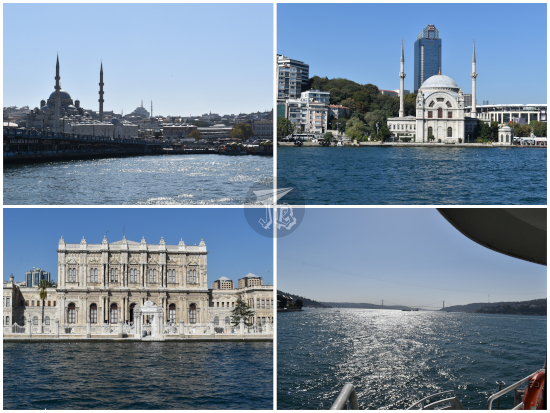
We went back to the bus for the boat ride, which despite being advertised as a Bosphorus trip, was only up and down the Golden Horn Altın Boynuz for about an hour. At first, I tried to pay attention to the guide as he explained things, but I got bored pretty quickly. This was not a good sign, considering this one guide was the one who was to take me onto the tour around the country…

Bosphoros boat ride

For lunch, we had been asked to choose either bream or chicken. I had ordered the chicken because I had a feeling I could not trust a random restaurant in Istanbul… I was right. The bream turned out to be sea bass. Again, food was nothing remarkable. Then, we walked towards the New Mosque Yeni Cami, which was the next visit, but we did not get to go into that one for reasons that escape me. Instead, we were taken into the Spice Bazaar or Egyptian Bazaar Mısır Çarşısı, for a demonstration inside a particular shop. I do wonder how many and how much commissions go into decisions like that.

New Mosque Istanbul

Egyptian bazaar Istanbul

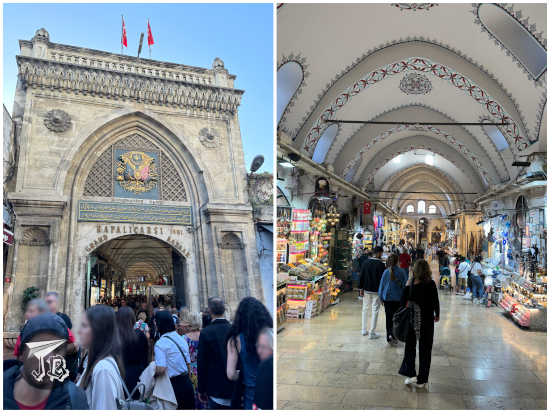
This was the end of the day trip, around 17:00, since the guide had once again stated that “your hotels are close, no need for the bus”. I said goodbye to the nice ladies, and headed out towards the Grand Bazaar Kapalı Çarşı, described as a “network of indoor souks and market streets”. It is actually one of the oldest and largest covered markets in the world, and it has thousands of shops – literally. It dates back from 1455, just after the Fall of Constantinople into the hands of the Ottomans. It was an interesting structure, but I only found trinkets and souvenirs, and it was packed with people.

Grand Bazaar

Thus, after crossing out the Grand Bazaar from the list, I headed towards the university İstanbul Üniversitesi, my reference for the metro stop Veznecıler. From there, I could take a train towards Taksim Square Taksim Meydanı, the gateway to Independence Avenue İstiklal Caddesi, on the other side of the Golden Horn but still in the European side. The area is a tourist hub with shops, fast food places, and ice cream vendors who play around before they serve you the ice cream cones. One of the highlights of the avenue is the “nostalgic tramway” İstanbul nostaljik tramvayı, a revival or heritage tramline with tiny cars, built from memories and photographies. It is not a novelty thing for tourists, but an actual working system that goes up and down the avenue, line T2. I was happy to be able to see it, the car was packed – mostly by tourists though…

Taksim square

At the end of İstiklal Caddesi, stands Galata Tower Galata Kulesi, a former watchtower, now a museum with an observation deck. The origin of the tower dates back from 1204 though the original tower was destroyed and rebuilt in the Romanesque style in 1350. At that point, it was the highest building in the city. At the moment, it is almost 63 metres high, with nine floors, and a renewed roof.

Nostalgic tram and Galata Tower

Afterwards, I caught the underground at the nearest stop – though I was a little bit tempted by the nostalgic tram – and I headed back to the hotel. I settled the bill for the water bottles I had bought and went up to my room, where I decided to order the same dinner as the evening before – kebap and yoghurt. I then had a shower and packed, because pick-up was at 6:00 the next morning. Good thing that I had found a vending machine in the underground system that sold canned coffee, even if it was “almond flavoured”.

3rd October 2024: Istanbul, day 1 – Classical Istanbul (plus) {Türkiye, October 2024}

I spent the day in Istanbul | İstanbul, probably the most important city in Türkiye, and certainly the largest, but not the capital. It was founded as Byzantium in the 7th century BCE, straddling the Bosphorus Strait, which is considered the boundary between Europe and Asia. In 330 CE, Roman Emperor Constantine renamed the city into Constantinople after himself, and made it the capital of his domains. The so-called Fall of Constantinople in 1453 started the Ottoman Caliphate – sometimes called the Ottoman Empire. The empire survived until it joined World War I and was subsequently defeated – Istanbul was the capital during most of that time, until the Turkish Independence War, when Mustafa Kemal Atatürk made Ankara the capital.

Istanbul is probably the only city in the world which stands between two continents, separated by the Bosphorus strait and the Golden Horn – an estuary flowing into the strait. To the west of the Bosphorus is Europe, and to the east Asia. The European area south of the Golden Horn is called the historic peninsula.

Istanbul has claimed its rightful place in history as a key step of the Silk Road and the spread of Christianity during Roman times. The historic peninsula is a Unesco Heritage Site, the Historic Areas of Istanbul, which the day trip I had hired, called “Classical Istanbul” Estambul Clásica (50 €) was supposed to cover.

I woke up around 7:00 and went down for breakfast. Coffee was… unexpectedly dull, considering the fame of Turkish coffee – and I had two cups to kickstart my brain. The scrambled eggs were particularly good, but the bread so-so. At 8:20, ten minutes before pick-up time, I was ready and waiting at reception. At 9:10 I wrote to the person who had picked me up from the airport, who had told me to text her with any question, and at 9:15 they showed up – there was apparently “a lot of traffic”, and we were stuck in it for a while. I spent the time checking out the ruins of Constantinople’s ancient walls Bizans Surları, which are also part of the Unesco Heritage Site.

The group comprised around 30 people, and the bus headed towards an area called Pierre Loti Tepesi, Pierre Loti Hill, and reached there around 10:00. This is a viewpoint above the Golden Horn Altın Boynuz, with a viewing terrace, a café and the Eyüp Cemetery Eyüp Mezarlığı. We were told we’d visit the cemetery later, and were given twenty minutes to take in the views. Afterwards, we hiked (considering the speed, “marched”) down the hill through the cemetery, and saw several tombstones from the Ottoman period, but there was no visit whatsoever.
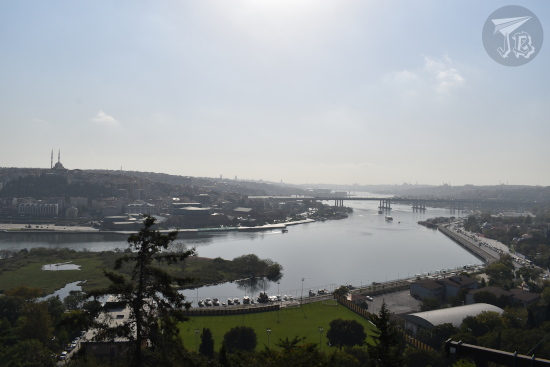
Istambul from Pierre Loti hill

We hopped back onto the bus to drive towards the quarter called Fener, which we were told was “movie neighbourhood”. We were going to visit the Venerable Patriarchal Church of Saint George, the Orthodox cathedral of Istanbul Aziz George Katedrali, which closed down as we arrived for “an unknown length of time” because the Patriarch was coming out. Instead of letting us amble through the neighbourhood before the church, the guide insisted on us waiting for about 20 minutes before we all came into the church, and he gave a couple of explanations, and gave us free time to check out the church and the neighbourhood.

The church of St George was one of the few places with “real” security. We got through a lot of places with metal detectors and such with guards who would not even care, but the ones that did were ridiculously strict in contrast. The truth is that with the rise of Turkish nationalism, a lot of the church’s flock were deported, so the church and Patriarch are mostly symbolic and a pilgrimage point, and it has even been attacked by terrorists at times. The church itself used to be the centre of the quarter, which was historically the Greek quarter, even after the Ottoman Turks had taken over former Constantinople. Though the church existed previously, it became the seat of the Ecumenical Patriarchate of Constantinople since the early 1600s. It has been damaged and rebuilt several times, the latest as recently as 1991. It has three naves and aisles, with a rich iconostasis (decorated screen that separates the altar from the nave) in golden wood.
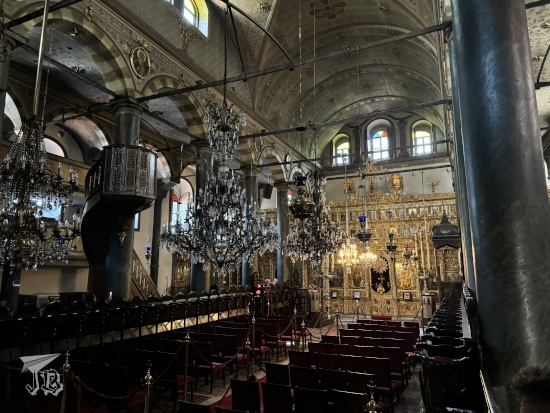
Church of St George Istanbul

After the cathedral, I wandered the quarter of Fener on my own for as long as was given us as free time. I found a colourful set of stairs Renkli Merdivenler, which led to nowhere but area pretty. The whole area was a hill, and I climbed up to try to catch a view of a very interesting building – the private school Phanar Roman Orthodox Lyceum Özel Fener Rum Lisesi. The building was designed in an eclectic style by Greek architect Konstantinos Dimadis, and built around 1882, though the school itself dates back from 1597. I also saw a film crew on a break in one of the streets.

Roman Orthodox Lyceum

Once we were called back to the bus, we headed out for lunch. The entrées looked good, actually Turkish, including hummus, rolled paçanga böreği, dolma (stuffed vine leaves), cacik (Turkish tzatziki). The main was rather unremarkable, and something that I could have easily had in either Jordan or Egypt – a sad-looking plate with eight fries, two slices of cucumber, one slice of tomato, a mouthful of rice, and some chicken and lamb. Dessert were the ubiquitous Turkish delights, which are extremely sweet and I’m not a big fan of. Looking back, however, this was one of the most Turkish meals I ended up having, besides kebaps. During lunch, I made acquaintances with some nice ladies who promised to make sure I was not left behind – which has been a bit of a worry of mine when I’m in a guided tour since my last day in Egypt.
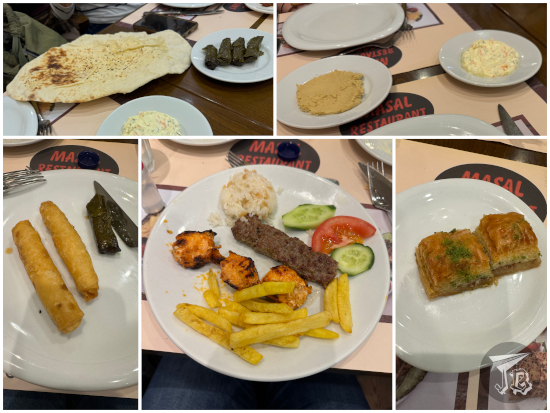
Turkish meal

Around 14:00 we walked towards the area known as Sultanahmet Square Sultanahmet Meydanı, the neuralgic centre of historic Istanbul. There, the first stop of the afternoon was Sultanahmet Camii, the Sultan Ahmed Mosque colloquially known as the Blue Mosque. It was built between 1609 and 1617, during the Ottoman era. Designed by architect Sedefkar Mehmed Agha, it was the last great mosque built in the Classical Ottoman style, and combines Byzantine details and Islamic architecture. It has a central dome (43 metres high) with four semi domes and six minarets. The interior is decorated with tiles and mostly blue decoration, hence the name – though honestly I mostly felt it was… golden. The mosque has windows which originally had coloured glass, and are now modern, and it has chandeliers hung from the ceiling, with some of the lamps being ostrich eggs, a typical feature in Turkish mosques. One of the minarets was being restored.
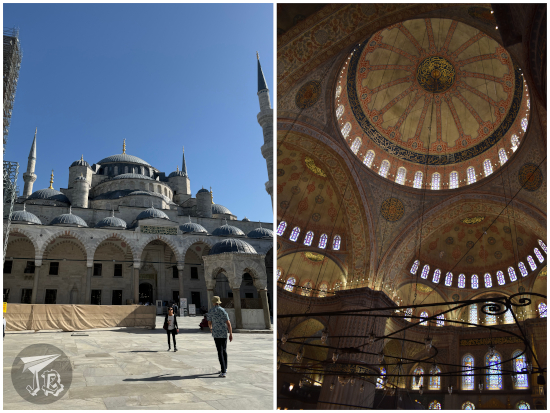
Blue mosque

The mosque stands next to the square, which is long and narrow – it is actually built on the former Hippodrome of Constantinople Hipodrom, the centre of the city during the Byzantine period. Upon the founding of Constantinople, both Constantine and his successor Theodosius the Great brought works of art into the area. Today, there stands the Serpent Column Yılanlı Sütun, an ancient bronze column representing a hydra, whose heads are now missing (part of one is now in the nearby Archaeology Museum). Another monument of the square is the Egyptian Obelisk of Theodosius Dikilitaş, originally erected for Pharaoh Thutmose III (1479 – 1425 BCE, 18th century) in Karnak. It stands on a Roman pedestal from the time it was transported to Constantinople around the year 390 CE. The final construction in the square is the German Fountain Alman Çeşmesi (The Kaiser Wilhelm Fountain), a neo-Byzantine fountain that was constructed to commemorate the visit of German Emperor Wilhem II to Istanbul. It has eight sides, with marble columns and an inside covered with golden mosaics.
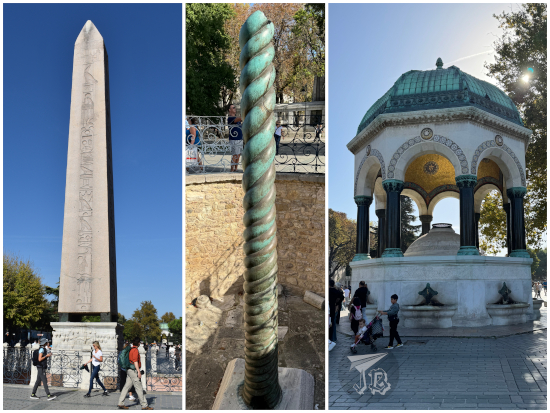
Monuments at Istanbul hyppodrome

The official day trip ended there – though they were supposed to take us to the Grand Bazaar. However, the extended tour (25 € extra) included visiting the Orthodox church-turned-mosque-turned-museum-turned-mosque Ayasofya-i Kebir Cami-i Şerifi Hagia Sophia Grand Mosque. The current structure was commissioned by the Byzantine Emperor Justinian I to be the Christian cathedral of Constantinople as the Church of God’s Holy Wisdom, designed by Greek geometers Isidore of Miletus and Anthemius of Tralles. At the time it was built, it was the largest interior open space in the world.

It has a central dome with rises 55.6 metres from the ground and a diameter of around 31 metres. After the fall of Constantinople in 1453 it was converted into a mosque. In 1935, the new Turkish Republic turned it into a museum, but in 2020 the controversial decision to turn it back into mosque was made. With the first transformation into a mosque, minarets were erected and the Byzantine mosaics on the ceilings were covered or destroyed. They were recovered for the museum period, and now they are hidden away. While originally the mosque was going to be “open for all”, now the ground floor, covered with a carpet, is only for praying Muslims, and tourists have to pay to access the second floor and see the Christian mosaics. From the second floor, you can see the mosaics, and are close to the domes, which allows you to see the questionable state of conservation. The dome is fantastic, and there are mosaics of the archangels there. On the way out, there is another mosaic depicting the Virgin Mary with the child, and Constantine and Justinian giving them presents – Istanbul itself and Hagia Sophia. The walls however, are in dire need of restorations.
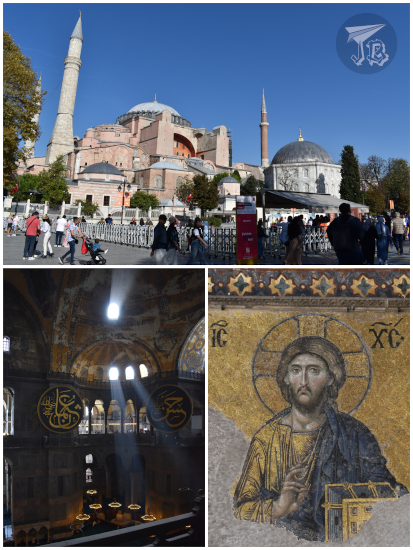
Hagia Sophia Istanbul

The day trip ended after an introduction to the building, and I wandered around for a while, seeing everything I was allowed to before I stepped out. At that point it was 16:50. I had the option of walking, as recommended, to the Grand Bazaar, but I decided that I had better things to do. I rushed towards the palace-turned-museum Topkapı Palace Topkapı Sarayı. Construction of the complex was ordered just after the fall of Constantinople by Sultan Mehmed the Conqueror overlooking the Golden Horn. Closed-off by walls, it has several buildings and palaces, some of which hold exhibitions. The palace closes at 18:30, and the ticket booths at 17:00. I was able to buy a ticket at 16:57 because I am very motivated, and I even saw most of the key areas of the palace in those 90 minutes. Though the recommended visit time is four to five hours, at least I felt accomplished – I wished I had prepared better for it, but I thought that I was standing next to the palace, and even if it was expensive I could return the next day if I felt I wanted to see more.

The first courtyard is free for everyone to see, and that is where the ticket booths are. I hurried towards the second courtyard, where I was able to see the Ottoman Empire Imperial Council, the Treasury, the Arms collection, the Gate of Felicity, the Chamber of the Sacred Relics, the Harem, the Baghdad kiosk, the Grand Kiosk, and even the panoramic view of Marmara Sea, among other smaller buildings – and of course, the feral cats. I did miss the porcelain and miniature collection, but I felt rather accomplished for the 90 minutes I had.

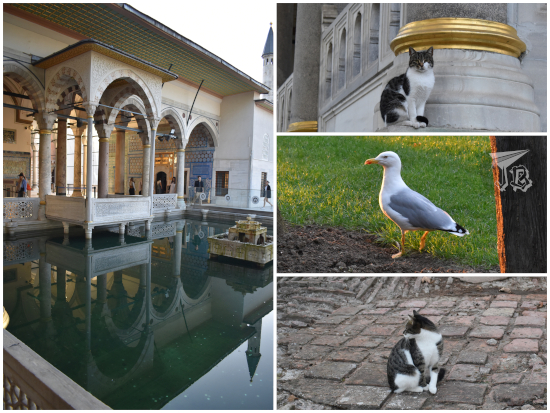
Topkapi palace Istanbul

Topkapi palace

I left the palace among the last visitors, as they closed the gates behind us. I had two options now – head back to the hotel and try to see the Grand Bazaar, or explore around for a while. To be fair, the area looked rather full and with a bunch of tourists looking more like a target than myself. That happened a lot during this trip, fortunately. I was not considered “targetable”.

Most visitable monuments had closed or were about to at this point. However, I knew that the Basilica Cistern would reopen an hour later, so I decided to wander around and try to get to the promenade along Kennedy street Kennedy Caddesi, which allowed me for nice views of Bosphorus Strait İstanbul Boğazı, the Golden Horn Altın Boynuz and Galata Bridge Galata Köprüsü.
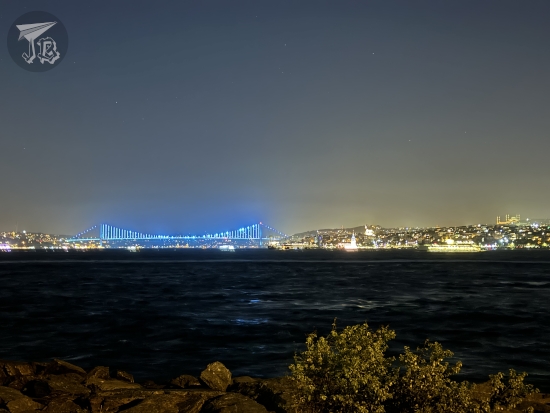
Golden Horn at night

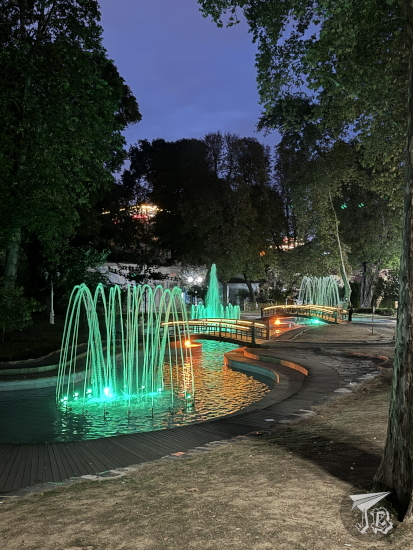
I went back towards the city centre through Gülhane Park Gülhane Parkı. At this point it was dark, so the fountains were on, and they looked very fun, all lit up.

I reached the queue to enter the Basilica Cistern Yerebatan Sarnıcı (Subterranean Palace). The ancient cistern has a normal opening schedule, and an evening schedule, which is a bit more expensive, with live music. But it worked for me. The cistern was built in the 6th century with the goal of providing water to the Great Palace of Constantinople, which stood where the Blue Mosque is now. It is an underground chamber with 336 columns that are up to 9 metres high, and it can hold up to 80,000 cubic metres of water. The columns seem to be recycled from ruined buildings, and at least one of them is carved with an upside-down Medusa face on the base. Today there is very little water, and there are modern art installations, and there are cool changing lights that give it a very interesting look and feel.

Basilica Cistern Istanbul

By the time I left, I kind of regretted having signed up for the second day trip, because I had been rather more efficient on my own, but again, I had not done much planning for the city. I went back to the hotel and I ordered food using the online room service. This time I decided on a kebap chicken wrap and a Turkish yoghurt, which was delicious. I had a shower and went off to bed.

Kebap and yoghurt

2nd October 2024: MAD → IST {Türkiye, October 2024}

I had a Turkish Airlines flight at 12:00, and a strong recommendation to get to the airport three hours in advance. Back in July 2024, the outage of Microsoft systems caused chaos at the airport, and apparently the system has not completely recovered. Thus, my travel agent insisted on the three-hour margin. Since the flight was not an insane time, my parent had offered to drive me to the airport, but they “don’t believe in being at the airport three hours beforehand”. In the end, I negotiated a drop off a bit after 9:00.

I got to the baggage drop counter, which should have been a fast affair, but it was held up by a passenger who was checking in firearms – I was in the plane with a party of hunters. It was a bit creepy, because at some point they opened the gun cases for everyone to see, in the middle of the check-in line. Finally, Turkish Airlines opened a second counter while someone dealt with this traveller. I had my boarding pass, and my luggage was about 13 kg. I had packed an extra pair of shoes, long sleeved T-shirts, jeans and a couple of sweatshirts, along with a long cardigan that can be used as outerwear, blanket or even pillow as the situation requires – and I knew there were a lot of bus hours to come.

After checking in the luggage, I went through security and passport control, and found a seat until it was time to board. The boarding process was extremely efficient and fast, and we took off on time. We got lunch on the plane, and there was on board entertainment, so time passed quickly. Upon reaching Istanbul International Airport, there was a passport control upon exiting the plane, but I’m not sure what they were checking for, as everyone got waved through. Most passengers went onto connecting flights, and I headed off to immigration. I obviously chose the wrong line, as it took me a long time to clear it. I got my passport stamped – a brand new passport, and they stamped it, upside down, on page number 19, because why bother, I guess.

Welcome to Istanbul

After clearing immigration – I was not even aware of customs – I had to go to a particular gate to meet the representative from Oxin Travel outside the airport. I had bought an e-sim for my phone to have “unlimited internet for ten days”, so I activated that on my way, and it worked very well. When I went out the gate, I was supposed to look for a person with the travel agent’s logo, but I was surprised that there was actually a woman screaming my name. I was the only passenger on the tour that came on that flight.

She took me to the car park, where she left me alone to find our driver. When she came back, she told me about Istanbul’s day trips and sent me the information via WhatsApp, and recommended stuff to do. I booked both day trips because the whole point was having to plan little and save mental energy. Hindsight being 20/20, I regret that choice.

The drive to Istanbul | İstanbul took just above one hour, 20 minutes of that were spent trying to get out of the airport. It was already dark when we arrived in town, and I was able to catch a glimpse of Galata Tower Galata Kulesi. We reached three-star Hotel Bi·setun around 19:00 maybe, and the representative and the driver left to have me do the check-in on my own – good thing that she had confirmed on the phone that the hotel was expecting me, because the way we pulled into the area made it look a bit shady.

During check-in, the hotel kept my passport, and that was a bit creepy. When I got to the room, I found that the hotel had a nice system where you could order food through a special webpage – it was like an outsourced room service that could be paid by credit card, which was extremely convenient. I ordered a pacanga pastry paçanga böreği, similar to a quesadilla, and a lentil soup mercimek Çorbası.

I then went down to reception to buy a bottle of water and retrieve my passport. After the food arrived, I ate, had a shower and settled down to sleep. It was a rather uneventful journey, to be honest, but somehow it did not feel… smooth. The bit about being the only person picked up at the airport was weird, and communicating with the representative via WhatsApp a bit awkward.

2nd – 11th October 2024: “Turquía Única” – A circuit in Türkiye {Türkiye, October 2024}

At the end of an already crazy, crazy work period, I had a very bad project. I determined to spend all the income from that one project on a big trip. However, at the same time, I was too exhausted to do a lot of planning. I decided to book a circuit, and since China was about 7,000 € above my budget, I ended up choosing to visit Türkiye. It also felt like a good moment to do so, before tensions in the Middle East escalate even further than they have, and while the country is still somewhat laic and not the Islamic Republic it seems on the path to turn into.

I booked my trip in August for October as that was when work would be over for the year. The only thing left was crossing fingers for good weather, and survive work till then.

Overall, the experience was on the wrong side of disappointing. The tour I chose looked good on paper, but it turned out to be badly managed and even more badly implemented. I’m not even a food-driven traveller, but none of the places we visited offered much in regards of Turkish dishes except the same sweets over and over again. Most hotels were falling apart – literally – and in the middle of nowhere, so when we arrived there around 18:00 at the latest, there was nothing around to explore. On top of that, pure bad luck this time, my flight connection were rather inconvenient – I arrived late on my first day in Istanbul, and left early on my last, so there was no way to enjoy those days.

One of the big problems I ran into was the diffusion of responsibility, as I booked a trip from Viajes El Corte Inglés, distributed by MapaTours and implemented by the local Oxin Travel, whose guides were… let’s say lacking.

I was excited when my travel agent called to give the documentation, a couple of weeks before the adventure started. There were some errors in formatting, and a reference to a photograph which was not there – I tried not to worry about that. A link can easily break when paperwork is prepared for printing. It was a sign (or a metaphor) for all the small things that would go wrong, I see now.

I am aware that I come from an incredibly privileged place, complaining about a nine-day to Türkiye. However, I paid for a service I did not receive, and that miffs me. On top of everything, the single supplement was 400€, because Türkiye does not do single rooms whatsoever, almost 20% of the total price excluding extra day trips.

I booked a circuit named Turquía Única (Unique Türkiye), which started and ended in Istanbul. The itinerary included Ankara, the region of Cappadocia, Pammukkale, Izmir, Pergamon, Çanakkale, Bursa and back to Istambul. I landed on the 2nd and returned on the 11th, but I was only up and about between the 3rd and the 10th. I also made the mistake of booking the optional Istanbul day trips trying to avoid long queues at ticket booths and monuments.