10th & 11th August 2019: Once in a lifetime – The Great Fuji-san Adventure {Japan, summer 2019}

Mount Fuji aka Fuji-san [富士山] is a special mountain in Japan, both geologically and culturally. Japanese and tourists enjoy Fuji-san in different ways – contemplating it, visiting it, climbing it, going around it… Well… Guess who got into their thick head that they wanted to climb it? raises hand Exactly! Yours truly. I was already toying with the idea back in 2018, but I chickened out. However, as I mentioned before, this one time I wanted to scratch as many things off the bucket list as possible, so… There I went – kinda pushed by a feeling that if I did not do it, by the time I were back in Japan it might be too late as my health is not.… complying lately. But I had not hiked up a mountain before in my life…

Mount Fuji is the most famous mountain in Japan. Its iconic image is everywhere – enamel pins, t-shirts, postcards, classical art… Located around 100 kilometres south-west of Tokyo, it is 3,776.24 metres high, which makes it the highest peak in the country. It was declared a UNESCO World Heritage Site in 2013.

Technically, Fuji-san is neither a mount nor a mountain, but a type of volcano known as a stratovolcano. Its current morphology was shaped by consecutive layers (“strata”) of lava hardening. It is mainly composed by a rock called basalt, and it is one of the few large basalt volcanos in the world. Basaltic lava is rather thick and slow-moving, so there are many lava tunnels and tree moulds created by the eruptions.

Fuji-san, as we know it today, was formed from a previous volcano (Komitake), and became active around 5,000 years ago. Around 2,300 years ago, there was a mud landslide (Gotemba mud flow [御殿場泥流, Gotemba deiryū]) that can still be identified. There have been several historical eruptions, twelve of them between the years 800 and 1083. There was a ten-day eruption of ashes and cinder in the year 864 (Jōgan 6 in the Japanese calendar, based on the different Emperor’s reign; 2019 is Reiwa 1, as current Emperor Naruhito just ascended the throne). In the year 1707 (Hōei 4 in the Japanese calendar), a few weeks after a big earthquake, the last known eruption took place. In the current Japanese Volcanic Alert Level, Mount Fuji is categorised as “Level 1: Potential for increased activity”, which is the lowest level.

Mount Fuji has frequently been depicted in Japanese art, most famously in Katsushika Hokusai’s [葛飾 北斎] Thirty-six Views of Mount Fuji [富嶽三十六景, Fugaku Sanjūrokkei] by, a series of ukiyo-e block prints (which are actually 46). Probably the best known among these is The Great Wave off Kanagawa, one copy of which is displayed at British Museum in London (actually, in 2017 they ran a whole exhibit around it and Hokusai).

Fuji-san is also an important element in the collective spirituality of Japan. In Shinto mythology, the goddess of Mount Fuji is Konohanasakuya-hime [木花咲耶姫]. She is enshrined in Fujinomiya town Fujisan Hongū Sengen Taisha [富士山本宮浅間大社]. Technically, this shrine has owned Mount Fuji since 1609, though there are no current records of ownership. The volcano stands at the boundary between the prefectures of Shizuoka and Yamanashi, and in order to manage the natural area, the Fuji-Hakone-Izu National Park [富士箱根伊豆国立公園, Fuji-Hakone-Izu Kokuritsu Kōen] was established.

Depending on the actual weather, Fuji-climbing season extends from late June or early July to early September. It is not allowed to climb Fuji “off-season” without a permit. However, people do not usually climb the whole mountain, but start quite closer to the summit. There are roads leading up Mount Fuji up to around 3,200 metres, to an area called the Fifth Stations However, no private cars are allowed on those roads.

From the Fifth-Stations there are four trails or paths to the summit, colour-coded to help people find their way, especially on the way down:

  • Yoshida Trail [吉田ルート] (yellow). It starts at the Fuji-Subaru Line 5th Station [富士スバルライン五合目] (Yamanashi Prefecture). This is the trail recommended to “beginners” and thus the most crowded.
  • Subashiri Trail [須走ルート] (red) Head. It starts at the Subashiri Trail 5th Station [須走口五合目] (Shizuoka Prefecture).
  • Gotemba Trail [御殿場ルート] (green). It starts at the Gotemba Trail New 5th Station [御殿場口新五合目] (Shizuoka Prefecture).
  • Fujinomiya Trail [富士宮ルート] (blue). It starts at the Fujinomiya Trail 5th Station [富士宮口五合目] (Shizuoka Prefecture).

When I told D****e that I was planning to try to organise the climb, she did not believe me at first. As she realised I was being serious, she decided that she was crazy enough to want to come with me as “she could not let me do such a thing alone” and actually took over most of the planning, since she had done it before. I would have just found an agency, but I think she was better.

So off we went. As she was working, we organised our hike on a Saturday-Sunday trip weekend trip – and we did not realise until afterwards that we would be climbing during Mountain Day – Yama no Hi [山の日]. We packed snacks, water, and everything we thought we might need – in my case, also gloves which I eventually lost, and a ridiculous amount of layers. D****e was chill, but I was a little worried about all the equipment the Official webpage for Mt. Fuji Climbing said that was needed, including oxygen and helmets. There were also warnings in place, such as your mobile phone battery dying super-fast, or the need for an evacuation plan in case altitude sickness got too much. I was also worried about weather (especially rain) and temperature changes – thus all the layers. She insisted we would be fine.

After a big lunch, we took the Shinjuku Expressway Bus around 16:00 on Saturday the 10th, and arrived at the Fuji Subaru Line Gogōme [富士スバルライン五合目] / Fuji Subaru Line 5th Station at 2,300 m around 17:30. We (she) had booked a mountain hut at the Seventh station so we “only” had to climb two stations, right? Right. Read: wrong.

Approaching Mount Fuji: the mountain looms half-hidden by the clouds.

Right about the time of taking this picture it had sunk on me how much of a bad idea this had been (≧▽≦). I really wondered if it was too late to turn back and go home.

A date banner at Mount Fuji 5th Station, reading 2019 08 10

My first step was buying a staff – that we nicknamed the “Fuji-climbing stick”. The idea is that you use it to feel your way around and make sure that you step on solid ground, and especially when you hike down. However, (you’d never guess), you can get stamps burnt into the wooden stick as you hike up – usually for 300 ¥. Climbing Fuji can get expensive… D****e had chosen the Yoshida Trail [吉田ルート] for our ascending side (noborigawa [登り側]). And so… off we went.
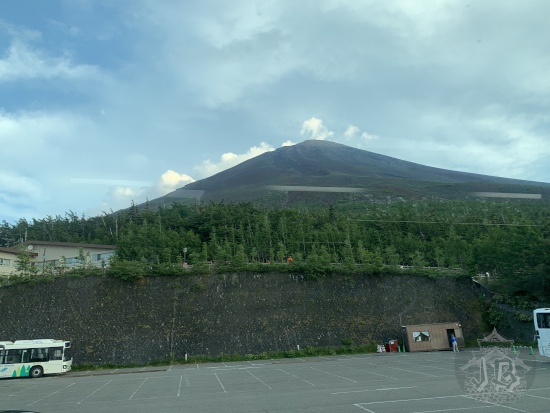
From the Fifth Station, looking up at the summit.

From the Fifth Station, looking down at the car park and a sea of clouds underneath

We started off climbing at around 18:00. Between the Fifth (2,300 m) and the Sixth Stations (2,390 m), you walk along some dirt paths in the forest, and there isn’t really that much “ascension”. As there was also light, the first hour was easy enough. This area is crowded due to all the “visitors” going for a “walk” from one of the Fifth Stations to another. We actually saw someone using up their oxygen at this point. That was weird.

From the Sixth Station there was a first zig-zag upwards, with paths held up by some dams. This is one of the parts I found the hardest, as it is the same inclination all the time and I was not warmed up yet. Then, sunset came, and while it was pretty, it brought darkness upon us (yeah I’m being literary on this). Not that I had a problem with actual darkness, but other people’s torches and headlights kept blinding me, which made the most difficult parts hard to climb – because some people are idiots who point their lights forward and not downwards, where the ground is. Sheesh. There were parts that were just a gentle incline up, while others were stuck rocks or lava flows that you had to climb with your hand and feet.

At the Seventh Station (2,700 m), the path changed and we started. Though there were some slopes, there were also stuck rocks and lava flows that I had to climb with my hands and feet. Fortunately, I could make use of the short stops we made to stamp my staff. Workers of the Mountain Huts use hot irons to burn the stamp into the wood. I think I got all the ones I could on my way up (no stamps on the way down).
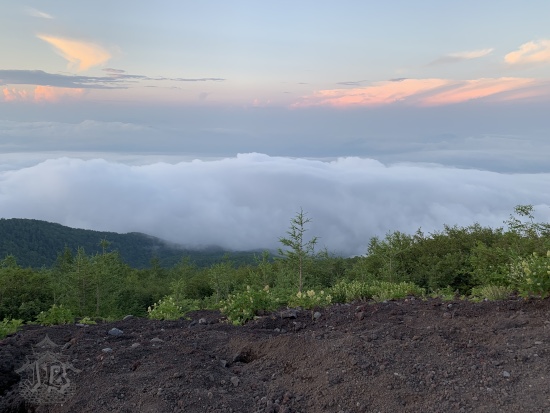
The sea of clouds at the foot of Mount Fuji

Distant lights in the night, down

Mountain huts [富士山の山小屋, Fujisan no yamagoya] are tiny establishments where you can get some food or spend the night for around 10,000 ¥. They often require reservations, usually in Japanese, that is why D****e took charge of that part. Some of them have a bin for rubbish – because you can’t dispose of trash on the slopes, you have to take back what you brought in. They have toilets too, and require a tip. Most of them follow an “honour system” with a small coin box, but some have a guardian to collect the money.

We continued upwards until we made it to our Mountain Hut, Shichigōme Torii sō [七合目 鳥居荘], the Seventh Station’s Torii-so at around 21:00. We had been told it was the one with the red torii, and it was a sight for sore eyes. It stands at 2,900 metres high, closer to the Eight Station than the Seventh – we had expected to find it sooner due to the name.

A torii gate lit up in the dark

D****e had booked a bed and a meal. As we came into the hut, our staffs and backpacks were hung over the door, and we were given bags for our shoes and personal effects. We had a small riff-raff with the owners, because they claimed that we had arrived too late for food. However, D****e argued that the webpage said nothing about a time limit. Thus, we got some curry and rice as the dinner we had booked.
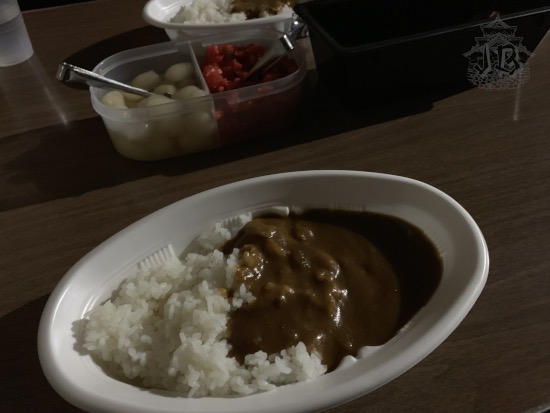
A dish of curry and rice.

Around 22:00, we used the toilet, and then we were shown to the common dormitory – the bed bunks are basically a line of futons put together so you share a blanket with the person next to you. The idiot I had to share with decided to lie on the blanket instead of under it, so she had me uncovered half the time until she left.

Thankfully, at around 23:00 there was a call for people who wanted to set off in time to see sunset from the summit, and she got going. Between getting uncovered, and lying down too soon after food, I started feeling queasy. I freaked out a little. I started turning in my head that I was going to get sick and not get to the summit and have to be evacuated. D****e helped me calm down and I managed to get a few hours of sleep.

But just a few. We were woken up by the noise around us around 4:15. I felt strangely not tired, and D****e indulged me. Thus, we got up and went outside to see sunrise. Sunrise from Mount Fuji!!! I mean… I can’t even. Unfortunately (and ironically) we left too early to get the stamp from our own hut! We continued our way and had breakfast at the next big rock where we could sit down.
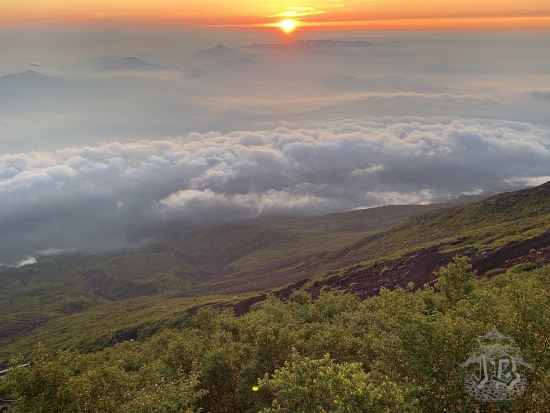
Sunrise from the slopes of Mount Fuji.

After coffee (yes, I’m addicted enough to carry coffee to Mount Fuji), we went on hiking. To be honest this second day was not as bad as I had imagined – as in I was rather convinced that I was not going to be able to make it, especially during the night freak-out. My painkillers kicked in and I only felt a small buzz in my ears as pressure changed.

It did not take too long to arrive at the New Eighth Station (3,100 m). Once again the trail became irregular, which on one hand was tiresome, but at the same time, it was not tedious, so it did not feel as hard. Gloves were useful for this part of the hike, as I could hold on to things. We continued up to the Original 8th Station (3,400 m).

After the Original Eighth Station the trail became path-like again, with torii and stairs and fewer rocks you had to climb over, but a bunch of smaller ones that you had to step up on. Here I learnt to appreciate the actual usefulness of my staff. Vegetation disappeared gradually until the ground was barren.

I think I lost my gloves at the Ninth Station. We saw a group of people evacuating an injured / ill climber – we mentally awarded them like a million karma points, and after getting the injured person to help, they happily went back up again. One of them told us their group does it every year. I remember hugging some torii on the way, and a thousand thoughts twirling in my head.
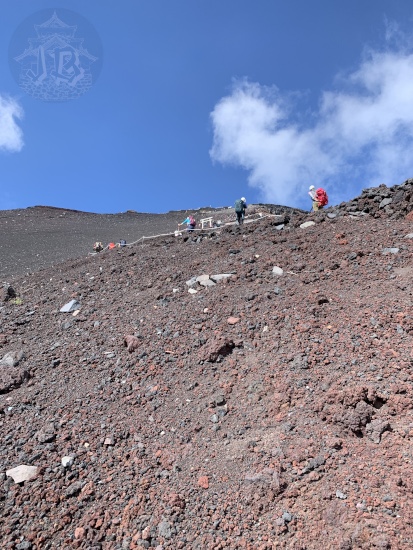
Area closer to the summit of Mount Fuji. There is no vegetation and the ground looks reddish and more like gravel than actual rock.

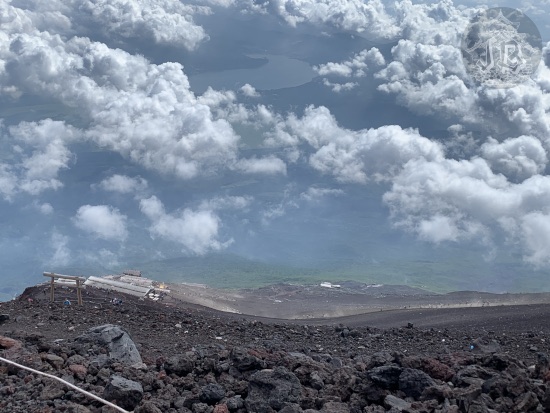
Looking down from the barren area, there are clouds and a river at the foothill

And then we made it. Around 11:00 we reached the rim of crater. I could not believe my own eyes when I stepped in front of the shrine Asama Taisha Okumiya Kusushi Jinja [淺間大社 奧宮 久須志神社] and Fuji-san Chōjō Yamaguchi-ya Honten [富士山頂上 山口屋 本店] aka Top of Mt. Fuji Yamaguchi Shop. I had made it. I had beaten my own limits, and reached the crater.
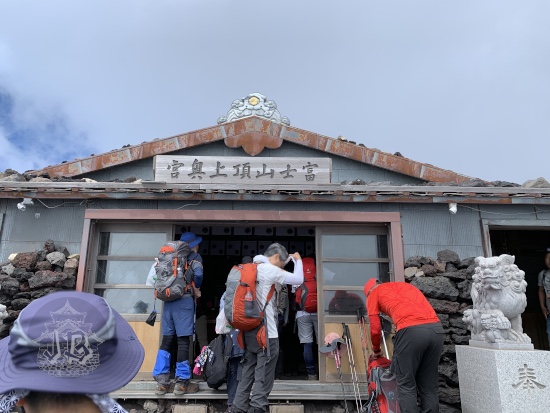
Entrance to the Temple on the Summit of Mount Fuji

Online certificate that you can download using a QR from the Top. It has the date as August 11 2019

Of course I needed to get all the stamps and the shuuin and the exclusive Coca-Cola bottle. We decided not to go around the crater to the highest point, just a handful of metres higher, because it would add some 90 minutes to our trek, and we preferred to just hang around where we were for that long. Because I was at the freaking crater of Mount Fuji! I was the Kami of the Mountain.

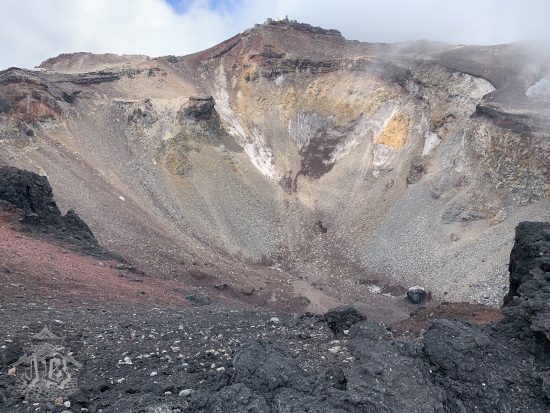
Brim of the crater of Mount Fuji

Crater of Mount Fuji

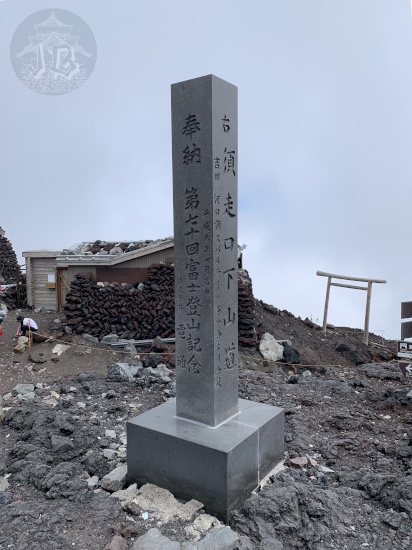
Stone marker at the summit

Cheers with two Mount Fuji exclusive Coca-Cola bottles

Walking around the crater would have been great, but we would be hard-pressed for time for our bus if we took too long. D****e asked me what I wanted to do, and I was happy staying around the crater taking pictures and enjoying the feeling. After an hour or so, we set on our way back down – the trail was a bulldozered zig-zag of gravel, boulders and volcanic sand, and it was even more exhausting than the way up.

It was tricky not to slide and fall. It took us about three hours until we were back to the forest area and the Sixth Station. We reached our Fifth Station around 15:30. I did not fall even once – thank you, Fuji-climbing boots from the Decathlon Children Section for not letting me down, literally!! I also acknowledge that we were super-lucky with the weather, we only had a few clouds just under the crater, and it was not too cold even for me – and no rain, which would have made the experience miserable.
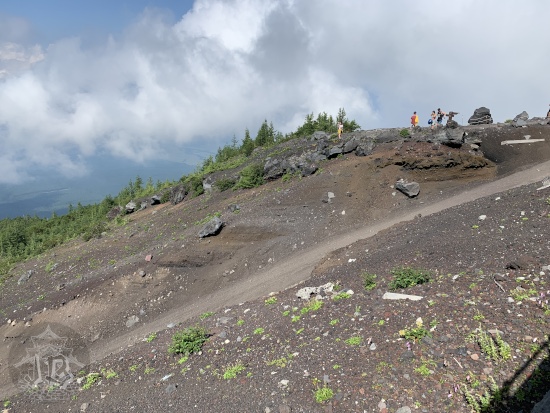
The path down, bulldozered into a straight line.

We actually made it with some time to catch our bus, so we looked at the souvenir shops and Fujisankomitake Jinja [冨士山小御嶽神社].

A colourful and crowded shrine. A lot of the tourists in front of it are wearing shoes that were definitely not made for climbing.

My made-for-climbing shoes, and lower jeans, which were originally blue, looking orange due to the volcanic dust.

As we left, we could see Mount Fuji in all its glory, and I could not believe that I had actually been up there! The total experience had taken a bit over 27 hours, and it was exhausting but exhilarating.

View of Mount Fuji from the bus

However, the downfall had to come, and it came in the bus, about 20 minutes into the ride home – once I stopped moving, my body completely shut down in pain. My back cramped, headache hit, left knee got stuck, and the road trip was horrible. I did not want to have any dinner even if I knew I needed it, but a hot pot in the conbini managed to draw me and it was exactly what I needed!

Hot pot with vegetables, mushrooms and pork

Walked distance: 10th: 9988 steps / 7.14 km; 11th: 21107 steps / 15.1 km. However! The damn watch does not take into account that I CLIMBED A VOLCANO!! I mean, come on! Some of those steps had a 70 cm difference in height! I managed to do it, and I feel damn proud of myself for it, and I will forever proudly display my Fuji-climbing stick as proof of the feat. Also, just so you know 11th of August is Yama no Hi [山の日] (Mountain Day) so this was ironically well-timed, even if by pure chance!

The walking cane I used, covered in hot-iron stamps.

I know that hundreds of people climb Fuji-san every year, but for me those almost 3,776 metres represent something special. It was my very own challenge, something I never thought I would be able to do, and yet I managed. I was extremely proud of myself. I think it helped me become more adventurous, as I found out that I could really push my limits. There was a price to pay afterwards, yes. But I had made it and I don’t regret it (I did regret it a bit the following day going down the stairs though. But not much). I was the Kami of the Mountain.
1st August 2019: Takehara’s Little Kyoto in Aki {Japan, summer 2019}

Takehara [竹原市], in Hiroshima Prefecture, claimed to have its own Gion-like district, and they are trying really hard to promote it. I decided to check out whether it was true / worth it. And after half an hour what I kept wondering was “are you sure you’d want this to become as crowded as Kyoto?”

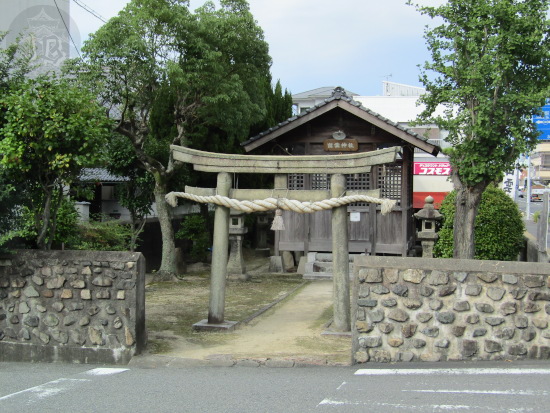
The historical area consists on a few streets, temples and shrines dating back to the Edo period. Let’s see whether I can retell the route accurately. My first stop was Izumo Jinja [出雲神社]

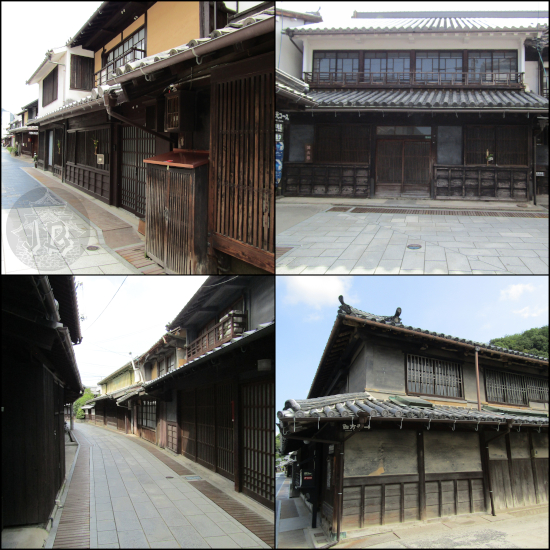
After I had taken the wrong turn a couple of times because the map was cute but not that accurate, I found the “Takehara Historical District”, actually Takehara Townscape Conservation Area Takehara Machinami Hozon Chiku [たけはら町並み保存地区]. The main tourist route runs along Honmachi [本町] Street, and during my whole walk I ran across maybe ten other tourists.

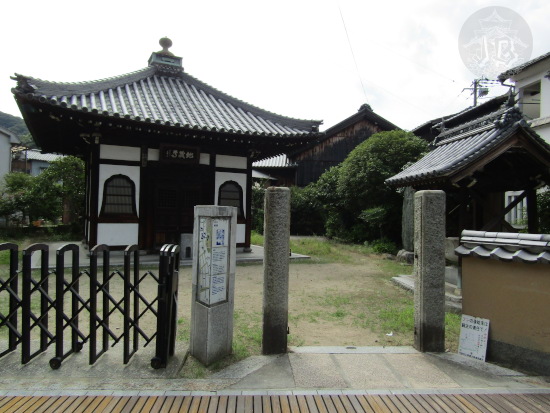
My first diversion was Choseiji [長生寺].

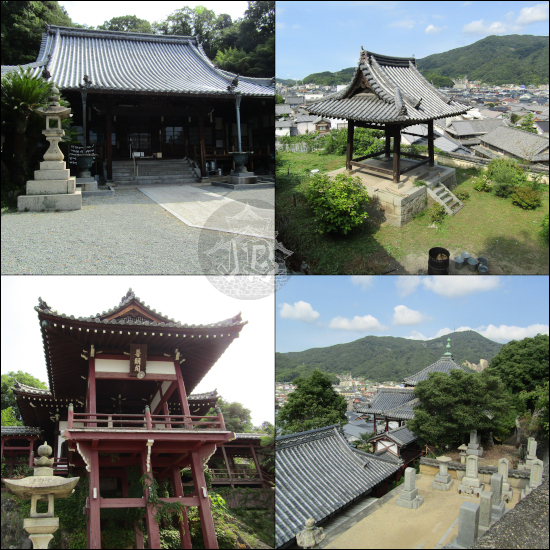
After this I had a better idea of where I was, so things rolled more easily. I continued along the houses and turned right to climb up Saihoji Fumeikaku [西方寺普明閣].

Afterwards I visited Okakae Jizo [おかかえ地蔵], who will grant you wishes if you pick him up

Then Ebisu Jinja or Kodo [胡堂].

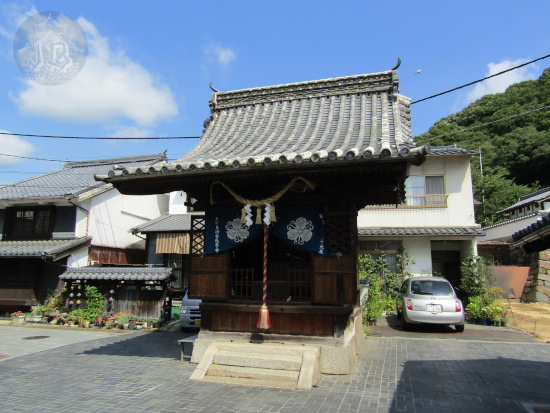
Afterwards, Shōrenji [照蓮寺].

Historical alley, holding Shumpukan [春風館] and Fukkokan [復古館].

I diverted then to Sumiyoshi Taisha [住吉神社].

And Kusunoki Jinja [楠神社].

Isonomiya Hachimangu [磯宮八幡] was under construction, so I did not bother the workers.

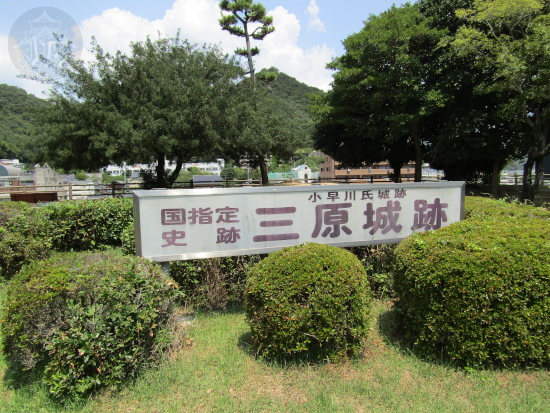
After this I wandered a little around the river, considering whether going to the harbour or not, but in the end I decided against it and headed off back to the station, where I took a train towards Mihara [三原], where I visited the site of Mihara Castle Remains, Mihara jōato [三原城跡].

I also found… Rakkii Jinja [らっきー神社], which I think it’s actually “Lucky Jinja”… in Mihara Station… I don’t ask anymore… but apparently Mihara is the “Octopus Town” and this is their mascot?

Then I went on back towards Nagoya via Kobe. This took around three and a half hours, so I was in Nagoya [名古屋] around late afternoon. Once there, I continued on my search for long jackets and I was finally successful in acquiring two of them in the Midland Square Mall, where I actually went to check out on a LemonEd pop-up shop… which I almost didn’t find because it was way too discrete.

Walked distance: 17438 steps / 12.4 km.

28th July 2019: Wakayama {Japan, summer 2019}

Going to Wakayama [和歌山] was a spur-of-the-moment decision, so I did not prepare for it in advance – I should have. On the one hand, it was super hot, on the other hand, most of the stuff was not covered by my JR Pass and I had not budgeted 3,000 ¥ extra on trains for it. But when I came out of the train on the 27th saw that my platform was the Wakayama platform and thought “why not?” After all, they made HYDE their Tourist Ambassador this year…

First I found my way to the castle, Wakayama-jo [和歌山城] and the adjacent park.

On one of the corners of the park I found Wakayama-ken Gogoku Jinja [和歌山県護国神社].

And then I visited the Wakayama Rekishi-kan [わかやま歴史館], Wakayma History Museum, since the ticket was included in the Castle visit.

Then I missed the train to Kimiidera [紀三井寺], so I had to wait an extra half-hour… that I would later be thankful for because… stairs. Lots of them.

There were a couple of other shrines that I wanted to visit, but it felt like 45ºC and it was just too hot to walk to them – besides the stairs left me exhausted. So I headed back to the station. I did not manage to make a seat reservation, so I had to stand the 90 minutes back to Osaka [大阪]. That was not fun. Once I was in Osaka I took a stroll in Tennoji shopping centre because I wanted a long summer-jacket, preferably in black lace. I was not lucky.

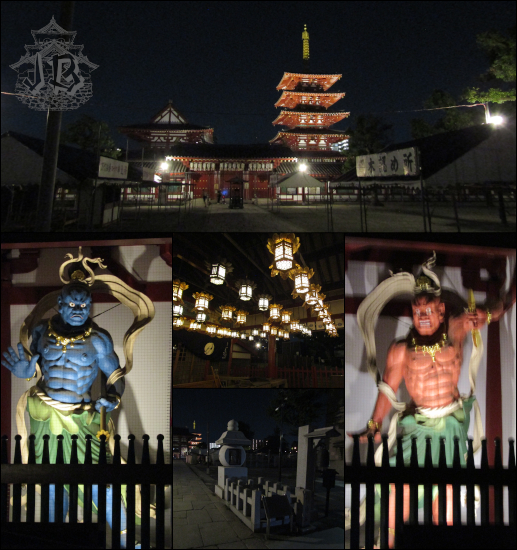
I had dinner and a shower at the hotel, and then I walked past Shinsekai [新世界] and Tsūtenkaku [通天閣] to see Shitennoji [四天王寺] at night. I was closely observed by some cats which roamed the altars and were very offended I was not bringing them any food.

Walked distance: 22995 steps, 16.4 km

24th July 2019: Morning in Kyoto, afternoon in Nagoya {Japan, summer 2019}

After waking up early again (what can be done? Early night → early morning) I walked out the hotel and took another stroll in Maruyama Kouen. Only this time, instead of heading towards Yasaka Jinja and Gion, I continued straight and I found Daiunin [大雲院].

The roof of a pagoda, in oxidized green colour

I continued on to Nene no Michi [ねねの道], which has temples left and right. These temples have little statues that you have to touch for luck, wealth and so on. As I have been feeling so lousy this last year, I decided to find the health one.

Statuettes of the Buddha and local gods

On my way I climbed up the Daidokoro-zaka [台所坂], a bunch of gentle stairs that lead up to Kōdaiji [高台寺], a fun temple with a lot of yokai folklore. It also held some healing sutras, so I took the liberty to make them spin.

Temple with funny-looking lanterns decorated with yokai and ghost faces

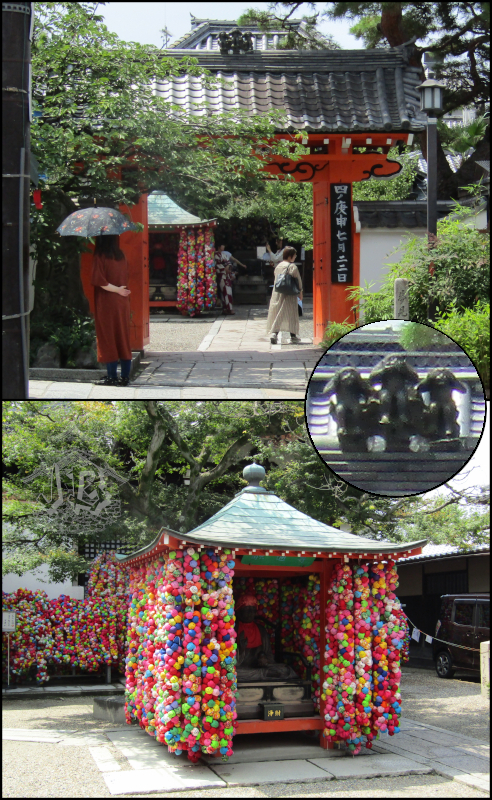
From there, I went to Kongoji (Yasaka Kōshindō) [金剛寺(八坂庚申堂)], which is a temple with… colourful balls where people write their wishes. They are supposed to entertain the ‘good faith monkeys’ (Hear no evil, speak no evil, see no evil) that guard the temple, I guess.

Buddhist temple with a decoration of thousands of brightly coloured pompoms

After that, I walked towards the Hōkanji (Yasaka no Tou) [法観寺 (八坂の塔)], a five-story pagoda.

Five story pagoda

A bit farther, I also found Rokuharamitsuji [六波羅蜜寺].

Buddhist temple exterior

I went down towards the river Kamogawa [鴨川], where I saw some more wildlife – ducks, cormorants, herons (cranes? Have I told you I can’t tell cranes and herons apart?).

Black cormorant standing in the river

Finally – for my Kyoto trip – I walked down the Pontocho [先斗町] Alley before I headed for the station. It is renown for its restaurants, but everything was too expensive for my budget.

Narrow alley with restaurant lanterns and signs

Then I took a Shinkansen to Nagoya [名古屋] as I was going to attend HYDE’s 2019 tour that afternoon. As I arrived too early for 15:00 check in, I headed off to Zepp Nagoya to see whether the goods were out. They were. A girl passed out at the queue a bit behind me due to heatstroke, and that was a bit creepy, but the staff took good cafe of her.

After buying goods, I went to leave my stuff and have a shower at the hotel, then I met up with several friends and even new friends. I enjoyed HYDE Live 2019 much better than the 2018 shows, which felt… somewhat disappointing at the time, almost clumsy and disarranged. Since then, HYDE put out the album Anti in May 2019, so he has found his grounds again. Last year he seemed to be rehearsing / perfecting a few of the songs, and combining them with the echoes of L’Arc~en~Ciel and VAMPS, which only emphasised what we did not have any more – I am still not too happy with the covers of VAMPS songs, especially Ahead, where I miss KAZ’s guitar. And honestly? Not a fan of Duran Duran’s Ordinary World.

Setlist:
    1. Who’s gonna save us
    2. After light
    3. Inside of me
    4. Underworld
    5. Fake Divine
    6. Two face
    7. Set in Stone
    8. Zipang (Japanese version)
    9. Out
    10. Mad Qualia
    11. Sick
    12. Don’t hold back
    13. Lion
    14. Another moment
    15. Midnight Celebration II
– break –
    16. Duality (Slipknot cover)
    17. Devil Side
    18. Ahead
    19. Ordinary World (Duran Duran cover)

As his solo goals, HYDE has set his heart in in the US. Thus, his new music is heavily influenced by American producers and musicians, and completely in English. Though he is mainly a vocalist, HYDE started off as a guitarist, so there is a heavy reliance on powerful strings. To emphasise the fact that he is solo now, he has given his support musicians masks to cover their faces. Or maybe he’s just decided he likes masks as he himself wears a half-mask for the first few songs. He was very active and engaging with the audience, which always makes lives more fun. In general, I enjoyed the act, it was powerful and engaging.

Zepp Nagoya logo

When the concert was over I met up with Sr-san for dinner. We had misokatsu [味噌カツ] in a famous shop, and had a long conversation about the concert and HYDE’s new songs.

Dinner: breaded pork on rice and shredded cabbage

Walked distance: 23305 steps / 16.6 km.

23rd July 2019: Arashiyama honours its name {Japan, summer 2019}

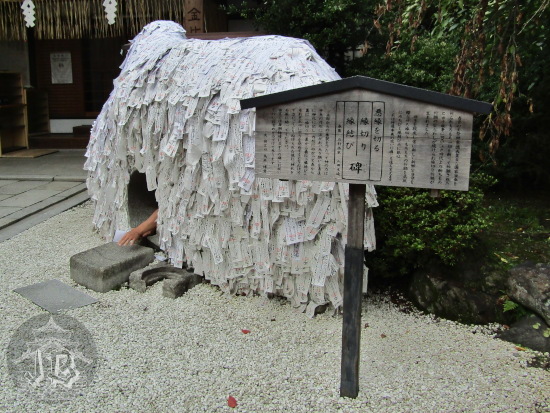
I started off the day at Yasui-Konpira-gu [安井金比羅宮], a shrine with a huge ema-like “mound” called Kushi-zuka [久志塚] with a hole in the middle. It is thought that if you write your wish on a paper, glue it on the mound and then crawl through the hole and back, your wish comes true. In case you’re wondering, no, I didn’t go through.

Then I walked all past Gion again to return to Gion Shirakawa [祇園白川] and Tatsumi Bashi [祇園 巽橋] to see the area by light. I saw Tatsumidaimyojin [辰巳大明神], the Kanikakuni monument, Kanikakuni Ishibumi (Koma-satsu) [かにかくに碑(駒札)], and a very cool heron (or crane?) who totally owned the place.

After this little stroll, it was still early so I headed off to the reconstructed castle Fushimi-Momoyama-jo [伏見桃山城]. It was a very cool castle, but it was not open to the public (this trip was not castle-lucky, now that I think about it).

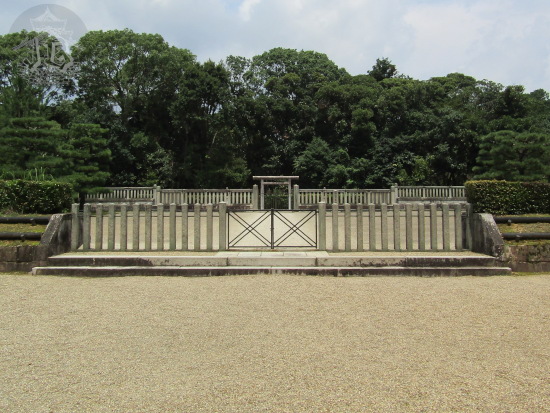
Underneath the castle, I found the Mausoleum of Emperor Kanmu Kanmu Ten’nō Kashiharanomisasagi [桓武天皇 柏原陵].

And then I walked off to the opposite part of the hill. On my way I found some of the original rocks that had conformed the Ninomaru [二ノ丸跡] of Momoyama-Jo.

I kept ascending until I reached Meiji Ten’nō Fushimi Momoyama no Misasagi [明治天皇 伏見桃山陵], Emperor Meiji’s Tomb at Fushimi Momoyama, which was… somehow very sober and somewhat humble for such an important figure in Japanese history (then again I’ve recently visited the Spanish Royal Family Pantheon so… hm… yeah. Anything is more sober than that.)

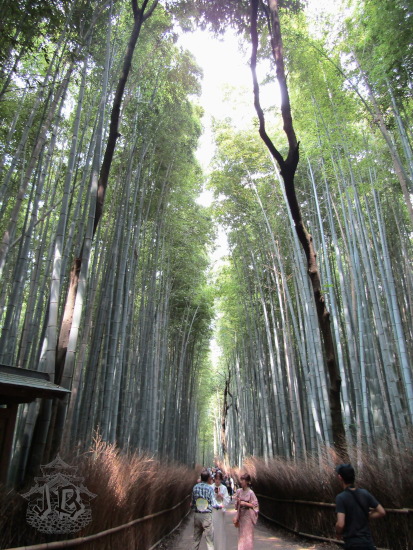
After that I was tired and hot, so I needed a break – and the best way to have a break is a train ride. I rode back to Kyoto Station and from there I headed off towards the Arashiyama area. I wandered around the Bamboo Grove Arashiyama Chikurin no Shōkei [嵐山 竹林の小径] for a while. It was packed so I kept diverting towards other areas.

I walked into Rakushisha [落柿舎], a poet’s house, where I got a shuuin.
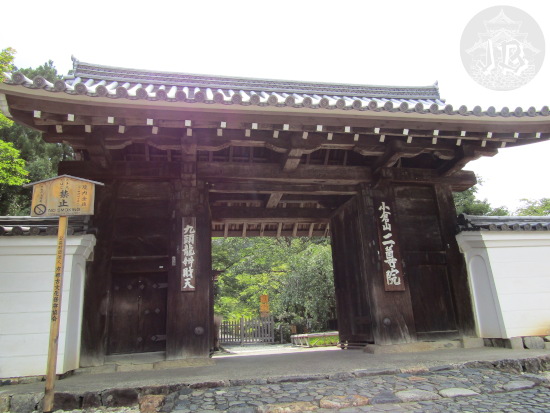
Then I went up the road to Nison-in [二尊院].

On my way back I stopped to admire the lotus flowers, which were in full bloom.

I considered going into the Museum of Korean arts, but as it was closed, my decision was irrelevant, so I decided to head back towards the Arashiyama Koen Nakanoshima Chiku [嵐山公園 中之島地区], the Nakanoshima area of Arashiyama Park. I saw the Kadono Ooi [葛野大堰], the small damn in the river, and crossed the Togetsu-kyō Bashi [渡月橋] bridge.

There I climbed up to Ichitani-Munakata-Jinja [櫟谷宗像神社].

I decided against climbing to the Monkey Park, and I was halfway back through the bridge, when the skies opened and a huge thunderstorm hit – so indeed, Arashiyama became the mountain of storms! I waited half of it under the canopy of a shop, and after twenty minutes I braved running across the street to the Lawson to get myself a sandwich and ate it as the rain dwindled enough for the streets to be walkable again.

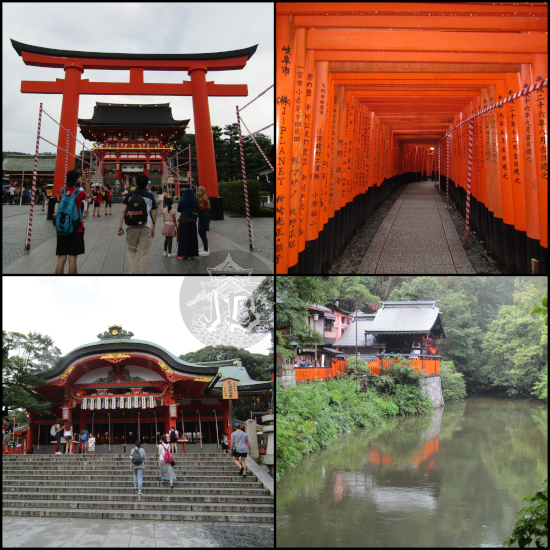
Once that happened, I walked to the station and took a train back to Kyoto and then to Fushimi Inari Taisha [伏見稲荷大社]. I did two sweeps – one with light and once when the sun was setting. Of course I did not climb the whole mountain, I just stayed to see the main buildings and the Senbontorii [千本鳥居] (the loooong torii line) lit.
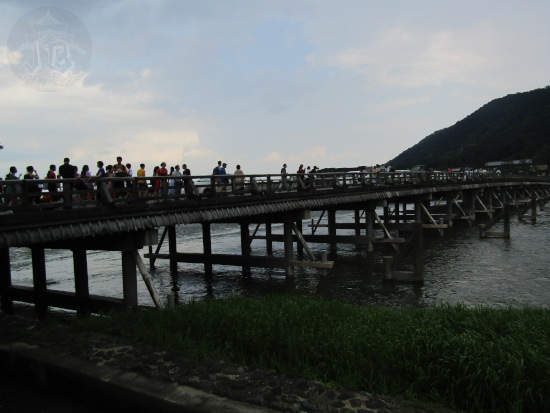
And finally I headed off back to have some food and rest.

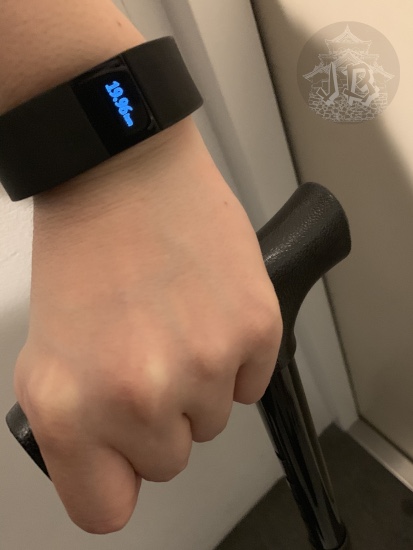
Walked distance: 27897 steps, 19.9 km (so glad I took my cane today!)

22nd July 2019: Tokyo Shinagawa → Higashimaya Kyoto {Japan, summer 2019}

My Shinawaga hotel was very close to Sengakuji [泉岳寺], the temple that honours the forty-seven ronin so I paid them a visit before I moved on.

The reason why I was in Shinagawa was being close to the station as I was heading off to Kyoto. I took a shinkansen around 9 am and was in Kyoto just before 11, maybe. From Kyoto station I walked to Nishi-Hongwan-ji [西本願寺], which was about 10 /15 minutes away. It had been on my list since I went to Higashi-Hongwan-ji last year, but I had to go get some rest afterwards because I had a migraine.

As I was heading back towards the station I came across a building that really grabbed my attention. A little research yielded to finding out that it is a temple: Dendou-In [伝道院], which apparently belongs to Nishi-Hongwan-ji and is a research building. It was designed by a famous architect called Itō Chūta in 1912 in a style called “Evangelical”, and built shortly after. It’s not open to the public though, but it sure as hell is interesting.

After that I took the underground to my hotel. It was raining like crazy when I got there, and to make things more difficult, my bloody credit card decided to stop working. This made me slightly late to my 13:00 appointment at Studio Esperanto Oiran Taiken [studio-esperanto 花魁體驗]. Things were a little different this time. First of all, because I was just in time for appointment, I was directly ushered to the make-up room. Fortunately I had quite a clear idea of what I wanted, so it sort of worked in the end. The make-up artist was nice but she was a bit intimidated, and the photographer was difficult to communicate with, which hampered the experience a little. In the end, however, I got really cool pictures out of the experience, so I am not going to complain.
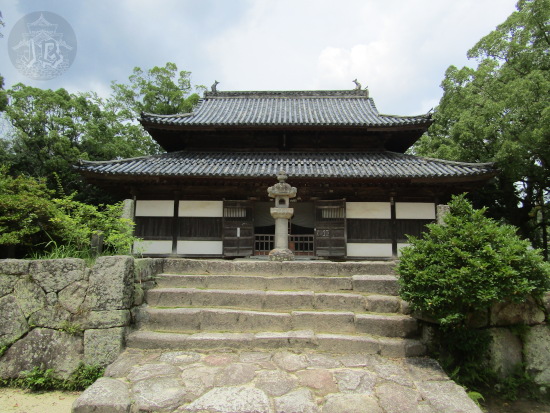
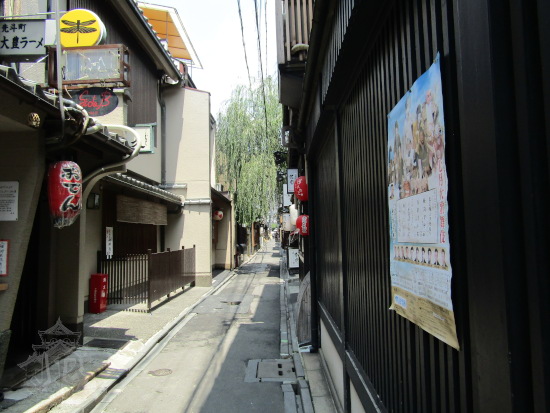
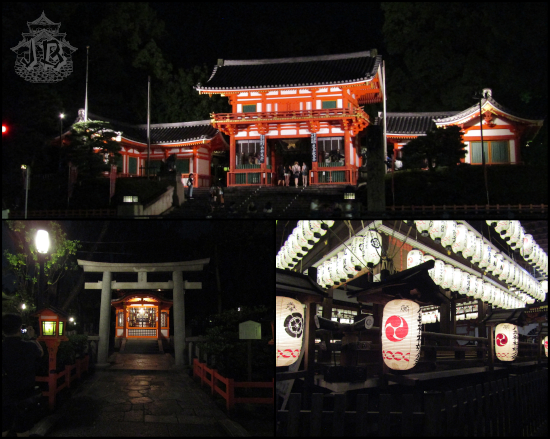
By the time I got out, there was a deluge outside. I was in the hotel, which was close to the photography studio, for a little, and after checking the maps that they had given me at reception, I realised that I was much closer to the Gion area than I – and Google Maps – had actually thought. There was one big park / shrine complex I could walk. At least part of it is called Maruyama Koen [円山公園] and it has a cool pond. I walked from the north entrance to the western exit, which belongs to Yasaka Jinja [八坂神社], the Yasaka Jinja Minami-romon [八坂神社 南楼門], the Tower Gate. I passed Gyokkō Inari Yashiro [玉光稲荷社] on the way.

I walked off to Gion, [祇園] which was almost empty due to the storm. Whenever I get to Gion in the evening, I always check whether there is a long queue at Gion Corner, which is a theatre that performs “traditional arts”:

  • Tea Ceremony [茶道]
  • Flower Arrangement / Ikebana [華道]
  • Koto [箏]
  • Gagaku [雅楽] Court Music and dance
  • Kyogen Theatre [狂言] (comic play)
  • Kyo-mai [京舞] (maiko dance)
  • Bunraku [文楽] Puppet Theatre

I was lucky this time, as the rain had scared most tourists away, so I could come in. It was a fun thing to do once, especially with “foreigner discount” it becoming half-price, but the audience kept talking and moving around the floor to take pictures and videos. Thai and Chinese people are loud (and a few of them rather disrespectful)! But all in all, I’m happy I got it out of my system, particularly the Kyo-mai dance.

After that, as it was not raining any more, I strolled down an almost-empty Gion.

Then I walked off towards an area that I had never been able to find before – Gion Shirakawa [祇園白川] and Tatsumi Bashi [祇園 巽橋]. Fortunately this time I had checked for the Tatsumi Bridge location fist, so it was not even that hard! I just had to know where to look for it! (≧▽≦).

I decided to take the way back through the park, so I could see all of Yasaka Jinja [八坂神社] lit up, which was very pretty.

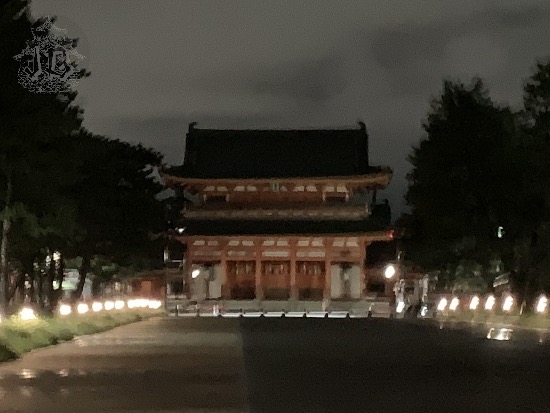
As the hotel was also next to Heian Jingu [平安神宮], but as it was not lit up, I did not walk in.

Then I bought some conbini food and I went to the hotel to have dinner and a bath – the hotel had a hot spring public bath (and it was empty! Just for me!). I was lucky enough to get one of the traditional rooms, and the sand-puffs-like thingies were super-comfortable… until I had to stand up. It was so comfy I could barely stand up! And then I went off to sleep like at 10pm cause I was beat (∪。∪)。。。zzz.

Walked distance: 18517 steps / 13.2 km

21st July 2019: More Kawagoe. 戦国時代-The age of civil wars-: アコースティックライブ&CDサイン会 {Japan, summer 2019}

Sengoku Jidai -The age of civil wars- [戦国時代-The age of civil wars-] is a visual kei [ヴィジュアル系] bandthat has been active since 2017. It is formed by four members – Kz, the leader on guitar and back-up vocals, Nao-A on main vocals, S.N.D on drums and Date on bass. “Sengoku Jidai” refers to a time between the 15th and 16th century, when samurai clans fought almost continuously for dominance. In a wink to that, the members don samurai-like clothings and sometimes masks. Thing is, we’ve come across two of these people before – S.N.D is Junji, and Date is Ju-ken, both of whom we’ve seen with GACKT and VAMPS. I’d been trying to avoid the band quite actively because I know that I would like them a lot and I have to start controlling the number of artists I support.

I’d been following bassist Ju-ken on social media since I got one of his picks at the Barcelona VAMPS concert, and that was how I found out about this whole thing. Not long before my trip, Sengoku Jidai released a new song, Yotogi no Hana [夜伽の華]. It sounded nice, so I went down the YouTube rabbit hole first, and then ended up on the webpage. Over there, I found out that there was a free event in Kawagoe [川越] as part of the new single promotion. And that is why I decided to head over there and try to attend. The event consisted of a “midsummer summer acoustic live”, called Sengoku Jidai – The age of civil wars –: Manatsu no Accoustic LIVE [戦国時代-The age of civil wars-: 真夏のアコースティックLIVE] and a CD sain kai [CDサイン会], which is basically a “meet and get an autograph”. From 11:00, fans had access to a booth to buy a number of CDs of the last two singles: Yotogi no Hana [夜伽の華] and Sengoku Enka [戦国演歌], my favourite. You could get as many signatures as CDs you bought. The band would hold a small concert at 14:00, after which you could shake their hands and get your CDs signed, one single at a time. When you bought the CDs, you also got one number to access the “restricted” area for the concert, though anyone around could watch, even from the upper floors of the mall, and you were guaranteed a seat.

The event took place on the lower floor at the Kawagoe Pepe shopping centre. The mall opened at 10:00, and I got there around 10:15. To be honest, I was a bit uncomfortable queueing alone in a completely unknown fandom, having to deal with everything in Japanese. But I told myself it was a rare chance to get to do something like this, for free on top. So after hiding in the bathroom for a few minutes to gather my courage, I went to the queue, where a few people were already waiting. I got a couple of weird looks but mostly I kept to myself and no one bothered me.

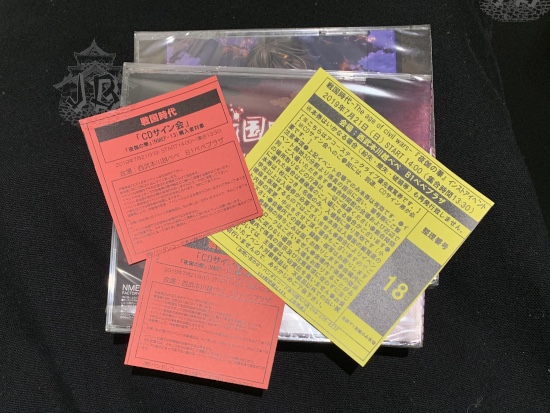
The staff arrived not much later. They they built the booth and put up the notices of what was going on. They also brought the CDs and the flyers in. After they opened at 11:00, I got a CD of each of the singles, and I was out of the queue by 11:15, with the CDs and my numbered ticket, sporting #18. The staff must have given around 200 numbers or so before the live started.

Admittance to the concert (one, printed in yellow with number 18 on it) and the Meet and Greet (two, printed in black)

In between the two parts of the event, I made a little escapade to Kawagoe [川越大師]’s Seiya-san Muryōshuji Kita-in [星野山無量寿寺喜多院], which is a Buddhist temple dating back from the 830 AD. It is noted for its hall and its pagoda. It also has a small graveyard with “the five hundred disciples of Buddha”. I was not sure whether last time I had actually been there or not, because I arrived by my almost-trademarked method of getting lost, so I wanted to make sure, and I had a bit over an hour to kill – it was the same place indeed.

After walking around the temple for a while I went back to Pepe for the second part of the Sengoku Jidai event, the live / sain kai. The area of the shopping centre got closed off with tape and “doors” opened at 13:30. The staff had even prepared three lines of chairs, and at the appointed time they started calling the numbers out. Since the instruments were already on the small stage, we knew who would be sitting where. I choose a seat on Ju-ken’s side – the instruments were already on the stage, so it was easy to decide where to sit. As we came in, we were given a little sheet of paper to write what we wanted the band to talk about. The restricted area filled up quickly with all the fans who had bought CDs,and so the live started early, around 13:45. The acoustic was very interesting – I had never been to one, except for a couple of songs at the VAMPS’s Beast Party. This one was also an unplugged.

The live had two songs, a talk session, and two other songs. It lasted for about an hour. The band picked up topics from what the fans had written to talk about and answer question, and there was a lot of teasing among them. They talked about the summer, what they liked doing, what they have been up to, including solo activities and summer festival. They were quite chatty, except for Ju-ken, who plays a persona called “Date” and never speaks – he is very strict and serious – so he just explained, via gestures, that he went fishing. The whole persona thing will be important later. There were quite a few people watching “from the sidelines”, – looking over the balconies from the upper floors, and they received a lot of attention, as prospective fans. The actual live was free, you only had to pay if you wanted an autograph, and the price of the CDs was the standard 1500 ¥, so it was a good promotion strategy. The selling booth remained open for the whole live, and even the later signing session, and it actually worked because some curious did decide to get an autograph.

The songs played were Yotogi no Hana [夜伽の華], Sengoku Enka [戦国演歌], Sengoku Ondo [戦国音頭], which is their “introductory song”, I think Tennyo monogatari [天女物語]. During Sengoku Ondo, Nao-A asked us to stand up and dance / do the furutsuke with him – and then he messed up! I was so confused!

There was a bit of chaos when it was the turn for autographs. I almost lost my nerve again, but I had made it this far. I let the most dedicated fans go into the queue first, and I made my way slowly, rehearsing what I wanted to say – in Japanese. The first one to see me was drummer S.N.D / Junji, whose eyes went wide – he has no poker face at all and completely went (O_O)!, wondering what a white person was even doing at their event, I guess. He asked if I was okay with Japanese and I answered that I was okay with simple language. Then, I informed him that I was the foreign factor representation. Then I got Ju-ken / Date – I told him about having his pick from Barcelona. His eyes went even wider than Junji’s. He broke character completely, grabbed my hand and shook it vigorously, as he repeated “sank you, sank you, sank you” (some Japanese people just can’t do the TH sound and substitute it with an S). Kz was equally surprised to see me around and he asked where I was from. Finally, Nao-A hid his surprise better, and he acted quite cute and friendly. I actually… chatted a bit with all four of them. I felt proud of a) my Japanese and b) not freezing out.

I walked out the area and climbed upstairs to snap a couple of pictures. Then, I went back to the queue. I had bought two CDs so I could go through the process twice, and the band remembered me. Kz asked if I was studying or working in Japan, and I said I had travelled there for my summer holidays. Probably, if there had been more CDs, I would have bought all to get them signed.

After all the fans had got their signature, the artists waved at everybody and disappeared into… the adjacent supermarket. All in all, it was a very fun event – it went unexpectedly well, with no problems nor awkward moments. I did not get to make any new friends, but I think the band’s reaction was something priceless that I’ll treasure for a long time.

The band shaking hands and signing autographs

Signed CDs

After the event was finished, I went back to Tokyo [東京]. I kinda got lost so I wasted about an extra hour and a half, and thus I was not at the next hotel, in Shinagawa, until late. Though it was a business hotel – or maybe because of that – it had a huge TV, almost as wide as the 135cm-wide bed I had!

The TV at the foot of the bed is almost as wide as the bed itself, and the bed would fit two people

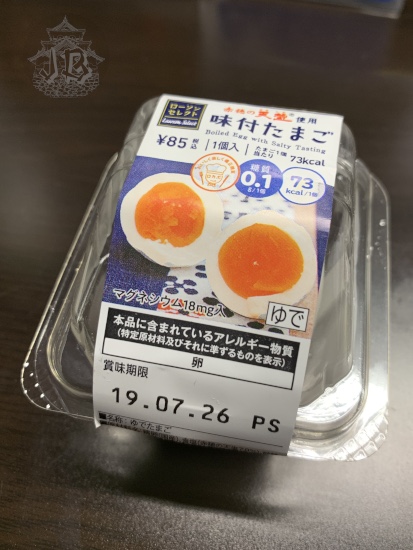
I bought dinner on the way and enjoyed it in the room. And after a long day, I decided that I was okay with some extra protein – so I tried the conbini boiled eggs. It was an excuse just like any other…

Soft-boiled egg box

Walked distance: 19468 steps / 13.9 km. However this includes the little furutsuke that Nao-A made us do, and that was recorded as pacing, and getting lost and walking for an hour coming out of the wrong exit of a station.

18th August 2018: Plan Switching. Kyoto → Osaka → Nara {Japan, summer 2018}

On this day I was supposed to hike up a mountain – mount Takao to be precise. But you know what? When I woke up that morning I just did not feel up to it, so I decided to change my plans. In the end when you’re on the JR Pass you can get from Kyoto to Osaka for free. For a change, I actually got to Osaka instead of Shin-Osaka which was convenient. Then I grabbed the underground to get to Osaka Aquarium Kaiyukan [海遊館], which is actually the largest aquarium in the world.

I had been there before, but the previous time I did not get to see the whale sharks as they were ‘quarantined’. How can anyone block a tank which is in the middle of the whole damn thing, I have no idea, but they did. This time I broke even and had a blast. Unfortunately the Aquarium was packed because this was a Saturday morning, and for some reason my back was hurting a lot. I had dropped my luggage off at a coin locker because I thought it would be better. However at some points I could not really walk straight. The weight of the camera bag was too much and I had to sit down. Found a nice place to watch the sharks from, though.

After the Aquarium I went to Kuchu Teien [空中庭園], observatory in the Umeda Sky Building [梅田スカイビル] to have a look at the skyline and to get the stamp for the Japan Towers rally. I got the greatest omg-gaijin face of the trip here (and truth be told, had I known that the stamp was actually held at the reception desk and not the actual observatory, I might have skipped this). In this case the building is an attraction itself. It consists on two towers joined by some passageways and a circular platform at the top, with see-through escalators.

Next the plan was going to Dotombori, stroll down there, and eat some takoyaki before heading off to Nara where I had my hotel for the night. When I got to the station and jumped on the Osaka Loop line, it turned out that I actually was in the train that continues on to Nara… and it was air conditioned and I had a seat…

I found it a sign and decided to just go with the flow and get to Nara [奈良] on that train. Upon arriving there I checked into the hotel and I decided to go to Nara koen [奈良公園], the main Nara park, and see if I could feed a sacred shika [鹿] deer or two. This was close to 5 pm by now so all the temples would be closing anyway. I did feed the deer some shika senbei [鹿煎餅] (deer crackers), and one of the does bit me. Not even the hand that was feeding her, she actually tried to snack on my tummy. Sheesh.

As I was coming back down I had a pretty sunset over Kōfuku-ji [興福寺].

15th August 2018: Hikone is small and at noon it turns into a pumpkin? Hikone → Kyoto {Japan, summer 2018}

As I had learnt the way to the castle entrance the previous day, first thing in the morning I headed off to Hikone Castle. The walk to the castle is flanked by the Irohamatsu [いろは松], which is a row of special pine trees that were planted there as their roots grow downwards but not sideways.

Hikone castle, Hikone-jō [彦根城], is one of the twelve castles that retain the original keep and one of the five to be a national treasure. The ticket included the castle, the museum, and the Gardens. I was there when they opened so the affluence of people was not to big yet.

Being one of the important ones made two things happen – one, that you have to take your shoes off, and two, that the stairs are crazy. Good thing I was not carrying my backpack – I had left it at the hotel but they told me they could only keep it till noon for whatever reason, so it was a good thing that Hikone is not as big of a town as others. The interior structure of the castle is naked wood, and it feels quite severe.

After the castle I went to the Hikone-jō Hakubutsukan [彦根城博物館], the Castle Museum, as it started drizzling. Normally the castles have the museum inside, but this one was in a nearby tower next to the main gate.

My next destination were the Genkyuen [玄宮園], a traditional garden from where you can spot the castle.

Also within castle grounds was the Kaikoku kinen-kan [開国記念館] (officially translated as Hikone City Museum of History, but it is more as “Memorial Hall”) – unfortunately pics were not allowed except for this Lego Castle.

Finally I checked out Shigakengokoku Jinja [滋賀縣護國神社] under daylight.

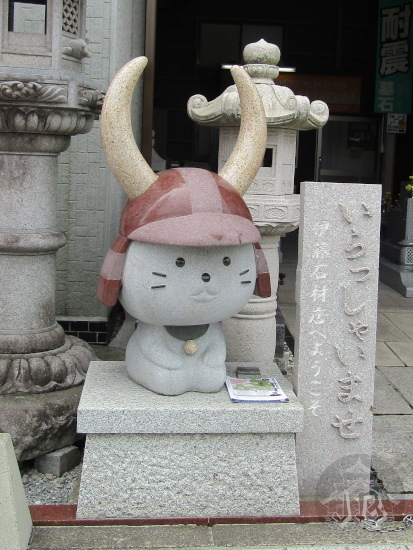
I walked back to the hotel through the main street, where I saw many stone statue shops displaying their work - including the city mascot, Hikonyan [ひこにゃん].

Finally, after picking up my luggage from the hotel I stopped by the Ii Naomasa Ritsuzō [井伊直政立像], the Statue / Monument to Ii Naomasa, who was the original builder of the castle.

I jumped on the Hikone Rapid Express, which was packed, and headed off to my next destination, Kyoto [京都]. As I was earlier than expected, I got a jump-start on sightseeing. This would later proof to be not too much of a good idea – originally I only wanted to do one temple so I did not put my luggage into a coin locker. Looking back, I should have.

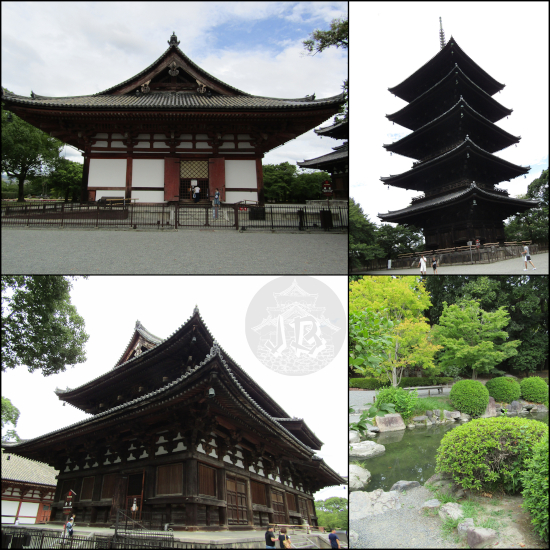
I went to To-ji [東寺], a Buddhist temple whose pagoda had drawn my attention every time I had been in Kyoto before.

Then, as it was quite close, I decided to check out the aquarium, Kyoto Suizokukan [京都水族館].

Finally, I went to Daishōgun Shōten Machi Ichi-jō Yōkai Street [大将軍商店街 一条妖怪ストリート], a shopping area with a lot of yokai and yokai-like mascots. Unfortunately, most everything was closed due to the Obon festivities, which in the end made for an unrewarded extra effort. Here I was trying to pace myself and not doing a good job out of it.

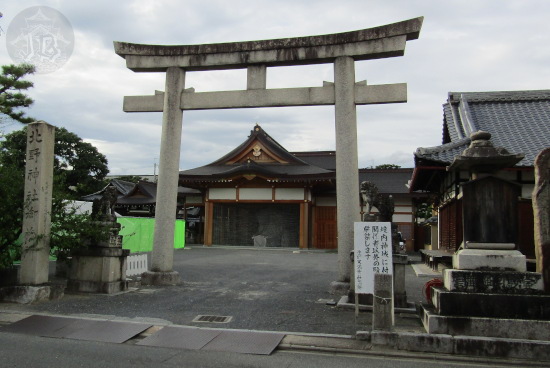
On my way to Yokai street and back I saw Jinja Kitano-Jinja Otabisho [北野神社 御旅所],

Jizo-in [地蔵院 ],

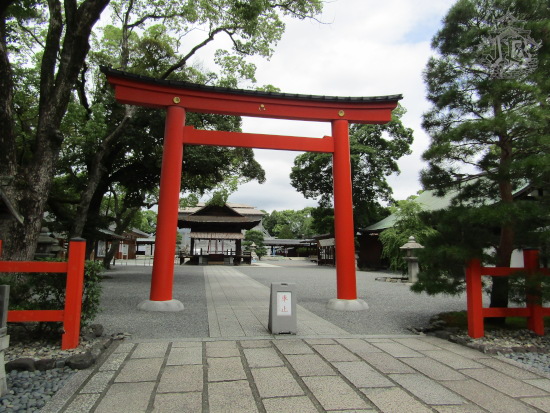
and finally Daishogun Hachi Jinja [大将軍八神社].

Finally I backtracked to the station and headed off to the hotel for some rest. I made a mental list of things that were incredibly close to the hotel and I could do the following day.

27th July 2017: Osaka → Kyoto → Tokyo {Japan, summer 2017}

It’s not the first time I’ve done this, but this time it was sane-ish. I left Osaka [大阪] maybe at 8.30 in the morning and took the Shinkansen to Kyoto [京都]. Once there, I found myself a coin locker at the station and went on to the bus area. I was heading to Jonan-gu [城南宮] which was my last shrine of the Kyoto Gosha Meguri ~Shi shin Sou Ou No Miyako~ [京都五社めぐり~四神四神相応の京~] and… under repairs too. But I had finished the Meguri. I had to wait about an hour for the bus. Then 40 minutes ride, about 10 minutes in the shrine, 30 minutes waiting for the bus back and 40 minutes ride again.

After I had some lunch at the station, I headed back to Tokyo [東京], where I met up with D****e in order to hit Nakano Broadway [中野ブロードウェイ] to rummage through TRIO (Yay TRIO for getting me what I needed ♥… and some more stuff I did not need but hey, who cares about those details?). Afterwards we had some kushikatsu dinner.

26th July 2017: Kyoto buses *eyeroll* {Japan, summer 2017}

Someone told me that using Kansai public transport made her appreciate Tokyo trains, and I whole-heartedly agree. I am thankful to the Kyoto [京都] Tourist Office Lady told me the two shrines I had left in the Kyoto Gosha Meguri ~Shi shin Sou Ou No Miyako~ [京都五社めぐり~四神四神相応の京~] would take me a long time, because it allowed me to plan accordingly. Good thing that with a JR Pass you can travel between Osaka and Kyoto in barely half an hour for free.

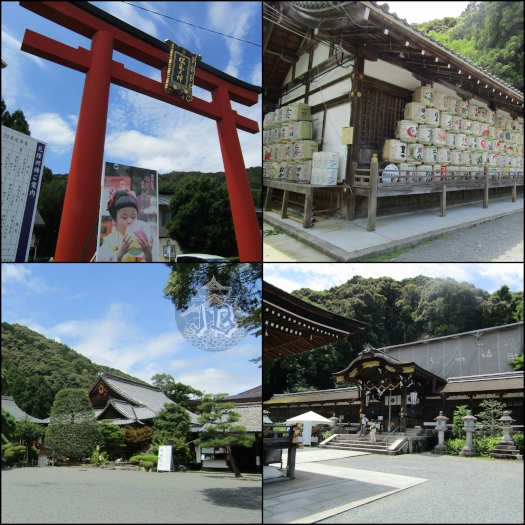
I went to Matsuno Taisha [松尾大社], but I did not try the famous sake they had because not a drinker here. The shrine was being restored, too, so that took away some of the impressiveness.

Collage of a Shinto shrine: a vermillion torii, ceremonial sake, and the main buildings in dark wood

After I was back at the station, I travelled back to Osaka [大阪] to get the shuuin at Sumiyoshi Taisha [住吉神社] there.

A vermillion gate that gives way into a Shinto Shrine.

Then I headed out to Zepp Osaka Bayside for the last of my VAMPS concerts for the time being. There had been no surprises this time, so it was just a “normal” concert without extra adrenaline, which was good for a chance, honestly. I was too sore to jump after the previous day though (≧▽≦).

Zepp Osaka Bayside logo in blue neon

24th July 2017: Himeji {Japan, summer 2017}

I woke up in order to be at Himeji [姫路]’s Castle Himeji-jo [姫路城] when they opened at 9am. Himeji had been on my to-do list for a long time, and now I had the chance to see it. I must learn how to convince volunteer guides to leave me alone though, as the visit would have been much better on my own. I visited the Main Keep, the East Small Keep, the Hyakken Roka (Long corridor)

Then I walked around the castle grounds for a while and snooped around Himeji Jinja [姫路神社], although I did not go much far in.

Afterwards I walked (without melting, which was a good thing) to the complex formed by Otokoyama Senhime Tenmangu [男山千姫天満宮] and Mizuo Shrine [水尾神社] and the corresponding observatory of the castle.

Next I walked back towards the castle grounds and around them because the gate of Itatehyozu Jinja [射楯兵主神社] had caught my eye from the castle.

My last stop for the day was Gokoku Shrine [護国神社].

And you know what? The rest of the day sucked because there were lots of problems. Good thing I checked that Fukuyama Castle would be closed before jumping on the train. I got my butt to Osaka [大阪]. My hotel turned out to be a love-hotel, not somewhere I actually felt safe or welcome, and my concert ticket was not such, but the proof of sale. I spent hours trying to check if it had been picked up, and finding a way to exchange hotels, and I did not sleep almost anything. Fortunately, the ticket was ultimately found, I booked another hotel for the upcoming nights and the worst thing that happened was a morning on the trains ε-(´・`) フ

20th July 2017: Dazaifu – not ready for thorough tourism {Japan, summer 2017}

Dazaifu [大宰府] was the neuralgic centre of the island of Kyushu between the 7th and the 12th century. Today is sort to Fukuoka what Nikko is to Tokyo. Nowadays it is mostly known for its temples and shrines. It has a central core close to the station where you get around quite easily and a few things off the way which… are an adventure to get to.

I started the day visiting Dazaifu Tenmangu [大宰府天満宮], which was crawling with tourists to the point that it was hard to walk at times. It is a big shrine with a huge bridge over a pond in the shape of 心.

Afterwards I got myself a bottle of water and climbed up to Tenkai Inari Jinja [天開稲荷神社] which would have been really, really awesome and creepy if I had been alone, but alas, there were a bunch of other tourists along. It was quite of a climb up so the number was fewer, which made it less crowded though.

After climbing down I wandered around and passed a tiny shrine on the bank of Aizome River [藍染川] the place of a rebirth of a woman named Umetsubo. There is also a small shrine and a “historical site.”

After this I reached Kōmyōzen-ji [光明禅寺], a Zen temple with a great garden, but no pictures were allowed, and you could not really walk through the gardens. However, it was much, much emptier and nicer.

It was now when I decided to head out to the Kanzeon-ji [観世音寺]…

… and Kaidan-in [戒壇院], along with the so called Bonsho Bell.

In order to get here the map sent me through rather bad roads, and it got scary for a second when a car was coming. Furthermore, the signposts were all messed up, making it hard to follow them and the map. But in the end I made it and even if I did not enter the museum, I felt accomplished.

On the other side of the road you could climb up to Hiyoshi Jinja [日吉神社], a tiny and quiet shrine on top of a hill that I really liked – I thought the kami would be bored so I dropped them a prayer too.

After all this I still had a few things left, but I was very tired and there was a storm brewing, so I backtracked to Fukuoka, where I had slept, gathered my luggage and was ready to take a train to my next destination when I unexpectedly met with a VAMPS fan friend, the same one D****e and I ran into at Kumamoto castle! Small world! We had ramen – Hakata ramen, of course – together and then I took the train towards my next destination, on the other side of Kyushu: Beppu.

Beppu [別府] is a small town on the side of a volcano known for its hot springs because it’s on the slope of a volcano named Tsurumi-dake [鶴見岳]. It has almost 3000 volcanic spring vents and it is a bloody amazing place!

I checked into the hotel and almost immediately walked out because the hotel was right next to Beppu Tower [別府タワー]. However I got distracted by Matogahama Koen [的ケ浜公園] and the beach and the breakwaters.

Finally I climbed up to the tower and looked around the city. I was a little disappointed because I was expecting to see some of the vents or at least a spark coming for the volcano, but it did not happen.

Afterwards I walked down to the hotel and spent an hour in the public bath that they had, which was really, really good for relaxing. And then I collapsed in bed and got some sleep because there was a big day the following day!

(I have to say here that I have decided to omit here most of the ‘blergh’ part of this trip in order to keep only the nice memories, thus the upcoming posts are a bit edited. So I’m not telling you about the unfriendly people I met in the way and that made me feel a bit sad. Just the friendly ones because they rock! )

6th January 2017: Miyajima (in eleven hours) {Japan, winter 16/17}

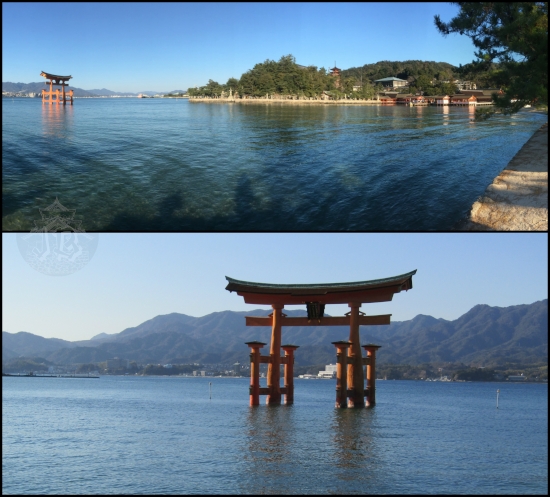
I was, quite literally, out from sun to sun on this day, and then when it was night I came back for more. Miyajima [宮島] is a small island in Hiroshima Bay, famous for the ‘floating torii gate’, the o-torii [大鳥居], belonging to the Itsukushima Jinja [厳島神社]. About 17 metres high, it is planted on the beach in front of the shrine, and you can walk up to it in low tide. In high tide you see it in the middle of the water. The o-torii’s upper part is around 22 metres long and hollow. It is not nailed or glued, but is weighted down by fist-sized rocks stored in the hollow area. The pillars are solid.

And to the o-torii I headed off literally at dawn, after getting a warm coffee from a vending machine. The first few minutes cough half an cough hour cough were spent around the torii as it was low tide and you could walk up to it.

After I managed to peel myself off the o-torii, I headed off to the shrine it actually belongs, Itsukushima Shrine, which is the main shrine of the island. The shrine has a famous noh stage and when the tide rises it also becomes ‘floating’. It is the biggest shrine in the area. Itsukushima Shrine is dedicated to Ichikishima-hime, Tagitsu-hime and Tagori-hime, known as the Munakata goddesses, are the deities of the ocean, traffic safety, fortune and accomplishment.

After Itsukushima shrine I ducked some deer, which abound, and are always hungry for maps and so on, and I walked down the breakwater to a little shrine named Kiyomori Jinja [清盛神社].

On my way back, I stepped on the grounds of the Buddhist temple of Daigan-ji [大願寺]. It was here where I realised that there were little stamps to be collected in the island, which is always a plus.

Then I got to Itsukushima Jinja Takaramono-kan [嚴島神社 寶物館], the shrine’s Treasure Hall, where they have a few treasures and old scrolls, armours and so on. Among them they have the ‘Story of Heike’ as well as several of the Heike family Buddhist Sutras. However, no pictures allowed. I continued on my way to the Tahoto [多宝塔] three-story Pagoda (also belonging to Itsukushima Shrine), which has a characteristic shape: it is square on the lower level and has a round shape on the upper level

From there I got to Daishoin [大聖院], another of the big Buddhist temples in the area, where I decided against hiking up mount Misen (2.7 km to the summit). The temple has a few up and downs, and it was here where I ate my karepan breakfast, around 9.30 – 10 am, I am not exactly sure. I do remember that my camera battery was already down one bar out of three.

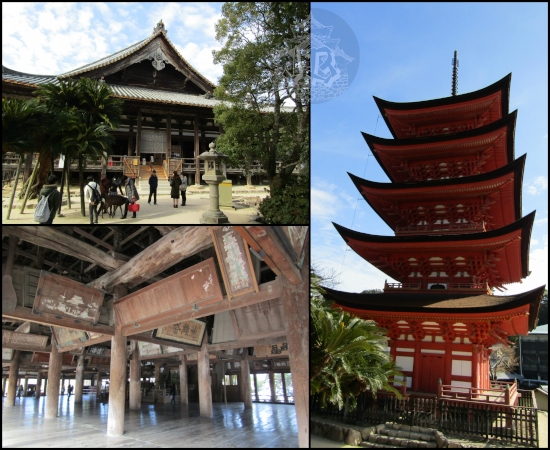
Then I headed down and then up again to another of the low hills to the Senjokaku [千畳閣] pavillion and the Pagoda of Toyokuni Jinja [豊国神社] and the five story pagoda next to the main building. Toyokuni Jinja was supposed to be a library of Buddhist sutras – however, it did not get finished (although that has its own shuin for some reason (・□・;))

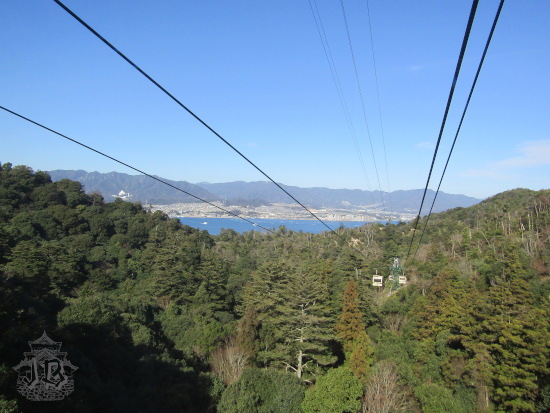
At that point it was barely half-morning I wondered whether to head downtown to Hiroshima, because high tide was only at 3 pm, and I really wanted to see the half-submerged torii, but I did not really know what to do. And no idea what got into me, but at that point I changed my mind and decided to go up Misen [弥山], the “island mount”. I actually decided to take the Miyajima Ropeway [宮島ロープウェー]. I crossed Momijidani Koen [紅葉谷公園], which is full of deer, and probably amazing when it is in full red, and took the ropeway from the park to Kayadani Station [榧谷駅] first and to Shishiiwa Station [獅子岩駅] then, about half an hour away from the summit. From there I took a few pictures and then decided to make my way up.

At that point I was not really thinking about getting to the summit (535 above sea level, and we’re talking 0 to 535 metres for real), but to Misen Hondo [弥山本堂] which is the temple where the ‘eternal flame’ was originally lit by a meditating Buddhist monk hundreds of years ago. The Peace Flame from Hiroshima was lit from here. There were two secondary halls, Sankido [三鬼堂] and Dainichido [大日堂].

But after Misen Hondo, I was ‘so’ close to the summit that it would be a pity not to finish the deed. That way, I could go up one route and down another one in order to see more things. On my way up and from the summit the sights were impressive, although it was a bit tiring. And a bit means a lot…

I think that at some point I considered using the ropeway down but time-wise it was going to be the same and walking down could be cheaper and would get me to see more stuff, such as Miyama Jinja [御山神社]. And I did not break my neck on the long hour and a half of hike-down, either. A greater plus.

All right, what time do you think I made it down? Not even 3 pm just yet, but as I had seen from halfway down the mountain, the tide was already up. Therefore I was able to see the floating o-torii, which was a high moment for me. The problem was that I was almost running out of battery in my camera already, and there was sunset to come! On my way around the bay I ate a very overpriced yakitori, but I was hungry and since Miyajima is ‘World Heritage’ it really does not have convenient stores.

And thus, when I went towards the aquarium, Miyajima Suizokukan [宮島水族館]. I decided to take all my pictures with the phone over there to save camera battery for the sunset pictures. That it was awfully cold at that moment had nothing to do with my decision, of course and walking into K.A.Z. absolutely never ever crossed my mind either.

After the aquarium I was distracted by Omoto Jinja [大元神社], which was full of deer. Praying, I’m sure. There were baby deer too, being bullied cute but for some reason (probably lack of battery) the pictures did not come out.

Then I headed back to the o-torii area to watch it in the sunset and took pictures until I had no more battery on any device.

Once batteries were dead and the sun was too low, so I headed back to my ryokan to recharge – in every sense of the way, as it was after 5.30 pm. On my way back I bought a local speciality – ‘fishcake’ which in my case was shrimp because I did not dare try the oysters. It was yummy. Before going to the hotel, I got myself some groceries to recharge my own batteries and have dinner later.

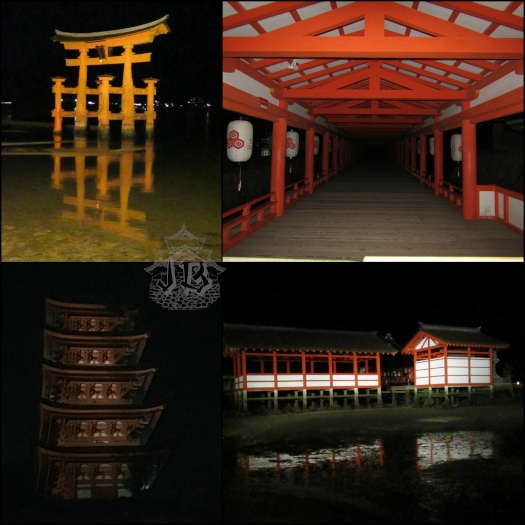
I spent some time resting, charging all the devices and writing down notes on everything I had been doing during the day, and then, at around 9 pm I came back out again to take pictures of the shrines and o-torii at night.

After that, dinner, shower, bed, and early check-out the following day in order to head down to Hiroshima, after very intense 11 hours running up and down Miyajima. Take that, nine hours in Kyoto.

5th January 2017: Narita squared, and a jump {Japan, winter 16/17}

I had a flight around 5 pm, not back just yet, but down south for my little excursion to Chūgoku. I headed out at 8 in the morning and missed my first train because stupid Google got me to the wrong station. Fortunately, I had a following train which still allowed me to make my final connection. Not making that would have sucked because I only had one train per hour to get to where I was going – which was the town of Narita, not the airport. But I was able to get the right train and I arrived in Narita [成田] (the town) at around 10.30 in the morning. my plan was visiting the complex of Narita-san [成田山], which holds the temple of Naritasan Shinshoji Temple and the Daikini Tendo Shusse Inari Shrine.

What I was not counting on was that a bunch of people were still going to be in Hatsumode-mood, and the area was the next thing from packed.

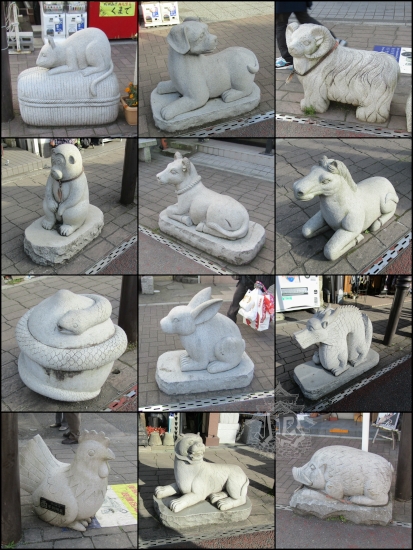
The lead-up to Narita-san complex is flanked by a bunch of souvenir shops and eateries, and two rows of little sculptures of the Chinese zodiacs – and one turtle, but the picture for that came out blurry (´;д;`)

Naritasan Shinshoji [成田山新勝寺] is a temple composed of several buildings and as mentioned it was quite full. That is why I did not manage to get all the shuin, but all in all it is quite a neat is place. However, I would like to see it when it is not this full (and the fact that I still have one shuin to get gives me the perfect excuse).

The other key building in the complex is Daikini Tendo / Shusse Inari Jinja [咤枳尼天堂 / 出世稲荷神社], the shrine of the white kitsune, where people were buying offerings to the fox in order to get favours from him, such as good luck in businesses.

The gardens were a good example of how things would work if it were less packed.

At around 2.30 pm I headed back to the station first and from there I caught a train to Narita (airport). My 5.20 pm flight departed from terminal three, which is the domestic low-cost terminal, and that was a bit of an experience. I have to say that I was awfully lucky because I was the scary foreigner and my bags were not checked, because I was for sure over the five-kilogram limit on my carry-on luggage.

I slept through my whole flight and I arrived in Hiroshima Airport a bit before 8 pm and I train-hopped towards the harbour to get on one of the last ferries to Miyajima [宮島], a place I had been wanting to visit since my first time in Japan. I had booked a nice little ryokan (traditional) room and I have to say I slept like a rock.

4th January 2017: Takao-san, the tengu mountain {Japan, winter 16/17}

For some strange reason I got into my head that I wanted to go to Takao-san [高尾山], a mount not too far away from Tokyo, in the city of Hachiōji [八王子]. From the summit of this 599-metre mount you get pretty sights… if the weather is clear. Which of course, was a no-go. D****e decided to tag along, so off we headed to “climb” a mountain – more like hike it up and then down.

There are different routes or trails to go up and down Takao-san. The “easy” route (trail 1) is paved and is the most walked. You may either hike it up completely or take the ropeway halfway. D****e hiked while I struggled my way up.

Mount Takao is said to be the dwelling place of Tengu and Daitengu, and about three-quarters up there is a Buddhist Temple, Takaosan Yakuōin Yūkiji [高尾山薬王院].

From the top of the mountain we got to guess Mount Fuji Fuji-san [富士山]. But it was there, and I have proof, albeit it has been a bit ‘enhanced’… Sorry that it does not look any natural, but here you have the original and the manipulated image:

Coming down Takao-san, we took trails 6 and 4, because D****e wanted to do the suspension bridge, because… reasons that I shall never understand. (Un)fortunately, we did not run into any tengu or related yōkai. On the bright side I did not break my neck \(≧▽≦)/. That is always a plus. Oh and we ate warm dango.

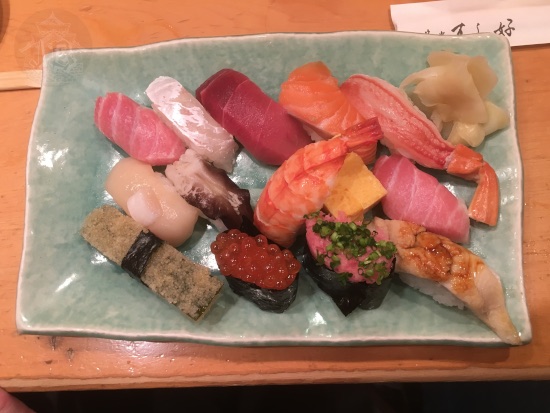
After that we met up with B**** for some karaoke and later on D****e left while I went off with B**** to have some quite amazing sushi down in Shinjuku [新宿].

24th July 2016: I can Osaka (ish), Haido can’t Japanese {Japan, summer 2016}

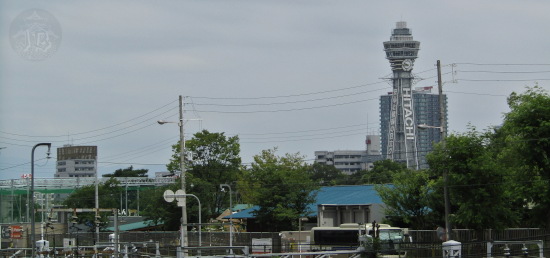
Before going to the concert I headed over to Shitennoji to pay a visit to the complex. Before that I had a great view of the Tsutenkaku Tower [通天閣].

A wide shot of Osaka, showing the Tsutenkaku TV tower on the right

Shitennoji [四天王寺] was as cool as I remembered it, but I did not find the place to get my seals, which I guess just means that I’ll have to come back. Damn it (^_~)

Collage. A torii gate. A temple building with a pagoda. A temple with a pond in front of it. An hexagonal pagoda

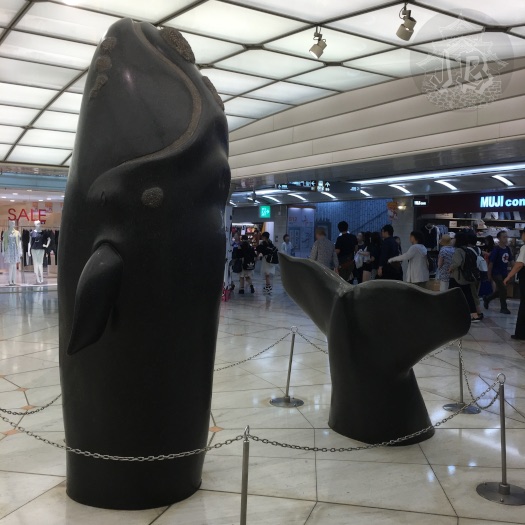
I headed off towards Namba Hatch again, as there was a second VAMPS concert happening, and I tried to find a coinlocker in the Namba station area, basically at the end of the world, and on my way back I got the wrong turn. That is why you get to see a whale sculpture.

Sculpture of a grey whale breaching the floor

I found myself a friendly katsu place and this time I really enjoyed my meal – I would have gotten takoyaki but I did not think it would have lasted enough.

Lunch. A tray of different deep-fried goodies

The concert had a similar set list to the one the day before, but it was different enough to make the experience different. Also, it was weird to have seats and not be in the arena – I had a seated ticket for the second floor –, though I can’t say it was a bad experience – I might have to consider it from now on. One of the funniest points of the concert though was that Hyde was having a bad Japanese day, and he kept tripping over his own words for some reason. After the concert was over I headed back to the hotel and there was gyoza from 7/11 for dinner because I was ravenous. And I slept like the dead.

Picture of the venue and the projected countdown on the stage curtains

17th July 2016: Chiba & friends {Japan, summer 2016}

In the morning I was considering Nikko but in retrospect I think that it was good that I did not do such a thing, considering.

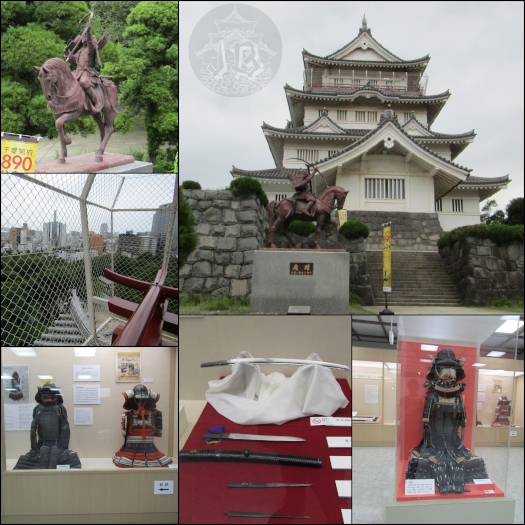
I headed out to Chiba to check out the castle and a local shrine, unoriginally named Chiba-jo [千葉城], and Chiba Jinja(≧∇≦).

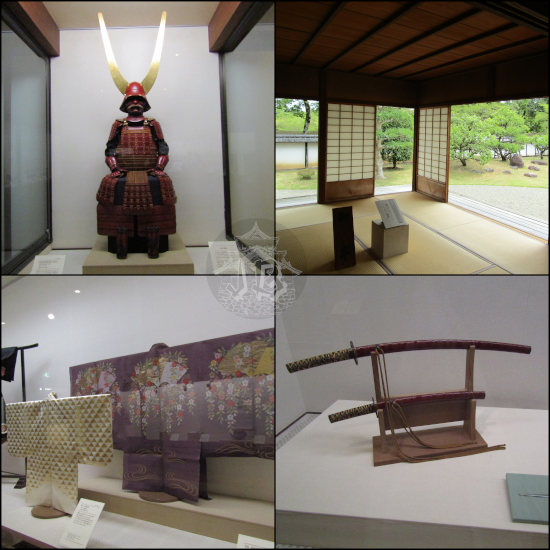
I had no trouble finding the castle once I made to an elevated road crossing, and I was soon there. To my surprise the castle visit was free, as it is also the Chiba City Folk Museum – Chiba-shi Tachi kyōdo hakubutsukan [千葉市立郷土博物館]. Inside there is a samurai and history museum, guarded by local guards and tour guides, very interested in not talking to the weird gaijin, yours truly. The first floor exhibits some pottery and archaeological artefacts, the second and third samurai and history items such as armours and weapons, and the fourth floor focuses on recent history around the world wars. The fifth is the observatory.

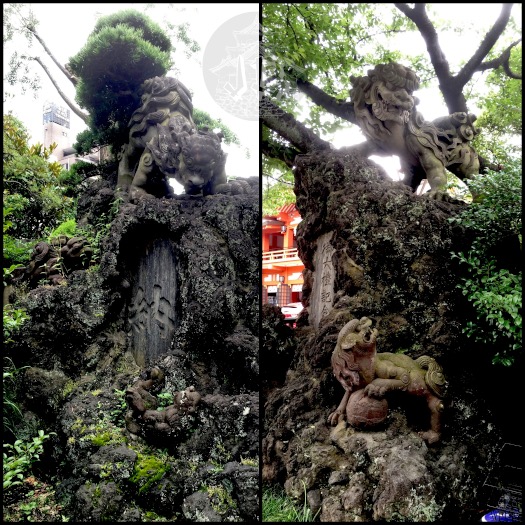
After the castle I walked to Myokenhongu Chiba Jinja [妙見本宮 千葉神社] which does not have a set of komainu (guardian lion-dogs). It has a whole family set and it is adorable! I was absolutely in love with the whole thing. Unfortunately I don’t think they would have let me take them.

After this I headed off to have a late lunch with a friend, because sometimes being a friend is being on trains for 2 hours for a weird late lunch, and then another hour and a half back because you’re meeting other people. In the meantime too I had time to shower and to slip onto the floor and not break anything. Go me!

Then I met some friends in Shibuya [渋谷] for dinner. Well, they had dinner, I had ice cream, cause I could d(^_^o)

10th July 2016: To the sea {Japan, summer 2016}

I was debating between Nikko and Kamakura, but when I woke up for some reason I felt more like Kamakura [鎌倉]. The day was as awesome as the previous one had been miserable and I headed off to Shinjuku to get myself an Enoshima-Kamakura pass.

Just as I had not liked the sales lady from the museum, the Odakyu sales lady was adorable. She cheered me up (≧∇≦) with her “Woah, you speaking Japanese surprised me” for me, which was quite sincere, by her eyes. After getting the pass, I headed off to the train and got ready for the trip. I was lucky because I could do both parts sitting down in preparation of what was to come. I know Kamakura/Enoshima, you walk a lot.

My first stop was Hase-dera [長谷寺], a temple I had not seen the previous time I had been there. They had a very pretty garden, and I really enjoyed the view and the buildings. It holds a standing Buddha, and they make yummy dango, which I tried.

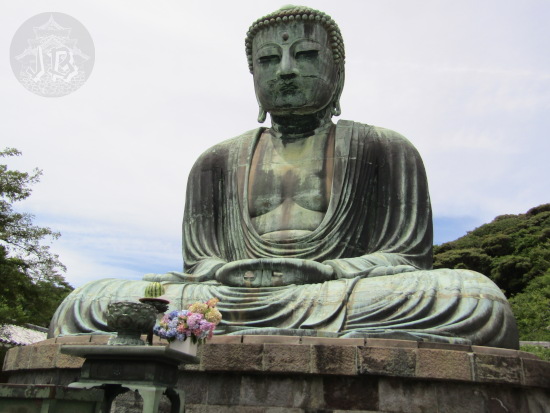
After that I headed off towards Kotoku-in [高徳院], which holds (or does not hold, as the building was long ago destroyed) the Kamakura Daibutsu [鎌倉大仏] (Great Buddha). As impressive as Nara is, I think I like this one more, as the serenity it transmits is quite amazing. Two university students came to ask me a few questions and they were horribly nice, they wanted to know how I knew Kamakura, and what was the best / worst about service in Japan. I think I broke their stats, but they treated me to a sweet.

I really wanted to go back to Tsurugaoka Hachimangu [鶴岡八幡宮], which is a Shinto Shrine in Kamakura, a bit away from the other two, so I used my unlimited-trips-in-the-area pass and went to the corresponding station. The shrine was just as I remembered. The fun part now is hunting down the Shrine and Temple seals. While I do love the omamori, the calligraphy is more affordable and keeps better.

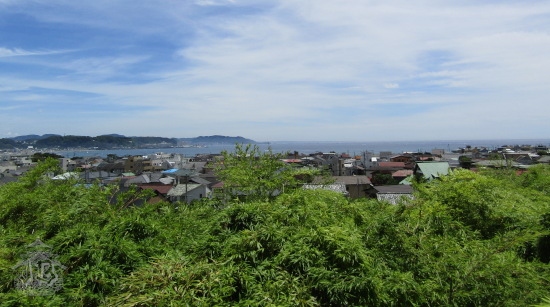
Finally, I decided to head off to Enoshima over one of the temples I was considering, just because I wanted to go to Enoshima. And Enoshima [江の島] delivered with the best view of Mount Fuji, Fuji-san [富士山] I’ve ever had. Repeatedly. Changing with time as sun set. And it was amazing.

In Enoshima I climbed up to the Enoshima Jinja [江の島神社], I – you guessed it – got my calligraphy, and laundered money.

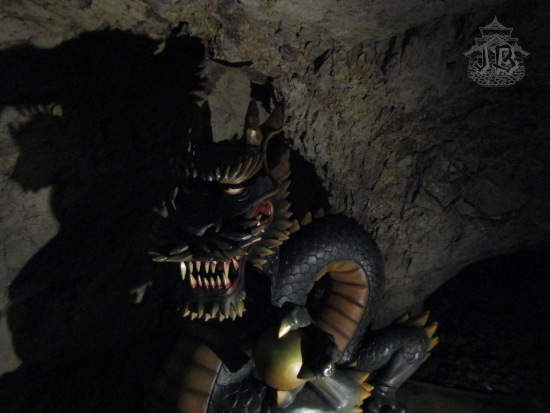
Then I walked around the whole rock until I reached Enoshima Iwaya [江の島岩屋], the Enoshima caves, to visit the dragon – an invoke him with a taiko drum, that you had to hit nikkai (twice) as the girls behind me informed me. They were also very impressed with my technique. If I got something from my taiko workshop, that was how to hold the baton and hit.

There is one thing I did not confess though, and that was that I miiiiight have skipped lunch that day (must see all the things? I ate dango and ice cream! And some yakitori!) so when I came back to Komagome [駒込] I stopped at CocoCurry and had a good dinner, because I was a bit on the ravenous side. Unfortunately, however, the ride back was standing, albeit it was good that I could leave the backpack on the floor.

5th July 2016: The start of a new routine {Japan, summer 2016}

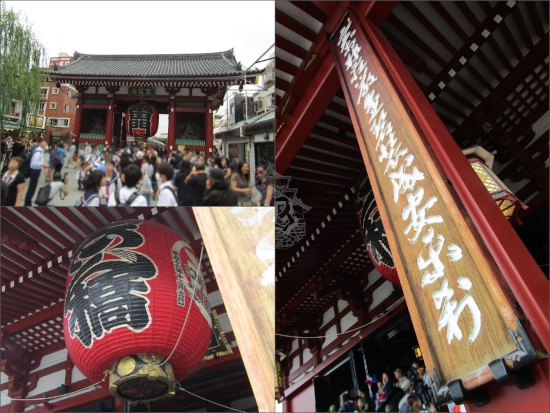
As I ended up going up to bed late on Monday, I had a late start on Tuesday. Thus I headed off to Sensō-ji [浅草寺] en Asakusa [浅草] to have a look at the Kamarimon and try to finally get a seal of the temple which last year didn’t work out for some strange reason, most probably having to do with the fact that you have to go to another temple to get it…

After that I headed off to school, because that is after all the reason why I’m here for a month – taking a Japanese language course. Technically it had started the previous day, but hey, I was doing something else and the school offers replacement classes once a week if you miss a day. Thus I was off for four hours of Japanese.

I started looking for a Japanese school a while ago and after an interview with a teacher I was placed on level 1-3, aka 4 because there is a crash course before the first level. In the end I decided for a school named Coto Japanese Language Academy, which was in Iidabashi [飯田橋].

I attended the catch-up lesson first. I was asked why I had been absent the previous day, so that was interesting to explain. By the time I was down in my own classroom apparently every teacher at school knew that I was the random white student into Japanese musicians.

During the first week there was a review of the previous level, which left me at a bit of a disadvantage, as I had no idea what some of the flash cards represented (^◇^;). An old man doing weights strikes 強い (tsuyoi = strong) for me, not 元気 (genki = energetic), so the learning curve was steep. I have to say that in general I was not too happy about the whole first week of classes, but I was willing to hold on for the following. Maybe it is worth noting that this course was the one I was recommended by the academy, not the one I really wanted to take. And about twice as expensive. The dynamics of the class are a speaking where you talk about your day, then some kanji and grammar. Towards the end you are given a short text that you have to reproduce and tweak, and then talk through. It’s a total of three hours per day.

The first week was not bad, but not good either. But I am getting ahead of myself.

After class I headed home to study and do homework, which is what I needed do.