21st August 2018: I see two castles… {Japan, summer 2018}

As I had made it to Nagoya a bit on the early side the previous day, I had some time to plan today carefully. The tentative plan was visiting Gifu and Inuyama, both castle towns. However, a third castle, Kiyosu, was also on the list, and it turned out that to get to Gifu, you go via Kiyosu. So there was a slight readjustment in Castle-visting schedule.

Thus I got myself on the train and 20 minutes later I stopped at Kiyosu [清洲]. I had seen the castle from the Shinkansen before, but I had never found the name until I was doing some pre-planning for this trip. Thus, it was a win/win situation. Everything seemed to be helping towards me seeing that castle this time.

Bonus points for Kiyosu: signs. Awesome, easy to follow signals reading “清洲城” in every crossing . Not in every second crossing. In every actual crossing so you can actually get to the place without even a map!

Anyway, the highlight of Kiyosu is the castle, Kiyosu-jō [清洲城]. It is not original by any means, but it is one of the prettiest ones I’ve seen. I like all the colourful stuff.

Then I snooped around Kiyosu Koen [清洲公園], the park where Oda Nobunaga Nōhime-zō [織田信長・濃姫像] stand, they are the bronze statues of Oda Nobunaga and his wife Nouhime.

Afterwards I returned to the station and continued onto Gifu [岐阜], where I took a while to figure out the bus system, but in the end I managed to get to the feet of the mountain where Gifu Castle is.

Before going into the park, I decided I would not go into the insect museum, and walked off to Shōhōji [正法寺], home of the Great Buddha Gifu Daibutsu [岐阜大仏].

I took the Gifu Safu Kinkazan Ropeway [ぎふ金華山ロープウェー] (Gifu Mt. Kinka Ropeway). As much as it seems that I am getting comfortable with the whole Ropeway thing, I’m not. For the record.

But there I went, up to Gifu-jō [岐阜城], the castle up the muontain.

Later I was wandering around the park for a while and of course I needed to go and see the Gifu Kōen Sanjūnotō [岐阜公園三重塔], the Three-Story Pagoda that stands on the slope of the park.

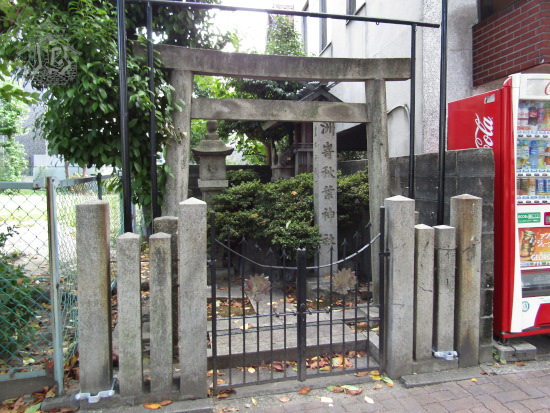
I was sort of tired, and it was very hot, so I took the bus back to the station, and the train back to Nagoya [名古屋]. When I got there I had rested a little, and I felt up to walking a bit in Nagoya – besides it just felt too early to go to the hotel. I walked by a cute little shrine, Yuzu Akiba Jinja [洲嵜秋葉神社].
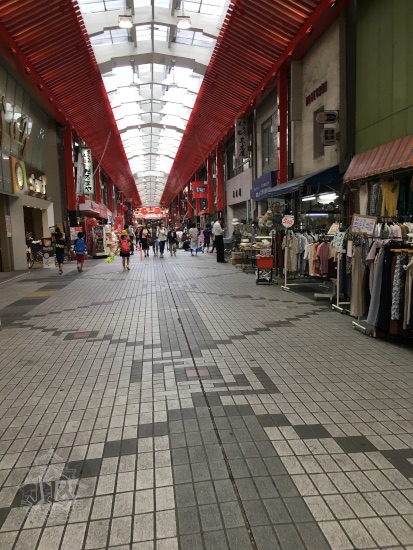
I finally made it to Ōsu Kannon [大須観音],

and the adjacent shopping streets,
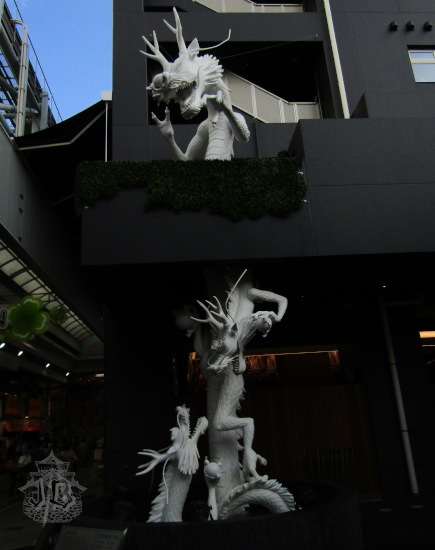
where I found Hakuryu [白龍], the white dragon.
I did some shopping in Mandarake and Book Off and I walked back to the hotel.

28th July 2016: Ueno + VAMPS Replay {Japan, summer 2016}

As the time to leave drew near, I felt a bit sad this morning (T^T). However, I did not let myself be dragged by it, so I forced myself out of the apartment to do things, and these things involved Ueno Kōen [野公園].

First I headed off to Ueno Tōshō-gū [上野東照宮], which I had not found open last year when I was there, because there was a matsuri, or something, I don’t really remember. Then I found out about the two dragons, the ascending dragon and the descending dragon, who come to drink at the pond at night. It is a very nice imaginary. Also, the shrine is really cool. It has a bit of a Chinese style, and is decorated with a gold layer. The inner fence shows animals of the sea and the wind, making it a unique shrine. I really liked it a lot.

The main building of a Shinto shrine, sparkling golden with a dark ceiling

Wooden painted carving of dragons, one going up, one going down

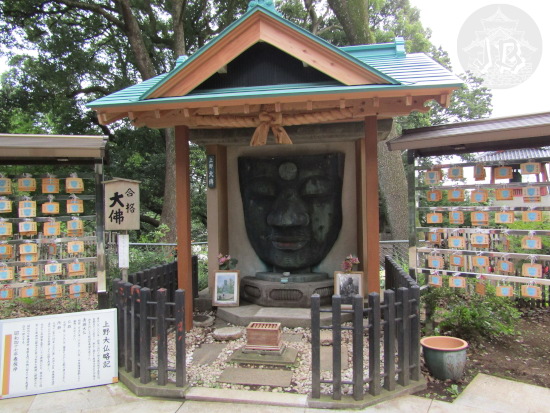
Then I found the Ueno Daibutsu [上野大仏], the Great Buddha Pagoda, which I had missed before – one of the things I love about Ueno is that whenever I go I find something new, yay. Most of the Ueno Daibutsu was melted for metal during WWII.

A giant Buddha face made of metal in a ceremonial pagoda

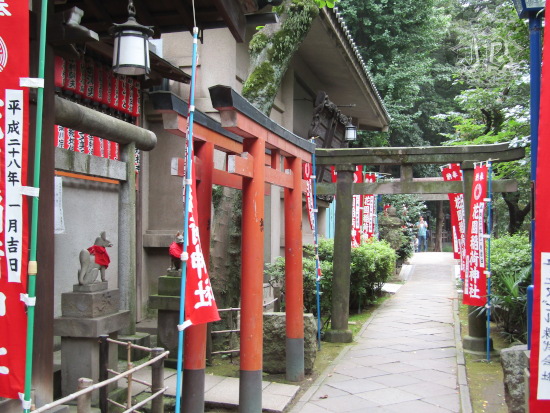
Gojoten Jinja [五條天神社] is really cool too, but I decided to leave getting its seal for another time. Next time.

A row of torii gates

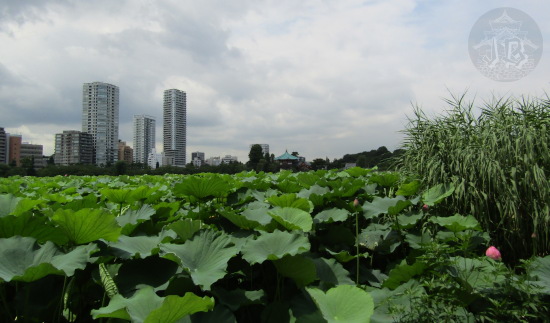
I walked by Shinobazu no Ike [不忍池], the Pond in Ueno.

A pond covered in water lilly leaves, with some high rises in the background

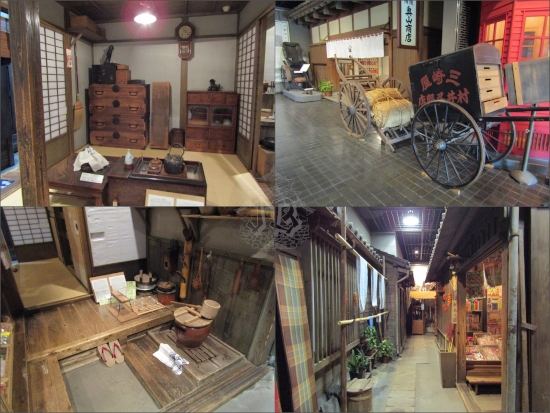
Finally, I went to the museum of Shitamachi of Customs, Shitamachi Fūzoku Shiryōkan [下町風俗資料館], where they keep some old houses from the years after the great Kanto Earthquake. A bunch (hundreds) of houses were built there to make sure that the population was housed. The museum shows how life was those few first years, and how people lived and organised themselves. There are a few items, houses, photographies and so. The second floor is hands-on, with games and pastimes and so. There was a very nice guide there and she explained a lot of things to me.

Reproduction of pre-industrial wooden houses in Tokyo

Later I went to class (I found another Gyoza Franchise on my way back to the station) and then I skidded out because I had to get to Yoyogi National Stadium, Kokuritsu Yoyogi Kyogijo [国立 代々木 競技場], in Yoyogi [代々木]. I was attending the Sukkiri Superlive in order to see VAMPS one more time before heading off back home. All in all, a very complete day that ended up with a bang – when I should have been studying Japanese to be honest ^^;;

The Yoyogi national stadium, and a screen reading Sukkuri 10th Anniversary Super Live

10th July 2016: To the sea {Japan, summer 2016}

I was debating between Nikko and Kamakura, but when I woke up for some reason I felt more like Kamakura [鎌倉]. The day was as awesome as the previous one had been miserable and I headed off to Shinjuku to get myself an Enoshima-Kamakura pass.

Just as I had not liked the sales lady from the museum, the Odakyu sales lady was adorable. She cheered me up (≧∇≦) with her “Woah, you speaking Japanese surprised me” for me, which was quite sincere, by her eyes. After getting the pass, I headed off to the train and got ready for the trip. I was lucky because I could do both parts sitting down in preparation of what was to come. I know Kamakura/Enoshima, you walk a lot.

My first stop was Hase-dera [長谷寺], a temple I had not seen the previous time I had been there. They had a very pretty garden, and I really enjoyed the view and the buildings. It holds a standing Buddha, and they make yummy dango, which I tried.

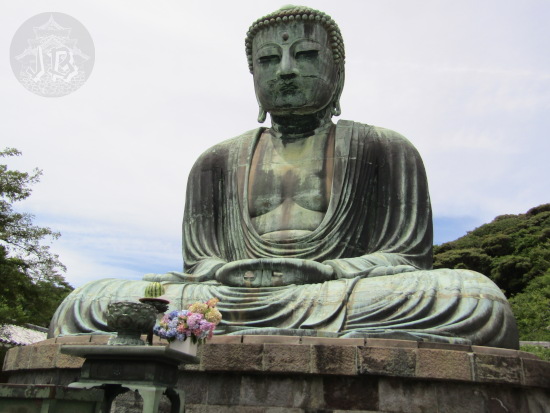
After that I headed off towards Kotoku-in [高徳院], which holds (or does not hold, as the building was long ago destroyed) the Kamakura Daibutsu [鎌倉大仏] (Great Buddha). As impressive as Nara is, I think I like this one more, as the serenity it transmits is quite amazing. Two university students came to ask me a few questions and they were horribly nice, they wanted to know how I knew Kamakura, and what was the best / worst about service in Japan. I think I broke their stats, but they treated me to a sweet.

I really wanted to go back to Tsurugaoka Hachimangu [鶴岡八幡宮], which is a Shinto Shrine in Kamakura, a bit away from the other two, so I used my unlimited-trips-in-the-area pass and went to the corresponding station. The shrine was just as I remembered. The fun part now is hunting down the Shrine and Temple seals. While I do love the omamori, the calligraphy is more affordable and keeps better.

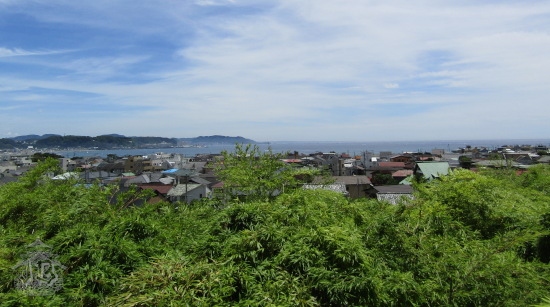
Finally, I decided to head off to Enoshima over one of the temples I was considering, just because I wanted to go to Enoshima. And Enoshima [江の島] delivered with the best view of Mount Fuji, Fuji-san [富士山] I’ve ever had. Repeatedly. Changing with time as sun set. And it was amazing.

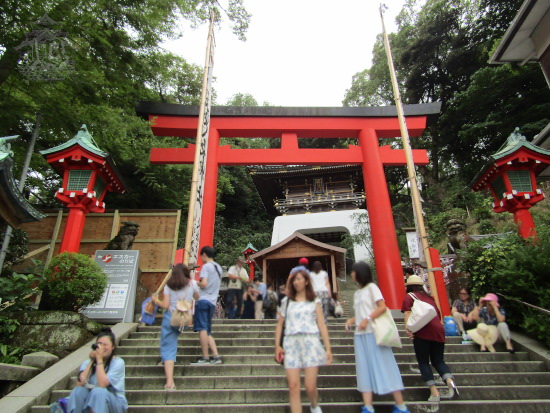
In Enoshima I climbed up to the Enoshima Jinja [江の島神社], I – you guessed it – got my calligraphy, and laundered money.

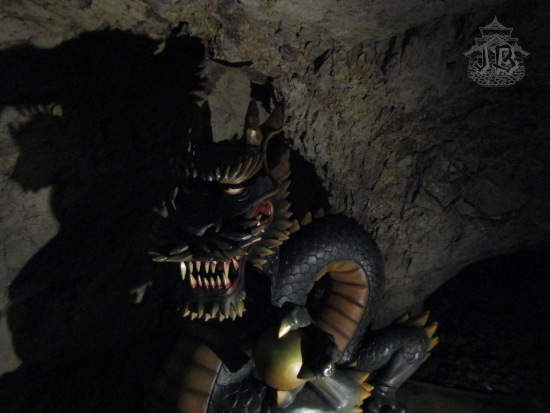
Then I walked around the whole rock until I reached Enoshima Iwaya [江の島岩屋], the Enoshima caves, to visit the dragon – an invoke him with a taiko drum, that you had to hit nikkai (twice) as the girls behind me informed me. They were also very impressed with my technique. If I got something from my taiko workshop, that was how to hold the baton and hit.

There is one thing I did not confess though, and that was that I miiiiight have skipped lunch that day (must see all the things? I ate dango and ice cream! And some yakitori!) so when I came back to Komagome [駒込] I stopped at CocoCurry and had a good dinner, because I was a bit on the ravenous side. Unfortunately, however, the ride back was standing, albeit it was good that I could leave the backpack on the floor.

14th July 2012: Kamakura & Yokosuka {Japan, summer 2012}

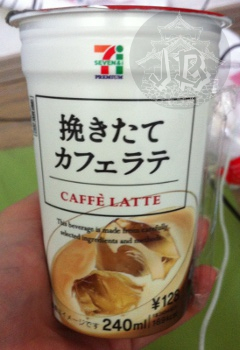
On Saturday the 14th we headed off to Kamakura [鎌倉], home of the second largest Buddha in the country and birthplace of the samurai. There was some “glassed” coffee for breakfast, then we set off on the train.

A can of coffee reading caffè latte 240 ml

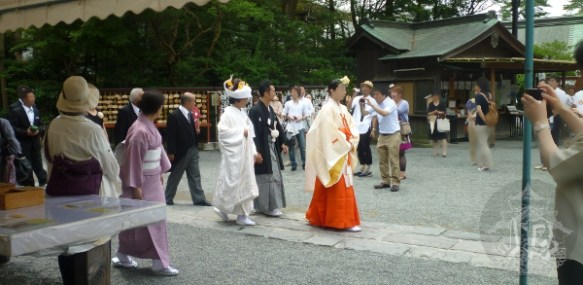
Once in Kamajura, we first off we headed to Tsurugaoka Hachimangu [鶴岡八幡宮], where we were lucky enough to see a couple about to get married.

A Shinto gate, in dark red with golden decoration

A traditional wedding, with the bride and groom dressed in kimono and hakama

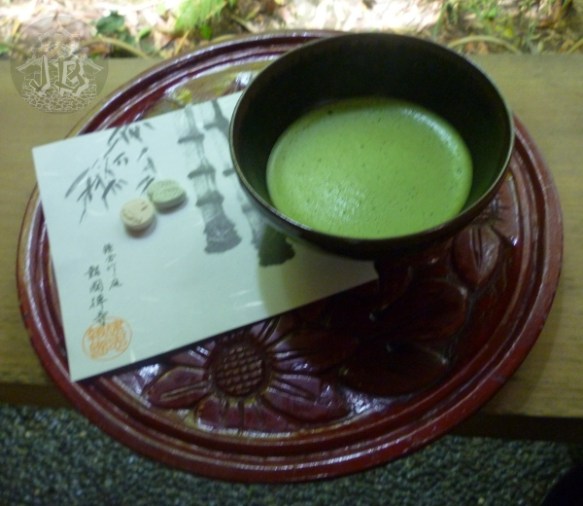
Second, we headed off to Kamakuragu [鎌倉宮], a shrine which has an awesome bamboo forest which we did not burn down. This is important because we had a small accident with an incense burner while we had some matcha (green tea) in said bamboo forest.

Religious stone markings in a bamboo forest

A bowl of foamy green tea, with sweets on the side

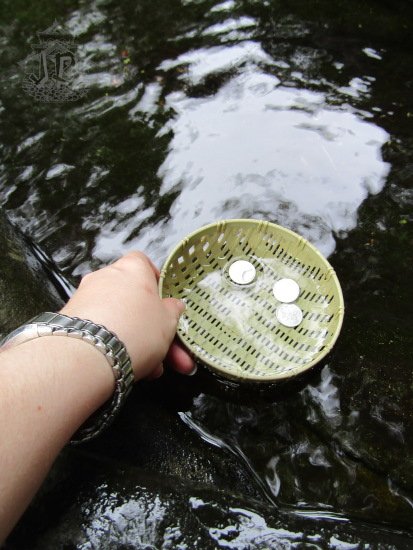
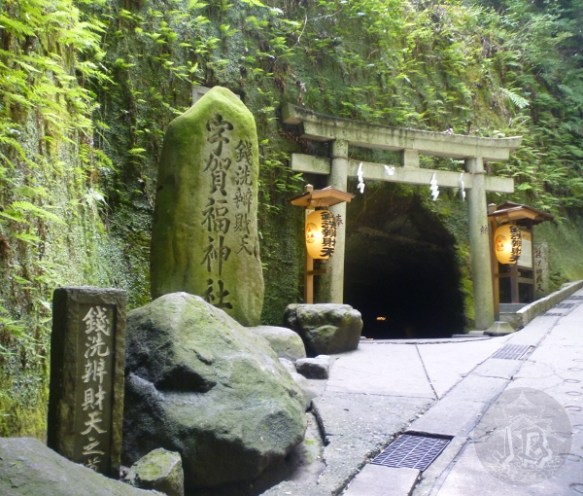
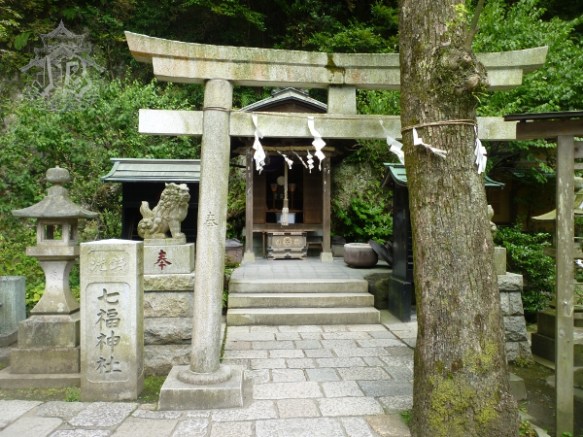
A few hills up and down we finally made it to Zeniarai Benzaiten Ugafuku Jinja [銭洗弁財天宇賀福神社] where you can legally launder money. In the literal sense – if you wash your money there it is supposed to multiply. Knowing fairly well that as long as I am here my money will only diminish, I did not really try, but the temple itself was awesome. And there was ice-cream.

Stone markings and torii gate that mark the entrance to a shrine. Right behind the torii, a dark cave mouth opens

A torii gate leading to a small sanctuary. There's a tree standing right in front of the torii, and it has been marked with sacred paper to protect it

Soft vanilla ice cream in a cone

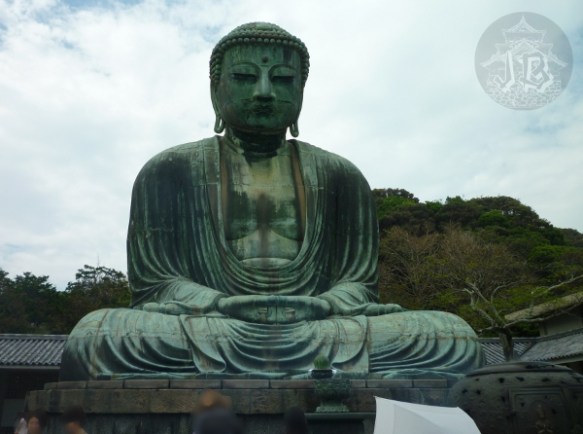
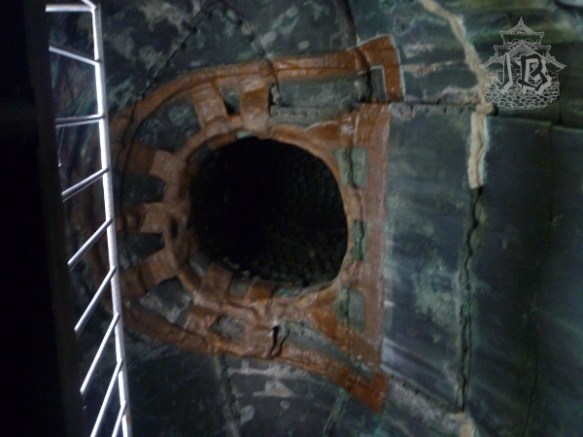
Our last spiritual stop was the Kamakura Daibutsu [鎌倉大仏] in Kotoku-in [高徳院], which is another of those things that everybody tells you that you should visit and you do because you think you should and still manage to amaze you. For the outrageous amount of 20 yen, you can even go inside.

The great Buddha, sitting cross-legged with a peaceful expression

The inside of the Buddha, with reinforced steel around a black hole that is probably the neck

We made a stop for food by the beach, too:

The beach, with foamy waves coming in

We had a snack, in particular a koroke:

A big croquette, breaded with big panko flakes

Finally we wrapped up the night heading over to Yokosuka [横須賀] to watch the summer’s fireworks by the powerplant!! =D sea.

Fireworks in the dark

Fireworks in the dark, reflected on the water

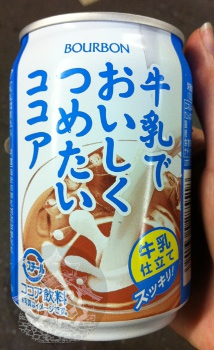
I was super-thirsty on the way back and I discovered that cocoa-in-a-can makes more giddy than coffee… Sheesh that’s some sugar rush!

Can of cocoa or chocolate milkshake