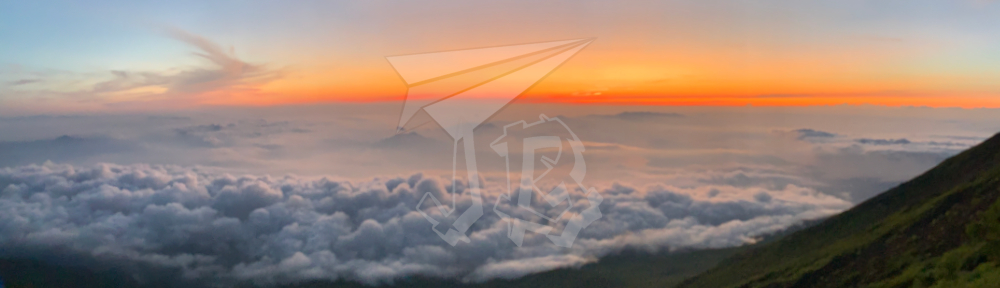
Ise [伊勢] in the Mie Prefecture, is a coastal town home to the Ise Grand Shrine Ise Jingū [伊勢神宮] dedicated to Amaterasu, Sun Goddess, and said by many to represent the soul of Japan. It is also, according to the legend, the resting place of one of the three Imperial Regalia, the mirror Yata no Kagami [八咫鏡]. The Grand Shrine is actually a compound, but there are two main shrines, the Inner Shrine Naikū and the Outer Shrine Gekū
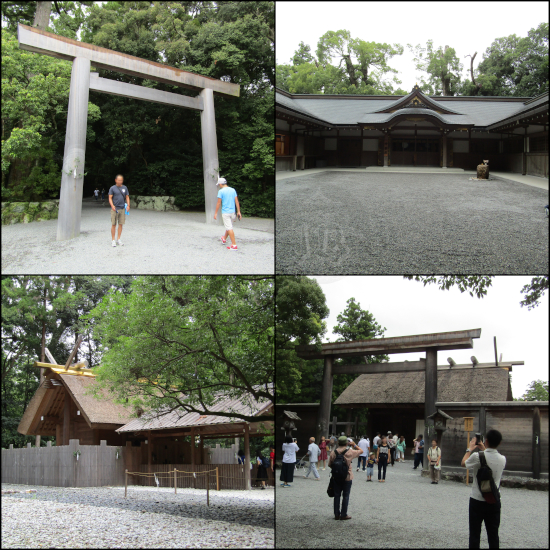
I left the hotel just in time to make it to the local station and get to Ise stfation, where I checked with the Tourism office and bought a bus pass. As much as I dislike buses in Japan, sometimes it’s the only way to get around. My first stop was the Outer Shrine: Gekū [外宮].
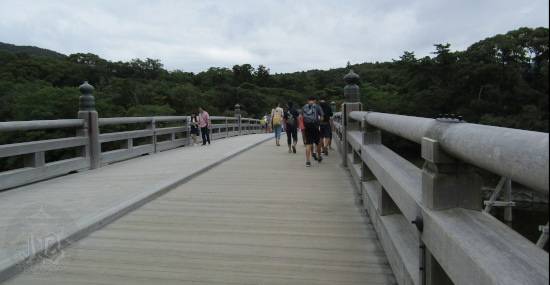
Then I took the bus to the Inner Shrine, which was packed with people and school trips. I crossed another Uji Bridge, Uji-bashi[宇治橋].
Then walked into the Inner Shrine: Naikū [内宮].

My general impression of the Ise Grand Shrine: it felt really severe and not too welcoming, which is different from what I usually feel in Shinto Shrines. It was full of people praying at the different shrines and sub-shrines, and families with grandparents, parents and kids. There were also a lot of children in trips. In the Great Shrine, people usually pray at what is called the third level. When I was there, a woman was shown to the second level for her to pray there, which caused some outrage around the parishioners. That amused me.
After I had seen the Grand Shrine I took the bus again to head off to the coast. On the way we passed by Azuchi-Momoyama Bunkamura, and I filed it for future reference, as it had a castle. But for the time being I was heading off to see the Meoto Iwa.
I got off the bus and first I was distracted by the ocean.
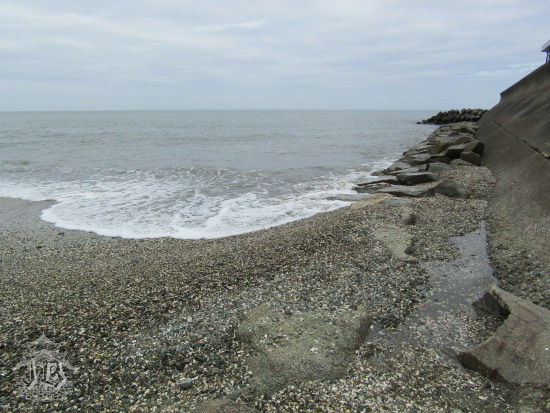
Then I walked through Ryugusha [龍宮社], a dragon Shinto shrine.
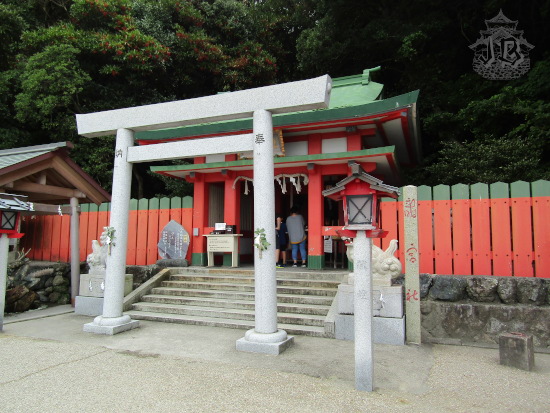
I walked around the cliff and got to Futamiokitama Jinja [二見興玉神社].

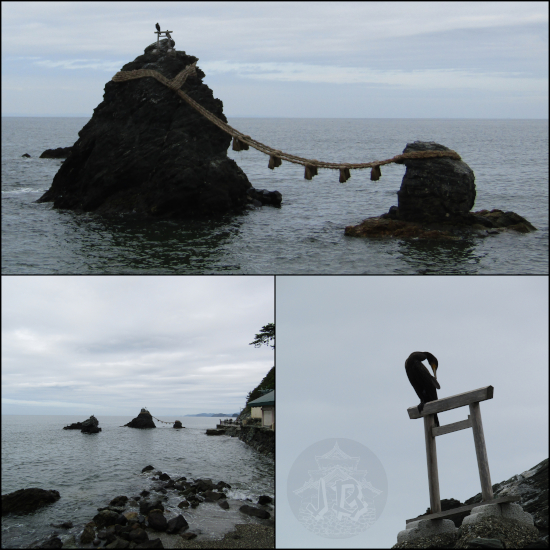
Which is home to the Married Rocks Meoto Iwa [夫婦岩], two rocks in the ocean that are joined by a sacred rope and represent a married couple.
I had now some time to do something else. I considered the Aquarium, and the Azuchi-Momoyama Bunkamura [伊勢安土桃山文化村]. I decided to give myself some more time to think by taking the bus backtracking towards the Naikū, and I had almost decided on the theme park – featuring samurai, geisha and the castle.

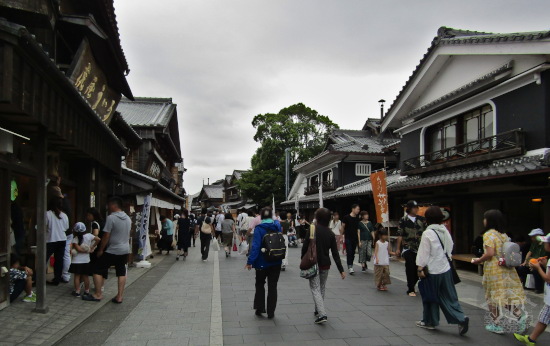
But then I saw the price. It was over 4,000 ¥ and I had spent 10,500 ¥ at the Oiran Experience than expected, so I was a bit off-budget. Thus I decided to just head back to the shopping and restaurant area and grab a bite to eat. (Full disclosure: I might have to go back to Ise just to check this out anyway (≧∇≦).)
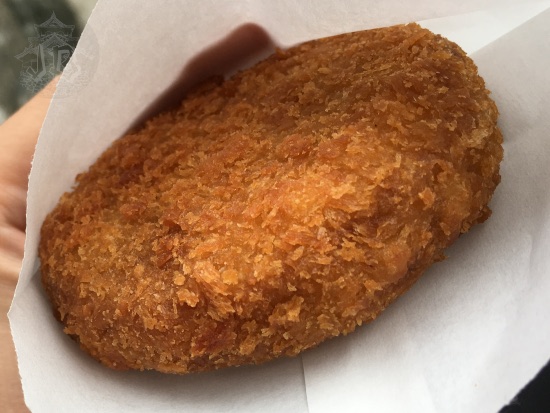
I had heard about ‘Ise lobster’ Ise ebi [イセエビ] (Japanese spiny lobster, Panulirus japonicus), but in the end it turned out that I only bought a koroke. It was yummy though.
After this, being already late afternoon, I decided to head back to the station, stopping by Seki Jinja [世木神社] before I left towards Nagoya [名古屋], which would be my operational base for the next couple of days.






 JBinnacle – A Travel Logbook