31st August 2018: Tokyo Tower Reprise and off to Roppongi {Japan, summer 2018}

I went to Minato [港] because Tokyo Tower [東京タワー ] is there, and I love Tokyo Tower. My first stop, however, was Shiba Koen [芝公園], to visit a certain tree. However, the park was under construction! Who the hell closes a park for construction?! (O_O)!

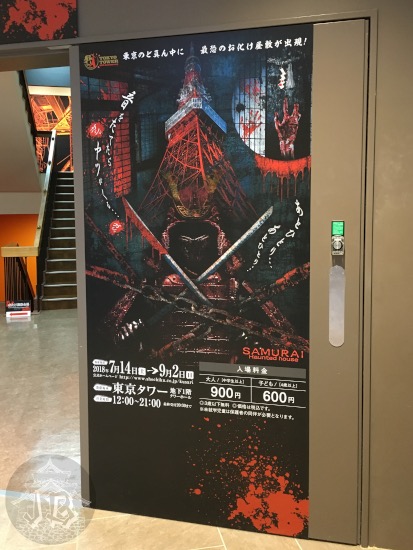
They have reopened the upper observatory in Tokyo Tower so of course I had to come back. It was imperative for my mental health. When I arrived I found out that they were running a “haunted house” on the basement and I decided to give it a go.

The story was of a cursed samurai who has killed 332 people and you’re supposed to be number 333. I had been wanting to try one of those for a while but in the end I did not enjoy it that much – the not seeing down the corridors was too stressful. Maybe with someone else it would have been more fun.

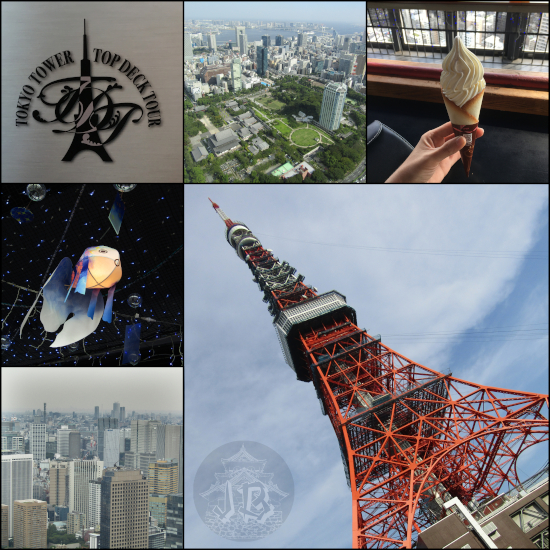
Afterwards I got my ticket for Tokyo Tower [東京タワー ] and the “VIP = Very impressive panorama” from the second observatory. I don’t understand why Tokyo Tower makes me so happy, but it does so more power to it. Oh oh oh and I had awesome(ly expensive) ice cream on the tower!

Afterwards I walked towards Roppongi [六本木], making a stop at the Don Quijote, a macro store that has nothing useful but lots of fun little stuff, with half a mind to buy a traditional red eyeliner or coloured contact lenses. But in the end I was strong and did not waste money (yet (≧∇≦) ).

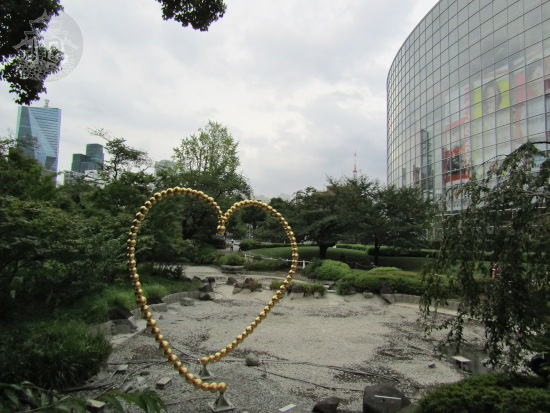
I continued to the gardens Mori Teien [毛利庭園], and I was a tiny bit disappointed that the pond had been emptied!

And I saw that the TV Asahi [テレビ朝日] building was open for visitors, so I went to snoop into that, because of course I did.

Later I met with D****e and M*****san for a shabu-shabu dinner which was out of this world.

27th August 2018: Nippori {Japan, summer 2018}

I went to the Yanaka [谷中] area in Nippori [日暮里] because I was not feeling too well and I thought it would be urban enough but empty enough. Unfortunately it did not quite cut it.

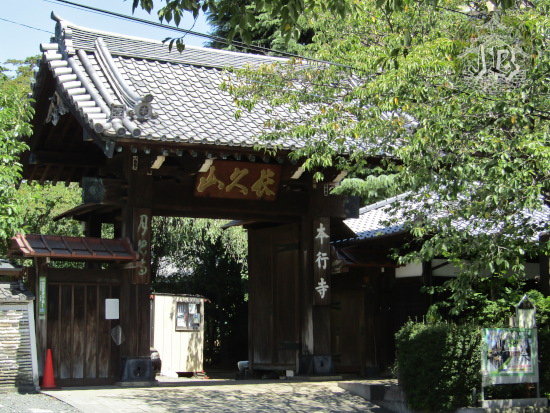
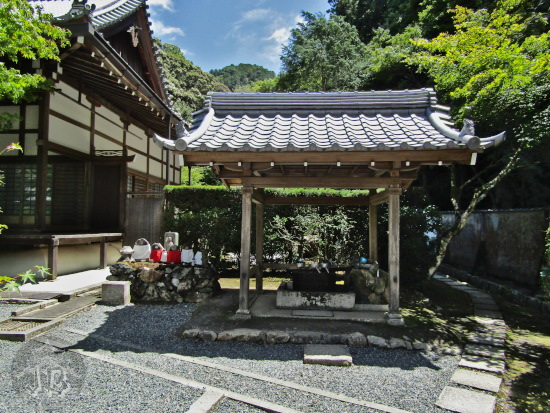
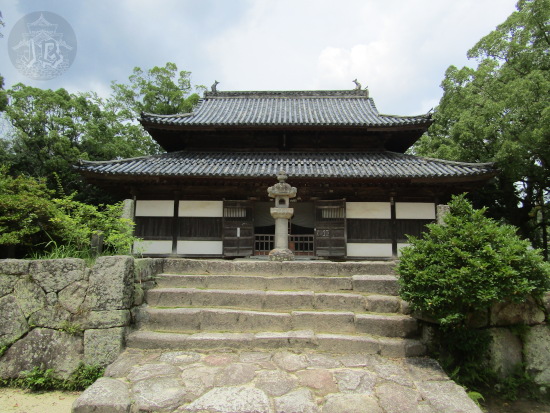
Just after coming from the station, I went to Hongyo-ji [本行寺]:

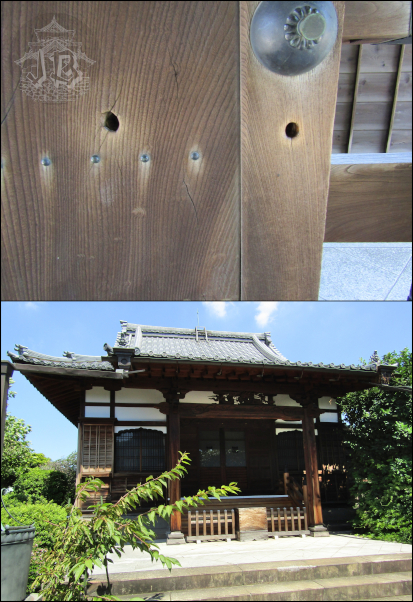
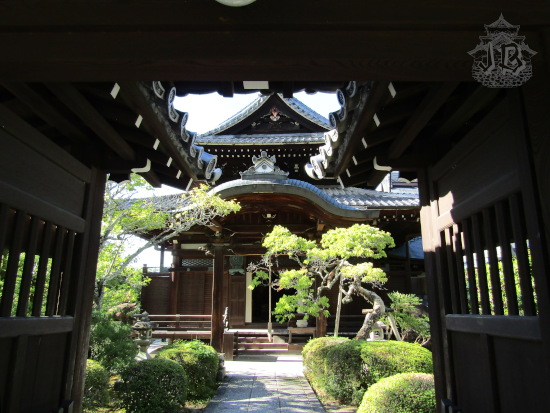
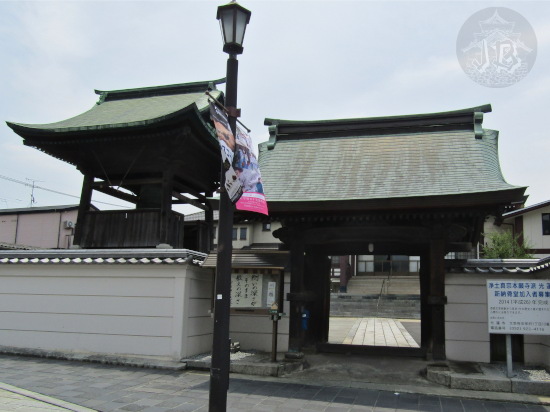
And then to Daikokuten Kyōo-ji [経王寺], whose gate is important cultural property and keeps bullet holes from the Battle of Ueno (1868).

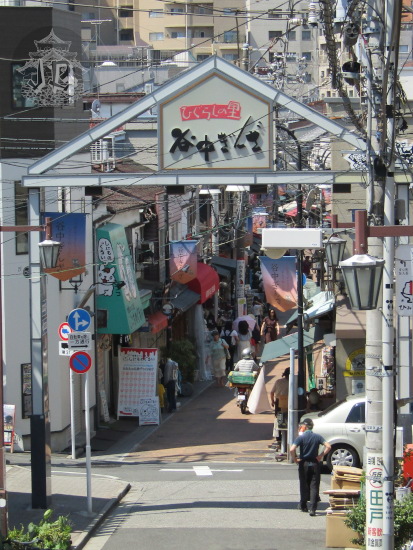
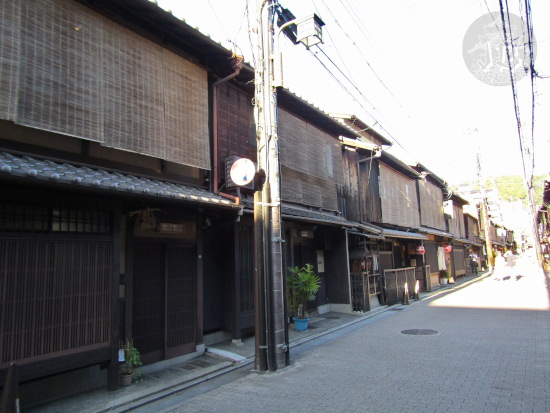
I arrived to Yanaka Ginza [谷中銀座], a traditional shopping street. I saw Fukuyama Masaharu posters there and I found a shop that sold humoristic hanko for foreigners. I really, really fancied the idea of one with 榊 [Sakaki] on it (with a platypus drawing) but alas, extravagancy budget had already been topped by the Oiran photoshoot.

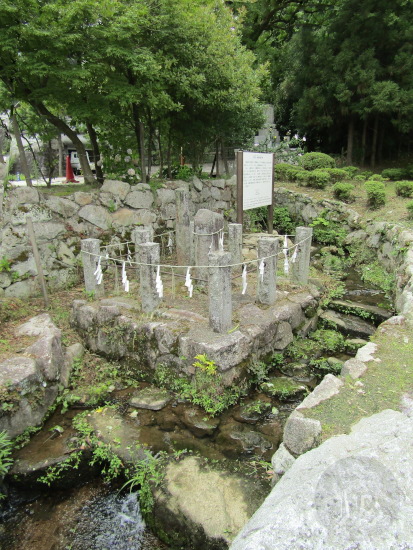
Then I walked throughout Yanaka Reien [谷中霊園], one of Tokyo’s urban graveyards, where you can see some special see-through bamboo barriers:

I also saw the Tokugawa family graveyard within, alhtough it is technically “only” the Grave of Tokugawa Yoshinobu, Tokugawa Yoshinobu Kōbosho [徳川慶喜公墓所].

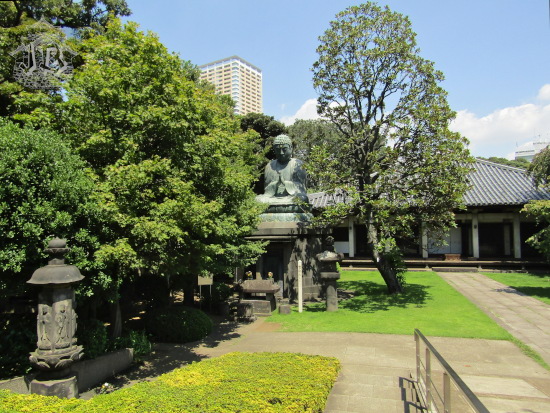
And Tenno-ji [天王寺] next to the cemetery.

The truth was that I wanted to explore a few more temples in the area. However, I decided to do a Book Off, Tsutaya, etc tour because it was my last day on the JR Pass and I wanted to check out some CDs – and because my stomach was being stupid and I needed to be close to toilets. Truth be told I don’t have that much of a good memory from this day (≧∇≦), because I was totally unable to get anything to eat till dinner – boy was I hungry by then.

26th August 2018: To the East: Niigata → Aizu-Wakamatsu → Koriyama → Tokyo {Japan, summer 2018}

As there was not much to see in Niigata [新潟], we took a scenic train to the east – Niigata is famous for being ‘countryside’, and growing rice. We saw lots of rice fields.

Our destination was Aizu-Wakamatsu [会津若松], a ‘samurai town’ famous for Tsuruga castle and the story of the Byakkotai [白虎隊], a troop of young soldiers who fought during the Boshin war. Back then the ‘Aizu warrior spirit’ was a very important thing, and 19 youths committed ritual suicide when they thought the castle had fallen. This is called the Tragedy of the Byakkotai.

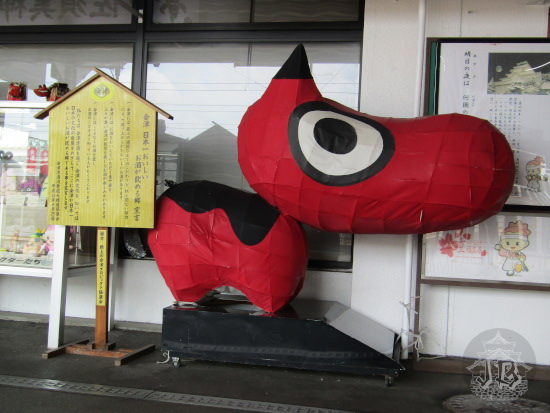
On the other hand, the town’s mascot is a cartoonish phantom red cow Akabeko [赤べこ]. Because why not?

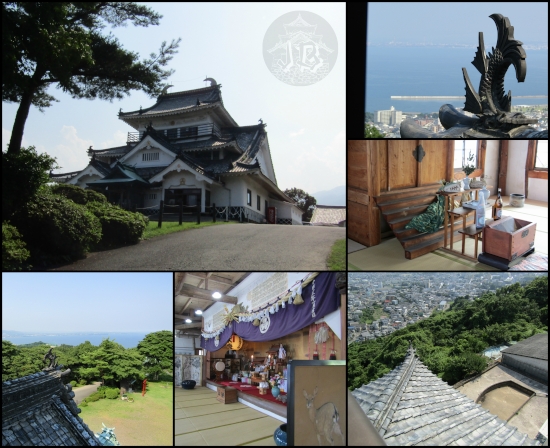
We headed out to the castle first and foremost. Tsuruga-jo [鶴ヶ城] or Aizu-Wakamatsu-jo [会津若松城]. If you google it, you might think it’s pink. So did we. We were a bit on the amusedly disappointed side (≧∇≦).

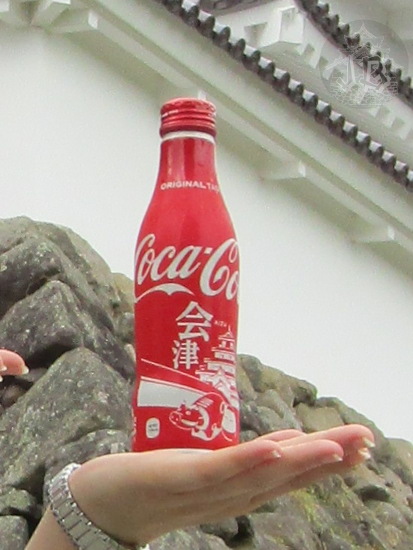
But we made-do with some awesome (and ice-cold) Aizu Coke-bottles.

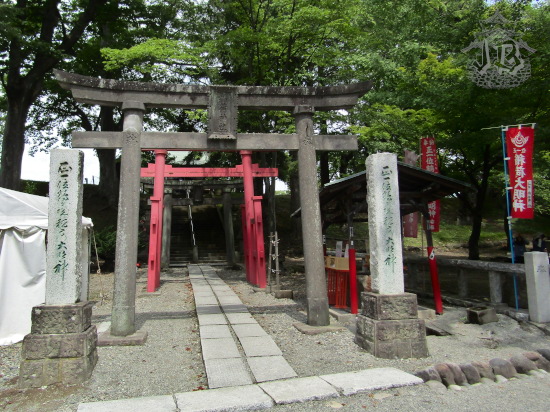
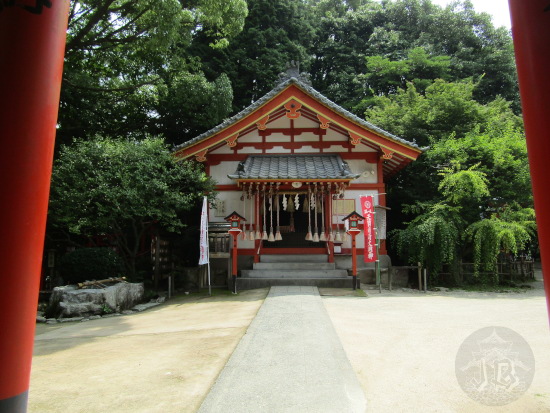
Within the castle grounds we found Tsuruga-jo Inari Jinja [鶴ヶ城稲荷神社].

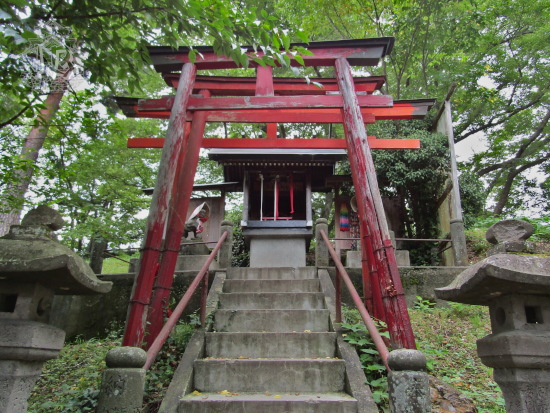
And Kasama Inari Jinja [笠間稲荷神社].

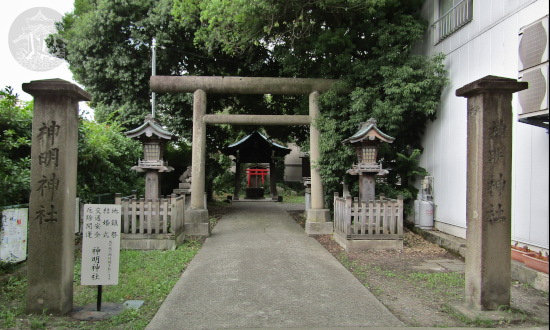
After the castle it was lunch time so we went to have lunch in the ‘old samurai town’ which to be honest does not feel too old. On the way we stopped by Shinmei Jinja [神明神社], which was rather on the empty side, but still nice.

We ate lunch in a place called Mitsuta-ya [満田屋] to eat miso dengaku [味噌田楽]. We had a course of skewers consisting on two konjac (one with salty and one with sweet miso), fried tofu, mochi (rice cake), sweet potato, shingorou (some kind of rice croquette) and smoked herring. All these were grilled just in front of us, which was on the one hand really cool to see, and on the other, bloody hot because hey, there was a fire burning in front of us. We were told that this was typical samurai food, because it could be prepared and eaten ‘on the go’. Who knows whether it is true, but it was fun and yummy.

Once we had eaten we had to make a run to the station so we could catch the train – as the following one was two hours later – and we made it with three whole minutes to spare despite google maps saying we were too far away. And thus we were off to Koriyama [郡山], which… we had not really heard of before this whole thing? (≧∇≦). There we took the Tourist Office by surprise when we asked what we could see even if it was already ‘late’. Map in hand, we headed off to see Asakakunitsuko Jinja [安積国造神社], which was a little on the creepy side.

Then we saw Nyoho-ji [如宝寺].

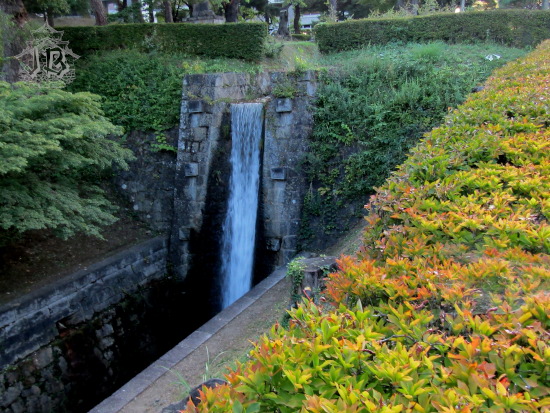
And continued to the park Hayama Koen [麓山公園], where we saw the Asaka Canal Hayama Waterfall Asaka Sosui Hayama no Hibaku [安積疏水麓山の飛瀑].

And the so-called Of the 21seikiki nenkouen Hayama no Mori [21世紀記念公園 麓山の杜], the 21st Century Memorial Park Hayama Forest.

Finally we headed back to the station area, where we checked out the Observatory in the Big-i [ビッグアイ] building.

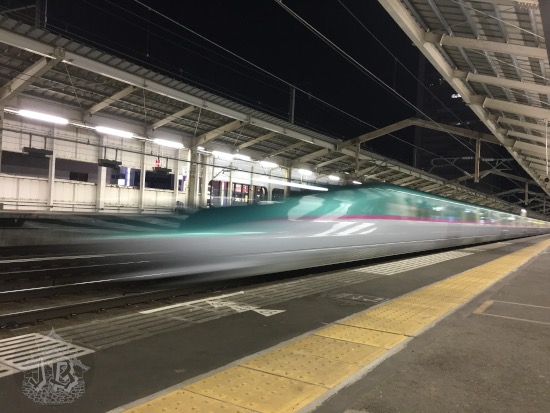
And finally caught a shinkansen back to Tokyo, we had dinner on the go and crashed in bed when we got home.

22nd August 2018: … and I raise you two castles more {Japan, summer 2018}

From Nagoya [名古屋], I got myself to Inuyama [犬山], Aichi Prefecture, to see yet another castle. This is also one of the twelve original castles and a National Treasure of Japan. Inuyama is located about 40 minutes away from Nagoya in a line I had not even heard about, so I had a bit of a hiccup finding the station. But it was no more than a tiny stumble and I was on my way at the expected time. Inuyama is a nice little town with a traditional street leading up to the castle, called “Castle Town street”.

Before getting to the castle I came across two shrines – one was Haritsuna Jinja [針綱神社].

The other one was Sankoinari Jinja [三光稲荷神社 ], which either got you a partner or protected your pets. Inclusive for people who want a partner or not, I guess (≧∇≦).

Then I hiked up to Inuyama-jō [犬山城], the castle.

I diverted from the way to get to Inuyama Jinja [犬山神社].

And I was puzzled by something called Oibokenizu Jizoudou [老い呆け来地ず蔵堂]. But it’s okay. Apparently most people are. It seems to be some kind of love temple.

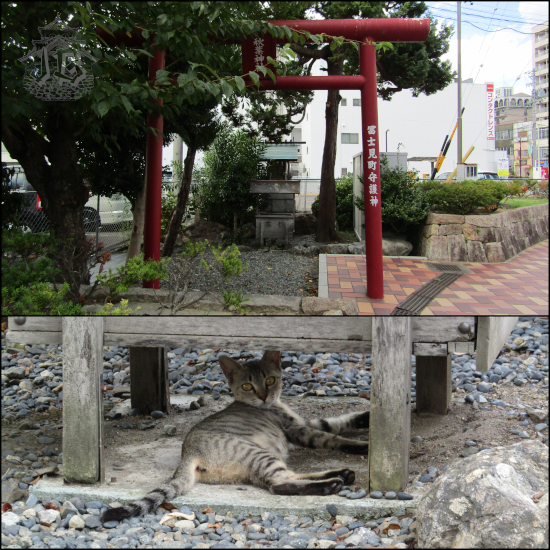
Finally I met a very relaxed kitty in Akiba Jinja [秋葉神社].

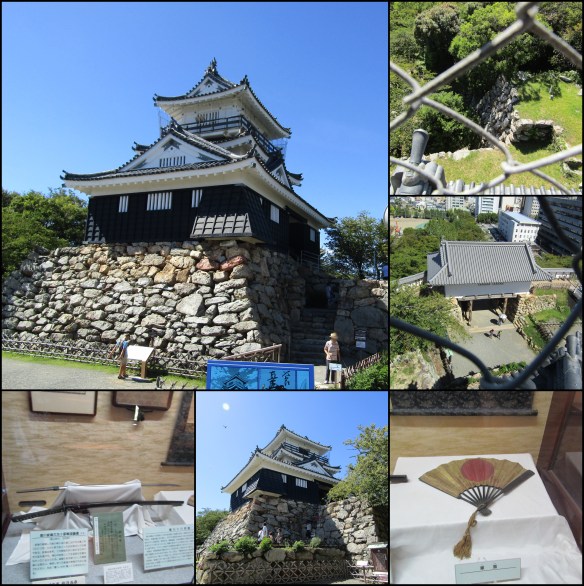
With this, I left Inuyama and headed back to Nagoya, from where I took a Tokyo-bound Shinkansen. I made a stopover at Hamamatsu [浜松] because I wanted to see… yet another castle! I found my way to Hamamatsu-jō [浜松城, Hamamatsu-jō].

Next to it there is the sculpture of Tokugawa Ieyasu Wakaki hi no Tokugawa Ieyasukō-zō [若き日の徳川家康公像]. Ieyasu build the Castle and resided in Hamamatsu and was the first shogun of Edo shogunate. The castle is a reconstruction.

Finally, there is the Ieyasu Armour Hang Pine Tree Ieyasu yoroi-kake-matsu [家康公鎧掛松] which (supposedly) is where the man hung his armour when he was home (aka the original castle).

And with that I headed off back to Tokyo [東京] and D****e’s place to get some rest.

21st August 2018: I see two castles… {Japan, summer 2018}

As I had made it to Nagoya a bit on the early side the previous day, I had some time to plan today carefully. The tentative plan was visiting Gifu and Inuyama, both castle towns. However, a third castle, Kiyosu, was also on the list, and it turned out that to get to Gifu, you go via Kiyosu. So there was a slight readjustment in Castle-visting schedule.

Thus I got myself on the train and 20 minutes later I stopped at Kiyosu [清洲]. I had seen the castle from the Shinkansen before, but I had never found the name until I was doing some pre-planning for this trip. Thus, it was a win/win situation. Everything seemed to be helping towards me seeing that castle this time.

Bonus points for Kiyosu: signs. Awesome, easy to follow signals reading “清洲城” in every crossing . Not in every second crossing. In every actual crossing so you can actually get to the place without even a map!

Anyway, the highlight of Kiyosu is the castle, Kiyosu-jō [清洲城]. It is not original by any means, but it is one of the prettiest ones I’ve seen. I like all the colourful stuff.

Then I snooped around Kiyosu Koen [清洲公園], the park where Oda Nobunaga Nōhime-zō [織田信長・濃姫像] stand, they are the bronze statues of Oda Nobunaga and his wife Nouhime.

Afterwards I returned to the station and continued onto Gifu [岐阜], where I took a while to figure out the bus system, but in the end I managed to get to the feet of the mountain where Gifu Castle is.

Before going into the park, I decided I would not go into the insect museum, and walked off to Shōhōji [正法寺], home of the Great Buddha Gifu Daibutsu [岐阜大仏].

I took the Gifu Safu Kinkazan Ropeway [ぎふ金華山ロープウェー] (Gifu Mt. Kinka Ropeway). As much as it seems that I am getting comfortable with the whole Ropeway thing, I’m not. For the record.

But there I went, up to Gifu-jō [岐阜城], the castle up the muontain.

Later I was wandering around the park for a while and of course I needed to go and see the Gifu Kōen Sanjūnotō [岐阜公園三重塔], the Three-Story Pagoda that stands on the slope of the park.

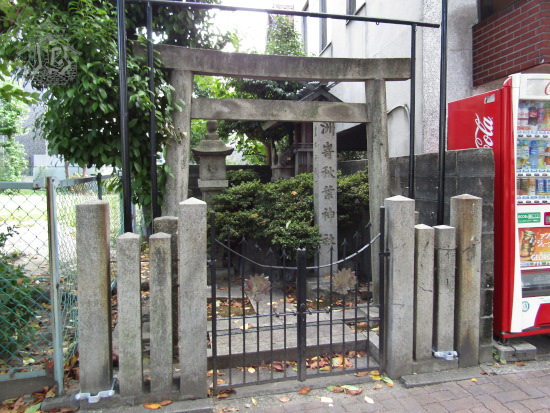
I was sort of tired, and it was very hot, so I took the bus back to the station, and the train back to Nagoya [名古屋]. When I got there I had rested a little, and I felt up to walking a bit in Nagoya – besides it just felt too early to go to the hotel. I walked by a cute little shrine, Yuzu Akiba Jinja [洲嵜秋葉神社].

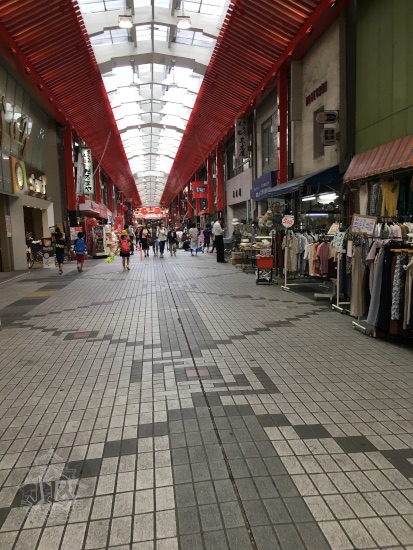
I finally made it to Ōsu Kannon [大須観音],

and the adjacent shopping streets,

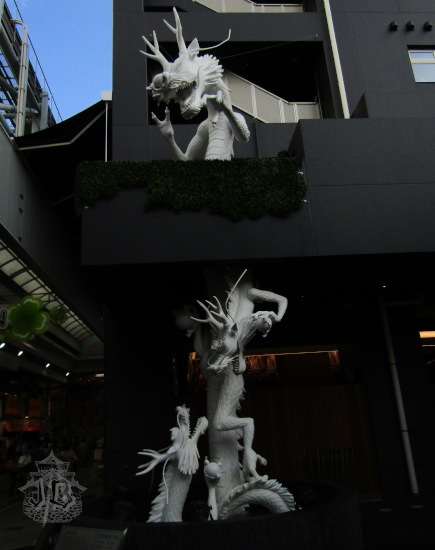
where I found Hakuryu [白龍], the white dragon.

I did some shopping in Mandarake and Book Off and I walked back to the hotel.

20th August 2018: Ise, the Soul of Japan {Japan, summer 2018}

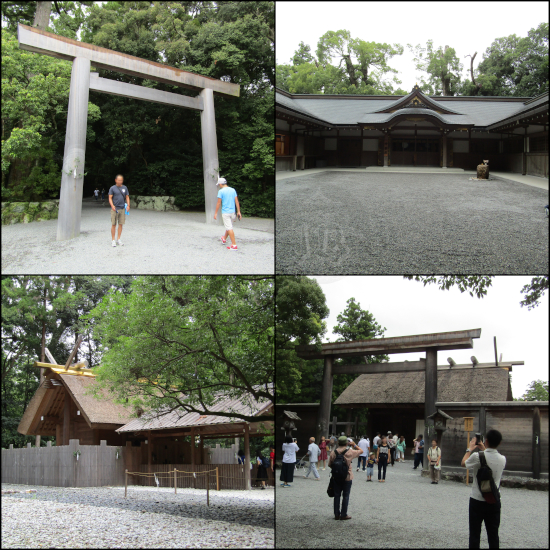
Ise [伊勢] in the Mie Prefecture, is a coastal town home to the Ise Grand Shrine Ise Jingū [伊勢神宮] dedicated to Amaterasu, Sun Goddess, and said by many to represent the soul of Japan. It is also, according to the legend, the resting place of one of the three Imperial Regalia, the mirror Yata no Kagami [八咫鏡]. The Grand Shrine is actually a compound, but there are two main shrines, the Inner Shrine Naikū and the Outer Shrine Gekū

I left the hotel just in time to make it to the local station and get to Ise stfation, where I checked with the Tourism office and bought a bus pass. As much as I dislike buses in Japan, sometimes it’s the only way to get around. My first stop was the Outer Shrine: Gekū [外宮].

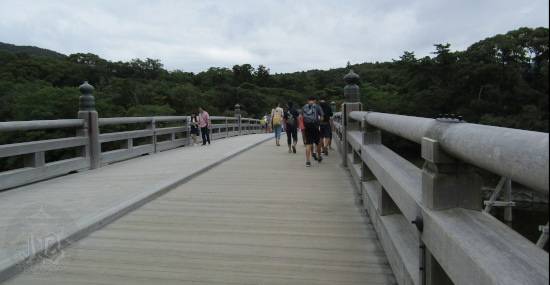
Then I took the bus to the Inner Shrine, which was packed with people and school trips. I crossed another Uji Bridge, Uji-bashi[宇治橋].

Then walked into the Inner Shrine: Naikū [内宮].

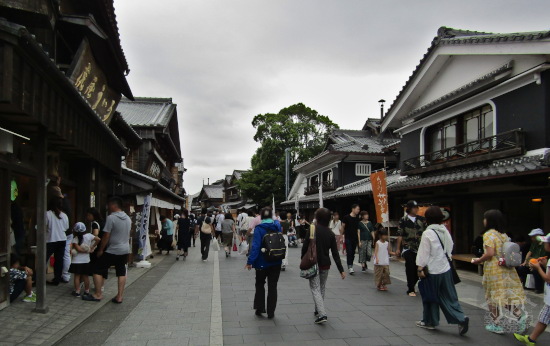
My general impression of the Ise Grand Shrine: it felt really severe and not too welcoming, which is different from what I usually feel in Shinto Shrines. It was full of people praying at the different shrines and sub-shrines, and families with grandparents, parents and kids. There were also a lot of children in trips. In the Great Shrine, people usually pray at what is called the third level. When I was there, a woman was shown to the second level for her to pray there, which caused some outrage around the parishioners. That amused me.

After I had seen the Grand Shrine I took the bus again to head off to the coast. On the way we passed by Azuchi-Momoyama Bunkamura, and I filed it for future reference, as it had a castle. But for the time being I was heading off to see the Meoto Iwa.

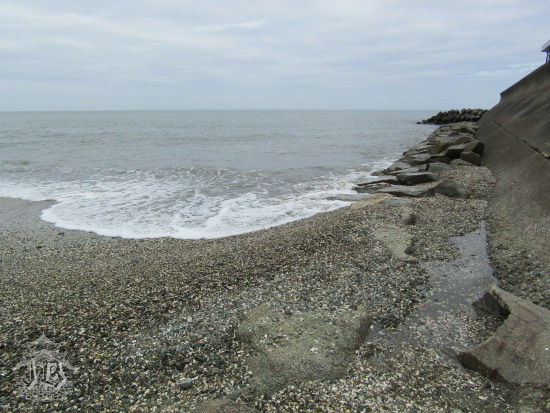
I got off the bus and first I was distracted by the ocean.

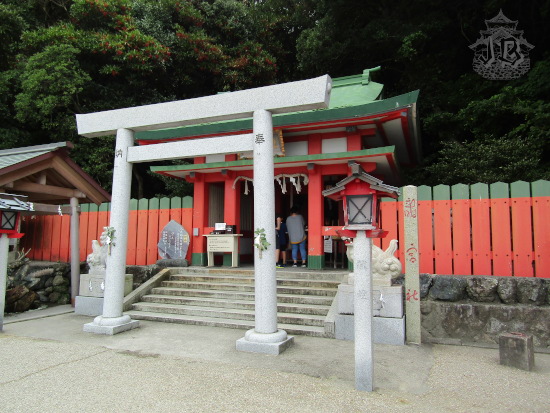
Then I walked through Ryugusha [龍宮社], a dragon Shinto shrine.

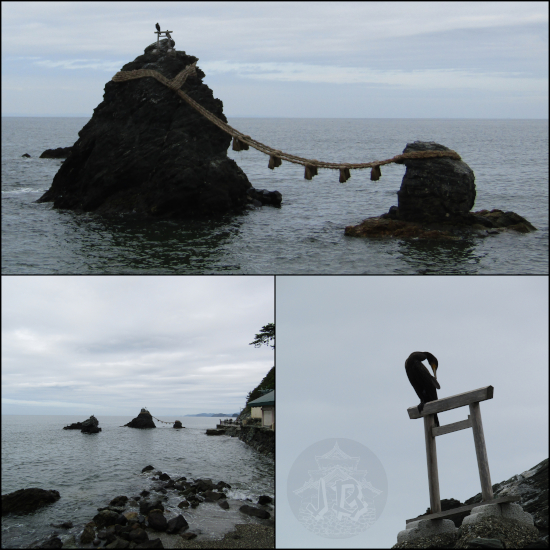
I walked around the cliff and got to Futamiokitama Jinja [二見興玉神社].

Which is home to the Married Rocks Meoto Iwa [夫婦岩], two rocks in the ocean that are joined by a sacred rope and represent a married couple.

I had now some time to do something else. I considered the Aquarium, and the Azuchi-Momoyama Bunkamura [伊勢安土桃山文化村]. I decided to give myself some more time to think by taking the bus backtracking towards the Naikū, and I had almost decided on the theme park – featuring samurai, geisha and the castle.

But then I saw the price. It was over 4,000 ¥ and I had spent 10,500 ¥ at the Oiran Experience than expected, so I was a bit off-budget. Thus I decided to just head back to the shopping and restaurant area and grab a bite to eat. (Full disclosure: I might have to go back to Ise just to check this out anyway (≧∇≦).)

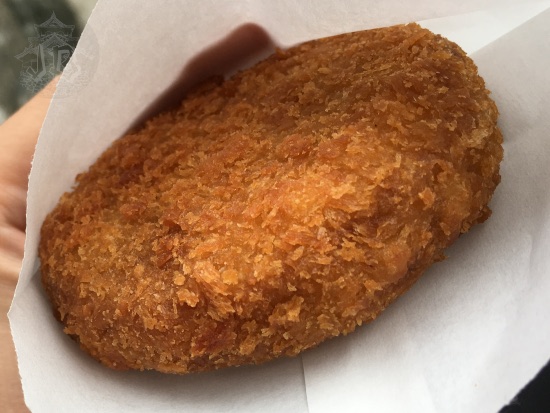
I had heard about ‘Ise lobster’ Ise ebi [イセエビ] (Japanese spiny lobster, Panulirus japonicus), but in the end it turned out that I only bought a koroke. It was yummy though.

After this, being already late afternoon, I decided to head back to the station, stopping by Seki Jinja [世木神社] before I left towards Nagoya [名古屋], which would be my operational base for the next couple of days.

19th August 2018: Uji, layovers and finally Ise {Japan, summer 2018}

Uji [宇治] is Kyoto’s li’l brother that nobody has ever heard about and which has a bit of a disproportionate ego. Today I set off to visit this small town, where I had not slept because it was crazy expensive. Armed with an online itinerary I got there and asked for a map at the tourist office – my surprise? One of the main attractions, the Genji Monogatari museum was closed. Because reasons I guess. Hindsight: I should have slept in Kyoto again and left luggage at Kyoto station as I would have to travel through it again.

My general impression of Uji is that it wants to climb the tourist ladder but at the same time, it does not want to carter to the actual tourists. Attractions were in general expensive and a tiny bit unwelcoming, while at the same time the people were nice in a bit of a condescending way. The demeanour of the tourist lady “what are you here to see?” was strange, and the fact that the Genji Monogatari museum, which is the reason why the town is even in the map, being closed, even more so.

My first stop in Uji was Byodo-in [平等院], a beautiful temple complex built around a small lake. Coming into the actual building to watch the paintings had an extra charge so I did not do that. Instead I snooped around the whole complex, museum, and sub-temples.

I continued my walking route skipping the tea house, because even if Uji is known for tea, it was too hot for hot tea. I got to the river, Ujigawa [宇治川], and crossed one of the bridges, the Kisen Kisenbashi [喜撰橋] to get to a small river island called Tachibanajima [橘島].

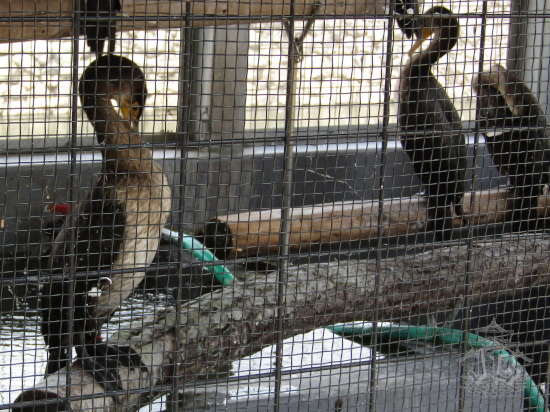
Another thing that is apparently typical in Uji is ukai [鵜飼] or cormorant fishing, which means fishermen use trained cormorants to fish. It was apparently too early in the morning for the cormorant to be out working.

I crossed then another of the rivers, the Asagiribashi [朝霧橋] to get back to main land, where I stopped by Uji Jinja [宇治神社].

Then Ujigami Jinja [宇治上神社], which is basically another building of Uji Jinja but it got separated because the Haiden is a historical monument.

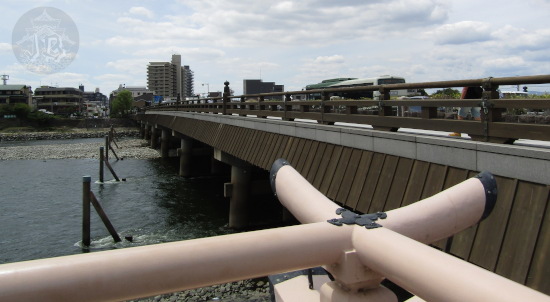
I finished my walk around Uji at yet another bridge, Uji-bashi [宇治橋], famously mentioned in Genji Monogatari. Do you see a pattern here and why I’m so weirded out about closed museum?

After Uji the plan was getting to Ise mid-afternoon, but my Shinkansen was late, which lead to a two-hour layover in Nagoya [名古屋].

That meant that I arrived in Ise [伊勢] in the Mie Prefecture, around 6 pm. I had two options there – walk 45 minutes to the hotel, or wait 45 minutes for a train that would take ten minutes to get at the hotel station, and then walk for 15 minutes. I chose to walk.

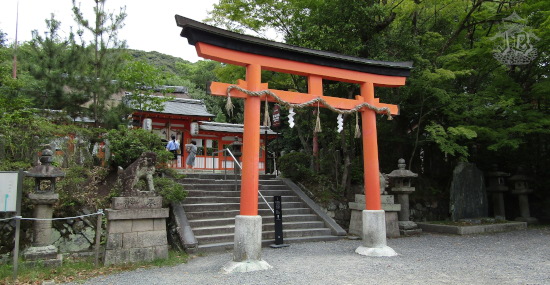
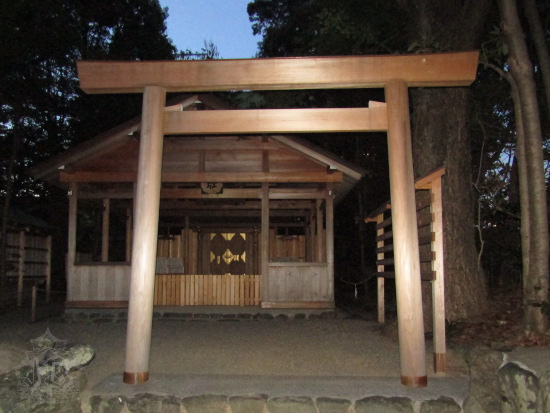
Thus I came across Tsukiyominomiya [月夜見宮] just as the sun started to set. I started to notice here the ‘naked’ torii, which are typical of Ise – it means that they are not painted or made of stone, they are plain wood, usually sakaki, a sacred tree in Shinto.

And Suhara Taisha [須原大社] a bit later (though the two look… creepily similar, don’t they?)

By the time I got to the hotel I was exhausted and hungry, and maybe a bit eeried out because I had had to cross a mostly deserted area over the river as it got dark. Sheesh, was I happy when I started seeing neon again. Bonus point, the hotel had an onsen, which was great for my back (and it was near a combini, so food was also had). The hotel was such a huge complex that they needed to hand out maps so you found your way between the different areas – onsen, reception, restaurant, room!

18th August 2018: Plan Switching. Kyoto → Osaka → Nara {Japan, summer 2018}

On this day I was supposed to hike up a mountain – mount Takao to be precise. But you know what? When I woke up that morning I just did not feel up to it, so I decided to change my plans. In the end when you’re on the JR Pass you can get from Kyoto to Osaka for free. For a change, I actually got to Osaka instead of Shin-Osaka which was convenient. Then I grabbed the underground to get to Osaka Aquarium Kaiyukan [海遊館], which is actually the largest aquarium in the world.

I had been there before, but the previous time I did not get to see the whale sharks as they were ‘quarantined’. How can anyone block a tank which is in the middle of the whole damn thing, I have no idea, but they did. This time I broke even and had a blast. Unfortunately the Aquarium was packed because this was a Saturday morning, and for some reason my back was hurting a lot. I had dropped my luggage off at a coin locker because I thought it would be better. However at some points I could not really walk straight. The weight of the camera bag was too much and I had to sit down. Found a nice place to watch the sharks from, though.

After the Aquarium I went to Kuchu Teien [空中庭園], observatory in the Umeda Sky Building [梅田スカイビル] to have a look at the skyline and to get the stamp for the Japan Towers rally. I got the greatest omg-gaijin face of the trip here (and truth be told, had I known that the stamp was actually held at the reception desk and not the actual observatory, I might have skipped this). In this case the building is an attraction itself. It consists on two towers joined by some passageways and a circular platform at the top, with see-through escalators.

Next the plan was going to Dotombori, stroll down there, and eat some takoyaki before heading off to Nara where I had my hotel for the night. When I got to the station and jumped on the Osaka Loop line, it turned out that I actually was in the train that continues on to Nara… and it was air conditioned and I had a seat…

I found it a sign and decided to just go with the flow and get to Nara [奈良] on that train. Upon arriving there I checked into the hotel and I decided to go to Nara koen [奈良公園], the main Nara park, and see if I could feed a sacred shika [鹿] deer or two. This was close to 5 pm by now so all the temples would be closing anyway. I did feed the deer some shika senbei [鹿煎餅] (deer crackers), and one of the does bit me. Not even the hand that was feeding her, she actually tried to snack on my tummy. Sheesh.

As I was coming back down I had a pretty sunset over Kōfuku-ji [興福寺].

17th August 2018: Gold & Oiran {Japan, summer 2018}

Last year I decided to take a maiko photoshoot and it was fun, so when this year I found something similar, I decided to take the plunge. In this case, it was not a maiko, but an oiran [花魁], high-ranking courtesans with flashier clothes and more expensive kimono and accessories. I timed this to be the day after the Gozan no Okuribi, and my appointment was at 1 pm, although the website advised you to be around half an hour earlier.

I woke up feeling much better than the previous day, and after leaving the hotel the first thing I did was visit Mikane Jinja [御金神社], a small temple that had at some point come under my radar because it has a golden torii. This was, again by luck, very close to my hotel.

Torii gate painted in glittery golden paint

After that I took the underground to go to the Higashiyama / Keage area, where my photo studio was. There are also a few things to see around there, so I got off at Keage Station and the first thing I saw was Nejirimanpo [ねじりまんぽ], a Spiral Brick Tunnel, also called “Twisted tunnel”. I walked across, of course.

Entrance to a tunnel made of bricks. The bricks seem to be built in a spiral, and not straight

Afterwards I found myself at the complex formed by Tosho-gu [東照宮] and Konchi-in [金地院]. Tosho-gu is dedicated to Shogun Tokugawa Ieyasu.

A Buddhist temple with lots of bonsai pines in front of it

I continued into the temple complex and saw Nanzen-ji [南禅寺], a grand temple.

The main building of a Buddhist temple with an incese brazier in front of it

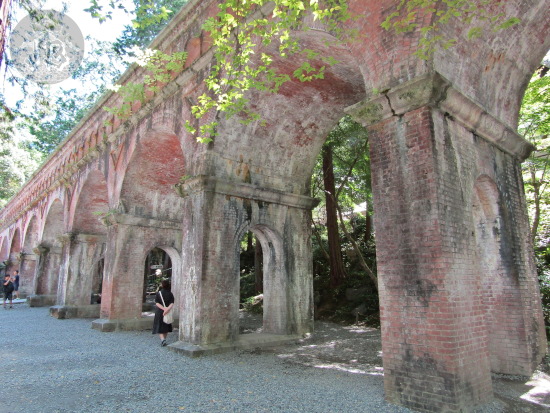
And then I stumbled onto Suirokaku [水路閣], which is, of all things, an aqueduct! Furthermore, it is still in use.

Aqueduct made out of brick

My next stop was Saisho-in [最勝院].

A Shinto purifying fountain

Then it was almost time for my appointment, so I headed towards Studio Esperanto Oiran Taiken [studio-esperanto 花魁體驗], which was pretty much amazing.

Studio Esperanto front shop

While considerably more expensive than the maiko photo shoot, but the truth is, it seems less standardised and way more professional in a way, relaxed in the other… maybe it is the fact that you get to choose more is what makes it unique to you – also I am happy to report that I could do it with my contacts in, so that was way more enjoyable. The whole thing was like a dream – it reminded me a little of the experience you get when you go to Swallowtails, a lot of people are trying their best to make you feel welcome. In this case you choose a kimono and two different covers, called uchikake, which are super heavy because they are embroidered with metal thread.

The first thing I did was to take off my clothes and put on a white “underwear” robe. I could choose a lot of things – make up style, colours, wig, nails, hairstyle to a point, eyelashes… it is very participative. After make-up, you choose the kimono and the obi – which is the real thing, a long one that they tie around you. For the photo shoot itself, you feel like a rock star for real. They put the uchikake on you, they help you with the poses, and they take a lot of pictures for you to choose which ones you want printed into a book -For the plan I bought, 25,000 ¥ you get five printed pictures in a book and can buy the rest of them on a CD (which was 10,000 extra, but in my case, way worth it, as I got 50 pictures) – one day I would love to do the VIP experience, that’d be cool, but I guess I’ll just settle for entertaining repeating a similar plan with the blue background.

Collage of a person in oiran outfit. The kimono is decorated with pine needles embroidered in gold, and cranes. The person is wearing wig with long red hair.

While I was waiting for the pictures to be done, I decided to have a walk around the area. I saw the Biwako Sosui Kinenkan [琵琶湖疏水記念館 ], the Lake Biwa Canal Museum, from the outside.

Fountain with a crane inbetween the flow

I thought I might check out the zoo, but the price made me decide against it, and after turning a corner I found myself, surprisingly, at Heian Jingu [平安神宮 ].

Bridge leading up to a huge torii gate painted vermillion

I remembered there was a conbini next to the daitorii, so I went there to have some lunch, and then walked back to the Keage area, to have another look at the temple complex and Jishi-in [慈氏院] (probably. There was some construction going on and this might have been a smaller temple).

A Buddhist temple through the wooden gate

After I had my pictures (and still not quite believing it), I decided to walk down to Gion, as the path would take me down the river.

A shot of the Kyoto canal, with weeping willows hanging over it

I ended up at Yasaka Jinja [八坂神社].

Vermillion gate that marks the entrance to a shrine up a flight of stairs

Then I walked into the actual Gion [祇園] area. It was more than crowded, which killed the exploring drive.

Wooden houses in the sun, the wood is dark

And here is when I totally forgot that I wanted to go see Fushimi Inari Taisha by night and went back to the hotel 。゚(゚´Д`゚)゚。. I guess I was a bit more tired than I had previously thought, because I did not remember that until I was getting on a train the following there.

16th August 2018: 五山送り火 (Gozan no Okuribi) {Japan, summer 2018}

Remember when I mentioned I overdid it on the 15th? I was feeling it today. My head was bugging me and it grew worse along the morning. The weather, showery, was not really helping, even when I took my meds.

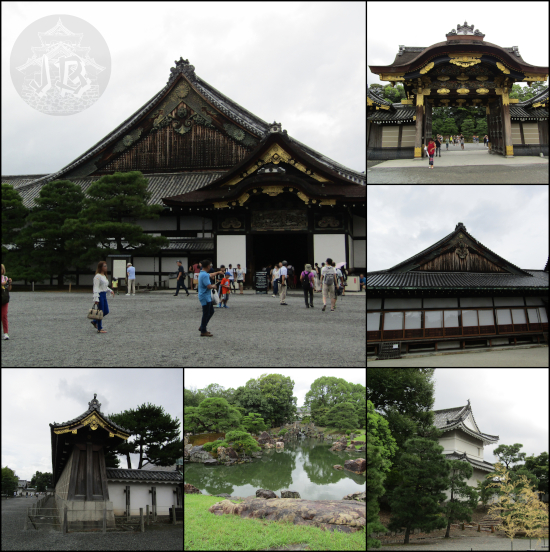
Never the less, I left the hotel in the morning, got some breakfast and walked to Kyoto’s old castle, Nijō-jō [二条城], which was literally two blocks over. This was not planned, as when I booked the hotel I looked for something reasonably-priced reasonably-close to a JR or an underground station – I really, really hate Japan buses, trains for the win.

Anyway, the castle was close, so I decided to drop by as the first time I had been around it was being renovated.

After the castle I walked towards the JR station where I had come from the previous day to stop by Shinsen-en [神泉苑], the remains of a Heian Era garden, which holds a sub-temple to To-ji.

Also I snooped into Nijo Jinja [二条神社], just because there was an indication sending me there.

Then I headed off to Kyoto JR station as there is a tourist information centre. There I wanted to ask where to watch the upcoming Gozan no Okuribi [五山送り火], which is a festivity that closes the Obon festival in Kyoto. The Obon festival honours the deaths of the deceased, which come back to the world and are sent away by the five fires started in four mountains around Kyoto. I wanted to see as many fires as possible, and I had been doing some research online. I wanted to find a good place, which in the end turned out to the rooftop of a local Aeon supermarket, the Aeon Mall Gojo.

After getting the info, I went to Higashi Honganji [東本願寺], a temple close to the station.

I wanted to go find its twin, Nishi Honganji, but I was not feeling well and I really wanted to be fine for the evening’s fires – which were after all the reason why my trip was planned like this, so I could go to see the fires. My headache was growing worse, I think part of the reason was that I was stressing that the mall might not be a good place to watch the fires and whether I could go somewhere else. Thus I got something to eat, and headed back to the hotel for a shower, a nap, and some dinner before I left for the mall.

The nap proved to be a good idea. The fires would be lit at 8 pm, so I stayed in the hotel until a little after 5 pm, when I left so I could be at the mall at 6 pm. This gave me time to relocate to another of the viewing spots if my first choice did not work.

But it did. You know you’re on the right track when you find all the locals all ready a picnic, and the Aeon was just like that. There were hotel employees pointing to the areas where we would see the fires. Out of the five fires we would see three, and part of the other two.

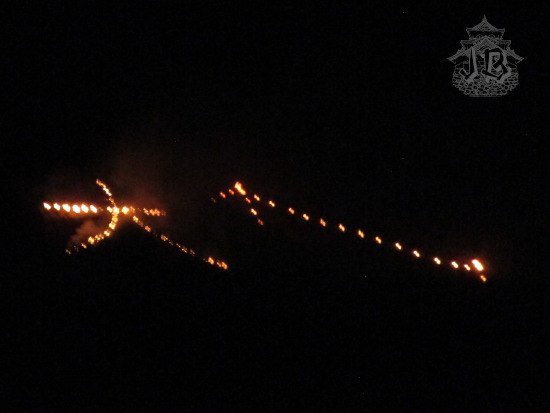
There are five fires in the Gozan no Okuribi [五山送り火], and they are lit from right to left. The first one is shaped 大, it is called Migi Daimonji or just Daimonji [大文字]. It is lit at 8pm. The second one is Myojo [妙法], a Buddhist prayer. Next comes the ship that is supposed to take the souls back to the underworld, called Funagata [舟形]. The fourth is the Hidari Daimonji [左大文字], another 大, and the final one is the Toriigata [鳥居形], shaped like a torii.

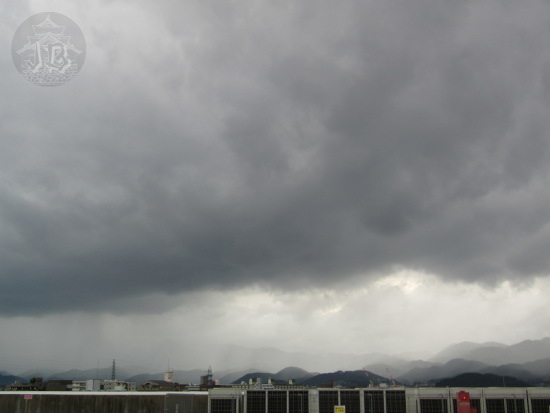
Everything was good. I could relax and my headache did not come back, even if we had a mini deluge that had everybody going inside for a few minutes.

When it was done and we went all back outside, we had a great sunset.

Finally everything went dark and the fires started. We saw the Migi Daimonji lit first to our right.

Then the sparks of what could have been the Myojo or the Funagata, nobody was too clear on that. Later we saw the Hidari Daimonji lit, just in front of us.

Finally, we got to see the Toriigata after changing sides of the roof.

All in all, it was a great success!! I was really glad I got to go and see it, especially the first and last fire, because it gave everything a sense of beginning and ending, even if I was quite exhausted to make it back to the station and the hotel.

15th August 2018: Hikone is small and at noon it turns into a pumpkin? Hikone → Kyoto {Japan, summer 2018}

As I had learnt the way to the castle entrance the previous day, first thing in the morning I headed off to Hikone Castle. The walk to the castle is flanked by the Irohamatsu [いろは松], which is a row of special pine trees that were planted there as their roots grow downwards but not sideways.

Hikone castle, Hikone-jō [彦根城], is one of the twelve castles that retain the original keep and one of the five to be a national treasure. The ticket included the castle, the museum, and the Gardens. I was there when they opened so the affluence of people was not to big yet.

Being one of the important ones made two things happen – one, that you have to take your shoes off, and two, that the stairs are crazy. Good thing I was not carrying my backpack – I had left it at the hotel but they told me they could only keep it till noon for whatever reason, so it was a good thing that Hikone is not as big of a town as others. The interior structure of the castle is naked wood, and it feels quite severe.

After the castle I went to the Hikone-jō Hakubutsukan [彦根城博物館], the Castle Museum, as it started drizzling. Normally the castles have the museum inside, but this one was in a nearby tower next to the main gate.

My next destination were the Genkyuen [玄宮園], a traditional garden from where you can spot the castle.

Also within castle grounds was the Kaikoku kinen-kan [開国記念館] (officially translated as Hikone City Museum of History, but it is more as “Memorial Hall”) – unfortunately pics were not allowed except for this Lego Castle.

Finally I checked out Shigakengokoku Jinja [滋賀縣護國神社] under daylight.

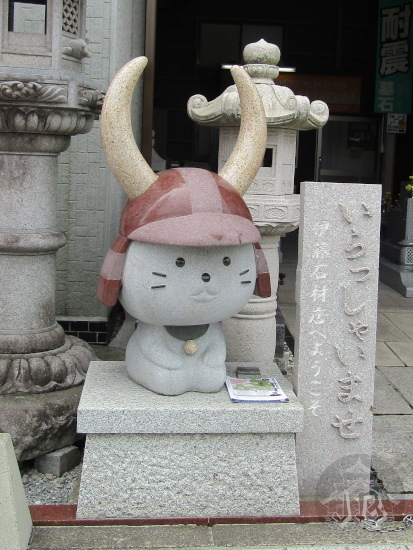
I walked back to the hotel through the main street, where I saw many stone statue shops displaying their work - including the city mascot, Hikonyan [ひこにゃん].

Finally, after picking up my luggage from the hotel I stopped by the Ii Naomasa Ritsuzō [井伊直政立像], the Statue / Monument to Ii Naomasa, who was the original builder of the castle.

I jumped on the Hikone Rapid Express, which was packed, and headed off to my next destination, Kyoto [京都]. As I was earlier than expected, I got a jump-start on sightseeing. This would later proof to be not too much of a good idea – originally I only wanted to do one temple so I did not put my luggage into a coin locker. Looking back, I should have.

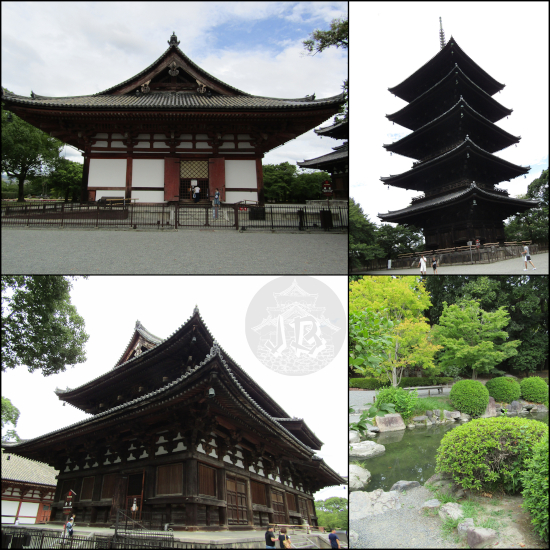
I went to To-ji [東寺], a Buddhist temple whose pagoda had drawn my attention every time I had been in Kyoto before.

Then, as it was quite close, I decided to check out the aquarium, Kyoto Suizokukan [京都水族館].

Finally, I went to Daishōgun Shōten Machi Ichi-jō Yōkai Street [大将軍商店街 一条妖怪ストリート], a shopping area with a lot of yokai and yokai-like mascots. Unfortunately, most everything was closed due to the Obon festivities, which in the end made for an unrewarded extra effort. Here I was trying to pace myself and not doing a good job out of it.

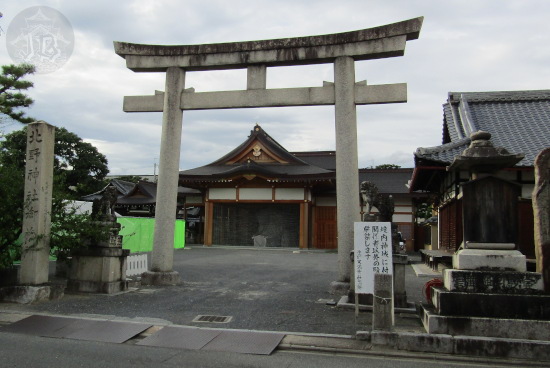
On my way to Yokai street and back I saw Jinja Kitano-Jinja Otabisho [北野神社 御旅所],

Jizo-in [地蔵院 ],

and finally Daishogun Hachi Jinja [大将軍八神社].

Finally I backtracked to the station and headed off to the hotel for some rest. I made a mental list of things that were incredibly close to the hotel and I could do the following day.

14th August 2018: On the road… I mean railway again! Tokyo → Nagahama → Hikone {Japan, summer 2018}

One of the things I did on Saturday in Shinjuku [新宿] before the J concert was activating my JR Pass, and I had a week of travelling in store, so there I went. After getting to Shinagawa and being told that there were no seats to be reserved, I travelled to Maibara on a seat in a very-empty unreserved car (keep in mind, this was the end of the Obon festivals, and lots of people travel around these dates).

In Maibara I left the Shinkansen and jumped onto the local line that headed off to Nagahama [長浜] in Shiga Prefecture. This trip was mostly organised around my need to be in Kyoto on the 16th of August, so when I looked up things to do, Nagahama popped up for having a castle at the shore of Biwa-ko [琵琶湖], Lake Biwa, which is the largest freshwater lake in Japan.

Nagahama Tourist Office at the station provided me with a very handy map that featured a walking route to see the most important areas of the town, which I set to almost immediately.

First, of course I head to the castle, Nagahama-jō [長浜城]. Between the station and the castle there was a cage with monkeys. I did not realise that until one of them popped up staring at my lunch.

Then I walked around the surrounding park and got to the lake front. Biwa-ko is big enough to have waves.

Then I continued on the proposed route to the Nagahama Railway Square, Nagahama Tetsudo Square [長浜鉄道スクエア], and the Railway Museum.

In front of that there was the Keiunkan [慶雲館], a beautiful traditional house and garden.

Then, after deciding to modify the walking route to fit my interests, I headed out to the town centre to find Nagahama Betsuin Daitsū-ji [大通寺], the biggest temple in town (with confusing indications). To get here I passed by the central commercial streets.

Afterwards I decided to go to Hokoku Jinja [豊国神社].

And before heading to the station, the Kaiyodo Figure Museum [海洋堂フィギュアミュージアム] had really caught my attention so I decided to come in.

On my way back to the station I saw the Hideyoshi to Mitsunari deai no zō [秀吉と佐吉 出会いの像], the Statue of (Toyotomi) Hideyoshi and (Ishida), important historical figures in the area.

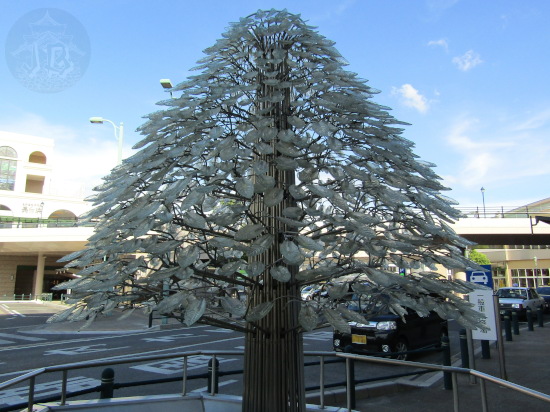
Finally there was the Aqua Tree before I took the train to go to my next destination, Hikone [彦根].

Hikone is twenty minutes by train using via Maibara, so I basically backtracked to Maibara and continued in the opposite direction. At Maibara our train joined another one so it became twice as long in a very interesting process.

Once I arrived in Hikone, I found my hotel and I checked in. However, having heard that sunset at Biwa-ko was really beautiful, I decided to sprint for 35 minutes, and headed off to the lake, racing the sun. I managed to see a beautiful dusk indeed, even if coming back to the hotel was a bit lonely once the lights were out. I had no idea. Yet.

Then I diverted towards Hikone-jō, Hikone-jō [彦根城] to try and catch a glimpse of it at night. Everything was locked down, so this is the best I got, and that’s a lot of zoom.

Finally, just before turning in I walked by Shigakengokoku Jinja [滋賀縣護國神社] and the Mitama Matsuri it was holding.

27th July 2017: Osaka → Kyoto → Tokyo {Japan, summer 2017}

It’s not the first time I’ve done this, but this time it was sane-ish. I left Osaka [大阪] maybe at 8.30 in the morning and took the Shinkansen to Kyoto [京都]. Once there, I found myself a coin locker at the station and went on to the bus area. I was heading to Jonan-gu [城南宮] which was my last shrine of the Kyoto Gosha Meguri ~Shi shin Sou Ou No Miyako~ [京都五社めぐり~四神四神相応の京~] and… under repairs too. But I had finished the Meguri. I had to wait about an hour for the bus. Then 40 minutes ride, about 10 minutes in the shrine, 30 minutes waiting for the bus back and 40 minutes ride again.

After I had some lunch at the station, I headed back to Tokyo [東京], where I met up with D****e in order to hit Nakano Broadway [中野ブロードウェイ] to rummage through TRIO (Yay TRIO for getting me what I needed ♥… and some more stuff I did not need but hey, who cares about those details?). Afterwards we had some kushikatsu dinner.

26th July 2017: Kyoto buses *eyeroll* {Japan, summer 2017}

Someone told me that using Kansai public transport made her appreciate Tokyo trains, and I whole-heartedly agree. I am thankful to the Kyoto [京都] Tourist Office Lady told me the two shrines I had left in the Kyoto Gosha Meguri ~Shi shin Sou Ou No Miyako~ [京都五社めぐり~四神四神相応の京~] would take me a long time, because it allowed me to plan accordingly. Good thing that with a JR Pass you can travel between Osaka and Kyoto in barely half an hour for free.

I went to Matsuno Taisha [松尾大社], but I did not try the famous sake they had because not a drinker here. The shrine was being restored, too, so that took away some of the impressiveness.

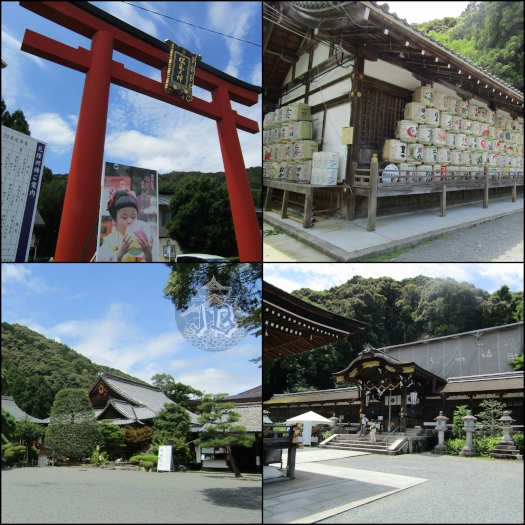
Collage of a Shinto shrine: a vermillion torii, ceremonial sake, and the main buildings in dark wood

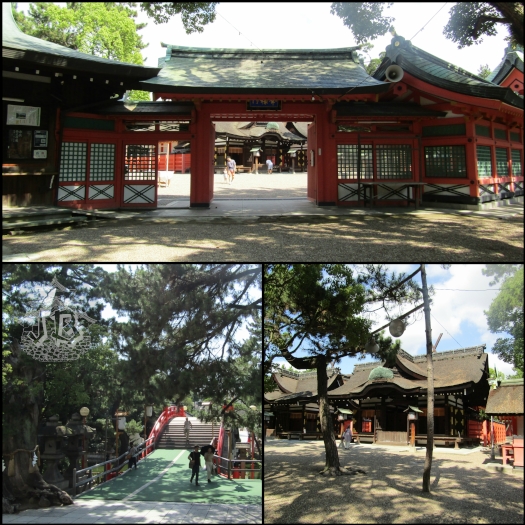
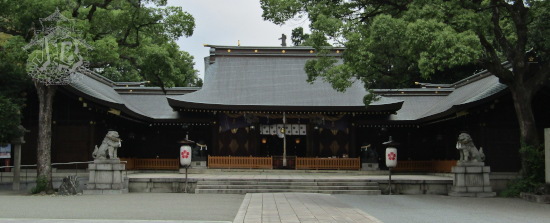
After I was back at the station, I travelled back to Osaka [大阪] to get the shuuin at Sumiyoshi Taisha [住吉神社] there.

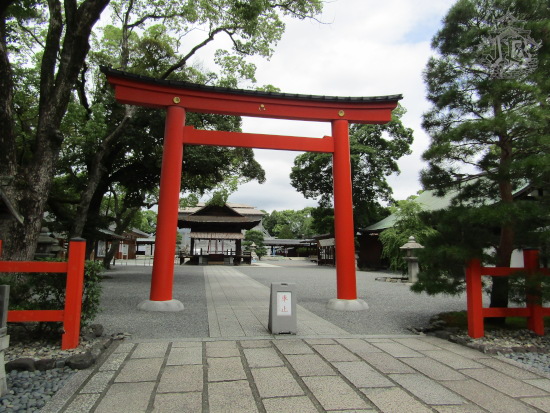
A vermillion gate that gives way into a Shinto Shrine.

Then I headed out to Zepp Osaka Bayside for the last of my VAMPS concerts for the time being. There had been no surprises this time, so it was just a “normal” concert without extra adrenaline, which was good for a chance, honestly. I was too sore to jump after the previous day though (≧▽≦).

Zepp Osaka Bayside logo in blue neon

24th July 2017: Himeji {Japan, summer 2017}

I woke up in order to be at Himeji [姫路]’s Castle Himeji-jo [姫路城] when they opened at 9am. Himeji had been on my to-do list for a long time, and now I had the chance to see it. I must learn how to convince volunteer guides to leave me alone though, as the visit would have been much better on my own. I visited the Main Keep, the East Small Keep, the Hyakken Roka (Long corridor)

Then I walked around the castle grounds for a while and snooped around Himeji Jinja [姫路神社], although I did not go much far in.

Afterwards I walked (without melting, which was a good thing) to the complex formed by Otokoyama Senhime Tenmangu [男山千姫天満宮] and Mizuo Shrine [水尾神社] and the corresponding observatory of the castle.

Next I walked back towards the castle grounds and around them because the gate of Itatehyozu Jinja [射楯兵主神社] had caught my eye from the castle.

My last stop for the day was Gokoku Shrine [護国神社].

And you know what? The rest of the day sucked because there were lots of problems. Good thing I checked that Fukuyama Castle would be closed before jumping on the train. I got my butt to Osaka [大阪]. My hotel turned out to be a love-hotel, not somewhere I actually felt safe or welcome, and my concert ticket was not such, but the proof of sale. I spent hours trying to check if it had been picked up, and finding a way to exchange hotels, and I did not sleep almost anything. Fortunately, the ticket was ultimately found, I booked another hotel for the upcoming nights and the worst thing that happened was a morning on the trains ε-(´・`) フ

23rd July 2017: Kyoto: plans long made and plans unexpectedly changed – Maiko Henshin and Gyosha Meguri {Japan, summer 2017}

It was an early and cloudy Kyoto [京都] morning when I woke up to walk to Heian Jingu [平安神宮], a shrine built in 1895 to celebrate that Kyoto had existed for 1100 years already. It was supposed to be just another trip to a shrine, I did not expect anything special to come from it.

Heian shrine - main building and secondary buildings that stand on the sides, symmetrically to the left and right. The buildings are vermilion and white with a green-grey roof, and the ground leading to them is sand.

However, as I was snooping around the shrine shop I saw that they had come up with a stamp rally, shrine version – the Kyoto Gosha Meguri ~Shi shin Sou Ou No Miyako~ [京都五社めぐり~四神四神相応の京~] (The tour of four gods of Kyoto). According to legend, Kyoto was anciently guarded by four god-like spirits: the Azure Dragon of the east Seryu, the White Tiger of the west Byakko, the Red Bird of the south, Suzaku and the Black Tortoise of the north Genbu. Heian Jingu stands in the middle “the heart” of Kyoto, and each guardian is supposed to dwell in one shrine in each cardinal point. I bought a small cardboard tablet with the four sacred guardians of Kyoto , with the Heian Jingu stamp in the middle. With that tablet, you had to visit four more temples on the four cardinal points and get their stamps. It is The rally unexpectedly trumped all my Kyoto-visiting plans. I had to absolutely do this! I was so pumped that I did not even take pictures of the tablet until the peregrination was completed.

A cardboard card with the drawings of the four mystical guardians of Kyoto, the white tiger, the black tortoise, the blue dragon, and the red fire bird. They are aligned with their cardinal points, east, north, west, south. Between the animals and in the centre, five stamps in red ink.

After leaving Heian Jingu, I walked alongside the Kamo River Kamogawa [鴨川] towards Gion [祇園], stopping to get the second stamp at Yasaka Jinja [八坂神社]. Here is where the “easy” stamps were over. I still had three shrines to get to, and they would not be as easy as a literal walk down the river.

The vermilion entrance to a Shinto shrine on top of stone stairs. There are rows of lanterns hanging from the gate.

I was to meet D****e at 10.15, as she was coming from Osaka, where she was for a concert. She wanted to tag along to what I was going to do next, basically to… share the pictures with everyone. Last year, my friend B**** had told me about something she had done that she thought I might like, a photo shoot in maiko [舞妓] clothes – maiko being Kyoto geisha-in-training. Following her recommendation, I chose a place called Maiko-Henshin Studio Shiki [舞妓体験・変身スタジオ「四季」], which is where B**** had done hers.

This is something that had been in the back of my mind for the longest time, but I had never got around to doing it because of the price tag. I was a bit put off by paying over 10,000 ¥ for what would in essence be pictures of myself. However, I eventually realised that it is not just the photographs you are paying for, it is the whole three-hour experience. I booked a Studio Shoot plan for 11,900 ¥ (plus tax), which included:

  • White make-up cover.
  • Renting and getting dressed into a formal kimono.
  • A pair of tabi (Japanese socks) that you get to keep.
  • Fake eyelashes applied on you.
  • Natural wig (half-wig) fitted and fixed.
  • Eight studio photographs including a Fushimi Inari Taisha background.
  • A book with the best eight pictures.
  • CD-R with all the pictures taken.
  • Five postcards.
  • Ten minutes of free time to take your own pictures outside the studio.
  • Possibility of paying to get some extras, including extra pictures.

The shop was easy to walk up to. It was set out as a traditional house with a sliding door, and they offered two kind of services – kimono rental to walk around Kyoto, and Studio transformations along the subsequent pictures – maiko, samurai, and couple or family options.

This was a 98% great experience. 1% fell because I had a coughing fit (I have had issues with my lungs, but they are slowly getting better) and the other 1% due to a communication failure with the studio upon reservation. However, that 2% is negligible and it was all in all great. D****e had a blast in turned, and she decided that she needed to share the pictures with everyone she knew who knew me.

I had made my reservation online a month in advance. I chose a time, which was rescheduled for an hour later. When I asked if I could have a sword for the photo shoot, the answer was to inform my photographer.

When I arrived, the receptionist checked my plan with me. Then they asked about the optional or “less crucial” items – whether I actually wanted the white make-up, fake eyelashes, and type of wig – I have absolutely no idea about wigs. They asked if I wanted any extra photographs (each one for 1000 ¥) on top of the eight included in the shoot. They also checked who came with me so they could call D****e to come in when she was allowed to be with me.

D****e and I had arrived early for my 11:00 appointment, and they called me around 11.15. I was given a little basket, a gown, the keys to a locker, and a pair of tabi [足袋] – Japanese socks, with a separation for the big toe and the small ones. The little basket also contains a brochure to give you instructions of what you are to do in all the steps of the experience. This was helpful, especially when they recommended using the toilet beforehand.

I walked up to the third floor to change into the gown and tabi and put all my belongings into the locker. I took with me the key on an elastic band around my wrist. The little basket was for the instructions, and my mobile phone for pictures during free time later. At this point I was still wearing my glasses, but I had to take them at the next step, and they would also go into the basket.

I walked down to the make-up room on the second floor. At this point I had to take off the glasses (and decided that I wanted to get myself some contact lenses). Here I had the white make-up applied, and I was amused by the process. I had not built any kind of expectation about how they would do it, but I guess I was not expecting a thick brush – much thicker than a normal make-up brush. It was an interesting feeling – the white paste was cool and the brush also felt very different from a regular one. The make-up reached up to my hair line, but the artist left a little bit of unpainted skin for the wig. They also painted much lower down my back than I would have expected – it was explained to me that the neck and the wide collar of the kimono are “sexy”.

Afterwards, they contoured my face a little, added the blush, and airbrushed my lips bright red. Finally, they did my eyelids and eyebrows, also in tones of red. The staff gave me instructions in “fluent” (read: broken) English, but we both tried, and communicated successfully. I was told where to look at each point, or to close my eyes and finally I was offered the fake eyelashes again – I accepted because I was going to be without my glasses anyway. I unfortunately inhaled a bit of powder or something, and had a coughing fit that almost gave my poor make-up artist a heart attack…

After the whole make-up had been applied, it was time to get the wig fitted. I was shown to another room with a big closet full of lockers, and each locker held one wig. They checked three or four against my head until they decided on one to put on me. It was a “half-wig”, which means that they painted the hairline and part of your own hair in order to stick it down. Afterwards, they put some traditional decoration, kanzashi [簪], in the wig.

Then it was time to choose the kimono. At this point, D****e was called onto the floor to “help me choose”. There were literally hundreds of options, but I actually found the one I really wanted even before she was there. It was black with cherry blossoms on it, and when D****e arrived she said “that one is really you”. The staff grabbed it for me and took it to the next room – and my poor friend was sent away once me.

Before they started getting me dressed, the first thing was padding my front so the kimono fell flat. At this point I was wearing the under-gown, and on top of that they put an undercoat called nagajuban [長襦袢] over it – this is done to protect the kimono. The nagajuban was tied closed with a cord called datejime [伊達締め]. Then they put the actual kimono on me – and boy was it heavy. I had not expected that it would be that heavy. They offered me a choice of three obi [帯], the wide belt, somewhat of a rigid sash that holds the kimono together. They tied it down and placed a pre-made ornate bow on the back – it was a bit of a bummer that they did not do the whole knot on the spot. They finished putting hair accessories into the wig, and I was ready to head off to the studio. They tucked the long sleeves and the lower part of the kimono into a string that they tied around the obi. The big problem came when I had to go down the stairs to the studio on the first floor, without the glasses – yes, I need to get myself some contact lenses.

Down there, I had to wait for maybe 10 – 15 minutes, which felt very long. I am a tremendously visual person, so I felt very vulnerable without my glasses, just catching some shadows in the background. I saw something that I thought was a cat in a little garden, probably for the outside shoots (the garden, not the cat). When the “cat” jumped into a small pond, I realised that it was a duck.

Once I was admitted into the studio, the photographer was a very nice young woman. However, it was now when I learnt that the eight pictures that you get with the package are pre-planned shoots, you do not get to choose anything. The photos are pre-planned and “staged”, so they are the same for everyone, whether it is “your angle” or not. But at this point, the 1,000 ¥ were not that much of a price increase, so I decided to get it anyway. I was not upset, I just thought it was a translation issue from Japanese to English or a miscommunication. My photographer was friendly and explained about the extra photograph. As it was not included in the maiko set, I had to get it in the samurai room. I agreed, because I really wanted that picture with the katana. As she was finishing explaining, D****e was shown in. She helped with the “look at X” instructions. She also helped make the photographer understand the kind of picture I wanted, since she had trouble digesting the idea that I wanted the samurai sword kind photo with the pretty maiko set-up.

The photo shoot has eight pictures, and I don’t think I look particularly well in any of them – but it was fun. For the first seven photographs I was only wearing the tabi, and for the last one I was given a set of okobo [おこぼ] – high platform sandals for you to walk on, named onomatopoeically for the sound they make on the pavement. The photos included in the photo shoot are:

  1. Full body, slightly backwards, with a fan and the kimono extended at your feet,
  2. Upper body, front, with the fan,
  3. Upper body, front, with some kind of ball / jewellery box,
  4. Full body, front, with a red paper parasol, and kimono extended,
  5. Upper body, front, looking straight at the camera with the parasol,
  6. Full body, front, looking “nice”, kimono extended at your feet,
  7. Upper body, front, with some kind of bento box,
  8. Full body, lower part of the kimono pulled up, with the okobo and a Fushimi Inari Taisha background.

After my official shoot, I was taken to the samurai room for my extra photograph so I could get the picture with the sword. Then, D****e and I were lead outside, the back part of the studio, to play around with the phone and take selfies and stuff. She made sure to take a hundred thousand photos of me during the following 10 minutes. Just for the LOLs, my last couple of pictures were back with the glasses on – which surprisingly did not even flake the white make-up.

Once back inside, the magic seemed to die down, and everything became efficient and a bit cold. My kimono was undone, my wig taken away, and I was given instructions on how to remove the make-up. It did not take too long to do so and go back to my normal, boring self. Then I had to pay and we waited for a little while before I was given my pictures. In total, the whole thing took about two hours and a quarter.

It was a fun experience, probably not a must in Japan. Communication at times was a bit weird, because they work in a sort of “line”, and each person is very specialised on one thing. They are very set on what they do, and don’t always explain in detail because after all “they know,” it is what they always do, even if the customer is lost or not aware of what is going on. Then again, I had a blast and I really liked it, never mind all the inconveniences and issues. Not that I feel I need to repeat it, especially costing this much. However, I might consider something similar thing at a cheaper price, or with a different kind of character.
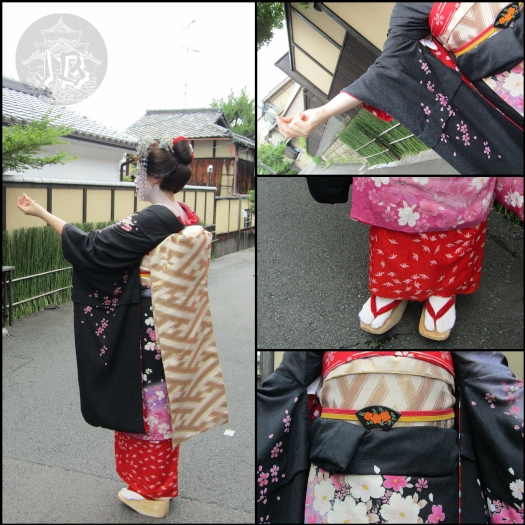
Person dressed as a maiko, with a long robe in black with pink cherry flowers

I walked D****e to her station, waved her away, and headed off towards the third shrine of the stamp rally, which I thought at the time would be the furthest-away shrine, Kamigamo Jinja [上賀茂神社], in the outskirts. There was some kind of art / craft fair there by university students, so it was very lively. Unfortunately too, a lot of it was under renovation, but I explored a little (and wasted a lot of time waiting for and riding the bus). Anyway, I received shrine-stamp number three.
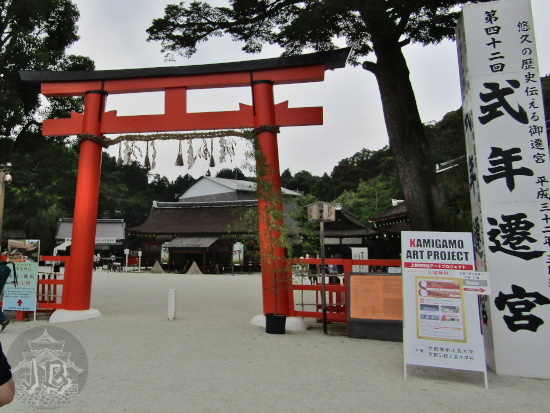
A vermilion torii gate

After the stamp success, I headed off back to the hotel to retrieve my luggage and undid my way to the station by subway. I had a while at the station, so I explored the building a little. Designed by Hiroshi Hara, it is one of the most “out of place” buildings in the city. It can be considered “futurist”, with an irregular glass-and-steal façade and illuminated stairs.
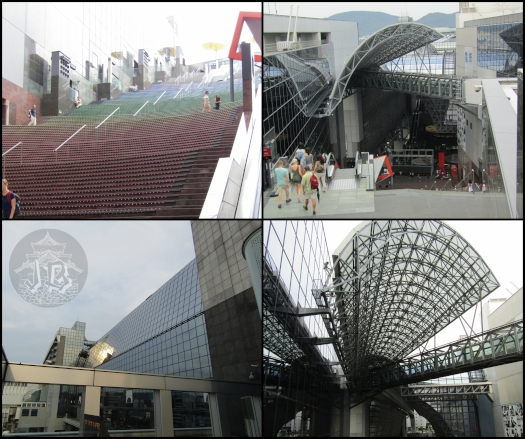
The stairs and wavy roof of Kyoto station

Finally, I jumped on a train to backtrack to Himeji [姫路], which is south of Kyoto. I timed the visit to Maiko Henshin so D****e could tag along, even if it meant going back and forth a little – travel was covered by the JR Pass though. Once in Himeji, I found my hotel and then went to walk around the castle. Actually, I should have been having some dinner but apparently I’m castle-distracted. I walked around the park and took a lot of pictures – and spotted some koi carps in the castle moats that were huge.
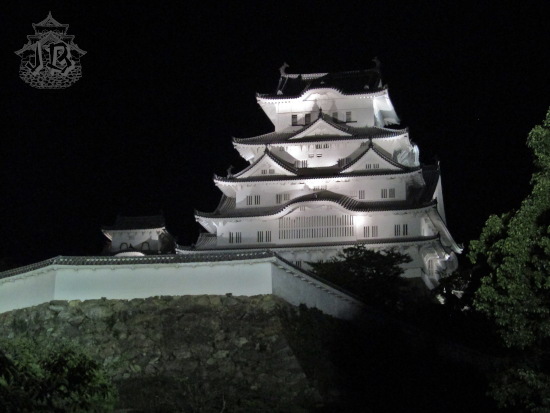

A Japanese castle lit up white at night.

22nd July 2017: Kokura → Okayama – castle day {Japan, summer 2017}

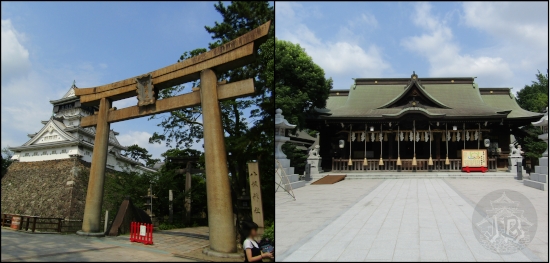
I started the day in Kytakyuushu [北九州], heading out to Kokura-jo [小倉城] again, this time by light.

After the castle I went to Yasaka Jinja [八坂神社], next to the castle.

Then I backtracked to the station to head to Okayama [岡山]. Unfortunately the train I wanted to take was full, so I had to wait for an hour and take a slower train. In hindsight (when everything is clearer) I should have stopped at Fukuyama to see that castle, but I was worried I would not have time to see Okayama castle. On the way I was talking to the nice ojii-san who was going to Nara to pick up the car his wife had bought in yahoo auction.
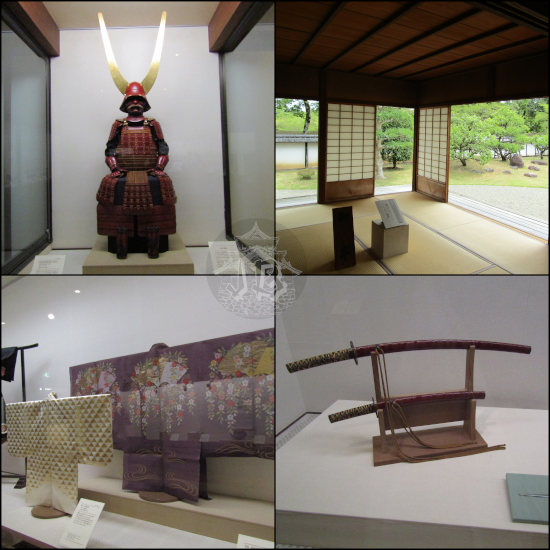
Upon arrival in Okayama and failure to find appropriate coin lockers I headed out to Okayama-jo [岡山城].

As I was good for time I bought a combined ticket for the castle and Korakuen [岡後楽園] a huge Japanese garden which hosts a couple of small shrines – Jizo-do [地蔵堂] and Jigen-do [慈眼堂].


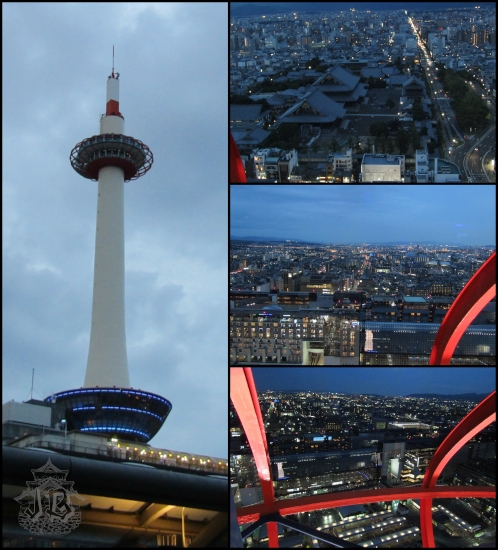
Afterwards I backtracked towards the train station and took a train towards Kyoto [京都], where I climbed up Kyoto Tower [京都タワー], because I had not been up even if I had been to Kyoto before.

Afterwards, I just wanted to get some sleep, so I went to the hotel, had dinner and collapsed in bed.

21st July 2017: Beppu – Hell day~ (in a good way) {Japan, summer 2017}

Beppu is, as I said before, known for having a lot of volcanic vents. It has decided to exploit this as a tourist resource. Beppu is still trying to open up to foreigners. It’s trying, at least partially. So cheers to the nice people.

The main attraction are the Jigoku [地獄] or hells, which are, depending on who you ask, seven, eight or nine. I visited eight of them. They are spectacular hot springs and vents which are too hot for bathing but really interesting to look at. The whole pack is called Beppu Jigoku Meguri [別府地獄めぐり]

I got myself a map, bought a ticket pack and a bus pass, and set off to the bus. Most of the jigoku are located in the Kannawa [鉄輪] District, but two of them are pretty far away, in Shibaseki [柴石] (2 km is far in the boiling summer, if the weather had been nicer, I would have walked back and forth).

I visited the Onishibozu Jigoku [鬼石坊主地獄] (Hell of the Demon-monk) which is a boiling mud puddle and a strong sulphur smell. I did not manage to get any bubble exploding, but the idea is that the bubbling mud looks like a monk’s shaved head.

Second I headed walked into the Umi Jigoku [海地獄] (Sea Hell), which is a turquoise pond of boiling water with a small shrine. It also has a smaller reddish pond to one of the sides.

After this I took a break to have a made-in-hot-spring-water pudding and have something to drink, just because I could. It was delicious.

And there was Onsen Jinja [温泉神社] (Hot Spring Shrine) to snoop around, too!

Third, I dropped by the Yama Jigoku [山地獄] (Mountain Hell), which comes off from the mountain slope and complements that it is not the most spectacular one with having a small petting zoo, where I somehow ended up feeding a capybara. Don’t ask me XD (This hell is independent, so you have to pay extra to come into it).

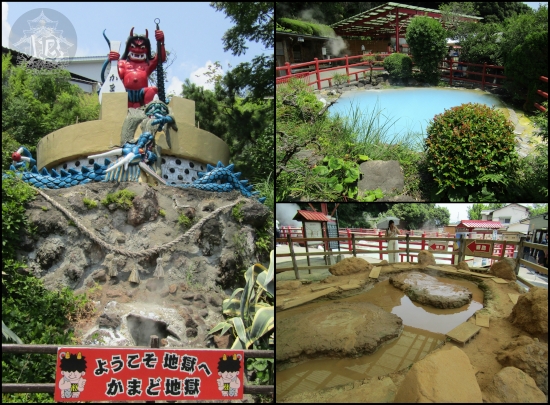
Fourth, I went to the Kamado Jigoku [かまど地獄] (Cooking Pot Hell) which has a big oni cook to greet you.

Fifth, I found the Oniyama Jigoku [鬼山地獄] (Devil Mountain Hell) which for some reason breeds crocodiles, and what the hell, that was scary for a second. Even if they were behind bards, the crocs would follow you under the water and snip at your shadow and some of them were enormous! Creepy! The hot-spring itself was not that impressive but basically because it was steaming too much to see any of it.

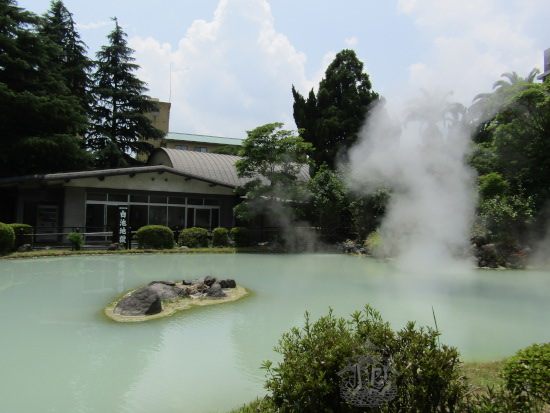
Sixth, I went to the Shiraike Jigoku [白池地獄] (White Pond Hell) where there was nobody to take my ticket. A nice old couple explained that I was to cut it myself and put it in a jar over there. We were talking a little and they asked where I was from. Then they continued on their way and I stayed petting a random cat who decided I was to scratch it right then and there. In this jigokku they also have a small aquarium with several tank of freshwater fish, among them “man-eating piranhas”…

I took the bus then to Shibaseki where the other two remaining hells were. Had the weather been more agreeable I would have walked, but I had the bus pass anyway and it was very hot. As I stepped out of the bus I came across the same couple from before. they explained that they had visited Spain before when they were younger and told me that they were from Osaka. We parted ways to go into the Chinoike Jigoku [血の池地獄] (Blood Pond Hell) which is a boiling red pond. Here I decided to take a foot bath as the area was empty and I was tired.

The final hell was Tatsumaki Jigoku [龍巻地獄] (Spout hell), a geyser you have to wait for, as it has its own timing. Here the old couple brought me a lemonade because they were adorable. And after the geyser it was over, or so I thought.

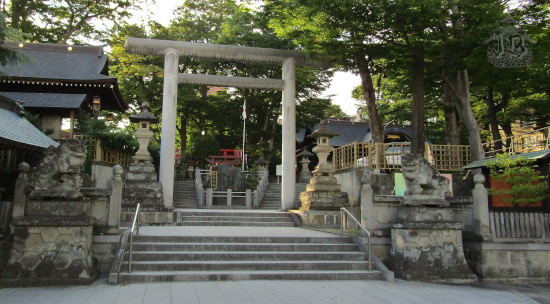
I had decided to give the aquarium a miss, because I was very tired but when I was taking pictures of the “castle” from afar I decided… I could not miss the chance, so I took the bus again towards Kifune-jo [貴船城] (which is quite new but pretty enough). Unfortunately the bus stopped right at the foot of the hill, so I had to go up and climb all the slope. I arrived just in time to pray to a snake which is supposed to bring happiness to whomever pats it.

After the castle I headed back downtown and took the train to backtrack to Kokura / Kitakyuushu [小倉 / 北九州]. While it is true that I had passed Kokura on my way from Fukuoka to Beppu, the idea was always to spend the minimum time on a train per day, but I wanted to combine Kokura with Okayama and make the following day a “castle day”.

Once in Kokura I checked in and went to see Kokura-jo [小倉城] by night.

20th July 2017: Dazaifu – not ready for thorough tourism {Japan, summer 2017}

Dazaifu [大宰府] was the neuralgic centre of the island of Kyushu between the 7th and the 12th century. Today is sort to Fukuoka what Nikko is to Tokyo. Nowadays it is mostly known for its temples and shrines. It has a central core close to the station where you get around quite easily and a few things off the way which… are an adventure to get to.

I started the day visiting Dazaifu Tenmangu [大宰府天満宮], which was crawling with tourists to the point that it was hard to walk at times. It is a big shrine with a huge bridge over a pond in the shape of 心.

Afterwards I got myself a bottle of water and climbed up to Tenkai Inari Jinja [天開稲荷神社] which would have been really, really awesome and creepy if I had been alone, but alas, there were a bunch of other tourists along. It was quite of a climb up so the number was fewer, which made it less crowded though.

After climbing down I wandered around and passed a tiny shrine on the bank of Aizome River [藍染川] the place of a rebirth of a woman named Umetsubo. There is also a small shrine and a “historical site.”

After this I reached Kōmyōzen-ji [光明禅寺], a Zen temple with a great garden, but no pictures were allowed, and you could not really walk through the gardens. However, it was much, much emptier and nicer.

It was now when I decided to head out to the Kanzeon-ji [観世音寺]…

… and Kaidan-in [戒壇院], along with the so called Bonsho Bell.

In order to get here the map sent me through rather bad roads, and it got scary for a second when a car was coming. Furthermore, the signposts were all messed up, making it hard to follow them and the map. But in the end I made it and even if I did not enter the museum, I felt accomplished.

On the other side of the road you could climb up to Hiyoshi Jinja [日吉神社], a tiny and quiet shrine on top of a hill that I really liked – I thought the kami would be bored so I dropped them a prayer too.

After all this I still had a few things left, but I was very tired and there was a storm brewing, so I backtracked to Fukuoka, where I had slept, gathered my luggage and was ready to take a train to my next destination when I unexpectedly met with a VAMPS fan friend, the same one D****e and I ran into at Kumamoto castle! Small world! We had ramen – Hakata ramen, of course – together and then I took the train towards my next destination, on the other side of Kyushu: Beppu.

Beppu [別府] is a small town on the side of a volcano known for its hot springs because it’s on the slope of a volcano named Tsurumi-dake [鶴見岳]. It has almost 3000 volcanic spring vents and it is a bloody amazing place!

I checked into the hotel and almost immediately walked out because the hotel was right next to Beppu Tower [別府タワー]. However I got distracted by Matogahama Koen [的ケ浜公園] and the beach and the breakwaters.

Finally I climbed up to the tower and looked around the city. I was a little disappointed because I was expecting to see some of the vents or at least a spark coming for the volcano, but it did not happen.

Afterwards I walked down to the hotel and spent an hour in the public bath that they had, which was really, really good for relaxing. And then I collapsed in bed and got some sleep because there was a big day the following day!

(I have to say here that I have decided to omit here most of the ‘blergh’ part of this trip in order to keep only the nice memories, thus the upcoming posts are a bit edited. So I’m not telling you about the unfriendly people I met in the way and that made me feel a bit sad. Just the friendly ones because they rock! )

19th July 2017: Nagasaki – the perseverance of nature and the pride of man {Japan, summer 2017}

My Nagasaki [長崎] day was the worst weather I’ve ever experienced in Japan. There was a storm mid-morning which caused the atmosphere to become so heavy with water vapour that even breathing was difficult.

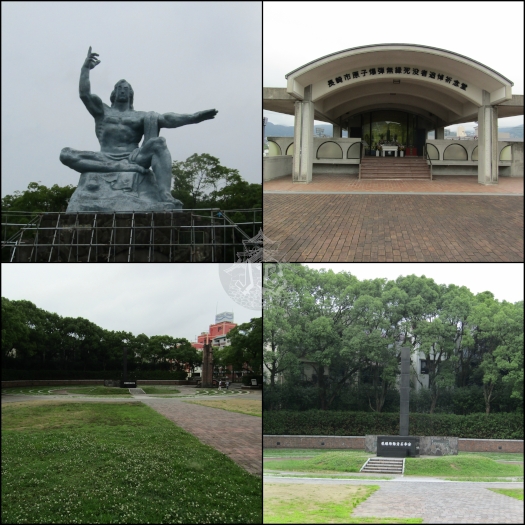
I started the day getting a tram pass and a map, and I first set on my way to see the Heiwa Koen [平和公園] or Peace Park, in order to be done with the ‘heavy feelings’ and then do other more relaxing stuff. I saw the Peace Fountain and the Peace Statue and snooped around Urakami cathedral outskirts, but it was being cleaned / renovated, so I did not walk closer. Then I looked at the Hypocentre of the Atomic Bomb. It made my heart heavy, thinking about what humans can do to each other.

After the Peace park I really wanted to see the one-legged torii of Sanno Jinja (山王神社), located less than a kilometre away from the blast site (the problem was that following the Nagasaki tourist map and signs, I had to take a huge detour). The shrine was destroyed in the blast, but the second torii did not completely collapse. The right leg and half the front remained standing, albeit, albeit rotated 30º. The torii still stands and now Sanno Jinja hosts the kami of two camphor trees that were scorched in the blast, but they survived and are now covered in leaves.

After that I took the tram towards Chinzei Taisha / Suwa Shrine [鎮西大社 / 諏訪神社] and as I was getting to the tram stop, the storm broke. It was not the rain as much as the asphyxiating heat what made it hard to breathe, even much more to climb up the stairs to the shrine.

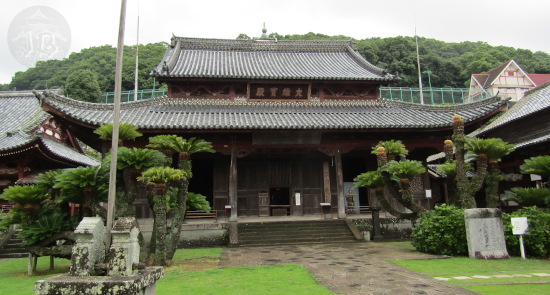
After that, once the clouds had lifted and I had drunk a whole bottle of coke in pretty much one go, I headed off to an area called Teramachi [寺町] where two prominent temples stand. The first is Kofuku-ji [興福寺].

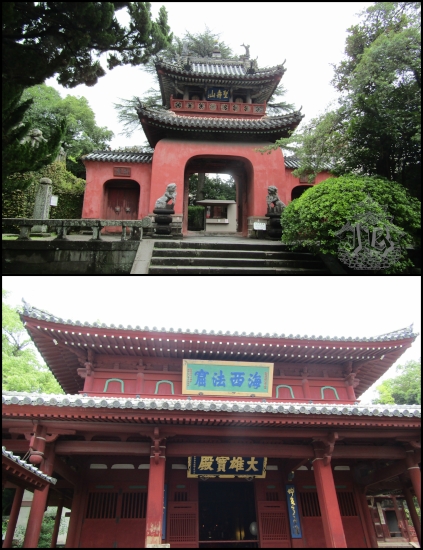
The second is Sofuku-ji [崇福寺]. Both of them are Chinese origin temples that at the moment feel more like tourist attractions than actual temples (entrance fee and all).

As I had taken down such a detour for Sanno Jinja and underestimated the distance between Kofuku-ji and Sofuku-ji I was running a little behind schedule, so I decided to change my original plans. First, I made a brief stop by Megane Bashi [眼鏡橋] (the Spectacles Bridge) over the Nakashima River, which is the oldest stone arch bridge in Japan, built by the same Zen master who established Kofuku-ji.

After this, even if I was a step away from Chinatown, I took the tram to the Nagasaki Koushibyou / Chuugoku Rekishi Hakubutsukan [長崎孔子廟 / 中国歴代博物館], aka Confucius Shrine and Historical Museum of China, because I wanted to be there before it closed. That was really and quite unexpectedly cool.

Again due to timing, I backtracked to Dejima [出島]. This is / was a small artificial island in Nagasaki bay established in 1634. This served as the opening of Japan to the Western world through trading with Dutch merchants. The recent renovations have restored the buildings in the island and established a museum to show how the Westerners lived. One of the things that grabbed my attention was the skeleton of a cow which had apparently been used to grow vaccinations. And there was a stamp rally, which only added to the fun. As a matter of fact I have to say that most of Nagasaki was more interesting and fun than I had expected, especially after the Peace Park and the heavy heart it caused.

I finally could backtrack to Nagasaki Chinatown (Chuokagai [中華街]) in Shinchi Machi.

After Chinatown I walked up to the Former Chinese Settlement, or Tojin Yakishi [唐人屋敷], where I saw Dojin-do [土神堂], Fukken Kaikan Hall (main gateway and Tenko-do) [福建會館], and Kannon-do [観音堂] which are remaining Shinto shrines in the area. Tojin Yakishi is the area where the Chinese merchants were confined, much like Dejima was for westerners.

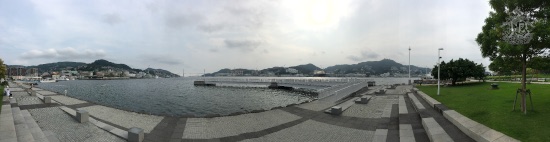
To end up the day I wandered around the Seaside Park, Nagasaki Mizube No Mori Kōen [長崎水辺の森公園] and backtracked to the station to head off to my next destination. All in all, I got the feeling that unlike Hiroshima, Nagasaki is trying to move on from the bombing and cultivate everything that it has to offer.