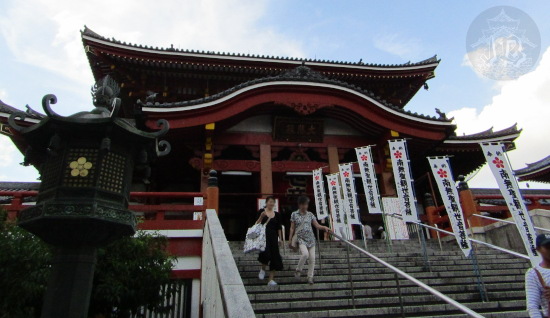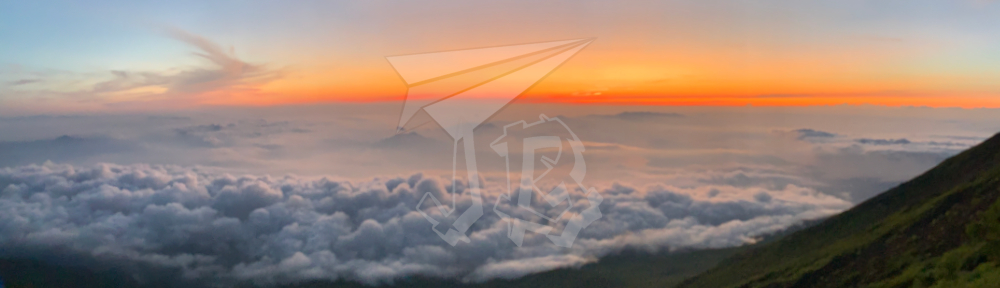
21st August 2018: I see two castles… {Japan, summer 2018}

As I had made it to Nagoya a bit on the early side the previous day, I had some time to plan today carefully. The tentative plan was visiting Gifu and Inuyama, both castle towns. However, a third castle, Kiyosu, was also on the list, and it turned out that to get to Gifu, you go via Kiyosu. So there was a slight readjustment in Castle-visting schedule.

Thus I got myself on the train and 20 minutes later I stopped at Kiyosu [清洲]. I had seen the castle from the Shinkansen before, but I had never found the name until I was doing some pre-planning for this trip. Thus, it was a win/win situation. Everything seemed to be helping towards me seeing that castle this time.

Bonus points for Kiyosu: signs. Awesome, easy to follow signals reading “清洲城” in every crossing . Not in every second crossing. In every actual crossing so you can actually get to the place without even a map!

Anyway, the highlight of Kiyosu is the castle, Kiyosu-jō [清洲城]. It is not original by any means, but it is one of the prettiest ones I’ve seen. I like all the colourful stuff.

Then I snooped around Kiyosu Koen [清洲公園], the park where Oda Nobunaga Nōhime-zō [織田信長・濃姫像] stand, they are the bronze statues of Oda Nobunaga and his wife Nouhime.

Afterwards I returned to the station and continued onto Gifu [岐阜], where I took a while to figure out the bus system, but in the end I managed to get to the feet of the mountain where Gifu Castle is.

Before going into the park, I decided I would not go into the insect museum, and walked off to Shōhōji [正法寺], home of the Great Buddha Gifu Daibutsu [岐阜大仏].

I took the Gifu Safu Kinkazan Ropeway [ぎふ金華山ロープウェー] (Gifu Mt. Kinka Ropeway). As much as it seems that I am getting comfortable with the whole Ropeway thing, I’m not. For the record.

But there I went, up to Gifu-jō [岐阜城], the castle up the muontain.

Later I was wandering around the park for a while and of course I needed to go and see the Gifu Kōen Sanjūnotō [岐阜公園三重塔], the Three-Story Pagoda that stands on the slope of the park.

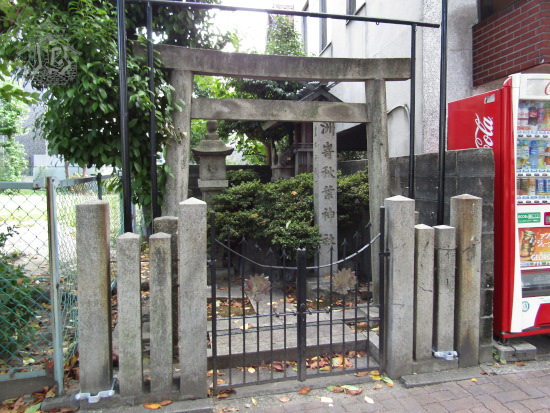
I was sort of tired, and it was very hot, so I took the bus back to the station, and the train back to Nagoya [名古屋]. When I got there I had rested a little, and I felt up to walking a bit in Nagoya – besides it just felt too early to go to the hotel. I walked by a cute little shrine, Yuzu Akiba Jinja [洲嵜秋葉神社].
I finally made it to Ōsu Kannon [大須観音],

and the adjacent shopping streets,
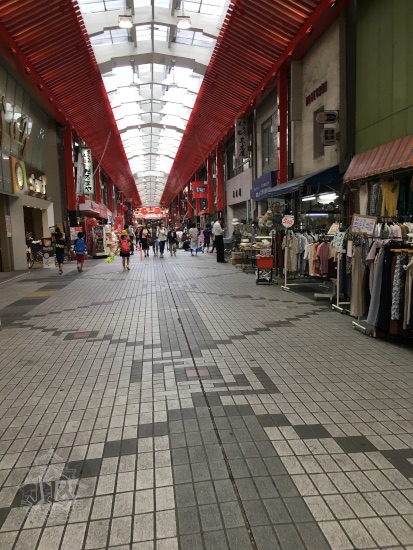
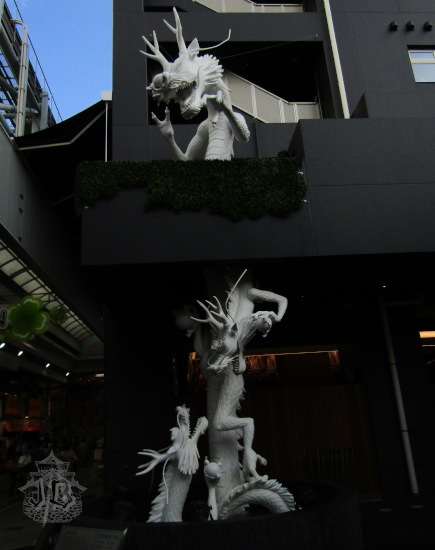
where I found Hakuryu [白龍], the white dragon.
I did some shopping in Mandarake and Book Off and I walked back to the hotel.
16th July 2016: Nagoya express (II) {Japan, summer 2016}

The day started with free breakfast that my hotel was providing, then I checked and set off to find a Shrine in the opposite block. It must have been the invisible shrine, because I did not manage to find it at all.

Then I set off to unwalk the path I followed the previous night to retrace the shrines, successfully. Everyone was getting ready for the festival so Nagoya Jinja [那古野神社] was very busy, and it was barely 8:15 in the morning (yes, I am a Japan early riser, who would have thought? XD)

And the same happened with Gokoku Jinja [佐屋護国神社].

I got to the Nagoya-jo [名古屋城] just before the hordes of tourists and had a quiet while to stroll around and take pictures. And when I say while, I mean couple of hours, because that is how I tick XD

Nagoya’s unofficial mascot is the kinsachi [金鯱] golden tiger-headed-dolphins, castle guardians to prevent the castles from burning (and that slack a little, as most castles have burnt down some time or another throughout history).

When I was coming out I stayed for a while watching the performance and rooting for some people just because they were pretty, even if I had arrived when it has all started and I did not know which clan was “the good guys” and which “the bad guys”. So yeah…

After the castle I checked on the temples again on my way to the metro. I had wanted to check the Gojobashi bridge out but it started raining pretty hard. Buying the Nagoya Eco pass proved impossible so I ended up just going in with the Suica, which worked without a problem. My next stop was Atsuta Jingū [熱田神宮], which enshrines the Sun Goddess Amaterasu. It is a bit out of the way so I decided to wait the rain out during the ride, and the plan worked. When I arrived at the shrine, the sky had cleared. A very nice ojiisan offered to show me around in broken English and I decided to encourage the system – Japan seems to be putting in place a system of helpful people to guide you in special tourist points, in different languages. I’ll support that.

Thus I went with the ojiisan who showed me around English. Even when I tried to switch to Japanese he would not really let me. He was quite impressed for for some reason that I knew names like Tokugawa or Nobunaga. After we were done with the tour I strolled around on my own again to take some pictures and enjoy the shrine. (I’m not a fan of this whole fad of Japanese older men acting as guides…)

Then I headed back to the metro system to get back to the central area and visited the Higashi Betsuin Kaikan [東別院会館], next to Nagoya TV and a Book Off.

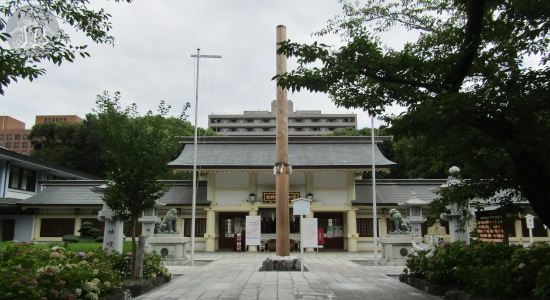
I also made a pause for a snack, and then headed off to the Osu Kannon [大須観音].

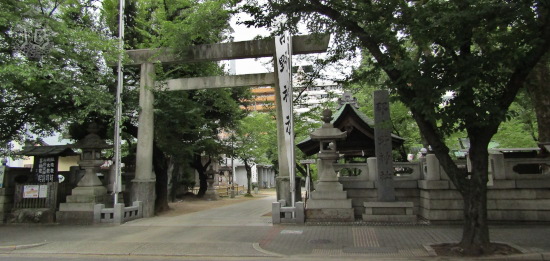
Walking towards it I came across the hip shopping district, and a small Shinto shrine that I think was the Kitano Jinja [北野神社], but I cannot tell for sure. Bummer, I should have gotten myself the Japanese map along with the English one to match names.

After that I was a bit on the tired side so I headed back to Nagoya station. I had some time before my train so I tried the typical local chicken wings, tebasaki [手羽先].

Then I spent my Shinkansen ride listening to music and playing with my phone and was very lucky to go into a TOKIO-commercial full Yamanote train from Tokyo station to Konagome.

And then I crashed into bed. Because I was tired.