
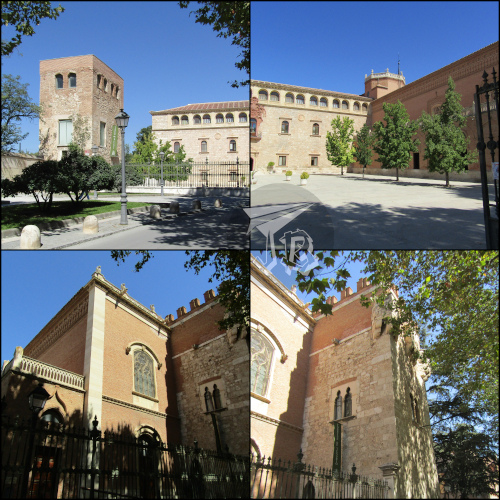
We took a drive to Sigüenza, in Spain. This medieval town? big village? had a big relevance through the Middle Ages, and the historical centre reflects that. The most prominent point is the castle on top of a hill. The Castillo de los Obispos is a fortress that can be traced to Roman times. However, the actual castle was a Moorish alcazaba. After the Christians took it over in the 12th century, it was remodelled and enlarged. Due to its vantage point, the castle was a key element in different wars and strife, including the Napoleonic invasion and the Civil War, thus resulting pretty damaged. In the late 20th century it was decided to restore it turn it into a Parador with around 50 rooms.
During our planning stage we called and tried to book a restaurant for lunch, and we were told they were not taking them, we had to call on the same day. Of course, when we got there, it was impossible to book – there was a course and the celebration of a communion (seriously, people, learn to say no so others can get organised). Unfortunately, you could not see the interior or even the yard if you had no reservations, so I can only share a picture from the parking lot, where we left the car.

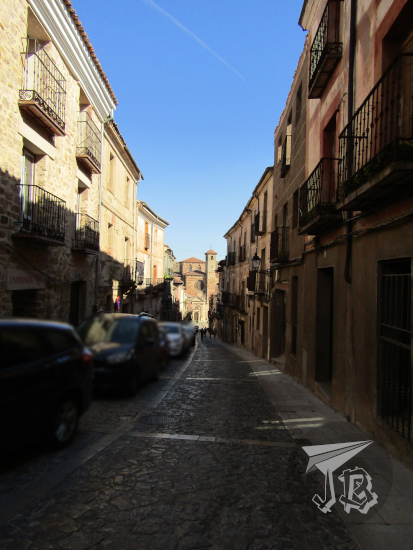
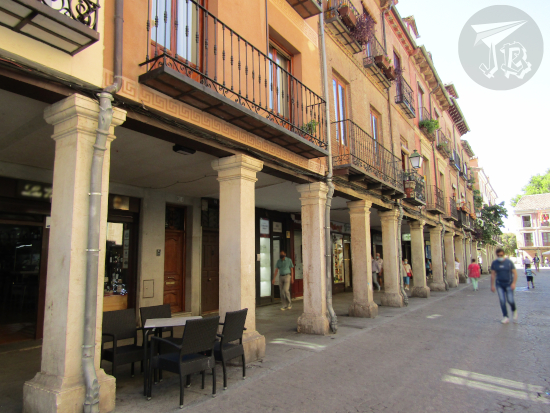
We walked down the main street Calle Mayor, a clobbered slope that ends (well, technically begins) at the town’s main square.
Main Square or Plaza Mayor is home to the Town Hall or Ayuntamiento de Sigüenza, an old palace with a typical Castillian inner yard or patio.


Opposite the town hall stands the cathedral Catedral de Santa María La Mayor de Sigüenza. The Gothic building was built upon a previous Romanesque one and it had some Neoclassical and Baroque additions. Thus, the façade sports Romanesque doors and rose window, and the main body is Gothic. The altar and the choir are awfully Baroque too, and some of the chapels sport Cisneros, Plateresque and Renaissance decorations. All in all, an interesting pout-pourri of architectural and decoration styles.
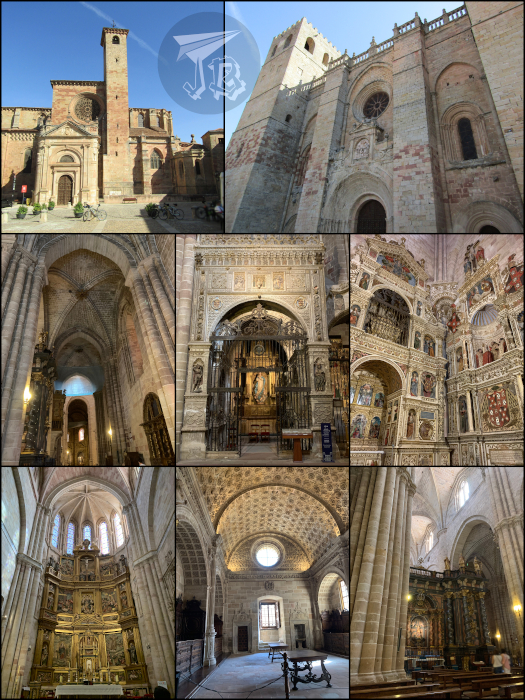
The most important piece of art of the cathedral, however, is a funerary piece to the right of the altar. It is the sepulchre of Martín Vázquez de Arce “El Doncel” (“The Young Man”). The chapel holds him, his parents and grandparents, but the sculpture on his sepulchre is the most impressive one. The Vázquez de Arce family were vassals of the Mendoza family, the most important family in the area during the Middle Ages. During the war to conquer Al-Andalus, the Vázquez de Arce males followed the Mendoza to the war in Granada, where Martín died in a trap set by the Arabs, which consisted on damming the River Genil to a creek, and then releasing the dam so the water took over the enemies crossing (which… kinda sounds like something out of the Lord of the Rings, doesn’t it? At least, it makes me think of Arwen and Treebeard). The sepulchre, commissioned by Martín’s brother, presents him taking a break during training and reading a book. He even has pupils, so if you could climb up, you’d see what he’s reading!

The cloister is also Gothic, as the previous Romanesque one was torn down. It holds a central garden and a number of side rooms where there is a collection of mythology-themed tapestries. In one of the chapels, there is also a painting by El Greco, a Greek painter rooted in Spain who was one of the key artists during the Spanish Renaissance.


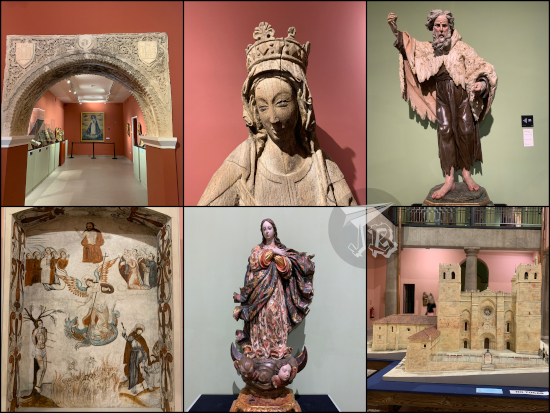
The cathedral ticket also allows a visit to the Diocesan Museum Museo Diocesano, which holds many pieces of religious art, along with a few models of the cathedral in its different construction stages. These days I’m trying to learn some hagiography, which means how to identify religious figures by how they’re presented. Getting there, three out of ten times or so, because half the time they cheat.
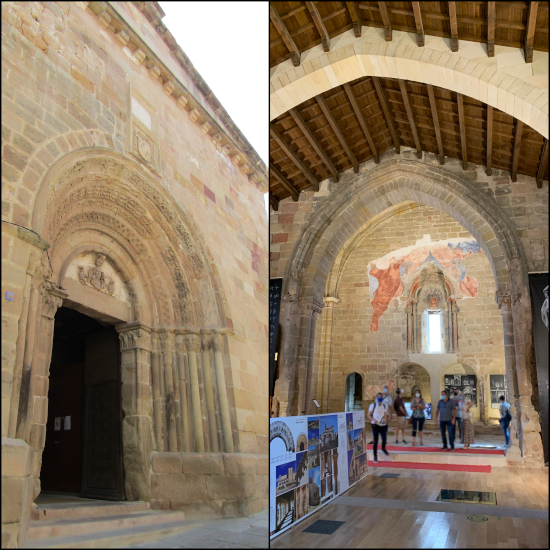
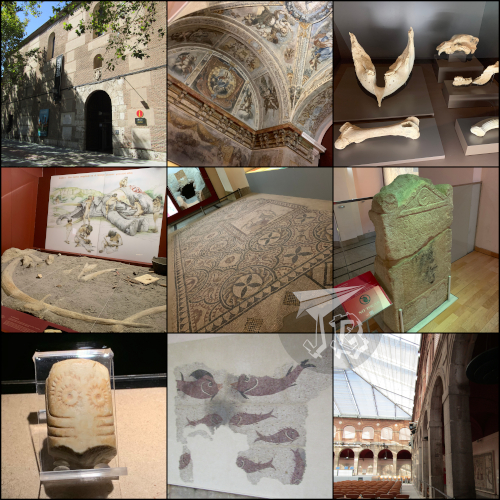
After the cathedral we climbed up towards the castle, and we stopped at the former church Iglesia de Santiago, now transformed into a mini-introduction centre for all the “hidden” or “unknown” Romanesque in the area. The church itself had some beautiful paintings, but it was destroyed during the Civil War.
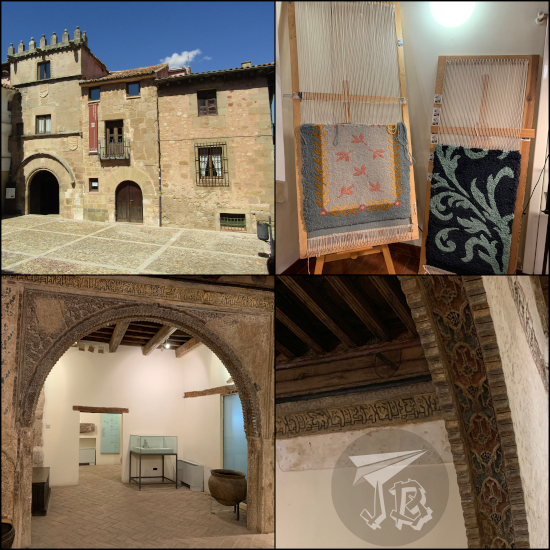
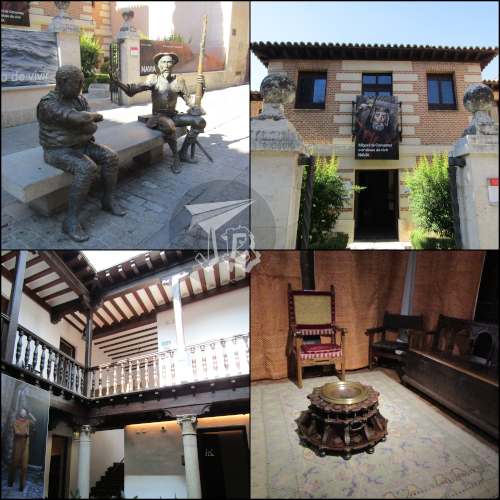
Continuing our way up, we turned a little to see the house where the Vázquez de Arce family used to live, now turned in a museum, Museo Casa del Doncel. There is a little paintings exhibition and a guitar museum, along with some ancient artefacts such as vases or looms. The most interesting part are the Moorish “Mozárabe” decoration. Here is a bit of historic trolling: when the Christian “conquerors” hired Arab craftsmen to do decoration, one of the things the Arabs did was decorate using Quran verses.
Then we saw the outside of the church Iglesia de San Vicente Mártir, Romanesque to boot.

Afterwards, we ended up at the square Plazuela de la Cárcel, where the old gaol jail stood.

Finally, we headed over to the restaurant where we had booked a lunch table, a traditional grill called La Taberna Seguntina where I chose to have a “summer menu” with salmorejo (a thick soup or purée made with tomato, oil, and bread and sprinkled with boiled egg and cured ham) and roasted cochinillo (suckling pig, roasted whole) with potatoes and herbs. For dessert I had a pudding!

And that was it, really – Medieval Sigüenza has nothing else to see. As the façade of the castle was being restored, we did not even take pictures of it as we drove away.





 JBinnacle – A Travel Logbook