
It’s quite hot out there, but I decided to hit a couple of museums in Madrid. A few months back, I got a card for the national museums, thinking I was getting a better deal than I did. Though it is true that you can get enter (most of) the national museums for free, you have to ID yourself, so you still have to queue, which is what I was expecting to avoid. However, it has at least pushed me to try and see a couple of museums I would not really visit (or even be aware of!) otherwise.
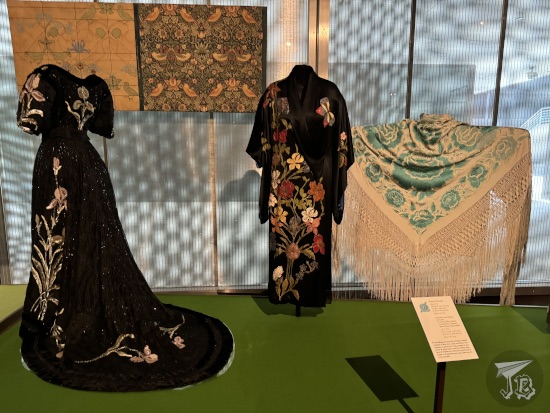
There are two museums in the district of Moncloa-Aravaca, an area I’m not usually around. One, I was curious about. The other is one I would not have even considered without the card: the Costume or Fashion Museum and Ethnographic Heritage Research Centre Museo del traje. Centro de Investigación del Patrimonio Etnológico (CIPE). It is a collection of pieces of clothing, textiles and accessories from the 17th century onwards, and I’m sure it is amazing if you know anything about fashion… which I don’t. The museum is organised chronologically, with a few pieces from the Middle Ages, then fabrics, costumes and complements since they became a thing.
There is also a collection of traditional outfits from different regions throughout Spain. The visit finishes with some of the big names in fashion, including Coco Chanel, Balenciaga, or Christian Dior. There was also an area for visually-impaired visitors, which allowed them to touch mannequins and fabrics from different style periods in history.

They were running a temporary exhibition called Vistiendo un jardín (Wearing a garden). It deals with the nature and flowers in fabric and costumes from the Baroque period onwards. They were in the middle of a guided visit so there was a big group, and I could only have a quick walk.
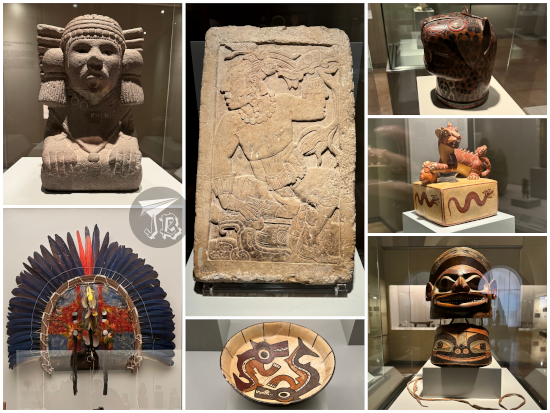
I walked over to the museum of the Americas Museo de América. The institution exhibits archaeological and ethnographical artefacts from the Americas, alongside art from the Palaeolithic period to the present, with a strong presence of Colonial art.
The origin of the collection was the Royal Cabinet of Natural history that Charles III had established in 1771. The collection increased with objects brought from discovery expeditions and Spanish colonies in America, especially those unearthed during archaeological excavations. In 1815, the science artefacts from the cabinet were integrated into what became the National Museum of Natural Sciences, and in 1868 the antiquities, ethnography, and art were transferred to the Museum of Archaeology. In 1941, the American artefacts were transferred to the newly formed museum. A more recent source has been that of donation and legacies.
Nowadays, the collection comprises around 25,000 artefacts and about 2,500 of them are exhibited – though the most important ones are copies due to “conservation issues”. The archaeological artefacts include Mayan, Inca, Aztec, Nazca, Amazonian, and even from North American native cultures who lived in what we now call the Great Plains or Alaska. The Colonial art pieces mostly include religious art and what is called pintura de castas, which tries to represent the appearance and daily life of the peoples of mixed race, descendants of European, African and Indigenous inhabitants of the colonies. There is also a ward dedicated to modern art and social criticism against colonisation. I found the organisation of the museum a bit strange, by theme areas instead of time-and-place.
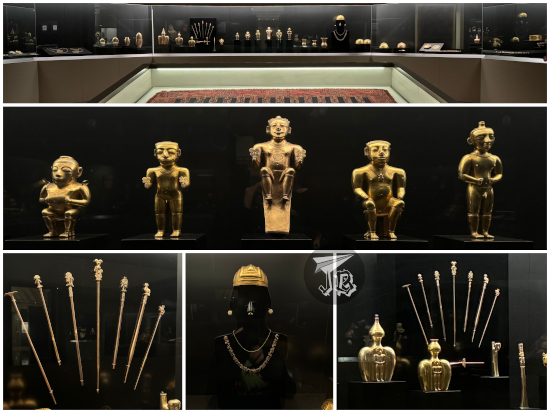
Arguably, the most important group of pieces that the museum exhibits is the so-called Tesoro de los Quimbayas (Quimbaya Treasure). The Quimbayas were a small indigenous group from precolonial America, who lived south of what is now Medellín, Colombia. They were known for their works in gold and an alloy of copper and gold called tumbaga. The treasure comprises 122 pieces, which represent about one fifth of the original findings. It is believed that the belonged to two sets of grave goods, and dates from the 5th or 6th centuries CE. The treasure was dug up during the Colombian gold fever, when archaeological items were sold for their weight in gold. The artefacts include figures, crowns, jewellery (nose- and ear-ornament, necklace beads, pins, pendants), containers, ceremonial vessels and poporos (used to keep coca leaves for religious ceremonies), and musical items such as bells.
I actually had been thinking about staying in Madrid and do something else, like the observatory known as Faro de Moncloa, which is literally next to the Museum of the Americas. Or a nice themed restaurant or something. But it was ridiculously hot and I just did not feel like it. It was early for lunch too, but by the time I got anywhere cool, it would be right in the middle of the rush. So I just went back into the transport system. Of course, the train was delayed. I need to stop planning around the official train schedules, especially around food times…
 JBinnacle – A Travel Logbook