22nd July 2017: Kokura → Okayama – castle day {Japan, summer 2017}

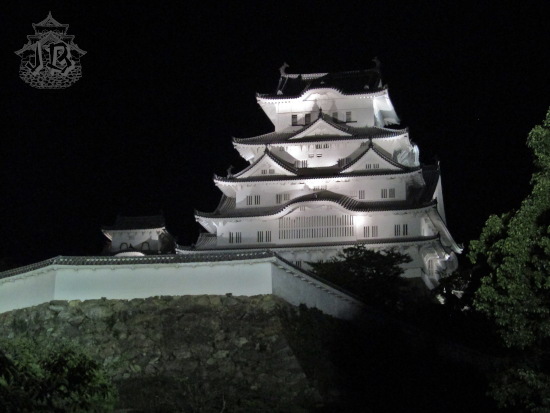
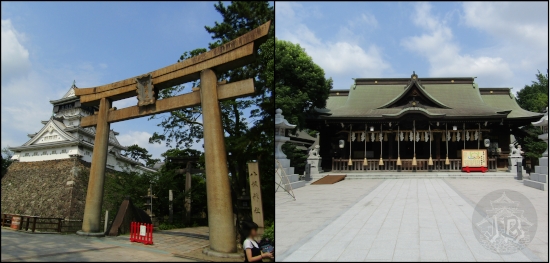
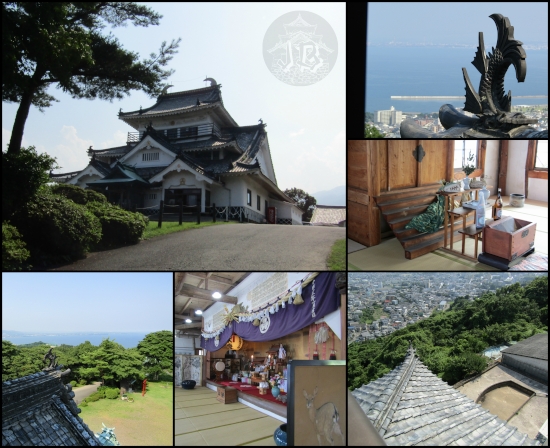
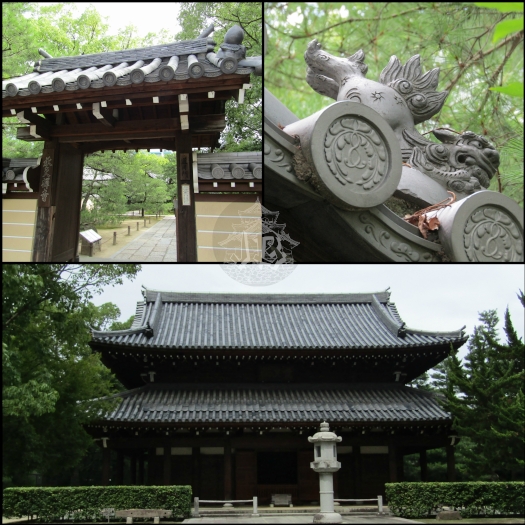
I started the day in Kytakyuushu [北九州], heading out to Kokura-jo [小倉城] again, this time by light.

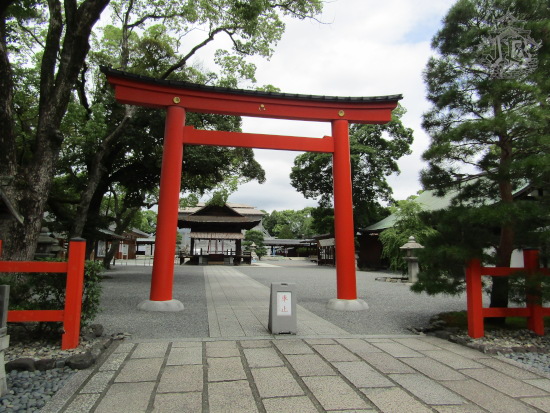
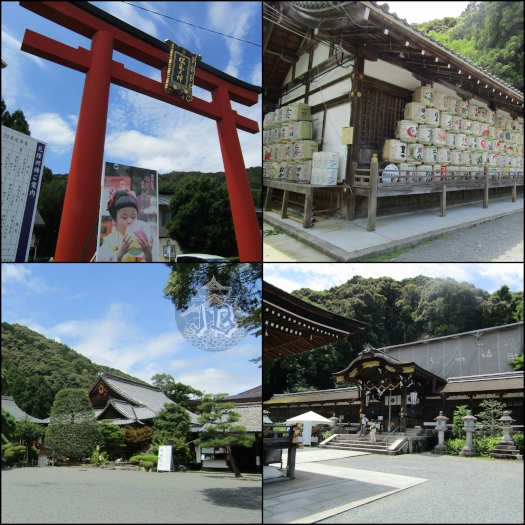
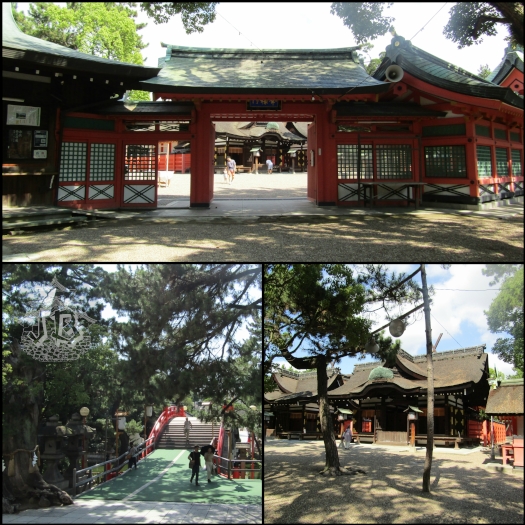
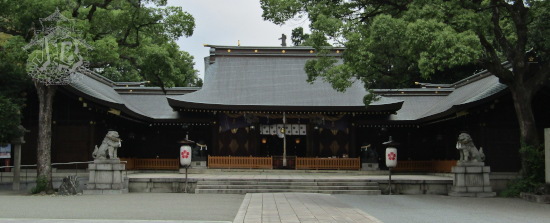
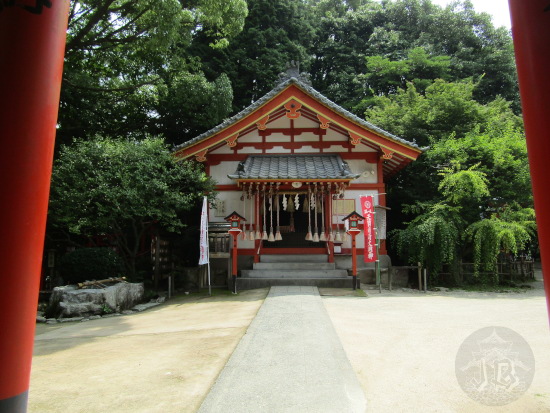
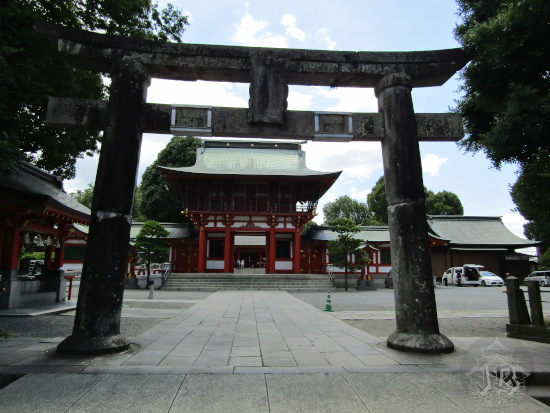
After the castle I went to Yasaka Jinja [八坂神社], next to the castle.

Then I backtracked to the station to head to Okayama [岡山]. Unfortunately the train I wanted to take was full, so I had to wait for an hour and take a slower train. In hindsight (when everything is clearer) I should have stopped at Fukuyama to see that castle, but I was worried I would not have time to see Okayama castle. On the way I was talking to the nice ojii-san who was going to Nara to pick up the car his wife had bought in yahoo auction.

Upon arrival in Okayama and failure to find appropriate coin lockers I headed out to Okayama-jo [岡山城].

As I was good for time I bought a combined ticket for the castle and Korakuen [岡後楽園] a huge Japanese garden which hosts a couple of small shrines – Jizo-do [地蔵堂] and Jigen-do [慈眼堂].


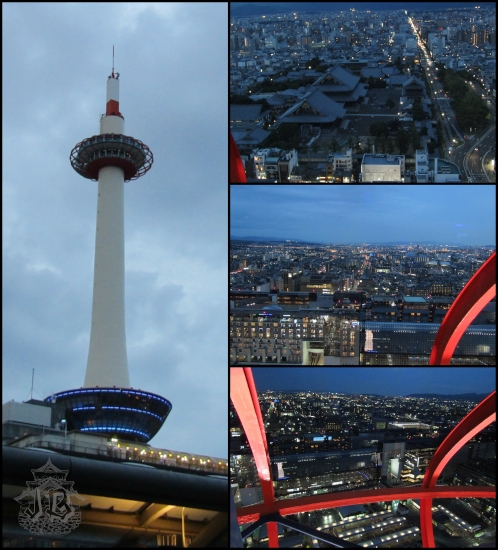
Afterwards I backtracked towards the train station and took a train towards Kyoto [京都], where I climbed up Kyoto Tower [京都タワー], because I had not been up even if I had been to Kyoto before.

Afterwards, I just wanted to get some sleep, so I went to the hotel, had dinner and collapsed in bed.

21st July 2017: Beppu – Hell day~ (in a good way) {Japan, summer 2017}

Beppu is, as I said before, known for having a lot of volcanic vents. It has decided to exploit this as a tourist resource. Beppu is still trying to open up to foreigners. It’s trying, at least partially. So cheers to the nice people.

The main attraction are the Jigoku [地獄] or hells, which are, depending on who you ask, seven, eight or nine. I visited eight of them. They are spectacular hot springs and vents which are too hot for bathing but really interesting to look at. The whole pack is called Beppu Jigoku Meguri [別府地獄めぐり]

I got myself a map, bought a ticket pack and a bus pass, and set off to the bus. Most of the jigoku are located in the Kannawa [鉄輪] District, but two of them are pretty far away, in Shibaseki [柴石] (2 km is far in the boiling summer, if the weather had been nicer, I would have walked back and forth).

I visited the Onishibozu Jigoku [鬼石坊主地獄] (Hell of the Demon-monk) which is a boiling mud puddle and a strong sulphur smell. I did not manage to get any bubble exploding, but the idea is that the bubbling mud looks like a monk’s shaved head.

Second I headed walked into the Umi Jigoku [海地獄] (Sea Hell), which is a turquoise pond of boiling water with a small shrine. It also has a smaller reddish pond to one of the sides.

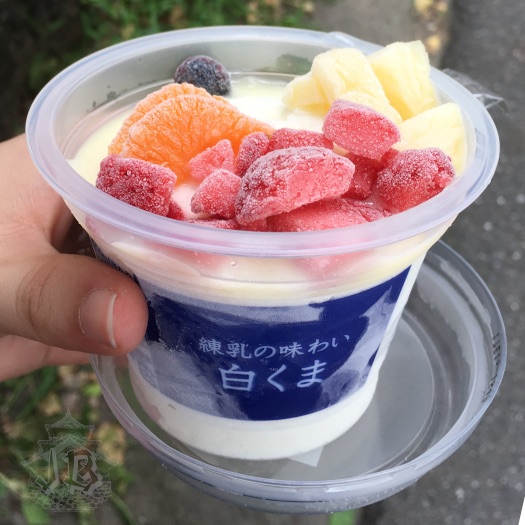
After this I took a break to have a made-in-hot-spring-water pudding and have something to drink, just because I could. It was delicious.

And there was Onsen Jinja [温泉神社] (Hot Spring Shrine) to snoop around, too!

Third, I dropped by the Yama Jigoku [山地獄] (Mountain Hell), which comes off from the mountain slope and complements that it is not the most spectacular one with having a small petting zoo, where I somehow ended up feeding a capybara. Don’t ask me XD (This hell is independent, so you have to pay extra to come into it).

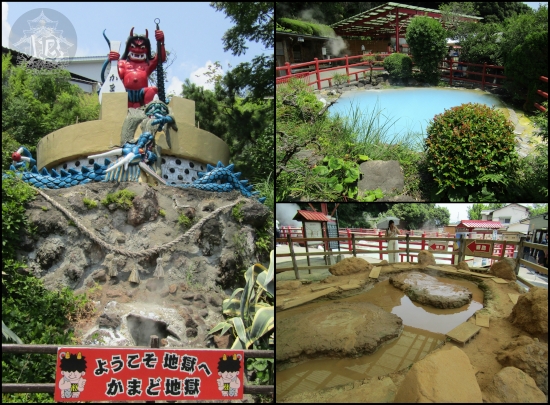
Fourth, I went to the Kamado Jigoku [かまど地獄] (Cooking Pot Hell) which has a big oni cook to greet you.

Fifth, I found the Oniyama Jigoku [鬼山地獄] (Devil Mountain Hell) which for some reason breeds crocodiles, and what the hell, that was scary for a second. Even if they were behind bards, the crocs would follow you under the water and snip at your shadow and some of them were enormous! Creepy! The hot-spring itself was not that impressive but basically because it was steaming too much to see any of it.

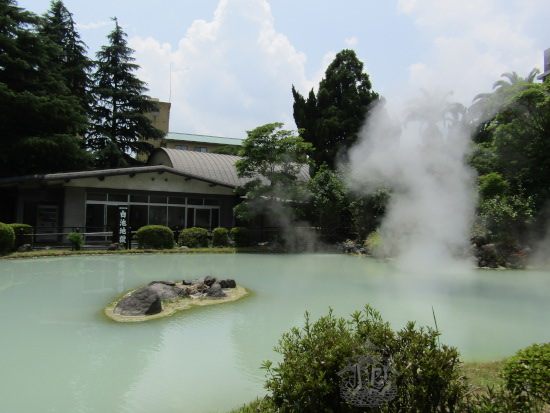
Sixth, I went to the Shiraike Jigoku [白池地獄] (White Pond Hell) where there was nobody to take my ticket. A nice old couple explained that I was to cut it myself and put it in a jar over there. We were talking a little and they asked where I was from. Then they continued on their way and I stayed petting a random cat who decided I was to scratch it right then and there. In this jigokku they also have a small aquarium with several tank of freshwater fish, among them “man-eating piranhas”…

I took the bus then to Shibaseki where the other two remaining hells were. Had the weather been more agreeable I would have walked, but I had the bus pass anyway and it was very hot. As I stepped out of the bus I came across the same couple from before. they explained that they had visited Spain before when they were younger and told me that they were from Osaka. We parted ways to go into the Chinoike Jigoku [血の池地獄] (Blood Pond Hell) which is a boiling red pond. Here I decided to take a foot bath as the area was empty and I was tired.

The final hell was Tatsumaki Jigoku [龍巻地獄] (Spout hell), a geyser you have to wait for, as it has its own timing. Here the old couple brought me a lemonade because they were adorable. And after the geyser it was over, or so I thought.

I had decided to give the aquarium a miss, because I was very tired but when I was taking pictures of the “castle” from afar I decided… I could not miss the chance, so I took the bus again towards Kifune-jo [貴船城] (which is quite new but pretty enough). Unfortunately the bus stopped right at the foot of the hill, so I had to go up and climb all the slope. I arrived just in time to pray to a snake which is supposed to bring happiness to whomever pats it.

After the castle I headed back downtown and took the train to backtrack to Kokura / Kitakyuushu [小倉 / 北九州]. While it is true that I had passed Kokura on my way from Fukuoka to Beppu, the idea was always to spend the minimum time on a train per day, but I wanted to combine Kokura with Okayama and make the following day a “castle day”.

Once in Kokura I checked in and went to see Kokura-jo [小倉城] by night.

20th July 2017: Dazaifu – not ready for thorough tourism {Japan, summer 2017}

Dazaifu [大宰府] was the neuralgic centre of the island of Kyushu between the 7th and the 12th century. Today is sort to Fukuoka what Nikko is to Tokyo. Nowadays it is mostly known for its temples and shrines. It has a central core close to the station where you get around quite easily and a few things off the way which… are an adventure to get to.

I started the day visiting Dazaifu Tenmangu [大宰府天満宮], which was crawling with tourists to the point that it was hard to walk at times. It is a big shrine with a huge bridge over a pond in the shape of 心.

Afterwards I got myself a bottle of water and climbed up to Tenkai Inari Jinja [天開稲荷神社] which would have been really, really awesome and creepy if I had been alone, but alas, there were a bunch of other tourists along. It was quite of a climb up so the number was fewer, which made it less crowded though.

After climbing down I wandered around and passed a tiny shrine on the bank of Aizome River [藍染川] the place of a rebirth of a woman named Umetsubo. There is also a small shrine and a “historical site.”

After this I reached Kōmyōzen-ji [光明禅寺], a Zen temple with a great garden, but no pictures were allowed, and you could not really walk through the gardens. However, it was much, much emptier and nicer.

It was now when I decided to head out to the Kanzeon-ji [観世音寺]…

… and Kaidan-in [戒壇院], along with the so called Bonsho Bell.

In order to get here the map sent me through rather bad roads, and it got scary for a second when a car was coming. Furthermore, the signposts were all messed up, making it hard to follow them and the map. But in the end I made it and even if I did not enter the museum, I felt accomplished.

On the other side of the road you could climb up to Hiyoshi Jinja [日吉神社], a tiny and quiet shrine on top of a hill that I really liked – I thought the kami would be bored so I dropped them a prayer too.

After all this I still had a few things left, but I was very tired and there was a storm brewing, so I backtracked to Fukuoka, where I had slept, gathered my luggage and was ready to take a train to my next destination when I unexpectedly met with a VAMPS fan friend, the same one D****e and I ran into at Kumamoto castle! Small world! We had ramen – Hakata ramen, of course – together and then I took the train towards my next destination, on the other side of Kyushu: Beppu.

Beppu [別府] is a small town on the side of a volcano known for its hot springs because it’s on the slope of a volcano named Tsurumi-dake [鶴見岳]. It has almost 3000 volcanic spring vents and it is a bloody amazing place!

I checked into the hotel and almost immediately walked out because the hotel was right next to Beppu Tower [別府タワー]. However I got distracted by Matogahama Koen [的ケ浜公園] and the beach and the breakwaters.

Finally I climbed up to the tower and looked around the city. I was a little disappointed because I was expecting to see some of the vents or at least a spark coming for the volcano, but it did not happen.

Afterwards I walked down to the hotel and spent an hour in the public bath that they had, which was really, really good for relaxing. And then I collapsed in bed and got some sleep because there was a big day the following day!

(I have to say here that I have decided to omit here most of the ‘blergh’ part of this trip in order to keep only the nice memories, thus the upcoming posts are a bit edited. So I’m not telling you about the unfriendly people I met in the way and that made me feel a bit sad. Just the friendly ones because they rock! )

19th July 2017: Nagasaki – the perseverance of nature and the pride of man {Japan, summer 2017}

My Nagasaki [長崎] day was the worst weather I’ve ever experienced in Japan. There was a storm mid-morning which caused the atmosphere to become so heavy with water vapour that even breathing was difficult.

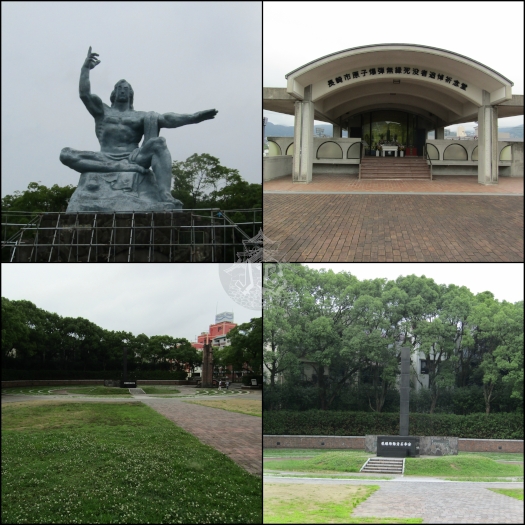
I started the day getting a tram pass and a map, and I first set on my way to see the Heiwa Koen [平和公園] or Peace Park, in order to be done with the ‘heavy feelings’ and then do other more relaxing stuff. I saw the Peace Fountain and the Peace Statue and snooped around Urakami cathedral outskirts, but it was being cleaned / renovated, so I did not walk closer. Then I looked at the Hypocentre of the Atomic Bomb. It made my heart heavy, thinking about what humans can do to each other.

After the Peace park I really wanted to see the one-legged torii of Sanno Jinja (山王神社), located less than a kilometre away from the blast site (the problem was that following the Nagasaki tourist map and signs, I had to take a huge detour). The shrine was destroyed in the blast, but the second torii did not completely collapse. The right leg and half the front remained standing, albeit, albeit rotated 30º. The torii still stands and now Sanno Jinja hosts the kami of two camphor trees that were scorched in the blast, but they survived and are now covered in leaves.

After that I took the tram towards Chinzei Taisha / Suwa Shrine [鎮西大社 / 諏訪神社] and as I was getting to the tram stop, the storm broke. It was not the rain as much as the asphyxiating heat what made it hard to breathe, even much more to climb up the stairs to the shrine.

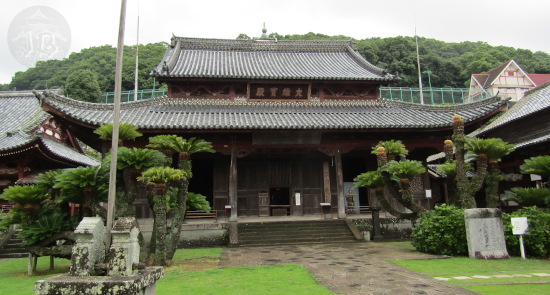
After that, once the clouds had lifted and I had drunk a whole bottle of coke in pretty much one go, I headed off to an area called Teramachi [寺町] where two prominent temples stand. The first is Kofuku-ji [興福寺].

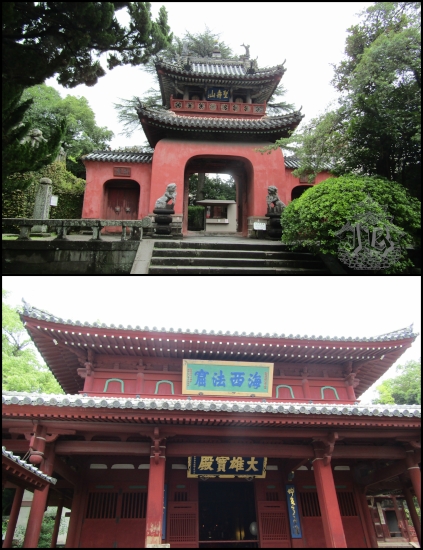
The second is Sofuku-ji [崇福寺]. Both of them are Chinese origin temples that at the moment feel more like tourist attractions than actual temples (entrance fee and all).

As I had taken down such a detour for Sanno Jinja and underestimated the distance between Kofuku-ji and Sofuku-ji I was running a little behind schedule, so I decided to change my original plans. First, I made a brief stop by Megane Bashi [眼鏡橋] (the Spectacles Bridge) over the Nakashima River, which is the oldest stone arch bridge in Japan, built by the same Zen master who established Kofuku-ji.

After this, even if I was a step away from Chinatown, I took the tram to the Nagasaki Koushibyou / Chuugoku Rekishi Hakubutsukan [長崎孔子廟 / 中国歴代博物館], aka Confucius Shrine and Historical Museum of China, because I wanted to be there before it closed. That was really and quite unexpectedly cool.

Again due to timing, I backtracked to Dejima [出島]. This is / was a small artificial island in Nagasaki bay established in 1634. This served as the opening of Japan to the Western world through trading with Dutch merchants. The recent renovations have restored the buildings in the island and established a museum to show how the Westerners lived. One of the things that grabbed my attention was the skeleton of a cow which had apparently been used to grow vaccinations. And there was a stamp rally, which only added to the fun. As a matter of fact I have to say that most of Nagasaki was more interesting and fun than I had expected, especially after the Peace Park and the heavy heart it caused.

I finally could backtrack to Nagasaki Chinatown (Chuokagai [中華街]) in Shinchi Machi.

After Chinatown I walked up to the Former Chinese Settlement, or Tojin Yakishi [唐人屋敷], where I saw Dojin-do [土神堂], Fukken Kaikan Hall (main gateway and Tenko-do) [福建會館], and Kannon-do [観音堂] which are remaining Shinto shrines in the area. Tojin Yakishi is the area where the Chinese merchants were confined, much like Dejima was for westerners.

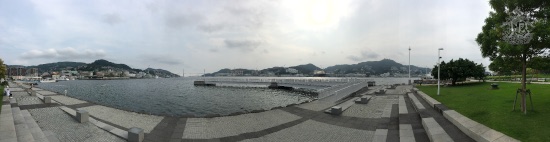
To end up the day I wandered around the Seaside Park, Nagasaki Mizube No Mori Kōen [長崎水辺の森公園] and backtracked to the station to head off to my next destination. All in all, I got the feeling that unlike Hiroshima, Nagasaki is trying to move on from the bombing and cultivate everything that it has to offer.

18th July 2017: Fukuoka – swampy heat {Japan, summer 2017}

The modern Fukuoka [福岡] is a rather big city comprised of two towns – Fukuoka and Hakata. My hotel was in the Hakata area (close to Hakata station), so I could start with visiting some of the sights around there. Right down the street there was Hakata Sennen no Mon [博多千年門], which is a rather modern gate that signals the entrance to the historical site of Fukuoka.

Afterwards I snooped the back gardens of Jouten-ji [承天寺], to whose main building I would come back later (weird mapping sent me the wrong way).

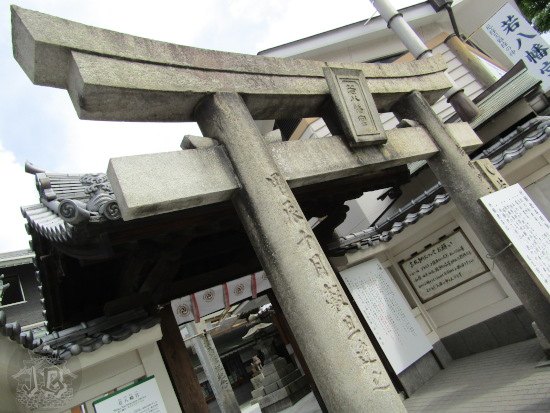
I snooped around Waka Hachimangu [若八幡宮], which was not even open as this was about 8.30 in the morning, I had some coffee and I continued on my way.

My next stop was Tōchō-ji [東長寺] a Buddhist Temple with a rather short-tempered monk in charge of writing shuuin, and a huge Buddha statue made of wood around whose you can descend to ‘hell’, a corridor which first explains the different hells in Buddhist religion and then plunges into complete darkness (no pictures allowed though).

Next I was in Ryugu-ji [龍宮寺], a small temple next to Tōchō-ji.

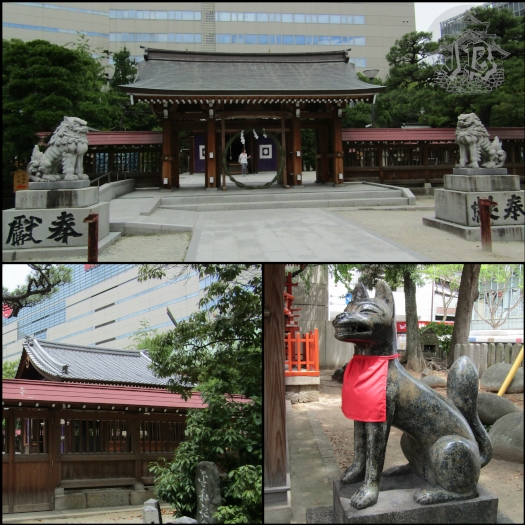
Right on the other side of the street I walked over to Kushida Jinja [櫛田神社], dedicated to Amaterasu and Susanoo, the first gods in Shinto.

After that I walked into Gokushomachi [御供所町], an area where two or three major Buddhist Temples are located. The most important out of these (and the only one open for inspection) was Shofuku-ji [聖福寺], which is the first known Zen Buddhist temple in Japan.

Afterwards I took a stop at a conbini for some lunch a subway ride to check on the former site of Fukuoka castle Fukuoka-jo [福岡城], and the only two remaining items: the Otemon (main gate) [大手門] of the castle and Shiomi Tower [潮見櫓] and backtracked to the train.

My next stop was Suikyo Tenmangu [水鏡天満宮], in the dead centre of Fukuoka, following the Fukuoka Navi recommendation.

Afterwards, I walked a little and ended up at Kego Jinja [警固神社], a shrine which holds a ‘laughing’ kitsune statue in the grounds. It is the closest thing to a castle shrine that Fukuoka has.

My last stop in Fukuoka was Sumiyoshi Taisha [住吉神] which was colonised by VAMPS fans as it seems that HYDE favours it (the Osaka one, at least, but… don’t ask me).
 

On my way back I had some ice cream because hot and hungry.

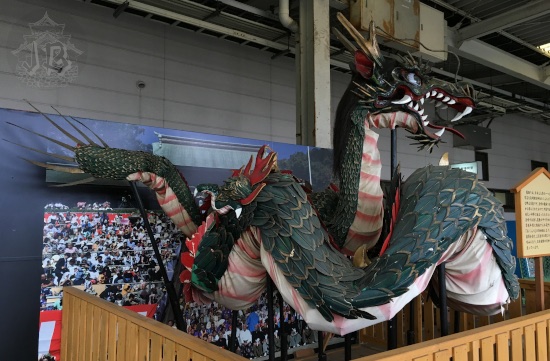
Finally I took the 15:15 Kamome train to my next destination, Nagasaki [長崎]. This dragon greeted me at the station.

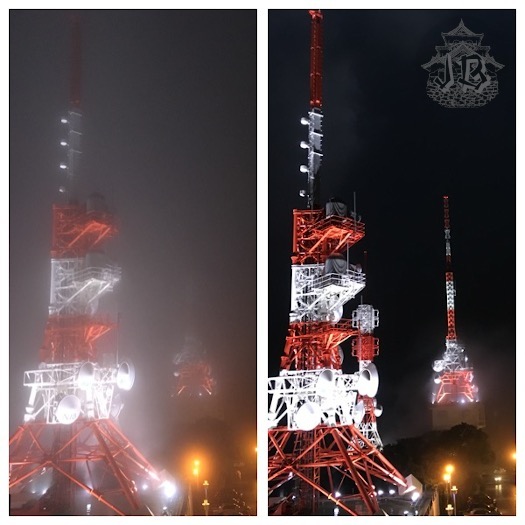
After checking in, I tried to go to the Peace Park, but Google sent me to a random parking lot called “Peace Park” so I decided to go to the Inasayama [稲佐山] Observatory to watch the “one million dollar view”. Fortunately or unfortunately there was a storm brewing – it broke down as I was heading towards the Nagasaki Ropeway [長崎ロープウェイ], then it calmed down, only to start up again once I was almost at the top of the mountain. So normal people watch the Nagasaki skyline, I… guessed the Nagasaki skyline through a storm cloud, because I am cool like that.

17th July 2017: The power of nature {Japan, summer 2017}

In the morning, D****e and I left the hotel to tour Kumamoto [熊本] a bit more. We headed off to Fujisaki Hachimangu [藤崎八旛宮], a shrine dedicated to a bunch of historical figures, among them Emperor Ojin.

After that, we walked in the sun towards the castle, and we missed our entrance to the nice shade, so we were in the scorching sun for a little longer than intended. In the castle park we headed off to Kato Jinja [加藤神社].

As we walked around the park, and from Kato Jinja itself we could see part of Kumamoto-jo [熊本城], but we could only see one of the towers, as the main building is still under reconstruction. The destruction of the turrets and walls gave us a chill, thinking of that quake and how strong it must have been. I have decided that I must come back to Kumamoto some day to see this castle once it is reconstructed.

As we were coming down we met a friend and arranged to meet with her later to emulate HYDE’s pictures at the station, but first we dropped by Kumamoto Inari Jinja [熊本城稲荷神社].

We had a shabushabu lunch and then headed off to the station meet with C. and to take our pictures with Kumamon (and a nice old couple who… wanted pictures with the gaijin for some reason).

After that I took the Shinkansen to Hataka station in the city of Fukuoka [福岡], where I arrived around 6pm. This kick-started my pattern for the following days: travel to a new city in the late afternoon / early evening, check in a hotel close to the station, see monuments by night, sleep, see the important stuff during the morning.

I checked into the hotel, changed clothes and headed off to see Fukuoka Tower [福岡タワー] and Momochi Seaside Park Seaside Momomichi Kaihin Koen [シーサイドももち海浜公園]. The latter is a small beach park which holds some restaurants, cafes and one of the famous Fukuoka wedding venues (the Marizon).

I entered the Tower and was waiting for a while to climb up, but it was worth it, as I got to watch sunset. I really like the whole tower-climbing thing. Finally I backtracked towards the hotel, stopping to take pictures of the lit tower on my way back.

16th July 2017: Kumamoto and VAMPS {Japan, summer 2017}

In the morning we headed off to get to know Kumamoto [熊本] a little. The first stop was Honmyou-ji [肥後 本妙寺], a temple in outskirts (with a tram stop conveniently placed at the end of the street). It is a temple that suffered a lot of damage in the 2016 earthquake and it’s in process of being rebuilt. A double staircase (176 steps) leads up from the main door to the main building. In-between the two sets of stairs there is a line of stone lanterns contributed by believers. Most of them, however collapsed in the quake, and that’s not the only reminder. I climbed up to the top of the hill (300 steps) to the grave of Katō Kiyomasa, the daimyo of Kumamoto who built the castle.

Highlights of the Buddhist temple Honmyouji. The entrance at the top of the stairs, a stone lantern that collapsed during the earthquake, the graveyard, the main building, and the statue of a samurai standing proud against the blue sky

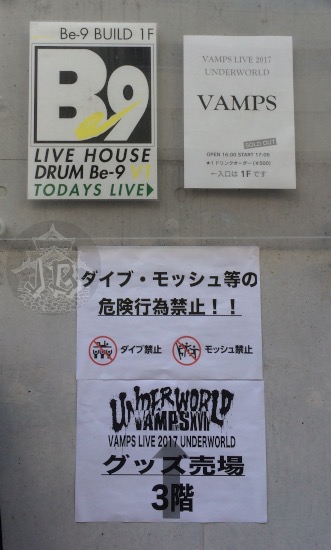
After that I walked around town for a while and checked out the B.9 V1 Live house, the venue where the concert was going to be held, and bought some goods. VAMPS brought their act Underworld to Kumamoto as a sort of improvisation, to “cheer the town up” after the earthquake. To be honest, Underworld is not my favourite VAMPS album, because the music reminds me of a lot of American hard-rock bands. Not that I dislike them, but in my head the songs sound like “someone else’s”. It is not a bad album but… it feels weak, and that shows in the concerts, in my opinion. However, they’re still fun.

Notice for the concert, reading B9 livehouse, Today's live is Vamps Underworld. Third floor.

After the concert and watching the departure of the band, we had dinner with a friend and then D****e and I walked around Kumamoto’s castle park, Kumamoto-jo Koen [熊本城公園] at night to eat ice cream and see the actual castle, Kumamoto-jo [熊本城].

The Kumamoto Castle at night. one of the towers, in dark grey and white, stands unscathed, but the main building is held behind a huge scaffolding and cannot be seen.

15th July 2017: 1,176.2 km with a stop {Japan, summer 2017}

Shinkansen are a wonderful invention (although the air-con regulation could use some work). D****e and I jumped on one to go to Nagoya [名古屋] from Yokohama at around 8.20. We were to be at Zepp Nagoya at 11:00 for the VAMPARK that was held there, which was a sort of exclusive film documentary of the previous year’s activities.

Zepp Nagoya Logo with a notice that reads Vampark 2017 and the date - 15th July 2017

After the VAMPARK and a forgettable lunch at an Indian restaurant in Nagoya station D****e headed to the airport and I continued on another shinkansen to head off to Kumamoto, where we had a concert the following day. This was because I had a RailPass but for her flying was cheaper.

In the end, it took me about 5 hours 20 minutes on trains from Yokohama to Kumamoto [熊本] in three different shinkansen. Once in Kumamoto, I got to meet the city’s mascot, Kumamon, a huge friendly black bear.

A giant Kumamon head rising from the floor. Kumamon is the Kumamoto mascot, a cartoon giant black bear with red cheeks and white snout and eyebrows

I had to invest a bit until I figured out the tram system, and that made it that – funnily enough – both D****e and I arrived at our hotel within 10 minutes of each other. After checking in we headed off to have a bite with a bunch of VAMPS fan friends at a freezing izakaya where I tried raw horse (basashi [馬刺し]) for the first time o.o.

Plate of raw meat with lemon and wasabi

14th July 2017: X JAPAN WORLD TOUR 2017 WE ARE X Acoustic Special Miracle ~Kiseki no Yoru~ {Japan, summer 2017}

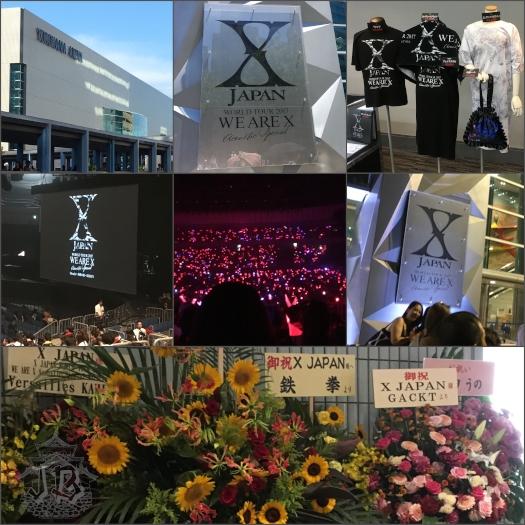
This was the first day of my JR pass (in hindsight, I should have not have activated the pass this day, but the next), and also the day to go to the third day of Yokohama [横浜] to enjoy the X JAPAN WORLD TOUR 2017 WE ARE X Acoustic Special Miracle ~Kiseki no Yoru~ 6DAYS at Yokohama Arena [横浜アリーナ].

I headed to Yokohama early in the morning to line up for goods, and I took a book to the queue as I would be waiting along for a while. At around noon my friend B**** came along to keep me company and we had lunch together after I had bought everything that I wanted and had not been sold out (such as the Yoshiki keyrings). In theory my tickets were arena, but they were actually on the stands, though much closer than the previous time I had been there – for Gackt’s Best of the Best, when I was on the second-to-last row. This time I was close to the stage to the right-hand-side.

The mere fact that the concert was carried out is a miracle itself. Yoshiki has been recently had an operation on his cervical vertebrae to try to correct the nerve damage he has suffered through the years. The man can barely move, but he tried his best, and the concert was very emotional. It started with the documentary We are X, and then it moved on to a very powerful ballad-based concert – though it had its hardcore moments with ToshI’s solo. The highlights for me were La Venus, Hero, Miracle with guest singer Ashley Knight, and a very unexpected I.V.. I was very moved throughout the whole set list, and the whole thing was very emotionally-draining, if I am to be honest.

Collage of pictures of the venue, outside and inside. Yokohama Arena, which is just a massive white building. The X Japan We are X symbol. T-shirts from the merch. The logo on the screen. People waving red penlights in the dark. Good luck flowers from different artists.

Then we slept over at a hotel in Yokohama in order to avoid last train stress and be able to sleep in a bit the following day.

13th July 2017: Shinkai (Deep Ocean) {Japan, summer 2017}

I headed off to Ueno Kōen [野公園]. The first thing I did was exchanging my JR Pass. Then I hit the Natural History Museum Kokuritsu Kagaku Hakubutsukan [国立科学博物館] because I had seen on Tuesday that they were running a temporary exhibition on Deep Ocean. Since last year’s Hunters of the Sea was good, I had decided to check it out.

The exhibition, called Shinkai [深海] ran several parts. The first of them (bioluminescence and Hadal zone) had a bunch of interesting specimens both kept in formol, along with there being big screen showing the creatures in their natural habitat. Of course, Japan, being Japan, was much more fascinated by the screens rather than the actual fish. Some of the most interesting things that they had exhibited included: a giant Antarctic octopus ( Megaleledone setebos), a Pacific footballfish (Himantolophus sagamius, those that have a little light on an antenna on their head), a huge chimera and a lepidion (Lepidion schmidti). However the central pieces of the exhibition were the Pacific sleeper shark (Somniosus pacificus) and the Atlantic giant squid (Architeuthis dux).

Another part focused on geology and ocean floor exploiting, alongside some earthquake research, especially on the Great Tohoku Earthquake. The most interesting part here were the chimneys and the Manganese nodules.

There was a bit on augmented microbiology but that is not that key XD

After I left the exhibition I headed off to Yushima Tenmangu [湯島天満宮], which is associated with plum trees, but none of them were blooming at the time. It also enshrines the Kami of Learning, so I hope it helps with my Japanese.

Afterwards, I took the Ginza line to Shibuya [渋谷] to meet up with B**** for some Starbucks and sushi. Sushi is always good!

12th July 2017: Sugamo or how Google maps trolled the hell out of me {Japan, summer 2017}

You might remember that last year I was living in Komagome, which is a stop away from Sugamo [巣鴨], also known as “Grandma’s Harajuku”. That in itself did not sound too appealing, but it after some research I found out that it had a couple of interesting temples. However for some reason Google maps screwed up my route with several stops and sent me on the way it wanted.

In the end the first thing I snooped around was what I think was Edorokujizoson Shinsho [江戸六地蔵尊 眞性寺], then I continued down the Jizo Dori shopping street.

I continued for about 20 minutes until I reached Chisen-In [智泉院], which should have been the last place I visited.

Then I backtracked towards Honmyou-ji [本妙寺] under the heat.

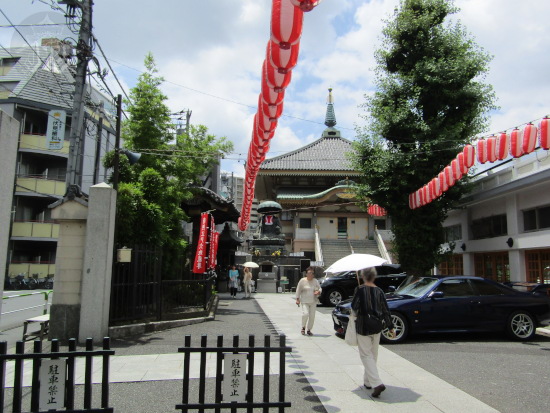
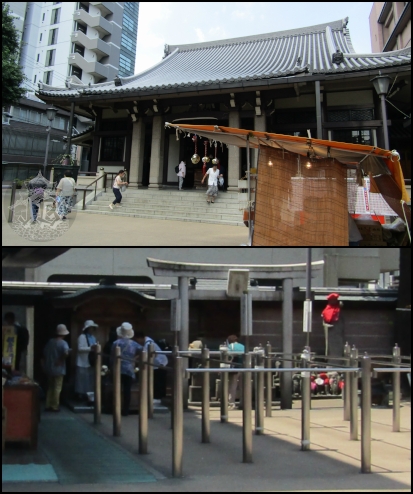
Finally I found myself at Kogan-ji [高岩寺], which hosts the Togenuki Jizo [とげぬき地蔵], which is a jizo (monk) statue. Tradition says that if a part of your body hurts, you wash that part on the monk for him to heal it.

Then I headed off to Shinjuku [新宿] (where yes, this time there was fandom shopping) and I met with D****e at the station. We went for dinner at Steak Gusto, which was okay.

11th July 2017: Ueno on the first full day is a thing {Japan, summer 2017}

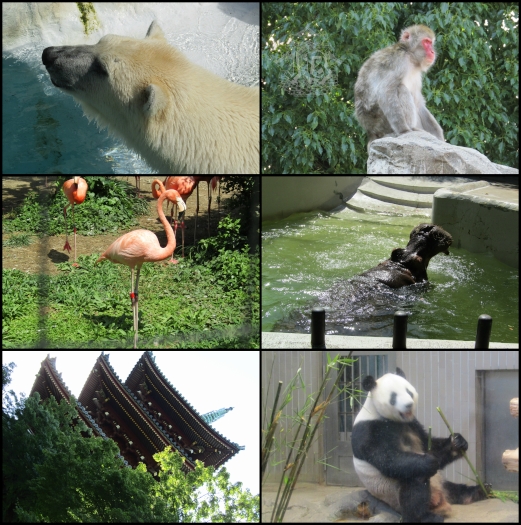
I headed off to Ueno because I wanted to wander around the zoo. Don’t ask me why, but it was what I felt like doing. First I dropped by the Shinobazunoike Bentendo [不忍池弁天堂] where I got the shuuin and I entered Ueno Zoo through the new Benten gate. The zoo had not changed much, I think, but I saw things I did not remember seeing the first time around. They have moved the petting zoo to something closed, probably to fight off the heat.

I had lunch at the zoo around 1:30 pm, then continued my way towards the upper part of the zoo. There I was observed by a bird of prey and it made me feel like food XD. I stayed at the zoo until 16:30 I did not get to see the baby panda because it is too small to be up and about.

Then I headed off to Shinjuku [新宿] which was a convenient place to meet up with D****e for dinner and an hour of karaoke. I did some shopping as I waited – and for some once, that was not (only) fandom related. I was in Kinokuniya getting myself some Japanese books (because as I passed N4 I have to continue studying). Bummer. We also stopped by a random electronics shop which had a big Yoshiki poster. That’s always nice to see.

10th July 2017: Smooth arrival {Japan, summer 2017}

And that was a first. We were on time even if we had taken off slightly late and I was downtown Tokyo at noon. Japan is ‘trying’ to make arrival more friendly and now your fingertips are taken by someone who is not security, but it’s still the same process – you arrive, they take your fingerprints, take a photo of you (without glasses) and then you go through immigration. Then you pick up the luggage and go through customs, where they may or may not open your suitcase. This time, I did not get mine open, even if I had a perfect answer for why I was there.

I had lunch with D****e, then went to her place to have a shower and change clothes and then met up with B**** for ice cream, because I was back in Japan in melting hot weather. And then I met up with D****e as I had borrowed her keys, went back home, had some dinner and crashed.

8th (and 9th) January 2017: The jump back to Tokyo… and then completely back… {Japan, winter 16/17}

At an insane hour in the morning, umbrella-less and in the middle of the rain, I got myself back to the point where buses were finally running to the airport. I dozed away the trip, because else I would have kept tying to read quizzes in Hiroshima-ben, the local dialect, that they were displaying on the bus screen.

I made it to Hiroshima airport and pulled a bunch of things off my backpack to conceal them before I got my boarding pass in case my carry on got checked, but once again the ‘I am a scary gaijin’ thing worked and I was free to go.

I was allowed to get my water bottle in, even with it being half-full, and I had a Calbee crisps breakfast because I could not find a sandwich inside, although in retrospective, maybe I should have gone out and back again as I had time. Then again, I would have had to explain that to security… never mind. So I had coffee and crisps. Not the best option, but what I had available.

When I landed and got back to downtown Tokyo [東京], I met B**** at Shibuya [渋谷] for gyoza, and boy did we eat gyoza. And afterwards she walked me to Shinjuku [新宿]to buy some stuff, and then we went to a cafeteria for cake… well, she had cake, I had a coffee jelly with vanilla which was my new favourite thing in the world. I seriously need to learn to make that.

After that there was a visit to Swallowtail in Ikebukuro [池袋], the butler café, which is as always very fun. We had a bit of a lost butler – he felt kind of new – and not the prettiest one. I noticed that they have uniformed the butlers, too, so now they are all wearing the same thing. After that we dropped by the shop and I got myself a bracelet I can’t wear because my wrist is too thin… and here I thought that I would get away with stuff prepared for Japanese girls… nope.

After that there were goodbyes and thank yous and tears because the only thing that I did the next day was going to the airport, more goodbyes, more tears. Very sad. As always.

Until next time, I guess.

Maybe.

Hopefully.

7th January 2017: Hiroshima and Oblivion Dust {Japan, winter 16/17}

I caught up the 8 am ferry and was downtown in Hiroshima [廣島] round 9.10. my first stop was the quite-impressive and down-brining A-dome. This is the building above which the atomic bomb went off, and it is very, very sobering. What impressed me the most was the bottles of water still being offered to those who had been killed by the bomb.

I strolled around the Peace Memorial park, Hiroshima Heiwa Kinen Kōen [廣島平和記念公園] for a while, but I could not stomach the museum, to be honest. So after a while I decided to be on my way. Just imagining the amount of destruction and victimisation was spine-chilling.

My next stop was the old Hiroshima castle grounds. The first thing I saw there was Hiroshima Gokoku Jinja [廣島護國神社], which was full of people doing Hatsumode (I think this was kind of a pattern all through this first week of the year. Oh, the surprise (*≧▽≦)).

After that, I continued towards the castle, Hiroshima-jo [広島城], which holds a little antique museum, and was doing a demonstration on katana-making. However, I did not get to see the blades, they were just working on the guards, which is… I mean, don’t get me wrong. Not as cool? The castle was destroyed when the bomb went off, so it has been reconstructed since then. Part of the museum was dedicated to the reconstruction of the area. On the top floor there are a resting room and an observatory.

After the castle, I decided to head off to have some food and afterwards I went to Club Quattro, which was hosting an Oblivion Dust concert. Not that I am a hardcore (or much of a) fan – as a matter of fact I had never listened to any of their songs – but the guitarist is one of the VAMPS members, K.A.Z, and I kind of wanted to check them out.

I stayed over with Ms-san (who had helped me get the ticket) and some other acquaintances to see the band come in – and we got a half-assed wave from K.A.Z – and then I stayed to buy some merchandise. Then I realised that I had a… tiny problem. I had no transport to get to my hotel after the concert \(〇_o)/ because my last bus to the airport was at 7 pm, and I had a hotel very close to that!!! Well, I could have taken a taxi, but that was mover expensive than getting another hotel and losing the reservation for the previous one. It was a stressy hour until I could get there, check in, get some food and come back, but it all turned out nicely in the end.

The concert, part of Oblivion Dust’s 20 anniversary “I Hate Rock n’ Roll Tour 2016-17”, was really fun. Even if I had not heard any of the songs before, it felt familiar, as I could relate K.A.Z’s music style to what I knew from VAMPS and the long-gone Hide with Spread Beaver to some of thee songs I was listening to. The ‘average setlist’ for the tour was the following, so it is possible that this was what I listened to:

  1. In Motion
  2. Under My Skin
  3. Radio Song
  4. Red Light Green Light
  5. Come Alive
  6. Evidence
  7. Erase
  8. Easier Then
  9. Designer Fetus
  10. Elvis
  11. Sail Away
  12. Crawl
  13. Never Ending
  14. Lolita
  15. 24 Hour Buzz ’99
  16. Death Surf
  17. Nightcrawler
  18. Sink the God

K.A.Z was quite serious and concentrated most of the concert, and he only smiled a couple of times when he was exchanging glances with Arly, who is the support drummer for both Oblivion Dust and VAMPS. Most of the time I don’t even check on Arly that much, because I’m following Hyde around with my eyes, and that is a challenge, so I think this was the first time I was ever aware of how much fun Arly has at his job.

The bass player, Rikiji, was pretty fun. Ken, the singer, has a very different style from Hyde, but I could really see some parallelisms in the way he jerked around stage and jumped up and down. At one point, the guy climbed on the stage scaffolding-like thingy, hooked his knees, let himself and sang upside-down for a while. Now, that was quite impressive.

Surprising as it might, considering that in VAMPS he has to share the spotlight with something like Hyde, K.A.Z was quite… I’m not sure how to describe it… he did not have so much of that spotlight. No much guitar twirling, not that much jumping up and down either. At one point he went all zen in the back of stage where he could barely be seen. Seriously.

After the concert I went to eat with Ms-san and one of her friends and we had a few local specialities, such as Hiroshima okonomiyaki and roasted oysters. After that we all headed back to our respective hotels.

6th January 2017: Miyajima (in eleven hours) {Japan, winter 16/17}

I was, quite literally, out from sun to sun on this day, and then when it was night I came back for more. Miyajima [宮島] is a small island in Hiroshima Bay, famous for the ‘floating torii gate’, the o-torii [大鳥居], belonging to the Itsukushima Jinja [厳島神社]. About 17 metres high, it is planted on the beach in front of the shrine, and you can walk up to it in low tide. In high tide you see it in the middle of the water. The o-torii’s upper part is around 22 metres long and hollow. It is not nailed or glued, but is weighted down by fist-sized rocks stored in the hollow area. The pillars are solid.

And to the o-torii I headed off literally at dawn, after getting a warm coffee from a vending machine. The first few minutes cough half an cough hour cough were spent around the torii as it was low tide and you could walk up to it.

After I managed to peel myself off the o-torii, I headed off to the shrine it actually belongs, Itsukushima Shrine, which is the main shrine of the island. The shrine has a famous noh stage and when the tide rises it also becomes ‘floating’. It is the biggest shrine in the area. Itsukushima Shrine is dedicated to Ichikishima-hime, Tagitsu-hime and Tagori-hime, known as the Munakata goddesses, are the deities of the ocean, traffic safety, fortune and accomplishment.

After Itsukushima shrine I ducked some deer, which abound, and are always hungry for maps and so on, and I walked down the breakwater to a little shrine named Kiyomori Jinja [清盛神社].

On my way back, I stepped on the grounds of the Buddhist temple of Daigan-ji [大願寺]. It was here where I realised that there were little stamps to be collected in the island, which is always a plus.

Then I got to Itsukushima Jinja Takaramono-kan [嚴島神社 寶物館], the shrine’s Treasure Hall, where they have a few treasures and old scrolls, armours and so on. Among them they have the ‘Story of Heike’ as well as several of the Heike family Buddhist Sutras. However, no pictures allowed. I continued on my way to the Tahoto [多宝塔] three-story Pagoda (also belonging to Itsukushima Shrine), which has a characteristic shape: it is square on the lower level and has a round shape on the upper level

From there I got to Daishoin [大聖院], another of the big Buddhist temples in the area, where I decided against hiking up mount Misen (2.7 km to the summit). The temple has a few up and downs, and it was here where I ate my karepan breakfast, around 9.30 – 10 am, I am not exactly sure. I do remember that my camera battery was already down one bar out of three.

Then I headed down and then up again to another of the low hills to the Senjokaku [千畳閣] pavillion and the Pagoda of Toyokuni Jinja [豊国神社] and the five story pagoda next to the main building. Toyokuni Jinja was supposed to be a library of Buddhist sutras – however, it did not get finished (although that has its own shuin for some reason (・□・;))

At that point it was barely half-morning I wondered whether to head downtown to Hiroshima, because high tide was only at 3 pm, and I really wanted to see the half-submerged torii, but I did not really know what to do. And no idea what got into me, but at that point I changed my mind and decided to go up Misen [弥山], the “island mount”. I actually decided to take the Miyajima Ropeway [宮島ロープウェー]. I crossed Momijidani Koen [紅葉谷公園], which is full of deer, and probably amazing when it is in full red, and took the ropeway from the park to Kayadani Station [榧谷駅] first and to Shishiiwa Station [獅子岩駅] then, about half an hour away from the summit. From there I took a few pictures and then decided to make my way up.

At that point I was not really thinking about getting to the summit (535 above sea level, and we’re talking 0 to 535 metres for real), but to Misen Hondo [弥山本堂] which is the temple where the ‘eternal flame’ was originally lit by a meditating Buddhist monk hundreds of years ago. The Peace Flame from Hiroshima was lit from here. There were two secondary halls, Sankido [三鬼堂] and Dainichido [大日堂].

But after Misen Hondo, I was ‘so’ close to the summit that it would be a pity not to finish the deed. That way, I could go up one route and down another one in order to see more things. On my way up and from the summit the sights were impressive, although it was a bit tiring. And a bit means a lot…

I think that at some point I considered using the ropeway down but time-wise it was going to be the same and walking down could be cheaper and would get me to see more stuff, such as Miyama Jinja [御山神社]. And I did not break my neck on the long hour and a half of hike-down, either. A greater plus.

All right, what time do you think I made it down? Not even 3 pm just yet, but as I had seen from halfway down the mountain, the tide was already up. Therefore I was able to see the floating o-torii, which was a high moment for me. The problem was that I was almost running out of battery in my camera already, and there was sunset to come! On my way around the bay I ate a very overpriced yakitori, but I was hungry and since Miyajima is ‘World Heritage’ it really does not have convenient stores.

And thus, when I went towards the aquarium, Miyajima Suizokukan [宮島水族館]. I decided to take all my pictures with the phone over there to save camera battery for the sunset pictures. That it was awfully cold at that moment had nothing to do with my decision, of course and walking into K.A.Z. absolutely never ever crossed my mind either.

After the aquarium I was distracted by Omoto Jinja [大元神社], which was full of deer. Praying, I’m sure. There were baby deer too, being bullied cute but for some reason (probably lack of battery) the pictures did not come out.

Then I headed back to the o-torii area to watch it in the sunset and took pictures until I had no more battery on any device.

Once batteries were dead and the sun was too low, so I headed back to my ryokan to recharge – in every sense of the way, as it was after 5.30 pm. On my way back I bought a local speciality – ‘fishcake’ which in my case was shrimp because I did not dare try the oysters. It was yummy. Before going to the hotel, I got myself some groceries to recharge my own batteries and have dinner later.

I spent some time resting, charging all the devices and writing down notes on everything I had been doing during the day, and then, at around 9 pm I came back out again to take pictures of the shrines and o-torii at night.

After that, dinner, shower, bed, and early check-out the following day in order to head down to Hiroshima, after very intense 11 hours running up and down Miyajima. Take that, nine hours in Kyoto.

5th January 2017: Narita squared, and a jump {Japan, winter 16/17}

I had a flight around 5 pm, not back just yet, but down south for my little excursion to Chūgoku. I headed out at 8 in the morning and missed my first train because stupid Google got me to the wrong station. Fortunately, I had a following train which still allowed me to make my final connection. Not making that would have sucked because I only had one train per hour to get to where I was going – which was the town of Narita, not the airport. But I was able to get the right train and I arrived in Narita [成田] (the town) at around 10.30 in the morning. my plan was visiting the complex of Narita-san [成田山], which holds the temple of Naritasan Shinshoji Temple and the Daikini Tendo Shusse Inari Shrine.

What I was not counting on was that a bunch of people were still going to be in Hatsumode-mood, and the area was the next thing from packed.

The lead-up to Narita-san complex is flanked by a bunch of souvenir shops and eateries, and two rows of little sculptures of the Chinese zodiacs – and one turtle, but the picture for that came out blurry (´;д;`)

Naritasan Shinshoji [成田山新勝寺] is a temple composed of several buildings and as mentioned it was quite full. That is why I did not manage to get all the shuin, but all in all it is quite a neat is place. However, I would like to see it when it is not this full (and the fact that I still have one shuin to get gives me the perfect excuse).

The other key building in the complex is Daikini Tendo / Shusse Inari Jinja [咤枳尼天堂 / 出世稲荷神社], the shrine of the white kitsune, where people were buying offerings to the fox in order to get favours from him, such as good luck in businesses.

The gardens were a good example of how things would work if it were less packed.

At around 2.30 pm I headed back to the station first and from there I caught a train to Narita (airport). My 5.20 pm flight departed from terminal three, which is the domestic low-cost terminal, and that was a bit of an experience. I have to say that I was awfully lucky because I was the scary foreigner and my bags were not checked, because I was for sure over the five-kilogram limit on my carry-on luggage.
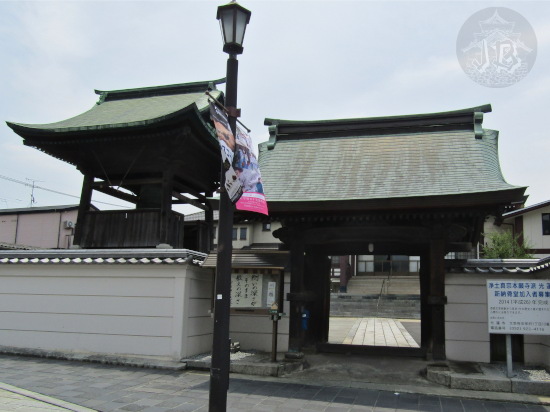
I slept through my whole flight and I arrived in Hiroshima Airport a bit before 8 pm and I train-hopped towards the harbour to get on one of the last ferries to Miyajima [宮島], a place I had been wanting to visit since my first time in Japan. I had booked a nice little ryokan (traditional) room and I have to say I slept like a rock.

4th January 2017: Takao-san, the tengu mountain {Japan, winter 16/17}

For some strange reason I got into my head that I wanted to go to Takao-san [高尾山], a mount not too far away from Tokyo, in the city of Hachiōji [八王子]. From the summit of this 599-metre mount you get pretty sights… if the weather is clear. Which of course, was a no-go. D****e decided to tag along, so off we headed to “climb” a mountain – more like hike it up and then down.

There are different routes or trails to go up and down Takao-san. The “easy” route (trail 1) is paved and is the most walked. You may either hike it up completely or take the ropeway halfway. D****e hiked while I struggled my way up.

Mount Takao is said to be the dwelling place of Tengu and Daitengu, and about three-quarters up there is a Buddhist Temple, Takaosan Yakuōin Yūkiji [高尾山薬王院].

From the top of the mountain we got to guess Mount Fuji Fuji-san [富士山]. But it was there, and I have proof, albeit it has been a bit ‘enhanced’… Sorry that it does not look any natural, but here you have the original and the manipulated image:

Coming down Takao-san, we took trails 6 and 4, because D****e wanted to do the suspension bridge, because… reasons that I shall never understand. (Un)fortunately, we did not run into any tengu or related yōkai. On the bright side I did not break my neck \(≧▽≦)/. That is always a plus. Oh and we ate warm dango.

After that we met up with B**** for some karaoke and later on D****e left while I went off with B**** to have some quite amazing sushi down in Shinjuku [新宿].

3rd January 2017: Seven Lucky Gods, and a ship, Pilgrimage {Japan, winter 16/17}

As part of the shrine and temple visiting on the first days of the year there is the chance to do a “small” peregrination around several of them for luck – the whole thing is called the Shichifukujin Meguri [七福神 めぐり]. Together with D****e and Sh-san I set off to visit the Seven Lucky Gods of Minato-ku in their respective shrines and temples. Oh, and their ship.

The Seven Gods of Fortune or the Seven Lucky Gods, Shichifukujin [七福神, ] are a group of deities from different origin (India, China, and Japan itself). It is said that on New Year’s Eve the seven gods touch port in their treasure ship Takarabune [宝船] to bestow happiness to humans. The Seven are worshipped in a group, and there are a few temples that enshrine all ofthem together. However, in Minato-ku the Gods and their ship are scattered amongst a seven shrines and one temple. Visiting the Seven Gods of luck will bring you luck for the year (you can read all about the Seven Lucky Gods over at Buddhism & Shintōism In Japan A-To-Z Photo Dictionary Of Japanese Religious Sculpture & Art).
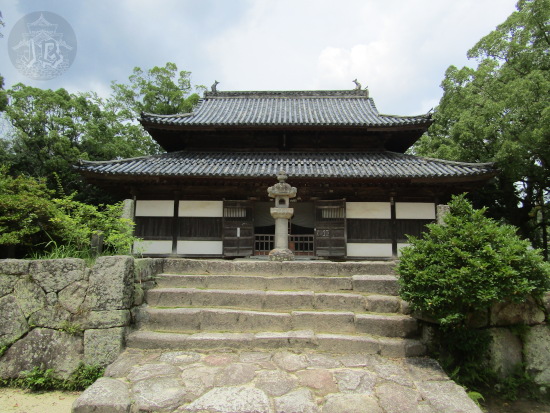
The Gods and Shrines/Temples in the order we visited them are:

  1. Benzaiten at Honjō-in [本成院]. Benzaiten [弁才天 / 弁財天] is the Goddess of the Arts and her virtue is Amiability. She is originally from India.

  2. Ebisu at Kumano Jinja [熊野神社]. Ebisu [恵比寿] is the God of the Ocean and his virtue is Fairness. He is originally from Japan.

  3. The Takarabume [十番稲荷神社] at Juban Inari Jinja. The ship carries all the attributes belonging to the Gods, and it is where they come to bring happiness.

  4. Daikokuten at Daioji [大雄寺]. Daikokuten [大黒天] is the god of the Earth and his vortue is Fortune. He originated in India.

  5. Bishamonten at Hikawa Jinja [氷川神社]. Bishamonten [毘沙門天] is the God of Treasure, and his virtue is Dignity. He comes from India.

  6. Jurōjin at Sakurada Jinja [櫻田神社]. Jurōjin [寿老人] is the god of Wisdom and his virtue is Longevity. Originally, he comes from China.

  7. Fukurokuju at Tenso Jinja [天祖神社]. Fukurokuju [福禄寿] is the god of Wealth and his virtue is Popularity. He originally comes from China.

  8. Hotei at Hisakuni Jinja [久國神社]. Hotei [布袋] is the God of Contentment and his virtue is Magnanimity.

In-between the gods, we had lunch at a very good yakiniku place in Roppongi [六本木].