22nd July 2019: Tokyo Shinagawa → Higashimaya Kyoto {Japan, summer 2019}

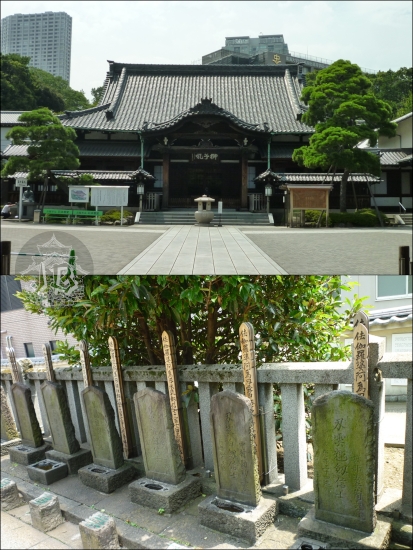
My Shinawaga hotel was very close to Sengakuji [泉岳寺], the temple that honours the forty-seven ronin so I paid them a visit before I moved on.

The reason why I was in Shinagawa was being close to the station as I was heading off to Kyoto. I took a shinkansen around 9 am and was in Kyoto just before 11, maybe. From Kyoto station I walked to Nishi-Hongwan-ji [西本願寺], which was about 10 /15 minutes away. It had been on my list since I went to Higashi-Hongwan-ji last year, but I had to go get some rest afterwards because I had a migraine.

As I was heading back towards the station I came across a building that really grabbed my attention. A little research yielded to finding out that it is a temple: Dendou-In [伝道院], which apparently belongs to Nishi-Hongwan-ji and is a research building. It was designed by a famous architect called Itō Chūta in 1912 in a style called “Evangelical”, and built shortly after. It’s not open to the public though, but it sure as hell is interesting.

After that I took the underground to my hotel. It was raining like crazy when I got there, and to make things more difficult, my bloody credit card decided to stop working. This made me slightly late to my 13:00 appointment at Studio Esperanto Oiran Taiken [studio-esperanto 花魁體驗]. Things were a little different this time. First of all, because I was just in time for appointment, I was directly ushered to the make-up room. Fortunately I had quite a clear idea of what I wanted, so it sort of worked in the end. The make-up artist was nice but she was a bit intimidated, and the photographer was difficult to communicate with, which hampered the experience a little. In the end, however, I got really cool pictures out of the experience, so I am not going to complain.

By the time I got out, there was a deluge outside. I was in the hotel, which was close to the photography studio, for a little, and after checking the maps that they had given me at reception, I realised that I was much closer to the Gion area than I – and Google Maps – had actually thought. There was one big park / shrine complex I could walk. At least part of it is called Maruyama Koen [円山公園] and it has a cool pond. I walked from the north entrance to the western exit, which belongs to Yasaka Jinja [八坂神社], the Yasaka Jinja Minami-romon [八坂神社 南楼門], the Tower Gate. I passed Gyokkō Inari Yashiro [玉光稲荷社] on the way.

I walked off to Gion, [祇園] which was almost empty due to the storm. Whenever I get to Gion in the evening, I always check whether there is a long queue at Gion Corner, which is a theatre that performs “traditional arts”:

  • Tea Ceremony [茶道]
  • Flower Arrangement / Ikebana [華道]
  • Koto [箏]
  • Gagaku [雅楽] Court Music and dance
  • Kyogen Theatre [狂言] (comic play)
  • Kyo-mai [京舞] (maiko dance)
  • Bunraku [文楽] Puppet Theatre

I was lucky this time, as the rain had scared most tourists away, so I could come in. It was a fun thing to do once, especially with “foreigner discount” it becoming half-price, but the audience kept talking and moving around the floor to take pictures and videos. Thai and Chinese people are loud (and a few of them rather disrespectful)! But all in all, I’m happy I got it out of my system, particularly the Kyo-mai dance.

After that, as it was not raining any more, I strolled down an almost-empty Gion.

Then I walked off towards an area that I had never been able to find before – Gion Shirakawa [祇園白川] and Tatsumi Bashi [祇園 巽橋]. Fortunately this time I had checked for the Tatsumi Bridge location fist, so it was not even that hard! I just had to know where to look for it! (≧▽≦).

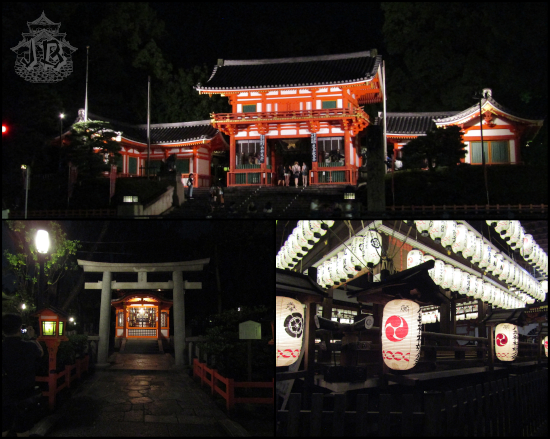
I decided to take the way back through the park, so I could see all of Yasaka Jinja [八坂神社] lit up, which was very pretty.
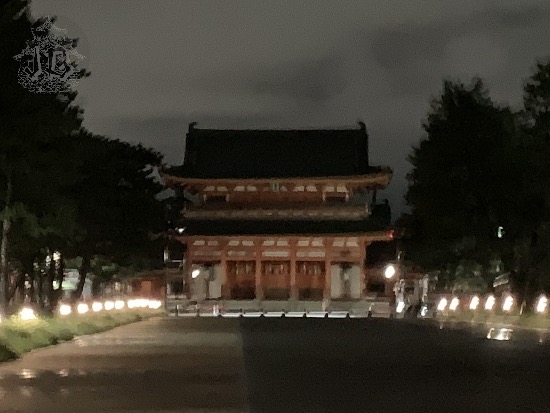
As the hotel was also next to Heian Jingu [平安神宮], but as it was not lit up, I did not walk in.
Then I bought some conbini food and I went to the hotel to have dinner and a bath – the hotel had a hot spring public bath (and it was empty! Just for me!). I was lucky enough to get one of the traditional rooms, and the sand-puffs-like thingies were super-comfortable… until I had to stand up. It was so comfy I could barely stand up! And then I went off to sleep like at 10pm cause I was beat (∪。∪)。。。zzz.

Walked distance: 18517 steps / 13.2 km

13th August 2014: Samurai vs. Kaiju {Japan, summer 2014}

We started the day in Asakusa [浅草], which would be one of my favourite places in Tokyo if it was not so crowded all the time. This time not only I wanted to visit the main Sensōji [浅草寺].

The Sensoji temple in Asakusa, whose most prominent feature is the huge red paper lanterns

I also wanted to check out the smaller protective Shinto Shrines on the side, like Asakusa Jinja [浅草神社].

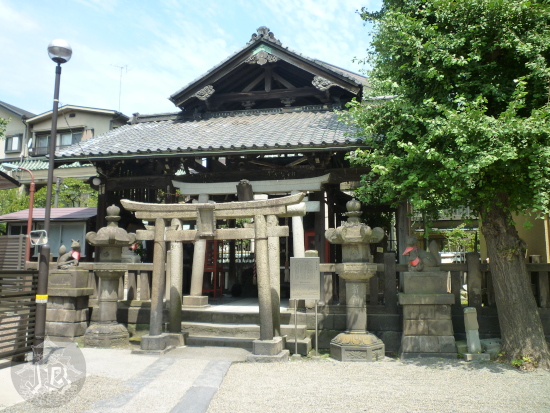
Small shrine with two stone torii, two stone lanterns and two fox statues flanking them

The second temple of the day was Sengakuji [泉岳寺], close to Shinagawa [品川]. The name does not really ring a bell by itself, but Senkakuji is also known as the Temple of the Forty-Seven Rōnin, as here is where all of them are buried. The Buddhist temple itself is nothing special. It has the graveyard where the samurai are buried, and a small museum attached where you can see a replica of the drum used in the attack, along with pieces of armour and one copy of the declarative letter that they wrote. Another part of the museum holds wooden statues for all of them.

A Buddhist temple, and a row of gravestones with the names of some of the 47 Ronin

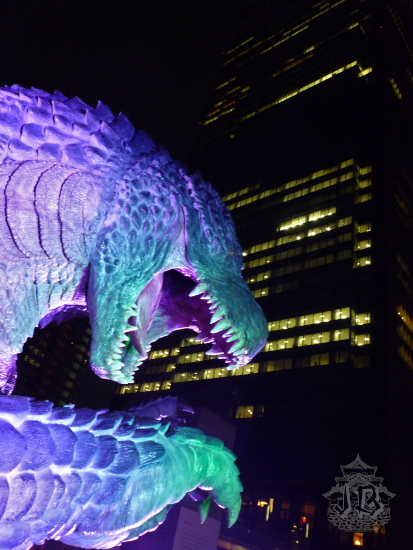
After having lunch in Shinagawa (in a… Mexican… kind of place called “El Caliente”) we headed off to Roppongi [六本木] to see Godzilla. Not the movie, but the sculpture that has been planted in Tokyo Midtown [東京ミッドタウン]. As a matter of fact, it was a very Godzilla [ゴジラ] summer in Tokyo. The Godzilla visit was done in two parts, one before sunset and one after it had gotten dark.

Godzilla coming from the ground, roaring

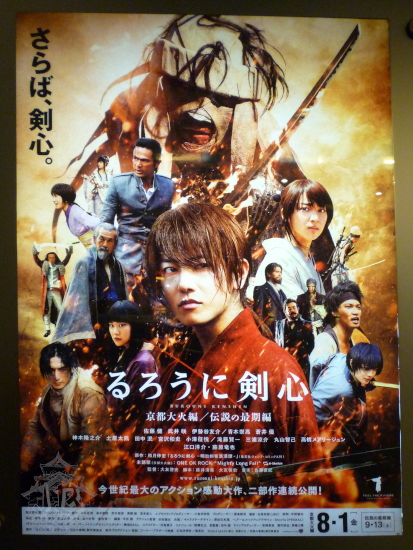
The two visits to Godzilla were separated by horrible horrible American food (I shall never willingly set a foot on a “Wendy’s” again) and going to the cinema to watch “Rurouni Kenshin – Kyoto Inferno”, the second instalment of a movie trilogy based on the manga of the same name.

Poster of the movie. It shows a man dressed in red traditional clothes, with an X-shaped scar on his cheek. Behind him, minor characters and the antagonist, covered in bandages.

Oh, and before we got back to Godzilla, we saw a gazillion and a half of Doraemon [ドラえもん] underneath Roppongi Hills [六本木ヒルズ], and pictures were taken with them.

A lot of people-sized Doaemon in different poses. Doraemon is a cartoonish ear-less blue and white cat

And here Godzilla tries to eat stuff (there are many good restaurants underneath Tokyo Midtown anyway):

A close-up of the Godzilla statue at night, lit purple and blue, and looming on a skyscraper

27th December 2013: The Terracotta Army in Madrid (Spain)

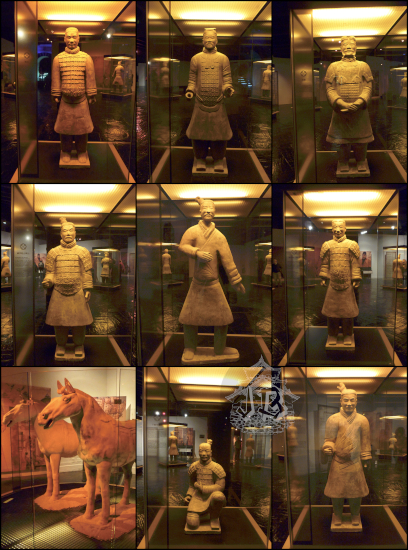
This was a bit of an unplanned event. I had been in Madrid the previous day with a friend and we had seen that the exhibition was going on. Unfortunately, there was a huge queue to go in, so we could not stay. Instead we got tickets on the internet and chose a standard “lunchtime” hour so we were almost alone watching the exhibit. That was awesome. The exhibition was held in the Fernán Gómez Centro Cultural de la Villa underneath Plaza de Colón (Colombus Square) in Madrid.

The Terracotta Army is called the Eighth Wonder of the Ancient World. It was discovered in 1974 close to the city of Xi’an (Shaanxi Province). It is comprised by hundreds of larger-than-life soldier statues built out of terracotta. They are part of the Mausoleum of the First Qin Emperor, the first emperor of China. There are over 8,000 soldiers, 130 chariots with 520 horses, aside from 150 cavalry horses. There are different types of soldiers and they have different ranks. Their function would have been to protect the Emperor from the spirits in the afterlife. Forty thousand bronze weapons have been found among the soldiers. For reference, they were buried with the Emperor around the year 210 BCE!

The Exhibition “Terracotta Army – Guerreros De Xi’an” displays about 150 replicas of the best-preserved soldiers, weapons and chariots, along with different decorative elements and a reproduction of the Pit 1, where the bulk of the warriors were found. It was a very interesting exhibition that made me actually want to travel to China to see the actual Mausoleum for real!

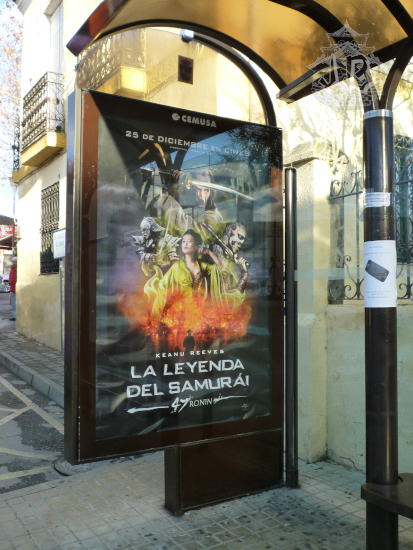
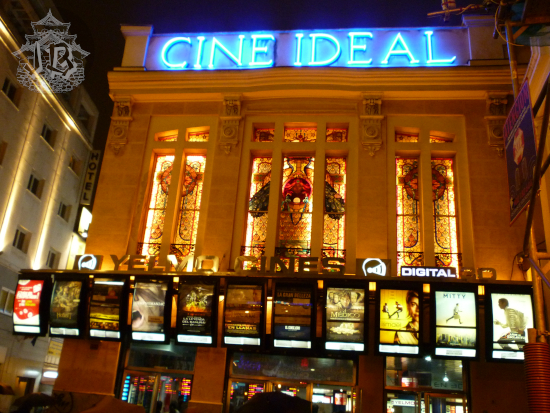
Afterwards we had tickets for the cinema, because “47 Ronin” was running, and the Cines Ideal show non-dubbed films, and basically… there was Akanishi Jin in it. The films has its… merits… somewhere… I mean I loved it but it was pretty bad – I’m not precisely known for liking deep, intellectual films anyway (≧▽≦).