14th May 2024: Three Museums and Tea, Madrid (Spain)

On a whim, I put together a plan for Tuesday, as it is currently my free day. I was too lazy to drive, so I decided to catch a train to Madrid. There was a temporary exhibition I wanted to check out, and it was close to several museums and eateries.

My first idea – breakfast at a French crêperie – went bust, because the place was still closed when I arrived in town – I swear, this is like the fourth time I try to have something there, and it just won’t work. Instead, I ended up at a Starbucks for breakfast, before heading out to my first destination – the exhibition The Art of Manga, held in the Architecture Bar Association building Colegio Oficial de Arquitectos de Madrid, COAM. The Art of Manga is a small exhibit that runs through the history of manga – Japanese comics – with a few snippets of what it was and what it has become, especially in Spain.

The entrance was a sort of tunnel with manga sheets hanging from the ceiling. It ended at a traditional scroll with animals acting like people – Chōjū-jinbutsu-giga 鳥獣人物戯画, which translates to “Animal-person Caricatures”. Some people consider that this is the origin of manga (note the “ga” at the end), though if there is one thing that the exhibition makes clear, it’s that nobody knows when manga actually started. Thus, it just runs through all the possible theories and important names. From the Edo Period, there were a few wood prints (ukiyo-e) – which are claimed to be original – among them two by Katsushika Hokusai [葛飾 北斎], The Great Wave off Kanagawa [神奈川沖浪裏, Kanagawa oki nami-ura] and Fine Wind, Clear Morning [凱風快晴, Gaifū kaisei]. Hokusai is another of the supposed starts (“the father”) of manga. There were also a few toba-e [鳥羽絵], similar to the first scrolls – for the first time in the evolution of drawings, there was text alongside the art. Then came the books, where texts dominated – though there were still drawings – and they became extremely popular during the period.

With the end of the isolation of Japan, Western influences – mainly comics – influenced local artists, and “speech bubbles” appeared. In the late 19th and early 20th centuries, Kitazawa Rakuten [北澤 楽天]’s works were published in newspapers. He is (also) considered the father of modern manga, and several of his works are displayed. There are also early 20th-century scrolls, painted in a style similar to toba-e depicting the Tokaido Road, which separated Edo (old Tokyo) and Kyoto, and its checkpoints. There were also kamishibai [紙芝居] cards – kamishibai is a traditional form of theatre involving telling a story using a narrator and different “postcards” with images drawn on it.

In the middle, the exhibit had a rock garden, and a torii gate with a lot of lanterns gave way to the second part – modern manga. Here there were pieces and mementos from famous artists and works – Osamu Tezuka [手塚 治虫], known as “The god of manga”, and one of the driving forces of anime. According to the exhibition, they were showing all of his works. There was a bit about Shigeru Mizuki [水木 しげる], and big international hits like Sailor Moon, Naruto, Dragon Ball and One Piece. After a screen showing a video about a cosplayer – which I did not care much about – there was a section on manga magazines, some of the early manga published in Spain, and a stand where you could get some stamps.

Snaps from The Art of Manga Madrid

Finally, there was a bit on merchandising and figurines. The shop did not even have a catalogue, which I would have bought. All in all, it was all right, smaller than I had expected.

Then, I went to the nearby museum of the Romantic period, where I got a national museums card – I’ve been wanting one for a while, but unfortunately you still have to queue to use it. I had hoped you could just walk into museums with it, but I guess crowd control is a thing since Covid. Anyway. The Romanticism museum, Museo del Romanticismo is a small palatial residence which tries to recreate the ambience and atmosphere of the dwellings of the bourgeois families at the time. It had a lot of nice furniture, similar to the one in Riofrío, but I found it lacked on the landscape paintings I like. The museum is currently exhibiting an early painting by painter Francisco de Goya, a Pietà.
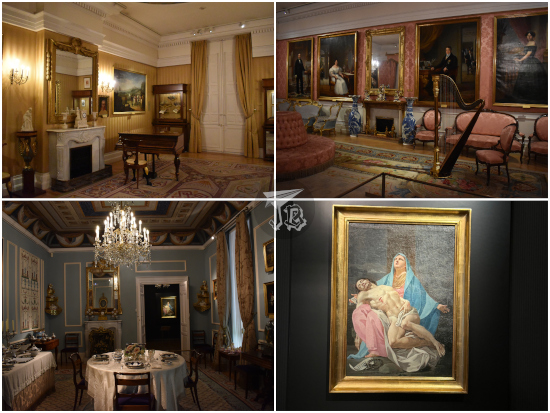
Museo del Romanticismo Madrid

Afterwards, I headed out to line for the Sorolla Museum Museo Sorolla. I had to queue for nearly 40 minutes, but I was finally admitted in. Joaquín Sorolla (1863 – 1923) was a generally-impresionist painter (impressionist, post-impressionist and luminist) from Valencia. The museum was built in the artist’s own house, completed with some of his iconic artworks, including Paseo a orillas del mar, Walk on the Beach, and El baño del caballo, The Horse’s Bath. Sorolla excelled in portraits and landscapes, especially the sea side, and social criticism. He was a master depicting light, water, and the combination of both. He became one of the most important Spanish artists of his time – and probably the most famous. He participated in the Paris Universal Exposition of 1900, and was invited to exhibit his art in New York City.

Furthermore, there was a current exhibition called Sorolla in 100 objetos – Sorolla in one hundred objects – which had just opened to the public. It included personal items the artist collected, – some a bit bizarre–, photographies, his passport, the last painting he worked on, the medal he received from the US president, a photograph of his studio in Italy…
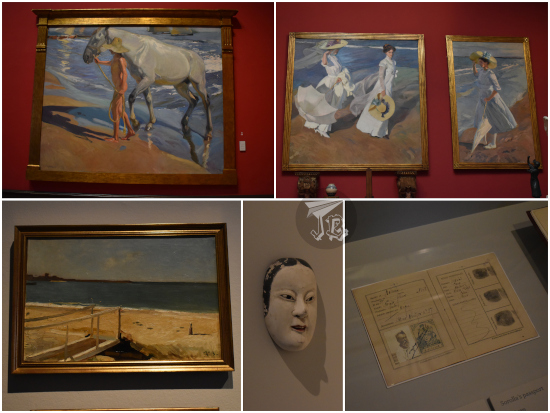
Snaps from Museo Sorolla

I then went off towards the archaeological museum Museo Arqueológico Nacional. I used to love this museum – when they remodelled it and they made it all modern and aseptic, it lost most of its allure. Of course, I still enjoy it, as the important items are the exhibits, and the museum has a lot of important items from the Celtiberian cultures – Celts and Iberians inhabited Spain before the Roman conquest, which started in the 2nd century BCE. Iberians were prevalent in the east and south of Spain before their arrival. The north and west were populated by the Celts, and there was a vague area in-between whose people have been called Celtiberian. the Talaiotic culture flourished in the Balearic Islands, and it has recently been declared World Heritage. These cultures were eventually assimilate by Romans, but Celts lived on elsewhere. Iberian and Talaiotic cultures, however, diffused with time. Today, there is little known about it, and most is just interpretation from archaeologists, even less about the more ancient tribes that lived in the areas during the Bronze Age.

Among the objects from pre-Roman Spain, there are mysterious steles from the late Prehistory. However, it is the Iberian funerary art which stands out the most – such as the bust called the Lady of Elche, La Dama de Elche, found in the town of the same name, and the full sculpture named the Lady of Baza La Dama de Baza. Both are fantastic, to the point that it was thought they were Hellenic for some time. Other items include bulls – both metal cattle heads with wide eyes, and vaguely-shaped stone sculptures, verracos. I remember going to the museum when I was little, and the importance of these bulls, called “Bulls from Guisando” Toros de Guisando was drilled into my head, to the point that I thought that the ones exhibited there were the only ones – it also made me sad that they were in the museum and not in the field where they had been found. I was petrified when I learnt, years later, that there are a bunch more…

The museum also hosts a nice collection of Moorish art, and what apparently is a special Egyptian exhibit, as Spain worked with Egypt during the 20th century, and got a lot of objects from that excavation from the Egyptians “in the split of the new discoveries”. I am not sure whether that’s accurate, or the story has a lot of make-up on. I had to leave around 16:15, but as this museum is also covered by the national museums card, I can come back any time within the year for free. I skipped most of the Medieval period.
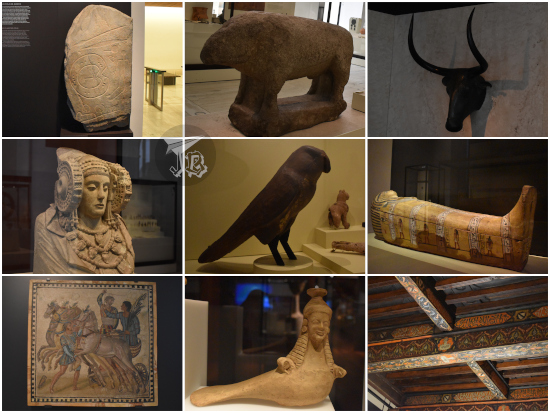
Museo Arqueologico Nacional Madrid

I had a reservation for afternoon tea a few minutes away from the museum, at 16:30 – I might be doing a bit of a rally around all the places in Madrid which have it. This time around, I went to El Jardín de Orfila – and good thing I had decided to only have breakfast and skip lunch and go straight from breakfast to tea. I was seated in a lovely outward area and I chose a delicious green tea with cherry. The food was plenty – finger sandwiches: pastrami, salmon and cucumber and cheese cream; macarons, carrot cake, meringue, and scones, along with clotted cream and berries jam. It has probably been the best afternoon tea I’ve had in Madrid up to date. The scones were a bit under-baked though.
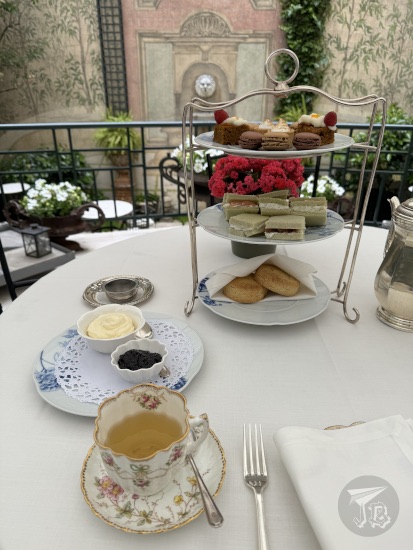
Afternoon tea at El Jardín de Orfila

I was alone in the outer area for most of the experience, the waiter checked on me once after bringing my tea. It was actually so calm and quiet that I had a visitor – a little house sparrow (Passer domesticus) was very interested on the remains of my scone, so I shared with her. She was happy after two crumbs, and left – or maybe it was because another couple walked into the area.
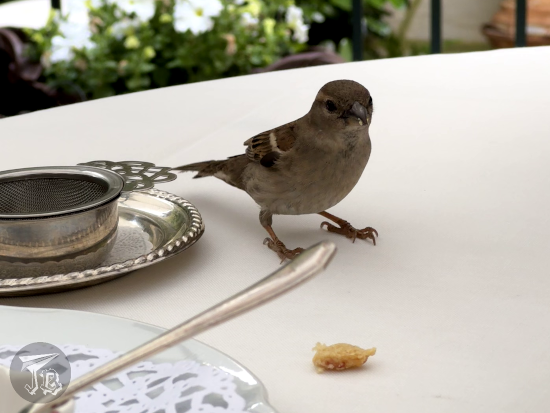
Sparrow hopping towards a scone crumb

I left a bit before the two-hour timeslot was up so I could catch a timely train home – and because the couple came in, talking loudly, and kind of broke the spell.
9th August 2019: Pretty lights, 2019 Edition {Japan, summer 2019}

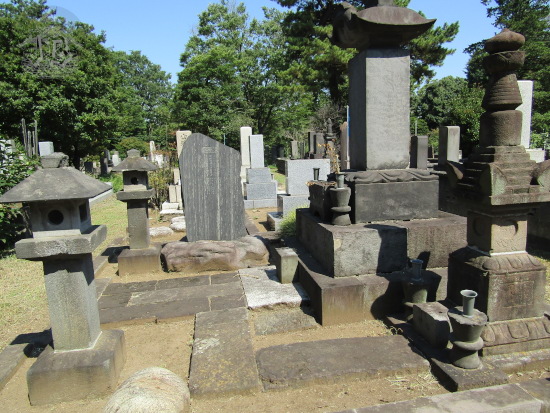
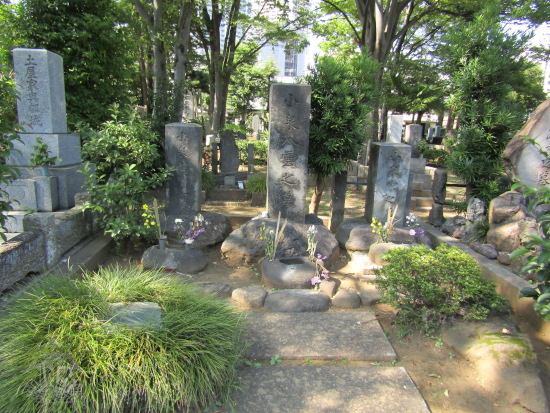
That morning I headed off to Ikebukuro [池袋], on my way to find one of the most important Tokyo [東京] graveyard – Zoshigaya Reien [雑司ケ谷霊園]. I wandered the graveyard for a while – it was damn hot.

However, there was one particular grave I was interested in, the restplace of Lafcadio Hearn / Koizumi Yakumo [小泉 八雲], the 19th Century collector of ghost and mythology stories.

I decided to walk out the opposite direction from which I had come in because I wanted to see a park. I did not find it, but pretty much walked into Otori Jinja [大鳥神社] (and discovered a new stamp rally I should attempt at some point).

I continued on my way towards the station and sort of accidentally walked past Honnōji [本納寺].

And then this little guy drew my attention and I entered Zoshigaya Mimizuku Park [豊島区立雑司が谷みみずく公園].

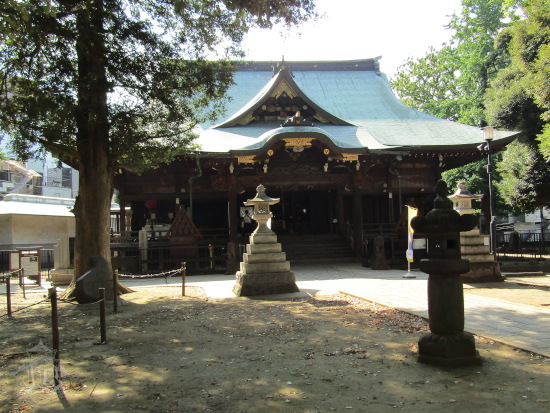
The park holds Takeyoshi Inari Jinja [武芳稲荷].

And Kishimojin [鬼子母神堂] (which I saw before / later in Gokusen 2005 and I right about died laughing).

Afterwards I headed to Roppongi [六本木] to meet with M***chan and D****e for Chinese at Tokyo Midtown [東京ミッドタウン], and later we walked through the Midtown Loves Summer light festival.

Walked distance: 18686 steps / 13.3 km.

21st July 2019: More Kawagoe. 戦国時代-The age of civil wars-: アコースティックライブ&CDサイン会 {Japan, summer 2019}

Sengoku Jidai -The age of civil wars- [戦国時代-The age of civil wars-] is a visual kei [ヴィジュアル系] bandthat has been active since 2017. It is formed by four members – Kz, the leader on guitar and back-up vocals, Nao-A on main vocals, S.N.D on drums and Date on bass. “Sengoku Jidai” refers to a time between the 15th and 16th century, when samurai clans fought almost continuously for dominance. In a wink to that, the members don samurai-like clothings and sometimes masks. Thing is, we’ve come across two of these people before – S.N.D is Junji, and Date is Ju-ken, both of whom we’ve seen with GACKT and VAMPS. I’d been trying to avoid the band quite actively because I know that I would like them a lot and I have to start controlling the number of artists I support.

I’d been following bassist Ju-ken on social media since I got one of his picks at the Barcelona VAMPS concert, and that was how I found out about this whole thing. Not long before my trip, Sengoku Jidai released a new song, Yotogi no Hana [夜伽の華]. It sounded nice, so I went down the YouTube rabbit hole first, and then ended up on the webpage. Over there, I found out that there was a free event in Kawagoe [川越] as part of the new single promotion. And that is why I decided to head over there and try to attend. The event consisted of a “midsummer summer acoustic live”, called Sengoku Jidai – The age of civil wars –: Manatsu no Accoustic LIVE [戦国時代-The age of civil wars-: 真夏のアコースティックLIVE] and a CD sain kai [CDサイン会], which is basically a “meet and get an autograph”. From 11:00, fans had access to a booth to buy a number of CDs of the last two singles: Yotogi no Hana [夜伽の華] and Sengoku Enka [戦国演歌], my favourite. You could get as many signatures as CDs you bought. The band would hold a small concert at 14:00, after which you could shake their hands and get your CDs signed, one single at a time. When you bought the CDs, you also got one number to access the “restricted” area for the concert, though anyone around could watch, even from the upper floors of the mall, and you were guaranteed a seat.

The event took place on the lower floor at the Kawagoe Pepe shopping centre. The mall opened at 10:00, and I got there around 10:15. To be honest, I was a bit uncomfortable queueing alone in a completely unknown fandom, having to deal with everything in Japanese. But I told myself it was a rare chance to get to do something like this, for free on top. So after hiding in the bathroom for a few minutes to gather my courage, I went to the queue, where a few people were already waiting. I got a couple of weird looks but mostly I kept to myself and no one bothered me.

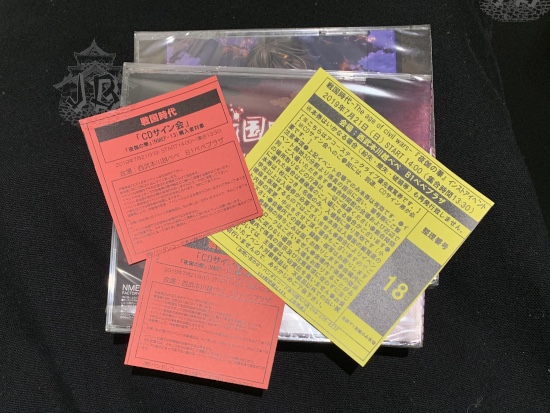
The staff arrived not much later. They they built the booth and put up the notices of what was going on. They also brought the CDs and the flyers in. After they opened at 11:00, I got a CD of each of the singles, and I was out of the queue by 11:15, with the CDs and my numbered ticket, sporting #18. The staff must have given around 200 numbers or so before the live started.

Admittance to the concert (one, printed in yellow with number 18 on it) and the Meet and Greet (two, printed in black)

In between the two parts of the event, I made a little escapade to Kawagoe [川越大師]’s Seiya-san Muryōshuji Kita-in [星野山無量寿寺喜多院], which is a Buddhist temple dating back from the 830 AD. It is noted for its hall and its pagoda. It also has a small graveyard with “the five hundred disciples of Buddha”. I was not sure whether last time I had actually been there or not, because I arrived by my almost-trademarked method of getting lost, so I wanted to make sure, and I had a bit over an hour to kill – it was the same place indeed.

After walking around the temple for a while I went back to Pepe for the second part of the Sengoku Jidai event, the live / sain kai. The area of the shopping centre got closed off with tape and “doors” opened at 13:30. The staff had even prepared three lines of chairs, and at the appointed time they started calling the numbers out. Since the instruments were already on the small stage, we knew who would be sitting where. I choose a seat on Ju-ken’s side – the instruments were already on the stage, so it was easy to decide where to sit. As we came in, we were given a little sheet of paper to write what we wanted the band to talk about. The restricted area filled up quickly with all the fans who had bought CDs,and so the live started early, around 13:45. The acoustic was very interesting – I had never been to one, except for a couple of songs at the VAMPS’s Beast Party. This one was also an unplugged.

The live had two songs, a talk session, and two other songs. It lasted for about an hour. The band picked up topics from what the fans had written to talk about and answer question, and there was a lot of teasing among them. They talked about the summer, what they liked doing, what they have been up to, including solo activities and summer festival. They were quite chatty, except for Ju-ken, who plays a persona called “Date” and never speaks – he is very strict and serious – so he just explained, via gestures, that he went fishing. The whole persona thing will be important later. There were quite a few people watching “from the sidelines”, – looking over the balconies from the upper floors, and they received a lot of attention, as prospective fans. The actual live was free, you only had to pay if you wanted an autograph, and the price of the CDs was the standard 1500 ¥, so it was a good promotion strategy. The selling booth remained open for the whole live, and even the later signing session, and it actually worked because some curious did decide to get an autograph.

The songs played were Yotogi no Hana [夜伽の華], Sengoku Enka [戦国演歌], Sengoku Ondo [戦国音頭], which is their “introductory song”, I think Tennyo monogatari [天女物語]. During Sengoku Ondo, Nao-A asked us to stand up and dance / do the furutsuke with him – and then he messed up! I was so confused!

There was a bit of chaos when it was the turn for autographs. I almost lost my nerve again, but I had made it this far. I let the most dedicated fans go into the queue first, and I made my way slowly, rehearsing what I wanted to say – in Japanese. The first one to see me was drummer S.N.D / Junji, whose eyes went wide – he has no poker face at all and completely went (O_O)!, wondering what a white person was even doing at their event, I guess. He asked if I was okay with Japanese and I answered that I was okay with simple language. Then, I informed him that I was the foreign factor representation. Then I got Ju-ken / Date – I told him about having his pick from Barcelona. His eyes went even wider than Junji’s. He broke character completely, grabbed my hand and shook it vigorously, as he repeated “sank you, sank you, sank you” (some Japanese people just can’t do the TH sound and substitute it with an S). Kz was equally surprised to see me around and he asked where I was from. Finally, Nao-A hid his surprise better, and he acted quite cute and friendly. I actually… chatted a bit with all four of them. I felt proud of a) my Japanese and b) not freezing out.

I walked out the area and climbed upstairs to snap a couple of pictures. Then, I went back to the queue. I had bought two CDs so I could go through the process twice, and the band remembered me. Kz asked if I was studying or working in Japan, and I said I had travelled there for my summer holidays. Probably, if there had been more CDs, I would have bought all to get them signed.

After all the fans had got their signature, the artists waved at everybody and disappeared into… the adjacent supermarket. All in all, it was a very fun event – it went unexpectedly well, with no problems nor awkward moments. I did not get to make any new friends, but I think the band’s reaction was something priceless that I’ll treasure for a long time.

The band shaking hands and signing autographs

Signed CDs

After the event was finished, I went back to Tokyo [東京]. I kinda got lost so I wasted about an extra hour and a half, and thus I was not at the next hotel, in Shinagawa, until late. Though it was a business hotel – or maybe because of that – it had a huge TV, almost as wide as the 135cm-wide bed I had!

The TV at the foot of the bed is almost as wide as the bed itself, and the bed would fit two people

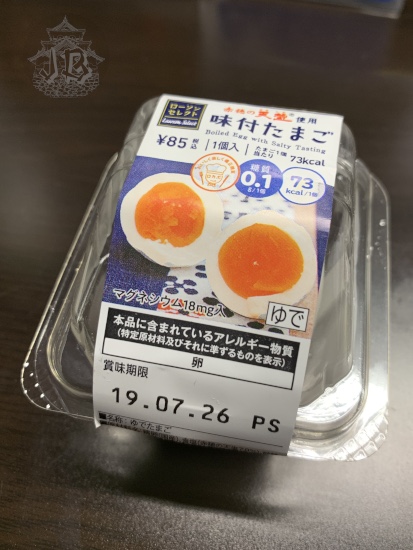
I bought dinner on the way and enjoyed it in the room. And after a long day, I decided that I was okay with some extra protein – so I tried the conbini boiled eggs. It was an excuse just like any other…

Soft-boiled egg box

Walked distance: 19468 steps / 13.9 km. However this includes the little furutsuke that Nao-A made us do, and that was recorded as pacing, and getting lost and walking for an hour coming out of the wrong exit of a station.

20th July 2019: Kawagoe revisited {Japan, summer 2019}

I went to Ikebukuro to exchange my JR Pass, and from there I went to Kawagoe [川越], a small town near Tokyo. The historical centre of Kawagoe is called Koedo [小江戸], Little Edo or Little Tokyo. I have actuallly visited Kawagoe before and I had not thought that much of it, but I wanted to give it another chance as I was going to a fan-event over there the following day, so I got myself a hotel over there and spent the afternoon / evening wandering the town.

I arrived by train at the Kawagoe Station and I headed to the touristic area. My first stop was Kawagoe Kumano Jinja [川越 熊野神社]. I thought about getting a shuuin but there were too many people and I backed off. I thought there would be fewer people the following day but I was wrong. Oh, well. Live and learn.

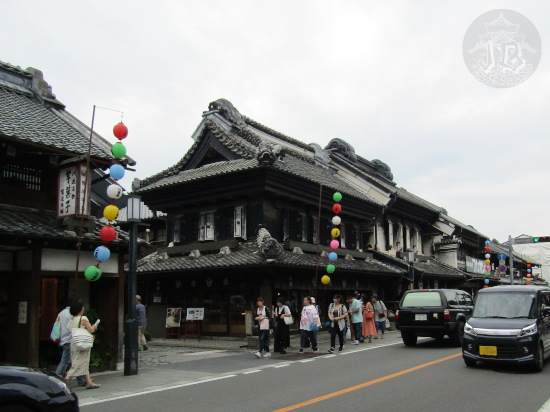
After that I found my way to the Black Warehouse District Kurazukuri no Machinami [蔵造りの町並], which is an area with houses that date from the Edo period. Today they are shops, mostly tourist traps, though. I am not a big fan.

On one of the side ways you can find the Clock Tower, Toki no Kane [時の鐘], which is one of the few historical clock towers in Japan (although it was rebuilt after it burnt down in the 19th century).

And I moved on to the Kawagoe Hikawa Jinja [川越氷川神社], which has a very cool wind chime tunnel, but it was packed at the time.

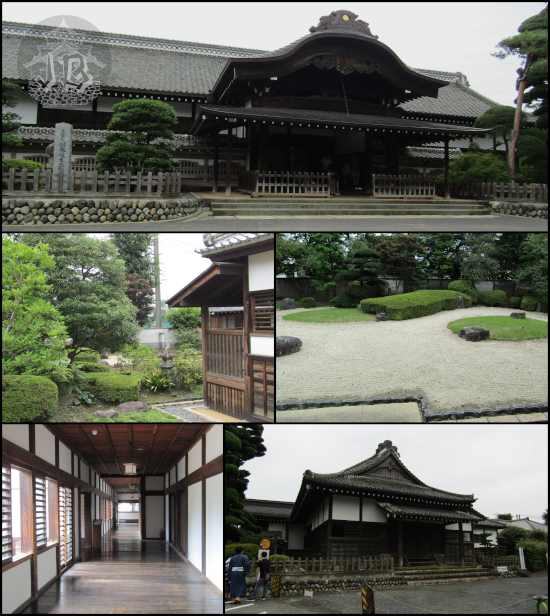
Later I visited the Kawagoe Castle / Honmaru Residence [川越城 本丸御殿]. The castle is long gone, but the palace was built in the 19th century.

I walked past the Reconstructed Moat of the Castle (I have no idea why there are no pictures of it?) and Yukizukainari Jinja, which was closed off. Then I headed off to the hotel to check in, and after that, I did some walking over the less touristic / known area of town. Right behind the hotel I came across Sugahara Jinja [菅原神社].

My next stop was snooping around Myōzenji [妙善寺] and its adjacent graveyard.

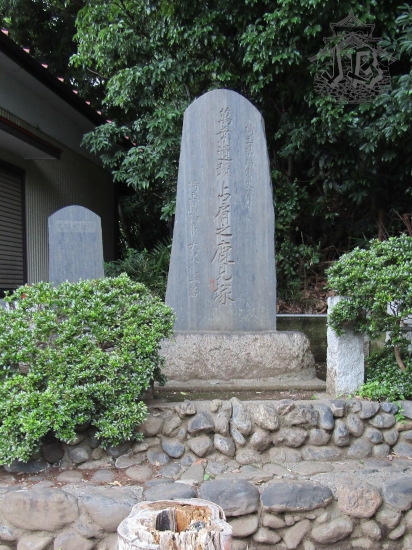
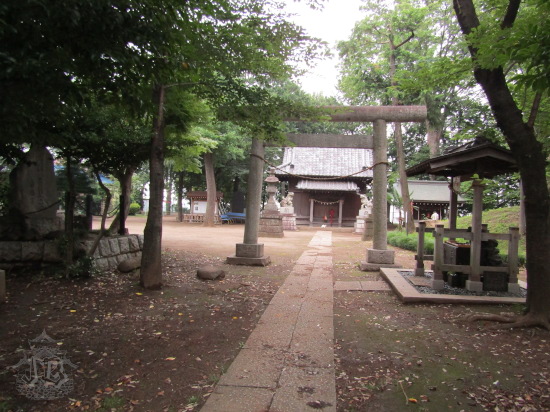
Then over to Fujisengen Jinja [富士浅間神社], a nice little shrine with a historical stelae next to it, the Shishimizuka of Uranaikata [占肩の鹿見塚].

From the grounds I could see Jitsuzaiji [実在寺], which is a very modern temple.

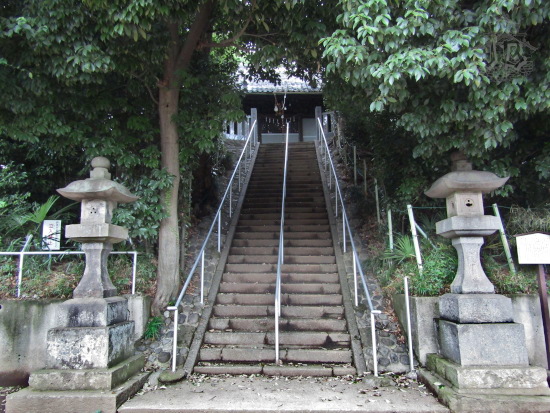
After that I walked towards Senbahikawa Jinja [仙波氷川神社], which I’m sure is haunted by a nekomata which appeared out of nowhere.

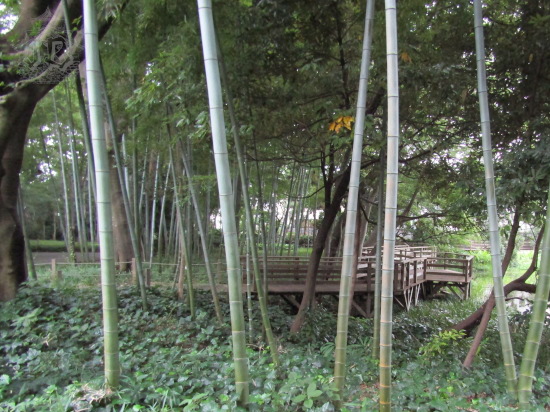
Senbagashishiseki Kouen [仙波河岸史跡公園], an awesome and large park with a lake and a ghost-proof bridge.

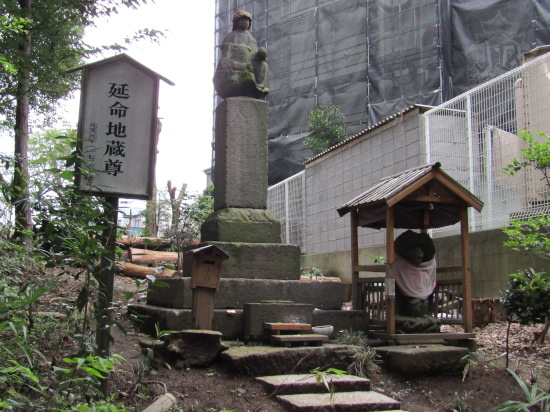
The park has a small temple altar, Enmeijizoson [延命地蔵尊] to one side.

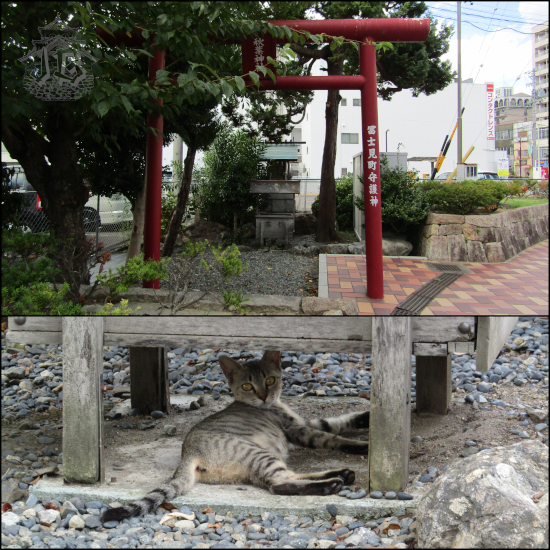
On the other side stands Senbaatago Jinja [仙波愛宕神社] and I bought some takoyaki for dinner.

Walked distance: 22797 steps / 16.3 km

22nd August 2018: … and I raise you two castles more {Japan, summer 2018}

From Nagoya [名古屋], I got myself to Inuyama [犬山], Aichi Prefecture, to see yet another castle. This is also one of the twelve original castles and a National Treasure of Japan. Inuyama is located about 40 minutes away from Nagoya in a line I had not even heard about, so I had a bit of a hiccup finding the station. But it was no more than a tiny stumble and I was on my way at the expected time. Inuyama is a nice little town with a traditional street leading up to the castle, called “Castle Town street”.

Before getting to the castle I came across two shrines – one was Haritsuna Jinja [針綱神社].

The other one was Sankoinari Jinja [三光稲荷神社 ], which either got you a partner or protected your pets. Inclusive for people who want a partner or not, I guess (≧∇≦).

Then I hiked up to Inuyama-jō [犬山城], the castle.

I diverted from the way to get to Inuyama Jinja [犬山神社].

And I was puzzled by something called Oibokenizu Jizoudou [老い呆け来地ず蔵堂]. But it’s okay. Apparently most people are. It seems to be some kind of love temple.

Finally I met a very relaxed kitty in Akiba Jinja [秋葉神社].

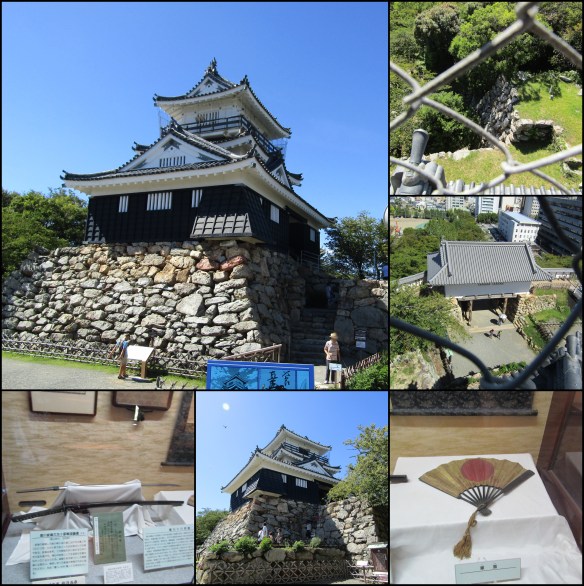
With this, I left Inuyama and headed back to Nagoya, from where I took a Tokyo-bound Shinkansen. I made a stopover at Hamamatsu [浜松] because I wanted to see… yet another castle! I found my way to Hamamatsu-jō [浜松城, Hamamatsu-jō].

Next to it there is the sculpture of Tokugawa Ieyasu Wakaki hi no Tokugawa Ieyasukō-zō [若き日の徳川家康公像]. Ieyasu build the Castle and resided in Hamamatsu and was the first shogun of Edo shogunate. The castle is a reconstruction.

Finally, there is the Ieyasu Armour Hang Pine Tree Ieyasu yoroi-kake-matsu [家康公鎧掛松] which (supposedly) is where the man hung his armour when he was home (aka the original castle).

And with that I headed off back to Tokyo [東京] and D****e’s place to get some rest.

19th July 2017: Nagasaki – the perseverance of nature and the pride of man {Japan, summer 2017}

My Nagasaki [長崎] day was the worst weather I’ve ever experienced in Japan. There was a storm mid-morning which caused the atmosphere to become so heavy with water vapour that even breathing was difficult.

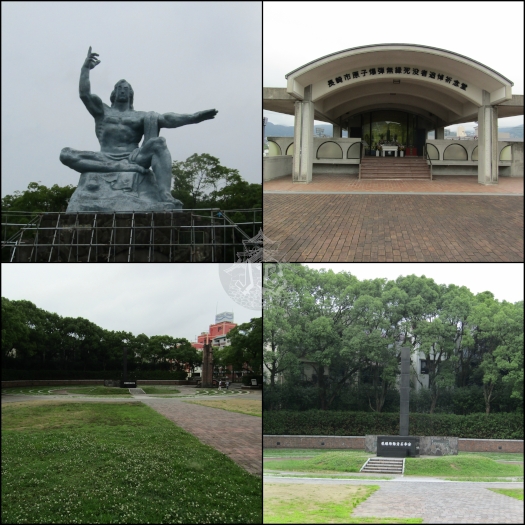
I started the day getting a tram pass and a map, and I first set on my way to see the Heiwa Koen [平和公園] or Peace Park, in order to be done with the ‘heavy feelings’ and then do other more relaxing stuff. I saw the Peace Fountain and the Peace Statue and snooped around Urakami cathedral outskirts, but it was being cleaned / renovated, so I did not walk closer. Then I looked at the Hypocentre of the Atomic Bomb. It made my heart heavy, thinking about what humans can do to each other.

After the Peace park I really wanted to see the one-legged torii of Sanno Jinja (山王神社), located less than a kilometre away from the blast site (the problem was that following the Nagasaki tourist map and signs, I had to take a huge detour). The shrine was destroyed in the blast, but the second torii did not completely collapse. The right leg and half the front remained standing, albeit, albeit rotated 30º. The torii still stands and now Sanno Jinja hosts the kami of two camphor trees that were scorched in the blast, but they survived and are now covered in leaves.

After that I took the tram towards Chinzei Taisha / Suwa Shrine [鎮西大社 / 諏訪神社] and as I was getting to the tram stop, the storm broke. It was not the rain as much as the asphyxiating heat what made it hard to breathe, even much more to climb up the stairs to the shrine.

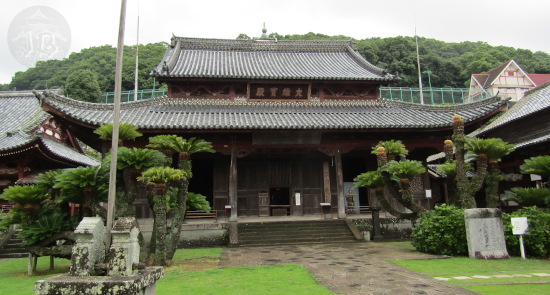
After that, once the clouds had lifted and I had drunk a whole bottle of coke in pretty much one go, I headed off to an area called Teramachi [寺町] where two prominent temples stand. The first is Kofuku-ji [興福寺].

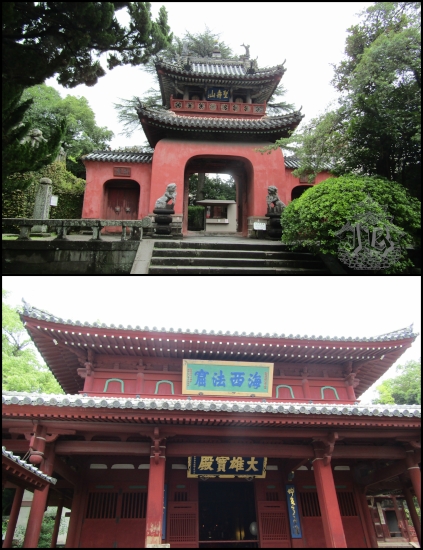
The second is Sofuku-ji [崇福寺]. Both of them are Chinese origin temples that at the moment feel more like tourist attractions than actual temples (entrance fee and all).

As I had taken down such a detour for Sanno Jinja and underestimated the distance between Kofuku-ji and Sofuku-ji I was running a little behind schedule, so I decided to change my original plans. First, I made a brief stop by Megane Bashi [眼鏡橋] (the Spectacles Bridge) over the Nakashima River, which is the oldest stone arch bridge in Japan, built by the same Zen master who established Kofuku-ji.

After this, even if I was a step away from Chinatown, I took the tram to the Nagasaki Koushibyou / Chuugoku Rekishi Hakubutsukan [長崎孔子廟 / 中国歴代博物館], aka Confucius Shrine and Historical Museum of China, because I wanted to be there before it closed. That was really and quite unexpectedly cool.

Again due to timing, I backtracked to Dejima [出島]. This is / was a small artificial island in Nagasaki bay established in 1634. This served as the opening of Japan to the Western world through trading with Dutch merchants. The recent renovations have restored the buildings in the island and established a museum to show how the Westerners lived. One of the things that grabbed my attention was the skeleton of a cow which had apparently been used to grow vaccinations. And there was a stamp rally, which only added to the fun. As a matter of fact I have to say that most of Nagasaki was more interesting and fun than I had expected, especially after the Peace Park and the heavy heart it caused.

I finally could backtrack to Nagasaki Chinatown (Chuokagai [中華街]) in Shinchi Machi.

After Chinatown I walked up to the Former Chinese Settlement, or Tojin Yakishi [唐人屋敷], where I saw Dojin-do [土神堂], Fukken Kaikan Hall (main gateway and Tenko-do) [福建會館], and Kannon-do [観音堂] which are remaining Shinto shrines in the area. Tojin Yakishi is the area where the Chinese merchants were confined, much like Dejima was for westerners.

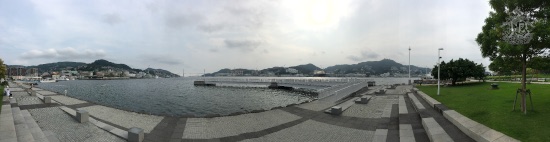
To end up the day I wandered around the Seaside Park, Nagasaki Mizube No Mori Kōen [長崎水辺の森公園] and backtracked to the station to head off to my next destination. All in all, I got the feeling that unlike Hiroshima, Nagasaki is trying to move on from the bombing and cultivate everything that it has to offer.

18th July 2017: Fukuoka – swampy heat {Japan, summer 2017}

The modern Fukuoka [福岡] is a rather big city comprised of two towns – Fukuoka and Hakata. My hotel was in the Hakata area (close to Hakata station), so I could start with visiting some of the sights around there. Right down the street there was Hakata Sennen no Mon [博多千年門], which is a rather modern gate that signals the entrance to the historical site of Fukuoka.

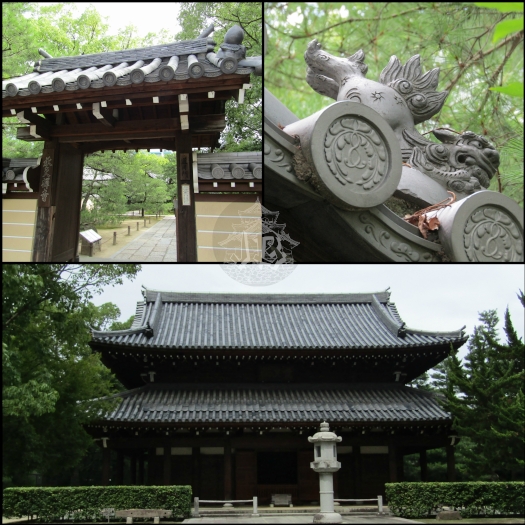
Afterwards I snooped the back gardens of Jouten-ji [承天寺], to whose main building I would come back later (weird mapping sent me the wrong way).

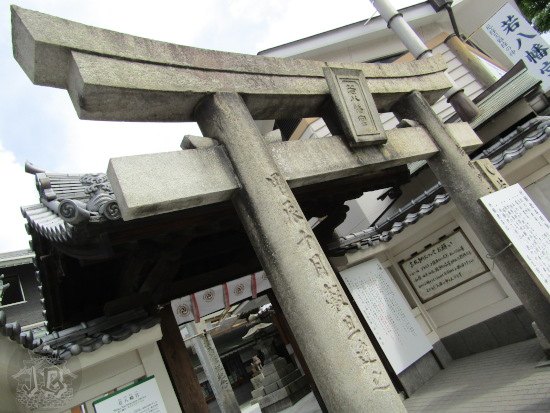
I snooped around Waka Hachimangu [若八幡宮], which was not even open as this was about 8.30 in the morning, I had some coffee and I continued on my way.

My next stop was Tōchō-ji [東長寺] a Buddhist Temple with a rather short-tempered monk in charge of writing shuuin, and a huge Buddha statue made of wood around whose you can descend to ‘hell’, a corridor which first explains the different hells in Buddhist religion and then plunges into complete darkness (no pictures allowed though).

Next I was in Ryugu-ji [龍宮寺], a small temple next to Tōchō-ji.

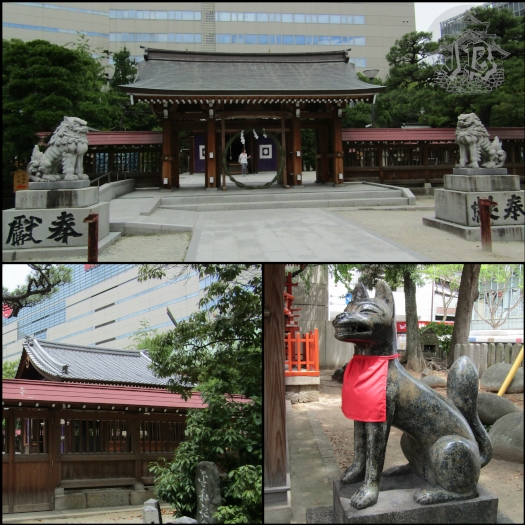
Right on the other side of the street I walked over to Kushida Jinja [櫛田神社], dedicated to Amaterasu and Susanoo, the first gods in Shinto.

After that I walked into Gokushomachi [御供所町], an area where two or three major Buddhist Temples are located. The most important out of these (and the only one open for inspection) was Shofuku-ji [聖福寺], which is the first known Zen Buddhist temple in Japan.

Afterwards I took a stop at a conbini for some lunch a subway ride to check on the former site of Fukuoka castle Fukuoka-jo [福岡城], and the only two remaining items: the Otemon (main gate) [大手門] of the castle and Shiomi Tower [潮見櫓] and backtracked to the train.

My next stop was Suikyo Tenmangu [水鏡天満宮], in the dead centre of Fukuoka, following the Fukuoka Navi recommendation.

Afterwards, I walked a little and ended up at Kego Jinja [警固神社], a shrine which holds a ‘laughing’ kitsune statue in the grounds. It is the closest thing to a castle shrine that Fukuoka has.

My last stop in Fukuoka was Sumiyoshi Taisha [住吉神] which was colonised by VAMPS fans as it seems that HYDE favours it (the Osaka one, at least, but… don’t ask me).
 

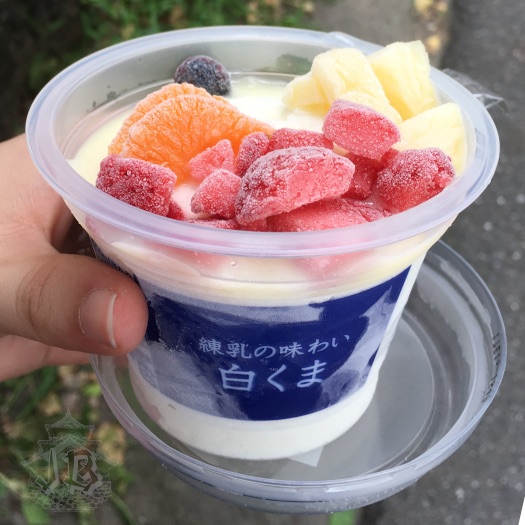
On my way back I had some ice cream because hot and hungry.

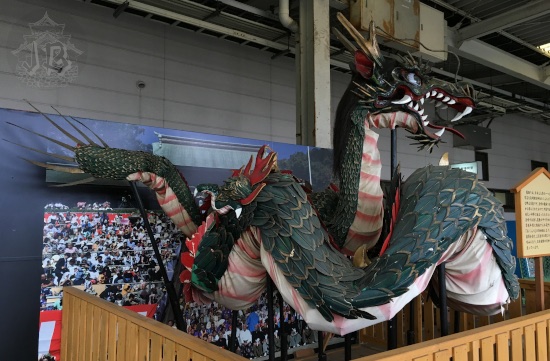
Finally I took the 15:15 Kamome train to my next destination, Nagasaki [長崎]. This dragon greeted me at the station.

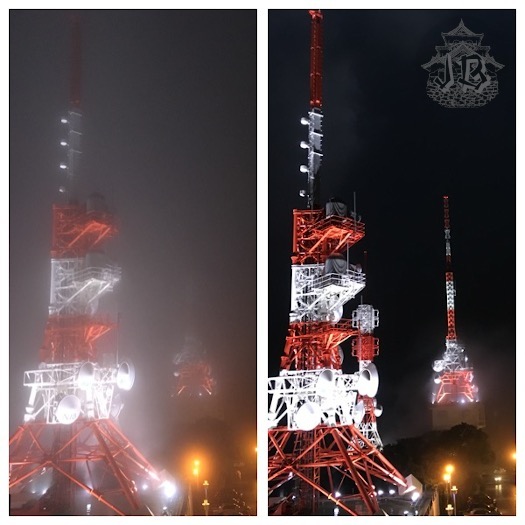
After checking in, I tried to go to the Peace Park, but Google sent me to a random parking lot called “Peace Park” so I decided to go to the Inasayama [稲佐山] Observatory to watch the “one million dollar view”. Fortunately or unfortunately there was a storm brewing – it broke down as I was heading towards the Nagasaki Ropeway [長崎ロープウェイ], then it calmed down, only to start up again once I was almost at the top of the mountain. So normal people watch the Nagasaki skyline, I… guessed the Nagasaki skyline through a storm cloud, because I am cool like that.

11th July 2016: Komagome (I) {Japan, summer 2016}

So since apparently Komagome [駒込] existed before I was aware of it and rented a room there (yeah, who knew (o_o)? People built things here!)

One of the things that were indeed built were the gardens Rikugien [六義園], which for some reason cannot be accessible using the main gate. Don’t ask me (≧∇≦)

The park has a central pond around an island, and… Well, a lot of plants everywhere. In spring it has to be either awesome or an allergic persons’s worst nightmare. In the pond there were koi and turtles.

I had intended to go somewhere else after the gardens, but I realise that I had forgotten my shirt home and I had to come back to get it, else I would freeze in class. So I undid the way and stopped by the local Myogi Jinja [妙義神社].

And as it was Monday, then I went to school. The dynamics had changed a big from the previous week, and it was better. Once again I would have to see the test to evaluate the results. The truth is that I came back home that evening to study more than I had the previous week. \(^o^)/

9th July 2016: Rainy season is rainy {Japan, summer 2016}

Because yes, we’re in rainy season, and in rainy season, it rains, lots. Especially when I want to go to certain places. I hoped that the rain would not be too much, and headed off to Kawasaki [川崎] (yes, like the motorbikes) to check out a temple called Kawasaki Daishi (川崎大師) or Heiken-ji (平間寺, Heiken-ji)

It was wet. There was some kind of child ceremony because there were a bunch of parents with very young babies braving the storm rain, while the kids (and occasionally their siblings) looked unimpressed or plain zonked out.

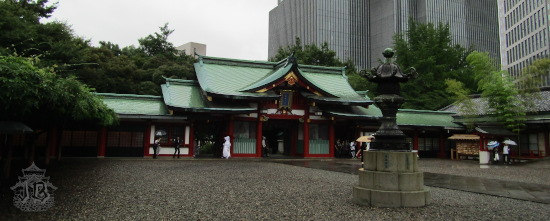
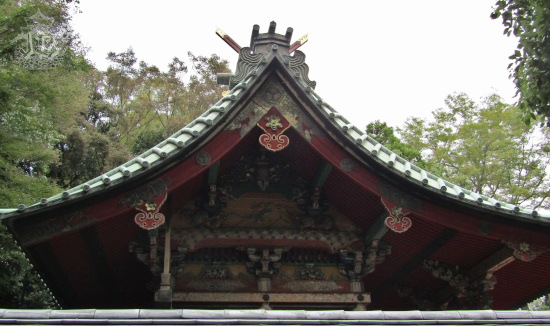
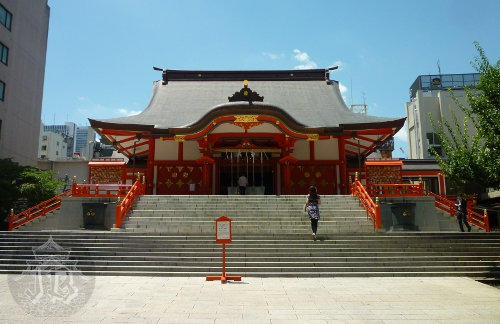
The only other thing for me to check out in Kawasaki were the Chinese gardens, but I decided that it was raining too much for that, so I came back to Tokyo [東京], and headed off to a shrine called Hie Jinja [日枝神社], in Chūō [中央], which I wanted to check out.

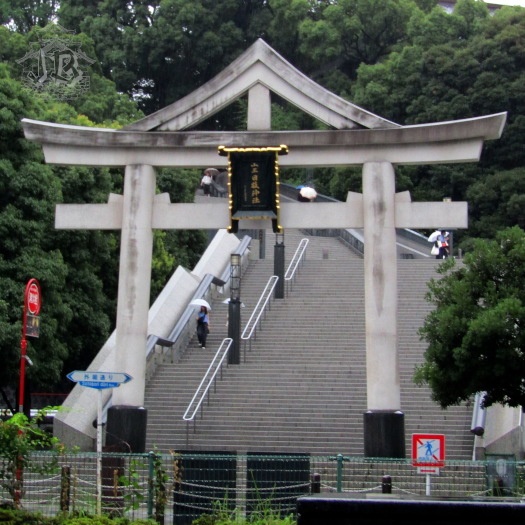
One of the most interesting thing of Hie Jinja is the way the torii is designed, with a sort of triangle on its top. It might be to deter wayward otoroshii, a creature from the Japanese mythology. Yes, this is important. As it was that it was raining. To get to Hie Jinja you have to climb a hill, as it could not be otherwise. In the rain, with my broken umbrella – because my awesome umbrella decided to stop being overdone and break, thankfully it was fixable, but not before I got home.

There was a marriage photo shoot in the shrine, and I was torn for the poor bride, having to walk in those clothes through the rain. I tried to be out of their way as much as I could, too. But kudos to the photographer for bringing a traditional umbrella which made the couple look awesome.

Tired of being wet, I decided to head out to a museum. I had two exhibitions I wanted to see, one of them in the Edo-Tokyo Museum, and the other one in the Museum of History and Science. I decided that I really wanted to se the former, just because I was feeling like it. It was an exhibition called ‘From Eerie to Endearing: Yokai in the Arts of Japan’ [大妖怪展 土偶から妖怪ウォッチまで], held in the Edo-Tokyo Hakubutsukan [江戸東京博物館], the Edo-Tokyo Museum, in Ryōgoku [両国]

This was the scenery of the first almost panic attack I caused. If you’re a visible foreigner in Japan, some people don’t want you around and they don’t want to speak to you, especially because you may require them to speak in English. This is a bit on the ridiculous side in the tourist industry, where you can be met with actual hostility at times. Japan, sorry to tell you this but you’re not ready for 2020. Point and case, the lady selling tickets in the Edo-Tokyo museum. She was literally paralysed for a moment, then she pulled back. Keep in mind, my Japanese is not the best thing in the world, but I said a grand total of six words, five if you count ‘onegaishimasu’ (please) as one “special exhibition, one ticket, please”. Straight forward. She was so much in a panic that she did not even hear me at first, it took her half a minute to realise I had asked in Japanese. When she asked me to repeat I just gave her the “yokai, one” and showed her one finger (to count!). She was so freaked out that I did not even get a brochure.

The exhibition has three main parts. The first one runs through the historical representation of yokai as supernatural beings, explaining old questions that humanity had (for example, what is the echo) or forming part of legends. It exhibits part of the Parade of the One Hundred Demons classic paints and scrolls, and a bunch of key ukyo-e in mythology, which I was very excited to see. Apparently, an huge bunch of Japanese people had decided that the museum was a perfect place to spend a rainy afternoon, too, and the exhibition was packed.

The second part dealt with the representation of the different worlds, especially the Buddhist ideas of heaven and hell, and the concept of ‘spirit’ or ghost (yurei) as opposed to a yokai. Out of these, my favourites were the umibozu and the Peony Lantern representations.

The final part was dedicated to ‘Yokai watch’, a contemporary anime series that explores the concept of cute yokai causing mischief in present days.

On my way back I dropped by Shinjuku [新宿] and the Book Off there. The number of acquired items was slowly climbing up, and I was still on budget!

Then I did my homework because I might fail at Japanese all my life but I will still try not to.

3rd September 2015: Kawagoe & Omiya {Japan, summer 2015}

For my last full day in Japan I set off to Kawagoe. Not coming from downtown Tokyo, I did not take the JR line, so when I came out I could not grab a map. Thus, I had to brave it and get on with it – as my phone did not recognise where I wanted to go. Wohoo, orientation adventure. And yup, you guessed it – I got lost. However, this time it was a fortunate loss, because I ended up at the Seiya-san Muryōshuji Kita-in [星野山無量寿寺喜多院] temple complex, which I had marked as ‘maybe on my way back’ originally. It was a very lucky turn, because I met up with a very nice Japanese lady who explained the complex to me and with whom I made friends. She showed me around the premises and recommended the museum – and the 500 disciples of Buddha Sculpture Garden – Gohyaku Rakan [五百羅漢寺], which I loved to pieces.

Kita-in Temple main building with the pagoda in the background:

Kita-in Temple Complex: Gohyaku Rakan:

Kita-in Temple Complex: Amazing main building:

Hakusan Gongen [白山権現], adjacent to the Kita-in Temple Complex

After saying my goodbyes and checking the museum, I headed off towards the area called Koedo [小江戸] (Little Edo), stopping around to check on small temples and shrines. Koedo features black buildings that survived WWII bombings because the pilots thought they were burnt already. This was the main thing I wanted to visit, and I was surprised at the fact that I met very few Westerners here. I guess it was due to my visiting on a weekday. The most famous street is the Black warehouse district, Kurazukuri no Machinam [蔵造りの町並].

I found the Clock Tower, Toki no Kane [時の鐘],

Once I was done wandering around Koedo Kawagoe, there was something else I wanted to check, the main Hikawa Jinja [氷川神社] in Omiya [大宮], a district in Saitama [埼玉], which was fortunately on my way back. There were huge koi in the pond there.

Afterwards I just headed home for some ramen and nice company as good-bye for now. See you next reload, Japan!

27th June 2013: Shinjuku, Ōji and Ikebukuro {Japan, summer 2013}

One of the fun things about Tokyo is that combination of modern and traditional that you find merged in quite a bit of harmony. Take for instance Shinjuku [新宿]. When one thinks of Shinjuku, one imagines skyscrapers and neon lights, but just a few minutes away, you find Hanazono Jinja [花園神社]:

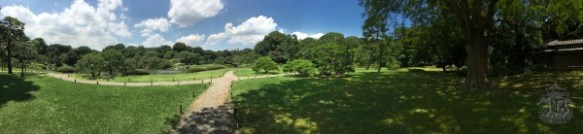
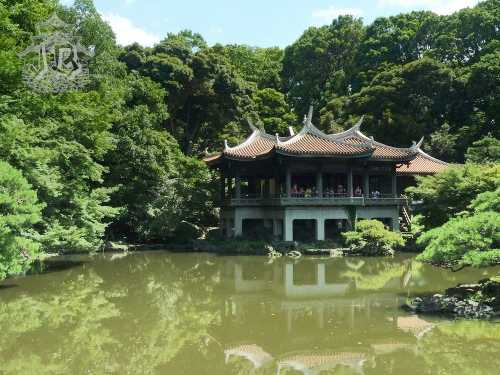
Five minutes away from the station there is Shinjuku Gyoen [新宿御苑], which is huge, and holds small wonders like this, Kyūgoryōtei [旧御涼亭], or Taiwan Pavillion (Taiwan Kaku [台湾閣]):

Of course, there are lots of skyscrapers in the Skyscraper District:

There is also this sculpture:

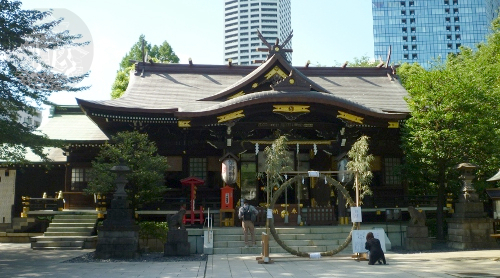
And yet another shrine, Shinjuku Juniso Kumano Jinja [新宿十二社 熊野神社]:

After Shinjuku I went to Ōji [王子] to see the Ōji Inari Jinja [王子稲荷神社].

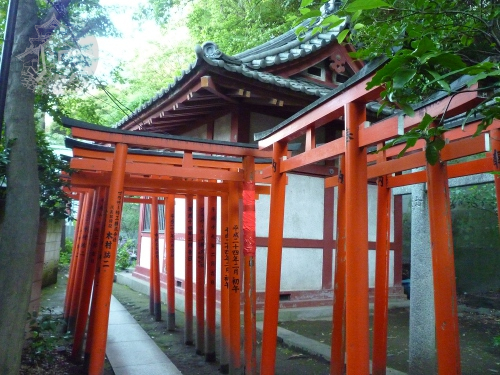
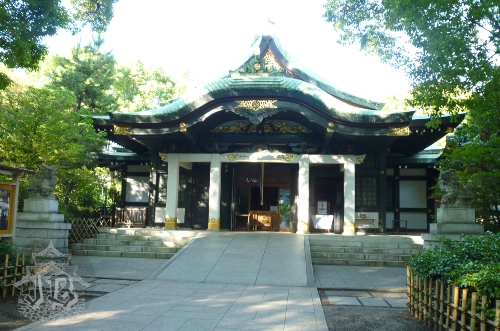
And just the Ōji Jinja [王子神社]:

Then I headed to Ikebukuro [池袋] where we had a reservation at Swallowtail for 80 minutes of indulgence, and hell did we enjoy it XD”””