
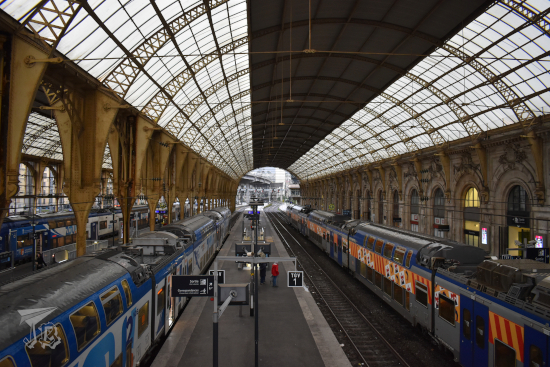
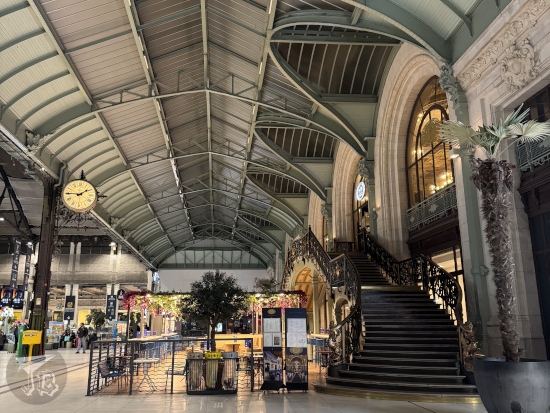
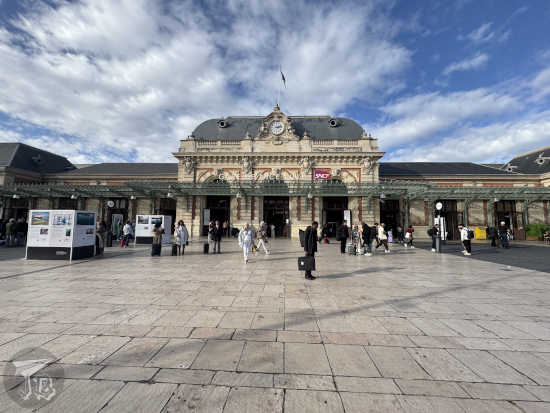
Ready to brave a 100% chance of rain, I woke up, drank my coffee, and left my hotel in Nice to head to the station. At that point, Nice was in weather alert for storms, rain, flooding, waves, winds, and landslides. However, my destination, Monaco – less than a half-hour by train – was chill. It was drizzling when I stepped onto the street, but not enough to even need an umbrella. When I reached the station, I set to fight the ticket machines, which were so confusing that I missed my train while trying to finish the transaction. Fortunately, with a frequency of 30 minutes, it was a train I could afford to miss. I spent the time taking pictures of Gare de Nice-Ville. The station is a typical example of the use of iron as building material at the end of the 19th century. It was designed by architect Louis-Jules Bouchot in the Louis XIII style, inspired by Parisian buildings. Though it originally sat outside the city, now it is right in the middle of it, and it has been in service since 1864.
When my train arrived, it was only 20 minutes or so to reach the principality Principauté de Monaco, a city-state that spans little over 2 square kilometres in area – it qualifies as a microstate, and it is the second smallest state in the world, with not even 10,000 nationals. However, almost 38,500 people live there, making it very highly populated – think Malta on steroids.
Monaco has been ruled by the House of Grimaldi since around 1300, when the family conquered the territory. It was annexed by France after the French Revolution, but after the defeat of Napoleon it was given to the Kingdom of Sardinia. When Sardinia became part of Italy in the 19th century, Monaco regained its sovereignty by conceding outer territories to France, with independence being achieved by the Franco-Monégasque Treaty of 1861. At this time, it had become a tourist giant, establishing hotels and a famous casino. Nowadays, the city-state is considered one of the most expensive and wealthiest places in the world – around 30% of its residents are millionaires. It has no personal income-tax and low business taxes, which makes it a tax heaven and money-laundering hub, while still using the euro though it is not part of the European Union – hello there, unexpected Internet roaming charges!
Most of the city is in levels due to the slopes of the French Alps plummeting right into the Mediterranean Sea. Though originally there were different municipalities in the country, today Monaco is basically one big city – with a lot of parks, for sure. In 2015, it literally ran out of space for houses, so it began a project to create “land in the sea”, using concrete blocks as foundation. This is one of the nine administrative wards, the most important – or famous – of them being Monaco-Ville (the technical capital) and Monte Carlo.
Besides tourism and money-laundering, one of the most important industries in Monaco is gambling. The casino Le Grand Casino de Monte Carlo single-handedly makes so much money that it is the reason Monegasques don’t need to pay taxes besides social-insurance ones. Since 1929, the country has held the Monaco Grand Prix on an annual basis, along with other major races, on a “designated” circuit Circuit de Monaco, which is part of the actual town’s streets and roads.
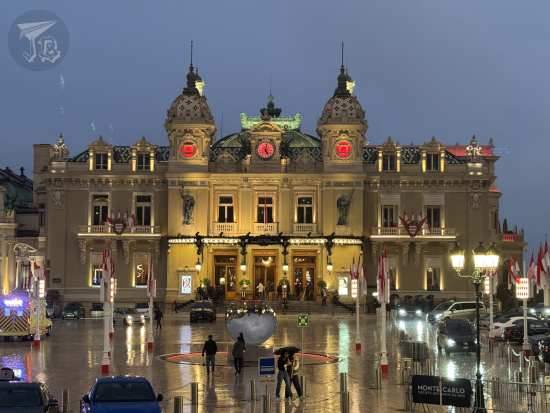
I reached Monte Carlo station half an hour later than intended, but well within my self-impose timetable. I followed the signs to the casino and walked through steep streets lined with manors in the Belle Époque architecture style. After ten minutes or so, with just a few droplets of drizzle in the air, I reached the park Jardins du Casino de Monte Carlo, composed of two different gardens (Jardins des Boulingrins and Jardins de la Petite Afrique), with a beautiful classic merry-go-round within, and some ducks frolicking in puddles. The gardens lead to the Place du Casino and of course the casino itself – Le Grand Casino de Monte Carlo. I am not a gambler, but the architectural interest of the building attracted me, and cultural visits can be carried out in the morning. However, these cannot be booked online, and time was quite limited. Thus, I had chosen to make it my first visit.
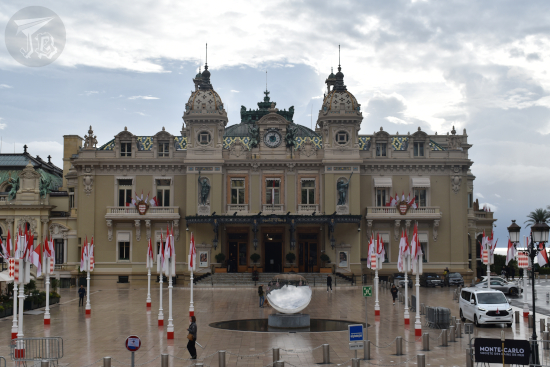
The two security guards – metal detectors in hand – smiled at me and waved me through. I must not look like a casino risk (which also made me chuckle remembering how I had been so thoroughly checked in the Paris Palaeontology Gallery, maybe they saw me as suspicious for some reason?). When buying my ticket, I understood why you could not book online. When you purchase the cultural visit, you are given the chance to “invest” that money into a voucher for playing slots once the casino opens for actual business. I declined, citing that I was not dressed for that. I later learnt that there is a gaming room for the “rabble” before getting into the actual high-class room – but the cultural visit allows you to snoop almost everywhere.
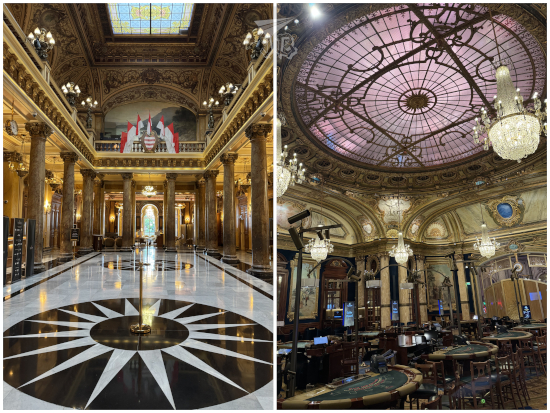
I was not interested in gambling anyway, so I went on my merry way to do the aforementioned snooping. The casino is owned by a public company controlled by the government and the Grimaldi house, and it is only open to foreigners. It was established in 1863, and the architectural style of the current building is a bit on the eclectic side. Architect Charles Garnier combined elements of Baroque, Renaissance, Belle Époque, some Art Nouveau… to create a luxury environment. Some of the classical games gambled on include poker, craps, blackjack and baccarat, along with different kinds of roulettes. However, the sheer amount of slot machines for different games threw me off. They looked completely out of place in the classical environment. The two halls with only classic games were my favourite, and I saw that some of the tables had a minimum bet in the hundreds of euros.
Not having run into James Bond (the casino was featured in Never Say Never Again and Golden Eye), I left the casino and headed to the real reason I had been wanting to visit Monaco since May 1992. I am not even kidding.
Probably the Universal Expo in Seville in 1992 was my first big trip. I was just a child, so my parents organised everything, but I’m told I behaved like a trooper. One of the pavilions we visited then was the Monaco one, where there was a giant aquarium with an underwater tunnel. I was immediately smitten, and promised myself that one day I would visit Monaco and the Oceanographic Museum there. Today was that day.
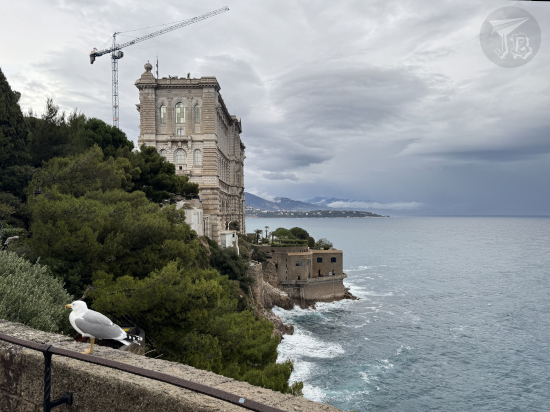
The Musée Océanographique de Monaco was the brainchild of Prince Albert I of Grimaldi, who ruled the principality between 1889 and 1922. While he cannot be considered the father of oceanography, one could say that he was one of its main early-adopters. He owned four research vessels, studied ocean currents, and collected biological specimens and soil samples – he did a lot of cool stuff. After his death, the most famous diver in the world, Jacques-Yves Cousteau, became director of the museum between 1957 and 1988.
However, before I entered the building, I had to get there. Adjacent to the Le Grand Casino de Monte Carlo stands the Opéra de Monte Carlo. To the other side, one of the most famous stretches of the racing circuit Circuit de Monaco, the Fairmont Hairpin Curve. I snuck into a hotel terrace for a good picture, but left before any security guard could come to kick me out.
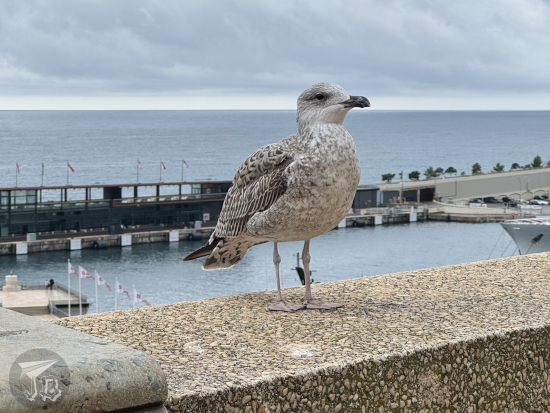
Afterwards, I explored a park with ocean views, where there was a seagull on duty to make noises at tourists. I am glad I entered the park using the entry I did, thus I was not confused by the footprints left there. When I saw “Maradona” and “Pelé” I realised that the park was dedicated to footballers. It makes sense that it is called The Champions Promenade – but if I had used any other entrance, I would have had zero idea who those people were.
I walked past the already-getting-ready Christmas market, and walked around, and headed south along the Mediterranean Sea coastline. I strolled past interesting buildings such as the Auditorium Rainier III and some monuments to famous racers – William Grover Monument and Statue de Juan Manuel Fangio. On the other side of the road I spotted the small chapel Église de Sainte-Dévote, the patron-saint of Monaco.
The Quai Albert 1er had been taken over by a funfair, so I could only snoop around the commercial gallery. I finally tackled the ascent to the ward of Monaco-Ville, the highest part of the city, I think. I went up through pretty stairs through a park until I reached the historical Rampe de la Major which, through the Medieval Gate Porte d’entrée au Rocher lead me into the heart of Monaco – Rocher de Monaco, the area known as “The Rock”, in the ward of Monaco-Ville.
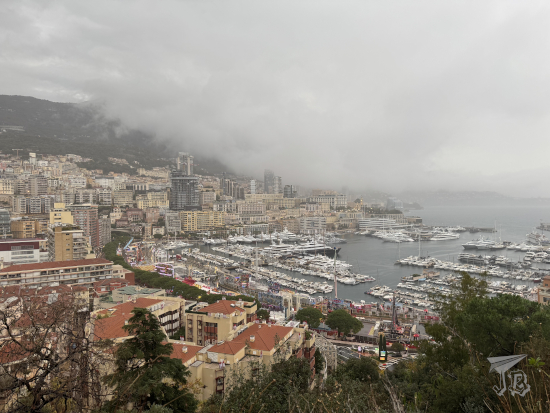
There stands the palace, the Old Town, the cathedral and the museum which was my destination. I stopped for some panoramic views and photos of the Monte Carlo area, and them I scurried through the narrow traditional streets, now turned into restaurants and souvenir shops. I stopped to take a couple of photos of the cathedral, since it was not raining yet, and continued on. A few minutes later I was walking up the stairs of the Baroque Revival building, which perches over a cliff – the Musée Océanographique de Monaco.
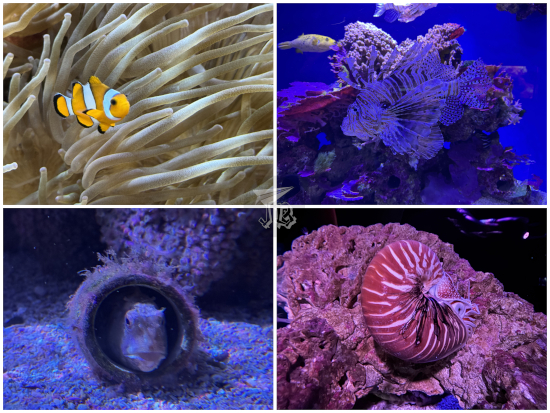
My inner child squealed. My outer adult might have too. We both headed downstairs to visit the Aquarium first. The central ocean tank hosts turtles, sharks, and tropical fish, while smaller aquariums focus on species from different ocean regions: Mediterranean on one ward, Tropical on the other. It was actually smaller than other aquariums I’ve visited before but there was something special about this one.
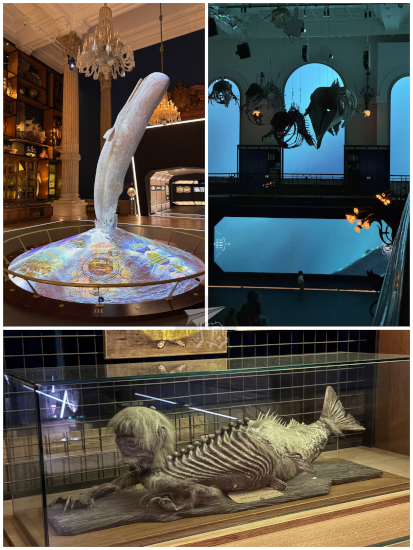
I then went up to the first floor, which hosts the main exhibit rooms. As I got there, I was greeted by a model of a giant squid, after having some fun with the giant clams decorating the stairs. The central ward of that floor is named Océanomania. It hosts specimens from all the oceans around the world, including a polar bear model and a huge walrus skeleton. Smaller but in no way less cool, there were shells, fish in formaldehyde, and a taxidermied / mummified mermaid. I kid you not. Of course, it’s a souvenir made in Japan using the body of an ape and the tail of a fish, but for a while those were considered the real thing.
In the middle of the room there was a sculpture of a sperm whale breaching. On the right stands the Whale Room Salle de la Bailene, whose ceiling is populated by a few skeletons of cetaceans. There is an immersive temporary exhibition there, Méditerranée 2050 L’Exposition. It is some sort of virtual reality, playing with how a submersible dive would look in 2050 in the Mediterranean if we somehow managed to solve all our problems with pollution immediately. I sat through the English version, and the animation was beautiful.
Before exploring the left ward Monaco and L’Océan (Monaco and the Ocean), I decided to go up to the Terrace Restaurant and have some lunch. It was underwhelming, but convenient. I was given the worst table – though it was for four people – next to the door (which people forgot to close all the time) and the waiter was pretty unfriendly. But I sat down for 30 minutes, got some warm food into me – faux-fillet sauce au Roquefort (rib eye steak with blue cheese sauce) with chips.
When it was time to leave the restaurant, it was raining hard, and I had to walk across the building actual terrace to get to the door again. I hurried through, protecting the cameras, and got down to see the remaining ward. There stands a replica of a research ship and interactive exhibits of oceanographic instruments, along with the discoveries made by Prince Albert I.
To finish off, I left through the shop. Throughout the museum there are little machines where you can purchase souvenir coins, and I hoped that they also had them in the shop – I did not have enough change for all of them. If they had not had the coins, there was a machine outside, quite literally next to the Yellow Submarine where I would have bought one. Since they had them in the shop I got… all five.
It was still early, and the rain was back to a manageable drizzle, so I wandered the gardens Jardins Saint-Martin, a bit of a botanic garden with views of the ocean, the Musée Océanographique de Monaco, and the harbour Port de Fontvieille.
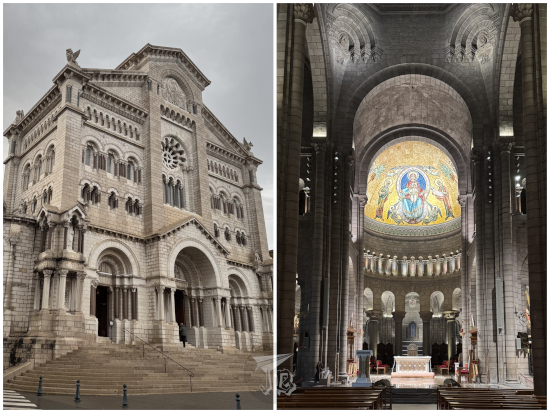
The 100% chances of rain were still holding, and it didn’t feel like the weather gods would favour me for much longer. I reached the Cathedral of our Lady Immaculate, a Neo Romanic building which – luckily – had the altar lit up. Actress / Princess Grace Kelly is reportedly buried there, but most of the graves were covered by carpets and I was unable to find hers. What I did find was a commemorative coin machine. By the time I left the building, I had run out of favour from the gods. I pulled my umbrella and marched on towards the Place du Palace, where the Palace Principier, the official residence of the head of state is. The Palace can sometimes be visited but it’s at the moment closed. But do you know what it had? Commemorative coins.
One of my (albeit silly) goals for the day had been walking from the south to the north borders of the city-state. Imagine the bragging rights, crossing a country from west to east (I had done that from the station to the ocean border), going from the lowest point (the harbour) to the highest (the Oceanographic Museum terrace), and from south to north. However, it was raining in earnest now, so my umbrella and I headed to the private collections of cars that the Prince owns La Collection Automobiles de S.A.S. le Prince de Monaco. I went down towards Monte Carlo using the same stairs I had used before, which had turned into a bit of a waterfall. I was not far from the car collection, but the straight line was blocked by the funfair I had seen before. I had to stop under a roof to throw my rain poncho on.
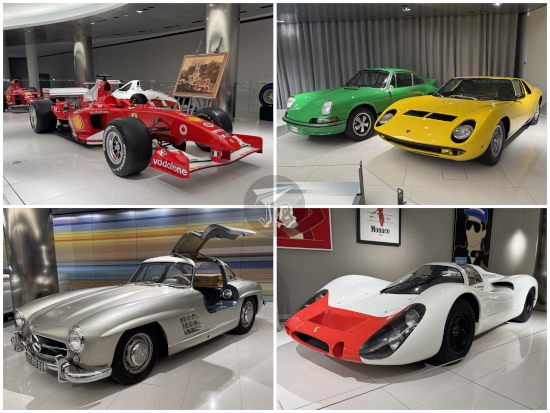
The Private Cars Collection of HSH Prince of Monaco is quite impressive, containing ancient cars, classical ones, modern machines and quite a few F1 engines. I saw Fords from the first batch of Fords ever built, Rolls Royces, Aston Martins, Ferraris, Lamborghinis… I even inspected the sub-collections of helmets. This time I didn’t buy the commemorative coin, but a casino chip imitation.
I undid my way from the morning. The storm was now pretty bad, and water ran down the streets. I decided to take one last picture of the Casino de Monte Carlo, lit up, and then head back to the station. Of course, when I got there, the rain stopped. However, my shoes were waterlogged, and so were my jeans up to my knees. I decided to head back to Nice anyway, and give up my cross-country endeavour.
Trains were delayed due to rain, but one came shortly after I had reached the platform. On the train, I reflected that my inner child was extremely happy. My inner adult too. My outer adult was pretty drenched. Upon arriving at Gare de Nice-Ville, I stopped at the supermarket for supplies and went back to the room. As soon I reached the hotel, the skies opened again. However the meteorological alert had already passed. I had to talk to reception to get a working remote for my air conditioning machine, because the previous evening had been okay, but today I was going to need some extra heat. I had a shower, changed into my PJs and devised a strategy to dry off my shoes, trousers, and maybe socks, using the hair dryer without overheating the machine. I was mostly successful. Socks had to come back in a separate bag, wetter than merely damp, though.
The shoes were pretty okay (though the inner soles will never be the same), and the trousers fine. Around midnight, I left the former wrapped in a towel and the latter hanging, and went to bed to dream about seahorses.
 JBinnacle – A Travel Logbook