29th July 2019: Journey to the West: Osaka → Sakaiminato {Japan, summer 2019}

I was determined to cross as many things on my bucket list as I could in this trip as I could, and that involved some crazy travelling – in this case, two hundred eighty-something kilometres, four trains, and a bit over five hours. In order to make it work, I needed to leave Osaka around 7:00. From the hotel I took the Midosuji underground line from Doubutsuen-Mae Station to Shin-Osaka station, where I took the Tokaido-Sanyo Shinkansen to Okayama – the first 2.5 hours. There, I took the Yakumo Limited express to Yonago [米子市] (a bit over an hour). There, I had to change to, the JR Sakai Line which would finally take me to Sakaiminato [境港市] in Tottori prefecture – it took 45 minutes to travel the last 18 km.

Sakaiminato is “The City of Kitarō and Fish” – Fish is quite self-explanatory. Kitarō is the main character in the manga Ge Ge Ge no Kitarō [ゲゲゲの鬼太郎], often quoted as the reason why yōkai and other elements of Japanese folklore and mythology became popular in the 20th century. Yōkai [妖怪], literally “strange apparition”, are mythological creatures unique to the Japanese islands. They tend to represent nature or societal phenomena, some of them have animal features or are part-human part-animal, or anthropomorphised animals. Many others are rooted on the Japanese idea that inanimate objects have or can develop a spirit. Some yōkai are benevolent, others are evil.

The creator of the manga was Mizuki Shigeru [水木 しげる] (1922 – 2015). He was born in Osaka, but his family moved to Sakaiminato when he was young, and he grew up there. After being drafted to fight in World War II, he became interested in travelling and mythology. Back in Japan, he started the manga in the 1960s. Aside from writing and drawing Ge Ge Ge no Kitarō [ゲゲゲの鬼太郎] (Ge Ge Ge being an onomatopoeia of creepy grave yard noises), he was also a great connoisseur of Japanese folklore, especially monsters, ghosts, and yōkai.

Ge Ge Ge no Kitarō went through a few names and formats to its final form – and there have been anime adaptations as recent as 2018. Kitarō, the main character, is a young yōkai boy who lives between the worlds of humans and yōkai. His usual adventures involve protecting people from both evil yōkai and monsters of western origin. Other characters appear through the story, such as Medama-Oyaji, the “ghost” of Kitarō’s father, incarnated in his eyeball, the Rat-Man (Nezumi Otoko) or the Cat Girl (Neko-Musume).

Most of Kitarō’s adventures happen in or around Sakaiminato, and the town has decided to honour Mizuki’s yōkai legacy – or turn it into a tourist attraction. The inhabitants embraced its yōkai fictional legacy with glee… and stamps. Sakaiminato is all and everything about yōkai.

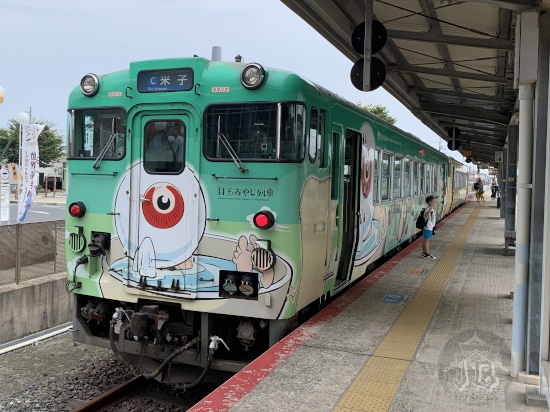
The magic started when I reached Yonago [米子市] Station: there, the platform is decorated with sculptures and statues, a prelude of what one finds when arriving in Sakaiminato. The train in the JR Sakai line [境港線] was also decorated with some of the characters of the manga. Furthermore, a lot of stops of the Sakai Line, aside from their actual name, are nicknamed after a yōkai.

Sign of Yonago station, featuring the character Nezumi Otoko from Ge Ge Ge no Kitaro.

Train to Sakaiminato, featuring the character Medama-Oyaji from Ge Ge Ge no Kitarō, taking a bath.

I finally reached the Sakaiminato station, Sakaiminato-eki [境港駅]. Upon exiting the train, the first thing I saw was a mural with all the recurrent characters in the manga. The second, that the street lights were shaped like Medama-Oyaji, Kitarō’s eyeball-shaped father.

Mural of Ge Ge Ge no Kitarō characters. The street lights in front of it are shaped like eyeballs, and the irises have different colours.

As I came out of the station, I was greeted by a bronze statue of Mizuki Shigeru writing among his characters, and a themed postbox. At the end of the block there was a mall-like building (actually, a cultural centre) which holds the Tourist Information Office. There, I got a copy of the yōkai booklet to carry out the Yōkai Stamp Rally [妖怪スタンプラリー]. The booklet was 120 ¥, of course I could not let it go – there are 35 stamps to collect, and if you get all the stamps of the main rally, you get a small certificate. There are extra stamps for day trips, too. I wish I had known beforehand, I would have planned two days out there to try and complete it.

In order to complete the stamp rally, you have to go down the main street and stop at the many shops which have a small stand out front with a stamp and an ink pad. It was stupidly fun to do, even if there were a few parents who thought nobody but their kids should get stamps and a certificate. Some of the stamps were “hidden” away from the main street and the documentation is in Japanese, so some effort is required – or just use the convenient interactive map.
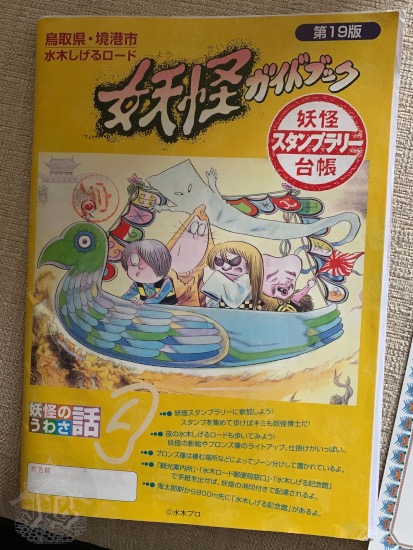
Stamp Rally booklet

Booklet acquired, I could go forth and explore (and stamp). I backtracked towards the bronze statue of Mizuki Shigeru writing among his characters Mizuki Shigeru-sensei Shippitsu-chū no Zō [水木しげる先生執筆中の像], and the Kitaro postbox [鬼太郎ポスト].

Statue of a character writing with his mouth open. Two manga characters are looking at him, hearing his stories.

Kitaro sitting on top of a post box

And as you follow the road and turn the corner you directly go into Mizuki Shigeru Road. However, when have you read me going into something directly without getting distracted? First I had to see the Yōkai World Summit, Sekai Yōkai Kaigi [世界妖怪会議].
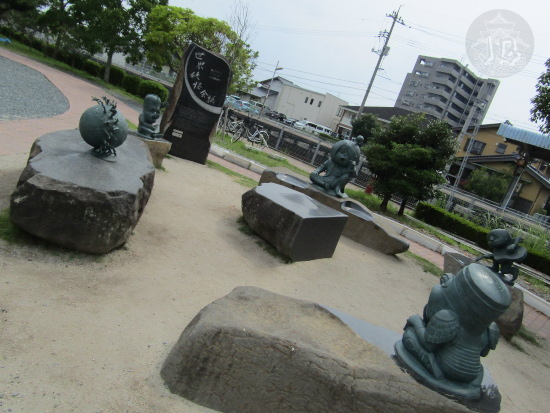
The bronze statues that comprise the Yokai World Summit.

Finally I got down to Mizuki Shigeru Road [水木しげるロード], which features dozens of small and not-so-small bronze statues representing yōkai as they appear in the manga, alongside the characters designed for the story itself. The Tourist Information claims that there are 177 statues in total. I honestly did not count. Shops line to the sides, and a bunch of them have the stamps that you ink on your booklet – and it was hard to get to them, it was so crowded!

I walked the right side to the end, then I decided to come back to check into the hotel, which was close to the station, and drop the luggage. Why didn’t I do that from the beginning? Either it was too early for check-in, or I was eager to get started with the stamps, or maybe both. I reached my hotel and it was gorgeous! It was actually the most expensive hotel in the whole trip, but it was amazing! Outside, it was just a brick building. Inside, it was full of wood and tatami, and so was the room. There was an onsen (artificial hot spring) on the uppermost floor, which I decided I would visit later.

I actually felt a bit bummed that I only had a night there, because I would have really stayed in that room for hours just lounging around – and there were more stamps to collect… But as soon as I thought about the stamps I realised I just had to go out again to continue my adventure. There were lots of things to see and do! Thus, I headed out again, and realised I needed to find myself some food as it was close to 15:00 and I had only had a coffee and a cracker at around 8:00. Then, I set off to walk the left side of the Mizuki Shigeru Road. Of course, every time I went up and down the street I took photographs…

Collage showing Japanese mythological characters as depicted in the Ge Ge Ge no Kitaro manga. They include a Medama-Oyaji, Betobetosan, a dragon, a nurikabe, a giant skeleton…

Of course, I also had to visit Yōkai Jinja [妖怪神社] on the way (the amount of time and times I had to wait till I was able to take a picture of this without anybody in it was ridiculous (≧▽≦)).
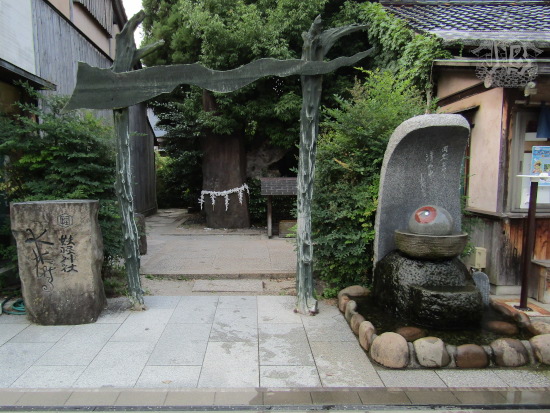
Japanese shrine entrance, depicting the torii as something ghostly. There is a sacred tree just behind the torii.

At the end of the road, I had seen the Mizuki Shigeru Museum, Mizuki Shigeru Kinen-kan [水木しげる記念館] and I knew that it was open (on a Monday!) until late (in Japan!). I actually had put Sakaiminato on the schedule like this so I could make the most out of the Monday. I decided to enter before I had finished the stamp rally, because I keep getting distracted by shiny new things. The Museum features some of the original manga strips, a replica of Mizuki’s office, some items of his mythology-artefact collection and personal library. You can peek at haunted house and see a lot of “domestic” yōkai that that may lurk in a traditional home. There are also replicas of different yōkai – big, moving, and trying to be creepy but only managing to be awfully cute: Nurikabe, Shirouneri, Otoroshi, Azukihakari, Betobetosan, Suiko, Akaname, Miagenyudou. There are also photo spots to compensate that more than a few items cannot be photographed. The museum also had a nice garden for the “wild” yōkai.
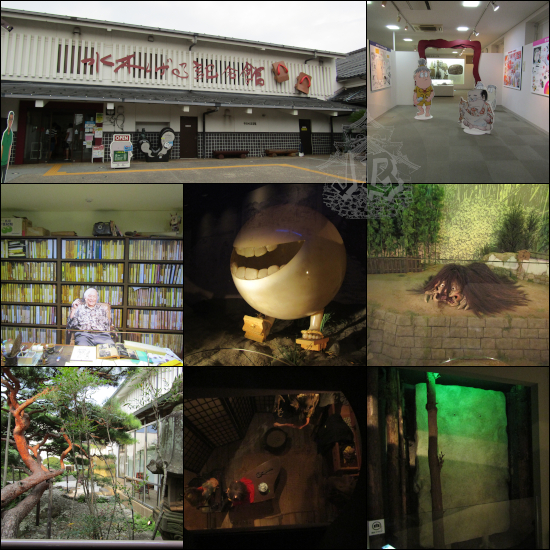
The Shigeru Mizuki Museum and garden

I still had a few stamps to go, so after I left the museum, I diverted towards the harbour to find them. That is how I ended up at Ominato Jinja [大港神社], a much more traditional shrine, not for tourist but actual practising.

Japanese Shrine. Pretty standard in comparison to Yokai Jinja.

It was time to look for the “hidden” stamp spots. The very last one I found was at the Sakaiminato Ekimae Police Box, Sakaiminato Ekimae Kōban [境港駅前交番]. I had completed the booklet in one afternoon! However, it was just around 18:00, so the tourist office was already closed. I saw something called “Kitarō Haunted House”, but I did not enter – it seemed to be for kids, and I did not want to brave too many hyper-protective fathers.

Open Yokai stamp booklet showing the stamped characters.

Instead, I went to the harbour to have a look at the setting sun. This was my first time in the west of Japan, so I thought I could see the sun going under the maritime horizon. I had not counted on the bay, but it was overall pretty.

Sunset at the harbour. It looks pastel.

As it was “after hours”, I went to look at the fountain Kappa no Izumi [河童の泉]. That day, the city employees had been cleaning it, and I did not want to take pictures with the workers in them, or disturb their work and power-washing. The fountain was still not running, but the city officials had left.
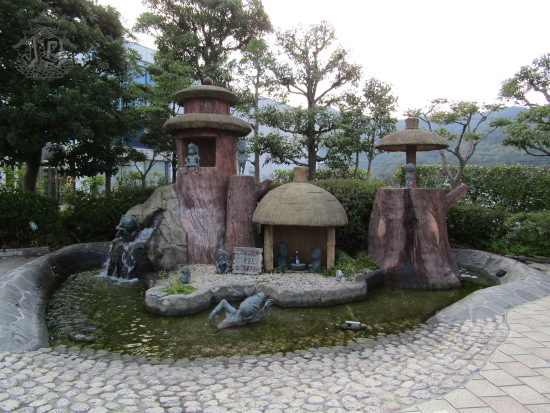
Dry fountain with Ge Ge Ge no Kitarō characters.

Afterwards, I tried to grab a bite to eat, but most places had either shut down or were not taking customers any more by 18:00. Thus, I found myself some conbini food, and headed back to the hotel. I had a nice traditional bedroom and a fantastic shower, but honestly, I ignored it in favour of the onsen. I went there to enjoy a long soak. As night falls and the shops close down, it looks like this small Japanese town would go quiet. Nothing further from reality! The Mizuki Shigeru Road displays a creepy illumination complete with sound effects. This is probably an incentive for people to stay overnight. I had read about it on the brochure, so of course I walked out again to see the town at night.

The whole Mizuki Shigeru Road had been completely overtaken by the wannabe creepy atmosphere – at least. There was music, and some of the shop windows had shadows. The Medama-Oyaji street lights flickered. Suddenly, as I was walking down the road, there was a thunderclap sound and all the lights went out at the same time. I jumped! They got me good! Well, me and everyone who was just experiencing it for the first time. Part of the fun became identifying when the lights would go out and watching out for people getting as startled as you had been. I plead guilty of doing it.
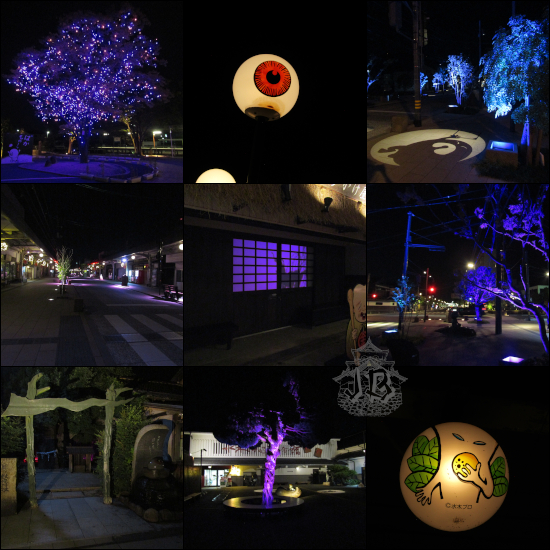
Mizuki Shigeru Road, with creepy lighting.

I went back to the hotel around 21:00. However, as part of the stay-in-town incentive, my hotel also offered a free bowl of ramen between 22:00 and 23:00. I wondered if it would be greedy to go and have it, but I decided to take full advantage of the offer. Thus, to finish the day, I got free ramen at the hotel for dinner! Indeed, I could have stayed in that hotel for days on end!
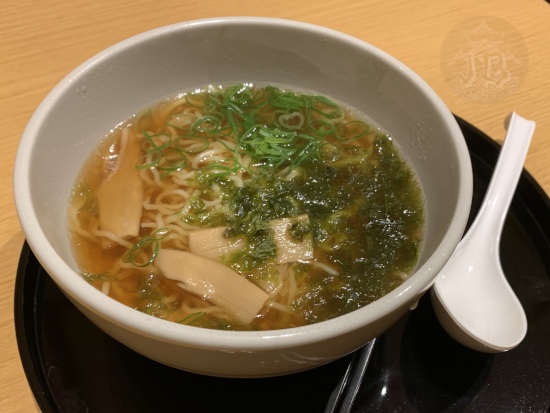
Bowl of free ramen with algae and bamboo sprouts.

I went to bed soon after. But remember, Sakaiminato is “The City of Kitarō and Fish”. I had done the Kitarō part. The following day, I needed to focus on the fish.

Walked distance: 13641 steps, 9.76 km in one afternoon/evening. It was bloody amazing and I had a blast!

18th August 2018: Plan Switching. Kyoto → Osaka → Nara {Japan, summer 2018}

On this day I was supposed to hike up a mountain – mount Takao to be precise. But you know what? When I woke up that morning I just did not feel up to it, so I decided to change my plans. In the end when you’re on the JR Pass you can get from Kyoto to Osaka for free. For a change, I actually got to Osaka instead of Shin-Osaka which was convenient. Then I grabbed the underground to get to Osaka Aquarium Kaiyukan [海遊館], which is actually the largest aquarium in the world.

I had been there before, but the previous time I did not get to see the whale sharks as they were ‘quarantined’. How can anyone block a tank which is in the middle of the whole damn thing, I have no idea, but they did. This time I broke even and had a blast. Unfortunately the Aquarium was packed because this was a Saturday morning, and for some reason my back was hurting a lot. I had dropped my luggage off at a coin locker because I thought it would be better. However at some points I could not really walk straight. The weight of the camera bag was too much and I had to sit down. Found a nice place to watch the sharks from, though.

After the Aquarium I went to Kuchu Teien [空中庭園], observatory in the Umeda Sky Building [梅田スカイビル] to have a look at the skyline and to get the stamp for the Japan Towers rally. I got the greatest omg-gaijin face of the trip here (and truth be told, had I known that the stamp was actually held at the reception desk and not the actual observatory, I might have skipped this). In this case the building is an attraction itself. It consists on two towers joined by some passageways and a circular platform at the top, with see-through escalators.

Next the plan was going to Dotombori, stroll down there, and eat some takoyaki before heading off to Nara where I had my hotel for the night. When I got to the station and jumped on the Osaka Loop line, it turned out that I actually was in the train that continues on to Nara… and it was air conditioned and I had a seat…

I found it a sign and decided to just go with the flow and get to Nara [奈良] on that train. Upon arriving there I checked into the hotel and I decided to go to Nara koen [奈良公園], the main Nara park, and see if I could feed a sacred shika [鹿] deer or two. This was close to 5 pm by now so all the temples would be closing anyway. I did feed the deer some shika senbei [鹿煎餅] (deer crackers), and one of the does bit me. Not even the hand that was feeding her, she actually tried to snack on my tummy. Sheesh.

As I was coming back down I had a pretty sunset over Kōfuku-ji [興福寺].

27th July 2017: Osaka → Kyoto → Tokyo {Japan, summer 2017}

It’s not the first time I’ve done this, but this time it was sane-ish. I left Osaka [大阪] maybe at 8.30 in the morning and took the Shinkansen to Kyoto [京都]. Once there, I found myself a coin locker at the station and went on to the bus area. I was heading to Jonan-gu [城南宮] which was my last shrine of the Kyoto Gosha Meguri ~Shi shin Sou Ou No Miyako~ [京都五社めぐり~四神四神相応の京~] and… under repairs too. But I had finished the Meguri. I had to wait about an hour for the bus. Then 40 minutes ride, about 10 minutes in the shrine, 30 minutes waiting for the bus back and 40 minutes ride again.

After I had some lunch at the station, I headed back to Tokyo [東京], where I met up with D****e in order to hit Nakano Broadway [中野ブロードウェイ] to rummage through TRIO (Yay TRIO for getting me what I needed ♥… and some more stuff I did not need but hey, who cares about those details?). Afterwards we had some kushikatsu dinner.

26th July 2017: Kyoto buses *eyeroll* {Japan, summer 2017}

Someone told me that using Kansai public transport made her appreciate Tokyo trains, and I whole-heartedly agree. I am thankful to the Kyoto [京都] Tourist Office Lady told me the two shrines I had left in the Kyoto Gosha Meguri ~Shi shin Sou Ou No Miyako~ [京都五社めぐり~四神四神相応の京~] would take me a long time, because it allowed me to plan accordingly. Good thing that with a JR Pass you can travel between Osaka and Kyoto in barely half an hour for free.

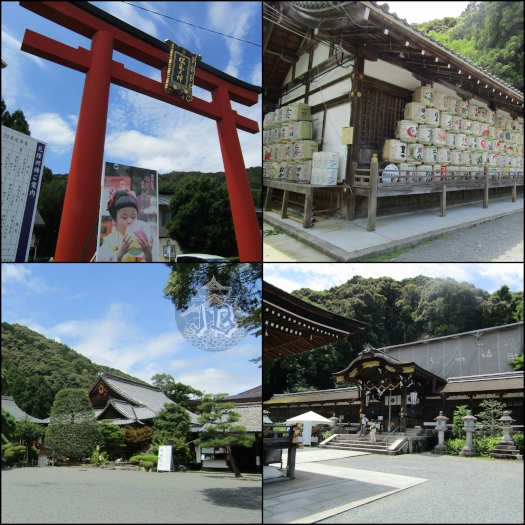
I went to Matsuno Taisha [松尾大社], but I did not try the famous sake they had because not a drinker here. The shrine was being restored, too, so that took away some of the impressiveness.

Collage of a Shinto shrine: a vermillion torii, ceremonial sake, and the main buildings in dark wood

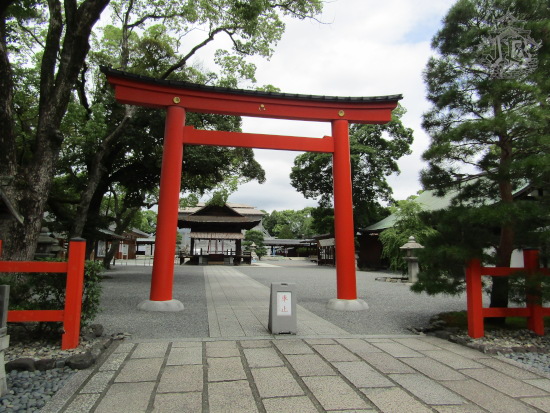
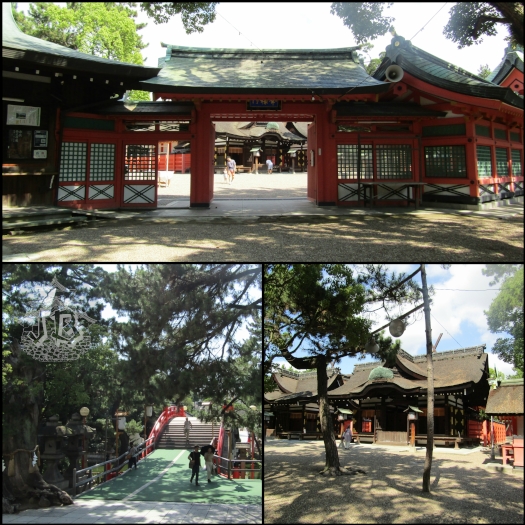
After I was back at the station, I travelled back to Osaka [大阪] to get the shuuin at Sumiyoshi Taisha [住吉神社] there.

A vermillion gate that gives way into a Shinto Shrine.

Then I headed out to Zepp Osaka Bayside for the last of my VAMPS concerts for the time being. There had been no surprises this time, so it was just a “normal” concert without extra adrenaline, which was good for a chance, honestly. I was too sore to jump after the previous day though (≧▽≦).

Zepp Osaka Bayside logo in blue neon

23rd July 2017: Kyoto: plans long made and plans unexpectedly changed – Maiko Henshin and Gyosha Meguri {Japan, summer 2017}

It was an early and cloudy Kyoto [京都] morning when I woke up to walk to Heian Jingu [平安神宮], a shrine built in 1895 to celebrate that Kyoto had existed for 1100 years already. It was supposed to be just another trip to a shrine, I did not expect anything special to come from it.

Heian shrine - main building and secondary buildings that stand on the sides, symmetrically to the left and right. The buildings are vermilion and white with a green-grey roof, and the ground leading to them is sand.

However, as I was snooping around the shrine shop I saw that they had come up with a stamp rally, shrine version – the Kyoto Gosha Meguri ~Shi shin Sou Ou No Miyako~ [京都五社めぐり~四神四神相応の京~] (The tour of four gods of Kyoto). According to legend, Kyoto was anciently guarded by four god-like spirits: the Azure Dragon of the east Seryu, the White Tiger of the west Byakko, the Red Bird of the south, Suzaku and the Black Tortoise of the north Genbu. Heian Jingu stands in the middle “the heart” of Kyoto, and each guardian is supposed to dwell in one shrine in each cardinal point. I bought a small cardboard tablet with the four sacred guardians of Kyoto , with the Heian Jingu stamp in the middle. With that tablet, you had to visit four more temples on the four cardinal points and get their stamps. It is The rally unexpectedly trumped all my Kyoto-visiting plans. I had to absolutely do this! I was so pumped that I did not even take pictures of the tablet until the peregrination was completed.

A cardboard card with the drawings of the four mystical guardians of Kyoto, the white tiger, the black tortoise, the blue dragon, and the red fire bird. They are aligned with their cardinal points, east, north, west, south. Between the animals and in the centre, five stamps in red ink.

After leaving Heian Jingu, I walked alongside the Kamo River Kamogawa [鴨川] towards Gion [祇園], stopping to get the second stamp at Yasaka Jinja [八坂神社]. Here is where the “easy” stamps were over. I still had three shrines to get to, and they would not be as easy as a literal walk down the river.

The vermilion entrance to a Shinto shrine on top of stone stairs. There are rows of lanterns hanging from the gate.

I was to meet D****e at 10.15, as she was coming from Osaka, where she was for a concert. She wanted to tag along to what I was going to do next, basically to… share the pictures with everyone. Last year, my friend B**** had told me about something she had done that she thought I might like, a photo shoot in maiko [舞妓] clothes – maiko being Kyoto geisha-in-training. Following her recommendation, I chose a place called Maiko-Henshin Studio Shiki [舞妓体験・変身スタジオ「四季」], which is where B**** had done hers.

This is something that had been in the back of my mind for the longest time, but I had never got around to doing it because of the price tag. I was a bit put off by paying over 10,000 ¥ for what would in essence be pictures of myself. However, I eventually realised that it is not just the photographs you are paying for, it is the whole three-hour experience. I booked a Studio Shoot plan for 11,900 ¥ (plus tax), which included:

  • White make-up cover.
  • Renting and getting dressed into a formal kimono.
  • A pair of tabi (Japanese socks) that you get to keep.
  • Fake eyelashes applied on you.
  • Natural wig (half-wig) fitted and fixed.
  • Eight studio photographs including a Fushimi Inari Taisha background.
  • A book with the best eight pictures.
  • CD-R with all the pictures taken.
  • Five postcards.
  • Ten minutes of free time to take your own pictures outside the studio.
  • Possibility of paying to get some extras, including extra pictures.

The shop was easy to walk up to. It was set out as a traditional house with a sliding door, and they offered two kind of services – kimono rental to walk around Kyoto, and Studio transformations along the subsequent pictures – maiko, samurai, and couple or family options.

This was a 98% great experience. 1% fell because I had a coughing fit (I have had issues with my lungs, but they are slowly getting better) and the other 1% due to a communication failure with the studio upon reservation. However, that 2% is negligible and it was all in all great. D****e had a blast in turned, and she decided that she needed to share the pictures with everyone she knew who knew me.

I had made my reservation online a month in advance. I chose a time, which was rescheduled for an hour later. When I asked if I could have a sword for the photo shoot, the answer was to inform my photographer.

When I arrived, the receptionist checked my plan with me. Then they asked about the optional or “less crucial” items – whether I actually wanted the white make-up, fake eyelashes, and type of wig – I have absolutely no idea about wigs. They asked if I wanted any extra photographs (each one for 1000 ¥) on top of the eight included in the shoot. They also checked who came with me so they could call D****e to come in when she was allowed to be with me.

D****e and I had arrived early for my 11:00 appointment, and they called me around 11.15. I was given a little basket, a gown, the keys to a locker, and a pair of tabi [足袋] – Japanese socks, with a separation for the big toe and the small ones. The little basket also contains a brochure to give you instructions of what you are to do in all the steps of the experience. This was helpful, especially when they recommended using the toilet beforehand.

I walked up to the third floor to change into the gown and tabi and put all my belongings into the locker. I took with me the key on an elastic band around my wrist. The little basket was for the instructions, and my mobile phone for pictures during free time later. At this point I was still wearing my glasses, but I had to take them at the next step, and they would also go into the basket.

I walked down to the make-up room on the second floor. At this point I had to take off the glasses (and decided that I wanted to get myself some contact lenses). Here I had the white make-up applied, and I was amused by the process. I had not built any kind of expectation about how they would do it, but I guess I was not expecting a thick brush – much thicker than a normal make-up brush. It was an interesting feeling – the white paste was cool and the brush also felt very different from a regular one. The make-up reached up to my hair line, but the artist left a little bit of unpainted skin for the wig. They also painted much lower down my back than I would have expected – it was explained to me that the neck and the wide collar of the kimono are “sexy”.

Afterwards, they contoured my face a little, added the blush, and airbrushed my lips bright red. Finally, they did my eyelids and eyebrows, also in tones of red. The staff gave me instructions in “fluent” (read: broken) English, but we both tried, and communicated successfully. I was told where to look at each point, or to close my eyes and finally I was offered the fake eyelashes again – I accepted because I was going to be without my glasses anyway. I unfortunately inhaled a bit of powder or something, and had a coughing fit that almost gave my poor make-up artist a heart attack…

After the whole make-up had been applied, it was time to get the wig fitted. I was shown to another room with a big closet full of lockers, and each locker held one wig. They checked three or four against my head until they decided on one to put on me. It was a “half-wig”, which means that they painted the hairline and part of your own hair in order to stick it down. Afterwards, they put some traditional decoration, kanzashi [簪], in the wig.

Then it was time to choose the kimono. At this point, D****e was called onto the floor to “help me choose”. There were literally hundreds of options, but I actually found the one I really wanted even before she was there. It was black with cherry blossoms on it, and when D****e arrived she said “that one is really you”. The staff grabbed it for me and took it to the next room – and my poor friend was sent away once me.

Before they started getting me dressed, the first thing was padding my front so the kimono fell flat. At this point I was wearing the under-gown, and on top of that they put an undercoat called nagajuban [長襦袢] over it – this is done to protect the kimono. The nagajuban was tied closed with a cord called datejime [伊達締め]. Then they put the actual kimono on me – and boy was it heavy. I had not expected that it would be that heavy. They offered me a choice of three obi [帯], the wide belt, somewhat of a rigid sash that holds the kimono together. They tied it down and placed a pre-made ornate bow on the back – it was a bit of a bummer that they did not do the whole knot on the spot. They finished putting hair accessories into the wig, and I was ready to head off to the studio. They tucked the long sleeves and the lower part of the kimono into a string that they tied around the obi. The big problem came when I had to go down the stairs to the studio on the first floor, without the glasses – yes, I need to get myself some contact lenses.

Down there, I had to wait for maybe 10 – 15 minutes, which felt very long. I am a tremendously visual person, so I felt very vulnerable without my glasses, just catching some shadows in the background. I saw something that I thought was a cat in a little garden, probably for the outside shoots (the garden, not the cat). When the “cat” jumped into a small pond, I realised that it was a duck.

Once I was admitted into the studio, the photographer was a very nice young woman. However, it was now when I learnt that the eight pictures that you get with the package are pre-planned shoots, you do not get to choose anything. The photos are pre-planned and “staged”, so they are the same for everyone, whether it is “your angle” or not. But at this point, the 1,000 ¥ were not that much of a price increase, so I decided to get it anyway. I was not upset, I just thought it was a translation issue from Japanese to English or a miscommunication. My photographer was friendly and explained about the extra photograph. As it was not included in the maiko set, I had to get it in the samurai room. I agreed, because I really wanted that picture with the katana. As she was finishing explaining, D****e was shown in. She helped with the “look at X” instructions. She also helped make the photographer understand the kind of picture I wanted, since she had trouble digesting the idea that I wanted the samurai sword kind photo with the pretty maiko set-up.

The photo shoot has eight pictures, and I don’t think I look particularly well in any of them – but it was fun. For the first seven photographs I was only wearing the tabi, and for the last one I was given a set of okobo [おこぼ] – high platform sandals for you to walk on, named onomatopoeically for the sound they make on the pavement. The photos included in the photo shoot are:

  1. Full body, slightly backwards, with a fan and the kimono extended at your feet,
  2. Upper body, front, with the fan,
  3. Upper body, front, with some kind of ball / jewellery box,
  4. Full body, front, with a red paper parasol, and kimono extended,
  5. Upper body, front, looking straight at the camera with the parasol,
  6. Full body, front, looking “nice”, kimono extended at your feet,
  7. Upper body, front, with some kind of bento box,
  8. Full body, lower part of the kimono pulled up, with the okobo and a Fushimi Inari Taisha background.

After my official shoot, I was taken to the samurai room for my extra photograph so I could get the picture with the sword. Then, D****e and I were lead outside, the back part of the studio, to play around with the phone and take selfies and stuff. She made sure to take a hundred thousand photos of me during the following 10 minutes. Just for the LOLs, my last couple of pictures were back with the glasses on – which surprisingly did not even flake the white make-up.

Once back inside, the magic seemed to die down, and everything became efficient and a bit cold. My kimono was undone, my wig taken away, and I was given instructions on how to remove the make-up. It did not take too long to do so and go back to my normal, boring self. Then I had to pay and we waited for a little while before I was given my pictures. In total, the whole thing took about two hours and a quarter.

It was a fun experience, probably not a must in Japan. Communication at times was a bit weird, because they work in a sort of “line”, and each person is very specialised on one thing. They are very set on what they do, and don’t always explain in detail because after all “they know,” it is what they always do, even if the customer is lost or not aware of what is going on. Then again, I had a blast and I really liked it, never mind all the inconveniences and issues. Not that I feel I need to repeat it, especially costing this much. However, I might consider something similar thing at a cheaper price, or with a different kind of character.

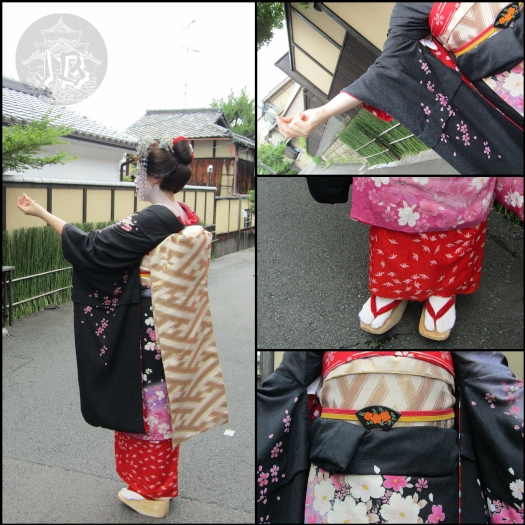
Person dressed as a maiko, with a long robe in black with pink cherry flowers

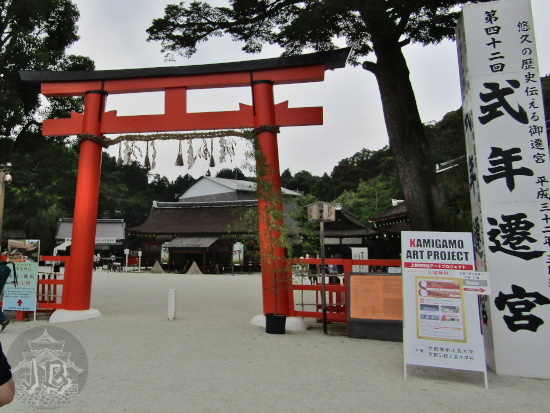
I walked D****e to her station, waved her away, and headed off towards the third shrine of the stamp rally, which I thought at the time would be the furthest-away shrine, Kamigamo Jinja [上賀茂神社], in the outskirts. There was some kind of art / craft fair there by university students, so it was very lively. Unfortunately too, a lot of it was under renovation, but I explored a little (and wasted a lot of time waiting for and riding the bus). Anyway, I received shrine-stamp number three.

A vermilion torii gate

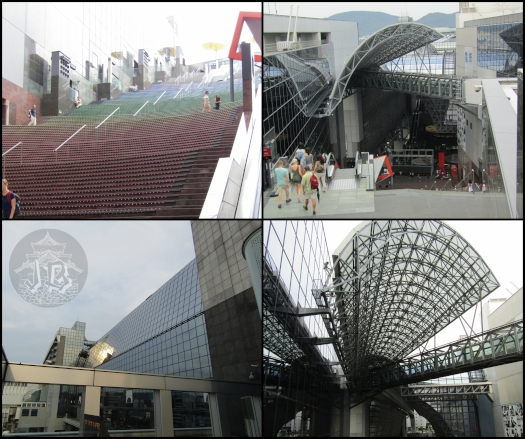
After the stamp success, I headed off back to the hotel to retrieve my luggage and undid my way to the station by subway. I had a while at the station, so I explored the building a little. Designed by Hiroshi Hara, it is one of the most “out of place” buildings in the city. It can be considered “futurist”, with an irregular glass-and-steal façade and illuminated stairs.

The stairs and wavy roof of Kyoto station

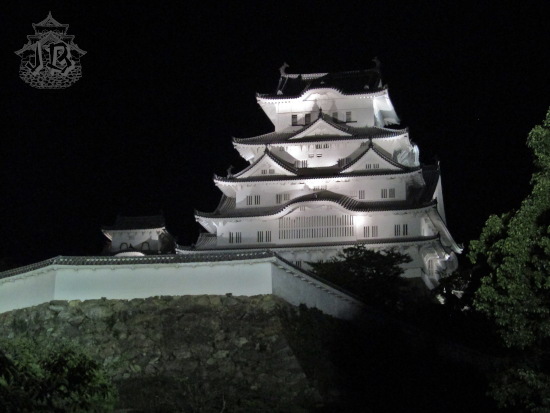
Finally, I jumped on a train to backtrack to Himeji [姫路], which is south of Kyoto. I timed the visit to Maiko Henshin so D****e could tag along, even if it meant going back and forth a little – travel was covered by the JR Pass though. Once in Himeji, I found my hotel and then went to walk around the castle. Actually, I should have been having some dinner but apparently I’m castle-distracted. I walked around the park and took a lot of pictures – and spotted some koi carps in the castle moats that were huge.

A Japanese castle lit up white at night.

22nd July 2017: Kokura → Okayama – castle day {Japan, summer 2017}

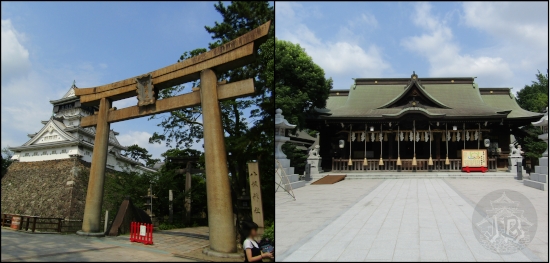
I started the day in Kytakyuushu [北九州], heading out to Kokura-jo [小倉城] again, this time by light.

After the castle I went to Yasaka Jinja [八坂神社], next to the castle.

Then I backtracked to the station to head to Okayama [岡山]. Unfortunately the train I wanted to take was full, so I had to wait for an hour and take a slower train. In hindsight (when everything is clearer) I should have stopped at Fukuyama to see that castle, but I was worried I would not have time to see Okayama castle. On the way I was talking to the nice ojii-san who was going to Nara to pick up the car his wife had bought in yahoo auction.

Upon arrival in Okayama and failure to find appropriate coin lockers I headed out to Okayama-jo [岡山城].

As I was good for time I bought a combined ticket for the castle and Korakuen [岡後楽園] a huge Japanese garden which hosts a couple of small shrines – Jizo-do [地蔵堂] and Jigen-do [慈眼堂].


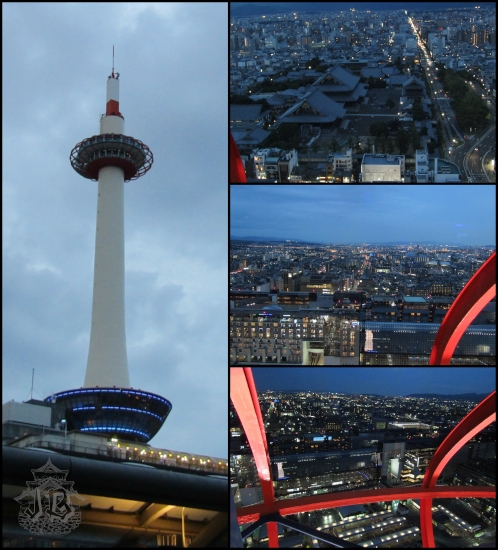
Afterwards I backtracked towards the train station and took a train towards Kyoto [京都], where I climbed up Kyoto Tower [京都タワー], because I had not been up even if I had been to Kyoto before.

Afterwards, I just wanted to get some sleep, so I went to the hotel, had dinner and collapsed in bed.

20th July 2017: Dazaifu – not ready for thorough tourism {Japan, summer 2017}

Dazaifu [大宰府] was the neuralgic centre of the island of Kyushu between the 7th and the 12th century. Today is sort to Fukuoka what Nikko is to Tokyo. Nowadays it is mostly known for its temples and shrines. It has a central core close to the station where you get around quite easily and a few things off the way which… are an adventure to get to.

I started the day visiting Dazaifu Tenmangu [大宰府天満宮], which was crawling with tourists to the point that it was hard to walk at times. It is a big shrine with a huge bridge over a pond in the shape of 心.

Afterwards I got myself a bottle of water and climbed up to Tenkai Inari Jinja [天開稲荷神社] which would have been really, really awesome and creepy if I had been alone, but alas, there were a bunch of other tourists along. It was quite of a climb up so the number was fewer, which made it less crowded though.

After climbing down I wandered around and passed a tiny shrine on the bank of Aizome River [藍染川] the place of a rebirth of a woman named Umetsubo. There is also a small shrine and a “historical site.”

After this I reached Kōmyōzen-ji [光明禅寺], a Zen temple with a great garden, but no pictures were allowed, and you could not really walk through the gardens. However, it was much, much emptier and nicer.

It was now when I decided to head out to the Kanzeon-ji [観世音寺]…

… and Kaidan-in [戒壇院], along with the so called Bonsho Bell.

In order to get here the map sent me through rather bad roads, and it got scary for a second when a car was coming. Furthermore, the signposts were all messed up, making it hard to follow them and the map. But in the end I made it and even if I did not enter the museum, I felt accomplished.

On the other side of the road you could climb up to Hiyoshi Jinja [日吉神社], a tiny and quiet shrine on top of a hill that I really liked – I thought the kami would be bored so I dropped them a prayer too.

After all this I still had a few things left, but I was very tired and there was a storm brewing, so I backtracked to Fukuoka, where I had slept, gathered my luggage and was ready to take a train to my next destination when I unexpectedly met with a VAMPS fan friend, the same one D****e and I ran into at Kumamoto castle! Small world! We had ramen – Hakata ramen, of course – together and then I took the train towards my next destination, on the other side of Kyushu: Beppu.

Beppu [別府] is a small town on the side of a volcano known for its hot springs because it’s on the slope of a volcano named Tsurumi-dake [鶴見岳]. It has almost 3000 volcanic spring vents and it is a bloody amazing place!

I checked into the hotel and almost immediately walked out because the hotel was right next to Beppu Tower [別府タワー]. However I got distracted by Matogahama Koen [的ケ浜公園] and the beach and the breakwaters.

Finally I climbed up to the tower and looked around the city. I was a little disappointed because I was expecting to see some of the vents or at least a spark coming for the volcano, but it did not happen.

Afterwards I walked down to the hotel and spent an hour in the public bath that they had, which was really, really good for relaxing. And then I collapsed in bed and got some sleep because there was a big day the following day!

(I have to say here that I have decided to omit here most of the ‘blergh’ part of this trip in order to keep only the nice memories, thus the upcoming posts are a bit edited. So I’m not telling you about the unfriendly people I met in the way and that made me feel a bit sad. Just the friendly ones because they rock! )

17th July 2017: The power of nature {Japan, summer 2017}

In the morning, D****e and I left the hotel to tour Kumamoto [熊本] a bit more. We headed off to Fujisaki Hachimangu [藤崎八旛宮], a shrine dedicated to a bunch of historical figures, among them Emperor Ojin.

After that, we walked in the sun towards the castle, and we missed our entrance to the nice shade, so we were in the scorching sun for a little longer than intended. In the castle park we headed off to Kato Jinja [加藤神社].

As we walked around the park, and from Kato Jinja itself we could see part of Kumamoto-jo [熊本城], but we could only see one of the towers, as the main building is still under reconstruction. The destruction of the turrets and walls gave us a chill, thinking of that quake and how strong it must have been. I have decided that I must come back to Kumamoto some day to see this castle once it is reconstructed.

As we were coming down we met a friend and arranged to meet with her later to emulate HYDE’s pictures at the station, but first we dropped by Kumamoto Inari Jinja [熊本城稲荷神社].

We had a shabushabu lunch and then headed off to the station meet with C. and to take our pictures with Kumamon (and a nice old couple who… wanted pictures with the gaijin for some reason).

After that I took the Shinkansen to Hataka station in the city of Fukuoka [福岡], where I arrived around 6pm. This kick-started my pattern for the following days: travel to a new city in the late afternoon / early evening, check in a hotel close to the station, see monuments by night, sleep, see the important stuff during the morning.

I checked into the hotel, changed clothes and headed off to see Fukuoka Tower [福岡タワー] and Momochi Seaside Park Seaside Momomichi Kaihin Koen [シーサイドももち海浜公園]. The latter is a small beach park which holds some restaurants, cafes and one of the famous Fukuoka wedding venues (the Marizon).

I entered the Tower and was waiting for a while to climb up, but it was worth it, as I got to watch sunset. I really like the whole tower-climbing thing. Finally I backtracked towards the hotel, stopping to take pictures of the lit tower on my way back.

1st January 2017: Hatsumode {Japan, winter 16/17}

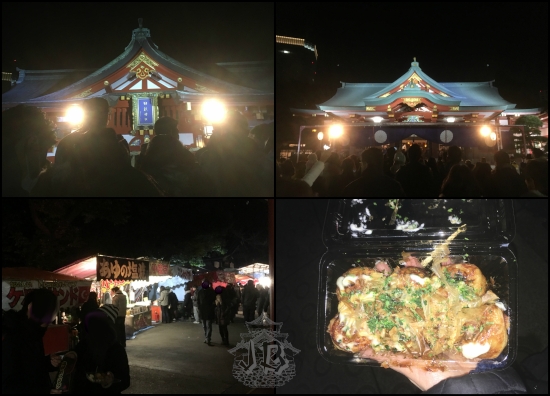
Hatsumode [初詣] is the Japanese custom of visiting a shrine or temple within the first three days of the year. Some people – like we did – actually wait the New Year to roll in the temple grounds. After the 108 (fast!) gongs that signal the entrance of the New Year, you are allowed into the shrine grounds to say the first prayer of the year in Hie Jinja [日枝神社].

After the prayer you can buy good luck charms, arrows which are ammunition for the kami to protect you (or something alike), enjoy some sacred sake, get your shuin, and once you’re outside, buy food and drinks. In my case I got some fresh takoyaki and ate them alone because apparently they’re stinky 。゚( ゚^∀^゚)゚。

Then we headed off home, and I got up at 8 am to have 12 grapes with Spanish TV as it has been my custom all my life. Then I went back to bed.

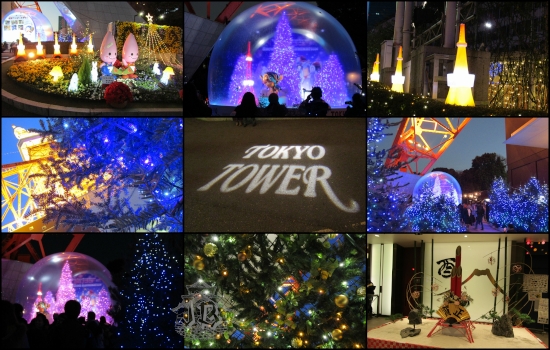
In the evening I headed off to Minato [港] to see Tokyo Tower [東京タワー]. Zojo-ji [増上寺] and Shiba Kōen [芝公園] were packed with Hatsumode parishioners and I had never seen such a line to go up Tokyo Tower. Thus I did not climb up, but I did take pictures of all the illumination around.

Afterwards I met with D****e and K***n. to go to Yokohama [横浜], to have dinner in Yokohama Chinatown, as Chinese people have their own New Year, they would be open to business as usual. It was my first time in Chinatown at night, too, so it was interesting seeing places like Kanteibyō / Kuan Ti Miao Temple [関帝廟 / 中華会館] in a new light.

On our way back we tried to see Shiodome [汐留]’s Winter Illuminations but they were off. We’re not completely sure of why…

10th July 2012: Osaka, day 2 {Japan, summer 2012}

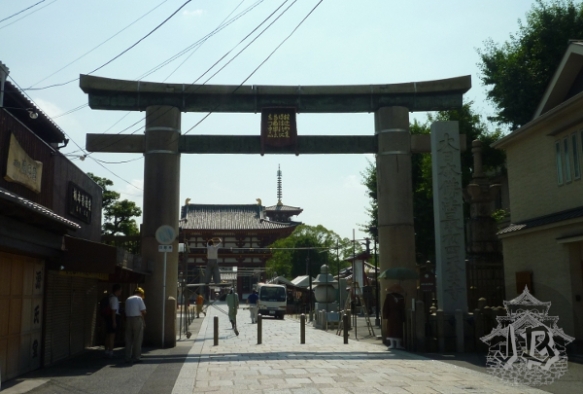
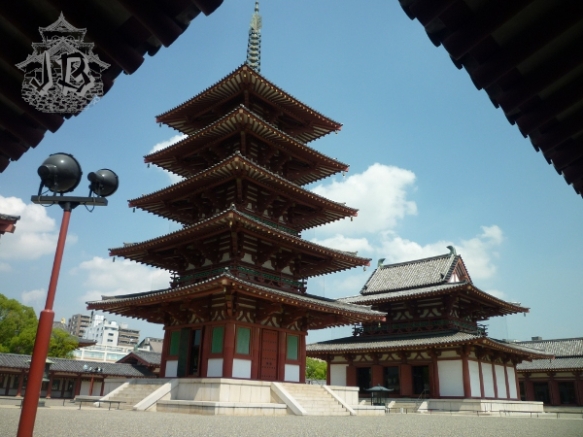
Tuesday 10th was supposed to be Kyoto day, but train trouble made me change my mind. Since I was in Tennōji anyway, I headed off to visit Shitennō-ji [四天王寺], a massive and colourful Buddhist temple dedicated to the Four Heavenly Kings.

A grand stone torii stands in the foreground. In the background, a temple and a pagoda, in dark red and white colours

A five-story pagoda and a temple building. They are both dark red and white, with some green and golden decoration

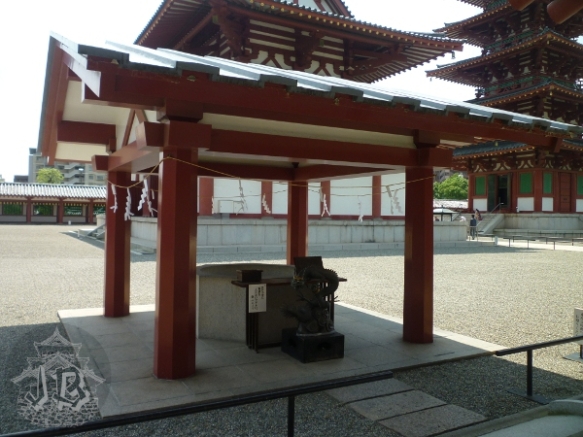
A purification fountain. The tap is sculpted to look like a dragon

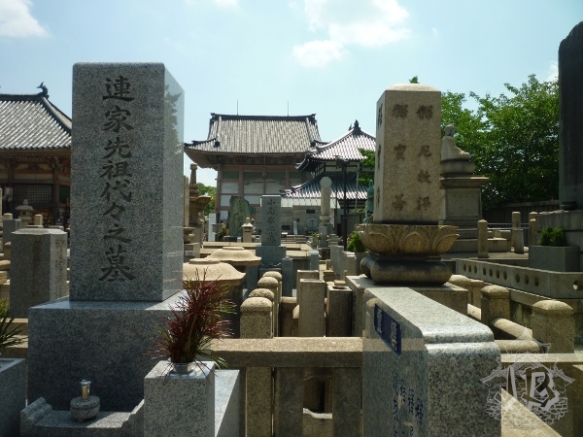
There are a couple of graveyards, too. I always find fascinating how different cultures react to graveyards. In Japan, apparently, you can picnic there.

A number of polished rock blocks with kanji on them - they are tombstones, and they're arranged in haphazzardly almost one on top of the other

After Shitennō-ji I crossed above the Tennōji Zoo towards the Tsūtenkaku [通天閣] Tower, in Shin Sekai (New World) [新世界], the old-time entertaining district of Osaka. Sort of like two-centuries-ago Namba, you can say. I could follow the Tower in order not to get too lost XD

The Osaka TV tower. It is silver-ish, with a construction like a scaffolder. The upper area resembles a diamond. The body reads HITACHI

This picture is the pure essence of Shin Sekai: the giant blowfish, the Billy Ken (the god of things as they ought to be) statue, and the Tsūtenkaku Tower.

A shopping street, with the TV tower in the background. In the foreground on the right, a golden sitting idol that looks like a fairy, with big feet and pointy ears. On the left there is a restaurant with a giant blowfish paper lantern.

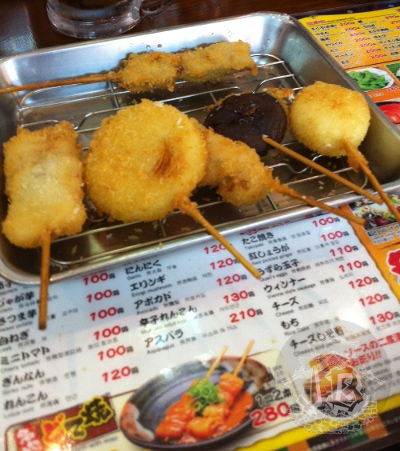
I had some kushikatsu lunch, but it was too hot to really appreciate the goodness of breaded, deep-fried goods:

Some breaded and deep fried vegetables, with sticks to pick them up and eat them

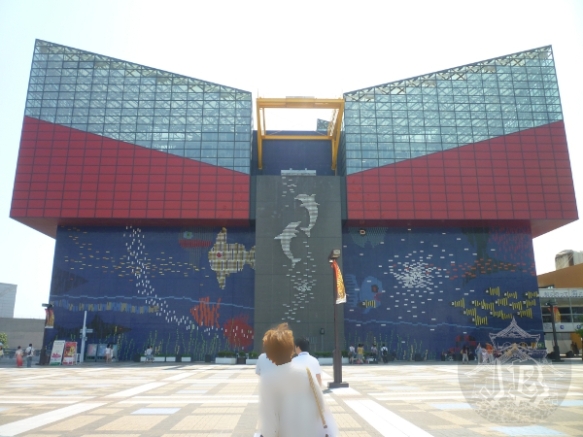
Once done with this, I crossed aaaall the city towards Osaka Aquarium Kaiyukan [海遊館], in hopes of seeing their whale shark… but the whale shark tank was closed due to it being refurnished… they were adding 20,000 sardines.

The aquarium building. It is decorated with mosaics of different ocean animals: coral, dolphins, a sunfish...

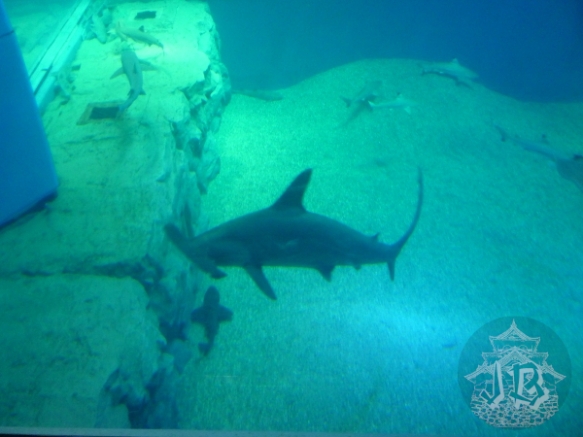
I went in nonetheless, and took a few pictures for your viewing pleasure, starting by the hammerhead shark.

A hammerhead shark swimming in the tank.

There was also a Sun fish:

A sunfish sniffing the aquarium ground.

My first time seeing Japanese spider crabs:

Three Japanese spidercrabs

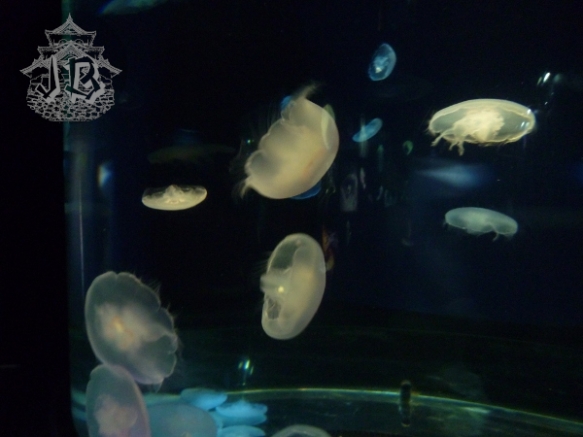
Jellyfish I knew, but they’re fun anyway:

White jellyfish with small tentacles folating around in a dark tank

I would have loved to go and see the Castle illuminated by night, but I was too exhausted and feared crashing down, especially considering that I had one challenge left… Kyoto in ten hours. So instead, I went to the hotel and had a full-blown conbini dinner consisting on “Korean hamburger”, onigiri and dorayaki.

A sandwich, a bar of chocolate, a pastry and two onigiri, which look like dark triangles

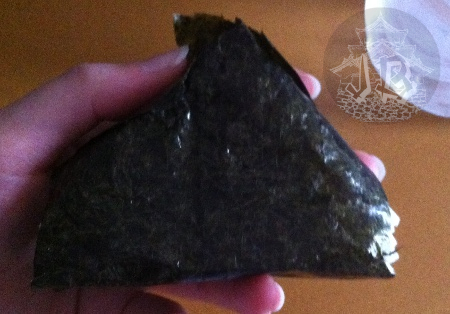
A close up of the onigiri. The triangle is made out of dry algae (nori), you can see the rice filling on one corner

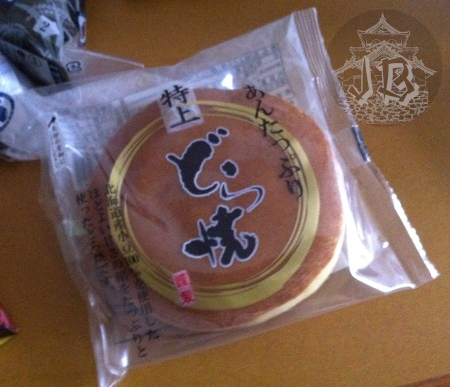
A close up of the pastry. The wrapping reads どら焼き