7th October 2024: Pamukkale {Türkiye, October 2024}

Upset as I was, it took a long time to fall asleep, and I nearly had a heart attack when the hotel’s automatic wake-up call made the landline ring at 4:20 – half an hour before my alarm clock was set. We left around 5:40, and it was cold at that time, though it would get really hot during the day. Around sunrise, we reached our first destination – a caravanserai (kervansaray in Turkish, کاروانسرای, kārvānsarāy], in original Persian). Between the 2nd century BCE and the 15th century CE, Europe and China were communicated through the Silk Road, a network of trade routes frequented by caravans. Caravanserai were roadside inns built alongside those trade routes. They were fortified inns which protected the traders from bandits and weather, providing food and water. In Turkish, they are also called han.

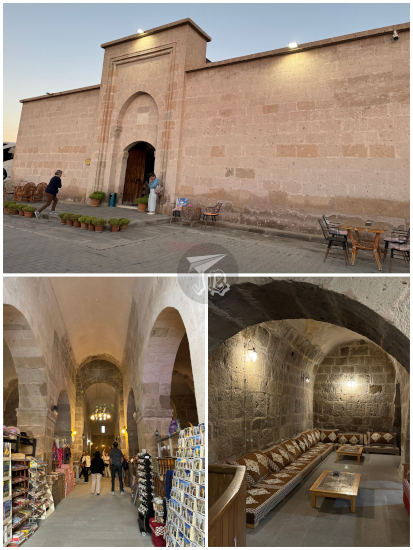
Öresin Han (also called Tepesi Delik Han, “the han with a hole on the roof”) is a restored caravanserai / han. It was built in 1188, according to a plate that was recovered during restoration. The works lasted between 2007 and 2010, saving the building from literal ruins (and the aforementioned hole on the roof). Nowadays, it is a shop and inn for tourists. It has thick walls and a vaulted interior to withstand the weather and possible attacks.

Cansaverai

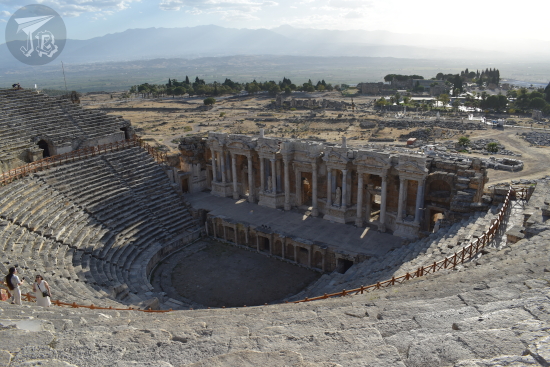
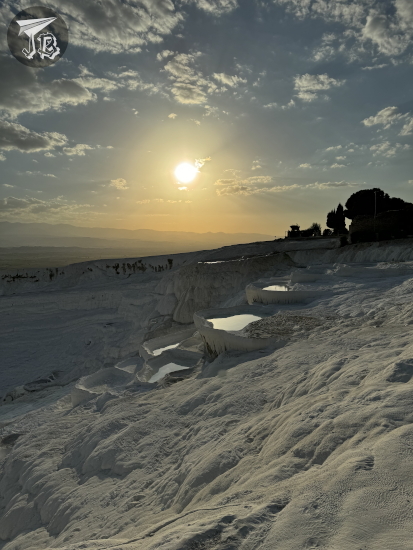
We continued on the road for hours until an early lunch at noon, then drove to the World Heritage Site Hierapolis-Pamukkale, a combination of historical site and geothermal activity. First and foremost, there is the travertine formation. Travertine is a sedimentary rock made out of calcium carbonate which precipitates from fresh water – basically, the material stalactites are made of. Sometimes, in thermal areas, they deposit in cascade form with lakes and waterfalls.

The Pamukkale travertine formation Pamukkale travertenlerinde is a terrace formation around 2,700 metres long, 600 metres wide and 160 metres high. The local thermal water oozes onto the surface at a temperature between 35 and 100 ºC and saturated with calcium carbonate. At the surface, carbon dioxide degasses and the calcium carbonate precipitates into a gel that will crystallise into travertine. Unfortunately, the waterfalls have been mostly drained now to feed pools at the hotels.

Even from the Classical era, the travertines have attracted visitors to the point that a thermal spa was founded around the 2nd century BCE, which eventually became the town of Hierapolis. In the year 133 BCE, Hierapolis was incorporated into the Roman Empire.

We had some time to wander around the place, but way too short to actually see even a quarter of what was on display, which was frustrating – but this would again happen at every archaeological site. Along one of the nice ladies from my group, I saw the Roman baths, then basilica, now museum, which contains the smaller items unearthed – sculptures, friezes, sarcophagi. We then climbed up to the Temple of Apollo Apolion and the Temple of Pluto Ploutonion – which are closed off as the cave underneath them emits asphyxiant carbon dioxide due to the geothermal processes.

Hierapolis museum

Hierapolis theatre

There is also a swimming pool on site, and after hiking up to the theatre it might have even been inviting, if not for the fact that you could actually step onto an area of the travertines to experience them first-hand. I of course took the chance, and was surprised at how… non smelly it was, used to sulphur thermal waters in Japan.

Pamukkale travertines

Travertines Pamukkale

I did not understand why we had to leave so early, because then we just ended up at another hotel with nothing around – thinking back, I have reached the conclusion that the guide was overworked, and he kept a schedule of going to sleep early and getting up early too, that is why we were at all the hotels at 18:00 at the latest; not an excuse, but an explanation. We were at Colossae Thermal & Spa Hotel around that time. The hotel did not have a lift, and most of our rooms were on the first floor. The hotel staff brought the luggage up, and we were reassured it would be taken down again the following morning. I… had a feeling it would not.

In accordance to the thermal and spring water reputation of the region, the hotel had a thermal centre. It comprised a swimming pool, a warm pool and a jacuzzi inside. Outside, there was an actual thermal water / mud pool – which was great for relaxing, but at 33 ºC, I could not stay for long (and I tried not to feel guilty as I knew the water is deviated from the travertines). By this time in the trip, too, I had inserted myself into a group of nice people, and made acquaintances with a nice couple, which was good because it’s always useful to have someone telling you that you’re about to get into the shower with your glasses on…

6th August 2020: Monforte → Ourense → Pontevedra {Spain, summer 2020}

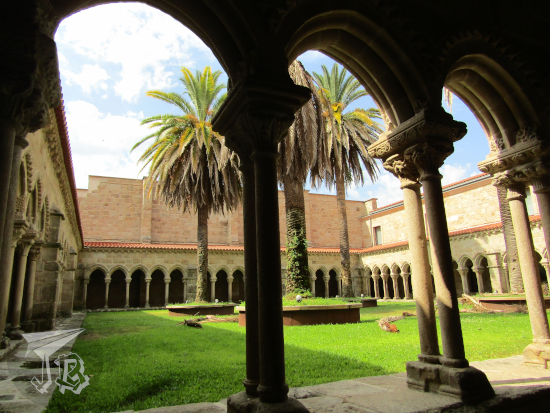
We left behind Monforte de Lemos and drove off to Ourense, one of Spain’s thermal cities. Unfortunately most of the thermal water stuff is closed due to Covid and it was 40ºC anyway (≧▽≦). Upon arriving we left the car, and walked to the cathedral Catedral de San Martín de Ourense, an amazing piece of Romanesque / Gothic art with an amazing 13th-century chromatic Portico of Paradise [Pórtico del Paraíso] and a horrible Baroque Chapel of Christ [Capilla del Santo Cristo].

Ourense: Romanesque portico with wooden figures painted in bright colours (by JBinnacle)

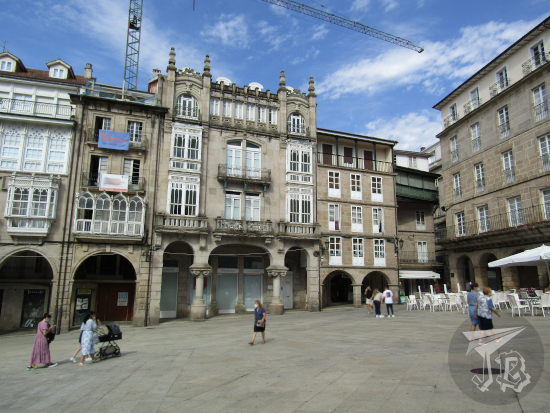
We walked past Plaza Mayor or main square.

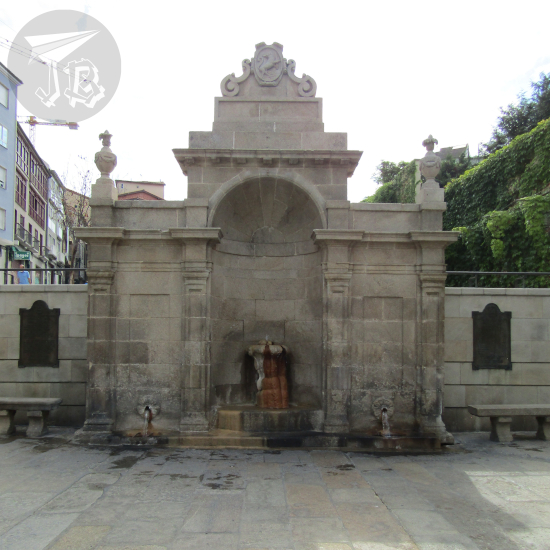
And we reached the area called As Burgas, where the old Roman baths and fountains of thermal water stand.

Then we took a stroll upwards and found an interesting church – the Iglesia de Santa Eufemia, very, very Baroque and climbed about five hundred stairs.

After arriving at the cloister of Francis, Claustro de San Francisco, we took a walk around and then went back to the car to drive off to Pontevedra.

On our way out we could spot the Roman bridge, Ponte Romana, but could not take any nice pictures due to the railing of the actual bridge we were on.

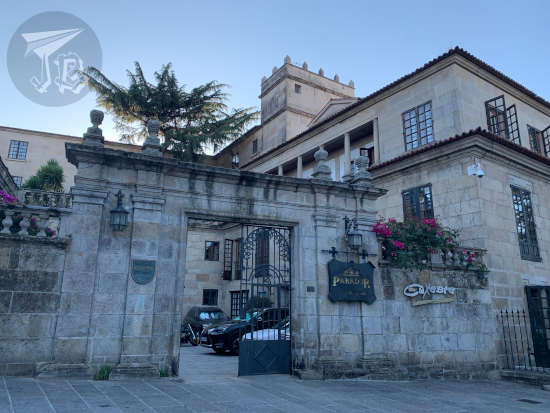
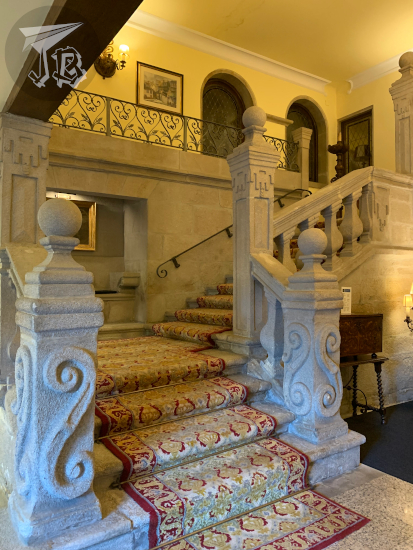
It did not take long to Pontevedra, where we had lunch, rested for a while, and then took a stroll around the town centre. Oh, and I got stamp number four as we stayed at the Parador de Pontevedra, which is an old city palace. Pontevedra is the town of a thousand squares, or so it feels. The truth is that the following morning we had booked a guided visit, so just a few highlights here.

Santuario de la Virgen Peregrina, a shell-shaped church in the centre of the town:

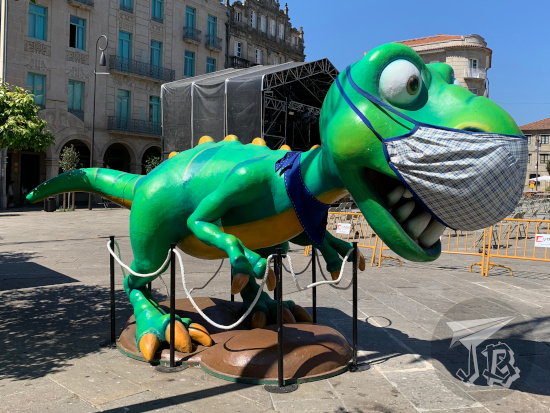
Plaza de la Herrería (and a few others surrounding it), with a friendly mask-concerned dinosaur (don’t judge, their hands might not be too good for the knot-tying).

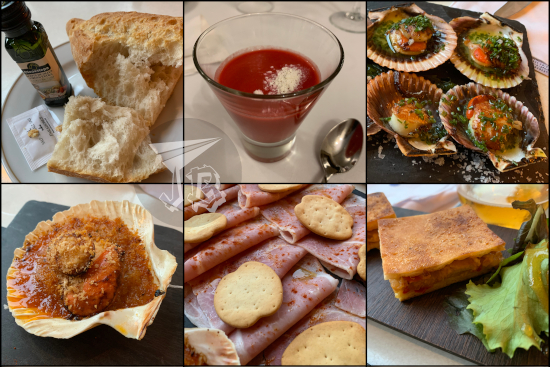
We had dinner a splendid dinner: scallops (both zamburiñas and vieiras, or king scallops (Pecten maximus), empanada(pie) and lacón (pork. Not quite ham, but yummy anyway).

Driving distance: 168 km
Walking distance: 6.28 km

29th July 2019: Journey to the West: Osaka → Sakaiminato {Japan, summer 2019}

I was determined to cross as many things on my bucket list as I could in this trip as I could, and that involved some crazy travelling – in this case, two hundred eighty-something kilometres, four trains, and a bit over five hours. In order to make it work, I needed to leave Osaka around 7:00. From the hotel I took the Midosuji underground line from Doubutsuen-Mae Station to Shin-Osaka station, where I took the Tokaido-Sanyo Shinkansen to Okayama – the first 2.5 hours. There, I took the Yakumo Limited express to Yonago [米子市] (a bit over an hour). There, I had to change to, the JR Sakai Line which would finally take me to Sakaiminato [境港市] in Tottori prefecture – it took 45 minutes to travel the last 18 km.

Sakaiminato is “The City of Kitarō and Fish” – Fish is quite self-explanatory. Kitarō is the main character in the manga Ge Ge Ge no Kitarō [ゲゲゲの鬼太郎], often quoted as the reason why yōkai and other elements of Japanese folklore and mythology became popular in the 20th century. Yōkai [妖怪], literally “strange apparition”, are mythological creatures unique to the Japanese islands. They tend to represent nature or societal phenomena, some of them have animal features or are part-human part-animal, or anthropomorphised animals. Many others are rooted on the Japanese idea that inanimate objects have or can develop a spirit. Some yōkai are benevolent, others are evil.

The creator of the manga was Mizuki Shigeru [水木 しげる] (1922 – 2015). He was born in Osaka, but his family moved to Sakaiminato when he was young, and he grew up there. After being drafted to fight in World War II, he became interested in travelling and mythology. Back in Japan, he started the manga in the 1960s. Aside from writing and drawing Ge Ge Ge no Kitarō [ゲゲゲの鬼太郎] (Ge Ge Ge being an onomatopoeia of creepy grave yard noises), he was also a great connoisseur of Japanese folklore, especially monsters, ghosts, and yōkai.

Ge Ge Ge no Kitarō went through a few names and formats to its final form – and there have been anime adaptations as recent as 2018. Kitarō, the main character, is a young yōkai boy who lives between the worlds of humans and yōkai. His usual adventures involve protecting people from both evil yōkai and monsters of western origin. Other characters appear through the story, such as Medama-Oyaji, the “ghost” of Kitarō’s father, incarnated in his eyeball, the Rat-Man (Nezumi Otoko) or the Cat Girl (Neko-Musume).

Most of Kitarō’s adventures happen in or around Sakaiminato, and the town has decided to honour Mizuki’s yōkai legacy – or turn it into a tourist attraction. The inhabitants embraced its yōkai fictional legacy with glee… and stamps. Sakaiminato is all and everything about yōkai.

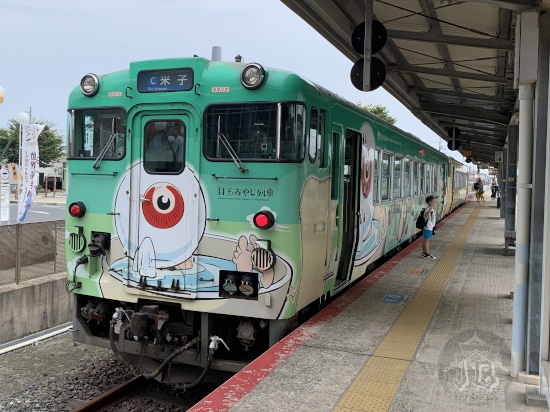
The magic started when I reached Yonago [米子市] Station: there, the platform is decorated with sculptures and statues, a prelude of what one finds when arriving in Sakaiminato. The train in the JR Sakai line [境港線] was also decorated with some of the characters of the manga. Furthermore, a lot of stops of the Sakai Line, aside from their actual name, are nicknamed after a yōkai.

Sign of Yonago station, featuring the character Nezumi Otoko from Ge Ge Ge no Kitaro.

Train to Sakaiminato, featuring the character Medama-Oyaji from Ge Ge Ge no Kitarō, taking a bath.

I finally reached the Sakaiminato station, Sakaiminato-eki [境港駅]. Upon exiting the train, the first thing I saw was a mural with all the recurrent characters in the manga. The second, that the street lights were shaped like Medama-Oyaji, Kitarō’s eyeball-shaped father.

Mural of Ge Ge Ge no Kitarō characters. The street lights in front of it are shaped like eyeballs, and the irises have different colours.

As I came out of the station, I was greeted by a bronze statue of Mizuki Shigeru writing among his characters, and a themed postbox. At the end of the block there was a mall-like building (actually, a cultural centre) which holds the Tourist Information Office. There, I got a copy of the yōkai booklet to carry out the Yōkai Stamp Rally [妖怪スタンプラリー]. The booklet was 120 ¥, of course I could not let it go – there are 35 stamps to collect, and if you get all the stamps of the main rally, you get a small certificate. There are extra stamps for day trips, too. I wish I had known beforehand, I would have planned two days out there to try and complete it.

In order to complete the stamp rally, you have to go down the main street and stop at the many shops which have a small stand out front with a stamp and an ink pad. It was stupidly fun to do, even if there were a few parents who thought nobody but their kids should get stamps and a certificate. Some of the stamps were “hidden” away from the main street and the documentation is in Japanese, so some effort is required – or just use the convenient interactive map.
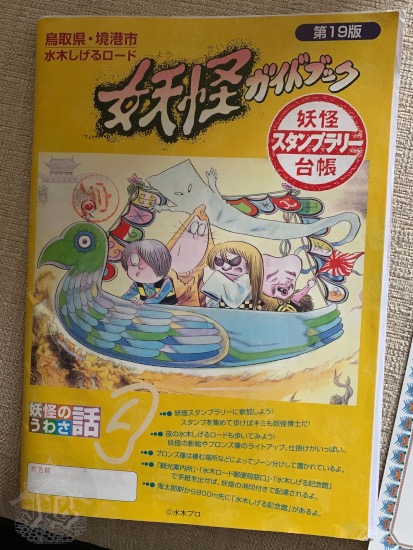
Stamp Rally booklet

Booklet acquired, I could go forth and explore (and stamp). I backtracked towards the bronze statue of Mizuki Shigeru writing among his characters Mizuki Shigeru-sensei Shippitsu-chū no Zō [水木しげる先生執筆中の像], and the Kitaro postbox [鬼太郎ポスト].

Statue of a character writing with his mouth open. Two manga characters are looking at him, hearing his stories.

Kitaro sitting on top of a post box

And as you follow the road and turn the corner you directly go into Mizuki Shigeru Road. However, when have you read me going into something directly without getting distracted? First I had to see the Yōkai World Summit, Sekai Yōkai Kaigi [世界妖怪会議].
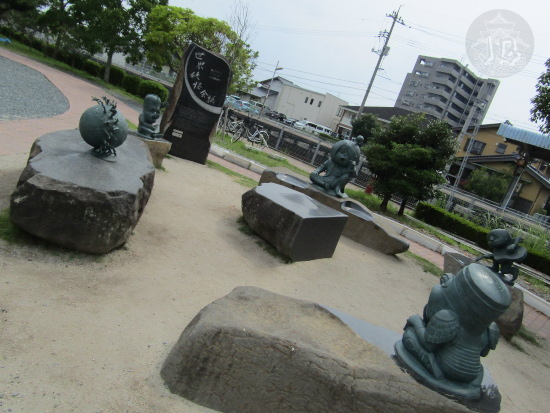
The bronze statues that comprise the Yokai World Summit.

Finally I got down to Mizuki Shigeru Road [水木しげるロード], which features dozens of small and not-so-small bronze statues representing yōkai as they appear in the manga, alongside the characters designed for the story itself. The Tourist Information claims that there are 177 statues in total. I honestly did not count. Shops line to the sides, and a bunch of them have the stamps that you ink on your booklet – and it was hard to get to them, it was so crowded!

I walked the right side to the end, then I decided to come back to check into the hotel, which was close to the station, and drop the luggage. Why didn’t I do that from the beginning? Either it was too early for check-in, or I was eager to get started with the stamps, or maybe both. I reached my hotel and it was gorgeous! It was actually the most expensive hotel in the whole trip, but it was amazing! Outside, it was just a brick building. Inside, it was full of wood and tatami, and so was the room. There was an onsen (artificial hot spring) on the uppermost floor, which I decided I would visit later.

I actually felt a bit bummed that I only had a night there, because I would have really stayed in that room for hours just lounging around – and there were more stamps to collect… But as soon as I thought about the stamps I realised I just had to go out again to continue my adventure. There were lots of things to see and do! Thus, I headed out again, and realised I needed to find myself some food as it was close to 15:00 and I had only had a coffee and a cracker at around 8:00. Then, I set off to walk the left side of the Mizuki Shigeru Road. Of course, every time I went up and down the street I took photographs…

Collage showing Japanese mythological characters as depicted in the Ge Ge Ge no Kitaro manga. They include a Medama-Oyaji, Betobetosan, a dragon, a nurikabe, a giant skeleton…

Of course, I also had to visit Yōkai Jinja [妖怪神社] on the way (the amount of time and times I had to wait till I was able to take a picture of this without anybody in it was ridiculous (≧▽≦)).
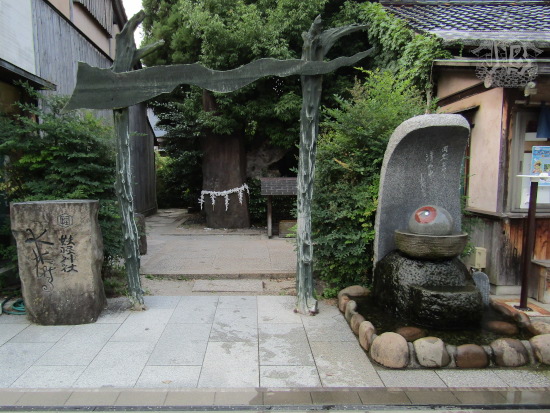
Japanese shrine entrance, depicting the torii as something ghostly. There is a sacred tree just behind the torii.

At the end of the road, I had seen the Mizuki Shigeru Museum, Mizuki Shigeru Kinen-kan [水木しげる記念館] and I knew that it was open (on a Monday!) until late (in Japan!). I actually had put Sakaiminato on the schedule like this so I could make the most out of the Monday. I decided to enter before I had finished the stamp rally, because I keep getting distracted by shiny new things. The Museum features some of the original manga strips, a replica of Mizuki’s office, some items of his mythology-artefact collection and personal library. You can peek at haunted house and see a lot of “domestic” yōkai that that may lurk in a traditional home. There are also replicas of different yōkai – big, moving, and trying to be creepy but only managing to be awfully cute: Nurikabe, Shirouneri, Otoroshi, Azukihakari, Betobetosan, Suiko, Akaname, Miagenyudou. There are also photo spots to compensate that more than a few items cannot be photographed. The museum also had a nice garden for the “wild” yōkai.
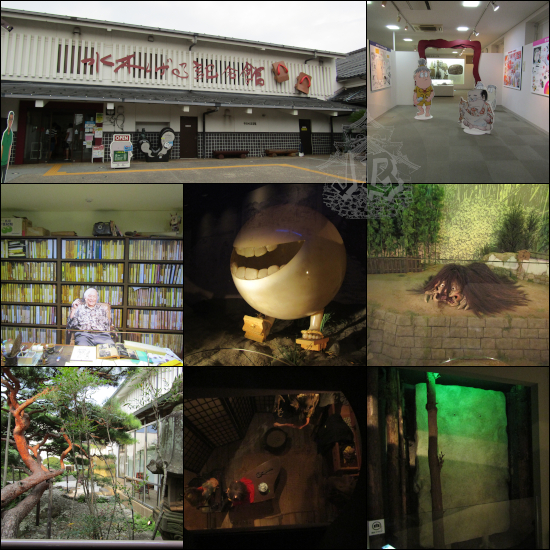
The Shigeru Mizuki Museum and garden

I still had a few stamps to go, so after I left the museum, I diverted towards the harbour to find them. That is how I ended up at Ominato Jinja [大港神社], a much more traditional shrine, not for tourist but actual practising.

Japanese Shrine. Pretty standard in comparison to Yokai Jinja.

It was time to look for the “hidden” stamp spots. The very last one I found was at the Sakaiminato Ekimae Police Box, Sakaiminato Ekimae Kōban [境港駅前交番]. I had completed the booklet in one afternoon! However, it was just around 18:00, so the tourist office was already closed. I saw something called “Kitarō Haunted House”, but I did not enter – it seemed to be for kids, and I did not want to brave too many hyper-protective fathers.

Open Yokai stamp booklet showing the stamped characters.

Instead, I went to the harbour to have a look at the setting sun. This was my first time in the west of Japan, so I thought I could see the sun going under the maritime horizon. I had not counted on the bay, but it was overall pretty.

Sunset at the harbour. It looks pastel.

As it was “after hours”, I went to look at the fountain Kappa no Izumi [河童の泉]. That day, the city employees had been cleaning it, and I did not want to take pictures with the workers in them, or disturb their work and power-washing. The fountain was still not running, but the city officials had left.
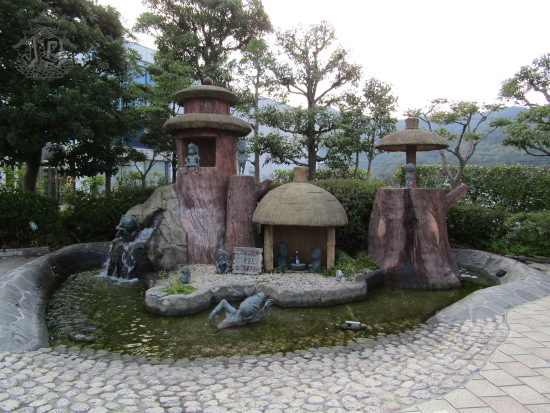
Dry fountain with Ge Ge Ge no Kitarō characters.

Afterwards, I tried to grab a bite to eat, but most places had either shut down or were not taking customers any more by 18:00. Thus, I found myself some conbini food, and headed back to the hotel. I had a nice traditional bedroom and a fantastic shower, but honestly, I ignored it in favour of the onsen. I went there to enjoy a long soak. As night falls and the shops close down, it looks like this small Japanese town would go quiet. Nothing further from reality! The Mizuki Shigeru Road displays a creepy illumination complete with sound effects. This is probably an incentive for people to stay overnight. I had read about it on the brochure, so of course I walked out again to see the town at night.

The whole Mizuki Shigeru Road had been completely overtaken by the wannabe creepy atmosphere – at least. There was music, and some of the shop windows had shadows. The Medama-Oyaji street lights flickered. Suddenly, as I was walking down the road, there was a thunderclap sound and all the lights went out at the same time. I jumped! They got me good! Well, me and everyone who was just experiencing it for the first time. Part of the fun became identifying when the lights would go out and watching out for people getting as startled as you had been. I plead guilty of doing it.
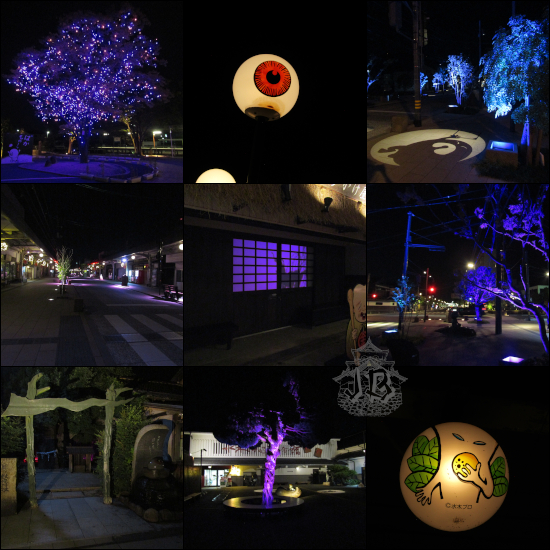
Mizuki Shigeru Road, with creepy lighting.

I went back to the hotel around 21:00. However, as part of the stay-in-town incentive, my hotel also offered a free bowl of ramen between 22:00 and 23:00. I wondered if it would be greedy to go and have it, but I decided to take full advantage of the offer. Thus, to finish the day, I got free ramen at the hotel for dinner! Indeed, I could have stayed in that hotel for days on end!
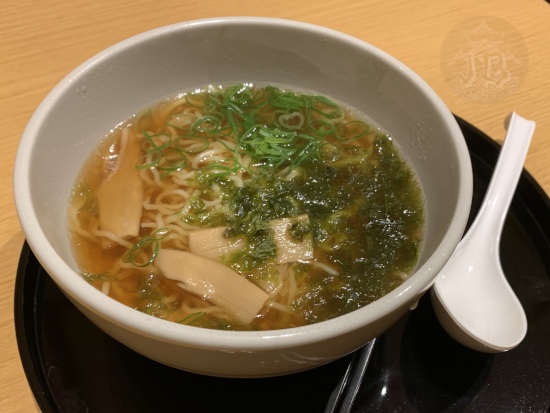
Bowl of free ramen with algae and bamboo sprouts.

I went to bed soon after. But remember, Sakaiminato is “The City of Kitarō and Fish”. I had done the Kitarō part. The following day, I needed to focus on the fish.

Walked distance: 13641 steps, 9.76 km in one afternoon/evening. It was bloody amazing and I had a blast!

22nd July 2019: Tokyo Shinagawa → Higashimaya Kyoto {Japan, summer 2019}

My Shinawaga hotel was very close to Sengakuji [泉岳寺], the temple that honours the forty-seven ronin so I paid them a visit before I moved on.

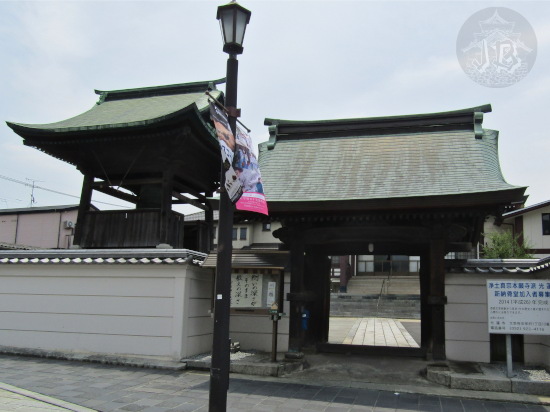
The reason why I was in Shinagawa was being close to the station as I was heading off to Kyoto. I took a shinkansen around 9 am and was in Kyoto just before 11, maybe. From Kyoto station I walked to Nishi-Hongwan-ji [西本願寺], which was about 10 /15 minutes away. It had been on my list since I went to Higashi-Hongwan-ji last year, but I had to go get some rest afterwards because I had a migraine.

As I was heading back towards the station I came across a building that really grabbed my attention. A little research yielded to finding out that it is a temple: Dendou-In [伝道院], which apparently belongs to Nishi-Hongwan-ji and is a research building. It was designed by a famous architect called Itō Chūta in 1912 in a style called “Evangelical”, and built shortly after. It’s not open to the public though, but it sure as hell is interesting.

After that I took the underground to my hotel. It was raining like crazy when I got there, and to make things more difficult, my bloody credit card decided to stop working. This made me slightly late to my 13:00 appointment at Studio Esperanto Oiran Taiken [studio-esperanto 花魁體驗]. Things were a little different this time. First of all, because I was just in time for appointment, I was directly ushered to the make-up room. Fortunately I had quite a clear idea of what I wanted, so it sort of worked in the end. The make-up artist was nice but she was a bit intimidated, and the photographer was difficult to communicate with, which hampered the experience a little. In the end, however, I got really cool pictures out of the experience, so I am not going to complain.

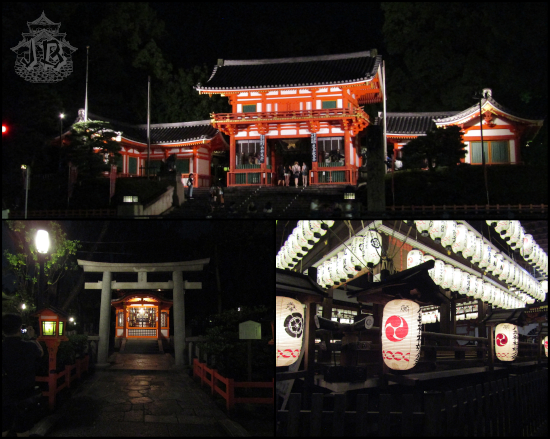
By the time I got out, there was a deluge outside. I was in the hotel, which was close to the photography studio, for a little, and after checking the maps that they had given me at reception, I realised that I was much closer to the Gion area than I – and Google Maps – had actually thought. There was one big park / shrine complex I could walk. At least part of it is called Maruyama Koen [円山公園] and it has a cool pond. I walked from the north entrance to the western exit, which belongs to Yasaka Jinja [八坂神社], the Yasaka Jinja Minami-romon [八坂神社 南楼門], the Tower Gate. I passed Gyokkō Inari Yashiro [玉光稲荷社] on the way.

I walked off to Gion, [祇園] which was almost empty due to the storm. Whenever I get to Gion in the evening, I always check whether there is a long queue at Gion Corner, which is a theatre that performs “traditional arts”:

  • Tea Ceremony [茶道]
  • Flower Arrangement / Ikebana [華道]
  • Koto [箏]
  • Gagaku [雅楽] Court Music and dance
  • Kyogen Theatre [狂言] (comic play)
  • Kyo-mai [京舞] (maiko dance)
  • Bunraku [文楽] Puppet Theatre

I was lucky this time, as the rain had scared most tourists away, so I could come in. It was a fun thing to do once, especially with “foreigner discount” it becoming half-price, but the audience kept talking and moving around the floor to take pictures and videos. Thai and Chinese people are loud (and a few of them rather disrespectful)! But all in all, I’m happy I got it out of my system, particularly the Kyo-mai dance.

After that, as it was not raining any more, I strolled down an almost-empty Gion.

Then I walked off towards an area that I had never been able to find before – Gion Shirakawa [祇園白川] and Tatsumi Bashi [祇園 巽橋]. Fortunately this time I had checked for the Tatsumi Bridge location fist, so it was not even that hard! I just had to know where to look for it! (≧▽≦).

I decided to take the way back through the park, so I could see all of Yasaka Jinja [八坂神社] lit up, which was very pretty.

As the hotel was also next to Heian Jingu [平安神宮], but as it was not lit up, I did not walk in.

Then I bought some conbini food and I went to the hotel to have dinner and a bath – the hotel had a hot spring public bath (and it was empty! Just for me!). I was lucky enough to get one of the traditional rooms, and the sand-puffs-like thingies were super-comfortable… until I had to stand up. It was so comfy I could barely stand up! And then I went off to sleep like at 10pm cause I was beat (∪。∪)。。。zzz.

Walked distance: 18517 steps / 13.2 km

19th August 2018: Uji, layovers and finally Ise {Japan, summer 2018}

Uji [宇治] is Kyoto’s li’l brother that nobody has ever heard about and which has a bit of a disproportionate ego. Today I set off to visit this small town, where I had not slept because it was crazy expensive. Armed with an online itinerary I got there and asked for a map at the tourist office – my surprise? One of the main attractions, the Genji Monogatari museum was closed. Because reasons I guess. Hindsight: I should have slept in Kyoto again and left luggage at Kyoto station as I would have to travel through it again.

My general impression of Uji is that it wants to climb the tourist ladder but at the same time, it does not want to carter to the actual tourists. Attractions were in general expensive and a tiny bit unwelcoming, while at the same time the people were nice in a bit of a condescending way. The demeanour of the tourist lady “what are you here to see?” was strange, and the fact that the Genji Monogatari museum, which is the reason why the town is even in the map, being closed, even more so.

My first stop in Uji was Byodo-in [平等院], a beautiful temple complex built around a small lake. Coming into the actual building to watch the paintings had an extra charge so I did not do that. Instead I snooped around the whole complex, museum, and sub-temples.

I continued my walking route skipping the tea house, because even if Uji is known for tea, it was too hot for hot tea. I got to the river, Ujigawa [宇治川], and crossed one of the bridges, the Kisen Kisenbashi [喜撰橋] to get to a small river island called Tachibanajima [橘島].

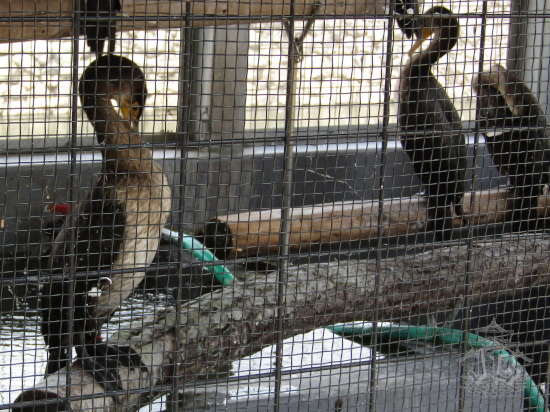
Another thing that is apparently typical in Uji is ukai [鵜飼] or cormorant fishing, which means fishermen use trained cormorants to fish. It was apparently too early in the morning for the cormorant to be out working.

I crossed then another of the rivers, the Asagiribashi [朝霧橋] to get back to main land, where I stopped by Uji Jinja [宇治神社].

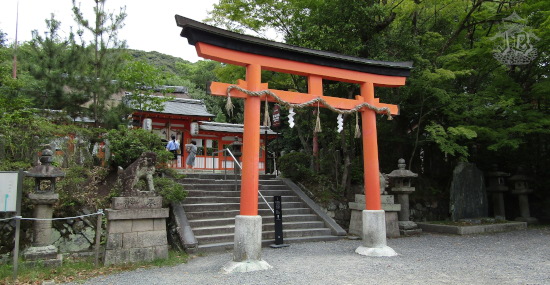
Then Ujigami Jinja [宇治上神社], which is basically another building of Uji Jinja but it got separated because the Haiden is a historical monument.

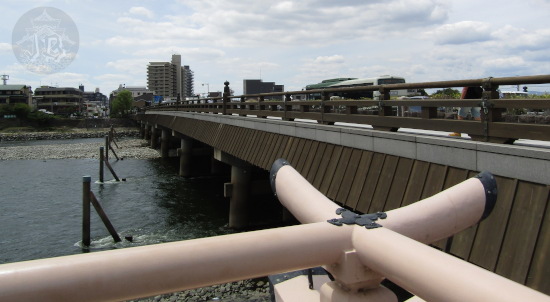
I finished my walk around Uji at yet another bridge, Uji-bashi [宇治橋], famously mentioned in Genji Monogatari. Do you see a pattern here and why I’m so weirded out about closed museum?

After Uji the plan was getting to Ise mid-afternoon, but my Shinkansen was late, which lead to a two-hour layover in Nagoya [名古屋].

That meant that I arrived in Ise [伊勢] in the Mie Prefecture, around 6 pm. I had two options there – walk 45 minutes to the hotel, or wait 45 minutes for a train that would take ten minutes to get at the hotel station, and then walk for 15 minutes. I chose to walk.

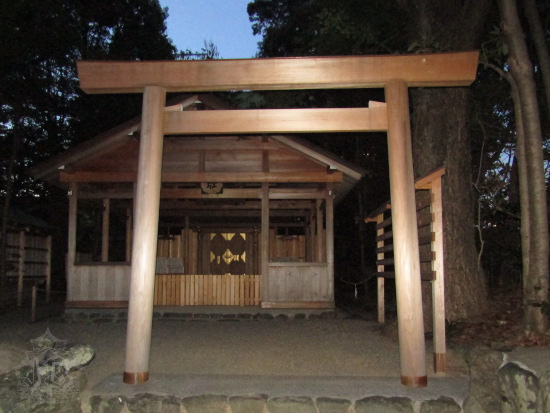
Thus I came across Tsukiyominomiya [月夜見宮] just as the sun started to set. I started to notice here the ‘naked’ torii, which are typical of Ise – it means that they are not painted or made of stone, they are plain wood, usually sakaki, a sacred tree in Shinto.

And Suhara Taisha [須原大社] a bit later (though the two look… creepily similar, don’t they?)

By the time I got to the hotel I was exhausted and hungry, and maybe a bit eeried out because I had had to cross a mostly deserted area over the river as it got dark. Sheesh, was I happy when I started seeing neon again. Bonus point, the hotel had an onsen, which was great for my back (and it was near a combini, so food was also had). The hotel was such a huge complex that they needed to hand out maps so you found your way between the different areas – onsen, reception, restaurant, room!

21st July 2017: Beppu – Hell day~ (in a good way) {Japan, summer 2017}

Beppu is, as I said before, known for having a lot of volcanic vents. It has decided to exploit this as a tourist resource. Beppu is still trying to open up to foreigners. It’s trying, at least partially. So cheers to the nice people.

The main attraction are the Jigoku [地獄] or hells, which are, depending on who you ask, seven, eight or nine. I visited eight of them. They are spectacular hot springs and vents which are too hot for bathing but really interesting to look at. The whole pack is called Beppu Jigoku Meguri [別府地獄めぐり]

I got myself a map, bought a ticket pack and a bus pass, and set off to the bus. Most of the jigoku are located in the Kannawa [鉄輪] District, but two of them are pretty far away, in Shibaseki [柴石] (2 km is far in the boiling summer, if the weather had been nicer, I would have walked back and forth).

I visited the Onishibozu Jigoku [鬼石坊主地獄] (Hell of the Demon-monk) which is a boiling mud puddle and a strong sulphur smell. I did not manage to get any bubble exploding, but the idea is that the bubbling mud looks like a monk’s shaved head.

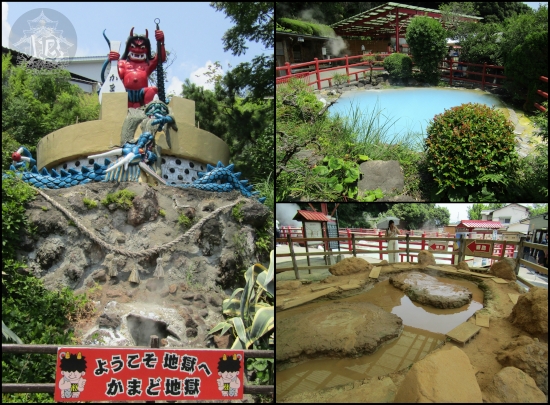
Second I headed walked into the Umi Jigoku [海地獄] (Sea Hell), which is a turquoise pond of boiling water with a small shrine. It also has a smaller reddish pond to one of the sides.

After this I took a break to have a made-in-hot-spring-water pudding and have something to drink, just because I could. It was delicious.

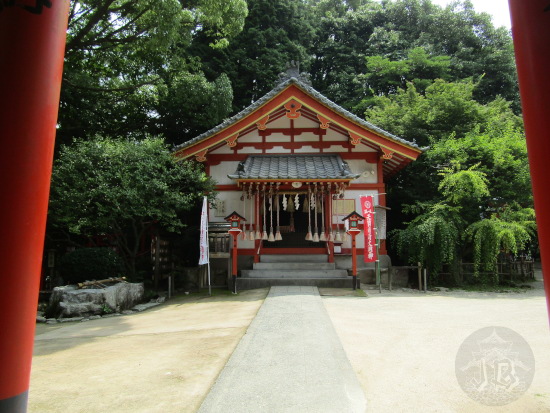
And there was Onsen Jinja [温泉神社] (Hot Spring Shrine) to snoop around, too!

Third, I dropped by the Yama Jigoku [山地獄] (Mountain Hell), which comes off from the mountain slope and complements that it is not the most spectacular one with having a small petting zoo, where I somehow ended up feeding a capybara. Don’t ask me XD (This hell is independent, so you have to pay extra to come into it).

Fourth, I went to the Kamado Jigoku [かまど地獄] (Cooking Pot Hell) which has a big oni cook to greet you.

Fifth, I found the Oniyama Jigoku [鬼山地獄] (Devil Mountain Hell) which for some reason breeds crocodiles, and what the hell, that was scary for a second. Even if they were behind bards, the crocs would follow you under the water and snip at your shadow and some of them were enormous! Creepy! The hot-spring itself was not that impressive but basically because it was steaming too much to see any of it.

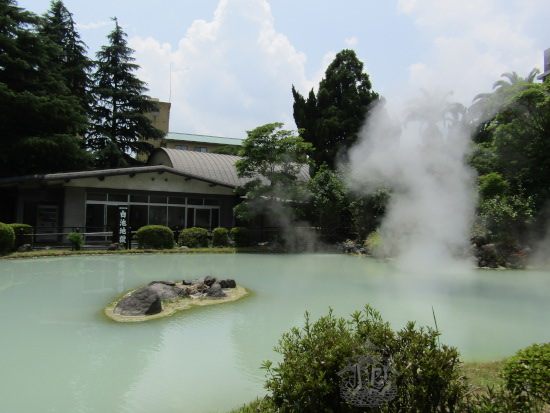
Sixth, I went to the Shiraike Jigoku [白池地獄] (White Pond Hell) where there was nobody to take my ticket. A nice old couple explained that I was to cut it myself and put it in a jar over there. We were talking a little and they asked where I was from. Then they continued on their way and I stayed petting a random cat who decided I was to scratch it right then and there. In this jigokku they also have a small aquarium with several tank of freshwater fish, among them “man-eating piranhas”…

I took the bus then to Shibaseki where the other two remaining hells were. Had the weather been more agreeable I would have walked, but I had the bus pass anyway and it was very hot. As I stepped out of the bus I came across the same couple from before. they explained that they had visited Spain before when they were younger and told me that they were from Osaka. We parted ways to go into the Chinoike Jigoku [血の池地獄] (Blood Pond Hell) which is a boiling red pond. Here I decided to take a foot bath as the area was empty and I was tired.

The final hell was Tatsumaki Jigoku [龍巻地獄] (Spout hell), a geyser you have to wait for, as it has its own timing. Here the old couple brought me a lemonade because they were adorable. And after the geyser it was over, or so I thought.

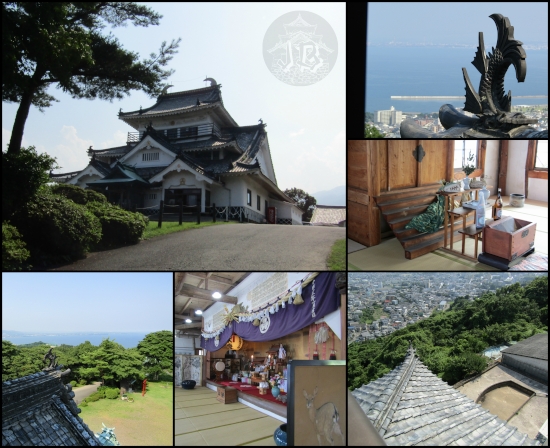
I had decided to give the aquarium a miss, because I was very tired but when I was taking pictures of the “castle” from afar I decided… I could not miss the chance, so I took the bus again towards Kifune-jo [貴船城] (which is quite new but pretty enough). Unfortunately the bus stopped right at the foot of the hill, so I had to go up and climb all the slope. I arrived just in time to pray to a snake which is supposed to bring happiness to whomever pats it.

After the castle I headed back downtown and took the train to backtrack to Kokura / Kitakyuushu [小倉 / 北九州]. While it is true that I had passed Kokura on my way from Fukuoka to Beppu, the idea was always to spend the minimum time on a train per day, but I wanted to combine Kokura with Okayama and make the following day a “castle day”.

Once in Kokura I checked in and went to see Kokura-jo [小倉城] by night.

20th July 2017: Dazaifu – not ready for thorough tourism {Japan, summer 2017}

Dazaifu [大宰府] was the neuralgic centre of the island of Kyushu between the 7th and the 12th century. Today is sort to Fukuoka what Nikko is to Tokyo. Nowadays it is mostly known for its temples and shrines. It has a central core close to the station where you get around quite easily and a few things off the way which… are an adventure to get to.

I started the day visiting Dazaifu Tenmangu [大宰府天満宮], which was crawling with tourists to the point that it was hard to walk at times. It is a big shrine with a huge bridge over a pond in the shape of 心.

Afterwards I got myself a bottle of water and climbed up to Tenkai Inari Jinja [天開稲荷神社] which would have been really, really awesome and creepy if I had been alone, but alas, there were a bunch of other tourists along. It was quite of a climb up so the number was fewer, which made it less crowded though.

After climbing down I wandered around and passed a tiny shrine on the bank of Aizome River [藍染川] the place of a rebirth of a woman named Umetsubo. There is also a small shrine and a “historical site.”

After this I reached Kōmyōzen-ji [光明禅寺], a Zen temple with a great garden, but no pictures were allowed, and you could not really walk through the gardens. However, it was much, much emptier and nicer.

It was now when I decided to head out to the Kanzeon-ji [観世音寺]…

… and Kaidan-in [戒壇院], along with the so called Bonsho Bell.

In order to get here the map sent me through rather bad roads, and it got scary for a second when a car was coming. Furthermore, the signposts were all messed up, making it hard to follow them and the map. But in the end I made it and even if I did not enter the museum, I felt accomplished.

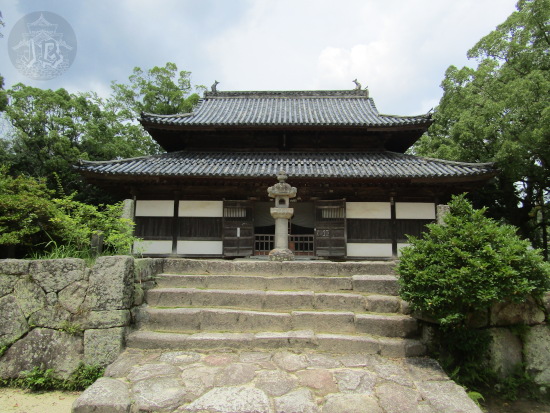
On the other side of the road you could climb up to Hiyoshi Jinja [日吉神社], a tiny and quiet shrine on top of a hill that I really liked – I thought the kami would be bored so I dropped them a prayer too.

After all this I still had a few things left, but I was very tired and there was a storm brewing, so I backtracked to Fukuoka, where I had slept, gathered my luggage and was ready to take a train to my next destination when I unexpectedly met with a VAMPS fan friend, the same one D****e and I ran into at Kumamoto castle! Small world! We had ramen – Hakata ramen, of course – together and then I took the train towards my next destination, on the other side of Kyushu: Beppu.

Beppu [別府] is a small town on the side of a volcano known for its hot springs because it’s on the slope of a volcano named Tsurumi-dake [鶴見岳]. It has almost 3000 volcanic spring vents and it is a bloody amazing place!

I checked into the hotel and almost immediately walked out because the hotel was right next to Beppu Tower [別府タワー]. However I got distracted by Matogahama Koen [的ケ浜公園] and the beach and the breakwaters.

Finally I climbed up to the tower and looked around the city. I was a little disappointed because I was expecting to see some of the vents or at least a spark coming for the volcano, but it did not happen.

Afterwards I walked down to the hotel and spent an hour in the public bath that they had, which was really, really good for relaxing. And then I collapsed in bed and got some sleep because there was a big day the following day!

(I have to say here that I have decided to omit here most of the ‘blergh’ part of this trip in order to keep only the nice memories, thus the upcoming posts are a bit edited. So I’m not telling you about the unfriendly people I met in the way and that made me feel a bit sad. Just the friendly ones because they rock! )

22nd & 23rd June 2013: Odawara and Hakone {Japan, summer 2013}

One of the few perks about a tectonically-active area is the volcanic landscapes, and Hakone has plenty of those. We headed off to Odawara [小田原] early on Saturday morning to visit the local Castle, Odawara-jō [小田原城].

Then we headed off to Ashi no Ko [芦ノ湖], Ashi Lake, which formed in the caldera of a supervolcano after a huge eruption millions of years ago. We crossed the Hakone Sekisyo [箱根関所], the Hakone Checkpoint, which back in time prevented undesired people from moving around – which meant anyone who was not friends with the shogun.

We made it to the city of Hakone [箱根] later in the day. There, we visited Hakone Jinja [箱根神社], which has a torii set within the lake itself. This torii is called the Torii of Peace, Heiwa no torii [平和の鳥居]

Then there was onsen – Japanese hot springs. No pictures of that XP.

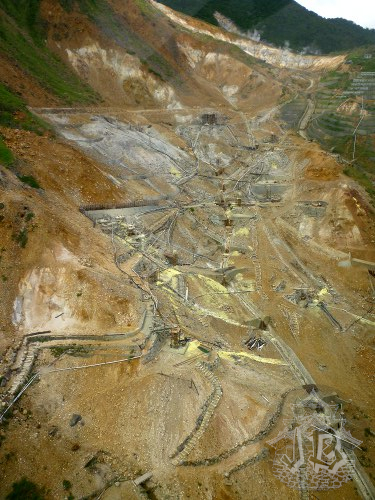
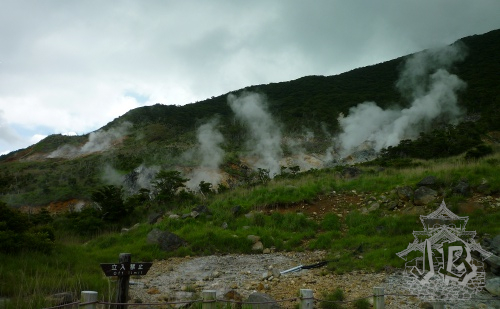
The following morning we went up one of the mountains, to an area called Ōwakudani [大涌谷] via murderous device called the Hakone Ropeway [箱根ロープウェイ] to watch the sulphur mines, the volcanic gases eruptions and to eat the famous black eggs, kurotamago [黒卵], which are normal eggs cooked in naturally-boiling sulphurous water puddles.

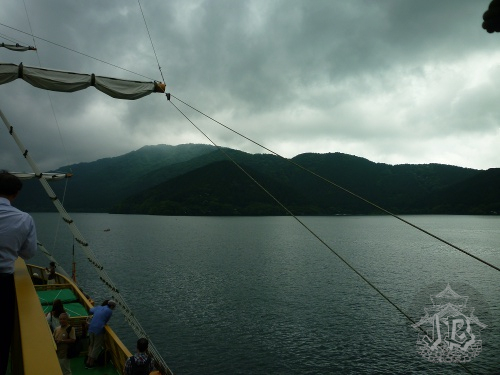
Finally, we crossed the Ashi no Ko in a “pirate ship” before heading back to Tokyo [東京] to karaoke the last hours of the weekend away. Unfortunately it was too cloudy to see the supermoon.