13th July 2016: Here we go again! {Japan, summer 2016}

I am a creature of habits and I won’t deny that. I will however wonder how come my phone thinks about autocorrecting ‘gabits’ to Gackt, which is interesting to say the least. Anyway. On July 12th I realised that my 朱印帳 (しゅいんちょう) or seal book was lacking one of my favourite Temples in the World! So off I went to Zojo-ji [増上寺] with my newly-activated JRPass. I gotta make the most out of it because it was expensive, mkay? ( ̄^ ̄)ゞ

Anyway, off I went to Hamamatsucho and I had a very beautiful flashback to the first time I saw Tokyo Tower [東京タワー], coming from that station. A lot of things have changed since then. I wandered around Zojo-ji temple, Shiba Koen [芝公園] and the base of Tokyo Tower for a while.

Later, I headed off to Ueno because the previous day I had not eaten Ichiran Ramen and I wanted Ichiran Ramen. I went with time to be able to wait out the queue. Once again I freaked some poor kid out. This was staring to get tiresome.

Ichiran is a restaurant designed for people who eat alone, and you have a little ‘booth’ to do your thing. Some people find it outrageous/controversial but as a lone traveler I love it. And if you are not alone you just take down one of the booth walls and you’re free to talk to whomever you came with. And the ramen is quite nice. And hot. But the restaurant is cold even with the hot ramen and always being packed so I guess it is fair enough.

After lunch I went back to Ueno station to make my reservations for the trip I was planning along the weekend and I decided to go to Ikebukuro again to get a CD I had not bought the day before as I was not sure it was the one I wanted – and the Internet was not cooperating. Once again I had to brave Ikebukuro station and this time I kind of gotten things sorted out! Let’s see how long I manage to remember what to do. Then I headed off to class.

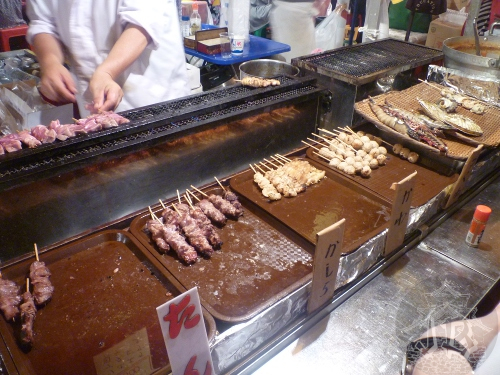
After class I walked over with T. to Yasukuni Jinja [靖國神社] to check the about-to-open Mitama Matsuri (festival), but we did not stay longer than the necessary to get some yakitori and be on our merry way.

7th July 2016: Not fishy smelling at all {Japan, summer 2016}

Well this was a new experience, but it made a lot of things gain sense. The famous Tsukiji Market, Tsukiji Shijō [築地市場] is closing down this Autumn and relocating. One of the reasons cited is health issues, cut I can understand why they think that tourists are an extra issue. Even when trying to stay out of the way you are in someone’s way.

Something that keeps fascinating me about Japan is the amount of people working on tourist services that have problems with foreigners and wrinkle their noses when they see you approach. This does not go of course to the fishmongers who were doing their jobs but the lady in the info service when we asked for a map in English. After a while we found s coin locker for T**y’s backpack and I shamelessly threw my books in (≧∇≦)

The Tsukiji Outer Market, Tsukiji Jōgai Shijō [築地場外市場] is packed with little shops mostly oriented to people getting their daily fish, and a lot of kitchen appliances, especially knives. It was bustling with tourists in the way of everybody, and little Japanese ladies examining every post for what they wanted to cook that day. After a while we found our way to the wholesale market.

There was a shrine in the way. Of course it required a visit. The Namiyoke Inari Jinja [波除稲荷神社] is located in the corner between the two markets.

The Tsukiji Wholesale Market, Tsukiji Oroshiuri Shijō [築地卸売市場], was full of… everything ≧(゚ ゚)≦. Fishmongers seemed to have learnt to work their ways around the tourists because they did not even lose their half smirk when they avoided running you to your death with their lil machines. I guess that getting someone killed would screw the day’s sales, as it would be unsanitary. The most impressive thing were the tuna <・ )))><< cutting dealers, with their long knives. Tuna has to be cut in one go, else it ruins the piece. And in case you haven’t seen an actual tuna, we’re easily talking about a two-metre long fish, and fishmongers dealing with one-metre long loin piece. Very cool.

After snooping around for a while we headed off for kaizen sushi with super fresh fish. I felt a little guilty about drinking cola with it, but damn it was hot. Very hot.

From Tsukiji we dropped by Akihabara [秋葉原] and well, there is a Book Off there… Finally we headed off to Iidabashi [飯田橋], where aside from my school, stands Yasukuni Jinja [靖國神社], quite a controversial shrine which enshrines the souls of the fallen in the WWII, which unfortunately involves some of the people considered war criminals.

But as it was Tanabata, they were preparing for a matsuri, and I incorporated that into my plans. I got the shrine seal and a sunburn for my troubles, then I headed towards the school for air-con, I mean some hard work (≧∇≦) there was a test the next day after all and I needed to prepare for that.

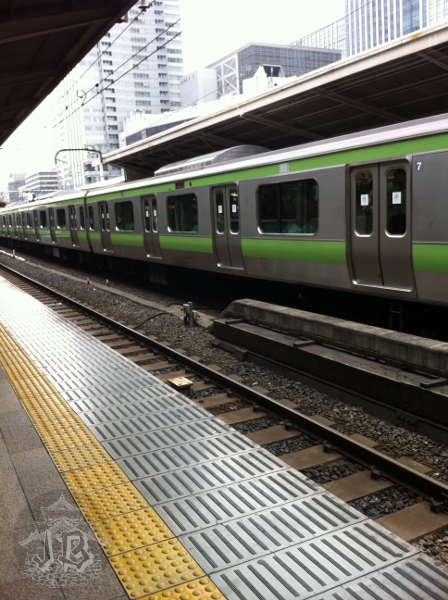
One of the good things about my area was that I was on the Yamanote line on one hand, and I had a direct line to my school, so commute was good. After school I went back to the apartment to study because I had a test the next day – don’t ask how it went (≧∇≦;).

13th July 2012: Modern & Hip vs. Spriritual & Traditional {Japan, summer 2012}

There was nothing to fear about Friday the 13th, considering that Kinkakuji had predicted me an excellent fortune (yay!), and it started with a niiiice breakfast – Swallowtails‘ cheesecake.

The first stop of the day was skipped due to a train mishap: I missed the stop and did not realise until I had transferred to another line, so backtracking would be expensive. I was not deterred and moved on to my second destination: Ginza [銀座]. Ginza would be the expensive shopping district, and to be honest it did not give me too much of a good vibe.

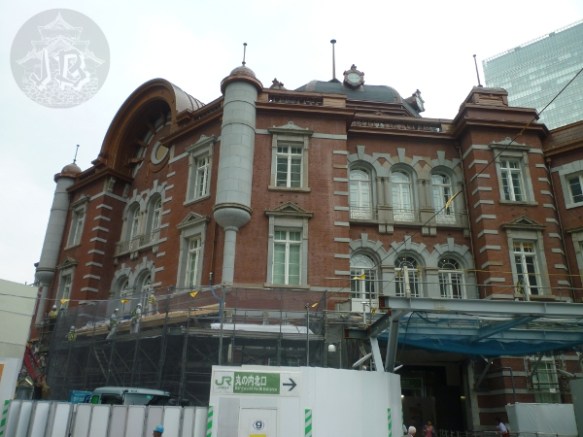
Not too happy with the place, I decided that since I could ride the Yamanote line for free (Japan Railway Pass = ♥) I would do a couple of other exteriors. The first one was Tokyo Station [東京駅] which was being renovated, so most of it was covered in white fabric.

Afterwards I headed off to Akihabara Electric Town [秋葉原], the place of Tokyo that seems to have more gaijin per square metre. Akiba lives up to its reputation of flashy, hentai, and maido-café infested. Sadly, the Mandarake was doing some kind of renovation and the usual entrances were closed, so I could not find the way into the… interesting section.
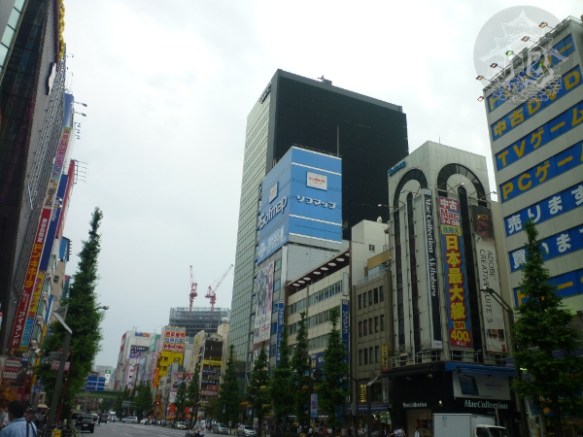
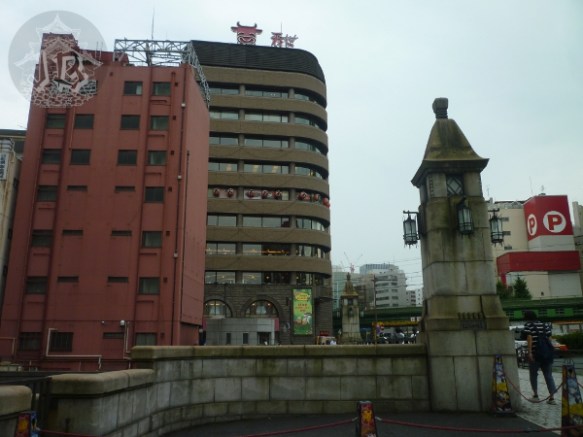
On top of the usual Akihabara scenario, I also found some remains of old Tokyo, among them this old stone bridge, Mansei Bashi [万世橋]

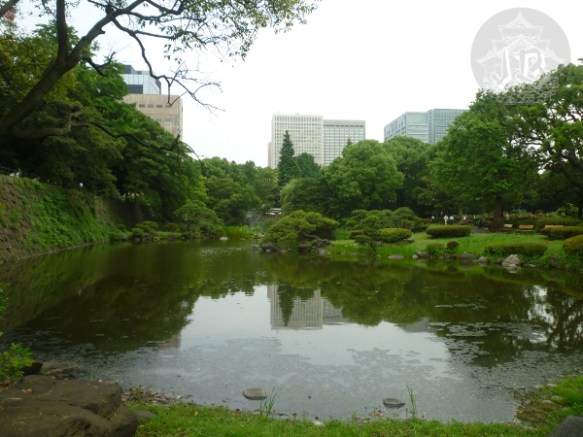
The evening’s destination involved a transfer in Ginza again, so I backtracked towards it. Instead of going into the shopping district, though, I headed off to Hibiya Koen [日比谷公園], which reportedly was were the first shogun houses were, around the Imperial Palace.

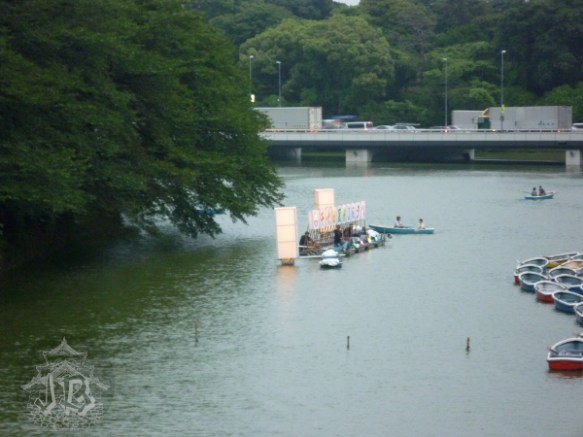
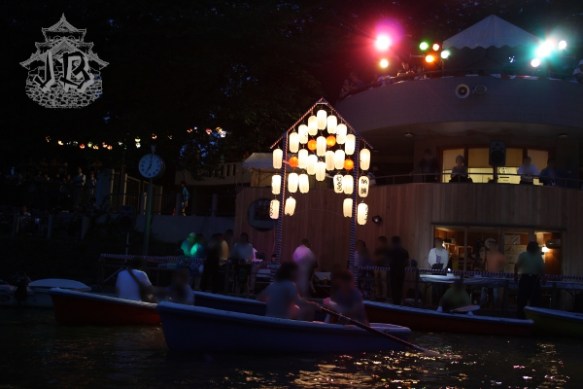
After some rest and chocolate cookies, I set off towards quite literally the other corner of the castle, to Kudanshita [九段下]. We have heard about the Chidorigafuchi Toro-nagashi, a matsuri (festival) that involves a number of boats releasing lit lanterns on the water in the Palace Moat at Chidorigafuchi Koen [千鳥ヶ淵公園]. Sounds a pretty thing to see, right? Right. Thing is that Kinkakuji fortune kicked in, so when we arrived there had been a cancellation on one of the boats and… we became part of the festival.

Chidorigafuchi Park is close to Yasukuni Jinja [靖國神社], where yet another festival, the Mitama Matsuri, was being held. We had matsuri food (yakitori), admired the lanterns and heard a bunch of young men doing taiko (traditional drumming). It was beyond amazing an evening.

6th July 2012: 東京の雨(傘) {Japan, summer 2012}

On Friday I walked a lot but saw fewer things. I started with Yasukuni Jinja [靖国神社], which was preparing for a matsuri (festival), as you can see with all the lanterns. The lanterns had names in them and I have the chilling feeling that there’s one for each Japanese soldier who died in WWII – Yasukuni Shrine is dedicated to the fallen in that war.

A wall of yellow paper lamps being hung outdoors

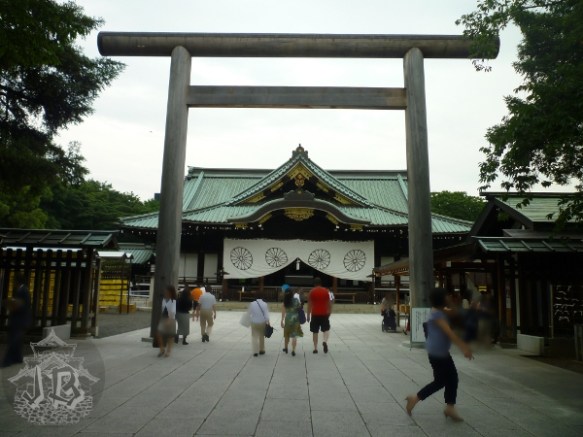
A torii gate and a shrine behind it. The shrine is hanging the imperial banner. The building is made out of dark wood with golden decoration, and the roof is green-grey

The shrine visit was followed by a 30-minute stroll toward the Diet Building [国会, Kokkai] , which is something like the Parliament. Surprisingly enough, I got there without much trouble. I checked points with this because a) is cultural building b) is a barrier in X Clamp and c) is where the Shinigami in Yami no Matsuei are based. Risky picture in the middle of a crossing too! (pedestrian light was green, so not that impressive, to be honest.)

A severe looking building, closed off by fences and guarded by the police

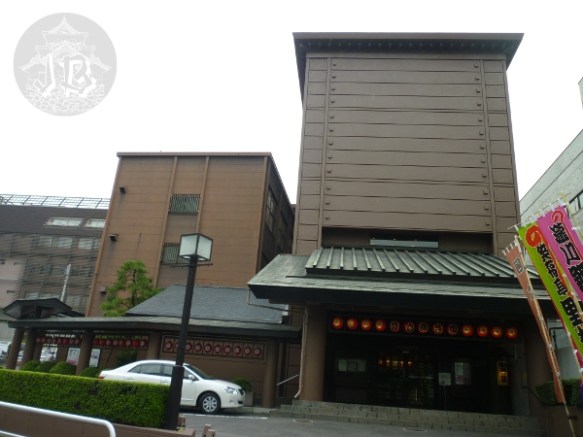
As I was walking towards the Diet I found the National Theatre by chance. It was not in the plan, but i decided to check it out:

A shoebox-like building, in brown, with some reddish paper lanterns at the entrance

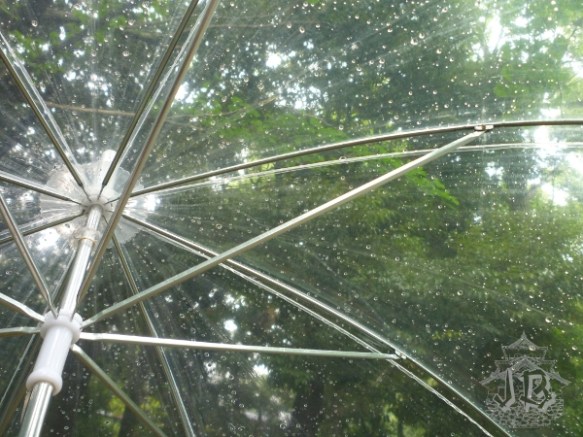
It started to rain and I was heading to Yoyogi Kōen [代々木公園], where I took a series of fun pictures through my (D****e’s) umbrella. It did not work as well as I hoped for though XD. Originally Yoyogi Park was conceived as a sacred forest around the Meiji Temple.

Trees through a transparent plastic umbrella

Thus, Meiji Jingu [明治神宮] was erected in the middle of the sacred forest of Yoyogi to honour the Meiji emperor and his wife. It is a very impressive complex, to be honest, and not even the bunch if tourists manage to break the spell of the place.

The entrance to Meiji Jingu, with a torii, and a small fountain to the left, and a lantern to the right

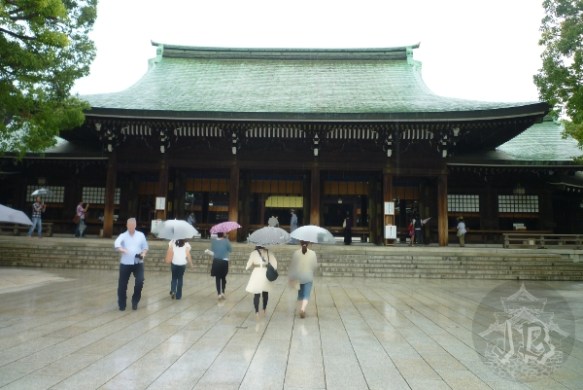
The main building of Meiji Jingu, in dark wood with a grey roof. A few people are approaching the building, all of them are carrying umbrellas

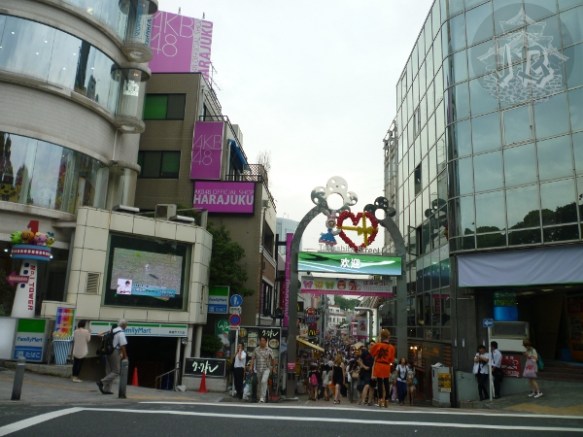
Finally I took a walk down Harajuku [原宿], where I, fortunately, did not buy anything. I swear, this country eats money way too fast…

A shopping street. The entrance is decorated with balloons strung together to look like a heart

Stay tuned for the tale if our trip to Nikko on Saturday and how we did not go to see the waterfall… the waterfall came to us. It was not the deluge… but almost. 大雨.

Title translation: Tokyo no Ame(gasa), it’s a pun on Tokyo’s rain and Tokyo’s umbrella. The Japnese word for rain is “ame”, and the word for umbrella is “amegasa”