For all the solo exploring I do, I still second-guess my abilities when something I want to see involves a reported-as-difficult hike. However, I got tired of waiting for people who had expressed interest in tagging along for this small adventure. Thus, when the summer heatwave gave way to more bearable temperatures for a couple of days, I drove to the area. There is a convenient parking lot to leave the car without breaking any laws and since I reached it before 9:00, it was still reasonably empty, even if it was a weekend. I changed into my hiking boots and got on walking.
The spot I wanted to reach were the Mingo Negro Gullies Cárcavas de Mingo Negro, in the municipality of Alpedrete de la Sierra, within the nature reserve Parque Natural Sierra Norte de Guadalajara. Gullies are erosive landforms usually created by a combination of running water, especially torrential rains and floods, and small landslides as the sediment collapses. Gullies tend to be devoid of vegetation and generally quite vertical, as they commonly form on steep landscapes, often on sandstone or conglomerate soils. These particular gullies are the remains of an alluvial fan, an accumulation of sediments characteristic of mountain areas in semi-arid climates, which opens as it leaves a confined area, so when you look at it from above, it resembles a fan – hence the name. Gullies are common in badlands as the dry terrain is drained downwards and no vegetation holds it. They are considered to be unstable landscapes.
The Mingo Negro Gullies are on the left bank of the River Río Lozoya. A dam Presa del Pontón de la Oliva was built to contain the river in the 19th century, and though it is still standing, it could not be used as a reservoir. There is a kind of road / bridge that crosses the river and leads to the trail. It was rather easy to follow at first, but eventually I reached the steep part. Though there is technically a trail there, somewhere, the ascent is not easy to follow due to poor maintenance and water erosion. Hiking up the 370-metre slope took me about 20 minutes, and it was tiresome for but not as hard as I had pictured. To be fair though, I’ve recently bought a hiking pole and that was helpful. The terrain was a bit unstable and I kept my eyes on the ground, which is why I almost missed the first sight of the gullies (a later visit to the area revealed that I should have already seen them from right out of the parking lot, but the sun was in my eyes).
The trail is not well maintained, so plants are overgrown. If you actually want to see anything of the gullies you have to go past the “do not cross” signage, even at the viewpoints. However, you have to be very careful not to approach the border as the terrain is inherently unstable. While I was coming up, the sun masked the clay-red colour a little, which was a pity.
Though some of the online-sourced routes do so, it is also ill-advised to go into the actual gully, so I just stayed in the upper part along one of the marked trails. I did step beyond a couple of barriers, but made sure to stay a respectable distance from the border. I ventured through some of the secondary paths for pictures on my way down. However, I did not go down to the ravine, as cool as that must be, because there is a risk of collapse.
There are several trails that go to or around the Cárcavas de Mingo Negro, the most common of it circular. However, I did not feel like doing that one, which takes over four hours. I wanted to see the dramatic gullies, so once I was done around that area, I turned back using the same trail I had used to climb up. By that time it was around 11:00, and though I had seen nobody on my way there, now I started meeting people climbing. A family became quite indignant because I was not following the circular trail. Someone else had decided to tackle the hike in flip-flops. Some people are… peculiar.
There is a bar somewhere at the beginning of the route, and there were some buildings indeed. However, it was either closed – or I did not find it. I had thought I would stop for breakfast there, and then head to do something else.
I reached the Presa del Pontón de la Oliva dam again. The structure, in the municipality of Patones, belongs to Madrid’s Water Management system Canal de Isabel II and it is considered local heritage as it was the first dam built in the area. Madrid became the capital of Spain in 1561, and in the 19th century its population was growing fast. Water was obtained through fountains, whose waters came from underground water canals built 400 years prior. From the 18th century onward, architects started studying how to channel water from the nearby rivers into the city. Part of this program yielded to building the dam between 1851 and 1856 with the idea to create a reservoir. The structure is a gravity dam, with a height of almost 30 metres and a width of 72 metres at its longest. Two years after it was built, the rest of the project was completed, and water reached Madrid. However, the location had not been correctly chosen – water filtered through the rock walls to the sides and underneath the ashlar construction – and in 1904 the reservoir was closed down, so water flows freely through a tunnel under the construction.
I heeded the “flood plain, do not enter” warnings, but neither Sunday hikers nor free-range cows did. I remained on the upper area and explored a little of the area called “the balcony”, built alongside the dam to admire the structure. There is another hiking route, Ruta del Agua that starts there, but again, this was not something I wanted to tackle today, as it was my first day out after a long period at home. Had I found the bar open, I would have hiked further (the whole route is about four hours though, so it was probably good I did not).
In the end, I headed back to the car and drove off. I thought I might stop to see a windmill on the way, but I somehow missed the turn to the hamlet where it stands. I was almost surprised when I saw the road sign for the last village before home. All in all, I saw what I wanted to, and found a nice easy drive with further routes that can be taken and enjoyed in other circumstances. I think I can reasonably squeeze a couple other visits to the area.
The National Museum of Natural Science Museo Nacional de Ciencias Naturales in Madrid announced that they were having an exhibit called Dinosaurios entre Nosotros / Dinosaurs among us, a collaboration with the American Museum of Natural History (though the original exhibition was apparently called Dinosaurs among us: The ancestry of birds, which feels slightly more accurate).
When I was young, it was believed that dinosaurs came from birds. With the new definition of what a dinosaur is, it turns out that birds are dinosaurs. The key features used to define a dinosaur is that the animal belongs to the clade (natural group) archosauria, and it has hind limbs which are erect underneath the body – as opposed to growing sideways and bent. Currently, two groups of archosauria exist: crocodilians (with bent legs) and birds (with straight legs). I think if you ever look into an emu or a cassowary’s eyes, you’ll understand what a deinonychus’ (the real species of the Jurassic Park velociraptor) prey might have seen.
The characteristic that originally defined archosauria was the hinge-like ankle structure. As time went on, protofeathers developed and some animals adopted a straight-legged stance, which is the start of the real dinosaurs – first the ornithischians (triceratops), then the sauropods (patagotitan or diplodocus), and the theropods (tyrannosaurus), the first with a wish bone. Then the forelimb became wing-like (deinonychus), yielding to the Avialae clade, which developed flapping flight. Some scientists declare that all Avialae are already birds. Others claim that birds are the subgroup Aves.
I took the train to Madrid and walked to the museum Museo Nacional de Ciencias Naturales. It took a second to be admitted because their computer system was down, but I was carrying cash, so I could was able to purchase my ticket (I had not bought it in advance because entry is timed, and I did not trust public transport delays). It was around 10:30, still early enough so that the museum was not crowded even during the school holidays. I headed directly to the exhibition, which, mostly through panels, taxidermy, and mounted birds, summarised how dinosaurs behaved similarly to today’s birds – laying eggs, brooding those eggs, protecting the nests… The biology and anatomy of birds and dinosaurs, especially theropods, are very similar.
There was a very special exhibit – and no, it was not the Tyrannosaurus rex skull they’ve got. It was the original (and only) fossil of Iberomesornis romerali, a holotype from the MUPA, which you cannot photograph at its home, but you can here (just like my photography spree with the Concavenator at MARPA). Iberomesornis was the sparrow of the Early Cretaceous. There was a reconstruction of how it would look in real life (though I’ve read some texts that say it’s an outdated view?).
Similarly, there was a model of Archaeopteryx, the first ever-discovered feathered bird-like dinosaur. With only 13 specimens ever found, it was key in palaeontological studies before more avialans were discovered. This one was a replica, I’ve only seen one real slab ever in the London Museum of Natural History (I hope I can see the Berlin one at some point). The model was so ugly, the poor thing, but somewhat endearing.
There was also a model of Anchiornis Huxleyi, discovered in China and named after Thomas Henry Huxley, the biologist who in 1869 suggested that maybe birds were related to dinosaurs. He did this comparing the hip of a Megalosaurus and an ostrich (for a while, dinosaurs were classified using “bird hip” and “reptile hip” criteria) amongst other similarities, and of course he used Archaeopteryx as evidence. Unfortunately, the poor guy is more often remembered for being a Darwin fanboy – he was even nicknamed “Darwin’s bulldog”. Palaeontologist Xu Xing described the species in 2009, and chose to call it “Huxley’s almost bird”. It has allowed to rebuild almost completely the colours of dinosaur feathers.
The rest of the exhibition was most… modern birds, sprinkled with children’s disappointed “Where are the dinosaurs?” wonderings. Truth be told, at the end of the exhibit there was a life-sized reconstruction of Velociraptor mongoliensis, the “real” one, not the presented in Jurassic Park, along with the explanation that Michael Crichton found the name cooler than Deinonychus, which is the animal he described in his book.
So in the end, the exhibit was a lot of information about birds, hyped up with the buzzword “dinosaur”. Interesting enough but… not really what it was pumped to be. That’s what good PR does, I guess. And erasing half of the exhibition’s original title…
Back to Darwin though, the museum has a bit on him in its gallery of biodiversity – which is just a way to… continue exhibiting the old taxidermy specimens that they already had, some of them… made with more success than others – while some of the works they’ve got are extremely realistic, some others are… horror shows – such as the famous giant panda that the Zoo Aquarium first hosted.
One of the most interesting parts of this museum is the science cabinet Gabinete Científico, which recreates Carlos III’s scientific collection. It shows a glimpse of how science was understood at the time (though the human skeletons it used to host have been quietly removed).
Recently, the museum became the custodian of Santiago Ramón y Cajal’s legacy, including his Nobel Prize certificate and medals. Ramón y Cajal was a Spanish doctor considered the father of modern neuroscience. In 1888, he discovered how nervous cells work, even before they were called neurons, and that they were separate entities that created the nerves and the brain, explaining how impulses are transmitted through the nervous system. He described characteristics that could only be observed in real life almost a century after he wrote abut them. In 1906, amongst many other awards, he received the Medicine Nobel Prize alongside Camillo Golgi, who designed the methodology to colour cells, a process that allowed many of Ramón y Cajal’s discoveries. The museum exhibits microscopes, drawings, and his original office and library. For some reason, next to the ocean display and the giant squid.
This was all in the first ward of the museum. The second one is on the other side of the building that it shares with the Industrial Engineering School. To get there, you have to follow the dinosaur footprints, but I took a couple of detours. First, I got a bit distracted trying to figure out the “Mediterranean Forest” garden, but honestly it was too hot to stay there for long. Maybe some other time with better weather.
My other stop was at the Engineering School, Escuela Técnica Superior de Ingenieros Industriales (UPM). I had recently discovered that its main hall hosts an 1832 steam engine, built by the company David Napier & Son Limited. The machine was designed to power coin minting, and it was one of the first machines to arrive in Spain, purchased by the Royal Mint. It is not clear in the description if it was designed by James Watt, or just similar to his models, but it seemed a piece of history worth seeing – and the janitor was distracted while I snooped around. The engine was donated to the Engineering School in 1914, when the Mint replaced it.
I reached the second building of the science museum Museo Nacional de Ciencias Naturales, which is the palaeontology, geology and anthropology ward. Nothing had changed there that much since my last visit. Here’s a funny story though – they have a replica of a Diplodocus carnegii, of Dippy, exactly the same one that the London Museum of Natural history has – albeit on tour. Why am I so obsessed with the London one, having another replica so close? I think it’s because the “care” the NHM gave it, while in Spain it has just been set against a wall, mixed with all the other dinosaurs from whichever age. It actually took me a while to realise they were the same cast…
The original Dippy fossil was unearthed in 1898, and soon Andrew Carnegie bought it for his new museum in Pittsburgh, hence the name of the species. In 1902, King Edward VII convinced Carnegie to donate the original cast to the NHM while the skeleton was still unmounted (there was no museum to house it yet). In later year, Carnegie would donate a few more casts to other museums in the world, including Madrid, Paris and Vienna.
This time around (call it selective perception, or plain looking out for them) I spotted the trilobites from the Murero palaeontological site, one of whose characteristics are how deformed they are, due to the earth’s internal forces and movement. The museum has a large mineral collection too, but I think it lacks something. Maybe it’s me mentally comparing to other natural history museums in Europe, or even other incredible museums in Madrid itself, such as the Geomineralogical museum nearby. It is missing… loving, in a way. I think the Natural History Museum is a bit of an ugly duckling in the cultural system, because even if it’s considered a “national museum”, it is not part of the national network, so there is something weird going on there.
As I left the museum, it was incredibly hot. It was early for Spanish lunch, but some places had already started opening. I had been looking at an “Asian Market” called Oiko, but then I read that you have to order through a machine (okay) and input your phone number so they call you on WhatsApp when your order is ready, and I get too many spam calls already. I was not planning on giving out my phone number to anyone who does not need it. Even if they had taiyaki desserts.
Instead, I found a burger joint called Steakburger, which self-describes as a gourmet burger restaurant, trying to become a franchise. I later realised that they are not 100% upfront with their prices, as the online menu lists one price, but the details shows another – and the desserts don’t even come with prices. It might also be a coding issue, since once you’ve checked the details, the correct price shows everywhere. Also, the machine translation is awful. Anyway, I had seen that they carried a burger with matured Angus and a topping of raclette – red cheddar, Gouda and mozzarella which were poured onto the burger, alongside Batavia lettuce and tomato, La melting cheese madurada. Honestly? It was good but not worth the price. The desserts looked decadent, but the burger was enough for me.
Afterwards, I just headed off to the station to take a train back, and for once I was there when a train was about to arrive. It was just too hot to look for something else to do, and during August a lot of things close at 15:00.
I am weird. Give me an exhibition of things I’ve seen (from the MAN) or I’m planning to eventually see (from the Roman Museum in Mérida), and – even if it is nearby – I won’t feel like coming. Add a thirty-minute historical recreation, limited-time only and I’ll be all in. The archaeological museum Museo Arqueológico y Paleontológico de la Comunidad de Madrid MARPA, in Alcalá de Henares, was running an exhibition on gladiators from Hispania called ¡Hispano! Gladiadores en el Imperio Romano (“Hispanian! Gladiators in the Roman Empire”. I have no clue what the exclamation mark is doing there). It’s not like I was not interested, it was just… not really drawn to it.
However, I did hear about the historical recreation just about it was going to end. And you know how I am with “now or never” feelings. The way it was organised made it a bit of a challenge though – tickets were free but handed over at 15:00 for three sessions: 16:00, 17:00 and 18:00, and I had no idea when people would queue or whatever. I arrived at the museum around 13:30, and asked at reception. They told me that people usually started queueing around 14:30, and thus I decided to head there around 14:15 to secure entry.
Meanwhile, I checked the exhibition out. The majority of the pieces were reproductions, but there were a few originals. The most important real artefacts came from the Mérida Roman Museum, which as far as I know is closed at the moment. There was a guided visit going on, and I reasoned that a bunch of those people would also want to see the recreation.
The collection included reliefs, mosaics, and some sculptures. There was also a copy of the Roman Law from the MAN. In glass cases, helmets and weapons – most of them real – were displayed. In the centre there was a round amphitheatre where the recreation would take place. It was a small exhibition.
Afterwards, I wandered the rest of the museum for a bit, and around 14:15 I went to queue, displeasing the security guard who said that lining started at 14:30. That was not what I had been told. I offered to move, but he muttered “never mind”. What is with security suddenly going weird when there is queueing involved? I’d never had any kind of problem with the MARPA staff before.
At 14:55, I got my free ticket and headed outside the museum for a quick bite. I had planned to try a typical pastry, but all the patisseries close from 14:00 to 16:00, which was inconvenient. I ended up having yoghurt ice-cream instead. I had never seen the main street Calle Mayor or square Plaza de Cervantes so empty, but I guess that was because of the heat. Afterwards, I walked towards Puerta de Madrid, an 18th-century monumental gate that took the place of the actual wall gate. Coincidentally, the structure shows up in the 1960 gladiator film Spartacus.
I went back to the museum and we were soon admitted into the “theatre” that doubled as arena. The recreation was carried out by the historical recreation group Antiqva Clio. There were three actors: the lanista, and two gladiators. There was a kid running around too, but he was sort of the mascot, and a lady in plain clothes helping out.
The recreation started introducing the concept of ludus (plural ludi): a gladiatorial school, where the gladiators were housed (kept) and trained. The owner or lanista selected the fighters – slaves, criminals or free men – and assigned them to a category, either heavy-weight or light-weight.
The lanista was the owner of the school. He invested in the gladiators and their training. Gladiators who were slaves or criminals could eventually buy their freedom if they won enough fights. Once the gladiator entered the ludus, they took the “Gladiatorial oath”, which was akin to “we accept to be hit, burnt, chained and killed by the sword”. Which… was not the expected one, right? To get it out of the way from the get-go, apparently the whole Ave Caesar! Morituri te salutant (Hail, Caesar, those who will die salute you), was popularised in the 19th century, and there is only evidence that it was said in real life as Avē Imperātor, moritūrī tē salūtant, once. It was in the year 52 CE on Lake Fucinus (not even a circus), where a group of criminal and prisoners sentenced to death were to fight on a naumachia (mock naval encounter) until there were no survivors.
Anyway, back to what I learnt. After swearing the oath, gladiators chose a fighting name, and got right into the fray. They trained together and became a sort of family, even taking care of each other and their relatives. Gladiators tended to specialise, as there were different classes with styles and weapons, and the ones who fought each others were different from those trained to hunt beasts. Fighters trained with weighed weapons so the fight would seem much smoother on the show. They were well-fed and even a little chubby so there could be wounds and blood without jeopardising their lives too much. As a matter of fact, when a gladiator died, his lanista had the right to monetary compensation for “loss of investment”.
The standard Roman circus games, ludi circenses, were sponsored by an editor, a sort of promoter who paid for everything. He hired the gladiator schools ludi to offer free entertainment to the people around him. The games started with Wild Beast Hunts (a fighter who was trained in this was called a venator or a bestiarii), then came executions, then the gladiatorial fights (munera) happened.
The gladiators who fought each other were paired: a light-weight versus a heavy-weight, and each fight took about ten minutes. There were different classes of gladiators, and we had an example of a murmillo (Leandrus) and a hoplomachus (Pintaius). The murmillo was a heavy weight-gladiator, equipped with a large shield and a sword. He was the defensive party. The hoplomachus was the light-weight and thus the aggressor. He carried a spear and a small shield. In general, one was “too armed to move” and the other one was “not armed enough” to somehow balance their differences. Both wore helmets with bad visibility in order to increase the drama.
There were two more figures in the games, the rudis, sort of a referee, and the lorarius, who made sure the fighters gave everything they could using a whip to motivate them. Though there was a risk that fighters might die during the fights, it was not the common thing. The winner received a laurel crown, a palm, a purple coat, a silver tray, and a bag of money. The loser could be pardoned or killed, but the whole thumbs-up, thumbs-down thing? That is not historically accurate either. If a winner gladiator was ordered to kill a loser who came from the same ludus, he made sure to do it as quickly as possible.
When a gladiator had won 10 fights, he had enough money buy his freedom and leave the life completely, though he could continue fighting and even assume another role in the ludus, such as a trainer or doctor of sorts. There is no historical information about how a fight was refereed, but here they did a first-to-reach-three-hits scheme. The lanista divided us in two groups to cheer for each gladiator, and the one on my side lost. Apparently Antiqva Clio‘s fights are not staged. The members of the recreation group actually train (with non lethal weapons of course) to learn how to fight, and whomever wins has won. No idea, but I felt sorry for the guys, who had to do it again in 30 minutes, and they were exhausted.
Afterwards, we could take pictures with the gladiators – and they let me hold the weapons, since “my mum was not around to grant or deny permission”. In the end, I just headed home. The walk to the car was a bit scorching though… The price you have to pay for an easy parking spot is a ten-minute walk that… gets hard towards the end of July.
But there was a limited-edition activity and I had got to do it. Good job me.
While Zaragoza (Saragossa) is not a super-busy city, the noise from the large avenue the hotel was in woke me up early enough to be amongst the first customers at Pannitelli Original Bakery. I had a toast, orange juice, and a coffee, then set off to the not-so-easy task of retrieving my car, driving back to the hotel, getting my deposit returned, and going on my merry way. It took a while, but once that was taken care of I could drive off. Getting out of Zaragoza was easier than getting in had been, and there were few cars on the road. One of them was the traffic police, so every driver seemed on their best behaviour…
Once in the speedway, the first stop of the day was a petrol station, as there was no way I made it home with one quarter of a tank. Unfortunately, there were no low-cost fuelling points on my way, so I had to use a big-name one. Thirty euro don’t take you as far with branded fuel…
To be fair, I could have driven home the previous day, but I thought that after such a week, an extra night of sleep could only be beneficial. Staying also allowed me to see the Asian treasure exhibits in the Lonja and make a stop on the way. My first idea had been going downtown to see the Natural History Museum, but it closes at the weekend. That was why I asked about the visit during the course, and it turned out it was doable. Thus, in the end, I decided to make a stop in a small palaeontological site that I would not travel to otherwise. Furthermore, the site popped up during the course twice – the signage had been handled by Paleoymas and the Natural Science Museum had quite a few specimens from there.
The Yacimiento Paleontológico de Murero palaeontological site holds remains from the Cambrian Period, extremely important because there are around eight million years’ worth of fossils (511 to 503 million years ago) preserved in the strata. Palaeontologists have found about eighty species of trilobites, along with echinoderms which had not yet developed five-way symmetry, brachiopods, worms… It is mainly composed of shales which allow for soft-bodied organisms to be fossilised along the hard bits like shells or exoskeletons. The site is famous because it allowed researchers to identify sexual dimorphism in trilobites – they were able to describe two distinct types of animals within a same species, which are interpreted as male and female. What they don’t know is which animal is which sex.
I left Zaragoza using the A23, then turned to a national, smaller road (N234) that crossed over to the A2. The site and the municipality it technically belongs to, Murero, lie halfway through this road. As mentioned before, not somewhere I would purposely travel to, but since I was literally in the area, it was a convenient stop. The regional road was all right, but the local one was narrow and the curves were very sharp and steep. I was thankful that all of the cars I saw passed while I was hiking or taking photos of the site, and none while I was driving. I decided to only stop at the area which had a small parking lot so it was safe for me and any potential driver.
To be honest, I expected to see more in the palaeontological site. The signage has either weathered out or been vandalised and nothing is readable. It is a short walk up and down a hill where you can’t really see anything except for a box at the top where people leave what they find, but there was not a chance to see anything in situ. I guess the palaeontologists and the amateurs have taken out everything that is worth anything already – or left it well buried so it can’t be pillaged. I wouldn’t even consider it a nice hike because broken pieces of slates made the path extremely slippery (I forgot my hiking boots in the car…).
And oh, the temptation to steal a trilobite from the display box was strong! I resisted it though, and headed back to the car after an hour or so. I undid the path towards the N234 road and continued onto the A2. I made a stop in-between for some caffeine and a snack, but I was home for Spanish lunchtime. I have to admit I had pondered stopping somewhere along the way, maybe Daroca, Belchite or Calatayud, but considering that I still had to drive back, I decided to leave it for another time.
On my first solo road trip, I was surprised by the sheer amount of people who like driving at the same speed all the time. A bunch of drivers in the regional road, with limits of 90 kph, did 70 kph even when they drove through 50 kph towns. The same happened in the speedway – some people drove at 110 kph, both at the 120 kph or the 100 kph stretches. There were also those who liked aligning their cars with the markings that separate the lanes, effectively occupying both. The lorries were more manageable on the way back than towards Loarre, as it was a Saturday morning, and because the speedway feels more “downwards”.
Once home, it hit me how tired I was, so I guess it was a good thing that I had not made another stop. Checking Murero out was a good idea as it broke the trip in half and was a small hike that helped me keep alert, but more would have been overdoing it.
As a recap of my experience with the course Técnicas de restauración en paleontología a través de la preparación de los huevos de dinosaurio de Loarre: Palaeontological Restoration Techniques through the preparation of Loarre dinosaur eggs, I can say that all in all, it was amazing. The professors were extremely knowledgeable, they made learning effortless and entertaining, and the group was fun and easy-going. The course was way more hands-on than I had expected, literally covering everything from geological analysis to the fate of a dug-up piece, either in display or in storage within the museum, including working with the fossils themselves. It was not cheap, mostly due accommodation choices, but booking in advance probably made it better – and honestly, decent hotels were a must. As Loarre is a small village, food options were limited. Though there was a bakery / shop, we were out doing stuff while it was open. However, I made do with crisps or nuts for dinner, as I had a good breakfast. Probably lunch in Ayerbe was the weakest, and most awkward since it involved getting to know each other (and ten bucks for a frozen pizza was daytime robbery).
The whole trip involved driving around almost 700 km. It did show me that I (and my coffee-maker of a car) can manage the long drives better than I had expected, even during a “peak” time such as a holiday-period opening date. I am more comfortable on the road than in towns, though, even when caught in a jam. Was it the smartest idea to head to Loarre directly after work? Probably not, but if I had to do it all over again, I probably would – it was the only actually available option. And knowing that not all the course openings were filled, I would not have stressed as much over the University’s lack of efficient sign-up.
The only downside I can find is the lack of mental reset – I was constantly learning new facts, and I did not get much me-time. It was extremely fun, but not really a holiday where I could plan and do stuff at my own pace. Would I do it again? Well, the University of Teruel runs a similar summer course using Dinópolis resources, and sign ups open in February…
I woke up and for the first time in days I put on “person clothes” (for the city) instead of “scarecrow clothes” (for hiking & working in the field). Before setting off on the trip, I went to the sales to buy some jeans that would work for sitting on rock or walking through thistles and dry grass, and while they are not particularly nice, they are comfortable and resistant. Saragossa / Zaragoza was still waking up as I headed for breakfast to a bakery close to the hotel, Pannitelli Original Bakery, which I had chosen for two reasons. One, they opened at 7:30, which gave me plenty of time to walk to the university afterwards and two, they had waffles, I had seen them online. I wanted waffles, and a big coffee. I had both (and some orange juice, just because I could).
It turned out that not driving to the university Universidad de Zaragoza had been a great idea. Though it had been my first thought (dump the car there, then walk to my accommodation), I was lucky that in the end I was able to reserve my parking spot with the hotel. It happens that access to campus is restricted to working staff. Students can drive into the parking lot ten times in the school year. And on top of that, there was a farmers’ market for some reason.
Having 20 minutes to walk, I was the first one there, and I sat down in the rock garden of the Earth Sciences building to wait for everyone else for the last day of the course Técnicas de restauración en paleontología a través de la preparación de los huevos de dinosaurio de Loarre: Palaeontological Restoration Techniques through the preparation of Loarre dinosaur eggs. By 9:00, when class was to start, I was the only one besides the teachers who had managed to arrive. Everyone else had either got lost, left Loarre late, or was taking forever trying to park. So yay me being lucky for once (and for the 20 € which the hotel parking cost for the whole stay).
The first chunk of the morning was a tour through the Rock and Hard Material Preparations, 3D Printing and Scanning Service (Servicio de preparación de rocas y materiales duros, impresión y escaneado en 3D) in the university. They have two main lines of work. One is to make thin translucent sections out of specimens so they can be studied under the microscope, and the other is digitalising and making 3D models and copies of items so they can be lent or studied through a computer. The inner works of the department were explained by Raquel Moya Costa, who not only described in detail all her complex machinery, she also gave each of us a 3D printed T-Rex charm from the Dino Run Game!
We then moved onto the Petrology lab to look at thin sections on the transmitted-light microscopes – preparations of a sauropod eggshell, a crocodilian eggshell and an iguanodon eggshell. There were other preparations we could snoop around if we promised not to take pictures and publish them. We also got to play with the 3D copy of one of the first eggs recovered from Loarre. Much less heavy than the real thing, for sure.
Then a bit of chaos ensued as we got distracted by the shiny exhibits of the Palaeontology department, and a couple of post-docs offered to show us their lab and what they were working on. Having finished all the activities of the course, the coordinators had organised an extra visit to the Natural Science Museum Museo de Ciencias Naturales de la Universidad de Zaragoza (which might have actually been my fault as I asked how come that would not happen, considering that most of the region’s fossils are officially deposited there). A few people left first, but some of us got delayed looking at the lab specimens, and then we had to hurry to the museum…
Once we were at the site of the Museo de Ciencias Naturales, we were taken on an express visit of the palaeontology ward by Ester Díaz Berenguer, curator of the collections. The museum is located in one of the historical buildings of the Zaragoza campus. Designed by Ricardo Magdalena in 1886, it was erected with academicist criteria, in brick, with large windows and striking symmetry. It opened in 1893, and during the 20th century, it served as Faculty of Medicine. When the university moved to the newer campus, the building was refurbished as cultural spot and seat of the government body. The basement was turned into the exhibition site of the Science Museum, which has three main areas – palaeontology, natural science, and mineralogy.
The palaeontology ward of the museum comprises nine rooms. The first one is an introduction to the science and the concept of fossilisation, and the following ones run through the Earth’s history, from the Precambrian to the Quaternary. The Precambrian is the earliest “calculated” period in geological time, and spanned from 4567 to 539 million years ago (give or take). Though we cannot pinpoint when life actually originated, it was already there when this “supereon” gave way to the Cambrian. During the Ediacara Period, at the end of the last Eon of the Precambrian, the Proterozoic, the earliest complex multicellular organisms that we know about thrived in a state that has been called “The Garden of Ediacara”. The word “garden” tries to evoke the idea of the “Garden of Eden” as there was no active predation and life just… existed.
The next rooms focus on the “Cambrian Explosion”, a term used to refer to the point in geological time when living things took over the planet. At first, this brand-new life was comprised of ocean-dwelling invertebrates. In the room there are impressive trilobites from the Murero Palaeontological Site, which I had actually planned to drive through on my way back. But not only animals appeared, so did plants – organisms which produced a new toxic gas that would change the planet forever: oxygen. To the side of this area there is a curtained room, the “aquarium”.
Here you can see the cranium of Carolowilhelmina geognostica, a fish which lived around 392 million years ago, during the Devonian period. It was a placoderm, a group whose main characteristics were being covered in armoured plates, and having developed an actual jaw and true teeth. The specimen is not just the holotype, it is the only known fossil of the animal. The cranium alone measures almost 45 cm, and by its shape, palaeontologist speculate that the animal was probably a predator of invertebrates. A first fragment of the fossil was found in Southern Aragón in 1971 by palaeontologist Peter Carls. Carls kept returning to the site to search for the rest of it every summer, until in 1986 he unearthed the rest of the skull, which was finally extracted in 1993.
The following room is devoted to the Mesozoic, and it hosts another of the museum treasures, the skull of the holotype and only specimen of Maledictosuchus riclaensis, the “Cursed Crocodile from Ricla”. This crocodilian lived in saltwater around 163 million years ago, during the Middle Jurassic. It had flippers instead of legs, and probably ate fish. The fossil was found during the construction of the high-speed railway between Madrid and Barcelona in 1994. It earned the name of “cursed crocodile” because despite the fact that it was the oldest crocodilian found in Spain, exceptionally preserved on top of that, it took 20 years until someone could tackle its study and description. The “curse-breaking” researcher was Jara Parrilla Bel, one of the post-docs who shown us her lab work at the university.
Of course, the “stars” of any palaeontological exhibit are dinosaurs. The museum hosts several iconic pieces, amongst them replica of the feet of the first dinosaur ever described by researchers belonging to the local university Universidad de Zaragoza, Tastavinsaurus sanzi (a titanosaur), a whole specimen of the Mongolian Psittacosaurus (a small ceratopsian), and a good part of an Arenysaurus ardevoli, a hadrosaur which lived in the Pyrenees area around 66 million years ago, during the early Maastrichtian; the rest of the specimen is located in Arén, where it was located, and which is one of the museum’s satellite centres, just like Loarre’s museum-lab. In the same room there were trunks of fossilised wood that could be touched, and a skull of the extinct crocodile Allodaposuchus subjuniperus.
After a small room with an audiovisual representing the impact of the meteorite and the K-Pg mass extinction (which we skipped due to time constraints), there was an exhibit of the spread of mammals. The specimen of honour in this exhibit is the ancient sirenian Sobrarbesiren cardieli (holotype, and the topic of our guide’s thesis). This species lived during the Eocene, around 45 million years ago. Sirenians (manatees and dugongs) are a type of marine mammals whose closest relatives are elephants – and not other ocean-dwelling mammals. After life spread through land, a number of mammals went back to water, and it looks like this species is a snapshot on the readaptation process: it was already completely aquatic, but it still had four functional limbs. Its hind legs had started reducing and its tail was getting flat. It was a strict herbivore, eating sea grass, but less efficiently than current sirenians.
There was also an impressive aquatic turtle of the genus Chelonia, several remains of Gomphotherium angustidens, an elephantimorph, and smaller pieces including crabs, sea urchins, gastropods and even insects. Several of these specimens are holotypes, too.
The final area was almost contemporary considering when we had started. It hosted remains of cave bears (Ursus spelaeus, 40,000 years ago), the skull of an aurochs (Bos primigenius, a species that actually lived until the 1600s), evidence ancient hyena nests, micro-invertebrate bones, mammoth defences… These animals coexisted with human beings, whose skulls comprise the ending room before moving onto the “nature collections” which we did not visit because a) the course had after all to do with palaeontology and b) it was closing time – quite literally, museum security was turning off lights behind us since the museum shut down at 14:00.
We had a mini closure “ceremony” in the hall of the building – coordinators Miguel Moreno Azanza and Lope Ezquerro Ruiz thanked us for attending, we clapped and thanked them back. Then we all went off to have a drink, a snack and a chat. A bit after 16:00, when most students had already left and the professors had been joined by university staff, I took my leave.
Hopping from shadow to shadow to avoid the sun and the heat as much as I could, I headed downtown. On my way I made an exception regarding the walking in the shade when I found the only remaining gate of the original Medieval Wall, today called Puerta del Carmen. Calling it “original” is a bit of a stretch though. While it is in the same place as the first gate, it actually dates from the early 1790s, and it follows Neoclassical patterns.
I also stopped at Starbucks for a Vanilla Frappuccino – I’m on a bit of a matcha remorse trip due to the alleged shortage, so I’ve reverted to my old drink of choice. With a temperature of around 38 ºC, I reached the most important square in town, Plaza de Nuestra Señora del Pilar, where the namesake basilica is. I kid you not, what was running through my head was “I’ve got a 0.5 zoom on my phone now, I’ll be able to take a nice picture of the whole building with its towers…”. Only to find said towers covered in scaffolding. I was able to take the picture, but it could have been nicer. I entered the Cathedral-Basilica of Our Lady of the Pillar Catedral-Basílica de Nuestra Señora del Pilar, a Baroque / Neomudejar catholic temple which is considered the first-ever church dedicated to the Virgin Mary. I sat at the chapel for a little bit, but when I was ready to have a walk around the church, there was a call for mass, so I did not do it out of respect.
Instead, I strolled to the former exchange building Lonja de Zaragoza, which has been turned into a free exhibition centre. The building is Renaissance with a touch of Neomudejar, and it is considered the most important civil architecture construction erected in the whole area of Aragón during the 16th century.
I had read that there was an exhibition on Asian culture called Tesoros. Colecciones de arte asiático del Museo de Zaragoza – Treasures: Asian art collections from the Zaragoza Museum. At the moment, the Zaragoza Museum is closed and has loaned a few of its artifacts to be displayed elsewhere. This one exhibition displays items that were originally part of personal collections and were donated to the museum. The Colección Federico Torralba, comprises religious items and art pieces from China and items from Japan. The Colección Víctor Pasamar Gracia and Colección Miguel Ángel Gutierrez Pascual have woodblock prints – landscapes, noh [能], kabuki [歌舞伎], even modern ones. The. Finally, the Colección Kotoge displays lacquered tea bowls (chawan [茶碗]). There are also modern calligraphies, paintings, and the compulsory samurai armour. The regional government has undertaken buying artefacts to engross the Asian collections. Though they looked a bit out of place in the historical building, the items were fantastic – and you could even make your very own “woodblock print” at the end.
Though the exhibition was the reason I had wanted to go downtown, after I left the (nicely air-conditioned) Lonja, I still had some time to do stuff. I wandered back into the cathedral for a bit – between the 17:00 mass and the 18:00 mass, and left before the second one started.
I continued towards the Roman Walls Murallas Romanas de Zaragoza, which sadly have had to be fenced off because people have no respect (I vividly remember a mum letting her toddlers to climb all over them one time I visited). At the end of that square stands the marketplace Mercado Central de Zaragoza, a wrought iron architecture building designed in 1895 by Félix Navarro Pérez. Being a Friday evening, in the middle of summer, many of the stands were closed, so it was not crowded.
I continued towards the Fire and Fireforce Museum Museo del Fuego y de los Bomberos, where a nice gentleman wanted to give me a guided visit which I declined. Honestly, I just wanted to look at the old fire trucks (and actually, support any initiative by firefighters if it helps fund firefighting). It is a little quaint museum located in part of a former convent, the other half is an actual fire station. The exhibition covers documentation of historical Zaragoza fires, firefighting equipment, a collection of helmets, miniatures, and quite an impressive collection of vehicles used to fight fire. There were two immersive rooms, one which showed damage to a house and another about forest fires. I really enjoyed it, though I only had a quick visit – they closed in an hour, and I was the only guest along a family.
On my way back towards the hotel I walked by CaixaForum Zaragoza, where they were running the Patagonian dinosaurs Dinosaurios de la Patagonia. Seeing the Patagotitan on the balcony made me want to go in, but I had already seen it, and I knew I was just on a palaeontology high.
I headed back to the hotel – crossing a couple of quite unsavoury neighbourhoods – and bought some fast food dinner again. It was stupidly early, but after eating I could have a shower and relax on the bed while I studied the route for the following day. Furthermore, it was so hot I really needed that shower, and I knew I would not be going anywhere after taking it. Thus, I showered and plopped down to watch the Natural Science Museum’s YouTube Channel after I had learnt how to get out of the city.
I got up around 7:30 and got dressed. I finished packing and before breakfast I took my luggage to the car, as I was leaving Loarre in the evening and I had to clear the room. Since I was outside, and the sky was clear, I went to explore the village a little more. There were some fountains and older farmhouses – one of them had been transformed into the rural hotel which never replied to my query. Some buildings had decorated their windows with cute homemade mascots.
At 8:30 I went back to the Hospedería de Loarre for breakfast. Since there was nobody at reception, I asked the lady at the restaurant what to do with the key when I left the room. I had my coffee(s) and toast, grabbed what I needed for the day, dropped off the key, and headed to the museum-lab for the third day of the course Técnicas de restauración en paleontología a través de la preparación de los huevos de dinosaurio de Loarre: Palaeontological Restoration Techniques through the preparation of Loarre dinosaur eggs. Today was the day when we would work hard at the laboratory.
Once again we got divided in three groups. One group opened a cast jacket using a radial saw – no way I was going to try and operate heavy machinery. Opening the jacket is the first step to study what it has been protecting, now that it is safe in the lab. The cast is removed in layers, and the rock is processed so the matrix (everything which is not actual fossil) is removed from around the eggs. Afterwards, there are two jobs. One is going through the discarded matrix / sediment for any and every interesting thing that can be found. The second is cleaning up the fossilised egg or eggs from any extra sediment to reveal their actual shape and colour.
I started with the cleaning crew (again). Under Ester Díaz Berenguer’s guidance, we worked on chemically removing sediment from a fossilised egg using alcohol diluted in water and brushes. It was a slow but very Zen work – wax-on-wax-off kind of thing. The others in my group sounded a bit frustrated with the task, but I guess it’s because they were younger people and more impatient? I know that I did not finish cleaning one shell fragment after an hour, but I was just… aware that fossil prep was a slow process?
My second activity was also cleaning, but this time mechanically, using an air pen to remove as much of the remaining matrix as possible without damaging the general structure. This step would actually happen before chemical clean-up. The air pencil is a pneumatic tool so you really don’t have to press against the rock, to see the sediment peel away. It’s even more Zen than the chemical clean up – unless you’re working on a fragile bit. The important thing is to always clean away from the shells. I worked on that for another hour or so, and I even got to use some gluing materials to make sure a crack did not cause a problem – that was the bit that was more stressful, worrying I might damage the fossil.
We had a short break which I used to go to the car to organise the car boot – I had thrown all my things there, but a classmate had asked me to drive him to Saragossa, and I had to adjust for his luggage to fit too. Then my group moved onto studying the removed matrix from a jacket, under the direction of Manuel Pérez Pueyo. This consists on checking bags upon bags of broken rock bits to find anything that could be an eggshell. Though the main find of the Santa Marina site are the sauropod eggs, there are eggs belonging to other species – crocodilians and theropods. You weigh some sediment, spread it on a tray and move it around until you’ve taken out anything that can be useful to science. You have a microscope handy in case you need it. I am proud to report that during my three rounds, I did not miss anything key (before you discard your sediments, you call an expert to recheck). I did not find anything out of the ordinary, but I pulled out a couple dozen egg shell fragments.
At the end of the morning, I snooped around what they were doing on the opened cast jacket, and someone was using the air pen on it, trying to locate the eggs. The jackets are opened upside down, so there’s a bit of detective work to find the fossils again. In order to protect the eggs, the casts are made big enough to protect them from any saw, so casts may be huge (and of course heavy). Thus, a lot of cleaning work is required at the lab, which translates in an insane amount of time. The palaeontologists must find an equilibrium amongst protection, weight, and lab-work when deciding on the size of the cast.
For lunch, all of us went to Casa Lobarre, the village restaurant, I think a concession from the town hall, as it is in the same building. The inside is decorated with reproductions of Romanesque frescoes and painted to look like a castle, as it was used as the set in a film some time ago (Kingdom of Heaven, 2005 I think. Don’t quote me on it). They offered a set menu with the choice of a (hearty) starter, a main course, and a dessert, drinks included. It was a big lunch! I ordered stuffed courgette and assorted grilled meats. The food was quite all right, especially for the price, and the desserts were handmade.
Afterwards, we had two lectures. One was given by Manuel Pérez Pueyo, who explained to us the hard science data of the Garum facies, which could be the key to understanding the last dinosaurs surviving in Europe. He also talked about the K-Pg limit and dinosaur extinction. He also made a comparison between the little Santa Marina site with the American Hell Creek formation – as the presentation said… size matters. That’s why there have been so many dinosaurs found there, compared to the more humble sites in Spain.
The final lecturer was José Ignacio Canudo Sanagustín, the director of the University of Saragossa’s Natural Science Museum Museo de Ciencias Naturales de la Universidad de Zaragoza. He explained how a museum works (I was reminded me of the visit to the inner works of the geomineralogical museum in Madrid), and the museum-lab status. The Saragossa Museum, as an institution, is the custodian of the Loarre fossilised eggs, even if they stay in the Laboratorio Paleontológico de Loarre. This is not unique to this village, as there are several similar schemes in place all throughout Aragón, known as “satellite sites” or “remote halls”.
Canudo also talked about counterfeit fossils – a reason why I only buy my fossils during Expominerales or Expogema, I don’t trust random vendors. Then, he moved onto the topic of the Museum itself – how it works, what kind of items they hold, how they came into the museum, and a little pride-flex, that they are home to a whooping 319 holotypes (the specimen that is used to describe a species), mostly from the Aragón region. The museum only exhibits a tiny proportion of the treasures that are deposited there for their protection and research.
Towards the end of the evening, we hopped onto the vans yet again to head to the middle of nowhere for some amazing views of the castle. No, really. We were headed to another “palaeontological site”. It turns out that a few years ago, a farmer was ploughing his land and found a few slabs of rock which he discarded to the side. These slabs held footprints from hornless rhinoceros from maybe 15 – 10 million years ago. The slabs are haphazardly stacked with the footsteps on the underside, which is great for conservation. Also, the way is so unkempt that nobody would get there to damage them for kicks and giggles, which is good too. We had to waddle through thistles and dry plants about hip-height to get there, then climb up the rocks so all of us could get a look. Afterwards, we found a shaded spot to talk – and the professors brought cold drinks (and chocolate) again for the hike. They were crazy prepared.
Here’s the thing with the rhino footsteps – scientifically, they’re out of place, so they have lost a good part of their intrinsic / purely scientific value. But legally, they must be protected and conserved. So, what to do with them? It would be expensive to move them, and once they were transported, where would they end up? Neither the lab nor the museum were willing to take them on… Each of the coordinators told us about pros and cons of different actions. In the end, what we were brought to realise was the big discrepancy between what must be done (considering the law), what should be done (considering the science) and what can be done (considering the money). The museum-lab has an idea or two about what to do with them, and I wish they succeed. I really hope the rhino footsteps become well-known some day. That way I can boast I knew them before they became famous…
Technically, the day was over then, but the coordinators asked for our help with some stuff – getting the jacket we had extracted from Santa Marina into the lab, and moving one of the display cases to change the exhibit inside. We happily complied with both, being the first to see the new display in the museum. Are we special or what?
Afterwards, my classmate and I set off towards Saragossa Zaragoza. We arranged that I would drive him to my hotel and he would get a taxi from there. The drive from Loarre to outer Zaragoza takes about an hour, but once you get into the city itself, all bets are off. Furthermore, Google Maps had given me some strange instructions to enter Saragossa, but fortunately, traffic was light, as I had predicted / hoped. The hardest part getting to the hotel parking lot – I had to go to the hotel first (and find a parking spot for that) to check in, and get the key to the parking lot, then drive there. Of course, the only place I could drop off the car near the hotel was a one-way street in the opposite direction from what I needed, with no convenient turns allowed. In the end, it took 20 minutes to be able to leave the car, but it was really the most convenient option. Zaragoza is really not made for visitors to park in the streets, even if the hotel was far from the centre. It was the closest to the university as I had been able to find so the next day was nice and easy.
It was insanely hot, sticky hot, and I needed some dinner. I found a nearby fast food place and headed back to the hotel room with take-out. I finally had a long shower – this was a bit of a theme during this trip, wasn’t it? The room was small and a bit claustrophobic (honestly, it reminded me a little of a prison cell), and the air-conditioning machine was right above the bed, so it was a bit tricky to find the correct temperature / fan combination. I was tired, but stupidly alert, so it took a while to fall asleep.
In our second morning in the Loarre course Técnicas de restauración en paleontología a través de la preparación de los huevos de dinosaurio de Loarre: Palaeontological Restoration Techniques through the preparation of Loarre dinosaur eggs, we met at 9:00 in the museum-lab Laboratorio Paleontológico de Loarre. The first thing we did was pick up our PPE – glasses, earplugs, facemask and work gloves. For the day we would be cared for by Miguel Moreno Azanza, Lope Ezquerro Ruiz, Ester Díaz Berenguer, Manuel Pérez Pueyo and Laura De Jorge i Aranda.
Miguel Moreno Azanza and Lope Ezquerro Ruiz are the course coordinators. The former is holds a PhD in Geology and is a Postdoctoral fellow in the Saragossa university Universidad de Zaragoza. He is the egg expert and the leader of the works in Loarre. Ezquerro Ruiz is now a Lecturer at another University, Universidad Complutense (Madrid), but he has not lost contact with the dino-egg world. He is the expert sedimentologist, described as an “all-terrain geologist”. Ester Díaz Berenguer did her doctorate about ancient manatees, once dug a sauropod skeleton all by herself, and is the Natural History collection curator in the Natural Science Museum of the University in Saragossa. Manuel Pérez Pueyo holds a postdoctoral position in the university Universidad del País Vasco and is currently away in Romania, studying the same kinds of sediments the Loarre eggs are found in – he is the K-Pg Limit expert. And finally, Laura De Jorge i Aranda is the de facto boss – she is the main restorer and conservation expert in the lab, so what she says, goes. If she ever stays still for long enough to finish saying it, because she must be related to the Duracell bunny…
We hopped onto the vans, and drove / bounced off towards the actual palaeontological site: Yacimiento de Santa Marina, the outcrop where the eggs were first found. Around 6 km away from the village, the area of the site is around 500 square metres, and eggs could be found from the surface (originally, those have been excavated now) to almost 2 m deep. It is mainly comprised of red clays hardened into actual rock, whose age is disputed between around 70 and 66 million years ago. Fragments of egg shells can be found on the surface, easy to tell apart. While the clays are mainly reddish, the egg shells are dark grey / blue, three millimetres wide, clearly rounded and with clearly-visible pores on the outer surface. And no, finding one of the dozens of them that we saw never got old. They have found six or seven groups of eggs there, so the upcoming steps are extracting them and working out if the groups are actual nests or just casual accumulations due to transport or other causes.
There were three jobs to do around the site – cleaning up an area where eggs had already been found to check for more, repairing a cast jacket which had been damaged, and extracting a cast jacket which was ready to be transported to the laboratory. I started with the clean-up team. There, we used the “small” equipment (cleaning brushes, paintbrushes, and screwdrivers) to remove sediment and small rocks trying to see if there were more eggs around or underneath the one that had been removed. It was a definite maybe.
The professors had brought Coke, Aquarius and pastries for breakfast at the mountain hut next to the hermit church Ermita de Santa Marina, which lends its name to the site, and thus we had a break around noon – the museum-lab team had brought us snacks and drinks. Afterwards, my group moved onto recasting a jacket which protects what could be a whole nest inside. The whole thing is massive and thus heavy, so difficult to move. While the logistics for that are being taken care of, the cast jacket protects the fossils inside, and the whole thing is kept buried to prevent weathering.
In Spanish, the cast jackets are called momias, mummies, as they are wrapped in gauze or similar before. Unfortunately, that degrades with time and weather. In order to protect the fossils, three of us applied a layer of cellulose (read: wet toilet paper) first, while the other two made burlap stripes that would go between the cellulose and the plaster. Later, another group would make and apply the new cast, and the following day the professors came back the next day to rebury it for extra protection.
My group’s final job was breaking a plaster cast off the ground. As we worked on the other two spots, the other groups had taken a hydraulic hammer and a giant drill to the rock surrounding the cast to get it ready for extraction.. I got to work on the drill – while one of my peers pushed the tool into the rock, I was in charge of keeping the drill bit steady. Afterwards, I could hammer one of the stone-splitting wedges into the holes we had drilled, and a group-mate hammered in the other two. The cast was labelled and extra information was written on it: level, north, which side was up. After that, the whole thing was torn off the stand (by sheer blunt force, aka someone pushing it) and rolled onto a net that had to be hauled up the outcrop and then into the van, all that under the incredulous look of a herd of free-range cows which grazed nearby.
The strongest people around loaded the cast and carried it out, then put it in the van. They needed someone to take pictures of the process and I volunteered for that. By then, it was way past 14:30, which meant we were too late to have lunch in Loarre, where apparently it is only served between 14:00 and 15:00. Calls were (sort of desperately) made to find somewhere which would feed our large group lunch. We ended up in the restaurant at the campsite Camping de Loarre, which happily let us have some food there. They offered stuff to share, but we preferred to have individual plates. I think we all wanted something we really… wanted, so we just chose from the main dish options.
I ordered fried eggs with ham and chips. While I prefer my eggs runny, they were adequate. Since I had drunk a Coke for breakfast, I had an isotonic drink instead, and some of the communal water. As I was finishing, I overheard that they had ice cream inside… watermelon ice cream. It was exactly what I needed for dessert. While I was paying, the waiter asked something about whom to charge for the water, so I took care of that. It was still cheaper than buying all the soda and snacks the professors ended up providing.
After lunch, we headed back towards the village, where we had a lecture by Laura De Jorge i Aranda on the theory of fossil restoration, conservation and preservation. One of the most important things she mentioned was documentation – as we had seen with the cast we had broken off. Once in the laboratory, the plaster is opened, the sediment classified for later study, the eggs cleaned mechanically and chemically, and any crack sealed with special glue. Every step of the way is documented. Finally, the fossils have to be packed for transport or preservation, and the sediment must be combed for anything of interest it might be hosting, such as loose egg shells (from either titanosaurs, crocodilians or theropods).
We moved then to the museum-lab to apply what we had just learnt in our first hands-on visit to the restoration laboratory. We were provided with a bunch of fossils (newly-discovered spinosaurid bones, so new that they are unpublished and thus cannot be shown) and Ester Díaz Berenguer guided us to make fossil beds with polyethylene covered with tissue. These were to go into fireproof drawers for conservation in the Natural Science Museum in Saragossa. The fossils are laid out on the polyethylene, traced, and the bed is carved for them with scalpels and cutters – remembering to also carve spaces for fingertips, so picking up the item is easier in the future.
After that, Miguel Moreno Azanza showed us some of the prepared eggs. One of the specimens was a couple of eggs stored together (one of them might have a baby inside!). These were found in another site, Collado de la Tallada, which apparently is “easier to dig in”, but we were playing level pro in Santa Marina. Another was a group of five eggs together, which could have been a nest. They are criss-crossed by mini-faults. We were able to snoop around other eggs, as the professors chuckled something like “Don’t worry, you’ll work on them tomorrow”.
When I signed up for the course, I expected that the “practice” would be standing there while an expert did something. Maybe we would all get one egg shell to touch and share amongst us. That would have been really cool already. But by now I had dug, protected, drilled, pushed, and held fossils. I was ecstatic. The course had blown up my mind already, and there were still two and a half days left.
I went back to the hotel Hospedería de Loarre to shower, have a snack, and pack all my things as I had to clear the room the following morning. I also studied off the route to get to Saragossa in the evening after the course. During the planning stage, I had considered whether I wanted to go to Saragossa on Friday morning before the lessons or Thursday evening after them, and in the end I decided to drive on Thursday.
On the one hand, it meant driving after the whole day of class, probably tired, and around dusk. On the other hand, it allowed me to do the drive without a time limit constraint, park directly at the hotel, and it might mean less traffic. Furthermore, sunset was at 21:00, and it should be bright enough for a bit still after class. In the end, I decided in the end that it would be less stressful. Thus, Wednesday was my last night in Loarre.
I woke up around 7:30. After I had stressed out so much about reaching there, I almost could not believe I was really in Loarre, at the feet of the Pyrenees mountain range. I lounged around until breakfast started at 8:30. I went down and the choice was limited but adequate – fresh bread (still warm, the bakery was literally under my window, and it had been making me hungry for an hour), tomato spread, Spanish omelette, cheese, sausages, pastries, coffee, milk, and an assortment of jams and butter. The coffee was weak, so I had a couple of cups, but the orange juice was freshly squeezed and awesome. I made myself toast with cheese and omelette, loaded up on the caffeine and went on my way. At 8:58 I was at the museum-lab Laboratorio Paleontológico de Loarre (Oodinolab). And there was my name, on the attendance sheet for the course Técnicas de restauración en paleontología a través de la preparación de los huevos de dinosaurio de Loarre: Palaeontological Restoration Techniques through the preparation of Loarre dinosaur eggs. Everything was going to be all right. I have to admit I was 100% ready to show all my emails and confirmation should any problem have arisen… but it was all right (which… I should have known due to the email received previously… but I am an overthinker by nature).
After signing attendance and checking details for the certificate, we received a tote bag with postcards, notebooks and pens. The course started with a welcome and introduction by Miguel Moreno Azanza, who is the Universidad de Zaragoza researcher in charge of the lab. The most important goal of the course, he transmitted, was empowering us with knowledge about every step involved in fossil-handling: from digging to commercial exploitation, including geology, conservation, restoration, study and museumification.
The course kicked off with the guided visit of the museum-lab that is usually done for kids and families, including pulling out crates for our backpacks. Thus we learnt about the story of the discovery of the eggs – a fellow researcher of Moreno Azanza’s, José Manuel Gasca, a geologist, runs mountain trail. In 2019, he was training with a few colleagues when during a break he looked at the ground and saw what it looked like a fossilised dinosaur egg. And that is how one of the largest egg-dinosaur sites in Europe was discovered.
From the science standpoint, we also heard about how hardshell eggs played a key part in the evolution of animals coming out of the sea, as they allowed reproduction on land, without having to return to water. There were (are) different strategies to take care of eggs, and spherical eggs mean that they were (are) buried. From fossil tracks, we know that the dinosaur females that laid their eggs in the area buried them for protection using their back legs. We saw two cast jackets too, ready for research, on display.
Fossil eggs are categorised as oospecies, unless or until it can be proven which animal laid them. The Loarre dinosaur eggs are tentatively classified as Megaloolithus siruguei (sometimes spelt Megaloolithus sirugei), laid by a species of titanosaurian sauropod – some candidates are Garrigatitan, Ampelosaurus and Lohuecotitan. Sauropods were plant-eating dinosaurs that moved on four straight legs, and had long necks and tails, such as Dippy, the Diplodocus (and other copies, such as the one in Madrid or Paris). During the Cretaceous period, the dominant group of sauropods were the Titanosaurs, the last surviving long-necked dinosaurs until the extinction of dinosaurs – in South America there was Patagotitan; another example is Qunkasaura pintiquiniestra, which I saw in MUPA and MARPA exhibits.
The first dinosaur eggs ever registered were found in the Pyrenees – on the French side though – by Pierre Philippe Émile Matheron in 1846, and described in 1859 by Jean-Jacques Pouech. In 1967, Pierre Souquet documented dinosaur eggshells around the reservoir La Peña, some ten-ish kilometres from Loarre (had I known in 2021…). These were the same oospecies as the ones in Loarre – since the fossil layer is the same, it makes sense.
We were supposed to have a video-conference inauguration with someone from the university, but she decided to come in person, and that was moved to 19:00. So instead we hopped onto the vans that the organisation had provided and drove towards the geological formation called Mallos de Riglos, in the village of Riglos (hence the obvious name). The Mallos are a number of vertical domes conformed by reddish conglomerates. I had actually seen these geological structures before, from the other side of the River Río Gállego – not up close. The wording of the email “a slight ascent” had not made me suspect at first we were going to climb all the way up in the heat. Looking back, it was not that bad but a) I was not mentally prepared for it, and b) I have a new backpack, and it’s comfortable but… differently-shaped, so my centre of gravity was all off. There, Lope Ezquerro Ruiz (honourable mention to Manuel Pérez Pueyo, who cracked jokes and held the whiteboard) gave us a few good pointers on geology which made me wonder where he was when I was first studying geology at university.
Simply put, if one assumes that the natural laws have not changed with time (Uniformitarianism), then three things happen that define geology: strata deposits are horizontal, deeper strata are always older, and if they are not, it is because something new has eroded or deformed them. Of course, the Pyrenees mountain range is anything but flat.
On site, we learnt about the Garum facies, the result of the sedimentation of fluvial and marshy red clays. The layer started forming during the Maastrichtian (the latest age of the Upper Cretaceous, 72.2 to 66 million years ago. Both the Maastrichtian and the Cretaceous ended with a literal bang – the Cretaceous–Palaeogene extinction event, when non-avian dinosaurs went extinct, marked by the K-Pg boundary (formerly K-T boundary), a layer of sediment rich in iridium which probably came from a meteorite impact. The deposit of Garum facies continued through the first age of the Paleocene, the Danian. This means that the K-Pg boundary is somewhere inside the layer, which is pretty cool. And even cooler? There are dinosaur eggs there, obviously from before the mass extinction.
We learnt about this literally standing on the Garum itself. We talked about the time when the a lot of the Iberian Peninsula was a shallow sea with scattered islands, and then sat to try and “see” the processes of folding, faulting and erosion that created the Pyrenees mountain range as the African tectonic plate pushed against the Eurasian plate.
Every now and then, a vulture flew above us, in wide circles. We were apparently not appetising, because it flew away every time. Once we tackled the descent, we headed towards Ayerbe, where we split up for lunch. At 16:00 we met up again so professor Lope Ezquerro Ruiz could demonstrate how strata bend and break using a model and sand. Afterwards, we drove back to Loarre.
In the modern town hall, we had the first lecture of the afternoon, by José Luis Barco, Manager of the business Paleoymas, a company specialised in protection, development, management and use of cultural and environmental assets, with a strong emphasis on palaeontology and geology. One of their work lines is monetising projects related to palaeontology, as opposed to the “research-focused” stereotype. Between a palaeontological discovery and its communication or exploitation for the general public, there is a gap that can last over a decade.
Paleoymas is responsible for the project Paleolocal, which created the museum-lab in town, with the idea of studying the fossil eggs almost in situ, which would develop a touristic resource and help the village profit from it. The museum-lab is technically part of the Natural Science Museum Museo de Ciencias Naturales de Zaragoza, which has custody of the fossils according to the regional law. However, keeping the eggs in Loarre is a way to involve the community into protecting the palaeontological site, as well as to create a tourist flow to the village itself. See: yours truly, who spent 240 € in lodging there.
The second lecture was given by Miguel Moreno Azanza, who talked about the Theory of Excavating a Palaeontological Site, as one of the activities in the course was working on the field. The summary could be: “forget Alan Grant with a paintbrush, think hydraulic hammer”, but the important lesson is “do not dig up anything you cannot take with you, and register any and everything you see / do / touch”. Also, regarding egg shells, it’s important to write down whether you find them concave up or concave down. This can help decipher whether the egg has rolled or not (for example, if several eggs are found together, were they in a nest, or where they moved there somehow? Did a baby dinosaur break the eggshell?).
Around 19:30, we had the official inauguration of the course, with a representative from the university, Begoña Pérez, and the mayor of Loarre, Roberto Orós, who was nice enough to buy us all a drink afterwards. Not one to turn down a free Coke, I tagged along for a while, and when people started taking their leaves, I returned to my room. I had some crisps in lieu of dinner, took a long (and I mean long) shower, scribbled down some notes and lay down till it was time to sleep.
The closer the day came, the more nervous I got. First, there was the drive. It would be a long drive on my own, during the pre-holiday rush, and I had to go around Zaragoza (Saragossa), which has a notorious knot of connections. I had studied the route up and down with both Google Maps and my Sat-Nav. However, I could not control traffic nor other drivers. And secondly, that weekend there had been torrential rain alerts in the area. The last thing I needed was a flash flood.
I pumped fuel before I went to work in the morning as I had a cheap petrol station on the way. When I finished at 15:00, wrapped up, said my goodbyes, and headed off. I had a swing of water and set on the road, with the goal of taking a break in an hour or so. I had over 360 km to drive through, most on the A2 speedway, then a national road, and a final local road. The first 20 km or so were the worst, with lots of traffic and lorries because I was right in the middle of a logistics hubs. For the next 100 km or so, as I went north, I had the pleasure of getting caught in a few “lorry overtaking lorry” instances (sometimes even “lorry overtaking lorry overtaking lorry” ones, when there were three lanes), with the slowest lorry going at 110 kph and the overtaking one at 111 kph on a 120 kph speed limit.
I was surprisingly not tired, but I forced myself to make a stop around 17:30 to have a caffeinated drink and one of the sandwiches I had prepared, then continued on. I found some construction work which created a traffic jam that got us to a near stop for about 20 minutes around 18:00, maybe. I managed the Zaragoza exchange and drove successfully onto the following speedway (A-23) – from there, it was about another hour. When I reached Huesca, the exchange was easier, just a turn left into the national network (A-132). The last 34 km were on the local road (A-1206 – the lower the number, the “better” the road is), and took a bit longer than expected due to getting stuck behind a tractor and a harvester for the last stint. I finally reached Loarre around 19:20. I found a convenient (and legal) parking spot in one of the outer streets, and walked to my accommodation.
The hotel Hospedería de Loarre is located right in the Main Square of the village, roughly a three-minute walk away from the street where I had parked, and four minutes from the main road. When I checked in, the worker made some conversation and asked me why I was in town. Upon explaining that I had come for the course Técnicas de restauración en paleontología a través de la preparación de los huevos de dinosaurio de Loarre: Palaeontological Restoration Techniques through the preparation of Loarre dinosaur eggs, I was told that I was “the one from close-by”. Considering that I had driven for over 360 km, that shocked me. The worker explained that the previous people who had checked in before me, who were also there for the course, came from Chile and Mexico! I was the one from close-by indeed, and one of the three people from the course staying at the Hospedería. The network Red de Hospederías de Aragón comprises a group of hotels in historical buildings within areas with high tourism potential. The Loarre one is located in a palatial house, the former town hall, which was rehabilitated recently.
After check-in, I went for a walk for an hour or so. I saw the church Iglesia de San Esteban and the cross that marks the end of the village Cruz de Término. I also found the laboratory or “museum-lab”, Laboratorio Paleontológico de Loarre, which is a tiny building painted in bright colours and silhouettes of sauropods (though it shall soon move to a bigger one).
The castle Castillo de Loarre was not too far away (walking route was about an hour). I had visited it before, so I did not need to see it again, but I would have liked a picture of the walls that I was unable to get due to a lack of perspective. Unfortunately, as I considered the hike, a storm cloud rolled by. There was ominous thunder, and a few raindrops fell. If I continued on my walk, I was sure I would get drenched. If I decided to go back, the second I got out of the shower and into the pyjamas, it would stop raining. The area had been on alert due to rain and flash floods all weekend too…
A huge thunderclap helped me decide to head back.
When I pulled up my toiletries, the sun lotion had not been well-closed, so I had to wash all the stuff. At least my chapstick wouldn’t get sunburnt? Then, I headed into the shower, and when I came out, it had indeed stopped raining. However, the cloud was still there, and I did not trust it… Oh, well. There would be other chances, I thought.
Sometimes I get weird ideas stuck in my head. I usually let common sense override them, but this time the temptation was too great, so I allowed myself to do something slightly insane. I don’t regret it one bit.
Until a few years ago, my work projects rarely extended past June. Lately however, I’ve had to work well into July, which means I have not been able to sign up for any summer university course. Especially, one summer university course from the university of Saragossa Universidad de Zaragoza called Técnicas de restauración en paleontología a través de la preparación de los huevos de dinosaurio de Loarre: Palaeontological Restoration Techniques through the preparation of Loarre dinosaur eggs. Until now, I had been working through both editions of the course – usually until the very same day the four-day course finished. However, this year my last day of work was the day before the course started.
I started mulling… what if? What if I signed up? What if I directly drove from work to the site of the course? What if I did something crazy and went to Loarre? It would mean driving for a about four hours through the late afternoon / early evening of the 14th of July, the day before lots of holiday periods kicked off… right after a whole work session. It was not the best of ideas. It was not the most reasonable thing to do. What if I did it anyway?
I made up my mind – I would do it, sanity be damned. My family also offered to subsidise part of the course and accommodation as my birthday present, too (thanks!). I found out all the information and decided to try for the course on the 27th of April. Now, I just had to wait for admission to open, sign up, be accepted, and pay. It seemed to be a simple process, like any other course I’ve taken before.
Except, it was anything but simple.
Sign-up for the Saragossa Summer University, Cursos de Verano UNIZAR usually opens the first Monday of May. That did not happen this year – because 2025 is special? Once I located the correct website, I checked every day – like keeping tabs on concert-ticket information – until a tiny banner reading “sing-ups will open on the 12th May” appeared. Since enrolment did not open a midnight, I deduced that slots would open at 9:00, so I was ready at the computer at that time. The online forms opened indeed around 9:20, but there were only five courses listed on the website, and none of them was mine. The rest opened gradually, but only as numbers… I kept refreshing the webpage until I finally saw my course just after 9:40. I filled in the information, and the webpage said that I would receive an email with confirmation and further instructions.
That email never arrived.
I gave the university a couple of hours, then phoned them up around 13:00. I was told there was a problem with the system and to call the following day if the email had not arrived. Thus, I called around 9:15 on the 13th of May, when I was informed that they had forgotten to activate sending the confirmation emails but not to worry.
On the 15th of May there was a webpage update, saying that the email that had never arrived held confirmation and paying instructions, so I rang the University again. They told me that they would send the information “manually” and “later”. Maybe. The conversation was not really reassuring in tone. I explained that I needed to book accommodation, and they checked again – I was number seven in the list, which meant I was in. They also informed me that there was a partner accommodation on the website – not really, there was a coding error and it did not display. I told the lady so, and she said she would update the webpage. I asked again if she was sure my enrolment had gone through, she insisted that I was in, and the email would come later. Definitely maybe.
I went on Google Maps to check for accommodation in town. Loarre is a 350-inhabitant village famous for its castle and since 2019, its palaeontological sites, where around a hundred sauropod eggs have been found. These eggs were the star of the course Técnicas de restauración en paleontología a través de la preparación de los huevos de dinosaurio de Loarre: Palaeontological Restoration Techniques through the preparation of Loarre dinosaur eggs, from the 15th to the 19th of July 2025. If everything worked in the end…
The accommodation recommended by the University was the campsite, but that was a bit out – it meant driving to the village every day, or a 35-minute walk each way. And that would be nice in the morning, but not after the whole day out. I sent an email to a nice rural cottage which never replied. Then I realised that the course actually was held in Loarre only for three of the four days, the last one would be in Zaragoza (Saragossa) itself. I tried to book at the recommended accommodation, but when they had not confirmed within 48 hours, I just went on a third-party site. I booked a place to stay in the heart of Loarre and a hotel near the university in Saragossa. Of course, a few hours later, the recommended accommodation replied, so I had to cancel. I still reserved everything with full cancellation, just in case. Can you tell I had little confidence in the whole process?
Of course, in between, work tried to change my schedule (already chaotic), because someone needed one of my days in exchange for the 15th of July, which I had to regretfully decline. I hope they don’t hold that against me, but after all the planning and the stress, I did not want to give up the chance to take this course to do someone a favour. On the 13th of June (Friday), the sign-up email arrived, with a payment deadline on the 23rd (Monday) – the course fee was 190 € (160 € discounted). I transferred the money right away, since the following day there would be a bank outage. I also sent proof of payment and a copy of the documentation that entitled me to the discounted price. A few minutes later, someone wrote to me to ask for the discount paperwork. I sent it again.
On Friday the 20th of June, I got a phone call from a long number at work. I rang back. It turned out to be an admin from the summer university asking me if I was still interested because I had not paid yet! I said I had transferred the money, sent the receipt, and the documentation. The person on the other side of the line was surprised for a second, then updated bank data or something, and it turned out that my payment had indeed gone through. Magic! Guess who emailed the University again to have confirmation on writing… It should not be so difficult to… enrol in a course from an establishment that has been offering them for literally almost a century.
To be honest, I was not 100% confident I was really enrolled until I saw my name in the roster the morning of the first day. But it was. Actually, that is a bit dramatic, as on the 7th of July 2025 I received an email from one of the course coordinators, Lope Ezquerro Ruiz with some information. In that email, he explained that some people had contacted them to try and organise transportation, so they were offering to drive people from Saragossa or Huesca on the first day, and back to Saragossa for the last session.
The truth is that public transport to Loarre was a nightmare. That is why I had decided to drive, even if I don’t like it that much, especially in the middle of the holiday rush. Had I known transport from and to Saragossa was a possibility beforehand, I would have planned accordingly. I might have considered taking a railway round trip to Saragossa instead of driving, but by then it was too late to rearrange and change the whole accommodation planning. Furthermore, it allowed me to pack for all kinds of eventualities (yay boot space). In the end, it was way more convenient to have the car, so I don’t regret it.
As the day approached, the weather predictions were al over the place. I decided to pack a bag for Loarre, and a different one for Zaragoza (Saragossa) that I would swap, I also prepared an isothermal bag with frozen water bottles, drinks and snacks – of course, the ice would eventually melt, but I had to leave the car outside while I was at work (and when I came back at 15:00, the the temperature it marked was usually 43 ºC), and I wanted to make sure no fizzy drink exploded. I finally readied an extra bag for “maybes” – extreme cold, extreme heat, rain, extra headwear…
Both the village of Loarre and the city of Zaragoza are located in the area of Aragón, a region of Spain which has gained a lot of traction in the palaeontological world due to the impact of Dinópolis and their exploitation of anything that can be even vaguely related to dinosaurs.
One of the things that surprised me, however, was how Loarre wants to attract tourists but does not seem to be willing to carter to them. I packed snacks for dinner because I was not sure I’d find a place to eat or a shop, and I was right. On Wednesday, we were too late for lunch and had to find alternative plans, and the Hospedería decided that they would not offer food in the evening because the cook had hurt her foot.
If you are interested in the “hard science” of what I learnt and will summarise here, I recommend these sources (in Spanish) by part of the course professors:
Moreno-Azanza, Miguel; Ezquerro, Lope; Pérez-Pueyo, Manuel & Gasca, José. (2021). Huevos de dinosaurio en las Sierras Exteriores de Huesca. You can read it here.
Díaz Berenguer, Ester & Canudo, José. (2024) El Museo de Ciencias Naturales de la Universidad de Zaragoza. Revista PH. 10.33349/2024.113.5663. Available here.
Pérez-Pueyo, Manuel; de Jorge, Laura; Ezquerro, Lope; Laita, Elisa; Moreno-Azanza, Miguel; Díaz Berenguer, Ester; Núñez-Lahuerta, Carmen; Barco, José; Cuenca-Bescós, Gloria & Canudo, José. (2023). Paleontología de proximidad: cómo fijar el patrimonio en el medio rural. Found here.
The museum-lab Laboratorio Paleontológico de Loarre website.
The company that manages the private side, Paleoymas website.
The Saragossa University Natural Science Museum Youtube channel.
I was supposed to go to Madrid, as I had a free ticket to see the restoration of the façade of the local museum Museo de Madrid up close, but I ended up cancelling due to having been in Madrid the previous day. I really did not care much about the visit, but I had signed up because it was a limited-time thing, and to be honest, I get FOMO when I read “for so long only”. However, I had heard somewhere that there was a chance that the lavender fields would be left fallow the upcoming years, so I guess I felt FOMO in the opposite direction. I had already visited the lavender fields in Brihuega, collectively known as Campos de Lavanda de Brihuegaduring sunset a few years back, and while in theory the view is prettier, I found that the lavender did not look… purple enough. Maybe it was the angle of the light, maybe it was too late in the summer already, but the flowers looked greyish. Thus, I wanted to see them during normal light once.
The lavender sown around Brihuega is Lavandula angustifolia, a herbaceous plant native to the Mediterranean areas. It grows in small bushes with narrow leaves, and it is popular for its uses – it can be applied in traditional medicine, in the kitchen (as herb or tea) and commercially, to produce lavender essential oil, which has hundreds of cosmetic uses: perfumes, soaps, balms… While it was the region of Provence, in France, which put “lavender watching” out as an activity, for the last 15 years or so, the village of Brihuega has made a name for itself during July as a tourist destination.
I drove to the fields and I reached the makeshift parking lot around 9:00, when there were few cars and just a bus of tourists. I wandered around for around an hour and a half, doing my best not to damage the plants and get a good picture or two – including macros of bees. For the first while, I stayed in a smaller field to listen to the sounds, but then I moved onto the bigger fields for better views.
When I felt I was done, I hopped back on the car and set off towards a nearby place I had always wanted to see. The Sat-Nav sent me through Yela, a tiny hamlet with a Romanesque church Iglesia de Nuestra Señora de los Llanos and two medieval fountains. Technically, it is a neighbourhood of Brihuega, and it has a horrible road. However, it was still better than driving through Brihuega itself, which I had to do on my way back.
Fortunately, I did not come across any other car in the opposite direction, but I did breathe in relief when I got to the larger road, from which I accessed Cívica, population 14. There are remains of a Roman villa, and in recent times rumours spread of Medieval knights and Jews in hiding, but this Brihuega district is famous due to a structure built in the mid 20th century.
Though quite a few websites rant on about the “mysterious ruins” in the hamlet, their history is well-documented and widely known in the area. Between 1950 and 1970, a priest from a nearby village convinced a number of neighbours to buy the rocky land lot and work on it. He wanted a sanctuary, a bar, a chapel, all of the above at the same time. It was to be a magnificent complex. What the priest managed was to transform a karst rock wall with natural caves into an interesting façade with carved interiors that would serve for celebrations and debauchery. During the 1980s, it was all the rage amongst celebrities and rich people to go partying there, though it eventually lost its importance and closed down. Its ownership was inherited by a group of siblings who did not find it worth of any effort. A few years ago, it was bought by an entrepreneur who hopes to turn it into a rural hotel – and who shows it around at weekends for 2 € per person. There was a phone number to contact them for a visit, but I had no signal. Fortunately, I ran into the owner as he was starting a visit, so I joined in.
The façade of what can be called Caserío de Cívica has several arched doors (similar to the Visigoth arches in the Brihuega wine caves), balconies and stairs. The interior hosts bars and shelves. Deeper areas, the original caves, can double as wine cellars where drinks could be kept cold when they were still served. Though the Internet keeps saying that “the ruins are abandoned”, this is no longer true – they can be visited by appointment or at the weekend, especially if you are lucky enough to have signal to phone the owner so he shows them to you.
First we were shown the original bar, outside the property itself. Then we went in towards the second bar and the “caves”. Afterwards, we visited the party area, including the booths, which today are a dishevelled garden. Finally, we climbed all the way up to the modern caserío (homestead). Thus, the visit starts on the ground floor, next to the road, and you ascend through the different levels – the garden, the balcony and the upper area, where you can actually walk into one of the natural caves used for food storage in the past. To be honest, after reading so many conspiracy theories on the Internet, hearing the actual mundane story of the “ruins” was almost disappointing. However, it was really cool to check the inside, something that could not be done before – at least not legally.
After the tour, I hopped into the car, and the Sat-Nav directed me back through the village of Brihuega itself. If driving there is difficult already (I ended up having to park outside the town last time), with the lavender activities, and it being a weekend, traffic was chaos. I was lucky I had the right of way so I could leave quickly, and I was soon on the speedway, having watched the lavender and learnt the secrets of Cívica.
I am not completely sure how the conversation came up. My sibling said something about cheese tastings. I mentioned something about knowing about a shop in Madrid which organised them. Next thing I knew, I had been tasked with planning an escapade to try. However, closing on dates is not something my family is fast at doing, so by the time my sibling confirmed, the June date we wanted was sold out and I had to book for July.
The final date was Saturday the 5th of July at 13:00. The evening before, there was an explosion and fire in a factory in an area alongside both the speedway and the railway lines, and that forced me to reevaluate transportation – the warehouse worked with lithium batteries, which burn for a very long time. In the end, I decided to try for an early train, with a plan B to drive to a station halfway and meet my sibling there. While you could see the smoke from the wagon, there was no weird smell or anything and the train ran smoothly for once. Maybe we were five minutes late to Madrid? Funny, when I was warned at the station that there were delays. I had planned an extra activity in case we were early.
There was also Pride to take into account, as it was the main Parade, and that causes a cascade of station closures, including Recoletos, the station we had to go to. That would only be an issue to consider when we had to go back though, since they started at 18:00. We could always get the underground and find our way to Atocha.
We started off at the Museum of the National Library Museo de la Biblioteca Nacional. I had seen the museum already, but I had read that there was a temporal exhibit. However, we were unable to find it – it’s been apparently “temporarily closed”. It worked to pass the time out of the heat though. We were done at 12:30 – a bit too early to directly go to the store, but too late to try to see anything else. We decided to walk towards the shop, and we missed it at first, but we soon backtracked and walked into… a literal fridge.
Formaje (an old-fashioned Spanish word for cheese) is a specialised / delicatessen cheese shop. Created in 2020, it aims to “create community around artisan cheese”. They work with farmers, craftspeople, and traditional cheesemakers to distribute environmentally-conscious cheeses from producers who respect the natural processes, the landscape and of course the product. The store is designed to be a warehouse too, so it is… cold. Good thing I was carrying a jacket.
We waited in the shop, trying not to obstruct the customers, and gawked at all the types of cheese in display, all of which could be bought, and tasted beforehand! We saw some regulars who had their thermal bags ready for their shopping and debated getting a cheese subscription, and people wandering in out of curiosity. Around 12:55 a lady came to check us in. I was the closest to her, so I was able to take a picture of the whole set up and find a seat closest to the speaker. I have way too many attention issues not to want to be close to someone who is going to do some explaining I care about.
The tasting Cata de Quesos Edición Primavera involved fresh sourdough bread, butter, seven types of cheese, sweet quince paste, red and white wine, and “ice cider”. I am not a fan of alcohol in general, but the ice cider was magnificent. I am not going to gush about how all the cheeses were delicious. Assume I loved them.
To begin with, there was real butter from the farm Airas Moniz in Chantada (Lugo, Spain). Made from the raw milk of Jersey cows grass-fed in the north of Spain, it was fresh, yellow, creamy and salted, and the bread was delicious. The first cheese was Olavidia (from Jaén, Spain), made from goat milk. It had a small layer of smoked wood halfway through. Even if I don’t care much about “the proper order you should eat things in”, I discovered that goat-milk cheese is supposed to be a “soft-tasting” cheese, I have always found it pretty strong. The cheeses were organised from softer to stronger, which apparently is how you should consume them.
The second cheese was a Camembert (protected designation of origin, AOP from its French acronym) from the region of Normandie, France; it was creamy, made from raw cow milk, with a slight moulded rind (with Penicillium camemberti) which protects the inner creaminess.
Then came a Manchego (protected designation of origin, DOP from the Spanish acronym), made with raw sheep milk. It originated in a farm called Finca Valdivieso (Alcázar de San Juan, Ciudad Real). In my opinion this one was the weakest cheese, as I am a fan of older Manchego and this was less than a year old, though still nice.
Number four was a cheese I had not heard about before, Tronchón (from cheesemaker Los Corrales, Almedíjar, Castellón). Tronchón is generally made from raw sheep milk, though sometimes it might be made with goat milk or a mix of both. The one we tried was made from goat milk. The rind is dark and unappealing on sight, but it was nice enough. Despite my ignorance, this cheese is old enough that it was mentioned in Cervantes’ Don Quijote.
Another discovery was the German Blossom Hornkäse. Hornkäse comes from the Bavarian region of Allgäu. The cows that provide the milk are fed with local grass and they don’t have their horns cut (Did you know that a cow’s horns are connected to her throat and they are part of the digestion process?). The cheese is made in wood recipients using only wooden tools. This version comes with a crust of dry flowers which makes it… just amazing.
Sierra Sur was… the icky one. It smelled like literal stable – and not a clean one. It is made with raw goat milk and you have to fight yourself a little bit to take a bite of the rind. It is a seasonal cheese, which I wouldn’t be able to say whether it has gone bad… It did look like it had gone bad… But it was nice enough, if you could ignore the smell. Not something I would buy on my own though.
The last cheese, Savel, came from Chantada – like the butter at the beginning. It is made from raw cow milk, from Jersey cows, injected with Penicillium roqueforti. This was extremely strong, but really good, especially with the bread, and the ice cider called Bizi-Goxo. Though this one brand comes from the north of Spain and is made from Errezile apples, ice cider originally comes from Canada. To produce this particular spirit, the apple is kept through the winter on straw mats, and it does not rot. The resulting drink is stronger and sweeter than a regular cider.
We spent some time chatting with the lady who had given the explanations, then went on our way. We walked to the archaeological museum Museo Arqueológico Nacional, where they were running two temporal exhibitions. One was a personal-turned-public collection of Egyptian Artifacts called El Egipto de Eduard Toda. Un viaje al coleccionismo del siglo XIX (Eduard Toda’s Egypt: A trip to collecting in the 19th century). Eduard Toda i Güell (1855 – 1941) was the Spanish Vice-Consul in Egypt for a couple of years, during which he amassed a rather impressive collection of artefacts, which he eventually donated to public institutions. The bulk of what he owned is now held in the archaeological museum as part of both the permanent collection and the archives. He had antiques, carbon copies of reliefs, photographies and a hefty number of fakes – apparently, knowing they were so.
The second temporal exhibition we wanted to see was Alas para la guerra. Aratis y la Celtiberia: Wings for war, Aratis (a town, now an archaeological site) and Celtiberia. This one focuses on the Celtiberian culture and how it warred, using soldier helmets as a storyline. These particular helmets have a convoluted history – it turns out that between the early 1980s and 2013, someone used metal detectors to find artefacts from the ancient town and sell them out. This “gang” found and illegally auctioned up to 6,000 artefacts, including twenty helmets which had been forged between the 5th and 2nd century BCE. The archaeological site of Aratis, now called Aranda del Moncayo, would have been probably the most important Celtiberian site after Numancia if these guys had not systematically destroyed it.
The Aratis helmets are the most complete items of their kind that have ever been found. They were not really used for war, but were part of funerary treasures. Truth be told, Germany sounded the alert at some point around 2008 about the legality of the auctions, but the Spanish government did not stop them. Seven of the helmets were returned to Spain in 2018 thanks to the European buyers who learnt that they had been illegally exported, and 11 more have been located. The seven helmets are deposited now in the Museum of Saragossa, but that one is currently closed due to construction work (scattering some of its collections to be shown elsewhere), so they have been lent to the Archaeological Museum.
The exhibition also holds other weapons, parts of armours, and Celtiberian artefacts such as coins and brooches. I had seen some of the messed up spears in the museum in Tiermes, which makes sense, considering it also held Celtiberian items.
Afterwards, I finally (finally!) managed to find the reproduction of the Altamira Caves Neocueva de Altamira open! It just had not worked any other time I had been in the museum for the last ten years, and I had seen it once when I was really young, and something similar in the museum on site a lifetime ago. It was smaller than the one I remember from both times… And it makes me sad that I will never be able to see the real thing, because there’s a waiting list you can’t even get into any more, and only 50 people per year see the actual cave…
My sibling was not ready to go home just yet, so I thought they might like a stop at Kawaii Café before we turned in. We could take the underground and in under a change and 30 minutes – since I had been there just a couple of days before, I remembered the underground station. I was not sure whether there would be a queue to enter or not, but we were lucky. We alighted at Tirso de Molina and went into the café without problem – it was half empty at the time, around 16:30. They really wanted to order something cute – which is not hard. In the end, they chose teddy-bear-shaped pancakes with chocolate spread Ositos rellenos de Nutella, with chocolate syrup, whipped cream and banana slices. This time I went for a matcha frappé.
Afterwards, we walked down to Atocha Station down one of the shopping streets. We made a few stops, and reached the station just before the Pride Parade blocked the streets. There, we settled to wait for a train. On the way back, the factory that had had the accident was still smoking, but the dark cloud seemed weaker. However, I never thought I would have to consider “lithium explosion” in my adventure planning, to be honest…
Lots of things came together on the 2nd of July. First of all, due to weird work schedules that I had no control over, I had a day off in the middle of the week. Second, I had a doctor appointment in the morning – lucky how I could fit it there. Third, Jurassic World: Rebirth, the new film in the Jurassic Park franchise came out. Finally, back in January, I had bought tickets to watch a concert in the goodbye tour by the singer who composed the soundtrack of my teenage-angst years.
So it was just a stroke a luck that work just happened to give me the day off because of unrelated reasons. It would have been luckier to have the following day off too but what can one do? Actually, I propose an unpaid leave called “I had a concert yesterday and it’s not that I’m tired or sore or anything, but I don’t want to go back to reality just yet, I deserve to bask in post concert ‘the world is okay’ bliss.” Think about it, it’s a great idea.
Since I had the doctor’s appointment, I could not plan a whole day out. Once I was done there, I changed clothes and then drove off to the train. Of course, there were delays, what else is new? Halfway, one of the doors got stuck open and we could not start until that got closed manually. But instead of blocking it, they allowed it to keep opening at subsequent stations – so it got stuck again and again.
I reached Atocha just in time to change trains and get to Sol using the same system without a wait, so in a few minutes later I was out in the heat. The original idea had been a light lunch at Yatai Market, but the air conditioning in Kawaii Café was stronger. I had been to another of their shops before, and the food was all right, so I thought why not? I ordered a strawberry frappé and a “sleepyhead bunny” Conejito Dormilón – a Red Velvet crêpe filled with strawberry compote and decorated with cheese cream and blueberries, along with a vanilla-jello bunny mascot. Adorable and delicious. Quite pink, too, due to all the strawberry…
When I finished, I headed towards the nearby Yelmo Cines Ideal to watch Jurassic World: Rebirth, a monster movie with a homage to the Jurassic Park book. I guess the film is better if Scarlett Johansson is your type. The film retcons the whole “Jurassic World” premise: now the dinosaurs are dying (and nobody cares about them any more!) and only surviving on an island near the Equator. It turns out that they somehow hold the key to cure heart disease. And then the palaeontologist says that they need to collect samples from the three biggest dinosaurs: Patagotitan (okay, it’s famous now), Mosasaur and Quetzalcoatlus, both of which have already been featured in previous films and are not dinosaurs. Then there are mutated freaks and a Tyrannosaurus with the head of a xenomorph and some extra arms, because the dinosaurs can’t survive, but the “mutated experiments gone wrong” are alive and well? The best from the film was a scene taken from the book, with a Tyrannosaurus and a raft. Unfortunately, this new Tyrannosaurus was not Rexy. Furthermore, the special effects are… not good. Too much bad CGI makes the creatures less believable than those in the 90s instalments, which is… a huge faux pas.
I am glad I saw it on opening day, though – I was able to avoid most spoilers and went in with an open mind. It was not a good film but I didn’t hate it. I will just probably ignore it exists (until the next film comes out, we all know that). Points for the pro-planet message, but it falls a bit flat when you know that Michael Crichton, the original author, was pretty much anti-science…
The film was around 133 minutes long, but oh god, the previews were long. Thus, I left the cinema around 19:30. I had to take the underground, and I knew that some stops would be closed due to Pride. However, last year I had learnt that you’re still allowed to transfer even if you cannot enter or exit the station. I used that knowledge to get myself to Movistar Arena Madrid for Joaquín Sabina’s final tour Hola y Adiós (Hello and Goodbye). I am happy I bought the tickets when I first saw them, because most concerts have sold out, and I got quite a good seat considering the event and the venue.
Joaquín Sabina is a Spanish singer and songwriter born in 1949 in Jaén, in the south of Spain. When he finished his studies, his father offered him a present, and he asked for a guitar. Due to his leftist ideas he had to exile himself in London for a few years during Franco’s dictatorship. When he came back, he lived a life of debauchery, mostly in Madrid, and he probably was not the best role model. But between 1994 and 2000, when I was an angtsy teen, his music was important to me, though I eventually moved away from it. When I heard he was retiring (again) early in the year, I thought I wanted to see him at least once, despite the fact I have not consistently listened to his music much in a couple of decades – there are a few hits in my car playlist. And then there is ¿Quién me ha robado el mes de abril?, Who stole the month of April from me?, which hit me very hard during Covid lockdown and I’ve skipped since then, but never had the heart to delete from the playlists.
Security let me in with my tiny water bottle, thankfully, and I found my seat about 45 minutes before the show was due to start, and 15 minutes after doors – it was weird, I had expected a larger crowd, and I had been a bit stressed leaving the cinema 20 minutes later than what I had calculated. I was on the side stalls, on a ninety-nine-euro spot. There is a whole etiquette about concerts with seats, and while I am quite happy to stand up when it is appropriate, and in this case, I decided I would stand up when people in front of me stood up. Pretty easy.
Setlist: Un último vals (One last waltz; recording and MV)
1. Yo me bajo en Atocha (I’ll alight in Atocha)
2. Lágrimas de mármol (Marble tears)
3. Lo niego todo (I deny everything)
4. Mentiras piadosas (White lies)
5. Ahora que… (Now that…)
6. Calle Melancolía (Melancholy Street)
7. 19 días y 500 noches (19 days and 500 nights)
8. ¿Quién me ha robado el mes de abril? (Who stole the month of April from me?)
9. Más de cien mentiras (Over a hundred lies; band intros)
10. Camas vacías (Empty Beds; vocals: Mara Barros)
11. Pacto entre caballeros (Pact amongst gentlemen; vocals: Jaime Asúa)
12. Donde habita el olvido (Where oblivion dwells)
13. Peces de ciudad (City fish)
14. Una canción para la Magdalena (A song for Magdalene)
15. Por el bulevar de los sueños rotos (Through the Broken Dreams Boulevard)
16. Y sin embargo te quiero (And yet I love you; folk copla song; vocals: Mara Barros) + Y sin embargo (And yet)
17. Noches de boda (Wedding nights) + Y nos dieron las diez (And the clock struck ten on us)
Encore:
18. La canción más hermosa del mundo (The most beautiful song in the world; vocals: Antonio García de Diego)
19. Tan joven y tan viejo (So young and so old)
20. Contigo (With you)
21. Princesa (Princess) La canción de los buenos borrachos (The good drunkards’ song; recording)
Well, what can I say? Sabina has got old since I was a teenager. His voice has cracked – after all, he is a smoker – and he has swollen up. But his concert made me feel 30 years younger, and I enjoyed it immensely. I’ll freely admit that I bought the ticket back in January purely out of FOMO. However, I am happy I did. I did not get any of my personal favourites, and I am okay with that. Most of what he sang was part of those times.
The concert started with Yo me bajo en Atocha (I’ll alight in Atocha), a description and homage to the city of Madrid, which the singer holds particularly dear – despite the fact that he has a bad record with concerts in the city – he once had a panic attack and another time he literally fell of the stage and ended up in hospital. He started sobbing right at the end of the song. Figures.
The venue, of course, cheered and applauded, and stood up to bounce to Lágrimas de mármol (Marble tears), which has too dark lyrics for how… perky the music is, but I guess the message of “survivor, yes, damn it” is what matters. It was during Calle Melancolía (Melancholy Street) when the old guard took over, so Sabina turned the microphone towards the attendees, which did not only sing chorus but brought down the dome with their voices. He was visibly moved.
Good thing that next came 19 días y 500 noches (19 days and 500 nights) a getting-over-a-break-up song during which people can yell, and broke the spell. That made me strong enough for ¿Quién me ha robado el mes de abril? (Who stole the month of April from me?), the first time I’ve actually listened to the song since 2020 – “who stole the month of April from me? I kept it in the drawer where I keep my heart” did not sound so threatening surrounded by hundreds of other people.
During Más de cien mentiras (Over a hundred lies), which is a list of all the good things in life and “over a hundred lies that are worth it”, we got the band introductions. Sabina sang himself, and played the guitar for some songs – he stayed sitting down on a tall stool. Safer for him. Antonio García de Diego played guitar, bass, and harmonica; Jaime Asúa Abasolo and Borja Montenegro also played guitar; Josemi Sagaste played sax and non-drums percussions; Pedro Barceló played drums; Laura Gómez Palma played the bass; and Mara Barros did the choruses and had some solo vocals.
Sabina retired to rest for two songs, alleging that it had always been a dream of his to have a song of his sung by a beautiful woman – Camas vacías (Empty Beds), performed by Mara Barros – and by an actual “rocker man” – Pacto entre caballeros (Pact amongst gentlemen) with Jaime Asúa on vocals. Soon after Sabina’s return came a song which holds one of the song lines that has impacted me the most in my whole life: Noches de boda (Wedding nights) hopes that “the end of the world finds you dancing”. I really hope it does.
I guess part of the fun of a concert is that you feel special. Of course that the singer has a speech for every city, and holds each one close to their hearts, or are the best or whatever. But this one did hit differently. I guess my inner child enjoyed it immensely, and even if neither of the songs of the encore did much for me in terms of nostalgia, I was incredibly grateful and happy that I had been able to attend. If it is the last tour indeed, I will have said my hello and goodbye, even if it has been 30 years after the time Joaquín Sabina’s was the only music that played in my room.
Also, another extremely convenient thing: though I went by train, I had a ride home, as my parents were in town and driving back around the same time. Which was great, considering that a storm was brewing, and that there were many underground and train stations still closed due to Pride…
Though today Atienza is a remote village with fewer than 500 inhabitants, during the Middle Ages it was an important fortified villa. It was a strategic site in Castile, close to the frontiers to both Aragon and Muslim-controlled areas.
When Sancho III of Castile died in 1158, his eldest son became Alfonso VIII of Castile, being three years old at the time. It was a time of instability, a civil war broke between the two most important Castilian noble families, and the neighbouring kingdoms took over territories and cities taking advantage of the situation. The young king was hidden in several towns to protect him from “the enemies” by several “allies” – who the loyal guys were depends on the story you read. One of the hiding spots was the villa of Atienza.
The king of León besieged Atienza in order to retrieve Alfonso. In order to get him out of the city, on Pentecost Sunday 1162, the Brotherhood of Muleteers requested permission to hold a short pilgrimage (romería) to the small hermit church outside the walls. The attacking army agreed – religion is weird, I guess – and the muleteers snuck the royal child out of the villa. The fastest riders then galloped for seven days to get the king to safety in Ávila. The scheme worked, and Alfonso lived until 1214.
Nowadays, the Brotherhood of the Holy Trinity Cofradía de la Santísima Trinidad carries out a similar pilgrimage, in traditional clothes, on Pentecost Sunday to “honour their ancestors and their feat”. There are several events: a cavalcade – the romería on horseback – a mass at the hermit church, a communal meal, dancing, and at the end of the day, a joust tournament. The whole festival is called “Drove of Horses of Atienza” Caballada de Atienza. As I was driving past the village on Saturday I thought that maybe my sibling would be interested in dropping by, and could do the driving.
On the way, now that I knew where to park, we could stop for a little while next to the reservoir Embalse de Alcorlo, whose dam was opened back in March so it became part of the reason the river Río Henares had so much water. The reservoir was still pretty full.
It was clear from the get-go that we would only stay for a couple of hours. Since we were improvising, staying for the whole thing, without lunch reservations or a definite plan, in the heat, would not have been a great idea. I just wanted to get the gist of how the festival went and how many people there were. Surprisingly, not as many as I thought. We dropped the car off at the entrance of the village and followed the signs towards the centre. We knew we were going in the right direction when we started seeing horses.
The festival starts at 10:00. The Brotherhood is called into order and they bid to carry the flag and open the pilgrimage behind the musicians. The brothers wear black suits and some are allowed to wear capes – not sure how the horses feel about that. This happens in a narrow street with way too many people and nervous horses. We decided it was safer to stay at the corner rather than trying to approach the scene – we had already witnessed a couple of them getting spooked by oblivious passers-by.
We watched the departure of the pilgrimage, and then jogged to a couple of other places for photos. We decided not to follow the cavalcade to the hermit church, because the return would have been at noon – way too hot. We waved the riders goodbye next to the remains of St. Francis’ convent, the ruins of a Gothic apse Ábside gótico del convento de San Francisco.
After the romería rode off towards the hermit church, we decided to explore the village a little. We went back to the Old Town Casco Antiguo de Atienza to have a look at the local monuments. We crossed the Medieval wall Muralla de Atienza through the arch Arco de la Virgen.
The Main Square is called Plaza del Trigo (Wheat Square), surrounded by traditional architecture, including the old council houses, a covered gallery, and the church of Saint John The Baptist Iglesia de San Juan Bautista. The current church was erected in Renaissance style in 16th century by architect Juan de la Sierra, to serve as substitute as the previous Romanesque parish.
Next to the church, serving as an exit from the square, stands the arch Arco de Arrebatacapas, the cape-stealing arch. Due to the configuration of the two squares it joins, a wind tunnel forms in the small alley – known to blow away capes or any other unsecured piece of clothing.
From an alleyway we got a good view of the castle – I’ll leave the visit for another time, when all the museums are open, and it is less hot. On the way out, we had a great view of the whole villa before we drove back for Chinese food and cold drinks.
For a while it felt that this day trip was cursed or something. Whenever I decided to schedule it, something happened – a family emergency, a weather alert, work hiccups, car trouble, you name it. I finally got everything ready on Friday and hoped for the best on Saturday morning. The weather was all right, family was okay, the car had passed its check, and work was calm for a minute. Off I went!
The Tiermes Archaeological Site Yacimiento Arqueológico de Tiermes is located in the municipality of Montejo de Tiermes, in the area of Soria. The ancient city of Tiermes was first inhabited in the Bronze Age. Before the Roman conquest, it was a Celtiberian dwelling, and during Scipio’s campaign around 134 BCE to conquer the Iberian Peninsula, it became an ally to Numancia. After the Roman Empire’s victory, the town was assimilated. In the year 98 BCE, Tiermes became a municipuim with two forums, a theatre, an aqueduct and several houses built to maximise the utility of the rocks of the area. In more recent times, a Romanesque hermit church was built nearby.
The site is located around 1200 metres high, in a sandstone landscape with flats and erosion cliffs. Both Celtiberian and Romans built around and into the rock, to the point that there are several “rock houses” which have been excavated into the mountain, with literal furniture carved out of the stone.
While the Romans made sure to keep the legend of Numancia alive – as it made the victory more glorious – Tiermes was eventually forgotten after it was abandoned, probably when the area ran out of water. The ruins were first excavated in 1960 by Teógenes Ortego and Juan Zozaya. It was however the work of José Luis Argente Oliver, between 1975 and 1988, which really brought out the ruins into the spotlight. There were new findings from 2008 onwards.
The drive was just shy of two hours, and since I left on a Saturday around 8:00, the roads were rather empty. I drove past the reservoir Embalse de Alcorlo, but the parking spot to look at the structure was behind a curve and I missed it. I also passed by the Medieval village Molina de Aragón, which had a festival the following day. I had an idea…
It was not extremely hot, and the drive was easy, even if I did not take the speedway. There was a stretch of the road which was really badly paved, and almost as soon as I drove into Soria it became pristine. I reached the parking area a bit before 10:00 – my Sat-Nav was way more on spot predicting the times than Google Maps. Though some of the roads had a speed limit of 90 kph, there was no way you could do more than 40 kph on them.
There is an area to park next to the hermit church Ermita de Santa María de Tiermes, the newest construction of the site, dating from the 12th century, which has a small cemetery associated to it. The little building looks like a 3D puzzle with its bricks and arches. It has a covered outer area, which indicates that at some point it was ready to receive pilgrims. Unfortunately, the church was closed so I could not snoop inside.
Instead, I set off for the walking route, which starts at the Roman forum. When the Romans took over the city, they transformed it according to their customs, and two forums were built throughout the Julio-Claudian and the Flavian dynasties (27 BCE – 68 CE and 69 – 96 CE). Most of the forum was erected above the ground and now it is gone.
The same happened to the House with the Aqueduct Casa del Acueducto, though in this case you can walk into the different rooms – and there are reliefs on some rocks that comprise the basements and foundations of the structure. The original house would have had 35 rooms in different levels, with stairs to move around them. The plinth was made out of the red sandstone that comprises the area and the walls were built with wood.
As Tiermes was partially built into the mountain, it has two levels. The upper one, with the forum and the Aqueduct house, and the lower one, where you can see (and enter) houses carved in the rock. I was on the upper part, heading towards the vertical wall to descend onto the lower area. In order to do so, I had to go down the West Gate of the city Puerta del Oeste, which now is just a small gorge between the levels, with a steep slope.
Whilst I was walking towards the Gate, I heard bells, and when I got to the edge of the rocks, I saw that there was a herd of sheep walking underneath, along a shepherd and five huge mastiffs. There was no way I was going to walk near the herd and bother the dogs, so I stayed in the upper part. One of the mastiffs gave out a warning bark, and at first I thought it was directed at me. However, I realised that the dog was barking at a couple of griffon vultures which were circling for any food available, namely if they could snatch a lamb, I guess. And then, one of the vultures decided to circle me instead of the sheep.
When the herd was at a safe distance, I went down and crossed the Gate to walk alongside the rock wall, which has houses carved into it. Not only that, there is a whole underground aqueduct Acueducto y Túnel de Tiermes dug into the rock. And you can actually explore its whole length! I went in. It was completely dark except for a couple of ventilation holes, and at the end of it I found myself at the Aqueduct House. I decided to backtrack using the same way in order to continue the route and not miss anything by accident, or because the whole experience was wickedly cool. Take your pick.
From the entrance of the aqueduct, I walked alongside the rock wall and explored the houses built into it – Casa de las Escaleras (The House with Stairs), actual apartment blocks up to seven floors, Casa de las Hornacinas (The House with Shelves) and Sección Rupestre Sur (Southern Area), which was built half into, half onto the rock. Most of these date from or were repurposed during the Roman area, so it is difficult to point the original Celtiberian work.
A bit away from the rest of the town stands El Graderío, an area with sitting terraces carved onto the rock that could have been a meeting place or a theatre. Then, I found another of the gates Puerta del Sol, which again gives way to the upper area.
There was also the reconstruction of the Roman wall, with… a couple of pieces of the original defensive wall, and a lot of new ashlars that looked quite fake, so you could see what was original and what was not. As far as archaeological sites go, though most of what can be seen in the town is Roman, it was cool to see so much standing – especially the aqueduct – considering how little of Numancia exists on site, though the reason is probably the constructions into the rock.
I got back to the car and backtracked a little to the museum Museo Monográfico de Tiermes. The small hall exhibits pieces of pottery and artifacts recovered from the nearby necropolis Necrópolis de Carratiermes – brooches, weapons, and other burial paraphernalia which are indeed Celtiberian. The museum was free since it was a weekend.
On the drive back, my Sat-Nav made a weird noise. It speaks everything except… Well, route changes. It decided to propose a different route, that is what the sound meant. I think it’s a new update or something, because it had not done it before, and it has a couple of items since then. As I could not check it – it was not safe – I missed my turn for the easy secondary road and had to take an alternative route. I ended up in Jadraque.
While it is true that the castle Castillo de Jadraque is amongst the places I need to visit at some point, it was high noon. Too hot, even if you can drive nearby, for a castle which is closed for restoration. I’d rather wait till it is reworked. I did stop at a viewpoint for a couple of pictures.
Not long afterwards I found my way to the highway and it was easy to get home from there, though I do prefer the secondary road to all the lorries in the highway. I got home by lunchtime to wait out the heat and have a post-hike lunch.
I had been on the waiting list to buy tickets for Jurassic World: The Exhibition in Madrid since it accepted sign-ups, so I was able to be amongst the first to buy tickets – albeit a few days later than originally scheduled due to the blackout. Thus, I got tickets for the first session on opening day, at 17:00 on the 30th of May. Exciting! And – almost as important – it guaranteed a spoiler-free experience…
I decided to fill the morning beforehand, and I arranged to meet some relatives at Retiro Park Parque del Retiro north-east corner. There stands one of the Romantic constructions of the park – the artificial mountain known as Montaña de los Gatos. It is a space that can be used as an exhibition venue erected during the 19th century, when follies where all the rage. A folly is a decorative building placed in a garden, usually extravagant or out of context, without a real use save from looking cute for the owner’s amusement.
The artificial mountain is literally a hollow mound covered in flowers, with a waterfall that was turned off, a sad-looking pond with a duck family, and a glass ceiling to illuminate the inside. It was closed so I could not snoop the “archaeological remains” that were found during the recent restoration.
Next to the mountain there is another folly, La Casita del Pescador (Fisherman’s little house). Besides that stand the remains of an old church Ruinas de San Pelayo y San Isidoro. This tiny hermit church was originally erected in Ávila during the mid 1200s. Built in the Romanesque style, it was first dedicated to Pelagius of Córdoba, and then this was changed to Isidore of Seville. During the Spanish confiscation of the Catholic church properties, it was dismantled and eventually rebuilt in Madrid as Romantic decoration in a project directed by Ricardo Velázquez Bosco. It looks weirdly out of place, but rather pretty.
The yearly book fair Feria del Libro de Madrid had started, but as my relatives were late, we could only have a quick walk before we headed off to Wonderland – The Kaiten Lab – , a running sushi restaurant with hot-dish orders on the side, with decoration inspired by Alice in Wonderland, with a twist. According to the restaurant “you step into Alice’s mind, though Alice was a psychiatric patient”. I am not sure how I feel about the mental hospital thing – I think they were just trying to cash on the entrance that was already there when they bought the venue. However, I can state that it’s a pretty mediocre sushi restaurant. With a menu price about 10 € over a Runni sushi, I was expecting something at least as good, not worse. It sells the decoration, and that is the only thing that makes it special.
We went somewhere else for dessert, and I had a smoothie. Afterwards we said goodbye and I headed off towards Espacio Ibercaja Delicias for the opening session of Jurassic World: The Exhibition, which was full of parents with children and a bunch of actual fans, some of them being parents too. I was actually the first in line to enter, but they pulled me to the side to wait for a card called “credit photopass”, which was a free perk from having been on the list. Unfortunately, the fact that they did not have that ready put a bunch of families with kids in front of me. I got my photo taken against a green screen and they added digital dinosaurs later.
As we were waiting, the whole “dinosaurs are for kids” thing popped up again. I knew things were not going to be as awesome as expected when one of the “park guides” said that her favourite dinosaur was Mosasaur. Despite what Jurassic World: Rebirthclaims, Mosasaurs are not dinosaurs, but marine reptiles, which lived in the Cretaceous period (94 – 66 million years ago).
Like the previous show, the experience starts on the ferry to the island, which then opens to the main gates with a Brachiosaurus peering from overhead. The whole exhibition runs on the story that you’re a VIP visitor to the Jurassic World complex, getting a special tour. A couple of guys and myself stayed a bit behind to take pictures without kids and families, and the “ranger” scolded us because “we were going to miss the explanations” in front of a pachycephalosaurus. At that point I felt that they were herding us like cattle…
The second room is the laboratory, with Mr DNA included. There are reproductions of eggs, amber, and baby parasaurolophus, one of them a puppet brought out for kids to take pictures with. The staff did not seem to keen on catering to anyone older than eight, again…
The following two rooms were the Jurassic World movie velociraptors (Deinonychus, in real fossils): Charlie, Delta and Echo were in their confinements and there was a bit of a “training show” with Blue and Owen Grady.
Then there was a bit of a “reprieve” room with fossil replicas and a make-believe excavation, where they brought out a puppet of Bumpy, the baby ankylosaur from Camp Cretaceous. Afterwards came the hybrid Indominus rex jungle, which had a hilarious moment when a kiddo shouted “Hello Indominus, I love you” while the thing was supposedly mangling its food. This was probably the best-made animatronic, it looked a lot like the beast they invented for the movie.
The next room held the Gyrospheres from the Jurassic World film, and a baby velociraptor puppet. This one I could take a picture with after all the kids had had their turn.
Finally, the last room was Rexy the Tyrannosaur – scars from the first movie and all. In universe, she almost broke containment and almost escaped. There were noises and sparks and roaring, honouring the exhibition’s motto: the closest you’ll ever be to real dinosaurs.
All in all, the dinosaur animatronics were amazing, but the staff had instructions to get everyone in-and-out in one hour, so it felt rushed and, as I said before, herded. And honestly, I am not going to listen to “park rangers” who don’t know their dinosaurs from their reptiles… Which would later be one of my beefs with the upcoming Jurassic World: Rebirth movie anyway…
However, there were dinosaurs, and they felt pretty real, especially the Indominus and Rexy. I missed the mosasaur, though (even if there was a super-cute plush toy in the souvenir shop). All in all, the exhibition was really fun. The animatronics were very lifelike and Bumpy looked exactly like she does in the animation. All in all, it was a good day with ruins, sushi, dinosaurs and geeking out. There’s not much more anyone can ask for…
It was my last day in Malta. My return plane was mid-afternoon, so I had to head towards the airport at noon the latest. For that morning, I had planned a leisure stroll along the beaches towards the east of Saint Julian’s | San Ġiljan and Sliema. I had breakfast, grabbed my backpack, and set out along Ballutta Bay, Exiles Bay and St Julian’s Bay.
There is a watch tower at the edge between both towns Saint Julian’s Tower | Torri ta’ San Ġiljan, built to protect the bay in 1658, though today it is a restaurant. After looking at the waves for a while, I walked along the coastline until I found the Roman Baths, which to my disappointment, are not Roman but Victorian artificial pools, from the time Malta was a British colony – they were upfront about this though, unlike the Birżebbuġa ones.
I can look at waves for hours, and that’s exactly what I did. I passed by Sliema Point Battery (now also a restaurant; I would have liked to try it to be honest, just because it looked cool) and eventually reached the Sliema Promenade. There, the scenic ferries leave to take tourists around the bay, and the actual ferries sail off to Valletta, which can be seen across the water from the Panoramic View Of Valletta point. There is a cute little building, the Sea water distilling monument, the remains of Malta’s oldest water distillation plant, used after its construction in 1881 to provide drinking water to the population. Fresh water was obtained by boiling sea water to separate the actual water from the salt.
I still had a little bit of time, but I was next to the correct bus stop, and it was almost time for it to pass. Thus, I decided to take it, get to the airport, grab a coffee, and visit the Observation deck.
As I stopped by the airport’s Costa Coffee I got talking to a couple who had just landed and were figuring their way out after a change of plans. When they heard I was going home, they immediately asked where my next adventure was. I found it both endearing and hilarious – do I look that travel-minded? I should have told them that I planned to go dig dinosaur eggs or something…
I drank my vanilla latte at the Observation deck, then I went through Security and checked the book shops for a copy of The Little Prince in Maltese for my parent. I found a quiet place to sit – and damn it was freezing, so I ended up wearing all my layers until I boarded the plane.
In the end, I carried my bathing suit for nothing, but I have to admit that despite the inconveniences on Saturday, I had a blast in Malta. While it had never been on my radar as a potential destination beforehand, I am really glad I chose it. I did not miss having a car, because the public transport was convenient enough, and the weather was superb. Gozo was not as spectacular as I expected, but I wouldn’t mind coming back to the country to explore the rest of the temples – especially the Ħal Saflieni Hypogeum – and the one main city I did not visit – Mdina. Next time around though, I don’t think I’ll book any tours and organise everything myself. Given some time, I think I can make a great itinerary for a second visit. Oh, and I will try to find a hotel in a non-party area or destination.
I had booked a second tour, in order to get to know the Island of Gozo. This time around though I had a very clear pick-up point, which I hoped would work out, unlike the previous day. Fortunately, the instructions from Gozo Tours were extremely clear and I knew exactly where the pick up point was, without any non-working links. There were other people from my same hotel, so we got nervous together. The driver was not too late though. We were driven in a mini-van towards the passenger terminal in the north of the island, Cirkewwa. There, we waited for pick-ups from other parts of the island. We had a charter high-speed boat that crossed the Gozo Channel and dropped us off at the Mgarr Harbour terminal in the second-biggest island of Malta (country).
Gozo | Għawdex is less urban than the Island of Malta, so I had decided that maybe the Full Day Jeep Safari Of Gozo could be a good way to get a feeling of the island, without having to plan much and depend on public transport. In hindsight, it was probably unnecessary but it eliminated the need to plan. All in all, the tour was convenient, but not something I would choose again – the landscapes were beautiful and dramatic, but not as crazy as I had expected.
I became really amused at how many people (read: most everyone) were unaware of the speed a speedboat reaches. I was glad that the boat was so fast; it glided over the wind-waves, and there was no swaying. That was good, because said wind would have made the trip miserable at a slower speed. However, there was a group of Italian girls who were absolutely petrified.
We reached Mgarr Harbour in Gozo and separated into small groups for the different jeeps. I was placed with four Londoners and an English guide, which suited me just fine. I don’t remember whether I actively chose the English-speaking tour, or I got assigned to one because I used the English webpage. There must have been tours in other languages. Apparently, all the jeeps go to the same spots at different times of the day so they don’t run into each other, so we followed a bit of a zigzagging route, with specific spots in different cities and towns. The information said there would be a “swim stop” during summer, I was just not sure whether the 25th of May would count as summer. I carried my swimsuit and towel anyway.
The first stop was barely five minutes in: Qala Belvedere, a panoramic spot in the town of Qala, which allowed us to catch sight of Comino, the third-biggest island in the archipelago. Afterwards, we got back on the jeep and headed off towards Ramla Bay in Xaghra. As he was describing the landscape, the guide at some point mentioned volcanic rock, which threw me off, as I believed that the islands were sedimentary. I thought maybe he meant there was some tuff. However, everything I have read about the geology of the islands agrees – the whole of them is sedimentary rock, in five main strata. From oldest, at the bottom, to newer, these are coralline limestone (Żonqor), globigerina limestone (Franka), blue clay mudstone (Tafal), greensand sandstone (Ġebla s-Safra) and coralline limestone again (Qawwi ta’ Fuq).
The Upper Coralline limestone formation (the most recent) is pale and grey, and it is embedded with biological structures. The most important rock is the globigerina limestone, which is golden and between 23 and 14 million years old. It is called so because it contains a lot of globigerina – a type of plankton – fossils (I did see a lot of shells in the rocks, but I was not carrying anything to dig the fossils out). This is the majority of building material in the country, even in a lot of the prehistoric temples. It has been designated a Global Heritage Stone Resource, something I did not even know existed until now. The blue clay is also key in Gozo as it is the one that allows for the creation of freshwater aquifers through the filtration of rainwater. The thing with limestone is that it erodes very dramatically, creating very capricious forms which are the base of the striking landscapes in the island.
The shore of Ramla Bay is one of the few sand beaches in the country. It is called Ramla il-Ħamra (Red Sands) because of its reddish colour due to the presence of iron clay in the area. The beach is locked by two rocky formations / cliffs that protect it from the waves – unfortunately, not from real estate developers.
We continued towards Xwejni Bay in Żebbuġ. It has a small beach of pebbles, with a promontory to one of the sides, and a dramatic walk along the other side which leads to the salt pans. Unlike the ones from Birżebbuġa, these pans are commercially exploited. Between May and September, each pool is filled, individually and manually, with sea water which proceeds to evaporate and leave behind the dry salt crystals. With good weather, salt can be harvested once a week, and it is sold as flakes without further processing – rather nice, I’d say. We also were shown to a small shop that had tastings in hopes you bought stuff, and I did try the salt and the oil.
We drove by Basilica of the Blessed Virgin Of Ta’ Pinu | Santwarju Bażilika tal-Madonna ta’ Pinu, though we did not stop. The current building is Neo-Romanesque – construction started in the 1920s – and it looks like something from a fantasy cartoon. However, it is a serious Catholic temple, dating back from the 16th century at least, even if it kind of stands in the middle of nowhere.
We crossed the town of Għarb and made a short stop at the SG 8 globigerina limestone quarry. It made me sad that the SG did not stand for “Stargate” but what can you do? The quarries through the island extract the rock which is used as construction material in many buildings through the country.
Instead of going to the other side of the galaxy, we headed off to San Lawrenz to see the Inland Sea | Qawra, a lagoon connected to the sea through a cave fault in the cliffs. When the weather is nice, there are boats giving you a ride past the archway and out to the sea, but not this time around – there were some pretty decent waves coming in, so it was too dangerous to sail the crossing.
We drove through Għarb again, where I could catch a glimpse of the Basilica and Collegiate Parish church of the Visitation of Our Lady, and continued towards Xewkija where we were to have a “three-course course light lunch”. This consisted on a Ricotta Pastizz (pastry stuffed with ricotta cheese), Maltese Bragioli | Beef Olive (stuffed beef roll), and vanilla ice-cream, along with wine that I did not have, I went for water instead. Food was all right, I was not hungry so it was fine. Afterwards, the guide offered to take us to a gelateria to have “the best ice-cream ever”.
Before that, we crossed the scorching square to see the Rotunda St. John Baptist Church | Basilika St. Johannes der Täufer, which had recently been struck by lightning. This is a Baroque church established in 1678, though the building was erected in limestone in the mid-20th century. The new building actually encased the original church, which now is a small chapel to the left side of the main altar. St John is the Spiritual Seat of the Knights Hospitaller.
The next stop was Xlendi Bay and the beach town of Xlendi. There stands Xlendi Tower, built by the Knights in 1650, restored in 2010. The natural landscape was stunning, but the town itself was just a touristy beach town. The promised ice-cream parlour was a chain called Gelateria Granola, where I decided to try the cookie ice-cream, because it was something I had never come across before, and I had next to no time to choose, it felt – I have no idea how I ended at the front of the crowd.
Ice-cream happily consumed, we drove off. We stopped in Fontana where there is a natural water spout called the Knight’s Wash House, halfway between a historical landmark and a local fountain. As a curiosity it was all right. We continued to Victoria, whose historical seed is called The Cittadella | Iċ-Ċittadella, the Citadel. The area comprising the Cittadella was first inhabited during the Bronze Age, and it probably went on to become the Roman acropolis and eventually a castle in the Middle Ages. The castle defences were reconstructed in the 17th century, but they were not considered the best – the Cittadella actually surrendered in the 1798 French invasion and counterstrike, without much resistance either time.
Our allotted time there felt too long for just a walk and too short to the whole thing, unfortunately, so I could not snoop around the museums. Furthermore, the Cathedral of the Assumption – The Matrix, Parish Church, Sanctuary, Collegiate and Cathedral of the Assumption of the Blessed Virgin Mary into Heaven | Parrocca Matrici, Arcipretali, Santwarju, Kollegjata Insinji u Katidral ta’ Santa Marija Assunta was closed. The whole area looked like it would be awesome to be able to sleep over there – especially because walking uphill to visit it would be hard in the sun.
The hour approached to head back to the quay. We started making our retreat with two short stops on the way, in the town of Għajnsielem. The first one was for the guide to take our pictures with the Monument to the bench in the village square, a metal bench showcasing a pair of grandparents, a young woman with a smartphone and a cat begging for attention. The bench is located in front of the Għajnsielem Parish Church. The second stop was a panoramic view of Gozo Straight and the Church of the Madonna of Lourdes | Knisja tal-Madonna ta’ Lourdes. There was no swim stop in the end, so late May is not summer yet. All in all, we started off around 10:00 and were done by 16:00, and it cost 80 €.
We made it back to Mgarr Harbour, where we took the speedboat back, first to drop off some passengers in Comino, which gave us a peek into the Blue Lagoon there. Again, I was glad for the speed, because the waves would have made a leisure trip miserable. Afterwards, we were driven back our points of origin. Back in my hotel, I snacked on some salt-and-vinegar crisps from my favourite British brand that I had found in the supermarket.
Around sunset, I went out to explore Saint Julian’s | San Ġiljan a little further. I had considered some of the typical restaurants there, but since I ate the crisps I was not hungry. What I did was walk around Spinola Bay, along Spinola Slipway and Saint Julian’s Promenade, and past the Fisherman Monument – with yet another cat begging. I tried to reach the marina, but it was all uphill and taken over by the luxury hotels.
Instead of dinner, I had another snack, and then headed off back for a shower, some sleep and… yes, another 5:00 wake up call. Talk about jet lag without changing your time zones!
The group of drunk people was back again, at 5:00 once more. Joy. However, this time I could not get an early start because I had booked a Megalithic Tour with a company called Visit Malta, as at first it had felt more convenient than navigating the buses. They confirmed and sent me a ticket saying that pick up was at my hotel, and a Google Maps link that did not work. Thus, I assumed that they would pick me up at the hotel. I tried to contact them via email previously, but I had no reply, so I told myself not to be paranoid, and trust them.
Twenty minutes after the pick up time, I called them. They yelled at me that I was in the wrong place. I informed them that my ticket read “pick up at the hotel”. They told me there was nothing they could do for me. So I was upset for about 3 minutes – that was 50 € down the drain. However, it was only 9:30 in the morning, so I had time to take matters in my own hands and go see the temples on my own. And I could even squeeze an extra one! I felt… I don’t know… gleefully spiteful. I was going to see the temples out of revenge! I know it sounds strange, but it took me back to what happened in Cappadoccia, when there was nothing I could do to fix the issue. This time around, I had lost some money, but I would not miss on the experience.
Of course, this would have been much more efficient if I had organised the visits originally on my own, since the Ħaġar Qim and Mnajdra Archaeological Park | Il-Park Arkeoloġiku Ta’ Ħaġar Qim u L-Imnajdra is in Qrendi | Il-Qrendi, quite close to the Blue Grotto. Conversely, that also made it easy for me to get there, since I knew the bus route already. But I decided not to dwell on the inconvenience and just “save back” the lost 50 € back not buying whims or mementos.
The Megalithic Temples of Malta are a World Heritage site, and it still blows my mind that they are older than either Stonehenge or the Giza Pyramids. The Ħaġar Qim and Mnajdra Archaeological Park | Il-Park Arkeoloġiku Ta’ Ħaġar Qim u L-Imnajdra might be the most well-known complex, or at least it was the one with most tourists.
The temples Ħaġar Qim and Mnajdra are located very close to one another, and they share an entrance with a small museum, thus forming one archaeological park. Both were first officially described by officer J.G. Vance of the Royal Engineers (British Army) in the 1840s. Unlike Ħal Tarxien on Thursday evening, these two were packed with visitors – more than a few of them happily touching the stones out of curiosity or for support as they walked. I got there in bus 201 and reached the entrance just before a big tour bus entered. The guide lady tried to go past me, but my face must have told her that I was not in the mood to be messed up with, and my turn was respected. The museum mostly had information about the environment, and pieces of pottery that had been recovered from the sites – similar to what the Archaeological Museum in Valletta.
Ħaġar Qim was erected using the ever-present globigerina limestone, a soft sedimentary rock, golden in colour, formed around 23 – 14 million years ago. As this and other temples have weathered out, they have taken a more reddish or brown colour. To protect the remains from deterioration, many have been covered with protective tents.
The temple has several inner chambers within a retaining wall that can be crossed through a trilithon. The whole site has a keyhole shape, and it has been associated with fertility rituals. The main temple was built between 3600 and 3200 BCE, with remains of older ruins. As construction went on, the shape became distorted. It holds the largest stone in any of the Maltese temples, and an altar probably for animal sacrifices. It was hard to get into the magnificence of the temples with so many people swarming them after the Ħal Tarxien experience. However, the structure is quite impressive in itself.
Mnajdra | L-Imnajdra is made from coralline limestone, a harder kind of stone, so as a construction material, it can be used in smaller blocks. Mnajdra might be the most representative temple in the archipelago, as its altar is depicted in Malta’s 1, 2 and 5-cent coins – though it is not the one which kickstarted the Unesco protection. Mnajdra consists on three temples arranged in a clover-leaf disposition. The structures are joined but not connected. They were erected between 3600 and 2500 BCE – so they could be over 5,600 years old. Even with the sheer amount of people around, there was something special about the complex. The temple plays light tricks on the equinoxes and solstices, and the decoration of one of the stones could be interpreted as a lunar calendar (with a lot of imagination, if you ask me). Probably, out of all the temples I visited, this one was the one I found more impressive – even if the first one I saw will forever remain my emotional-favourite.
I was done before schedule, so I went back towards the bus stop. I returned to the airport and then took another bus (119) to Birżebbuġa. There I could see the Għar Dalam Cave and its museum. The Cave is home to some of the oldest evidence of human presence in Malta, around 7,400 years ago (the oldest comes from Mellieħa Cave, dated as 8,500 years old). Għar Dalam Cave is about 144 metres in length, and it also contains remains of animals that have been long extinct in the island, found in distinct layers of sediment at the bottom of the cave.
There is a base layer of clay, older than 167,000 years. Over that lies the “Hippopotamus layer”, showing remains of two extinct species of hippopotamus, deer, dwarf elephants… One of the hippos, Hippopotamus melitensis, was a “dwarf” hippo (only 900 kg) endemic to the island. The remains are very mineralised (almost fossils) and worn down. This is also called the “Breccia layer”. Breccia is a rock composed large angular fragments of minerals cemented by a fine-grained matrix, only in this case the fragments are ancient hippo bone.
Covering the “Hippopotamus Layer”, there is a band of pebbles, without any remains. Over that one lies the “Carnivora Layer”, with remains of several of the previous animals along with foxes, wolves, bears, and smaller creatures such as voles, shrews, bats, turtles… These range from around 167,3000 to 151,200 years ago, and are less mineralised and worn down, just like the following band: the “Deer Layer”. Here there are remains of three different species of deer, some bovines, equines, and small animals. The two upper layers, starting 7,200 years ago, hold remains of small wild animals, domestic animals – sheep, goats, pigs, cows and cats – pottery and other human artefacts, and human remains.
Għar Dalam was first investigated in 1865 by palaeontologist Arturo Issel. Subsequent researchers expanded the excavation and knowledge, identified an all-new species of dwarf hippopotamus, and systematised the museum adjacent to the Cave. Said museum, called the George Zammit Maempel Hall presents hundreds (thousands, maybe) of the remains dug up from the cave. However, the most important ones, amongst them the skull of a Neolithic child, were stolen in 1980. The Cave itself is creepy and damp, and the excavation shows the different layers for the spectator to see. One wonders what lies beneath the end of the visitable area… I would believe the cave be haunted much easily than the Grand Master’s Palace.
Across the valley from the Cave, you can see the remains of a ruined Roman villa Ta’ Kaċċatura, but it cannot be reached, and it’s hard to distinguish rocks from the actual ruins.
By now, I had seen all the temples included in the original tour, so I had a bit of a victory moment. And yet, I had more to do. I loaded up on sun lotion, then headed towards the nearby Borġ In-Nadur, barely ten minutes away on foot – plus some extra to cross the street so you are on something similar to a pavement to walk on. Borġ In-Nadur is another small megalithic structure, with a cemetery, and the remains of a Bronze Age village, with remains ranging from the years 3000 to 700 BCE. Entrance to the Megalithic site was included with the visit of Għar Dalam. The temple was first excavated in the 1920s by archaeologist Margaret Murray. It is the most dilapidated site I visited, but I was again alone – except for a couple of chickens from an adjacent farm. You are allowed to go into the niche or stone circle, and unlike the other temples, it is not covered (yet?).
Near the temple, at the limestone beach of St George’s Bay | Il-Bajja ta’ San Ġorġ, I found silos and cart ruts, also thought to date from the Bronze Age, and Roman Baths directly carved into the limestone. They are not really Roman baths, as in dating from Ancient Rome, these are artificial pools were excavated into the rock during Victorian times. And yet modern people think they’ve invented something…
Not far from there, I found the bathing beaches, the commercial harbour and the salt pans, a traditional way to produce salt letting sea water evaporate from shallow pools in order to harvest the salt crystals. They did not seem in use though as they were either full of litter or used as sunbathing spots.
I still had some time and energy, and decided to invest them on getting to Birgu. This Medieval city is located across the Grand Harbour from Valletta, and it was the first place where the Knights Hospitaller settled. It has a bunch of historical palaces and museums. I would not get there before closing times, but at least I could see the town layout and some buildings from the outside. These included the Gate of Provence, the Inquisitor Palace, the Birgu Waterfront and Maritime Museum, and finally Fort Saint Angelo, a key fortress during the Siege of Malta. Today, use of the fort has been granted to the modern version of the Knights. There was a sign reading “Jurassic World: Dominion” was filmed here, but I did not recognise the backdrop.
I found a convenient bus to head back to Saint Julian’s | San Ġiljan. I freshened up and headed for dinner. At first, I tried to get a table at a restaurant right at the entrance of the hotel. Since they decided to ignore me and give the table to someone else, I moved along. I found Salt & Pepper, a nice grill with an ocean view and an outdoor sitting area. There, I was able to try Stuffat tal-Fenek (fried rabbit in garlic), a typical Maltese recipe (considered the national dish, actually) – pan fried rabbit, simmered in wine, tomato paste, garlic, peas and olive oil, served with roasted potatoes. I wanted to try it, but at the same time I was a bit reluctant, as I am not a big fan of neither garlic nor wine. In the end, I have to say I enjoyed it more than I thought (as long as I kept my mind away from it being actually… rabbit).
Afterwards, I walked around Spinola Bay for some nice views before I turned in for a shower and some sleep… only to be woken up at 5:00. Again. But hey, this time it was a group of girls.
Around 5:00, I was woken up by a group of guys singing, and I thought they were outside, drunk and going back to their hotel. It turns out that Saint Julian’s | San Ġiljan is a party area. I had absolutely no idea – I would like to chalk that up to the improvisation again, but to be honest the concept of a “party town” is one that had not even crossed my mind till then. I did not sleep much afterwards, so a bit after 7:30, when breakfast opened, I headed there, then I took the bus towards the capital, Valletta.
My first stop was a compulsory one – the City Gate | Bieb il-Belt which I had to cross to walk into the city. The capital of Malta was declared a Unesco World Heritage in 1980 under the name City of Valletta because with 320 monuments in 55 hectares, it is one of the most concentrated historic areas in the world. The city was erected by the Knights Hospitaller around a watch tower that was demolished to create a large defensive fort. After said fort fell during the Great Siege of 1565, the Grand Master of the Knights Hospitaller Jean de Valette decided to build a grand fortified city with plans by Francesco Laparelli. Neither Valette nor Laparelli saw the city complete, which happened in the 1570s, when it became the capital. The Gate is the entrance to the fortification itself, separating Valletta from the city of Floriana. Protected by its the walls, Valletta thrived and though 17th the century it became filled with manors and palaces, some of which have now been repurposed as hotels or museums.
One of such buildings is the National Museum of Archaeology, which hosts artefacts from the Neolithic (around 5900 BCE) to the Phoenician period (circa the 6th century CE). On the ground floor they have all the items that have been removed from the Neolithic temples for protection, including some of the carvings from Ħal Tarxien Prehistoric Complex. A tiny clay figuring called The Sleeping Lady captured my attention. It was a lovely detailed little representation from the so called Temple Period of Maltese history (4000 – 2500 BCE), which was recovered from the Ħal Saflieni Hypogeum. There are also headless bodies and bodiless heads found at other temples.
I proceeded upstairs, where there is a small exhibit on “cart ruts”, a network of tracks in the rock. The analysis seems to show that they were made by carts with wooden wheels eroding the limestone. However, there are no… traces of whatever pulled on them – no tracks, no trails, nothing but the wheels. There is another room displaying Phoenician civilisation, and one showing some amphorae from a shipwreck off Xlendi Bay in the island of Gozo, at a depth of 110 m. The ship sank in 700 BC, it was discovered in 2007 and it was finally excavated between 2018 and 2021.
The final room I saw hosts a few skulls from the Ħal Saflieni Hypogeum. I might have to return to Malta just to finish exploring all the prehistoric sites – aside from that, there is sea, the food is delicious and when you open the tap, the water is warm. I felt right at home, really. Anyway, some of these skulls are described as “elongated” and for a while there was even a conspiracy theory about them being alien… They are not. The elongation was not artificially created, like in some Mesoamerican cultures. They belonged to a few individuals who had… long heads. Which is a bit anticlimactic, but only a few remains have been recovered from the calculated thousands, so there is very little that can be inferred from whomever was interred in the burial chamber.
There was actually a last-last area, a ball room from the Baroque palace, but that was under construction and I could barely have a bit of a look. Afterwards, I walked towards the St. John’s Co-Cathedral | Kon-Katidral ta’ San Ġwan. The Catholic co-cathedral shares responsibilities with the one in Mdina, and was built between 1573 and 1578 in a Mannerist style. The interior was redecorated in the 17th century in a very Baroque style and lots – and I mean lots – of gold and golden decoration. Downstairs, there is a crypt where some Grand Masters of the Knights Hospitaller are buried. On the main floor, the nave is surrounded by nine chapels, eight of which are dedicated to the different chapters of the Order and their patron Saint, and the last one is dedicated to and one to the Virgin Mary. .
Though you can get tickets online, there is no chance to buy same-day tickets but on site. I queued for a while, maybe 20 minutes or so, before I was scanned for… guns and explosives… then I was allowed in. There were small restoration works being carried out. Not a Baroque person in general, but I have to admit it was impressive. I declined climbing to the dome because the fun views are from across the harbour, not from inside the city itself.
The co-cathedral holds two pieces of art by Caravaggio – The Beheading of Saint John the Baptist and Saint Jerome Writing, both in the chiaroscuro style – with high contrasts of light and dark. Michelangelo Merisi da Caravaggio (1571 – 1610) was one of the maximum representatives of chiaroscuro, with usually violent and gruesome topics, usually disguised as hagiography.
After I exited the cathedral, I headed down a small alley opposite for something that is not a monument but… made me happy anyway. Malta has Costa Coffee – something which, unlike the plugs, I had thought of checking beforehand. I actually had a shop near my hotel. Had I known that, I might have skipped booking breakfast. What I did worked really well though, so no big deal. I managed to balance breakfast and dinner, which made my moving around more convenient, not needing to find a place for lunch. Of course, a medium vanilla latte from Costa does not count…
My next stop was the Grand Master’s Palace | Il-Palazz tal-Granmastru. It was the first building erected by the Knights Hospitaller around 1574, and it is considered the seed of both Valletta and the country of Malta itself. The building was first the residence of the eponymous Grand Master of the Knights of Malta until the 18th century, then the residence of British Governors, the Seat of the Parliament, and it currently houses the Office of the President of Malta. That explains why the security is tight enough you’re not even allowed a bottle of water in.
The building was designed by Gerolamo Cassar. The exterior is Mannerist, severe and simple, but the interior is richly decorated with paintings and frescoes. Some of the rooms have coffered ceilings and tapestries on the walls. There is a huge armoury, organised chronologically, and a throne room, which felt a bit out of place for a republic. The building has two courtyards – the so-called Prince Alfred’s Courtyard has a clock tower which is claimed to date from the 1530s. Oh, and apparently, it’s haunted? I did not feel anything out of the ordinary, not even a temperature drop. That would have been handy.
After the Palace, I walked down Valletta’s narrow streets and until I reached St Paul’s Pro-Cathedral | Il-Pro-Katridral ta’ San Pawl, the Anglican “temporary” cathedral, established in 1839 – and still in use. It is a Neoclassical building with a very characteristic steeple and an organ imported from England.
I then took a walk towards what is called Lower Valletta, at sea level. I walked around Elmo Bay and reached Fort Saint Elmo | Forti Sant’Iermu. The origin of the star-shaped fort was defence against the Ottoman Empire (which would eventually yield to Türkiye), and it is a large structure in limestone. It was key in the 1565 Great Siege of Malta and the Maltese victory. However, the interior is a War Museum, and I did not quite feel like that. Instead, I walked around and went down to the beach to enjoy the waves and the views of Fort Ricasoli | Forti Rikażli across the bay.
Later, I found the Lower Barrakka Gardens | Il-Barrakka t’Isfel, a green terraced with trees, monuments and fountains, along with a nice view. I was heading upwards again, towards Upper Valletta.
I thought I ought to get some food as I passed by the Valletta Food Market | Is-Suq Tal-Belt, but I did not find anything I fancied. I bought a soda in a small market in the basement, where I was charged 10 cents for the “reusable cap” (fair) and 10 extra cents for buying a chilled drink (LOL). The soda gave me calories and hydration enough to continue on, so I found the Upper Barrakka Gardens | Il-Barrakka ta’ Fuq. Aside from a nice mixture of architecture and nature, the gardens are linked to the Saluting Battery | Batterija tas-Salut, which stands under the terraced area of the gardens as part of the St. Peter & Paul Bastion. It was constructed in the 16th century for ceremonial gun salutes. Today it hosts cannon replicas that are fired at 12:00 and 16:00. I was there for the Evening Salute, with the firm plan to watch from above.
Then a nice gentleman in a nifty uniform said something akin to “for just 3 € be the closest to a firing cannon you can be in Europe” and there went all my restraint. I mean it was only 3 € and being the closest to a firing cannon you can be in Europe. Yes, I’m easily distracted. Yes, I paid the 3 €.
Entry included a brief explanation, including what a “smooth-bore breech loading 32-pounder gun” is: basically, a cannon designed in the 1880s with a smooth barrel, which can be loaded from the breech end of the barrel and… can fire shells weighing 55 pounds (24.95 kg). They were made modifying guns that could only shoot 32-pound shells though. The soldier-actor explained about cannons, how to load them, what the process was and the security protocols. Oh, and that the weapons were anything but accurate in real life. That was cooler than I thought it would be, so I was happy I had decided to get the ticket.
When the demonstration was over, I left the gardens. I walked past the Tower Port and The Lascaris War Rooms, another war museum, on my way to the Herbert Ganado Gardens and the Kalkara Steps. Doing this, I temporarily left Valletta and stepped into Floriana, then walked back into Valletta until I found The Valletta Waterfront, a group harbour warehouses from the 1700s which have been converted into restaurants, bars and souvenir shops. Since it was that silly time when the restaurants have closed after lunch time and are not yet open for dinner, it was almost empty, so it was nice to see all the buildings.
I had two options then – one was walking back towards the city centre to see two churches that I had missed, or head back to Saint Julian’s | San Ġiljan. Since I was quite closer to the bus station than to any of the churches (Shrine of Our Lady of Mount Carmel | Bażilika Santwarju tal-Madonna tal-Karmnu and The Collegiate Matrix Parish church of Saint Paul | Il-Knisja Kolleġġjata Arċipretali u Matriċi ta’ San Pawl), I decided to return.
Once in Saint Julian’s | San Ġiljan, I had the largest pizza I’ve ever had the pleasure or disgrace to be served. I mean, good thing that I ordered a plain Margherita (in all honesty, it was the house special with extra cheese) because I would not have been able to eat anything with toppings, even after having basically skipped lunch. I somehow made space for ice-cream afterwards…

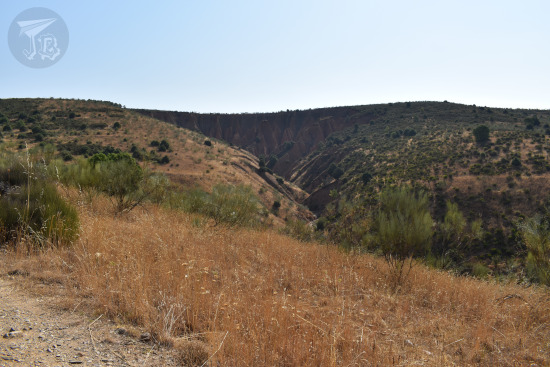


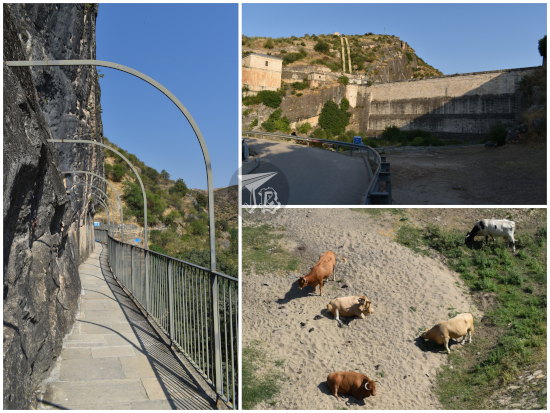
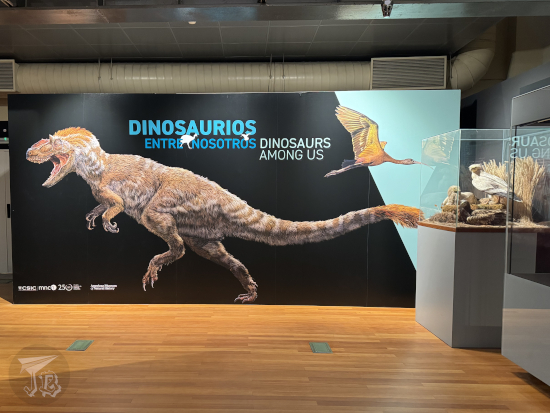
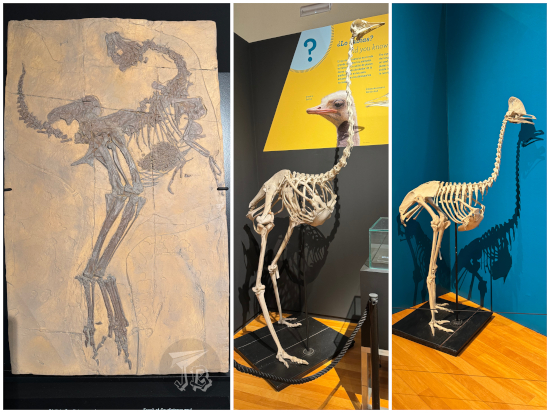

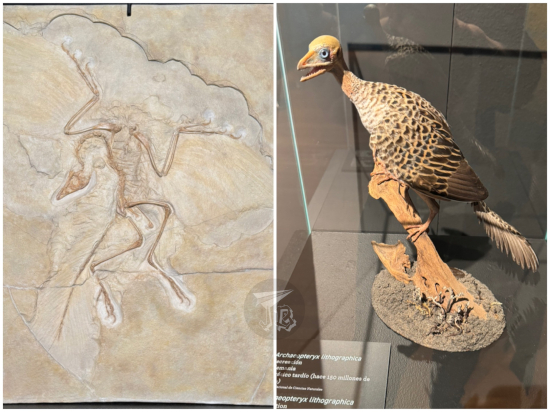
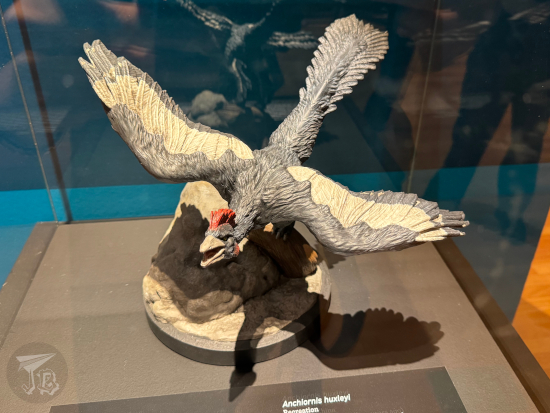


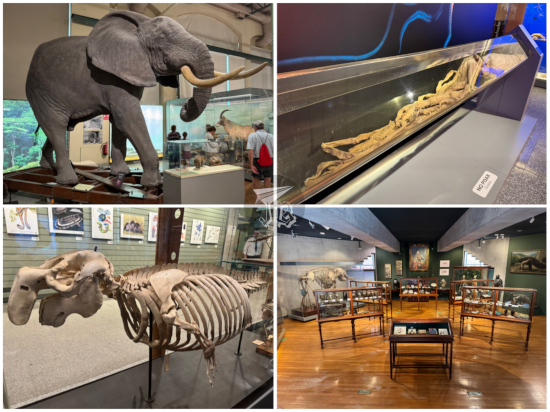


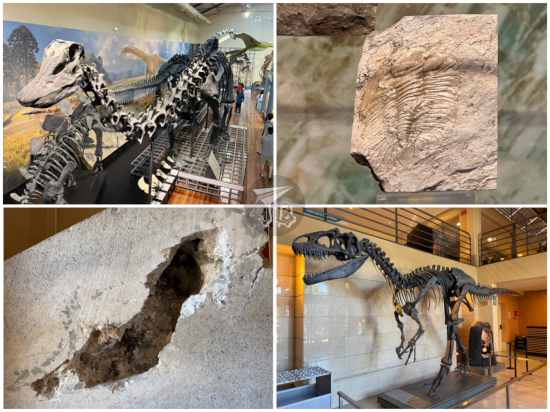
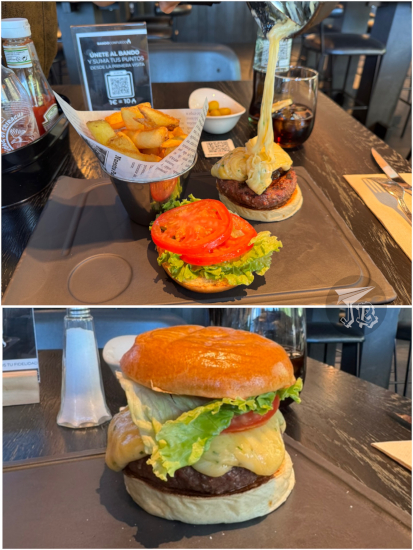
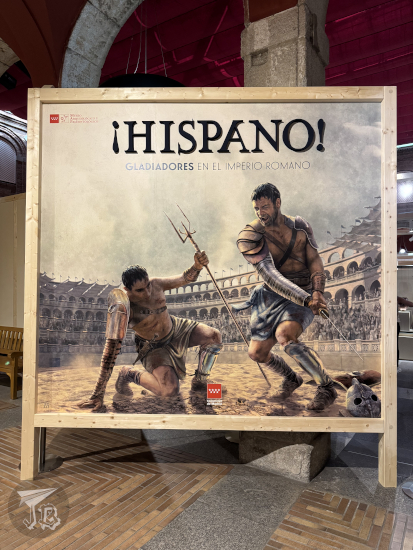
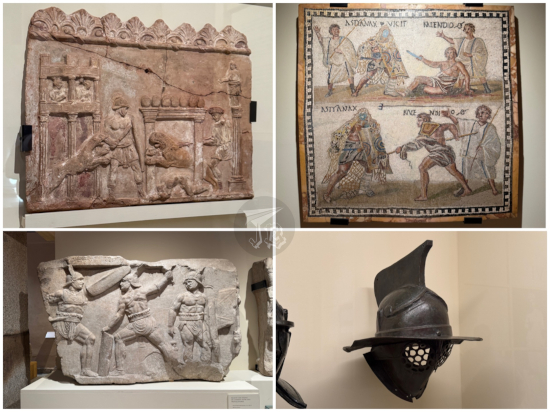

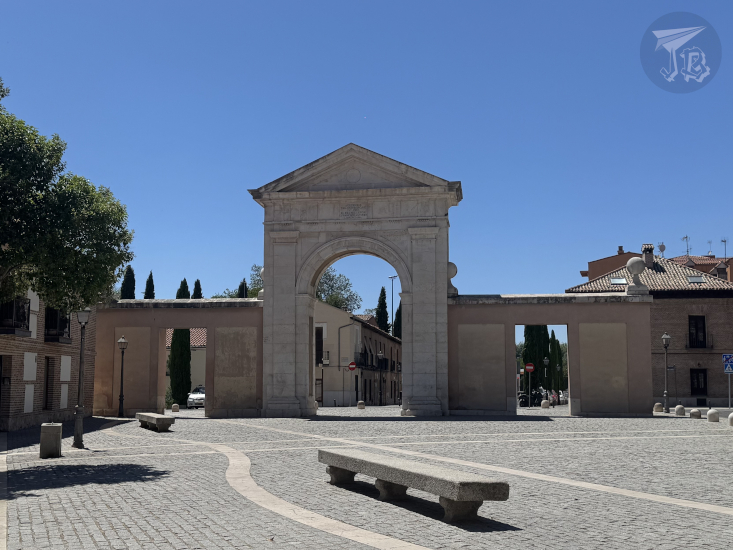


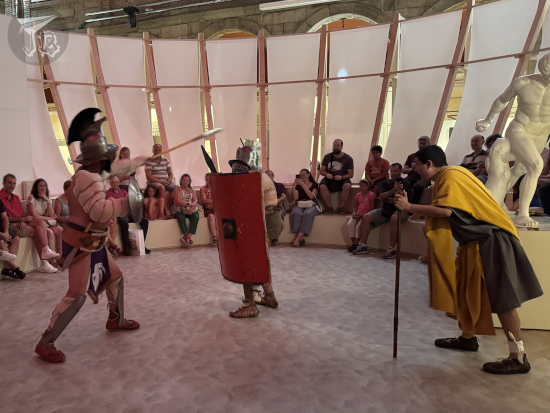
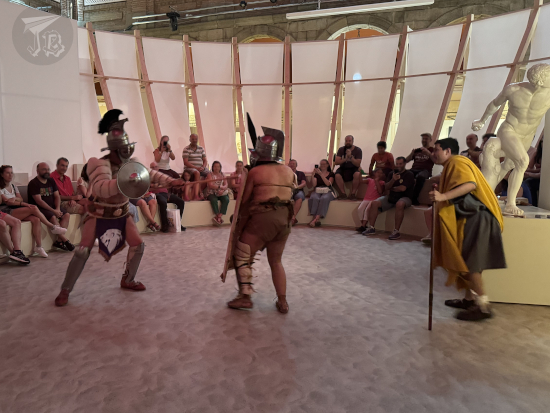


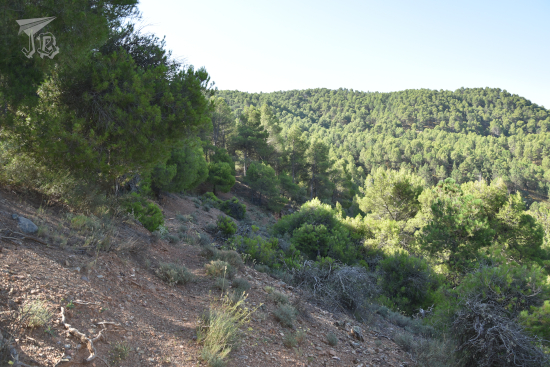
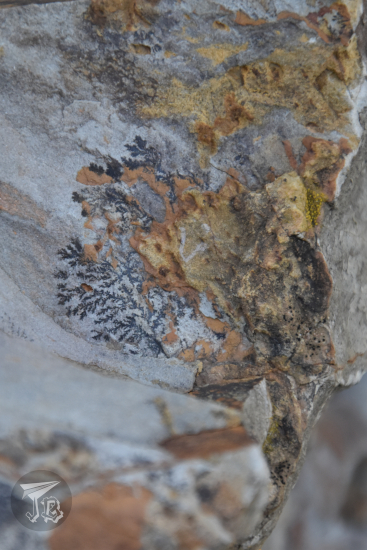


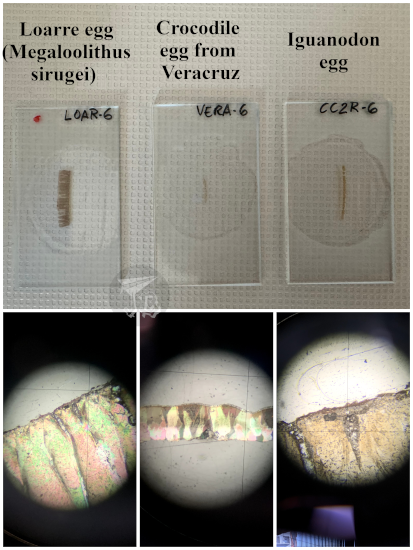
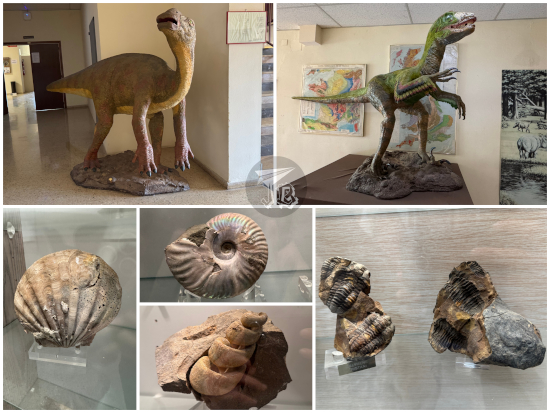
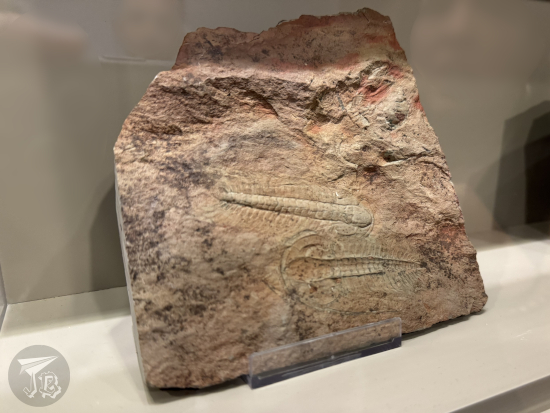
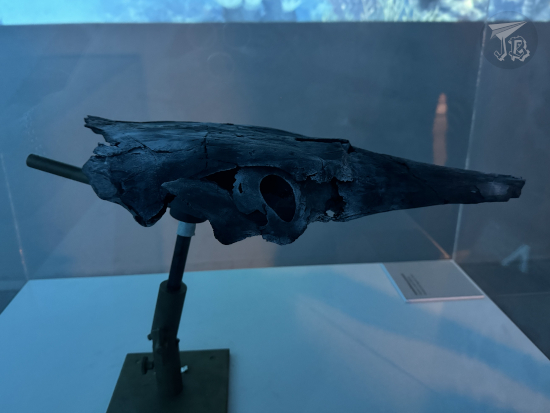
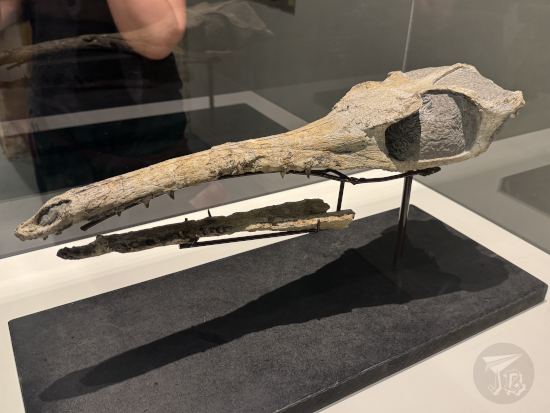

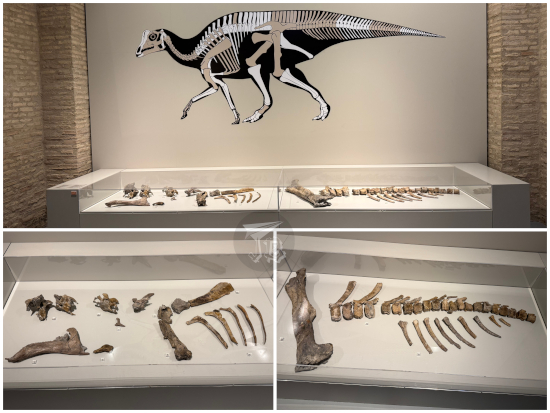


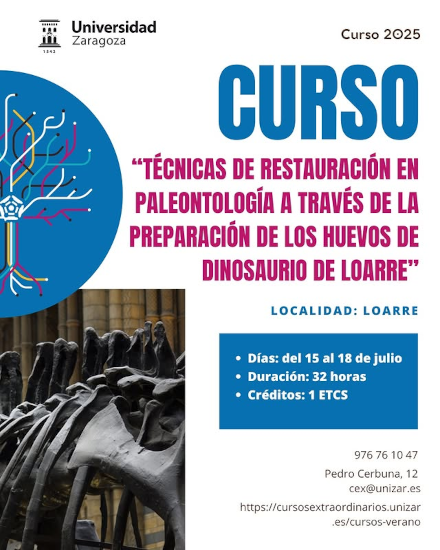


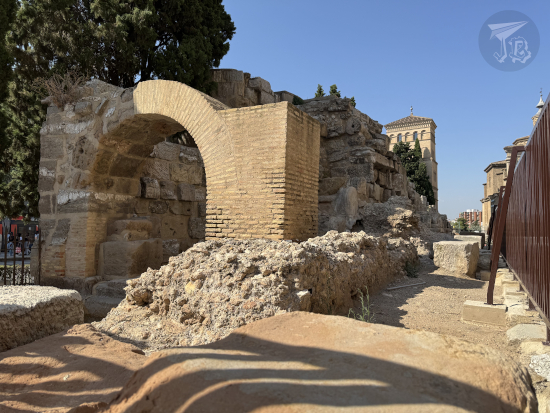

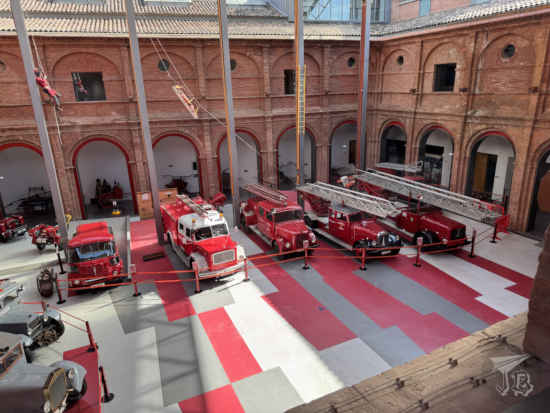


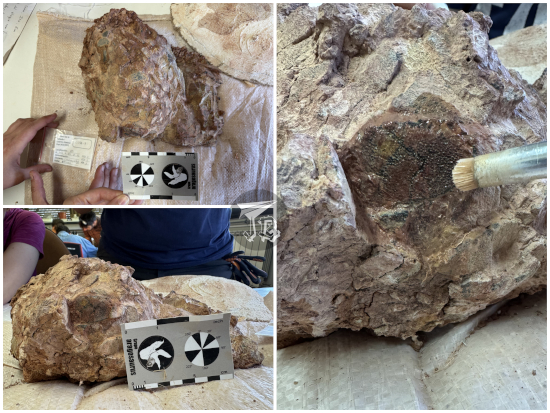
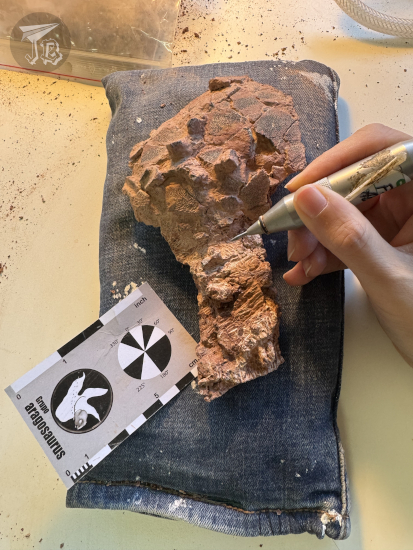


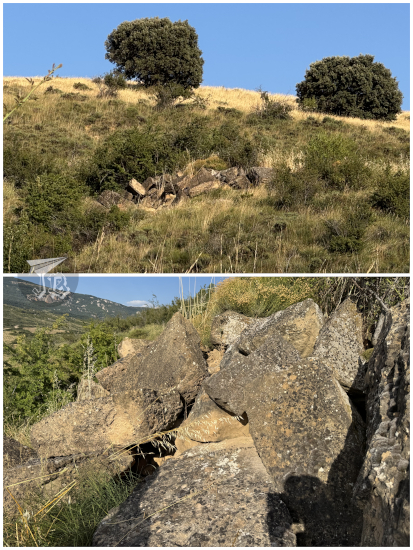
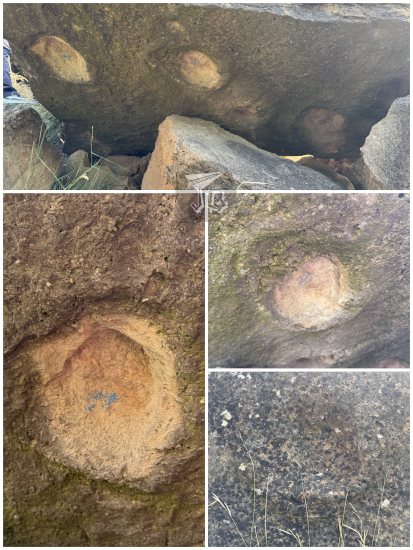


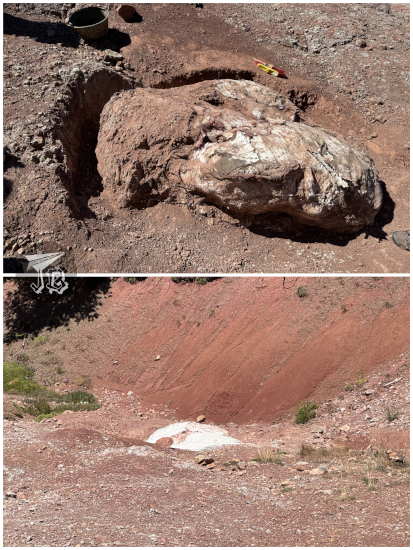
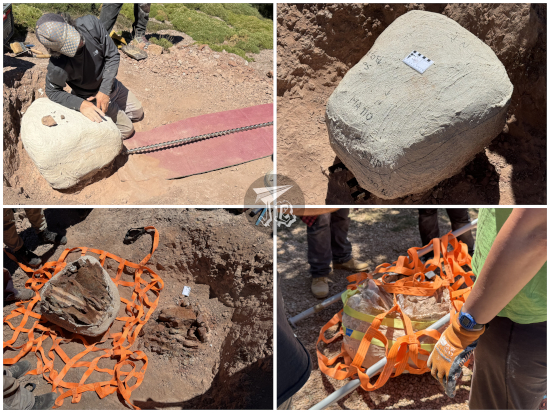
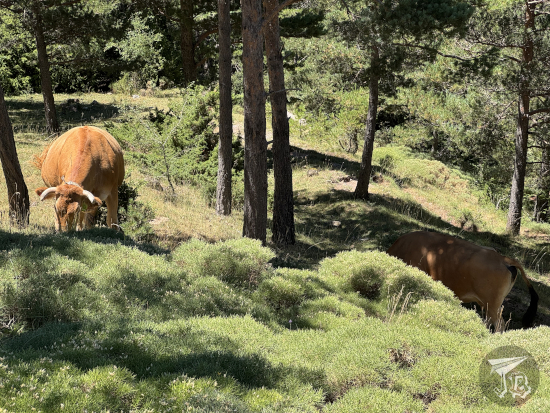
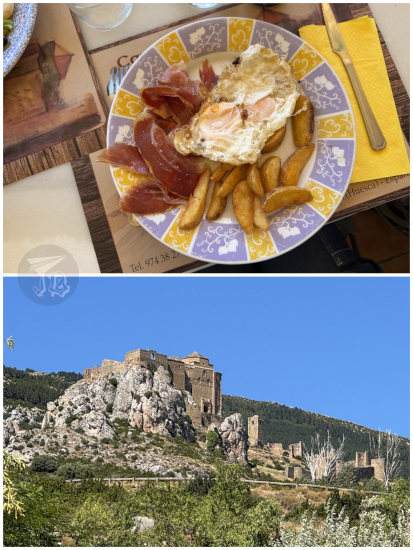
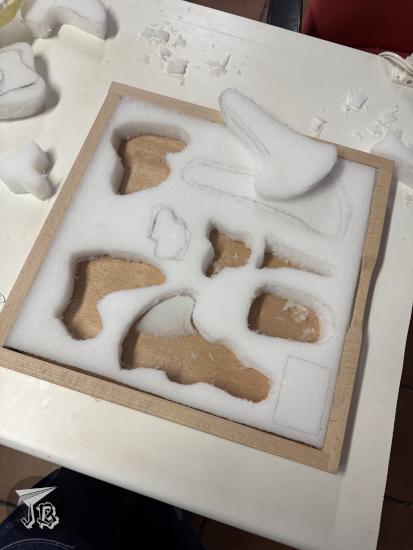
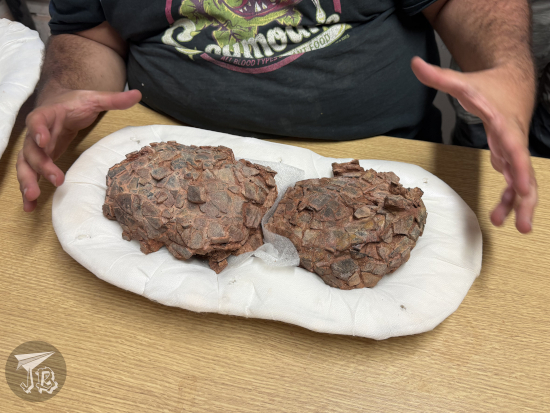
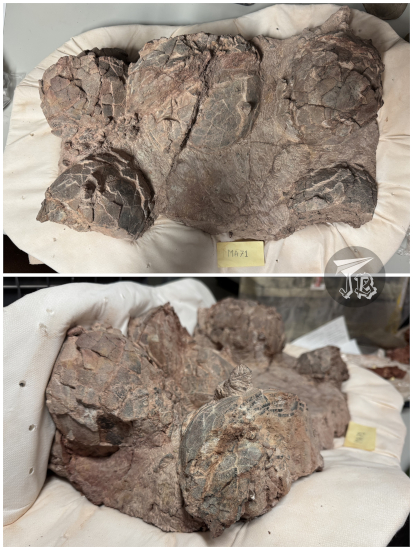
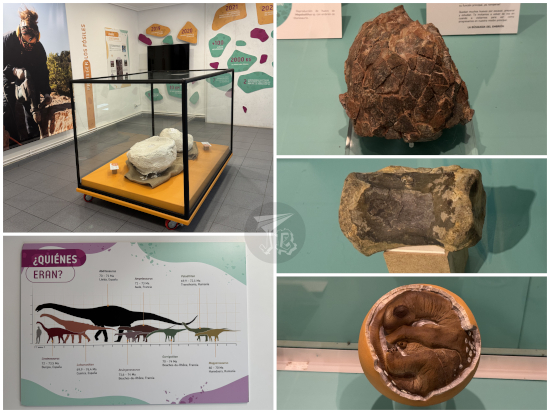
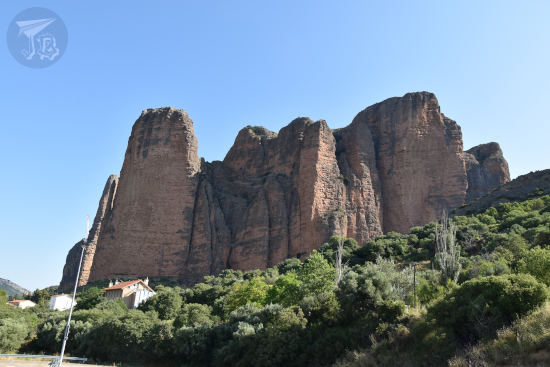
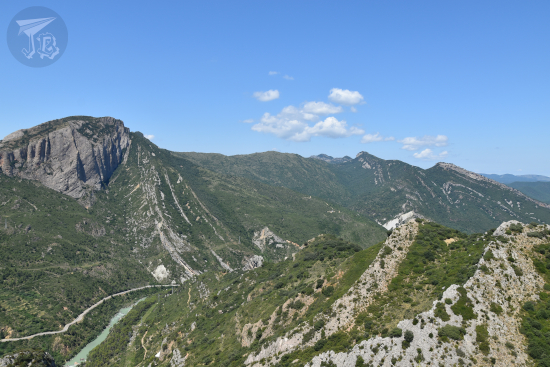
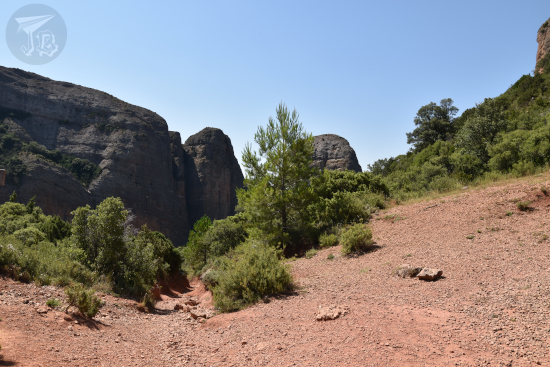
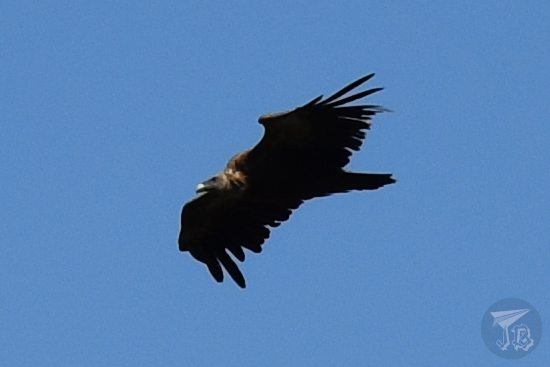


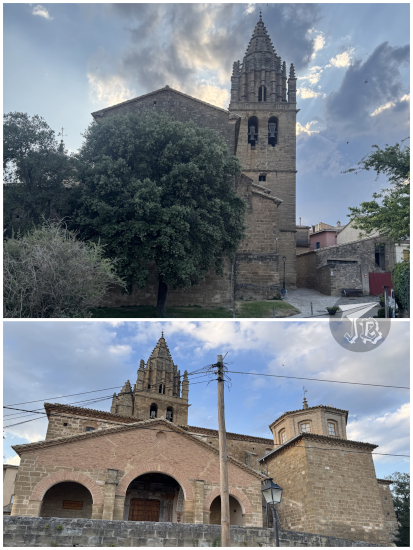


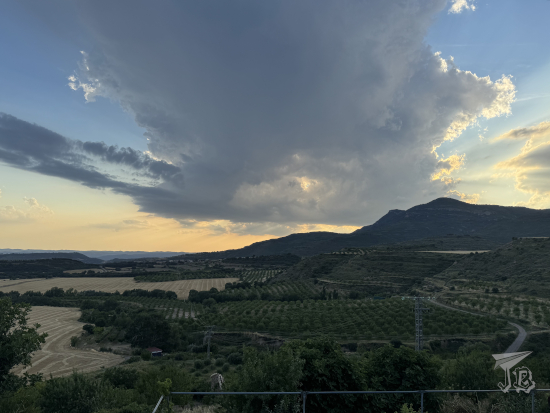


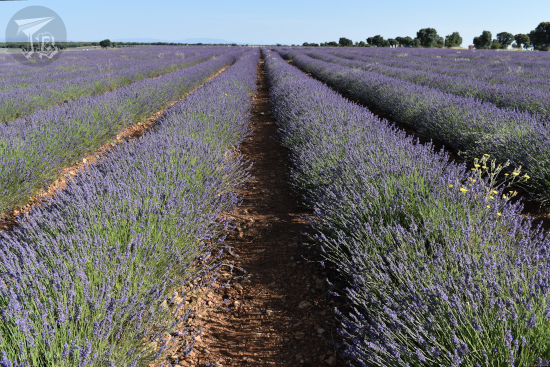


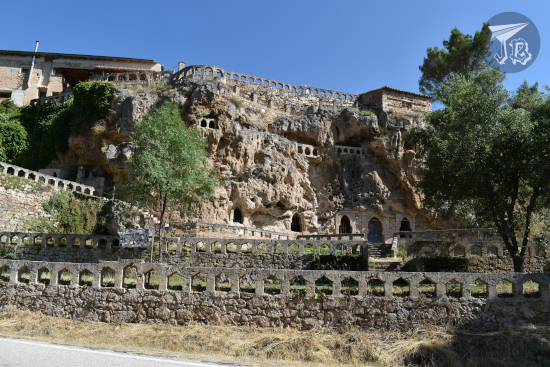
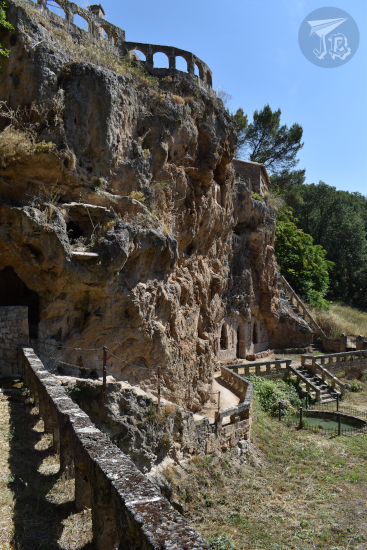

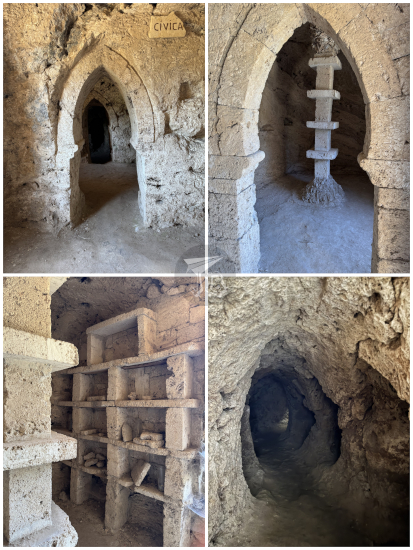


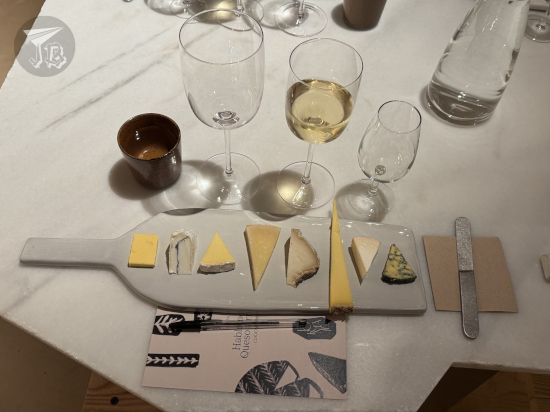

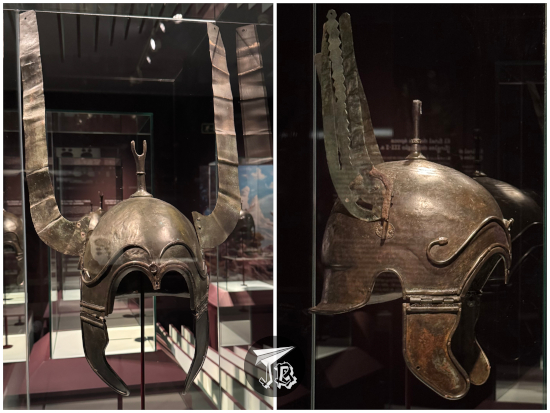

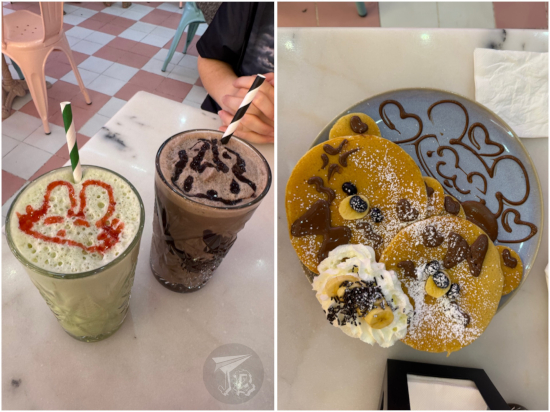


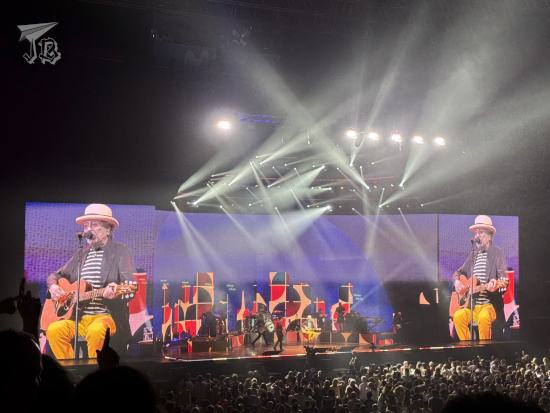
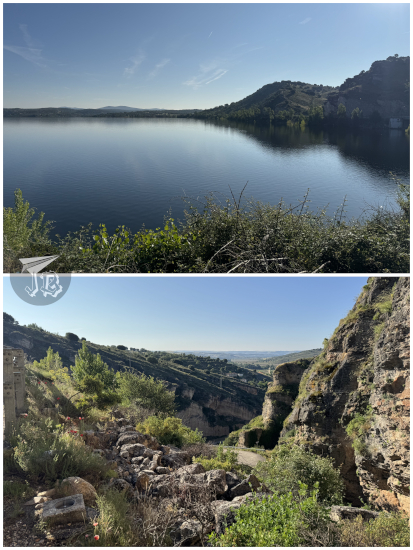

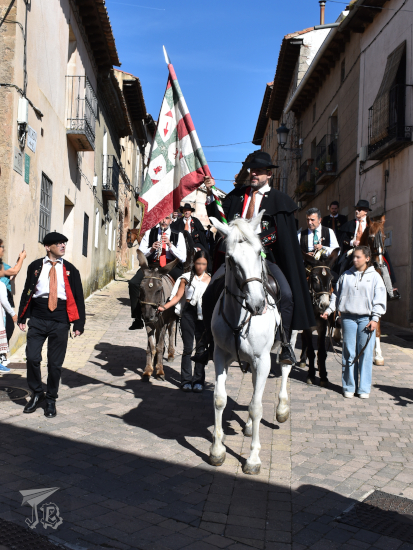


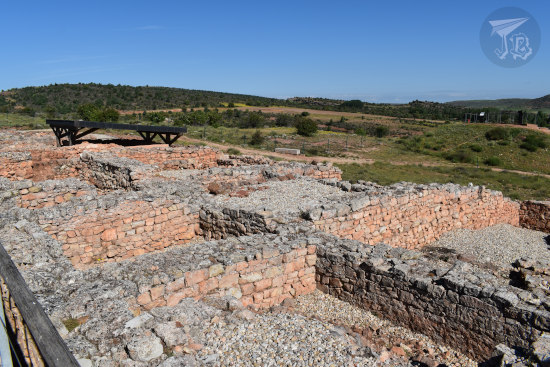

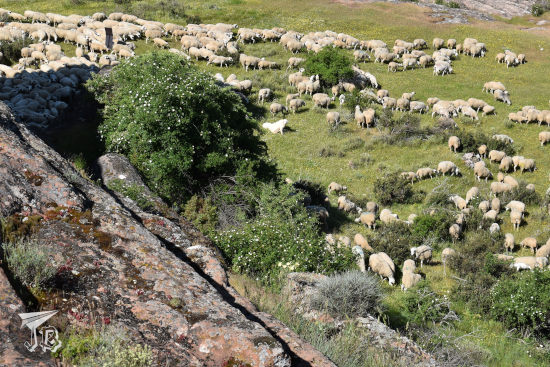
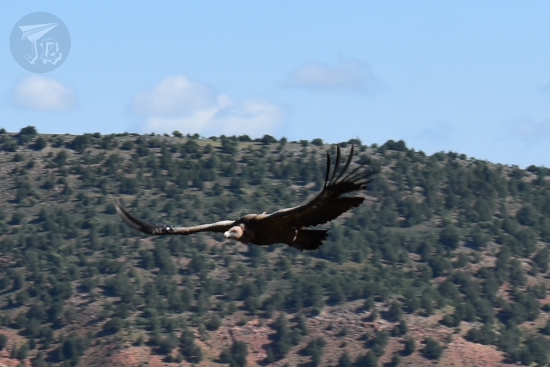
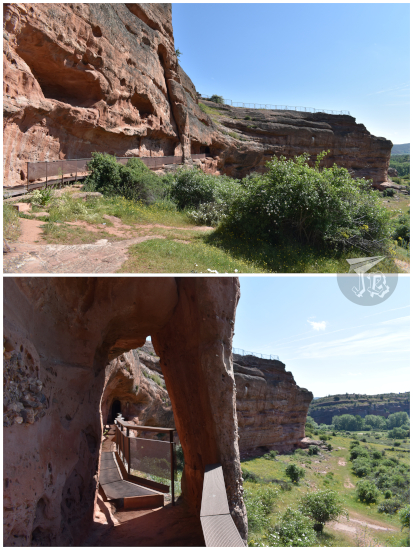

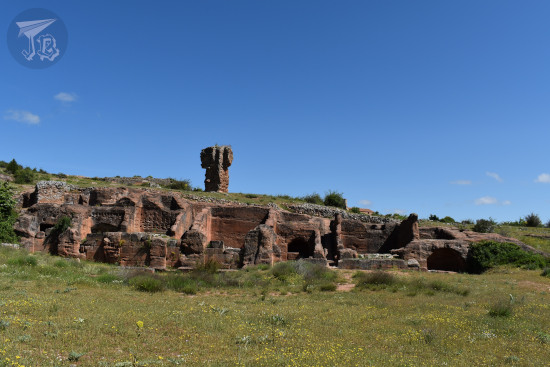
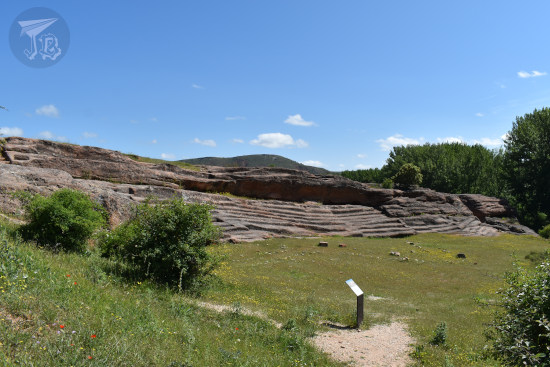

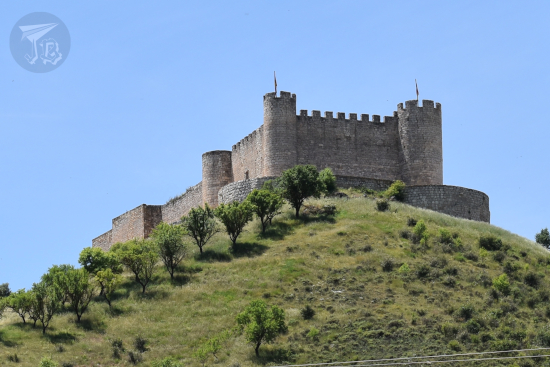
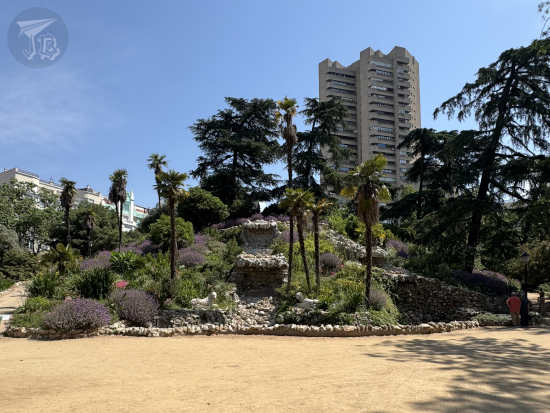
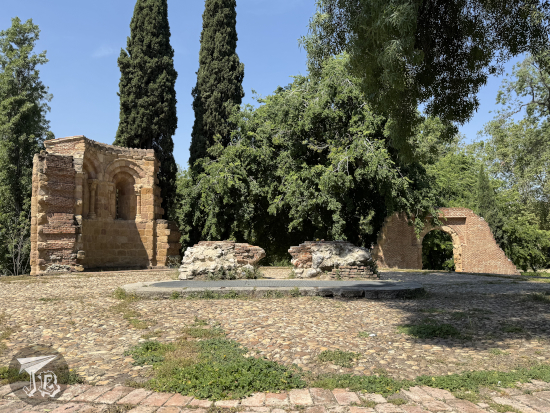

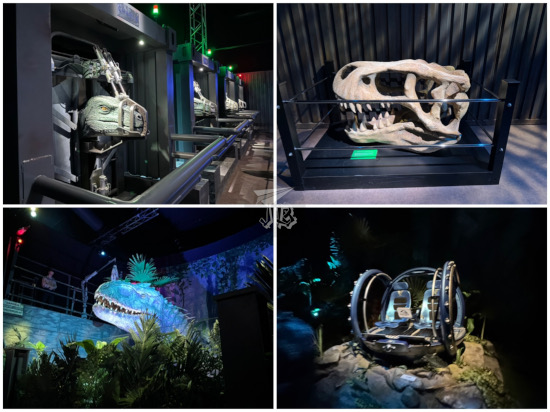
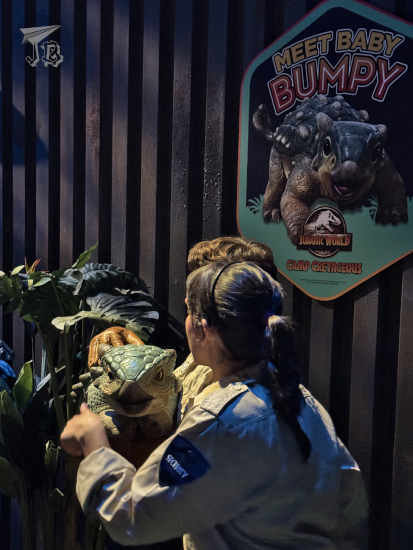
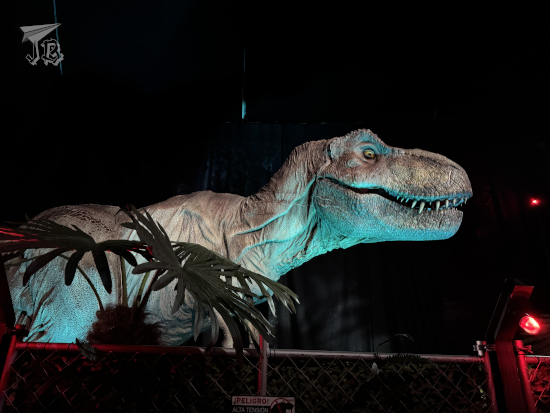







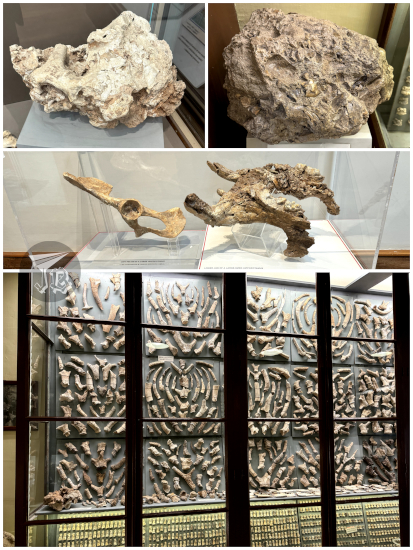

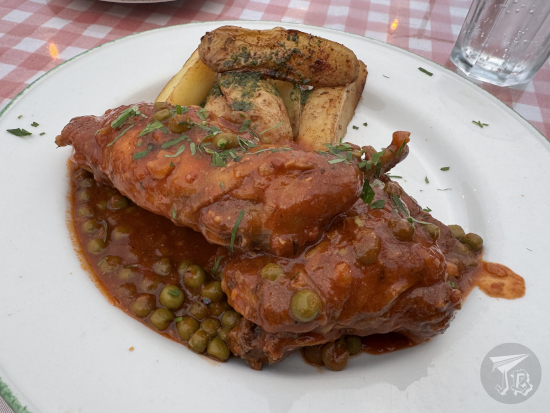

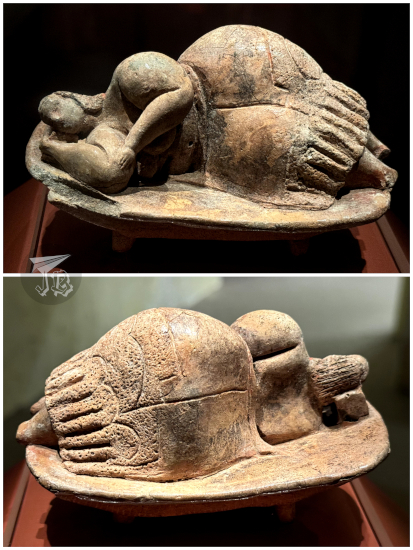


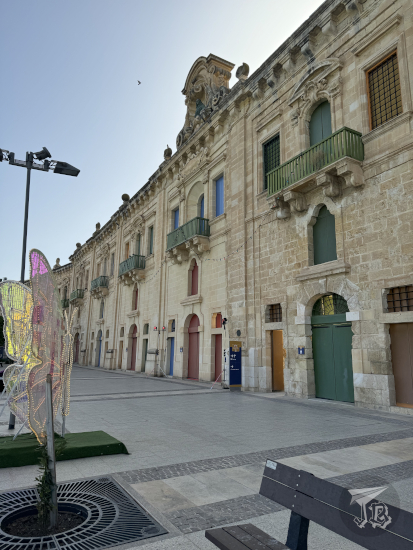
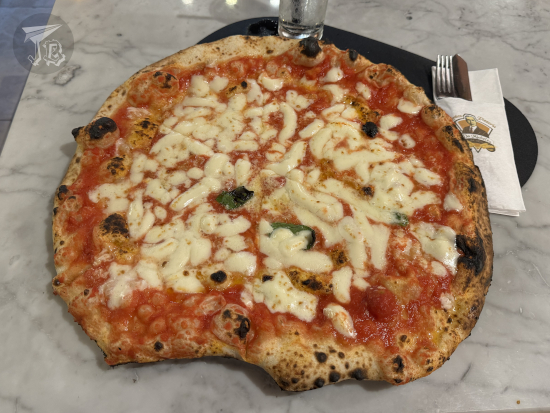
 JBinnacle – A Travel Logbook