6th July 2025: Brihuega, Yela & Cívica (Spain)

I was supposed to go to Madrid, as I had a free ticket to see the restoration of the façade of the local museum Museo de Madrid up close, but I ended up cancelling due to having been in Madrid the previous day. I really did not care much about the visit, but I had signed up because it was a limited-time thing, and to be honest, I get FOMO when I read “for so long only”. However, I had heard somewhere that there was a chance that the lavender fields would be left fallow the upcoming years, so I guess I felt FOMO in the opposite direction. I had already visited the lavender fields in Brihuega, collectively known as Campos de Lavanda de Brihuega during sunset a few years back, and while in theory the view is prettier, I found that the lavender did not look… purple enough. Maybe it was the angle of the light, maybe it was too late in the summer already, but the flowers looked greyish. Thus, I wanted to see them during normal light once.

The lavender sown around Brihuega is Lavandula angustifolia, a herbaceous plant native to the Mediterranean areas. It grows in small bushes with narrow leaves, and it is popular for its uses – it can be applied in traditional medicine, in the kitchen (as herb or tea) and commercially, to produce lavender essential oil, which has hundreds of cosmetic uses: perfumes, soaps, balms… While it was the region of Provence, in France, which put “lavender watching” out as an activity, for the last 15 years or so, the village of Brihuega has made a name for itself during July as a tourist destination.

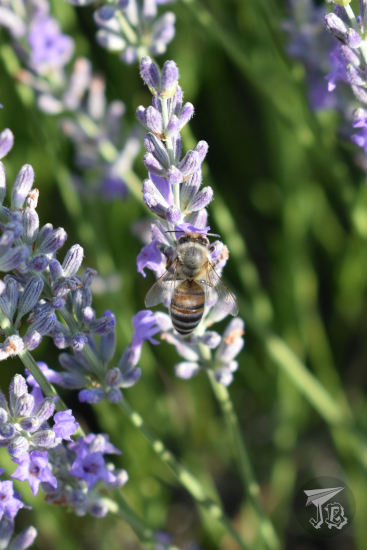
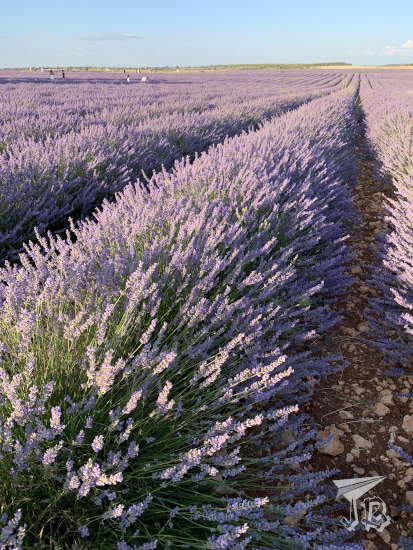
I drove to the fields and I reached the makeshift parking lot around 9:00, when there were few cars and just a bus of tourists. I wandered around for around an hour and a half, doing my best not to damage the plants and get a good picture or two – including macros of bees. For the first while, I stayed in a smaller field to listen to the sounds, but then I moved onto the bigger fields for better views.

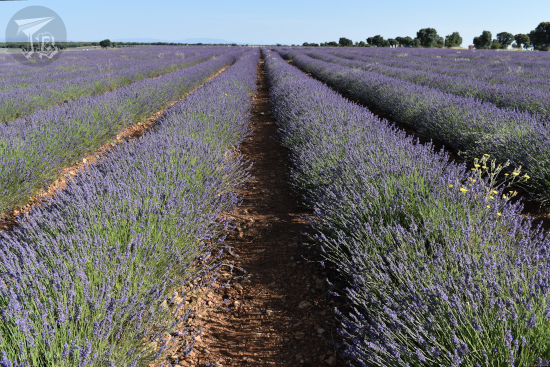
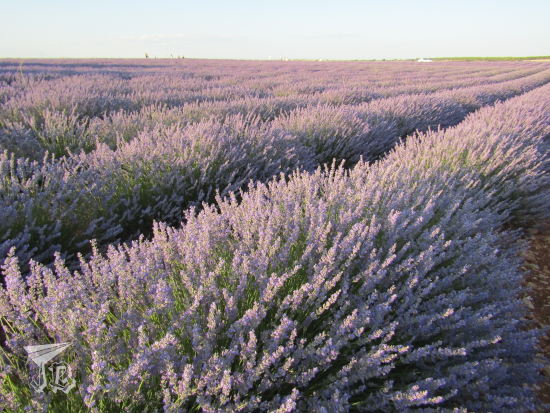
An inmense field full of purple lavender flowers with some patches of green because the photographer is too short to get the great angle with endless purple

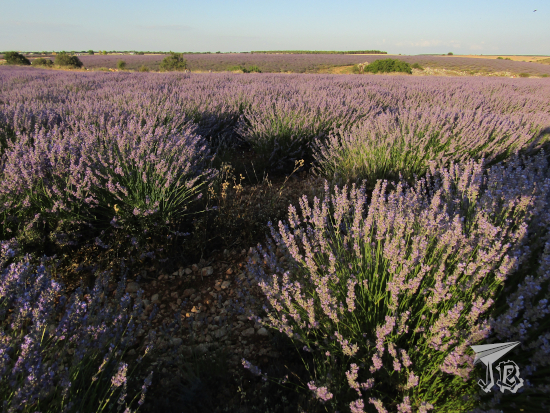
Lines of flowering lavender bushes that reach the horizon

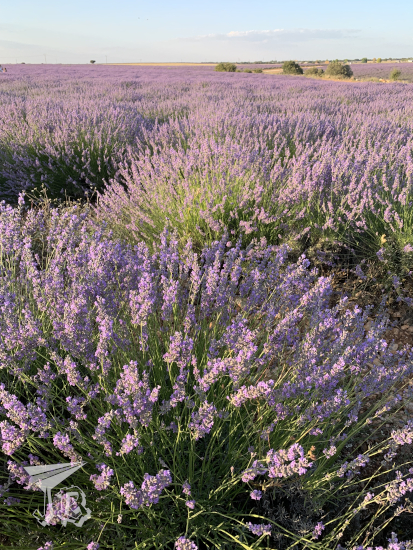
Close up of a lavander plant and a blurred background of endless purple

Close-up of a bee on a lavander flower

 
When I felt I was done, I hopped back on the car and set off towards a nearby place I had always wanted to see. The Sat-Nav sent me through Yela, a tiny hamlet with a Romanesque church Iglesia de Nuestra Señora de los Llanos and two medieval fountains. Technically, it is a neighbourhood of Brihuega, and it has a horrible road. However, it was still better than driving through Brihuega itself, which I had to do on my way back.

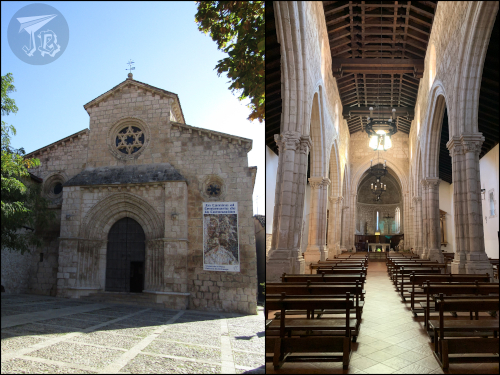
Reconstructed Romanesque church

Fortunately, I did not come across any other car in the opposite direction, but I did breathe in relief when I got to the larger road, from which I accessed Cívica, population 14. There are remains of a Roman villa, and in recent times rumours spread of Medieval knights and Jews in hiding, but this Brihuega district is famous due to a structure built in the mid 20th century.

Though quite a few websites rant on about the “mysterious ruins” in the hamlet, their history is well-documented and widely known in the area. Between 1950 and 1970, a priest from a nearby village convinced a number of neighbours to buy the rocky land lot and work on it. He wanted a sanctuary, a bar, a chapel, all of the above at the same time. It was to be a magnificent complex. What the priest managed was to transform a karst rock wall with natural caves into an interesting façade with carved interiors that would serve for celebrations and debauchery. During the 1980s, it was all the rage amongst celebrities and rich people to go partying there, though it eventually lost its importance and closed down. Its ownership was inherited by a group of siblings who did not find it worth of any effort. A few years ago, it was bought by an entrepreneur who hopes to turn it into a rural hotel – and who shows it around at weekends for 2 € per person. There was a phone number to contact them for a visit, but I had no signal. Fortunately, I ran into the owner as he was starting a visit, so I joined in.

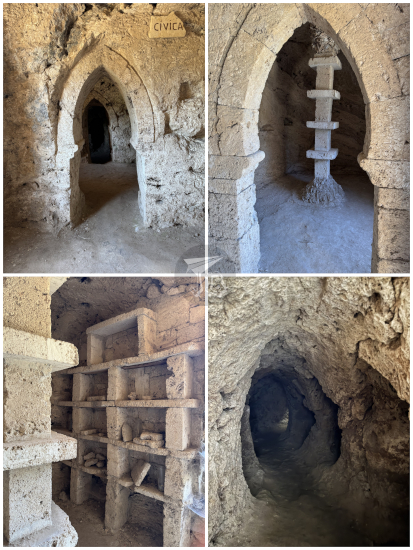
The façade of what can be called Caserío de Cívica has several arched doors (similar to the Visigoth arches in the Brihuega wine caves), balconies and stairs. The interior hosts bars and shelves. Deeper areas, the original caves, can double as wine cellars where drinks could be kept cold when they were still served. Though the Internet keeps saying that “the ruins are abandoned”, this is no longer true – they can be visited by appointment or at the weekend, especially if you are lucky enough to have signal to phone the owner so he shows them to you.

First we were shown the original bar, outside the property itself. Then we went in towards the second bar and the “caves”. Afterwards, we visited the party area, including the booths, which today are a dishevelled garden. Finally, we climbed all the way up to the modern caserío (homestead). Thus, the visit starts on the ground floor, next to the road, and you ascend through the different levels – the garden, the balcony and the upper area, where you can actually walk into one of the natural caves used for food storage in the past. To be honest, after reading so many conspiracy theories on the Internet, hearing the actual mundane story of the “ruins” was almost disappointing. However, it was really cool to check the inside, something that could not be done before – at least not legally.
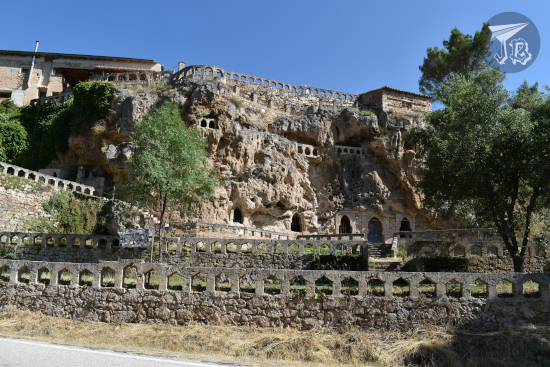
Cívica, a venue built into a vertical wall, with balaustrades and balconies, from the ground

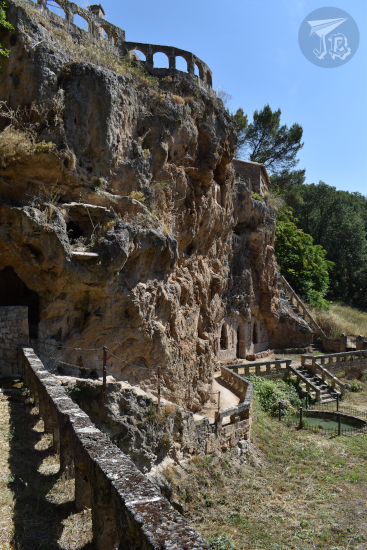
Cívica, a venue built into a vertical wall, with balaustrades and balconies, from the garden

Cívica, a venue built into a vertical wall, with balaustrades and balconies: walking around the balconies, which were carved into the rock itself

Cívica, a venue built into a vertical wall, with balaustrades and balconies: walking into the halls and tunnels

After the tour, I hopped into the car, and the Sat-Nav directed me back through the village of Brihuega itself. If driving there is difficult already (I ended up having to park outside the town last time), with the lavender activities, and it being a weekend, traffic was chaos. I was lucky I had the right of way so I could leave quickly, and I was soon on the speedway, having watched the lavender and learnt the secrets of Cívica.
15th October 2021: Torija & Brihuega (Spain)

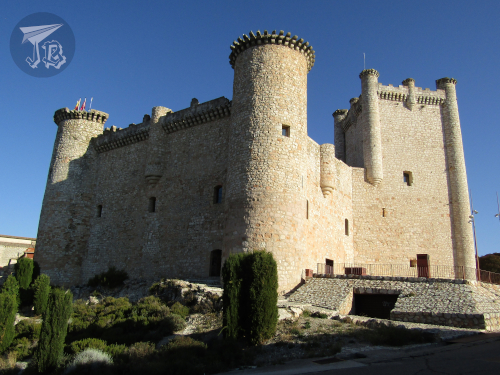
The castle of Torija is another of those things I’ve regularly driven by and thought ‘I have to visit one day’. Even though I had been warned that it might be disappointing as it had nothing inside but some touristic promo. Boy, was I in for a ride.

I arrived in Torija at around 10:30 in the morning and upon entrance I saw the demand that a reservation had to be made using a QR – the thing was free but it did not allow for 10:00 or 10:30 reservations – you had to pick it up for 11:00.

The castle Castillo de Torija was built in the 14th century, during a time of strife among all the factions and kingdoms of Spain. Later, in the 19th century, it was taken over by the French during the so-called Peninsular War against Napoleon’s troops, after basically the king Ferdinand VII gave Napoleon Spain wrapped in a bow. Napoleon made the king abdicate and installed his brother on the Spanish throne. There was a popular uprising in 1808 to fight off “the French”, who did not like this new attitude. During the war, the castle was occupied and then blown up. The current reconstruction dates back from 1962.

So there I was. The castle was empty – literally – but nobody was allowed before the reservation time because of ‘capacity rules’. So everybody in the castle was in the hall – yours truly, two other tourists, and four employees. All in the hall. Rules are rules again, but in the times of Covid, it feels utterly stupid to do this to ‘control capacity’ – since the rest of the castle was empty.

There was nothing really worthwhile to see in the castle – none of the interiors were even interesting and some of them were almost embarrassingly bad. Just a few pictures and models and mentions of the famous regional honey. I had been warned that it was going to be ‘disappointing’ but this was utterly ridiculous.

Thus, I continued off on my drive and I reached the village of Brihuega, which aside the lavender fields has a number of historical buildings and curiosities and was declared historical site in 1973. I had left the visit to this village for Friday because there were online tickets for the castle on sale, and therefore I had gathered that it was visitable that day. Right? Wrong, but that comes later.

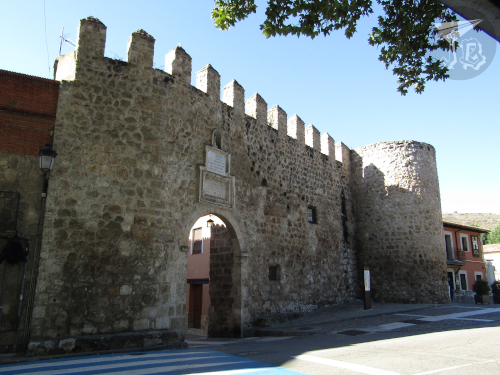
After being unable to find the spot I wanted my Sat-Nav to take me due to blocked streets, I dropped the car at a public parking lot at the edge of the village, then I walked towards the medieval core of the city. The first item I came across was one of the gates to the medieval wall Puerta de la Cadena.

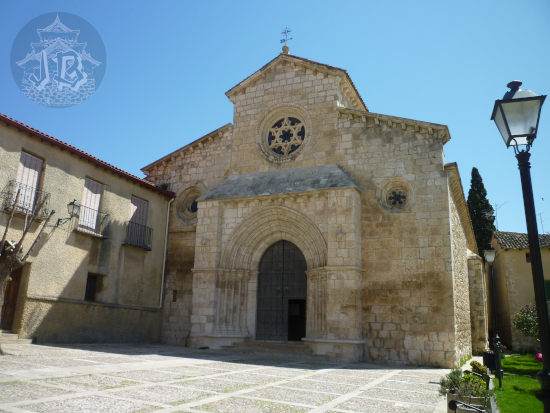
I strolled towards the centre but after a block or so I saw an archway that drew my attention. Upon turning towards it I found myself in front of the church of Saint Philip, Iglesia de San Felipe, which I had seen in my previous flash-trip. The church dates back from the 13th century, and it is a ‘transition’ church from the Romanesque to the Gothic building styles.

I backtracked towards the main street and reached the main square where the tourist information office stands. Here I learnt that there was going to be a popular festival the following day and that explained why some of the streets were blocked. After a quick stop at the tourist information office, where I got a map and a pamphlet, then I check about the process I had read for visiting the Arab caves – Cuevas Árabes. What the Internet told me was that I had to go to the butcher’s and ask the owner to let me in.

It was true – it turns out that the caves are private property and only he has decided to open up his. The Cuevas Árabes are a number of tunnels excavated into the rocky bed in the 10th and 11th centuries. They run around 8 km underneath the village, but only around 700 metres can be visited. The temperature is constant throughout the year at around 12ºC, so it is thought that they were used for food storage, and several sites say for wine. There are a number of large earthenware jars that are indeed used by winegrowers, but Arabs historical Arabs wouldn’t be drinking wine? I’d put my money on oil, but I really don’t have information to make more than a guess.

The butcher asked me what I wanted, I answered that I wanted to visit the caves. Then he proceeded to ask if I wouldn’t be scared – I paid (2.50€) and I went in after reassuring the guy I would be okay and he explained that I would also find some Visigoth archways, older than the Arab caves themselves and probably a starting point for them. The caves were the highlight of the day, really cool and mystifying, although I kept half-expeciting the owner to jump at me and try to scare me.

After the caves I headed out to the castle area, for which I had to cross another of the wall gates Arco de la Guía.

I found myself in a small square with the castle Castillo de la Peña Bermeja to my left. The castle is mixed with the graveyard in a very strange organisation. Unfortunately, it was closed (despite the fact that the website was selling tickets for the day – so glad I did not want to pay almost double in advance!). The castle is of Arab origin, built between the first and third centuries, and it gathers its name from the reddish colour of the mountain it stands on (Peña Bermeja means Vermillion Crag).

I also got to visit the inside of the church of Saint Mary, Iglesia de Santa María de la Peña by pure chance. The church was built during the 13th century, and it hosts the image of the patron virgin of the village.

Then I walked back towards the car, passing by the corridor they were building for the running of the bulls, I saw some more buildings, such as the convent of Saint Joseph, and the traditional fountains. Then I deviated towards the medieval walls Murallas de Brihuega, which was the last spot for my three-day on-and-off adventure.

Driving distance: Around 68 km (without counting the Sat-Nav merry-go-round)
Walking distance: 7.33 km

19th July 2021: The Lavender fields of Brihuega (Spain)

Brihuega is located towards the centre of Spain, in an area known as La Alcarria. The dates back to pre-Roman times, and although it claims to have a long and rich history, and it has been related to a few battles due to its strategic location. It received the denomination of historical site in 1973 due to the Medieval buildings that remain, among them the church of St. Philip. Today, that belligerent history is past, and Brihuega prides itself in being the the garden of La Alcarria, el Jardín de la Alcarria. The village and its related neighbourhoods are home to thousands of lavender flowers – the so called Campos de lavanda.

There are over one thousand hectares of lavender fields in the village. Lavender (genus Latifolia) does not need a high-quality soil to grow, so it adapts perfectly to the area. The flowers are widely used in cosmetics (distilled into an essential oil) , and also dried up for scent. Furthermore, the fields feed the bees in the area, also famous for its honey.

Lavender flowers in June – July and it’s harvested at the beginning of August, so it was a good moment to drop by and see the fields. The town hall advises not to visit the fields at the weekend, ad I thought it might be a nice place to see the sunset – how many people may there be around the fields on a random Monday evening?

Way more than I expected. Nevertheless, when I reached the parking lot I made the lucky decision to walk to the smaller fields and not the ones most visitors seemed to be heading for. They may have yielded to less impressive pictures, but it felt a bit safer – and far enough from other visitors so I could take off the my face mask and – literally – smell the flowers, while I tried hard not to disturb the bees at work.

I left just as the sun was about to set because I did not want to be caught in a jam as all the cars came out of the parking lot, and did enjoy catching a glimpse of the sun going down as I drove back. No pictures of that, obviously.

14th April 2013: Brihuega (Spain)

Brihuega is a little town in the centre of Spain. It is considered a historical site in 1973 due to its Medieval buildings. In this little getaway we got to visit the Iglesia de San Felipe, St. Philip’s Church, which dates back from the 13th Century.

We also saw the Parque del Molinillo, which roughly translates to “The small mill park”…