14th September 2024: The long way back {Escapade to Cádiz, September 2024}

I woke up before dawn and took a train out of Cádiz to El Puerto de Santa María to spend a few hours with a friend. We had breakfastand caught up, and I headed back to Cádiz around noon for food and my train back.

I returned to the area where the market Mercado Central de Abastos de Cádiz stands, and found a place for lunch Cervecería Boquerón Barbudo for puntillitas fritas, which is a dish of battered and fried squid, and one last tortillita de camarones before heading back home.

Tortillita de camarones and puntillitas

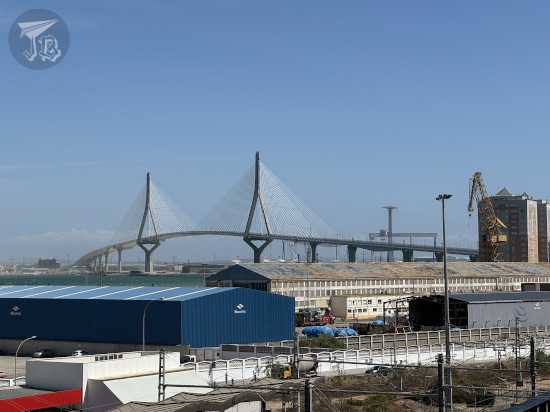
I had some time to kill before the train, and I thought about walking back towards the beach, but there was a strong wind coming from the west – nothing unusual, this wind even has a name, Poniente. Instead, I headed towards the harbour. I wanted to reach a specific quay to take pictures, but it was too hot and I was carrying the backpack. I ended up turning towards the city at the last pedestrian crossing in sight. I climbed up the stairs to the station and went out the other side. There, I found a lookout above the harbour and the bridge Puente de la Constitución de 1812, a cable-stayed bridge which joins Cádiz and Puerto Real which was built between 2007 and 2017. It measures just above 3 km, with 37 pillars, and there is actually a removable part in order to let ships of unlimited size to go through. As what I actually wanted was to get a sight out of said bridge, it worked well.

Constitution bridge Cádiz

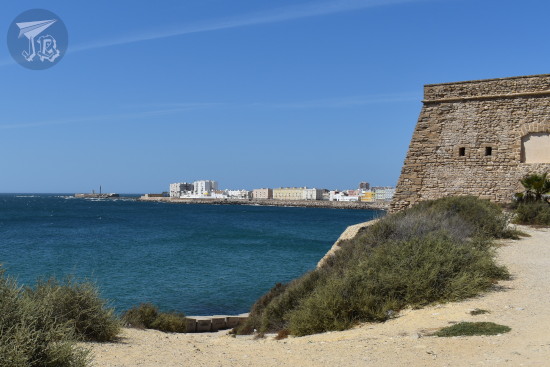
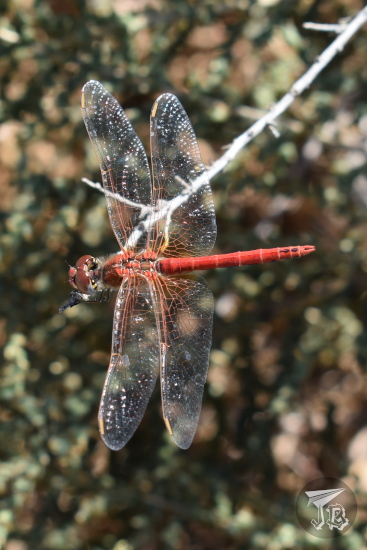
I walked towards Puerta de Tierra once more, to look at the temporary monument to the Phoenician gods – still garish. I walked alongside the wall until I reached the sea front promenade Paseo Marítimo, from where I could see the castle Castillo de San Sebastián and the bridges that lead to it. There was also a (tiny) swarm of damselflies which seemed to pose for pictures.

Puerta de Tierra (Semana Fenicia)

San Esteban Castle

Damselfly

I finally headed off towards the station to take a string of trains in the opposite direction I had done on Wednesday. First, I took the medium-distance train towards Seville, where I had an hour or so. I bought a sandwich and a soda to go (at exuberant prices, of course), and an ice-cream (at McDonald’s, with a regular price) while I waited. Then, the AVE took me to Madrid, which I reached a few minutes early, even. I hurried towards the commuter train system, hoping to catch a good connection, but – surprise, surprise – it did not let me in.

I had to go queue for help, and an employee let me through, assuring me that the system would let me out. Not trusting that, upon arrival I asked a security guard what I should do, and he said that the gate would be open if my pass did not work. To no one’s astonishment by now, the pass did not work, and the gate was closed. And of course, there was no Renfe employee to man the exits at nearly 23:00. I called for assistance on the inter-phone, and after a minute of ringing without an answer, I gave up and scurried after someone as they went out. Because, really, it was absolutely ridiculous.

All in all, it was a good trip. Cádiz was still an open chapter in my life, and I had always been worried that I would be overwhelmed by sadness if / when I returned to the area. Fortunately, that was not the case, and I was able to enjoy the escapade, along with getting my paperwork. However, the stupid commuter train thing was frustrating. Because Renfe, if the combined ticket works, why doesn’t it work? And if it doesn’t work, why are we told it works? Confusing, isn’t it? I had the same feeling.

13th September 2024: Cádiz, Jerez, Puerto Real & back to Cádiz {Escapade to Cádiz, September 2024}

After making sure there were no ants in my breakfast – I had stored it in the mini-fridge, and they were all in the trash can with the decoy – I left for an early walk around Cádiz as the sun rose. I went to Puerta de Tierra (the Land Gate), the remains of the walls that closed off the city in the past, which today separates the old and new areas. The original redoubt was erected in the 16th century, embellished in 1756 with a portal, and a tower was added in 1850. In the early 20th century, arches were opened into the wall to allow traffic to come through. There was a temporary installation to commemorate the “Phoenician Week” activities, but it was so garish that I was not even sure whether it was real or a parody of sorts.

Puerta de Tierra Cádiz

Afterwards, I walked to the train station to take the train to the nearby city of Jerez de la Frontera, where my first stop was the fortress-palace Conjunto Monumental del Alcázar. The first remains known of the alcázar date back from the 11th century, though most of what still stands was erected in the Almohad period (12th – 13th centuries). The fortress was repeatedly taken and lost in the war between Moors and Christians until the Catholic Monarchs finally conquered all of Spain. The building was owned by the crown, but it fell into disarray, and in the 18th century a Baroque palace was built.

Alcazar de Jerez de la Frontera - exterior

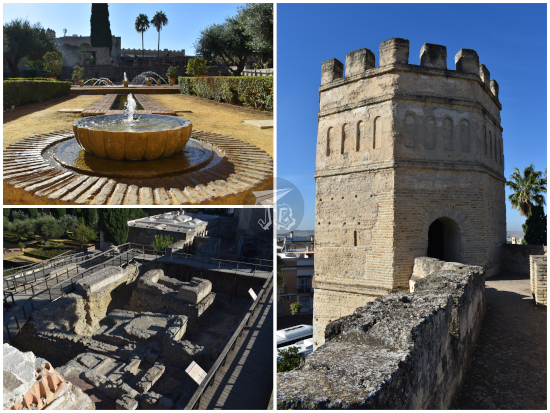
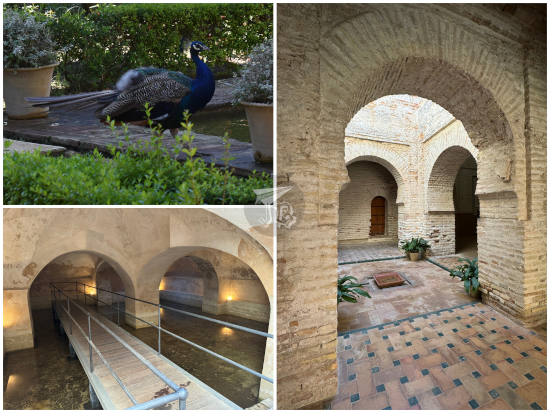
Today, this palace is the only intact construction, and the one I left for last. I moved towards the garden first, which lead to the Arab baths, the octagonal tower, the cistern, the Royal Pavilion, and the walls, with some of the machinery from the Medieval times. The gardens were patrolled by peafowl. On the other side of the complex stand the mosque, an area with a reproduction of ancient oil presses, and the original gates in the walls.

Alcazar de Jerez de la Frontera - cistern and mosque, and peacock

The Baroque palace Palacio de Villavicencio holds a wooden staircase, several rooms with rich decoration including hanging lamps and wall paintings, and a salvaged pharmacy from the 19th century.

Alcazar de Jerez: Palacio de Villavicencio

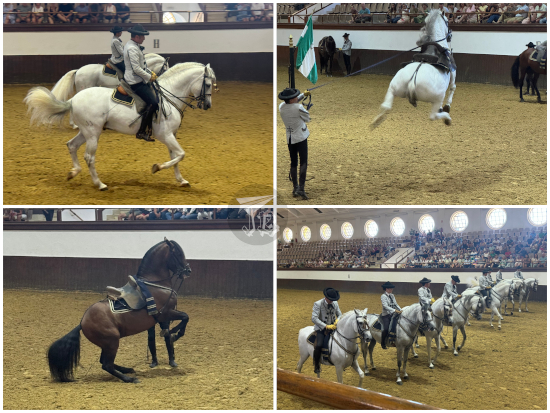
After the alcázar, which took longer than I thought to explore, I headed out to the Royal Andalusian School of Equestrian Art Real Escuela Andaluza del Arte Ecuestre to watch the show Cómo bailan los caballos andaluces (The way Andalusian horses dance), an eight-part show which has been performed since 1973. The exhibition showcases the different types of exercises that the horses are trained for – whether it is with a rider, or a handler on their feet, alone, or coordinating with other horses on the arena. It was a really impressive performance, and the horses were gorgeous.

Setlist of the show:
  1. Cómo se anda en el campo
  2. Al son de la garrocha
  3. Paso a dos
  4. Trabajos en la mano
  5. Fantasía
  6. Saltos de escuela
  7. Riendas largas
  8. Carrusel

Royal Equestrian Art School, Jerez

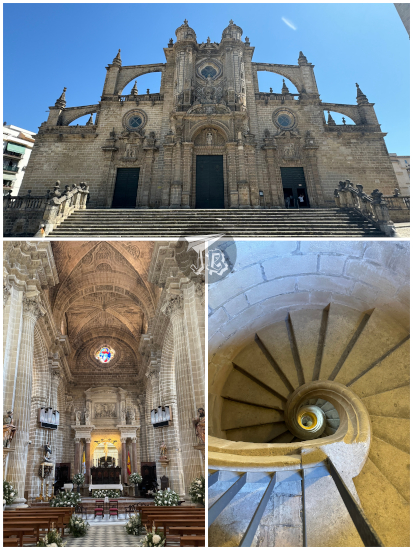
After the show, I hung around for as long as I was allowed to, snooping the horse riding museum and the small palace in the grounds until they closed down and I had to leave. I bought a sandwich and a bottle of water from a supermarket in the way, and went on to the cathedral Catedral de Nuestro Señor San Salvador. The current building was not originally conceived as a cathedral. It was founded in 1778, built between the 17th and 18th centuries, and consecrated as cathedral as recently as 1978. It has a gothic structure, with a Baroque façade and a Neoclassic altarpiece. Behind the altar there is small treasury / museum and a spiral staircase to a secret chapel which is barely the painting of a saint – but the staircase was pretty, it reminded me of the one in the church in Tendilla. I also walked up the tower so I could see the city from above.

Cathedral Jerez de la Frontera

By the time I was on my way back, it was too late to snoop into the farmers’ market Mercado Central Abastos, so I headed directly towards the train station to fight the ticket machine, then headed to Puerto Real. This is a town between Jerez and Cádiz where I used to live. After checking out some places out of nostalgia, I went towards the seaside. It was an eerie feeling, because it had changed very little from what I remembered from almost two decades ago, when I left, and still it was slightly different. I visited the beach Playa de la Cachucha and walked along the promenade Paseo Marítimo until I saw my old university building.

The Andalusian Centre for Marine Studies Centro Superior de Estudios Marinos, CASEM, is a helix-shaped building, originally conceived by Manuel López Vázquez. The building has three “arms” in 120-degree angles, and a glass dome at the centre. It is located in the middle of the natural reserve. However, going there would have made me extremely sad. Thus, I decided to walk back towards the station and take a train back to Cádiz.

Puerto Real: Playa de la Cacucha

Since I had visited the land gates, I also wanted to see the Sea Gate Puerta del Mar, the remains of the entrance to the harbour. Today it is more of a monument than an actual gate, but it is still there.

Cádiz Puerta del Mar

I was able to get there with enough time to head out to the archaeological site Yacimiento Arqueológico Gadir, one of the most important of its kind, since Phoenician settlement remains are far and few. The site, underneath a theatre, has two layers – the original one might date back from the 9th century BCE, with the remains of eight houses, complete with kitchen and oven, and streets. The settlement was destroyed in a fire, which also left two victims, a man and a cat, both of whose remains are exhibited there. The second layer is more recent – a fish processing factory with pools to preserve the product in brine from the Roman domination.

Yacimiento arqueológico de Gadir

Finally, I decided to end the day with a nice dinner. I went to the nearby market Mercado Central de Abastos de Cádiz, which has some eateries that work with local product. However, I did not locate the place I wanted to hit, and ended up distracted by El Viajero del Merkao, a place which advertised bluefin tuna, and offered it in tartar. I combined the tuna tartar with a typical tortillita de camarones, a fried batter made with water, chickpea flour, wheat flour and tiny shrimp, and a not so typical Taco de Cadi, Cadi, a tortillita with guacamole and salsa.

Tortillita de camarones & tuna tartar

I went back to the hotel to have a shower, then I turned in for the night (in a non-ant-infested room now).

12th September 2024: Cádiz {Escapade to Cádiz, September 2024}

My paperwork-related appointment was at 9:30 in Cádiz itself, and I got up around 7:30. I left the hotel, but unfortunately the café where I had expected to have breakfast was closed. Thus, I instead headed out towards the promenade Paseo del Vendaval to see the ocean again. I turned to my right, in the opposite direction from the previous night, and I walked towards the central beach in town – Playa de la Caleta, a mostly-rocky area with tidal ponds and a long bridge called Puente del Hierro which leads to an old castle Castillo de San Esteban. I chased a few birds on the way for photographs. They were not at all cooperative.

I reached the former bathhouse Balneario de Nuestra Señora de la Palma y del Real, built in 1926 from an original design by Enrique García Cañas with one main access and two corridors that form a semicircle towards the ocean, and end in domes. It was build directly onto the beach, in reinforced concrete, with a style gravitating among Art noveau, eastern historicism and local decoration with azulejo tiles. It was abandoned in the 1970s, but restored for administrative use in the 1990s.

I ventured away from the ocean into the narrow streets of Cádiz downtown until I got to the town’s theatre Gran Teatro Falla, in the Neomudejar style. It was built between 1884 and 1905, on and off due to lack of funds, after a design by Adolfo Morales de los Ríos and Adolfo del Castillo Escribano. The theatre is one of the key spots during Carnival festivities. The Cádiz Carnival is one of oldest and most famous in Spain, known for its groups of people who parade the town in costume to sing simple songs that make fun of every- and anything, normally current affairs – coros, cuartetos, comparsas and chirigotas. The great Carnival contest is celebrated in the theatre, and prizes are awarded in each of the categories. The carnival brings in about 400,000 visitors each year. I tried to get to visit the theatre, but I did not manage to do so.
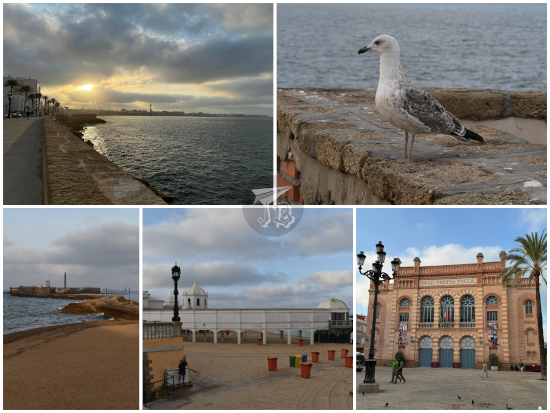
Paseo del Vendaval & Gran Teatro Falla Cádiz

Around 09:15 I decided to try my luck with the paperwork issue, even if it was early for my appointment, and I was successful. Since it was an important document, I ran back to the hotel to drop it there, and then headed off to the square Plaza de La Mina, where the local museum Museo de Cádiz stands.

It is said that Cádiz is the oldest Western city, founded around the 9th century BCE. Mythologically, it is associated with Hercules’ Columns and the city of Tarsis. The oldest archaeological remains date back to the 7th century BCE. The now-peninsula was originally a small archipelago where the Phoenicians settled down as it was a strategic point for commerce and mining of copper and tin, naming the settlement Gadir. It was later conquered by Carthaginians, whose march to Rome led by Hannibal started there. When Carthage lost the war, the city was taken over by Romans and became Gades in the 2nd century BCE.

As the Roman Empire declined, the city was invaded by the Visigoths, then the Byzantine Empire, and again by the Visigoths. In the year 710 CE, it was the first stronghold to fall to the Moorish conquest of Spain. After the Christians took it over again, it became a key point in commerce with the American territories.

In 1755, Cádiz was damaged by a three-wave tsunami caused by the so-called “Lisbon Earthquake”, 8.5 degrees in the Richter scale. In 1812, during the Napoleonic Wars, the Spanish patriots wrote the first Spanish Constitution, and throughout the 19th century, it was key in the numerous wars and battles through the return of Alfonso VII, the Republic and the Restoration of the Monarchy periods. However, during the 20th century, the city decayed suffering from lack of infrastructures, and rampant unemployment. Thus, it is happy to focus on tourism and the money it brings.

The Museo de Cádiz tries to follow this trail of history, but only the archaeological floor was open. The most important artefacts date from the Phoenician, Roman and Moorish periods. Of particular interest are two Phoenician sarcophagi which were found in completely different areas, but are presented as a couple of sorts, and a complete dowry. From Roman times, they exhibit a few dozen amphorae, sculptures and columns. Finally, the remains from the Moorish domination are quite colourful in comparison with everything else. The second floor of the museum was closed, so I was done earlier than expected.
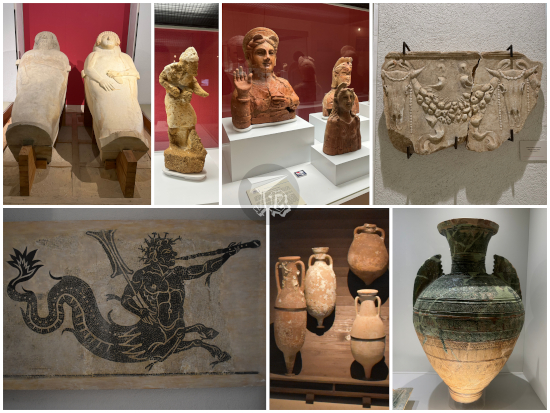
Cádiz Museum

Thus, I decided to push my luck a little and try to get to the archaeological site called Cueva del Pájaro Azul for the 10:30 visit in English. The place is a former flamenco tavern built within the repurposed dry docks of the Phoenician Gadir. Most of the structure has been covered in brick and barely the original shape can be traced back, enough to calculate that the dry docks served war ships. While building new stairs, they did find part of the original Phoenician harbour though, the most important remain that survives. The tavern itself might be considered of minimal historical importance as it was a considerable cultural hub in the 1960s.
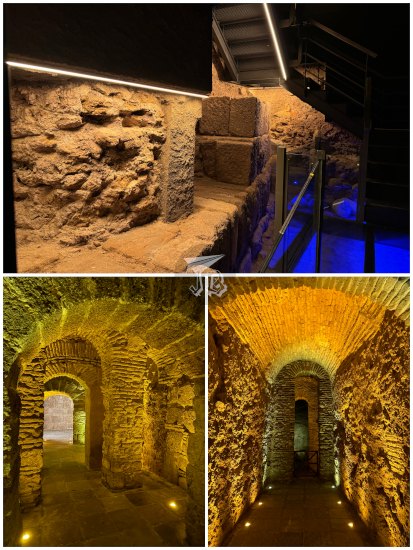
Archaeological site Cueva del Pájaro Azul

To keep in the mood, I decided to visit the archaeological site Yacimiento Arqueológico de Gadir, making a stop for a coffee first. Unfortunately, the site was closed that day. Thus, I decided to check out the Roman Theatre Teatro Romano de Cádiz – it might feel a little back and forth, but distances in central Cádiz are small and I wanted to prioritise Phoenician remains (I said I lived in the area, but all these archaeological remains are newly discovered). The theatre is the second largest one in what was Hispania, and dates from the 1st century BCE. It could host up to 10,000 people, and the stage, stands and the vomitorium (corridor underneath the seats) can be visited. There is an extra room with miniatures of the different stages of the history of the theatre.

Roman Theatre Cádiz

I left behind something called “The Elf’s Alley” Callejón del Duende, the narrowest street in town, now closed off. Very near both the alley and the theatre, I found the old cathedral Catedral Vieja de Cádiz officially Parroquia de Santa Cruz. This was the original cathedral of the town, commissioned by king Alfonso X around 1262. The original building was destroyed during the scuffles between the Spanish and the English at the end of the 16th century, and a new one was erected a few years later in a mixture of the Renaissance and the Baroque styles.
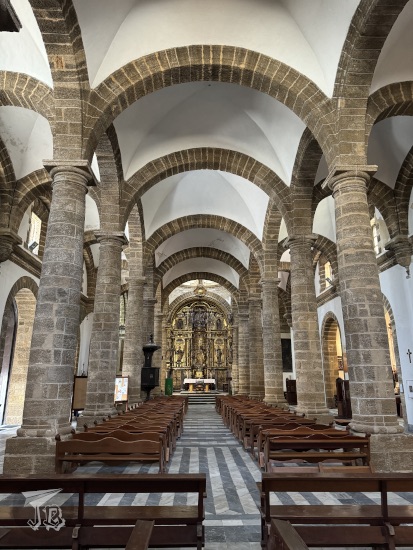
Former cathedral of Cádiz

Next to the old cathedral stands the museum of the cathedral Casa de la Contaduría. The museum comprises a number of rooms disseminated in a conglomerate of buildings dating back from the 16th century – including the tower of the old cathedral and a Mudejar courtyard. The museum holds – obviously – religious items: paintings, sculptures, mass paraphernalia, codexes…
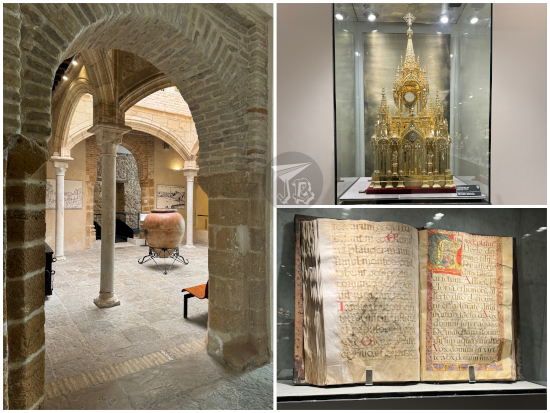
Cathedral Museum Cádiz

Afterwards, I crossed the city centre all over again, and reached the park Parque Genovés, a sort of botanical garden and the largest park in the old town. It has a small lake with a waterfall and a man-made cave with a lookout of the town and the ocean.

Park Parque Genovés in Cádiz

Then, I had booked lunch in the café of the Parador de Cádiz – Hotel Atlántico, a cute not-so-little place called La Tacita del Atlántico. I had set my heart on a grilled urchin dish – erizo de mar relleno y gratinado con huevos de arenque ahumado which I combined with a salmorejo (a creamy soup with a base of tomato and bread, garnished with ham and hard boiled eggs), though the dish had a local twist salmorejo cordobés, huevo y mojama. The urchins were delicious, but the salmorejo was lacking. I liked the idea of exchanging the ham for salt-cured tuna (mojama), but overall I found the food overpriced and the service mediocre. On my way out, I stopped by reception to get my stamp for the Red de Paradores rally.

Lunch at La Tacita del Atlántico

I stayed at Parque Genovés for a bit after lunch, then headed out towards the “new” cathedral Catedral de la Santa Cruz. The cathedral was built between 1722 and 1838, in a mixture of styles – Baroque, Rococo and Neoclassicism. It was erected in an assortment of materials, from noble marble to the humble local piedra ostionera, a sedimentary rock with a high concentration of seashells (biocalcarenite). The interior has three naves, and a Latin cross floor plan, over whose crossing there is a has dome, covered by golden tiles on the outside. The main altar is neoclassical.

Underneath the cathedral stands the crypt, and one of the towers can be ascended, leading to a great view of the town. The tower has very few stairs, most of the way is done on a ramp. Unfortunately, though, the cathedral is in rather poor state, and a net is cast under the ceiling to prevent debris from falling. I also climbed the tower since it was included in my combo ticket.

Cathedral of the Holy Cross in Cádiz

View of Cádiz from the cathedral tower

Behind the cathedral, I found myself back at the promenade Paseo del Vendaval, and I walked towards the beach Playa de la Caleta. In historical times, it was the natural port for Phoenician, Carthaginian and Roman shops, now it is a small-ish beach in the heart of the city. It is located between two of the castles of the old city, and its most characteristic structure is the bath house I saw in the morning.

The beach has a sand area where most people sunbathe, but there is a long bridge separated in two sections – one directly built upon rock, Puente de Hierro and the other with arches to let the water flow through, Puente Canal. At the end of the half-kilometre of bridges, stand the ruins of the castle Castillo de San Sebastián, which today includes a working lighthouse, and an archaeological site. The first structure in the ancient island dates back from 1457, and the castle itself was built in 1706. Though it was warm and sunny, I walked the bridges and around the castle walls.

La Caleta Beach Cádiz & San Sebastián Castle

Upon my “return to mainland”, I passed by the bath house again and I reached a second castle, Castillo de Santa Catalina. The outpost, in the shape of a five-point star, was built towards the end of the 16th century to defend the city form sea warfare. In later years, a church and a sacristy were added, and from the 18th century onwards it was used as a prison. Today, it mostly hosts cultural or cinema-related events.
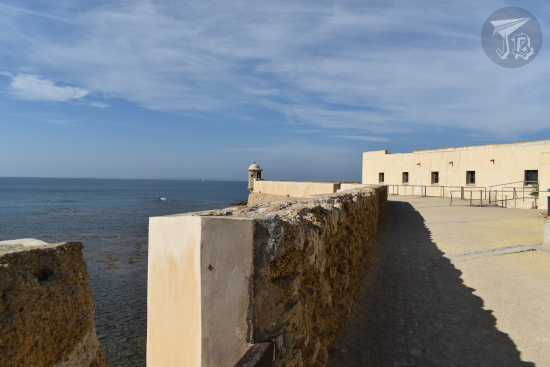
Santa Catalina Castle, Cádiz

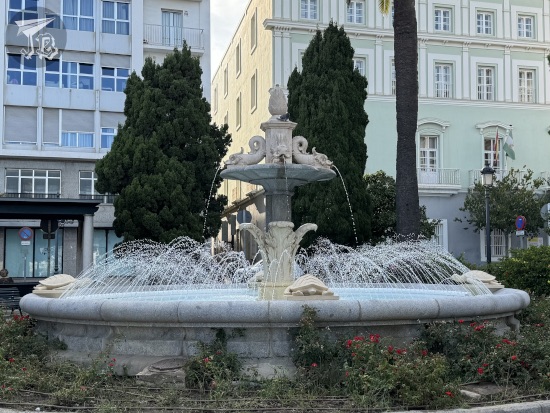
I continued on my walk around the city, left behind a knee cramp, the Parador de Cádiz and Parque Genovés until I reached the bulwark Baluarte de la Candelaria and the park Jardines Clara Campoamor. From there, I went on towards a second bulwark and the remains of the city walls Baluarte y Murallas de San Carlos. The bulwark was built towards the end of the 18th century to protect the harbour. Not far from there stands the square Plaza de España with the monument to the 1812 Constitution Monumento a la Constitución de 1812, the political response to the Napoleonic invasion. A bit further away stands the fountain Fuente de la Plaza de las Tortugas, with lots of cute turtles as decoration.

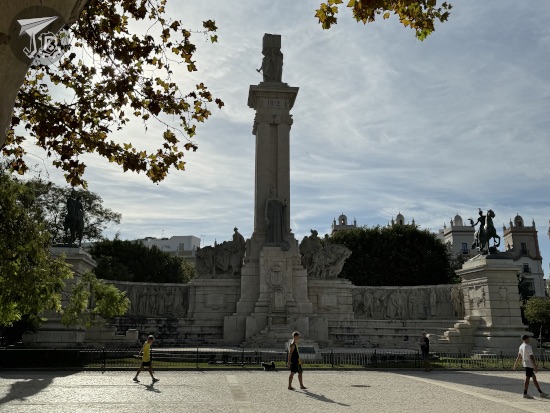
San Carlos Bulwark and Walls Cádiz

Monument to the 1812 Constitution Cádiz

Turtle fountain in Cádiz

At this time I decided to get an early dinner around 18:30, so I bought some fast food to take to the hotel. That is when the ant invasion started. It was something I was not expecting – one or two bugs is workable, but this was a whole nest out for my fries. It was not nice. I decoyed them into bathroom and decided to have the room cleaned the next morning.

I set off again about 20:15 to look for a place to watch the sunset at the beach Playa de la Caleta, which did not disappoint, and I sat there until the sun disappeared beyond the water line. Luckily, I made it today, as it would be ridiculously windy the following day.

Sunset at La Caleta, Cádiz

I then found the street Calle the la Virgen de la Palma, at whose end stands the small church Parroquia de Nuestra Señora de la Palma. It was built in the 18th century and it hosts a sculpture of the Virgin Mary credited with stopping the waters during the 1755 tsunami. In the street, there is a signal marking the highest water point, but there were so many restaurants and people that it was impossible to find it!
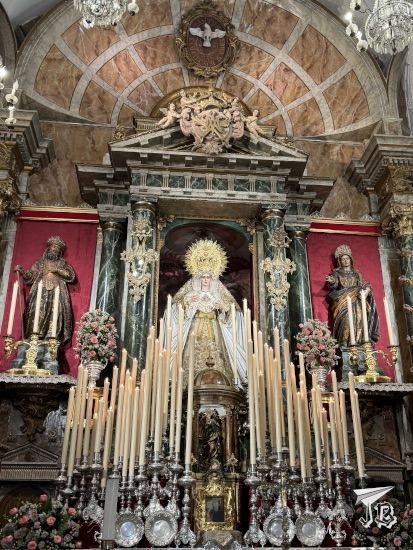
Sculpture of the Virgin Mary

I went back to the hotel afterwards to have some sleep – I was beat. I did manage to make a stop at a supermarket to buy coffee and pastries for breakfast the following morning though. Because one late latte per trip is enough.

11th September 2024: The long way there {Escapade to Cádiz, September 2024}

In order to reach Cádiz, I had to take one commuter train to Madrid Atocha. There, I either needed a high-speed train directly to Cádiz, or a connection via Seville. I chose this last option, because it was less than half the price round trip. The train company RENFE has three types of trains: the commuter trains Cercanías, the long distance system and the medium distance system, and I had to use all three.

Since I worked until the early afternoon, I bought a ticket for the 18:00 AVE (long distance and high speed). In order to be covered by the train company’s delay coverage, my Cercanías train to get to Madrid had to arrive an hour before departure, so at 17:00. The 16:00 train got there at 16:59, and I did not want to get caught in a technicality if there was a problem, so the aim was taking the 15:30 train. In the end, I was able to get on the 15:00 one, which left at around 15:20…

When I bought the ticket, I was issued a QR code which should have allowed me in and out of the commuter train systems as well as the long- and medium-distance ones. However, it just would not work. At first I thought because maybe it was a tad too early, but it turns out… It just did not work on either station – it did not let me either in or out the commuter train system. During the train rides, I had to take care of the process to check in online and get the codes to access the hotel and the room. It was a one-star hotel, the only thing I had found at a reasonable price for three nights that allowed me to check in late – the last train was due to arrive at 22:28. Since they did not have a physical reception, everything was done electronically.

After I talked to someone to let me out in Madrid Atocha, I went for ice-cream outside the station, and a sandwich to go so I could have dinner on the train or after arrival. Then, I went back to check out a magazine shop and buy the September numbers of National Geographic and Muy Interesante, both of which talked about dinosaurs, and there went my idea to be productive during actual travelling time. It turned out all right though, because in three out of the four long rides I ended up seating backwards, which means I get motion-sick if I look at a screen for too long.

After going through security into the AVE boarding area, I tried to find out how to connect with the final train, and I was told that there would be “someone waiting for me to take me to the other train”. I was highly sceptical of this, so once in the AVE I tried again. Once more I was told that there would be someone waiting to signal “connections”.

Guess what? There was nobody. However, I managed to easily find the correct track and my seat with a few minutes to spare – fortunately, I was travelling light. It is possible that the train waited for passengers that were coming from the AVE, but I made it without a problem – I wish I could say without stress. I had however checked online in my hotel, and if I missed the second train, the company would take responsibility, so worst case scenario was having to sleep in Seville on RENFE’s dime, and getting to Cádiz the next morning.

Fortunately though, there were no hiccups. When I finally arrived in Cádiz, about 15 minutes late, I walked towards the hotel, which was less than fifteen minutes on foot. It was around 23:00 when I walked into the room, so the whole trip took about eight hours.

The hotel was a refurbished traditional house built around a patio. The lift – which I used just twice – was just big enough for one person and you had to keep your finger on the button or it would stop. The walls in the common area were covered with azulejo ceramic tiles. The code reader in the main doors reacted quickly. However, it took me a couple of tries to get the code reader at the room working. There were two steps at the room that would threaten my safety if I got distracted – just before and after the door.

The room was bigger than expected for a one-star hotel, it looked reasonably clean, and it had enough sockets. There was a table, which was a little wobbly but did not fall during my stay there, and a small fridge which would be very handy.

What would a normal person do? Eat their sandwich, have a shower and go to bed, right? I did have the sandwich, but almost immediately I went out again. I had to say hello to the Atlantic Ocean. I was closer to the harbour, but instead I crossed the whole city centre until I reached the promenade Paseo del Vendaval, thus called because the little bit of the Atlantic in front of the town is called Mar del Vendaval (Sea of the Gale). The weather was not hot, but humid, and my long sleeves got a bit stuck to my skin. I had forgotten that sensation. I also had a weird feeling of familiarity. A lot of things had changed, but the layout of the town was still the same, so I sort-of knew where I was, though nothing was exactly what I remembered…

Promenade in Cádiz

I walked along the promenade and reached the cathedral Catedral de la Santa Cruz, where I hung out a little. Then headed out for the square where the town hall Casa Consistorial stands. It was way past midnight, so I thought I should head back to the hotel. This time I had no problem making either pin code work, and took the stairs to get to my room on the third floor – it was good exercise after so long crammed in a train. I then finally took my shower and went to sleep.

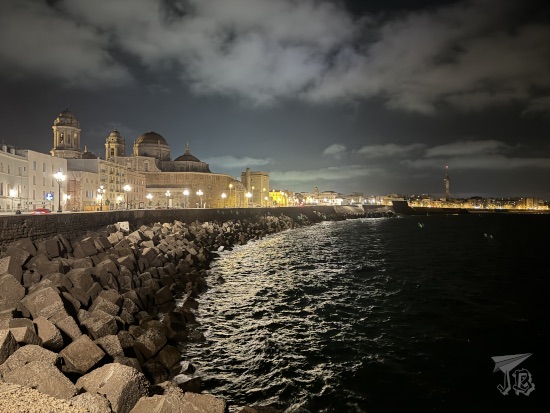
Cádiz at night

28th May 2022: San Cristóbal de la Laguna, Bajamar & Santa Cruz de Tenerife {Tenerife, birthday 2022}

I had a four-day weekend that happened to overlap with my birthday, so I decided to get myself a present and I booked the four days out – I wanted to visit the Spanish island of Tenerife. I seemed to have a streak of luck finding a decent flight, a couple of good hotels and a free permission to visit the peak of Mount Teide, a non-extinct volcano that happens to be the highest peak in Spain. I also decided to rent a car for the first time so I could travel around the island and do different activities in different places.

The plane left on time at 8:15 on Saturday – and I have to say that I love my IKEA travel bag, because it has a huge capacity but the perfect size to place under the seat, therefore I do not need to queue up for boarding to make sure I can stow the carry on. We taxied at the correct time, but when we got to the runway, we stopped. It turned out that one of the sensors was giving a warning of a 400 ºC temperature on one of the wheels. It turned out to be a false alarm, but we ended up with an hour-long delay that ended up cascading.

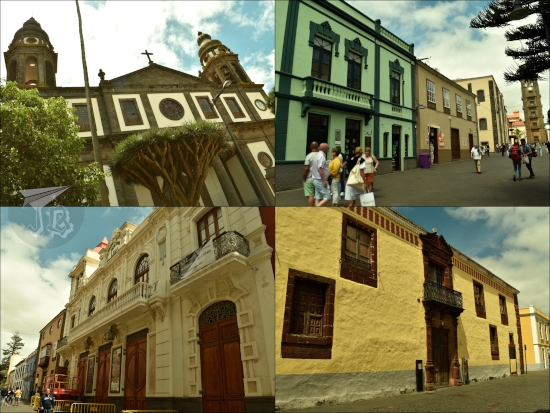
I reached the airport and got my rental – Volkswagen Polo I had to learn how to reverse. Once I was done with that, it was surprisingly easy to get by. I drove off to San Cristobal de la Laguna and went off to visit the historic quarter, which is a Unesco World Heritage site as an example of colonial architecture – Centro Histórico de San Cristobal de la Laguna. Most of the buildings date back to the 15th century, and the design was then copied in different colonial cities in South America. The houses are painted in different colours and most of them sport amazing woodwork in their doors or balconies.

It gave me a pretty distinct “Disneyland” feeling as the pedestrian streets are plagued with cafés, brand shops and bars. It was packed with tourists like myself flocking in guided tours from the tourist office, which seemed to only open to gather groups in order to hold those tours. As the week before my trip had been work-crazy, I had not been able to plan in detail, so my plan was to hit the tourist office, gather information and move on. This did not work out, and on top of that, the cathedral Catedral de Nuestra Señora de los Remedios was already closing down when I arrived – due to the delay. Other interesting but closed buildings included the church Iglesia Matriz de la Concepción, and several palaces including Casa de los Capitanes and the reconstructed Palacio de Salazar.

Typical buildings from Canary Islands. They are colonial in style, with big doors and windows. The façades are painted with different colours.

Typical buildings from Canary Islands. They are colonial in style, with big doors and windows. The façades are painted with different colours. The streets are wide and full of people.

I’m not going to say that I was disappointed, but I was really not digging the atmosphere, so I decided to move on. Instead of following the initial rough plan, I decided to head off to the tiny village of Bajamar to see the “sea pools”. Built in the petrified lava coast, the Piscinas de Bajamar are swimming pools fed by ocean water that keep swimmers safe from the rocks and the waves. I was lucky enough to find a very good and easy parking spot.

I wandered around the promenade Paseo Marítimo de Bajamar, saw the pools, the beach, and the mini lighthouse Faro de Bajamar.

Waves coming into the volcanic beach, which does not have sand but big black blocks of rock.

I moved onto Santa Cruz de Tenerife afterwards, ditched the car and checked into the hotel, then went off to explore. I walked by the market complex La Recova, also called Mercado de Nuestra Señora de África.

A bright orange building. It has a low, wide wall, and in the centre a clock tower

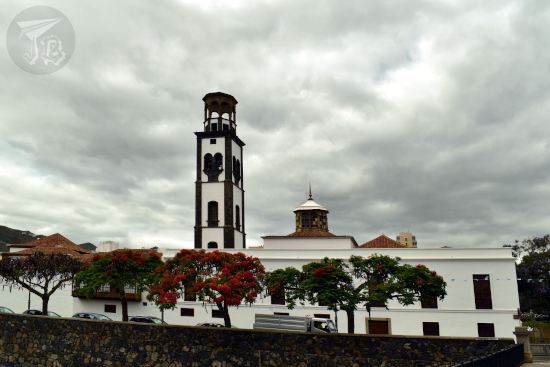
The tower of the church Iglesia Matriz de la Concepción (yes, again, but another one). The church has been repeatedly rebuilt and renamed between the 15th and 18th centuries. The current building is Canarian Baroque / Tuscan style.

A church with a bell tower. The building is white clay with black rock; this style is typical in the area

My first real destination was Plaza de España where the defensive castle Castillo de San Cristóbal used to stand. Now there is a fountain / pond and you can see the foundations of the castle.

Collage. The former site of the castle, now converted into a fountain or lake. On the other side, the castle foundations, and a cannon.

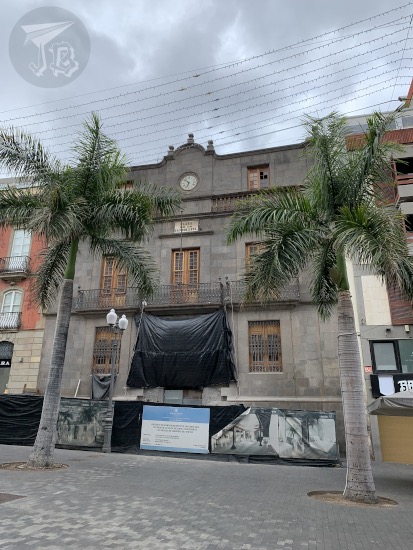
Next, I found another important square, Plaza de la Candelaria, but it was unfortunately under construction.

A grey building with construction work being done on it

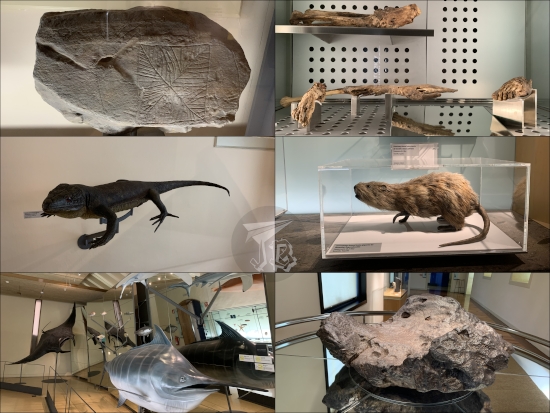
So I moved on to the science and anthropology museum Museo de Ciencia y Antropología de Tenerife. It was rather underwhelming at first, as most of the “exhibit” were photographs. Eventually I reached the “good” stuff, with reconstructions of ancient and extinct animals such as the Canarian giant rat and the Goliath Giant lizard – we’ll come back to those eventually. There were butterfly collections, reproductions of marine animals, rocks and meteorites. In the archaeology ward there were mummies – that was a little unnerving to be honest, I thought we had learnt a little more respect about the ancient cultures.

Before the Europeans arrived in the Canary Islands in the 15th century, there was a previous civilization in Tenerife, called the guanche. The guanche settled in the island around the 6th century. While it is not clear where they came from it is thought that they came from the north of Africa, as their language was similar to those in the Berber language group. They lived off the cattle and the land, and their economy was clearly based on the goat, which they used for everything – food (meat and dairy), clothing, bone tools, and mummification material.

Collage of the museum: a prehistoric carved rock; preserved giant rat and lizard; models of fish; a meteorite; rests of mummies (a foot and an arm)

After the museum, I walked along the harbour and saw the modern concert hall Auditorio de Tenerife, designed by the famous architect Santiago Calatrava, whose style is easily recognised – even though in recent years he has drawn criticism for going way beyond budget and his building having problems due to “over innovation”.

The auditorium. It looks like the sail of a yacht, all white.

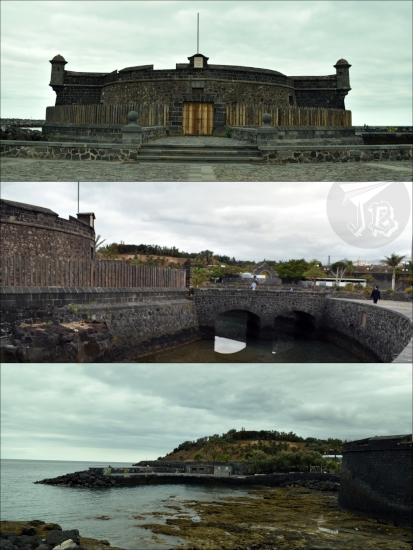
A few steps further stands the tiny fortress Castillo de San Juan Bautista, built between 1641 and 1643, and rebuilt the following century. I would have loved to see the botanical garden, but it closed early – as most things seemed to do.

Small castle surrounded by a moat that fills up in high tide.

I took a small detour to see the former arsenal Casa de la Pólvora, built in masonry in the 18th century. Eventually, I went to the supermarket to buy some dinner and snacks for the upcoming adventures, and called it a day after 14 hours on the go.

Armourine building. It looks like a treasure chest, built in grey rock

23rd & 24th September 2017: San Sebastián Film Festival (Spain)

23rd September 2017: Let’s go!

Overnight, I headed off to San Sebastián as a Weekend Escapade to the Festival de Cine de San Sebastián International Film Festival that is held over there because they were projecting a Japanese film and the main actor and the director were coming over to present it. The film was “Sandome no Satsujin” [三度目の殺人], the director is Hirozaku Kore-eda and the actor in question was Fukuyama Masaharu, of whom I am a big fan.

I started off at 22:00 on Friday as I had to take a bus to go to Intercambiador de Avenida de América, which is one of the bus hubs in Madrid. My bus to San Sebastián left at 00:30, so in the end I had to wait for almost two hours until I could board. I was dozing for most of the trip so it did not feel too long. I arrived in San Sebastián bus station at around 6:50 in the morning and I had decided that I would go to the so-called Shell Beach, Playa de la Concha, to watch sunrise. I had been told that cafeterias would be open at that time, but not even the one in the bus station was ready.

A beach at night. The sea is calm and it reflects the city lights

My plan of watching a sea sunrise was trumped by the fact that the sea is towards the west, but I still could take a couple of nice pictures.

The sun rising, tinting the sky and the sea blue and orange

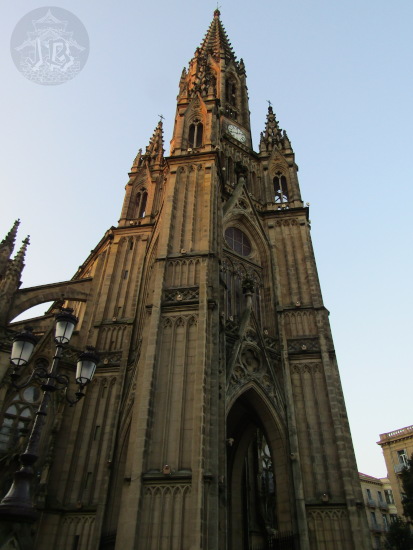
Among them were the beach itself, the “skyline” and the Catedral del Buen Pastor (Good Shepherd Cathedral).

A gothic or neogothic church clock tower, spiky with pointy arches

I wandered around, found the theatre where the film was going to be projected and as the sun started warming up, I started feeling less like a homeless dog.

The sun rising along a promenade

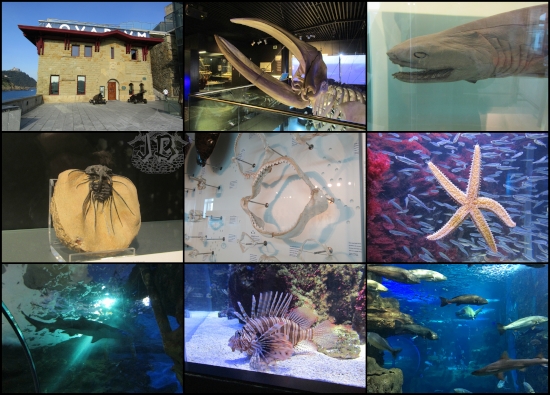
I found the local Starbucks at around 9:00 to get some rest, a coffee, and a cookie before I went to the Aquarium, which opened at 10:00. The Aquarium de San Sebastián is a bit more of a museum than anything else. The first part (second floor) is dedicated to the history of ocean commerce, with different types of ships, and rooms focused on the local harbour, companies, traditional boat racing and whaling. This includes an actual right whale skeleton and several sperm whale teeth and some baleens. The second part (first floor) is dedicated to general fishing and the local oceanography society, including machinery and live specimens.

Finally, after all this, you get to the actual aquarium (yay). There are several small tanks and then a big tank with a walk-through tunnels. The inhabitants are pretty standard, with lots of small fish and several magnifying-glass tanks to make the animals look bigger than they are. The third floor hosts the tropical fish including the piranha and the clown fish. All in all it is a nice place, however, it was under construction and some tanks were covered by dark plastic. After that I left the aquarium and I decided to go up Mount Urquil, which hosts a castle and quite nice views of the city and the ocean.

A small building entrance which yields to the aquarium. Collage showing different exhibits inside: a whale skeleton, a seven-grilled shark in alcohol, a trilobites fossil, a shark jaw, a starfish, a shark swimming above through an aquarium tunnel, a lionfish, sarks swimming in the aquarium

I walked by John Malkovich while heading there, but he did not look like he was in the mood (or the clothes) to be recognised, so I did not bug him. Then I started my climb up the mount towards the the local castle, Castillo de La Mota, along the batteries of cannons. The castle has a small history museum, and a look-out balcony, and the top has been transformed into a church, with a giant Christ overlooking. The truth is I was mostly improvising on my visits as the week was hell between work and the death of a family member.

Views from and of the ruins of the castle - the sea, the wall, and the old cannons

After that I had lunch and headed off to the theatre to check out the coming out of people. At this point I planned to wait for the actor and the director to come into the theatre, but for some reason I checked out the schedule, and the name of the actor had been taken out of the presentation! That made me sad for a little while, but I decided that I was okay with it, that it would not be a drama. I had taken my chance, and at least I had gotten some air after all the pain and drama throughout the week. I guess that helped relativise the sadness. I went to a park near the beach to get some sun and enjoy the last days of summer.

A 19th century building with large windows. A banner on the façade reads Festival de San Sebastián 65

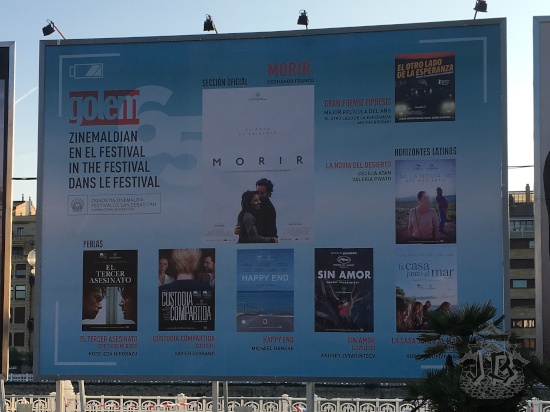
A banner for the cinema festival, showing posters for different films. The third murder is on the bottom left

Around 15:00 I returned to the theatre, Teatro Victoria Eugenia to start lining as I wanted a seat close enough to see the subtitles- and I found a place on sixth row which was pretty good. As this was a special people’s vote session, we got a ballot to give our opinions. Then I settled to wait, and eventually at 16:00 the presenter came in, and to my surprise, she announced Kore-eda and Fukuyama. That made me so happy I could have died right there and then, and the best was still to come. Kore-eda told us about the film. Apparently several people consider that he has changed genre, but he told us that he disagrees and that he still tried to make a human drama. However, he thought that we should judge. Then Fukuyama told us that he enjoyed San Sebastián and that they had been having pinchos and that he was happy to have returned. I was shaking so hard I could barely hold the phone as I recorded.

The stage inside the theatre

Director Kore-eda and actor Fukuyama Masaharu on stage

Promo of the film The Third Murder from the Festival Webpage

All this would have made me very happy already, but there is more. “Sandome no Satsujin”, or “The third murder” tells the story of a lawyer whose job is to defend a man accused of murder. As this would be the defendant’s third murder, if found guilty he will be handed the death penalty. The film is a complex story, completely unpredictable – or I was too enthralled to see the ending coming – but when everything fell into place I felt like gawking.

Furthermore, there was more to come – at the end of the film both Kore-eda and Fukuyama had stayed behind. as I was coming out I looked up and told them “otsukaresama deshita”, and both of them bowed and replied “arigatou”. Then we waited for them to come down from the second floor, from where they had taken the ovation. I dropped my vote and rushed through the red carpet. As other people talked to the director I made a beedive towards Fukuyama. It was then or never, and it turned out to be then.

Director Kore-eda and actor Fukuyama Masaharu waving for a picture on the street after the film

I was shaking inside but I managed to tell them that I had been a fan of his since Galileo times and I asked for his autograph. He told me thank you (at some point the interpreter tried to help, but I was busy dying and trying to get my meaning across). He signed my Galileo booklet and I asked him to take a picture with me, to which he also agreed. And thus I fulfilled my wildest dreams (and look horrible in the picture). After Fukuyama had continued on the red carpet I managed to sit down on a curb and I was on the phone with my friend C*****, who prevented me from going completely hysterical in fanby bliss.

After I told her everything, I was pretty dead so I headed off to he hotel (pension) that I had booked for the night, and pretty much giggled and crashed, and uncrashed and giggled some more. At 23:00 I was completely zonked out, not without realising that I had headed to get some rest without grabbing my freebies and some merchandising I wanted from the festival.

Fukuyama Masaharu's autograph on a DVD booklet

24th September 2017: And back

I left the hotel early, around 8:30 to head towards the cinema area and buy the short Festival guide (not the big one for 22€ but the little one for 1.5€) and get the free newspaper. I bought a coffee to go and headed back to the bus station, when my bus was at 10:00. I could not sleep and the Wi-Fi was not working, but I could watch Youtube videos on the seat screen. I managed to get home around 17:00 after a couple of buses, and I was pretty much dead. However, it was totally worth it. I think this is why I was hyper enough to decide to go to Vienna next month…

Flashback to 28th – 30th November 2010: Worktrip to San Sebastián and Bilbao (Spain)

San Sebastián

  • Playa de la Concha [Beach of “The Shell”]
  • Teatro Victoria Eugenia [Victoria Eugenia Theatre]
  • Iglesia de San Vicente [Saint Vincent’s Church]
  • Puente de Santa Catalina [Saint Catherine’s Bridge]
  • Plaza Mayor de San Sebastián [Main Square]

Bilbao

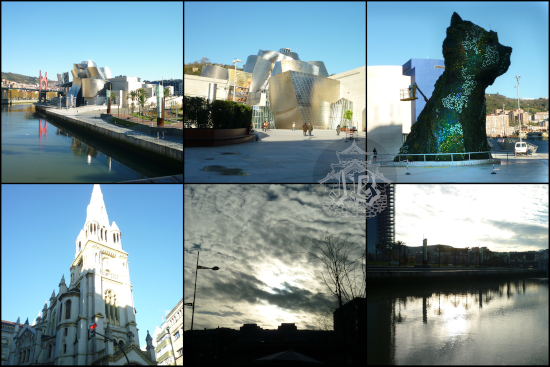
  • Guggenheim Bilbao Museoa [Guggenheim Museum Bilbao]
  • River and Estuary
  • Iglesia de San José [Saint Joseph’s Church]

Note: This is a flashback post, which means it is just a collage regarding a trip I took before I started the blog in 2012. Tags may be incomplete or slightly off.