20th August 2024: The VIP treatment in Tendilla (Spain)

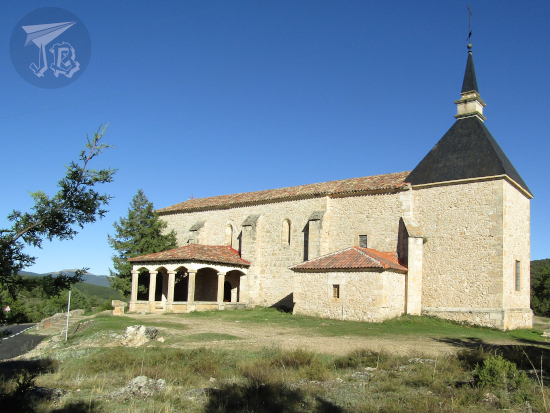
The catholic church in Tendilla is dedicated to the Assumption of Mary, thus the name Iglesia de la Asunción. It was designed in the 14th century CE, financed with money from the Mendoza family, one of the most important clans at the moment. It was projected as a great work, possibly the biggest church in the area – though Tendilla is a tiny hamlet now, it was an important villa during the Middle Ages, and the counts that ruled the enclave were very invested in it.
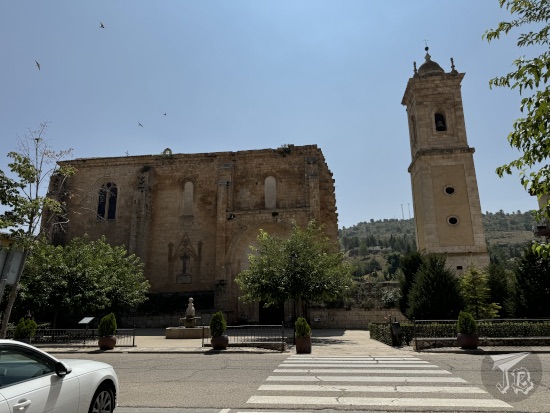
Church of the Assumption of Mary in Tendilla

The church was never finished – construction went on and off until the 19th century, when it was finally given up. Only one tower was erected, though two were projected, and this bell tower is separated from the building by a patio. The open area is actually a part of the nave that was not built in the end. The interior was decorated with a Baroque altarpiece, which still stands today.

Though still in use, the church has been gravely affected by time. The façade has greatly deteriorated in the last thirty years or so. The false floors have started collapsing and the roof is in dire need of repairs. The village is working on raising funds for a renovation.

A couple of relatives are very involved in the process, and at some point they offered to show me the inner areas of the church. I accepted, and was given the real VIP tour – they opened the church just for me too!

The temple is mostly Romanesque in style, aside from the Baroque altarpiece. The modern altar has been refurbished in marble. The altarpiece is golden wood, Baroque with columns, paintings and sculptures. To both sides of the altar, there are small rooms, connected to each other underneath the altar stairs. One of them has been transformed into the sacristy, the other one used to be an office, but now it is not in use because the floor is collapsing. Behind the altar, these two rooms give way to spiral staircases that ascend to the upper spaces, called La Gloria – Glory – and El Infierno – Hell – both of them unfortunately very abandoned and covered with pigeon excrement, feathers, rest of nests, and even dead pigeons. We climbed up to the Glory, but the Hell staircase is a bit unstable and crumbly, so we did not get far on that one. I scared the hell out of a pigeon though – it was mutual.

Church of the Assumption of Mary in Tendilla

Church of the Assumption of Mary in Tendilla

I climbed to the choir for a couple of pictures, and then we went up the bell tower together. It was a bit thrilling to do so, because I’ve seen that tower very often, but never gone up. It was all in all really cool – especially being alone and allowed complete freedom of pictures, including lightning and flash.

Afterwards, we went to the family home and had lunch. Later, in the yard, we “hunted” for the local fauna, including wasps, damselflies and wall lizards.
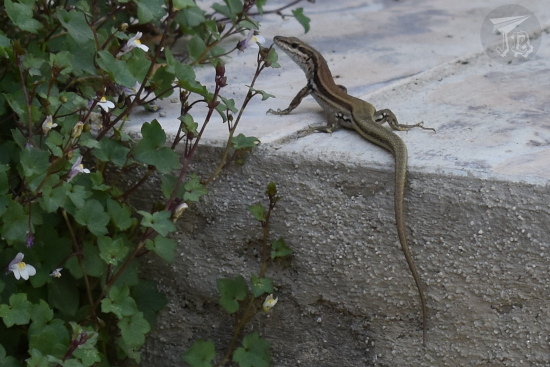
Wall lizard

Damselfly

26th February 2022: A Medieval Fair in Tendilla (Spain)

Tendilla is a tiny village in the area of Guadalajara, Spain. It was declared a town – by Medieval standards at least in 1394. About a century later, the County of Tendilla was founded. By that time, the local cattle fair, around the festivity of St. Matthew, was considered one of the best in the Kingdom of Castile, with the Catholic Monarchs bestowing their blessings on the town. Among the most interesting areas are the long covered arcades, and the unfinished church dating back from the 16th century, Iglesia de la Asunción.

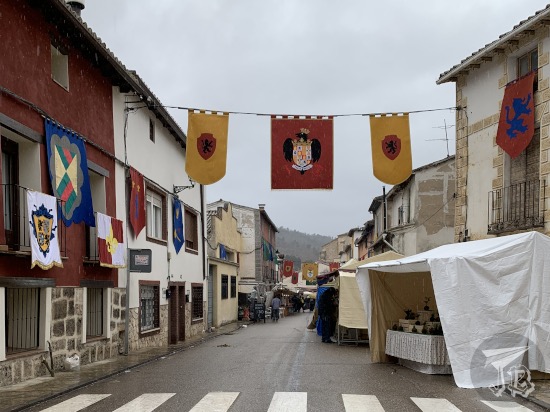
The cattle fair was rekindled in the 1990s, and today it is called Feria de Mercaderías de San Matías. The closest weekend to the 24th of February, St. Matthew’s day, a Medieval market is laid along Main Street, with edibles, trinkets and artisan items. The village becomes decorated with flags, pennons showing off real and assumed heraldry items.

This year, I decided to get there as some family members were going to be in the house they own in the village. I arrived at around 10 am, and by that time most the village was already full. I got deviated, but it was not hard to find a parking spot. Unfortunately the weather had not decided to accompany and it was rainy and freezing all day.

The fair stalls had begun to open, but first we made a run for the local grocery stores to grab some ingredients for lunch. The typical thing to eat in this time are migas, which are basically fried breadcrumbs with paprika, pork, garlic and a fried egg on top. We also bought sweets and confectioneries, just because we could.

At noon, we walked along Main Street Calle Mayor. The stalls were already open, and even in the bad weather there were quite a few people. Some were even in costume, dressed in Medieval outfits, as dames, knights or noblemen.

A wide street. There are flags hanging above and from the balconies, and shopping stands on the right. the sky is dark and heavy, as in all the pictures taken

A wide street. There are flags hanging above, and shopping stands on the both sides, selling hand-made jewellry and trinkets.

A Romanesque church with a bell tower. The church is unfinished.

Main square. It has a pole in the middle, and colourful ribbons run from it to the buildings around the square. The floor has been covered in sand, and the houses are decorated with flags. Lots of people walk around.

To the end of the village, a small “farm” had been installed – oxen, horses, cows, goats, donkies, sheep, rabbits, piglets… Due to the ‘health situation’ which for once was not Covid but avian flu, there were no ducks or hens or any kind of bird. You could hold the bunnies, but I really really wanted to hug the huge draft horses.

Farm animals: a donkey, two piglets, cows, rabbits, a sheep trying to eat the camera, a working horse.

Farm animals: goats trying to escape the pen, oxen ignoring the camera, a black-and-white cow wanting pets, and a working horse looking tired.

Someone had not really thought positioning carefully though, and right in front of the farm – and the piglets – stood the food stalls, especially a roaster, whose cooked pork was… suspiciously similar to the piglets in the farm *coughs*.

On the other side of the farm, the locals had started preparing the communal migas – every visitor is entitled to a plate of them, but it was way too cold to queue. Instead of being topped with an egg, though, they are sprinkled with torreznos, pork lard fried and preserved.

A huge barbecue with pork roasting and sausages. The barbeque itself is round, and it's big enough to fit at least a dozen ribcages, ten pork legs, and twenty or thirty sausages.

A person using a shovel to stir a huge pot of breadcrumbs being cooked, and a close up of the severd plate: orange-looking breadcrumbs with dried fried pork lard on top.

On our way back we ran into the horse parade and show, which was held in front of the town hall. The riders of El Duque Espectáulos, dressed in Medieval and Templar costumes, trotted and galloped along the music.

A group of medieval-looking horse riders making their way through the crowds

An older man making a golden horse trot and gallop on command, the horse is photographed mid-hop

Riders in medieval clothing galloping on the Main square

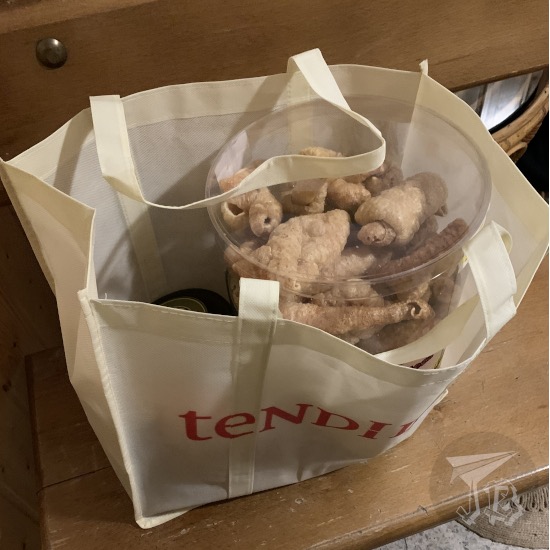
We stopped to buy some torreznos to take home, and we got given the tourist treat – a cloth bag with a huge box of fried pork skin. It is tastier than it sounds, honest!

A tote bag reading Tendi (the rest of the writing is obscured), with a box of torreznos inside

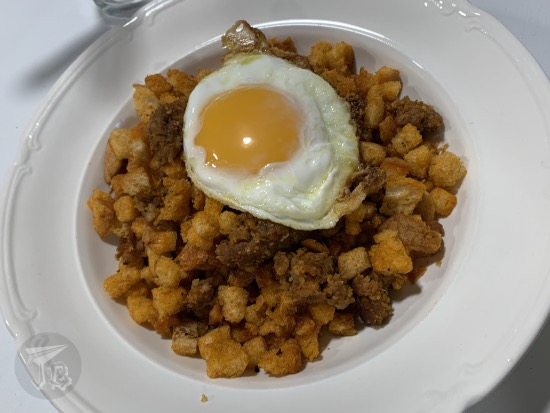
We had lunch at home, and not to show off, but I do think our breadcrumbs looked much better. We made them ourselves, with chorizo meat and eggs sunny side up! They looked so much better than the communal ones, right?!

A plate of migas. The breadcrumbs look golden, and there are pieces of pancetta and chorizo mixed with the bread. On top, there is a fried egg, sunny-side up

Finally, after lunch, we took another stroll, but the weather was miserable, raining and cold – which was so mean because the following day when I had to work it was nice and sunny, and there was a bird of prey exhibit.

Romanesque and Baroque buildings, deserted in the rain. One of them is a tiny hermit church, the other a column, and the third a palace that has seen better times

But all in all I spent a nice time with family and got to pat horses and goats. I guess there are much worse ways to spend a Saturday.

Walked distance: 6.20 km (9866 steps)

8th October 2021: Tamajón & Cogolludo (Spain)

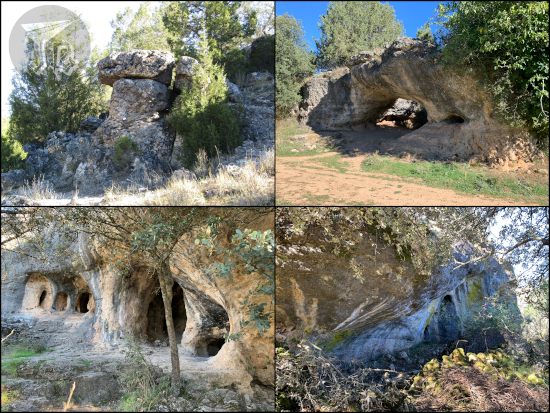
When I went to the waterfalls of the Aljibe I drove past a little village I had never heard of before – Tamajón, and a side sign reading “Pequeña Ciudad Encantada de Tamajón”. The term “Cuidad Encantada”, meaning Enchanted or Magic City, is used in Spanish to refer to karst formations. Karst is the name of a particular topography, created by the dissolution and chemical weathering of soluble rocks, chiefly but not just limestone.

The particular Spanish karst landscapes were formed by precipitation of salts – calcium carbonate – in the quiet waters of the Tethys Ocean during the Mesozoic Era (251-66 million years ago). Plate tectonics made central Spanish arise during the Cretaceous (the later subdivision of the Mesozoic, 140-66 million years ago) emerge, and the calcium carbonate became exposed to the elements, which started the erosion process. The most famous karst landscape in Spain is the Ciudad Encantada near Cuenca, which I guess spread the name.

Tamajón has a short hiking route around its karst formation, and while it is true that they are on the relatively smaller size, there are different shapes. I started my hiking route at the Ermita de la Virgen de los Enebrales, hermitage church dedicated to the Virgin of the Juniper Forest – the current building was reformed in the Renaissance style, thought the actual dates are shaky.

I started on the hiking route from the hermitage, along the road, and there were no markings there, so I kind of winged it for a while. After I took the first turn and started going up the rocks, I found the painting marking the routes – I had a handmade map because someone had shared it online, so I just went along it, and when I finished I redid about a fourth of it to take a detour to the other side of the road. There are cracks, arches, caves, cavities and capricious forms. I spent about an hour and a half walking around almost completely alone, which was awesome.

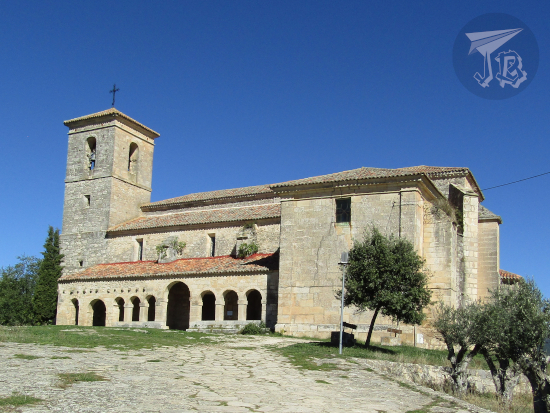
On my way back I stopped by the Church of the Assumption Iglesia de la Asunción, also a Romanesque – Renaissance mixture. The porch is typical of Romanesque churches in the Camino de Santiago (St. James’ Way), to shelter pilgrims.

As it was still early and I was relatively close, instead of driving home I headed off to another village called Cogolludo. I parked the car at the edge of the village and walked towards the main square, where there is a famous Renaissance palace Palacio de los Duques de Medinaceli. It is considered the first Renaissance Palace built in Spain, and it is reported to have been finished in 1492. The palace was designed by Lorenzo Vázquez de Segovia, with exquisite decoration, and the blaring lack of towers, which were very popular at the time. If I’m ever in the area again I might want to try to see the interior, which is only open in the guided visits.

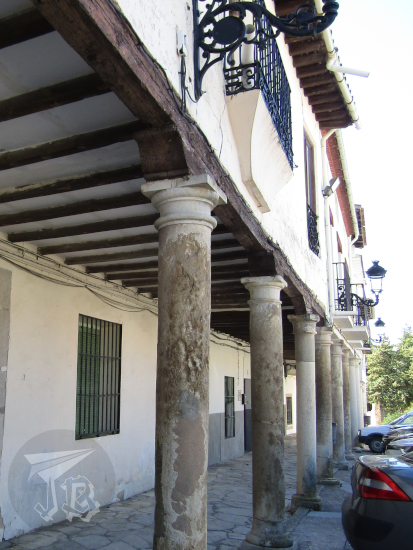
The Palace stands in the main square Plaza Mayor which has a typical Castilian arcade with stone columns (unfortunately workers, sun and cars made it hard to take a good picture of it).

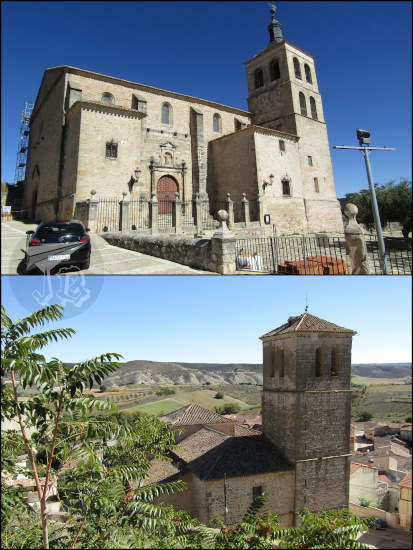
Cogolludo has two churches, Iglesia de Santa María de los Remedios (Our Lady of Remedies) and Iglesia de San Pedro (Saint Peter), both dating from the 16th century, but both completely closed down.

Finally, there are also the ruins of the Medieval Castle Castillo de Cogolludo, but there was not much incentive to climb up. All in all, it was a short but interesting morning – though I glad I teamed the two visits up, going to Cogolludo on its own would have not felt productive.

Driven distance: around 115 km
Walking distance: 7.27 km