22nd October 2024: Antwerp & Starset’s Immersion {Belgium October 2024}

The weather was clear but crisp in Antwerp [Anvers | Antwerpen] when I left the hotel to grab a coffee at a small supermarket at the station. I walked right up to the Cathedral of Our Lady Onze-Lieve-Vrouwekathedraal. The interior was spacious, with a feeling of light and openness, with pointed arches. One of the key features of the cathedral is the art it houses, particularly the four paintings by Peter Paul Rubens (1577 – 1640), the most important Flemish Baroque artist, known for his nude characters, whether mythological or biblical. There are four of his works in the cathedral – The Elevation of the Cross, The Descent from the Cross, The Assumption of the Virgin Mary and The Resurrection of Christ. The cathedral boasts that it contains more “masterpieces”, both classical and contemporary, but they pale in comparison.

The cathedral is 123 metres long, and its tower is 123 metres high, giving it a special proportionality – which would have been even more spectacular if the second tower had ever been completed. The nave has a “secret” skylight that can only be seen if you are standing right underneath – this is supposed to represent the presence of God. The building is considered late Brabant Gothic, with some Baroque decorations. The stained glass windows are mainly Neo-Gothic, since the originals were destroyed. Underneath the nave there is a Medieval crypt.

Antwerp Cathedral interior

Art in Antwerp Cathedral

Afterwards, I headed out for the Plantin-Moretus Museum Plantin-Moretusmuseum, a Unesco Heritage Site. It is a museum on the history of book printing, especially from the 16th century printers Christophe Plantin (founder) and Jan Moretus (heir and son-in-law), located in their former house and workshop. The collection includes original printing presses and typesetter letters, drawings and paintings by Rubens, and hundreds (thousands?) of books printed throughout the centuries, and even some manuscript codexes. There were Bibles, atlases, medicine books… It was absolutely fantastic – though taking pictures was hard due to the lightning (so forgive the strange angles).
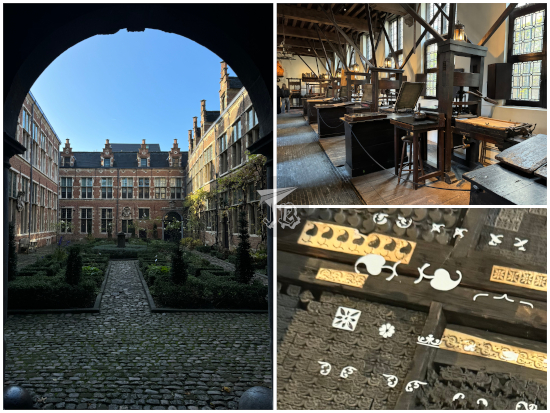
Plantin-Moretus Museum

Plantin-Moretus Museum books

I was feeling a bit woozy, probably because I had not eaten anything solid in 24 hours. Thus, I found a supermarket and bought a few items to have lunch, dinner, and breakfast the following day. I was heading back to the hotel, but I became distracted as I walked by the Stadsfeestzaal. Now a shopping centre, it used to be an exhibition hall, built at the end of the 19th century. It burnt down in 2000, and in 2007, it reopened after restoration as a shopping centre… which was celebrating Hallowe’en.

Antwerp festival hall

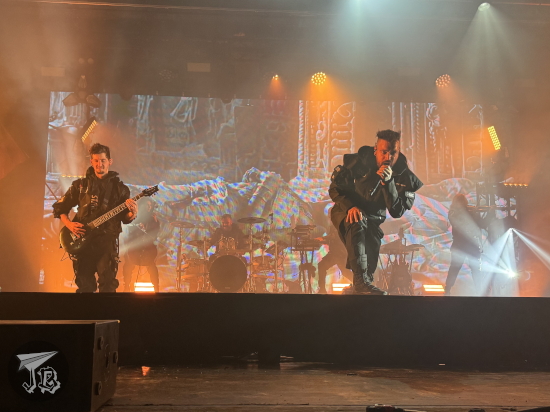
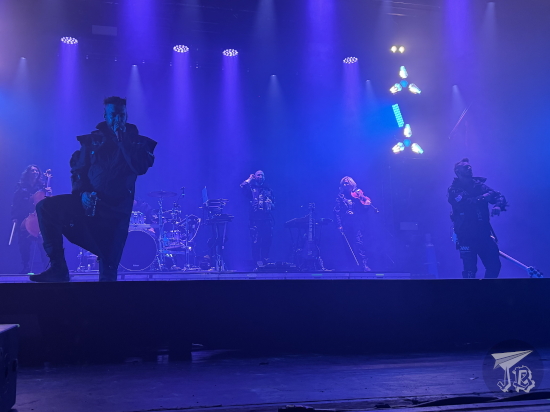
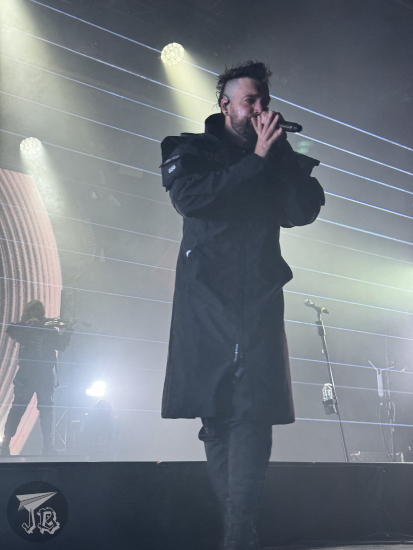
I ate a sort of pizza bread, warm from the supermarket, on the way, and some sushi when I got to the hotel. It was an unorthodox combination, but it made me feel fine again. I saved a salad for later, and I got some rest and got ready for Starset’s concert Immersion: The Final Chapter. I reached the venue Trix Zaal around 16:20, and I was… second in the VIP queue. The VIP passes were issued around 18:30, with a staff member taking our names and checking IDs. Doors opened at 19:00 and the curtain literally fell at 20:15.

Starset Inmersion poster

I once had to describe Starset and I did it as “weird”. Not in a bad way. They have a futuristic image, with an emphasis on a future rather terrifying technocratic dystopia. The concerts carry out a narrative – the New East is a sort of mental empire that controls everything through a device implanted in your mind. Their music videos are independent though. Their music style is hard rock or alternative metal, I’d say.

When I first saw them in Japan, they were officially four members: Dustin Bates (lead vocals, keyboards, soundboard, guitar), Ron DeChant (bass, keyboards, backing vocals), Brock Richards (guitars, backing vocals) and Adam Gilbert (drums, percussion) – those were the ones I met for the sainkai. They are currently touring with Zuzana Engererova (cello), Siobhán Richards (violin, keyboards), and Cory Juba (guitar, synth). I am very happy to report that the touring members are – at least for the two concerts I’ve attended in Belgium are present for photographs and meet and greets.

I enjoy Starset concerts a lot, I kind of feel the music. Besides, there are a bunch of songs that hit my soul really hard. Out of this concert’s setlist, I particularly love Carnivore and TokSik. However, Trials, Monster and My Demons are the ones that touch me really deep.

The stage was set with a bunch of rotors between the musicians and the audience, and there was a lot of neon and smoke to help with the visuals. The concert took about two hours, with a break in between to take down the rotors (in a matter of minutes). The “final chapter” the tour title refers to turns out to close down the futuristic plot and kickstart a present one with… time travel. And it makes total sense!

Setlist:
  1. Unbecoming
  2. Carnivore
  3. Manifest
  4. Perfect Machine
  5. Frequency
  6. Trials
  7. It Has Begun
  8. Waiting on the Sky to Change (Downplay cover)
  9. Devolution
  10. Infected
  11. Telekinetic
  12. Brave New World
  13. Faultline
  14. Monster
  15. Degenerate
  16. Echo
  17. Die For You
  18. Halo
  19. My Demons
  20. TokSik
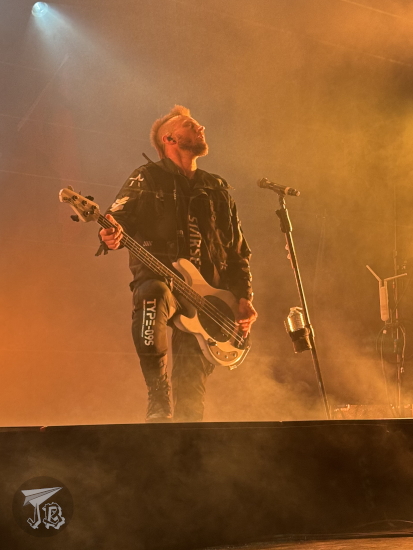
Starset concert snapshot

Starset concert snapshot

Starset concert snapshot

Starset concert snapshot

Starset concert snapshot

During the concert, the person who had been first at the VIP queue had a bucket with a glow in the dark message asking for guitar picks. They caught an extra one and gave it to me afterwards! I was extremely grateful! After the encore, VIP pass holders could stay behind to take the official photograph and get some items signed.

I had brought a printed copy from my photograph from the VIP event at the previous concert. Whilst last year the VIP experience was a pre-concert acoustic, this time around it was afterwards, and it consisted on “hanging out with the band”. I had heard about it before, but I could not imagine how that went. First, we lined up for the official photograph. They built up a backdrop for the. After the picture was taken you got a signed poster and the QR to download it, and off you went back to the floor. I was talking to the people I had queued with when I suddenly looked up and saw Cory within the crowd. How can these guys be so tall and at the same time so sneaky? Because I swear, Dustin is 2.5 times me and I never saw him coming.

I asked each member to find themselves in the photograph and they signed it for me. Some asked when it was from, and I explain the one from the previous year. Though technically they could sign two things, I forewent the CD I had because the photograph was easier to hold on its own. I praised Zuzana on the girl-power vibe she and Siobhán had going on for the tour and she was happy “someone noticed”. Trust me, it is very noticeable. It was extremely weird and fun to be chatting with all the members like that. I am not sure it makes sense, but I am a bit intimidated by the interactions with Japanese stars – I would blame it in Japanese being my third language, but both Miyavi and Yoshiki are fluent in English. I could blame it on all rules being broken after the stint on the floor of the Royal Albert Hall, I guess. Or maybe it is just different with American artists, since I had the same feeling with Misha Collins – “approachable and human”.

Though the manager had said “no selfies”, towards the end, when he was the last around and a bunch of people had left already, Dustin (vocals) took a few with the fans who remained. I was one of the lucky ones. Then we ran into Andy (drums) at the bar and we were chatting for a while longer. We also took a selfie, yay us.

Afterwards, I undid the way towards the hotel. I walked because it was actually shorter than taking public transport. It was after 23:00, and the streets were mainly deserted as it was cold, but I had no incidents. I had to walk fast to keep myself warm, so that helped reduce the time out. I was also glad I had bought myself dinner, as I thus I did not have to look for a fast food place open at the time and I could head directly into the shower.

All in all, the whole experience was fantastic and I had a blast, or two. Thank you, Starset, for such an awesome event, and all the nice fans who had zero issues with switching to English whenever I was around, and especially to the person who gave me the pick.
21st October 2024: Bruges & Antwerp {Belgium October 2024}

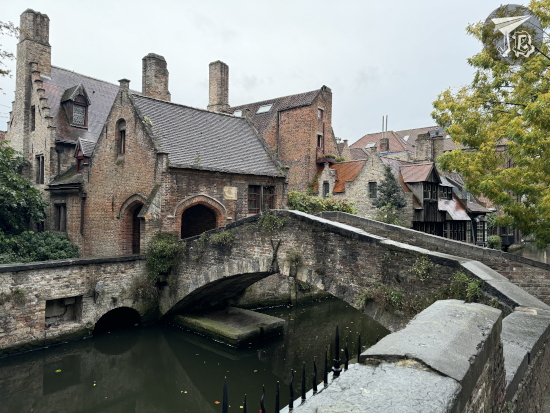
It was raining in Bruges [Bruges | Brugge] when I woke up, but it was supposed to stop by the time the monuments started opening. I asked reception to take care of my bag and I left around 9:30. I thought I would retrace my steps from the previous day, but when I got to the Church of Our Lady, it was not open yet, thus I took a small detour and explored its surroundings. I walked around the area taking in the scenery, and crossed Boniface Bridge Bonifaciusbrug, one of the iconic bridges overlooking traditional wooden and brick houses which face the canal. In front of the church stands the hospital-turned-museum Apotheek Sint-Janshospitaal. It was closed because it was a Monday, but the building was pretty.

Bonifacebridge

The Church of Our Lady Onze-Lieve-Vrouwekerk opened at 10:00 and I wanted to at least see the free area. The church is famous for having a statue by Michelangelo, but that was in the museum area, which I did not visit. The church also displayed original frescos and a small Via Crucis.

Church of our Lady Bruges

I then walked towards the city centre and Saint Salvator’s Cathedral Sint-Salvatorskathedraal. The cathedral is made mainly out of brick, along with tuff and limestone. The oldest bricks date from the 14th century, made outside the city and brought via the waterways. It was not originally built as a cathedral, but took over the role when the actual one one was destroyed in the 18th century. Instead of rebuilding it, the city made Saint Salvator the next cathedral in the 19th century. Unfortunately, shortly afterwards, there was a fire and the roof collapsed. English architect Robert Chantrell was in charge of the restoration, and he chose to build the neo-Romanesque tower that looks something like a Lego set. Later, a peak was added to the tower which makes it even more… Lego-like.

Saint Salvator Cathedral Bruges

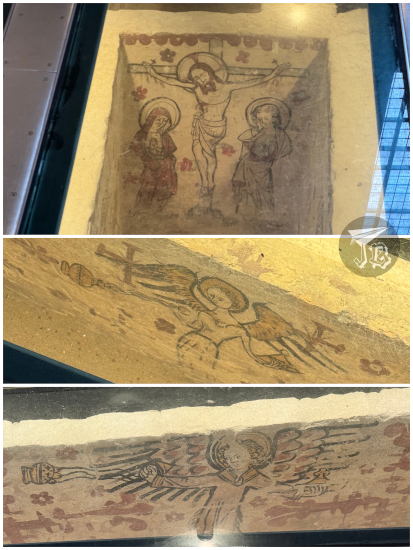
The cathedral has an organ originally built in the 18th century, and has been expanded thrice since then. The altar is surrounded by Flemish tapestries. Underneath the nave, there is a crypt where you can see the oldest bricks and a number of 14th century tombs, decorated with paintings in the fresco technique. They feature angels, Jesus, the Virgin Mary and Saint John. There is a small building adjacent to the cathedral with a closed off cloister which holds the treasure, full of works of art.

Saint Salvator Cathedral 14th century tombs

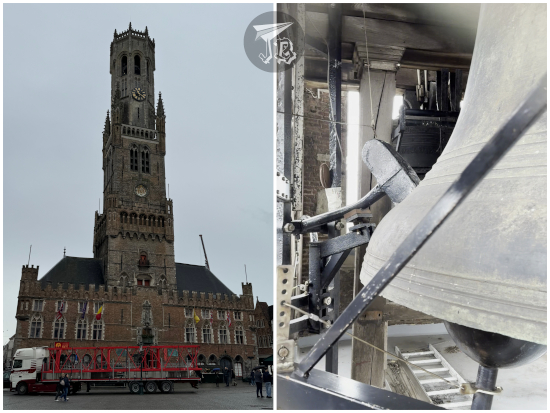
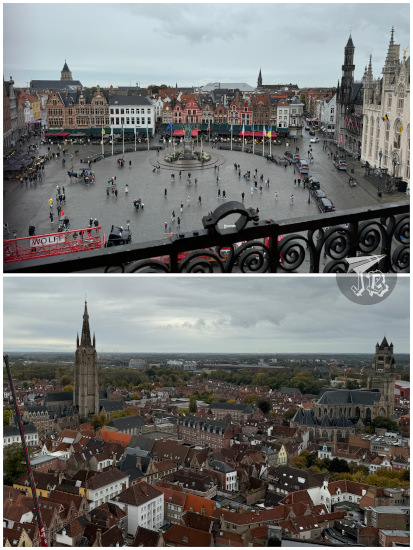
Afterwards, I headed off back towards Market Square Grote Markt. It was raining on and off, so I decided that maybe I could check out the Belfry of Bruges Belfort van Brugge – it turns out that the museum is… climbing the belfry. The belfry was originally built in 1240, though it burnt down and it was rebuilt forty years later. It has an octagonal end cap which was added in the late 1480s. After a few built and destroyed wooden spires, a stone neo-Gothic parapet was added in 1822. The tower is 83 meters high (366 steps, yes, I counted, I got 364) and contains a carillon with 23 bells (27 tons, no, I did not weigh them), and a total of 47 bells. Believe it or not, I was up there when the carillon stroke noon. That was awfully cool. There were also great views of the city.

Bruges Belfry

Bruges from the Belfry

There was a clearing in the clouds and very low chance of rain for the next hour or so, and thus I decided to find one of the official providers of boat tours on the canals. These are sanctioned by the town hall and all of them have the same price and the same route, so any one would do. The one I found first was De Meulemeester Boat Tours Rondvaarten De Meulemeester. The tour departed and arrived from Dock no. 5 (Wollestraat 34). We sailed to Jan van Eyckplein (Jan van Eyck Square) and the edge of the Lake of Love Minnewater. On the way we did not only see the most important monuments facing the water, we also came across Bruges’ famous swans. In the 15th century, keeping swans was a symbol of status, and they were added to the city as part of its image as a flourishing trade point. Today they’re still maintained by the city, which has actually taken them off from the canals for quarantines before. There were quite a few tours going on at the same time, and the boat captains seemed to know each other – or at least have enough familiarity for some banter.

The canals of Bruges

After the boat ride, I found the Gothic Bruges city hall Stadhuis van Brugge, one of the oldest city halls in the historical region. It was built in a late Gothic style between 1376 and 1421, but it has been modified and renewed a few times – and since at this time I had decided that Bruges was a city to come back on a non-Monday, I decided to leave it for the next time, hoping that Antwerp would have better weather – a bit less cold at least.

Next to the town hall stands the Basilica of the Holy Blood Basiliek van het Heilig Bloed, which is supposed to hold a Relic of the Blood of Jesus Christ. I only visited the Romanesque chapel underneath, because I had just seen two huge groups of people go in.

It was then around 13:45, and I had decided to take the 14:25 train to Antwerp to try and make it to the last entry to Chocolate Nation. At the station, however, I decided to get a Belgian waffle with dark chocolate and strawberries. The waffle shop was out of strawberries, so I got a berry mix instead. That killed all my appetite, to be honest, but it was delightful. I even got a little Belgian flag on it – and good thing that I did not order whipped cream, because it was so filling that I was not able to eat anything else throughout the whole day. I regret nothing.

Belgian waffle

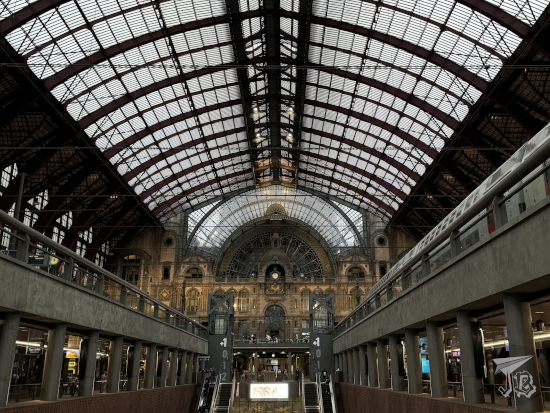
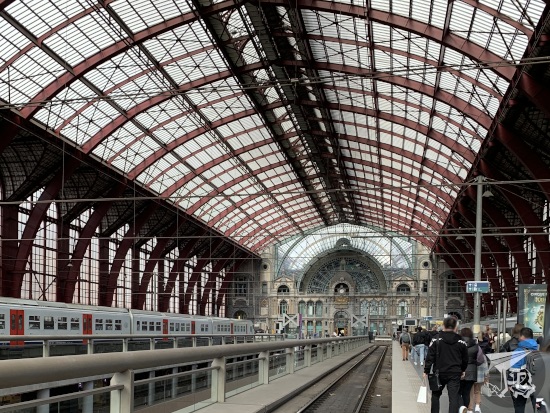
The train was on time and off I went to Antwerp [Anvers | Antwerpen]. I reached the stunning Antwerpen-Centraal railway station Gare d’Anvers-Central | Station Antwerpen-Centraal. The weather was not much nicer than in Bruges though, and it was still raining. I dropped my luggage off at the hotel, and went back to the station to take some pictures – I like hotels near travel hubs. Afterwards, I headed off to Chinatown / Van Wesenbekestraat, but the only interesting thing there was the pagoda gate.

Antwerp Central station

I headed towards the historical centre and stopped by the Cathedral Cathedral of Our Lady Onze-Lieve-Vrouwekathedraal, which belongs to the Unesco World Heritage Site Belfries of Belgium and France. It is credited to architects Jan Appelmans and his son Pieter Appelmans. Both of them are honoured in a metal monument within the wall of the cathedral, which was erected in the Gothic style. The cathedral was never completed to its original concept, and only one of the two projected towers was ever finished. The church was damaged in several scuffles with time – as recently as WWI – and it was completely restored between 1965 and 1993. It had already closed, but I was counting on that.

Antwerp cathedral by day

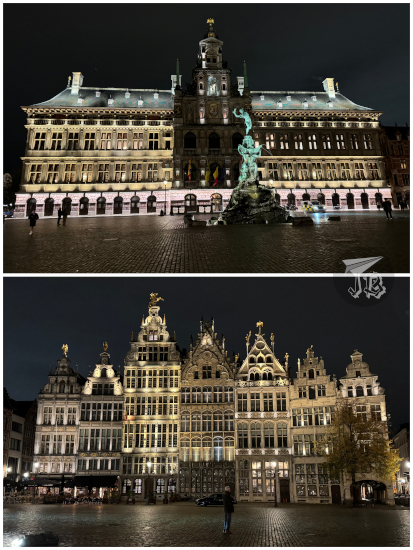
I continued off to Main Square Grote Markt, which was almost empty due to the weather. There stands the Antwerp City Hall Stadhuis Antwerpen, a few guild houses, and Brabo Fountain Brabofontein, which represents a legend – a giant who cut off the hands of boatmen received the same fate by hero Silvius Brabo.

Antwerp Grote Markt by day

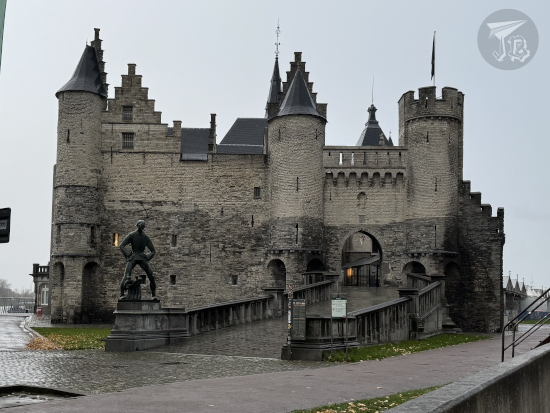
Then, I continued off towards the edge of river Scheldt, on whose banks Het Steen, a Medieval fortress dating back to the early 13th century. It is what one could call the Antwerp Castle from Wagner’s’ operas, and it was built as a way to control the river. It is currently used as a visitor centre.

Het Steen

It was getting dark already and none of the monuments were lit, so I decided to get back, as it was raining rather hard. The second I saw reached the station though, the illumination was turned on. I decided to go to the hotel and wait the rain out, as it was supposed to clear out in about an hour. It did, so I retraced all my steps back towards the Cathedral of Our Lady Onze-Lieve-Vrouwekathedraal and the Main Square Grote Markt. I even reachedHet Steen, but it was not lit.

Antwerp cathedral by night

Antwerp Grote Markt by night

Though it was cold, it had fortunately stopped raining for the time being, and I could take my walk leisurely. I turned in for the day afterwards.

25th March 2023: Brussels, Antwerp, and Starset {Belgium, March 2023}

As my companion D****e was caught in the French air controllers’ strike, she did not make it to our hotel until the wee hours of the morning. I let her sleep, and headed out to explore another area of Brussels. My first stop was again Mont des Arts, because it was on the way to Anneessenstoren, remains of the old city walls – which were being renovated, so I could not see a thing.

I had decided not to take the umbrella because the wind made it useless anyway, so I had to take cover a couple of times. I continued off to the Romanesque-evolved-into-Gothic Church of Our Lady of the Chapel Église Notre-Dame-de-la-Chapelle | Onze-Lieve-Vrouw-ter-Kapellekerk. It was closed, but I hung out around the area for a bit. There is a skate park, a Memorial to Pieter Bruegel the Elder (who is buried in the church) and an obelisk Obelisk Kapellekerk sculpture.

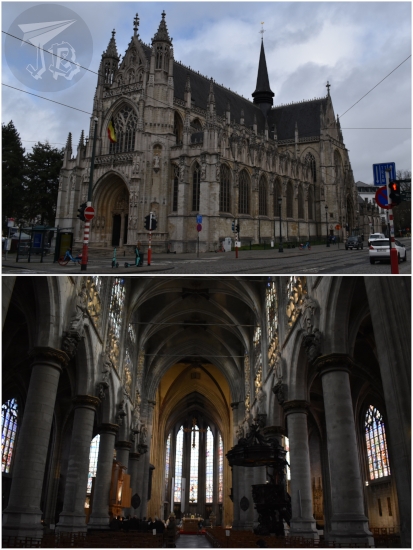
I decided to come back when the church was open, and continued walking towards another church in the area, the Church of Our Blessed Lady of the Sablon Église Notre-Dame du Sablon | Onze-Lieve-Vrouw ter Zavelkerk. It was built in the 15th century, in late Brabantine Gothic. It does not have towers, but a deep portal in the main façade. It is richly decorated inside and out, in light coloured stone from the nearby Gobertange quarry. In the beginning, the church was a parish for the noble and wealthy citizens of the city, but it slowly lost lustre over the centuries. In the late 19th century and beginning of the 20th century, it was “restored” according to the principle of unity of style. The whole building is laden with ogival windows, and the light inside is very beautiful. When I was there, the choir was rehearsing, and there was a “do not visit beyond this point” notice which I abided by.

Gothic church: exterior + nave, flanked with long windows

I went out again, and crossed the street to the garden Square du Petit Sablon | Kleine Zavelsquare , which features statues depicting some of the great humanists of the Belgian 16th centuries, and a fountain in the honour of two noblemen who were executed by the Spanish regime in the same century. The fences are decorated with sculptures that depict the different guilds of the city. It was designed by romantic architect Henri Beyaert in the Flemish no-renaissance style in the 19th century as a flower garden.

I saw the Palace of Justice of Brussels Palais de Justice de Bruxelles, a massive building built between 1866 and 1883 in an eclectic Greco-Roman-inspired style, designed by architect Joseph Poelaert. When it was erected, it was the largest building in the world, and it is currently… being renovated, as part of the ceiling collapsed in 2018.

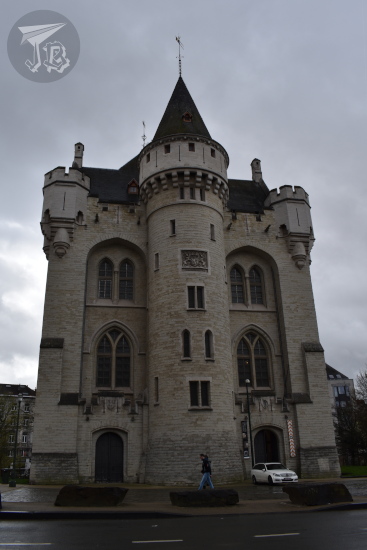
I had to take cover again as another shower hit, but it went away eventually. I walked further until I reached a former medieval city gate Porte de Hal | Hallepoort, which looks like a tiny French château – it was transformed into a a Neogothic castle in the 19th century, by Henri Beyaert. Today it is a museum, but I decided not to go in and head back towards the city centre.

Decorated medieval-like tower

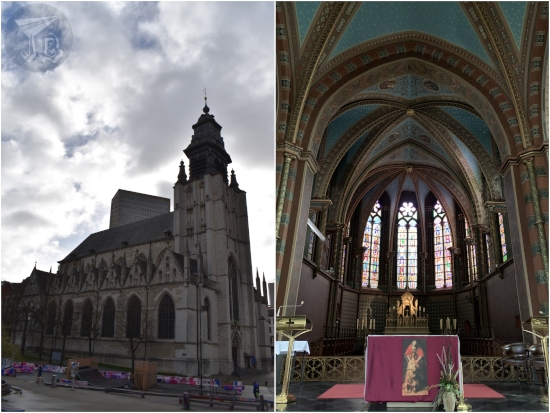
I backtracked towards the Church of Our Lady of the Chapel Église Notre-Dame-de-la-Chapelle | Onze-Lieve-Vrouw-ter-Kapellekerk which had been closed in the morning, and it had fortunately opened. I walked in. The church has an early 13th century Romanesque base, and the building was erected or reconstructed later in Brabantine gothic in the late 13th century. The nave was reconstructed in the 16th century and is Flamboyant Gothic. It leads to a dark-wood painted altar which contrasts with the wide, light nave. All in all, I guess I can say I was a fan of the gothic style in Brussels.

A gothic church with a dark wood altar and altarpiece, with coloured windows behind

When I was in the church, I received a text from D****e, who had finally woken up. I walked back to meet her and we decided to take the train to Antwerp [Anvers | Antwerpen], where we had plans for the evening. We got off at the central station Antwerpen-Centraal railway station Gare d’Anvers-Central | Station Antwerpen-Centraal. Designed by architect Louis Delacenserie, it was built in eclectic style at the turn of the 20th century. It has two underground levels in modern tunnels, and the original station stands at level +1 (a total of four levels), with an extended train hall in iron and glass designed by the engineer Clément Van Bogaert. The station is sometimes called a “railroad cathedral” with domes, glass windows, an ornate clock, and marble floors.

Antwerp Centraal Station - a red iron tunnel-like structure with a decorated front with a clock at the end

The idea was to look for a place to have lunch near the main square, but the weather did not agree. We ate at a Wagamama chain restaurant instead, to wait out the storm, then headed to see the Bourse of Antwerp Handelsbeurs. It was the first building ever erected with the idea of being a commodity exchange place, but burnt down and was reconstructed in the 19th century by architect Joseph Schadde, who mixed Neogothic and iron architecture elements. The building was abandoned in 1997, but it was later recovered as a cultural and event centre. I absolutely loved it.

The Handelsbeurs inside - lots of gothic details supported by decorated iron beams

We had a look at the Cathedral of Our Lady Onze-Lieve-Vrouwekathedraal, but we were pressed for time and did not want to pay to have to rush through the building (a future visit, maybe), so we just peered inside. The cathedral is included in the Unesco World Heritage Site of “Belfries of Belgium and France”.

The cathedral of Antwerp

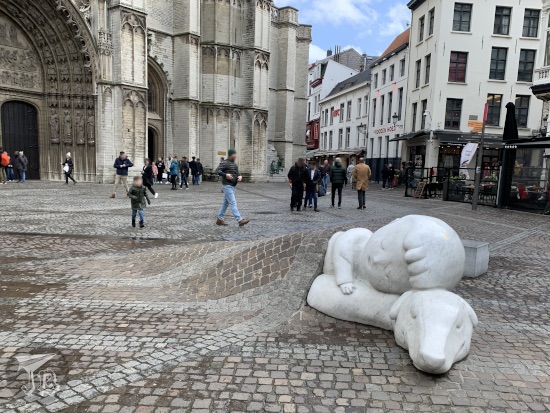
Outside the cathedral there’s a sculpture of a boy and his dog, from a sad novella about an orphan boy who wants to be a painter, and although written by an English author (Marie Louise de la Ramée) it sounds like the Belgian version of “The Little Match-Seller” tale. It’s called the Nello & Patrasche Statue Nello & Patrasche beeld and it was created by Batist Vermeulen.

A sculpture of a boy sleeping on his dog. The bricks on the road seem to tuck them.

Eyeing the weather, we decided to head out to our destination for the evening, the Trix concert hall – though this meant sacrificing seeing the main square, we were happy that we were under cover when it started hailing at around 16:15. On the way, we saw a mouse happily hopping the main streets, some sculptures, including the Monument to Rubens and the entrance to Chinatown. We had purchased VIP tickets to see the American band Starset, who toured with Japanese singer Hyde in 2018.

Starset is an American alternative rock band formed in 2013 by vocalist Dustin Bates. Aside from Bates (lead vocals, keyboards, soundboard, guitar), the core of the band is formed by Ron DeChant (bass, keyboards, backing vocals), Brock Richards (guitars, backing vocals) and Adam Gilbert (drums, percussion). Touring members currently are Siobhán Richards (violin, keyboards), Zuzana Engererova (cello) and Cory Juba (guitar, synth), and I guess they’ve got an honorary member in Ernie (Dustin’s French bulldog, who apparently attends pizza parties with VIPs when the band tours the US). One could say that Starset is a “concept band” revolving around sci-fi – the band’s fictional backstory refers to The Starset Society, who aims to alert the public about a “Message” they obtained from an outer-space signal. The fact that Bates holds a Master’s in electrical engineering and worked for the US Air Force and the International Space University might have something to do with the theme.

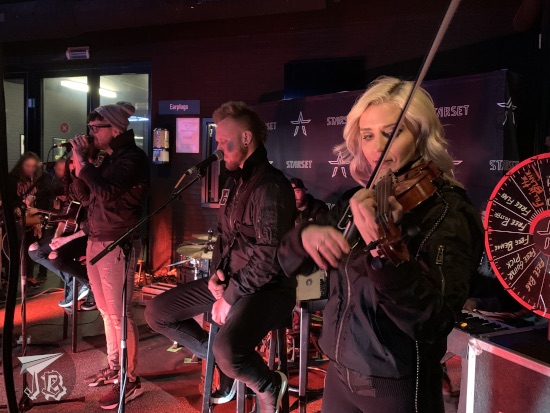
Starset released their fourth album, Horizons, in 2021. After Covid, cancellations and rescheduling, the Horizons Tour finally took place. Since we had a VIP ticket, we had early access and we had to be at the venue at 17:00. We got there a bit after 16:00 – and it was a good place with a hall, so we were under cover when it started hailing. In the end, we were not admitted till 17:20-ish, when a nice lady came and took our names to let us in. The first part of the experience was a short acoustic concert with some games and Q&A. For the games, you were given a raffle number, and if it was picked, you got to spin a wheel and maybe get a price – or a hug.

During the acoustic, we stood next to violinist Siobhán, who is not only beautiful, she is also super elegant. Dustin looked a bit like a hobo, to be honest, and he’s taller than I remembered him. We noticed that Ron’s arm was on a sling – apparently he had hurt himself and was unable to play during the tour, but he still tagged along. Afterwards, we had the chance to take a picture with the band, pick up the free goods that we had a right to – a CD and a signed poster. As we did, we moved into the actual concert hall, where we got the last available spot on the first row barrier.

Starset during the accoustic

The supporting artist was Smash into Pieces, a Swedish rock band composed by Chris Adam Hedman Sörbye (vocals), Benjmain Jennebo (guitar), The Apocalypse DJ (drums) and Per Bergquist (guitar). They were very good, and they fit really well with Starset, I thought. They started playing when the hall was full – it has a capacity of about 1100 people, and maybe they started around 19:30.

Setlist:

  1. Wake Up
  2. Glow in the Dark
  3. Big Bang
  4. Let Me Be Your Superhero
  5. Sleepwalking
  6. Running Away from Home
  7. Vanguard
  8. Boomerang

Smash into Pices front men.

This made the event run faster than expected. Starset were scheduled for 21:00 but came out at around 20:20, and the whole thing started with a bang – almost literally. A big curtain was pulled up and then let down when the band was on stage.

Setlist:

  1. Unveiling The Architecture (recording)
  2. Carnivore
  3. Manifest
  4. Echo
  5. Trials
  6. Icarus
  7. Unbecoming
  8. Monster
  9. It Has Begun
  10. Interlude. BMI ad (video recording)
  11. Satellite
  12. Ricochet
  13. Infected
  14. The Breach
  15. Die For You
  16. Devolution
  17. For Whom The Bell Tolls (Metallica Cover)
  18. Earthrise
  19. My Demons
  20. Boomerang

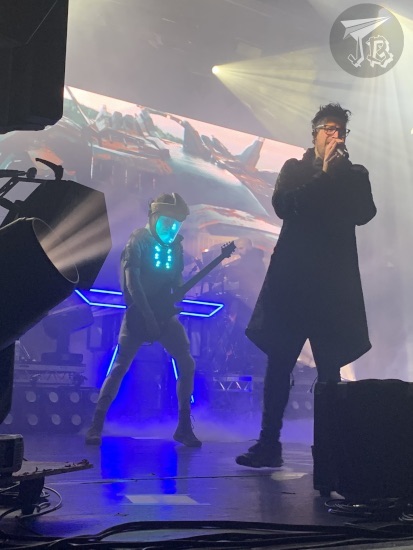
Dustin (vocals) and Brock (guitar; dressed as an astronaut) from Starset in the middle of the concert

My mind was blown because somewhat this setlist comprises all my favourite songs from the band: Carnivore, Monster, Ricochet and My Demons. The concert was full of little visuals and cool ambience tricks – I mean, Brock actually plays in astronaut suit. There was a lot of smoke and the lights were not good, but the concert itself was amazing. I was very grateful for the barrier, I would not have made it standing for the whole event – probably not even half of it. All in all, I had a lot of fun. I love that Dustin sings with his geek glasses, too.

After the concert, we managed to take the 23:09 train back to Brussels and even get a snack on the way – the one previous to the train I had wanted. That was lucky, because the last train was delayed over an hour and a half, and was a slow one.