3rd January 2017: Seven Lucky Gods, and a ship, Pilgrimage {Japan, winter 16/17}

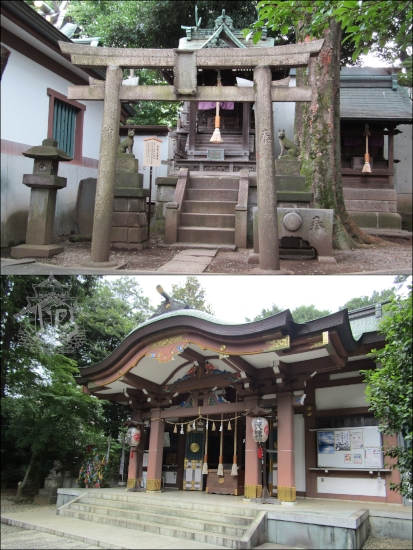
As part of the shrine and temple visiting on the first days of the year there is the chance to do a “small” peregrination around several of them for luck – the whole thing is called the Shichifukujin Meguri [七福神 めぐり]. Together with D****e and Sh-san I set off to visit the Seven Lucky Gods of Minato-ku in their respective shrines and temples. Oh, and their ship.

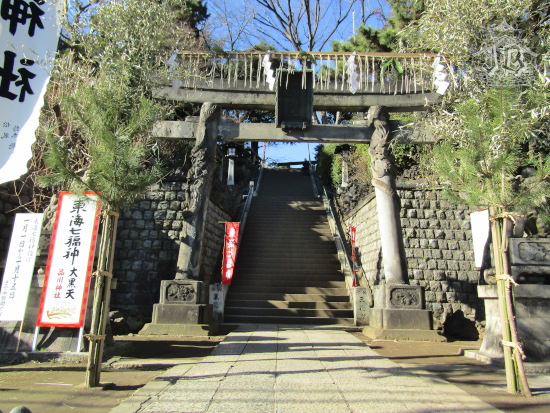
The Seven Gods of Fortune or the Seven Lucky Gods, Shichifukujin [七福神, ] are a group of deities from different origin (India, China, and Japan itself). It is said that on New Year’s Eve the seven gods touch port in their treasure ship Takarabune [宝船] to bestow happiness to humans. The Seven are worshipped in a group, and there are a few temples that enshrine all ofthem together. However, in Minato-ku the Gods and their ship are scattered amongst a seven shrines and one temple. Visiting the Seven Gods of luck will bring you luck for the year (you can read all about the Seven Lucky Gods over at Buddhism & Shintōism In Japan A-To-Z Photo Dictionary Of Japanese Religious Sculpture & Art).

The Gods and Shrines/Temples in the order we visited them are:

  1. Benzaiten at Honjō-in [本成院]. Benzaiten [弁才天 / 弁財天] is the Goddess of the Arts and her virtue is Amiability. She is originally from India.

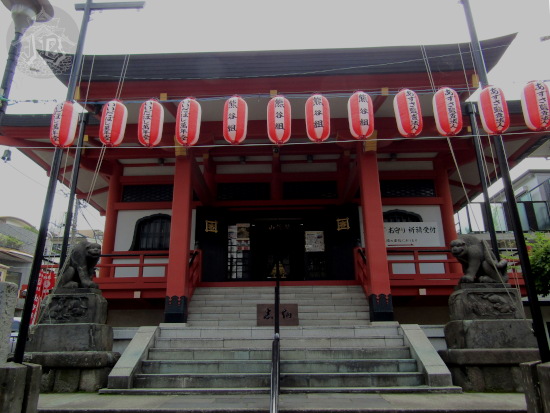
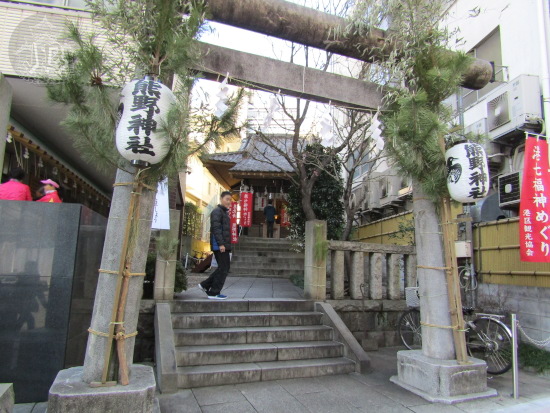
  2. Ebisu at Kumano Jinja [熊野神社]. Ebisu [恵比寿] is the God of the Ocean and his virtue is Fairness. He is originally from Japan.
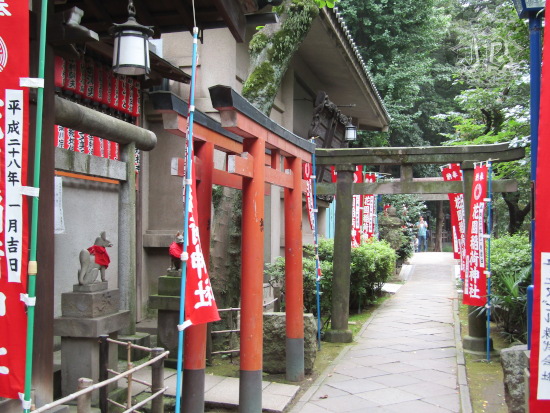
  3. The Takarabume [十番稲荷神社] at Juban Inari Jinja. The ship carries all the attributes belonging to the Gods, and it is where they come to bring happiness.

  4. Daikokuten at Daioji [大雄寺]. Daikokuten [大黒天] is the god of the Earth and his vortue is Fortune. He originated in India.

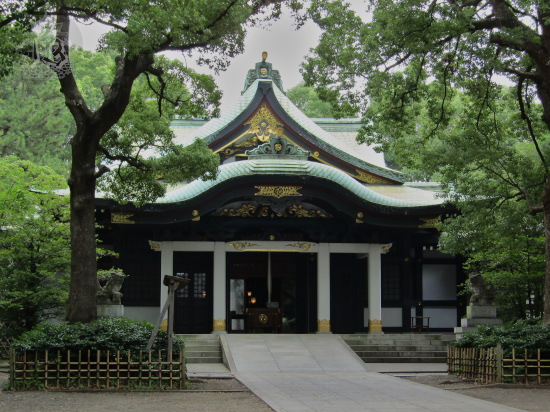
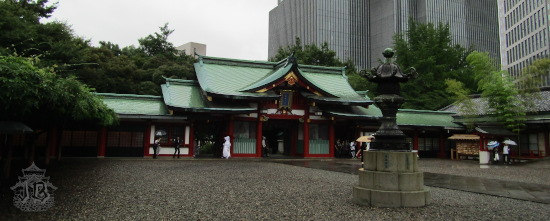
  5. Bishamonten at Hikawa Jinja [氷川神社]. Bishamonten [毘沙門天] is the God of Treasure, and his virtue is Dignity. He comes from India.
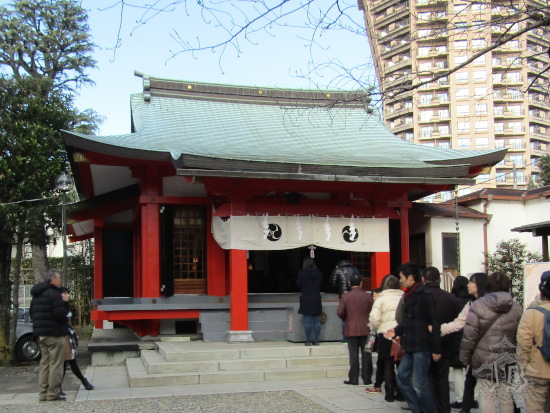
  6. Jurōjin at Sakurada Jinja [櫻田神社]. Jurōjin [寿老人] is the god of Wisdom and his virtue is Longevity. Originally, he comes from China.
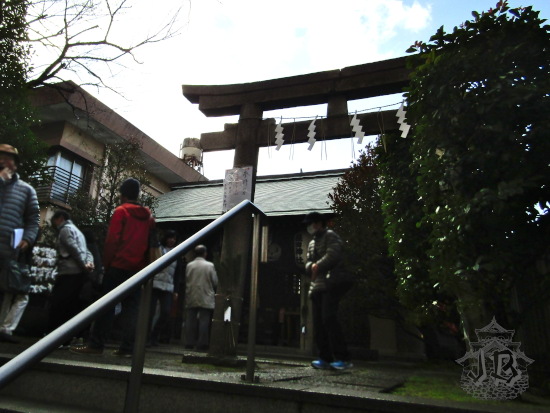
  7. Fukurokuju at Tenso Jinja [天祖神社]. Fukurokuju [福禄寿] is the god of Wealth and his virtue is Popularity. He originally comes from China.

  8. Hotei at Hisakuni Jinja [久國神社]. Hotei [布袋] is the God of Contentment and his virtue is Magnanimity.

In-between the gods, we had lunch at a very good yakiniku place in Roppongi [六本木].

1st January 2017: Hatsumode {Japan, winter 16/17}

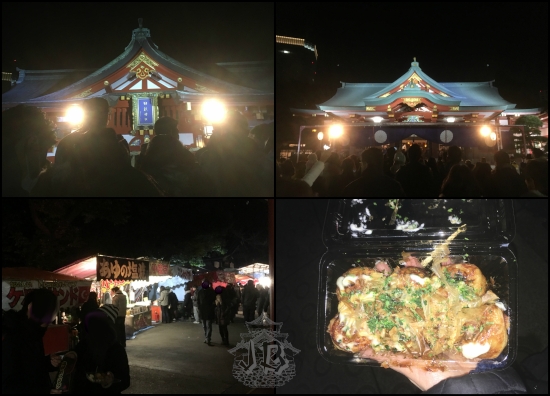
Hatsumode [初詣] is the Japanese custom of visiting a shrine or temple within the first three days of the year. Some people – like we did – actually wait the New Year to roll in the temple grounds. After the 108 (fast!) gongs that signal the entrance of the New Year, you are allowed into the shrine grounds to say the first prayer of the year in Hie Jinja [日枝神社].

After the prayer you can buy good luck charms, arrows which are ammunition for the kami to protect you (or something alike), enjoy some sacred sake, get your shuin, and once you’re outside, buy food and drinks. In my case I got some fresh takoyaki and ate them alone because apparently they’re stinky 。゚( ゚^∀^゚)゚。

Then we headed off home, and I got up at 8 am to have 12 grapes with Spanish TV as it has been my custom all my life. Then I went back to bed.

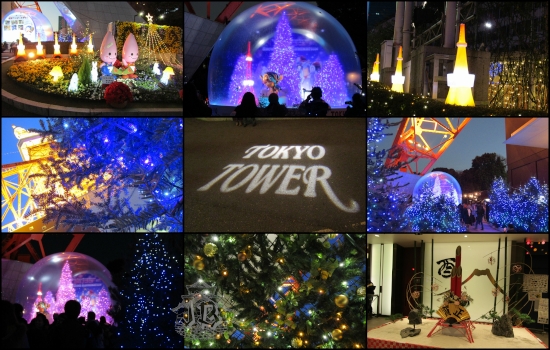
In the evening I headed off to Minato [港] to see Tokyo Tower [東京タワー]. Zojo-ji [増上寺] and Shiba Kōen [芝公園] were packed with Hatsumode parishioners and I had never seen such a line to go up Tokyo Tower. Thus I did not climb up, but I did take pictures of all the illumination around.

Afterwards I met with D****e and K***n. to go to Yokohama [横浜], to have dinner in Yokohama Chinatown, as Chinese people have their own New Year, they would be open to business as usual. It was my first time in Chinatown at night, too, so it was interesting seeing places like Kanteibyō / Kuan Ti Miao Temple [関帝廟 / 中華会館] in a new light.

On our way back we tried to see Shiodome [汐留]’s Winter Illuminations but they were off. We’re not completely sure of why…

31st December 2016 (and on): Seeing the year off with a dragon (gate) {Japan, winter 16/17}

The first thing that I did in the morning was heading off to Shinagawa [品川] with D****e in order to see the third Dragon Gate (to complete the visit started on the 28th. This third dragon gate is the entrance to Shinagawa Jinja [品川神社], which was the biggest complex of all the three if you don’t count the Koen-ji gardens.

From one of the hills belonging to the shrine we could see a few of the nearby little shrines, so we went to check them out. And there was warm coffee on the way. Because I have not mentioned yet, but the same vending machines that expend my cold coffee in summer expend the same coffee in winter, but warm. Which makes you feel the sugar rush even harder warms your cold fingers.

After Shinagawa we went to Shinjuku [新宿] for a little bit of food and shopping, then Shibuya [渋谷] and Ikebukuro [池袋] just for shopping. Afterwards, we picked K***n up and headed off to Odaiba [お台場] to watch New Year’s Eve fireworks.

After the fireworks we had a snack in the DiverCity’s Calbee shop – crisps with chocolate, yes. It is a thing.

Then we set down to have a drink and kill a few hours in the food court until it was time to head back into Town as we were going to wait for the New Year at Hie Jinja [日枝神社]. And thus we waited…

28th December 2016: Find all the things ( ・`ω・´)! {Japan, winter 16/17}

One of the items in my calendar this time was visiting the three Dragon Gates of Tokyo. These are three torii gates that have been carved in stone and have an ascending and a descending dragon on each one of the pillars. The legend says that touching the dragons will bring you good luck.

Two torii are located in Suginami [杉並]. The first torii I went off to visit was in the grounds of Shukuhōzan Kōenji [宿鳳山高円寺]. The gate is a bit to the side, in a small adjoined shrine to the left of the main building.

The second gate I visited is in Mabashi Inari Jinja [馬橋稲荷神社], about 15 minutes walking from the previous one (which I chose to hit first because it is closer to the station). As this is indeed a shrine, the torii is pointedly displayed, as it is the second one on the main entrance.

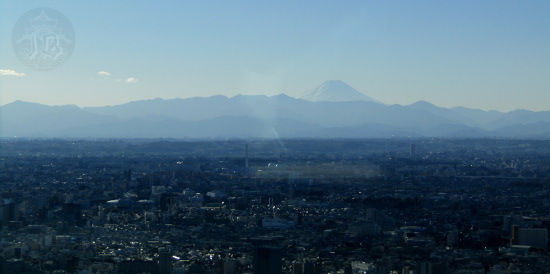
Although I would have wanted to hit the three gates on one day, going back and forth between the first two and the third was not a good idea. Thus, I headed off to Shinjuku [新宿] to check out the Tōkyō Tochō [東京都庁], the Tokyo Metropolitan Government Building, as the day was very clear. And bingo, it worked, and I managed to see Mount Fuji Fuji-san [富士山] in the background. Being a little bit of a geek, and since both observatories were open, I decided to climb both this time (just in case the stamp was different, of course!). Then (also of course) I was doing some shopping around…

And since I was in the area, I decided to go back to Isetan, having devised a plan to get some images of the kimono. Which succeeded. Then I saw other people taking pictures, so I shielded myself with them and took some, too.

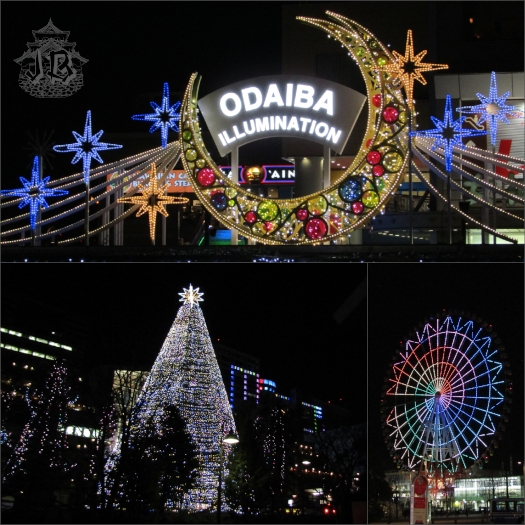
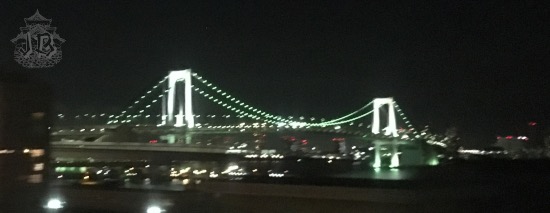
After that I met with D****e and we went off to find some of Gackt’s Gakucchi and Hyde’s Chupacabra crane games and UFO Catchers. For this we headed off to Odaiba [お台場], where we had a chance to look at the Winter Illumination, especially the Rainbow Bridge [レインボーブリッジ] looking… well, rainbow-coloured.

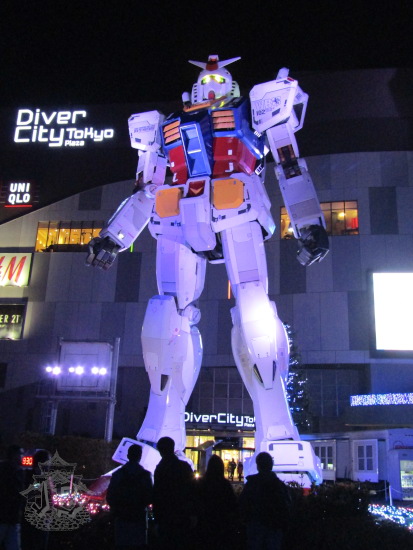
Then we went to say bye-bye to the Gundam in front the DiverCity and had some food inside. Somehow I feel like I’m talking about food all the time (*´∀`*)ノ… This was very yummy and the writing on the algae cracked me up.

As we did not find the Gakucchi nor Chupacabra in Odaiba’s Venus Front, where we had read they would be, we backtracked to Shinjuku [新宿] to search for them. We did not manage to get the stuff out of the crane games but we got the bags that you got with putting 500 ¥ into the UFO Catchers…

30th July 2016: 。・゜・(ノД`)・゜・。 Last day {Japan, summer 2016}

I had set up my alarm at an insane time in the morning because I needed to take the trash out before 8am (between 7 and 8?! Seriously, Japan?). But in the end it was good – you see my contract said that I had to clean the apartment, wash and dry the sheets and vacuum the floors. Which was okay, until the fluffy cover sheet took an hour and a half to about 95% dry. Oh, and I packed. 23.1kg of suitcase (^◇^;).

Anyway, the previous day I had been unable to get the Gakucchi clearfile from the UFO catchers, but I still wanted to try again. As I had to be back at the apartment by 4pm to give the keys back and pass the inspection, I headed off to the nearest Taito station, the one in Ueno. Unfortunately, they did not even have the GACKT machines. So I decided to brace myself and go to Akihabara [秋葉原] to try to find an arcade. The first three – the Sega ones – were not successful at all. I was about to give up and go home very sad when I was finally victorious! I found the clearfiles in the Taito Station. The staff-San I approaches was not very helpful at first – probably my Japanese was not the most articulate at that point either – but when she realised what I was trying to tell her she got me the clearfiles (I had an order, aside from the one I wanted for myself) and placed the plush I wanted on the machine for me to try. Of course I was not successful but I have the clearfile and that makes me happy.

As I had a bit of time, I headed off to Yoyogi Kōen [代々木公園] and Meiji Jingu [明治神宮], as I wanted some omiyage. In the end, I offered an ema, and got some silly stuff. I also located the Like an Edison shop, but I stopped myself from going in because SUITCASE WEIGHT issues. I blame the Hyde is Dead photobook (; ̄ェ ̄). I got back and bought some suahi from the street stand down my block, ate, sneaked out the rest of the trash, and sat down to wait for the inspection. At this point I was feeling kind of sad. Okay, without the ‘kind of’.

But the inspection / cleaner guy was adorable and he was pretty early so I could do stuff in the evening that would keep me going. I went to Tokyo station so they kept my luggage and then I headed to Tokyo Tower [東京タワー]. I got up to the main observatory, and had been considering walking up, but I did not trust myself without seeing the stairs first. So I climbed up on the lift and took pictures and enjoyed myself. I also wrote a postcard to myself to get the special post stamp… yes I’m lame like that, but I had a message for my future self (・◇・)/~~~

I walked down, because I figured out that I could so that more easily and I enjoyed it immensely. Then I stayed for a bit in the Zojo-ji [増上寺] matsuri in Shiba Koen [芝公園] , retrieved my luggage and headed towards the airport.

On my way I got to say goodbye to the Rainbow Bridge [レインボーブリッジ] on the way. It might be worth mentioning at this point that I could not complete the check in, and that I has only registered until Frankfurt… whoops.

Fortunately, after a bit of haggling with the lady organising the check-in queue I managed to get through to talk to an actual assistant who could get me my final boarding pass. I found myself some karaage dinner before moving on.

28th July 2016: Ueno + VAMPS Replay {Japan, summer 2016}

As the time to leave drew near, I felt a bit sad this morning (T^T). However, I did not let myself be dragged by it, so I forced myself out of the apartment to do things, and these things involved Ueno Kōen [野公園].

First I headed off to Ueno Tōshō-gū [上野東照宮], which I had not found open last year when I was there, because there was a matsuri, or something, I don’t really remember. Then I found out about the two dragons, the ascending dragon and the descending dragon, who come to drink at the pond at night. It is a very nice imaginary. Also, the shrine is really cool. It has a bit of a Chinese style, and is decorated with a gold layer. The inner fence shows animals of the sea and the wind, making it a unique shrine. I really liked it a lot.

The main building of a Shinto shrine, sparkling golden with a dark ceiling

Wooden painted carving of dragons, one going up, one going down

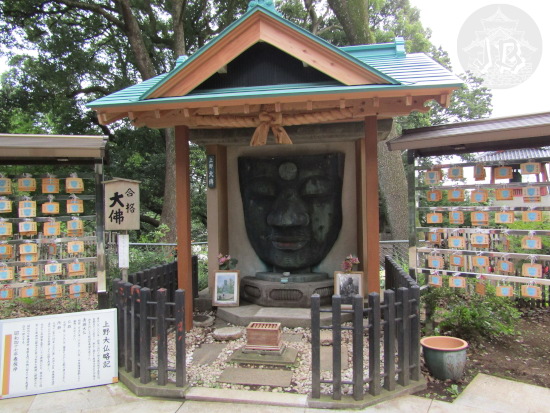
Then I found the Ueno Daibutsu [上野大仏], the Great Buddha Pagoda, which I had missed before – one of the things I love about Ueno is that whenever I go I find something new, yay. Most of the Ueno Daibutsu was melted for metal during WWII.

A giant Buddha face made of metal in a ceremonial pagoda

Gojoten Jinja [五條天神社] is really cool too, but I decided to leave getting its seal for another time. Next time.

A row of torii gates

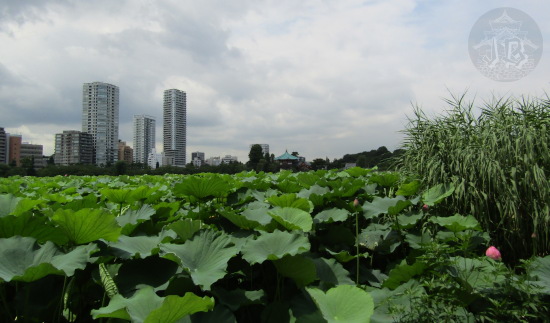
I walked by Shinobazu no Ike [不忍池], the Pond in Ueno.

A pond covered in water lilly leaves, with some high rises in the background

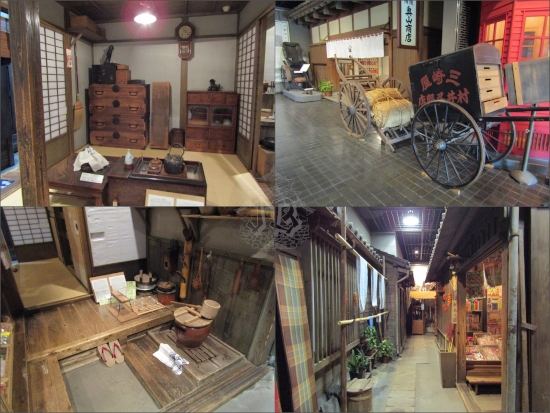
Finally, I went to the museum of Shitamachi of Customs, Shitamachi Fūzoku Shiryōkan [下町風俗資料館], where they keep some old houses from the years after the great Kanto Earthquake. A bunch (hundreds) of houses were built there to make sure that the population was housed. The museum shows how life was those few first years, and how people lived and organised themselves. There are a few items, houses, photographies and so. The second floor is hands-on, with games and pastimes and so. There was a very nice guide there and she explained a lot of things to me.

Reproduction of pre-industrial wooden houses in Tokyo

Later I went to class (I found another Gyoza Franchise on my way back to the station) and then I skidded out because I had to get to Yoyogi National Stadium, Kokuritsu Yoyogi Kyogijo [国立 代々木 競技場], in Yoyogi [代々木]. I was attending the Sukkiri Superlive in order to see VAMPS one more time before heading off back home. All in all, a very complete day that ended up with a bang – when I should have been studying Japanese to be honest ^^;;
The Yoyogi national stadium, and a screen reading Sukkuri 10th Anniversary Super Live

27th July 2016: I could not miss an aquarium {Japan, summer 2016}

I mean, visiting aquariums is like a second nature to me when I’m in Japan. It seems that each has something that I really love but had not realised it before.

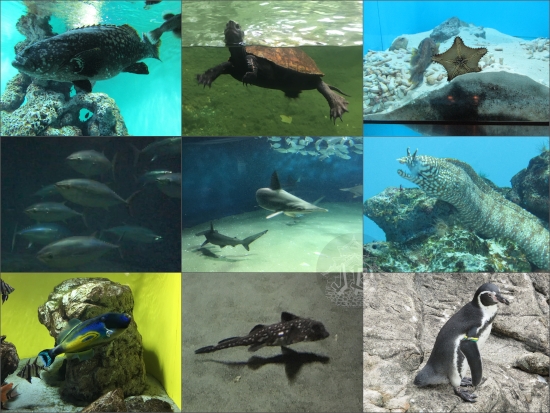
In this case I headed off to Tokyo Sea Life Park – Kasairinkai Suizokukan [葛西臨海水族館] in the namesake park, Kasairinkai Koen [葛西臨海公園], in Edogawa [江戸川], especially famous for keeping a tank of yellowfin tuna (all of which died unexpectedly last year and had been replaced though) <・ )))><<.

The aquarium is mostly an underground complex, accessible through the main dome in the middle of the park. During my visit it was full of parents with young children. For some reason, Japanese people believe that children must love fish? I don’t really understand… ~(・・?))

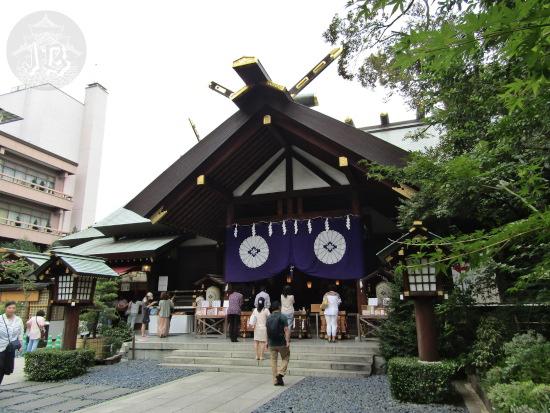
Before class I went to Tokyo Daijingu [東京大神宮] in Iidabashi [飯田橋], which is surprisingly quite small, and I think it has something to do with finding love?

At night I met with my new friend M. to try to find a cat café we were interested in and somehow did not manage to find, but we turned that into dinner and karaoke – Joysound, to watch the VAMPS special message v(^_^v)♪.

26th July 2016: Day and night {Japan, summer 2016}

In the morning I went off to Shimokitazawa [下北沢], which is a “commercial and entertaining district in Setagaya [世田谷], Tokyo [東京]” (according to Wikipedia, at least).

My first stop was Kitazawa Hachiman Jinja [北澤八幡神社], about 10 minutes away from the station. It is one of those not so hidden shrines that give you the impression that time has frozen.

Afterwards, I undid my way for lunch in Gyoza no Oshou, which I heard that was GACKT’s favourite gyoza place (ironically, this seems to be a franchise, I also found one in Ueno, later on). After that I slithered over to Harajuku [原宿] to find the Closet Child there (and buy things and get a discount card!) Because the fact that there were no more planned shopping sprees does not really mean… anything(≧∇≦).

In the evening (after class and homework), even if it was raining, I waltzed off to take pictures of the city at night. While Shibuya is bustling with neon, Shinjuku was a bit heart-wrenching as the homeless tend to gather around the station for cover, some of them read your palm for cash.

Shibuya [渋谷]:

Shinjuku [新宿]:

Cityscape from the Observatory of the Tokyo Metropolitan Government Building, Tōkyō Tochō [東京都庁] (not alone in the lift this time…):

At night there was an earthquake. Not a big one, probably (3, maybe?), but it made my whole apartment creak with the strain. It was creepy enough to straighten me out of bed (◎_◎;)

23rd July 2016: My two fandoms {Japan, summer 2016}

While most people would not consider that a fandom, the truth is that my yokai research and related stuff is insanely fun, so I guess it is fair to call it that. Thus I headed out to visit Abeno Jinja [阿部野神社], which stands at the birthplace of Abe no Seimei. Luckily in the same metro line I had to take to go to the VAMPS‘ concert at Namba Hatch.

Torii with bright blue banners hanging from it, and main building of a Shinto shrine, in dark red and grey colours

I don’t remember if I mentioned this before, but Japan had unified IC cards, so now you can use any card in most major cities, which is bloody awesome. On my way back, I checked the Zepp Osaka, basically because I had a mental slip and was confused about the place for a second, and when I saw ‘Zepp this way’ I just felt like following directions.

Between goods and concert start, however, there was katsu, which was really yummy even if the waiter was rather unwelcoming. If not for the fact that she would have been happy I would have left the restaurant. Sometimes I just feel sad that Japan does not do tips, I would have made the leaving one-penny statement.

When it was finally time for the concert, all the woes went away though, and I had a lot of fun.

Tickets and Vamps tour truck with publicity for the tour and the Beast party

17th July 2016: Chiba & friends {Japan, summer 2016}

In the morning I was considering Nikko but in retrospect I think that it was good that I did not do such a thing, considering.

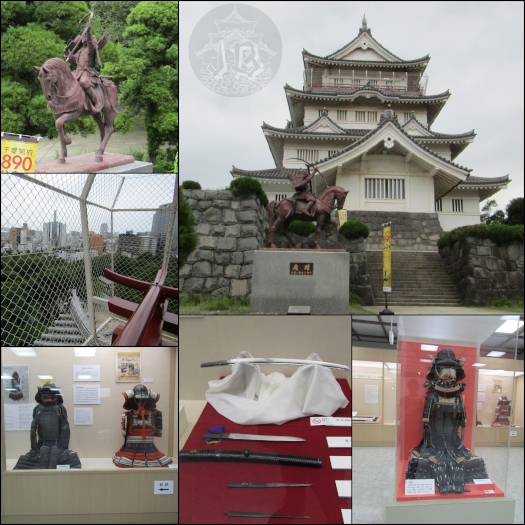
I headed out to Chiba to check out the castle and a local shrine, unoriginally named Chiba-jo [千葉城], and Chiba Jinja(≧∇≦).

I had no trouble finding the castle once I made to an elevated road crossing, and I was soon there. To my surprise the castle visit was free, as it is also the Chiba City Folk Museum – Chiba-shi Tachi kyōdo hakubutsukan [千葉市立郷土博物館]. Inside there is a samurai and history museum, guarded by local guards and tour guides, very interested in not talking to the weird gaijin, yours truly. The first floor exhibits some pottery and archaeological artefacts, the second and third samurai and history items such as armours and weapons, and the fourth floor focuses on recent history around the world wars. The fifth is the observatory.

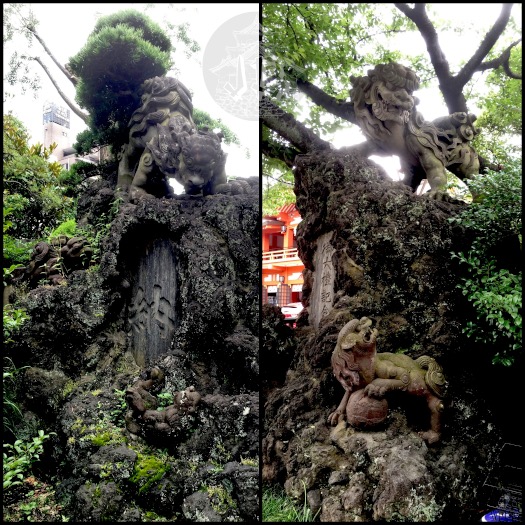
After the castle I walked to Myokenhongu Chiba Jinja [妙見本宮 千葉神社] which does not have a set of komainu (guardian lion-dogs). It has a whole family set and it is adorable! I was absolutely in love with the whole thing. Unfortunately I don’t think they would have let me take them.

After this I headed off to have a late lunch with a friend, because sometimes being a friend is being on trains for 2 hours for a weird late lunch, and then another hour and a half back because you’re meeting other people. In the meantime too I had time to shower and to slip onto the floor and not break anything. Go me!

Then I met some friends in Shibuya [渋谷] for dinner. Well, they had dinner, I had ice cream, cause I could d(^_^o)

16th July 2016: Nagoya express (II) {Japan, summer 2016}

The day started with free breakfast that my hotel was providing, then I checked and set off to find a Shrine in the opposite block. It must have been the invisible shrine, because I did not manage to find it at all.

Then I set off to unwalk the path I followed the previous night to retrace the shrines, successfully. Everyone was getting ready for the festival so Nagoya Jinja [那古野神社] was very busy, and it was barely 8:15 in the morning (yes, I am a Japan early riser, who would have thought? XD)

And the same happened with Gokoku Jinja [佐屋護国神社].

I got to the Nagoya-jo [名古屋城] just before the hordes of tourists and had a quiet while to stroll around and take pictures. And when I say while, I mean couple of hours, because that is how I tick XD

Nagoya’s unofficial mascot is the kinsachi [金鯱] golden tiger-headed-dolphins, castle guardians to prevent the castles from burning (and that slack a little, as most castles have burnt down some time or another throughout history).

When I was coming out I stayed for a while watching the performance and rooting for some people just because they were pretty, even if I had arrived when it has all started and I did not know which clan was “the good guys” and which “the bad guys”. So yeah…

After the castle I checked on the temples again on my way to the metro. I had wanted to check the Gojobashi bridge out but it started raining pretty hard. Buying the Nagoya Eco pass proved impossible so I ended up just going in with the Suica, which worked without a problem. My next stop was Atsuta Jingū [熱田神宮], which enshrines the Sun Goddess Amaterasu. It is a bit out of the way so I decided to wait the rain out during the ride, and the plan worked. When I arrived at the shrine, the sky had cleared. A very nice ojiisan offered to show me around in broken English and I decided to encourage the system – Japan seems to be putting in place a system of helpful people to guide you in special tourist points, in different languages. I’ll support that.

Thus I went with the ojiisan who showed me around English. Even when I tried to switch to Japanese he would not really let me. He was quite impressed for for some reason that I knew names like Tokugawa or Nobunaga. After we were done with the tour I strolled around on my own again to take some pictures and enjoy the shrine. (I’m not a fan of this whole fad of Japanese older men acting as guides…)

Then I headed back to the metro system to get back to the central area and visited the Higashi Betsuin Kaikan [東別院会館], next to Nagoya TV and a Book Off.

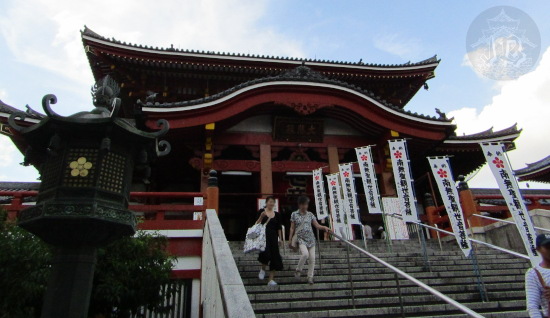
I also made a pause for a snack, and then headed off to the Osu Kannon [大須観音].

Walking towards it I came across the hip shopping district, and a small Shinto shrine that I think was the Kitano Jinja [北野神社], but I cannot tell for sure. Bummer, I should have gotten myself the Japanese map along with the English one to match names.

After that I was a bit on the tired side so I headed back to Nagoya station. I had some time before my train so I tried the typical local chicken wings, tebasaki [手羽先].

Then I spent my Shinkansen ride listening to music and playing with my phone and was very lucky to go into a TOKIO-commercial full Yamanote train from Tokyo station to Konagome.

And then I crashed into bed. Because I was tired.

14th July 2016: Liar, liar, pants on fire (and Komagome II) {Japan, summer 2016}

The weather report had been announcing clouds all day. It lied. A lot. Seriously, both the JMA and whatever data an iPhone uses, they were way out of the way. See, I used these reports to plan an outdoors day visiting some parks, temples and shrines close to my area. This meant walking for a couple of hours, but there I went.

The first problem was that the weather decided that clouds were overrated. I did not think much of it at first, but it would be relevant later. The second was that GoogleMaps decided to join forces with the weather report and troll me.

But let’s start form the beginning, and the beginning was the Kyu Furukawa Teien [旧古河庭園], a garden apparently famous for their rose festivals. No roses in July, but a very neat Japanese garden. I’ve never been much of an English Garden fan unless there are flowers, so I did not pay much attention to that part.

After the gardens I headed off towards the Oji [王子] area, checking out Hiratsuka Jinja, Takinogawa Park and Nanasha Shrine until I made it to the park called Asukayama Koen [飛鳥山公園], where for the first time this year I heard the cicadas singing like crazy. It’s officially summer in Japan, bugs dixit! It’s not a matter of the heat, the rain, or anything like that. In the end, the cicadas mark the time.

The park holds a few museums and In one of the corners Oji Jinja [王子神社] can be found. If Google agrees that it even exists. But alas, success in the end.

After an odyssey to find the Shrine and once again fight Google regarding yes, the Oji Inari Jinja [王子稲荷神社] exists, I managed to find the latter. Close to one of the crossroads I had been to before. Twice. Thanks, Google (-_-;)

Then I decided to head off to where my academy is, Iidabashi [飯田橋]. My destination there was Zenkoku-ji [善國寺], which was surrounded for some reason by no less than four Spanish restaurants. I am not brave enough to try those but there was a nikuman shop that did catch my attention. I also made a short stop at the local Book Off in order to check it out and get OFF THE SUN for a few minutes. At this point I had just realise that I had been indeed walking around in the sun for three and a half hours and I was… Burnt. Quite so. Damn it.

But it did not end there. Nooo, why would it end there? Then it RAINED 雨雨雨. When I had to do my laundry and get it dry, of course, because the next day I was over to Nagoya and wanted to make sure I had clothes to wear. And I studied because I had an exam the next day, and the previous one had been disastrous.

13th July 2016: Here we go again! {Japan, summer 2016}

I am a creature of habits and I won’t deny that. I will however wonder how come my phone thinks about autocorrecting ‘gabits’ to Gackt, which is interesting to say the least. Anyway. On July 12th I realised that my 朱印帳 (しゅいんちょう) or seal book was lacking one of my favourite Temples in the World! So off I went to Zojo-ji [増上寺] with my newly-activated JRPass. I gotta make the most out of it because it was expensive, mkay? ( ̄^ ̄)ゞ

Anyway, off I went to Hamamatsucho and I had a very beautiful flashback to the first time I saw Tokyo Tower [東京タワー], coming from that station. A lot of things have changed since then. I wandered around Zojo-ji temple, Shiba Koen [芝公園] and the base of Tokyo Tower for a while.

Later, I headed off to Ueno because the previous day I had not eaten Ichiran Ramen and I wanted Ichiran Ramen. I went with time to be able to wait out the queue. Once again I freaked some poor kid out. This was staring to get tiresome.

Ichiran is a restaurant designed for people who eat alone, and you have a little ‘booth’ to do your thing. Some people find it outrageous/controversial but as a lone traveler I love it. And if you are not alone you just take down one of the booth walls and you’re free to talk to whomever you came with. And the ramen is quite nice. And hot. But the restaurant is cold even with the hot ramen and always being packed so I guess it is fair enough.

After lunch I went back to Ueno station to make my reservations for the trip I was planning along the weekend and I decided to go to Ikebukuro again to get a CD I had not bought the day before as I was not sure it was the one I wanted – and the Internet was not cooperating. Once again I had to brave Ikebukuro station and this time I kind of gotten things sorted out! Let’s see how long I manage to remember what to do. Then I headed off to class.

After class I walked over with T. to Yasukuni Jinja [靖國神社] to check the about-to-open Mitama Matsuri (festival), but we did not stay longer than the necessary to get some yakitori and be on our merry way.

11th July 2016: Komagome (I) {Japan, summer 2016}

So since apparently Komagome [駒込] existed before I was aware of it and rented a room there (yeah, who knew (o_o)? People built things here!)

One of the things that were indeed built were the gardens Rikugien [六義園], which for some reason cannot be accessible using the main gate. Don’t ask me (≧∇≦)

The park has a central pond around an island, and… Well, a lot of plants everywhere. In spring it has to be either awesome or an allergic persons’s worst nightmare. In the pond there were koi and turtles.

I had intended to go somewhere else after the gardens, but I realise that I had forgotten my shirt home and I had to come back to get it, else I would freeze in class. So I undid the way and stopped by the local Myogi Jinja [妙義神社].

And as it was Monday, then I went to school. The dynamics had changed a big from the previous week, and it was better. Once again I would have to see the test to evaluate the results. The truth is that I came back home that evening to study more than I had the previous week. \(^o^)/

10th July 2016: To the sea {Japan, summer 2016}

I was debating between Nikko and Kamakura, but when I woke up for some reason I felt more like Kamakura [鎌倉]. The day was as awesome as the previous one had been miserable and I headed off to Shinjuku to get myself an Enoshima-Kamakura pass.

Just as I had not liked the sales lady from the museum, the Odakyu sales lady was adorable. She cheered me up (≧∇≦) with her “Woah, you speaking Japanese surprised me” for me, which was quite sincere, by her eyes. After getting the pass, I headed off to the train and got ready for the trip. I was lucky because I could do both parts sitting down in preparation of what was to come. I know Kamakura/Enoshima, you walk a lot.

My first stop was Hase-dera [長谷寺], a temple I had not seen the previous time I had been there. They had a very pretty garden, and I really enjoyed the view and the buildings. It holds a standing Buddha, and they make yummy dango, which I tried.

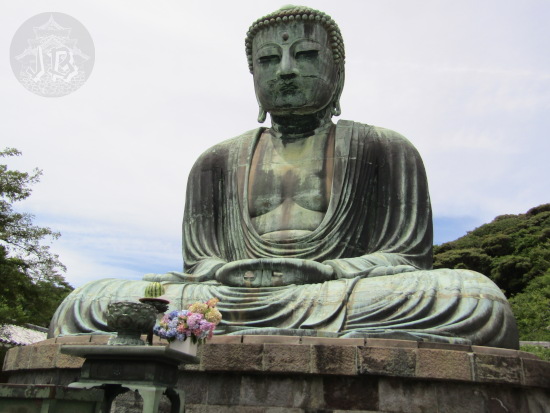
After that I headed off towards Kotoku-in [高徳院], which holds (or does not hold, as the building was long ago destroyed) the Kamakura Daibutsu [鎌倉大仏] (Great Buddha). As impressive as Nara is, I think I like this one more, as the serenity it transmits is quite amazing. Two university students came to ask me a few questions and they were horribly nice, they wanted to know how I knew Kamakura, and what was the best / worst about service in Japan. I think I broke their stats, but they treated me to a sweet.

I really wanted to go back to Tsurugaoka Hachimangu [鶴岡八幡宮], which is a Shinto Shrine in Kamakura, a bit away from the other two, so I used my unlimited-trips-in-the-area pass and went to the corresponding station. The shrine was just as I remembered. The fun part now is hunting down the Shrine and Temple seals. While I do love the omamori, the calligraphy is more affordable and keeps better.

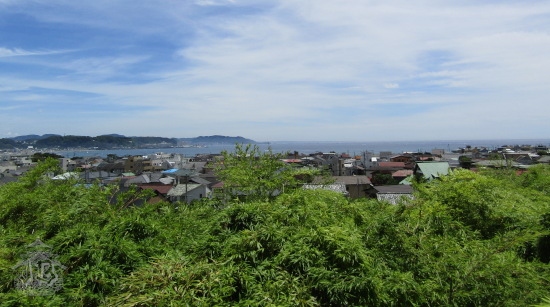
Finally, I decided to head off to Enoshima over one of the temples I was considering, just because I wanted to go to Enoshima. And Enoshima [江の島] delivered with the best view of Mount Fuji, Fuji-san [富士山] I’ve ever had. Repeatedly. Changing with time as sun set. And it was amazing.

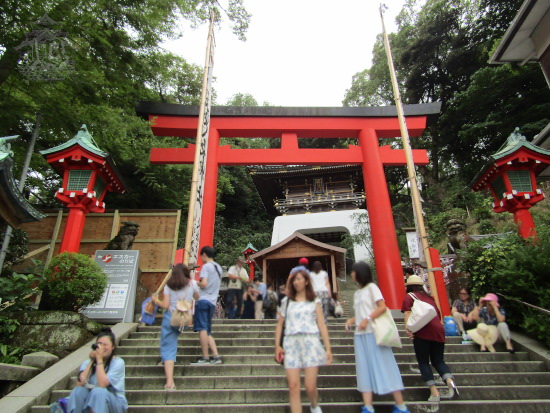
In Enoshima I climbed up to the Enoshima Jinja [江の島神社], I – you guessed it – got my calligraphy, and laundered money.

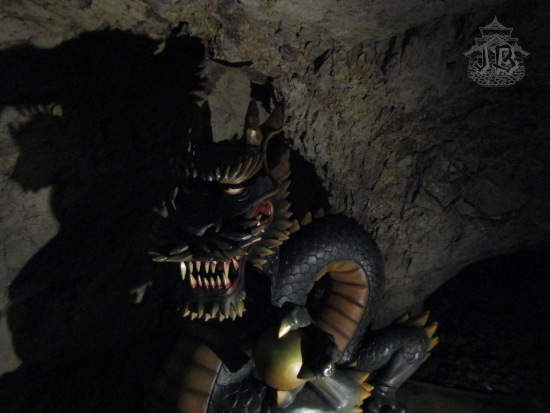
Then I walked around the whole rock until I reached Enoshima Iwaya [江の島岩屋], the Enoshima caves, to visit the dragon – an invoke him with a taiko drum, that you had to hit nikkai (twice) as the girls behind me informed me. They were also very impressed with my technique. If I got something from my taiko workshop, that was how to hold the baton and hit.

There is one thing I did not confess though, and that was that I miiiiight have skipped lunch that day (must see all the things? I ate dango and ice cream! And some yakitori!) so when I came back to Komagome [駒込] I stopped at CocoCurry and had a good dinner, because I was a bit on the ravenous side. Unfortunately, however, the ride back was standing, albeit it was good that I could leave the backpack on the floor.

9th July 2016: Rainy season is rainy {Japan, summer 2016}

Because yes, we’re in rainy season, and in rainy season, it rains, lots. Especially when I want to go to certain places. I hoped that the rain would not be too much, and headed off to Kawasaki [川崎] (yes, like the motorbikes) to check out a temple called Kawasaki Daishi (川崎大師) or Heiken-ji (平間寺, Heiken-ji)

It was wet. There was some kind of child ceremony because there were a bunch of parents with very young babies braving the storm rain, while the kids (and occasionally their siblings) looked unimpressed or plain zonked out.

The only other thing for me to check out in Kawasaki were the Chinese gardens, but I decided that it was raining too much for that, so I came back to Tokyo [東京], and headed off to a shrine called Hie Jinja [日枝神社], in Chūō [中央], which I wanted to check out.

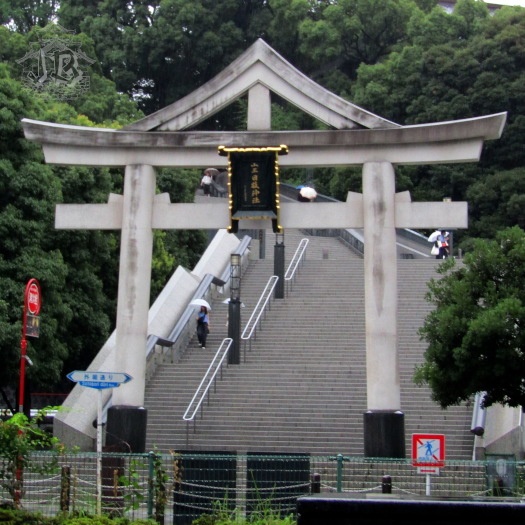
One of the most interesting thing of Hie Jinja is the way the torii is designed, with a sort of triangle on its top. It might be to deter wayward otoroshii, a creature from the Japanese mythology. Yes, this is important. As it was that it was raining. To get to Hie Jinja you have to climb a hill, as it could not be otherwise. In the rain, with my broken umbrella – because my awesome umbrella decided to stop being overdone and break, thankfully it was fixable, but not before I got home.

There was a marriage photo shoot in the shrine, and I was torn for the poor bride, having to walk in those clothes through the rain. I tried to be out of their way as much as I could, too. But kudos to the photographer for bringing a traditional umbrella which made the couple look awesome.

Tired of being wet, I decided to head out to a museum. I had two exhibitions I wanted to see, one of them in the Edo-Tokyo Museum, and the other one in the Museum of History and Science. I decided that I really wanted to se the former, just because I was feeling like it. It was an exhibition called ‘From Eerie to Endearing: Yokai in the Arts of Japan’ [大妖怪展 土偶から妖怪ウォッチまで], held in the Edo-Tokyo Hakubutsukan [江戸東京博物館], the Edo-Tokyo Museum, in Ryōgoku [両国]

This was the scenery of the first almost panic attack I caused. If you’re a visible foreigner in Japan, some people don’t want you around and they don’t want to speak to you, especially because you may require them to speak in English. This is a bit on the ridiculous side in the tourist industry, where you can be met with actual hostility at times. Japan, sorry to tell you this but you’re not ready for 2020. Point and case, the lady selling tickets in the Edo-Tokyo museum. She was literally paralysed for a moment, then she pulled back. Keep in mind, my Japanese is not the best thing in the world, but I said a grand total of six words, five if you count ‘onegaishimasu’ (please) as one “special exhibition, one ticket, please”. Straight forward. She was so much in a panic that she did not even hear me at first, it took her half a minute to realise I had asked in Japanese. When she asked me to repeat I just gave her the “yokai, one” and showed her one finger (to count!). She was so freaked out that I did not even get a brochure.

The exhibition has three main parts. The first one runs through the historical representation of yokai as supernatural beings, explaining old questions that humanity had (for example, what is the echo) or forming part of legends. It exhibits part of the Parade of the One Hundred Demons classic paints and scrolls, and a bunch of key ukyo-e in mythology, which I was very excited to see. Apparently, an huge bunch of Japanese people had decided that the museum was a perfect place to spend a rainy afternoon, too, and the exhibition was packed.

The second part dealt with the representation of the different worlds, especially the Buddhist ideas of heaven and hell, and the concept of ‘spirit’ or ghost (yurei) as opposed to a yokai. Out of these, my favourites were the umibozu and the Peony Lantern representations.

The final part was dedicated to ‘Yokai watch’, a contemporary anime series that explores the concept of cute yokai causing mischief in present days.

On my way back I dropped by Shinjuku [新宿] and the Book Off there. The number of acquired items was slowly climbing up, and I was still on budget!

Then I did my homework because I might fail at Japanese all my life but I will still try not to.

7th July 2016: Not fishy smelling at all {Japan, summer 2016}

Well this was a new experience, but it made a lot of things gain sense. The famous Tsukiji Market, Tsukiji Shijō [築地市場] is closing down this Autumn and relocating. One of the reasons cited is health issues, cut I can understand why they think that tourists are an extra issue. Even when trying to stay out of the way you are in someone’s way.

Something that keeps fascinating me about Japan is the amount of people working on tourist services that have problems with foreigners and wrinkle their noses when they see you approach. This does not go of course to the fishmongers who were doing their jobs but the lady in the info service when we asked for a map in English. After a while we found s coin locker for T**y’s backpack and I shamelessly threw my books in (≧∇≦)

The Tsukiji Outer Market, Tsukiji Jōgai Shijō [築地場外市場] is packed with little shops mostly oriented to people getting their daily fish, and a lot of kitchen appliances, especially knives. It was bustling with tourists in the way of everybody, and little Japanese ladies examining every post for what they wanted to cook that day. After a while we found our way to the wholesale market.

There was a shrine in the way. Of course it required a visit. The Namiyoke Inari Jinja [波除稲荷神社] is located in the corner between the two markets.

The Tsukiji Wholesale Market, Tsukiji Oroshiuri Shijō [築地卸売市場], was full of… everything ≧(゚ ゚)≦. Fishmongers seemed to have learnt to work their ways around the tourists because they did not even lose their half smirk when they avoided running you to your death with their lil machines. I guess that getting someone killed would screw the day’s sales, as it would be unsanitary. The most impressive thing were the tuna <・ )))><< cutting dealers, with their long knives. Tuna has to be cut in one go, else it ruins the piece. And in case you haven’t seen an actual tuna, we’re easily talking about a two-metre long fish, and fishmongers dealing with one-metre long loin piece. Very cool.

After snooping around for a while we headed off for kaizen sushi with super fresh fish. I felt a little guilty about drinking cola with it, but damn it was hot. Very hot.

From Tsukiji we dropped by Akihabara [秋葉原] and well, there is a Book Off there… Finally we headed off to Iidabashi [飯田橋], where aside from my school, stands Yasukuni Jinja [靖國神社], quite a controversial shrine which enshrines the souls of the fallen in the WWII, which unfortunately involves some of the people considered war criminals.

But as it was Tanabata, they were preparing for a matsuri, and I incorporated that into my plans. I got the shrine seal and a sunburn for my troubles, then I headed towards the school for air-con, I mean some hard work (≧∇≦) there was a test the next day after all and I needed to prepare for that.

One of the good things about my area was that I was on the Yamanote line on one hand, and I had a direct line to my school, so commute was good. After school I went back to the apartment to study because I had a test the next day – don’t ask how it went (≧∇≦;).

4th July 2016: Scary, scary… aaaaaah {Japan, summer 2016}

After hitting for Gackt’s concert, I figured out that I would ballot for the insanely impossible birthday party – GACKT’s 43rd Birthday Party in ANA InterContinental Tokyo, located in Akasaka [赤坂]. And somehow – somehow – I hit. I might have been a little in histerics about the whole thing for a while, especially with how strict the dress code seemed to be.

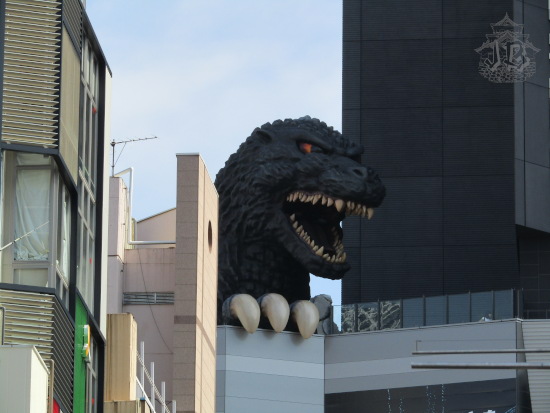
Before that I organised a swift visit to Harajuku [原宿] and Meiji Jingu [明治神宮]. For starters, I wanted to catch Godzilla in Shinjuku [新宿], which I did not do last year – I had stolen a glimpse of him when I had picked my keys up.

Godzilla, a giant mutant iguana, peers throughout the building roofs, roaring

Then I headed over to Harajuku [原宿] and I had a stroll down Takeshita-dōri [竹下通り] (天気がいいから、さんぽしましょう、and so XD) and into Yoyogi Kōen [代々木公園] to show Meiji Jingu [明治神宮] to T**y. Then I headed back home to get ready because PANIC!(◎_◎;) I was ridiculously nervous about the event. Fortunately, it worked out almost perfectly.

The event itself consisted on a formal dinner, and a later appearance of the birthday boy himself and the band to… basically have a drinking game, a card game, and a talk show on stage. It was a lot of money to be honest, and I don’t think I’ll ever feel the need to do something like it again, but I am glad that I was crazy to do it at least once. I unfortunately had to leave before it finished in order to make it to the last train, so I missed the songs *sigh*. Nothing is perfect I guess.

Pictures I snuck at the party - flowers, the screen with the logo, my invitation, then the food - sausage entree, soup, salmon, fillet, and chocolate cake, along witht the shot glass we got as souvenir

3rd September 2015: Kawagoe & Omiya {Japan, summer 2015}

For my last full day in Japan I set off to Kawagoe. Not coming from downtown Tokyo, I did not take the JR line, so when I came out I could not grab a map. Thus, I had to brave it and get on with it – as my phone did not recognise where I wanted to go. Wohoo, orientation adventure. And yup, you guessed it – I got lost. However, this time it was a fortunate loss, because I ended up at the Seiya-san Muryōshuji Kita-in [星野山無量寿寺喜多院] temple complex, which I had marked as ‘maybe on my way back’ originally. It was a very lucky turn, because I met up with a very nice Japanese lady who explained the complex to me and with whom I made friends. She showed me around the premises and recommended the museum – and the 500 disciples of Buddha Sculpture Garden – Gohyaku Rakan [五百羅漢寺], which I loved to pieces.

Kita-in Temple main building with the pagoda in the background:

Kita-in Temple Complex: Gohyaku Rakan:

Kita-in Temple Complex: Amazing main building:

Hakusan Gongen [白山権現], adjacent to the Kita-in Temple Complex

After saying my goodbyes and checking the museum, I headed off towards the area called Koedo [小江戸] (Little Edo), stopping around to check on small temples and shrines. Koedo features black buildings that survived WWII bombings because the pilots thought they were burnt already. This was the main thing I wanted to visit, and I was surprised at the fact that I met very few Westerners here. I guess it was due to my visiting on a weekday. The most famous street is the Black warehouse district, Kurazukuri no Machinam [蔵造りの町並].

I found the Clock Tower, Toki no Kane [時の鐘],

Once I was done wandering around Koedo Kawagoe, there was something else I wanted to check, the main Hikawa Jinja [氷川神社] in Omiya [大宮], a district in Saitama [埼玉], which was fortunately on my way back. There were huge koi in the pond there.

Afterwards I just headed home for some ramen and nice company as good-bye for now. See you next reload, Japan!

1st September 2015: Downpour Shibuya {Japan, summer 2015}

D****e and I headed off to Harajuku [原宿] to check out the idol shops, but I wanted a quick visit to Meiji Jingu [明治神宮] to get the calligraphy from there. I had never been able to find out where they did it, and it was good to have some Japanese-speaking person around. We were surprised to walk into some kind of religious parade I still have got to research.

Afterwards, through a downpour, we had a look at Takeshita Doori shops. When it was almost noon we headed off towards Hachiko in Shibuya [渋谷] as we had agreed to meet a friend for lunch – shabu shabu in Shibuya’s Nabezo and then headed off to Cosmo Planetarium Shibuya [コスモプラネタリウム渋谷], which is a really neat place with very comfy chairs that lean back… yep, you guessed it, I zonked out. In my defence, I shall say that… all Japanese and a talk about gravity and I was getting dizzy with the 3D screen…

After a quick visit to Tower Records for a magazine I was looking for (and in the end got a wrong one, but oh well…) we had yet more karaoke (in a huge room) and eventually headed off home to have some CocoCurry.