27th & 28th July 2013: Segovia (Spain)

27th July 2013: Echoes of a Roman Past

We took the train early on Saturday and arrived in Segovia in mid-morning. Segovia is a Spanish city of the Inner Plateau, located in the autonomous community of Castilla León. It has gained fame because of its many monuments and landmarks, the main being the Roma aqueduct in almost perfect condition, the cathedral and the castle (which may have served to inspire certain mouse-company for the Cinderella Castle). The city centre has been a world Heritage site from 1985 and the aqueduct received the title of International Historic Civil Engineering Landmark in 1999.
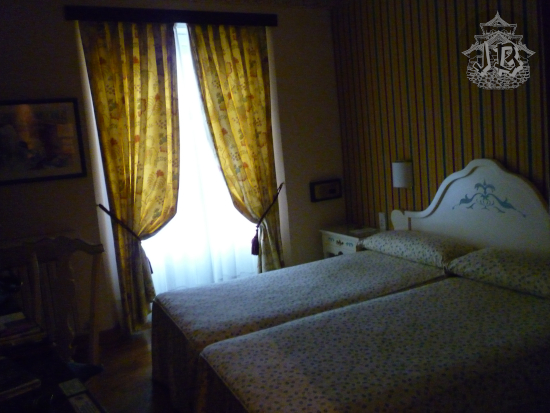
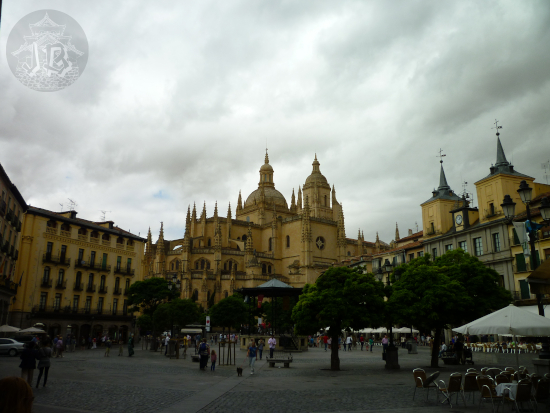
We checked into the hotel, which was dead in the centre of the Main Square and then we visited the Catedral de la Virgen María, the cathedral. The building was constructed between 1525 and 1577 in a late Gothic style that had already phased out in the rest of Europe. We saw the cloister, the chapels and the apse.

Then we moved onto the Iglesia de San Martín, St Martin’s church, built in the 12th century in the Romanesque style, with a Romanesque-Mudejar tower bell.

We then took a walk around the city centre, and we came across the Palacio de Cascales, a 15th century palace that belonged to the Alpuente Count.

We passed by the Casa de los Picos, the “House of Peaks”, also built in the 15th century.
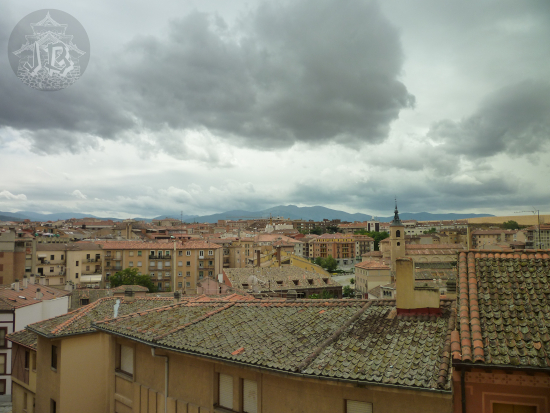
We somehow ended having these nice views of the rooftops of the city, too.
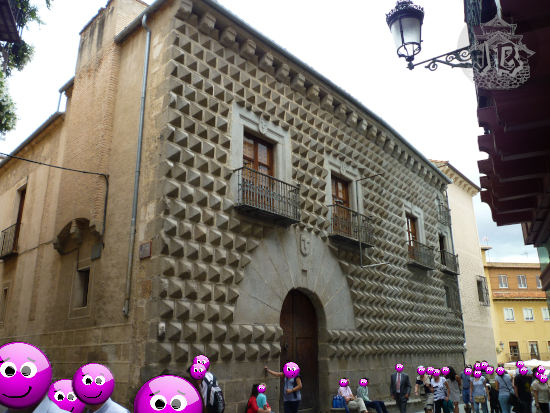
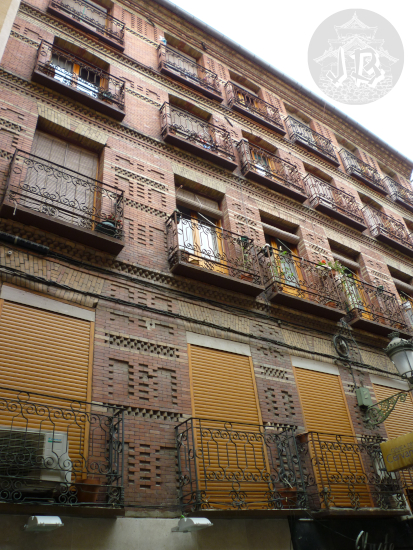
And passed by a very interesting house.
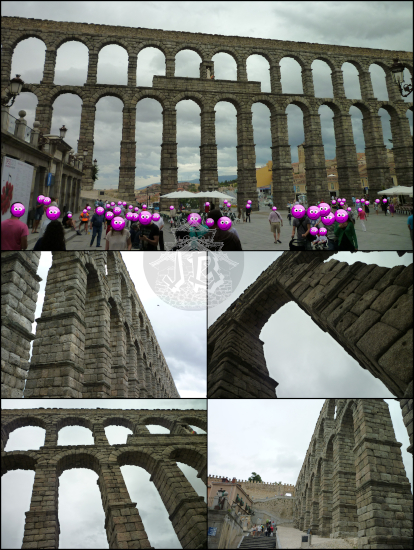
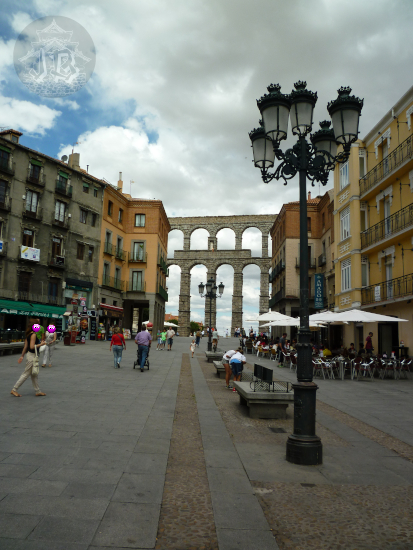
We finally got to the main event, the Aqueducto, the aqueduct. An aqueduct is a “water bridge”, a construction designed to carry water from one side of a valley or a ravine to the other. The Aqueducto was built by the Romans in the late first or early second century. It once transported water from the Frio River into the city, and it ran for a whooping 15 kilometres. It is one of the best preserved aqueducts in the world, as it was reconstructed several times through history, and it was working to get water to the city up to the 19th century.
We passed by the Casa de Ejercicios del Seminario one of the buildings of the Seminary.

We reached the Main Square, the Plaza Mayor again.
And saw the Romanesque Iglesia de San Andrés, St Andrew’s church, with a particularly nice bell tower.

After this we decided to take a break and have the typical pork meat lunch. Then we moved on towards the Alcázar. An alcázar is a type of castle or fortress built during the Muslim rule in Spain and Portugal. The Alcázar of Segovia has been through several redesigns and renovations, but it is a pretty impressive building. The current form was reached during the reign of King Alfonso VIII, so it dates from the 13th century, but it was retweaked by several kings and queens after that. It was the royal residency until the Spanish court moved to Madrid in 1561.

On the way we could see some views and the Iglesia de la Vera Cruz, the True Cross Church.

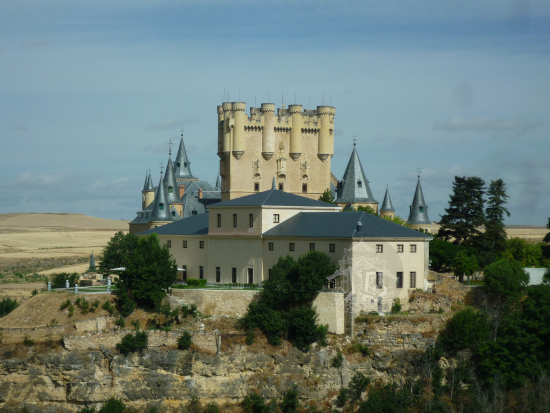
The Alcázar is quite an impressive building, in Herrerian style, with impressive towers. Part of it is a history museum the other part is a military museum.

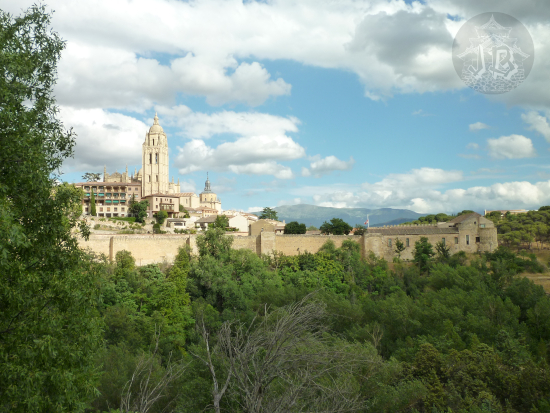
It also offers nice views of the cathedral from the other side.
We walked back to the city centre and along the aqueduct again.

This trip was in July, and scorching hot back home, so we had not considered much of a temperature change. Unfortunately, Segovia in the late afternoon became more than chilly and we had to walk into a random shop to buy a thin jacket, then headed off to the Plaza Mayor.
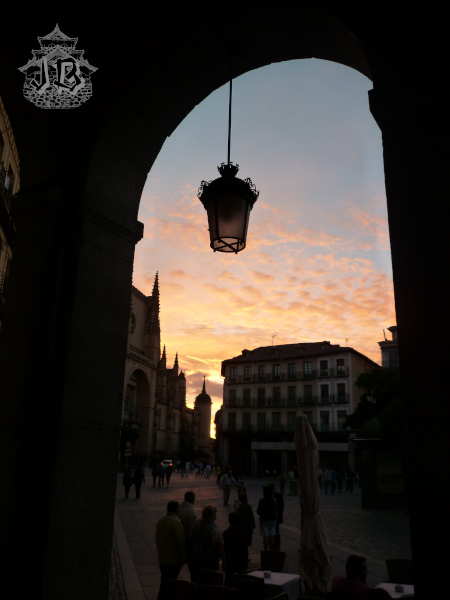
Funnily, when we were having dinner there, someone warned us that the shop assistant had left the alarm tag on my jacket! That was amusing. We called it a day heading off to the hotel, and being duly impressed by the illumination put in place for the cathedral.

28th July 2013: Churches while the city sleeps

On Sunday morning, most everything was closed, so we took a strolling tor if the Medieval area, and saw a bunch of churches from the tenth and eleventh centuries:

Iglesia de la Trinidad (Trinity Church).
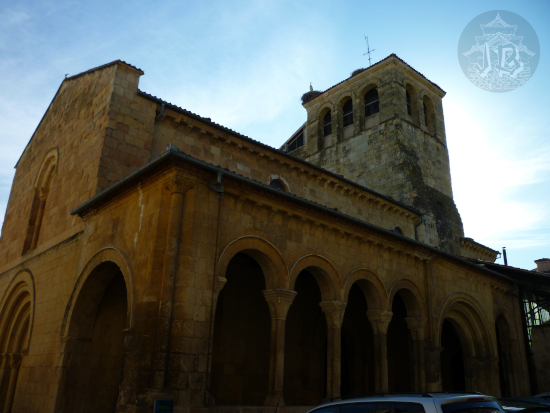
Convento de las Carmelitas Descalzas (Barefoot Carmelite Monastery).
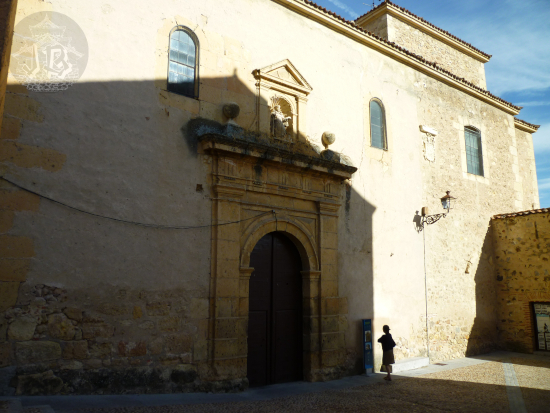
Iglesia de San Nicolas (St. Nicholas’ Church)
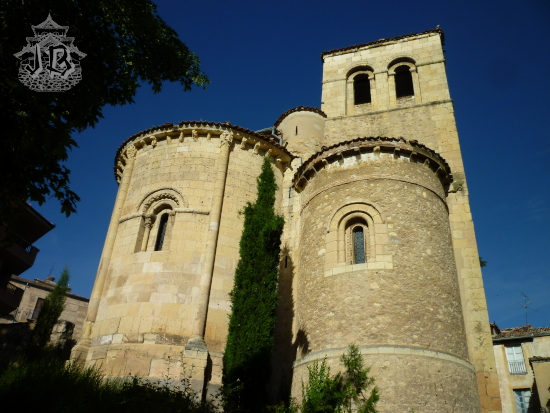
Iglesia de San Quirce (St. Quirce’s Church)

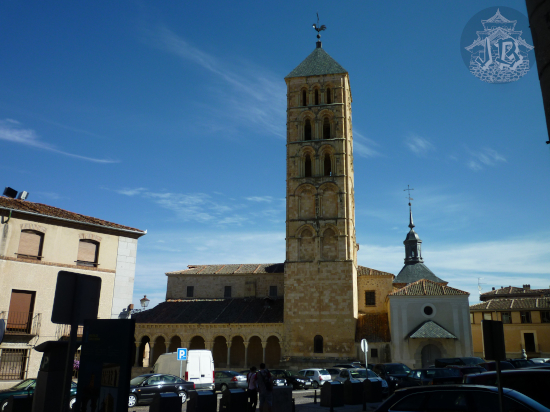
Iglesia de San Esteban (St. Stephen’s Church)
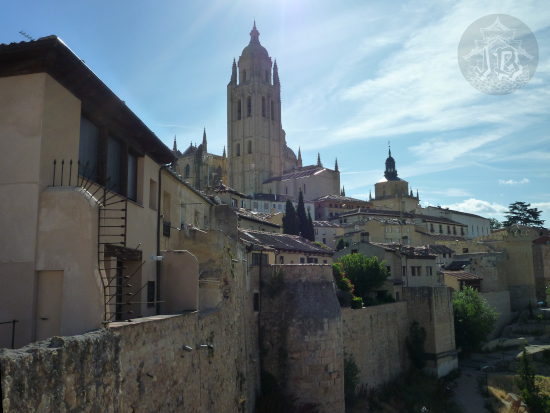
We also had yet a different view of the Cathedral.
And we could see the Alcázar in all its glory.
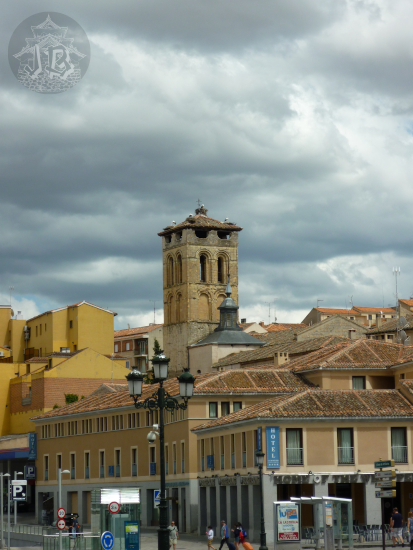
Then we returned to the city centre, where we caught a glimpse of the Iglesia de los Santos Justo y Pastor (St. Just and St. Pastor’s Church).
We had lunch and said one last good-bye to the Aqueduct before we headed back to the train station.
11th July 2012: Kyoto in 9.5 hours: Mission Impossible {Japan, summer 2012}

My express visit to Kyoto [京都] on the 11th was fueled by a jump into a rabbit hole – the first time I drank canned coffee. It would not be the last, definitely.

A can of Georgia Café au Lait

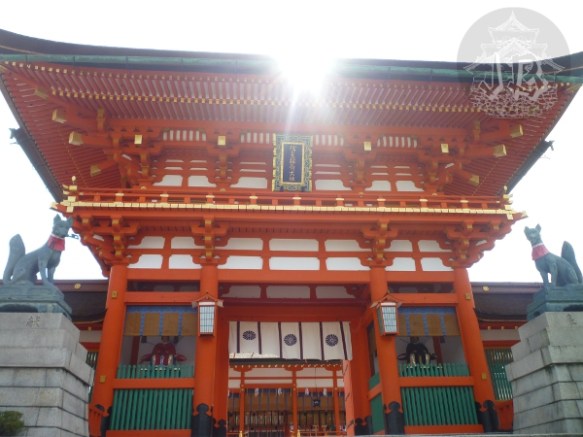
I started off with Fushimi Inari Taisha [伏見稲荷大社] and is dedicated to Inari, the God of Rice, whose messengers are considered to be the foxes or kitsune [狐]. It is a temple with a gazillion plus one torii, since in early Japan Inari was seen as the patron of business. Thus each of the torii is donated by a Japanese business. Sorry for the sun reflection, this was the best picture of the main building I could take:

A shrine building, in powerful orange. The sun is shining at the rim of the roof, and there are two sculptures of foxes sitting on the sides.

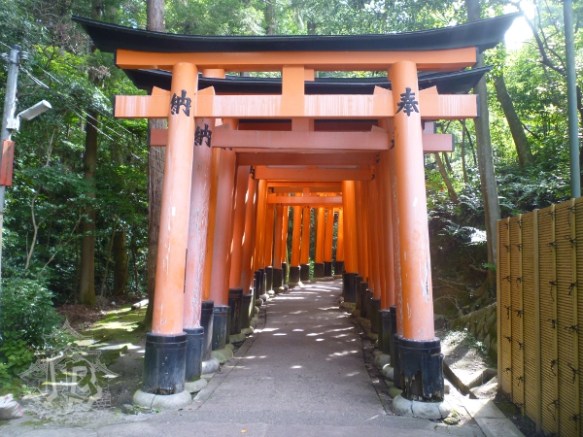
A line of torii (have I mentioned that I looove torii?) the Senbon Torii [千本鳥居], or line of a thousand torii:

A torii in the foreground. Beyond it, so many others that you cannot tell them apart. All of them are orange, but the outermost ones have been burnt by the sun and are less bright

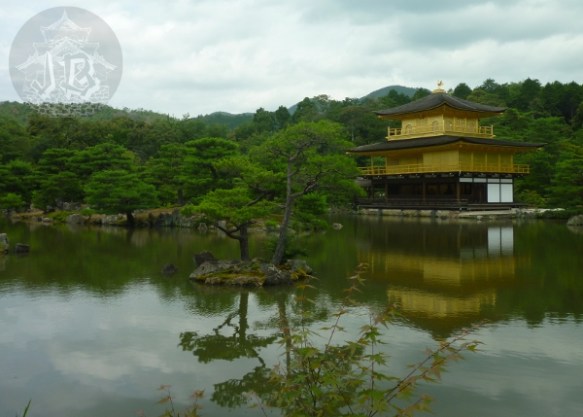
After Inari, I crossed the whole of Kyoto via bus and train and visited the Kinkaku-ji [金閣寺], the Temple of the Golden Pavilion. While I went to visit it because it was a must-see I found it amazing, and liked it more than I wanted to admit.

A pond with a pine tree at the centre. To the side, a three-story pavillion that looks similar to a pagoda. The first floor is built in wood and plaster, the upper ones have been covered in gold

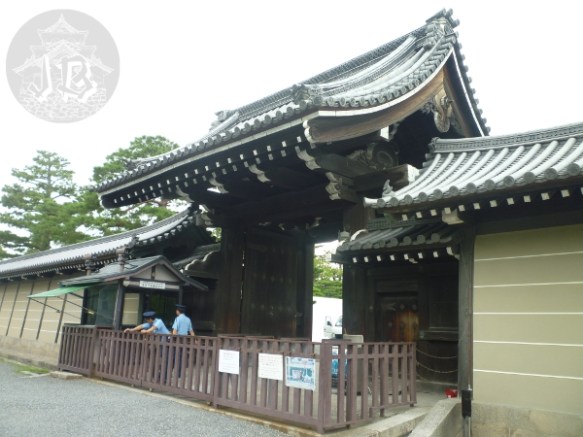
Bus again, towards the Imperial Palace, Kyōto-gosho [京都御所], of which you see… the outer wall and the cops that guard the door XD

The entrance to the Imperial palace - a gate through the walls. Two police officers in blue are chatting at the fence

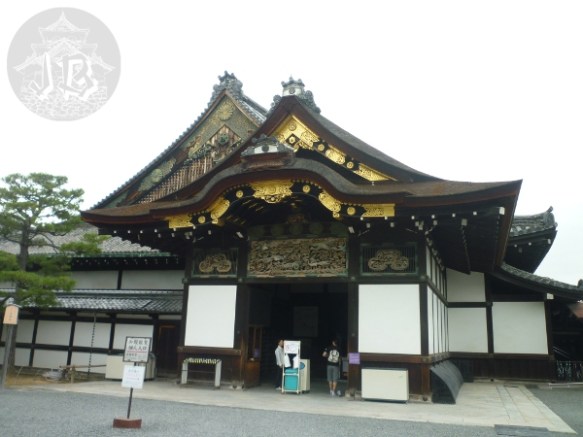
And a thirty-minute walk after that, I found myself entering the castle Nijō Jō [二条城]. Can you feel the rush? XD

The main building to the old castle. Is is built in dark wood with gold ornaments and carved details showing animals and plants, painted in bright colours

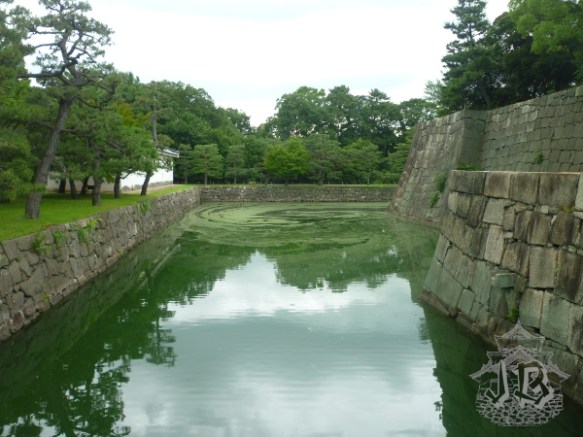
A view of the moat. The water is green.

Two buses later I was in Chion-in [知恩院] which was being repaired, so you can only see park entrance gate, which technically might belong to a nearby temple. I mean… there are too many temples to keep track of them! (Edit: after a bit of processing, that’s actually the entrance to the Yasaka Jinja [八坂神社] complex.)

A bright orange and white building at the top of some some stone stairs.

And going down those stairs to the left there was… Gion [祇園], the traditional geisha district. Found no geisha though D:

Traditional Japanese houses in dark wood, burnt by the sun. The entrance has a paper lanter and a menu

Finally, after another temple or twenty, or among them, I managed to sneak into Kennin-ji [建仁寺] just before it closed to see the twin dragons:

A ceiling painting of two dragons. The background is dark and the dragons are coloured in light shades, gold, white and red

By then I was so dead that I headed back to the station and was catatonic for the Shinkansen ride to Tokyo. This is not by far all I saw, but I lost track of the names for a bit. By the end of the day I was exhausted, but this is the gist of what I did that day. I would need more time to sort out the pictures, and I am trying to keep you guys generally updated, not write a thesis on ancient Japan XD (ETA 2017: Wow, that frame of mind changed a lot)

7th July 2012: Nikkō {Japan, summer 2012}

Nikkō [日光市] is about 140 km north of Tokyo, a couple of hours train ride. While the town itself might not seem much, close to it there is lies the Shrines and Temples of Nikkō Unesco World Heritage Site, and here we headed off on Saturday.

The area holds a whooping 103 buildings or structures, though the natural setting around them is also considered heritage. The buildings belong to two Shinto shrines: Futarasan Jinja [二荒山神社] and Tōshō-gū [東照宮], and one Buddhist temple Rinnō-ji [輪王寺]. Nine of the structures are designated National Treasures of Japan while the remaining 94 are Important Cultural Properties. Unesco listed the site as World Heritage in 1999.

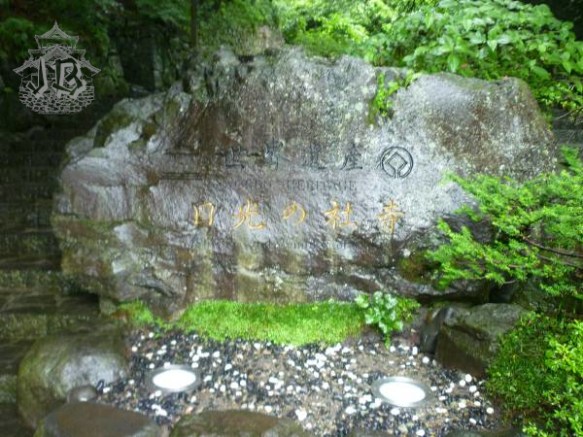
A rock reading World Heritage Shrines and Temples of Nikko in English and Japanese

As you might be able to tell, it was raining. Like magic. Like hell. Cats and dogs. And then some.

Highlights include the Three wise monkeys, “see no evil, speak no evil, hear no evil”:

Wooden carvings of three monkeys: one is covering its ears, another is covering its mouth and the other is covering its eyes

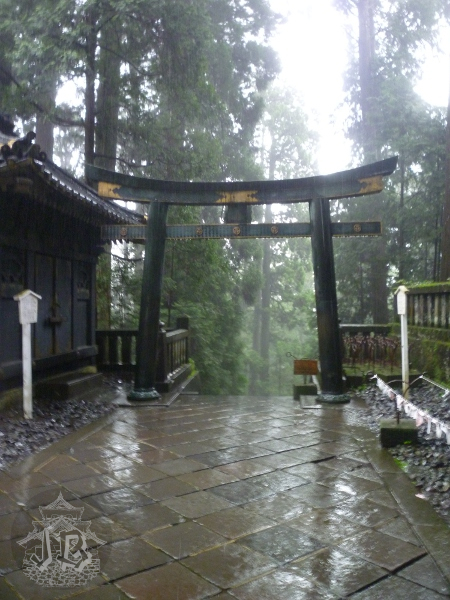
The mausoleum of Tokugawa Ieyasu:

A torii in black and gold. It's raining

A small one-story pagoda, the mausoleum itself

A five-storey pagoda (gojūnōto) belonging to Tōshō-gū:

A five-story pagoda, in red, green and gold. It's still raining.

The inner buildings of Furata-san Jinja:

Dark wood buildings decorated in green and gold. It's still raining

The entrance to Tōshō-gū:

Shrine entrance. The entrance is completely golden. It's still raining

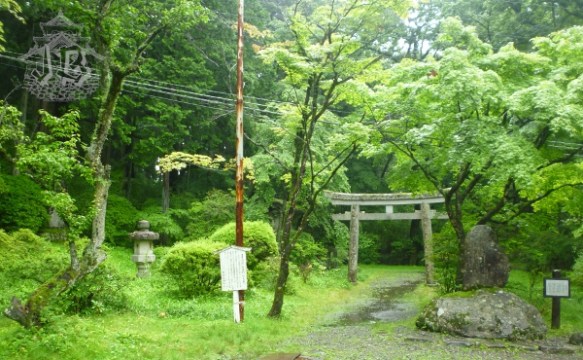
However, since I would not be me without finding (and falling in love with) something obscure and creepy, have a small shrine to the side of the road nobody was paying attention to:

A forlorne stone torii forgotten in the middle of the forest

Did I mention it was raining? Because it was. All the damn day XD

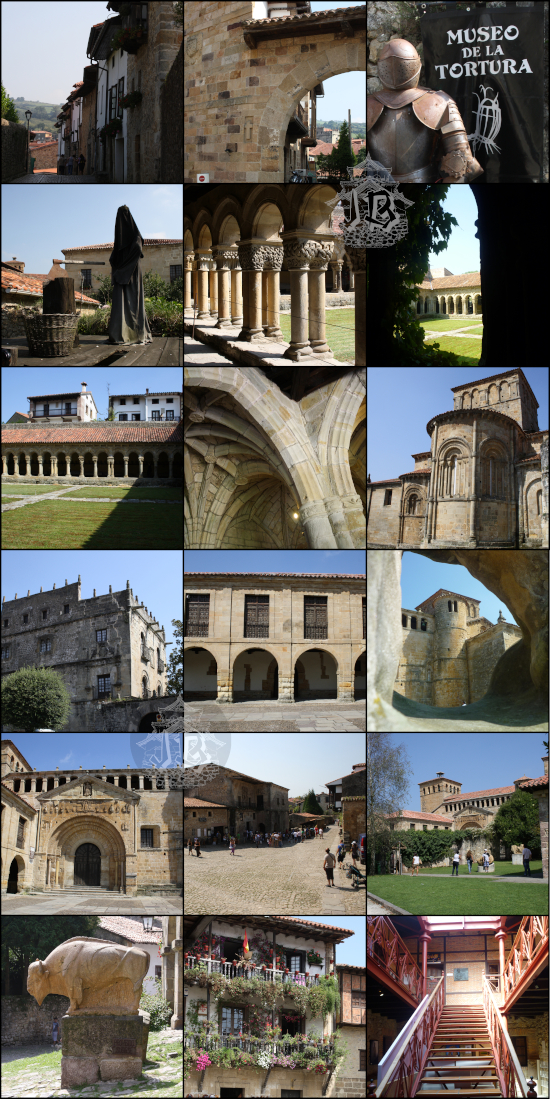
Flashback to 13th August 2011: Altamira & Santillana del Mar (Spain)

Altamira Caves Museum

Santillana del Mar

  • Museo de la Tortura (Torture Museum)
  • Plaza Mayor de Ramón y Pelayo (Main Square)
  • Iglesia de la Colegiata (Colegiate Church)

Note: This is a flashback post, which means it is just a collage regarding a trip I took before I started the blog in 2012. Tags may be incomplete or slightly off.

Flashback to 28th December 2010 – 2nd January 2011: New Year’s in London

  • Hyde Park
  • Piccadilly Circus
  • Sherlock Holmes Museum
  • London Eye
  • Houses of Parliament
  • Big Ben
  • River Thames
  • Tower Bridge
  • Tower of London
  • St Paul’s Cathedral
  • Globe Theatre
  • London Aquarium
  • British Museum
  • London Natural History Museum
  • Buckingham Palace

Note: This is a flashback post, which means it is just a collage regarding a trip I took before I started the blog in 2012. Tags may be incomplete or slightly off.

Flashback to 11th – 14th August 2010: Granada & the Alhambra

  • Catedral de la Encarnación de Granada (Cathedral of the Incarnation)
  • Alhambra de Granada (Granada Muslim fortress)
  • Jardines de la Alhambra (Fortress Gardens)

Note: This is a flashback post, which means it is just a collage regarding a trip I took before I started the blog in 2012. Tags may be incomplete or slightly off.

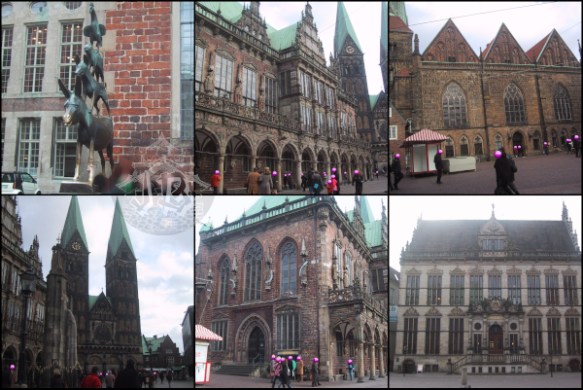
Flashback to 2nd – 4th March 2007: Bremen (Germany)

  • Bremen Marktplatz (Market square)
  • Die Stadtmusikanten (Town Musicians)
  • St. Petri Dom zu Bremen (Cathedral of St. Peter of Bremen)

Note: This is a flashback post, which means it is just a collage regarding a trip I took before I started the blog in 2012. Tags may be incomplete or slightly off.