11th March 2018: An old-fashioned museum and a strike in Madrid (Spain)

I was looking at a work-related trip and wanted to use up Sunday morning to visit “a couple” of museums, then meet some relatives for lunch. Unfortunately, I was caught in the middle of a public transportation strike, so in the end I had to walk for a long while instead of doing what I wanted! Anyway, what I managed to do was getting to the Museo Geominero Nacional, the “Geomineral Museum” in Madrid. It is located in the headquarters of the Geological and Mining Institute of Spain, in a classical-looking building finished in 1925. It was designed by Franciso Javier de Luue. It is a classical-looking museum with wooden cases and an impressive stained glass ceiling, comprised by a central room and three surrounding balconies.

The access is through a marble staircase and the first corridor is already packed with display cases, even before you get to the main area. These cases show small and not-so-small fossils and replicas, displaying the first taste of the evolution of life on earth.
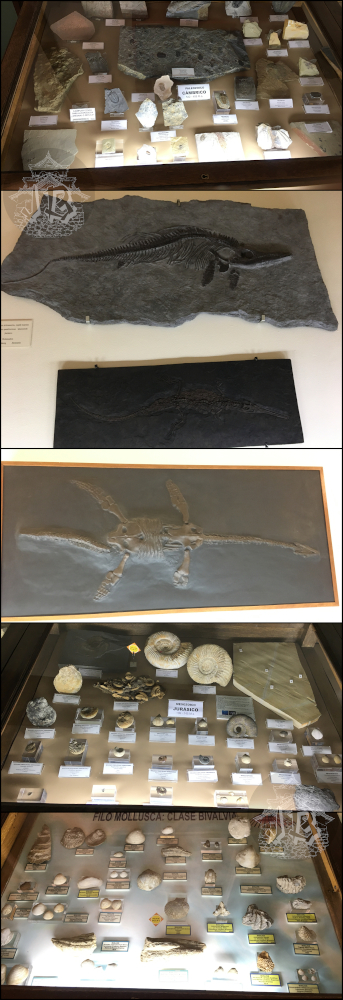
Once in the main room, most of the floor is taken up by the standing cases holding minerals, fossils and meteorites.

In the centre of the room lie the remains of a mastodon, located in the area of Ciudad Real in the 20th century, one of the crown jewels of the museum.

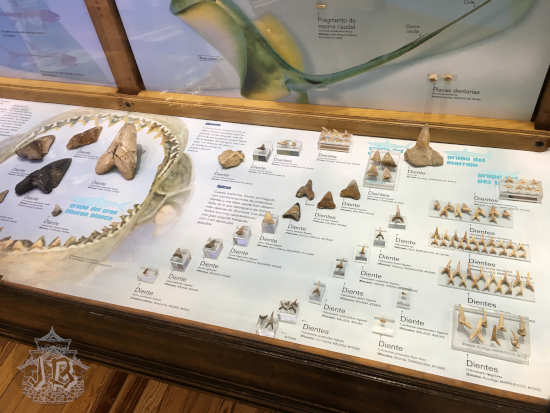
Of course I have been able to locate the collection of megalodon and shark teeth that are on display on the balcony.
Other displays on the upper floors include Spanish mountain goats, cave bears, and a human-evolution collection. Unfortunately, those did not photograph well due to the sun reflection.

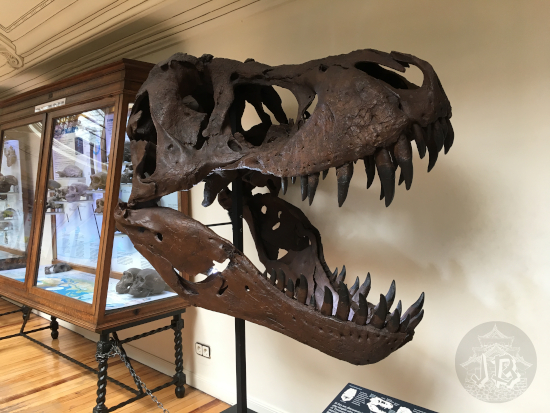
And finally, my favourite piece of the collection is the Tyrannosaurus rex skull replica that presides the museum for the second floor.
When I came out, public transport was not running any more, so I had to walk through the Madrid backstreets until I got to the area where we had arranged to meet, and we went to a restaurant called El Escarpín, where I had an awesome pan of… wait for it… gratin meatballs with molten cheese on a bed of potatoes (Albóndigas gratinadas con queso de tetilla sobre cama de patatas). Amazing! Either that, or I was really ravenous after my hour and a half walking. Serves me right for not keeping up with the news! I learnt my lesson!

28th January 2018: Amusement Park in Madrid (Spain)

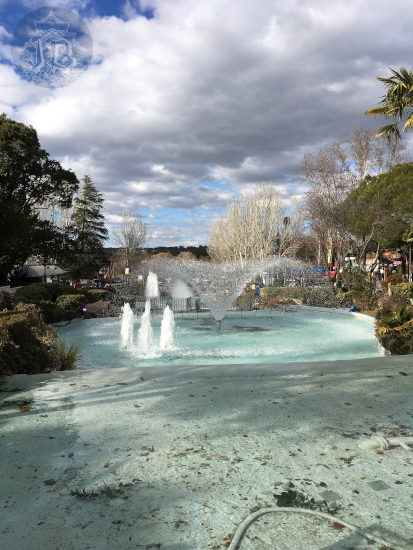
I had a friend over for the weekend and she wanted to “do something” so I got thinking. She is adcenturous, so I thought that the Madrid amusement park could be a good idea. The Parque de Atracciones de Madrid was established in 1969. I’ve never been much of a rides person, for two reasons. One, it is one of those things that you take up when you’re young, and when I was young my parents were rather opposed to funfairs and rides and so on (with good reason, to be honest, but that’s another story). Two, I tend to be worried that random rides are going to trigger my headaches, especially when I have to take my glasses off.

For this trip, I decided to wear my contacts, so I actually got to go on a few of the rides. I was mostly happy staying back and letting my friend do the roller coasters though.

I was all good with the ride called “The Jungle”, which turned out not only to have animals, but… different cultural approaches.

I enjoyed the “Zeppelin”, and the sights…

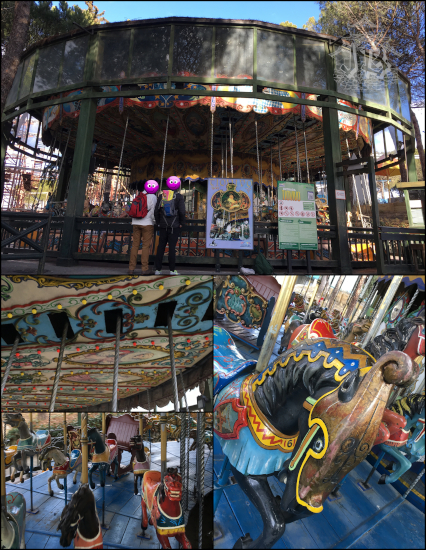
And, of course, I rode the carousel “Tiovivo”. Several times to be honest.

It was low season, so the price was much cheaper than normally. Unfortunately, it also meant that a few of the rides were closed. Then again, I wouldn’t have wanted to go onto anything with water in January…

16th September 2016: Some Madrid (Spain) Museums

I woke up one morning, a silly weekday that I did not have to work for some reason and I decided to wander off and take a day trip to Madrid to see some museums, just because I could.

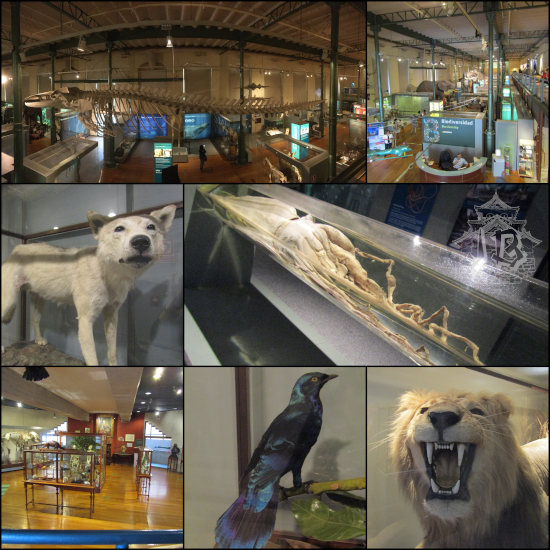
My first stop was the Museo Nacional de Ciencias Naturales, the museum of natural science. The museum is divided into several buildings. The first building holds the “Biodiversity” collection. This includes preserved specimens – in better or worse shape, mostly stuffed, and some skeletons.

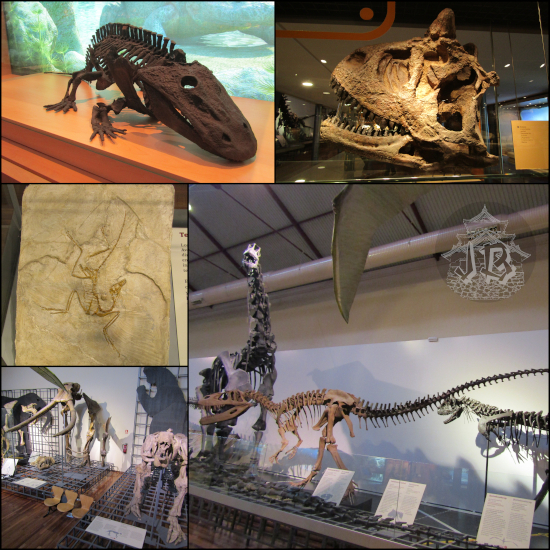
Then I walked over to the palaeontology and mineral museum, where at the moment most of the collection is composed of replica, sometimes it feels that you see the same diplodocus or arsinoitherium (two-horned rhino) skull everywhere. Of course, however, I hunted down every megalodon tooth on site and sight.

After this, I walked around the mineral collection and walked down Castellana Avenue until Colón Square, where I had lunch somewhere before I walked around to see the Museo Arqueológico Nacional – National Archaeological Museum. There were a few things that interested me there.

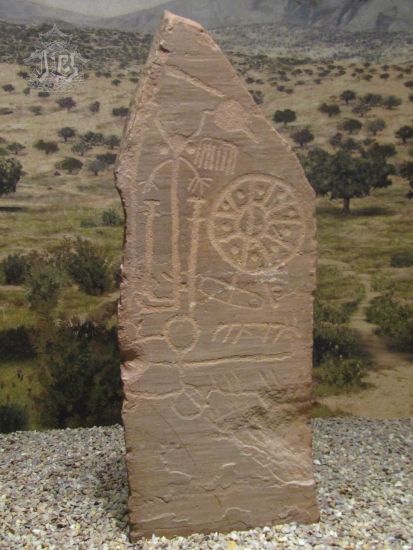
My first goal was to study the Iberian stelæ . Nobody really knows what they are or what their meaning is, but it is thought that they were funerary monuments, maybe of fallen warriors.

An interesting thing to see in this museum is the sculpture of La Dama de Elche, the Lady of Elche, the limestone bust of an Iberian lady dated back to the 4th century BC. It is supposed to be a woman who belonged to the aristocracy that was later revered as a goddess, or maybe a reinterpretation of the Goddess Tanit of Cathage. The back part has an opening, which suggests that it could have been a funerary urn. It was originally polychromated, but it has lost its colours. I really like her expression, and probably due to the Hellenistic influence. I have a thing for Greek sculpture, after all.

A second “lady”, the Dama de Baza (Lady of Baza), stands next to the first. This one still keeps some of its colours. This one is full-body, also carved out of limestone, and it traces back to the fourth century too. This lady seems to have been designed in pure Iberian style, without Hellenistic influences.

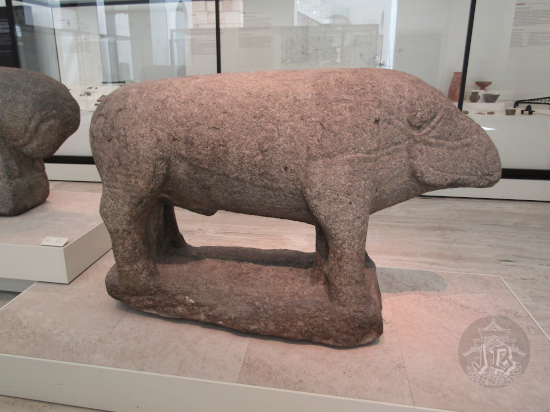
The last key pieces of Iberian sculpture in this museum are the verracos – sort-of headless boars, pigs or bulls (depending on the interpretation), but it is commonly accepted that they are symbols of protection of cattle routes. Most of them are… visibly male.

Once I had seen what I really wanted to see I wandered over the rest of the museum, stumbling upon the currency exhibition, which was strangely interesting.

I walked past the Medieval rooms and then I found the Egyptian area, which is humble, but has some interesting things like the X-rays of a mummified falcon. Finally, I checked out the classical Greek area before calling it a day and making it back home.

27th December 2014: A stroll in the cold (Guadalajara, Spain)

I had a couple of friends over for that silly blursday period between Christmas and New Year’s and we decided to get to Guadalajara for a walk or two. Not that there is much to see, but it has a small zoological park. The Zoológico Municipal de Guadalajara had a rocky start, with small cages and sad animals, but it seems to be trying to do better. The main activity that goes on in the zoo is the recovery of birds of prey, and there are some education programs too.

We had lunch in an all-you-can-eat Asian restaurant that I enjoy because it is one of the few places where I can get myself some sushi.

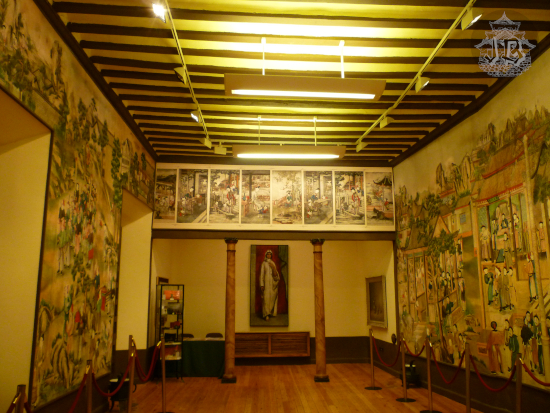
Afterwards, we visited the Palacio de la Cotilla, Cotilla Palace – whose name ‘palace’ is more than overrated. It is a 17th century is a downtown manor in Guadalajara, Spain, formerly owned by the Marquis of Villamejor. One of the rooms, named the “Chinese Room”, Salón Chino de la Cotilla, is decorated with hand-painted rice paper, brought from Beijing, and several Japanese Edo-period paintings which were probably purchased in France from Dutch sailors or merchants.

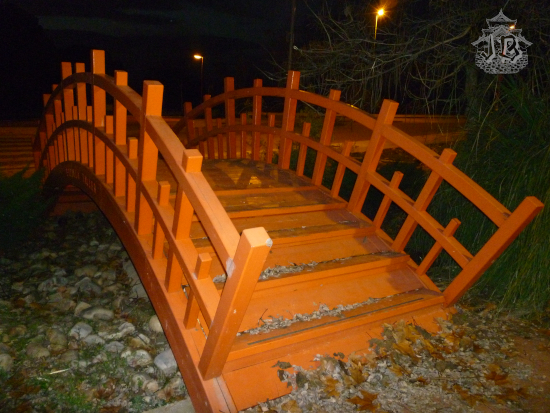
Finally we took a stroll towards a silly spot in the middle of nowhere that has a Japanes-like bridge over… nothing, really, but it is a cute bridge, in the Parque de las Esculturas, Sculpture Park.

After that we just headed back home because it was dark and cold and pizza could be ordered (≧▽≦).

14th June 2014: Falconry & Birds of Prey Exhibition in Guadalajara (Spain)

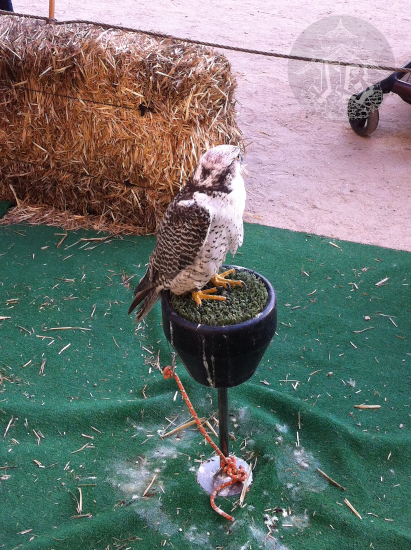
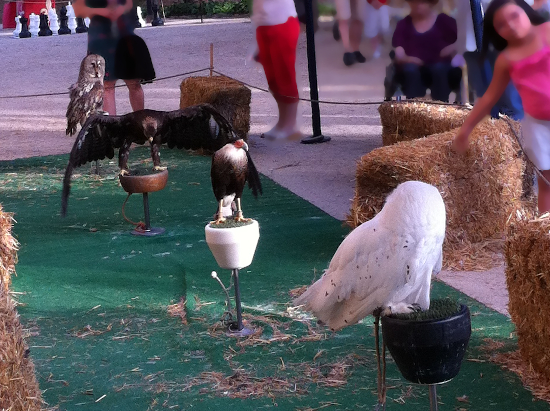
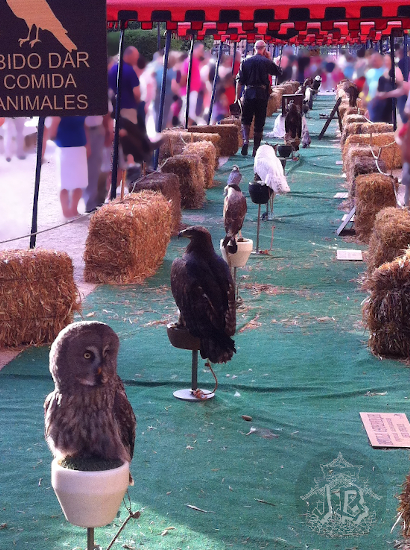
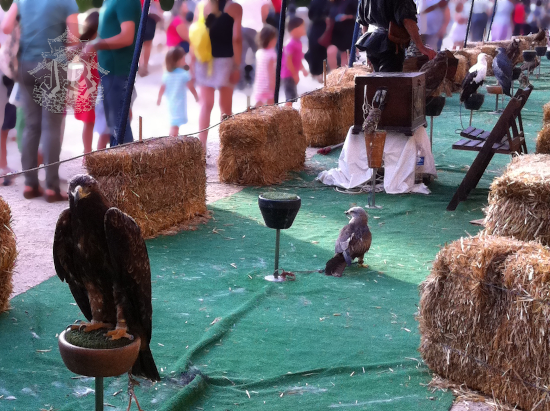
Falconry is one of those things that I’m torn about – on the one hand I’m not really keen on animal labour and shows, but being close to those animals is an amazing experience. The town of Guadalajara was celebrating the 900th anniversary of the passing of the Medieval Hero Minaya’s passing, and falconry was common technique at the time.

Rodrigo Díaz de Vivar was a Castilian knight and warlord who lived in the 11th-century Spain. He was called El Cid Campeador which roughly means the Master of the Battlefield. He was a glorified mercenary, and has made history books as one of the most important history heroes. He was exiled when he confronted the King about killing his predecessor. One of his generals, Álvar Fáñez Minaya, is credited with liberating the town of Guadalajara from the Moors. Just as El Cid represents courage and strength, Minaya represents loyalty.

Guadalajara really likes the figure of Minaya – he is in the local coat of arms and flag, there’s a school and a Moorish tower named after him. And as he was supposed to have been an excellent falconer, the exhibition was organised. I never caught the name of the owners of the animals, but there were some very impressive birds over there – Steppe eagle, Eurasian eagle-owl, Iberian imperial eagle, Turkish vulture, a hawk / falcon and… and that’s the end of my ornithology knowledge. All in all the animals were beautiful, although people not respecting their space made me a little bit sad.

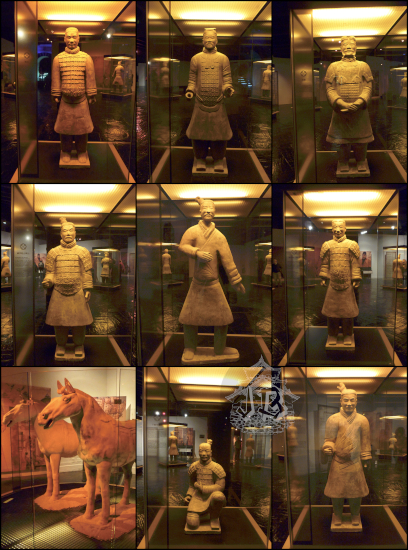
27th December 2013: The Terracotta Army in Madrid (Spain)

This was a bit of an unplanned event. I had been in Madrid the previous day with a friend and we had seen that the exhibition was going on. Unfortunately, there was a huge queue to go in, so we could not stay. Instead we got tickets on the internet and chose a standard “lunchtime” hour so we were almost alone watching the exhibit. That was awesome. The exhibition was held in the Fernán Gómez Centro Cultural de la Villa underneath Plaza de Colón (Colombus Square) in Madrid.

The Terracotta Army is called the Eighth Wonder of the Ancient World. It was discovered in 1974 close to the city of Xi’an (Shaanxi Province). It is comprised by hundreds of larger-than-life soldier statues built out of terracotta. They are part of the Mausoleum of the First Qin Emperor, the first emperor of China. There are over 8,000 soldiers, 130 chariots with 520 horses, aside from 150 cavalry horses. There are different types of soldiers and they have different ranks. Their function would have been to protect the Emperor from the spirits in the afterlife. Forty thousand bronze weapons have been found among the soldiers. For reference, they were buried with the Emperor around the year 210 BCE!

The Exhibition “Terracotta Army – Guerreros De Xi’an” displays about 150 replicas of the best-preserved soldiers, weapons and chariots, along with different decorative elements and a reproduction of the Pit 1, where the bulk of the warriors were found. It was a very interesting exhibition that made me actually want to travel to China to see the actual Mausoleum for real!

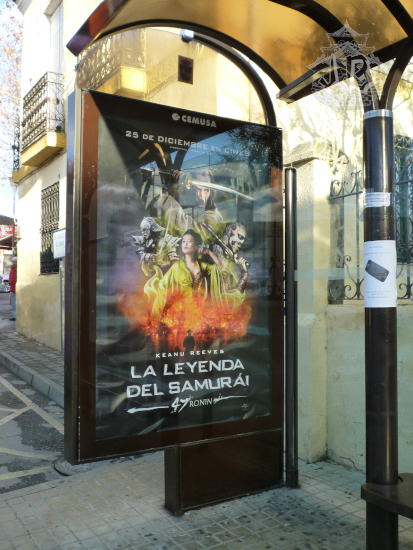
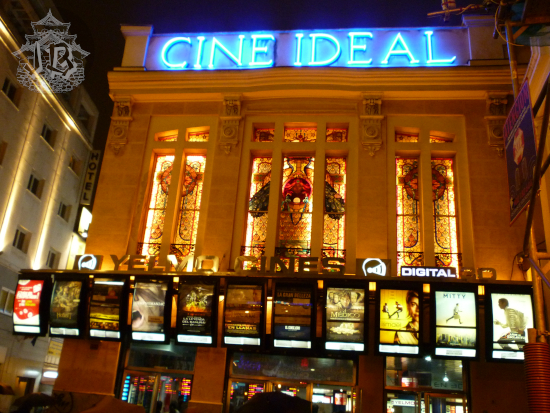
Afterwards we had tickets for the cinema, because “47 Ronin” was running, and the Cines Ideal show non-dubbed films, and basically… there was Akanishi Jin in it. The films has its… merits… somewhere… I mean I loved it but it was pretty bad – I’m not precisely known for liking deep, intellectual films anyway (≧▽≦).

26th December 2013: Japanese Exhibitions & Christmas Lights in Madrid (Spain)

Over the Christmas break, there were many activities related to the celebration of the establishment of diplomacy between Spain and Japan, so-called Año Dual España Japón. We decided to kick off the day going to a Japanese restaurant, my favourite in Madrid, the Nagoya (believe it or not, this is the daily menu).

There was a Calligraphy exhibit in the national library, Biblioteca Nacional. On the way, we also found that there was an exhibition about the Chinese terracotta warriors, but the queue was insane! We decided to try to get tickets online for another day.

We went to Caixa Forum to see a Japonism (19th-century European art influenced by Japanese concepts and aesthetics). Honestly, pictures were forbidden, but I snuck one because I really loved the painting.

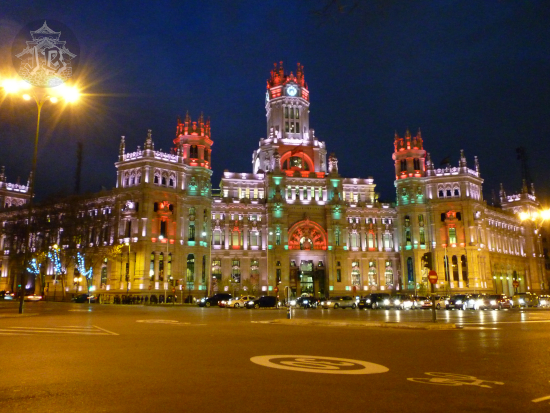
We also took a walk to see the Christmas lights. Here’s the Postal Service building, Edificio de Correos.

And a view of Gran Vía, one of the main arteries of Madrid, all lit up.

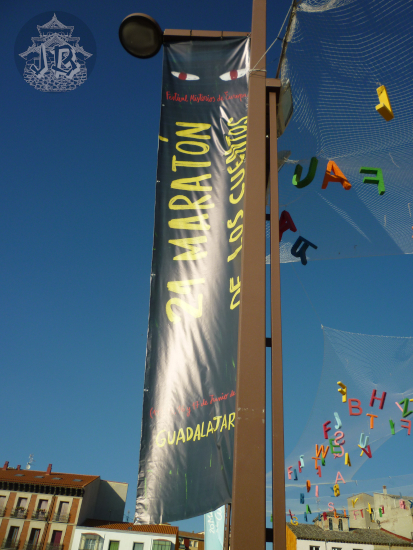
15th June 2013: Maratón de los cuentos de Guadalajara (Spain)

The Maratón de los cuentos de Guadalajara, Storytelling Marathon of Guadalajara, is an annual event that has been taking place in the town since 1992. During a weekend, Friday to Sunday, in June, stories are told non-stop. For a couple of days the town becomes alive with the idea of telling stories, is decorated and so on.

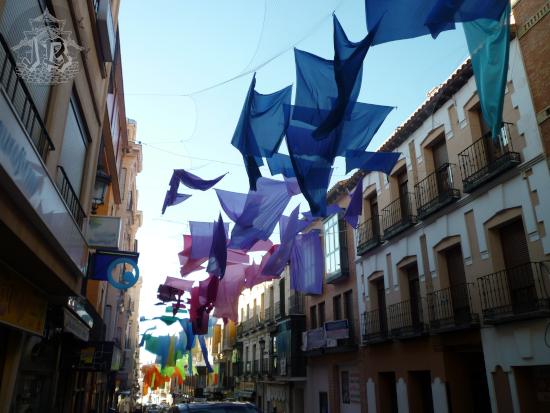
I decided to attend the marathon and listen to a few stories. I walked down Main Street, which had been adorned with flags and hanging letters.

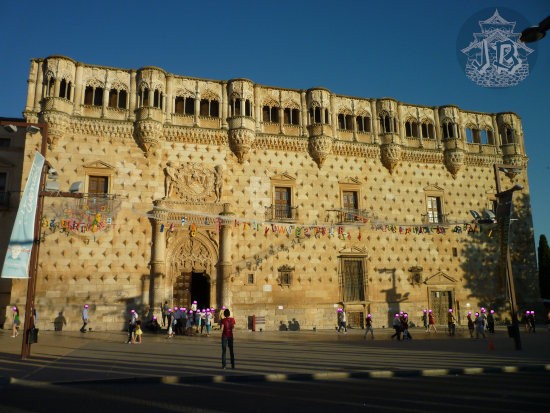
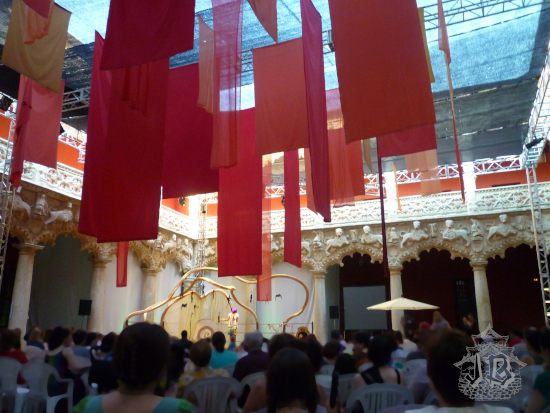
The marathon was carried out in the Palacio del Infantado, a Gothic palace that belonged to the Infantado Dukes. The most important feature, the façade, was completed in 1483. Both the Palace, the gardens, and the patio were also decorated for the event.

After a walk around I sat down to listen to a few stories inside the Palace, before I headed back home.

14th April 2013: Brihuega (Spain)

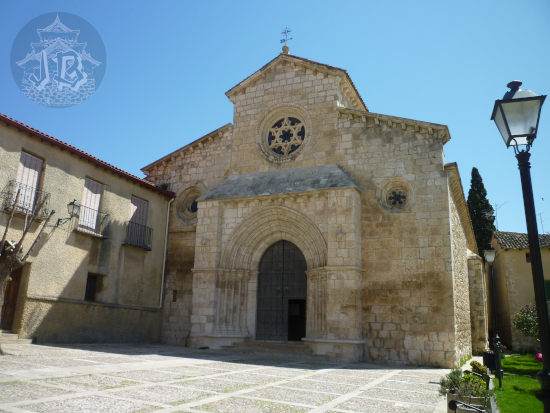
Brihuega is a little town in the centre of Spain. It is considered a historical site in 1973 due to its Medieval buildings. In this little getaway we got to visit the Iglesia de San Felipe, St. Philip’s Church, which dates back from the 13th Century.

We also saw the Parque del Molinillo, which roughly translates to “The small mill park”…

Flashback to 13th August 2011: Altamira & Santillana del Mar (Spain)

Altamira Caves Museum

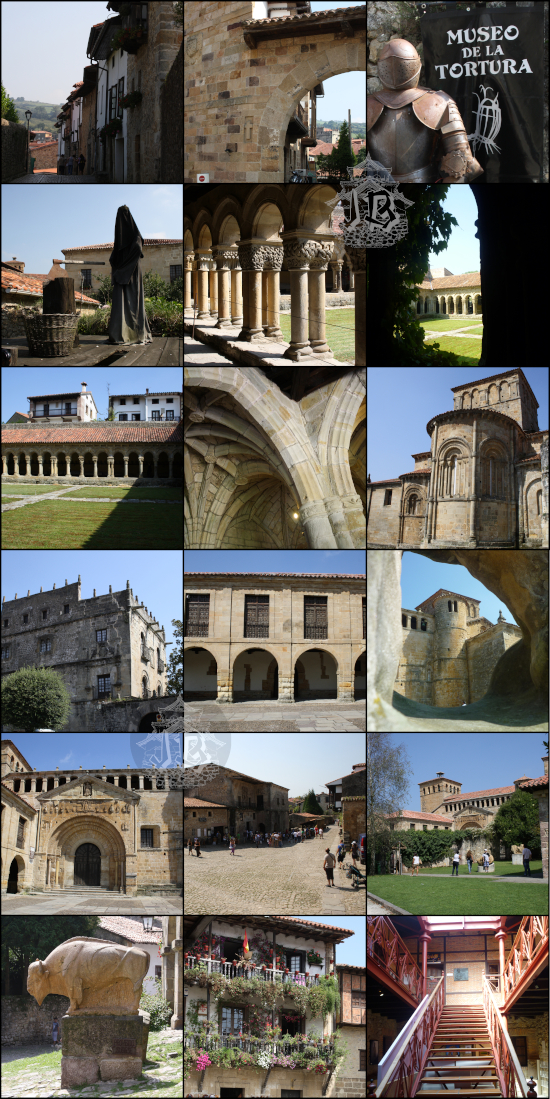
Santillana del Mar

  • Museo de la Tortura (Torture Museum)
  • Plaza Mayor de Ramón y Pelayo (Main Square)
  • Iglesia de la Colegiata (Colegiate Church)

Note: This is a flashback post, which means it is just a collage regarding a trip I took before I started the blog in 2012. Tags may be incomplete or slightly off.

Flashback to 28th December 2009: Comillas (Spain)

  • Cementerio de Comillas (Graveyard)
  • Capilla Panteón de los Marqueses de Comillas (Comillas Marchis’ Chapel and Pantheon)
  • Palacio de Sobrellano (Sobrellano Palace)

Note: This is a flashback post, which means it is just a collage regarding a trip I took before I started the blog in 2012. Tags may be incomplete or slightly off.

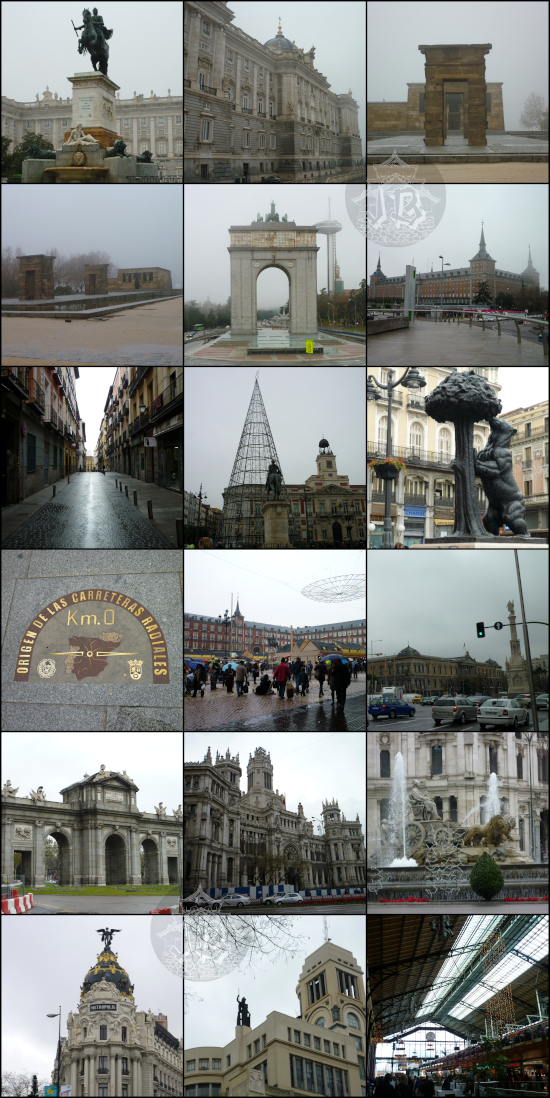
Flashback to 26th December 2009: Winterday in Madrid (Spain)

  • Palacio Real de Madrid (Royal Palace)
  • Templo de Debod (Egyptian Temple to Debod)
  • Arco de la Victoria (Victory Arc)
  • Palacio de la Moncloa (Palace of La Moncloa)
  • Puerta del Sol (Square Puerta del Sol)
  • Plaza Mayor de Madrid (Main Square)
  • Plaza de Colón (Columbus Square),
  • Puerta de Alcalá (Puerta de Alcalá Arc)
  • Edificio de Correos (Postal Building)
  • Fuente de la Cibeles (Cibeles Fountain)
  • Edificio Metrópolis (Metropolis Building)
  • Gran Vía de Madrid (Gran Vía Avenue)
  • Círculo de Bellas Artes (Fine Arts Club)
  • Estación de Príncipe Pío (Príncipe Pío Station)

Note: This is a flashback post, which means it is just a collage regarding a trip I took before I started the blog in 2012. Tags may be incomplete or slightly off.