31st December 2024: A clumsy morning yielded to an unbelievable evening {Vienna, Silvesterkonzert 2024}

When we walked out of the rooms to go down and have breakfast, my parent’s alarmed face made me worried. They informed my sibling and myself that “it had snowed”. That was spooky for a second – until I ran to the window and saw that the “snow” was just a very thin layer of scattered white powder. It was safe to go out, even with my senior parents. We had breakfast and we got ready to go out.

Snow in Vienna

At some point, my family “caught” that I like Natural History museums, so they really, really thought I wanted to go to Vienna’s Natural History Museum – Naturhistorisches Museum Wien, and just wouldn’t listen to “No need, I’ve been there already, Their reasoning is that I had mentioned it before, which I actually had, to inform them that the Venus von Willendorf was there. That is where we ended up, and I was happy to oblige – the museum has rocks, meteorites, fossils and dinosaur animatronics. All right up my alley.

The museum’s oldest collection 250 years. In 1750, the Holy Roman Emperor Francis I bought what at the time was the largest collection of natural history objects at the time – around 30,000 objects. That same decade, the Emperor founded the Schönbrunn Zoo and the botanical garden, and he ordered the first scientific exhibition to be held. Upon his death, the collections were donated to the state, and the first museum according to the Enlightenment principles was founded – and soon expanded.

The museum building was also commissioned by the Emperor. It was designed by architects Gottfried Semper and Carl Hasenauer, with an identical exterior to the nearby Museum of Fine Arts. Works began in 1871, and the institution officially opened in 1889. Though it was indeed originally designed as a museum, it feels more like a repurposed palace, with decorated ceilings and monumental staircases. It has 39 halls with almost 9,000 square metres of exhibits, still keeping the 19th century outline. We just did halls 1 to 13: mineralogy, petrography, meteorites, palaeontology and prehistory galleries, including the Venus von Willendorf. The 11-centimetre figurine was made in limestone around back to 30,000 years ago. It is a nude woman of large proportions, and even if she does not have a face, she is mostly anatomically correct and has plaited hair.

My family was fascinated by the collections, and I guess I felt a teeny bit smug about that – considering how much fun they poke at me because natural history museums are very high on my priorities when I visit a new place (see: my first time in Brussels).
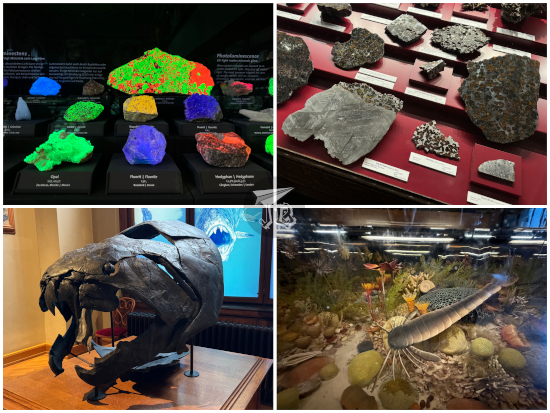
Natural History Museum Vienna

Natural History Museum Vienna

We left the museum after a couple of hours, around noon. We did not stay at the Silvestermarket at the square, but headed out towards the Imperial Butterfly House Schmetterlinghaus. It comprises half of an Art Nouveau greenhouse turned tropical botanical garden and butterfly zoo of sorts. I really love the iron-and-glass architecture of the building – and I would have loved to have had lunch in the brasserie that fills the other half of the greenhouse. The building was designed by architect Friedrich Ohmann and erected in 1901 as part of the Hofburg Palace and is, next to the Burggarten palace.

Most of the butterflies we saw, if not all, were forest giant owls Caligo eurilochus, very large butterflies originating from the Americas – they can live from Mexico to the Amazon basin. They have marks like big eyes in its back wings (hence the commmon name), and the inner wings are blue. They are pretty, and they seem to like fruit, as they gathered around the feeders to snack on it. The sad part is that they only live around 24 days.
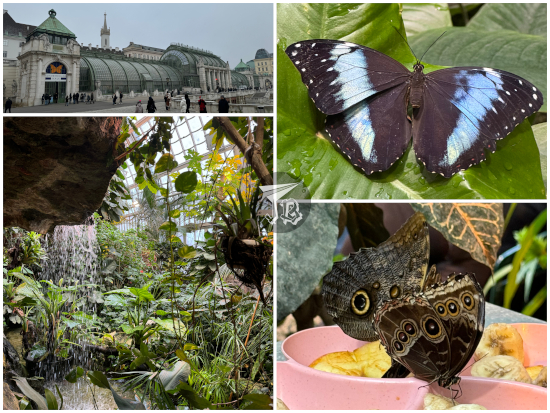
Schmetterlinghaus

We then headed to the restaurant Centimeter, near the Rathouse (town hall) to have lunch. It is a place that has a lot of things measured – you can order sausages by the metre. I was somehow was not feeling hungry, so I decided to get Gebackener Emmentaler mit Sauce Tartare und Preiselbeeren, breaded and baked Emmental cheese with tartare sauce and cranberries. After lunch, we expected the Silvestermarket next to the Rathaus to be open, as it was one of the places to be for New Year’s Eve. We were wrong! That was a bummer, because in hindsight we could have cancelled the reservation and just stayed at the market in front of the Natural History Museum. That was a bummer, but at least we were warm.
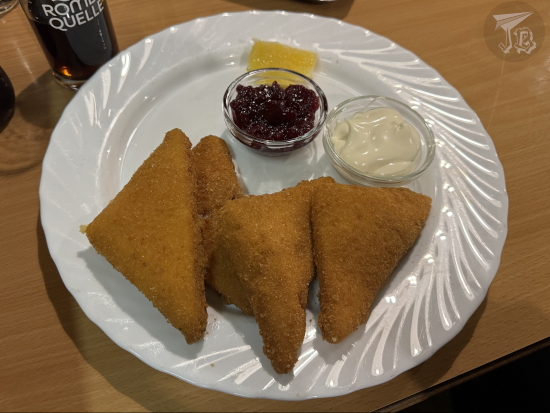
Gebackener Emmentaler

We headed back towards the hotel, and we stopped by the supermarket next door to buy something for dinner. I grabbed myself some pre-emptive sushi, because I was pretty sure that my family was not going to find what they wanted – basically stuff like they would get at home. After half an hour of going back and forth, they decided to settle down with sandwiches and more sushi. We also picked up some chocolate thingies that would end up being more coconut than anything else. Not that I have anything against coconut, but I do not appreciate it replacing chocolate unannounced.

We took the groceries to the hotel, and had a bit of downtime before got ready for the main event. During that time, I went on the online airline webpage to make sure that the travel agent at El Corte Inglés had checked us in. The check-in was done, but someone had made a typo on my parent’s email address so we had not received the boarding passes. I retrieved them and downloaded onto my phone to distribute later.

A bit past 18:00, we left for the Wiener Musikverein, the Viennese Music Association, home to the Vienna Philharmonic Wiener Philharmoniker, where we would attend the 2024 Silvesterkonzert. It was a bit strange to head to such an event using the underground, but that was the most efficient means of transport, to be honest. We ran into the Spanish lady and her husband again – and that was great because that way we could take pictures of each other without having to get a stranger to do so.

Vienna Musikverein

The Musikverein was designed to resemble an Ancient Greek Temple in a Neoclassical style, following plans by architect Theophil Hansen. The building was inaugurated in 1870, and it has a small decorated entrance, very underwhelming staircases, a small chamber music hall, and the main music hall, the Großer Musikvereinssaal or Golden Hall. Walking in there was… surreal. It’s a hall I’d seen so often on TV, and it actually felt… I don’t know, a bit… pale. Less bright than on the screen. Maybe it was that the flowers were white and pink, so they did not pop. And it’s not like I know anything about flowers, anyway. I was just happy they were artificial enough not to trigger my allergies, it would have been awkward to sneeze all throughout the concert…
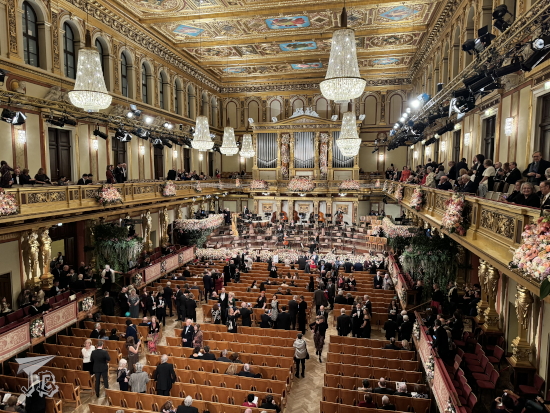
Vienna Musikverein Golden Hall

Though the “New Year Concert” is the one that everyone knows, there are actually three concerts with the same set list – the Preview Voraufführung on the 30th, the Silvesterconcert Silvesterkonzert on the 31st, and the New Year’s Concert Neujahrskonzert on the 1st. I honestly would have thought that it would be full of wealthy people and they would be all cool as cucumbers, but it turns out, a whole bunch of us were just excited noobs taking pictures of every and anything. My family’s seats were on the second floor balcony. I just couldn’t believe everything that was going around around me, nor where I was. I bought the programme, because I really wanted something physical from the soirée, aside from the ticket.

The Vienna Philharmonic was founded in 1842. It is formed by the best musicians from the Vienna State Opera. It is actually run by the musicians themselves. Every year, a conductor is chosen to direct the concerts, and for the 2025, it was Italian Riccardo Muti. Maestro Muti was born in Naples in 1941, and studied in the Classical Lyceum. He proceeded to move onto studying Piano, then Composition and Conducting. He began his career in 1968 as the music director of the opera festival Maggio Musical Fiorentino. He conducted the New Year’s Concert in Vienna in 1993, 1997, 2000, 2004 and 2018 before this year. In 2011, the Philharmonic awarded him Honorary Membership. He is also a bit of a troll.

The concert had two parts, including the encore:

First part:
  1. Johann Strauß I. Freiheits-Marsch, op. 226 – Freedom March
  2. Josef Strauß Dorfschwalben aus Österreich. Walzer, op. 164 – Village Swallows from Austria, waltz
  3. Johann Strauß II. Demolirer-Polka. Polka française, op. 269 – Demolition Men’s Polka, French Polka
  4. Johann Strauß II. Lagunen-Walzer, op. 411 – Of friends, Waltz
  5. Eduard Strauß Luftig und duftig. Polka schnell, op. 206 – Airy and fragrant, fast Polka

Second part:
  6. Johann Strauß II. Ouvertüre zur Operette “Der Zigeunerbaron” – Overture to the operetta “The Gypsy Baron”
  7. Johann Strauß II. Accelerationen. Walzer, op. 234 – The Acceleration, Waltz
  8. Josef Hellmesberger (Sohn) Fidele Brüder. Marsch aus der Operette “Das Veilchenmädl” – Fidel brothers. March from the operetta “The violet girl”
  9. Constanze Geiger Ferdinandus-Walzer, op. 10 [Arr. W. Dörner] Ferdinandus, Waltz
  10. Johann Strauß II. Entweder – oder! Polka schnell, op. 403 – Either … or! Fast Polka
  11. Josef Strauß Transactionen. Walzer, op. 184 – Transaction, Waltz
  12. Johann Strauß II. Annen-Polka, op. 117 – Polka Ana
  13. Johann Strauß II. Tritsch-Tratsch. Polka schnell, op. 214 – Chit-chat, fast Polka
  14. Johann Strauß II. Wein, Weib und Gesang. Walzer, op. 333 – Wine, Woman, and Song

Encore:
  15. Johann Strauß II. Die Bajadere, Polka schnell, Op. 351 – The Bajadere, fast Polka
  16. Neujahrsgruß (New Year’s Address)
  17. Johann Strauß II. An der schönen blauen Donau, Walzer, Op. 314 – The Blue Danube
  18. Johann Strauß I. Radetzky-Marsch, Op. 228 – Radetzky March
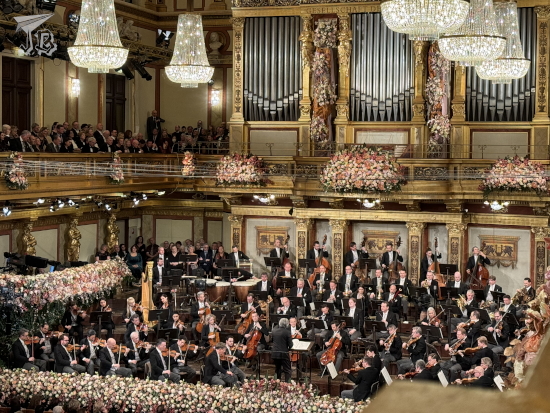
Vienna Silvesterkonzert 2024

Honestly, what can I say? It’s nothing and everything like what you watch on TV. The music was fantastic, but somehow it felt like the conductor did not do much, the orchestra did whatever they wanted, not in a bad way. They knew exactly what to do and just did it. I know next to nothing regarding classical music, but they made it feel absolutely effortless. I am not sure how much work they do on their own and how much they do with the conductor, but I can tell had Riccardo Muti a blast. At some point, when he was coming in and out, he knocked over some of the viola or bassoon’s music sheets all over – he was very apologetic about it. Also, although neither photographs or videos are not permitted (mine are totally… sneaky, you see), one of the ladies in the first row was shamelessly filming, and he winked and waved at her. Furthermore, he would just… jump during some of the polkas, which is a feat considering the man is 83 years old.

The concert always ends with Strauß’s Radetzky-Marsch, and the public is invited to clap along. Muti completely had the concertgoers in his pocket, controlling them (us) with a finger and a look. It was amazing to watch. All in all, he was absolutely… not careless but carefree. It was great to see, somewhat magical in a way.
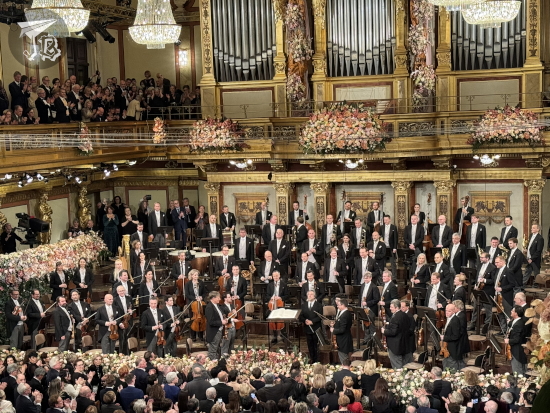
Vienna Silvesterkonzert 2024

The concert felt much much shorter than the two and a half hours it lasted. We went down to the first floor for pictures during the intermission, and we were not the only ones. However, I think we kind of… snuck past the intern or something, not sure we were supposed to be allowed on that floor. People were having champagne but I only cared about seeing everything. I might be a bit… weird. I make no apologies. I really loved the experience. They say it is a once-in-a-lifetime experience, but to be honest, I would just try the lottery every year from now on. I mean, I now have the right clothing for it…

After the concert, we went back to the hotel where we had our dinner. To be completely fair, there was a part of me that would have totally wanted to go out to watch fireworks and Vienna’s way to celebrate the New Year – and then be an absolute wuss, freeze my butt off and need to come back to the hotel. But the grass is always greener on the other side of the fence, and since I did not get to see it… It must have been the most interesting thing ever! It’s okay though, because I got to see the concert, and it was already my once in a lifetime most interesting thing ever… But it took me hours to get to sleep, so maybe I could have explored some, because in the end I’m greedy and I want it all.
29th May 2022: La Orotava, Icod de los Vinos & Parque Nacional del Teide {Tenerife, birthday 2022}

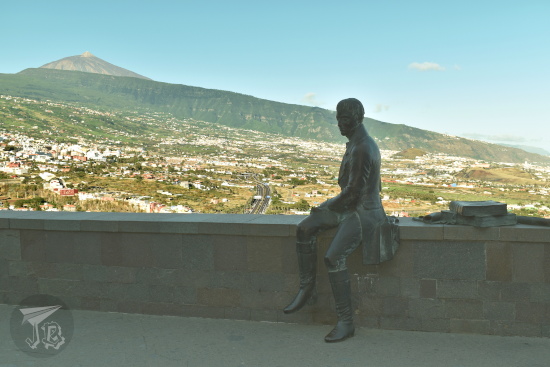
I got up rather early in the morning (especially considering that the Canary Islands are an hour behind my usual time zone) and I was surprised at how many people there were already on the streets of Santa Cruz de Tenerife before 8:30 on a Sunday morning. I drove out of the town and headed north-west, where I came across my first stop – a viewpoint of Mount Teide called Mirador de Humboldt honouring the German explorer from the late 18th century (though I kept thinking that there was a missing penguin opportunity there). The viewpoint overlooks the ocean and Mount Teide, which Humboldt climbed in 1799.

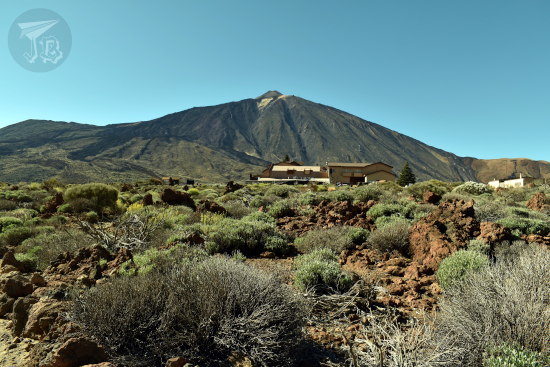
Mount Teide, a volcano, looms in the background. The top is bare and barren, but the slopes look green and fertile, with plantations and some villages. In the foreground, there is a bronze sculpture of Alexander Humbolt, sitting on the low wall of the lookout, and looking to the side.

I continued driving towards La Orotava, the municipality which Mount Teide actually belongs to. After parking the car, I walked towards the historical centre and ended up at the square Plaza de la Constitución, which stands next to the church Iglesia de San Agustín. Mount Teide loomed over the streets, ready to celebrate Pentecost Sunday. And guess what? The main church is called… Parroquia Matriz de Nuestra Señora de la Concepción. The initial hermit church was built in the 15th century, and it was completely rebuilt in the Baroque style throughout the 18th century, though the interior was remade in the 19th century and there was yet another renovation in the 20th century. It is considered the most important building of the Canarian Baroque.

A collage of La Orotava. The buildings are built with white plaster and black volcanic rock. Mount Teide peeks from the background.

The most representative construction in La Orotava is the “house of balconies” Casa de los Balcones. The house was built in the 17th century. The façade shows a front-long balcony on the third floor, and five smaller balconies on the second, all of them made from dark teak wood. The interior holds a museum, but I decided to give that a miss because I reached there at the same time as a very disorganised group of forty or fifty people who were going in at the time.

A colonial house. It is built in white brink. It has three floors. On the ground, there are brown windows. On the first floor, five balconies, with decorated ironwork. On the second floor, a long balcony or gallery in dark wood.

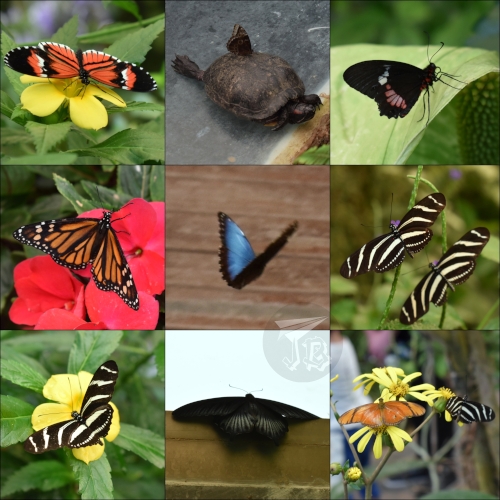
Instead, I went back to the car and drove towards Icod de los Vinos. There, my first stop was the butterfly house Mariposario del Drago, since the ethnographical museum Museo del Guanche is closed.

A collage showing colourful butterflies - red, orange, blue, black, black and white. One of them is chilling on the shell of a turtle, and another one is caught mid-flight. Most are on flowers and plants.

The butterfly house stands next to a botanical park Parque del Drago built around the symbol of the town – and maybe the whole island – the Drago Milenario. This is the largest and oldest specimen of Canary Islands dragon tree or drago (Dracaena draco). Folklore says that it is a thousand years old, hence the name “the thousand-year-old dragon tree”, though in reality, it is probably around 600 years.

The dragon-blood tree. It has a knotted grey trunk and bony branches. Around it there are bright-green palm and laurel trees

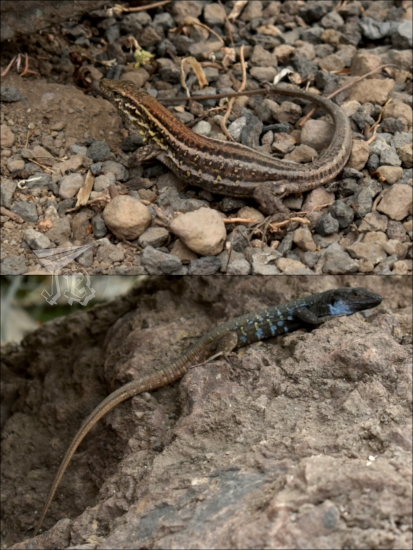
The park, built around the drago, holds local species trying to reproduce the local biotopes with height, there is also a small volcanic cave. It was here where where I managed to catch my first glance at the local fauna – two of the endemic lizards (though not as big as the one I had seen in the museum): lagarto tizón (Gallotia galloti) or tizon lizard, a blue-spotted male and a brown-striped female.

Two lizards. One camouflages on the grey and brown ground. The other on has a brown tail, but the body is black and bright blue

Then I went back to the car to climb up a crazy slope until I reached the visitors’ centre of the lava tube Cueva del viento. A lava tube is a “cave” formed the flowing lava of a volcano. As the outer part solidifies, the inner core continues flowing until it empties the tube. The guided visit is the only way you can enter the tube, so I had reserved that a few weeks earlier.

The visit started with a small introduction in the visitor’s centre, with a lot of “gotcha” questions on the guide’s part. I tried really, really hard not to be a smartarse, but I did sit down on the floor at a point because I did not feel like standing around for twenty minutes. The important information we received was that there were two types of lava that had formed the island of Tenerife: pahoehoe and block lava.

Then we took the centre’s vehicles to the outer area of the cave, where we could see the solidified lava, now turned into stone. Pahoehoe lava is basaltic, it flows slowly, and it is the responsible for creating the tubes. As it flows and solidifies, it creates undulations and wrinkles. On top of it, only small trees and bushes can grow.

Old Pahoehoe lava trails. The rock looks wrinkled or similar to pillows.

Block lava is more acidic, with a higher silica contents, it flows less and creates “blocks” as it solidifies. Pines can be found growing on top.

Pines around an old colada, which seems rocky and broken.

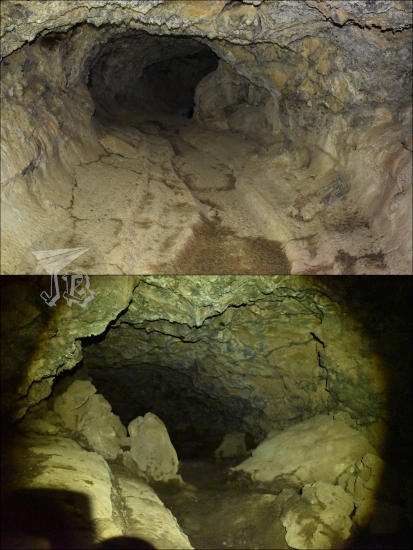
The cave itself was very cool. Unfortunately, there were a couple of families with kids and grandparents, all trying to be braver than the next – and thus acted loud and boisterous. More interesting information – mummified guanche aboriginals had been found in the cave, along with remains of a giant rat and lizard that were the ones reproduced in the Museo de Ciencia y Antropología de Tenerife. It is one of the biggest lava tubes in the world, with up to three levels and maybe 18 km of tunnels, though only a short walk can be had.
Inside the lava tube. It looks alien, like the rock is going to start dripping any second

Back in the parking lot, I had a snack and headed off towards the Parador de las Cañadas del Teide, where I had booked my next couple of nights. On the way, I went through several amazing volcanic landscapes that I could not photograph as I was driving. However, I did stop at several lookouts throughout the Parque Nacional del Teide.

Mirador de Samara.

Pines growing up on the dusty remains of a lava flow. In the background, there are three mountains - three craters of the same volcano

Mirador de las Narices del Teide, which shows the collapse on the mountain during the last known eruption.

A view of the black collapse of lava from the last eruption. Everything is barren, brown and grey, except for a black spillage coming down ominously. The sky is blue in the background, which makes the whole thing look even more bizarre.

Mirador Zapato de la Reina.

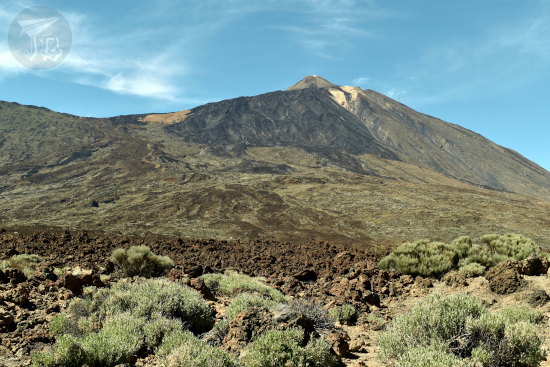
The top of Teide. This is the point where vegetation has become scarce, with low bushes, that creep up the slope. The summit looks naked.

Finally, I arrived in the area of Las Cañadas del Teide or Las Siete Cañadas where the Parador de las Cañadas del Teide stands. I was lucky that the season was good to see the flowering bugloss Echium wildpretii (tajinaste in Spanish), an endemic flora species mostly found on the Teide slopes. After checking in I wandered around the different tracks and paths – Cañada Blanca, Roques de García and Mirador de la Ruleta, which show the different stages of various volcanic eruptions.

Mount Teide rises in the background. It looks wrinkled due to the different eruptions. At its foot, a low building, looking completely out of place. In the foreground, small bushes in grey and green.

Collage: Different rocks and structures created by lava and erosion, the rocks are reddish or grey, and they have weird shapes. The tajinaste is a tall bush, with tiny red flowers, it stands about 1m above the rest of the plants.

I turned in early, and I had booked my dinner in the Parador both nights I’d be sleeping there, so that was an easy one. The staff made it a little awkward though, even if I was not the only solo traveller around. After dinner, I tried to get some pictures of the night sky, but I was unsuccessful.

23rd & 24th June 2018: London Express (England, Great Britain)

I took some family members over to London for the weekend, and they asked me to organise something so they could see a lot of things. We took the red-eye flight so we were downtown London something around 8:30. Our first visit had tickets for 10:00, so first spot was a Costa Coffee for breakfast! (≧▽≦)

Afterwards we saw the Tower Bridge over the Thames.

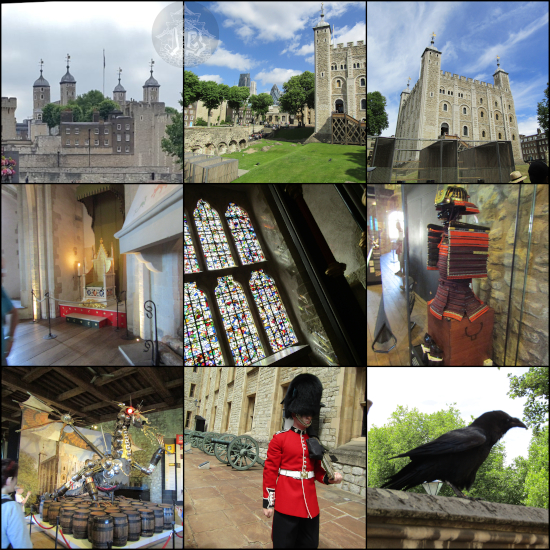
Then, at the right time, we walked into the Tower of London, where we wandered around visiting all the areas, including the White Tower, the dungeons, the Crown Jewels vault and the raven nests.

Once we were done, we took the underground to the British Museum for a quick visit through the most important collections, along with a few of the less known but interesting things – in the end we saw the Babylonian, Grecian, Egyptian collections, and had a glimpse at a few of the Chinese artefacts and the Hoa Hakananai’a from Easter Island.

We had lunch in-between and then went to the hotel to drop our things off. After that, we took off again and, via underground, we reached Trafalgar Square. We walked towards Piccadilly and on the way we stopped at Legoland and M&Ms shop. Then had dinner in an Angus steakhouse in Leicester square, and to end the day, we had a look at the lit Piccadilly Circus.

We got back to the hotel, and honestly, I had not realised how close to the centre we actually were until I looked out of the window.

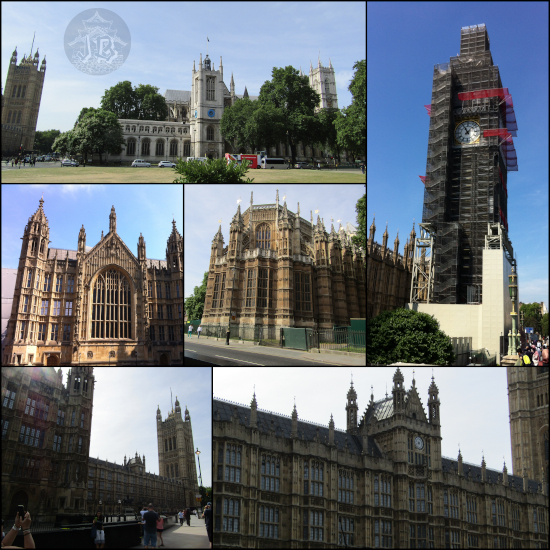
The next morning we woke up early and headed off to have breakfast on the go – actually the weather was super nice so we got ourselves some Nero coffee and sandwiches and ate them in front of Westminster’s Abby. As it was Sunday we could not visit the Abby, but we saw the scaffolded Big-Ben, and walked around the Houses of Parliament.

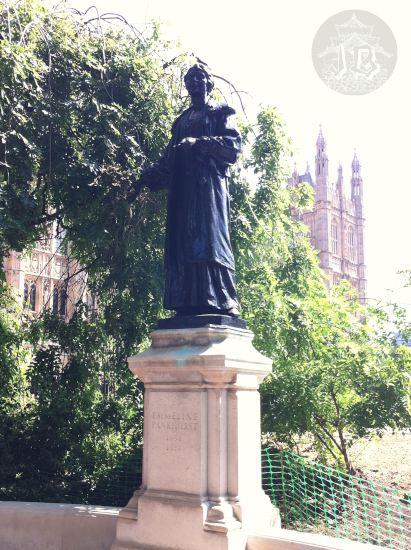
We went to visit the Monument to Emmeline Pankhurst because the youngest person in the group needed to be told about a period in history in which she would not have been as free as she is today.

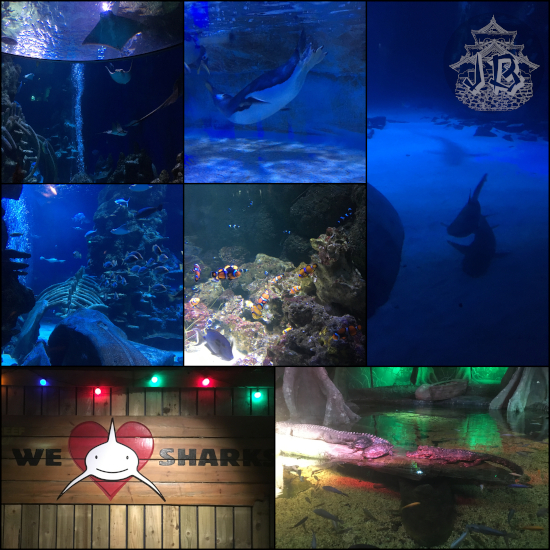
After that, we crossed over the Thames, then moved on to the London Eye. Half of the group wanting to go up, the other half being not fans of heights, we divided and conquered – two of us went to the London Aquarium while the other three enjoyed their VIP ride in the London Eye. I know you are not surprised I picked the side with the sharks instead of going up.

This guy judged us, very hard:

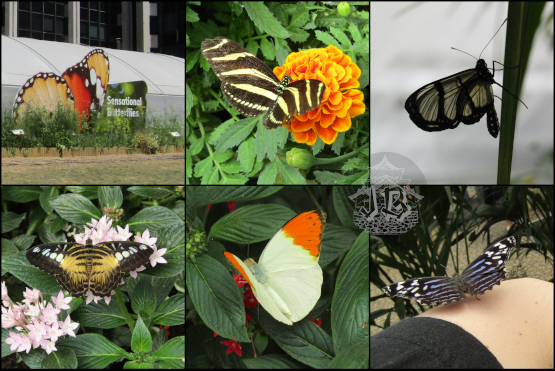
After our riverbank separation, we regrouped and headed off towards the Natural History Museum where we first saw the Butterfly carp that was installed outside it – they were extremely pretty and beyond friendly, because we were landed on quite often.

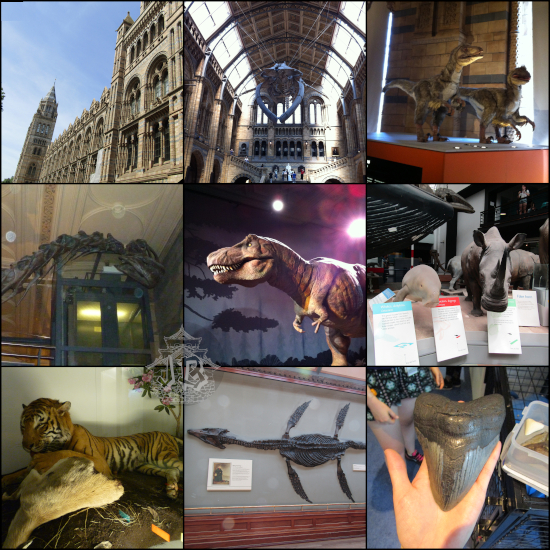
When we had finished the walk, we stepped into the Natural History Museum itself to wander through the dinosaur area for a bit, and then around the animal collection.

We decided to head out to the restaurant to have a bite to eat, and as we were walking through the marine invertebrate area (the room with all the crabs and so on), there was a nice lady showing items. And that’s how I ended up holding a megalodon tooth and fanbying like there was no tomorrow. Don’t judge me. Or do so, I don’t care ☆⌒(ゝ。∂)

As they walked into the insect / general creepy-crawler gallery, I walked around the gallery that held “less impressive” fossils, including the ones discovered by Anne Manning. We had lunch in the NHM, then moved on.

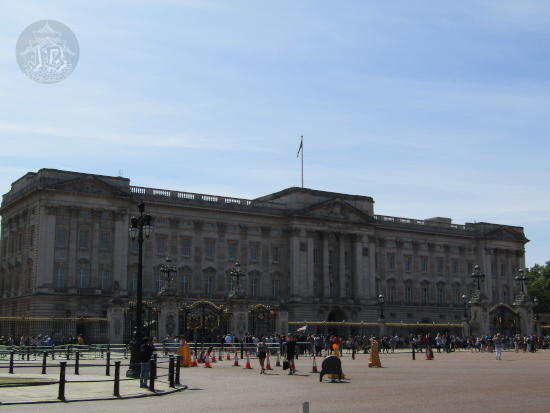
A short underground ride later, we were at St James’s Park, where we took a bit of a walk towards Buckingham Palace. As the weather was nice, we got to see a lot of the local fauna, even the local swans.

We hung around for a while as we saw Buckingham Palace, then headed off back towards the airport. Although we had a couple-of-hours delay, we made it home without further complication.

14th – 16th October 2017: Vienna, Austria

14th October 2017: Arrival and the Inner ring: Butterflies and Dinosaurs

Between flight and transfer to the city on Saturday morning, I arrived in the city of Vienna at 1pm. As my hotel was between the station and the city centre, I took my chances for an early check in and I was lucky – it was. After dropping my luggage I headed off to walk around Vienna’s Inner Ring, the Ringstrasse, which is a big boulevard that runs around all the old city of Vienna (Unesco World Heritage Site). A bunch of things were on my way and it seemed easy enough to find one’s way around. My hotel was located in a building close to a park, and had three floors, on the 11th, 12th and 13th floors of a building, which gave me some views of the city.

On Saturday the plan was wandering around, but as I am who I am I ended up improvising. My first stop was the outer Vienna State Opera, the Wiener Staatsoper, where a young man dressed as Mozart tried to sell me tickets for a show.

Vienna opera house, a baroque building in light colours with huge windows and an arched entrance

I continued on my walk and I saw the Albertina, a modern art museum, but I was actually heading to the Imperial Palace greenhouse, which is the home of a café and the Schmetterlinghaus, or Imperial Butterfly House. This is an area of the greenhouse where a bunch of butterflies are free to fly around and feed on a bunch of flowers, plants and pieces of apple. I was lucky enough to catch a few good shoots and I was very happy to have decided to go in (albeit I have to say that I was really keen on going there since I had seen that it existed). I really had a blast and enjoyed this, so it was a must that I don’t regret having missed, especially since the 6.50€ for the ticket. I spent around forty minutes in there chasing butterflies.

Vienna Butterfly house: a former greenhouse, and a few close-ups of different butterflies on bushes.

Then I saw the Austrian National Library, the Österreichische Nationalbibliothek.

Severe-looking stone building with columns and windows.

After that I back I walked through the Hofburg Palace, Hofburg Wien, and the Michaelerplatz or Saint Michael Square.

Collage of the former Imperial palace. It is a stone building with columns and windows, and arches

After that I crossed the palace in the opposite direction and ended up at the Heldenplatz, which gave way to Naturhistorisches Museum, the Natural History Museum to see dinosaurs, because there were dinosaurs, which is the home of the Venus von Willendorf, a tiny statue of stone dated back 29,500 years. The museum also holds a collection of minerals, meteorites, preserved animals, dinosaurs, an animatronics dinosaur and a multitude of artefacts from Prehistory to the Middle Ages. I also saw the same dunkleosteus that they have in the Tokyo Kokuritsu Kagaku Hakubutsukan. Have I mentioned dinosaur animatronics?

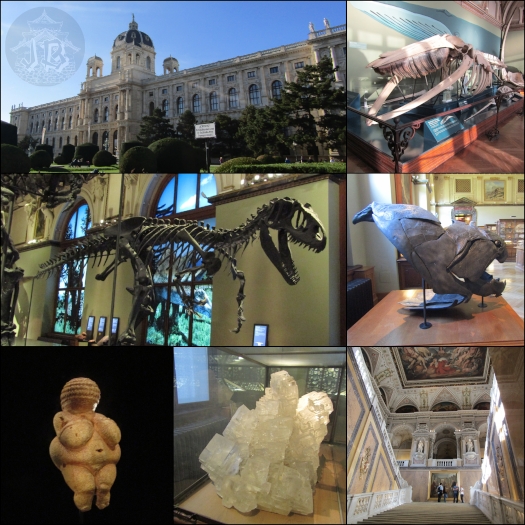
Collage of the Natural Museum: the building, with a dome, a whale skeleton, an Albertosaurus skeleton, the head of a Dunkleosteous fish, a huge salt stone and the Venus von Willendorf, a small naked woman statuette in golden stone

Following the museum I continued down the Ring Boulevard and it did not take me long to stumble up the Pallas Athene Brunnen (Monument to Palas Athena) and the Austrian Parliament Building, Parlamentsgebäude. The latter was under reconstruction.

Vienna parliament house, under renovation. There is a Palas Athena in white marble with a gold helmet standing in front of it.

I continued my walk until I found the Vienna Town hall, called the Rathaus, where there was a kind of Videogame trade fair or something going on.

Vienna town hall - neogothic building with a lot of towers and spikes.

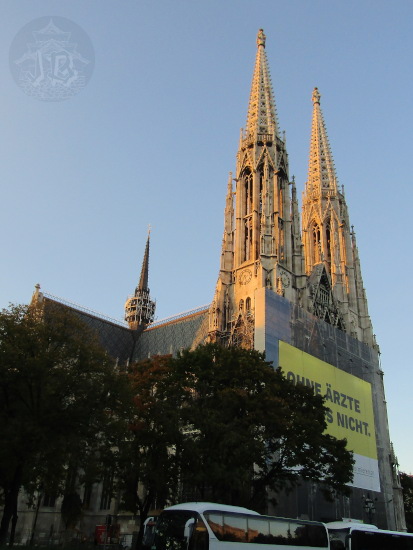
Then I went on walking towards the university and the church of Votivkirche, a neo-gothic building next to the university.

Gothic church under renovation

Afterwards I went down to the hotel because this is not summer vacations after all, just a weekend escapade and I seriously did not have that much energy. On my way I walked past the stables of the Spanische Hofreitschule (Spanish Riding School) stables and I saw some pretty horses.

Two white horses from the Vienna riding school

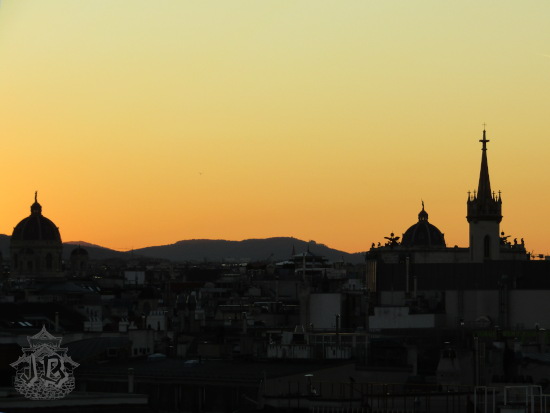
And even from the hotel (literally from bed), as my room had views, I could take some pictures of the sunset and the lit buildings. And then I went to sleep at a horribly early hour because I was beat and for some reason I managed over 8 hours of sleep.

Sunset over the skyline of vienna. The buildings are dark and the sky is orange

15th October 2017: Palaces, churches and the Cinema

Because my hotel was **** for a change (I have to say that when I think about the whole weekend the word “decadent” is what comes to mind), I had a kettle and instant coffee ready for me – this was my breakfast. After that I did the online for my flight the following day and of course running into technical difficulties, and I left the hotel at around 9:30, which was a bit later than I had intended.

I was coming up to the Belvedere Palace, and on my way there I took a diversion to see the Karlskirche or Karlskirche (St. Charles’ Church), which I could see from my hotel and illuminated at night. This is a baroque church that sometimes holds classical music concerts.

The church of St. Charles; a Baroque church. It has a dome, and two twisted columns in front.

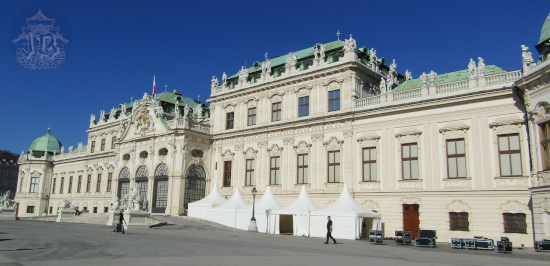
After taking a wrong turn once or twice this I headed out to my original target, the Schloss Belvedere (Upper Belvedere Palace). This is a Baroque Palace (seriously, Vienna is full of Baroque) that has been turned into a painting gallery. The most famous author in this gallery is Klint, but if I have to be honest, I’m not too appreciative of him – must be my likings for the realists. In the end, I liked the palace itself better than the painting collection, specially the reception room and the staircase.

The Upper Belvedere Palace, a Neoclassical building in white stone.

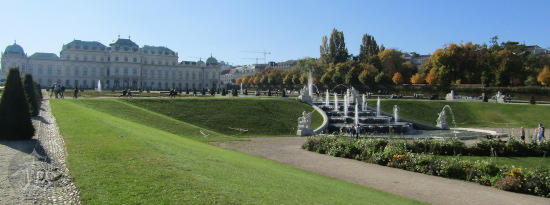
As I had bought a three-combo ticket including Upper and Lower Belvedere and the Winter Palace, I walked down the Belvedere Gardens to the Unteres Belvedere (Lower Belvedere), which holds the “Medieval Treasure” and temporal exhibitions. The best thing was the gold and mirror room and the marble gallery.

A huge garden with a palace in the background. The garden is artificial in a way, with perfectly-trimmed grass, fountains, and bushes.

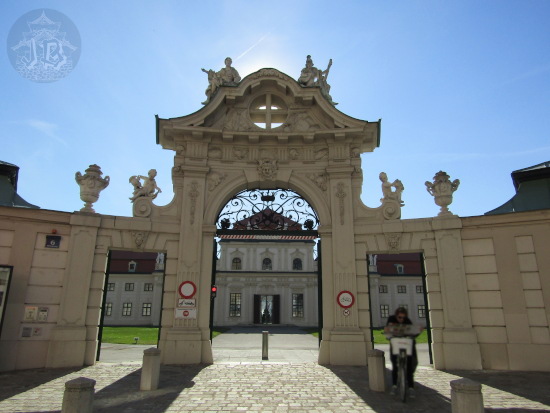
The Baroque entrance to the lower Belvedere palace, a stone gate with sculptures on top. It looks like it wants to stare you down. The palace peers through the three open doors in the background

Then I headed off to the centre of the city to see the Winterpalais des Prinzen Eugen (Winter Palace of Prince Eugene), which was not the best thing ever but hey it came within the three-museum combo.

A Neoclassical palace with flags hanging over the door

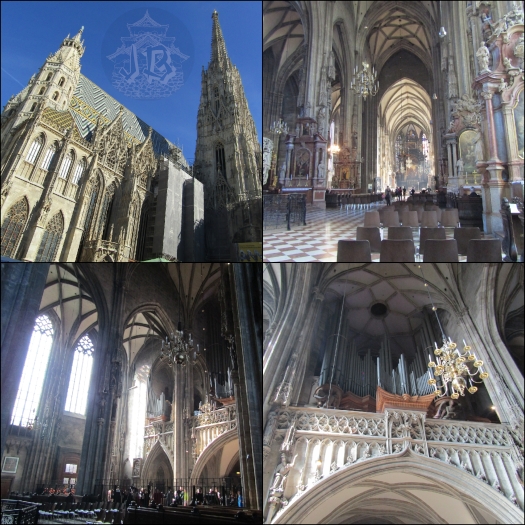
Then I headed off to Domkirche St. Stephan (St. Stephen’s Cathedral), which is the gothic Catholic cathedral. It is not Baroque but Gothic. The entrance was free, but it also had a paid area, including the catacombs. Unfortunately I was too late for the current tour and too early for the following one, so I decided not to stick around, else I would have got the combo for the catacombs, the tower and the treasure.

A gothic cathedral. Collage showing the outside, with the tower and the ornate windows, and the inside showing the pointed arches inthe nave, and the organ.

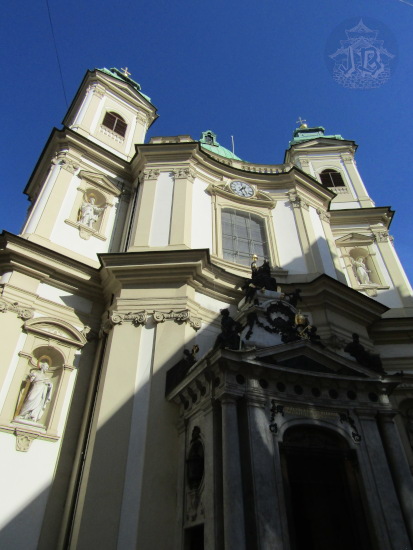
As it was, I saw the cathedral and then headed off down different streets and saw the outer area of Katholische Kirche St. Peter (Catholic Church of St. Peter).

Façade of a Neoclassical church

And then headed out to the Michaelerplatz to check the inside of the Michaelskirche (Catholic Church of St. Michael).

Neoclassical church, showing the white and pointy bell tower. The image is tilted so the tower fits in the frame

I checked the Spanische Hofreitschule (Spanish Riding School) for tour tickets, but I was late for that and it was all sold out, so I decided to go to the station and buy some food in the supermarket for both lunch and dinner. On the way I crossed the Stadtpark to see the floral clock and the Johann Strauss monument – Johann Strauß Denkmal.

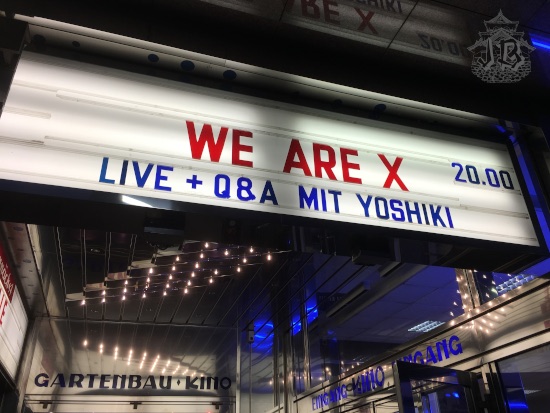
Finally, I headed off to get some rest at the hotel, and have a shower. At 18:15 I walked down to the cinema at the corner of my hotel building, the Gartenbaukino, because in the end that was the reason I was there – to attend the Austrian premiere of the X JAPAN documentary We are X as Yoshiki was going to be around for a Q&A session afterwards.

There had been a small mix-up with the ticket numbering (all of them had been printed out with the same seating number!), which was solved efficiently. We watched the documentary We are X and then there was a Q&A with Yoshiki himself. There were emotional moments as the fans thanked him for everything he had done and for his music.

Entryway to the cinema. It reads We are X Live + Q&A mit Yoshiki 20.00

Yoshiki sitting in front of a burgundy curtain. He is wearing his sunglasses and a black suit, boots and a golden blouse

After the Q&A some of us stayed talking at the cinema gate and the manager, who had solved the ticket problem, came out to close – and he told us where Yoshiki would be leaving from. And that’s… the story of how I got to talk to Yoshiki, I got his autograph and took a picture with him and I will never, ever, ever forget the rush of that.

I have to say I did not sleep much that night. All the excitement caught up with me and I kept replaying the scene in my head over and over again. in the end I think it was around 2:30 that I could turn the lights off.

16th October 2017: Airport Monday morning

After checking out of the hotel I walked back to the train station and took the CAT towards the airport. I had taken an earlier train than I had already planned and boy was I glad to do so when following arrows at the airport took me as much as 20 minutes. Something I learnt in this trip is how friendly Austrian people are, and that they have a great sense of humour, as apparently one of their star souvenirs is “no kangaroos in Austria”. The return flight was not as good as the first, but it was on time and I could arrive to work smoothly for a crazy week.