25th May 2026: Hyde, Jeckyll, and everything in between {Vienna & day trips, May 2026}

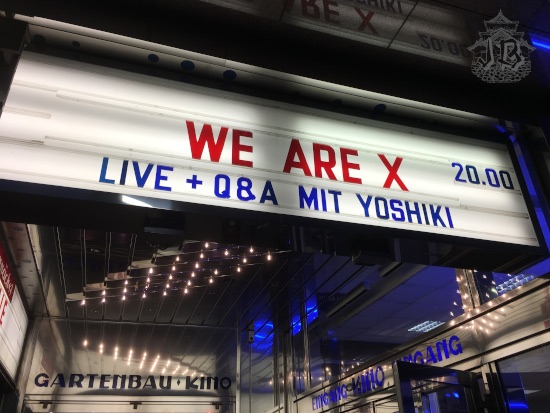
It was the morning of Hyde’s concert in Vienna, aptly called Hyde Orchestra Tour 2026 JEKYLL in Wien. D****e wanted to go and wait for the singer at the entrance of the Wiener Konzerthaus, so I headed off on my own to wander around. I got my coffee at a bakery, and started exploring the area. Our hotel was very near the Orthodox cathedral Kathedrale Z. Hl. Nikolaus in Wien. The building was erected in the Neorussian style, using blueprints by Grigory Kotov and consecrated in 1899. I think it was open, but I was still halfway through my coffee and I didn’t want to try and enter with my drink in hand – much less have to toss it. Besides, it was close to the Russian consulate and there were a few armed soldiers around, which made me a bit nervous.
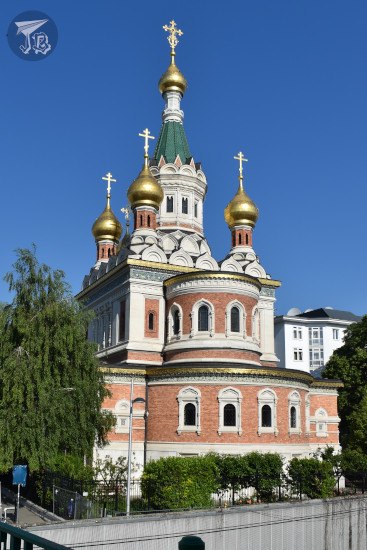
Russian cathedral with bulbous towers

I walked farther downtown and came across a little square, home of the Hochstrahlbrunnen. This fountain was built in 1873, to commemorate the opening of the new high-pressure water supply system. It tries to symbolise the Alpine water coming into the city by sprouting water upwards – and due to some fluke, the morning had created a rainbow.
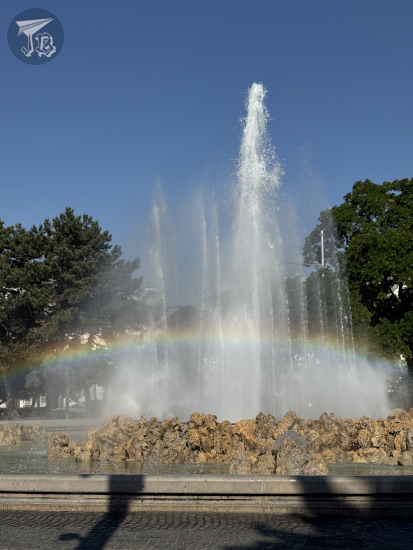
Fountain with a rainbow running across

I was pretty sure that the Vienna Museum would be closed since it was a Monday, but I checked anyway as I was literally around the corner – it was. Thus, after waving at St. Charles’s Church Karlskirche, I went on towards the city park Buggarten, where the Riding School horses are sometimes taken to literally prance on grass. No luck – or maybe it was already too late in the morning as it was pushing 9:00. I continued along until I reached the Austrian Parliament building Parlament Österreich with the impressive monumental fountain Pallas-Athene-Brunnen depicting the Greek Goddess Athena, patroness of wisdom and war, holding a spear on her left hand, and Nike, goddess of Victory, on the right. The parliament is erected in a Historicism style, evoking a Parthenon building. Both the façade and the statue are decorated in gold.
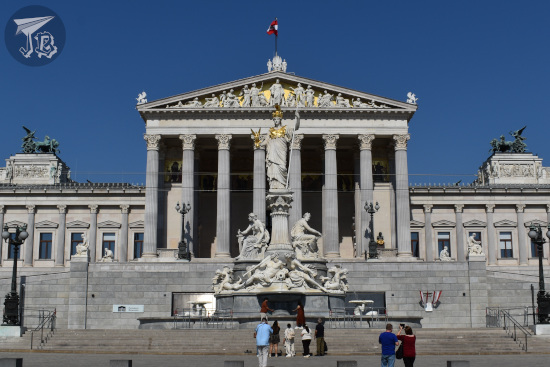
Neoclassical building with the statue of a Greek goddess standing in front

As the previous times I have visited Vienna (… this sounds like I am in Vienna a lot), there was something going on in the square / park in front of the town hall Rathaus, which made photographs difficult. However, on the other side of the street, the Hofburg rose garden was open to visitors, albeit a bit withered in the heatwave – it was barely 9:30 and there were no shadows whatsoever, which for me is… weird. I mean what better place to plant trees than an actual garden?
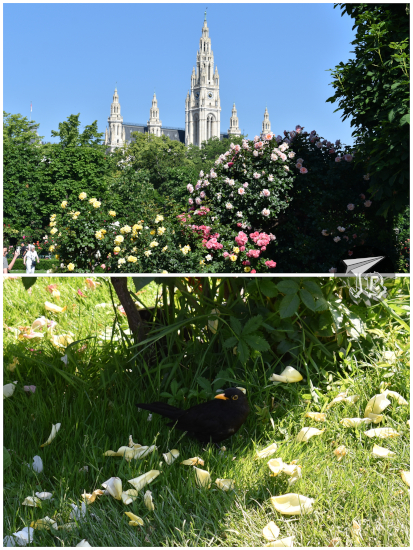
Rose garden with a neo gothic building in the background and a blackbird jumping on the grass

My first ticket of the day was for the Papyrus Museum Papyrusmuseum, which was supposed to open at 10:00. It is part of the Austrian National Library Österreichische Nationalbibliothek, and located inside the Hofburg itself, but accessed from a completely different area. There was an automatic glass door that opened if you got close, but there was a “do not enter” notice on it. Beyond the door, automatic access turnstiles, and what looked like a ticket counter with a lady behind it. In the hall with me, a few other people wandering around, as if waiting. At 10:15 I decided to risk someone yelling at me in German for ignoring the sign and went past the door, placed my e-ticket on the machine and went in when it bleeped green. Nobody uttered a word, so I followed the directions for papyri. A nice gentleman looked at my ticket at the entrance of the small museum and waved me in, so I started exploring.

The collection comprises originals and copies mainly from Greece, Egypt, and the Arab world, including pieces that date from the 460s BCE. Some are pieces from epic stories and religious texts, but most are way more mundane – trade contracts, such as credit agreements and leases. Highlights include a piece of the tragedy of Orestes written by Euripides himself, which even records the musical notes for the performers’ chorus. One of the most important pieces cannot be seen as it is too delicate to show, it is an ancient map of the world. But the main event is displayed in a small darkened room – a copy of the Egyptian Book of the Dead in all its hieroglyphical glory.

The Book of the Dead (actually, “Spells of Coming Forth by Day” [rw nw prt m hrw]) is a collection of funerary texts dating back from the New Kingdom. It comprises the magic spells that would assist a dead person’s journey into the underworld and the afterlife. They were compiled during a period of over a thousand years. A number of these spells would also be carved or painted on the walls of the tombs or the sarcophagus.
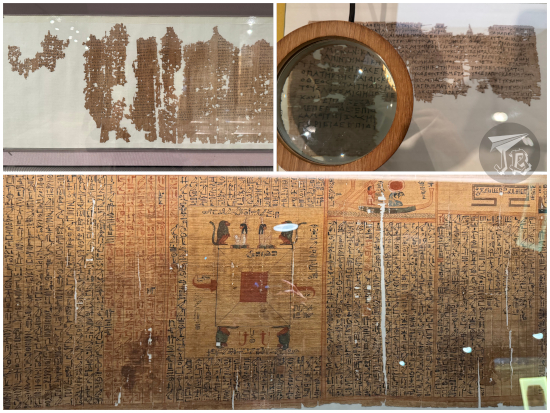
Samples of papyrus from ancient history

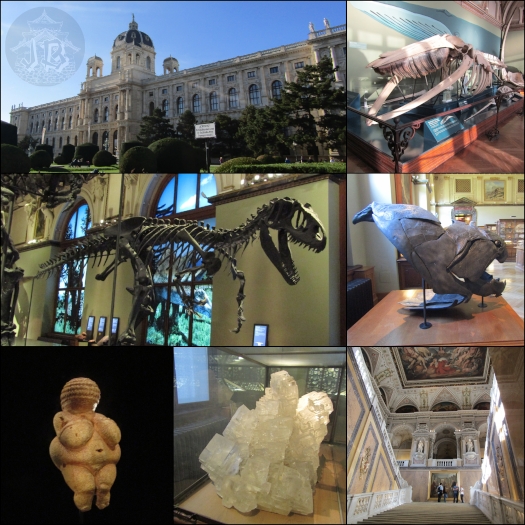
And what else was visitable on a Monday morning that appealed to yours truly? It is true that the fine arts gallery was open but let’s be honest. It is right opposite the Natural History Museum. We all know where I am going to end up – any natural history museum, in this case the Naturhistorisches Museum Wien. And to my surprise, the staircase was empty for a few seconds and I managed a photograph!
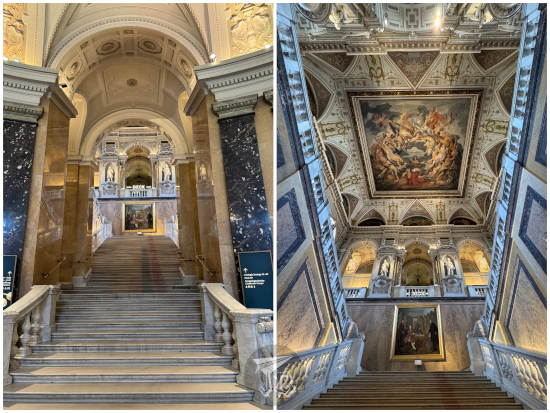
Baroque staircase with a decorated ceiling

Not being in any kind of hurry, I was able to explore the wards I had not visited before, which included biodiversity. While taxidermy is not an art that draws my attention, I’ve really learnt to appreciate the small glass models of marine animals from the 19th century – read: I adore them. I walked around the second level first, which deals with extant fauna. After I was done, I decided to have lunch in the Kuppelhalle Café for lunch, where I tried an amazing drink with apple juice and sparkling water and something advertised as meat loaf which was… some kind of stew but was very nice.

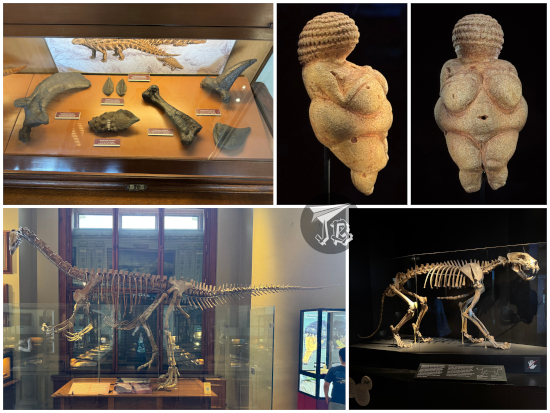
Afterwards, I continued down to level 1, where I strolled around minerals, fossils, mammoths and the origin of man. That included the dinosaur hall and the pièce de résistance of the museum – the Venus of Willendorf, a 30,000-year-old figurine of a carved in limestone. The figurine is about 11 cm tall and depicts a naked faceless woman with large breasts. It is speculated that she is either a fertility charm or the self-portrait of a real woman (who would not have been able to see her own face as mirrors did not exist). It was found in north-east Austria in 1908, in an archaeological dig near the town of Willendorf, hence the name.

I finished my visit in the temporal exhibition “Good collecting, bad collecting”, which reflects on the origin of some of the pieces that museums have – whether there is a specimen or a lot, and the difference between conservation, display and research. A chilling corner told about how during Nazi occupation, some Jewish individuals were coerced to sell their collections, especially fossils, to the museum for pennies. Recently, under the Reparation Act, the museum has been trying to locate the rightful heirs to those exhibits – some of them have been found, others have not replied, and even some have donated the items back to the museum.
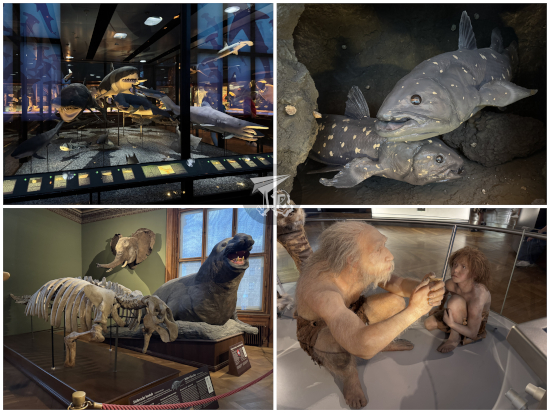
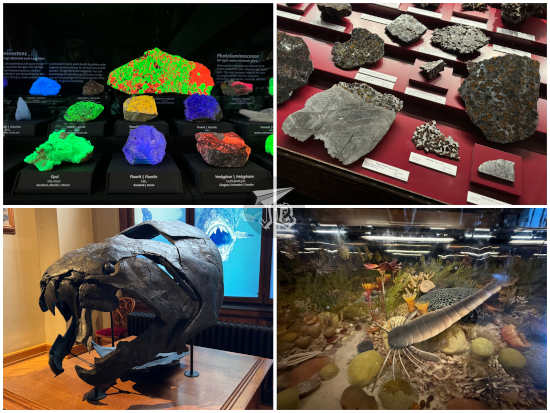
Natural History Museum artefacts: taxidermies of sharks and an elephant seal and dioramas of primitive fish and Neanderthal men

Natural History Museum artefacts: some fossil bones, a reconstructed dinosaur skeleton, skeleton of a mountain lion, statuette of a small fat woman

I headed out and stopped at Starbucks for a drink, then by a bakery to buy sandwiches that I could take to D****e at the venue, and for us to have dinner after the concert. I ended up distributing a few of those amongst her friends waiting there – I got paid back in yen, too, hilariously. I stayed about an hour, but turned out that as they waited Hyde had used another entrance, so the group had been unsuccessful seeing him. Once we had confirmation that all the musicians were in, we decided to head back to the hotel for a while to get dressed up. Or down. My nice clothes were too hot for the weather… In the end I managed a combo that would sort of work – and not have me die of heat stroke.

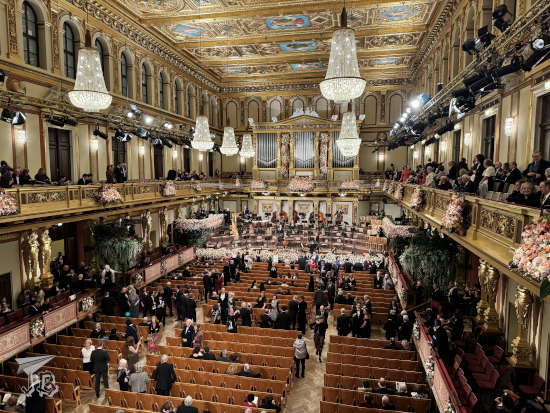
Wiener Konzerthaus is an early 20th century concert hall. It is not one of the grand classical halls, but was conceived for festivals, more accessible to the general public than the Musikverein. It currently has four halls, the largest one being the one where Hyde’s concert was to be held – the Great Hall Großer Saal, which seats 1,840 people. A few more, probably, with the extra hand-placed rows, but it was not sold-out. There had been a bit of a turmoil among the Japanese fans about the dress code, and whether formal attire was required, to the point that the organisation had to issue a mini-statement on “no dress code”.

The doors of the building opened an hour before the Hyde Orchestra Tour 2026 JEKYLL in Wien concert, but once inside, we got stuck in the reception area, waiting until access to the actual seating opened. This is a tactic to have people wait around the bars and spend some money, I know, but I still find it weird. Unlike Great Britain that checks at the entrance doors, tickets would be checked inside. Once the process finally started, I headed to a worker using a wheelchair, because nobody else seemed to want to go to her. Thus, we were amongst the first ones in. Once we went upstairs, the actual Großer Saal was still closed, so we had to wait again.

There was a pamphlet on sale, which was barely a folded brochure with the setlist on. The price was 5 € and in theory only one per person. The system could be tricked by going to a different person to buy the pamphlet each time… But to be honest, it was almost daylight robbery, and I’m not sure who would want to hoard them.

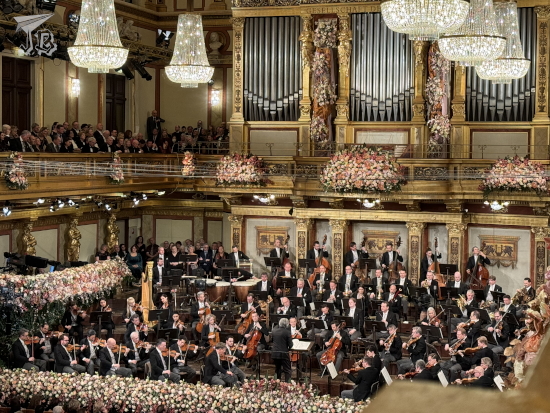
When we finally could access the venue, seating in the first few rows was a chaos. There were two rows of chairs for guests of the Austrian organisers and some of the people who had come from Japan, and then the first row of the actual venue, which was already labelled second. Or something. It was very confusing. After a lot of shuffling and reseating, we were all ready and the concert started at 19:35. My seat was great for views (no photography allowed though, unless you were an Embassy aggregate) on the first public row, which actually I think was the real fourth row. Unfortunately, it was not that great for acoustics – I was right in the middle of the trombone’s sound flow, so at times that was everything I could hear (I am told this was not a problem in the recording or other rows behind).

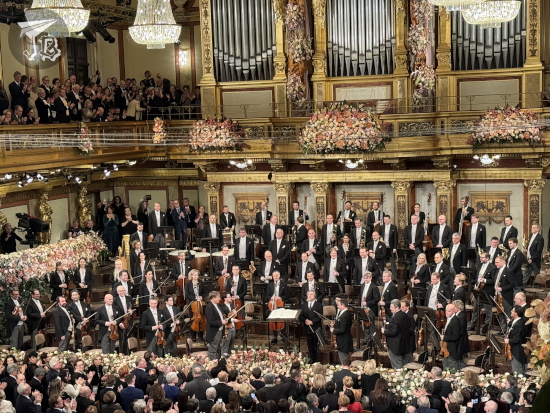
My general impression of the Hyde Orchestra Tour 2026 JEKYLL in Wien was not entirely positive. The assemble of musicians is credited as “Vienna Super Orchestra” Kulturverein Orchester Wien, conducted by Lorenz C. Aichner. If the role of the conductor is “study and understand the pieces really well”, I did not feel like he did his homework – he kept pushing the instruments to go louder when he should have been tempering them to make sure the main vocalist’s voice carried over. He was also very bouncy during the wrong songs. It gave me the impression that he felt it was his show, which it wasn’t.

While the names of most of the musicians were not disclosed, we knew that Hyde brought multifaceted musician hico (Hiroki Horiko [堀向彦輝]) as “coordinator” and pianist – he actually was the one giving the calibrating note to the first violin. Also from Japan came Hiroshi Kido [城戸紘志] on drums, Masato Ishinari [石成正人] on guitar, Junichi Sunayama [砂山淳一] on bass, Yuho Yoshioka [吉岡悠歩] and Chihiro Takahashi [たかはしちひろ] on backup vocals and Hidefumi Usami [宇佐美秀文] as “manipulator”, which I think it means in charge of the synthesiser.

The setlist was:
  1. Die happily (from the Jekyll album)
  2. SSS (from the Jekyll album)
  3. Maisie (from the Jekyll album)
  4. So dreamy (from the Jekyll album)
  5. Honey. This is actually a L’Arc~en~Ciel song, but one of the few that Hyde holds all rights for. Hence, it’s used and overused. Although it is a ballad and fits the overall tone of the concert, I did not particularly care for the Bossa nova version of it.
  6. Nostalgic (from the Jekyll album)
  7. Glamorous Sky. I’ve never been much of a fan of this, but I really enjoyed it in Paris, so I’ve started to warm up to it.
  8. Tattoo (from the Jekyll album). I’d say this was my favourite song from the new album.
  9. Final Piece (from the Jekyll album). I really liked this.

Local gourmet segment. Apparently, a staple of the Jekyll Tour is eating something famous from the place where Hyde is performing at. In this case it was, of course, Sacher-torte – actually a small Sacher Würfel cube that he gulped down in one go. He also slipped in a trademark “are you fucking ready, Vienna?” Though at one point he did introduce himself in German, most of the communication was in English. He also improvised a little tune to the lyrics of “please listen to one more song before going to the loo in the intermission.”

  10. Defeat
Intermission.
  11. Fading out (from the Jekyll album)
  12. Smiling (from the Jekyll album)
  13. The Abyss (from the Jekyll album)
  14. Evergreen. I remember when this song came out, in the album Roentgen. I did not like it much, and would skip it in the car all the time. I loved the live version. Take that, 2003 me?
  15. Forbidden Colours (Ryuichi Sakamoto / David Sylvian cover). This was a song I’ve heard him sing before, and I enjoyed it.
  16. Zipang. This is one of Hyde’s collaborations with Yoshiki, and Yoshiki might break my heart again and again, but one thing that you have to give him is that he is a great musician, and he writes and arranges to make his vocalists shine. And boy, did Hyde manage to shine with this. It was absolutely spectacular. And then…
  17. Red Swan, another collaboration with Yoshiki. And I remembered Yoshiki in London talking about that song, and how the red symbolises blood and how the bloodied swan is a metaphor for trying to survive. I’ve seen the song performed before, but either sung by another performer, or a recording. But this time it was live, by the man it had been written for. And I lost it, dissolving into a very discreet meltdown that fortunately nobody around me noticed. Just don’t tell, it’s a secret.
  18. 夢幻 “Mugen”, a collaboration with My First Story that was the theme music for a popular anime.
  19. Last Song

Hyde sang the first part dressed in black, donning a wide-brim hat, and the second part in white. He used a microphone stand embedded with red Swarovski crystals. All in all, we got the whole Jekyll album, which had been composed for this, sprinkled with a couple of power ballads and an arrangement or two. What I didn’t get were my two favourite slow songs – Shallow Sleep and The Cape of Storms, which helped me a lot during some hard times in my life. I think that is why even when I disagree with how the musicians act or speak at points, I keep going back to them. There is gratitude in me, for the pick-up times.
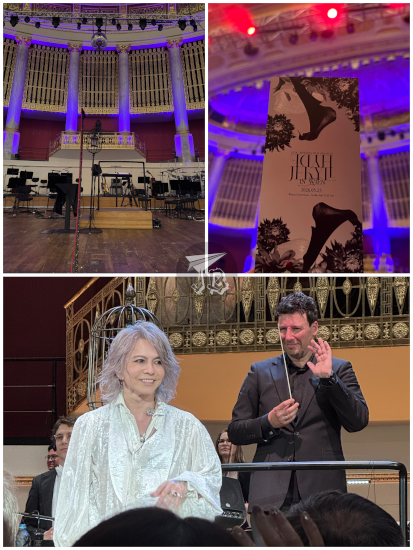
Hyde concert in Vienna 2026, with the singer smiling at the audience

We left the venue and headed to the back door – the one that the singer had used to walk in. This is something common amongst Hyde (and Hyde-adjacent) fans, called demachi (出待ち, literally waiting at the exit). Normally, you only see Hyde going away and waving from a car. Of course, you also cheer and say goodbye to every musician that comes out – from a respectful distance, of course. Obviously, nobody had explained this to either the director or the strings, because they went out for a smoke and were utterly surprised. A couple of the ladies from the Austrian Tourism organisation who were around too took it in stride and whenever they came in and out made a small curtsey and waved back. Others took videos and photos. Most jumped out of their skin.

As I said, normally you wait and wave, maybe catch a glimpse of someone. This time around, Hyde stopped to sign stuff, and that is how I now own an autographed copy of Jekyll… That was… unexpected.
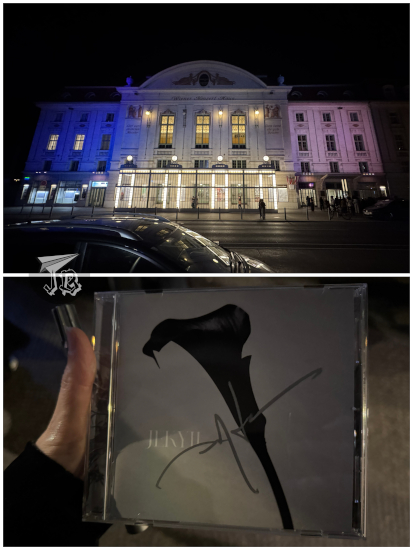
Vienna concert house façade and a CD autographed by the artist

We had sandwiches waiting at the hotel, but since there were a bunch of D****e’s friends around, we ended up heading out to a nearby McDonald’s – which was the only thing open at the time. I tried a “hot honey wrap” (it was a time-limited offer and I was curious. And I know I can survive Austrian spicy) which was surprisingly… interesting. And afterwards, we headed back to the hotel and I crashed after a long shower.
24th May 2026: Semmering and back {Vienna & day trips, May 2026}

When planning the weekend in Vienna, D****e and I had a discussion. She wanted to be “free” on Sunday in case Hyde did something unexpected, but I didn’t want to spend the day waiting around without anything to do. In the end, we reached an agreement to… go somewhere and back before the singer would even get out of bed. And that is how we found ourselves on the 6:24 train to Semmering, within the Austrian Alps.

Technically, Semmering is a dignified ski resort, remanent of the time in the 19th century when the sport was all the rage amongst the upper classes, who would take the train to get there. The Semmering Railway Semmeringbahn runs 41 kilometres through the Alps. Built between 1848 and 1854, it is considered one of the greatest feats in early railway engineering, with bridges, viaducts, tunnels, charming mountain stations, reaching over 895 metres above sea level. It was declared World Heritage by UNESCO in 1998 with the name Semmering Railway.

Thus, a big thing about Semmering is the journey itself, not only the destination. Especially because in late spring the mountain village is in the middle of low season and most everything is closed. The idea was to find a window seat on the train to enjoy the trip until we got to the area. Once there, we would wander around for a couple of hours, take in a few views, maybe have breakfast at a fancy café, and finally head back.

The train ride was spectacular once we reached the Alps. This Central Europe mountain range stretches between France and Slovakia (around 10,000 km), and is in part responsible for the continent’s climate. The Alps were formed during the aptly-named Alpine Orogeny that started in the Late Mesozoic, when Africa began pressing against the Eurasian tectonic plate in the north – of course, this took tens of millions of years. Aside from over 80 peaks higher than 4,000 m, there are lakes, glaciers (some of which used to be permanent and not any more) and several of Europe’s most important rivers, along with their tributaries. There is evidence of human presence in the mountain range since the Palaeolithic period, along with prehistoric treading of both man-made and natural ways and paths – passes – to cross them on foot. Semmering is one of them.

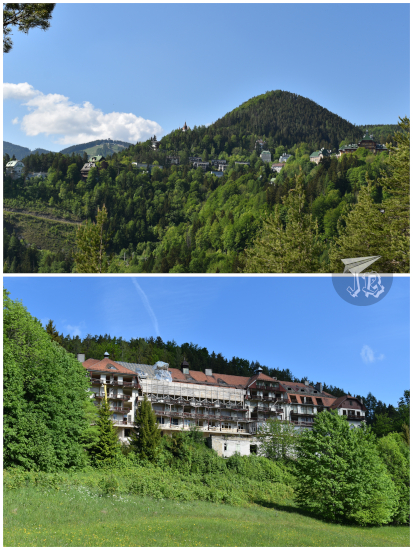
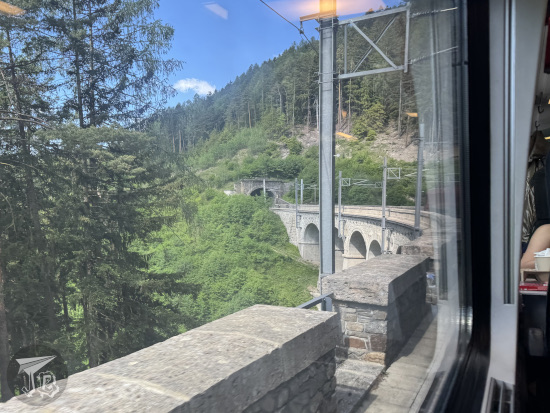
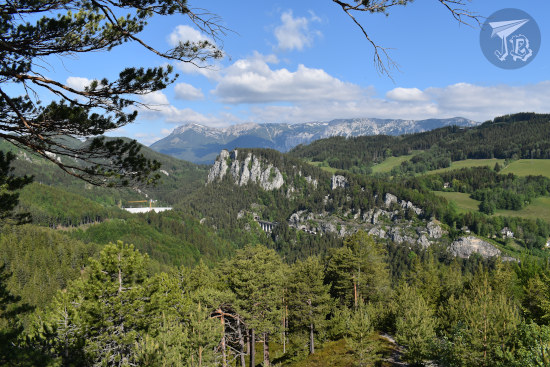
The train route was extremely beautiful, both due to the landscape itself and the fourteen engineered tunnels along the tracks. We reached Semmering a bit after 7:30. As no cute café was open, we just went on a short hike. We strolled down the Semmering-Kurort neighbourhood, walked by a modern art garden called Skulpturenpark and finally reached the tree line. Our first stop was the so-called 20-schilling view 20-Schilling-Blick, which overlooks the historic train line (part of it, as the viaduct is currently under construction). The he area was featured in the 20-schilling note, before the euro, hence the name. You can actually take the exact same picture that was printed on the bills using a conveniently-placed box – except for some works going on that has one of the bridges covered in scaffolding.

Tunnel and stone bridge on the Semmering train line, taken from inside the train

The Alps, with train lines running across

On our walks we found other spots and views, including the observation deck Aussichtsturm auf der Doppelreiterwarte. We walked by the Kurhaus Semmering Hotel, a grand hotel dating back from 1909, which now is closed for renovation so it can be restored to its former glory. We got a bit lost on the way back, because the way we wanted to take was closed down, but made it back to the station with ten minutes to spare. Once back in Vienna, D****e and I had different plans for a few hours.

Mountain landscape sprinkled with buildings

The train ride back was all right, but upon entering Vienna, we got stranded due to a “firefighting emergency”. We had to find alternative our alternative way to the city centre. It is a good thing that I am paranoid enough that I had chosen my next visit with almost an hour and a half’s margin, so I got there with ample time. I had booked at 13:00 to take a tour of the Spanish Riding School Spanische Hofreitschule. The shop was packed with people so it was hard to see anything, but the tours themselves were rather empty.

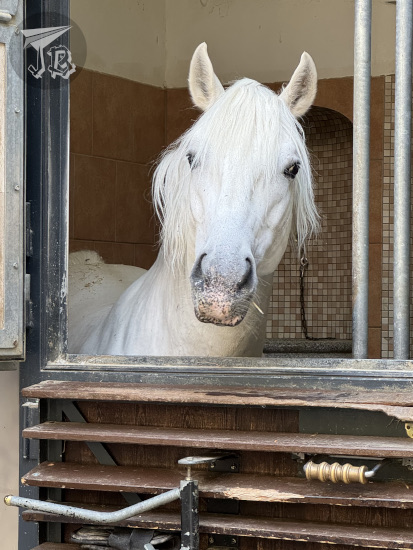
The Spanish Riding School takes its name from the main horse bloodline that was used to create the breed it showcases, the Lipizzaner. Breeding traditions of these animals are considered Intangible Cultural Heritage by UNESCO. Contrary to what is usually thought, the horses are not white, but grey. Their skin is grey, and they are born with a dark coat which turns white in age. The school is one of the “Big Four” riding academies, along the Royal Andalusian School. It focuses on “classical dressage”, and its roots are in military horsemanship, which shows in their performances. The building itself, in the Baroque style, was erected in the 1730s, commissioned to Joseph Emanuel Fischer von Erlach by Emperor Charles VI.

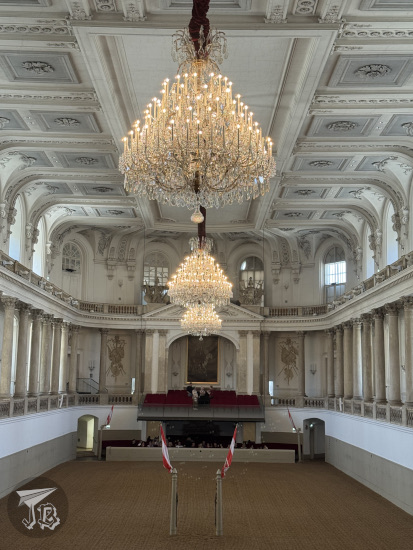
Within the School, we got to visit the summer arena – which has individual “stalls” for each horse to exercise in – the winter arena, the courtyard and the stables. We got to hear how the horses are born and raised in Piber, and that the actual reason why only stallions are used in the work is because the pirouettes, cabriolets and jumps imitate how they behave in the wild. The guide actually said that mares would not understand or care about learning the steps. We also learnt that each horse has two names – the first one is the name of the father and the second is the name of the mother. Pictures were not allowed in the stables, and I am not sure why – maybe so there is no proof where each horse is so nobody can lure them using their names? For the record, 13:00 is not a good time to take a tour, because the horses have just been fed, and you get to see lots of horse butts, but not enough faces.

Spanish riding school: inside arena with large chandeliers hanging above

White horse looking at the camera

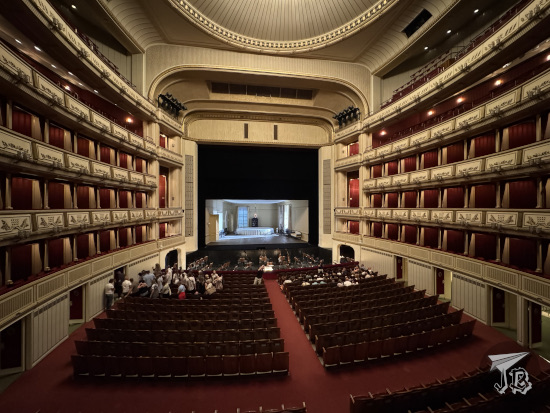
My next tour was at 14:30 at the Vienna State Opera Wiener Staatsoper. That was chaotic. We had to queue outside to be let in and be directed to either buy tickets or get ours checked out. Once inside the hall, there were mobs of people waiting for different language tours. As a matter of fact, an Australian gentleman decided he had to push to the front of the English-speaking group, and was sent back to the end of the line. Once the tour started, the whole thing was surreal. I learnt next to nothing about the place, as the only thing that our guide did was complain about people with money, either from the past or the present. One thing I did realise is that the actual music hall is extremely small – no wonder it fills out so quickly.

The main hall seats around 1,700 people per show. The Renaissance Revival building was erected in the 1860, and there were two architects involved in its construction: August Sicard von Sicardsburg, Eduard van der Nüll, along with contractor Josef Hlávka. At the time, it was considered “not grand enough”. The interior and stage were destroyed during WWII, in a modernised version of the original. Nowadays, it is home to the opera and ballet companies of the city.

Interior of an opera theatre

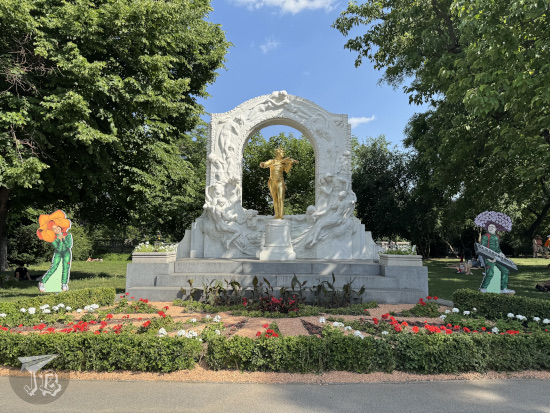
Once done, I walked by the Starbucks to grab a cold drink – cookies-and-cream frappuchino was not the best option – and headed to Stadtpark to meet with D****e again. I stopped by Johann Strauss monument Johann-Strauss-Denkmal, which depicts a golden sculpture of the musician playing his violin.

Statue of Strauss playing violin

We did not do much for the rest of the afternoon until we headed off for dinner. On our way, we came across something called the Ankeruhr or Anchor Clock, a mechanical clock built in 1914, commissioned by an insurance company. We did not see it in action, but it looked cool.

Dinner had been booked at the rooftop terrace Organics Sky Garden, and I have to say it was one of the worst dinner experiences of my life, and I’m not too much of a demanding customer. When we arrived, the responsible / managing person apologised because there had been an event and they were a bit overwhelmed. Fine, stuff happens. We get shown to our table and to our surprise, food and drink have different order / payment systems. All right, weird. What sold it, though, was not the bland food or the tasteless drinks – our waiter was drunk. Absolutely wasted. It took her four times to get the card-reader working, and in the end she had to call someone else to charge us.

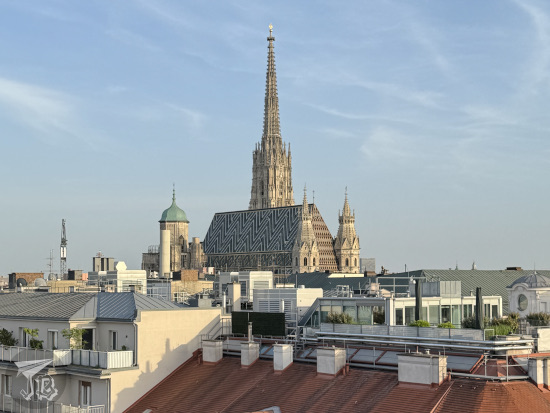
The drink price was ridiculous for something that was mostly tasteless. My Organics Purple Berry drink was not even pale pink. The waiter managed to spill D****e’s Organics Simply Cola and she did not even offer a replacement, but laughed stupidly. The one food I found appealing was the Margherita pizza and that was not even that good. The only good thing about the place were the views of Domkirche St. Stephan (St. Stephen’s Cathedral).

Tiled roof of a gothic cathedral above the normal rooftops

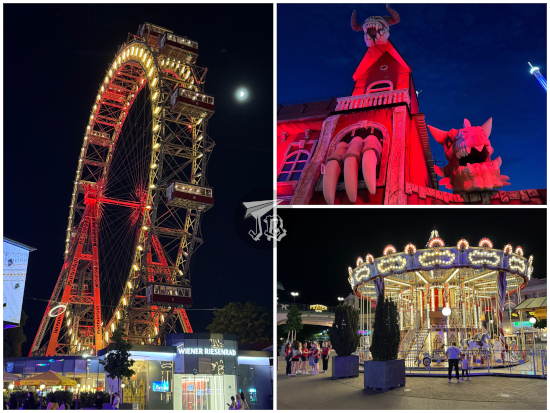
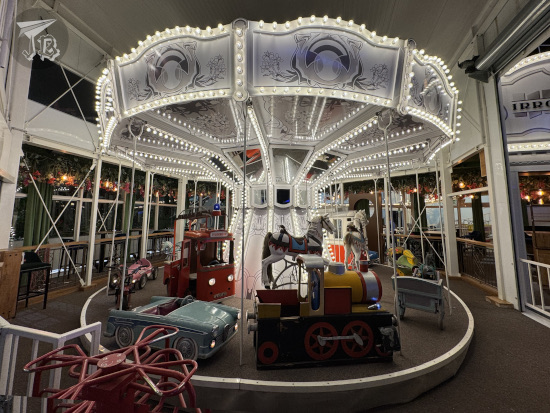
After that experience, we headed off to Prater. The area, originally a hunting ground, was cleared out to set up the 1873 World Exhibition. Today, it is an urban green and an amusement park. Though some of the rides are obviously very modern, some of them were established in 1897, including the Ferris wheel and symbol of the park Wiener Riesenrad. D****e wanted to find the spots where Hyde had taken photographs, and I wanted to see the nostalgia carousel Familie Karussell, because I like merry-go-rounds, the older and more kitsch, the better, I guess. It was palate-cleansing.

Prater amusement park: Ferris wheel, dragon peering over a building, carrousel

Traditional carrousel in white

And when we eventually made it back to the hotel, I was tired enough that I actually slept through the night.

23rd May 2026: Cross-border day trip {Vienna & day trips, May 2026}

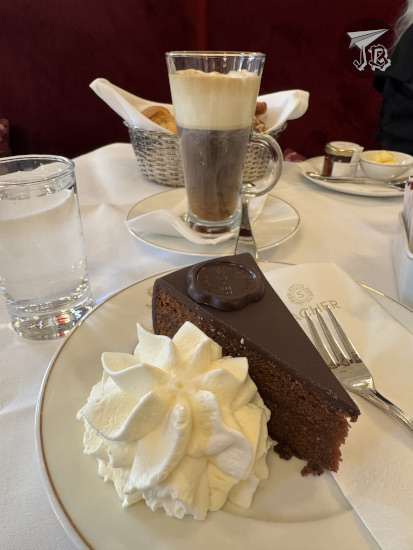
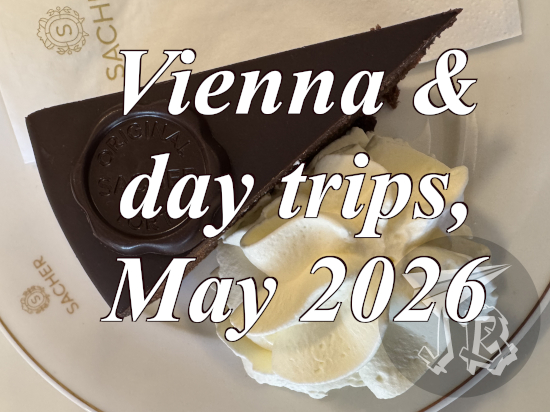
It was ridiculously early in the day, but D****e and I were ready to go. Our first self-appointed destination in Vienna that morning was the historical Café Sacher for breakfast. The café is located within the no-less-historical Hotel Sacher. The hotel’s origins can be traced back to an actual confectioner, hence the eventual rise to fame of the Sacher-torte – a chocolate cake with a thin layer of apricot jam in the middle and coated in dark chocolate icing, served with a side of unsweetened whipped cream.

The Hotel Sacher was founded in 1876, and under the management of Anna Sacher, it became the most exclusive hotel in the world. Originally, it catered exclusively to the aristocracy. In the 1930s, it changed hands and was completely renovated, but then WWII hit. It would not be until the late 1980s that the hotel recovered its status as a luxury destination. Between 2005 and 2012, the hotel was refurbished and modernised, with only 10 weeks of downtime throughout the period. Since then, smaller works have been carried out, and the brand has expanded to other cities in Austria. Currently, the Vienna establishment currently has 152 rooms and suites, with the lowest category I found being a “junior suite”, and prices that range from 500 to 10,000 € a night.

Throughout its history, the hotel has battled other confectionery creators to hold the rights to its original Sacher-torte. It is offered in the hotel cafés, shops, and can even be ordered online. It is given out as complimentary little cubes (Sacher Würfel) with some of the other dishes, too.

Though the Café Sacher queues can be insane, there was none at 7:55 when we walked in for breakfast. We had a packed day ahead of us, including a crossing a border, hence the early start!

I required coffee, of course, and I had been torn between two specialities. In the end, I chose the Einspänner (Double espresso topped with whipped cream, served in a served in a tall glass with a handle), because it had more coffee in it. I wanted something substantial and savoury, and though I considered the eggs, something else caught my eye – Sourdough bread with whipped butter and chives (Sauerteigbrot, Aufgeschlagene Butter und Schnittlauch). I also ordered the Sacher-torte. After a while, our waiter came to check on us and I… had finished my Einspänner… so I ordered myself a Sacher Melange too (Single espresso with steamed milk and whipped cream). Caffeine was not loading…

Sacher-torte and coffee

Breakfast was amazing and customer service exquisite. D****e had been there the day before and they remembered her! The maître gifted us a Sacher pen each, and I was ecstatic – laugh, but somehow I ended up with a… minishrine of Sacher mementos from this trip… It’s almost embarrassing.

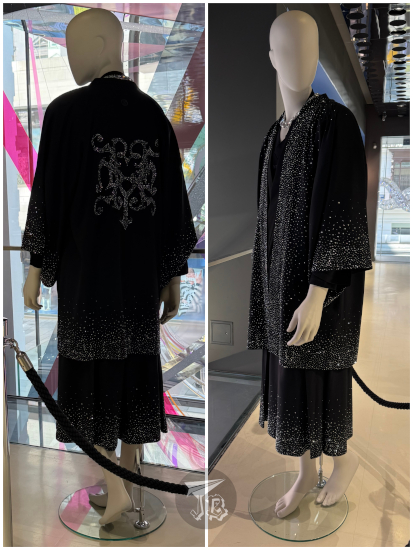
We still had some time before our train, so instead of heading directly to the station, we popped into the Swarovski flagship shop for a bit. Aside from the toilets, there was a connection with Hyde, too. He had his hat for the [Inside] tour made by them, along with the microphone stand he was going to use on the Konzerthaus concert. Furthermore, he had “designed” a piece of clothing to wear for some promotional activities that featured some 2,000 crystals. It was, to commemorate the event, exhibited in the shop. There were also necklaces described as part of the collaborations, priced at around 600 €. And, unrelated, they also had little boxes full of crystals of hundreds of colours. I decided to get one of those – don’t judge me, I could afford them (I think they were rainbow coloured because Pride was coming?).

Long jacket with crystals sporting Hyde's logo: the four letters of his name superimposed

We walked towards Vienna Central Station Wien Hauptbahnhof to board a train to Bratislava, the capital of the neighbouring country of Slovakia [Slovenská republika]. Slovakia and the Czech Republic used to be one country before the Velvet Divorce (1992), one of the few bloodless disintegrations of the old Europe towards the end of the 20th century. When the two countries split up, Bratislava took over as capital of Slovakia, while Prague, the capital of the dissolving unit, remained as such for the Czech Republic. Hence, Bratislava gives off a bit of a “new” vibe, despite having existed for over a thousand years. The train ride from Vienna barely takes an hour (50 km distance), and you really don’t get to see / feel / realise when you cross the border between countries, which feels weirdly amazing and sad at the same time. The only notice you get is that you must bring printed tickets if you buy them on the internet, digital ones are not accepted – but there is no gate control to access the trains at Vienna Central. You have to love the presumption of honesty there.

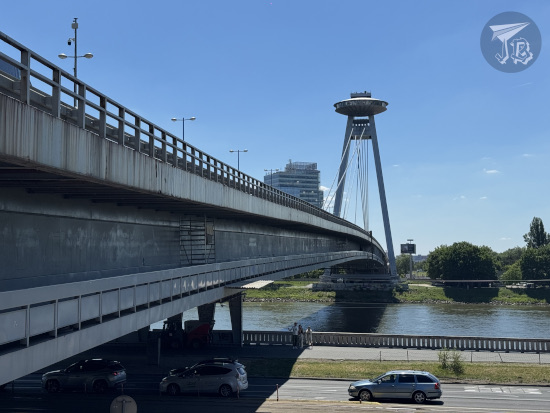
We reached Bratislava Petržalka (the central station, though it is on the outskirts of town). If Prague was scarred by WWII, it seems that Bratislava was most damaged by its time as part of the Eastern Bloc, when the Communist Party reached power in 1948. During the years of Communism, a great deal of the historical centre, including the Jewish quarter, was demolished in order to modernise the city – and actually to build one bridge, which we crossed on our walk from the station to the downtown area. This is the Most Slovenského národného povstania (Bridge of the Slovak National Uprising), most commonly known as the UFO bridge, because of the flying-saucer-shaped restaurant and observation deck it features. Over 400 metres long, it was quite a walk in order to cross over the Danube.

Modern bridge with a flying saucer shaped tower

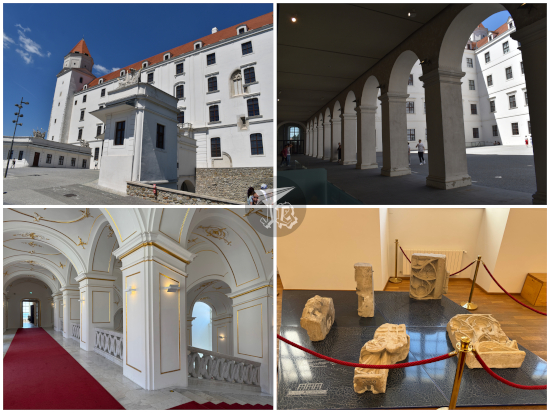
Once on the correct bank of the river, we undertook the climb to the Castle Bratislavský hrad, which we could visit for half price because they were celebrating Museum Day. The castle may have been built around 4,500 years ago, but the oldest remaining areas date back from the 9th century. Most of what can be seen today is Baroque, erected in the 18th century under the reign of Maria Theresa (Holy Roman Empress between 1745 and 1765 and Queen of Bohemia between 1740 and 1780, except for 1742 and 1743), and restored in the 20th century. Today, the castle is the site of the SNM Museum of History Historické múzeum.

We visited the palace, which gave us access to the courtyard, the building itself – wide staircases decorated with golden stucco – the treasury, and several historical exhibitions, including the religious art that used to be found in the Medieval chapel. We climbed up to the Queen’s Tower – a bit of a mistake on my part, the stairs down made me dizzy and queasy – and the Romanesque foundations, including a deep well. On our way out we stopped by the Baroque Garden.

Bratislava castle

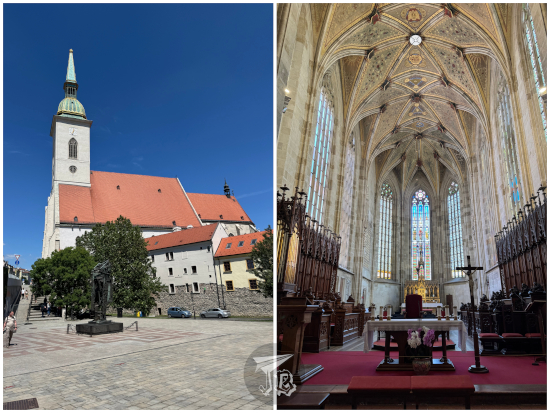
As we headed towards the city centre, we stopped by St Martin’s Cathedral Katedrála svätého Martina. The interior and the exterior clashed in my mind. The outer area was white with a terracota-coloured tiled roof, and a metallic spire atop the tower. The interior is lined with gothic arches built in stone, dating from 1311. The ceiling is decorated with golden details, and the windows behind the altar let beautiful light in. When we left the cathedral, through a different entrance, I saw that the other side of the church features stonework indeed. So it seems that the angle matters a lot!

Gothic cathedral with starry vaults

A few minutes later we were in Ventúrska, the main street of the historical centre, to have lunch. We ended up getting an outside table at a small place called Loclub Food & Drink. We shared a bruschetta with avocado (two pieces of bread, tomatoes, olive oil, red onion, garlic, basil pesto, avocado) and Bryndzové pirohy, sheep cheese pierogi (potato dumplings with cheese, sour cream, and fried bacon). I did not feel like food, but I think I was less light-headed after it, and my stomach had settled.

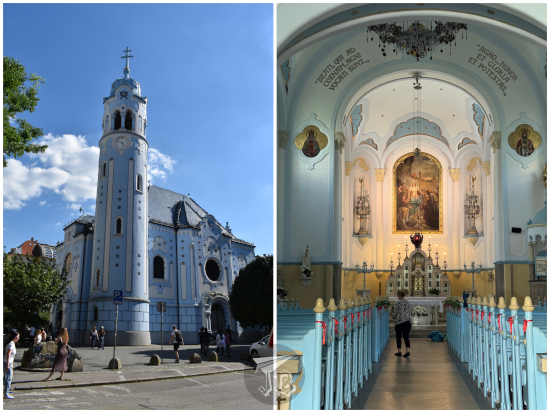
We continued on the street and we got to Michalská brána (Michael’s Gate), which during Medieval times was one of the city gates. The building that stands today is a Baroque reconstruction. We did not go in, but turned at the corner and undid a bit of our way until we got to Main Square Hlavné námestie, which holds palaces, the town hall, statues, a fountain and lots of overheated tourists searching for a drink or an ice cream. We were on our search for Farský kostol sv. Alžbety, Church of Saint Elizabeth, better known as the Blue Church. Its main feature is… being baby blue. It’s built in a style I had never heard about, Hungarian Secession, designed by Edmin Lechner in the early 20th century. It was indeed… very blue. It reminded me of kids’ toys.

Church painted in light blue

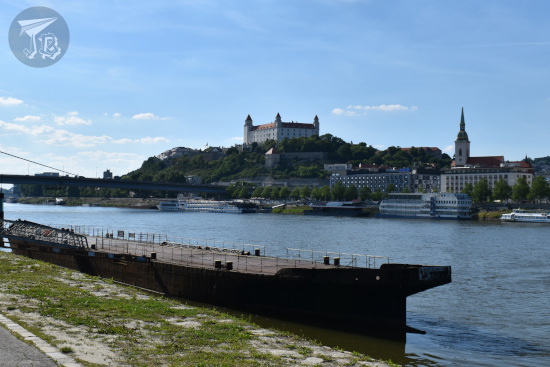
We slowly made our way back towards the station, through the iron bridge Starý most and the park Sad Janka Král’a along the Danube, which led to some amazing views of the Castle Bratislavský hrad.

Danube river, and the castle and cathedral of Bratislava in the background

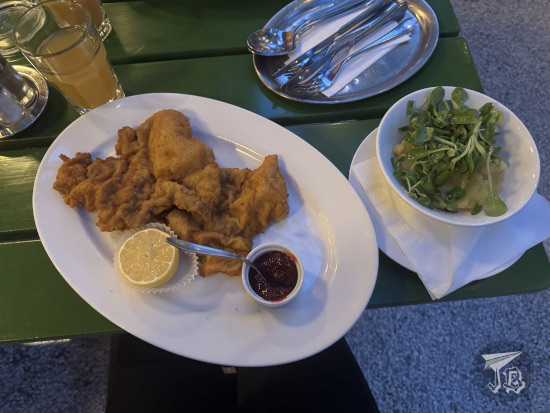
We took the train back to Austria and left Slovakia behind. That evening we had a reservation for dinner at the beer garden Glacis Beisl in Vienna. The place was packed and loud, but the food was good. The one upside of the heatwave is that dining outside felt really nice. I decided to treat myself to my own Schnitzel – Original Wiener Schnitzel from Austrian milk-fed veal with potato and coleslaw salad and cranberries (Original Wiener Schnitzel vom österreichischen Milchkalb mit Erdäpfel-Vogerl-Salat und Preiselbeeren) and an apple juice drink, which came in a pint glass – awesome.

Breaded meat and potato salad

You’d think we would be turning in afterwards, right? Wrong. D****e had also arranged to meet another friend for a drink afterwards, so we headed out towards Selleny’s Bar, adjacent to the Hilton. I had a very lemony (and overpriced) lemonade there. Finally, we headed back to the hotel for a shower and bed, but once more I did not sleep much.

22nd May 2026: Airports and libraries {Vienna & day trips, May 2026}

Of course, when the drive to the airport is smooth and you avoid the worst of the daily traffic jam, something else happens. This time around, it was a security-check screw-up. The lady had decided that every item needed a different tray – it was unthinkable that a backpack and a fanny pack could coexist in the same space. Unfortunately, the tray system had broken down and was not moving. Travellers got stuck explaining “there are no trays” while she yelled “one item per tray” in a never-ending cycle that took at least five minutes to break.

My plane left at 8:40 and I landed in Viena a few minutes ahead of schedule, around 11:30. That gave me enough time to reach the train station and take the 12:19 S7 train to Rennweg, which was the very convenient station next to the hotel (I had booked something near a transport hub; the fact that it had a direct connection to the airport was direct was a plus we discovered later). I got myself a snack, and walked to the hotel to check in and meet D****e, who had arrived a few hours earlier. After she had freshened up, we headed towards the Austrian National Library Österreichische Nationalbibliothek while she told me that she had come on the same flight as Hyde, and gave me updates on all her Japanese friends’ status as they converged onto Austria.

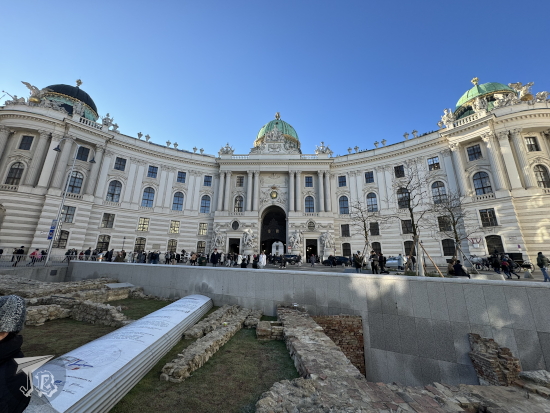
As we walked, we entered the Unesco Heritage Site Historic Centre of Vienna, recognised in 2001 and placed in the List of World Heritage in Danger in 2017, due to urbanistic pressure. One of the main elements in the Viennese architecture is the Hofburg, the main imperial palace of the Habsburgs in Austria. At the end of WWI in 1918, the Austria-Hungary Empire came to an end, and since then the palace has been repurposed – different parts of it may be visited, such as Sisi’s quarters, the Riding School, or the library itself (and all its branches).

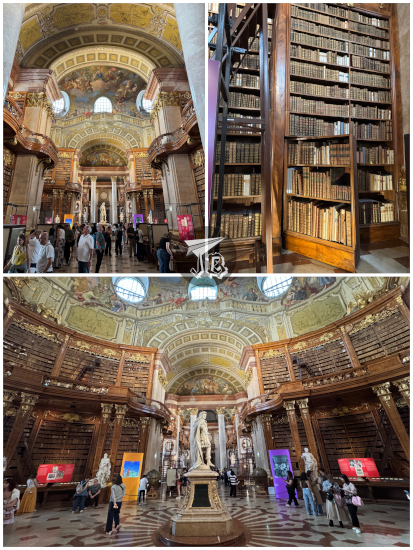
The seed of Austrian National Library Österreichische Nationalbibliothek dates back to Emperor Karl VI (Charles VI), who established the court library around 1739. The building was erected in the Baroque style, designed by Johann Fischer von Erlach. Its main feature is the State Hall Prunksall, which houses the book collection amassed by the Habsburgs, particularly some 15,000 books belonging to Prince Eugene of Savoy. The library hosts around 200,000 volumes in dark walnut cases that reach the ceilings, decorated with frescoes. The floors are marble, and here and there stand world globes and sculptures by Lorenzo Mattielli. Oh, and there are secret doors within the shelves that lead to hidden rooms. We only visited the State Hall that day, but I would come back to the Papyrus Museum on Monday.

Classical library

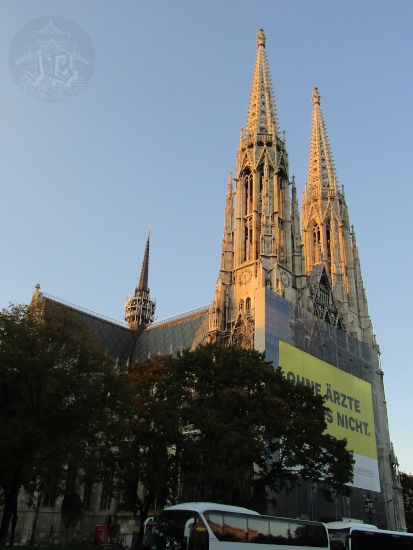
A couple of days prior to our arrival, Hyde had tweeted (or whatever) that there were posters of his show throughout Vienna. One of them was easy to find – it had the Neogothic Votive Church Votivkirche in the background. D****e wanted to find them all, and I wanted to see the church, which was unfortunately closed. Also unfortunately, it seemed that all the weather forecasts for the few days I’d be in town had been… wrong. Despite announcing mild spring temperatures, we got hit by a heatwave. I am okay with heat but… I did not have appropriate clothes for it so… whoops. Despite the weather, we walked a lot, and did a lot of checking for the posters as we did. We may have spotted around 20 or so (and only after the concert checked if we could unglue one).

I was getting a bit dizzy, so I suggested stopping for a snack. We sat at a McDonald’s Hyde ordered food from once, so it fit our theme. D****e had a map of locations that were more or less related to Hyde’s activities in town. Following that, we stumbled around the church Kirche Maria am Gestade. In front of it stood a figure of Minerva, holding a little owl in one hand, a crown in the other. I thought it was a street art installation, and I wondered about the placement, but it turns out to be something for the… European Congress of Radiology, which took place in March, and had a Classical gods and goddesses theme, maybe because there was a very important person there called Minerva Becker.

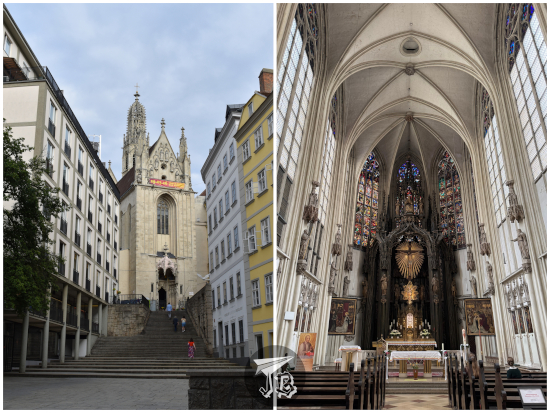
Kirche Maria am Gestade (Mary at the Riverbank) is a catholic church built in the Gothic style between 1394 and 1414. It is one of the few actual Gothic buildings in town, and was popular amongst sailors on the Danube – it stands on the former fluvial terrace of one of the now disappeared flows of the river. It is not a big church, with a narrow nave and a 56-metre tower slightly newer than the body of the church. It was a very pretty structure that I enjoyed a lot.

Gothic church on top of some stairs

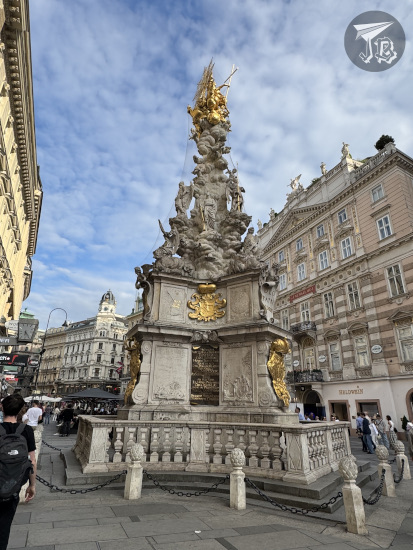
We walked a little towards the town centre and ended up at Kohlmarkt, from where I got a view of Michaelerplatz and the Hofburg palace. We turned towards Graben to find the Column of Pest Wiener Pestsäule, a High Baroque column built to commemorate the victims of the plague epidemic of 1679. It was designed by Paul Strudel, but many other sculptors had a hand in it, apparently. Erected in white stone and gold, it represents from the highest level down, the Holy Trinity, the angels, King Leopold I, and his citizens.

Baroque commemorative column in marble and gold

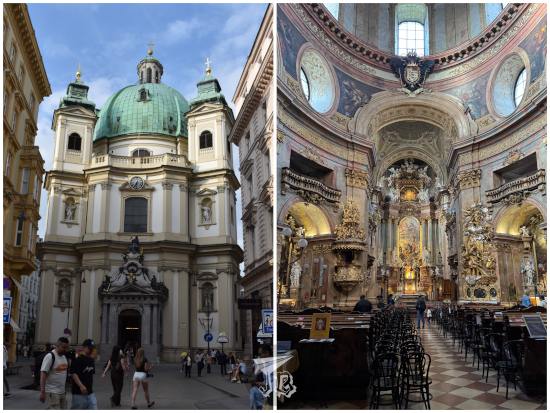
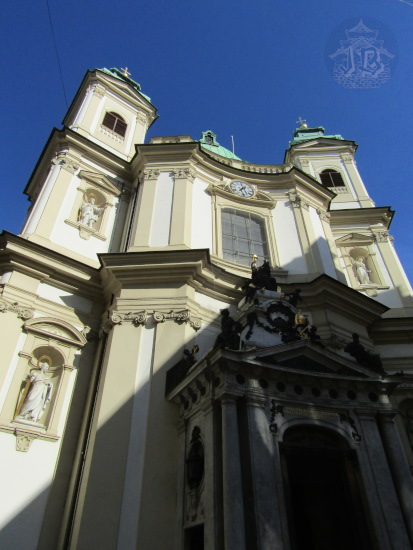
Next, we visited the Baroque church Peterskirche (St. Peter’s church), built in the first third of the 18th century to replace and earlier Romanesque one. After two failed designs, the main architect was Francesco Martinelli, who drew inspiration from St Peter’s in the Vatican. Hence, it was the first domed building in Vienna. It is however very… small, erected in a very confined space in a crossroads, it feels cramped.

Baroque church

Eventually, we made our way towards Café Landtmann, which calls itself “Vienna’s most sophisticated coffee house” to have dinner with some of D****e’s friends who had also come from Japan. Though it is one of the iconic places in town (and also held a connection to Hyde, hence why they wanted to go), dinner was a mess. Five of us were crammed into a tiny booth, the eatery was bustling and there was barely any space. And jet-lagged excited Japanese is no way near understandable by my poor language skills. They decided they wanted to share everything, which I thought was a mistake – very little space, large plates difficult to share… But I’m not going to raise a ruckus out of food of all things. I’m just going to order an alcohol-free cocktail (actually a raspberry-lemon lemonade) that matches in price all the beer and alcohol they are going to order.

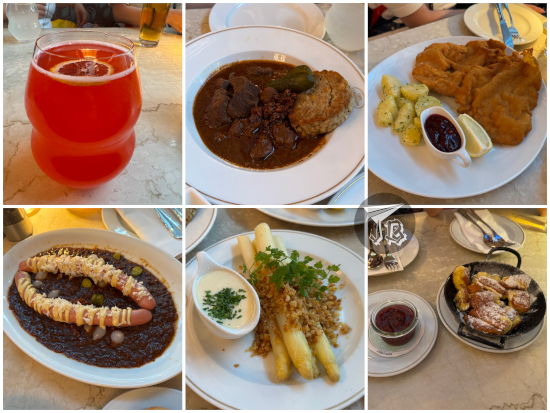
We shared „The Legend“ („Die Legende“: Viennese Schnitzel made from the finest cut of breaded veal, parsley potatoes, leaf salad, cranberry jam and a lemon wedge); Viennese Beef Goulash (Wiener Rindsgulasch, with bread dumpling, goulash crunch and pickled cucumber); White Asparagus (Spargel with beurre blanc, chives and buttered panko crumbs); Landtmann Sausages “à la bonne heure” (Landtmannwürstel à la bonne heure, boiled sausages in goulash jus with mustard mayo, horseradish, goulash crunch and a hand roll).

Different Austrian dishes

I ended up mostly eating the bread with the Schnitzel lemon and the salad. I had not realised the goulash would have so much garlic on it. Finally, they ordered coffee and Kaissermarn (shredded pancakes) as dessert. In the end, it was 40 bucks per person for a cramped mediocre experience. The staff was nice and people-watching interesting, from people super dolled-up because they were coming from / going to the opera, to ripped jeans.

We left and walked back to the hotel. After a long shower, we went to bed, but I did not sleep much and was definitely up at sunrise. That helped with the following day’s insane plans, which included breakfast…

22nd – 26th May 2026: Austria, a little Slovakia & Hyde {Vienna & day trips, May 2026}

This story actually begins long before May 2026, forging behind the scenes sometime in 2023. On the 13th of November that year, the Austrian Embassy in Tokyo held a ceremony to appoint Japanese singer Hyde as “Ambassador of Tourism for Austria”. Technically, a “tourism ambassador” is a trained professional who deals with tourist experiences, but in this case, Hyde’s job was promoting a country he had never visited and encouraging his fans to travel there. And he did the work so well that the assignment was extended. He later travelled to Vienna and Salzburg to make whole photo books and film promotional music videos. He also promoted trips from Japan and popped up into the Austrian pavilion in the Osaka Expo.

Hideto Takarai, known artistically as Hyde was born in Wakayama, Japan, in 1969. The year 2026 marks the 25th anniversary of his music activities, either with the rock band L’Arc~En~Ciel [ラルク アン シエル | Laruku an Shieru], VAMPS, or on his own. He has sporadically collaborated with other artists such as Starset and Yoshiki, with whom he also worked on the the failed “supergroup” The Last Rockstars alongside Miyavi and Sugizo. In 2019, Hyde became the Tourism Ambassador for his hometown, and in 2021 he received a commendation for his activities (maybe that inspired the Austrians?), and he seemed pretty comfortable promoting the place. The city even opened a commemorative gallery in the town hall to thank him for his efforts (which included his own train).

During the European leg of the Hyde [Inside] Live 2025 World Tour there was a lot of speculation and questioning about no stops in Austria. I mean, they must have some live houses, along with all those amazing classical music halls, mustn’t they? Even before the [Inside] tour was over, on the 26th of October 2025, a new one was announced – Hyde Orchestra Tour 2026 JEKYLL. It was an acoustic tour, with classical arrangements of his greatest hits and new songs. Right up Austria’s alley, don’t you think?

Any rumour of an Austrian concert was, however, met with a firm “no” at first. Until on the 23rd of December, it turned out that… yes, there was a concert scheduled for Vienna, the capital of Austria – a special live named Hyde Orchestra Tour 2026 JEKYLL in Wien. And it was, I kid you not, aimed at Japanese fans, to the point that there was an organised trip from Japan that for around half a million yen, which provided tickets, hotel with breakfast, basic airfare and transfers airport-hotel-venue. There were a lot of “not included” items, one of them being a day trip from Vienna to Salzburg, (three hours each way. I toyed with doing something similar, but changed my mind) to visit some of the spots chosen for photos and videos.

At 00:00 on the 13th of January 2026, tickets went on sale through the Wiener Konzerthaus website, and by the time I managed to get through the “buy tickets” English page, my friend D****e had already succeeded in securing seats for both of us in the first row on sale (115 € per person), using the German version. I was extremely impressed.

As soon as I had dates locked, I booked my plane tickets and blocked those days out of the calendar, then got the hotel room. Since D****e and I had decided to bunk together, we had a virtual planning meeting in early April. I was tasked with buying train tickets, she was with booking restaurants, as she wanted to try places that Hyde had visited beforehand. We also agreed that we would not do everything together, but split up for a few hours both Sunday and Monday – as we had some different priorities. Hence, the weekend before I left, I got myself some tickets and made my own plans, which would also give me some time alone to get into my head space and recharge.

We would both arrive in Vienna on Friday the 22nd, meet at the hotel, and plan the day from there, depending on how jet-lagged she was. On Saturday the 23rd, we would take a day trip to Bratislava, the capital of Slovakia. Back in Austria, on Sunday we planned to take a short trip to the Alps, then split until the evening. The concert would take place on Monday – assigned seats meant no need to queue up, which is always good news. We left Tuesday rather open to see what we felt like.

It was going to be an intense few days and a couple of early mornings, but she was going to be in the wrong time-zone and I would be in early-morning mode anyway.

1st January 2025: The Return {Vienna, Silvesterkonzert 2024}

We got up for breakfast at around 7:30, but the cafeteria wasn’t open yet, so I had to (gasp) pack before I had coffee. That was not fun. The breakfast room opened around 8:05, and I could finally have my caffeine fix. We had been discussing all three days about the automatic pancake machine in there, so I decided to try it. Basically, you waved at it, and it made the pancakes. They were not the most delicious thing ever, but there was Nutella to go with them…

Pancake making machine

As we were already packed, there was not much left to do after breakfast. We went up to the room to collect the luggage and back down to reception. We had a transfer arranged at 9:00 and we were ready with a few minutes to spare. Check-out was fast, and off we went towards the airport, after saying goodbye to the nice Spanish lady with the card issue. I’m not sure if it had snowed outside Vienna or what we saw on the trees was hoarfrost, but everything was white once we got onto the motorway. I totally missed whatever our driver was saying because I was trying to take pictures of the landscape – but he talked a lot.

Trees covered in white ice and snow

When we reached the airport, the check-in counters were not open yet. We were flying with Iberia, which does not have a permanent crew there, the counters did not even have the lights on. It took them longer to open the counter than to actually check us in, and the worker was confused because we were only checking in three suitcases even if we were four people. The poor lady looked absolutely exhausted – maybe she had stayed up late.

Security was “collapsed with a crowd” and they told us to go through the kids gates – I don’t think I have seen any “collapsed” security so empty… But we made it through okay. We found our gate at literally one end of the airport, and left our things with one of my parents while we scattered off to look for lunch. The flight was at noon, so we had to buy something either at the airport, or on the plane. I found myself a chicken sandwich that looked rather nice. I would later learn the word for “spicy mayo” in German… Good thing I got a Coke to go with it. I also bought a “no kangaroos in Austria” magnet because I did buy a tote bag last time I was around, but I can’t seem to find it.

Airport in winter weather

The flight back took off on time at 12:20. It was uneventful, we just landed at 4S instead of 4. We knew this was going to happen this time, so we had counted on it – in the end, that was the reason I managed to convince my family to have lunch on the plane. We did not get out of the airport up until 16:00, what with picking up the luggage and all. I think I made it home around 19:00, and boy was I beat. I love my family, but travelling with them can be a bit too much…

31st December 2024: A clumsy morning yielded to an unbelievable evening {Vienna, Silvesterkonzert 2024}

When we walked out of the rooms to go down and have breakfast, my parent’s alarmed face made me worried. They informed my sibling and myself that “it had snowed”. That was spooky for a second – until I ran to the window and saw that the “snow” was just a very thin layer of scattered white powder. It was safe to go out, even with my senior parents. We had breakfast and we got ready to go out.

Snow in Vienna

At some point, my family “caught” that I like Natural History museums, so they really, really thought I wanted to go to Vienna’s Natural History Museum – Naturhistorisches Museum Wien, and just wouldn’t listen to “No need, I’ve been there already, Their reasoning is that I had mentioned it before, which I actually had, to inform them that the Venus von Willendorf was there. That is where we ended up, and I was happy to oblige – the museum has rocks, meteorites, fossils and dinosaur animatronics. All right up my alley.

The museum’s oldest collection 250 years. In 1750, the Holy Roman Emperor Francis I bought what at the time was the largest collection of natural history objects at the time – around 30,000 objects. That same decade, the Emperor founded the Schönbrunn Zoo and the botanical garden, and he ordered the first scientific exhibition to be held. Upon his death, the collections were donated to the state, and the first museum according to the Enlightenment principles was founded – and soon expanded.

The museum building was also commissioned by the Emperor. It was designed by architects Gottfried Semper and Carl Hasenauer, with an identical exterior to the nearby Museum of Fine Arts. Works began in 1871, and the institution officially opened in 1889. Though it was indeed originally designed as a museum, it feels more like a repurposed palace, with decorated ceilings and monumental staircases. It has 39 halls with almost 9,000 square metres of exhibits, still keeping the 19th century outline. We just did halls 1 to 13: mineralogy, petrography, meteorites, palaeontology and prehistory galleries, including the Venus von Willendorf. The 11-centimetre figurine was made in limestone around back to 30,000 years ago. It is a nude woman of large proportions, and even if she does not have a face, she is mostly anatomically correct and has plaited hair.

My family was fascinated by the collections, and I guess I felt a teeny bit smug about that – considering how much fun they poke at me because natural history museums are very high on my priorities when I visit a new place (see: my first time in Brussels).

Natural History Museum Vienna

Natural History Museum Vienna

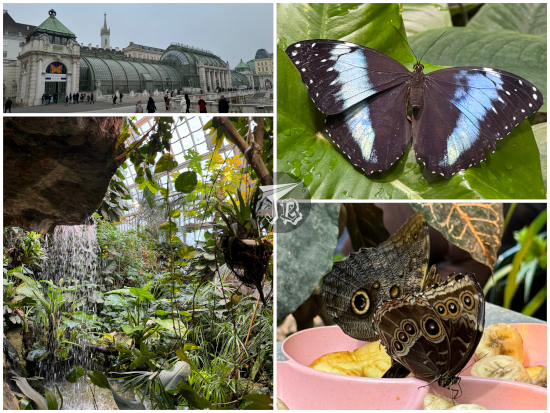
We left the museum after a couple of hours, around noon. We did not stay at the Silvestermarket at the square, but headed out towards the Imperial Butterfly House Schmetterlinghaus. It comprises half of an Art Nouveau greenhouse turned tropical botanical garden and butterfly zoo of sorts. I really love the iron-and-glass architecture of the building – and I would have loved to have had lunch in the brasserie that fills the other half of the greenhouse. The building was designed by architect Friedrich Ohmann and erected in 1901 as part of the Hofburg Palace and is, next to the Burggarten palace.

Most of the butterflies we saw, if not all, were forest giant owls Caligo eurilochus, very large butterflies originating from the Americas – they can live from Mexico to the Amazon basin. They have marks like big eyes in its back wings (hence the commmon name), and the inner wings are blue. They are pretty, and they seem to like fruit, as they gathered around the feeders to snack on it. The sad part is that they only live around 24 days.

Schmetterlinghaus

We then headed to the restaurant Centimeter, near the Rathouse (town hall) to have lunch. It is a place that has a lot of things measured – you can order sausages by the metre. I was somehow was not feeling hungry, so I decided to get Gebackener Emmentaler mit Sauce Tartare und Preiselbeeren, breaded and baked Emmental cheese with tartare sauce and cranberries. After lunch, we expected the Silvestermarket next to the Rathaus to be open, as it was one of the places to be for New Year’s Eve. We were wrong! That was a bummer, because in hindsight we could have cancelled the reservation and just stayed at the market in front of the Natural History Museum. That was a bummer, but at least we were warm.

Gebackener Emmentaler

We headed back towards the hotel, and we stopped by the supermarket next door to buy something for dinner. I grabbed myself some pre-emptive sushi, because I was pretty sure that my family was not going to find what they wanted – basically stuff like they would get at home. After half an hour of going back and forth, they decided to settle down with sandwiches and more sushi. We also picked up some chocolate thingies that would end up being more coconut than anything else. Not that I have anything against coconut, but I do not appreciate it replacing chocolate unannounced.

We took the groceries to the hotel, and had a bit of downtime before got ready for the main event. During that time, I went on the online airline webpage to make sure that the travel agent at El Corte Inglés had checked us in. The check-in was done, but someone had made a typo on my parent’s email address so we had not received the boarding passes. I retrieved them and downloaded onto my phone to distribute later.

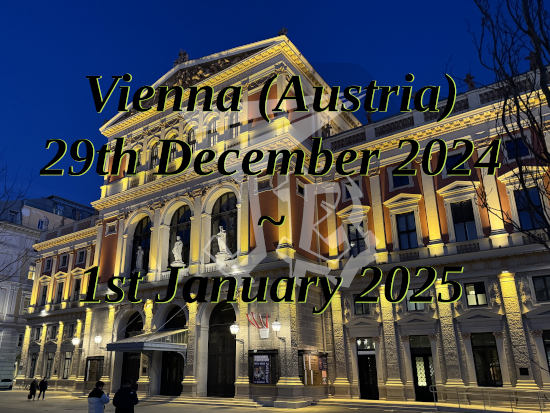
A bit past 18:00, we left for the Wiener Musikverein, the Viennese Music Association, home to the Vienna Philharmonic Wiener Philharmoniker, where we would attend the 2024 Silvesterkonzert. It was a bit strange to head to such an event using the underground, but that was the most efficient means of transport, to be honest. We ran into the Spanish lady and her husband again – and that was great because that way we could take pictures of each other without having to get a stranger to do so.

Vienna Musikverein

The Musikverein was designed to resemble an Ancient Greek Temple in a Neoclassical style, following plans by architect Theophil Hansen. The building was inaugurated in 1870, and it has a small decorated entrance, very underwhelming staircases, a small chamber music hall, and the main music hall, the Großer Musikvereinssaal or Golden Hall. Walking in there was… surreal. It’s a hall I’d seen so often on TV, and it actually felt… I don’t know, a bit… pale. Less bright than on the screen. Maybe it was that the flowers were white and pink, so they did not pop. And it’s not like I know anything about flowers, anyway. I was just happy they were artificial enough not to trigger my allergies, it would have been awkward to sneeze all throughout the concert…

Vienna Musikverein Golden Hall

Though the “New Year Concert” is the one that everyone knows, there are actually three concerts with the same set list – the Preview Voraufführung on the 30th, the Silvesterconcert Silvesterkonzert on the 31st, and the New Year’s Concert Neujahrskonzert on the 1st. I honestly would have thought that it would be full of wealthy people and they would be all cool as cucumbers, but it turns out, a whole bunch of us were just excited noobs taking pictures of every and anything. My family’s seats were on the second floor balcony. I just couldn’t believe everything that was going around around me, nor where I was. I bought the programme, because I really wanted something physical from the soirée, aside from the ticket.

The Vienna Philharmonic was founded in 1842. It is formed by the best musicians from the Vienna State Opera. It is actually run by the musicians themselves. Every year, a conductor is chosen to direct the concerts, and for the 2025, it was Italian Riccardo Muti. Maestro Muti was born in Naples in 1941, and studied in the Classical Lyceum. He proceeded to move onto studying Piano, then Composition and Conducting. He began his career in 1968 as the music director of the opera festival Maggio Musical Fiorentino. He conducted the New Year’s Concert in Vienna in 1993, 1997, 2000, 2004 and 2018 before this year. In 2011, the Philharmonic awarded him Honorary Membership. He is also a bit of a troll.

The concert had two parts, including the encore:

First part:
  1. Johann Strauß I. Freiheits-Marsch, op. 226 – Freedom March
  2. Josef Strauß Dorfschwalben aus Österreich. Walzer, op. 164 – Village Swallows from Austria, waltz
  3. Johann Strauß II. Demolirer-Polka. Polka française, op. 269 – Demolition Men’s Polka, French Polka
  4. Johann Strauß II. Lagunen-Walzer, op. 411 – Of friends, Waltz
  5. Eduard Strauß Luftig und duftig. Polka schnell, op. 206 – Airy and fragrant, fast Polka

Second part:
  6. Johann Strauß II. Ouvertüre zur Operette “Der Zigeunerbaron” – Overture to the operetta “The Gypsy Baron”
  7. Johann Strauß II. Accelerationen. Walzer, op. 234 – The Acceleration, Waltz
  8. Josef Hellmesberger (Sohn) Fidele Brüder. Marsch aus der Operette “Das Veilchenmädl” – Fidel brothers. March from the operetta “The violet girl”
  9. Constanze Geiger Ferdinandus-Walzer, op. 10 [Arr. W. Dörner] Ferdinandus, Waltz
  10. Johann Strauß II. Entweder – oder! Polka schnell, op. 403 – Either … or! Fast Polka
  11. Josef Strauß Transactionen. Walzer, op. 184 – Transaction, Waltz
  12. Johann Strauß II. Annen-Polka, op. 117 – Polka Ana
  13. Johann Strauß II. Tritsch-Tratsch. Polka schnell, op. 214 – Chit-chat, fast Polka
  14. Johann Strauß II. Wein, Weib und Gesang. Walzer, op. 333 – Wine, Woman, and Song

Encore:
  15. Johann Strauß II. Die Bajadere, Polka schnell, Op. 351 – The Bajadere, fast Polka
  16. Neujahrsgruß (New Year’s Address)
  17. Johann Strauß II. An der schönen blauen Donau, Walzer, Op. 314 – The Blue Danube
  18. Johann Strauß I. Radetzky-Marsch, Op. 228 – Radetzky March

Vienna Silvesterkonzert 2024

Honestly, what can I say? It’s nothing and everything like what you watch on TV. The music was fantastic, but somehow it felt like the conductor did not do much, the orchestra did whatever they wanted, not in a bad way. They knew exactly what to do and just did it. I know next to nothing regarding classical music, but they made it feel absolutely effortless. I am not sure how much work they do on their own and how much they do with the conductor, but I can tell had Riccardo Muti a blast. At some point, when he was coming in and out, he knocked over some of the viola or bassoon’s music sheets all over – he was very apologetic about it. Also, although neither photographs or videos are not permitted (mine are totally… sneaky, you see), one of the ladies in the first row was shamelessly filming, and he winked and waved at her. Furthermore, he would just… jump during some of the polkas, which is a feat considering the man is 83 years old.

The concert always ends with Strauß’s Radetzky-Marsch, and the public is invited to clap along. Muti completely had the concertgoers in his pocket, controlling them (us) with a finger and a look. It was amazing to watch. All in all, he was absolutely… not careless but carefree. It was great to see, somewhat magical in a way.

Vienna Silvesterkonzert 2024

The concert felt much much shorter than the two and a half hours it lasted. We went down to the first floor for pictures during the intermission, and we were not the only ones. However, I think we kind of… snuck past the intern or something, not sure we were supposed to be allowed on that floor. People were having champagne but I only cared about seeing everything. I might be a bit… weird. I make no apologies. I really loved the experience. They say it is a once-in-a-lifetime experience, but to be honest, I would just try the lottery every year from now on. I mean, I now have the right clothing for it…

After the concert, we went back to the hotel where we had our dinner. To be completely fair, there was a part of me that would have totally wanted to go out to watch fireworks and Vienna’s way to celebrate the New Year – and then be an absolute wuss, freeze my butt off and need to come back to the hotel. But the grass is always greener on the other side of the fence, and since I did not get to see it… It must have been the most interesting thing ever! It’s okay though, because I got to see the concert, and it was already my once in a lifetime most interesting thing ever… But it took me hours to get to sleep, so maybe I could have explored some, because in the end I’m greedy and I want it all.

30th December 2024: A planned and packed day {Vienna, Silvesterkonzert 2024}

It was a crisp morning in Vienna when we got up. We went down for breakfast and it was not particularly well stocked. The coffee was… weak, so I decided to mix a cappuccino and a black coffee to get me the energy I needed for the day. I tried some local cake, but I did not enjoy it, so I decided to stick to bread and croissants. Thankfully, I did run into the lady from the day before, and her husband, during breakfast, and told her about our plans – that way at least someone in the group would know not to wait for us and we would not delay anyone. Apparently, we were not the only ones who had made their own plans either, as the excursion had been marketed as “optional” and yet it seemed to be “a given”. Even better, we came across the driver from the day before (despite him saying he had nothing to do with the trip), and we could tell him that we were not coming, either. As we stepped out, it was freezing – literally below zero – but sunny during the whole day.

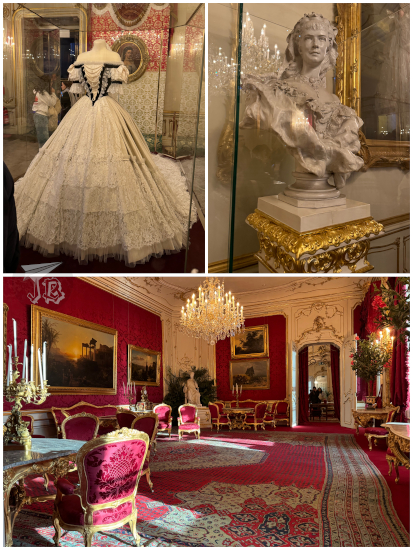
We took the underground at Zieglergasse and headed towards the city centre. I asked my parent to use their phone for GPS and maps in order to keep my battery for as long as I could so I could be taking pictures throughout the day, so they would be guiding. Our first stop was the Hofburg – the former imperial palace – and the Sisi Museum. Empress Elisabeth of Austria (1837 – 1898) was the wife of Emperor Franz Josef I of Austria. She married the Emperor when she was just 16 years old, and was stifled by court life. She spent most of her time travelling and avoiding royal duties. Her perceived eccentricity – today we would call it depression – and assassination in 1898 helped create an image of a romantic heroine in the media that has reached today, especially through actor Romy Shenider’s portrayal in the 1950s.

Hofburg

The museum tells about her life by showing objects, portraits and reproductions of her clothes. Then, you step into the former imperial apartments, which have been refurbished with furniture from the 19th century to make them look real. The audioguide was… corny to say the least, and I kind of skipped most of it because I got bored.

Sisi Museum and Royal Apartments Vienna

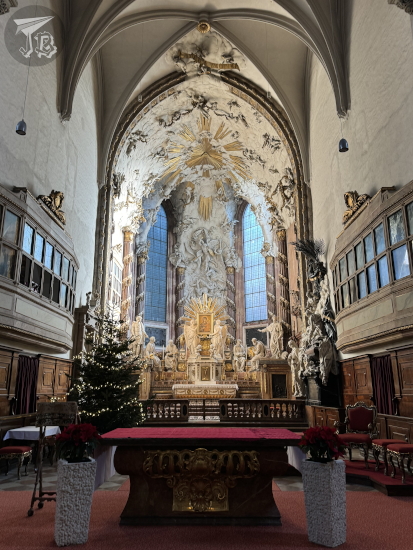
I proposed the church of Saint Michael first, and then the National Library. However, my parent had been intrigued by the church that stood at the exit of the underground. Thus, we headed there. The Wiener Minoritenkirche, Friars Minor Conventual Church, is officially the Italian National Church of Mary of the Snows Italienische Nationalkirche Maria Schnee. The church was erected between 1276 and 1350, and it was one of the first gothic churches in Vienna, following a French pattern. There were many subsequent reforms, including rebuilding the bell tower and the spire again and again – today the bell tower is flat and the spire is gone. The interior altar is Neogothic, by Ferdinand Hohenberg. Since it was still around Christmas time there were Nativities and Christmas trees.

Wiener Minoritenkirche

Afterwards, we headed towards St. Michael’s Church Pfarre St. Michael. It started as a late Romanesque or early Gothic building, maybe in 1221. The following two centuries saw Gothic annexes added. The crypt was built in the 16th century. The organ was built in 1714. The Rococo high altar was sculpted by Karl Georg Merville, and it represents the Fall of the Angels after the War in Heaven, when Lucifer was banished; underneath, there is a Byzantine Virgin Mary from the Cretan school. The outer façade was rebuilt in a classicist style in 1791. Construction officially finished in 1792. The crypt is accessible in a guided tour, but considering it has about 4,000 bodies, some of them mummified and on display, I think I’m happy we did not take it.

Michaelkirche Vienna

I proposed going to the Library again, because it was cold and there would be toilets there. My parent took over guiding with their phone, and my sibling and I got distracted as we passed by the Stallburg, where we caught a glimpse of the Lipizzan horses chilling out.

Instead of reaching the Library, my parent decided that we wanted to see the Augustinian church Augustinerkirche, a mix of 14th century Gothic and 18th century Neogothic. The original church was engulfed by the Hofburg as it expanded, and in 1634 it became the official imperial church. May Habsburg weddings were officiated there, and a chapel to the side, called the Herzgruft (Heart Crypt), contains the hearts of the members of the dynasty, from Ferdinand IV in 1654 to Archduke Franz Karl in 1878.

Augustinerkirche

I did not get to go to the Library, but we walked past the Hotel Astoria, which opened in 1912. it was built in the a late Art nouveau style known as fin de siècle (end-of-century). At the time it opened, the hotel was the latest, with electricity, bathrooms and all!

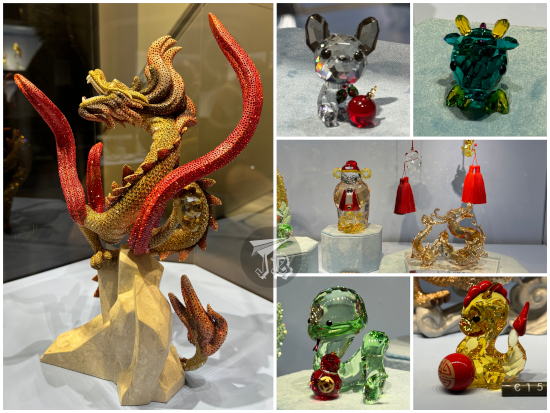
We reached the pedestrian / shopping street Kärntner Straße, the neuralgic centre for Vienna shopping. There we… met the card-not-working lady and her husband again, in what would become a funny number of encounters. We also saw the Swarovski shop. We entered it because we thought it would be warm – and hey, it had a toilet, which was handy, considering we had left the hotel over four hours before. Swarovski is an Austrian glass producer, known for its crystal glass, used in jewellery, decoration, watches, accessories. The company was founded in the late 19th century with the idea of “making a diamond for everyone”. Since then, it has produced thousands of items – from Christmas decorations to sculptures to collectible tiny figurines to whole dresses for the Vienna Opera. The place was halfway between a shop and a museum – and we might have spent a bit more than we had planned there, especially considering we were not planning to spend anything.

Swarovski flagshop Vienna

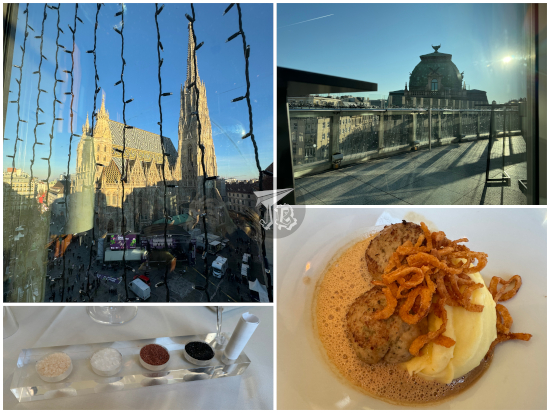
We reached DO & CO Restaurant Stephansplatz, located on the top floor of the post modernist structure Haas House, constructed in 1990. Most of the building is a hotel now. The restaurant has a fun view of the cathedral Domkirche St. Stephan. My parent and I discovered the restaurant because the opening scene of Austrian TV series Kommissar Rex, which ran between 1994 and 2004. It follows the story of German Shepherd Rex, a police dog which is “transferred” to the homicide department after his original handler dies… at the DO & CO terrace. It is such a naïve series, I just love it. Think The A-Team ingenuity with an adorable GSD saving the day every time and stealing sausage rolls as a self-reward. In a later series, Rex would move to Italy, and there is currently a Canadian reboot too…

There were no doggies in DO & CO, but both service and food were superb. They had butter and bread, and small receptacles with different types of salt, and a note on how they should be used. For lunch, I ordered kalbsbutterschnitzel – delicious minced veal butter patties with cream, accompanied with mashed potatoes, fried onion rings and a small leaf salad. For dessert, I had an ice latte that I should not have had, but I saw it pass by and I was smitten. We snuck a number of pictures from the restaurant, too.

DO & CO Vienna

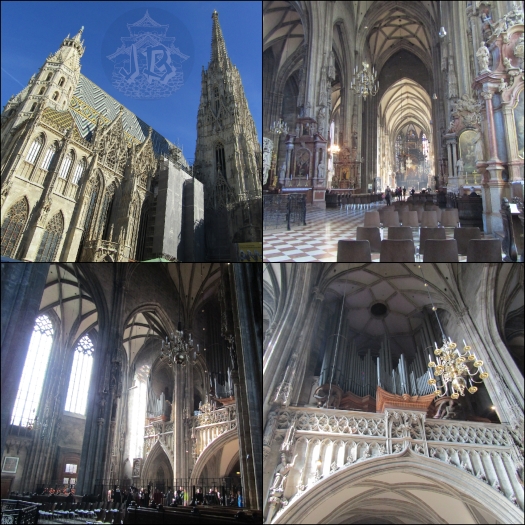
After lunch, we went into St Stephan’s cathedral Domkirche St. Stephan. The building is a mixture of Romanesque and Gothic, and it was initiated around 1137 and completed 1578, and as many as four construction stages can be seen – the first Romanesque towers, the later Romanesque church, the Gothic Choir, and the outer, newest additions. The roof is tiled with as many as 230,000 pieces, one side shows the mosaic of a double-headed eagle, and the other the coat of arms of the city and the country. The bell tower has twelve bells, and the interior hosts as many as 18 altars (plus the ones in chapels). The cathedral was built in limestone, so it looks darker than other churches its size (107 metres long, 70 metres wide and 137 metres high).

The high altar was built in marble by Tobias Pock in the 1640s in the Baroque style. It depicts the stoning of Saint Stephen, church patron and the first Christian martyr. He was stoned to death by the Israelites after a rather inflammatory speech in front of the Sanhedrin, defending Christ’s teaching versus the traditional Jewish ones. According to the Bible, this would have happened a couple of years after Jesus’ death, and before the Roman persecution.

St Stephan’s cathedral

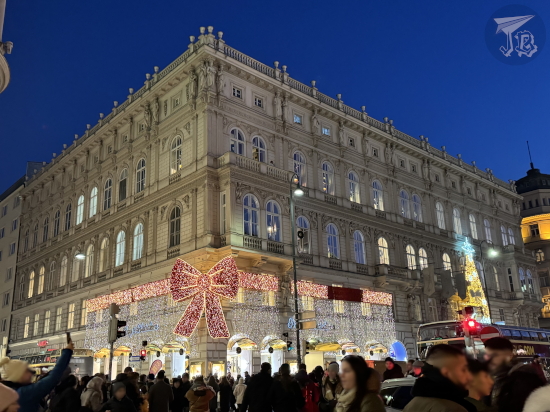
My parents were tired and they decided to head off towards the hotel, while my sibling and myself stayed behind. We wandered around Stephansplatz, Rotenturmstraße, and Kärntner Straße, checking out the Christmas lights and decoration until we reached the Popp & Kretschmer fashion store. They are a luxury women’s clothes firm, which draw tourist crowds during Christmastime to see their huge bow decoration, which makes the whole building look like a present. They call it the Vienna Bow.

Christmas decoration - Vienna Bow

We also looked at the Vienna State Opera Wiener Staatsoper, which was prepared to celebrate the new year, with a neon display saying (in English) “Hello 2025”. It was stupidly cold though, so we might have stayed in an underpass for a few minutes longer than necessary.

Afterwards, we headed towards the Sacher Hotel. The five-star hotel was founded in 1876 by the son of a famous confectioner. When the founder died, his wife, Anna Sacher, became manager. She turned the hotel into one of the most refined in the world, catering exclusively to the aristocracy. This management lead the hotel to bankruptcy, and she had to sell the business to new owners, who restored it to its former glory. The hotel serves “the original Sacher-torte”, a chocolate cake coated with dark chocolate icing, and a thin layer of apricot jam in the middle, served with unsweetened whipped cream. It was reportedly invented by the father of the founder, and the recipe is kept a secret. There are other versions of Sacher-torte, but the hotel is the only one with legal standing to call theirs original.

We had a 17:30 reservation at Café Sacher, in the hotel. Sacher Hotel actually has two cafés. The more modern one faces Kärntner Straße and is called Café Bel Étage. It had a long queue – Christmas is peak season in Vienna, as we were quickly learning – but I had been informed that reservations accessed through a particular door. However, that was not where our reservation was – I swear, I did not see the different name anywhere. The historic Café Sacher had an even longer line, and no special door. I dared ask the doorman at the hotel how to get there, and he gave me a huge grin and said “skip the line, go through the exit”. Boy, that was… awkward. Very, very awkward. I though the people just outside would lynch us!

Staff came to check on us, and since our reservation at the Café Sacher was valid – I made the reservation in July, literally as soon as the spots open – we were shown into one of the small salons. The café has a great offer – Sacher Sweet Treat: a perfect slice of original Sacher-torte with whipped cream, a non-alcoholic hot beverage and a bottle of Römerquelle mineral water for 22.5 € (31.5 € with a glass of the in-house champagne, Original Sacher Cuvée). I ordered mine with sencha senpai, Japanese green tea. I enjoyed the cake more than I had thought I would, and the tea was great. The staff was incredibly nice, too. They must have been used to silly tourists.

Sacher & Sachertorte

We left the Café Sacher and headed towards the Spanish Riding School Spanische Hofreitschule. For my sibling, this was a core-memory event, so they insisted we got really, really good seats for the Gala Performance Galavorführung at 19:00, on the parterreloge – the box at ground level. The Gala performance is the longest exhibition the Riding School has, and it lasts 90 minutes, with a break. The horses were gorgeous, and the riders looked very cold, but everything felt strangely… cold. I think I liked the exhibit in Jerez Riding School better.

The Spanish Riding School, considered the oldest horsemanship school in the world, was established during the Habsburg Monarchy in 1565. It is dedicated to the breed and training of Lipizzan horses. Lipizzaners are a breed of riding horses developed during the Habsburg empire. It derives from Arab, Bavarian, Spanish and Neapolitan breeds. They were selectively bred so most of them are grey with white coats – albeit there is always a bay stallion in the Spanish Riding School. The breed itself might be traced to eight stallions in the late 1700s, and it was developed in Slovenia. The horses are considered so precious that they were evacuated during WWI, and “rescued” by the US army during WWII. “Lipizzan horse breeding traditions” has been considered Unesco Intangible Cultural Heritage since 2022.

Once bred, foaled and fledged, the Lippizaners are trained. This is done at the Spanish Riding school. The traditional horse training methods used by the school can be traced back to Ancient Greece, and like many other things, they re-flourished during the Renaissance period in the 16th century. The goal of Classical training was to prepare horses for warfare as part of the calvary. Horses train for six year after they turn four.

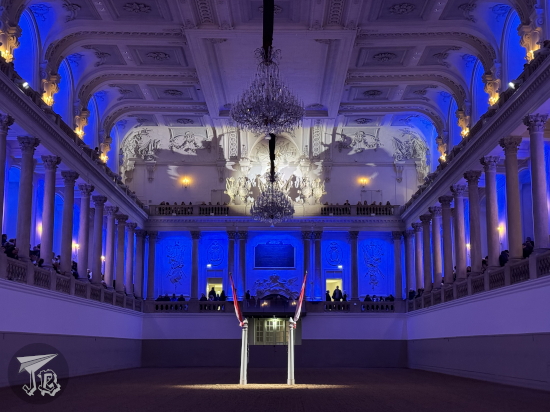
In Vienna, the Lippizaners are housed at the Stallburg, which is technically part of the Hofburg Palace. It is a Renaissance building from around 1560, originally conceived as a residence but that was later converted into the Imperial Stables. The Winter Arena was built in 1735, and has remained unchanged since then – including the chandeliers. The arena is presided by a painted portrait of Emperor Charles VI.

Vienna Riding School - winter Arena

There was something weird in the atmosphere that made it not feel all that… fun. Before every performance, a lady walked to the centre of the arena to introduce the exercises movements in German and English. The performance was pretty though. I tried to sneak a picture or two, but I was unsuccessful – and a bit worried they would kick me out if the venue. There were a total of six different numbers, and the show, including the introductions, was organised as follows:

  1. Alle Gänge und Touren der Hohen Schule – “All Steps and Movements of the High School”: four riders and stallions in individual choreographers, including the one dark stallion in the stable, with classical movements.
  2. Am Langen Zügel “Schools on the Ground: On the Long Rein” – the riders guide the horse from the ground, they are not on top of the horse, with movements such as piaffe and pirouette.
  3. Pas de Deux “Step by Two” – two riders-horses pairs work in tandem, mirroring each other.
  4. Arbeit an der Hand und Schule über der Erde “Working Hand and Airs Above the Ground” – with three main movements: levade, capriole and courbette. Four horses work with their riders on the ground, and two of them with the riders on the saddle, but without stirrups. When horses perform well, they get a sugar treat from the rider.
  5. Am Zügel “Schools on the Ground: Curb Reins” – only one horse and his rider, who only holds two out the four reins in their left hand, and they hold the riding crop upright in their right hand, a commemoration of the military heritage of the horse riding tradition.
  6. Schulquadrille “School Quadrille” (or Das Ballett der weißen Hengste “Ballet of the Eight White Stallions”) – eight horse-rider pairs have to coordinate with each other for a choreography, ending in the Radetzky-Marsch.

When the exhibition came to an end, we tried to go to the toilets. You had to scan your tickets and pay 50 cents. Really. Two hundred quid for the tickets and they charged fifty cents for the toilets, which were filthy on top? A total rip-off.

I got my sibling to the hotel, and then I left again to meet up with my friend D****e and her father Fr***, who were also in Vienna for a few days. They were even staying in a hotel close to ours, so it seemed that we had planned it in advance. We spent a couple of hours in a small eatery – Gschamster Diener – where they introduced me to kaiserschmarrn, fluffy shredded pancakes with raisins, powdered sugar and cinnamon.

Kaiserschmarrn

I eventually had to go back to the hotel and my room. There, I spent an hour trying to find a place to book lunch for the following day. After deciding not to plan anything on the 31st, my parents had a change of mind and suddenly I found myself tasked with planning and finding a place for lunch. Most restaurants were either closed or booked off. I was not a happy camper, but in the end I managed to find something… somewhat decent. My sibling suggested the Natural History Museum, the Butterfly House and the Library before lunch. I was absolutely sure that was impossible to cram three things in the morning. We would not even do the entire Natural History Museum, but at least we would be somewhere warm. I resigned myself not to see the Library, had a shower and went to bed.

29th December 2024: Arrival, Karlskirche & Prater {Vienna, Silvesterkonzert 2024}

With our plane boarding at 8:10, we aimed to be at the airport around 6:30, which was a successful endeavour. We had our boarding passes but we needed to drop off some luggage. As we needed formal wear, neither of us could just make do with a simple backpack or trolley. We had decided to bring a carry on each, and two large suitcases – one per room – for coats, jackets, dresses and so on. The travel agency had checked us in the day before, and we had separate seats, but that was not important since it is just a short trip early in the morning.

Once in the terminal, it turned out that Iberia did not have a drop-off counter as my parent was expecting, so we had to queue with the people who needed to check in, including non-Schengen and intercontinental travellers. We decided that two of us would line while the other two could sit down and wait for us. We stepped into the cordoned area, and suddenly… one of the attendants directed half of the queue out and into another area of check-in counters. All in all, it took us around 35 minutes to drop the luggage off. Not efficient, Iberia. Not efficient.

Luggage successfully checked in, we went past security, found our gate, and sat down for breakfast. We went to the gate early, and queued to be the first in our group because… I’m not even sure why, but it was too early in the morning to fight. I napped about half of the journey, and also took pictures of the landscape from above. Once we left Spain behind, the mountaintops were covered in snow, and the valleys in fog. This was a clue of how cold it would be when we landed in Vienna. We had a maximum temperature of around +3ºC throughout the trip.

From the plane window Flight Madrid - Vienna

We disembarked and made our way to baggage claim, where our suitcases were among the first few to come up, which is always a great feeling. Afterwards, we went out and found the people responsible for picking us up – the representatives from Blaguss DMC, the local agency which manages Viajes El Corte Inglés and Tourmundial in Austria and Hungary. First, they handed us our our hotel voucher, schedule, and tickets!! Upon opening the envelope to check that everything was correct, we found out schedule with a Vienna tour the following day that my parents swear they had never heard about – the truth is that it appears in the documentation as optional. The driver in charge of taking us to the hotel was… a character. My biggest regret though is that I did not run for a Costa Coffee while we were waiting for the other travellers to come out, but I only saw the sign when he had started moving.

We arrived at the hotel Elaya Hotel Vienna City West around 13:00. It was a four-star hotel that felt like it had dropped at least one and a half, and it was not any of the ones listed in the original documentation. There was neither a bar nor a restaurant, and the staff was not exactly friendly. I know it’s not nice to work during the holidays, but come on. I don’t think requesting two keys for a two-people room was that outrageous. At first, neither card worked to open my door, but after trying three times each card, both sides, I managed to get it open. And more importantly, though the warm option of the air-conditioning did not work, I figured out how to turn on the radiators.

The hotel room was… sad. It had a little terrace overlooking the interior yard, and two windows – the blinds were unmoveable on one and broken on the other. We unpacked, got freshened up, and went back down to find a place to grab a bite to eat. I approached reception to ask for a recommendation, and there was a Spanish lady trying to get the check-in attendant to help her with her card – she seemed to have the same problem I had had. She had no English at all, so I tried to help her out. The attendant just huffed and left to check the room herself, and I guess she managed to get the card working. When she came back, I asked for any restaurants around, and she pointed us up the street. We found a Greek place seemed okay, and that is where we ended up – at restaurant Mythos, which had very friendly staff, and decent food.

Afterwards, I would have gone towards the city centre. However, my parents needed a break and wanted to move as a group. Thus, I stayed in the room – we did not leave the hotel until 16:30, and by that time it was already getting dark. We walked to the underground stop Pilgramgasse. It was supposed to be just ten minutes away, but was a bit longer, I think we took a wrong turn.

The Pilgramgasse station dates back to the original 1899 Valley line, before electricity and all. The entrance was cast in iron, and it looked very cool. There, we bought seventy-two-hour tickets, which are awesome because you only have to validate them once, and then you can use all the transportation options in the city for 72 hours. The price of the pass was 17.10 €, so not that expensive – one trip is 2.20 €, so aside from the convenience, it is value for money if you plan more than seven trips. Though we did take more than that, the best thing is just being able to waltz down to the platforms without having to validate each time. It was also great that the frequency of the underground service was 8 minutes at the longest, and that was on Sunday evening!

We used the underground to find our stop next to Musikverein Wien (Vienna Music Society), where the concert would take place on the 31st. This was to gauge the time to get to the station and the underground system. Once we familiarised ourselves with the transport though, we realised that there was a better route. It included a change, but the station was much closer to the hotel, and the total time was around the same if you accounted for walking times. The Musikverein stands next to Karlsplatz, so once there we just had to cross the street to find ourselves in front of the church Rektoratskirche St. Karl Borromäus or Karlskirche, dedicated to Saint Charles Borromeo.

The cathedral was originally designed in 1713 by Johann Bernhard Fischer von Erlach. When he died, his son took over directing construction and altered some of the plans. Though the building is Baroque, it displays a mixture of elements – the dome, a Greek temple portico façade, monumental columns based on Rome’s Trajan Columns… The altarpiece was erected by Ferdinand Maximilian Brokoff after the elder Fischer’s design. It portrays the Assumption of Saint Charles Borromeo, the nominal saint, into Heaven. There were Christmas trees on both sides of the altar, which I found strange – I had always thought that the Christian church was not a fan of them.

Karlskirche Vienna

The dome is frescoed with a scene featuring Charles Borromeo, the Virgin Mary, and the Cardinal Virtues, by Johann Michael Rottmayr. Hanging from it, there was a modern art installation by artist Cerith Wyn Evans called Forms through folds (ascending)…. This sculpture is part of the Karlskirche Contemporary Arts Program, started in 2018. That was… weird, and really out of place amongst the Baroque frescoes.

We climbed to the upper levels. The first floor hosts a choir model and the organ, built between 1739 and 1847. Technically you can also access the treasury, but it was locked away. We continued up and stepped into the terrace, which yields to a bit… underwhelming… panoramic view of Karlsplatz and the city. Vienna is a great city, but the Karlskirche is not really looking at the scenery from above.

We should have tried the Vienna Museum next to the church then, but instead took the underground to the classical amusement park Prater, where we had dinner reservations a couple of hours later. Originally a hunting ground, Prater was the area where the 1873 World Exhibition was held. Some of the current buildings were erected at that time. In 1897, the first rides, attractions and puppet theatres were established – including the Ferris wheel Wiener Riesenrad, which is the current symbol of the park. Prater was severely damaged throughout World War II, due to bombings, trenches and fire, but it was eventually reconstructed using records from local artists who had drawn or photographed the area in all its glory. Nowadays, it is considered an actual park, which just happens to have rides on it, and part of it is protected as “green land”. The actual amusement park is called Wurstelprater. There are tons of attractions, rides, snack stalls, and there were even some musical activities going on.

Viena: Prater

But of course, it was Vienna, in a late December evening. It was late and cold. And dinner reservation was hours away. We almost decided to give it up and go back to the hotel, but we found somewhere to have a drink and warm up instead. Finally, we made our way to the Rollercoaster Restaurant, the place where we had – thankfully – reserved in November. It was packed. There were around 50 people waiting to come in, and most of them did not have a booking, and were turned away – there was even a group of people checking every 15 minutes if there was an opening. We took ten minutes to get to the front of the mob to finally get our table, but we were sat around 20:15. I was so happy I had pushed for the reservation! It made me further convinced that anything in the city centre or near a tourist spot might need a reservation, which in turn made me worried about the 31st “winging it” decision.

The Rollercoaster Restaurant works with a system of rails that hang from the ceiling and connect the kitchen to the different tables. The food is prepared by human chefs and distributed by two huge robotic arms. Once placed on the rails, it rolls and slides and gets to the right table – much like suitcases inside an airport distribution system. We were also on time for one of the robot shows, where they turn off all the lights and play music while the robot arms “dance”, and it was surreally fun. One of my parents was horrified, because they are more on the traditional side of things, but the rest of us had a lot of fun! The food was all right, too. I ordered baked schnitzel fingers served with potato salad, Gebackene Schnitzel mit Erdäpfelsalat, and we shared some baked Emmental with cranberry sauce Gebackener Emmentaler mit Preiselbeeren. I kind of wanted some apple strudel, but my portion was good enough, so I decided not to get any.

Vienna Rollercoaster Restaurant

We left around 21:30, and headed back to the hotel using the underground system. This time, we came out at a stop much closer to the hotel, Zieglergasse, which was neither pretty nor classical, but nearby and functional. Afterwards, there was just a shower and bed. I could not sleep right away though, because my mind was latching onto the group trip the following day. My parent had decided that we would just not show up – we had tried to warn the representative, but the driver said it was not his responsibility. I kept thinking that if we were not there, everyone else would wait for us and that was not a nice thing to do. It did not feel right. Maybe I’d meet the lady with the key problem, I thought, and warn her that we would not be tagging along. Hopefully.

Yes, I know. I worry too much.

29th December 2024 – 1st January 2015: New Year in Vienna (Austria | Österreich) {Vienna, Silvesterkonzert 2024}

The year 2024 marked a jubilee in my family, and my parents had always talked about doing something crazy when it came. And the time came and we did something crazy. This trip did not go as I would have planned, and in general I would have done quite a few things differently, had I been on my own. However, it was not a “real” trip, it was a family celebration. A complicated one, at that. My parents are both in their 70s and they cannot keep up with a schedule I would plan. Furthermore, they had been in Vienna more than once before, while my sibling had never visited, and I was there in 2017. Thus, a lot of balancing and compromises were needed. I would have made different choices, but after all this was my parents’ celebration, and they had insisted on paying for everything. I think that gave them the right to choose and veto.

We actually started preparation on the 1st of January 2024, almost a whole year in advance. That’s when we started looking at companies to make the trip – and attend the concert. The one everybody watches on TV on New Year’s Day. That concert. In Vienna. At the beginning of February, we signed up for the ticket draw lottery – though, as expected, we did not hit. Chances were extremely slim, but higher than zero.

At that time, we had narrowed possibilities down to two online companies that could get us there. At the end of February, we decided to ask in the travel agency my parents prefer, Viajes El Corte Inglés. There was indeed a trip option, but apparently the tickets for the concert were obscenely expensive, so my parents decided that we should settle down for the second best – the Silvesterkonzert on the 31st, which has the same setlist and musicians. When they say the concert is a once in a lifetime experience, let me tell you that it is.

Around June we had a family meeting to try and make some plans. My sibling stated they wanted to do two things – visit the Spanish Riding School Spanische Hofreitschule, and eat Sacher-torte at Café Sacher. One of my parents had said, half in jest, that they wanted to go to the restaurant where the old TV series Kommissar Rex kicks off – I found the restaurant for them, it was the DO & CO Vienna. My other parent wanted to go one of the palaces. Unfortunately, they kept confusing the Schönbrunn Palace, the Belvedere and the Hofburg. I never got to know which one it was. Neither parent cared about the Sacher nor the Spanish Riding School, though. Thus, I negotiated that we could have one evening separated so my sibling and I could do those things. It was reluctantly accepted on some parts, gladly on others.

Once confirmation had arrived in April, I had set alarms all around on the dates we could start booking for the different events and activities, so we could start moving after things were decided. We ran into a bit of an impasse, because one of my parents wanted to book everything in advance, but they also wanted me to take care of things – those things are not compatible at the same time. My other parent wanted to let everything flow and improvise – not the greatest idea for peak season. I booked the Spanish Riding School on the 23rd of June, and for the Sacher Café on the 3rd of July. My parent booked DO & CO in September and I managed to convince him to book a funny restaurant he wanted to try in November.

We made a general plan for the 29th, full plans for the 30th, and it was decided that we would improvise on the 31st. I did not find this too wise, but I went along with it, because I felt that it was not my trip So even if I wish we had been in another hotel, and or I had bought a little good-luck piggy in a Silvestermarket, or that I had been at the Stephansplatz for the New Year fireworks, it was all right. I would have made some different choices that would have made the whole thing less stressful, though. But it was all right.

14th – 16th October 2017: Vienna, Austria

14th October 2017: Arrival and the Inner ring: Butterflies and Dinosaurs

Between flight and transfer to the city on Saturday morning, I arrived in the city of Vienna at 1pm. As my hotel was between the station and the city centre, I took my chances for an early check in and I was lucky – it was. After dropping my luggage I headed off to walk around Vienna’s Inner Ring, the Ringstrasse, which is a big boulevard that runs around all the old city of Vienna (Unesco World Heritage Site). A bunch of things were on my way and it seemed easy enough to find one’s way around. My hotel was located in a building close to a park, and had three floors, on the 11th, 12th and 13th floors of a building, which gave me some views of the city.

On Saturday the plan was wandering around, but as I am who I am I ended up improvising. My first stop was the outer Vienna State Opera, the Wiener Staatsoper, where a young man dressed as Mozart tried to sell me tickets for a show.

Vienna opera house, a baroque building in light colours with huge windows and an arched entrance

I continued on my walk and I saw the Albertina, a modern art museum, but I was actually heading to the Imperial Palace greenhouse, which is the home of a café and the Schmetterlinghaus, or Imperial Butterfly House. This is an area of the greenhouse where a bunch of butterflies are free to fly around and feed on a bunch of flowers, plants and pieces of apple. I was lucky enough to catch a few good shoots and I was very happy to have decided to go in (albeit I have to say that I was really keen on going there since I had seen that it existed). I really had a blast and enjoyed this, so it was a must that I don’t regret having missed, especially since the 6.50€ for the ticket. I spent around forty minutes in there chasing butterflies.

Vienna Butterfly house: a former greenhouse, and a few close-ups of different butterflies on bushes.

Then I saw the Austrian National Library, the Österreichische Nationalbibliothek.

Severe-looking stone building with columns and windows.

After that I back I walked through the Hofburg Palace, Hofburg Wien, and the Michaelerplatz or Saint Michael Square.

Collage of the former Imperial palace. It is a stone building with columns and windows, and arches

After that I crossed the palace in the opposite direction and ended up at the Heldenplatz, which gave way to Naturhistorisches Museum, the Natural History Museum to see dinosaurs, because there were dinosaurs, which is the home of the Venus von Willendorf, a tiny statue of stone dated back 29,500 years. The museum also holds a collection of minerals, meteorites, preserved animals, dinosaurs, an animatronics dinosaur and a multitude of artefacts from Prehistory to the Middle Ages. I also saw the same dunkleosteus that they have in the Tokyo Kokuritsu Kagaku Hakubutsukan. Have I mentioned dinosaur animatronics?

Collage of the Natural Museum: the building, with a dome, a whale skeleton, an Albertosaurus skeleton, the head of a Dunkleosteous fish, a huge salt stone and the Venus von Willendorf, a small naked woman statuette in golden stone

Following the museum I continued down the Ring Boulevard and it did not take me long to stumble up the Pallas Athene Brunnen (Monument to Palas Athena) and the Austrian Parliament Building, Parlamentsgebäude. The latter was under reconstruction.

Vienna parliament house, under renovation. There is a Palas Athena in white marble with a gold helmet standing in front of it.

I continued my walk until I found the Vienna Town hall, called the Rathaus, where there was a kind of Videogame trade fair or something going on.

Vienna town hall - neogothic building with a lot of towers and spikes.

Then I went on walking towards the university and the church of Votivkirche, a neo-gothic building next to the university.

Gothic church under renovation

Afterwards I went down to the hotel because this is not summer vacations after all, just a weekend escapade and I seriously did not have that much energy. On my way I walked past the stables of the Spanische Hofreitschule (Spanish Riding School) stables and I saw some pretty horses.

Two white horses from the Vienna riding school

And even from the hotel (literally from bed), as my room had views, I could take some pictures of the sunset and the lit buildings. And then I went to sleep at a horribly early hour because I was beat and for some reason I managed over 8 hours of sleep.

Sunset over the skyline of vienna. The buildings are dark and the sky is orange

15th October 2017: Palaces, churches and the Cinema

Because my hotel was **** for a change (I have to say that when I think about the whole weekend the word “decadent” is what comes to mind), I had a kettle and instant coffee ready for me – this was my breakfast. After that I did the online for my flight the following day and of course running into technical difficulties, and I left the hotel at around 9:30, which was a bit later than I had intended.

I was coming up to the Belvedere Palace, and on my way there I took a diversion to see the Karlskirche or Karlskirche (St. Charles’ Church), which I could see from my hotel and illuminated at night. This is a baroque church that sometimes holds classical music concerts.

The church of St. Charles; a Baroque church. It has a dome, and two twisted columns in front.

After taking a wrong turn once or twice this I headed out to my original target, the Schloss Belvedere (Upper Belvedere Palace). This is a Baroque Palace (seriously, Vienna is full of Baroque) that has been turned into a painting gallery. The most famous author in this gallery is Klint, but if I have to be honest, I’m not too appreciative of him – must be my likings for the realists. In the end, I liked the palace itself better than the painting collection, specially the reception room and the staircase.

The Upper Belvedere Palace, a Neoclassical building in white stone.

As I had bought a three-combo ticket including Upper and Lower Belvedere and the Winter Palace, I walked down the Belvedere Gardens to the Unteres Belvedere (Lower Belvedere), which holds the “Medieval Treasure” and temporal exhibitions. The best thing was the gold and mirror room and the marble gallery.

A huge garden with a palace in the background. The garden is artificial in a way, with perfectly-trimmed grass, fountains, and bushes.

The Baroque entrance to the lower Belvedere palace, a stone gate with sculptures on top. It looks like it wants to stare you down. The palace peers through the three open doors in the background

Then I headed off to the centre of the city to see the Winterpalais des Prinzen Eugen (Winter Palace of Prince Eugene), which was not the best thing ever but hey it came within the three-museum combo.

A Neoclassical palace with flags hanging over the door

Then I headed off to Domkirche St. Stephan (St. Stephen’s Cathedral), which is the gothic Catholic cathedral. It is not Baroque but Gothic. The entrance was free, but it also had a paid area, including the catacombs. Unfortunately I was too late for the current tour and too early for the following one, so I decided not to stick around, else I would have got the combo for the catacombs, the tower and the treasure.

A gothic cathedral. Collage showing the outside, with the tower and the ornate windows, and the inside showing the pointed arches inthe nave, and the organ.

As it was, I saw the cathedral and then headed off down different streets and saw the outer area of Katholische Kirche St. Peter (Catholic Church of St. Peter).

Façade of a Neoclassical church

And then headed out to the Michaelerplatz to check the inside of the Michaelskirche (Catholic Church of St. Michael).

Neoclassical church, showing the white and pointy bell tower. The image is tilted so the tower fits in the frame

I checked the Spanische Hofreitschule (Spanish Riding School) for tour tickets, but I was late for that and it was all sold out, so I decided to go to the station and buy some food in the supermarket for both lunch and dinner. On the way I crossed the Stadtpark to see the floral clock and the Johann Strauss monument – Johann Strauß Denkmal.

Finally, I headed off to get some rest at the hotel, and have a shower. At 18:15 I walked down to the cinema at the corner of my hotel building, the Gartenbaukino, because in the end that was the reason I was there – to attend the Austrian premiere of the X JAPAN documentary We are X as Yoshiki was going to be around for a Q&A session afterwards.
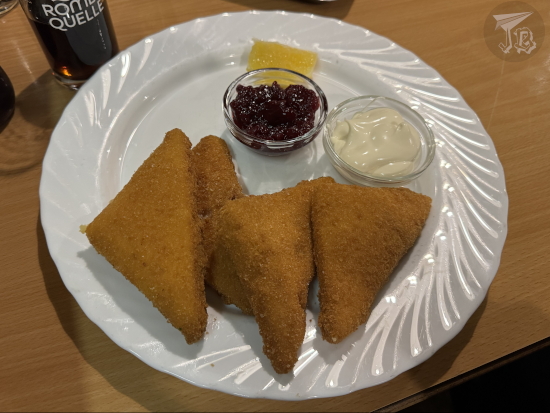
There had been a small mix-up with the ticket numbering (all of them had been printed out with the same seating number!), which was solved efficiently. We watched the documentary We are X and then there was a Q&A with Yoshiki himself. There were emotional moments as the fans thanked him for everything he had done and for his music.

Entryway to the cinema. It reads We are X Live + Q&A mit Yoshiki 20.00

Yoshiki sitting in front of a burgundy curtain. He is wearing his sunglasses and a black suit, boots and a golden blouse

After the Q&A some of us stayed talking at the cinema gate and the manager, who had solved the ticket problem, came out to close – and he told us where Yoshiki would be leaving from. And that’s… the story of how I got to talk to Yoshiki, I got his autograph and took a picture with him and I will never, ever, ever forget the rush of that.

I have to say I did not sleep much that night. All the excitement caught up with me and I kept replaying the scene in my head over and over again. in the end I think it was around 2:30 that I could turn the lights off.

16th October 2017: Airport Monday morning

After checking out of the hotel I walked back to the train station and took the CAT towards the airport. I had taken an earlier train than I had already planned and boy was I glad to do so when following arrows at the airport took me as much as 20 minutes. Something I learnt in this trip is how friendly Austrian people are, and that they have a great sense of humour, as apparently one of their star souvenirs is “no kangaroos in Austria”. The return flight was not as good as the first, but it was on time and I could arrive to work smoothly for a crazy week.