28th May 2024: Architecture and a niche restaurant (Madrid, Spain)

I was talking to an acquaintance whose child likes superheroes – so does the acquaintance, actually – about Comic Planet. After exchanging experiences, they mentioned that their spouse also enjoyed another thematic restaurant, and I decided that it could be a fun thing to do – and since they don’t take reservations for one, I roped my sibling into tagging along. And of course, since we were braving the horribly-working trains, I felt we should fill the day out. We could not leave early in the morning as I would have liked because I had this stupid bureaucracy appointment I had to get out of the way first.

We arrived in Madrid around 12:30, and our first stop was the Casa de Correos, an iconic building in the middle of the square Puerta del Sol. I did not even know you could just visit that building, nor that they ran exhibitions. It was a cool opportunity to check it out. Furthermore, the exhibition was actually something that I was quite keen on – the architect Antonio Palacios, commemorating the 150th anniversary of his birth. The exhibition, called “the Metro architect” Antonio Palacios, el arquitecto de Metro, is part of the network of museums managed by the underground company Metro. It consists mostly of photographs, a few of them by photographer Luis Lladó, an original model of Palacio’s project to renovate Puerta del Sol, and a modern model of a now-lost station, including lifts. It was a bit underwhelming, but still worth it – and free, so it was good either way.

Exhibition Antonio Palacios El Arquitecto de Metro

Afterwards, we headed out to the restaurant for our 13:30 reservation. The place is called Los Secretos de Lola (Lola’s Secrets ). It used to be just another bistro-grill in a street full of them, but some time after the pandemic, it reinvented itself. The restaurant has slowly turned into a Mecca of childhood mementos – Disney princesses, teddy bears, Harry Potter, Funko Pops… and crazy fun references like a Möet&Chandon spray to clean the tables. A lot of the food comes in a special piece of dishware – most of it Disney, but I can’t tell whether it’s actually licenced or a bunch of knock-offs. It was hilarious anyway. Though I am not much of a Disney person (my sibling is), my favourite film of theirs would be Mulan, and I just about lost it laughing when I checked the menu beforehand – I saw that they served gyoza in a Mushu-like dish, and decided we needed to order that. I was open to negotiation about anything else, really, but not the gyoza. The pasta in the Lady and the Tramp dish was also hysterical, but I could do without.

We reached the restaurant on point, and the owner directed us inside. We got a really cute Stitch table, but my sibling was not comfortable on high chairs, so we were accommodated at a Harry Potter one. We shared the non-negotiable teriyaki prawn-and-vegetable gyoza with wakame and bean sprouts, served on a Mushu-plate: Gyozas de gambas y vegetables al teriyaki, a plate of cheese Tabla de quesos variados (Blue cheese, Havarti, Mimolette, Emmental, Basilio, butter and breadsticks, on a Ratatouille’s Remy plate, which I had also found adorable) and a bluefin tuna tartar Tartar De Atún Rojo (on a little boat – I asked for no mango, and it was honoured; this was probably the weakest dish though). Finally, I tricked my sibling into a dessert called “Snowhite magic apple” Manzana Encantada Blanca Nieves: red chocolate capsule with white Kinder and a heart of caramel sauce, which came in an adorable “present box”.
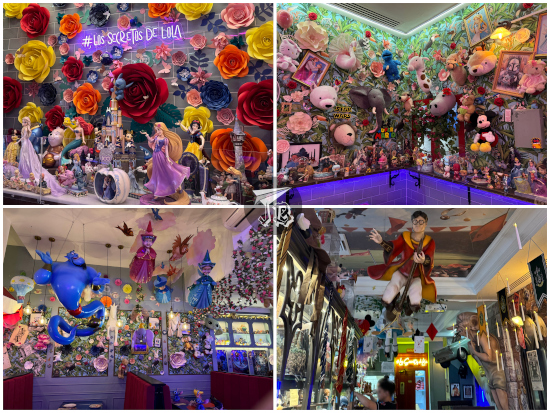
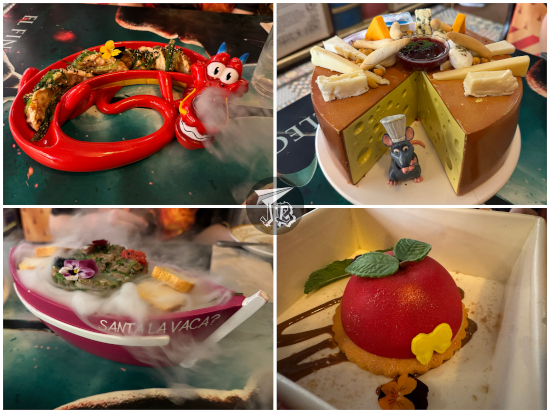
Decoration: Los Secretos de Lola

Food Los Secretos de Lola

The food was good, and I really like themed restaurants, I guess, even if they are not “my” theme. We did not stay for the two hours, I think we were on our way after an hour and a half – and when we asked for the check, it came in a Frozen music box. Then, we left towards Palacio de Cibeles, the old “communication palace” of Madrid, designed by Antonio Palacios and Joaquín Otamendi, and erected between 1907 and 1919. It is considered one of the first and most important Modernist buildings in Spain, constructed in biocalcarenite, with three stained-glass skylights, catwalks on the third floor, and a magnificent lookout on the rooftop. Part of the building is being used by the town hall, the other by the public entity CentroCentro, which runs cultural activities in the open spaces – mostly conferences and exhibitions.

Palacio de Cibeles

We arrived a bit before 16:00. Since we had a ticket for one of the exhibitions at 17:30, we checked whether we could find a ticket for the rooftop. We found available slots at 16:30, which was great. Before the viewpoint access, we had time to wander around. Most of the free exhibitions were of modern art, and not that interesting, and I was more focused on the building itself. There is one dedicated to the World Heritage site Paisaje de la Luz, explaining why the area deserves its UNESCO place.

We found the staircase to one of the towers and we used it to move it through the different floors. It is a spiral staircase around the lift, with Palacios’ typical green tiles similar to the ones he used at Maudes hospital and Chamberí station. The catwalks were paved with glass tiles, and it was quite impressive above all. I loved the building, but after all, Palacios is one of my favourite architects, so it was to be expected.
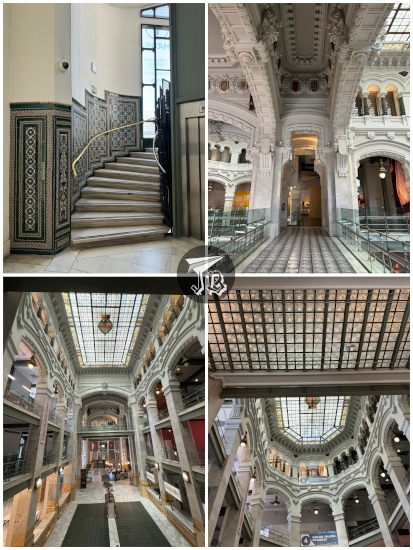
Inside Palacio de Cibeles

Then, we went up to the rooftop, where we could have a view of all of Madrid around us, most interestingly one of the main arteries of the city – Gran Vía. The weather was great, maybe a bit too bright. The turns were 30 minutes, but we were done in about half the time, after taking two walks around the middle tower.

Lookout on the rooftop of Palacio Cibeles

We went down and sat for a little before we headed down to the basement to see “Notre-Dame of Paris: The Augmented Exhibition” Notre-Dame de Paris: l’Exposition Augmentée. It was only 3€, so I was not expecting much, but it actually blew my mind.

The experience was created by the company Histovery, which specialises in “virtual exhibitions” through an interactive tablet called “HistoPad”. The Public Entity in Charge of the Conservation and Restoration of Notre-Dame de Paris cooperates with the event, and the beauty company l’Oreal is a sponsor. The exhibition (which is simultaneously running in several parts of the world) follows the history of the Parisian cathedral Notre-Dame de Paris – it starts with the 2019 fire, which is a bit heart-wrenching, and then it covers a few key moments in the history of the cathedral, using a mixture of written information, videographs and a “treasure hunt” where you have to find pieces of a puzzle hidden within the virtual information. This is done using the tablet to scan 21 “time portals” that take you to a particular point in history.

Around 1160. The Dream of a Builder. At that time, Bishop Maurice de Sully came up with the idea to build a new, better, cathedral in Paris. The previous one was a smaller, Romanesque building, but the goal was a larger, architecturally impressive building. In this room (the second, actually, but the first chronologically), you find out about the “treasure hunt” – you need to find a number of hidden “light spots” to build a “stained glass window”.

Around 1180. The Gothic choir. This makes a small overview of the kinds of workers that helped in the construction, the kinds of stones, building materials – quarries, forests. I was extremely disappointed at this point when I came across a dog in the virtual quarry, but the program did not let you pet it.

1241. The Holy Relics: Louis IX, the future Saint Louis, bought the Crown of Thrones in Jerusalem and brought it to Paris. There was a great procession into Notre-Dame, where the relics were to be kept. Here there’s a spectacular recreation of the gates with the original polychrome sculptures and decoration.

1645. The Royal Promise: Widowed Queen of France explained to her son, future Louis XIV, that he was to renovate the choir of the cathedral and build a new altar, dedicated to the virgin Mary. This was the original splendour of Notre-Dame, before the French revolution broke out – the church was one of the targets of the revolutionaries, and a lot of the art was damaged and / or destroyed.

1804. The Imperial Coronation. After the French Revolution, Napoleon crowned himself “Emperor”, but a very “equal and revolutionary” Emperor. He held a ceremony for himself in Notre-Dame, with the presence of the Pope and everyone who was anyone in the totally equal new society.

1857. The Spire. Enter Viollet-Le-Duc, a major architect and restorer in France’s 19th century, whose theories influenced countless others. He revalorised gothic style in the country, managing to turn it into a “national style”. The man had the goal to restore and create buildings in “the gothic style that would have been if the Medieval workers had had the technology he had access to”. Historians have not been kind to him, accusing him of “inventing” stuff instead of “restoring” but kudos to him, he managed to make a lot of buildings survive to our time. In Notre-Dame, he is responsible for putting back a lot of the sculptures that were destroyed during the French Revolution. He also built the spire that famously collapsed in the 2019 fire.

2019-2021 (first and last rooms). A description of the restoration works that have been happening in and outside the cathedral since the fire, with special attention to the Paris firefighters who worked the incident. There is a very interesting part about safely removing debris and the original scaffolding, and the fact that there was a lot of lead in the cathedral that the workers had to be safe around. They also homage the “vertical workers” who had to remove collapsed pieces from the ground… hanging from ropes.
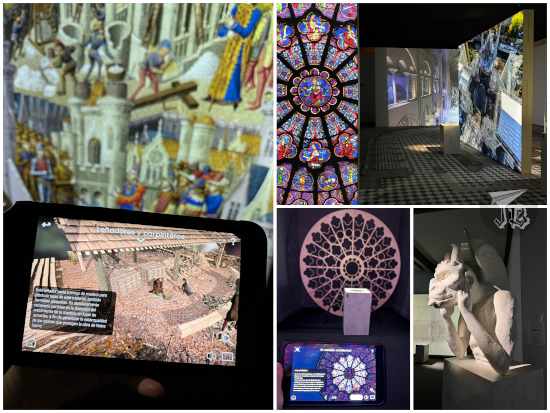
Notre-Dame the Augmented Exhibition

We completed the stained-glass window and signed up to get a diploma. The fun part is that most of the exhibition was not really… even physical. There were a few posters, a reproduction of one of the chimaeras, some small models… Nevertheless, it was extremely interesting – possibly the best “virtual exhibition” I’ve seen to date. The length of the experience is said to be 60-90 minutes… we stayed from 17:30 to 19:45, much longer than I had anticipated! Thus, we had to forfeit the last plan of the day to go back to the train system – which of course was experimenting delays. It took forever to get home. Because what else is new?

Time-traveller diploma after completing the treasure hunt in Notre-Dame the Augmented Exhibition

5th August 2023: Prints, Sharks, Mice and Neon (Madrid, Spain)

I won’t say that the Southern Italy trip was a bad one, but due to the planning blunder, the heatwave and the general not-so-relaxing atmosphere, I kind of needed a low-stakes day out. And what can be lower-stakes than a silly giant shark film? I got myself a ticket to watch Meg 2: The Trench at noon – I’ve found out that my non-dubbed cinema has started doing matinée shows at a reduced price – and planned my day in Madrid around that.

I took the train and arrived in Madrid on time for my ideal connection. Unfortunately the local public transport is chaotic this summer, with both the train system and the underground going through construction, outages and closed stations. As fortunately the city was between heat waves, I decided to walk for 20 minutes instead of waiting for 17 for a train that might or might not come to take me to where I wanted to go.

My first stop was Imprenta Municipal – Artes del Libro, a local free museum dedicated to the history of book printing and binding. The exhibition is hosted in a dedicated building with two levels. The ground floor focuses on the invention and development of the print, both for text and images, and the art of binding and decorating books. There are printing “machines” from the 16th century on, for copying books and texts, and the whole thing gives off a retro feeling – a video actually shows how the machines work even today.

Collage Imprenta Municipal Artes del Libro

The second floor held an exhibition about “Asian Writings” Trazos de Oriente: imágenes, objetos y caligrafías de Asia. It hosts Arabic documents, Mongolian drawings, Chinese writing instruments and Myanma and Hindu praying books, along with items like ex libris and schoolbooks. All very cool.

Exhibition about writing in Asia

I had a little bit of time before the film, so I got a snack, then headed to the nearby Yelmo Cines Ideal to watch my film. Something I’ve learnt is that matinées attract a weird crowd – when I went to watch Jurassic World: Fallen Kingdom, I sat next to someone who narrated the whole film, and this time there was a lady who would tut whenever any of the sharks was on screen. I read the Meg: a novel of deep terror by Steve Alten a lifetime ago, and I enjoyed its albeit-very-liberal adaptation to film, especially because it did have a self-parody tone. It was fun because it was implausible, and it knew it was so. The second and current film, Meg 2: The Trench, has tried to become more of an action-like blockbuster and it takes itself way too seriously in my opinion. But there are three giant prehistoric sharks on screen at times, and I’m simple in that regard. Bigger and more teeth, I’m all for that.

The film finished around 14:00. I was not hungry, so I just grabbed myself a drink at Starbucks. I had a ticket at 15:00 at the Nomad Museo Inmersivo (and it was bad timing I guess, because just a couple of days later they opened a new exhibit). When I first read about it, the idea reminded me of Mori TeamLab Museum, since the art is all digital. The museum is staged in two floors. The lower one hosts the immersive projection ward and the shop. The upper one hosts the entrance and the “activities”. I thought that I’d ask if I could come in early, and they had absolutely no problem with that, so I entered around 14:35.

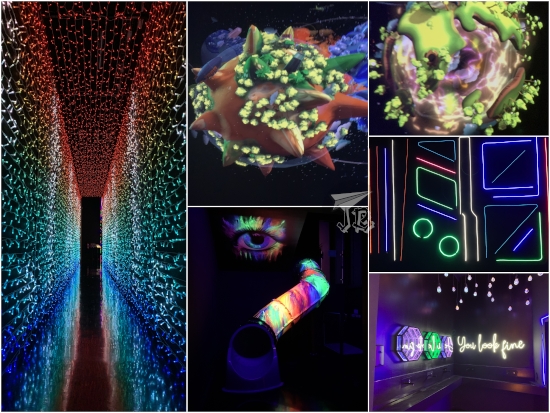
As you climb down the stairs, you have a very cool corridor with mirrors and lights that lead to the projection area. I had a ticket with entrance and “iris picture”, so an employee took me to get that one (I guess because the photographer was about to go on a break). We had to try a couple of times as it was hard to force my eyelid open under the bright light of the flash. The photographer was very patient with me and we were done in a few minutes.

Interactive Museum Nomad access corridor

I found my way back to the beginning – the museum is surprisingly small. The immersive projection is shown on the four walls and the floor. The projection I watched was called Utopia 1.0, where millions of digital blocks work as a tridimensional Lego set that sort of “build” a surreal world with dragons, deer, sculptures, whales, high rises, dinosaurs… The whole thing takes around 20 minutes and you can watch sprawled on the floor, or sitting up on a pouf – I chose this last option as it allowed me to turn around.

Interative Museum Nomad: Utopia projection

Following the projection, I went upstairs to do the activities. There’s a virtual reality experience where you get to travel the cosmos and see a lot of “space cetaceans”. I wonder why digital artists are so keen on whales… Another of the activities consists on “painting” planets with a giant brush as they float on a wall, and when you colour them all, you get to see penguins on a rocket or something… I did not catch it well because a bunch of kids burst in and took over. On another wall, there is a bunch of neons that you can play with using an app that you download on your phone, and blast music so they pulsate with that. Finally, the nice attendant is at the ready to take your picture at some stairs photo call (I think it is the glorified emergency exit), and you can go back down using a spiral slide.

There is finally a last corridor with lights and you end up at the shop, where you can start all over again, as there is no limit about how long you can stay in the museum. I really liked the first corridor, so I went back there for a while. Then I walked into the projection area again just in time to watch the dinosaurs roam once more. A fun detail is that even the toilets are “in character” with neon and messages.

Interactive Museum Nomad exhibits

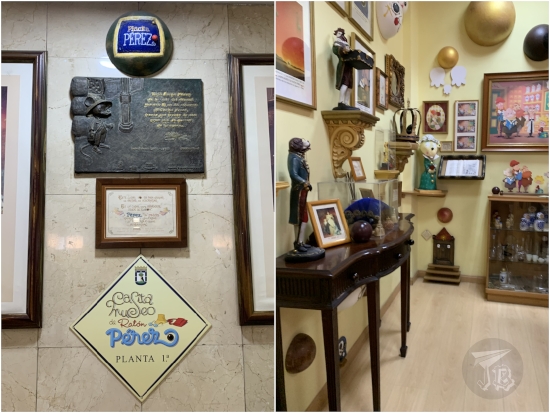
On my way out, I bought myself a shark glass at the shop. There was also a very fun pufferfish cocktail glass, but I thought it would be awful to clean after use – not that the shark one is going to be much easier though… I left and headed off to a place I’ve always tangentially felt curious about, even if I’m not really the target public for it – it’s called Casita-Museo del Ratón Pérez.

Ratón Pérez or Mouse Pérez (also called Ratoncito Pérez, Little Mouse Pérez) is the equivalent of the Tooth Fairy in Spanish-speaking tradition. In 1894, writer Luis Coloma was commissioned with writing a tale for the future King Alfonso XIII, who had lost his first tooth. This tale penned the folklore mouse into print. According to the story, Mouse Pérez lived in central Madrid, in a biscuit box in the patisserie Prast, situated in number 8 of Madrid’s Calle Arenal. The town hall installed a plaque to commemorate the place and when the shopping centre in that building became almost empty, someone came up with the idea of building a “museum-house” dedicated to the mouse.

Museum-House of Mouse Pérez

The kids had a blast for sure, the visit is a forty-minute activity 100% dedicated to them . The guide has them running round looking for stuff and going into small doors. I snooped around and found it an interesting business model – though it falters when you pay a bit of attention to detail: books like 1984 or anatomy guides may very well be interesting, but a bit out of place in a children’s museum. At the end of the visit, the guided asked me what I was doing there and I told him I… wanted to see what the fuss was about, what kind of things they did in such “alternative” museums. We chatted away for a bit before I left.

To end the day, I did some shopping and I headed back home – the trains were delayed, but I eventually made it home and had a pizza dinner, because I suck at staying fed on day trips. Truth be told, I wanted to step by a famous bar to eat a calamari sandwich, but it… was complicated, with lots of signage on where to stand and wait to be seated, but there was nobody around, so in the end I decided I did not care enough for the calamari. Some other day – I’ve been saying that for months now though…

2nd December 2022: “Tutankhamun Immersive Exhibition” in Madrid (Spain)

In 1922, an archaeologist named Howard Carter discovered the tomb of Pharaoh Tutankhamun in the Valley of the Kings, Egypt. Tutankhamun belonged to the Eighteenth Dynasty. He reigned over Egypt around 1330 BCE, and restored the Ancient Egyptian religion. When he died, he was buried in a smaller-than-expected tomb, probably because his death was sudden and unexpected – for a while, it was hypothesised that he had been murdered, but it seems that he died from a combination of an infection and several previous pathologies (nothing to do with the fact that his parents were brother and sister, I’m sure).

The tomb was robbed and restored twice within a few years of Tutankhamun’s death, but it was eventually buried by alluvium brought by flash floods, and the debris from other tombs being built nearby. Thus, when Carter found it in 1922, it was mostly untouched and unspoilt. The death of Carter’s sponsor George Helbert, five months after visiting the tomb, sparked the rumour about a Curse of the Pharaohs, which has inspired countless works of fiction.

In 2022, Spain is living through a fad of “immersive exhibitions”, heavily based on technology, virtual reality and computer games. I was curious about what it would be about, exactly, so I decided to celebrate the end of work season by hitting the exhibit. I was early as the day before there had been a bit of public transport trouble and you usually have more chances of getting in if you’re early rather than late. Thus, I reached Centro Cultural Matadero in Madrid about half an hour earlier than my ticket read, and I was let in without any issue.

The “immersive exhibit” Tutankamón: La Exposición Inmersiva was devised by MAD, Madrid Artes Digitales, which specialises in digital creation and immersive experiences such a this. The exhibit has been designed in cooperation with the History Channel.

The first bit was a number of panels, explaining the “Egyptmania” that swept the world after the discovery of the mummy, the process of mummification, or life in ancient Egypt. The second held a replica of the inner and outer sarcophagus, along with the mummy, then replicas a few artefacts that had been found in the tomb, including the famous golden mask the pharaoh was buried with.

Three part collage: The upper picture shows the mummy of Tutankhamun suspended from the floor, imitating an open sarcophagus with the lid open on top of that. Bottom left: reproduction of the mortuary mask, in gold and blue, it has the typical Egyptian hair and beard. Lower right: reproductions of small objects found in the grave: estelae and human-like small sculptures.

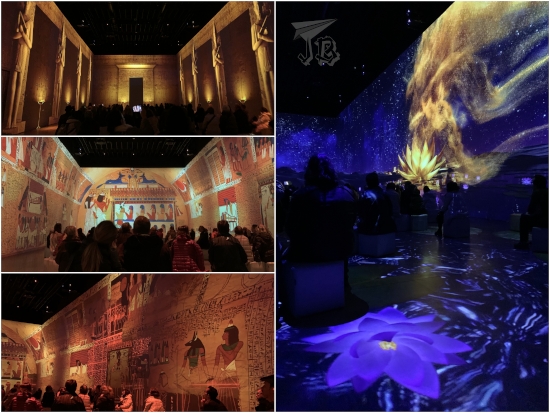
Afterwards, you go into a huge ward with a projection on all four walls plus the floor, which is very spectacular but does not tell you much about the real history of either Tutankhamun or the tomb, it was just a cool video of flashy images with a narration in first person, showing the interior of the tomb, yes, but mostly vaguely-related imaginary, including some of the Egyptian gods. What it did have, and that was neat, was an original newsreel about the opening of the tomb, including Howard’s voice.

Collage of a 3D projection. Left, from top to bottom, views of Tutankhamun's grave: the outer area, in sandstone with sculptures, and two views of the inner painting an decoration, showing figures and hyeroglyphs. On the right, a projection of lotus flowers blooming and turning into gold, representing the soul of the pharaoh.

A large ward with a projection of a starry sky on the walls. At the front, a view of Tutankhamun's mortuary mask, eyes glowing.

A projection of Tutankhamun's mortuary mask, eyes glowing. Around it, golden writing symbols, maybe hyeroglyphs.

The following area had an augmented reality game, which I won (didn’t get anything though), a photo booth that I skipped and some “I bet you didn’t know” facts – about one third of them were common knowledge, and another third was information from previous panels though.

Finally, there was a room with virtual reality glasses and headphones, but my headphones wouldn’t work – I later realised they were not plugged into anything. This represented – I think – the trip to the Egyptian underworld, as I “started” at Tutankhamun’s tomb, then there were volcanoes, and I ended up in front of Anubis, who weighed a heart against a plume – the Judgement of the Dead.

The VR experience there was the last spot in the exhibition – because I skipped the photo booth – before one went into the shop. In the end, I was there for about an hour and a half, but it almost took me two hours to arrive and an hour and half to come back.

Though I don’t regret the mental break, I have decided that immersive experiences are not for me.

18th & 19th May 2019: Madrid (Spain) for Jupiter (and fesFE[M]!)

The weekend started extremely early on Saturday, when I took the first bus out to Madrid, and I think I was there around 7:30 to meet my friend C*****. She had been having a rough time and she had asked me to “keep her head off things”. Up until a couple of days before, we did not even know whether she would be able to come to the concert, so I had a whole plan up my sleeve. Unfortunately, a couple of steps backfired slightly. The main event – which we had been planned since the previous December – was Jupiter’s concert for the ZEUS Europe Tour on Sunday the 19th, but we made a whole weekend out of it. I was not actively following Jupiter at the time of the announcement, but C***** and I decided to attend because Madrid is easy and convenient, well-communicated and an opportunity to spend a weekend decompressing somewhere. As the time drew near and we could access more material, the excitement built up – I also managed to find the album they were promoting and it sounded really well, actually.

Her bus arrived earlier on Saturday than mine, and when we met, we decided to have breakfast at the coach station, to catch up and to give shops and so on the time to open up. When it was a reasonable time, we took the underground to drop our luggage at the hotel – the lovely EXE Moncloa. I had selected it because it was near the concert venue, and I hoped that we could hang out the terrace and the swimming pool, which unfortunately did not open until June. After getting rid of the luggage, we rode the underground towards the neighbourhood of Chueca, where I had looked up a bunch of Goth apparel shop which were right up her alley and… did not open at 10:00 as the internet said, but at 12:00.

Fortunately, other shops were already open and we were able to pass the time amicably. We were actually close to the Telefonica building, so I suggested we headed up there for the TeamLab exhibit, which I had already seen, and I thought she might like the digital art.

Teamlab logo and digital art: Waves, butterflies in red and green, and a dripping circle as if it were painted with a brush. All of them are light or bright colours on black.

Afterwards, we moved onto Callao Gourmet Experience for a snack. I wanted to introduce C***** to the Niji Mochi shop, and we also shared a chocolate ice-cream shake.

Mochi and coffee with whipped cream

Afterwards, we were shopping for a little longer before we moved on to have lunch. I had a surprise for her. While I care little to nothing about Korean food, she is a fan of everything Korean. Thus, we hit one of the best Korean restaurants in Madrid, called Seoul. I gave her free reign to order for both of us and we shared, though being honest, the only thing I enjoyed was the green tea at the end.

Lunch: fried dumplings, roasted meat, rice with vegetables, and green tea.

After lunch, we went on and found an underground station. We rode towards the Museo Arqueológico Nacional, National Archaeological Museum, although we had not realised that it was museum day so instead of a quiet exhibition I was used to, we had to deal with a ton of families! On the bright side, it was free, though. The museum, which shares a building with the national library Biblioteca Nacional, was founded in 1867, at a time when creating national museums had become popular among European governments. It was the start of the development of archaeology in Spain. I remembered it from the time I was a kid, dark and with wooden floors, but it was recently renovated with wide spaces and modern interiors.

Exhibits at the archaeological museum: bones from a mastodon, boar statue, lady statue, Neanderthal skull, Roman mosaic of an octopus, Horus statue, Iberian stelae, primitive animal that looks like a boar or a bull carved out of stone, Grecian vase

C***** was tired from spending all night in the bus, so we left the museum and headed back to the hotel to finish our check in process and then catch a break. On the way, we stopped and bought a few snacks for the following day because you always have to be ready for a post-concert low.

We had to look for a place to have dinner, and I found a few interesting places. There were not one, but three Japanese restaurants in the area where we were staying. One of them required queueing and sounded quite self-important, so we were left with two options. We decided to try one in the evening and the next for lunch the following day. Thus, I booked a table at the nearby Naniwa. We had some decent sushi, chicken, and takoyaki… then ordered takoyaki seconds because we had a discount (and I was hungry because I barely picked on lunch).

Dinner: sushi, fried chicken, octopus balls, chicken skewers

The next morning, we headed to the venue Sala Copérnico door around 9:00 and upon seeing nobody queueing yet, we went to have breakfast at a nearby café. Then, we walked around the Moncloa park area, mostly chatting, until we went back to the venue – no queue. And later went back to the venue – no queue. And afterwards, we went back to the venue again, just to find there were still no people in the queue.

Coffee and bread breakfast

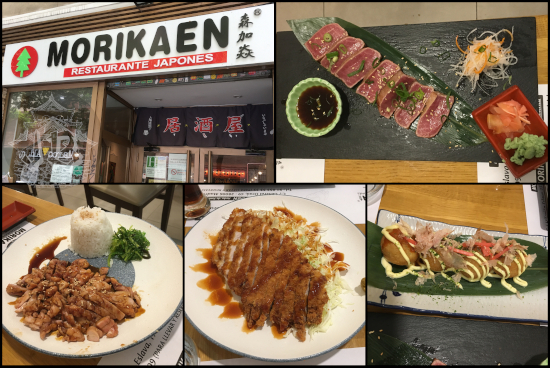
In the end we ran into the supporting bands went to have lunch to the second Japanese restaurant in the block, Morikaen. It was around 13:30 as we were heading there, and I said something along the lines of “I feel sorry that they’ll arrive and there’s nobody here to greet them”, and as we turned the corner we almost literally ran into the whole crew coming out of the bus. Talk about timing. They looked tired so we just walked by, but we were rather sure that we had been noticed. On our way to the restaurant, we walked past a family all clad in “Sunday church clothes”, and their small girl wearing aaaall white just stared at us – in rock-goth black clothing – with pure envy in her eyes. Here’s to you, little one. You’ll get there too.

Lunch was all right – tuna tataki, tonkatsu, takoyaki. A bit more expensive than the previous day’s dinner, but we also ordered higher-class ingredients and more complicated dishes.

Lunch. Tuna tataki, rice and chicken, breaded pork, octopus dumplings

Jupiter is a Japanese band who define themselves as “melodic metal band”. It could be said that it is a visual kei symphonic power metal, which means they combine a very particular image (or a bunch of images, the most iconic being Hizaki’s Baroque-inspired dresses) with a subgenre of metal that combines hard drumming, metal guitars, and elements of classical music. On the 22th November 2018, Jupiter announced their new album, a Japanese Tour, and a European Tour, ZEUS Europe Tour. Bassist Rucy left between the announcement and the album release due to creative differences, and I really thought they would cancel the tours, but luckily everything went ahead. The remaining members – guitars Hizaki and Teru, current vocal Kuze, and drummer Daisuke were joined by support bassist Shoyo.

Schedule for the tour

There were two promoters involved for this concert. The local promoter, which in Spain was Madness Live, sold general admission tickets – they have a clean and neat webpage and buying from them is easy; I got ours on the 12th of December. The other, Editions Hikari, was in charge of coordination of the European tour, general information, and ticket upgrades. I think they are one of the worst organisers I have ever come across.

Hikari announced those upgrades in January. There would be VIP experiences, on sale on the 14th of February. Besides that there would be two kinds of upgrades, there was no real information about them until a few days before the sale. The best tickets were called “Venus Premium” (40€ face value + 5€ reservation costs) included autographs + handshake + backstage access before or after the show or soundcheck access (if possible) + photo with 1 member taken by a professional photographer (sent by e-mail later after the tour) + priority access to the merchandise, and there were five per show. The “Venus” upgrade (25€ VIP + 3€ reservation costs) comprised autographs + handshake + priority to the merchandise, there were 20 available per show. Getting the tickets was chaotic, but in the end, C***** managed to buy the two Venus Premium tickets we wanted – luckily. A lot of people did not even find out about the option to upgrade. In the end, the backstage pass / soundcheck was not available for any concert in the tour, and the priority access to the merchandise was impossible in Madrid due to the two independent promoters. Either of the VIP upgrades granted the option to buy an “Instax” (Polarid) photograph with the whole band at extra cost.

Hikari’s Facebook instructions were that Venus and Venus Premium ticket holders had to go to the merch booth – to which they supposedly had priority access – at the beginning of the concert. However, as the access to the actual venue was controlled by the local promoter ticket, there was no way they would access the merch booth with any kind of priority unless the managed to somehow skip the queue. Any kind of communication with Hikari was impossible as “they could not check emails, Facebook messaging, nor reply to comments.” However, they still made posts, and that is how we found that the CDs which Jupiter brought to sell at the merchandise booth were confiscated by customs’ officers before the first concert!

On the 10th of May, we received an email form the local promoter, Madness Live, informing us that the door timing had been changed and they were nice enough to send us the following schedule: Doors at 19:00, VII ARC (German support band) at 19:15; fesFE[M] (Japanese support group) at 20:20; Jupiter at 21:30. There was no information on the upgrades, because they had no clue about those, as Hikari was in charge. The day of the concert thus arrived and we had no actual about that, except for rumours and comments of what had happened in previous concerts. That was why, even if there was no queue, we had decided to stick around Sala Copérnico instead of heading into the city centre.

Eventually, after lunch, I decided that I was too tired to keep going up and down the streets, so around 16:00 we settled at the venue doors until they opened so we could get into the chaos that was the concert. At 16:30, other people arrived, so we got talking – that was how we found out that many people had never even heard about the upgrades. Doors opened around 19:00 – without any kind of priority access to the merchandise, nor separating VIPs and GA. C***** and I decided to divide and conquer – she went to secure a spot on the first row, while myself checked in at the merch booth to get the Instax tickets with the whole band.

That is when I saw the lousy, half sheet of paper taped there saying “Venus and Venus Premium ticket holders, gather at the merchandise booth at 20:00”. That placed the “Venus experience” in the middle of the support act, which meant either having very good friends who saved you the first row spot, or sacrificing it. We decided to give the place up and find somewhere more convenient so we could move about. Without holding spots for the VIPs, this was totally unacceptable in my opinion, especially since there had been no early entry, or priority merchandise. A bunch of people who did not want to buy anything missed out on what they had paid for.

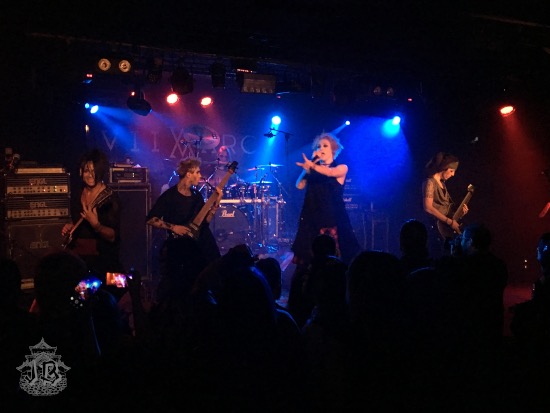
The first support band was VII ARC. They were okay, a bit of stereotypical German heavy metal. I can see how they might appeal to the general metalhead crowd, but it feels that they were chosen because “they dress up sometimes”, and Hikari thought they would fit. It is formed by Kay (vocals), Fū (lead guitar), Bena (guitar, screaming), Grazel (Bass) and Z’ev (drums), and they could probably fit a bit on the “visual” style, but they did not bring any distinctive gear.

VII Arc playing in Madrid

At 20:00, as fesFE[M] prepared to take the stage, the Venus Premium and Venus ticket holders gathered around the merch booth and we were ushered past a barrier, towards the bar. There, we had to wait for about 10 minutes while the second support act started. A Japanese staff lady with little to no English came to “check” the Premium tickets and “sort of explain” to us the whole thing. First the Venus Premium would be shown backstage one by one for the one-on-one photograph – there were four of us, we never knew if the fifth was never sold, they did not come, or they missed the whole experience. Afterwards, we would come out again and joined the regular Venus for the autographs and handshake, then the Polaroid would be taken for the ones who had bought it. We were ushered past a curtain and the backstage door towards the mess room where the remains of the lunch buffet were.

As I entered, I caught sight of Shoyo, the support bassist, who was sitting down on a low mattress in a room to the left, looking bored. I greeted him in Japanese, and he greeted back. C***** turned to see whom I was talking to and her eyes were wide. I asked Shoyo if he felt lonely, he said a little. Another attendee who also spoke Japanese asked for a picture (beating me to it, actually) but he said he was not allowed.

The conversation died out when it was time to go into the private band area for my picture with one of the members. As I walked in, there was Kuze to my left, Daisuke to my right and Teru and Hizaki in front of me, Teru dead centre and Hizaki a little to the right. I was asked whom I wanted my picture with and chose Teru, as I had long ago decided that I would if I could. He smiled and posed with me, then he shook my hand. I have got to learn to look into Japanese musician’s eyes when I talk to them.

We said good-bye to Shoyo on the way out, and almost left, but it was now time for autographs, handshakes and Instax. I pulled out the CDs I had brought for C***** and myself, and I got to shake hands with all four of them and receive the band’s autographs. Since the CDs the band brought had been seized, we might have very well been the only ones in the whole country that produced some official material for signing. Then, we took the Instax and the staff would ask with a thumbs up sign “okay?” to check the picture was good, before we left.

CDs signed by Jupiter members

All in all, the band was very friendly and amazing, but the timing and organisation was horrid. We lost out first row – despite having “priority access”, and we missed half of the fesFE[M] concert. As Copérnico has two levels though, we found a nice spot at the stairs that connect both, and I could lean against the handrail to watch the rest of the act.

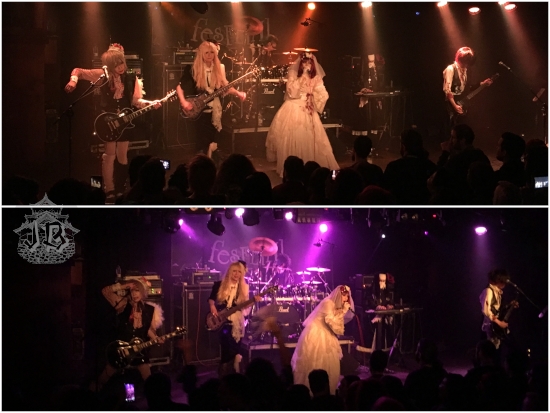
fesFE[M] is a relatively new visual kei band where all the members take up “doll” personas. Their career in 2017 and released their first mini-album in May 2019, just in time to come over to Europe for Jupiter’s tour. For each album / season, the band dons a doll theme, and they were currently on the “horror genre” dolls. The members and their doll types are: Lion [リオン], vocal, Distress Coppelia doll (from the namesake ballet, dressed as a bloody bride); Aito [アイト], guitar, Apathetic Prince doll; Zeno P [ゼノP], guitar, Bloodthirsty Child Killer doll; Toru [徹], bass, Emotional Princess doll; Rensa [蓮沙], drums, Psycho Butler doll; and Jun, keyboards, Scalded Dollmaster doll (dressed as a nun because… reasons?).

The first time I heard a song by fesFE[M], I was not extremely impressed – the PV was a bit too creepy. However, they are really good in person, even with the bad sound quality and reverberation in the venue – and the fact that we missed about half of their act. They were really engaging. The whole visual part was amazing, and the coordination was great! Their music was much more powerful live. The band played some songs from their mini-album enseMble autoMata: Doll in blueberry jam [Doll in ブルーベリィジャム], Arachne ni haitoku wo [アラクネに背徳を], Psychological stolen heart, and Freiya [フレイヤ].

Fesfem live in Madrid

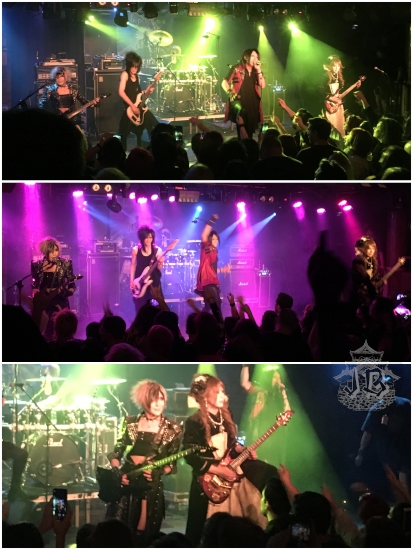
The Jupiter concert was as expected, very energetic and fun – it actually went beyond expectations. Our spot was really good in he end, a bit raised, without getting pushed, and we actually watched the concert next to fesFe[M]’s bass Toru. Sometimes he smiled and waved at us, and we waved back without fail.

Kuze, Jupiter’s vocalist held his ground better than I thought he would be able to. I was kind of impressed when I listened to the Jupiter single Theory of Evolution and later to the album Zeus: Legends never die. While we were expecting the guitar and metal power, Kuze’s voice range in the recording was rather wild, and I did not think that he would be able to keep it up live, especially on a final concert after touring both Japan and Europe. He proved me wring, and he held all his notes and his vocal range, just like the recording. He had practised his English a lot and learnt the MCs, but he switched to Japanese quite often, and he spoke too fast for me to get! He did a great job even with songs that had been released in the previous vocalist’s time.

Daisuke was pretty much hidden by his own drums from where we were, but we did see him bounce a couple of times. Hizaki was on the other side of the stage from us, and he looked divine in his Baroque dress. I don’t understand how he can even move in those clothes, much less play guitar or crouch, which he did so a few times in order to interact to first-row fans. A couple of times I did fear for his safety as someone grabbed either him or the guitar. Most of the songs that were played were his. It’s fun to imagine what he would be thinking when writing “die, die, die, go fuck yourself”, when he presents as such a beautiful and innocent lady, but it surely was fun to yell.

And finally, Teru had a blast. He kept twirling around as he played, his stud-leather coat swirling around him. He played with a huge smile on his face all the time and he gave off the vibes that he was having a lot of fun. He also interacted with fans a lot.

Jupiter Live in Madrid

Setlist:

  1. Arcadia
  2. Last Moment
  3. Angel’s wings
  4. Drastic Night
  5. Bring me out
  6. Show Must Go On
  7. No cry no more
  8. The spirit within me
  9. Tears Of The Sun
  10. Memories of you
  11. B.L.A.S.T
  12. Blessing of the Future
  13. Zeus: I. Legends Never Die / II. Conversations with God
  14. Symmetry Breaking [Encore 1]
  15. Theory of Evolution [Encore 2]

While the concerts were a lot of fun, the whole event was stressful due to the abysmal organisation. I actually feel a bit ripped off, because they did not deliver a lot of what they had sold in the upgrades. At least C***** and I are lucky enough that we managed to get our pictures, autographs, and saw the concert from a relatively good place. All in all, Jupiter are amazing, they were super nice, and so were the guys from fesFE[M]. The concert was great, and we don’t regret going for a second.

After the event, waved at Toru for what we thought was the last time. When lights went on, we also saw Rensa, who stopped for us when we told him he had done a good job. C***** and I decided to pool our money together to buy the CDs fesFe[M] had brought – and not got seized. Apparently, it is typical that the entry-level bands hang around merchandise booths after concerts, and we were lucky enough that they agreed to sign the CDs and take a photo with us. Lion was extremely surprised and nice – or acted so. He complimented me on my poor attempt of Japanese and complied with what we requested.

CD signed by Fesfem members

Finally, C***** and I headed back to the hotel, and we went home the next day – fortunately we left from the same bus station so we could maximise our time together.

Hikari took a few days to send out the VIP pictures, but they eventually arrived on the 1st of June. Getting them was also hard, and amateurish – they wanted to put them in a Google Drive link and post that on Facebook. At least we got them to send them via email, citing European Data protection laws at them… I really, really hope to avoid this promoter in the future, but if I do, I’ll be on the lookout in order not to miss anything.

4th May 2019: Museo Naval & TeamLab in Madrid (Spain)

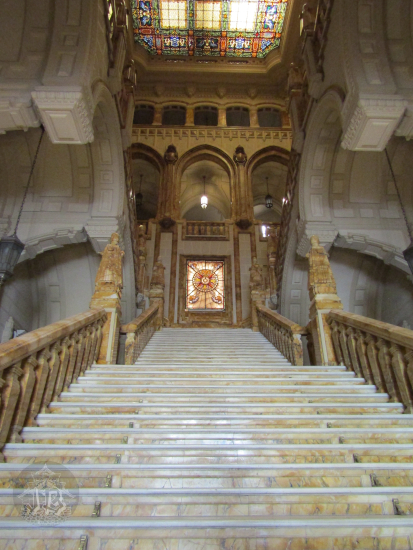
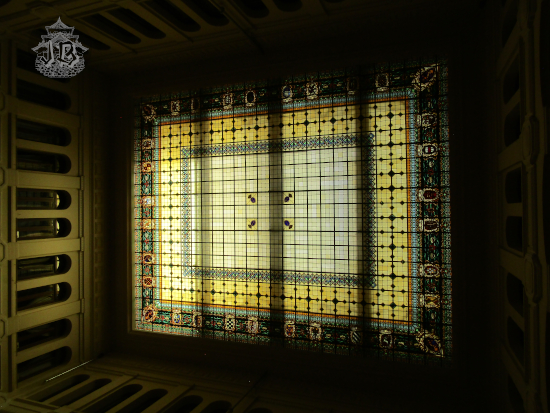
There were a couple of exhibitions in Madrid that I wanted to see, and my mother decided to tag along. We took a train and walked to the Museo Naval, the Navy museum, which was being renovated – so the permanent connection was not being shown. In the end, that turned out to be awesomely lucky because it allowed us to see the marble staircase and stained glass of the classical building, which is very rarely shown.

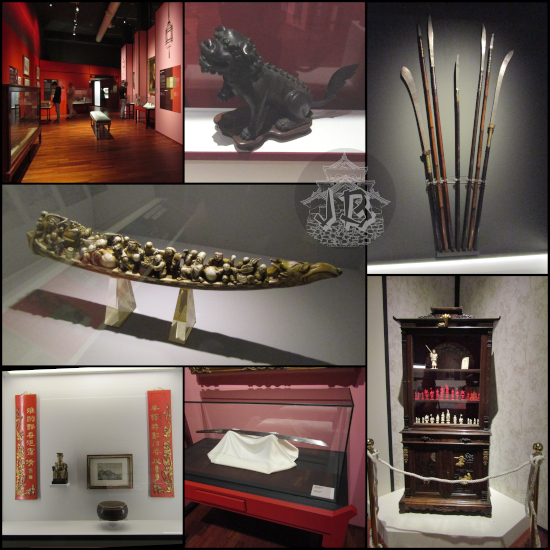
The exhibition that I wanted to see was related to the trips to Asia, mostly China, Japan and Philippines, and it was interesting for 3€. one of these days I would like to come back to see the whole museum when the renovations are over. It’s on the bucket list, I swear. One of these… I’m not sure, months, because I’d been saying I want to go to the Museo Naval for years.

After seeing the “Asia in the Naval Museum” exhibit and the ceiling, we walked towards the Telefónica Building. There, there was an Exhibition by TeamLab, the museum of virtual art from Tokyo! I really want to see it.

There were three exhibits:

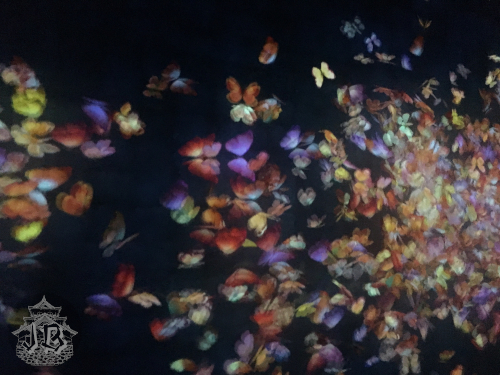
  • Flutter of Butterflies, Born from Hands (2019), a magical wall where you can rest your hands for butterflies to come up.

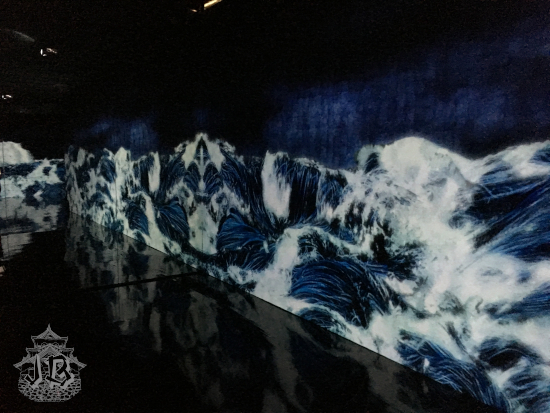
  • Black Waves: Lost, Immersed and Reborn (2016), an amazing scenery of breaking waves.

  • Enso – Cold Light (2017), a self-tracing enso (perfect circle traced with one stroke in calligraphy).

I was very happy to see this, and then we walked around the “Evolution of phones” exhibition- however, I apparently have not taken pictures of that one. I think it was too nostalgic, because god did it make me feel old (≧▽≦).

Before we returned home, we had lunch at a De María restaurant – an Argentinean meat-grill where we got a glass of rose champagne to go. Another place I want to return! However, this time I did not take pictures because the atmosphere did not feel adequate to do so.

2nd September 2018: HYDE LIVE 2018 @ Odaiba, Strike 2, and Pretty Lights, Strike 3 {Japan, summer 2018}

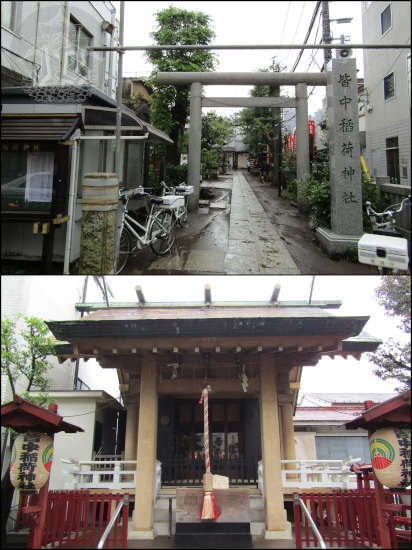
It was raining that morning when D****e and I walked out and headed towards Shin-Okubo [新大久]. The weather actually turned so bad for a while that around halfway, we just walked under a bridge to wait the worst of the downpour out. By the time we arrived at our destination, though, it had cleared out. We were walking to Kaichū Inari Jinja [皆中稲荷神社], also called Minna Ataru no Inari.

Entrance to a Shinto sanctuary through a back alley, and main altar

The shrine is dedicated to the kami [神] Inari [大稲荷], one of the most important deities of the Shinto mythology, the kami of fertility, rice, tea, sake, agriculture, and worldly success. Inari is said to use foxes as messengers. Shrines dedicated to Inari often have a lot of torii gates, usually offered by business in search of that success, and stone fox guardians. The most famous Inari Shrine is Fushimi Inari Taisha in Kyoto.

The legend surrounding Kaichū Inari Jinja tells that after the introduction of firearms in Japan during the Edo Period, a battalion was stationed near the shrine. The captain could not shoot well, no matter how much he trained. The deity Inari appeared to him in a dream, and after he went to the shrine to say thank you, he became a great shooter. Not only him, all of the battalion went to the shrine and they became good shooters. Both “Minna Ataru” and “Kaichū” translate as “hit all the targets” and at the same time “everybody hits”. Kaichū Inari Jinja became “the Inari shrine of everybody hits the target”, Minna Ataru no Inari Jinja. The news spread, and eventually people from the whole country started visiting so their wishes came true. The shrine’s relation with firearms was constant until it was burnt down in WWII.

Nowadays, Japan does not have firearms, but people still want to hit… for concerts! And thus Kaichū Inari has become the fan-shrine, where people go to pray to hit for lotteries for concerts and events!

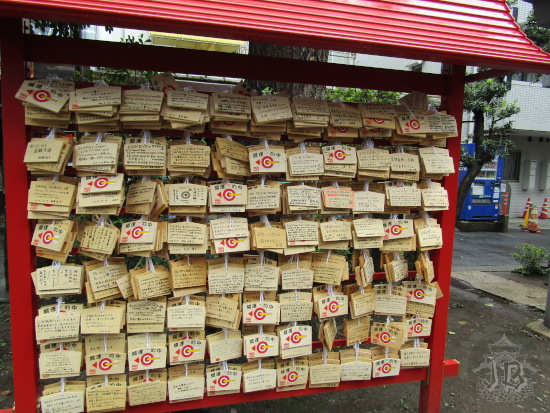
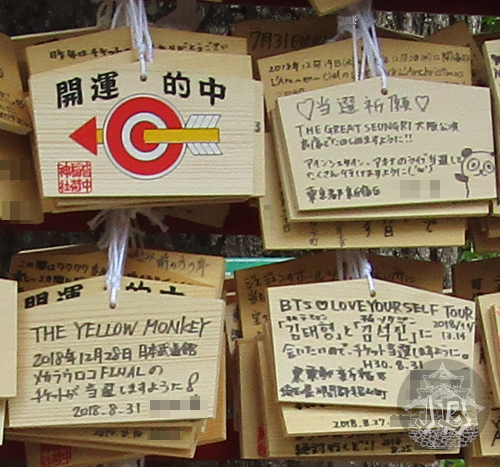
I’m not even kidding. Kaichū Inari Jinja is also known as “the fan shrine”. In Japan, you do not queue for concerts. Instead, your ticket has a number printed on it, and you enter when it is called. However, there are different series of numbers. The best tickets are offered within the artists’ fanclubs, and if there are more requests than tickets, these are assigned lottery-style. Fanclubs also have lotteries for other privileges such as attending trips and exclusive events, VIP meet&greets or special merchandise – when I belonged to Gackt’s fanclub I hit for fanclub tickets for the Last Visual Live and his birthday dinner. People want to “hit” for these tickets, and somehow Minna Ataru no Inari became the shrine to go to pray for that. Fans go to the shrine to offer a prayer, then they write what they want in volition tablets called ema [絵馬], which are then hung in the shrine premises. Much nicer “hits” that the ones which kill people.

An offering wall with tons of votive wooden tablets

Close up of the votive offerings with names of bands on then

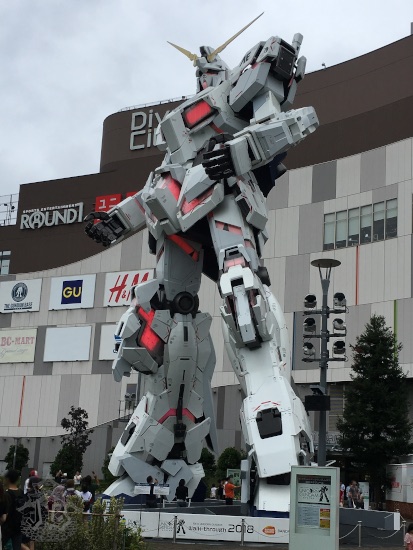
After visiting the shrine, we headed off to Odaiba [お台場] again, to meet with N***chan for lunch. We made a short visit to the Unicorn Gundam beforehand, but it was not moving.

Gundam robot statue. It is white and taller than the two-story shopping centre behind it. People can walk under its legs

Then we went to have lunch at an “Osaka delicatessen” restaurant at the Venus Fort. I ordered Takoyaki (buried in katsuomi (≧∇≦)) and kani koroke (octopus dumplings with bonito flakes, and crab dumplings). Yummy! Apparently other people’s orders were not as great though…

Dish of octopus dumplings that cannot be seen because there are a lot of bonito flakes on top

Afterwards, we headed to Zepp Tokyo for the second concert of HYDE’s Live 2018 concert, again with STARSET. Impressions were similar to the previous day. I really enjoyed STARSET, who played the same songs, and I again had mixed feelings about HYDE’s – not bad but… could have been better. I had not figured out my problem with the disconnected act yet.

Setlist:
1. Fake Divine
2. After light
4. Out
5. Set in Stone
6. Don’t hold back
7. Zipang
8. Who’s gonna save us
9. 監獄ロック [Kangoku Rock]
10. Rise or Die
11. Another Moment
12. Two Face
13. Devil’s side
14. Midnight Celebration II
(pause)
15. Kiss of Death
16. Ahead
17. Rise up
18. Ordinary World (Duran Duran cover)

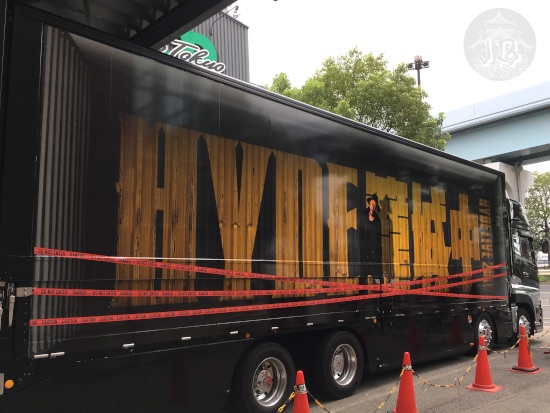
Hyde's tour truck reading his name

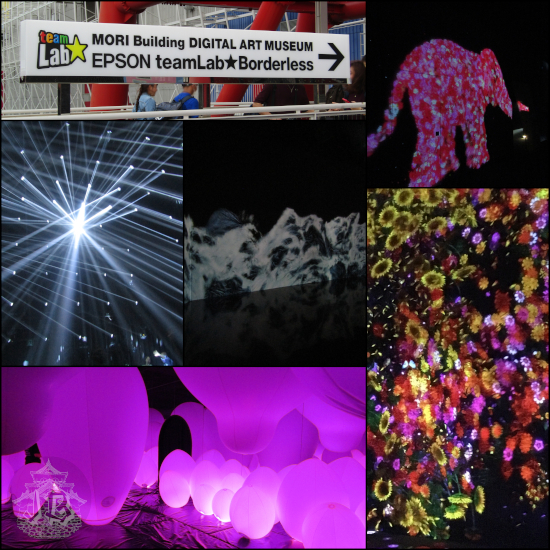
After the concert we had tickets to visit the MORI Building DIGITAL ART MUSEUM EPSON teamLab ★ Borderless. This is a pretty much interactive museum that relies on technology and light to create art – or at least pretty things for you to play with. D****e, N***chan and I were very lucky that it was open late, so we could go after the concert. There were few people there and we could be silly around it. Part of the museum was closed because some TV station was there doing interviews though, and even then it was worth the visit.

Most of what you see in the Digital Art Museum are light projections. You’re encouraged to interact with them, even create some of them that they will project for you. We saw a butterfly and flower area, pink elephants, kangaroo, waves…

I enjoyed a couple of the exhibits particularly – one of them was a light water fall, in a room that had kanji shadows on the walls. If you touched them, they turned into what they represented. I also liked the whales made of light and how peacefully they moved and floated. There were some other interactive exhibits that were very fun, like the… egg-balloons thingies which you could prance through or make float.

Collage of Mori interactive and light art – a walking elephant made of projected lights, it's pink with white flowers. Many rays of white light coming from everywhere in the dark. Waves. Giant purple-pink balloons. Flowers projected on the walls – sunflowers, daisies in different colours

Dancing whale with flowers, projected with light

Afterwards we had some dinner and left for home.