8th August 2024: The Museums in Moncloa (Madrid, Spain)

It’s quite hot out there, but I decided to hit a couple of museums in Madrid. A few months back, I got a card for the national museums, thinking I was getting a better deal than I did. Though it is true that you can get enter (most of) the national museums for free, you have to ID yourself, so you still have to queue, which is what I was expecting to avoid. However, it has at least pushed me to try and see a couple of museums I would not really visit (or even be aware of!) otherwise.

There are two museums in the district of Moncloa-Aravaca, an area I’m not usually around. One, I was curious about. The other is one I would not have even considered without the card: the Costume or Fashion Museum and Ethnographic Heritage Research Centre Museo del traje. Centro de Investigación del Patrimonio Etnológico (CIPE). It is a collection of pieces of clothing, textiles and accessories from the 17th century onwards, and I’m sure it is amazing if you know anything about fashion… which I don’t. The museum is organised chronologically, with a few pieces from the Middle Ages, then fabrics, costumes and complements since they became a thing.

There is also a collection of traditional outfits from different regions throughout Spain. The visit finishes with some of the big names in fashion, including Coco Chanel, Balenciaga, or Christian Dior. There was also an area for visually-impaired visitors, which allowed them to touch mannequins and fabrics from different style periods in history.

Costume and Fashion Museum Madrid

They were running a temporary exhibition called Vistiendo un jardín (Wearing a garden). It deals with the nature and flowers in fabric and costumes from the Baroque period onwards. They were in the middle of a guided visit so there was a big group, and I could only have a quick walk.
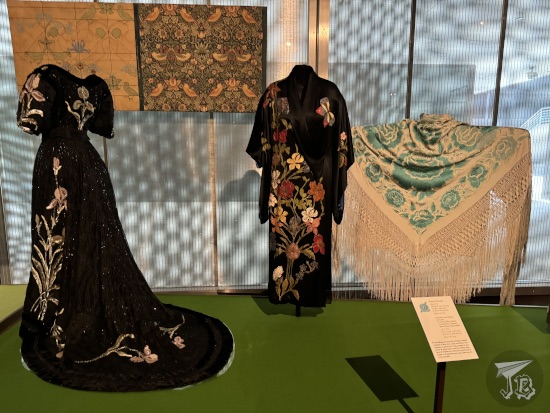
Wearing a garden Temporary exhibition

I walked over to the museum of the Americas Museo de América. The institution exhibits archaeological and ethnographical artefacts from the Americas, alongside art from the Palaeolithic period to the present, with a strong presence of Colonial art.

The origin of the collection was the Royal Cabinet of Natural history that Charles III had established in 1771. The collection increased with objects brought from discovery expeditions and Spanish colonies in America, especially those unearthed during archaeological excavations. In 1815, the science artefacts from the cabinet were integrated into what became the National Museum of Natural Sciences, and in 1868 the antiquities, ethnography, and art were transferred to the Museum of Archaeology. In 1941, the American artefacts were transferred to the newly formed museum. A more recent source has been that of donation and legacies.

Nowadays, the collection comprises around 25,000 artefacts and about 2,500 of them are exhibited – though the most important ones are copies due to “conservation issues”. The archaeological artefacts include Mayan, Inca, Aztec, Nazca, Amazonian, and even from North American native cultures who lived in what we now call the Great Plains or Alaska. The Colonial art pieces mostly include religious art and what is called pintura de castas, which tries to represent the appearance and daily life of the peoples of mixed race, descendants of European, African and Indigenous inhabitants of the colonies. There is also a ward dedicated to modern art and social criticism against colonisation. I found the organisation of the museum a bit strange, by theme areas instead of time-and-place.
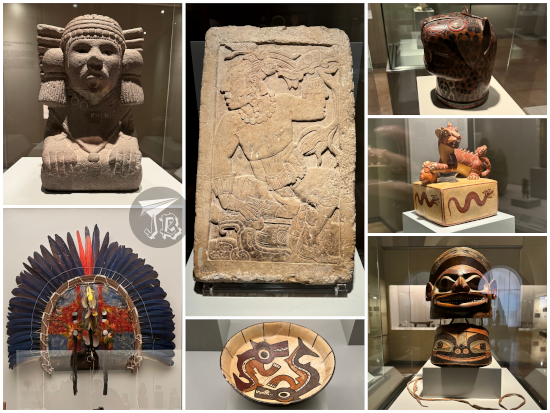
Artefacts from the Museum of the Americas

Arguably, the most important group of pieces that the museum exhibits is the so-called Tesoro de los Quimbayas (Quimbaya Treasure). The Quimbayas were a small indigenous group from precolonial America, who lived south of what is now Medellín, Colombia. They were known for their works in gold and an alloy of copper and gold called tumbaga. The treasure comprises 122 pieces, which represent about one fifth of the original findings. It is believed that the belonged to two sets of grave goods, and dates from the 5th or 6th centuries CE. The treasure was dug up during the Colombian gold fever, when archaeological items were sold for their weight in gold. The artefacts include figures, crowns, jewellery (nose- and ear-ornament, necklace beads, pins, pendants), containers, ceremonial vessels and poporos (used to keep coca leaves for religious ceremonies), and musical items such as bells.
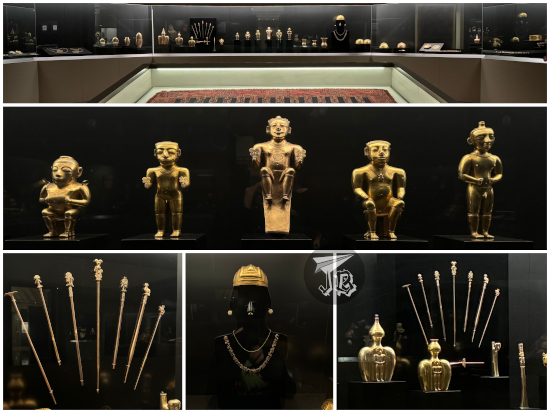
Quimbaya treasure

I actually had been thinking about staying in Madrid and do something else, like the observatory known as Faro de Moncloa, which is literally next to the Museum of the Americas. Or a nice themed restaurant or something. But it was ridiculously hot and I just did not feel like it. It was early for lunch too, but by the time I got anywhere cool, it would be right in the middle of the rush. So I just went back into the transport system. Of course, the train was delayed. I need to stop planning around the official train schedules, especially around food times…
27th July 2024: Staying inside in Madrid’s heat (Spain)

I was so excited when I found tickets for the historical hall at Pacífico station that I did not stop to think I had booked for late July, at 16:00, in Madrid. The heat wave was an extra, but even without it, the Spanish central plateau is not precisely known for its mild summers. However, the hall only opens once a month, and not every month, and I had never been able to find a ticket on a weekend I could go, so honestly – when I saw these tickets, I did not think about the weather, just… that I could come.

The day came, and Madrid had a heat alert. It was around 37 ºC, and I thought I would stay inside, and just head out for the visit. Unfortunately, since trains are being horrible, I needed to take one with at least an hour’s berth to make sure I reached the underground station Estación de Pacífico. When I arrived, I looked around to finally realise that the hall was at the actual platform, warded off by a very modern nondescript door. I had brought a book to pass the time, because I knew I would either have a lot of time, or I would be stressed because the train was late. I found a bench and settled down to wait somewhere I could keep an eye on the door. Visitors are not directly admitted into the hall, but they are cleared at ticket control on the other side of the platform, then go back all the way to the entrance. In our case, we waited for a bit, and the guide decided to head through the platform right as a train arrived, so everything was full. Spanish logic.

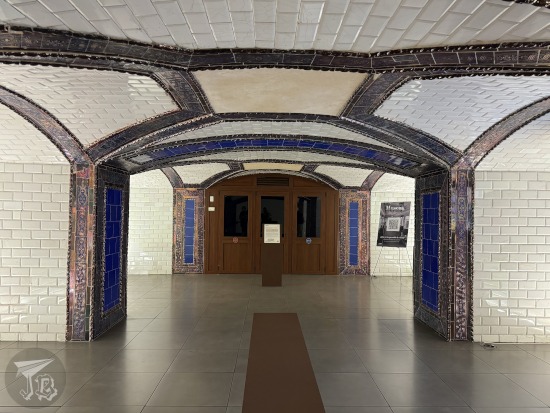
The former hall Vestíbulo de Pacífico is part of the network of Underground museums Museos de Metro de Madrid. Until it was walled off in 1966, it was the entrance to the station Estación de Pacífico, built in 1923 when the underground Line 1 was extended towards the south-west. The passengers climbed down a now-disappeared staircase and crossed the hall, which still had natural light. On the other side, there was some sort of metallic bridge with another set of stairs to access the platforms.

The station used to be part of a huge complex owned by Metro, which also comprised offices, control rooms, and the warehouse that housed the engines that created energy for the trains to run on. At the time, it was an unpopulated area, so land was cheaper. Today, most everything has been replaced by apartment buildings and only the station and the nearby Nave de Motores remain.

The whole complex was designed by architect Antonio Palacios, and the hall was built in white tiles with blue decoration – a homage to the Pacific Ocean, which gives the station its name. The hall is tiny by today’s standards, barely 119 square metres. It has three vaults that used to have skylights for the sun to light up the hall – now those are closed off as the street above them is busy. The station was renovated in the 60s so it could accommodate the longer trains, new accesses were built, and the hall closed down. That renovation was the same that made the station Estación de Chamberí close, and apparently another hall that has been uncovered in Ventas.

The hall was bricked away for almost half a century, until restoration work started in 2007. It took ten years, as budget was low and the process was labour intense – 60% of the hall had to be rebuilt. However, the final product is really good, you can see the newer tiles if you look for them, but the whole thing feels extremely well preserved. Even the staircase, which was built to access the hall after the iron bridge was destroyed, feels time-appropriate. A replica of the original doors was put up.

Pacífico Booking Hall

And right when I have seen all the five Underground museums that require appointment… I find out there is a passport of them – Pasaporte de Pasaporte de los Museos de Metro. Just my luck! Then again, maybe Metro will take these articles as proof of visit and backstamp me for them?

The visit took about one hour, then I rode the underground back towards Atocha, and bypassed it to the next station. I had decided to try my luck with the queue at modern art museum Museo Nacional Centro de Arte Reina Sofía, part of the national network of museums covered by my card. To be honest, I do not enjoy modern art that much, so I have been putting off this one visit. However, the museum holds a piece by Pablo Picasso that has become quite socially loaded – Picasso’s Guernica, which I have always thought I ought to see at least once.

Pablo Picasso (1881 – 1973) is considered one of the most important artists of the 20th century. He was co-inventor of collage, co-founder of Cubism, and inventor of the assemblage (basically, collage in 3D). He painted, sculpted, and made prints, ceramics and theatre sets. I have never connected much, if at all, with the kind of art he was making. I do not really understand the limits he broke, nor whatever he wanted to express. That is why I wanted to see this artwork in particular – to try to understand.

Arguably Picasso’s most famous painting is Guernica (1937). During the Spanish Civil War, German planes bombed the Basque town of Guernica, in the north of Spain, to aid the Nationalist army. The town was destroyed, and up to 300 people lost their lives – the raid opened the northern front for Franco to reach Bilbao. British reporter George Steer wrote a scoop on the event after he witnessed the destruction, and his reports made waves internationally. Picasso, who lived in France at the time, had been commissioned a piece of artwork for the Paris World’s Fair by the Republicans (at the time the rightful government of Spain). Upon reading the news, he scrapped his original idea and painted the Guernica instead.

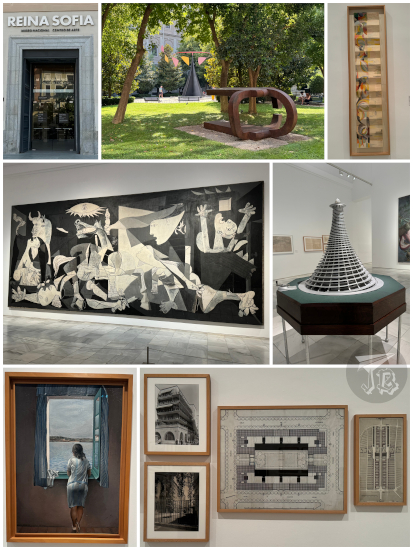
The painting is one of the most important artworks that the museum has. It is a huge piece, in black and white, showing the carnage. As most men were out in the battleground, the majority of victims were women and children – along with a dead soldier, a horse and a bull, most of the figures in the pairing represent women and horror. I honestly find the description of the painting more chilly that the artwork itself.

One kind of feels that the museum itself as built as a huge sarcophagus for the Guernica, and other pieces are there just to fill up the space. A sculpture by Eduardo Chillida is exhibited in the gardens. There is also a space about architecture, with blueprints and photographs, including artwork by Le Corbusier. Other artists whose work is shown include Salvador Dalí, Joan Miró, Alexander Calder… Actually, I enjoyed the museum more than I thought, as I expected only abstract art that I would not understand. I enjoyed the blueprints and photographs of buildings, and the actual building too.

Exhibits at Museum Reina Sofía

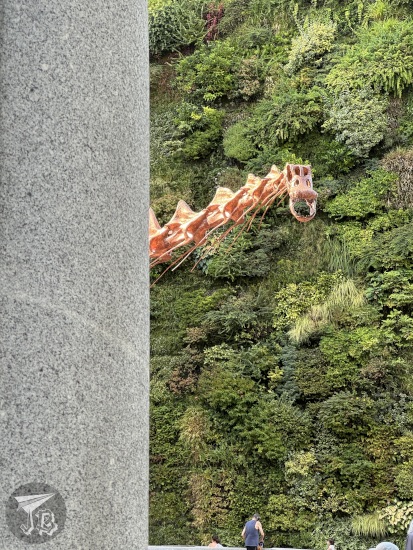
I then headed up Paseo del Prado to find one of the local cultural centres. I was ridiculously amused when I reached the corner where CaixaForum stands. I was on my phone, and when I looked up, I saw the Patagotitan “looking” at me. It gave me a laugh.

Patagotiatan at Caixaforum

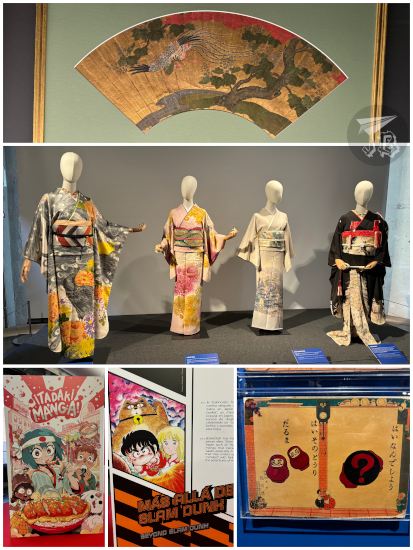
The cultural centre Serrería Belga is running a Japan-themed exhibit, divided in parts:

  • Kinpaku. Naturaleza, poder e imaginación en el arte japonés (Kinpaku: Nature, power and imagination in Japanese art): Kinpaku [金箔] refers to gold leaf artwork, often used in decoration in classical Japanese culture. A private collector has lent their items to exhibit – windscreens and fans, all painted in gold, so they can be enjoyed by everyone.
  • Kimono, identidad cambiante: un siglo a pie de calle (Kimono, changing identities: a century on the streets): Kimono [着物] is the traditional Japanese clothing – one that unlike many others is still common wear. There were twenty of these, including accessories.
  • Expokon: A series of panels discussing different hits in sports manga and derivatives.
  • Japan International Manga Award: Panels drawn by the Spanish artists who have won the awards in different years.
  • Kamishibai: Kamishibai [紙芝居] is (was) a form of Japanese street theatre using a small paper theatre with pictures to tell the stories. There were several sets of stories, some classical, some more modern.
  • Manga Kids Academy: A few panels showing Japanese school life through manga and anime.
  • Itadakimanga!: A series of panels showing different foods popular in manga and anime.
  • Gêmu: cultura visual y videojuego japonés (Gēmu: visual culture and Japanese video games): Some items regarding video games, and even a few arcade machines for playing.

Japanese exhibits at Serrería Belga

The exhibits were part of Madrid’s summer cultural program, which has named Japan “Guest Country”. They were a few cute little exhibits, and they were free too, so a good way to complete half a day trip. I headed back to the station afterwards, to wait for whichever train came, and I was lucky enough that one was there in a couple of minutes – I even found a good seat on my way back.

And I have finally seen the hall at Pacífico, which has been a goal since April 2023. Now I just have to figure out a way to obtain the passport and have it stamped…

28th December 2016: Find all the things ( ・`ω・´)! {Japan, winter 16/17}

One of the items in my calendar this time was visiting the three Dragon Gates of Tokyo. These are three torii gates that have been carved in stone and have an ascending and a descending dragon on each one of the pillars. The legend says that touching the dragons will bring you good luck.

Two torii are located in Suginami [杉並]. The first torii I went off to visit was in the grounds of Shukuhōzan Kōenji [宿鳳山高円寺]. The gate is a bit to the side, in a small adjoined shrine to the left of the main building.

The second gate I visited is in Mabashi Inari Jinja [馬橋稲荷神社], about 15 minutes walking from the previous one (which I chose to hit first because it is closer to the station). As this is indeed a shrine, the torii is pointedly displayed, as it is the second one on the main entrance.

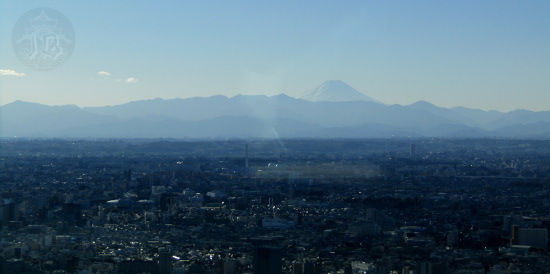
Although I would have wanted to hit the three gates on one day, going back and forth between the first two and the third was not a good idea. Thus, I headed off to Shinjuku [新宿] to check out the Tōkyō Tochō [東京都庁], the Tokyo Metropolitan Government Building, as the day was very clear. And bingo, it worked, and I managed to see Mount Fuji Fuji-san [富士山] in the background. Being a little bit of a geek, and since both observatories were open, I decided to climb both this time (just in case the stamp was different, of course!). Then (also of course) I was doing some shopping around…

And since I was in the area, I decided to go back to Isetan, having devised a plan to get some images of the kimono. Which succeeded. Then I saw other people taking pictures, so I shielded myself with them and took some, too.

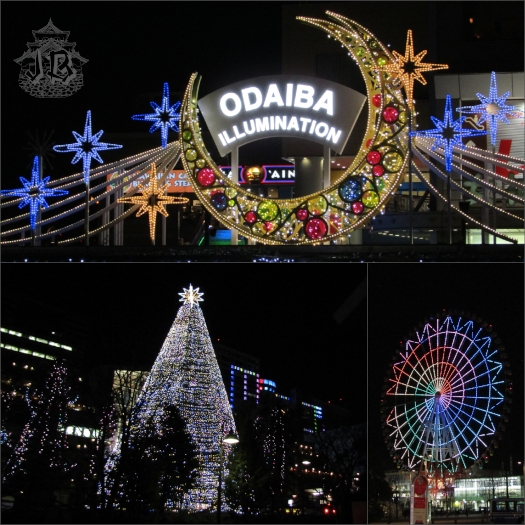
After that I met with D****e and we went off to find some of Gackt’s Gakucchi and Hyde’s Chupacabra crane games and UFO Catchers. For this we headed off to Odaiba [お台場], where we had a chance to look at the Winter Illumination, especially the Rainbow Bridge [レインボーブリッジ] looking… well, rainbow-coloured.

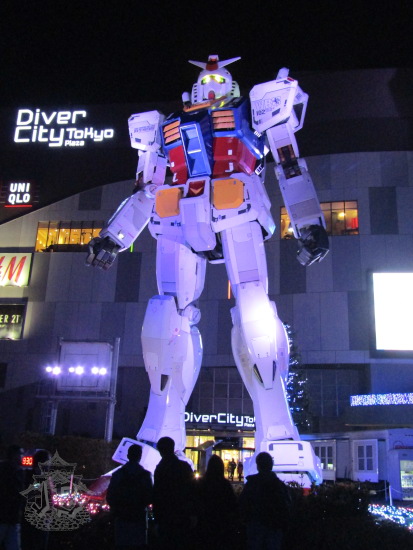
Then we went to say bye-bye to the Gundam in front the DiverCity and had some food inside. Somehow I feel like I’m talking about food all the time (*´∀`*)ノ… This was very yummy and the writing on the algae cracked me up.

As we did not find the Gakucchi nor Chupacabra in Odaiba’s Venus Front, where we had read they would be, we backtracked to Shinjuku [新宿] to search for them. We did not manage to get the stuff out of the crane games but we got the bags that you got with putting 500 ¥ into the UFO Catchers…

27th December 2016: Yoshikimono in the Box {Japan, winter 16/17}

Battling over jet lag, the first thing I did in the morning was setting of the Isetan in Shinjuku [新宿], because they were showing (and selling) some of the Yoshikimono. As a matter of fact, I headed there over twice over the course of the few days it was open, because on the first try I could not take pictures, and then I devised a plan to record stuff – and the second time I was there were people taking pictures, so I did too. But at that point, this was the best I could manage, from the outside.

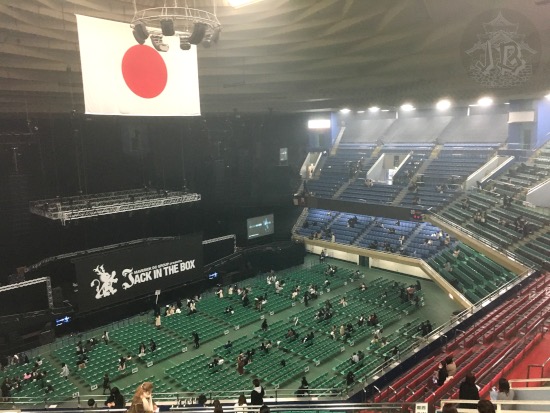
After that, I headed off to “MAVERICK DC GROUP 35th Anniversary JACK IN THE BOX 2016” (mouthful, huh?), because D****e had gotten her hands on tickets, as Hyde was going to show up there. The concert was held in the Nippon Budokan [日本武道館], which looks a bit on the smallish side from above, as we were very far away (last minute tickets were last minute indeed).

Artist Lineup: MUCC; SID; MUDD (half of MUCC and half of SID); SICC (the other half of MUCC and SID); AKi; UNiTE.; Kameleo; CLØWD; VALS; PARTY ZOO Ken with Naughty stars 20th&25th Celebration: Ken (L’Arc~en~Ciel’s Ken), YUKKE (MUCC), AKi, Show (A9), Hiroto (A9), Tora (A9), Ryo (BAROQUE), Kei (BAROQUE), kazuma (gibkiy gibkiy gibkiy) and KENZO; D’ERLANGER feat. HYDE; 35th MAGNUM: PAUL (44MAGNUM), JIMMY (44MAGNUM), D’ERLANGER feat. HYDE; M.A.D SUPER ALL STARS & MDC SUPER ALL STARS. And seriously don’t expect me to do all the alignments and setlist because most of this was AKi around with other people. You can check everything out in the JITB website.

It was a long concert, from 2 to 9 pm and between the different acts there were short videos of past acts. One of the funniest moments in the whole concert was when the screen showed someone covering TOKIO’s “Love you only” and the whole Budokan sang along “only yo~u” without even realising it. Then there were many embarrassed chuckles after that.

Hyde, who was the reason we were there, showed up lateish. In total he may have sung like four songs, including the closing act with “Honey”. We also saw Ken, who can’t do anything without his guitar. The most curious (tending towards sad) was how Hyde and Ken proceeded to ignore each other for as long as both of them were on stage (╯︵╰,).

After the concert we met up wit N***chan, T***pi and M***chan to have dinner.