
There are many things to consider when visiting the so-called Monasterio de Piedra, a tourist complex in Nuévalos, in the area of Aragón. One of the most important ones is the weather – as most of the complex is outside. The second is probably people. Just the online bookings are 2,000 tickets in a day – and some more go on sale throughout the day as visitors leave, or it is calculated that they do. A third factor is getting there, because it is literally in the middle of nowhere. This year, Easter break has peaked at an almost 100% occupancy rate since it seems that Covid is dwindling down, and the weather is superb – these facts have implied crazy traffic, too.
I had been mulling the trip for a while, checking weather and traffic warnings, and considering all the driving around that would be take place. I thought that the 7th would be a good date for a day trip – fewer cars out within the break period, and I was busy on the 8th, the other calm day. When I finally decided that the 170-km-each-way drive was going to be worth it and safe as the traffic authority had not updated its warning on the late-afternoon of the 6th of April, there were around 30 left for the 7th, and it was already sold out for the 8th. I got worried about traffic again, decided to leave the tickets for later, and by the time I definitely made up my mind, the day had been sold out!
I was disappointed, but I noticed that some tickets had become available for the 8th when previously there had been none. Thus, I kept checking throughout the evening, and finally around 23:00, I was able to purchase the 2000th ticket for the complex. Good thing that while I was wondering whether to go or not, I had prepared a backpack with whatever I might need, because if I wanted to beat the crowds, I had to leave by 7:30.
I did, and I made it to the complex around 9:10, after driving on almost-empty roads. I had planed to park in the outer lot, but as I reached the area, there were a number of workers directing cars and I ended up in the inner area. All the visitors who were already there – maybe I was the 30th car or so – stepped out of their vehicles commenting “oh, I thought there would not be so many people so early”. I thought the same… I had no idea of what “many people” meant in this place yet.
The Monasterio de Piedra complex has two distinct parts – the historical garden Parque-Jardín Histórico del Monasterio de Piedra and the monastery-turned-hotel. I decided to visit the park first, which would later be proven a good idea.
Río Piedra is mainly a pluvial-regime river (a fancy term to say that its flow depends on rain), also fed by various underground springs. The water has a high concentration of calcium carbonate, which for centuries has been key in creating the landscape that characterises the park, with a large number of waterfalls and caves – calcium carbonate dissolves and precipitates depending on how much water the river carries at any given time. Along the fertile soil from the river banks, the precipitates feed a very green landscape which in turns yields to a rich and varied fauna that lives there.
The park was established as a Romantic garden during the 19th century by Juan Federico Muntadas when he inherited the area. He also built the first Spanish fish farm there to breed river trouts. The garden is organised in two trails, a main one and an “extra” one – I decided to take the main trail, which runs around 5 km. The park prohibits food inside, but it does not really enforce it. I took a bottle of water, and an energy bar just in case, without the intention to eat it unless it was an emergency.
I walked in, got my print-at-home ticket scanned, and I was surprised that a few steps in, someone was holding an owl for people to take pictures with it. At 9:00. That was bizarre – I knew that the park used to hold birds of prey shows, but I thought it was a thing of the past. I got to my first intersection, and a park employee directed me towards the route. I was a bit disoriented for a minute or two, and I later realised that they were flushing the first visitors towards the big bottleneck area in order to try to control people, capacity, and waiting times. In this garden, the amount of people you run into can indeed make or break your experience – and I am happy to say that I made the right choices most of the time. The biggest problem I ran into were families with small children being loud, which was annoying but bearable.
Because of the redirection, I started off at what would have been number 16 on the route – the most famous waterfall, called the “ponytail”, Cascada de la Cola de Caballo. From there, you walk into one of the karstic caves (Gruta Iris) and pass under another waterfall, which even creates a small underground lake. It was cool, but I was really not prepared for how splashy it was! I continued off, I saw the and walked around a backwater called “mirror lake” Lago del Espejo for obvious reasons – it reflects absolutely everything. Although the route is only 5 km, it goes through areas that feel and look completely different, and it feels much, much longer without being tiring.
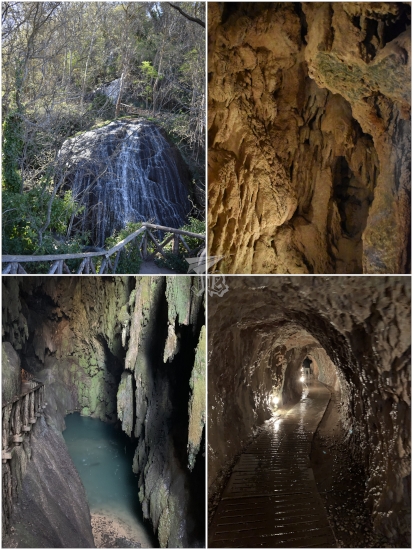

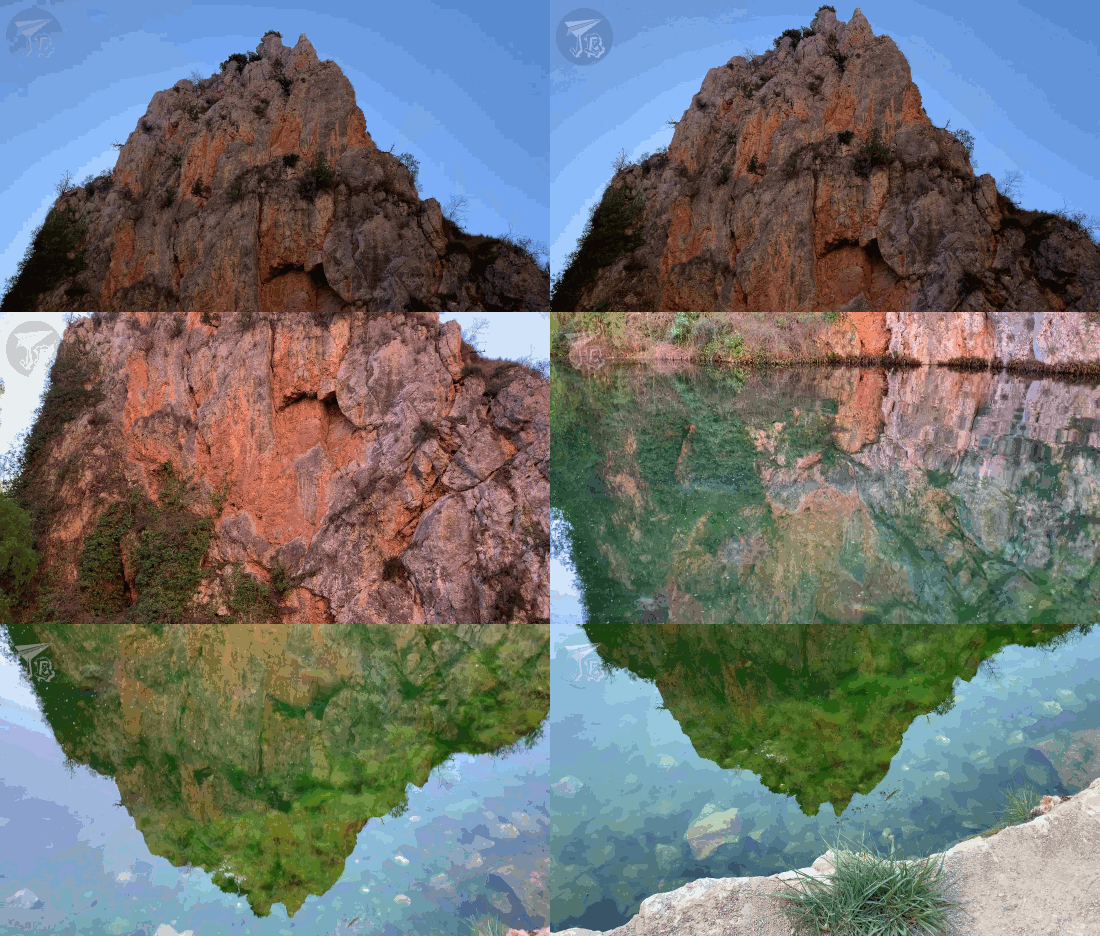
As I “finished” the route, I got to the intersection where the bottleneck is created and I saw all the people waiting – hundreds, probably. That was unexpected, because it had not felt that it was so crowded – it turned out, arriving early had been a great idea. The amount of people waiting was shocking, but understandable as most of the cave passages are only wide enough for one person – now I understood the reviews that claimed hours to see the waterfall and the cave.
I got a bit disoriented at this point – as I said, the route feels long since the landscape is so varied. However, instead of going for the exit, I decided to continue exploring a bit more – that is how I arrived at the lower numbers of the route again – number four, that was a bit more on the crowded side. I did the first part of the route, climbing up the hill slopes to see a dozen or so more waterfalls. Then had to backtrack again, until I finally saw everything that there was to see, even if in a strange order (on the map: sixteen to end, four to fifteen, then three to one. Not confusing at all, I know).

Unfortunately, loud people scared most of the wildlife away, so aside from a few fish, there was nothing around in that respect. There were dogs around, but well-trained, so they did not cause a problem. The area is really nice, the waterfalls and caves are beautiful, but I can see how the number of people you visit it with might make it a good or bad experience. I am sure that I would have quit had I needed to wait hours to cross a cave and see one of the waterfalls.
When I left, there was a huge queue to get a picture with the owl. Furthermore, there were several huts with more birds of prey or other animals, and the pictures were sold at the exit. I’m not sure I approve of that, no matter how trained the animals are – there actually used to be exhibitions with the birds of prey, which is not happening these days. After I left the historical garden, I went into the former monastery. Today, most of the building has been turned into a hotel, but part of the historical site can be visited.
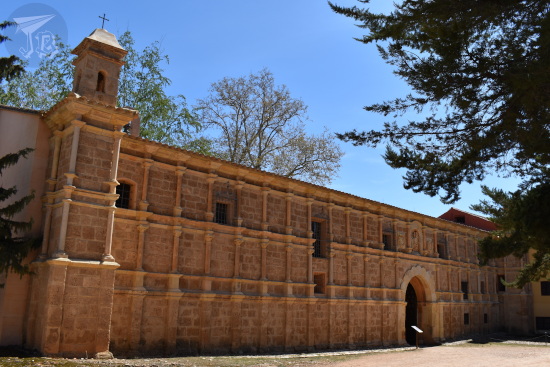
The monastery Monasterio de Piedra was established in the 12th century by Cistercian monks sponsored by king Alfonso II of Aragón. The building was erected in the years when Romanesque was turning into Gothic, so it mixes both styles along with some extra Baroque. Between the late 18th century and the early 20th century, the Spanish government carried out several programs to seize and sale property deemed “unproductive” – mostly belonging to religious orders and municipalities. These properties were auctioned to convert them into cash so the government could pay off its debt. The whole process is known as the Spanish confiscation (desamortizaciones).
In the 19th century, Monasterio de Piedra was confiscated. Everything it contained was auctioned in the 1840s and 1850s. In 1843, the buildings were also sold and acquired by the Muntadas family. It was soon afterwards that Juan Federico Muntadas became the owner. He turned the orchards into the now historical garden, and the convent itself into a hotel and… what today would be called a “wellness spa”. He also established the fish farm.
I would have really liked to stay at the hotel, but it’s a bit on the expensive side and there is really nothing else around, so you have to pay for meals on top of the stay. But it would have been cool to wander the monastery building at night. Not being a hotel guest, the ticket includes access to the cloister and the old church. Some rooms around the cloister have been dedicated to host exhibits about regional or historical products and items: carriages, wine, and even chocolate – the monastery was reportedly pioneer in the preparation of chocolate in Spain. The cloister itself has a few chapels, the early-Gothic chapter house with decorated columns and ambience music, and a small garden-like centre. You can also visit a monk’s cell, and there are mannequins spread through the different rooms – startling if you are not paying attention and suddenly see one.
I am not a wine person, so the museum on the topic did not impress me much despite having a bunch of traditional wine-making artefacts. The chocolate exhibit was just a succession of panels with pictures, and thus a bit underwhelming. Within the monastery, what I enjoyed the most was the architecture itself I guess. I loved the cloister and the chapter house most.
I also visited the adjacent ruined church. Like the cloister, it’s early Gothic. It has a Baroque chapel to the side which keeps the wall paintings. Although most of the ceiling is gone, the church still looks pretty – then again we all know that I like the architectural style anyway. It’s nice how the building is somehow ruined but at the same time it’s not, as it has been restored and preserved. However, underneath the altar, there is a small crypt, where a small window has been made to peer at someone’s bones – that was… huh… unnecessary. The nave is now open to the sky and covered with grass, all the figures have gone, and only one of the sides holds a few architectonic remains and capitals.

I left the inner area and I walked around the outside of the building – what has become the picnic area since you can’t eat inside the garden. Once I left that behind, the area was deserted. I reached the former main square, where the Baroque façade of the monastery still stands. I walked a bit further and found the walls that used to enclose the area, along with a small tower that is called the keep, but it looks more like a defensive tower.
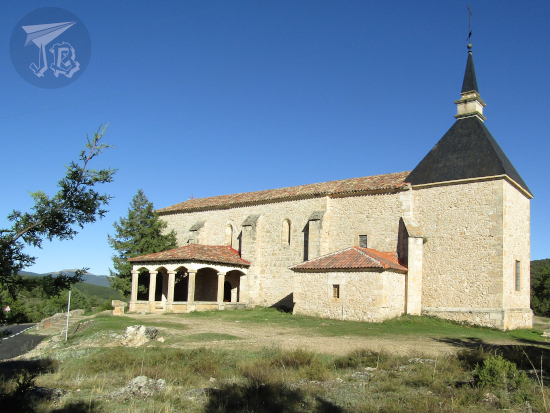
Finally, I checked out the gift shop, bought a book and some chocolate. I headed back a bit after 13:00, but instead of driving directly home, I made a stop at a couple of viewpoints over the reservoir Embalse La Tranquera. On the way out, I had crossed several tunnels and seen viewpoints, so since I had time and I was not hungry yet, I decided to snoop around. After a while, I just drove back – though I might just have made a stop for a late fast food lunch, because guilty pleasures happen sometimes. And by 15:00 I was hungry indeed.










 JBinnacle – A Travel Logbook