
It was not too much of a chilly London morning. I popped into the underground to go leave my luggage at Liverpool Street station – where there is (you guessed it) a Costa Coffee. Then, I headed towards Baker Street Station, where I had booked guided visit with the Hidden London project, by the London Transport Museum. I arrived with some time, so first I explored the Wonderpass – which is a regular underground pedestrian tunnel which allows to cross the road, and has been “decorated” with facts and details about the history of the area, and turned into a small museum.
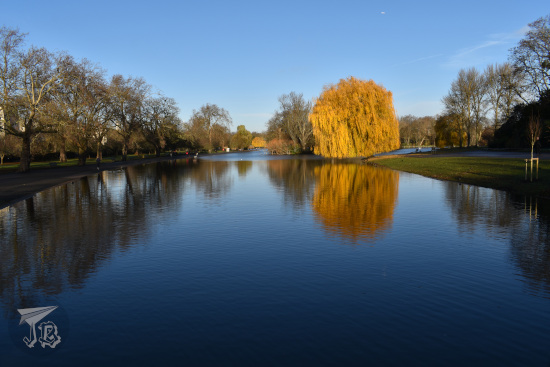
A few minutes were enough there, so I spent the rest of my time at The Regent’s Park, one of the Royal Parks in London. Between 1536 and 1541, Henry VIII, now head of the Anglican church, ordered the dissolution of the monasteries. Land that used to belong to Catholic orders went to the crown, and although much was sold to fund the King’s military campaigns, the area that comprises Regent’s Park today was retained as hunting grounds. In the 1810s, it was transformed into a pleasure garden with the blessing of the Prince Regent – who would go on to reign as George IV. Today, it is home to the London Zoo, a rose garden, a lake, several fountains, and even a whole university campus.
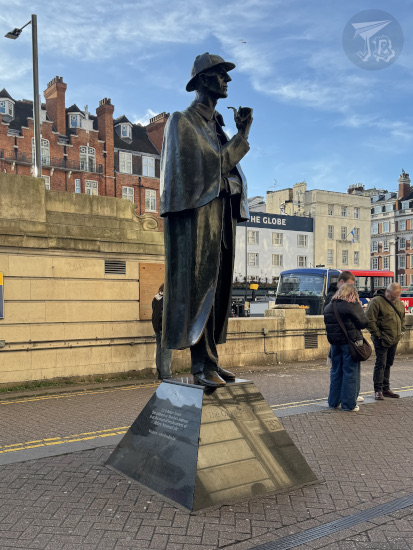
After a while, I headed towards Baker Street Station to await the beginning of my tour. The meeting point was the Sherlock Holmes Statue, which is, ironically, placed in Marylebone Road. The perpendicular road is indeed Baker Street, where the fictional address of the literary detective is – 221B, which today is a museum dedicated to Sir Arthur Conan Doyle’s books, recreating scenes from the stories. The statue was created by John Doubleday and installed in 1999. Arthur Conan Doyle (1859 – 1930) wrote four novels and over 50 short stories featuring the detective. Today the character – possibly the most famous fictional detective ever – is remembered for his uncanny logical deductions, while other personality traits – misogyny or drug addiction – tend to be tip-toed around.
Around 10:20, the people from the London Transport Museum came to check us in. This is one of those kinds of visits for which you need to bring a piece of ID, probably for insurance reasons. I had been wanting to try one of Hidden London tours for a while, despite them being expensive, and in the end I had chosen Baker Street: The World’s First Underground, as it promised to take you “behind the scenes” of the oldest underground station in the world.
Back in 1863, the Metropolitan Railway company had revolutionised transport by deciding to lay their tracks underground. At that time, London was one of the most populated cities in the world, and crossing it took an hour and a half. The project cut down time to 20 minutes. Unfortunately, we are talking about actual steam trains continouslymoving through tunnels, and the coal smoke was not… the healthiest to breathe, one could say.
The tour takes around 90 minutes, but it is set as more grandiose than it actually is. Most of the “hidden spots” are just service corridors full of trash cans and current working equipment. We had two guides and a security guard, and the information was interesting indeed, but there were few places to explore that felt really “hidden” and just like a conference in a couple of closed-off places.
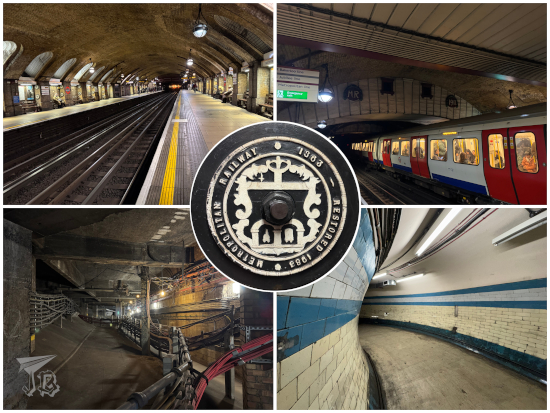
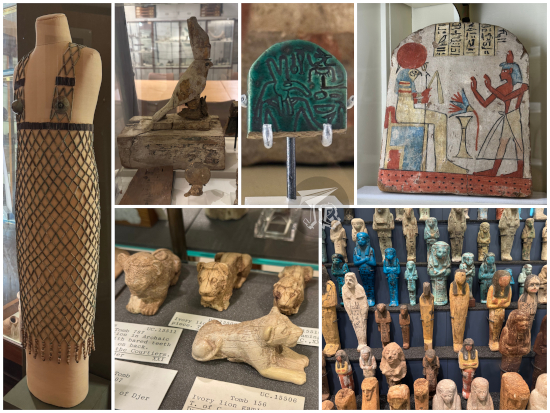
I did revisit a couple of the publicly-accessible areas after the tour was over to try and get a decent photograph, and then headed off towards Euston to visit a couple of museums belonging to the University College London (UCL), both of which I’ve wanted to see for a while now. However, the last few times I’ve been in town either one or the other was closed – or their opening times did not fit the plans. Today was the day. I first went to the Petrie Museum of Egyptian and Sudanese Archaeology. Though it is a tiny museum, it holds one of the largest archaeological collections in the world, with around 80,000 items.
The core of the collection was donated by writer Amelia Edwards (1831 – 1892), the “godmother of Egyptology”. Edwards toured Egypt in 1873 and 1874, and later, in 1882, she co-founded the Egypt Exploration Fund (now the Egypt Exploration Society), which aimed to support and promote Egyptian cultural heritage. Upon her death, all her Egyptian artefacts, and a hefty sum of money, were donated to the University.
I reached the museum and asked if I could snoop around. I was told no, but I was welcome to visit. Okay, I guess. No harm done. While I love old museums, this one feels way too crammed (and not even in the fascinating way the Sir John Soane’s Museum does). The space is small, so most objects are lounged together in large cases, some with their original labels from the Victorian times, even. It is run by volunteers and possibly all that they custody is in display, which explains why everything is so full.
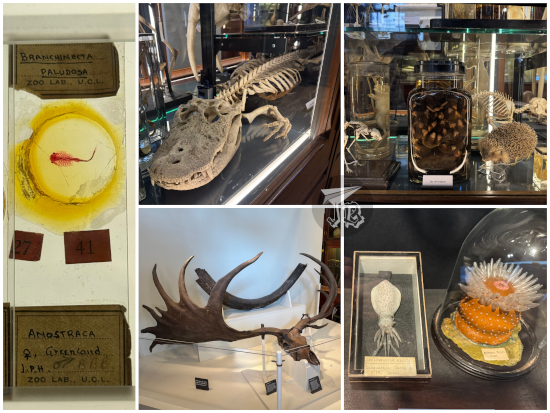
Afterwards, I headed to the Grant Museum of Zoology and Comparative Anatomy, also part of the UCL. Established in 1828 by Robert Edmond Grant, it is one of the oldest natural history collections in the country, originally designed as a teaching collection. It comprises 100,000 specimens in total. There are incredible things on display here. Something that drew my attention was that there were a couple of tutoring sessions going on at the museum… about how to draw creatures and specimens. I did not eavesdrop, but what I overheard was fascinating…
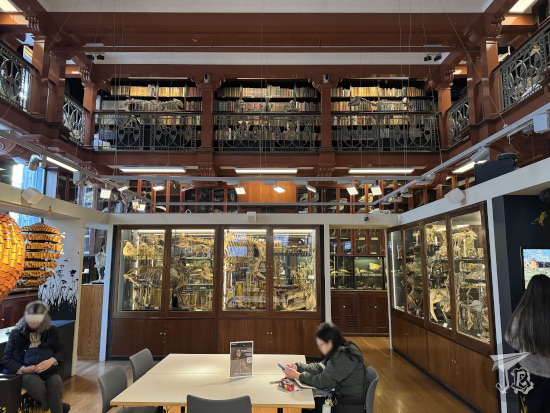
One of the highlights is the so-called Micrarium – almost 2,323 old microscope slides (a tiny fraction of the complete collection, which goes up to 20,000), designed in 2013. There is also a collection of invertebrate glass models that blew my mind away, fossils, skeletons and a wall full of disassembled mouse bones. The museum most infamous exhibit is a jar of moles (Talpa europaea), which hosts 18 of these tiny mammals, male and female, preserved in formaldehyde. When I asked why it was so popular, the volunteer explained that the jar was never catalogued and that it predates any worker of the museum – so no one knows where it came from, and what was it going to be used for. It might have been assembled for a zoology class, or maybe a researcher collected the critters. In any case, there is no record of it, the jar just… exists.
Had I not received the email concerning security queue issues in London Stansted, I would have at that point headed for the Monument to the Great Fire of London. However, I have trust issues, so I decided to head to the airport instead. I took the underground to Liverpool Street, and was at the airport around four hours in advance instead of my usual two.
Stansted was packed. There was nowhere to sit, and I’m not talking about actual seats. It was almost impossible to find even a spot on the floor to plop down. I fortunately found a corner where I could stay for about an hour before things started clearing out. I felt a bit miffed because while security had taken a bit longer than usual, it was not the chaos I had feared, so I felt I had wasted my afternoon in London. However, better safe than sorry.
When finally my gate was called, I tried to get to sit down somewhere, but Ryanair made the decision to have the check point just at the end of the stairs, and I found myself stuck in the queue. Most of the waiting was done after check in, and the land crew person opened a cordoned thing to push us through so I ended up – somehow – in front of most of the Priority Queue. That meant I entered the aircraft much earlier than I normally would have. I made the trip back encased between two very tall people who… had trouble squeezing into the seats.
Once I landed, I beat most of my plane to passport control. It was cold when I stepped out and once in the car, the parking lot barrier didn’t want to let me through, and it took several tries to get out. Fortunately, going back and forth repeatedly solved the issue, and I did not have to go find a warden to get it done.
All in all, the trip was a success. I really wish I had stayed a day longer, I would have squeezed many other things in. However, now that my early-morning plane is back, and I have an ETA, I might feel compelled to fly to the UK a couple further times before London introduces a tourist tax. Maybe in summer if the Crystal Palace Trust has finished their renovations of the dinosaurs, or summer for the Jurassic Coast… Or, you know, the minute both the Natural History Museum’s Jurassic Oceans: Monsters of the Deep and the British Museum’s Bayeux Tapestry exhibitions are open.

