4th October 2024: Istanbul, day 2 – Bosphorus Istanbul (plus, again) {Türkiye, October 2024}

It was warm in Istanbul | İstanbul when the sounds of the town woke me up. Since I was up early, I decided to find the Bozdoğan Kemeri (Aqueduct of the Grey Falcon), part of the Aqueduct of Valens Valens Su Kemeri. It was built using brick and stone in the 4th century in order to bring water to Constantinople. Construction started under the reign of Constantine II and finished during the reign of Valens, and the structure was in use under the Ottoman period. The Bozdoğan Kemeri bridge is 971 metres long, and its maximum height is around 30 metres. Today, it stands over a busy road, with cars running underneath.

I went back to the hotel for pick-up, which today happened on time. I had signed up to the other day trip offered to me at the airport Estambul Bósforo (55 €). My hopes were not too high, but at least I met with the nice ladies from the day before. This time around, the group was bigger, so everything was a bit more chaotic. Our first stop was Süleymaniye Mosque Süleymaniye Camii, an Ottoman imperial mosque commissioned by Suleiman the Magnificent to his imperial architect Mimar Sinan around 1550. The mosque has four minarets with a total of ten balconies. The interior is decorated with medallions, writings, geometrical decorations, and beautiful stained-glass windows. Outside, there is a cemetery with the mausoleum of Sultan Suleiman and his wife Roxelana.

Süleymaniye Mosque

After the mosque complex, the bus headed out towards the Asian side of Istanbul for a panoramic viewpoint up Çamlica Hill Çamlıca Tepesi, which implied getting stuck in traffic for a long time again and driving past a lot of interesting buildings – visiting any of those would have been a better use of our time.

View of Istanbul from Çamlica Hill

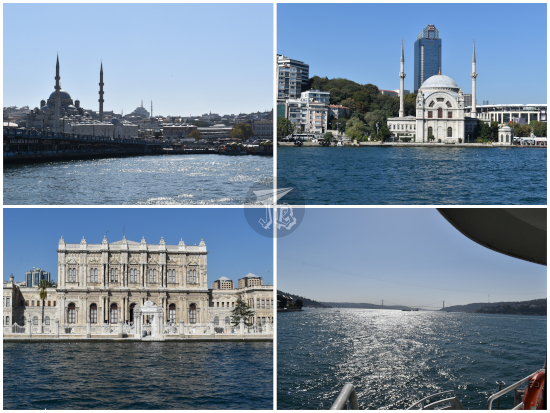
We went back to the bus for the boat ride, which despite being advertised as a Bosphorus trip, was only up and down the Golden Horn Altın Boynuz for about an hour. At first, I tried to pay attention to the guide as he explained things, but I got bored pretty quickly. This was not a good sign, considering this one guide was the one who was to take me onto the tour around the country…

Bosphoros boat ride

For lunch, we had been asked to choose either bream or chicken. I had ordered the chicken because I had a feeling I could not trust a random restaurant in Istanbul… I was right. The bream turned out to be sea bass. Again, food was nothing remarkable. Then, we walked towards the New Mosque Yeni Cami, which was the next visit, but we did not get to go into that one for reasons that escape me. Instead, we were taken into the Spice Bazaar or Egyptian Bazaar Mısır Çarşısı, for a demonstration inside a particular shop. I do wonder how many and how much commissions go into decisions like that.

New Mosque Istanbul

Egyptian bazaar Istanbul

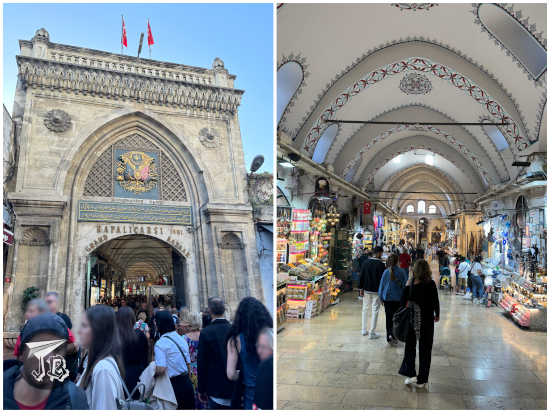
This was the end of the day trip, around 17:00, since the guide had once again stated that “your hotels are close, no need for the bus”. I said goodbye to the nice ladies, and headed out towards the Grand Bazaar Kapalı Çarşı, described as a “network of indoor souks and market streets”. It is actually one of the oldest and largest covered markets in the world, and it has thousands of shops – literally. It dates back from 1455, just after the Fall of Constantinople into the hands of the Ottomans. It was an interesting structure, but I only found trinkets and souvenirs, and it was packed with people.

Grand Bazaar

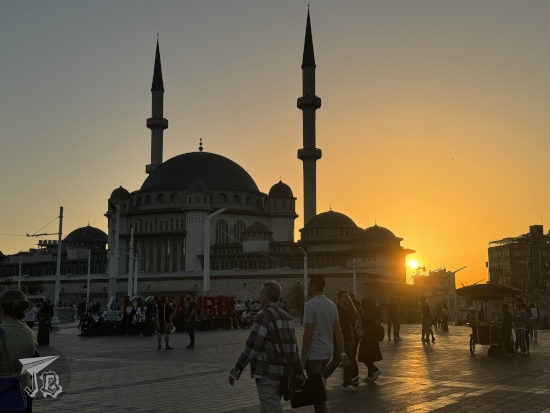
Thus, after crossing out the Grand Bazaar from the list, I headed towards the university İstanbul Üniversitesi, my reference for the metro stop Veznecıler. From there, I could take a train towards Taksim Square Taksim Meydanı, the gateway to Independence Avenue İstiklal Caddesi, on the other side of the Golden Horn but still in the European side. The area is a tourist hub with shops, fast food places, and ice cream vendors who play around before they serve you the ice cream cones. One of the highlights of the avenue is the “nostalgic tramway” İstanbul nostaljik tramvayı, a revival or heritage tramline with tiny cars, built from memories and photographies. It is not a novelty thing for tourists, but an actual working system that goes up and down the avenue, line T2. I was happy to be able to see it, the car was packed – mostly by tourists though…

Taksim square

At the end of İstiklal Caddesi, stands Galata Tower Galata Kulesi, a former watchtower, now a museum with an observation deck. The origin of the tower dates back from 1204 though the original tower was destroyed and rebuilt in the Romanesque style in 1350. At that point, it was the highest building in the city. At the moment, it is almost 63 metres high, with nine floors, and a renewed roof.

Nostalgic tram and Galata Tower

Afterwards, I caught the underground at the nearest stop – though I was a little bit tempted by the nostalgic tram – and I headed back to the hotel. I settled the bill for the water bottles I had bought and went up to my room, where I decided to order the same dinner as the evening before – kebap and yoghurt. I then had a shower and packed, because pick-up was at 6:00 the next morning. Good thing that I had found a vending machine in the underground system that sold canned coffee, even if it was “almond flavoured”.

3rd October 2024: Istanbul, day 1 – Classical Istanbul (plus) {Türkiye, October 2024}

I spent the day in Istanbul | İstanbul, probably the most important city in Türkiye, and certainly the largest, but not the capital. It was founded as Byzantium in the 7th century BCE, straddling the Bosphorus Strait, which is considered the boundary between Europe and Asia. In 330 CE, Roman Emperor Constantine renamed the city into Constantinople after himself, and made it the capital of his domains. The so-called Fall of Constantinople in 1453 started the Ottoman Caliphate – sometimes called the Ottoman Empire. The empire survived until it joined World War I and was subsequently defeated – Istanbul was the capital during most of that time, until the Turkish Independence War, when Mustafa Kemal Atatürk made Ankara the capital.

Istanbul is probably the only city in the world which stands between two continents, separated by the Bosphorus strait and the Golden Horn – an estuary flowing into the strait. To the west of the Bosphorus is Europe, and to the east Asia. The European area south of the Golden Horn is called the historic peninsula.

Istanbul has claimed its rightful place in history as a key step of the Silk Road and the spread of Christianity during Roman times. The historic peninsula is a Unesco Heritage Site, the Historic Areas of Istanbul, which the day trip I had hired, called “Classical Istanbul” Estambul Clásica (50 €) was supposed to cover.

I woke up around 7:00 and went down for breakfast. Coffee was… unexpectedly dull, considering the fame of Turkish coffee – and I had two cups to kickstart my brain. The scrambled eggs were particularly good, but the bread so-so. At 8:20, ten minutes before pick-up time, I was ready and waiting at reception. At 9:10 I wrote to the person who had picked me up from the airport, who had told me to text her with any question, and at 9:15 they showed up – there was apparently “a lot of traffic”, and we were stuck in it for a while. I spent the time checking out the ruins of Constantinople’s ancient walls Bizans Surları, which are also part of the Unesco Heritage Site.

The group comprised around 30 people, and the bus headed towards an area called Pierre Loti Tepesi, Pierre Loti Hill, and reached there around 10:00. This is a viewpoint above the Golden Horn Altın Boynuz, with a viewing terrace, a café and the Eyüp Cemetery Eyüp Mezarlığı. We were told we’d visit the cemetery later, and were given twenty minutes to take in the views. Afterwards, we hiked (considering the speed, “marched”) down the hill through the cemetery, and saw several tombstones from the Ottoman period, but there was no visit whatsoever.
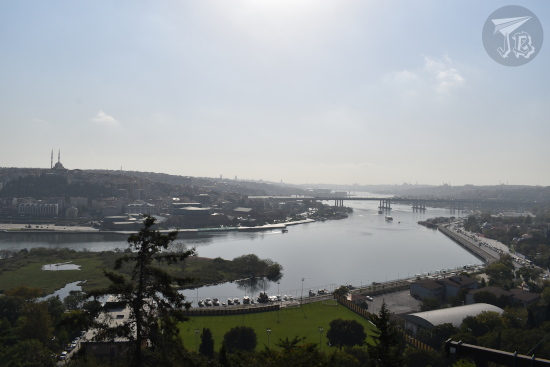
Istambul from Pierre Loti hill

We hopped back onto the bus to drive towards the quarter called Fener, which we were told was “movie neighbourhood”. We were going to visit the Venerable Patriarchal Church of Saint George, the Orthodox cathedral of Istanbul Aziz George Katedrali, which closed down as we arrived for “an unknown length of time” because the Patriarch was coming out. Instead of letting us amble through the neighbourhood before the church, the guide insisted on us waiting for about 20 minutes before we all came into the church, and he gave a couple of explanations, and gave us free time to check out the church and the neighbourhood.

The church of St George was one of the few places with “real” security. We got through a lot of places with metal detectors and such with guards who would not even care, but the ones that did were ridiculously strict in contrast. The truth is that with the rise of Turkish nationalism, a lot of the church’s flock were deported, so the church and Patriarch are mostly symbolic and a pilgrimage point, and it has even been attacked by terrorists at times. The church itself used to be the centre of the quarter, which was historically the Greek quarter, even after the Ottoman Turks had taken over former Constantinople. Though the church existed previously, it became the seat of the Ecumenical Patriarchate of Constantinople since the early 1600s. It has been damaged and rebuilt several times, the latest as recently as 1991. It has three naves and aisles, with a rich iconostasis (decorated screen that separates the altar from the nave) in golden wood.
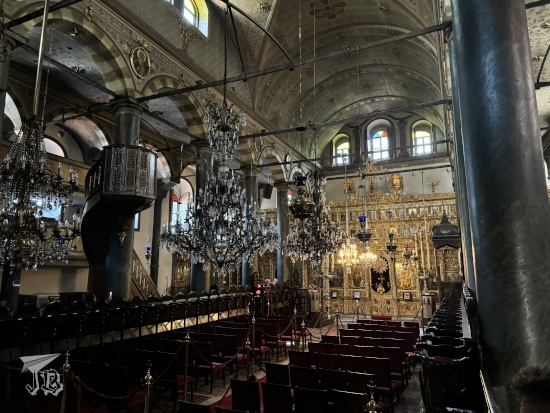
Church of St George Istanbul

After the cathedral, I wandered the quarter of Fener on my own for as long as was given us as free time. I found a colourful set of stairs Renkli Merdivenler, which led to nowhere but area pretty. The whole area was a hill, and I climbed up to try to catch a view of a very interesting building – the private school Phanar Roman Orthodox Lyceum Özel Fener Rum Lisesi. The building was designed in an eclectic style by Greek architect Konstantinos Dimadis, and built around 1882, though the school itself dates back from 1597. I also saw a film crew on a break in one of the streets.

Roman Orthodox Lyceum

Once we were called back to the bus, we headed out for lunch. The entrées looked good, actually Turkish, including hummus, rolled paçanga böreği, dolma (stuffed vine leaves), cacik (Turkish tzatziki). The main was rather unremarkable, and something that I could have easily had in either Jordan or Egypt – a sad-looking plate with eight fries, two slices of cucumber, one slice of tomato, a mouthful of rice, and some chicken and lamb. Dessert were the ubiquitous Turkish delights, which are extremely sweet and I’m not a big fan of. Looking back, however, this was one of the most Turkish meals I ended up having, besides kebaps. During lunch, I made acquaintances with some nice ladies who promised to make sure I was not left behind – which has been a bit of a worry of mine when I’m in a guided tour since my last day in Egypt.
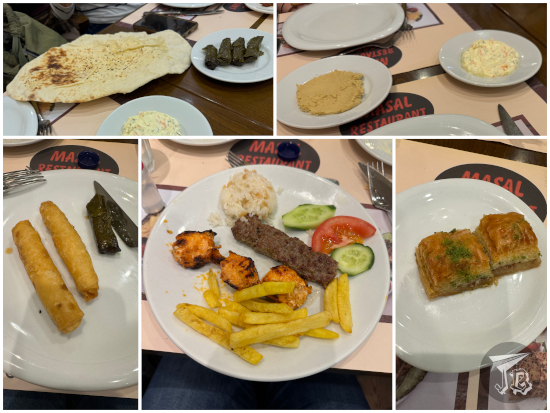
Turkish meal

Around 14:00 we walked towards the area known as Sultanahmet Square Sultanahmet Meydanı, the neuralgic centre of historic Istanbul. There, the first stop of the afternoon was Sultanahmet Camii, the Sultan Ahmed Mosque colloquially known as the Blue Mosque. It was built between 1609 and 1617, during the Ottoman era. Designed by architect Sedefkar Mehmed Agha, it was the last great mosque built in the Classical Ottoman style, and combines Byzantine details and Islamic architecture. It has a central dome (43 metres high) with four semi domes and six minarets. The interior is decorated with tiles and mostly blue decoration, hence the name – though honestly I mostly felt it was… golden. The mosque has windows which originally had coloured glass, and are now modern, and it has chandeliers hung from the ceiling, with some of the lamps being ostrich eggs, a typical feature in Turkish mosques. One of the minarets was being restored.
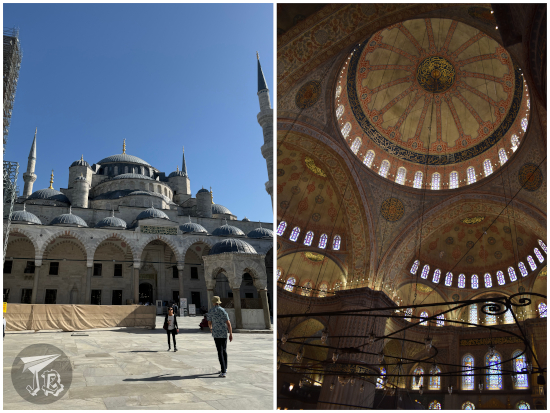
Blue mosque

The mosque stands next to the square, which is long and narrow – it is actually built on the former Hippodrome of Constantinople Hipodrom, the centre of the city during the Byzantine period. Upon the founding of Constantinople, both Constantine and his successor Theodosius the Great brought works of art into the area. Today, there stands the Serpent Column Yılanlı Sütun, an ancient bronze column representing a hydra, whose heads are now missing (part of one is now in the nearby Archaeology Museum). Another monument of the square is the Egyptian Obelisk of Theodosius Dikilitaş, originally erected for Pharaoh Thutmose III (1479 – 1425 BCE, 18th century) in Karnak. It stands on a Roman pedestal from the time it was transported to Constantinople around the year 390 CE. The final construction in the square is the German Fountain Alman Çeşmesi (The Kaiser Wilhelm Fountain), a neo-Byzantine fountain that was constructed to commemorate the visit of German Emperor Wilhem II to Istanbul. It has eight sides, with marble columns and an inside covered with golden mosaics.
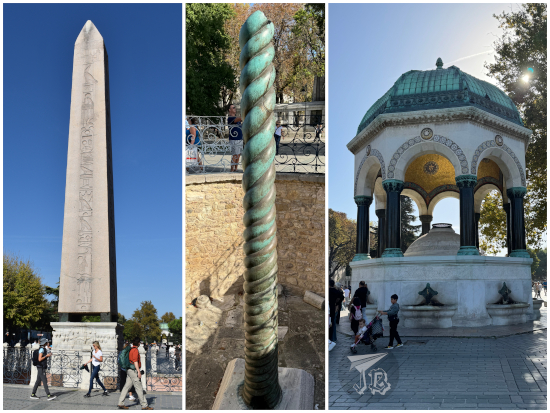
Monuments at Istanbul hyppodrome

The official day trip ended there – though they were supposed to take us to the Grand Bazaar. However, the extended tour (25 € extra) included visiting the Orthodox church-turned-mosque-turned-museum-turned-mosque Ayasofya-i Kebir Cami-i Şerifi Hagia Sophia Grand Mosque. The current structure was commissioned by the Byzantine Emperor Justinian I to be the Christian cathedral of Constantinople as the Church of God’s Holy Wisdom, designed by Greek geometers Isidore of Miletus and Anthemius of Tralles. At the time it was built, it was the largest interior open space in the world.

It has a central dome with rises 55.6 metres from the ground and a diameter of around 31 metres. After the fall of Constantinople in 1453 it was converted into a mosque. In 1935, the new Turkish Republic turned it into a museum, but in 2020 the controversial decision to turn it back into mosque was made. With the first transformation into a mosque, minarets were erected and the Byzantine mosaics on the ceilings were covered or destroyed. They were recovered for the museum period, and now they are hidden away. While originally the mosque was going to be “open for all”, now the ground floor, covered with a carpet, is only for praying Muslims, and tourists have to pay to access the second floor and see the Christian mosaics. From the second floor, you can see the mosaics, and are close to the domes, which allows you to see the questionable state of conservation. The dome is fantastic, and there are mosaics of the archangels there. On the way out, there is another mosaic depicting the Virgin Mary with the child, and Constantine and Justinian giving them presents – Istanbul itself and Hagia Sophia. The walls however, are in dire need of restorations.
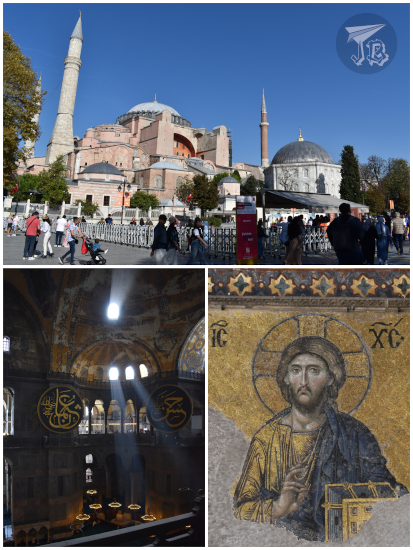
Hagia Sophia Istanbul

The day trip ended after an introduction to the building, and I wandered around for a while, seeing everything I was allowed to before I stepped out. At that point it was 16:50. I had the option of walking, as recommended, to the Grand Bazaar, but I decided that I had better things to do. I rushed towards the palace-turned-museum Topkapı Palace Topkapı Sarayı. Construction of the complex was ordered just after the fall of Constantinople by Sultan Mehmed the Conqueror overlooking the Golden Horn. Closed-off by walls, it has several buildings and palaces, some of which hold exhibitions. The palace closes at 18:30, and the ticket booths at 17:00. I was able to buy a ticket at 16:57 because I am very motivated, and I even saw most of the key areas of the palace in those 90 minutes. Though the recommended visit time is four to five hours, at least I felt accomplished – I wished I had prepared better for it, but I thought that I was standing next to the palace, and even if it was expensive I could return the next day if I felt I wanted to see more.

The first courtyard is free for everyone to see, and that is where the ticket booths are. I hurried towards the second courtyard, where I was able to see the Ottoman Empire Imperial Council, the Treasury, the Arms collection, the Gate of Felicity, the Chamber of the Sacred Relics, the Harem, the Baghdad kiosk, the Grand Kiosk, and even the panoramic view of Marmara Sea, among other smaller buildings – and of course, the feral cats. I did miss the porcelain and miniature collection, but I felt rather accomplished for the 90 minutes I had.

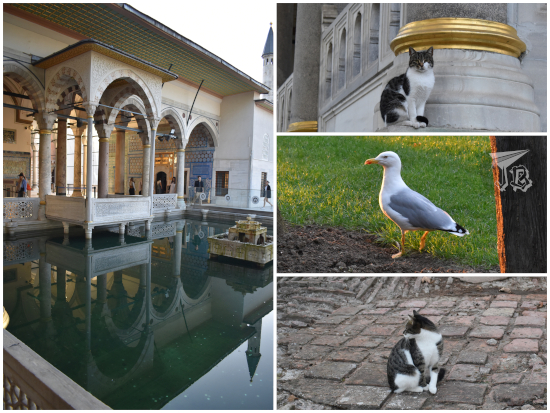
Topkapi palace Istanbul

Topkapi palace

I left the palace among the last visitors, as they closed the gates behind us. I had two options now – head back to the hotel and try to see the Grand Bazaar, or explore around for a while. To be fair, the area looked rather full and with a bunch of tourists looking more like a target than myself. That happened a lot during this trip, fortunately. I was not considered “targetable”.

Most visitable monuments had closed or were about to at this point. However, I knew that the Basilica Cistern would reopen an hour later, so I decided to wander around and try to get to the promenade along Kennedy street Kennedy Caddesi, which allowed me for nice views of Bosphorus Strait İstanbul Boğazı, the Golden Horn Altın Boynuz and Galata Bridge Galata Köprüsü.
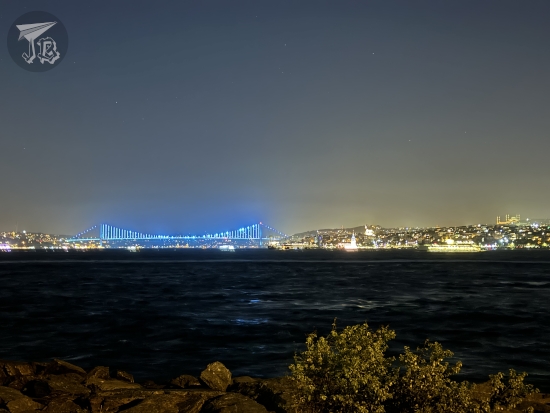
Golden Horn at night

I went back towards the city centre through Gülhane Park Gülhane Parkı. At this point it was dark, so the fountains were on, and they looked very fun, all lit up.

I reached the queue to enter the Basilica Cistern Yerebatan Sarnıcı (Subterranean Palace). The ancient cistern has a normal opening schedule, and an evening schedule, which is a bit more expensive, with live music. But it worked for me. The cistern was built in the 6th century with the goal of providing water to the Great Palace of Constantinople, which stood where the Blue Mosque is now. It is an underground chamber with 336 columns that are up to 9 metres high, and it can hold up to 80,000 cubic metres of water. The columns seem to be recycled from ruined buildings, and at least one of them is carved with an upside-down Medusa face on the base. Today there is very little water, and there are modern art installations, and there are cool changing lights that give it a very interesting look and feel.

Basilica Cistern Istanbul

By the time I left, I kind of regretted having signed up for the second day trip, because I had been rather more efficient on my own, but again, I had not done much planning for the city. I went back to the hotel and I ordered food using the online room service. This time I decided on a kebap chicken wrap and a Turkish yoghurt, which was delicious. I had a shower and went off to bed.

Kebap and yoghurt

1st January 2023: The Lotus Flower {Egypt, Winter 2022-2023}

I read somewhere once that you should start the year doing what you love, that is why I decided to go out on the 1st January 2022. I could have never imagined 2023 would start as it did, in Cairo [القاهرة] of all places. As a settlement, Cairo can be traced to the Babylon Fortress, built around the 1st century BCE, but its real foundations were laid in the second half of the 7th century by the Fatimid dynasty. The city survived the Caliphate and kept spreading. Today, it is the largest metropolitan area in Africa, and the 12th in the world with 22 million people.

After waking up around 7:00, I was the first in my group to go down to have breakfast, and when I did, I saw that the breakfast buffet had added a ‘hangover’ buffet – Ibuprofen, Strepsils, painkillers in general… I thought it was hysterical. To be honest, I was tired and sore from the pyramid climbs, and probably a bit hungry since dinner had been… strange. One out of three was dealt with after some coffee and a very… British breakfast somehow – scrambled eggs, potato wedges, roasted tomato, a sausage… this gave me energy for the day, which we were to spend in the Unesco World Heritage Site Historic Cairo.

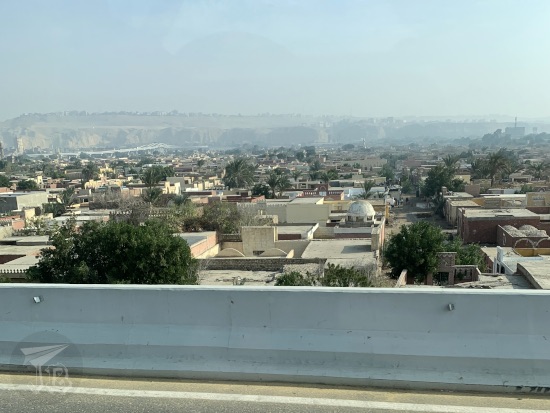
Departure was scheduled for 9:00 – too late, in my opinion. First, we got caught up in the horrible traffic. Then, when we arrived at our first destination, we had to turn around because the bus parking lot was full. On the way we caught a glimpse of the City of the Dead (Cairo Necropolis, or Qarafa [القرافة]). In this area, tombs, mausoleums and houses cramp together, up and down. Some people have made their houses out of the mausoleums due to Cairo’s crazy urbanisation. The City of the Dead was created almost at the same time as the city of the living.

Cairo, City of the Dead from the moving bus. A bunch of low constructions with flat celings or domes, with some trees sprinkled inbetween.

We also saw the ending of the Cairo Citadel Aqueduct [سور مجرى العيون]. Though originally designed during the Ayyubid period between the 12th and 13th century, it was later reworked by several Mamluk sultans (13th – 16th century) to expand water provision to the city. Today, it does not carry water, and it is under ‘redevelopment’ in order to display it as a heritage monument.

Aqueduct. Built in dark grey bricks, it has been buried by the sands of time so only the upper part shows.

Finally, after way too many scares with the bus, we reached the area called Coptic Cairo. It is located in what used to be the fortress of Bayblon, and in order to access it you have to go down a flight of stairs that feels way too long due to the pyramid climb. I do know a thing or two about soreness, and as I was hopping down the stairs as fast as I could, someone complained that it was unfair that I was ‘fresh like a lotus flowers’ while they were sore. That made me laugh – I guess I’m more used to being in pain than others.

The Coptic Catholic Church is the main branch of Christianity in Egypt. The Coptic Church seceded from Catholicism in the 5th century due to disagreements about the “nature of Christ”. Coptic Catholics believe the same general things as other Christian faiths, and fast a lot – 40 days before Christmas (7th of January), and 55 before Easter. They have a different Pope and rules for priests. Copts are a minority in mostly Muslim Egypt.

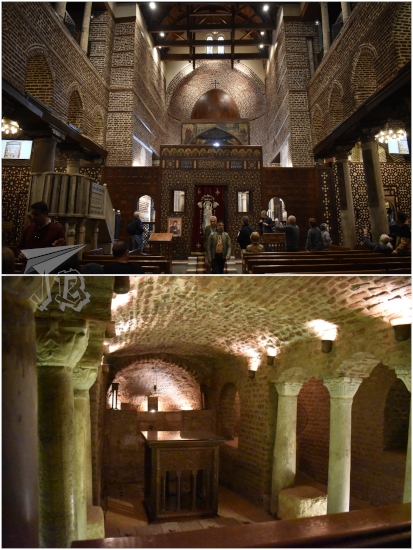
Our first stop there was the Church of Saints Sergius and Bacchus [ϯⲉⲕⲕⲗⲏⲥⲓⲁ ⲛ̀ⲧⲉ ⲛⲓ⳥ ⲥⲉⲣⲅⲓⲟⲥ ⲛⲉⲙ ⲃⲁⲭⲟⲥ ϧⲉⲛ ⲡⲓⲥⲡⲉⲗⲉⲱⲛ]. Christian traditions tell that the Holy Family fled the Massacre of the Innocents. In the nativity narrative, Herod, King of Judea, ordered the killing of all male children under two years near Bethlehem, in order to get rid of the “King of the Jews”. Having been alerted by an angel, Joseph took Mary and infant Jesus to Egypt. According to the tradition, they rested in the cave underneath the church, now turned into a crypt. The church is dedicated to the two martyrs, who died for their faith in Syria in the 3rd century CE. The building, erected in the 4th century, has a central nave and two side aisles, with 12 columns, probably quarried from Ancient Egyptian monuments and temples.

Collage. The upper part shows the Coptic chruch. The walls are made out of red brick, and the altar is hidden by a wooden structure. The lower picture shows a crypt with a small wooden altar, brick ceilings, and white columns

We then made a small stop at a Roman Tower, one of the Roman emperor Trajan’s addition to the original Fortress of Babylon (not that Babylon, the name was probably corrupted from the Pharaonic name). Trajan also created a quay back to the Nile, which has now dried out.

Ruins of a rounded tower built in white and red bricks. The colours alternate to create horizontal patterns.

We had a small stop at a bazaar shop, then we went into the so-called Hanging Church [الكنيسة المعلقة or ϯⲉⲕⲕⲗⲏⲥⲓⲁ ⲉⲥⲓϣⲓ], officially Saint Virgin Mary’s Coptic Orthodox Church [ϯⲉⲕⲕⲗⲏⲥⲓⲁ ⲛ̀ⲧⲉⲑⲉⲟⲇⲟⲕⲟⲥ ϯⲁⲅⲓⲁ ⲙⲁⲣⲓⲁ ϧⲉⲛ ⲃⲁⲃⲩⲗⲟⲛ ⲛ̀ⲭⲏⲙⲓ]. It is called the Hanging Church because it would have been suspended over the water gate of the Roman Babylon fortress – though today the ground is higher and the view is less impressive. It was built somewhere between the 7th and 9th centuries, and holds over a hundred icons. It is built in a basilica style, with 13 pillars representing the apostles and either Christ or Judas – depending on where you read. The rich decoration, with mosaics and reliefs, especially on the outside, mixes Arabic and Coptic motifs.

Collage of the Hanging church. The façade is sandstone, carved with Coptic and Arabic designs. Then there is a courtyard with a staircase that yields to a white building with two bell towers and a wooden porch. The lower picture shoes the interior, with the altar behind a wooden structure, very decorated ceilings and bare stone columns

That was all for Coptic Cairo, as we moved on towards what should have been our first stop – the Citadel of Saladin | Qalaʿat Salāḥ ad-Dīn [قلعة صلاح الدين الأيوبي]. There was going to be a high price to pay for all that time in the bus that morning, we just didn’t know yet. The Citadel was built by Saladin in the 12th century CE. Saladin was the founder of the Ayyubid dynasty. He became Sultan of Egypt in 1171, fought the Christian Crusaders, and conquered Syria. He was considered smart and noble, even by his enemies.

A sand-coloured wall with two minarets peering from the background

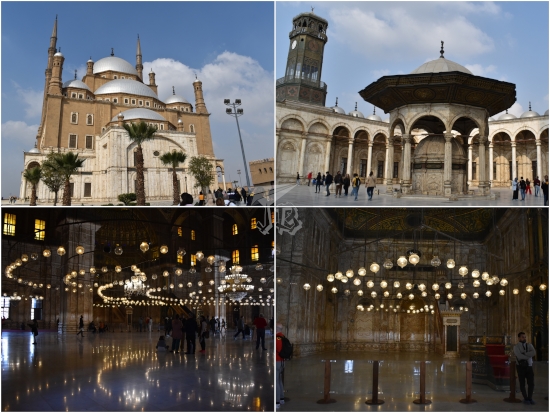
In the Citadel, we visited the Mosque of Muhammad Ali [مسجد محمد علي] in the Southern Enclosure, also called the Alabaster Mosque. It was built in the first half of the 19th century in the Ottoman style, and had to be completely restored in the 1930s due to cracking. It has two minarets, and a metal clock tower – the Cairo Citadel Clock, which apparently was a gift in return for the Luxor Obelisk that currently sits in Paris. The mosque has a courtyard for ablutions, and although the interior is usually carpeted, the carpets were out for cleaning, which created an interesting effect. It was my first time in a mosque, and I was pretty impressed by the huge glass lamps. Most of the courtyard and the interior are covered by alabaster – the upper part of the interior is only wood – and the mausoleum of Muhammad Ali is built in Carrara marble.

Muhammad Ali Mosque collage: from the outside, it has two domes and two minarets. It is built in stone, brick and slate. The inside courtyard is built in white-grey alabaster, with an ablution fountain in the middle and a metal clock tower that feels out of place. The interior of the mosque is also built in alabaster, and the lights reflect on the floor, creating a dizzying effect. Everything inside is carved and decorated with tiny motifs

Before leaving, the Citadel, we went towards the wall to catch a view of what is modern Cairo, in what we were told is called the Wall of Saladin, which is basically the limit of the Citadel. Looking very carefully, one could spot the pyramids in the background, among the high rises.

A ruined medieval wall, with a view of Historic and modern Cairo in the background. A floating image superimposed shows a high-contrast close-up of the skyline, making the pyramids visible through the haze

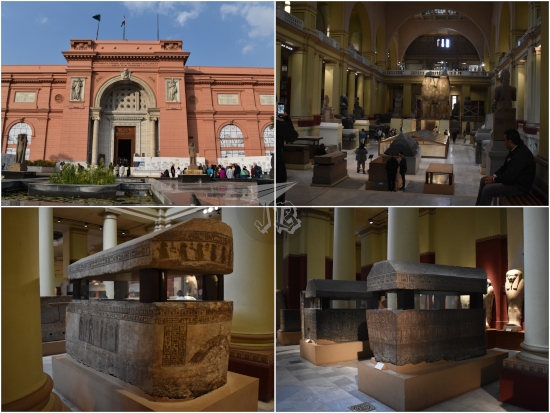
Afterwards, we went back to the bus to find the restaurant we were supposed to have lunch at – a “luxury boat” on the Nile that tried to short-change two of us – a travel-mate for 20 EGP and me for almost 60 EGP. We had nothing of it, though I had to be a bit more forceful than he did. We finally got into the most interesting part of the day at 15:17 – The Egyptian Museum in Cairo [المتحف المصري]. Considering that the museum closed at 17:00, this was outrageous. We had to run through the museum, with the tour guide complaining that we were not fast enough – he actually grunted that I was not there when I was. Considering how many people there were, we spent time trotting behind the guy, trying not to lose him.

We saw – thankfully – the Tutankhamun Galleries, with his sarcophagus and mask. I say thankfully because at this time, the treasures were scheduled to move onto the Grand Egyptian Museum next to the pyramids within the same month – and the tour guide could not even tell us where exactly the treasure was. We also saw most of the masterpieces:

  • Galleries of Yuya and Tuya (18th Dynasty), containing most everything regarding this couple, including the Book of the Dead
  • Statuette of Khufu (Cheops) in ivory, a tiny representation of the pharaoh, the only sculpture of his in existence
  • Scribe statue CG 36 (Fifth Dynasty)
  • Menkaure triads, in alabaster (Fourth Dynasty). Statues of deified Menkaure.
  • Narmer Palette, a cosmetic palette considered the “first historical document in the world”, documenting the union of Lower and Upper Egypt by Narmer (Dynasty 0, 3000 BCE) with the first hieroglyphs
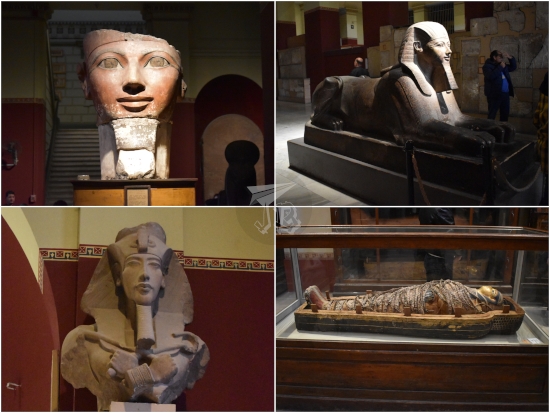
  • Bust of Akhenaten, Amonhotep IV
  • Sphinx statue of Queen Hatshepsut
  • Small wood sculpture compositions from different tombs
  • Sarcophagi from several pharaohs and noblemen
  • Rahotep and Nofret (26th century BCE)
  • Statue of Seneb and his Family (25th century BCE)
  • Face of Queen Hatshepsut

Cairo Museum Collage: a view of the building, striking pink; the first gallery showing the top of a few pyramids and some colossal statues; sarcophagi.

Cairo Museum Collage: Close up of a black basalt sarcophagus, showing colourful hieroglyphs; canopi jars; a sitting scribe; a spynx.

Cairo Museum Collage: Face and Sphynx of Queen Hatshepsut; bust of Akhenaten; mummy

By the time he actually cut us loose, it was almost closing time, 16:40. I managed to wander a little on my own, and at least catch a glimpse of some colossal statues and the exhibited pyramidia (tops of the pyramids). I am not going to lie, I was miffed. We should have gone out of the hotel earlier, and if the bus could not enter the Citadel, we could have walked for ten minutes rather than waste an extra hour driving around Cairo. The best, though, was still to come. My travel-mates had come later than me, but they left earlier than me – almost 12 hours earlier. Back in Aswan I had tried to organise a day trip for myself for the second, and throughout the bus rides, I insisted thrice about organising something, but was just told that my pick-up was 14:00.
We were driven around Cairo for a little while after the museum until we reached the area known as Islamic Cairo | Al-Mu’izz’s Cairo [قاهرة المعز], the heart of the Unesco Heritage Site – it is also known as Historic Cairo or Medieval Cairo, and it existed before the current city expansion, built throughout the Middle Ages around the Citadel. It is surrounded by a wall, that can be crossed through a number of monumental gates. We had a walk down Al-Muizz li-Din Allah al-Fatimi Street [شارع المعز لدين الله الفاطمي], the most important artery of the historical city, with a number of historical buildings, such as the Qalawun complex [مجمع قلاون] and the Mosque-Madrasa of Sultan Barquq [مسجد ومدرسة وخانقاه الظاهر برقوق]. At the end, there is a tourist market that we were told was Khan al-Khalili, but I was not able to find the historical part of this famous souk, and to be honest, I did not feel too comfortable hanging out alone – we were given an hour of time to ‘do shopping’ here. Though the street itself was quite neat, and the buildings were nicely lit, again, I was not in too much agreement with the timing, and the shopping area was not welcoming at all – at one point I was sent a child to beg me for a pound, and she kept crying around me. One should never give money to beggar children, as it encourages the practice, but it was hard to force myself to ignore her.

A collage of Medieval Arabic buildings at night, lit in pink and green lights. The decoration is rich and ellaborate. The street is full of people.

When we came back to the bus, we got on route towards Al-Azhar Park [حديقة الأزهر], and a supposedly famous restaurant with views. Though it has very neat views from the terrace, the set menu was weird. The barbecued meat was okay, but it came after way too much rice and fries. I’m not sure how much the restaurant got from the extra trip price (60€ per person) though.
A collage. The biggest picture shows the Mosque of Muhammad Ali in the background, lit in purple for the night, with a darkened garden leading up to it. Two other pictures show the entrance to the restaurant, and a small Arabic fountain. The other two picrures show Cairo skyline, and the food we were served: Egyptian bread, hummus, and a barbecue of chicken and lamb meat

Most of the group was exhausted and they had to leave at 3:00, so we just bailed out on the rest of whatever was planned. I insisted on the following day and I was told I’d receive a call to my room the following morning. We said goodbyes to the tour guide, and I said my goodbyes to the rest of the group.

I went to bed wondering what time I would get that call. I set my alarm clock for 7:00 just in case.

29th December 2022: Abu Simbel and Nubia {Egypt, Winter 2022-2023}

Modern eras have brought lots of different needs and technologies, and both become one when we think about harnessing nature. The Aswan dam is one of such examples. There are actually two of them. The Old Aswan Dam was built in the wake of the 20th century (1899 – 1902), and the newer, Aswan High Dam was completed in 1970, creating Lake Nasser. The rationale was securing fresh water for Egypt and stopping the dependence on the Nile floodings; however there have been associated problems – not only environmental such as the habitat of the Nile crocodile and the loss of fertility in the delta; thousands of people were displaced from the to-be-flooded area, and houses and whole villages were swallowed by water. A lot of these villages had their own cultural heritage, which was to disappear forever. Thus started Unesco’s International Campaign to Save the Monuments of Nubia between 1960 and 1980. This effort relocated as many as 24 monuments (one of them, the Temple of Debod, ended up in Madrid, Spain) to safer grounds. The temples of Abu Simbel are probably the star of the rescue efforts.

The Abu Simbel [أبو سمبل] Complex is part of the Unesco World Heritage Site Nubian Monuments from Abu Simbel to Philae. It comprises two buildings – the Great Temple of Ramesses II and the Small Temple of Hathor and Nefertari. Both of them were carved out and into a sandstone cliff on the West Bank of the Nile during the reign of Ramesses II or Ramesses the Great (14th-13th Century BCE, Nineteenth Dynasty of the New Kingdom), considered one of the most powerful Pharaohs in the New Kingdom, who reigned for many years. It was lost to time, and only rediscovered in 1813 and excavated in 1817. The Complex was relocated to higher ground between 1964 and 1968 to prevent its sinking in Lake Nasser. In order to do so, the mountain and the temples were cut into huge blocks and built 65 m higher and 200 m back from the river. The relocation managed to keep the relative position to the sun, but shifted it by one day – the temple was designed so the first ray of sun hit Ramesses’ face in the sanctuary on the 21st of October and February, and now that happens on the 22nd.

At some point one has to wonder what was more impressive – building the complex, or relocating it so you can’t really tell. The mountain itself is hollow in order to reduce the stress on the temple after the move, but wow. Just, wow.

As far as I understand, buses are not supposed to stay longer than a couple of hours in the complex. Our disembark time was 2:30, and even if I went to bed ridiculously early, I did not get much sleep because my cabin was above the motorboat rotors, and my cabin vibrated like hell. Before we left, we had a choice of coffee or tea, and we were given a “picnic” consisting on some sweet bread with… buffet leftovers, a piece of fruit and a small juice – that was traded often.

The trip each way was 3.5 hours, so we wanted more than the 30 minutes the tour guide wanted to give us, and we were there between 6:30 (though we did not enter the site until a bit later) and 9:00. Fine, I own up – I was late coming back and only made it to the bus at 9:08. The tour guide was so not amused by that.

Arriving at the Abu Simbel site, you approach from behind the mountain, and as you surround it, you’re greeted by Lake Nasser [بحيرة ناصر], the reservoir created by the dam. The sun was climbing up slowly when we arrived, still with sunrise colour.

Sunrise over a lake. There is a lonely palm tree on the left

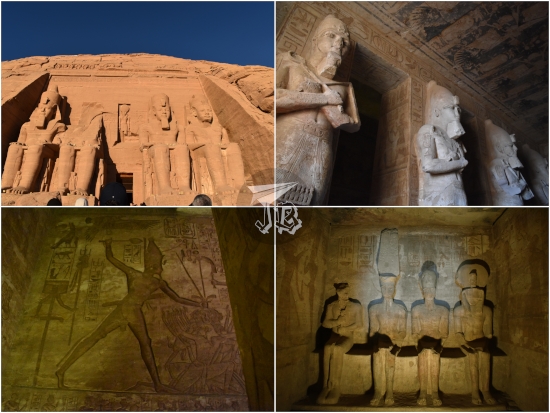
You keep turning and you are greeted by the four colossi that flank the entrance to the Great Temple of Ramesses II. The colossi represent deified Ramesses II, to whom the temple was dedicated along the gods Amun, Ra (in his Ra-Horakhty advocation) and Ptah (creator of the world and patron of craftsmen). The inside features a hypostyle hall with columns carved in the shape of Ramesses colossi, a colonnade hall and the inner sanctuary, where the venerated gods were revered.

Panorama of both Abu Simbel temples: Ramesses II to the left, Nefertari and Hathor to the right. The sky is blue, the monuments are orange-gold, and a lot of people gather at the entrances.

Collage of the Great Temple of Ramesses II: façade with four sitting colossi; inner hall, with colossi against the columns; an carving of Ramesses in a war position; inner sanctuary with the gods and Ramesses sitting, the light hitting their faces.

To the right stands the Temple of Hathor and Nefertari. Here, Queen Nefertari is represented as big as Ramesses and shown with the horns of the goddess Hathor, both signs of her importance (consorts were usually represented knee-high of their kings). The inner area has a hall with rectangular columns carved and painted, and the sanctuary features Hathor as a cow emerging from the mountain rock.

Small Temple of Abu Simbel colllage: Entryway with the colossi; inner hall with the face of Hathor carved into the columns; carving of Nefertari with the goddess' crown; inner sanctuary with the image of a woman with a cow head coming out from the wall, the light hitting her face

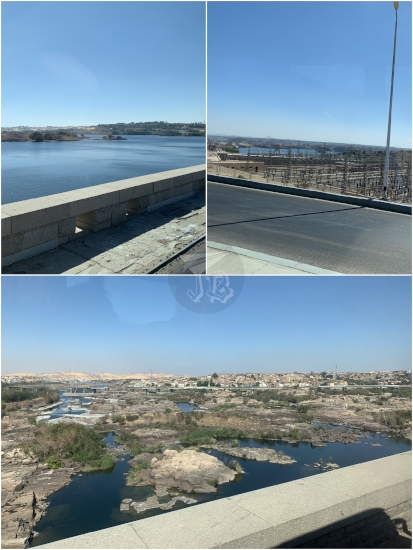
Despite really, really not wanting to leave, I made my way back and ran into two other people from the group. We had to leave through the tourist bazaar and were just slightly late. On the way back, slightly more awake than when we had left, we did not get to see any mirages, but we crossed the old Aswan Low Dam [خزان أسوان]. We had a view of the power plant on one side, and on the other side the First Cataract of the Nile, a series of rapids that have been slowed down by the building of the dam. In ancient times, it was believed that the Nile sprouted here and flowed both north and south. The main part of the cataract is now under the dam, and the remaining rapids have been turned into a nature reserve. There are Ancient Egypt remains and engravings in some ruins on the islands.

Views from the low Aswan Dam: southern side calm waters and power plant; northern side rapids

We were back on board the motorboat at 12:35 for lunch, and met again around 16:15 for a felucca sail on the Nile [نهر النيل] around the Aswan [أسوان] area. Before leaving, I decided to exchange 20 € into Egyptian pounds in order to have some change for the couple of meals we had outside, just in case I needed pounds to buy drinks. For convenience I chose the reception of the motorboat. They short-changed me, twice. First, they used a 23 EGP / 1 € exchange rate, while the official rate is 25 EGP / 1 €. Then, the guy at reception calculated 460 EGP and gave me 450, smirking “I owe you 10 pounds.” Stay tuned for the conclusion of the story.

The felucca sailing had been rescheduled from the following day so it could be tied to the trip through the Nature reserve and the Nubian village (and possibly to accomodate the charter flight times). A felucca [فلوكة ] is a traditional sailing boat, usually with one sail. Feluccas are still used for transportation through and across the Nile, and from ours, we caught some interesting views.

A sailboat docked with a precariously narrow plank to board it

A view of a sailboat on the Nile from another sailboat. The knots and ropes of the boarded felucca are visible in the foreground.

We got to see the Tombs of the Nobles | Qubbet el-Hawa [قبة الهوا] (Dome of the Wind), which I wish we could have visited. The tombs date back from the Old and Middle Kingdom with dignitaries and governors from the Fourth Dynasty to the Roman period buried here. The site is still being excavated, and also part of the Unesco World Heritage Site Nubian Monuments from Abu Simbel to Philae, even if it is neither Nubian nor between them.

A ruined structure perched on a bare mountain or dune. On the left there is a building, and on the right some open façades in stone.

We also sailed by the Mausoleum of Aga Khan [قبر اغاخان] and the family house beneath it. Sultan Muhammad Shah, Aga Khan III, was a religious leader among the Nizari Isma’ilism, a branch of Islam, and he was buried in Aswan after his death in 1957.

A building perched on the top of a mountain. It has a dome and several towers. A similar building stands at its feet, painted white, in the middle of a garden

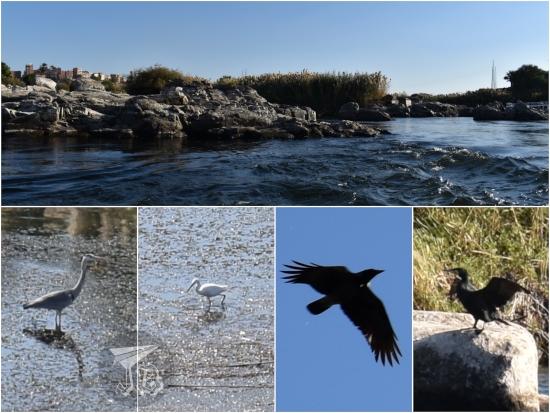
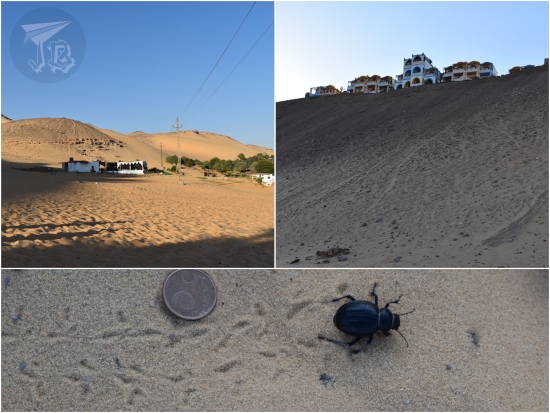
Apparently I missed some dancing as I was taking pictures of the site. Then, the people from the felucca sold us some trinkets, and finally we transferred to a different kind of engine boat, from where we sailed off towards Salouga and Ghazal Nature Reserve [محمية سالوجا وغزال الطبيعية] (the rapids formed by the First Cataract), around Seheyl Island [جزيرة سهيل], and a great sand dune. The Aswan area is famous among birdwatchers for its diversity. We got to see some glossy ibises (Plegadis falcinellus), little egrets (Egretta garzetta), reed cormorant (Microcarbo africanus), maybe an osprey or two (Pandion haliaetus), some corvids and stilts… Up the dune we made port at, we also caught sight of a couple of Egyptian beetles (Scarabaeus sacer).

Collage: a rocky island surrounded by rapidly-running water, and several birds wadding and mid-flight

Collage. Two views of a huge sand dune: the buildings look tiny against it. A picture of a scarab walking on sand and leaving its print. It is a bit biger than a 5cent coin

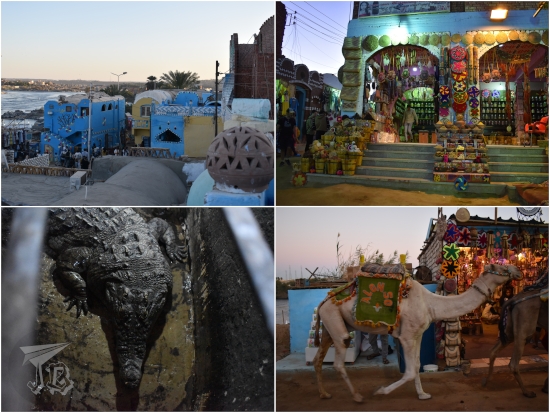
The Nubian village, Gharb Seheyl [غرب سهيل], which is little more than a big bazaar. We were invited to the house of a man who claimed to have been a dancer for the Spanish Teatro Real. We hung out there for an hour or so, and eventually were let off to walk around the village, a succession of shops selling the same trinkets as everywhere else, plus women trying to sell “Nubian dolls”. The house we were at kept live Nile crocodiles (Crocodylus niloticus), and at a lot of places we saw some mounted ones, I guess for tourist’s entertainment, but that did not feel quite right.

Collage of the Nubian village: a view from a rooftop, showing the houses painted in sand and blue colours; a shop with colourful trinkets, flowers, and statuetes; a Nile crocodile staring up; a dromedary passing by a souvenir shop.

After sunset, we sailed off back to the motorboat, without stopping anywhere, even if the whole city was lit. The boats were also shiny with neons and bright colours.

Collage: boats at night, docking and navigating the Nile. Two views of Aswan: lit ruins of the tombs of the Nobles, a mosque and a hotel

At the motorboat, we just had dinner and I went to bed early to catch some sleep. When I arrived at the cabin, I discovered that the staff had taken one of my beds away. I guess they got tired of making both of them as I used both bed covers? I was amused, just like I had been by all the figures they made out of towels (I got swans, a crocodile, and a monkey) though I wish the cleaning had been a bit more… thorough.

30th December 2013 – 1st January 2014: New Year’s in Toledo (Spain)

30th December 2013: Arrival in Toledo

We took an early train to get to Madrid, and transferred to the high-speed line (AVE) to get to Toledo – the ride from Madrid was barely half an hour. Toledo is known as “the city of the three cultures” as during the Middle Ages, Christians, Muslims and Jews managed to live in peace there, and make it prosper. Today it is a tourist hub in the centre of Spain.

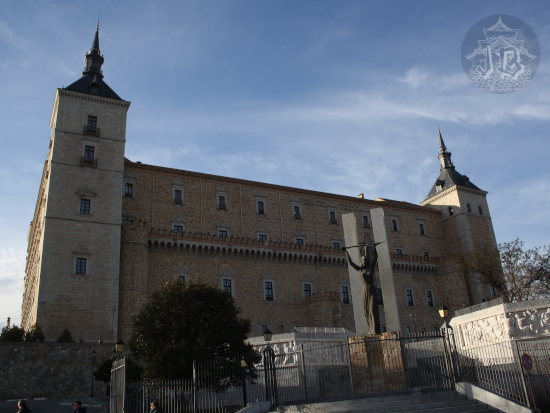
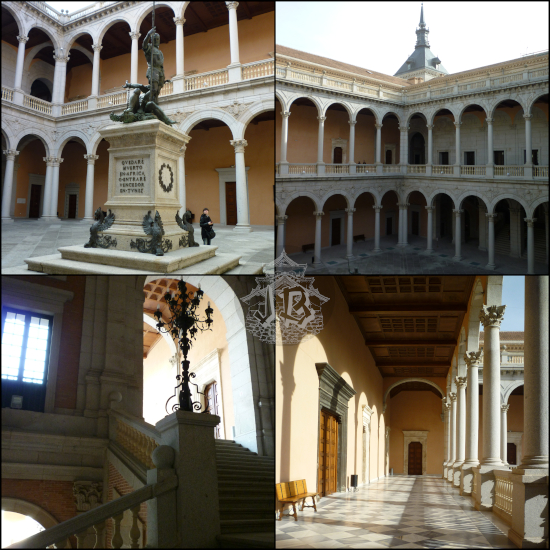
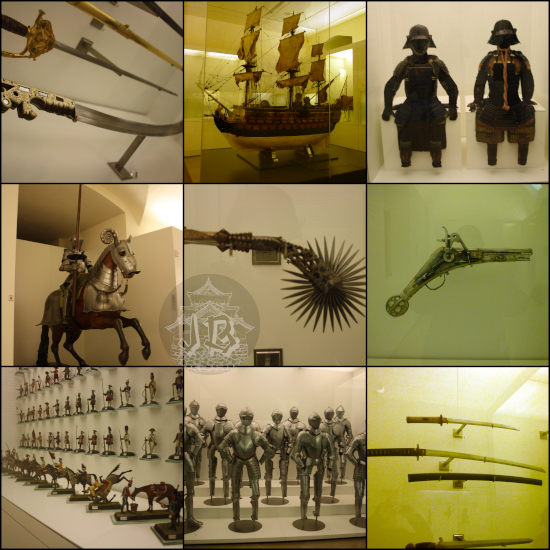
The first thing that we did was head off to the Alcázar (Muslim castle) – although it was originally built by Romans in the third century, its current look is owed to the restoration carried out in the 1540s. However, it had to be restored after the Spanish Civil War. The Siege of the Alcázar was one of the most symbolic victories on the Nationalist band. The Alcázar was under siege during the whole summer by Republicans trying to take it over, but in the end, Nationalist reinforcements arrived, chasing the Republicans away. Today, the Alcázar is an important cultural building (where the bullet holes can still be found) and hosts the Museum of the Army, Museo del Ejército.

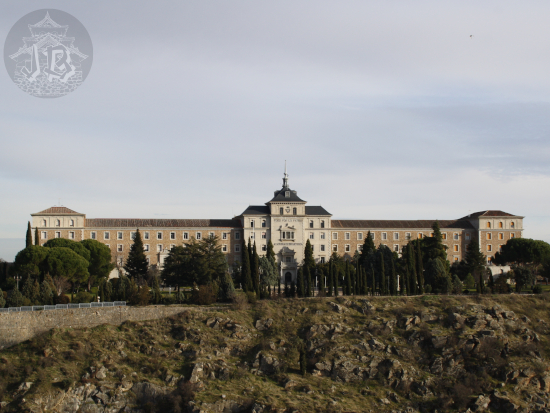
From the vantage point of the Alcázar, we could see the Academia de Infantería (Toledo Infantry Academy), built in the 20th century in imitation of the Renaissance and Herrerian style.

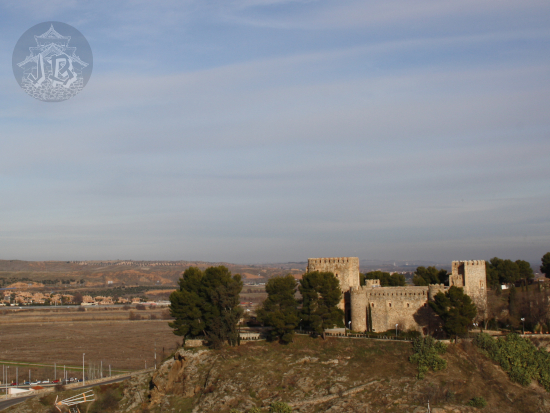
We also saw the Castillo de San Servando, the Castle of San Servando, a fortified Knights Templar enclave. Fine, it started off as a regular monastery, but it was later given to the Knights Templar in order to protect the city.

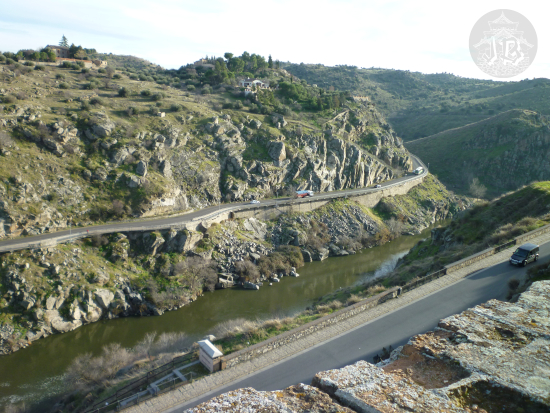
Both buildings are on the other side of the Río Tajo, the Tagus river, the longest river in Spain.

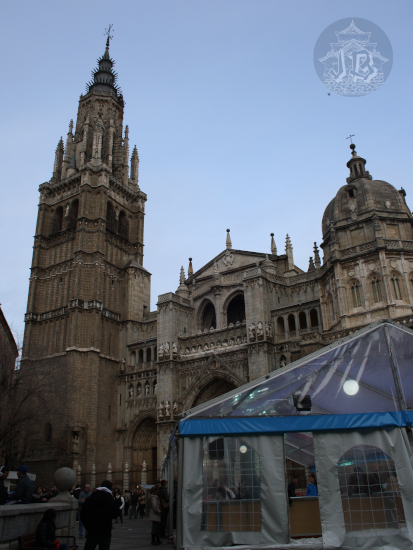
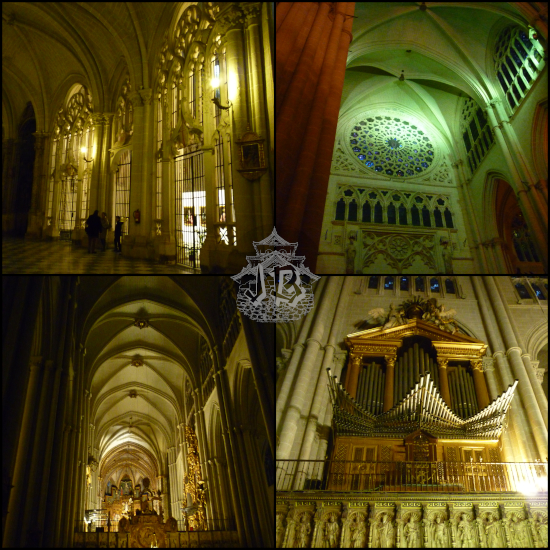
After having lunch and checking into the hotel, we visited the cathedral Catedral Primada Santa María de Toledo (Primate Cathedral of Saint Mary of Toledo). The cathedral, built in Gothic Style, was erected mainly throughout the 13th century, even if it was only finished in the 15th century. It sports two asymmetric towers, well, one tower and a small Mozarabic chapel in place of the other one.

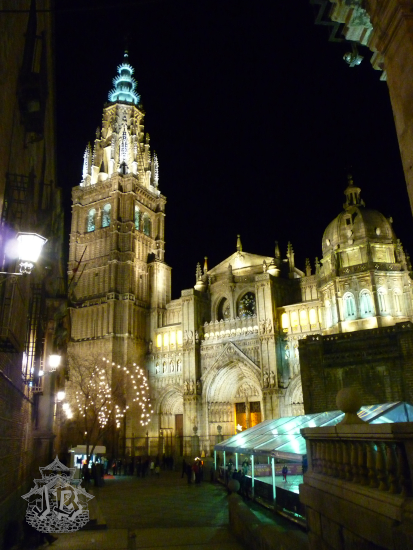
By the time we came out of the cathedral, night had fallen – truth is that we missed a little on the pretty windows due to it being darkish outside already. Nevertheless, this treated us to some nice night views. First of all, of course, the cathedral itself…

The Alcázar once again…

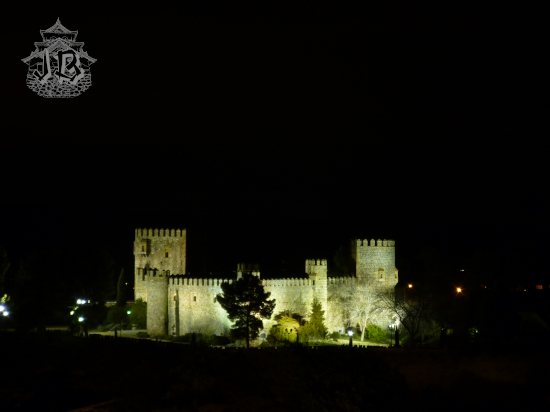
… and the Castle of San Servando.

We then walked through the Plaza de Zocodover, one of the city squares, where the old Muslim for cattle and horses was. The current layout was set in the 16th century after it burnt down in a fire.

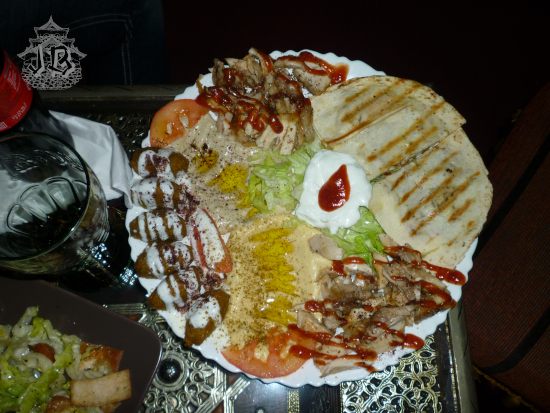
We walked around the old town for a while until we found a place to have dinner, a Middle-East restaurant called La Casa de Damasco, one of the few times I’ve had real food from this area. I have to say I really enjoyed it.

31st December 2013: Churches and Birds

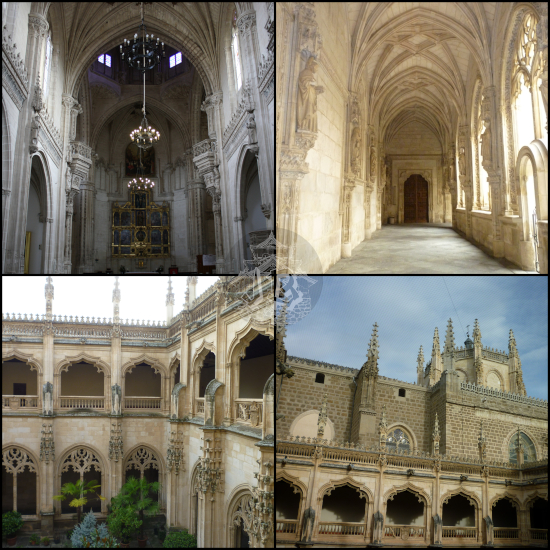
We started off the day at the Monasterio de San Juan de los Reyes (Monastery of Saint John of the Monarchs) is an Isabelline style Franciscan monastery. It was founded by the Catholic Monarchs to celebrate the birth of their son along with their victory in the Battle of Toro, in the late 15th century. It has a beautiful Gothic cloister.

Our next stop was one of those things that breaks my brain, a Christian Mosque, Mezquita del Cristo de la Luz. It was built in the year 999 as Bab-al-Mardum mosque, but it was turned into a Christian Church in 1085. I’m torn between rolling my eyes at Religions needing to assert dominance and being grateful the Mosque was preserved for us to visit.

Close to the Mosque stands one of the gates of the old walls, the Puerta del Sol, the Sun Gate, of the city walls.

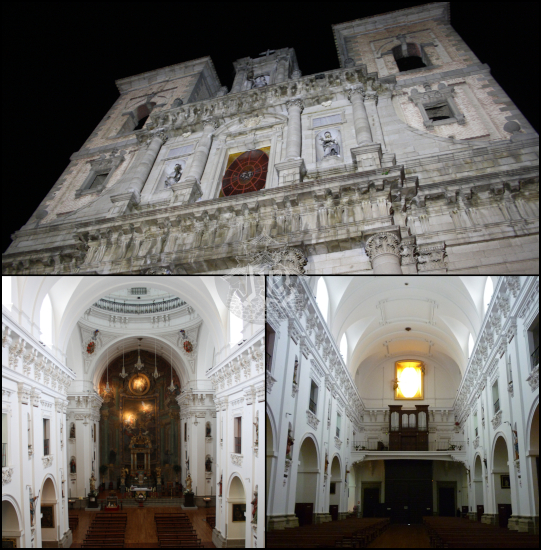
Our next stop the Iglesia Jesuita de San Ildefonso, a church dedicated to Saint Ildefonsus, the patron saint of the city. Construction started in the early 17th century and ended in the mid 18th century, in the Baroque style.

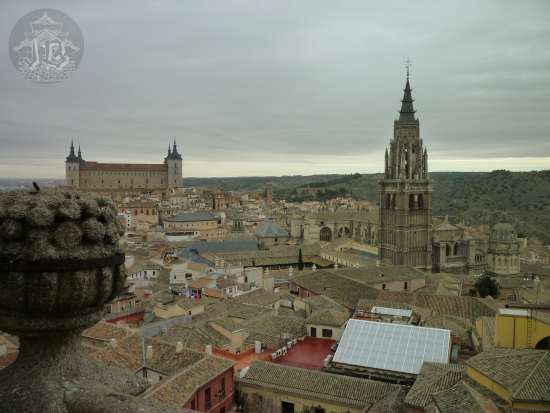
From the upper towers of the church, there was a great view of Toledo.

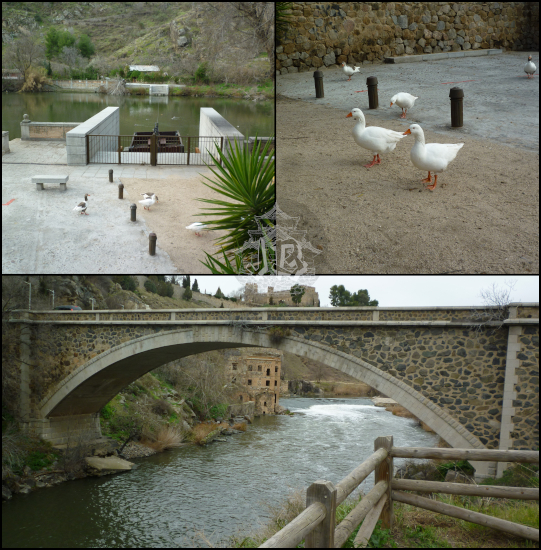
We decided to walk down towards the river, Río Tajo, where we met a flock of geese (which I’m happy to report had not lost their heads to any kind of stupid animal-hurting tradition).

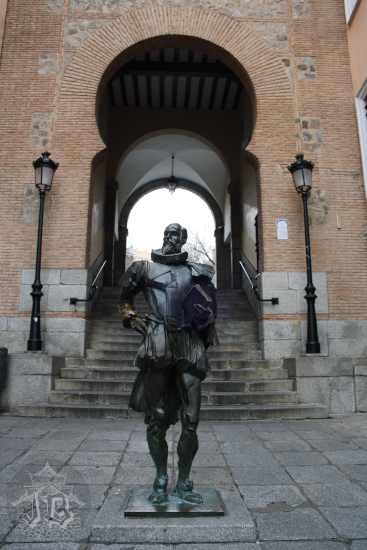
As we continued, we walked past a sculpture to Miguel de Cervantes, Estatua de Miguel de Cervantes, the author of the acclaimed “Don Quijote” book. The statue is placed beyond the Arco de la Sangre , the Blood Archway, that leads into the Zocodover Square.

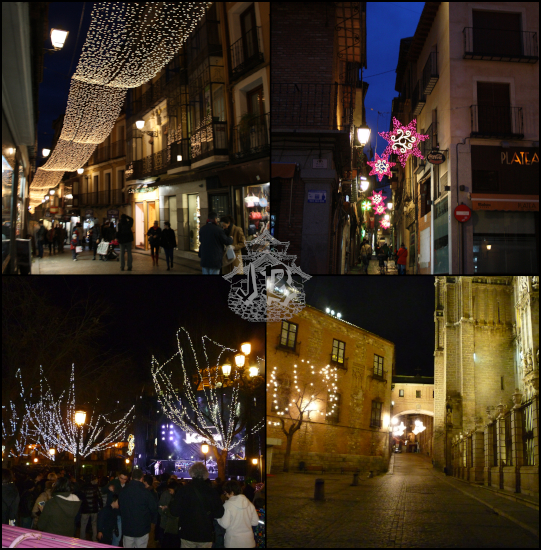
As darkness rose, we had dinner in a Chinese restaurant. While we did, the lights turned on, and the city got ready to welcome the New Year with fireworks.

1st January 2014: Views of Toledo

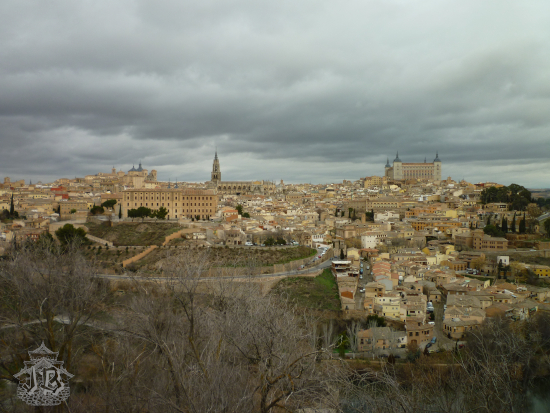
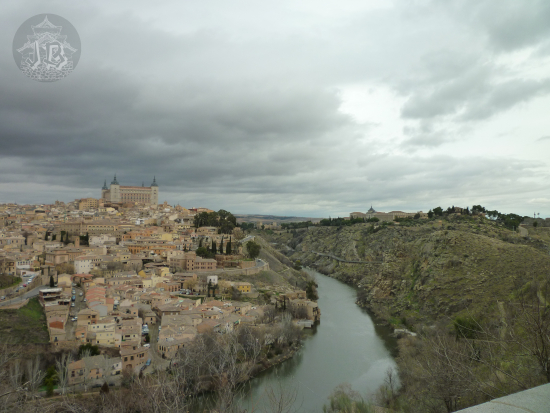
We slept in, and after an early lunch (Chinese, again, as we were feeling decadent), we booked a ride in the “tourist train” that took us to see some of the most amazing views of the Medieval Town from the vantage points on the other side of the Río Tajo.

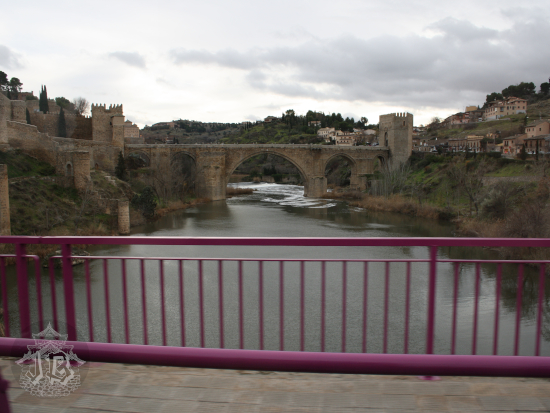
On the way back we saw the Puente de Alcántara, a Roman arch bridge built upon the foundation of the city after the Celtic settlement was taken over.

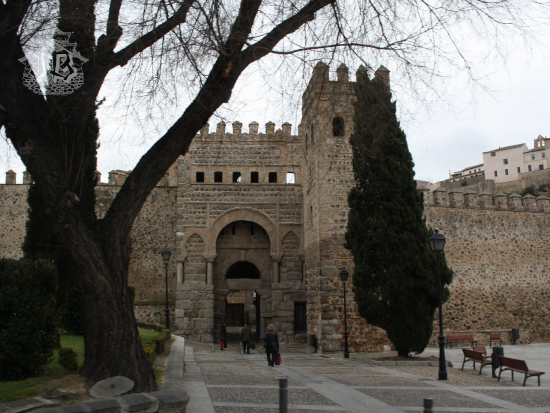
The ride ended up on the other side of the city than the one we had been favouring, so we just walked round the walls that fortify the city, the Murallas de Toledo, which are of Muslim origin over Roman foundations. King Alfonso VI is credited with finishing off the walls, and he named one of the gates after him: Puerta de Alfonso VI.

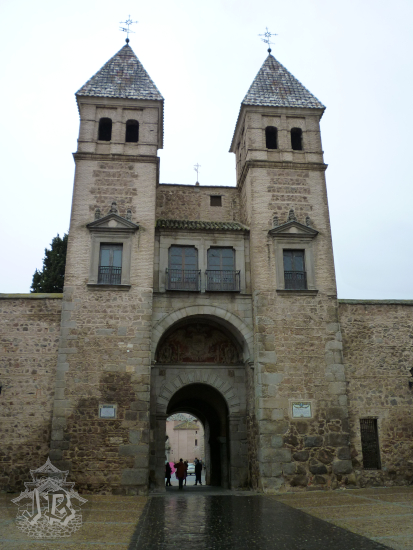
Another of the gates is the Puerta de Bisagra, the last of the monuments we visited before we headed back home the following morning.

One of the creepiest moments in this trip was realising that our key could open a room which was not ours – we got off on the wrong floor and we went down the corridor to the room door, and opened it. It was not our room. We were very quite put off by this, and it turns out that we had a master key. Finding this was a little freaky, and we tried to complain to the hotel. Furthermore, they wanted to charge us for keeping our luggage for a few hours.

Oh, and I caught a cold during our 31st at night escapade. Because of course I did.