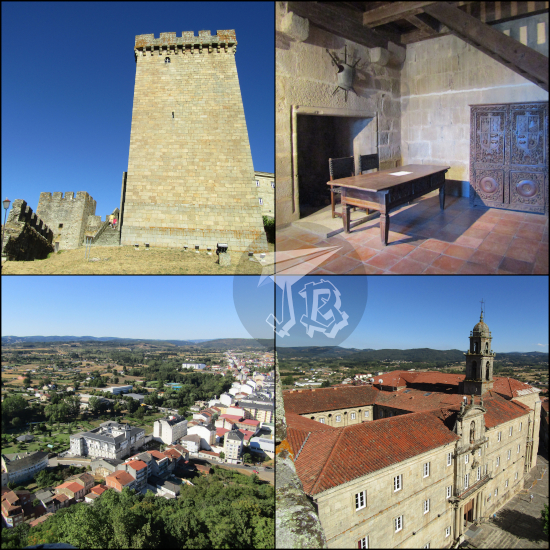
12th September 2024: Cádiz {Escapade to Cádiz, September 2024}

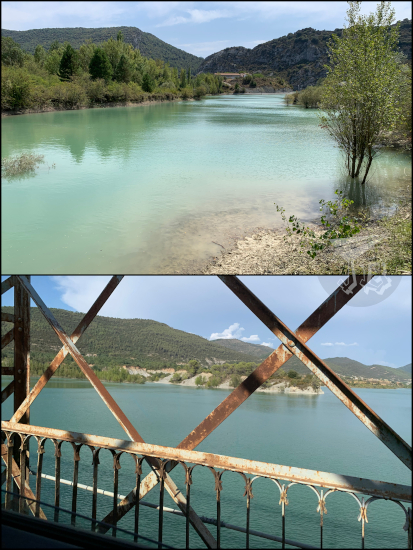
My paperwork-related appointment was at 9:30 in Cádiz itself, and I got up around 7:30. I left the hotel, but unfortunately the café where I had expected to have breakfast was closed. Thus, I instead headed out towards the promenade Paseo del Vendaval to see the ocean again. I turned to my right, in the opposite direction from the previous night, and I walked towards the central beach in town – Playa de la Caleta, a mostly-rocky area with tidal ponds and a long bridge called Puente del Hierro which leads to an old castle Castillo de San Esteban. I chased a few birds on the way for photographs. They were not at all cooperative.

I reached the former bathhouse Balneario de Nuestra Señora de la Palma y del Real, built in 1926 from an original design by Enrique García Cañas with one main access and two corridors that form a semicircle towards the ocean, and end in domes. It was build directly onto the beach, in reinforced concrete, with a style gravitating among Art noveau, eastern historicism and local decoration with azulejo tiles. It was abandoned in the 1970s, but restored for administrative use in the 1990s.

I ventured away from the ocean into the narrow streets of Cádiz downtown until I got to the town’s theatre Gran Teatro Falla, in the Neomudejar style. It was built between 1884 and 1905, on and off due to lack of funds, after a design by Adolfo Morales de los Ríos and Adolfo del Castillo Escribano. The theatre is one of the key spots during Carnival festivities. The Cádiz Carnival is one of oldest and most famous in Spain, known for its groups of people who parade the town in costume to sing simple songs that make fun of every- and anything, normally current affairs – coros, cuartetos, comparsas and chirigotas. The great Carnival contest is celebrated in the theatre, and prizes are awarded in each of the categories. The carnival brings in about 400,000 visitors each year. I tried to get to visit the theatre, but I did not manage to do so.
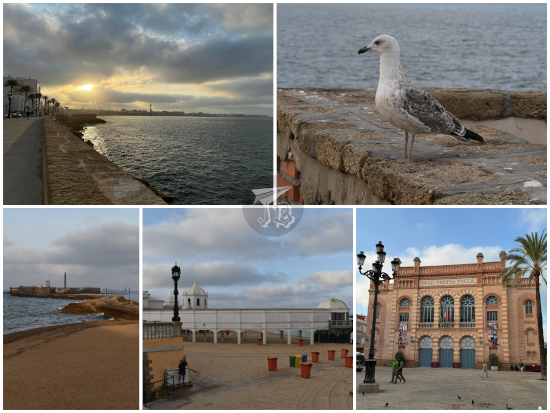
Paseo del Vendaval & Gran Teatro Falla Cádiz

Around 09:15 I decided to try my luck with the paperwork issue, even if it was early for my appointment, and I was successful. Since it was an important document, I ran back to the hotel to drop it there, and then headed off to the square Plaza de La Mina, where the local museum Museo de Cádiz stands.

It is said that Cádiz is the oldest Western city, founded around the 9th century BCE. Mythologically, it is associated with Hercules’ Columns and the city of Tarsis. The oldest archaeological remains date back to the 7th century BCE. The now-peninsula was originally a small archipelago where the Phoenicians settled down as it was a strategic point for commerce and mining of copper and tin, naming the settlement Gadir. It was later conquered by Carthaginians, whose march to Rome led by Hannibal started there. When Carthage lost the war, the city was taken over by Romans and became Gades in the 2nd century BCE.

As the Roman Empire declined, the city was invaded by the Visigoths, then the Byzantine Empire, and again by the Visigoths. In the year 710 CE, it was the first stronghold to fall to the Moorish conquest of Spain. After the Christians took it over again, it became a key point in commerce with the American territories.

In 1755, Cádiz was damaged by a three-wave tsunami caused by the so-called “Lisbon Earthquake”, 8.5 degrees in the Richter scale. In 1812, during the Napoleonic Wars, the Spanish patriots wrote the first Spanish Constitution, and throughout the 19th century, it was key in the numerous wars and battles through the return of Alfonso VII, the Republic and the Restoration of the Monarchy periods. However, during the 20th century, the city decayed suffering from lack of infrastructures, and rampant unemployment. Thus, it is happy to focus on tourism and the money it brings.

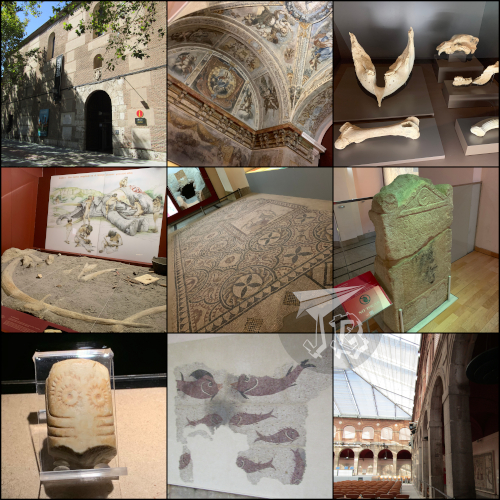
The Museo de Cádiz tries to follow this trail of history, but only the archaeological floor was open. The most important artefacts date from the Phoenician, Roman and Moorish periods. Of particular interest are two Phoenician sarcophagi which were found in completely different areas, but are presented as a couple of sorts, and a complete dowry. From Roman times, they exhibit a few dozen amphorae, sculptures and columns. Finally, the remains from the Moorish domination are quite colourful in comparison with everything else. The second floor of the museum was closed, so I was done earlier than expected.
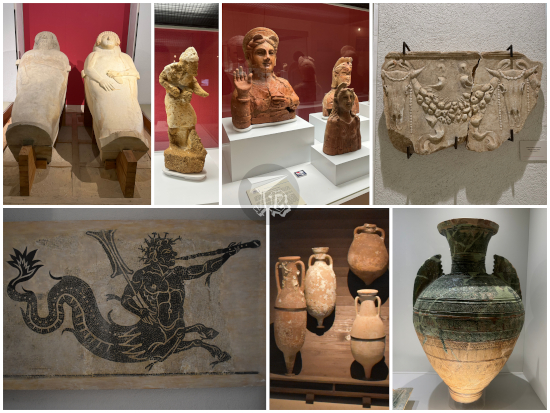
Cádiz Museum

Thus, I decided to push my luck a little and try to get to the archaeological site called Cueva del Pájaro Azul for the 10:30 visit in English. The place is a former flamenco tavern built within the repurposed dry docks of the Phoenician Gadir. Most of the structure has been covered in brick and barely the original shape can be traced back, enough to calculate that the dry docks served war ships. While building new stairs, they did find part of the original Phoenician harbour though, the most important remain that survives. The tavern itself might be considered of minimal historical importance as it was a considerable cultural hub in the 1960s.
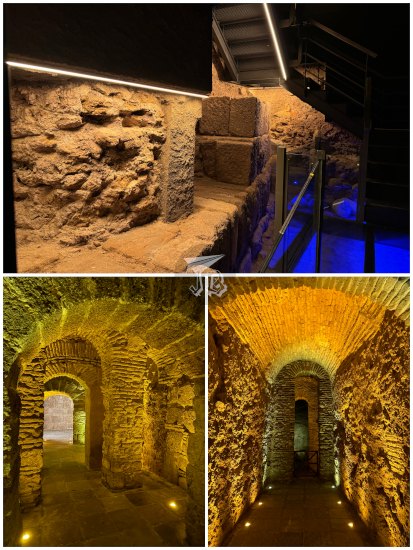
Archaeological site Cueva del Pájaro Azul

To keep in the mood, I decided to visit the archaeological site Yacimiento Arqueológico de Gadir, making a stop for a coffee first. Unfortunately, the site was closed that day. Thus, I decided to check out the Roman Theatre Teatro Romano de Cádiz – it might feel a little back and forth, but distances in central Cádiz are small and I wanted to prioritise Phoenician remains (I said I lived in the area, but all these archaeological remains are newly discovered). The theatre is the second largest one in what was Hispania, and dates from the 1st century BCE. It could host up to 10,000 people, and the stage, stands and the vomitorium (corridor underneath the seats) can be visited. There is an extra room with miniatures of the different stages of the history of the theatre.

Roman Theatre Cádiz

I left behind something called “The Elf’s Alley” Callejón del Duende, the narrowest street in town, now closed off. Very near both the alley and the theatre, I found the old cathedral Catedral Vieja de Cádiz officially Parroquia de Santa Cruz. This was the original cathedral of the town, commissioned by king Alfonso X around 1262. The original building was destroyed during the scuffles between the Spanish and the English at the end of the 16th century, and a new one was erected a few years later in a mixture of the Renaissance and the Baroque styles.
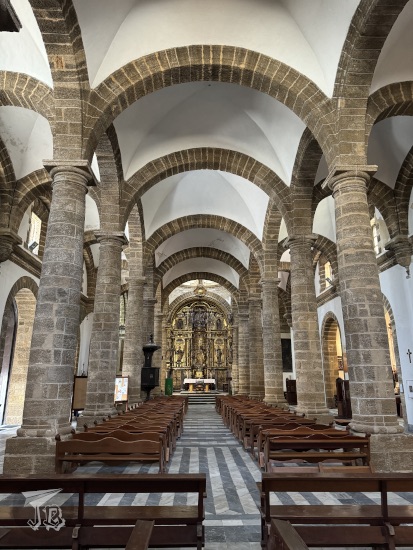
Former cathedral of Cádiz

Next to the old cathedral stands the museum of the cathedral Casa de la Contaduría. The museum comprises a number of rooms disseminated in a conglomerate of buildings dating back from the 16th century – including the tower of the old cathedral and a Mudejar courtyard. The museum holds – obviously – religious items: paintings, sculptures, mass paraphernalia, codexes…
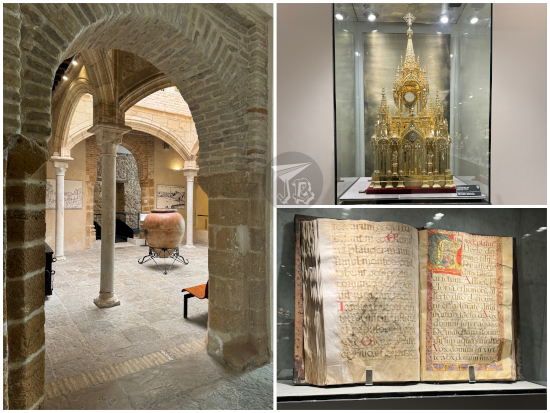
Cathedral Museum Cádiz

Afterwards, I crossed the city centre all over again, and reached the park Parque Genovés, a sort of botanical garden and the largest park in the old town. It has a small lake with a waterfall and a man-made cave with a lookout of the town and the ocean.

Park Parque Genovés in Cádiz

Then, I had booked lunch in the café of the Parador de Cádiz – Hotel Atlántico, a cute not-so-little place called La Tacita del Atlántico. I had set my heart on a grilled urchin dish – erizo de mar relleno y gratinado con huevos de arenque ahumado which I combined with a salmorejo (a creamy soup with a base of tomato and bread, garnished with ham and hard boiled eggs), though the dish had a local twist salmorejo cordobés, huevo y mojama. The urchins were delicious, but the salmorejo was lacking. I liked the idea of exchanging the ham for salt-cured tuna (mojama), but overall I found the food overpriced and the service mediocre. On my way out, I stopped by reception to get my stamp for the Red de Paradores rally.

Lunch at La Tacita del Atlántico

I stayed at Parque Genovés for a bit after lunch, then headed out towards the “new” cathedral Catedral de la Santa Cruz. The cathedral was built between 1722 and 1838, in a mixture of styles – Baroque, Rococo and Neoclassicism. It was erected in an assortment of materials, from noble marble to the humble local piedra ostionera, a sedimentary rock with a high concentration of seashells (biocalcarenite). The interior has three naves, and a Latin cross floor plan, over whose crossing there is a has dome, covered by golden tiles on the outside. The main altar is neoclassical.

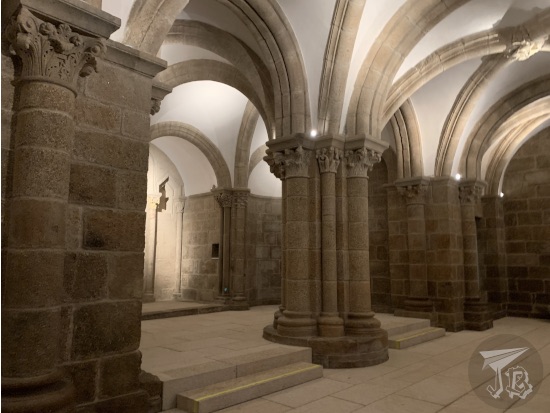
Underneath the cathedral stands the crypt, and one of the towers can be ascended, leading to a great view of the town. The tower has very few stairs, most of the way is done on a ramp. Unfortunately, though, the cathedral is in rather poor state, and a net is cast under the ceiling to prevent debris from falling. I also climbed the tower since it was included in my combo ticket.

Cathedral of the Holy Cross in Cádiz

View of Cádiz from the cathedral tower

Behind the cathedral, I found myself back at the promenade Paseo del Vendaval, and I walked towards the beach Playa de la Caleta. In historical times, it was the natural port for Phoenician, Carthaginian and Roman shops, now it is a small-ish beach in the heart of the city. It is located between two of the castles of the old city, and its most characteristic structure is the bath house I saw in the morning.

The beach has a sand area where most people sunbathe, but there is a long bridge separated in two sections – one directly built upon rock, Puente de Hierro and the other with arches to let the water flow through, Puente Canal. At the end of the half-kilometre of bridges, stand the ruins of the castle Castillo de San Sebastián, which today includes a working lighthouse, and an archaeological site. The first structure in the ancient island dates back from 1457, and the castle itself was built in 1706. Though it was warm and sunny, I walked the bridges and around the castle walls.

La Caleta Beach Cádiz & San Sebastián Castle

Upon my “return to mainland”, I passed by the bath house again and I reached a second castle, Castillo de Santa Catalina. The outpost, in the shape of a five-point star, was built towards the end of the 16th century to defend the city form sea warfare. In later years, a church and a sacristy were added, and from the 18th century onwards it was used as a prison. Today, it mostly hosts cultural or cinema-related events.
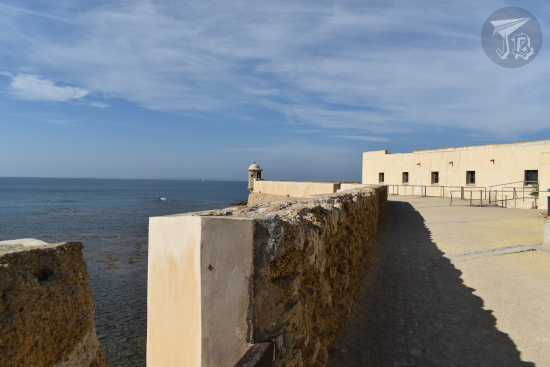
Santa Catalina Castle, Cádiz

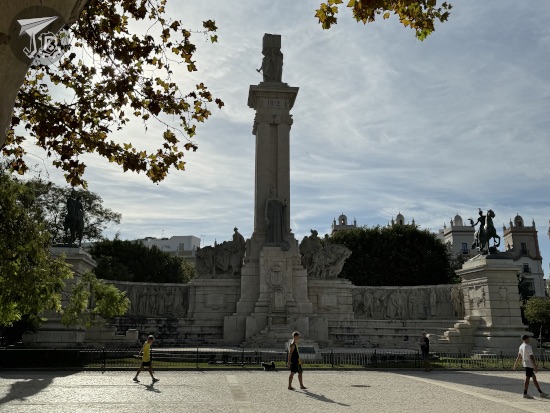
I continued on my walk around the city, left behind a knee cramp, the Parador de Cádiz and Parque Genovés until I reached the bulwark Baluarte de la Candelaria and the park Jardines Clara Campoamor. From there, I went on towards a second bulwark and the remains of the city walls Baluarte y Murallas de San Carlos. The bulwark was built towards the end of the 18th century to protect the harbour. Not far from there stands the square Plaza de España with the monument to the 1812 Constitution Monumento a la Constitución de 1812, the political response to the Napoleonic invasion. A bit further away stands the fountain Fuente de la Plaza de las Tortugas, with lots of cute turtles as decoration.

San Carlos Bulwark and Walls Cádiz

Monument to the 1812 Constitution Cádiz

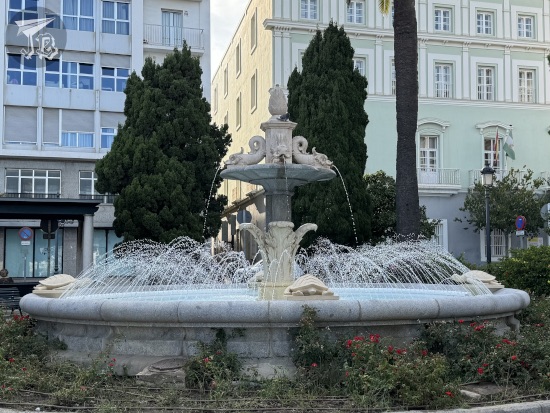
Turtle fountain in Cádiz

At this time I decided to get an early dinner around 18:30, so I bought some fast food to take to the hotel. That is when the ant invasion started. It was something I was not expecting – one or two bugs is workable, but this was a whole nest out for my fries. It was not nice. I decoyed them into bathroom and decided to have the room cleaned the next morning.

I set off again about 20:15 to look for a place to watch the sunset at the beach Playa de la Caleta, which did not disappoint, and I sat there until the sun disappeared beyond the water line. Luckily, I made it today, as it would be ridiculously windy the following day.

Sunset at La Caleta, Cádiz

I then found the street Calle the la Virgen de la Palma, at whose end stands the small church Parroquia de Nuestra Señora de la Palma. It was built in the 18th century and it hosts a sculpture of the Virgin Mary credited with stopping the waters during the 1755 tsunami. In the street, there is a signal marking the highest water point, but there were so many restaurants and people that it was impossible to find it!
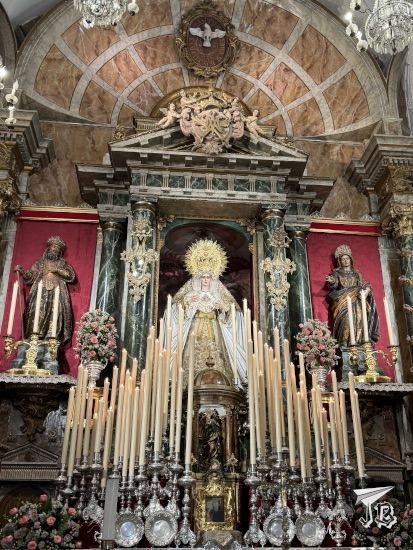
Sculpture of the Virgin Mary

I went back to the hotel afterwards to have some sleep – I was beat. I did manage to make a stop at a supermarket to buy coffee and pastries for breakfast the following morning though. Because one late latte per trip is enough.
10th June 2023: La Alberca & Plasencia {WNW Spain, with a splash of Portugal, June 2023}

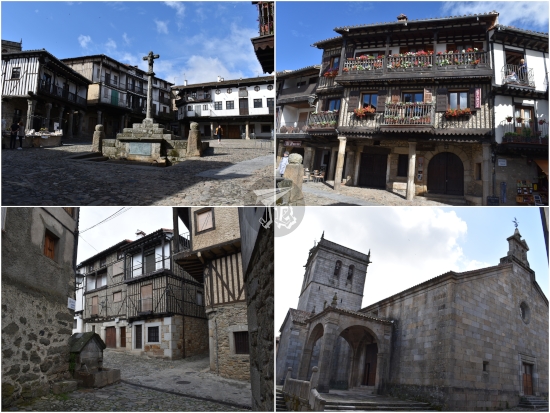
We left off the castle to have breakfast at the village of La Alberca, a municipality known for two things. The first one is the timber framing of its houses. The buildings have a stony ground floor and a lime-white second floor with the post-and-beam style in dark wood.

La Alberca

The second one is the tradition of the whole village raising a piglet together. The swine is freed mid-June (we missed it by a couple of days) and everybody in the village keeps track of it – feeding and sheltering the animal – until it is auctioned for charity when the time for slaughter draws near, in January. There is a sculpture as homage to the animal in the middle of the church square, yielding to what I’d say is the most iconic sight. However, the amount of butcher and delicatessen shops makes the whole thing a little… weird.

Monument La Alberca pig

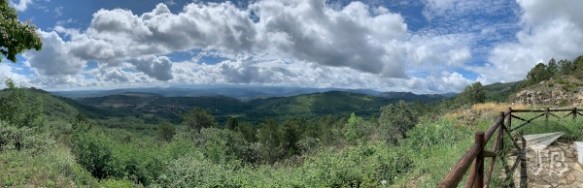
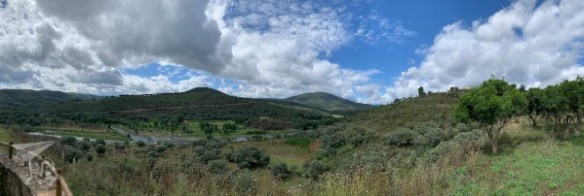
We drove through the natural area of Sierra de Francia, and stopped over at the viewpoint Mirador del Madroñal. From there we could see the abundant vegetation – oaks, chestnuts, and vine-fields. A bit further, we reached a second viewpoint Mirador Las Juntas.

Viewpoint Mirador del Madroño

Viewpoint Mirador de las Juntas

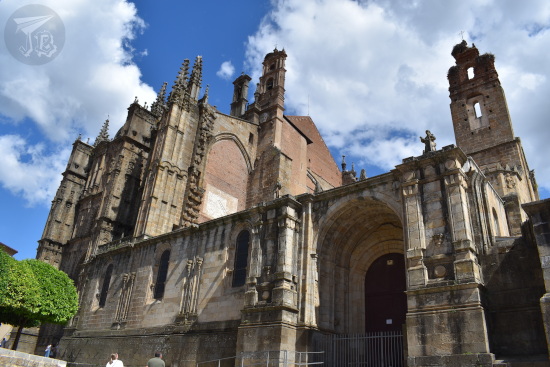
Our road was closed, so we had to take a detour, but we eventually reached Plasencia with a lot of big plans. Unfortunately, when we arrived at the Parador de Plasencia, built in the former convent Convento de Santo Domingo, we learnt that the town was in the middle of the local festival. Such thing meant outdoor bars and music – almost rave-like, and most monuments being closed. It had never even crossed our minds that we might run into such a thing, and it was a bit of a bummer that not even the cathedral Catedral de Plasencia was open.

Former convent turned Parador in Plasencia

Cathedral in Plasencia

We walked around for a while, and eventually we found the walls and their mini-museum Centro de Interpretación de la Ciudad Medieval de Plasencia. They reminded me of the wall in Ávila, but in a much-smaller scale.

Buildings in Plasencia

Wall in Plasencia

Plasencia

Plasencia is also a bird-protection area and nestling zone of the lesser kestrel (Falco naumanni), so that is what I guess we got to see (but it could totally have been an eagle…). We had lunch and dinner at the Parador as it was the least busy place, and they took forever both times. We did not feel like going out to check out the town in the evening considering how busy everything was even in the afternoon. Probably it was the first full-blown post-COVID festival, but it was a tad disappointing for me.

Krestel

9th June 2023: Arribes del Duero & Ciudad Rodrigo {WNW Spain, with a splash of Portugal, June 2023}

We set off from Zamora in order to drive up towards the Portuguese town of Miranda do Douro, though we were not due to reach the town itself. We were heading to the International Biological Station, which organises environmentally-friendly cruises up River Douro.

The drive was to take around one hour, and we stopped at the reservoir Embalse de Ricobayo, which has a dam and a hydroelectric central. We stumbled upon a nice little outlook above the reservoir to see both the dam and the meandering river. It was not long before we noticed the vultures – a kettle of Eurasian griffon vultures (Gyps fulvus), and even some solitary birds that showed off (or were trying to find breakfast, who knows?).

Meander and Dam of Ricobayo

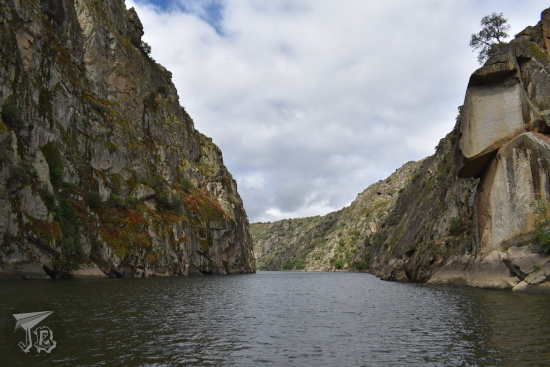
We reached the International Biological Station Estación Biológica Internacional | Estação Biológica Internacional (EBI) in time to swap our 12:00 tickets for 11:00 tickets, and the little boat took off. The cruise runs up the area of River Douro Río Duero called Arribes del Duero, a gorge nor dissimilar to the Galician gorge of River Sil. It was an hour-long course where we got to see some more birds of prey, a few nests, lychens and local flora, but none of the wild otters that are supposed to swim on the river. The guide collected some water to observe under the microscope and show us copepods and water fleas. At the end of the boat ride, we saw the “emotional therapy otters” (Lutra lutra) that the EBI keeps at the entrance. Oh, and had a sip of Porto wine. I was not too keen on the whole thing though, despite the pretty landscapes.

Arribes del Duero

Otter playing in the water

We “boycotted” Miranda do Douro as the ascent road from the river to the town looked horrible and full of curves. Thus, we headed off to Ciudad Rodrigo, in the Spanish region of Salamanca. We had booked at the local Parador Parador de Ciudad Rodrigo, Castillo de Enrique II de Trastámara. It is a really cool building – a castle from the 14th century, commissioned by the King . The main feature of the building is the keep, which you cannot climb (technically you can, but you have to know that you need to ask beforehand), but you can walk around the walls to have a look at the skyline. In front of the Parador stands a pre-Roman sculpture of a verraco – a granite animal, maybe a pig or a boar, dating back from the Vettones (3rd century BCE – 1st century CE).

Parador of Ciudad Rodrigo

There was a mishap with our reservation, so instead of getting a three-person room, we got the doggy-friendly room. I’ve been long-supporting of pet-friendly travel, but this made me rethink my stance. The room did have a pull-out sofa bed, but the layout made it awkward to share it among three people. Furthermore, it smelt and there were a bunch of flies and fruit-flies at the windows. That was a bit of a bummer.

We went to walk around town and found the tourist office in the mansion called Palacio de los Águilas, a 16th century Renaissance building erected by the family in charge of the castle upkeep. It has two patios with arches, and an exhibition area about the role that the town had in the war against Napoleon’s armies in the 19th century.

Palacio de los Aguila

We wandered around the town for a little, but then it started pouring. Thus, we hurried towards the cathedral Catedral de Santa María de Ciudad Rodrigo. The original building dates back from the early 12th century, and it was in construction and reconstruction until the 18th century. The main building was finished in the 14th century, but the tower collapsed after the Lisbon Earthquake in 1755. One of the most important features of the cathedral is the Romanesque portico Pórtico del Perdón, similar to the one in the cathedral in Santiago de Compostela. The gothic cloister is really nice, and it holds frescoes from the Romanesque period.

Cathedral of Ciudad Rodrigo

Cloister in the Cathedral at Ciudad Rodrigo

By the time we finished, the storm was over. I climbed up the remains of the town’s defensive walls Adarve Juan Martín Zermeño.

Ciudad Rodrigo: wall

We ditched the chamberpot museum (yes, it is really a thing) and to end the day we walked around the town for a little to find the traditional buildings – the manors Casa de la Marquesa de Cartago and Palacio de los Miranda, the square Plaza del Buen Alcalde, the old army HQ Antiguo Cuartel de Artillería,–the churches Iglesia de Cerralbo and Capilla de la Venerable Orden Tercera, and the main square Plaza Mayor.

Ciudad Rodrigo typical buildings

8th June 2023: Tordesillas & Zamora {WNW Spain, with a splash of Portugal, June 2023}

Tordesillas used to be one of the Spanish Crown’s strongholds throughout the Middle Ages, starting around 1340 when Alfonso XI ordered the construction of a palace. In 1494, the Spanish and Portuguese monarchs signed a Treaty which divided the lands “discovered” by Columbus among them – of course, this Treaty was largely ignored by any other European powers which wanted to explore America, and never acknowledged by any indigenous people. In 1519, the town was part of the rebellion against Carlos I, naming his mother – and daughter of the Catholic Monarchs – Juana as queen, despite the rumours that she was insane. After the defeat of the revolts – and beheading of the instigators – the town lost importance.

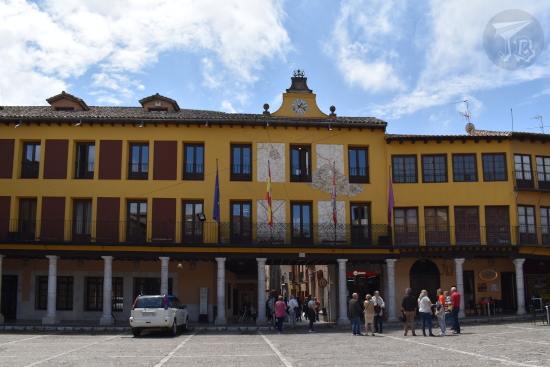
We left early in the morning to try and ditch the traffic, but we were not successful – driving around Madrid, we ran into a couple of jams traffic caused only in part by the intermittent storms, which made the beginning of the road trip stressful. Thankfully, we parked at the outskirts of Tordesillas and the sun was shining again, as we had to cross the village on foot. Our first stopover was the Main Square Plaza Mayor. In the Castilian Main Square fashion, it is actually square in shape, with the main buildings supported by columns, where cafés and shops stand today. The current plaza dates back from the 16th century, and has been painted in a questionable bright mustard colour.

Main Square in Tordesillas

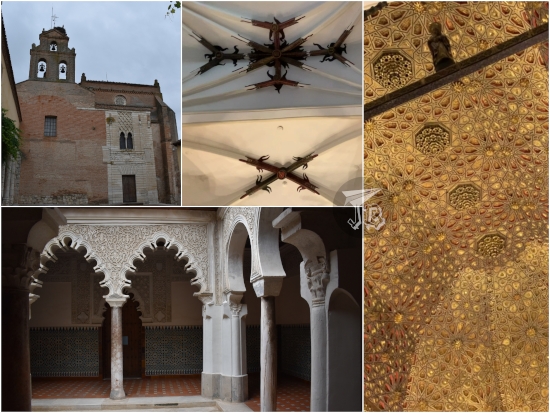
In the end, most of the history in Tordesillas is linked to Alfonso XI’s palace, known today as the Convent of Saint Clare Convento de Santa Clara, which stands a few minutes’ walk from the square. It was home, and later prison, to royal women, both loved and unwanted ones. It became a convent of the Order of Saint Clare in 1363, and the nuns living there were tasked with praying for the health and salvation of the Royal Family. Today, it is managed by the Spanish National Heritage Foundation Patrimonio Nacional. It can only be visited under supervision – seriously, aside from the guide, you get a security guard following you around – and photography is forbidden in all the interior areas.

The castle-convent was built throughout the 13th to 18th centuries. The oldest part of the building is a chapel dating from the 11th century, and the bulk of the construction was carried out in the 14th century. The monarchs employed Mudejar builders, a fact that yielded to multifoil arches, ceramic decorations, and Quran verses (officially “decorative nonsense”) in some of the chapels and the façade of the building.

Inside the palace there is a Baroque cloister and the gothic church, with a wooden ceiling painted gold and the emblem dragons of Carlos I’s shield. Truth be told, the church had been pretty much hyped up on me, so I found it a bit underwhelming.

Santa Clara convenent in Tordesillas

The party separated for a bit so I could explore on my own for a while. I got to the stone bridge over the River Douro Río Duero, just called “the bridge” el Puente, right at whose ends stands a monument to the fighting bull Toro de Tordesillas. The associated bullfighting festivity was one of the oldest in Spain until it was vetoed by the regional government – the fighting bull was set loose in the meadow, chased by horsemen and lanced to death. Today, the festivity is controversial and it’s trying to find its place in the midst of new sensitivities.

Tordesillas

I climbed up the medieval wall Muralla de Tordesillas to the park where the monument to Queen Juana Monumento a la Reina Juana I de Castilla stands, in front of the museum dedicated to the Treaty Casas del Tratado, and the church Iglesia de San Antolín.

Monuments in Tordesillas

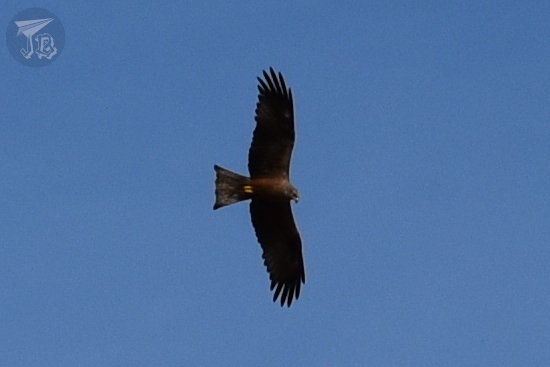
We walked back to the car to drive off to the next spot in the route, and Tordesillas became the first spot where we spotted birds of prey during this trip, maybe a golden eagle Aquila chresaetos. Or, you know. Anything else.

Eagle

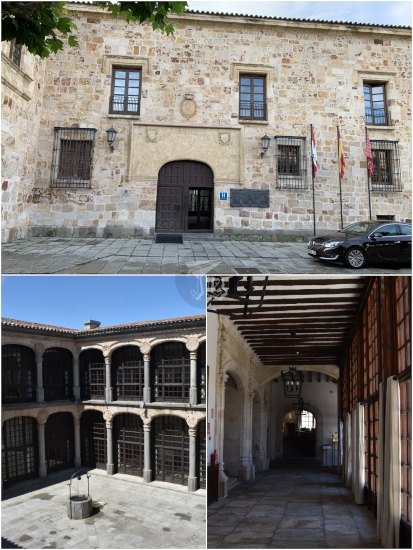
We drove off towards the municipality of Zamora, a Medieval town and villa by the Douro, known for its Romanesque churches. We reached the Parador de Zamora in the middle of a horrible downpour that was over as quickly as it had started. The Parador hotel is a former noble family’s Renaissance palace, with a military style and a middle patio with a glass-window gallery

Parador in Zamora

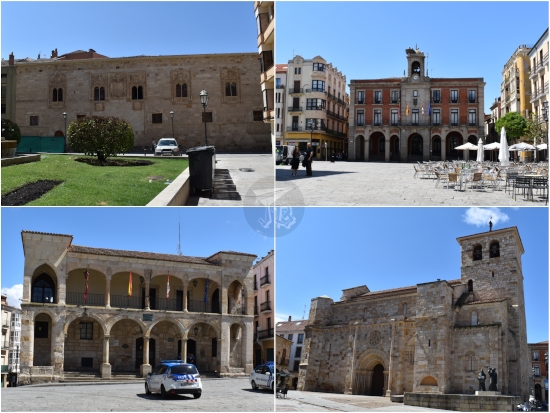
We had a late lunch and walked to the manor Palacio de los Momos, near the Main Square Plaza Mayor, home to a church Iglesia de San Juan de Puerta Nueva which has a sculpture representing two figures of the local Holy Week celebrations Monumento al Merlú. Other buildings include the old and new town halls Ayuntamiento Viejo and Nueva Casa Consistorial, and blocks of colonnaded buildings.

Buildings in Zamora

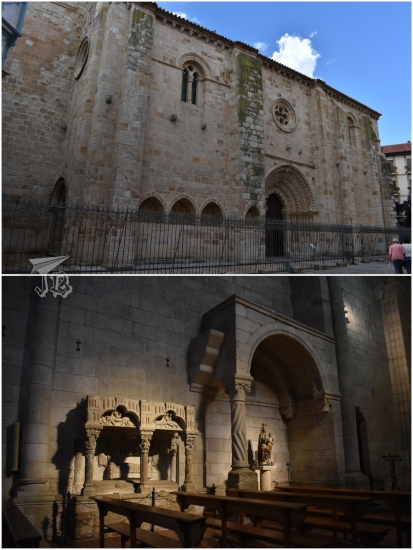
The first Romanesque building we came across was the church Iglesia de Santa María Magdalena, which contrary to many other places has got rid of the Baroque add-ons, and stands severe and naked in its stony glory. It is considered one of the most important and pure Romanesque constructions in Europe, sparsely decorated save for the tomb to the side.

Church of Saint Mary

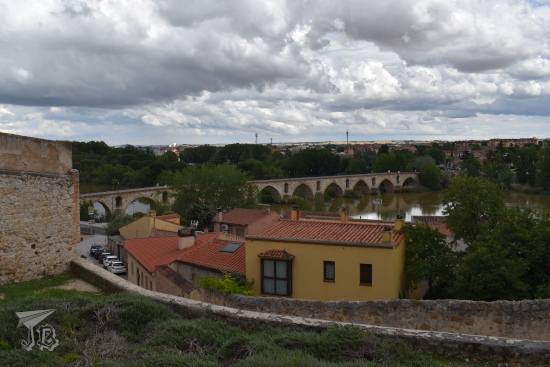
From a side stop I overlooked the river Río Duero and the medieval bridge Puente de Piedra.

Zamora Medieval Bridge

We continued off to the cathedral Catedral del Salvador de Zamora. It is considered the first cathedral in the “Douro Romanesque” style. After the original cathedral was destroyed during the Muslim conquest of Spain, the reconstruction began around 1151. It must have been finished towards the beginning of the 13th century. The building has two particularities – the thick tower, and the umbrella dome, in a style that travelled from Byzantium to the Islamic architecture and reached Spain with the Nasrid artists. The inside holds a cloister and two small museum – one of religious art and the other of archaeology.

Zamora Cathedral

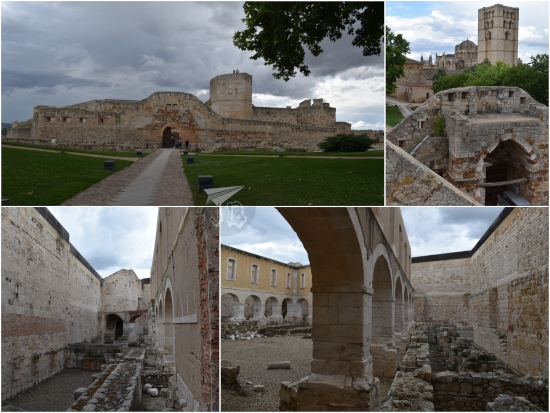
Afterwards, we visited the ruined castle Castillo de Zamora – a purely-defensive Romanesque fortress built around the 11th century. The castle has a moat, and you can wander up the walls and defensive towers. The interior is ruined, but the ancient structure can be guessed by the arches and different walls that would have separated the fortress’ halls.

Castle in Zamora

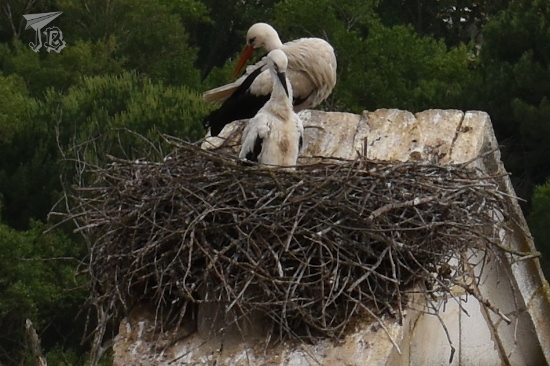
Finally, we explored a few more religious Romanesque buildings: Iglesia de San Pedro y San Ildefonso, Convento de Clarisas El Tránsito and Iglesia de San Cipriano. From the viewpoint next to this last church, we got to see a stork nest with a baby chick in it.

Zamora churches

Stork nest

We had dinner at a restaurant called El Horno, a traditional places that offers tablas – wooden trays full of treats to share. We shared a serving of tabla de fiambres – Iberian sausages (ham, loin, chorizo…) and cheese on a bed of crisps.

Zamora at night

4th April 2023: La Granja and Riofrío (Spain)

King Felipe V of Spain was born Philippe, Duke of Anjou, in France. He was appointed successor to the throne by his great-uncle Carlos II, who died childless. He was never very interested in being a monarch, or at least King of Spain, which he became in 1700. Around 1718, he fell in love with a hunting area and decided to buy it. Today, this area has become the municipality of Real Sitio de San Ildenfonso (Spain), the Royal Site of Saint Ildephonse. He ordered a palace be built “without disturbing what was already built”. The result was the palace known as Palacio de La Granja de San Ildefonso (The Farm at San Ildefonso), in honour of the hermit church and farm that were there when the King bought the hunting grounds.

Legend has it that the palace is extremely uneven because the King ordered that no parts of the church were demolished, so the walls were built around the old construction – however, it is such a massive building that seeing the irregularities from the inside is hard. The palace, built between 1721 and 1724, was commissioned to Spanish architect Teodoro Ardemans. Later, the garden façade was remodelled by Italians Filippo Juvarra and Giambattista Sacchetti. A fire destroyed part of the building in the 20th century and a lot of the paintings were lost. The gardens – the most famours feature of the site – were designed by Frenchman René Carlier in 1721 and finished by Étienne Boutelou when the former died in 1722.

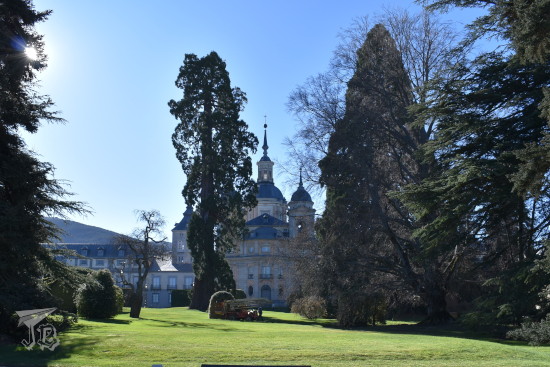
Today, the palace is managed by the Spanish Heritage Network Patrimonio Nacional – which means that photography is not permitted inside. It is technically one of the royal residences, so of course you have to go through security and X-rays and whatnot. We headed there on what was technically a working day before Easter break, so we were not sure how much traffic we would find, or how many visitors there would be. Thus, we had booked our tickets online for 11:00, anticipating a two-hour-and-a-half drive. In the end, we were in front of the palace around 10:15 and were able to enter at 10:30. Before that, we saw some impressive trees, including a sequoia, which I don’t think I had ever seen before.

Baroque Palace of La Granja peering behind a few large trees

The palace is Baroque, showing the likings of the time in which it was built. A monumental staircase gives access to the first ward, rebuilt after the fire into an area to display part of the royal tapestry collection – Museo de Tapices. The oldest tapestries date from the 16th century, before the Spanish tapestry school was founded. Tapestries are not my favourite form of art, but these were pretty impressive. A collection of nine pieces allegorise some of the virtues, mixing classical mythology with Christianity and historical figures.

The interior of the palace displays the private rooms of the monarchs, on the first floor, and the different ballrooms and social rooms on the ground floor. The private areas are decorated with paintings, and the public ones try to emulate the Palace of Versailles (France). They are furnished with marble and mirrors, and decorated with sculptures and statues.

La Granja: Dizzingly-decorated large hall in golden and white marble, with large open wooden doors

The ground floor opens to the well-known gardens Jardines de La Granja. These are considered the best “French gardens” in Spain. They cover almost twenty thousand square metres. Sprinkled throughout paths, hedges, parterres and trees, there are 21 fountains, most inspired by characters taken from classic mythology. The fountains are made out of lead, painted in bronze colour, and even if built 300 years ago, they still work and are indeed turned on during the summer season, fed from local reservoirs. They were not running during our visit – except for one dragon which leaked a bit. Spring seemed not to have arrived in the gardens yet, and it looked strangely like autumn.

La Granja: Italaian façade of the pakace from the top of the waterfall fountain, which was turned off. A number of bronze statues representing mythology characters line the waterfall

From the top of one of the fountains, called “the waterfall” Fuente de la Cascada Nueva, there is a good view of the Italian façade of the palace. Other fountains include “The Fame” Fuente de la Fama and “Diana’s bath” Fuente de los Baños de Diana. One of the most complex fountains is Fuente de las Ocho Calles (Fountain of the Eight Streets), a complex of eight fountains in a sort of “square” created by the intersection of eight garden paths. The fountains were built to only run when the King approached them, and today they are turned on in a rolling schedule, and very rarely all at the same time. This is to take care of the pipe system, still the original one, and because some of them need a lot of water to function.

La Granja, outside. Two large fountains crammed with bronze figures representing mythological beings. Both are turned off.

After we were done with the palace, we continued off to what I found the highlight of the day, the Royal Factory of Glass and Crystal of La Granja Real Fábrica de Cristales de La Granja. It was also established by Felipe V in 1727, and even today people use the old techniques to make glass items there! Even though it is called a “factory”, the process is completely artisan. The place also doubles as a museum to explain the how glass is (and was) made, exhibiting different traditional instruments. Of course, it has a shop. However, the coolest thing is that you can visit the furnace workshop to see how glass is blown, and the decoration workshop to see the engraving process. We hung around the furnace area and the experts can make a whole goblet in three minutes and a half, from incandescent blob to ready-to-engrave product.

Glass museum: diferent machines used to process glass in the 20th century, and a reproduction of the original glass furnace

Workers at the Glass factory: making and engraving a glass

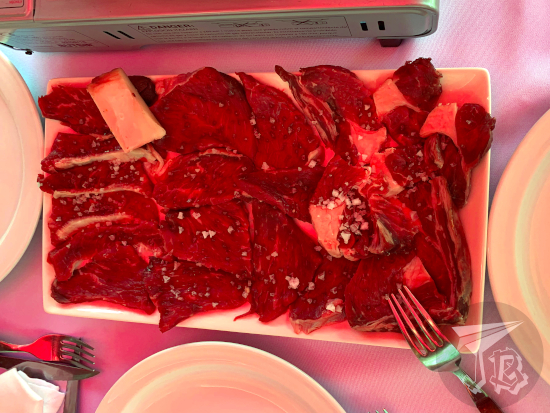
After the factory, we headed towards the Parador de La Granja, a mix of a modern and historical building where we were to have lunch. We shared some cured beef cecina de León, and I tried the local speciality judiones de La Granja, a hearty bean-and-pork stew.

Collage of the inner patio of the Parador building + lunch: dried meat and a bean stew

When we finished lunch, we took the car to the secondary palace in the area, called Palacio Real de Riofrío, a hunting pavilion also managed by Patrimonio Nacional (though apparently, pictures are okay here, which is cool). The building is surrounded by 600 hectares of forest and hunting grounds. It was originally commissioned by Felipe V’s wife Isabel de Farnesio, who actually never got to live there since when she became “queen mother”, her son Carlos III had her move to Madrid.

We drove past the forest, where some storks were happily wandering around. The SatNav flipped on us because it could not find the correct gate, but we managed to make it on time to spend an hour or so there. Also, the entrance was weird – it is actually closed, and there is a guard inside. If we had not arrived just as another car was exiting, we would have thought it was closed and left.
Baroque palace of Riofrío. It's large and pink, with lots of archeways

The palace is also Baroque, and the areas which can be visited include some bedrooms, dining rooms, and the areas where the servants waited to be called. The palace has been organised as a Romantic museum Museo Alfonsino, that honours King Alfonso XII, who mourned his first wife there. It was actually decorated by his father, King Consort Francisco, Isabel II’s husband, and later “enriched” with paintings from other Royal Sites. The most interesting item was the billiard room, because it actually felt rather unexpected.

Another area of the palace has been transformed into a “hunting museum” Museo de la Caza, to honour the fact that these were the King’s hunting grounds. It mostly hosts taxidermy representations and a collection of pelts and skulls. To be honest, some exhibits were a bit unsettling.

Collage showing the inside of Riofrío: the hyper-decorated rooms, the staircase and taxidermy of local deer

As we left, the SatNav warned us of a 40-minute jam on the way back, so we forgave its previous flop. The warning allowed us to take a detour to avoid it – we had to pay the toll but it shaved off almost an hour.

12th & 13th November 2022: Santiago de Compostela (Spain)

Here’s a little secret – people don’t like flying on the 13th, even less when it’s a Tuesday. Thus, I came across a bunch of awesome offers for the 13th of December, which unfortunately I could not take up due to work uncertainties. What I could muster was a mini getaway on the weekend of the 12th/13th of November, to the northern Spanish town of Santiago de Compostela. There were a few reasons for this choice – one, cheap flights; two, I’ve recently started considering a route through the so-called Camino de Santiago (St. James’ Way); and three, pandemic shuffled ‘Holy Years’ round so there was a special gate to the cathedral open that I wanted to see. I flew out around noon on Saturday and came back on Sunday night. It was a perfect plan for a decompressing getaway.

Santiago de Compostela is known as one of the most important pilgrimage cities in the world. According to the Christian tradition, the tomb of Apostle James was found in the area in Middle Ages (different sources vary throughout the 9th and 11th century), and the pilgrimage to visit the remains became one of the most important in the Christian faith, alongside Rome and Jerusalem, to the point that the pavement proudly states that “Europe was built on the pilgrimage to Santiago”. While I’m not religious, I have a thing for religious architecture, and as mentioned above I’ve been thinking about the Camino for a while, and visiting the goal felt a good way to start organising how I wanted to look at things.

However, let’s say it wasn’t the most perfect getaway ever. Though the flight was on time, and pretty short, there was turbulence – not something too out of the ordinary, but here’s something you might not know about me. Back in the mid-nineties, I sort of crash-landed in the Santiago airport, so let’s say I was not so invested in a bumpy flight.

As the flight had been very cheap (about 30€), I had decided to splurge a little in the hotel – and I found a not-so-bad offer of half-board at the Parador de Santiago – Hostal Reyes Católicos, downright at the centre of the city. It is located in the old pilgrim hospital, and it is a magnificent building, aside from a five-star hotel. I arrived around 14:00, and the room was not ready – fair enough. I wanted to get there early in order to drop off my luggage, and make sure I could arrange my dinner reservations for a convenient time. One of the reasons I decided to book half-board in the Parador was to guarantee myself a meal late in the evening, as I had booked a walking tour at 20:00, and the main restaurant served dinner till 22:45.
Wide shot of the Parador. It shows a severe building with an ornate gate. The sky is bright blue.

Unfortunately, the check-in staff “had booked me” at 20:30, and they asked if that was okay. I replied it wasn’t, and explained the reason stated above – the staff then said that they could accommodate me at 22:00 at the secondary restaurant, but not at the main one. I answered that then I’d have dinner at 22:00 at the secondary restaurant then, but the staff asked me to check the menu. I stated that it did not matter. I needed my dinner to be at 22:00, and if the main restaurant wasn’t available, it would have to be at the secondary one. The staff asked me to check the menus, and I explained again that I had a tour from 20:00 to 21:30 – I needed dinner at 22:00. I thought that was resolved, and as it was too early to get a room, I picked up my camera, left my backpack in the locker room, and went on my merry way to explore the outdoor “monumental route” within the historical city Ruta Monumental de Intramuros. The old city of Santiago is part of the Unesco Heritage Site Routes of Santiago de Compostela: Camino Francés and Routes of Northern Spain Caminos de Santiago de Compostela: Camino francés y Caminos del Norte de España.

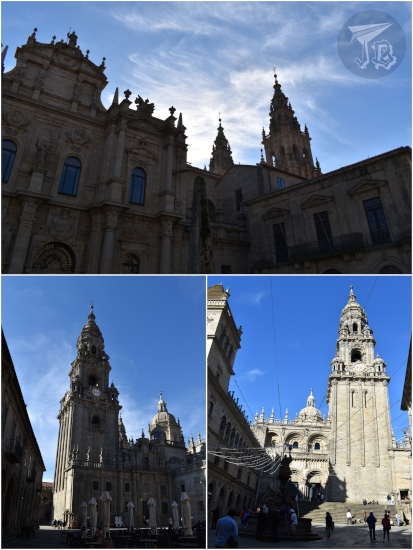
As I had tickets for different activities in the cathedral booked for the previous morning, and the Sunday forecast was rain, I decided to do most of the walking on my first afternoon. I started off in front of the cathedral façade in the square Praza do Obradoiro (the Artisans Square), which hosts the town hall in the former Neoclassical palace Pazo de Raxoi, the Parador itself, and the main – but closed, will get into that later – entrance to the cathedral Santa Apostólica y Metropolitana Iglesia Catedral de Santiago de Compostela, with its Baroque façade called Fachada del Obradoiro.

Baroque façade: two towers and twin set of stairs, fenced away.

I walked around the cathedral, and stopped at all the other squares: Praza da Acibecharía (the Black Amber Workers Square), Praza da Quintana de Vivos (Villa of the Living Square) and Praza das Praterías (the Silversmiths Square).

A collage of views of the cathedral of Santiago.

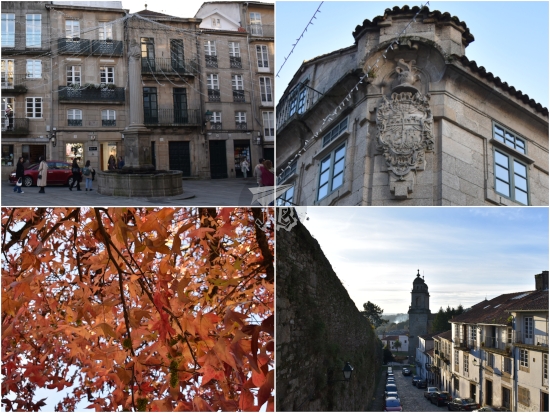
I walked down Rua do Villar, which is the closest to a main street the historical town has. I strolled around the historical centre – there are many interesting buildings and churches, alongside the market. At some point I entered a bakery, but I kinda ran away when I heard the prices they were charging.

Santiago Route.  An archade, a fountain, an ornate corner with a coat of arms carved into it.

After an hour and a half or so, I found the convent-turned-museum Igrexa e Convento de San Domingos de Bonaval that has become the ethnological museum of the Galician people Museo do Pobo Galego. The museum itself was not too spectacular, but the building itself was fantastic. One of the most amazing things was the triple-helix staircase that joins the different floors on one side, and the remains of the gothic church (where I got to climb the pulpit). To the side there’s the pantheon for illustrious Galicians, including one of the few female historical figures in Spain – poet Rosalía de Castro.

Monastery and museum. The pieces include a humanoid stone idol, some Christian figures in polychromated wood, and two pipes

View of the triple staircase, from above, from below and through the door from one of the sides.

A view of a gothic chapel, showing an empty altar.

This was around 16:30, and even if I was not even a bit hungry, my legs shook a little. Thus, I decided that I needed to find a supermarket to buy a snack – I only had coffee before I left for the airport at 9:00. Before getting to the supermarket though, I walked around the former orchard and graveyard of the convent, now a picnic-friendly park Parque de San Domingos de Bonaval, full of ruins and fountains.

The previous church, from outside, on the right. There's a winter tree in front, and some old niches on the left wall.

I grabbed my snack and went back to the monumental route until I was back at the Praza do Obradoiro. I walked around to see the sunset, and caught a glimpse of the light playing on the façade of the church Igrexa de San Frutuoso, and some nice views from the adjacent park (which turned out to have been another graveyard) Xardín do Cemiterio de San Frutuoso.

Santiago sunset. Upper picture shows the church of Saint Fructuoso, and the lower one a view of the nearby park with the sun setting in the background

It was around 18:00 at that time, so I could finally check in – which I did, only to find out that the staff I had talked to had decided not to book my dinner in the end, which lead to me needing to explain about my tour again to a new staff who told me they couldn’t book me at 22:00 on the secondary restaurant! It had to be at 21:45, but they could notify the restaurant that I would arrive a bit later. I was really not impressed by the whole thing, even less when I apparently needed a bellboy to guide me to my room and carry my backpack– and of course get tipped.

I had my snack and then went on to explore the building. As I did, the sun completely set, so the different lights were cool. The Hostal Reyes Católicos used to be the pilgrims’ hospital. It is a huge rectangle with four interior cloisters named after the four Christian Evangelists, the inner areas having been refurbished into the rooms.

The four gothic cloisters of the Parador. Two have some greenery on them, the other two are just grey and built.

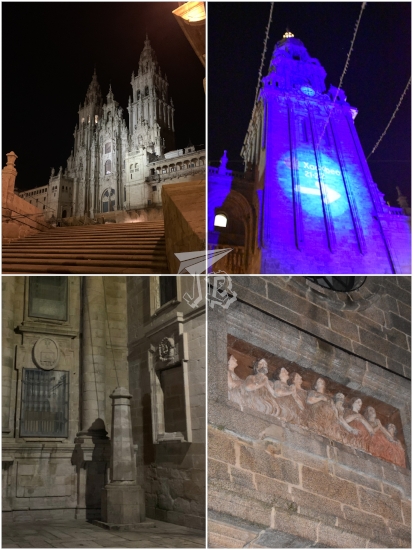
A few minutes before 20:00, I left for my tour. Although I’m not a big fan of tours and group activities, I had had my curiosity piqued by a “theatrical visit” of the historical centre of the town called Meigas Fóra. In the area of Galicia, a meiga is a type of traditional witch, good or bad, depending on what side the person speaking about them is – in this case, the guide being a supposed-meiga, of course they were all neat and nice. The tour was supposed to tell about the different legends and interesting supernatural trivia of the town, but just ended up being a bit watered-down walk around those graveyards-turned-parks I had walked before. The coolest thing was finding the pilgrim’s shadow Sombra del Peregrino, a fun game of light-and-shadows in one of the squares around the cathedral.

A view of the cathedral of Santiago at night, illuminated, on top. On the bottom, a column casts a shadow onto the wall behind it - it seems to be that of a man with a walking cane and a travel hat.

Hilariously though, as we were walking, someone approached me to ask in wonder if on top of taking the tour alone, I was in Santiago all by myself, in total awe of someone travelling on their own. She said that she would never be able to do so – while she took selfies of herself because the people she was “touring” with could not be any less interested…

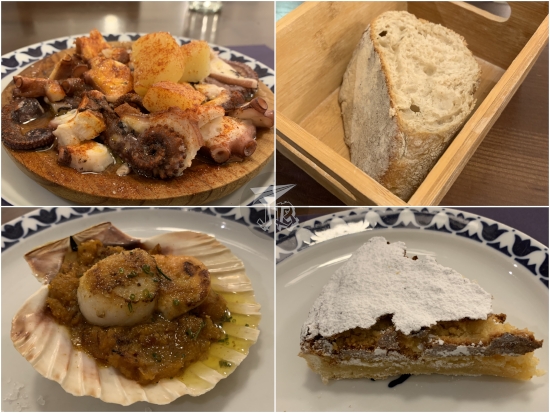
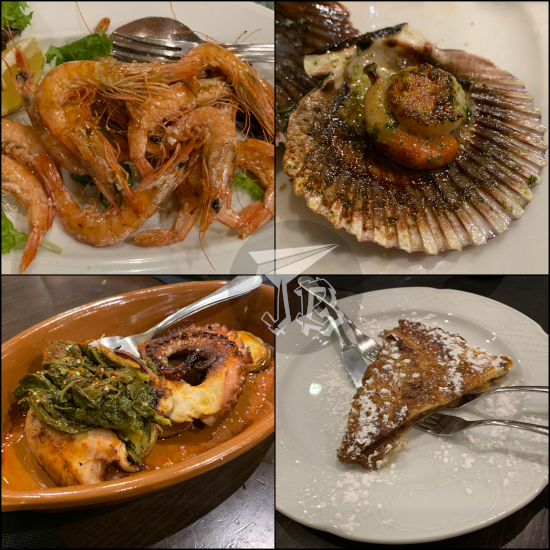
After the tour I went to have dinner – guess what? At 22:00 h! Let’s say that it was not the greatest experience. The restaurant staff had their hands full with a table of around 20 drunk “pilgrims” who had come all the way from South America and were rightfully celebrating – albeit loudly and a bit obnoxiously (all that pilgrim wine, no doubt) – that they had reached the end of the Way. The rest of the patrons were, including myself, four one-person tables, which made me wonder if they just don’t book one-person tables in the main restaurant after the first shift. The floor staff – basically one working waiter, and one wandering waiter – was overwhelmed by the table, and it took me over an hour to finish my dinner – which was some local octopus (pulpo a feira), a roasted great scallop (Pecten maximus, not only a delicious shellfish, also the symbol of the town and the related pilgrimage, called vieira in Spanish) and a piece of the typical almond pie (tarta de Santiago).

Dinner: pulpo, a scallop and a piece of cake.

Then I went to my room for a nice hot shower and to get some sleep. I was surprised then to find no extra blanket in the wardrobe, though there was an extra pillow. This was around midnight already so I decided not to hit reception for the extra blanket and just cranked up the air-con on and off to stay warm. I slept on and off, too, but it was not too much of a long night.

The next morning I had breakfast and set out for my day at the cathedral, Santa Apostólica y Metropolitana Iglesia Catedral de Santiago de Compostela. Santiago was built around the 7th century legend that the apostle James the Great, Santiago el Mayor, was buried in the area of Galicia, after having reached Spain to convert it into Christianity. In the 9th century, a tomb was discovered among some abandoned Roman ruins, and the local bishop had “the certainty” that it was the Apostle’s tomb. The bishop informed the King, who was the reported first pilgrim, and later ordered that a church should be built to commemorate the finding.

As the number of pilgrims grew, the church became too small, so subsequent temples were erected. The current interior was built between the 11th and the 13th century in a very pure Romanesque style, but the exterior was covered in the 18th century, in a very adorned Baroque style, which is also the style of the altar.

The most important piece of the cathedral is the Portico of Glory Pórtico de la Gloria, the Romanesque entrance to the 12th-century cathedral, with 200 sculptures carved in stone in the three-archway portal. The entrance now is locked away, you have to pay to see it, and photographs are not allowed.

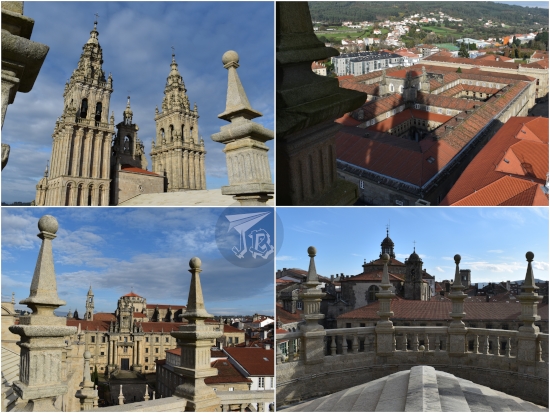
For starters, I climbed up to the roof of the cathedral and the bell tower – not really the bell tower but the “rattle tower”, as the bells chime on the eastern tower, and the rattle is played on the darker, western tower. The roof was restored as recently as 2021, and from there there are some nice views of the town.

The towers of the cathedral from the room, and some aereal shots - one shows the Parador cloisters from above.

Between visits, I went inside the cathedral, where the pilgrims’ mass was about to start. I might have stayed out of curiosity had I been in town for a longer period. Then I visited the portico – since pictures were not allowed, I’ve rescued some 1995 ones from when I were in town as a teen.

Three shots of the  very baroque altar in Santiago - it is heavily decorated and painted gold. On the bottom right, a silver urn, also very ornated, supposedly where the remains of St. James are.

A collage showing several sculpures of the Portico of Glory - Romanesque statues richly coloured and decorated, they look placid

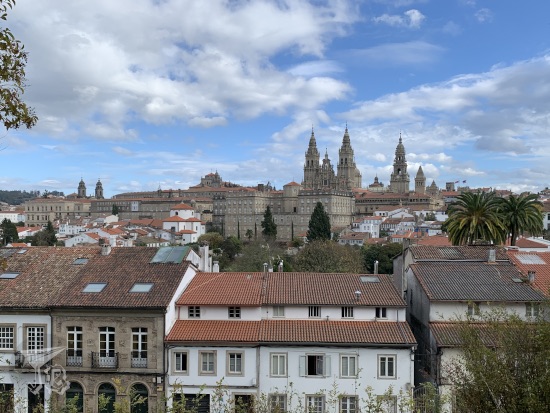
After wandering the cathedral for a bit longer, I made the most out of the last hour of sunshine to head to the park Parque da Alameda to find the spot Miradoiro da Catedral next to a huge centennial eucalyptus tree (Eucalyptus globulus labill) Eucalipto centenario, a 120-year-old specimen, considered one of the oldest eucalyptus trees that was planted in Europe after captain Cook “discovered” Australia and the species was introduced by Fray Rosendo Salvado.

A panoramic view of Santiago, showing the cathedral.

My next stop was the museum of pilgrimages and Santiago Museo de las Peregrinaciones y de Santiago, which was free due to the Covid recovery plan. It features a collection of items related to Saint James Way, and other important pilgrimages of the world, including the Japanese Kumano Kodo [熊野古道], and the Muslim Mecca Pilgrimage Ḥajj [حَجّ]. The upper floors are dedicated to the hagiography of Santiago / James through the Way and in the city.

Museum of Pilgrimages. A collage that shows a wooden statue of Santiago on a white horse, sword raised; other depictions of Santiago as pilgrim; some paper scallops decorated by kids; and a Japanese sacred gate.

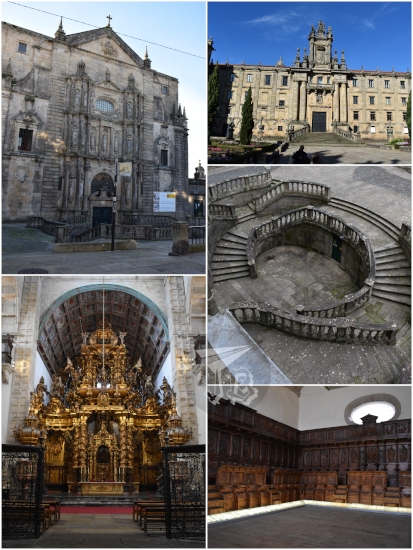
Later, even though I should have gone to eat a bite, I headed to the monastery and museum Mosteiro de San Martiño Pinario, religious complex built between the 16th and 17th centuries, though the inner areas and chapels date from the 18th century. Today it’s a cultural centre, and alongside the church, it features a museum with block prints, fossils, an ancient pharmacy… The church has the most baroque Baroque altarpiece I’ve ever seen, and two choirs – one behind the altar, and the other one up on the second floor.

Exterior of the monastery, including the double downward staircase, and a picture of the interior, showing a very Baroque altar painted in gold.

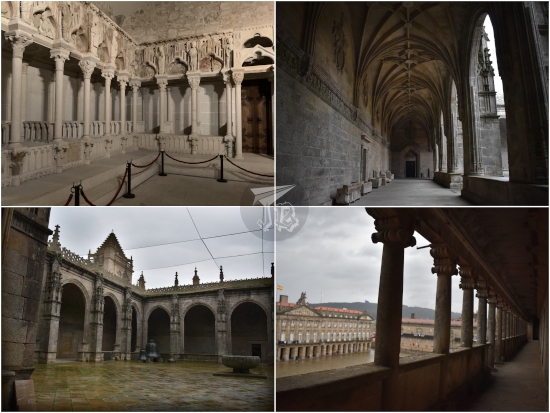
Finally, I stepped into the museum of the cathedral Museo de la Catedral de Santiago de Compostela, which features the entrance to the cloister, library, and the upper galleries, aside from artistic and religious treasures such as the original stone choir, wooden carvings, and tapestries. I was also able to access the upper galleries and look at the rain in the Praza do Obradoiro, and later the crypt.

A collage showing the cloister of the cathedral of Santiago while it rains outside, and the former Romanesque choir, carved in stone.

Romanesque arches and columns built in stone, and a cast ceiling.

After one last visit to the cathedral and its shop, I got myself a last souvenir – a silver and black amber bracelet I had seen upon arrival, and took a taxi back to the airport in order to fly back. All in all, I was not too impressed by the city nor its inhabitant, and I was pretty disappointed in the Parador. I think it has put me off the idea of doing the Camino as much as I thought I wanted to, but not every trip is perfect, I guess, and I hope my memories warm up with time.

A silver and black amber bracelet. The silver is very fine, and the gem is bright black.

Walking distance: around 11.68 km (18659 steps) on Saturday and 10.58 km (16931 steps) on Sunday, not counting airport transits

14th October 2022: Pamplona, the city of the bulls, and Olite {Aragón & Navarra Oct. 2022}

In order to avoid crossing Zaragoza, we tried to go around it. Unfortunately, trying to save up 30 minutes, we ended up wasting an hour at the entrance of the highway, and we reached the city of Pamplona or Iruña. Today, it is the capital of the region of Navarra, which is roughly the size and shape of the old Kingdom of Navarra, which existed roughly between 1162 and 1512, when it was conquered by the Catholic King Fernando.

There had been a slight misunderstanding on who was going to plan the day – I was convinced my father had not wanted me to do it, but when we arrived he turned to me and I was supposed to know. In summer, I had drafted a small itinerary, but as he was supposed to have taken charge, I had not gone further. It turns out, I should have. Fortunately, I still had the map on my phone and the opening schedules on my travel notebook. Unfortunately, I had not really delved into all that the city has to offer and we missed a few interesting thing

Thus, I tried to take charge, but not too much because it’s hard to balance that with my parents. Even if we have travelled together before, I tend to let them do the planning and only insist on some stuff I want to do or see, and that’s how they end up at dinosaur parks (≧▽≦).

We left the car in a parking lot underneath the congress centre and walked towards St. Nicholas Church Iglesia de San Nicolás de Bari Eliza. The first building dates from the 1100s, and it was built along the now-disappeared walls, as a defensive construction at the same time as a religious one. It was demolished and rebuilt location makes the building awkward, and to add insult to injury, we arrived almost at the same time as mass started, so we just took a quick look.

Iglesia de San Nicolás de Bari Eliza - exterior with pointed arcs, and inside, showin the altar

We walked to the next church dedicated to St. Lawrence Iglesia de San Lorenzo, actually associated to the Unesco World Heritage Site Routes of Santiago de Compostela: Camino Francés and Routes of Northern Spain Caminos de Santiago de Compostela: Camino francés y Caminos del Norte de España. The current building is Neoclassic, and the façade was rebuilt at the beginning of the 20th century when the original was damaged during war. On the right of the main nave, a side chapel holds the famous sculpture of St. Fermin, the patron saint of the town. The chapel was built between 1696 and 1717, when the sculpture was placed there. Every 7th of July, the sculpture is taken out in the religious procession. From the 6th of July and for a week, Pamplona celebrates its local festivals, famous around the world for the encierros, or running of the bulls. While there are similar runnings all throughout Spain, the encierro in Pamplona was popularised by Ernest Hemingway, the American novelist, in his work “The Sun also Rises” (1926).

Church of Saint Lawrece - Neoclassical façade and interior, with the sculpture to Saint Fermin, the patron saint, in a red cape and a mithra, surrounded by red and precious metals.

We continued onto main street Calle Mayor, which ends at the main square Casa Consistorial de Pamplona, which opens to the main square Plaza Consistorial. The building was erected between 1951 and 1953, though the project kept the 18th century façade, halfway between late Baroque and Neoclassic.

Pamplona town hall / council hall, with flags hanging from the balcony.

We continued onto the cathedral dedicated to the Virgin Mary Catedral de Santa María la Real de Pamplona. The building is Gothic (French Gothic, actually), with a Neoclassical façade designed by Ventura Rodríguez (who also worked on the Basílica del Pilar in Zaragoza). One of the most interesting things in the cathedral are the paintings on the walls and columns themselves, just non-religious decorative motifs. In front of the altar lie the tombs of King Carlos III of the Kingdom of Navarra, and his wife Leonor of Trastámara (or Castille).

Cathedral of Pamplona, including a close-up of the bright polychromy in red and blue, and the altar, from far away and a close-up. The most distinctive feature are the pointed arched and the very clean masonery.

In the inner area, there is a beautiful cloister, and you can climb into the false ceiling, see the kitchen of the former convent. And, let’s not forget – they have a stamp, because it is one of the “official” starting points of St. James Way, Camino de Santiago, and also part of the Unesco World Herirage Site related to it.

Collage: Cloister in Pamplona cathedral. The gothic ars are pointed and ornate, standing on bright green grass. One of the corners shows a fountain, the other the iner walkways

We stopped for lunch, then we walked by one of the “iconic” points of the bull-running, the corner at one of the streets of the route – Esquina de la Estafeta, and continued on until we reached the bullfighting ring Plaza de Toros de Pamplona, but since we are not big into the culture, we did not enter.

We did stop by the sculpture to the bulls and runners Monumento al Encierro, a huge bronze composition with a number of real-life pieces: nine bulls (six fighting bulls and three guiding bulls) and ten runners.

This bronze sculpture represents several life-sized bulls and runners. The runners are in front of the bulls, and one of them has been trampled.

Finally, we went to have a stroll alongside the walls of the former citadel Ciudadela de Pamplona. Although now it is a park, and only the foundations are left, the Citadel was one of the most important defensive constructions in the Spanish Renaissance, in the shape of a five-pointed star.

Several angles of the Ciudadela of Pamplona park. Not much is seen except for the building foundations, though they stand two or three metres high.

After that, we took the car and drove towards the town of Olite also known as Erriberri , where we were going to sleep. The town was home to the Monarchs of Navarra, and today there are two distinctive buildings – the old palace Palacio Viejo de Olite, where the Parador de Olite stands, and the new palace Palacio Nuevo de Olite. Originally the most extravagant Gothic castle in Europe, it burnt down during the war against the Napoleonic troupes, and was rebuilt in 1937 using the philosophy of bigger, cooler more teeth. We checked in at the Parador and I collected my stamp. From our room, we could see the main structure of the old palace, as we had a very long balcony.

Old palace of Olite. There is a tower on the right and an old Medieval house to the left. The building is made of irregular masonery and the windows are perfectly rectangular.

We went for a walk, and were surprised at how many people there were in the area. We sneaked into the church Iglesia de Santa María la Real, but did not take any pictures as (once again!) mass started. We planned to come back the following morning as it was barely a 30 seconds away from the door of the Parador.

On the left, a modern red-brick house stands on older arcs. The façade sports a protection made of intricate white ironwork.
On the left, a Romanesque church, blocked by construction and a tractor.

We walked around for a little and were not too impressive by the Medieval city centre, but we did find the typical balconies and the Romanesque church of St. Joseph Iglesia de San José.

We were beat, to be honest, it had been a stressful day after a short night’s sleep, so we turned in early after dinner. I did not even think to wander round to see if I could get any cool pictures of the area, because the area was packed and I was exhausted.

29th May 2022: La Orotava, Icod de los Vinos & Parque Nacional del Teide {Tenerife, birthday 2022}

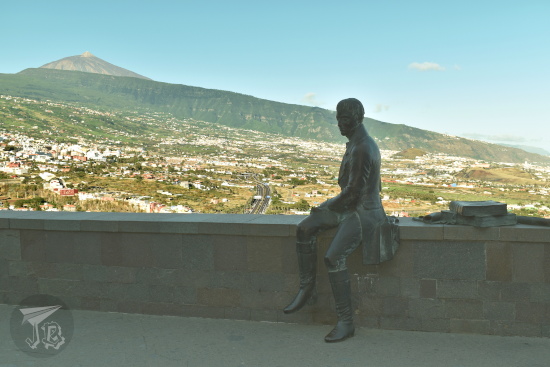
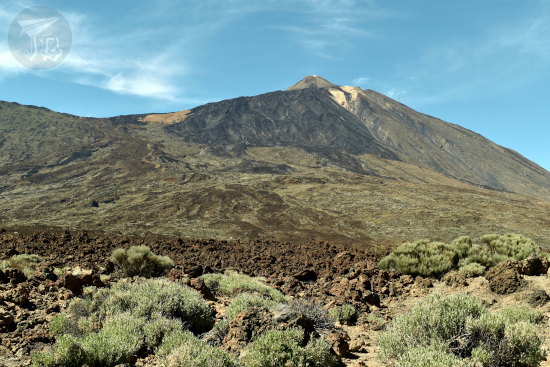
I got up rather early in the morning (especially considering that the Canary Islands are an hour behind my usual time zone) and I was surprised at how many people there were already on the streets of Santa Cruz de Tenerife before 8:30 on a Sunday morning. I drove out of the town and headed north-west, where I came across my first stop – a viewpoint of Mount Teide called Mirador de Humboldt honouring the German explorer from the late 18th century (though I kept thinking that there was a missing penguin opportunity there). The viewpoint overlooks the ocean and Mount Teide, which Humboldt climbed in 1799.

Mount Teide, a volcano, looms in the background. The top is bare and barren, but the slopes look green and fertile, with plantations and some villages. In the foreground, there is a bronze sculpture of Alexander Humbolt, sitting on the low wall of the lookout, and looking to the side.

I continued driving towards La Orotava, the municipality which Mount Teide actually belongs to. After parking the car, I walked towards the historical centre and ended up at the square Plaza de la Constitución, which stands next to the church Iglesia de San Agustín. Mount Teide loomed over the streets, ready to celebrate Pentecost Sunday. And guess what? The main church is called… Parroquia Matriz de Nuestra Señora de la Concepción. The initial hermit church was built in the 15th century, and it was completely rebuilt in the Baroque style throughout the 18th century, though the interior was remade in the 19th century and there was yet another renovation in the 20th century. It is considered the most important building of the Canarian Baroque.

A collage of La Orotava. The buildings are built with white plaster and black volcanic rock. Mount Teide peeks from the background.

The most representative construction in La Orotava is the “house of balconies” Casa de los Balcones. The house was built in the 17th century. The façade shows a front-long balcony on the third floor, and five smaller balconies on the second, all of them made from dark teak wood. The interior holds a museum, but I decided to give that a miss because I reached there at the same time as a very disorganised group of forty or fifty people who were going in at the time.

A colonial house. It is built in white brink. It has three floors. On the ground, there are brown windows. On the first floor, five balconies, with decorated ironwork. On the second floor, a long balcony or gallery in dark wood.

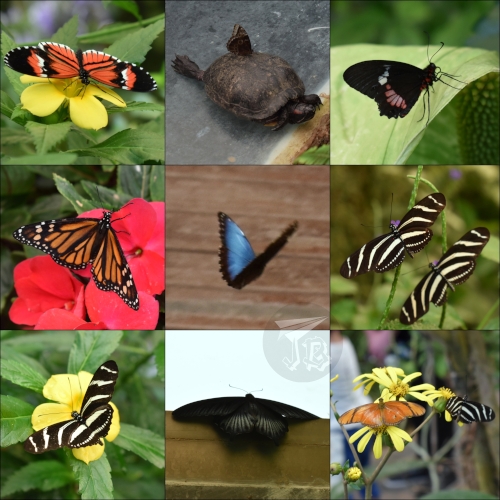
Instead, I went back to the car and drove towards Icod de los Vinos. There, my first stop was the butterfly house Mariposario del Drago, since the ethnographical museum Museo del Guanche is closed.

A collage showing colourful butterflies - red, orange, blue, black, black and white. One of them is chilling on the shell of a turtle, and another one is caught mid-flight. Most are on flowers and plants.

The butterfly house stands next to a botanical park Parque del Drago built around the symbol of the town – and maybe the whole island – the Drago Milenario. This is the largest and oldest specimen of Canary Islands dragon tree or drago (Dracaena draco). Folklore says that it is a thousand years old, hence the name “the thousand-year-old dragon tree”, though in reality, it is probably around 600 years.

The dragon-blood tree. It has a knotted grey trunk and bony branches. Around it there are bright-green palm and laurel trees

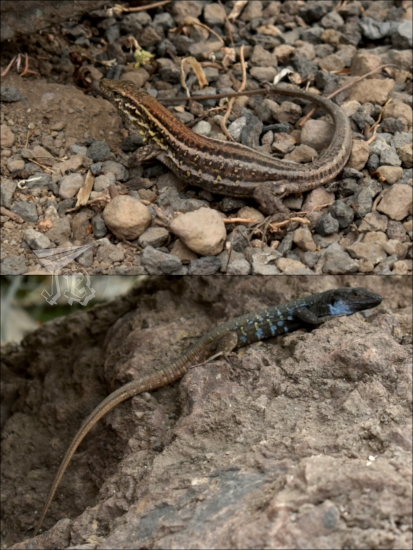
The park, built around the drago, holds local species trying to reproduce the local biotopes with height, there is also a small volcanic cave. It was here where where I managed to catch my first glance at the local fauna – two of the endemic lizards (though not as big as the one I had seen in the museum): lagarto tizón (Gallotia galloti) or tizon lizard, a blue-spotted male and a brown-striped female.

Two lizards. One camouflages on the grey and brown ground. The other on has a brown tail, but the body is black and bright blue

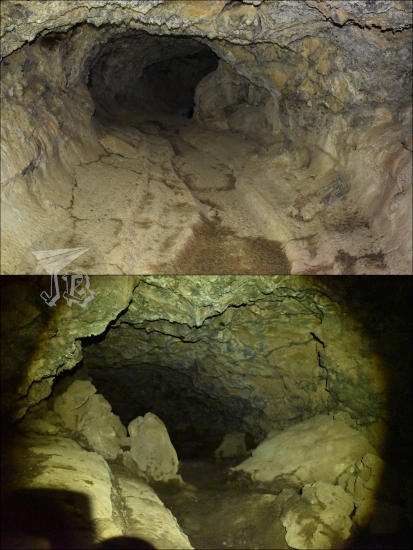
Then I went back to the car to climb up a crazy slope until I reached the visitors’ centre of the lava tube Cueva del viento. A lava tube is a “cave” formed the flowing lava of a volcano. As the outer part solidifies, the inner core continues flowing until it empties the tube. The guided visit is the only way you can enter the tube, so I had reserved that a few weeks earlier.

The visit started with a small introduction in the visitor’s centre, with a lot of “gotcha” questions on the guide’s part. I tried really, really hard not to be a smartarse, but I did sit down on the floor at a point because I did not feel like standing around for twenty minutes. The important information we received was that there were two types of lava that had formed the island of Tenerife: pahoehoe and block lava.

Then we took the centre’s vehicles to the outer area of the cave, where we could see the solidified lava, now turned into stone. Pahoehoe lava is basaltic, it flows slowly, and it is the responsible for creating the tubes. As it flows and solidifies, it creates undulations and wrinkles. On top of it, only small trees and bushes can grow.

Old Pahoehoe lava trails. The rock looks wrinkled or similar to pillows.

Block lava is more acidic, with a higher silica contents, it flows less and creates “blocks” as it solidifies. Pines can be found growing on top.

Pines around an old colada, which seems rocky and broken.

The cave itself was very cool. Unfortunately, there were a couple of families with kids and grandparents, all trying to be braver than the next – and thus acted loud and boisterous. More interesting information – mummified guanche aboriginals had been found in the cave, along with remains of a giant rat and lizard that were the ones reproduced in the Museo de Ciencia y Antropología de Tenerife. It is one of the biggest lava tubes in the world, with up to three levels and maybe 18 km of tunnels, though only a short walk can be had.

Inside the lava tube. It looks alien, like the rock is going to start dripping any second

Back in the parking lot, I had a snack and headed off towards the Parador de las Cañadas del Teide, where I had booked my next couple of nights. On the way, I went through several amazing volcanic landscapes that I could not photograph as I was driving. However, I did stop at several lookouts throughout the Parque Nacional del Teide.

Mirador de Samara.

Pines growing up on the dusty remains of a lava flow. In the background, there are three mountains - three craters of the same volcano

Mirador de las Narices del Teide, which shows the collapse on the mountain during the last known eruption.

A view of the black collapse of lava from the last eruption. Everything is barren, brown and grey, except for a black spillage coming down ominously. The sky is blue in the background, which makes the whole thing look even more bizarre.

Mirador Zapato de la Reina.

The top of Teide. This is the point where vegetation has become scarce, with low bushes, that creep up the slope. The summit looks naked.

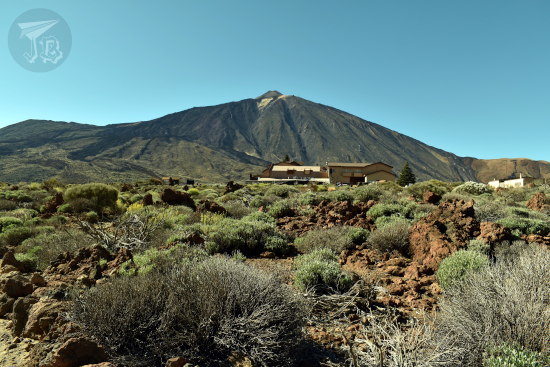
Finally, I arrived in the area of Las Cañadas del Teide or Las Siete Cañadas where the Parador de las Cañadas del Teide stands. I was lucky that the season was good to see the flowering bugloss Echium wildpretii (tajinaste in Spanish), an endemic flora species mostly found on the Teide slopes. After checking in I wandered around the different tracks and paths – Cañada Blanca, Roques de García and Mirador de la Ruleta, which show the different stages of various volcanic eruptions.

Mount Teide rises in the background. It looks wrinkled due to the different eruptions. At its foot, a low building, looking completely out of place. In the foreground, small bushes in grey and green.

Collage: Different rocks and structures created by lava and erosion, the rocks are reddish or grey, and they have weird shapes. The tajinaste is a tall bush, with tiny red flowers, it stands about 1m above the rest of the plants.

I turned in early, and I had booked my dinner in the Parador both nights I’d be sleeping there, so that was an easy one. The staff made it a little awkward though, even if I was not the only solo traveller around. After dinner, I tried to get some pictures of the night sky, but I was unsuccessful.

18th – 20th February 2022: Extremadura, the not-at-all-wild west of Spain

With everything that keeps going on in the world, my little travel gig seems insignificant. Here it is, anyway, for the sake of completion.

18th February 2022: Jam and Ham

After a crazy crazy period, and within a just-slightly-less-crazy period, we made space for a mini escapade – just under 48 hours, but it was an interesting mental reset. We took the car and drove off to Cáceres after I finished work in the afternoon. The trip should have taken a little over 3 hours and 15 minutes, but we spent about 70 minutes caught in several traffic jams – or just a very long jam with different instalments.

Sunset from the road. The orange light zigzags through the grey and blue clouds

Cáceres is located in the autonomous community of Extremadura, which is famous because of its particular grassland with dwarf trees called a dehesa. The typical animal farmed in the area is the native Black Iberian pig – a traditional breed of the domestic pig (Sus scrofa domesticus). Through breeding with wild boars and millennia of adaptation, the Iberian pig has grown accustomed to eating oak acorns, and thus it has become a key part of the ecosystem. Furthermore, the breed has great tendency to accumulate intra-muscular fat. This means that its meat is delicious, especially as sausage. The most famous treat is the “Black label” (Etiqueta Negra or Dehesa de Extremadura) ham: a pig raised in the dehesa, fed acorns and natural grass, and whose meat has been cured for at least 20 months.

The area of Cáceres is also known for its sheep-milk cheese, Torta del Casar. It is a strong-flavoured creamy cheese that comes from controlled sheep, also raised in the dehesa. The cheese is especially curded with rennet made from cardoon (Cynara cardunculus). Another typical food from the area is the local paprika Pimentón de la Vera, which is made from smoked local red peppers. All three – ham, cheese and paprika – hold European Protected Designation of Origin certificates.

Of course, not everything is food in Cáceres. After we checked into our hotel near the historical centre, we headed off to the Main Square Plaza Mayor de Cáceres, which features the town hall, the former wall gate called Arco de la Estrella (Star Arch), and one of the watch towers Torre de Bujaco.

The medieval square of Caceres by night. It looks like a castle, with arches, battlements. The sky is completely black.

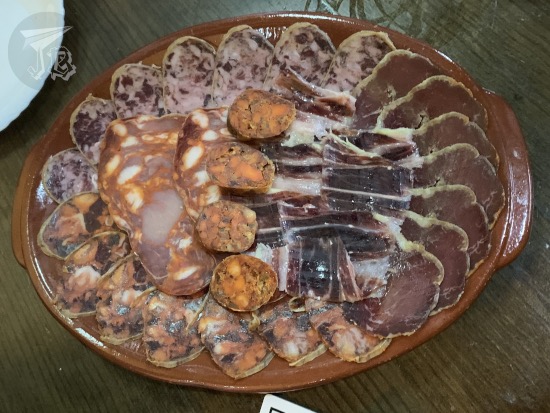
We found a place inside to grab a bite, and we tried the sausages for dinner before turning in – acorn-fed pork ham, loin, chorizo, morcón (similar to chorizo), salchichón, and patatera (pork mixed with potato and paprika in sausage form).

A plate of sausage slices and ham

Walked distance: 1.79 km (2838 steps)

19th February 2022: The Old Town of Cáceres

The Old or Walled Town of Cáceres, Ciudad Vieja de Cáceres was declared a Unesco World Heritage Site in 1986, and it is easy to see why. It is a small knot of streets between the ancient city walls and the gorge where cars can barely drive, sprinkled with Medieval and Renaissance palaces and manors. After finding an open café, we had breakfast, then headed off to explore that. Since it was a bit before 9 am, most everything was closed – but it was also empty, which was good. We crossed the Arco de la Estrella next to the Torre de Bujaco and walked into the walled area.

The medieval square of Caceres by daylight. It looks like a castle, with arches, battlements, and irregular bricks making up the walls.

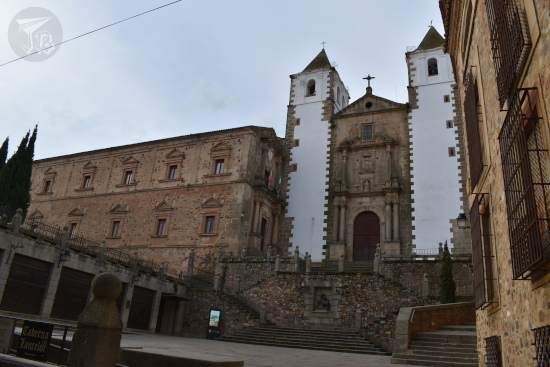
We walked past the co-cathedral – to which we would come back later and several palaces, and we ended up at a two-level square called Plaza de San Jorge (St. George Square), towered over by the peculiar-looking church Iglesia de San Francisco Javier – note the white-painted towers.

A church with two twin bell towers, both in white. Between them, the body of the church, in grey rock. In order to access it, you have to climb a staircase, which has a small sculpture of St George attacking the dragon

There was a small palace to the left, and while the building was closed off, the gardens Jardines de Doña Cristina de Ulloa were open, albeit as it was early February, still in winter mode but for some berries and roses.

Wintery garden with bare tree. There are also evergreen bushes and trees, stairs, and benches.

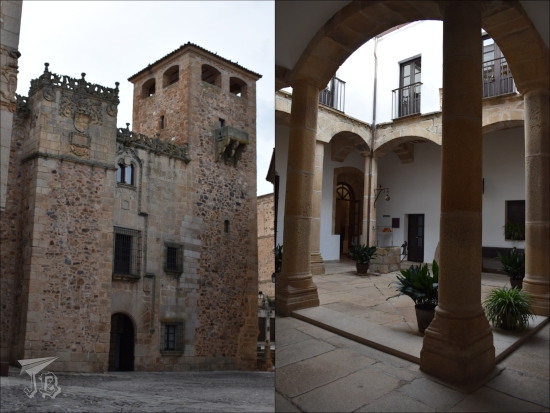
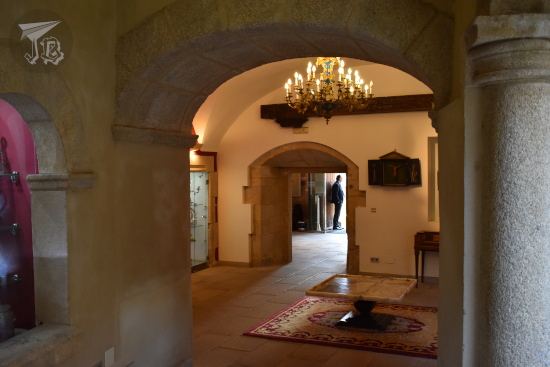
We wandered around for a while, the headed off to a visit we had booked in advance – the manor / palace of the Lower Golfines Palacio de los Golfines de Abajo, which has nothing to do with their position in the social scale, but literally the position within the city hill – in the lower part. The family is known to have owned the palace from the time of the Catholic Monarchs, in the 15th century, till the death of the last descendant in 2012. This woman willed all the heirloom to a foundation that today manages the palace. The foundation got the palace renovated and brought some of the furniture from other properties belonging to the family – among them a glass lamp way too big for the room it was set in, and a sofa which was identical to the one that used to be in my great-aunt’s living room… The lower floor holds the recreated rooms – with more or less success and taste – and a smaller area decorated with Medieval paintings which were discovered by accident. The upper floor holds a small ethnography museum and some documents from the family’s library. Unfortunately, the foundation takes itself a little too seriously and won’t allow you to roam freely in the palace or take pictures, except for the inner Castilian patio.

Gothic palace, with an ornate roof and a small cloister or patio.

After the palace, we walked a whole minute and a half for the co-cathedral Santa Iglesia Concatedral de Santa María. It is the oldest church in town, built around the 15th century, in a Romanesque-going-Gothic style. Outside the church, at the base of the tower, there is a sculpture of Saint Peter of Alcántara. Inside, the altarpiece was carved between 1547 and 1551, in unpainted pine and cedar. The tower can be climbed, and I decided that I wanted to do that, despite not being what I usually do. It was empty enough that I felt comfortable doing so, and I was treated to some nice views.

Collage: a gothic church with a bell tower; the inside showing a bare-wood altarpiece; the sea of columns from above, and a view from the belltower, showing another church and the roofs of some low houses.

By the time we went out, the city had already been taken over by walking tours and guided visits. There were so many companies that the guides put stickers on their tourists so they could herd them round. We backtracked to the Baroque church with the white towers Iglesia de San Francisco Javier (also known as Iglesia de la Preciosa Sangre), where there is no worship today. Instead, there is a huge collection of nativities (hundreds of them, literally). In order to visit the nativities you have to go up a perilous metal staircase. Once on the second floor – after having survived the peril – I decided to continue on the relatively safer stone staircase to one of the towers – only one, I did not climb up both of them. The lower floor holds two last nativities, a classical one and a hilarious set up made out of Playmobil, a German company that makes plastic figure toys.

Collage: The interior of a church with a baroque golden altarpiece, and a collection of Nativities.

We moved onto the following manor, to the side of the square, Casa Palacio Becerra, which shows some antique elements, and the house structure.

Inside a Renaissance palace, with a low arch, a glass lamp and a red carpet that try to look eclectic and end up looking bizarre

Later, we walked to Stork Square Plaza de las Cigüeñas. European white storks (Ciconia ciconia ciconia) are typical birds in Extremadura, and one wonders how they have not decided to make food out of them. In the tower stands one of the few towers that has kept its merlons, as the Catholic Monarchs were very into tearing tower tops down when they conquered a site. The adjacent manor, Casa de las Cigüeñas, hosts the military museum Museo de Armas Aula Militar.

A building with a tower. The inside is a museum, and there are some swords, firearms and Moorish decoration

At the end of the square, in yet another palace – two of them, actually – lies the Museo de Cáceres, the local museum. The part in the Casa de Las Veletasis a regular archaeological museum, with the kind of things you would expect – prehistoric, Roman and Celtic remains, more modern artefacts. The other area, Casa de Los Caballos, hosts the modern art gallery.

Gothic building turned into a museum. The pieces shown are funerary stelae, prehistoric animal representations - bulls or pigs - and jewells, a boat, and Roman emblems

However, the palace was erected on top of the local Arab cistern or aljibe. It is the best preserved in Spain and it has been gathering the rainfall water since the 10th century. Pretty impressive piece of engineering if you ask me.

The aljibe: a moorish basement filled with water. The columns sustain horseshoe shaped arches

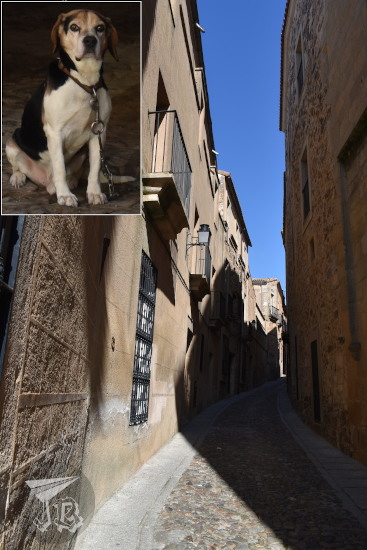
Afterwards we still had some time to kill until it was time for lunch, so we wandered around the area of the Jewish quarters or Judería, under the watchful gaze of the local Cerberus.

Narrow streets, and a guarding dog looking suspicious

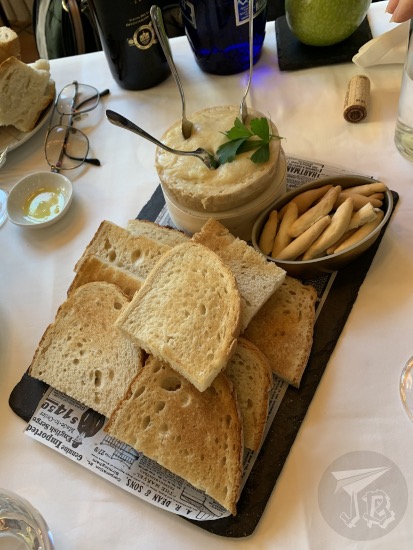
We had lunch in the local Parador de Cáceres, so I of course got my stamp. As a started we ordered the famous local cheese Torta del Casar cheese.

A tray with bread slices and breadsticks, and a cream cheese with spoons to be spread on the bread

In the afternoon we had a look at another church Iglesia de Santiago de los Caballeros. The church of St. James of the Knights was built in the 14th century over an older temple dating back from the 12th century. The altarpiece was carved and coloured by one of the most important sculptors of the Spanish Mannerism, Alonso Berruguete (1490 – 1561). This time I did not climb the tower – which had been happily colonised by a couple of storks.

Gothic church with a golden altarpiece. A stork snoozes on one of the towers.

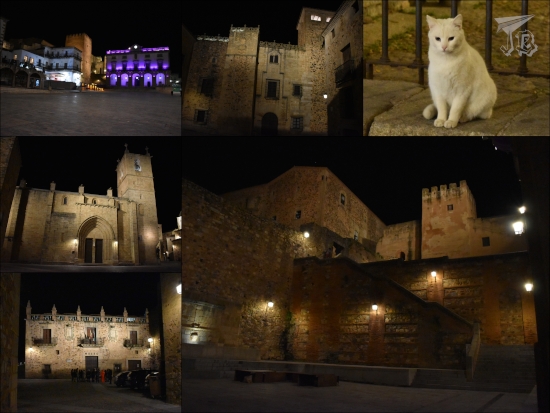
After a little while, after sunset, I decided to skid around and have a walk through the old city at night. The artificial light made it look eery and romantic in the most… historical sense of the word. I came across some cats begging for food from a bunch of schoolgirls, and one of them very indignant because the girls would not beg it to take the food!

Different buildings of Cáceres at night. The are lit wit strategic lamps to give a mysterious feeling. There is also a white fluffy cat sitting and expecting food

Walked distance: 9.04 km (14766 steps)

20th February 2022: Trujillo & Oropesa (Toledo)

On this day I managed two more Paradores stamps. Trujillo is a town a meagre 30 minutes away from Cáceres. It also has a traditional / Medieval city centre, set around the main Square Plaza Mayor de Trujillo. It was the birthplace of one of the so-called conquerors during the colonisation of South America, Francisco Pizarro, whose equestrian statue, Estatua ecuestre de Francisco Pizarro (by American sculptor Charles Cary Rumsey). Other highlights in main square include the corner balcony in the “Conquest Manor” Palacio de la Conquista.

The large Reinassance square of Trujillo with decorated palaces and a sculpture of Hernan Cortez on his horse

One of the most interesting churches in the area is Iglesia de Santa María la Mayor. Its tower dates back from the 13th century, but was almost completely rebuilt in the 16th century. Inside the richly painted altarpiece was erected around 1490. Apparently, my newly-discovered activity of climbing towers yielded to a new adventure, as for a few minutes I ended up locked down in the bell tower – I guess I’m a Disney Princess now (≧▽≦).

Gothic church with gothic golden altarpiece.

I got an hour and a little to wander round the town, so I climbed up to see the Muslim fortress Alcazaba de Trujillo (also called castle). Built between the 9th and the 12th century, it is a huge building with a defensive wall, an aljibe or cistern, several towers and a Christian chapel.

Moorish castle, from the outside and the inside. The walls and the battlements are amazingly well-preserved. It seems that the castle is built around the natural rocks defending the area

Then I hurried towards the other edge of the city to get my Parador de Trujillo stamp (only cheating slightly. I was there, after all). On my way I happened upon the Torre del Alfiler, with a family of storks happily clattering away the late morning.

Storks on top of a bell tower

I backtracked to the Plaza Mayor and I had twenty minutes before our rendezvous time, so I decked into the church Iglesia de San Martín. Its origins date from the 14th century, but it was not finished till the 16th century – which makes it so that the thick Romanesque walls are mixed with Gothic and Renaissance elements. No tower this time, but the second floor holds a religious museum.

Romanesque turning Gothic church. The inside is plastered in white and the celing above the altar and the nave retains the original decorated stone ceilings

After getting a general idea of the Medieval town of Trujillo, but it being a “working Sunday”, we moved on rather quickly, and drove off until we made it for lunch in Oropesa (Toledo) which also holds a Parador – Parador Museo de Oropesa, the first monumental Parador opened in 1930. That makes three stamps in two days, I’m almost impressed with myself!

Plain building with ornate balconies, and cars parked on a row in front of it.

The Parador is adjoined to the castle Castillo de Oropesa, which was unfortunately closed, but I shall put in on my list of “to re-explore”. It was built by the Arabs during the 12th – 13th century, probably on a former Roman fortress. Today, the Old Castle is joined to the New Palace and both belong to Paradores.

Classical Romanesque castle with towers and turrets. It looks heavily restored.

After that, we drove back home, and as we got a couple of wrong turns, we ended up avoiding the traffic jam we had found on our way to Extremadura, which was convenient!

Walked distance: 5.57 km (8836 steps)

22nd August 2021: Romanesque Soria {Spain, summer 2021}

We just spent the morning in Soria, in the region of Castilla y León, before we got on our way back in the early afternoon, but I have to say that the good morning sunset was spectacular.

As again we had a breakfast slot at 8:00, we were out to see stuff at around 9:00. The Parador de Soria is located on the top of the Castle Park Parque del Castillo, we just had to go down. First we came across some of the ruins and the buildings that had populated the area in Medieval times.

As we continued our trek downwards we ended up at the church of Our Lady of the Thorn Iglesia de Nuestra Señora del Espino, which was closed as it was still early on a Sunday morning.

In the tiny garden in front of the church there is a dead tree that has been preserved by pouring fibreglass and other synthetic materials on it – the dry elm tree, Olmo Seco. In 1912, the Spanish poet Antonio Machado wrote a poem – to an old elm tree, struck by lightning and half-rotten, which has sprouted a few green leaves after April rain and May sun… Well, this is the tree, preserved for all to see, with the poem in a small sign (and another in Braille) right next to it.

After staying there for a few minutes, we went on our trek downwards and we reached another church, the church of St. John San Juan de la Rabanera. It is known that the church had already been built in 1270. In the Renaissance and Baroque periods it was heavily remodelled, but restorations during the 20th century recovered most of the Romanesque purity. The main portal, although Romanesque too, used to be part of another church. The apse keeps all the Romanesque decoration – unfortunately, it was closed too.

We kept strolling around the town centre and came across a bunch of palaces – some of them have been repurposed into public-service buildigns such as the local government, revenue and taxes services, town’s archive, a high school… others were for sale or rent.

In front of the high school we found the sculpture to the poet I mentioned before, Escultura a Antonio Machado.

Not far from there we found the church of Saint Dominic Iglesia de Santo Domingo. Like the church of St. John, it is a reformed Romanesque temple. The most important and impressive part of the church is the main façade, in golden stone with amazing carvings (considered by some the best Romanesque façade in the country), and a rose window.

We decided to try to find the co-cathedral of St Peter Concatedral de San Pedro. Dating back from the 12th century, on the outside, it just looks like yet another Romanesque church, but that changes when you enter. When it is illuminated, the church seems to glow.

Furthermore, you can access the cloister of the former collegiate, which was also built in the 12th century as part of a now-disappeared monastery.

We walked back to the centre of the town. We left the main square Plaza Mayor de Soria, which I accessed through a tiny archway delimited by coloured windows, named Arco del Cuerno.

We ended up at main park Alameda de Cervantes.

However, we were more interested in seeing the archaeological museum Museo Numantino, which was open by then – it holds a few ancient straight-Tusked elephant (Elephas antiquus), Pehistoric art, and most of the artefacts that have been found in Numantia, both Roman and Celtiberian, including Roman statues, Celtiberian weapons and drinking jars and the most famous relic of all: a tiny horse-shaped fibula (brooch) that has been adopted as the symbol of Soria.

Finally, on our way out, we stopped at the ruins of the monastery of Saint John of the Douro, commonly just referred to as “archway” and not monastery Arcos de San Juan de Duero, a very cool cloister with different arc styles – a typical Romanesque one from the 13th century, and a second one that might have had Arab influence.

And with this, we drove back home for around 170 km after walking for 6.57 km. Fingers crossed for the next adventure working out!

21st August 2021: Fossil tracks and Roman ruins {Spain, summer 2021}

Enciso is a couple of hours away from Sos del Rey Católico, but to be honest it is barely even on the map. It is a tiny little village in the area of La Rioja that I had not even heard of a year ago. But at some point during this year I became aware of it – and its palaeontological importance as it is the reference point for a dozen or so sites where ichnites have been found. Ichnites or fossil tracks are marks left by dinosaurs and other prehistoric animals on the mud that eventually become fossilised. In this little village in the middle of nowhere there are around 1,400 dinosaur foot tracks. When we were in Albarracín, we saw a bunch of fossils from the time Spain was submerged under the ocean. During the Mesozoic, the area of La Rioja, and the neighbouring Soria (Castilla y León), were somewhat swampy, which lead to a lot of mud. When dinosaurs and other animals moved through the mud, they left trails that sometimes became fossilised.

Our first stop in the village was the palaeontological museum Centro Paleontológico de Enciso . This one we could have skipped – it has next to no original pieces, and it basically just has a few infographics and reproductions of different types of dinosaur legs, but we had to start somewhere.

We visited two fossil track sites. The first one was a long strip of rock called Yacimiento de Valdecevillo . In this site, there are tracks of theropods (carnivores with three fingers, usually bipeds that left clawy marks), ornithopods (herbivores with three fingers, also bipeds, that left somewhat more rounded tracks), and sauropods (four-legged dinosaurs with less-defined fingers). Some of the tracks are very easy to identify (especially the ones fenced off), others are chalked on, and sometimes they even cross each other.

Next to the rock formation, a few reproductions have been built, in order to illustrate what dinosaurs roamed the area. A family of iguanodon has been clearly identified. The sauropod looks like a generic brachiosaurus, but it could have been a turiasaurus, even. I have to say though that the carnivore theropod needs a bit of an update – but it looked adorably like those that they drew when I was a kid back in the 80s. Oh, and we also saw a real-life present-day minisaurus (aka lizard, maaaaaaaybe Spanish psammodromus Psammodromus hispanicus).

It was too hot to walk around the trail, so we hopped onto the car and drove off to the other site, Yacimiento de la Virgen del Campo.
In this formation you can “feel” the mud – the rock has ripples (water marks), and here is even a small mud collapse from an earthquake. Here we saw foot tracks again, marks of skin, and even tail trails left by ancient crocodiles. In this site there are indications of a carnivore attacking a herbivore, represented by 1:1 sculptures (maybe a ceratosaurus and an iguanodon).

Around 13:00 we got back on the car and drove off to the town of Garray for lunch and a rest near the river…s. Río Tera, a smaller current, joins one of the most important rivers in Spain, Río Duero (Douro River) under the unnamed stone bridge.

We managed to have lunch in one of the few restaurants in town, in front of the municipal fountain and the church of Saint John the Baptist Iglesia San Juan Bautista. After lunch we stayed at the river bank for a while before we moved towards our next stop.

The archaeological site of Numantia Yacimiento arqueológico de Numancia holds the remains of a Roman town, built upon an earlier Celtiberian settlement. The Celtiberian town was the centre of a number of hostilities against the Romans in the second century BCE – the Numantine War, the third of the Celtiberian Wars broke out in 143 BCE. After a decade, the Romans sent one of the heroes of the Third Punic war to suffocate the rebellion. The general cut down all the trees in the area and built a barrier around the settlement, in what has been called the Siege of Numantia, in 133 BCE. The town was completely cut off the rest of the world and after eight months of siege, the inhabitants set the town on fire. Most of them committed suicide in order to avoid being taken as slaves.

After the Roman conquerors levelled the ruins, a new town emerged, and a Roman settlement existed in the area between the first and fourth centuries CE. The last remains date back from the sixth century before the town vanished from existence and memory until it was located in the late 19th century.

Today, the site holds remains and patterns for several houses, and it has a reconstructed Roman house, an Iberian house and two pieces of the wall. The most visual building is a Roman house of the later period which still keeps a couple of columns. Unfortunately, this was 16:30 and the guided visit was long and full of useless and dull information – guess who got a sunburnt, even under an umbrella?

When we were done with Numantia, we decided to skip the complementary exhibition in Garray and drove off towards Soria, where we would be staying the night.

The Parador de Soria, our hotel, is the first modern Parador I’ve stayed in, though it stands on the mountain where the castle used to be, and the views were astonishing (I also almost forgot my stamp!!). We had dinner in the parador, which included some freshly-fried torreznos de Soria. Torreznos are a pork-based snack especially typical in the area. The pork belly is marinated with salt and paprika, cured or smoked, and finally fried – delicious but for sure a “sometimes food”. After dinner, we went to our rooms to compare the day-view with the night-view and admire the moon.

Total driven distance: 196 km. Total walking distance: 6.57 km.

20th August 2021: A Monastery and a Castle… again {Spain, summer 2021}

Sos del Rey Católico, formerly just Sos, is a small town still in the province of Zaragoza in Aragón. Its historical centre is so historical that it has been around since the 1400s. In 1452, the infante Fernando, who would go on to become the Catholic King, was born there. Back in the Middle Ages, the Kingdoms of Aragón and Castille became intertwined when Queen Isabel I of Castille and Fernando II of Aragón got married, earning the moniker of Catholic Monarchs due to their relentless fight against the Muslim Caliphates that had conquered the country long before. The trick of their marriage was that both of them remained the king / queen of their own kingdom in a very delicate equilibrium that sometimes was referred to as tanto monta.

A walk through the town yields to viewing a lot of Medieval buildings and palaces – too many to keep tack of. The wall is still standing in several places, built around the natural rock in order to make the most of the natural defences. There are a number of palaces that have been repurposed with new functions – the town hall, a school, and so on, and you can see them all in a short stroll, which we of course took. We left the hotel at around 9 in the morning because our breakfast turn was from 8:00 to 8:30 and there was not much else to do anyway.

The second reason why Sos del Rey Católico became known was the filming of an absurd Spanish comedy back in 1985. Thus, the village erected a sculpture to the director, Luis García Berlanga, Estatua a Berlanga.

The sculpture lies at the feet of the church of Saint Stephen Parroquia de San Esteban, which we could not enter, unfortunately, due to a scheduling conflict. The church has a Romanesque-style entrance carved in the 12th century, but protected from the elements by an outer portico from the 16th century. The church has an interesting shape, which tunnels and stairs, owning to the actual relief of the area.

Beyond the church stands the remains of the castle Castillo de Sos del Rey Católico, out of which the keep and a little turret still stand, albeit heavily restored. The old town was a frontier fortified area between the kingdoms of Navarra and Aragón, and it was a strategic point in Medieval times. This is why Fernando II’s mother fled there when the war started and why Fernando was born there.

The short climb yields to being able to survey the surroundings.

The whole “Fernando the Catholic King” was born here reaches its peak in the old palace called Palacio de Sada, where the King was born. Today they have turned it into an “interpretation museum” and holds some panels, an audiovisual, and reproductions of both the Catholic Monarch’s Last Will and Testament. The highlight of the palace is the Romanesque chapel and former Church of Saint Martin, Iglesia de San Martín de Tours, which still shows the painting and polychrome on the altar walls.

Shortly after 11 we went back to the car to drive to the other side of the Aragón – Navarra border, both the old kingdoms and the current areas. We had a booking for the monastery of Leyre Monasterio de Leyre at 12:30 and considering how much our Sat-Nav was trolling us we wanted to give ourself an hour of leeway. The device behaved itself and we arrived there at the right time.

Leyre is a still-active Benedictine monastery has been rebuilt and renovated, but at its core stands the church of Leyre. Standing in the middle of the mountains, it used to be a fortified monastery.

The church is based on an early Romanesque “crypt” whose goal was to flatten the terrain in order for the church to be built above it. It is an amazing engineering work, and not at all usual.

The original Romanesque church was consecrated in 1057, and it is one of the most impressive and highest Romanesque buildings I’ve ever seen. The main nave is also Romanesque, but the dome is already Gothic. There is a beautiful sculpture of the Virgin of Leyre. The entrance of the church is magnificent, carved in the 12th century with dozens of carving in stone.

We were lucky enough to have timed the visit with the monks’ Sext prayer, in Latin and Spanish, and mostly sung in the Gregorian style. Ah, and this was also a burial point for the Monarchs, but this time of Navarra… then again, eventually the Kingdoms of Navarra and Aragón became one so…

After Leyre, we got onto the car again and crossed over to the other side of the highway to the Castle of Xavier Castillo de Javier. We had lunch around the castle before we even approached the building, under Saint Francis Xavier’s glance.

The castle was the birthplace and childhood home of this Catholic saint (born 1506), famous for trying to spread Christianity in India, South-East Asia and Japan. He was a co-founder of the Jesuit order, which owns the castle now. The building has been turned into a museum about the saint.

The origins of the castle date from the 10th century, though most of its current appearance can be traced to the 11th and 13th century. Later the towers were destroyed, and in the 19th century they were re-erected, and the adjacent basilica was built. There is also a reconstructed little church were the saint was christened.

The inside of the castle holds some items from Francis Xavier’s times – real or not – some Japanese paintings and scrolls, trinkets that were brought from Asia during the preaching missions, and a bunch of dioramas. You can climb up to the keep and look at the surrounding area. Unfortunately, the guide was horrid and he just regurgitated facts that were dubious or plain wrong – for example, he claimed that a diorama that looks like a Hindu temple represented the Emperor of Japan.

One of the most interesting artefacts in the castle is a late-Gothic oak carving of Christ on the cross, which sports a faint smile. The piece is located in a tiny chapel decorated with dancing skeletons referring to the Latin expression “Carpe Diem” (seize the day).

After the castle we drove over the “border” back to Sos del Rey Católico, and after a shower and a drink, I decided to explore de historical building of our hotel, Parador de Sos del Rey Católico, and the gardens.

Driven distance: 56 km. Walking distance: 6.17 km.

19th August 2021: A Monastery and a Castle {Spain, summer 2021}

We packed up and in the morning, we continued out trip, heading generally westward towards our next destination, which was about an hour and twenty minutes away. Unfortunately, we got on a slight disagreement with the Sat-Nav again – it sent us through the secondary road and in the end we took two hours going through the curves. Thus, around 10 am we managed to get our tickets to the “royal” monastery Real Monasterio de San Juan de la Peña – which is in the middle of nowhere but technically belongs to Jaca.

The monastery is actually two (or three, depending on how you look at it). The old monastery, Monasterio Viejo de San Juan de la Peña was built in the Romanesque style, and dates back from the tenth century. Its origins, however, seem to be more obscure, related to Iberian and pagan rituals. It is excavated into / built onto the vertical wall of a natural cove occurring in a bare-rock hill or crag in the middle of the forest. It held a convent, a church, and a cloister on the first floor. From the time it was built till the time it was confiscated by the government in the 19th century, it became one of the burial points for the monarchs of the old Kingdom of Aragón and Navarra, thus the “royal” eponym.

One of the many legends regarding the monastery is that it was home to the Holy Grail between the 11th and the 14th century. Later, in the 17th century, there was a fire, and it was decided to build a new monastery. Here is what is weird – there is a building there now, the so-called new monastery Monasterio Nuevo de San Juan de la Peña. Some of the buildings have survived, but most of it is an archaeological museum / excavation of what was there, again until the liberal confiscation.

Issues: You can only visit the old monastery after buying your tickets at the new monastery. And to get from one monastery to the other, you need to take the shuttle, again, awesome during Covid times. Furthermore, there was no control of the number of people there, which resulted in an overcrowding that would have been uncomfortable in normal times, much more during the pandemic. While the bus makes sense due to the fact that there is literally no way to park around the old monastery, some crowd managing would have been necessary.

After visiting both monasteries, we went back to the awful road. I don’t know if it was the curves, the heat, that I had overdone it the day before, or all of the above but I was not feeling well. Thankfully after some food and a stop at the water reservoir Embalse de la Peña, I felt better.

We continued our way and made a stop to look at an interesting geological feature called Mallos de Riglos, which are several almost-detached vertical walls of conglomerate rock left behind by erosive processes that dragged away what used to be around them. They stand up to 275 metres high over the river Río Gállego.

This was a short stop from a viewpoint, but we soon drove on towards the next destination – after one of the most important buildings in religious Romanesque architecture, we were going to see a civil counterpart, the (self-reportedly) best-preserved Romanesque castle in the world: Castillo de Loarre. The truth is that, from afar it looks awesomely cool, though once you are inside, it loses a bit of its appeal as there is no perspective. Besides, it was too hot to hike down the hill for good views.

The keep is built on a rocky hill, and the surrounding buildings are connected to it by a number of doors and haphazard stairs and arcs. Both the main towers and the fortified wall were erected around 1287, in a strategic point between the Muslim and the Christian kingdoms battling over the place. As the Christians expanded their influence, the Muslim tribes retreated towards the Mediterranean, leaving the castle “jobless” in a way, and the castle decayed until it was restored (twice) in the 20th century.

After the castle, we went back to the car, and from there I fought the Sat-Nav (I was not the driver). When I saw that it wanted to send us through another god-forsaken secondary road full of curves for over a hundred kilometres, I advocated for 123 km of main roads and highways. I won (^◇^)y, and around half past seven we arrived in our next destination Sos del Rey Católico, where we would be staying at the Parador for two nights (of course, I got my stamp there). A great improvement from the hotel in Torla-Ordesa, and a welcome one, with awesome sunset views to go with it.

Total driven distance: 272 km. Maybe around five hours and a bit? Some of the roads felt eternal.
Total walked distance: 5.23 km.

29th & 30th May 2021: The Walls (and churches) of Ávila (Spain)

There was a little-talked about consequence of the Industrial Revolution in Spain. While it is widely known that it drew a large number of people to the cities and towns, few stop to think of the subsequent steps that had to be adopted. More people in town required housing, and thus a number of projects denominated ensanches or “widenings” were projected and carried out. Even though such a thing makes sense, here lies the problem – in order to enlarge the urban area, many Spanish cities and towns tore down their Roman and Medieval walls, leaving either bare traces or nothing at all.

Legend has it that the town of Ávila lacked the money to demolish the wall. In retrospect, that was a good thing, because today, the walls that surround Ávila, Murallas de Ávila are among the most impressive Europe, some say that even better preserved than Carcassonne (France).

Ávila is a couple of hours away by car, so we drove off on Saturday morning at around 8 am and were there just before 10 am. We entered the city through one of the city wall gates, Puerta del Carmen.

Approach to the walls

We parked (100% ditched the car) at the hotel and checked in – even if it was quite early, they told us that one of the rooms was already prepared and gave us the keys. Unfortunately, it was not, and since the blunder was a Covid-protcol blunder, they upgraded us as an apology. The hotel, Parador de Ávila, belongs to the Spanish network of Paradores, and it is located in a 16th century palace, Palacio de Piedras Albas. We booked late-check-out for the following day, which can be done “for free” booking lunch in the restaurant (which is obviously not free).

Parador

Our first stop was the tourist office, but not the one that is clearly signalled in the middle of the town – the one that is located outside the wall and you have to turn around and around to find. But we needed it to buy the 48-hour pass to the monuments. Then we stuck around to wait for the nearby church to open, which gave way to observing the wall for the first time.

The Muralla de Ávila has been a Unesco World Heritage site since 1985. The structure is clearly defensive and it was built towards the end of the 11th century, quite probably as extension or reinforcement of a previous one, either Roman or Arab – though the Roman theory is the most credible as some pieces used in the original wall seem to come from a now-lost Roman cemetery, and there are documents about a Roman camp with similar shape. The wall has been restored in several occasions, and after surviving the ensanche risk, it was declared national monument and cleared of attached houses. Today most of the wall belongs to the Spanish government, and it is managed by the town hall, though there are some private parts, such as the ones that are part of the cathedral. The walls close off all the historical centre. They have a perimeter of 2,515 metres, with around 2,500 merlons, almost 90 turrets, and nine gates. Our second gate was Puerta de San Vicente.

Puerta de San Vicente

The first monument we stopped by, as soon as it opened since we were already there, was the basilica church Basílica de San Vicente (officially Basílica de los Santos Hermanos Mártires, Vicente, Sabina y Cristeta, three Christian siblings who were martyred nearby). It is one of the most important Romanesque buildings in the whole country, built between the 12th and the 14th century. It is protected as part of the World Heritage Site declaration. One of its characteristics is the golden rock in which it is built – sandstone-looking granite.

Iglesia de San Vicente

The inside of the basilica is, in the typical way, a mix of more modern styles. The grave of the martyr siblings is Pre-gothic, and the large altarpiece is Baroque. In the crypt there are proto-Christian pieces and a Romanesque Virgin which we did not get to see and which is the patron of the town.

Iglesia de San Vicente

Afterwards we headed off to the cathedral Catedral de Cristo Salvador, which is considered the first gothic cathedral in Spain (something that other people say about Cuenca), with clear French influences. It was designed as a fortress church as its abse dubs as one of the turrets of the city wall.

Catedral de Cristo Salvador

In later years, a choir was added, along with a Baroque altarpiece. The walls are also sandstone-looking granite, but some elements inside are limestone and wood.

Catedral de Cristo Salvador

To the side of the cathedral stands the cloister, which holds the grave to the first modern president of Spain, Adolfo Suárez, and the entrance to the cathedral’s museum. It yields to views of the tower and… the storks that squat there.

We headed off towards the Museum of Ávila. First we stopped at the former church Iglesia de Santo Tomé, which today is a warehouse for the museum, but can be visited anyway. When I was young, I studied the statues / sculptures called verracos, built around the 5th century BCE by the Vettones, a Celtic pre-Roman civilisation that faded upon the arrival of the Romans. The verracos are crude statues that represent four-legged animals – bulls, boars or pigs. At the time, I had only heard about a number of them, and was somehow under the impression that there were two or three around. I was quite wrong, apparently they pop up from the snow like daisies or something. In the church-turned-warehouse there were like twenty, one outside, there was one at the hotel garden… so no, apparently they are quite common. Other artefacts in the building include some carriages, Roman sculptures and mosaic, Muslim funerary artefacts and roof boards…

Iglesia de Santo Tomé

Then we moved onto the museum itself, Museo de Ávila, with a beautiful patio and a number of archaeological and ethnological items which represent the history and folklore of the town.

Museo de Ávila

It was almost time for lunch, so we headed off towards the restaurant where we had booked. Before, we made a small stop at an old palace Palacio del Rey Niño, built in the 12th century, today turned into the Post office and the public library, with a patio closed off by the Walls themselves.

Palacio del Rey Niño

Then we walked by the modern marketplace.

mercado

Which happened to be right in front of the restaurant, named La Lumbre. Aside from its walls, Ávila is famous for its cattle, a particular breed called Raza Avileña – Negra Ibérica, and of course the meat the animals produce, especially the matured and grilled meat from older oxen. After the animal has been sacrificed, the meat is matured in a traditional process called “dry maturation” for six weeks before it is grilled. We ordered the rib steak, chuletón to share, along with some grilled vegetables, a “tomato salad” that was a… one-tomato with dressing. And then there were desserts, aside from chocolate cake, we ordered yemas de Ávila – a typical confectionery made with egg yolks, lemon juice, cinnamon, and caster sugar. Lots of typical stuff, as you can see!

lunch

Our next stop was the main square, called “little market square”, Plaza del Mercado Chico, along with the town hall or Ayuntamiento. The square was rebuilt in the 19th century and is flanked by arcades. The town hall was built in 1862.

Plaza del Mercado Chico

Plaza del Mercado Chico: Ayuntamiento

After a brief stop at the Parador for some rest, we headed off to find a convent / monastery on the other side of town. On the way we came across some ruins that I assume are the church Iglesia de San Jerónimo, as they sit in the square of the same name.

Ruinas de San Jerónimo

We reached the convent Convento de San José, a reconstruction of a previous monastery and church, the first founded by Santa Teresa de Jesús (Saint Teresa of Ávila), a Christian “doctor of the church” and mystic Carmelite nun, known for her ‘raptures’, her reforms, and her literature work. More on her later though. The convent and church were a little… underwhelming, even if is a World Heritage building.

Contento de San José

Then we walked back towards the historical centre, and walked past the church Iglesia de San Pedro, a 13th-century building with a great rose window, but which was closed (reforms).

Iglesia de San Pedro

On the other side of the square, Plaza del Mercado Grande (Big Market Square) stands another of the wall gates, Puerta del Alcázar, and a monument to Saint Teresa Monumento a Santa Teresa: La Palomilla.

Puerta del Alcázar

Next we separated and I went off to climb the walls Murallas de Ávila. Well, to walk on the parapet. Due to Covid, there is only one access, next to the Cathedral and its gate Puerta de la Catedral. The walkable area is around 1.4 km, including walking over some of the gates and up and down more than a few turrets. It allows for some amazing views of the town and its outskirts…

Views from the walls

… but also of the wall itself, both the original walls and the add-ons from later eras (and a magpie).

When I reached the end of the walk, I went down and crossed the bridge gate Puerta del Puente, named that way because it overlooks the bridge over the Adaja river. I could not take a picture of it because the traffic police was checking cars at the roundabout in front of the gate. Thus, I headed off to the pedestrian bridge to cross over towards the tiny hermit popularly known as “the four posts”, Los Cuatro Postes, which yield to an impressive view of the town and its walls.

Cuatro Postes

Views on the wall

Avila and View

I walked back to see the walls from the base. Then I crossed the gate we had driven through in the morning, Puerta del Carmen, and I headed back to the hotel for a drink.

At the feet of the walls

Puerta del Carmen

After a while we headed off for dinner and tried another of the typical dishes in Ávila, patatas revolconas – mashed potatoes with paprika and pork rashers, and waited for the sun to go down so the city lit up.

Patatas revolconas

A walk around the town yielded to views of the Iglesia de San Vicente and Puerta de San Vicente, some of the inner streets leading to the town hall Ayuntamiento, the longer area of the Muralla and the Puerta del Carmen.

Night view

And then I had a very, very long shower and went to bed.

In the morning, breakfast was had – not a fan of the “we can’t have a buffet so we prepared this and this is what you get” plate, but whatever. I mentioned Santa Teresa before, let’s get into that a bit further. She was a 16th-century nun born near Ávila, canonized in the 17th century, and elevated to doctor of the church in the 20th century. She is conisdered one of the great mystics and religious women in the Roman Catholic church, author of a number of spiritual classics, and the reformer of the Carmelite nun order into the Discalced Carmelites. She founded convents all over Spain and was known for her mystics raptures which may have been messages from God or epileptic attacks. She is one of Ávila’s most important historical figures and wherever you go there are traces of her. In the place where her house stood now there is a convent, a church, a reliquary room and an interpretation museum, with really strange hours on Sundays. We could see the convent / church Convento de Santa Teresa de Jesús / Iglesia de la Santa and the reliquary room where no pictures were allowed Sala de Reliquias between services.

Iglesia de la Santa

On the way, however, I found some interesting ruins – the gate to the former hospital Hospital de Santa Escolástica, and we walked past a bunch of palaces.

Portada de Santa Eulalia

Then we moved onto a long walk to the 16th- century Gothic monastery Real Monasterio de Santo Tomás, which we could see due to lucky timing as there was a First Holy Communion Mass happening and the local little old ladies were not to keen on cultural visits of the church.
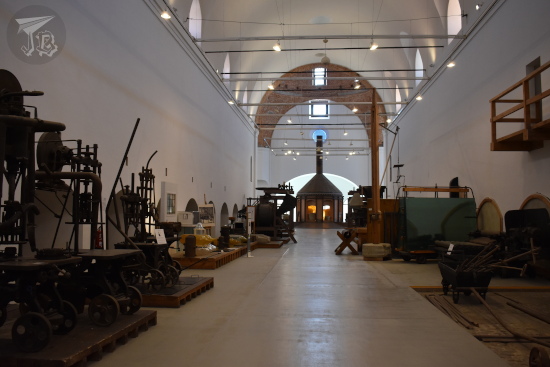
The monastery has a church, three cloisters and two adjacent museums. The church has an impressive Gothic altarpiece (by Pedro Berrugete, one of the key painters riding the wave between Gothic and Renaissance arts), and hosts the grave to the Catholic Monarch’s only male son.

Santo Tomás

The three cloisters: Claustro del Noviciado, Claustro del Silencio, and Claustro de los Reyes Católicos (Novitiate, Silence and Catholic Monarchs).

Santo Tomás Cloisters

The Museum of Natural Sciences Museo de Ciencias Naturales, an occupational therapy project could… be better, and sets the expectation bar rather low for the next one.

Museo de Ciencias Naturales

However, the Museum of Eastern Arts Museo de Arte Oriental is pretty impressive. It contains pieces and artefacts that the Dominican missioners brought from China, Japan, Vietnam and the Philippines.

Museo de Arte Oriental

And in the end, that was it for the weekend. We walked back, decided to give the museum of Saint Teresa a miss, had a drink, had lunch and went back on our merry way – with a a view of the train tracks over the dam of the reservoir Embalse de Fuentes Claras.

Train tracks over Embalse de Fuentes Claras

Walked distance (Saturday): around 12.5 km
Walked distance (Sunday): around 6 km
Total distance driven (both days): around 340 km

23rd & 24th April 2021: Mental Reset Half-weekend: Cuenca (Spain)

With everything going on, travelling is almost impossible, but the stars aligned for a tiinny bit longer than day trip – from Friday to early Sunday morning, with every precaution possible, of course. We ran away to Cuenca for a day and a fifth. As days are becoming a bit longer, when we arrived there were still a couple of hours of light left. We checked in and dropped off the car at the Parador de Cuenca. The Parador hotel chain might be more expensive than standard accommodation, but truth be told, it is upholding the strictest hygiene protocols, even though their hand disinfectants give me allergies. Truth be told, it was spectacular.
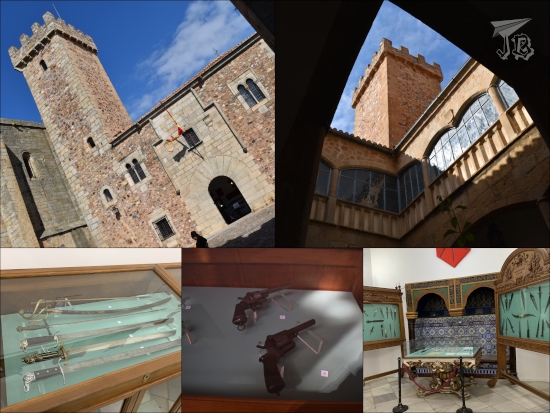
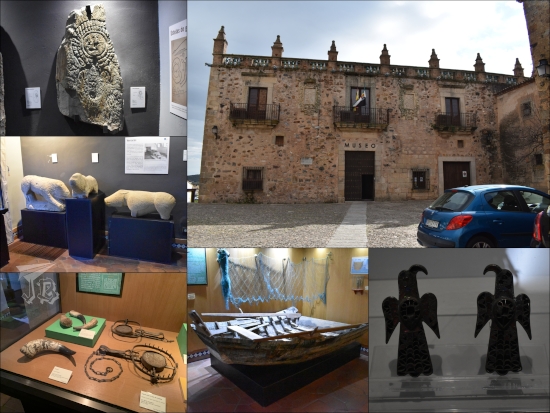
The Parador stands in a repurposed monastery, the old convent of Saint Paul, just at the edge of the historical centre of Cuenca. The hotel has a covered cloister and a newer building, and the adjoint church has been turned into an art centre.

Parador

Room

Gorge

The core of the town stands between two rivers, River Júcar and River Huécar. As the area is rich in karst – calcite rocks, which dissolve in water – the rivers have dug parallel gorges around the historical dwellings. The walled city has been declared a Unesco World Heritage Site and one of the keymost point is the hanging houses, Casas Colgadas (now home to the Museum of Abstract Art). While the houses are now rather unique, they used to be the norm in the 15th century. In order to cross the Huécar gorge Hoz del Huécar, there is a(n also) hanging bridge. The bridge of Saint Paul, Puente de San Pablo, was built at the beginning of the 20th century in the typical cast-iron architecture of the time.

Puente de San Pablo

Looking back to the other side of the bridge, you see deceivingly high hill, Cerro del Socorro, carved out of karst. I say deceiving because when you actually look at it, you’re half-way up, and you can look down to the bottom of the gorge. At the top of the hill stands a religious pillar to the Catholic Sacred Heart, Monumento al Sagrado Corazón.

Cerro del Socorro

Monumento al Sagrado Corazón

Casas Colgadas

We went on walking towards Main Square and the Cathedral of Our Lady of Grace and Saint Julian – Catedral de Santa María y San Julián de Cuenca. The cathedral is one of the earliest Gothic buildings in Spain (although the main façade has been rebuilt in style). However, it is not the typical Spanish Gothic style, but it is more similar to the Norman buildings in the north of Europe. It was unfortunately not open for visiting though (it’s the third time I’ve been to Cuenca and I’ve never been able to walk in (≧▽≦) ).

Catedral de Cuenca

There also stands the Ayuntamiento de Cuenca or town hall, a three-arched Baroque building erected around 1760 after the designs of the architect Jaime Bort. The building closes off the square and is the gateway to a maze of chaotic traffic of one-way streets and directing traffic lights.

Ayuntamiento de Cuenca

We turned towards the gorge, Hoz del Júcar on the other side of the town for a view of the sunset, but the clouds seemed to be hiding it.

Hoz del Jucar

As we continued on, we stopped by a nun convent Convento de las Esclavas. This Catholic nun congregation leads a contemplative life and they are perpetually praying to the Eucharist – at least some of them, as apparently they bake and sell confectionery to sustain themselves. You can see a nun praying in the church, and to be honest for a second I did not realise she was there, it felt like there was a ghost all of a sudden. The building was erected between the 15th and 16th centuries.

Convento de las Esclavas

Convento de las Esclavas

We found the monument to a medieval king Monumento a Alfonso VIII. During the Christian and Muslim wars, the king was the one to conquer Cuenca for the Christians, and assimilated it into the Castilla crown.

Monumento a Alfonso VIII

Another sculpture we found was, conversely, erected to honour the traditional shepherd from one of the old streets in town, a bronze statue named Monumento al pastor de las Huesas del Vasallo and located next to the bridge.

Monumento al Pastor

We also got treated to some nice views as the sun came out the second we turned out backs on it.

Sunset

After dinner – a really good club sandwich in my case, I walked out to take some pictures of the bridge and the hanging houses after dark, expecting them to be lit up… Which they were. I mean, I was really not expecting the green colours.

Night

Casas Colgadas

In the morning we had breakfast at the old dining room of the convent, the refrectorium, which still keeps its old allure.

Refrectorium

Later, we headed out to the local palaeontological museum Museo de Paleontología de Castilla-La Mancha. The museum was inaugurated in 2005, recycling, so to speak, a previous building that overlooks the city of Cuenca. The museum has an inner area with some reproductions and pieces from the different palaeontological sites around the area, and several models of the animals, organised in eras.

MUPA

MUPA

The outer part also holds replicas, and it gives a very Jurassic World feeling for a second, when you take the view with the dinosaurs. We had booked first thing in the morning, so we were leaving when the kid-crowd started to arrive, in order to see both the extinct and the extant dinosaurs (a.m., we found a mallard minding his own business at one of the ponds).

MUPA

We drove back, and unfortunately the Sat-Nav got us lost. However, we dropped the car safely off a the hotel and decided to take the plunge and walk into the museum of Spanish abstract art Museo de arte abstracto Español, home to a number of… works… by Spanish artists from the 1950s and 60s in the Hanging Houses / Casas Colgadas. I… have to admit I am not the biggest fan of abstract art, so I was not terribly impressed – I mean I had been there before and it had not imprinted on me, like at all (≧▽≦).

Museo arte abstracto

After the museum we headed back to the Parador for lunch and some rest – and I have to say that the curd I had tried the last time was nowhere to be found any more. Sad.

cuajada

But not to be deterred, we soon moved to the city museum Museo de Cuenca, which highlights the Roman origins of the city. There are displays from Prehistory to the Middle Ages, but there is either a surprising lack of Muslim artefacts, or they were in the closed-off rooms.

Museo de Cuenca

After this, we wanted to check out one of the churches, and on the way we passed by a viewpoint towards the gorge Hoz del Huécar.

Hoz del Huécar

We also came across the “Christ in the Alleyway” or Cristo del Pasadizo, which is related to the legend of two lovers – he went to war, she stayed behind and moved on, and then everything ended in tears because how dare a woman in Christian Middle-Ages Spain try to be happy. Anyway, here’s the alleyway and the Christ figure.

Cristo del Pasadizo

After that we ended up at another museum of contemporary art, Fundación Antonio Pérez, located in another former convent built in the 17th century. Honestly? It was slightly interesting but mostly claustrophobic. The majority of rooms do not have windows whatsoever and the fact that there is a one-way itinerary due to Covid, and how dry the air was, made it stressing to an almost ridiculous level.

Arte contemporáneo

It was early evening when we came out, and the second we put a foot outside it started pouring, so we headed back – it also made for a few spectacular pictures.

Rain

Rain

Some cool ones were also taken on Sunday morning just before we drove off early because there was stuff to be done throughout the day.

Casas Colgadas + Puente de San Pablo

12th September 2020: Sigüenza (Spain)

We took a drive to Sigüenza, in Spain. This medieval town? big village? had a big relevance through the Middle Ages, and the historical centre reflects that. The most prominent point is the castle on top of a hill. The Castillo de los Obispos is a fortress that can be traced to Roman times. However, the actual castle was a Moorish alcazaba. After the Christians took it over in the 12th century, it was remodelled and enlarged. Due to its vantage point, the castle was a key element in different wars and strife, including the Napoleonic invasion and the Civil War, thus resulting pretty damaged. In the late 20th century it was decided to restore it turn it into a Parador with around 50 rooms.

During our planning stage we called and tried to book a restaurant for lunch, and we were told they were not taking them, we had to call on the same day. Of course, when we got there, it was impossible to book – there was a course and the celebration of a communion (seriously, people, learn to say no so others can get organised). Unfortunately, you could not see the interior or even the yard if you had no reservations, so I can only share a picture from the parking lot, where we left the car.

We walked down the main street Calle Mayor, a clobbered slope that ends (well, technically begins) at the town’s main square.

Main Square or Plaza Mayor is home to the Town Hall or Ayuntamiento de Sigüenza, an old palace with a typical Castillian inner yard or patio.

Opposite the town hall stands the cathedral Catedral de Santa María La Mayor de Sigüenza. The Gothic building was built upon a previous Romanesque one and it had some Neoclassical and Baroque additions. Thus, the façade sports Romanesque doors and rose window, and the main body is Gothic. The altar and the choir are awfully Baroque too, and some of the chapels sport Cisneros, Plateresque and Renaissance decorations. All in all, an interesting pout-pourri of architectural and decoration styles.

The most important piece of art of the cathedral, however, is a funerary piece to the right of the altar. It is the sepulchre of Martín Vázquez de Arce “El Doncel” (“The Young Man”). The chapel holds him, his parents and grandparents, but the sculpture on his sepulchre is the most impressive one. The Vázquez de Arce family were vassals of the Mendoza family, the most important family in the area during the Middle Ages. During the war to conquer Al-Andalus, the Vázquez de Arce males followed the Mendoza to the war in Granada, where Martín died in a trap set by the Arabs, which consisted on damming the River Genil to a creek, and then releasing the dam so the water took over the enemies crossing (which… kinda sounds like something out of the Lord of the Rings, doesn’t it? At least, it makes me think of Arwen and Treebeard). The sepulchre, commissioned by Martín’s brother, presents him taking a break during training and reading a book. He even has pupils, so if you could climb up, you’d see what he’s reading!

The cloister is also Gothic, as the previous Romanesque one was torn down. It holds a central garden and a number of side rooms where there is a collection of mythology-themed tapestries. In one of the chapels, there is also a painting by El Greco, a Greek painter rooted in Spain who was one of the key artists during the Spanish Renaissance.

The cathedral ticket also allows a visit to the Diocesan Museum Museo Diocesano, which holds many pieces of religious art, along with a few models of the cathedral in its different construction stages. These days I’m trying to learn some hagiography, which means how to identify religious figures by how they’re presented. Getting there, three out of ten times or so, because half the time they cheat.

After the cathedral we climbed up towards the castle, and we stopped at the former church Iglesia de Santiago, now transformed into a mini-introduction centre for all the “hidden” or “unknown” Romanesque in the area. The church itself had some beautiful paintings, but it was destroyed during the Civil War.

Continuing our way up, we turned a little to see the house where the Vázquez de Arce family used to live, now turned in a museum, Museo Casa del Doncel. There is a little paintings exhibition and a guitar museum, along with some ancient artefacts such as vases or looms. The most interesting part are the Moorish “Mozárabe” decoration. Here is a bit of historic trolling: when the Christian “conquerors” hired Arab craftsmen to do decoration, one of the things the Arabs did was decorate using Quran verses.

Then we saw the outside of the church Iglesia de San Vicente Mártir, Romanesque to boot.

Afterwards, we ended up at the square Plazuela de la Cárcel, where the old gaol jail stood.

Finally, we headed over to the restaurant where we had booked a lunch table, a traditional grill called La Taberna Seguntina where I chose to have a “summer menu” with salmorejo (a thick soup or purée made with tomato, oil, and bread and sprinkled with boiled egg and cured ham) and roasted cochinillo (suckling pig, roasted whole) with potatoes and herbs. For dessert I had a pudding!

And that was it, really – Medieval Sigüenza has nothing else to see. As the façade of the castle was being restored, we did not even take pictures of it as we drove away.

4th September 2020: Alcalá de Henares (Spain)

After looking for a place to park the car for 12 minutes, I left the car and I went off on foot towards the centre with a relative who is living in Alcalá de Henares. The town centre has been a Unesco World Heritage Site since 1998.

Our first stop, at 10:30 almost sharp was the Palacete Laredo, a small palace built in the Neo-Mudéjar style, a type of Moorish Revival architecture. It was designed and built between 1880 and 1884 by the Spanish artist Manuel José de Laredo y Ordoño. After a century in private hands, it passed to the town hall, which allows the university to use it as a museum, showing a collection of ancient documents.

The palace is built in brick, it has two floors and a minaret-like tower. The inside is decorated with coloured-glass window, tiles and paintings. The visible ceilings on the first floor are wooden artesonado (decorative beams joined together). There is also a garden, but it was closed.

Afterwards, we headed off towards the centre. We walked by the church Parroquia de Santa María la Mayor and is inhabitant the stork on photo duty.

We had tickets to see the Corral de Comedias, a theatre built in the site of an ancient “theatrical courtyard”. These were open-air theatres that were common during the late middle ages and exploded in popularity in the 16th century. The Corral in Alcalá de Henares was built in 1601 by Francisco Sánchez, member of the Carpenters Guild. It suffered several changes – the ceiling was built in the 18th century, then it became a cinema, and eventually was “lost” in the 1970s. In the 1980s, it was rediscovered, restored, and finally opened as working theatre in 2003.

Alas, we were too late for the 12:00 visit to the university, so we wandered around the town’s main square Plaza de Cervantes – Alcalá de Henares was Cervantes’ birthplace. Miguel de Cervantes was a 16th century Spanish writer, most renown for his novel “The Ingenious Gentleman Don Quixote of La Mancha”, which many authors consider “the first modern novel” and “the best literary work ever written” (though… I disagree). The square features a bandstand, the statue of Cervantes, and is surrounded by several buildings of importance – the ruins of the church Iglesia de Santa María, the Town Hall and the Círculo de Contribuyentes, former casino, and the Corral de Comedias.

Then we walked down Main Street Calle Mayor, until we got down to the Obispado de Alcalá de Henares, the bishopric, with two towers from the former wall at their sides. That reminds me – we did not visit the cathedral or any religious buildings because they were all closed to tourism.

At 13:00 we took the guided visit to one of the university buildings, the Colegio Mayor de San Ildefonso. The university was established in 1499 by Cardinal Cisneros, an influential Spanish religious and statesman in the time of the Catholic Monarchs. A colegio mayor is basically a dignified “classic” dormitory. The façade was built between 1537 and 1559 in the Plateresque style, an architectural style that developed in Spain between the late Gothic and the early Renaissance. The architect was Rodrigo Gil de Hontañón.

Inside, we saw the cloisters and yards, the gate of honour (from where the successful students left the university), the classroom where the students defended their final thesis, and the chapel, with the tomb of the founding Cardinal (but not his body, which is in the cathedral).

We had a reservation to have lunch at the Parador de Alcalá de Henares, which is a rather modern building and not a historical one, but a stamp was needed (≧▽≦). Lunch was a looong affair because our waiter might not have been the… most efficient. We tried the combos with a little bit of everything to share (entrées and desserts), and some bull tail. Oh and coffee. Yay coffee. (Also, kudos to me for cutting that nut in half.)

After lunch, we walked down the Calle Mayor again and we made a stop at what is supposed to be the house where Cervantes was born, or at least a reconstruction, with a bunch of ancient objects thrown in – the Museo Casa Natal de Cervantes. There was also a photography exhibition. To be honest, it had a great quality-price relation. It was free, and the quality was… lacking. Or maybe I’m old and I have seen most of the stuff they showed in action, and used a few.

We continued on to the regional archaeological museum Museo Arqueológico Regional, located in the old Archiepiscopal palace. That was unexpectedly good, with the fossil record and the old Roman mosaics.

Pending for a future visit to Alcalá de Henares: Roman and Medieval areas, and the religious buildings, as the day finished up doing some necessary and work-related shopping before I drove back home.

Driven distance: Around an hour? I dumped the car as soon as I could and we walked the hell out of the town (≧▽≦)
Walked distance: 14.61 km

9th August 2020: The Cross-Roads {Spain, summer 2020}

When driving around Madrid, a great cross can be seen from several kilometres on the road. It belongs to the monument to the fallen during the Spanish Civil War, the so-called Valle de los Caídos (later, in 2022, the name would be officially changed to Valle de Cuelgamuros). It was built during the dictatorship times, and the regime forced political prisoners to do so.

During the last couple of decades, the site has been the centre of a lot of polemics, and in 2019 Franco, buried there, was exhumed and taken somewhere else. There is no doubt that it is a symbol of… something. Of course it is. More and more voices, however, claim it should be torn down and in case they ever succeeded I thought that I should, at least, have visited it once. It is after all a piece of history.

And it was literally a ten-minute detour away on our way back. After we left Astorga, there was nothing else on the route plan, so it was a good stop for a quick visit. The monument stands in San Lorenzo del Escorial, in the valley of Cuelgamuros and it is comprised of a basilica, a monastery, and a 150-metre-high monumental cross

The valley is mainly accessible by road. You drive into the valley through a barrier-gate where you buy your tickets (at the moment, only through credit card), then you go up some curves and you can turn left for the monastery and right for the abbey. There used to be restaurants and cafés but at the moment only the toilets are in working order. The monastery has a hostel but I’m not sure whether that works.

As of 2020 the access to the cross, both on foot and by cableway are closed. The basilica, built into the rock, is where the main core is. Entering the basilica there is X-ray security and there are no pictures allowed. We visited between masses so there were lots of people.

The project in itself is… megalithic. I was asked if it was what I had imagined and I said no. The basilica is bare and huge and after walking through a damp-feeling tunnel with some chapels to the sides, you go up some stairs and reach the pews and altar, with two chapels to the sides.

The outside esplanade is made of white granite, and it was scorching hot, but at least I can bring you some pictures of it, along with the cross.

After that, we just took the car and drove back home.

Driving distance: 405 km
Walking distance: 4.37 km

All in all… no, this was not the greatest trip ever, but we were lucky to be able to take it. Of course, there was the stress about the virus. We tried to be careful, overused hand sanitizer (my poor nails), never let go of face masks except when strictly eating, and there were extra stress factors involved that made it hard to enjoy. But although I would very much have preferred taking my trip to Greece, I am grateful that we were able to at least take a bit of a breather this summer. And got myself some stamps.

6th August 2020: Monforte → Ourense → Pontevedra {Spain, summer 2020}

We left behind Monforte de Lemos and drove off to Ourense, one of Spain’s thermal cities. Unfortunately most of the thermal water stuff is closed due to Covid and it was 40ºC anyway (≧▽≦). Upon arriving we left the car, and walked to the cathedral Catedral de San Martín de Ourense, an amazing piece of Romanesque / Gothic art with an amazing 13th-century chromatic Portico of Paradise [Pórtico del Paraíso] and a horrible Baroque Chapel of Christ [Capilla del Santo Cristo].

Ourense: Romanesque portico with wooden figures painted in bright colours (by JBinnacle)

We walked past Plaza Mayor or main square.

And we reached the area called As Burgas, where the old Roman baths and fountains of thermal water stand.

Then we took a stroll upwards and found an interesting church – the Iglesia de Santa Eufemia, very, very Baroque and climbed about five hundred stairs.

After arriving at the cloister of Francis, Claustro de San Francisco, we took a walk around and then went back to the car to drive off to Pontevedra.

On our way out we could spot the Roman bridge, Ponte Romana, but could not take any nice pictures due to the railing of the actual bridge we were on.

It did not take long to Pontevedra, where we had lunch, rested for a while, and then took a stroll around the town centre. Oh, and I got stamp number four as we stayed at the Parador de Pontevedra, which is an old city palace. Pontevedra is the town of a thousand squares, or so it feels. The truth is that the following morning we had booked a guided visit, so just a few highlights here.

Santuario de la Virgen Peregrina, a shell-shaped church in the centre of the town:

Plaza de la Herrería (and a few others surrounding it), with a friendly mask-concerned dinosaur (don’t judge, their hands might not be too good for the knot-tying).

We had dinner a splendid dinner: scallops (both zamburiñas and vieiras, or king scallops (Pecten maximus), empanada(pie) and lacón (pork. Not quite ham, but yummy anyway).

Driving distance: 168 km
Walking distance: 6.28 km

5th August 2020: Monforte de Lemos {Spain, summer 2020}

After so many curves, we deserved a calm day, which included some art in Monforte de Lemos . We started off at the river Cabe, crossing the bridge Ponte Vella and the newer iron one.

We had booked to visit the Christian Art Museum in the Clares’ convent Museo de Arte Sacro / Convento de las Clarisas, which features some interesting pieces of art, among them a dead Christ by Gregorio Fernández, and hundreds of reliquaries with supposed remains of Saints.

Then we moved to the Piarists School, the church, and their painting collection Colegiata de Nuestra Señora de la Antigua / Pinacoteca de los Escolapios . The school is built in a Renaissance Herrerian style and the guide constantly tried to one-up San Lorenzo del Escorial.

Then we found a good meat restaurant, Mesón JM for some local beef T-bone that we could prepare ourselves, although I get the nagging feeling they actually short-served us as they never showed us the meat piece. Please excuse the reddish tint of the pictures. It was the parasol and at the time I did not notice (≧▽≦).

After lunch and a break, we took a climb into the old castle keep Torre del Homenaje, and walked around for a little.

We ended the day at the tapas bar La Fábrica for some seafood.

And finished the day with some in-accomodation exploration at the Parador de Monforte de Lemos.

Walked distance: 9.03 km