15th July 2016: Nagoya express (I) {Japan, summer 2016}

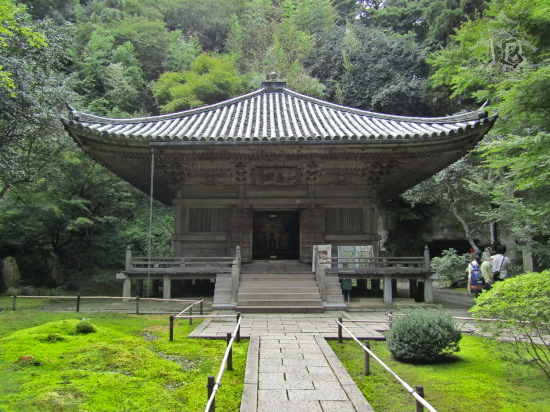
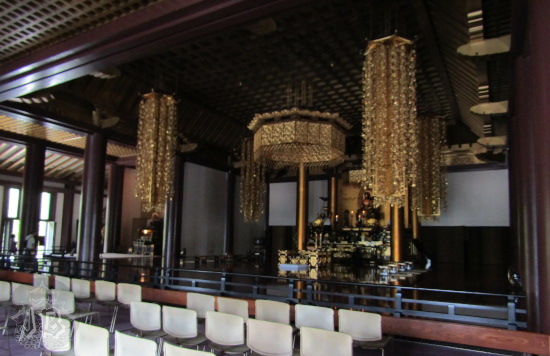
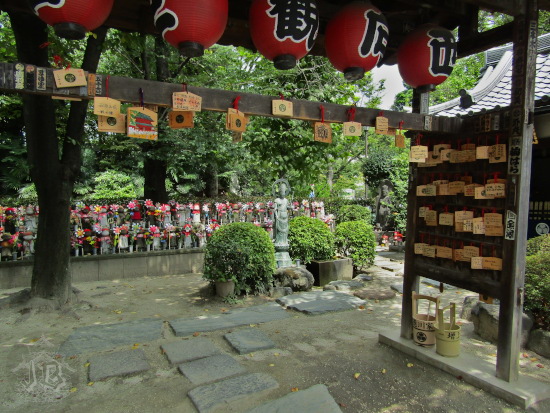
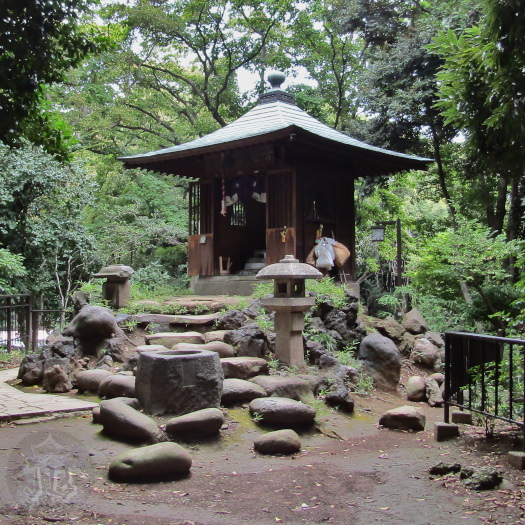
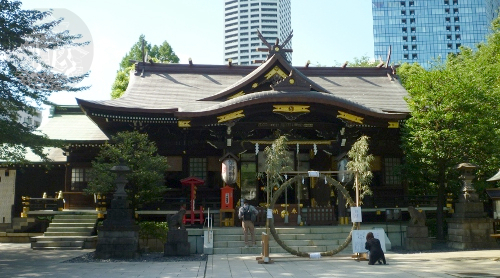
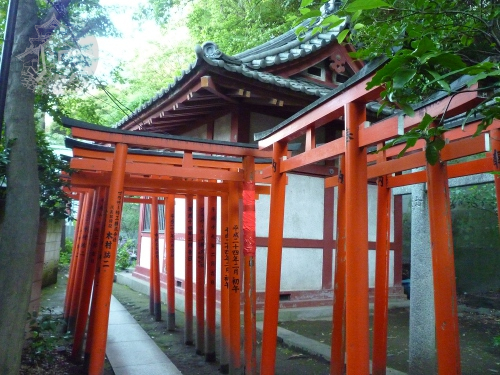
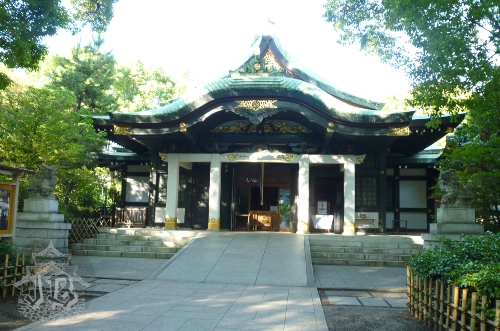
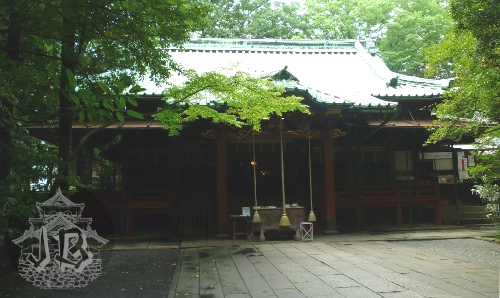
I spent the best part of the morning studying. I later has a quick lunch with T. who was going back to Spain soon, and departing for Osaka. I strolled down the rain to the Benten temple in Ueno and then headed off to class.

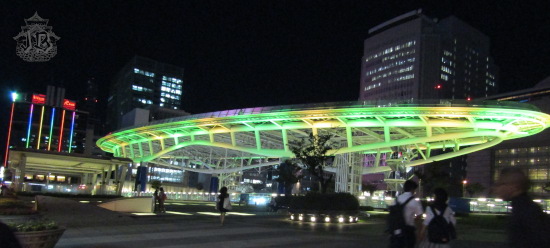
In the evening, I rushed to Tokyo station to catch the Hikari Shinkansen to Nagoya, a city I had never visited before. As there was a huge festival the prices for sleeping over Saturday to Sunday were crazy but what I organised worked well. When I arrived I walked by some pretty fun buildings, namely the Oasis 21.

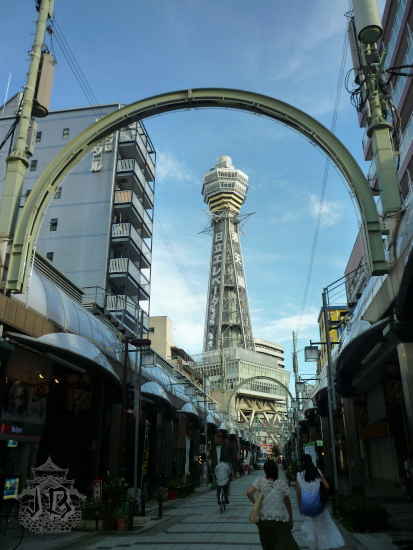
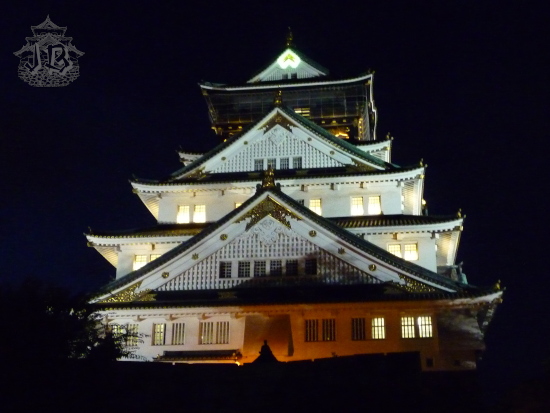
Then I visited Nagoya TV Tower or Nagoya Terebi To [名古屋テレビ塔], which claims to be the first tourist tower in Japan. The Tower was running some special on fish as far as I understood and you could watch the scenery and little koi carps. The tower has been designed ‘Lovers Paradise’ so there were lots of young couples. The Tower yielded to some cool sights of the city skyline, including Nagoya Castle, Nagoya-jo [名古屋城] and Hisaya Odori Koen [久屋大通公園], where the Tower and Oasis 21 stand.

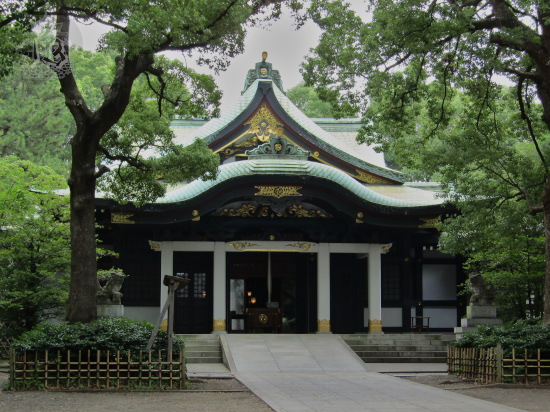
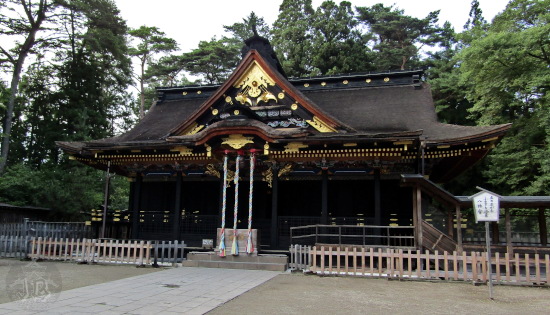
After the tower I took the train to check in my hotel and then took a stroll down the area. I wanted to get to the castle, hoping that I’d be able to see it up close at night, but no such luck and I found myself staring at a blank wall. But on my way back I found my way to Aichi Shrine and Nagoya & Toshugu Shrine (back to back) before going back to the hotel, taking a shower and zonking out (( _ _ ))..zzzZZ. But not before tracing a careful plan ( ̄Д ̄)ノ Even if we know plans rarely come together…

14th July 2016: Liar, liar, pants on fire (and Komagome II) {Japan, summer 2016}

The weather report had been announcing clouds all day. It lied. A lot. Seriously, both the JMA and whatever data an iPhone uses, they were way out of the way. See, I used these reports to plan an outdoors day visiting some parks, temples and shrines close to my area. This meant walking for a couple of hours, but there I went.

The first problem was that the weather decided that clouds were overrated. I did not think much of it at first, but it would be relevant later. The second was that GoogleMaps decided to join forces with the weather report and troll me.

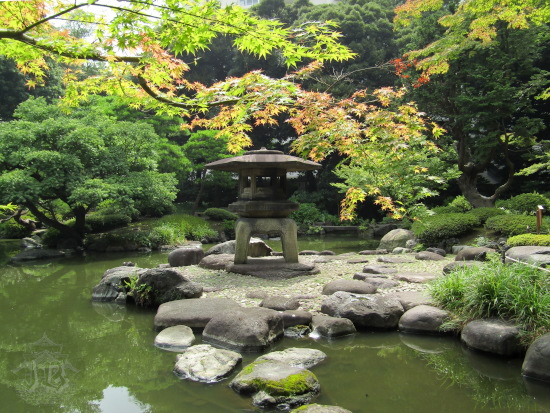
But let’s start form the beginning, and the beginning was the Kyu Furukawa Teien [旧古河庭園], a garden apparently famous for their rose festivals. No roses in July, but a very neat Japanese garden. I’ve never been much of an English Garden fan unless there are flowers, so I did not pay much attention to that part.

After the gardens I headed off towards the Oji [王子] area, checking out Hiratsuka Jinja, Takinogawa Park and Nanasha Shrine until I made it to the park called Asukayama Koen [飛鳥山公園], where for the first time this year I heard the cicadas singing like crazy. It’s officially summer in Japan, bugs dixit! It’s not a matter of the heat, the rain, or anything like that. In the end, the cicadas mark the time.

The park holds a few museums and In one of the corners Oji Jinja [王子神社] can be found. If Google agrees that it even exists. But alas, success in the end.

After an odyssey to find the Shrine and once again fight Google regarding yes, the Oji Inari Jinja [王子稲荷神社] exists, I managed to find the latter. Close to one of the crossroads I had been to before. Twice. Thanks, Google (-_-;)

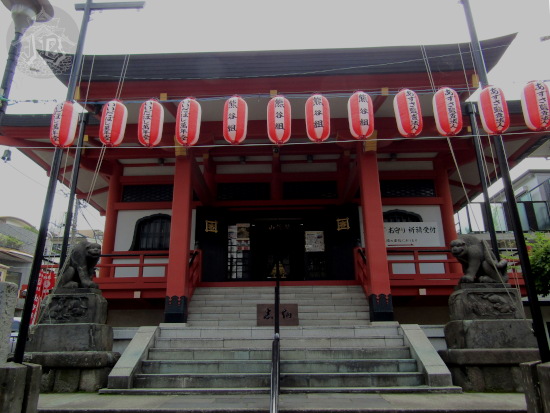
Then I decided to head off to where my academy is, Iidabashi [飯田橋]. My destination there was Zenkoku-ji [善國寺], which was surrounded for some reason by no less than four Spanish restaurants. I am not brave enough to try those but there was a nikuman shop that did catch my attention. I also made a short stop at the local Book Off in order to check it out and get OFF THE SUN for a few minutes. At this point I had just realise that I had been indeed walking around in the sun for three and a half hours and I was… Burnt. Quite so. Damn it.

But it did not end there. Nooo, why would it end there? Then it RAINED 雨雨雨. When I had to do my laundry and get it dry, of course, because the next day I was over to Nagoya and wanted to make sure I had clothes to wear. And I studied because I had an exam the next day, and the previous one had been disastrous.

13th July 2016: Here we go again! {Japan, summer 2016}

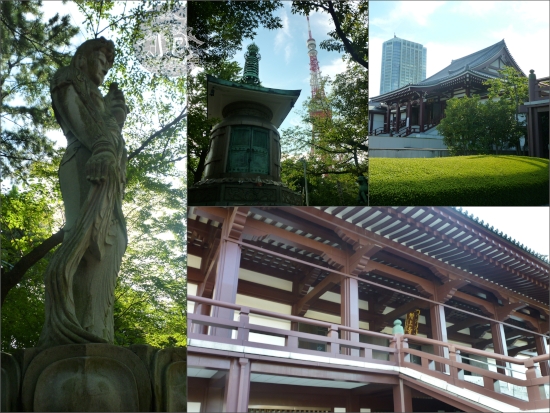
I am a creature of habits and I won’t deny that. I will however wonder how come my phone thinks about autocorrecting ‘gabits’ to Gackt, which is interesting to say the least. Anyway. On July 12th I realised that my 朱印帳 (しゅいんちょう) or seal book was lacking one of my favourite Temples in the World! So off I went to Zojo-ji [増上寺] with my newly-activated JRPass. I gotta make the most out of it because it was expensive, mkay? ( ̄^ ̄)ゞ

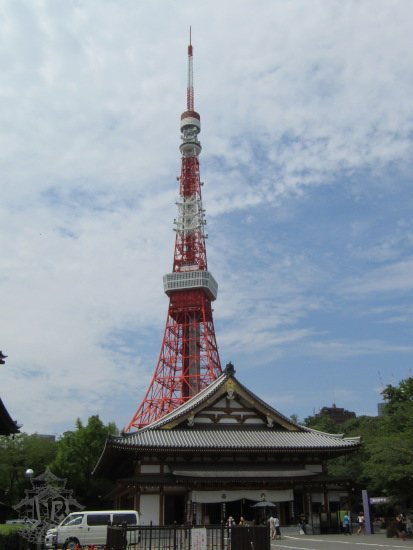
Anyway, off I went to Hamamatsucho and I had a very beautiful flashback to the first time I saw Tokyo Tower [東京タワー], coming from that station. A lot of things have changed since then. I wandered around Zojo-ji temple, Shiba Koen [芝公園] and the base of Tokyo Tower for a while.

Later, I headed off to Ueno because the previous day I had not eaten Ichiran Ramen and I wanted Ichiran Ramen. I went with time to be able to wait out the queue. Once again I freaked some poor kid out. This was staring to get tiresome.

Ichiran is a restaurant designed for people who eat alone, and you have a little ‘booth’ to do your thing. Some people find it outrageous/controversial but as a lone traveler I love it. And if you are not alone you just take down one of the booth walls and you’re free to talk to whomever you came with. And the ramen is quite nice. And hot. But the restaurant is cold even with the hot ramen and always being packed so I guess it is fair enough.

After lunch I went back to Ueno station to make my reservations for the trip I was planning along the weekend and I decided to go to Ikebukuro again to get a CD I had not bought the day before as I was not sure it was the one I wanted – and the Internet was not cooperating. Once again I had to brave Ikebukuro station and this time I kind of gotten things sorted out! Let’s see how long I manage to remember what to do. Then I headed off to class.

After class I walked over with T. to Yasukuni Jinja [靖國神社] to check the about-to-open Mitama Matsuri (festival), but we did not stay longer than the necessary to get some yakitori and be on our merry way.

10th July 2016: To the sea {Japan, summer 2016}

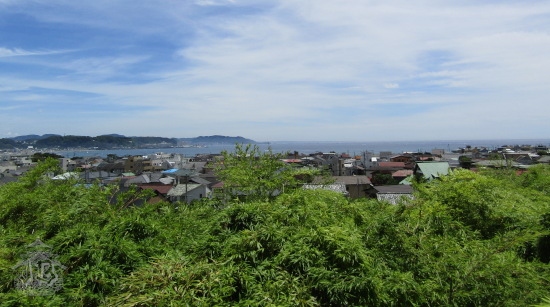
I was debating between Nikko and Kamakura, but when I woke up for some reason I felt more like Kamakura [鎌倉]. The day was as awesome as the previous one had been miserable and I headed off to Shinjuku to get myself an Enoshima-Kamakura pass.

Just as I had not liked the sales lady from the museum, the Odakyu sales lady was adorable. She cheered me up (≧∇≦) with her “Woah, you speaking Japanese surprised me” for me, which was quite sincere, by her eyes. After getting the pass, I headed off to the train and got ready for the trip. I was lucky because I could do both parts sitting down in preparation of what was to come. I know Kamakura/Enoshima, you walk a lot.

My first stop was Hase-dera [長谷寺], a temple I had not seen the previous time I had been there. They had a very pretty garden, and I really enjoyed the view and the buildings. It holds a standing Buddha, and they make yummy dango, which I tried.

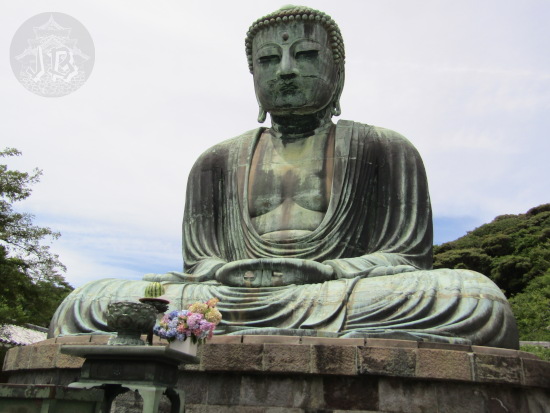
After that I headed off towards Kotoku-in [高徳院], which holds (or does not hold, as the building was long ago destroyed) the Kamakura Daibutsu [鎌倉大仏] (Great Buddha). As impressive as Nara is, I think I like this one more, as the serenity it transmits is quite amazing. Two university students came to ask me a few questions and they were horribly nice, they wanted to know how I knew Kamakura, and what was the best / worst about service in Japan. I think I broke their stats, but they treated me to a sweet.

I really wanted to go back to Tsurugaoka Hachimangu [鶴岡八幡宮], which is a Shinto Shrine in Kamakura, a bit away from the other two, so I used my unlimited-trips-in-the-area pass and went to the corresponding station. The shrine was just as I remembered. The fun part now is hunting down the Shrine and Temple seals. While I do love the omamori, the calligraphy is more affordable and keeps better.

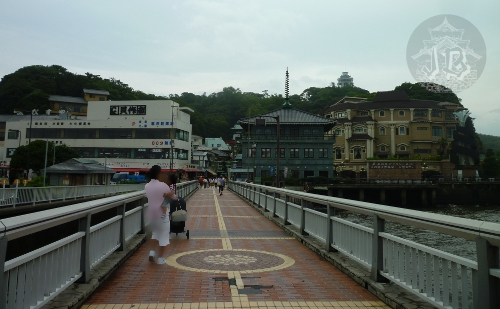
Finally, I decided to head off to Enoshima over one of the temples I was considering, just because I wanted to go to Enoshima. And Enoshima [江の島] delivered with the best view of Mount Fuji, Fuji-san [富士山] I’ve ever had. Repeatedly. Changing with time as sun set. And it was amazing.

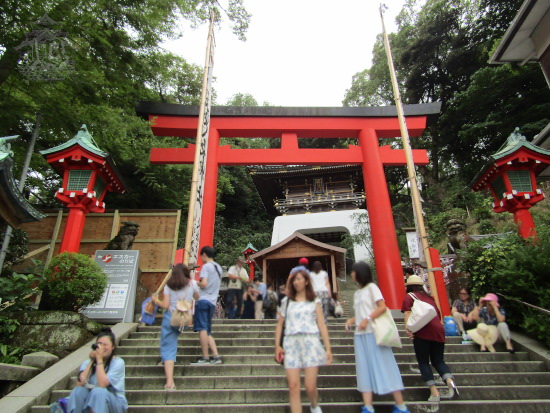
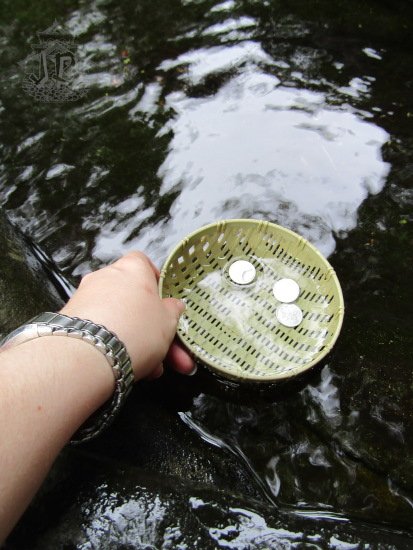
In Enoshima I climbed up to the Enoshima Jinja [江の島神社], I – you guessed it – got my calligraphy, and laundered money.

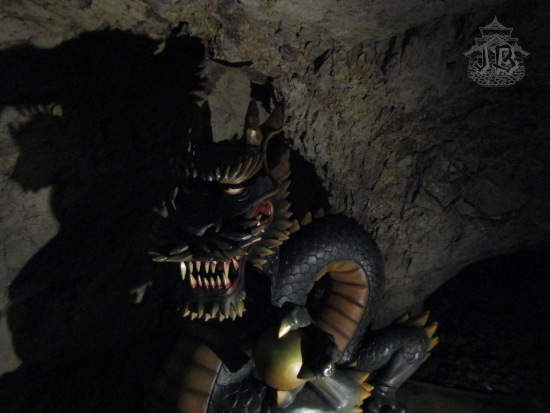
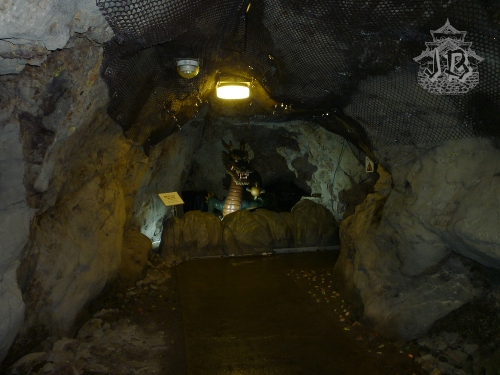
Then I walked around the whole rock until I reached Enoshima Iwaya [江の島岩屋], the Enoshima caves, to visit the dragon – an invoke him with a taiko drum, that you had to hit nikkai (twice) as the girls behind me informed me. They were also very impressed with my technique. If I got something from my taiko workshop, that was how to hold the baton and hit.

There is one thing I did not confess though, and that was that I miiiiight have skipped lunch that day (must see all the things? I ate dango and ice cream! And some yakitori!) so when I came back to Komagome [駒込] I stopped at CocoCurry and had a good dinner, because I was a bit on the ravenous side. Unfortunately, however, the ride back was standing, albeit it was good that I could leave the backpack on the floor.

9th July 2016: Rainy season is rainy {Japan, summer 2016}

Because yes, we’re in rainy season, and in rainy season, it rains, lots. Especially when I want to go to certain places. I hoped that the rain would not be too much, and headed off to Kawasaki [川崎] (yes, like the motorbikes) to check out a temple called Kawasaki Daishi (川崎大師) or Heiken-ji (平間寺, Heiken-ji)

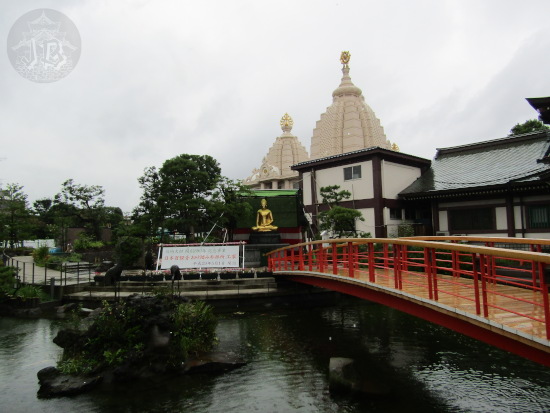
It was wet. There was some kind of child ceremony because there were a bunch of parents with very young babies braving the storm rain, while the kids (and occasionally their siblings) looked unimpressed or plain zonked out.

The only other thing for me to check out in Kawasaki were the Chinese gardens, but I decided that it was raining too much for that, so I came back to Tokyo [東京], and headed off to a shrine called Hie Jinja [日枝神社], in Chūō [中央], which I wanted to check out.
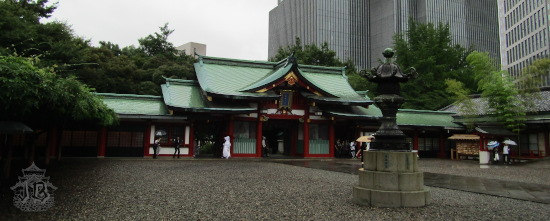
One of the most interesting thing of Hie Jinja is the way the torii is designed, with a sort of triangle on its top. It might be to deter wayward otoroshii, a creature from the Japanese mythology. Yes, this is important. As it was that it was raining. To get to Hie Jinja you have to climb a hill, as it could not be otherwise. In the rain, with my broken umbrella – because my awesome umbrella decided to stop being overdone and break, thankfully it was fixable, but not before I got home.
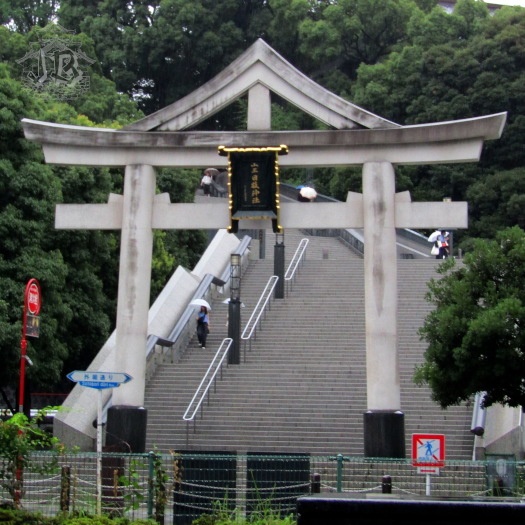
There was a marriage photo shoot in the shrine, and I was torn for the poor bride, having to walk in those clothes through the rain. I tried to be out of their way as much as I could, too. But kudos to the photographer for bringing a traditional umbrella which made the couple look awesome.

Tired of being wet, I decided to head out to a museum. I had two exhibitions I wanted to see, one of them in the Edo-Tokyo Museum, and the other one in the Museum of History and Science. I decided that I really wanted to se the former, just because I was feeling like it. It was an exhibition called ‘From Eerie to Endearing: Yokai in the Arts of Japan’ [大妖怪展 土偶から妖怪ウォッチまで], held in the Edo-Tokyo Hakubutsukan [江戸東京博物館], the Edo-Tokyo Museum, in Ryōgoku [両国]

This was the scenery of the first almost panic attack I caused. If you’re a visible foreigner in Japan, some people don’t want you around and they don’t want to speak to you, especially because you may require them to speak in English. This is a bit on the ridiculous side in the tourist industry, where you can be met with actual hostility at times. Japan, sorry to tell you this but you’re not ready for 2020. Point and case, the lady selling tickets in the Edo-Tokyo museum. She was literally paralysed for a moment, then she pulled back. Keep in mind, my Japanese is not the best thing in the world, but I said a grand total of six words, five if you count ‘onegaishimasu’ (please) as one “special exhibition, one ticket, please”. Straight forward. She was so much in a panic that she did not even hear me at first, it took her half a minute to realise I had asked in Japanese. When she asked me to repeat I just gave her the “yokai, one” and showed her one finger (to count!). She was so freaked out that I did not even get a brochure.

The exhibition has three main parts. The first one runs through the historical representation of yokai as supernatural beings, explaining old questions that humanity had (for example, what is the echo) or forming part of legends. It exhibits part of the Parade of the One Hundred Demons classic paints and scrolls, and a bunch of key ukyo-e in mythology, which I was very excited to see. Apparently, an huge bunch of Japanese people had decided that the museum was a perfect place to spend a rainy afternoon, too, and the exhibition was packed.

The second part dealt with the representation of the different worlds, especially the Buddhist ideas of heaven and hell, and the concept of ‘spirit’ or ghost (yurei) as opposed to a yokai. Out of these, my favourites were the umibozu and the Peony Lantern representations.

The final part was dedicated to ‘Yokai watch’, a contemporary anime series that explores the concept of cute yokai causing mischief in present days.

On my way back I dropped by Shinjuku [新宿] and the Book Off there. The number of acquired items was slowly climbing up, and I was still on budget!

Then I did my homework because I might fail at Japanese all my life but I will still try not to.
7th July 2016: Not fishy smelling at all {Japan, summer 2016}

Well this was a new experience, but it made a lot of things gain sense. The famous Tsukiji Market, Tsukiji Shijō [築地市場] is closing down this Autumn and relocating. One of the reasons cited is health issues, cut I can understand why they think that tourists are an extra issue. Even when trying to stay out of the way you are in someone’s way.

Something that keeps fascinating me about Japan is the amount of people working on tourist services that have problems with foreigners and wrinkle their noses when they see you approach. This does not go of course to the fishmongers who were doing their jobs but the lady in the info service when we asked for a map in English. After a while we found s coin locker for T**y’s backpack and I shamelessly threw my books in (≧∇≦)

The Tsukiji Outer Market, Tsukiji Jōgai Shijō [築地場外市場] is packed with little shops mostly oriented to people getting their daily fish, and a lot of kitchen appliances, especially knives. It was bustling with tourists in the way of everybody, and little Japanese ladies examining every post for what they wanted to cook that day. After a while we found our way to the wholesale market.

There was a shrine in the way. Of course it required a visit. The Namiyoke Inari Jinja [波除稲荷神社] is located in the corner between the two markets.

The Tsukiji Wholesale Market, Tsukiji Oroshiuri Shijō [築地卸売市場], was full of… everything ≧(゚ ゚)≦. Fishmongers seemed to have learnt to work their ways around the tourists because they did not even lose their half smirk when they avoided running you to your death with their lil machines. I guess that getting someone killed would screw the day’s sales, as it would be unsanitary. The most impressive thing were the tuna <・ )))><< cutting dealers, with their long knives. Tuna has to be cut in one go, else it ruins the piece. And in case you haven’t seen an actual tuna, we’re easily talking about a two-metre long fish, and fishmongers dealing with one-metre long loin piece. Very cool.

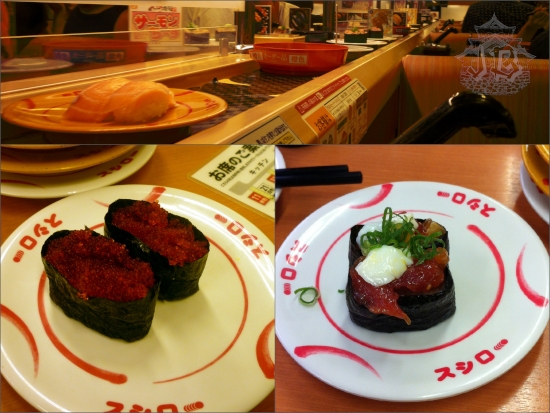
After snooping around for a while we headed off for kaizen sushi with super fresh fish. I felt a little guilty about drinking cola with it, but damn it was hot. Very hot.

From Tsukiji we dropped by Akihabara [秋葉原] and well, there is a Book Off there… Finally we headed off to Iidabashi [飯田橋], where aside from my school, stands Yasukuni Jinja [靖國神社], quite a controversial shrine which enshrines the souls of the fallen in the WWII, which unfortunately involves some of the people considered war criminals.

But as it was Tanabata, they were preparing for a matsuri, and I incorporated that into my plans. I got the shrine seal and a sunburn for my troubles, then I headed towards the school for air-con, I mean some hard work (≧∇≦) there was a test the next day after all and I needed to prepare for that.

One of the good things about my area was that I was on the Yamanote line on one hand, and I had a direct line to my school, so commute was good. After school I went back to the apartment to study because I had a test the next day – don’t ask how it went (≧∇≦;).

28th August 2015: Matsushima and Sendai {Japan, summer 2015}

The day started in Matsushima [松島], the Pine Islands, where there are… lots of pines. And temples. We paid the small fee to cross the bridge to the biggest island, Oshima [雄島] and headed off there, to just walk around it. There were pines and other trees, but I am no tree expert, so… I could identify the pines… However, there were nice views and it was a good way to start the morning, even if I was not feeling 100%, as I had a small accident coming out of the station that ended up with me sprawled on the floor. Not fun.

This bridge survived March 11, although a smaller similar one was destroyed. In general, the area was quite spared by the tsunami.

A walkable bridge with concrete ground and vermillion guards that crosses the bay towards a rocky island with small pines

View from Oshima into the bay:

A view of the bay. There are pine branches in the foreground, and two small rocky islands with more pines

After the main island, we visited a few of the temples around. First, Zuigan-ji [瑞巌寺], which has some really cool cave altars.

A standing Buddha in front of a cave sanctuary.

Entsuin [円通院] – Mausoleum of Date Mitsumune.

Main building of a temple. It's made of wood so old that it has turned white-grey

Back in Sendai, our first stop was the combini Ōsaki Hachimangū [大崎八幡宮], also known as the Black Shrine, as it was supposedly erected to enshrine the kami of war. It was ordered by Date Masamune, who was a very important figure in the history of feudal Sendai.

Shrine, built in black with golden decoration

Though we did not make it to Date’s mausoleum, we did see the sculpture erected in his honour up on the ruins of Aoba-jō [青葉城]. Here are the Date Masamune memorial on the ruins of Aoba Castle

Statue of a samurai, riding a horse. The samurai has a crescent decoration on his helmet. The horse is mid-step, with its front right leg bent

View of Sendai from Aoba Castle:

A view of the skyline of Sendai with a line of trees in front of it

Afterwards, we headed back to the station as we had to catch the 19.30 train, since we had an appointment in Ginza [銀座] at 22.00. We had a reservation for VAMPS Joysound special karaoke booth, which was normal karaoke, but in a room decorated with VAMPS stuff and a special video, along with some themed drinks. Just one of those cute fandom money-drainers activities.

The Vamps karaoke booth and theme drink

25th August 2015: Arashiyama & Nara {Japan, summer 2015}

Today was a delayed day, actually, as I apparently took over the plans I made last year when VAMPS had the secret live and I skipped back to Tokyo to attend to it. Then again, as I had changed plans from yesterday to today, everything came a little jumbled.

After a nice chat with the Tourism Office lady – in broken Japanese, as I did my best, the fist thing I set off to do was visit the Arashiyama bamboo grove in Arashiyama Chikurin no Shōkei [嵐山 竹林の小径], which is a nice little town adjacent to Kyoto (yep, not a neighbourhood. A town all on its own. That’s Japanese urban planning for you). I had been wanting to visit the area for a while now, and finally made it there. After a nice detour – because taking the wrong turn in Japan always yields to something interesting (then again, people, placing sings of ‘bamboo grove this way’ right behind the map is not helpful, Japan) – and a couple of temples I ended up where I wanted to be, and boy was it impressive.

In the middle of the bamboo grove we find Nonomiya Jinja [野宮神社], a nice little shrine which was at the time overridden by Chinese tourists (that happens, apparently, when you visit a shrine dedicated to marriage).

After a couple of hours wandering the bamboo grove I head back to Kyoto station and once again took the Nara line, only this time I would not be stopping in Inari as I have done before, but took the express to Nara [奈良] itself, which was something else that had been on my list for a while.

Yet another nice Tourism office lady, and way too many Spanish tourists later, I was on my way towards Nara Kōen [奈良公園], Nara Park, where my first impression was one of the things that makes Nara famous… deer. Hundreds of ‘wild’ deer which chase after tourists to get shika senbei (deer crackers) and eat maps when said crackers are not available. Very cute, very… adamant XD

But not my main visiting goal, never mind the creepy American dude who wanted to take a picture of me with them. My goal was visiting the to visit Todai-ji [東大寺] temple, and Daibutsu [大仏] (Giant Buddha) it hosts. Todai-ji did not disappoint me at all. It is a very solemn, very special temple and I enjoyed it.

I wandered around the Nara complex for a while and visited Kofuku-ji [興福寺] on my way back. They have a very famous Ashura sculpture, and a thousand-arm Buddha statue, but no pictures allowed, so I can only show you the exterior.

After some dinner on my way back, I headed off for Kyoto and the hotel which I was to leave the next day to head off to Kobe.

19th August 2015: Kickstart in Minato (not Ueno for a change) {Japan, summer 2015}

After I don’t want to think about how many hours of travelling, a quite narrow connection and too many superhero films on the plane, I landed at Narita and got my suitcase. No problem through customs though I was quite surprised when the guy tried Spanish with me. That took a bit to register.

I had ordered my SIM card online, to pick up at the post office at Narita Airport, and then I had my first run-in with Japanese maps. Ah, the lovely Japanese maps. You gotta love them. Once located where the hell I was and which of the corridors I had to wlak, picking up the SIM was easy and efficient.

After that, I got my JR pass and my NEX ticket at the Narita JR office, recharged the Suica and and I set off towards Tokyo. During the NEX trip I took the time to exchange SIMs and get my internet connection up and running so I did not get too lost around. My original plan had been runnign to the Natural History Museum in Ueno, but the weather was nice and there was rain announced for the next day, so I changed plans on the fly.

I left my suitcase in Tokyo Station because I was not sure that it would fit in the coin lockers and there is a manned storage there. Fortunately, it did fit, and I set off towards Minato [港] to say hi to Tokyo Tower [東京タワー], Zojo-ji [増上寺], Shiba Koen [芝公園]. Just because I could.

I really like this view of Zojo-ji and Tokyo Tower.

The altar in Zojo-ji (sneaky pic):

Ema tablets and Mizuko belonging to Zojo-ji:

Small Buddhist altar in Shiba Koen, Nyoirinkanzeon [如意輪観世音].

Kumano Jinja [熊野神社]:

Shiba Koen view, along with a certain tree I really like:

The cicadas’ singing was deafening, but welcoming, and I spent the morning and early afternoon in Shiba Koen and the lower / free levels of Tokyo Tower, also getting used to my new camera – which I love, by the way. Afterwards I headed off to pick up my luggage and… well no, that’s not true.

As it was getting hot and I still had an hour to kill, I dropped by Akihabara [秋葉原]. It is not my favourite part of town but it was quite close to where I was and there is a nice Book Off, where my first shopping of the trip took place. I love the new ‘maxisingles’ section, makes everything so convenient.

Then I did head off to pick up my luggage – and had a bit of trouble locating my coin locker because Japanese stations have levels. Urgh. Afterwards I did head towards Satte in Saitama, as would be staying with a friend there. Then there was some food, and one of those flavours that I always associate with Japan – the strange veggies / fruits juice they have at the GUSTO drink bar. And then bed because excitement can only compete against jumping over half the world for so long and there was stuff to do the next day. Mainly fossils.

23rd August 2014: Tea Ceremony, Imperial Gardens and Sushi! {Japan, summer 2014}

For my last day I had thought about trying to go to see Gackt as Uesugi Kenshin in Joetsu, but (un)fortunately I realised late Friday evening that he would not be there. Good that at least I noticed before I was there and had spent four hours on the train XD

Thus I talked my friend into coming to a tea ceremony with me near Tokyo Station in Chiyoda [千代田]. This was very fun because the tea-lady (Tea master? Tea mistress??) allowed us to participate and actually bat the matcha to make it bubble up. There are no photographs of that, but I have one of the delicious takoyaki we snacked on as we were waiting for our timeslot, along the guy making them.

Then we headed off for the Imperial Palace East Gardens, Kōkyo Higashi Gyoen [皇居東御苑], which I had not been able to visit last year. The gardens run alongisde the Imperial Palace and hold the ruins of what used to be the Edo Castle, Edo-jo [江戸城].

Then she indulged me in a very stupid desire I had, and that was having something sitting down in the Shibuya Starbucks, and taking a few pics from there. It was silly but it made me intensely happy.

As we headed back we rode by surprise fireworks.

The day ended with sushi, and the trip too. It was over for this year, and I don’t know when I’ll come back, but I know I will. Somehow.

It has to happen.

22nd August 2014: Re-discovering Zojo-ji {Japan, summer 2014}

After spending the morning with D****e waiting for her suicase to be picked up, we headed off downtown Tokyo. We would separate for a few hours and then meet up to go visit a Japanese friend.

I decided to spend my time revisiting the Zojo-ji [増上寺] and Tokyo Tower [東京タワー] area, because the last time I had passed by I had glimpsed a part of Shiba Koen [芝公園] park that I had not seen before and that seemed open. It actually was, and I got access to the back of the temple. The graveyard was closed down, so I only snooped over the fence.

After this I met with D****e again to go to our Japanese friend’s house, and she made us curry! Actual Japanese homemade curry!

Oh yeah, and we watched VAMPS videos and she gave us a lot of food-presents!

21st August 2014: The Not So Lucky Cat did turn lucky! {Japan, summer 2014}

Last year I headed off to Gotoku-ji [豪徳寺] a couple of times, the Temple of the Lucky Cat, in Setagaya [世田谷], but unfortunately did not work out. This time I finally was able to find the Temple open and it was good because while 10 minutes away from where I was staying away last year, it was a good couple of hours this time.

The lady in the gift/prayer shop was very nice and praised my Japanese (LOL), but we managed to understand each other and I got my charm (and an English brochure too!), she got her money and now I finally got my waving cat at home! (Which technically you’re not supposed to do, but keep my secret).

After that I headed to Shibuya [渋谷] to visit Tokyu Hands, which has lots of shiny, but is tremendously expensive, and then dropped by the Tsutaya as two singles I was interested in were being released that day. I ended up buying a bunch of magazines there because I knew it was going to be my last shopping visit. It always amuses me that they double-check with you whether you’re sure if you’re buying two equal things. But yes, I knew someone who needed a Rurouni Kenshin special magazine in her life XD.

Here you have the VAMPS and Tackey and Tsubasa’s single stands.

18th August 2014: In Osaka, we stand on the right {Japan, summer 2014}

Armed with my JR pass I headed off to Kansai via Shinkansen. I would be staying in a Kyoto hotel for a couple of days, but my first stop was Osaka [大阪]. Hereby, by the way, I need to remind myself that next time I have to do Kobe. And get a hotel close to Fushimi Inari so I can bloody make it to the top for a change.

Arriving in Osaka, once again, I felt an overwhelming sensation of being home, and that was once again the feeling I got upon remembering that I was to stay on the right on the escalator (in Tokyo, you keep to the left). My visit was carefully planned, even considering transportation times and queues. Yes, it was not the most… travel efficient one if you look at a map, but had to be done like that in order to work, time wise.

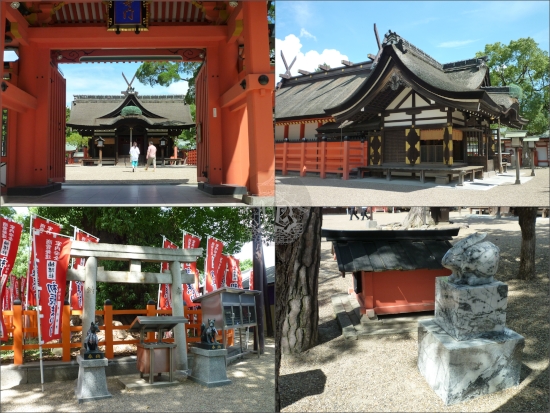
My first stop was at the Sumiyoshi Taisha [住吉大社] compound. Sumiyoshi Taisha is one of the oldest Shinto Shrines in existence, so of course I had to go there this time over.

After the shrine I headed off to downtown Osaka to visit the Ōsaka Rekishi Hakubutsukan [大阪歴史博物館], the Osaka Museum of History which features exhibitions depicting the evolution of the city from ancient times to the occupation period and the start of Western influence.

Although this was close to Osaka-jo [大阪城] (Osaka Castle), after I was done I headed back to the train station and backtracked half the way I had previously advanced in order to go to Shinsekai [新世界], the New World. there was something else I had pending here, and that was going up the Tsutenkaku [通天閣] Tower to get a view of the city and, of course, to visit Billy Ken, the God of Things as They Ought to Be, and his sidekicks.

After that I headed back to Osaka Castle area to be up when the sun set, and thus be able to see it lit up, which I had not managed the previous time I had been there either.

Finally I took the Shinkansen to Kyoto and checked in my hotel for the night.

17th August 2014: Meiji, more Odaiba, Rainbow Bridge {Japan, summer 2014}

I started the day heading off towards Yoyogi Kōen [代々木公園], the park where Meiji Jingu [明治神宮] stands. I got my fortune in the shrine, and apparently, it shall be excellent from now on (and wouldn’t that be awesome). I got an English fortune and it came with a tiny Manekineko (lucky cat) and told me that my life was going to get better. I am going to cling to the thought. (Plus: I did not get dengue fever from my visit to Yoyogi Park).

After that I took a stroll down to Shiba Kōen [芝公園] and Zojo-ji [増上寺] in Minato [港], just because I could, but I had to move on before long. I did have the time to say hi to the mizuko, though, before I had to leave.

I met my friends for ComiKet [コミケット] in the convention centre Tokyo Big Sight, in Odaiba [お台場]. Comiket is reportedly the largest amateur comic convention in the world.

ComiKet was disappointing, mostly because it was insanely crowded, and we decided to make up for it walking back to the main Tokyo area crossing the Rainbow Bridge [レインボーブリッジ], which was an amazing experience. Not only the views, but the whole walking on it… well, within it might be more appropriate… was great, and I am very glad I got to do it.

The day ended in Ikebukuro [池袋] eating okonomiyaki and monjayaki (with some sides because huuuuungry), which was quite yummy, although I have decided that I prefer okonomiyaki.

5th July 2013: Enoshima {Japan, summer 2013}

Enoshima [江の島] is a bridged island not far from Tokyo where there are three shrines that have been merged into one for convenience, a local dragon legend and an asphyxiating hot and humid weather. It was also the last stop for this trip.

I guess that’s why the local rhythm is so chilled:

Enoshima Iwaya [江の島岩屋], the Enoshima caves, are beyond amazing.

The legendary dragon, which roars when you get close and produces flashlight when you clap your hands.

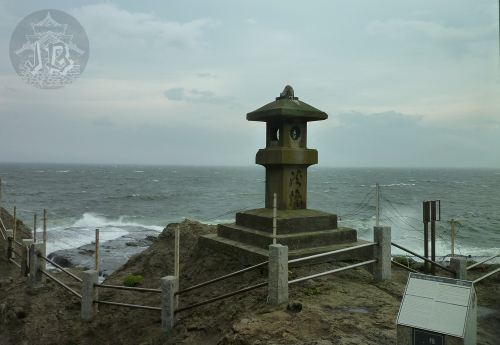
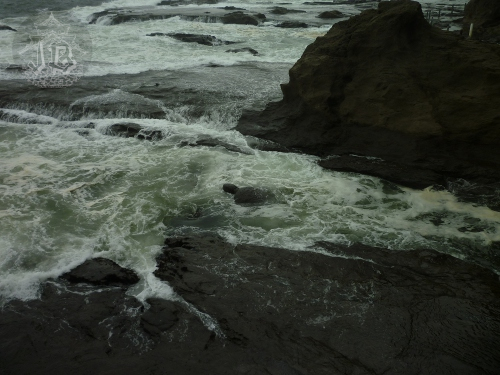
There was a bit of wavy weather due to wind, which allowed for a couple of good pictures of the seaward area:

Including the “turtle rock”, even in high tide. You just need to know how to count the wave frequency to know when the water is going to retract enough to let you see it ^_~

It was so windy that at points it was difficult to keep the camera straight for pictures, but we also visited Enoshima Jinja [江の島神社]

Well, the actual last stop was a bunch of Shinjuku [新宿] Book Offs but… don’t tell anyone XD. Then, the next morning I was off to the airport to go back home, fortunately the flight was much, much better.

1st July 2013: Wandering on a Monday {Japan, summer 2013}

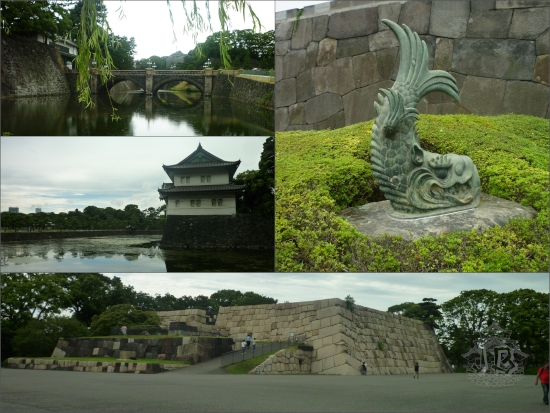
Many national places like museums are closed in Japan on Mondays, so I thought I would visit the Imperial Palace East Gardens, Kōkyo Higashi Gyoen [皇居東御苑], which are considered a public park and should therefore be open, right? Wrong. Closed too. Thus I got a few pictures of… the moat and wall XD

I decided to head down to Yoyogi Kōen [代々木公園] and Meiji Jingu [明治神宮], as it was a place I enjoyed a lot last year and was closer than most my other options – and bound to be open. I took a few pictures I could not because it was raining in 2012, among them one of the daitorii up.

I met with a friend in the Minato-ku area, as Tokyo Tower [東京タワー] is a good meeting point and I still had to see Zojoji open. It was finally a success and I got an awesome omamori that turns bad luck into good luck (summer special, too!). What, you thought I had gotten over my omamori liking? You thought wrong XD

Finally I headed back to Roppongi [六本木] to meet with D****e and try the Roppongi Hills [六本木ヒルズ] observatory again, which was a success this time:

27th June 2013: Shinjuku, Ōji and Ikebukuro {Japan, summer 2013}

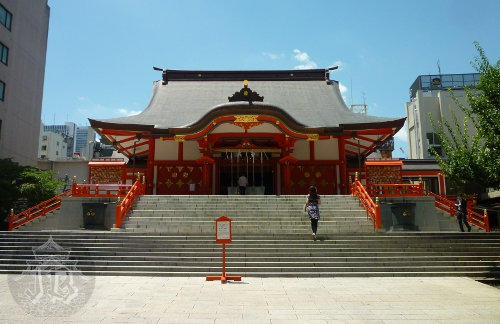
One of the fun things about Tokyo is that combination of modern and traditional that you find merged in quite a bit of harmony. Take for instance Shinjuku [新宿]. When one thinks of Shinjuku, one imagines skyscrapers and neon lights, but just a few minutes away, you find Hanazono Jinja [花園神社]:

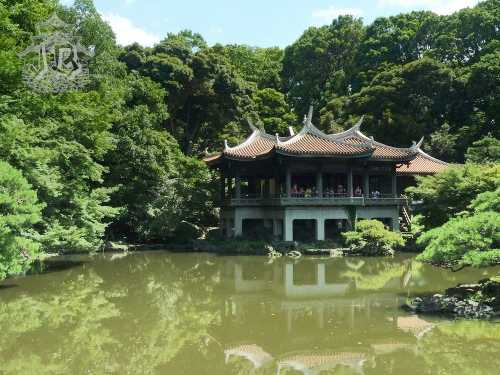
Five minutes away from the station there is Shinjuku Gyoen [新宿御苑], which is huge, and holds small wonders like this, Kyūgoryōtei [旧御涼亭], or Taiwan Pavillion (Taiwan Kaku [台湾閣]):

Of course, there are lots of skyscrapers in the Skyscraper District:

There is also this sculpture:

And yet another shrine, Shinjuku Juniso Kumano Jinja [新宿十二社 熊野神社]:

After Shinjuku I went to Ōji [王子] to see the Ōji Inari Jinja [王子稲荷神社].

And just the Ōji Jinja [王子神社]:

Then I headed to Ikebukuro [池袋] where we had a reservation at Swallowtail for 80 minutes of indulgence, and hell did we enjoy it XD”””

25th June 2013: The Not-so-lucky Cat Day {Japan, summer 2013}

I set off to find Gotoku-ji [豪徳寺], the Temple of the Lucky Cat, in Setagaya [世田谷]. It was easily found from the station following the train racks. Unfortunately two unlucky things happened: it started raining like crazy and the temple was closed down. And it is not like I did not find the right entrance, I did. It was still closed down.

As it kept raining cats and dogs (oh, so much pun) I decided to find myself something under cover to do, so I headed off to the Edo-Tokyo Hakubutsukan [江戸東京博物館], the Edo-Tokyo Museum, in Ryōgoku [両国]. According to their webpage (here),

The Edo-Tokyo Museum was founded on March 28,1993, as the place where visitors come to learn more about Tokyo’s history and culture , and which also serves as a projection onto the city and the living of the future. In the Permanent Exhibition area, there can be found original and replicated exhibits, as well as large-scale models, faithful representations of their originals, which have been reproduced after painstaking investigations and research.

Here’s a ship:

Inner area of the reproduction of an Edo house. Damn I love tatami mats:

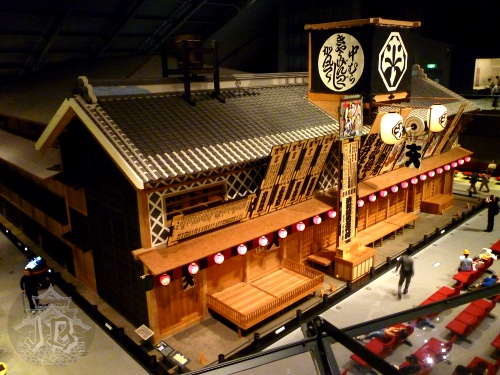
Kabuki theatre, scale 1:1:

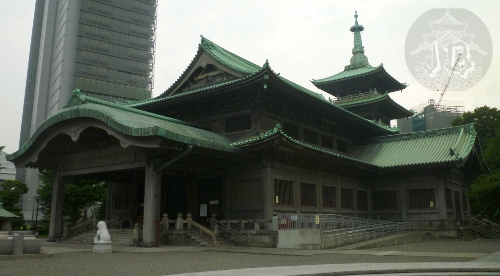
When I came out it was not raining anymore, so I headed out to Yokoami-chō Kōen [横網町公園], where the pagoda of this building got my attention – I latter discovered that it is Tokyo-to Ireido [東京都慰霊堂], the Tokyo Metropolitan Memorial Hall, a shrine to honour those who died in the 1923 Great Kanto Earthquake. Unfortunataly, I ran out of battery in my camera in the park.

The day ended with a trip to Akihabara [秋葉原] to a particular cafe, which unfortunately had been closed down. We made up for it in the nearest Book Off though, and went to Shimokitazawa [下北沢] for Avocado Burger.

24th June 2013: Less-known Tokyo Shrines {Japan, summer 2013}

Most of Monday was spent wandering around Tokyo [東京] trying to find my way between shrines, since as you might have suspected, I like those. Akasaka [赤坂] was the first stop of the day to visit Nogi Jinja [乃木神社], which I managed to find even if I had missed all the landmarks that should have led me there.

As I headed towards Roppongi [六本木] for my next stop something went wrong. The station I was supposed to find was wrongly marked on Google maps, or another exit was marked or… I am not sure (looking back, probably a signal disruptor). My route ended up being a bit meandering. I crossed Tokyo Midtown [東京ミッドタウン]’s Hinokicho Kōen [檜町公園].

Once in Roppongi I took another detour (this time it was my own fault though XD) to Hikawa Jinja [氷川神社], which is one of the most creepy places on this earth. I liked it, but it did give off one hell of an eerie feeling.

After this I headed down the Minato Ward where the Tokyo Tower can be found. There I was to explore around for a few things, including Atago Jinja [愛宕神社], which was having a matsuri and thus crowded.

On my to-find list was, among other things, this mini-Inari shrine:

Then I headed down to Shiba Koen [芝大公園], Zojo-ji [増上寺] and the Tokyo Tower [東京タワー], just because I could.

I was to meet D****e back at Roppongi [六本木] to go up to the observatory in Roppongi Hills [六本木ヒルズ], but it did not pan out due to weird closing hours. However, we did manage a cool shoot or two of the Tokyo Tower lit up and the supermoon next to it.

We walked to Shibuya [渋谷], where we made a stop at Book Off. Money was spent XD

22nd & 23rd June 2013: Odawara and Hakone {Japan, summer 2013}

One of the few perks about a tectonically-active area is the volcanic landscapes, and Hakone has plenty of those. We headed off to Odawara [小田原] early on Saturday morning to visit the local Castle, Odawara-jō [小田原城].

Then we headed off to Ashi no Ko [芦ノ湖], Ashi Lake, which formed in the caldera of a supervolcano after a huge eruption millions of years ago. We crossed the Hakone Sekisyo [箱根関所], the Hakone Checkpoint, which back in time prevented undesired people from moving around – which meant anyone who was not friends with the shogun.

We made it to the city of Hakone [箱根] later in the day. There, we visited Hakone Jinja [箱根神社], which has a torii set within the lake itself. This torii is called the Torii of Peace, Heiwa no torii [平和の鳥居]

Then there was onsen – Japanese hot springs. No pictures of that XP.

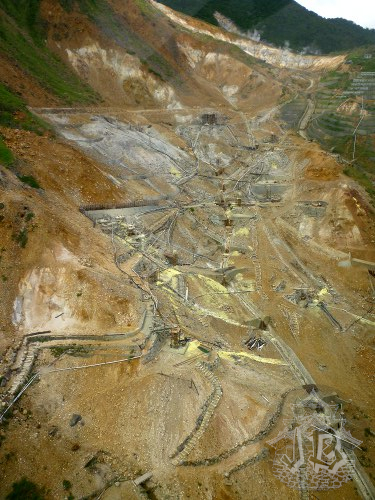
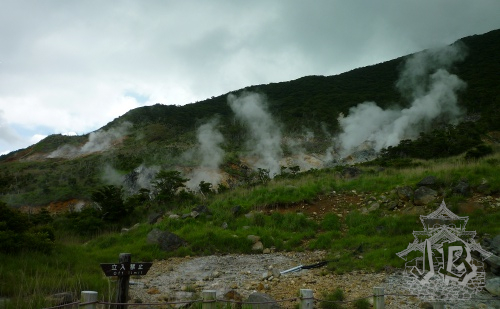
The following morning we went up one of the mountains, to an area called Ōwakudani [大涌谷] via murderous device called the Hakone Ropeway [箱根ロープウェイ] to watch the sulphur mines, the volcanic gases eruptions and to eat the famous black eggs, kurotamago [黒卵], which are normal eggs cooked in naturally-boiling sulphurous water puddles.

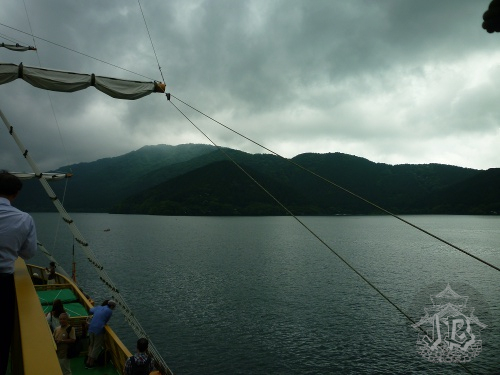
Finally, we crossed the Ashi no Ko in a “pirate ship” before heading back to Tokyo [東京] to karaoke the last hours of the weekend away. Unfortunately it was too cloudy to see the supermoon.