July 2nd, 2016: Starting off with the right (bruised) foot {Japan, summer 2016}

I have to admit that even if we took off late this was the smoothest flight from Europe that I’ve had to Japan. We left Frankfurt with about an hour’s delay and arrived about 40 minutes late. However, best landing ever. The plane was cold, but I am not going to complain considering the time that the heat made me sick. I prefer huddling up in the blanket. I kind of slept for a few hours, which was good, but I really don’t like when they just tell you to put your window down because it’s bedtime. Oh well.

This trip, I have been showing some of Tokyo to T**y, so a lot of the ‘we’ that skip refer to him and me.

The first day was a bit of a bit of everything one, and even a week later I’ve got bruises from hurling the suitcase up and down the stairs. After lunch with B**** in Shibuya [渋谷] (to get my Internet from her, too), I headed off to Shinjuku to get my keys. This time I was staying for a month and I could not impose for that long on any of my friends so I decided to rent a small apartment via an agency named “Sakura house” which rents places to foreigners for a long or short stay in Japan, starting at one month. As my stay was 28 days, it made sense to use their services.

Sakura House is located in Shinjuku [新宿] and that is why I headed there. The procedure was completely in English, and not difficult, but long, as it included all the specific info for an apartment rental. It is not as quick as checking into a hotel.

The whole process involves reserving a room online and paying a deposit, then signing a contract and paying at least the first month at the place. Afterwards they give you your keys, give you specific instructions and then you’re off on your merry way.

I was staying in an area called Komagome [駒込], 15 minutes away from Ueno and 20 away from school. Right downtown, and what I spent in location I would save on transport, or so I hoped.

After signing and getting my keys, I took T**y to his hotel and we got horribly lost on the process. In the end it all had a happy ending thanks a nice car park guard and after checking him in, we headed off for sushi and karaoke with B**** (^_^v)♪.

After that, I braved the Yamanote on my own to get to Komagome, and was lucky to get my station exit right, so I could arrive home in good time to have a shower and get some sleep because the next day I had to wake up early.
22nd May 2016: Kabuki at the CBA (Madrid, Spain)

I made a short escapade to the theatre Teatro Fernando de Rojas in the Círculo de Bellas Artes, in Madrid. It was my first time watching kabuki [歌舞伎], a type of Japanese theatre. The play was called Tsumoru koi yuki no seki no to [積戀雪関扉], something akin to “The Snowbound Barrier” and translated into Spanish as “En los límites de Osaka, bajo la nieve del amor” (In the Outskirts of Osaka, under the love snow). It is a dance-drama kabuki written in the 9th century, and deals with the spirit of a black cherry tree turning into a courtesan to extract revenge. Before the play, there was a small conference to explain some details about kabuki and that was really interesting.

Afterwards I just had to run for the trains so… no much time to hang around.

14th May 2016: Ikebana & Taiko in Madrid (Spain)

I went to the Royal Botanical Garden Real Jardín Botánico in Madrid because they were holding an exhibit of Ikebana and Japanese culture “X Gran Exposición de Ikebana y Semana Cultural Japonesa”. There were several activities, and I wanted to watch the ikebana and listen to the taiko players.

I was very amused when it turned out you could actually attend an ikebana class. Ikebana [生け花] is the Japanese art of aranging flowers, and it is one of the three classical Japanese arts of refinement (the other two are calligraphy and tea ceremony, I’m doomed).

To my surprise, the ikebana scene in Spain is heavily dominated by elderly ladies who take the whole thing Very Seriously ™, so in the end the workshop was more like two of them giving instructions to each attendee and one of them just taking the flowers from you and rearranging them if you failed to heed the instructions within a couple of seconds. It was interesting though, and behold my creation:

They almost made me late for the taiko – Japanese drums – demonstration, which turned out to also be a workshop, my first time playing the drums. I’m not that good at that one, either, but let me tell you better than the flowers…

Afterwards, I wandered about the rest of the exhibition before I headed off… and this sounds really fast, but it was a good half day!

2nd April 2016: Círculo de Bellas Artes & Tsugaru-shamisen music (Madrid, Spain)

Círculo de Bellas Artes (CBA) is a Spanish cultural and artistic association founded in 1880, and they had partnered with The Japan Foundation to hold a concert by Kenichi Yoshida [吉田 健一], a famous Tsugaru-shamisen [津軽三味線] player / artist.

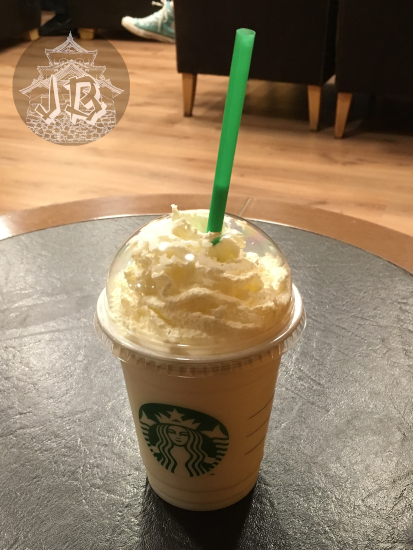
I got to Madrid in the late afternoon, with enough time to get to one of the most hidden Starbucks in the city, which was rather crowded as it was Saturday. Fortunately I found myself a table to spend the extra time (public transport transport paranoia, maybe. But it’s not paranoia if they’re really after you and you have been stuck in Spain commuter trains for hours already). And well, a Starbucks a year and all that… And I mean, I was planning to skip dinner so a Vanilla Frappuccino would keep me going.
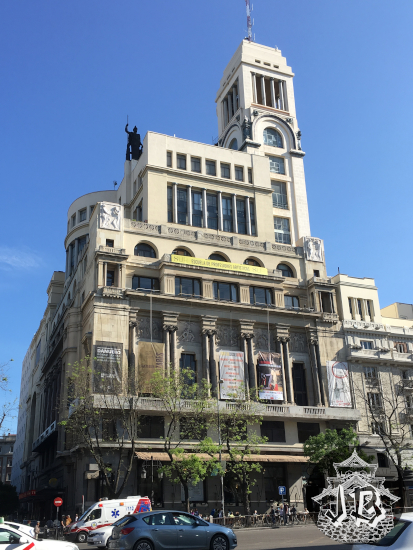
The concert was to be held at the Círculo de Bellas Artes building, located in downright in the middle of Madrid. It was designed by the Spanish architect Antonio Palacios and erected in the early 1920s. From the outside, I had always thought it looked pretty weird.

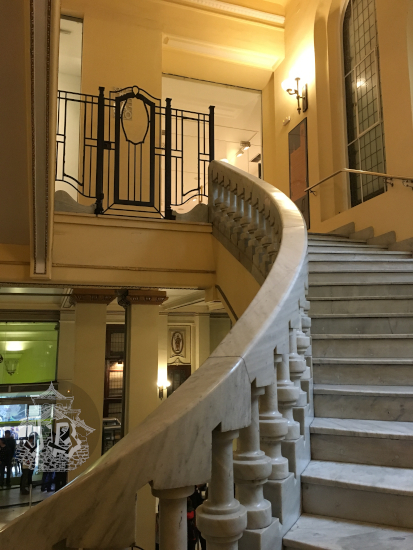
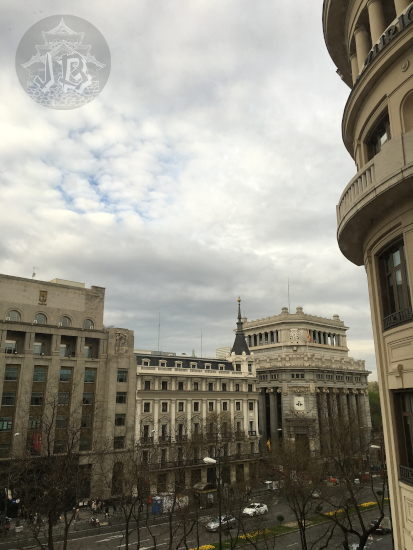
Inside, however, it was a different feeling. I had never imagined the inside of the building was going to be this neat! The CBA Headquarters has a neat staircase, an impressive ballroom, and a reportedly-cool observatory at the top. Unfortunately, getting to the observatory required lining and I was not willing to do so either before or after the concert. However, I did get some views from the second-floor windows!

The concert was in the inner theatre Teatro Fernando de Rojas, a fully-functioning theatre on that second floor, with about 400 chairs, and I had got a fairly good seat so I was happy and could sneak up a couple of pictures.

The concert in itself was amazing. Kenichi Yoshida, the younger brother in the Yoshida Brothers band, comes regularly to Spain to teach shamisen – a classical Japanese string instrument – in Barcelona. Oftentimes he makes the most out of his time and organises recitals and other activities. The concert was a mixture of old and new melodies, played along some drumming. The concert lasted for about an hour, and it felt very short. As Yoshida is a frequent visitor, he can speak a tiny bit of Spanish, too, and he tried that. It was a lovely touch.

24th – 27th March 2016: Easter in Barcelona (Spain)

I think this has been the first time I’ve been to Barcelona without a concert. However, one of the first times I did take a long touristing tour, so this time round my friend and I took it rather chilly – in the literal sense. As we were there there was a drop in temperature and I had to run to get myself a long-sleeved T-shirt.

24th March: Gaudí afternoon

Through different means and from different origins, my friend and myself arrived in Barcelona at around the same time mid-afternoon. We met at the station and dropped our things off at the hotel, then we took the underground towards Monte del Carmelo, Carmel Hill, where Parc Güell, the Güell Park, stands. The park, which was supposed to be a urban area originally, was designed by Antonio Gaudí. It became a Unesco World Heritage Site in 1984.

Visiting some areas of the park is charged, but the whole park is accessible starting in the late evening. We decided to climb up first and then visit the paid-but-free area. Thus we got to the summit of Carmel Hill and saw the Turó de les tres creus, the Three-Cross hill, that offers a great view of the city, including the Tibidabo area with the Cathedral and the amusement park.

We went down and we walked into the architectural area. Although there is no artificial lighting in the area, as the sun went down we were treated to a bit of a magical area, also away from the tourist crowds.

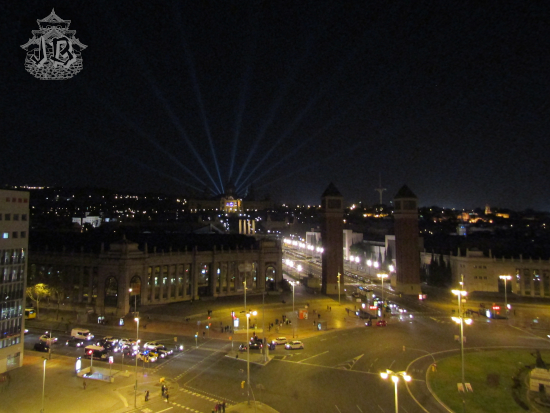
We had dinner at Arenas de Barcelona, the old bullfighting ring now turned shopping and dining centre, then we went up to the roof for some night views.

25th March: Gaudí morning & Gaudí night

We woke up and had breakfast – coffee inception!!

Then we headed off to see the Casa Batlló, the Batlló house, one of Gaudí’s Modernist masterpieces. It is also called the “house of bones”, and it’s kind of wobbly and organic. The roof is designed to look like the back of a dragon. An interesting detail is that the building was not really erected on Gaudí’s orders – it was a renovation of a previously-existing building.

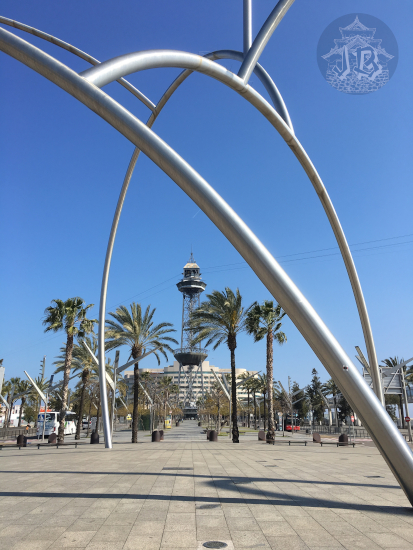
After the house, we went to the harbour area. We hung out for a while (with a stop to buy an extra T-shirt because it was cold), had lunch and eventually purchased tickets for the Museu Marítim, the Maritime Museum, located in the former Royal Shipyard.

The sun was setting when we came out, and we headed towards the Basílica de la Sagrada Família, the church of the Holy Family, also designed by Gaudí. Both of us had already seen it, so we were happy to see it from the outside. When they finish it, I would like to come back though.

26th March: No Gaudí!

We had a walk around the Gothic Neighbourhood of Barcelona, and we made a stop at the Iglesia de La Purísima Concepción, the church of the Conception to visit the cloister.

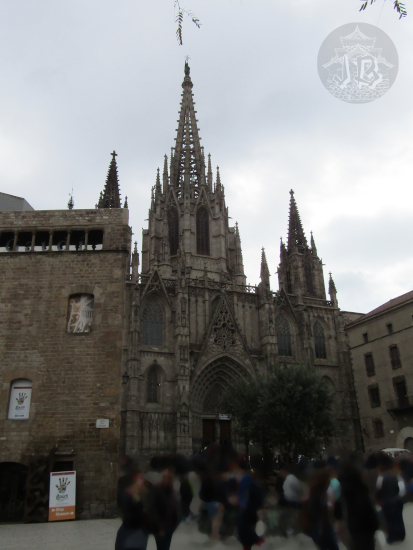
We saw the cathedral Cathedral of the Holy Cross and Saint Eulalia, Catedral de la Santa Creu i Santa Eulàlia.

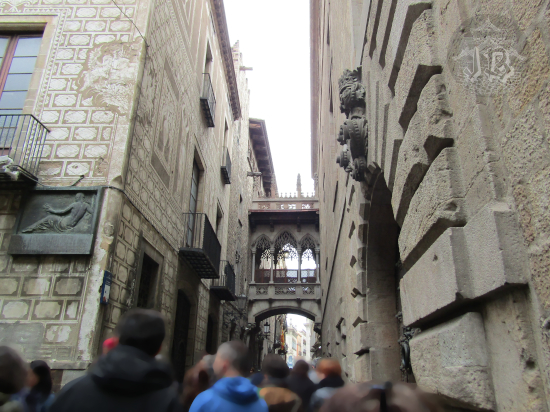
We also walked under the Bisbe Bridge, Pont del Bisbe, in the street of the same name.

We had lunch in a Japanese restaurant, then walked around the Port area for a while.

As we had visited the Maritime Museum the previous day, we had a free pass to the sailboat Santa Eulàlia.

We ended the day in the L’Aquàrium Barcelona, the local aquarium.

After that, we backtracked to our hotel. The following morning, on the 27th, we met up with another friend who had a free while for breakfast and then everybody went home.

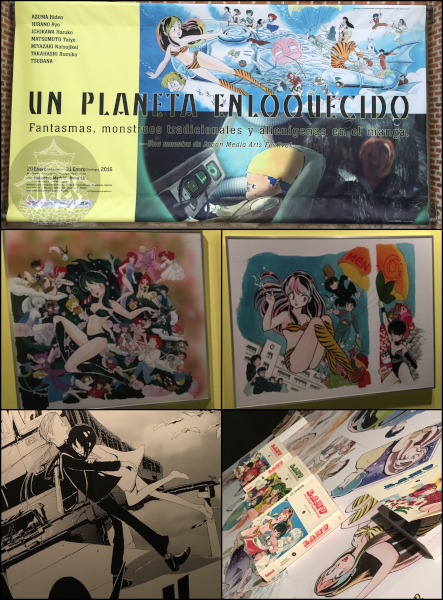
16th January 2016: Un Planeta Enloquecido: Fantasmas, Monstruos, y Alienígenas en el Manga (Exhibition in Madrid, Spain)

Naves Matadero in Madrid was holding a free exhibition on Japanese “monsters, ghosts and aliens” in manga and Japanese pop culture, and since I was around I decided to drop by. Here are some pictures.

I did not stay over but took a bus right back home because it was too cold for anything else.

2nd January 2016: Palacio de Cristal (Madrid, Spain)

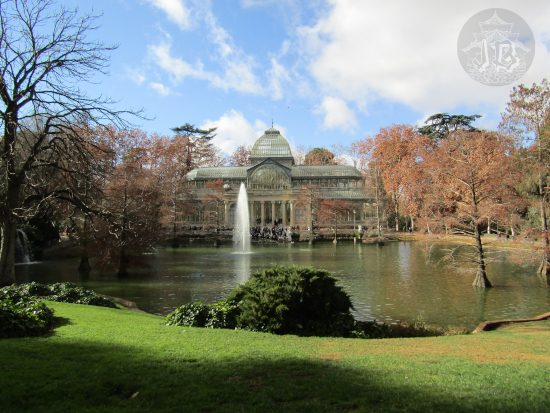
Right after landing back from Scotland there was a couple of things I needed to get going in Madrid. That afternoon I took up the chance and went to see the Palacio de Cristal, or Glass Palace, in the Parque del Buen Retiro (Park of the Good Rest, sort of). The building is a Victorian, iron-cast structure which is currently dedicated to exhibitions. It is a satellite building of the Reina Sofia Museum of Modern Art. It featured an exhibit by the Vietnamese artist Danh Vō – with a hanging Christ and fossilised bones?

And then we found out that there is indeed a parakeet invasion in the Retiro…

27th December 2015 – 1st January 2016: Scotland (Great Britain)

A friend and I decided to organise a New Year’s Eve getaway to Scotland, and I used the opportunity to get some stuff and redtape out of the way, so you might notice some chunks of time missing. Furthermore relationship with Scotland is complex and bittersweet, so I’m not sure how this post is going to turn up

The first part of our trip was based in Edinburgh. We arrived rather late in the evening so we just got to Waverly Station and walked to the hotel to get some rest before we started off the adventure.

Edinburgh

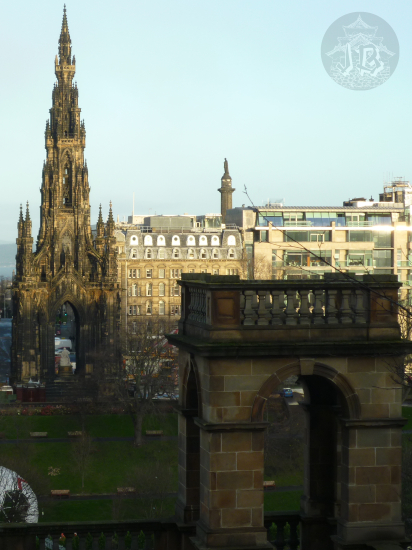
Edinburgh is the capital of Scotland, and it is a dark city, but not in a bad way. The dark, moss-covered rock seems designed to absorb any little beam of sunlight and warm the houses. In our first morning we had a walk around Princes Street Garden, where the Scott Monument, a memorial in honour of the writer Sir Walter Scott, stands. There was also a Christmas market standing.

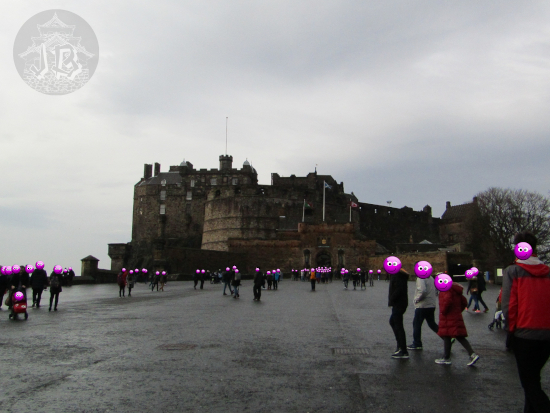
We climbed up Castlehill to visit Edinburgh’s castle, in the Old Town. The castle stands on an extinct volcano and some of the archaeological remains can be traced back to Prehistory! The first castle is thought to have been built around the year 1000 BC, which means the foundations are 3000 years old! The site of the castle includes, among other dependencies, The Royal Scots Dragoon Guards Regimental Museum, National War Museum, the Royal Palace, St. Margaret’s chapel, and a couple of distilleries. Due to its vantage point, also features a great view of all the Edinburgh area.

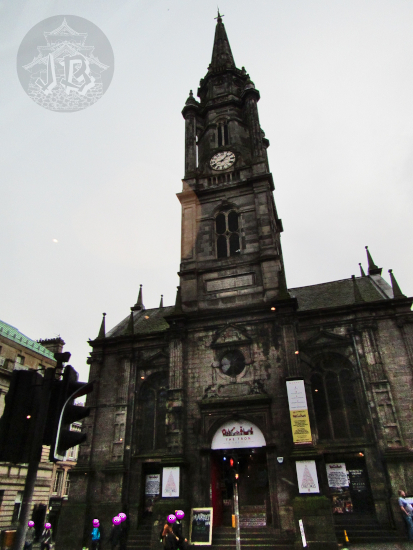
We walked back down Castlehill and made a stop at The Tron in the City, a former church turned artisan flea market.

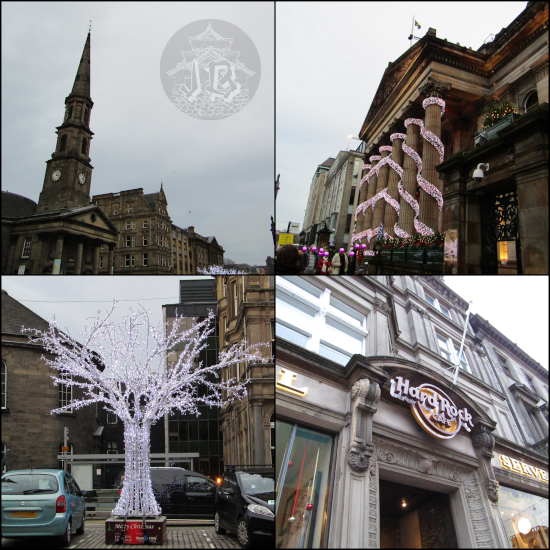
My friend is a Hard Rock Café collector, so we went to the George Street area, which was decorated.

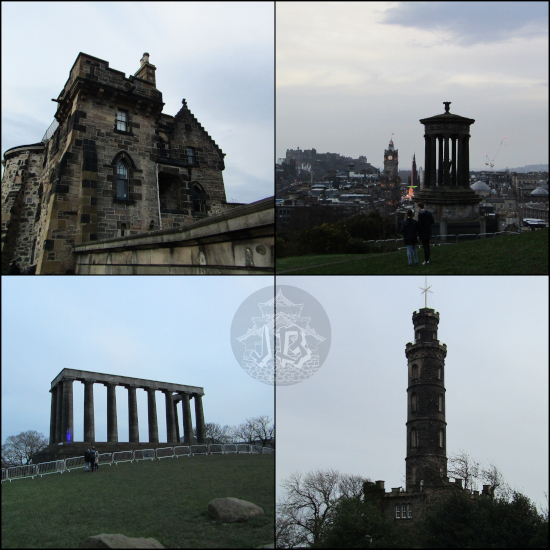
After lunch, we walked to Calton Hill, a hill / park area located near the centre and that hosts the Dugald Steward Monument, the National Monument and the Nelson Monument.

Then we met with a local friend to have dinner (bangers and mash!) to The Elephant House, the so-called birthplace of Harry Potter, where JK Rowling went to write the novels.

On our way back we saw some of the illuminated views, most prominently the Christmas market and the Balmoral hotel.

Glasgow

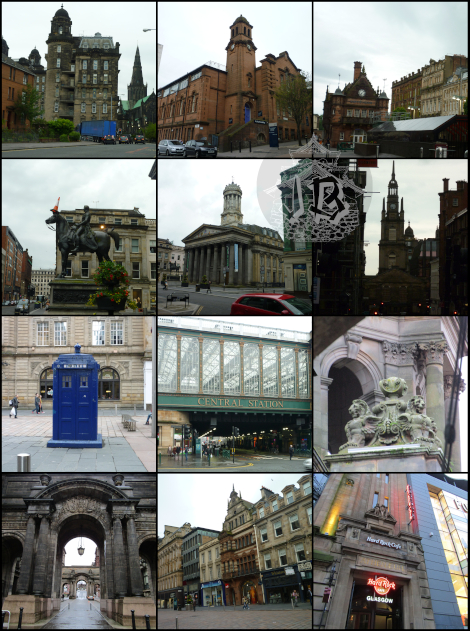
Aside from all the emotional baggage associated with Scotland, I can say that Glasgow is one of my favourite cities in the world. Most of what we did was walking around even if the weather was nasty at points. As we came out from Queen Street Station, our first visiting spot was George Square and the Glasgow City Chambers, and we had lunch in a Greek restaurant that I love over there.

But we quickly moved over towards Saint Mungo’s Cathedral, also known as the High Kirk of Glasgow. It is a 12th century building built in North Europe Gothic style.

Afterwards we walked up the Necropolis, a Victorian graveyard on a hill behind the cathedral. Today it is a great place for a stroll, aside from a place with way too much history for a humble blog post.

We strolled up and down Buchanan Street and the Central Glasgow area a few times – Queen Street, Central Station, the museum of modern art, the Japanese restaurants… We stopped at the HRC again, the Mandela Monument and dropped by St. Enoch’s shopping centre to see the light reindeer and warm up.

We walked to the Glasgow Cross area then, with the Tolbooth Steeple, the clocktower that marks the entrance to the Merchant City.

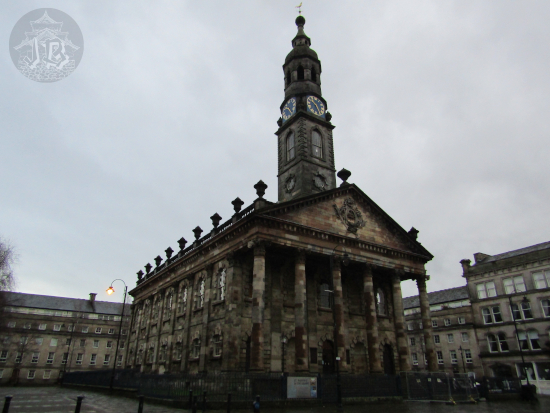
We came across quite an amount of interesting buildings in the Merchant City, among them St Andrew’s in the Square.

Another of the places we visited was Glasgow Green, which was half flooded due to the storm.

And when the weather became so bad that the sleet was making impossible to stay out on the streets, we visited the Riverside Museum, the Museum of Transport of Glasgow, where we had some delicious scones too.

We tried to see Dumbarton Castle, but it was closed down due to wind and the storm, so in the end we just took a ride there and walked around.

On the 31st we had dinner at a very nice Japanese – with awesome staff. Then we bought some provisions and headed to the B&B.

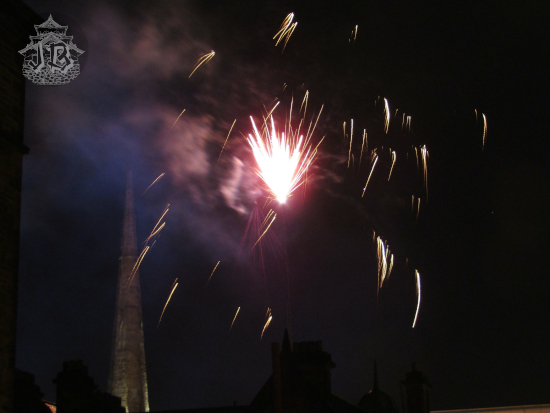
At night we were surprised by the fireworks so we ran out of the B&B room to find them.

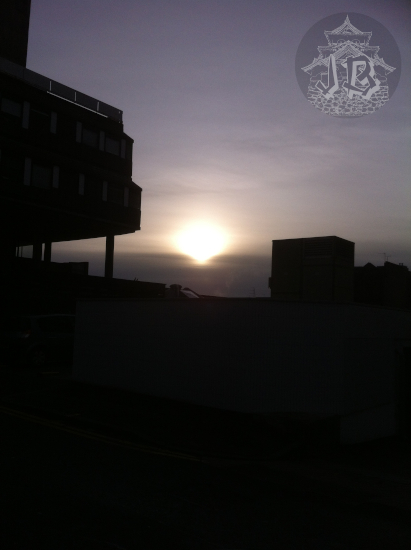
And on the first we were treated to a rather… unimpressive… first sunrise of the year.

When we flew back I had one of the most surreal experiences ever – we had bought a pack of scones for breakfasts and snacks, and somehow it became tangled in my phone wires. Well, turns out that wired-tangled scones look one hell of a lot like bombs on X Ray machines! The poor Scots security guard was first deadly pale, then so relieved that I was not carrying a bomb!