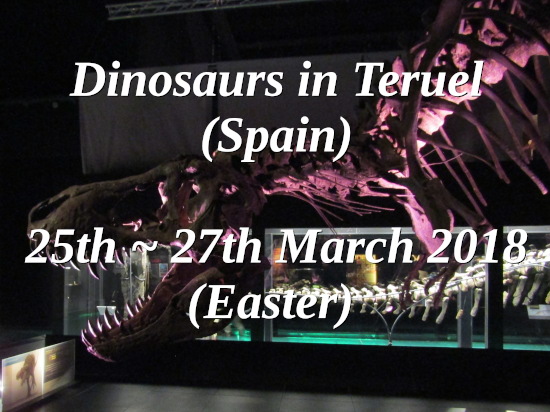
25th – 27th March 2018: Dinosaurs in Teruel (Spain)

This was a palaeontology-inspired trip. Teruel has been building a reputation and a tourist industry based on the fossils and dinosaur-related remains that have been found in the area. I’m into dinosaurs as much as your average seven-year-old, even if I don’t have the memory for all the names as they do.

Dinópolis consists on a big palaeontology park in the town of Teruel and seven smaller centres in different villages in the province. We planned to base up in Teruel and visit Albarracín and Riodeva.

24th March 2018: The day I saw Hatsune Miku (Madrid, Spain)

“Vocaloid Opera – The End” is an opera for an in the digital world. It was written by Keiichiro Shibuya and performed by Hatsune Miku. Hatsune Miku [初音ミク] is a vocaloid idol. In case you’ve never heard of vocaloids, the idea is a bit complicated. A voicaloid is a singing voice synthesizer software product, basically a computer-generated singing voice. The software was released in 2004 and it exploded with popularity in Japan. Hatsune Miku was given a humanoid shape when it was released in 2017 – and it was definitely a she. So, in a way, Hatsune Miku is a voice synthesiser with a cartoon-female-human form.

Yeah, weird. I have always thought so too. But it was dirt-cheap (8 quid), and there was a session at 18:00 on Saturday that I could attend without a late train back. So I dyed my hair purple (because no, I’m not showing up to a blue-haired character’s show in blue hair), got out my thick faux-fur-neck coat and off I went.

The show was being held at Naves Matadero is a former slaughterhouse turned arts centre. It has turned the buildings into theatres, showrooms and so on. As I walked around the area, looking for my theatre I saw a hell of a lot of families with kids under ten, there to see “the doll” or “the cartoons”. I’m not kidding, during the first ten to fifteen minutes of the show, about twenty families left (≧▽≦).

Entrance to the venue, showing the sign of Naves Matadero Nave 11 and Vocaloid Opera the end

“Vocaloid Opera – The End”, composed by Keiichiro Shibuya [渋谷慶一郎], explores the concept of an artificial being obsessing about death. The whole show is digital, just like Miku, as she wanders the world wondering about “the end”. She seems trapped in a surreal nightmare, with several scenarios that don’t make that much sense. Miku is followed in her trip by a plush rabbit (Alice much?), she talks on the phone and there is a multiple-eye monster around.

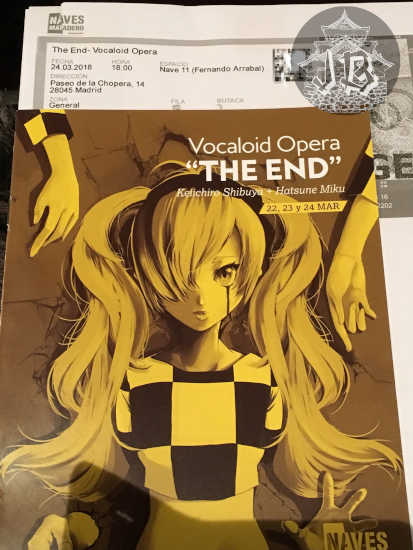
Booklet and ticket. Both read Vocalod Opera the end, with the dates. The booklet shows an image of Hatsune Miku, crying blood, the whole booklet is tinted yellow

The music has an electronic flavour, and at times repetitive. It’s loud and you feel it more than hear it. There warnings about bright and strobe lights all around and I understood why – the whole thing relied heavily on CGI and lighting. The chosen topic, along the images were claustrophobic, and I think that was on purpose – there are different “dying” options: drowning, gas masks, withering off.

The climatic “aria” peaks with Miku asking the spectator “Am I dead? Or just asleep? You decide. It makes little difference to me.” In the end, she is a human creation so, like humans, she will “die” sometime too (aaaaand I have opinions about this because I believe that some human creations transcend their authors). And a final downside: knickers. Seriously, what’s with Japanese people and knickers?! She’s a CGI doll – true, wearing CGI clothes designed by the former artistic director of Louis Vuitton, Marc Jacobs, but a CGI doll!

That was all that I did, but here are some pictures I managed to snatch a few pictures, including of the actual 3D rendering of Miku.

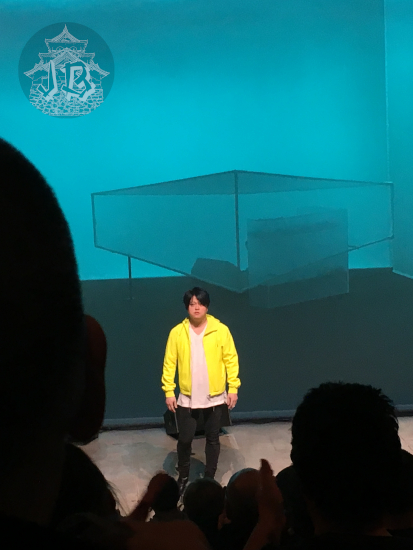
Picture of the composer, dressed in yellow

Life-sized sculpture of Hatsune Miku, wearing a chequered dress that shows her waist, and heels. Her hair is flying as she turns.

11th March 2018: An old-fashioned museum and a strike in Madrid (Spain)

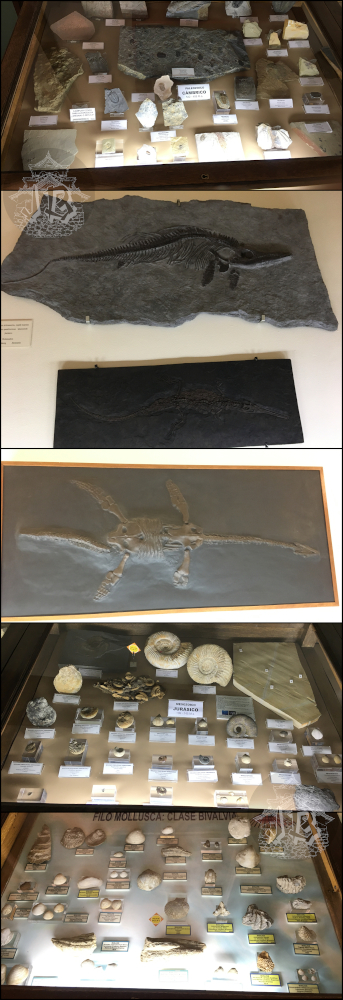
I was looking at a work-related trip and wanted to use up Sunday morning to visit “a couple” of museums, then meet some relatives for lunch. Unfortunately, I was caught in the middle of a public transportation strike, so in the end I had to walk for a long while instead of doing what I wanted! Anyway, what I managed to do was getting to the Museo Geominero Nacional, the “Geomineral Museum” in Madrid. It is located in the headquarters of the Geological and Mining Institute of Spain, in a classical-looking building finished in 1925. It was designed by Franciso Javier de Luue. It is a classical-looking museum with wooden cases and an impressive stained glass ceiling, comprised by a central room and three surrounding balconies.

The access is through a marble staircase and the first corridor is already packed with display cases, even before you get to the main area. These cases show small and not-so-small fossils and replicas, displaying the first taste of the evolution of life on earth.

Once in the main room, most of the floor is taken up by the standing cases holding minerals, fossils and meteorites.

In the centre of the room lie the remains of a mastodon, located in the area of Ciudad Real in the 20th century, one of the crown jewels of the museum.

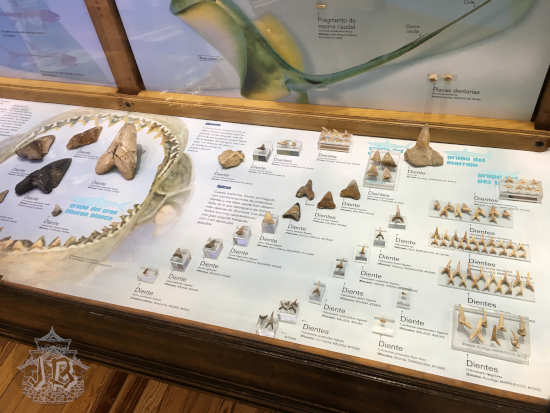
Of course I have been able to locate the collection of megalodon and shark teeth that are on display on the balcony.

Other displays on the upper floors include Spanish mountain goats, cave bears, and a human-evolution collection. Unfortunately, those did not photograph well due to the sun reflection.

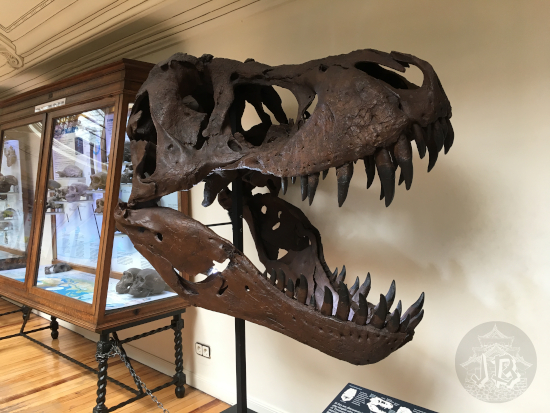
And finally, my favourite piece of the collection is the Tyrannosaurus rex skull replica that presides the museum for the second floor.

When I came out, public transport was not running any more, so I had to walk through the Madrid backstreets until I got to the area where we had arranged to meet, and we went to a restaurant called El Escarpín, where I had an awesome pan of… wait for it… gratin meatballs with molten cheese on a bed of potatoes (Albóndigas gratinadas con queso de tetilla sobre cama de patatas). Amazing! Either that, or I was really ravenous after my hour and a half walking. Serves me right for not keeping up with the news! I learnt my lesson!

10th – 12th February 2018: Highlights of Glasgow and Edinburgh (Scotland, Great Britain)

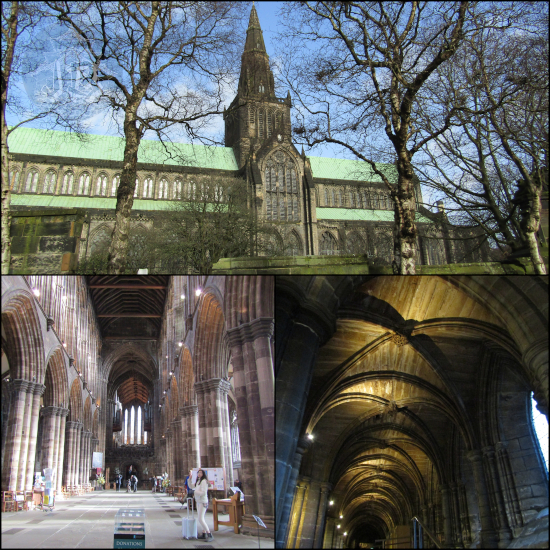
This is another trip that I took with customers. We flew into Edinburgh and took a bus directly to Glasgow, where we arrived at around 9:00 on Saturady morning. We made a stop for breakfast, then we walked to Saint Mungo Cathedral.

Then, of course, I guided them up the Necropolis Hill. The weather was very nice for a chance – because I have the exclusivity of good weather in London, but not in Scotland, which yielded to a nice walk.

We had lunch in my favourite Greek restaurant, and then walked around Glasgow – some of the members of the party wanted to go clothes-shopping so I took the opportunity to get into a bookshop or two. We dropped our things off at the hotel and walked in and out some of the shopping centres in the Central Glasgow area. In the evening, I took them to try Wagamama, a ramen / British fusion food chain. I’m always in for ramen (≧▽≦).

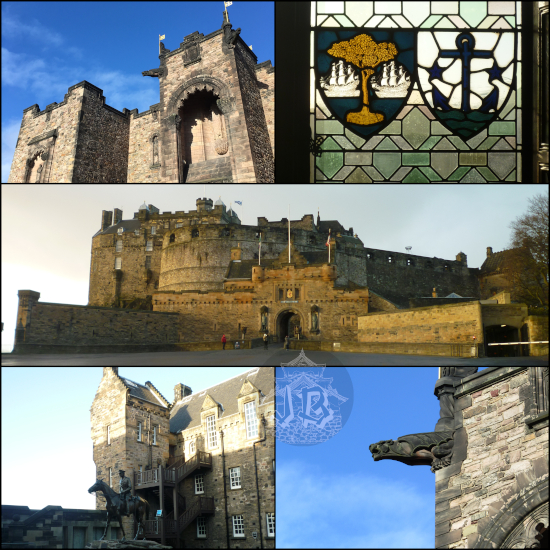
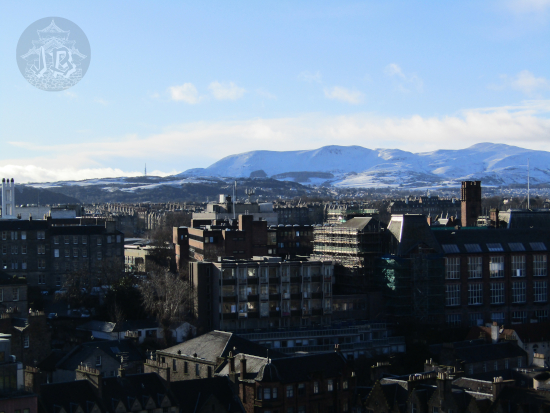
On Sunday morning we took the train to Edinburgh. We visited the Old City and Edinburgh Castle, with some awesome sights (because again, the weather was really good – albeit cold as hell, because, have you seen that snow??) and fumbled around for a while.

We had lunch at the Deacon Brodies Tavern, a traditional a restaurant in Castlehill – mince pie here.

We also took a walk towards the New City – and there was shopping again. In the end we had an amazing cup of chocolate as early dinner before we went back. I was supersuprised they wanted dinner, but I had had enough with that chocolate and just some tea at night. The shop where we had chocolate was called Coro: The chocolate Café, and I have no doubt I would go back to that shop.

Just before we headed back to Glasgow, we came across an art installation in Prince Garden, which had lots of pretty coloured lights.

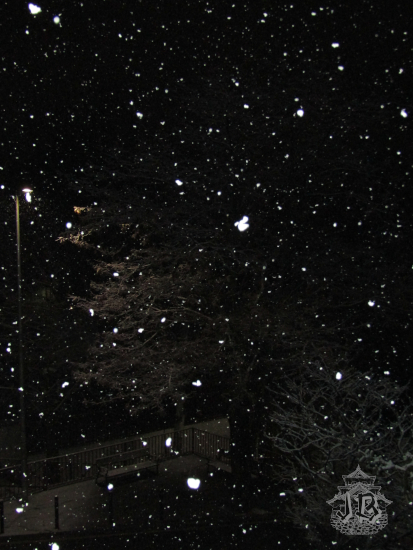
And when we woke up on Monday to go to the bus station and head off to the airport… it was snowing! Honest to god snow on the streets!

We reached Spain without further incident in the afternoon, and that was another weekend wrapped up.

28th January 2018: Amusement Park in Madrid (Spain)

I had a friend over for the weekend and she wanted to “do something” so I got thinking. She is adcenturous, so I thought that the Madrid amusement park could be a good idea. The Parque de Atracciones de Madrid was established in 1969. I’ve never been much of a rides person, for two reasons. One, it is one of those things that you take up when you’re young, and when I was young my parents were rather opposed to funfairs and rides and so on (with good reason, to be honest, but that’s another story). Two, I tend to be worried that random rides are going to trigger my headaches, especially when I have to take my glasses off.

For this trip, I decided to wear my contacts, so I actually got to go on a few of the rides. I was mostly happy staying back and letting my friend do the roller coasters though.

I was all good with the ride called “The Jungle”, which turned out not only to have animals, but… different cultural approaches.

I enjoyed the “Zeppelin”, and the sights…

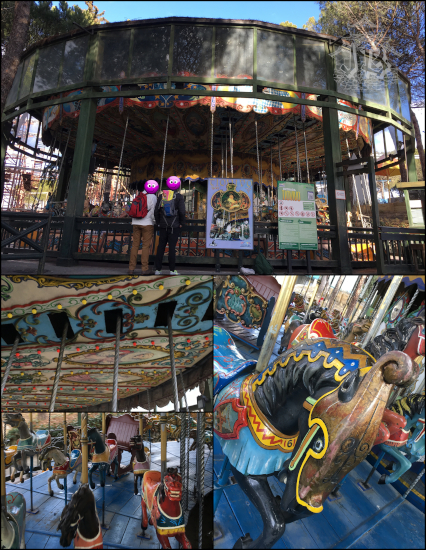
And, of course, I rode the carousel “Tiovivo”. Several times to be honest.

It was low season, so the price was much cheaper than normally. Unfortunately, it also meant that a few of the rides were closed. Then again, I wouldn’t have wanted to go onto anything with water in January…

21st January 2018: Zoology at the Zoo (Guadalajara, Spain)

This was just a stroll down the Zoológico Municipal de Guadalajara, the local town zoo. I just thought I could look up some of the animals I came across and see if I learn any interesting facts. It was not as easy as I thought!

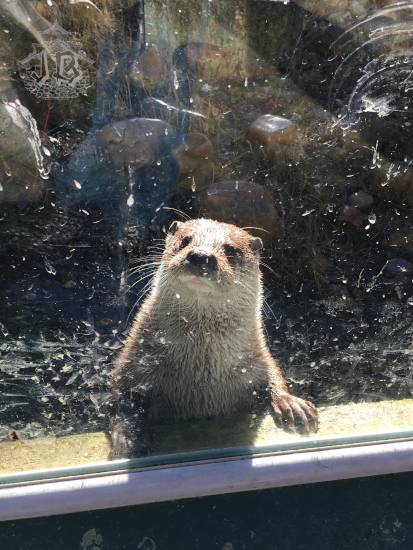
Eurasian otter (Lutra lutra): it is a semiaquatic mamal that is fortunately not threatened. It lives near rivers and coasts in Europe and Asia. It mainly eats fish. They are pretty smart and playful, but they are also very territorial, so they usually live alone. They have webbed claws for swimming and catching fish. Mother otters teach the kits to fish by a game of “catch and release” the fish.

Peafowl (Pavo cristatus ): technically “peacock” is the male (colourful) and “peahen” is the female (brown). The male has long tail feathers that he displays when he wants to impress a female or another male. In India, it was used as ‘guardian animal’ as it screams when tigers approach and it can eat young cobra snakes. Now, that’s pretty cool, and here I thought he was just a pretty tail!

Fallow deer (Dama dama): Fallow deer are native to Europe, and have been introduced to many other places. The bucks (males) are very aggressive and competitive during mating season, and they use their horns to fight. The does (females) do not have horns.

Iberian red deer (Cervus elaphus): The imagery of the red deer has been so powerful in the human psyche that some it can be found in paintings dating 40,000 years back. Normally the males and the young create big family groups. Males create smaller groups that cooperate.

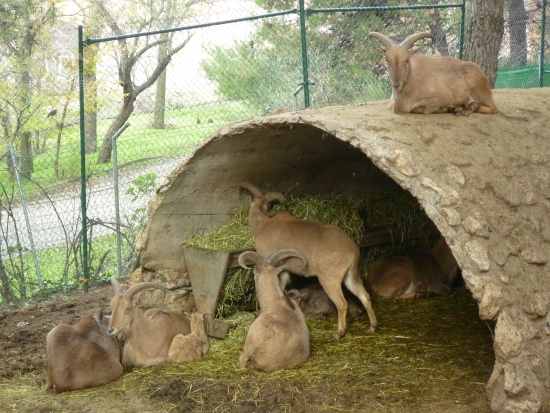
Barbary sheep (Ammotragus lervia). Also called arrui, it is an African mountain goat which lives in arid mountains and canyons and graze grass, bushes and lichens. They were artificially introduced in Southern Europe and became a bit of an invasive species. However, the truth is that they look super chill and zen.

European mouflon (Ovis orientalis musimon): It was originally a mountain creature but it moved to the forest when humans started bothering them. They thrive in rocky areas, though. They tend to live in herds with a lead female.

Wild boar (Sus scrofa): This is the omnivore animal by its own right. It can and will eat anything – from fruit to berries to even baby deer (O_O)!. Many old Indo-European cultures considered the boar a symbol of warrior virtues. In Greek mythology, the hero Herakles had to capture a boar as one of his Labours. In the east, it is considered a symbol of determination and even recklessness.

Iberian wolf (Canis lupus signatus): Unfortunately, the Iberian wolf is a vulnerable species and culling is still legal in Spain (•̀ω•́ ). The Iberian wolf is brown-grey and had a characteristic white area around its mouth. They also have black vertical lines along the front legs, and other dark marks on the leg and the tail. They are predators and prefer hunting big animals, especially deer. Wolves are social creatures, they live and hunt in groups.

Something really cool about wolves in general is that when they run, they place their hind legs on the footprint created by the front paw. Talk about coordination. Wolves have a very bad reputation in Spain, but there have not been confirmed attacks on cattle, much less on people, in recent years. Pictograms of the Iberian wolf have been found in archaeological artefacts from the tribes that lived in Spain before the Romans.

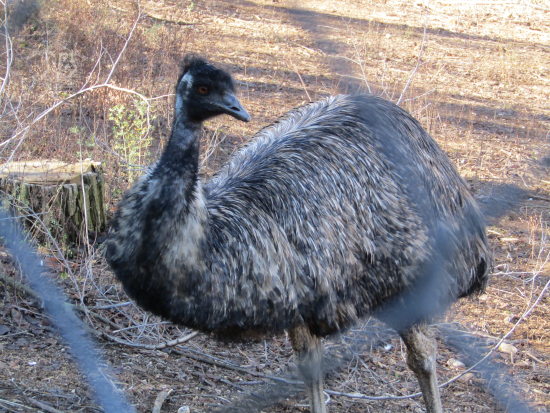
Emu (Dromaius novaehollandiae): Yay for another non-threatened animal. Emu originated in Australia, and are the second-biggest bird in existence after the ostrich. They are flightless, and they eat plants, grasses, insect and arthropods, depending the seasonal availability. Because females can lay several clutches of egg in one season after mating with different males, the male takes care of the incubation, and the chick-rearing. According the mythology of some aboriginal tribes of what now is called New South Wales, the sun had been created by throwing an emu egg into the sky.

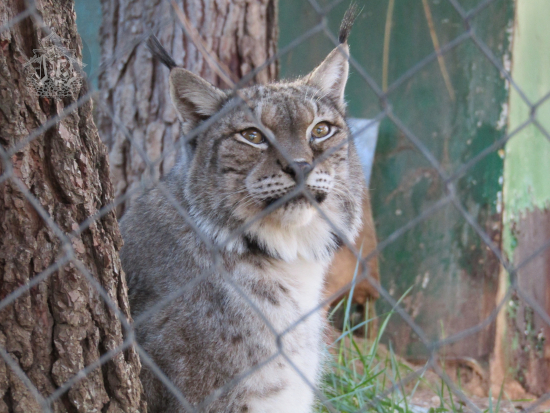
Eurasian lynx (Lynx lynx): Native of Europe and Asia, it is widely distributed, which lowers its conservation concerns. The Eurasian lynx is mainly a nocturnal predator, and tends to live solitarily as an adult, although hunting areas may overlap for several individuals. They can hunt small animals, but they are known to prefer bigger prey, such as roe deer and common deer. Conversely, they may be hunted by wolves.

Red fox (Vulpes vulpes): The red fox is one of the animals with the widest habitat range in the whole world. It can be found almost everywhere in the northern Hemisphere, including many cities in Europe. It is an invasive species in Australia, where it was introduced in the 19th century. In European mythology it’s considered symbol of deceit. In Asian mythology it has two-faces, some of them are messengers of the gods, some are tricksters and dangerous. Arab folklore considers the fox cowardly and weak. Native American mythology considers it a crafty creature that steals the coyote’s food – in all cultures however, it seems to be intellingent and able to trick other animals or people. Interesting.

Griffon vulture (Gyps fulvus): A scavenger bird of prey, it feeds mostly off the carcasses of dead animals. It tends to live in flocks or colonies and makes nests on rocky walls. Even if they have a bad rep, they are very cool animals.

White stork (Ciconia ciconia): Credited with bringing babies from Paris, storks used to be long-distance migrants, which lived in North Africa in winter and returned to Europe in summer to breed. For the last twenty years or so, the storks have stayed, at least in Spain. They are also famous for making nests on belfries and other man-made structures, and because they are considered a good omen they have rarely been chased away – until the weight of the nest has made belltowers collapse!

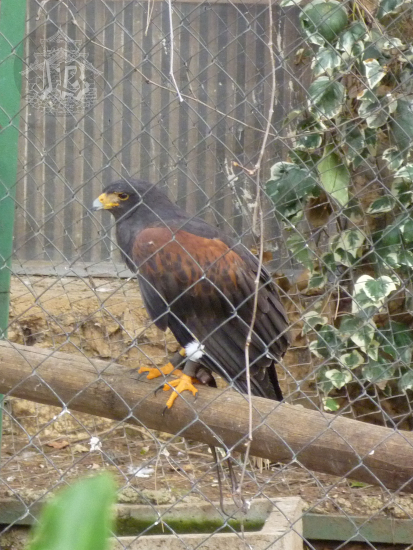
Common kestrel (Falco tinnunculus), I think. Feel free to correct me if I’m wrong. The best thing about the small zoo is the work they carry out recovering injured birds of prey. The birds are nursed back to health and if everything works out they are released into the wild. I really hope this little guy can leave soon! ⋛⋋( ‘◇’)⋌⋚

8th December 2017: Ferrari in Guadalajara (Spain)

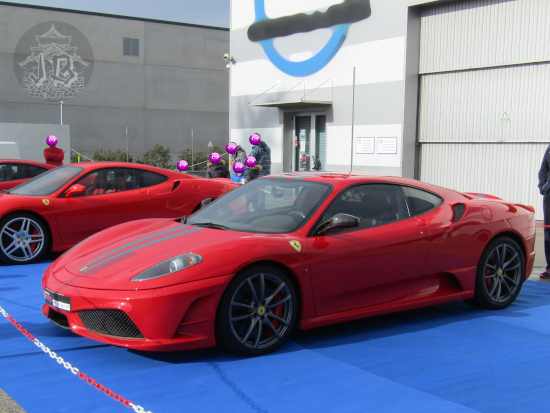
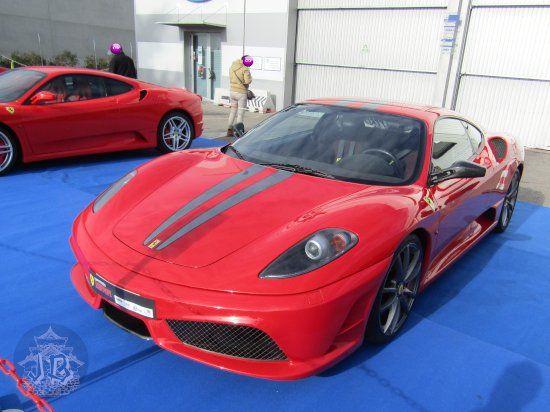
There was a tiny (five) Ferrari sport cars exhibition in Guadalajara, Spain, so I thought I would drop by, just to be able to appreciate what they call “Ferrari red”. I loved the cars, but I don’t think that I would ever be able to get in and out of them. You could not sit down at the wheel though, so I can’t say if I would be able to drive them (≧▽≦).

Ferrari was established in 1939 by Enrico Ferrari out of the racing car division of Alfa Romeo. In 1947, the first Ferrari-branded car was completed – there had been a racing car in 1940, but WWII stopped most competitions at the time. After the war, the racing team, called Scuderia Ferrari, was rebuilt, and went on to become the most successful Formula One Team.

Ferrari produced its first road car in 1949. the original road cars were two-seaters and usually customised. Throughout the 50s and 60s, customers used to personalise their cars, which would eventually become one of the brand’s selling points. Since 2011 clients have been able to work directly with designers so the cars are completely personalised.

The exhibition was organised by the car-maintenance watchdog, and the cars shown were recent models, such as the Ferrari F430 Scuderia (2007), the Ferrari 458 Speciale (2014), or the Ferrari 355 berlinetta (1994).

14th – 16th October 2017: Vienna, Austria

14th October 2017: Arrival and the Inner ring: Butterflies and Dinosaurs

Between flight and transfer to the city on Saturday morning, I arrived in the city of Vienna at 1pm. As my hotel was between the station and the city centre, I took my chances for an early check in and I was lucky – it was. After dropping my luggage I headed off to walk around Vienna’s Inner Ring, the Ringstrasse, which is a big boulevard that runs around all the old city of Vienna (Unesco World Heritage Site). A bunch of things were on my way and it seemed easy enough to find one’s way around. My hotel was located in a building close to a park, and had three floors, on the 11th, 12th and 13th floors of a building, which gave me some views of the city.

On Saturday the plan was wandering around, but as I am who I am I ended up improvising. My first stop was the outer Vienna State Opera, the Wiener Staatsoper, where a young man dressed as Mozart tried to sell me tickets for a show.

Vienna opera house, a baroque building in light colours with huge windows and an arched entrance

I continued on my walk and I saw the Albertina, a modern art museum, but I was actually heading to the Imperial Palace greenhouse, which is the home of a café and the Schmetterlinghaus, or Imperial Butterfly House. This is an area of the greenhouse where a bunch of butterflies are free to fly around and feed on a bunch of flowers, plants and pieces of apple. I was lucky enough to catch a few good shoots and I was very happy to have decided to go in (albeit I have to say that I was really keen on going there since I had seen that it existed). I really had a blast and enjoyed this, so it was a must that I don’t regret having missed, especially since the 6.50€ for the ticket. I spent around forty minutes in there chasing butterflies.

Vienna Butterfly house: a former greenhouse, and a few close-ups of different butterflies on bushes.

Then I saw the Austrian National Library, the Österreichische Nationalbibliothek.

Severe-looking stone building with columns and windows.

After that I back I walked through the Hofburg Palace, Hofburg Wien, and the Michaelerplatz or Saint Michael Square.

Collage of the former Imperial palace. It is a stone building with columns and windows, and arches

After that I crossed the palace in the opposite direction and ended up at the Heldenplatz, which gave way to Naturhistorisches Museum, the Natural History Museum to see dinosaurs, because there were dinosaurs, which is the home of the Venus von Willendorf, a tiny statue of stone dated back 29,500 years. The museum also holds a collection of minerals, meteorites, preserved animals, dinosaurs, an animatronics dinosaur and a multitude of artefacts from Prehistory to the Middle Ages. I also saw the same dunkleosteus that they have in the Tokyo Kokuritsu Kagaku Hakubutsukan. Have I mentioned dinosaur animatronics?
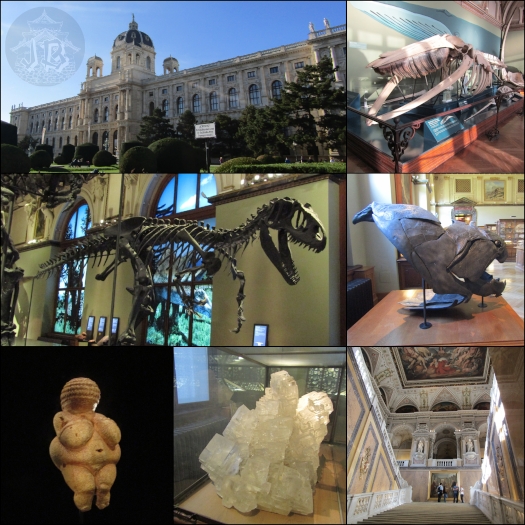
Collage of the Natural Museum: the building, with a dome, a whale skeleton, an Albertosaurus skeleton, the head of a Dunkleosteous fish, a huge salt stone and the Venus von Willendorf, a small naked woman statuette in golden stone

Following the museum I continued down the Ring Boulevard and it did not take me long to stumble up the Pallas Athene Brunnen (Monument to Palas Athena) and the Austrian Parliament Building, Parlamentsgebäude. The latter was under reconstruction.

Vienna parliament house, under renovation. There is a Palas Athena in white marble with a gold helmet standing in front of it.

I continued my walk until I found the Vienna Town hall, called the Rathaus, where there was a kind of Videogame trade fair or something going on.

Vienna town hall - neogothic building with a lot of towers and spikes.

Then I went on walking towards the university and the church of Votivkirche, a neo-gothic building next to the university.
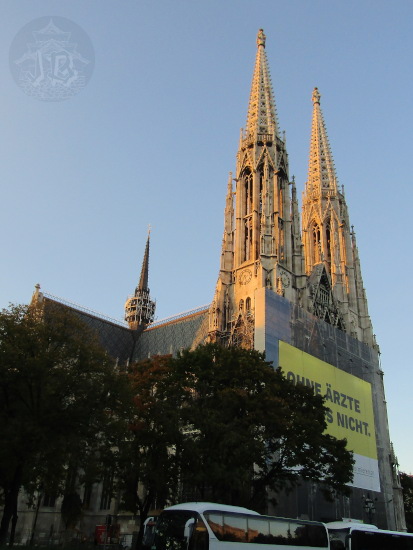
Gothic church under renovation

Afterwards I went down to the hotel because this is not summer vacations after all, just a weekend escapade and I seriously did not have that much energy. On my way I walked past the stables of the Spanische Hofreitschule (Spanish Riding School) stables and I saw some pretty horses.

Two white horses from the Vienna riding school

And even from the hotel (literally from bed), as my room had views, I could take some pictures of the sunset and the lit buildings. And then I went to sleep at a horribly early hour because I was beat and for some reason I managed over 8 hours of sleep.
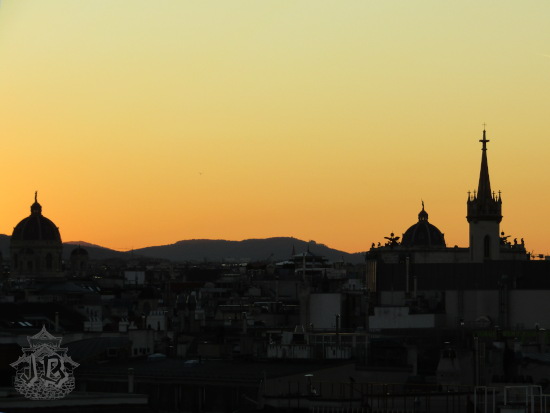
Sunset over the skyline of vienna. The buildings are dark and the sky is orange

15th October 2017: Palaces, churches and the Cinema

Because my hotel was **** for a change (I have to say that when I think about the whole weekend the word “decadent” is what comes to mind), I had a kettle and instant coffee ready for me – this was my breakfast. After that I did the online for my flight the following day and of course running into technical difficulties, and I left the hotel at around 9:30, which was a bit later than I had intended.

I was coming up to the Belvedere Palace, and on my way there I took a diversion to see the Karlskirche or Karlskirche (St. Charles’ Church), which I could see from my hotel and illuminated at night. This is a baroque church that sometimes holds classical music concerts.

The church of St. Charles; a Baroque church. It has a dome, and two twisted columns in front.

After taking a wrong turn once or twice this I headed out to my original target, the Schloss Belvedere (Upper Belvedere Palace). This is a Baroque Palace (seriously, Vienna is full of Baroque) that has been turned into a painting gallery. The most famous author in this gallery is Klint, but if I have to be honest, I’m not too appreciative of him – must be my likings for the realists. In the end, I liked the palace itself better than the painting collection, specially the reception room and the staircase.
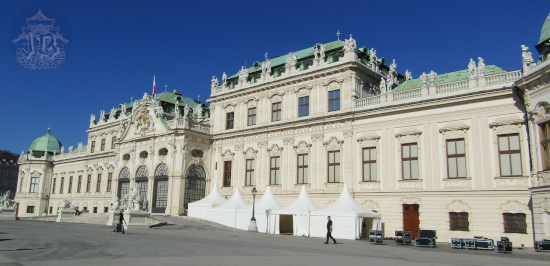
The Upper Belvedere Palace, a Neoclassical building in white stone.

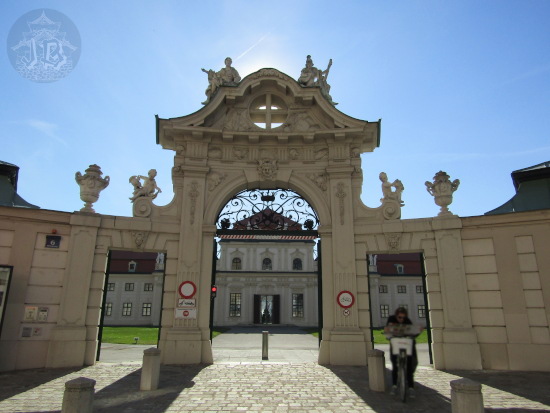
As I had bought a three-combo ticket including Upper and Lower Belvedere and the Winter Palace, I walked down the Belvedere Gardens to the Unteres Belvedere (Lower Belvedere), which holds the “Medieval Treasure” and temporal exhibitions. The best thing was the gold and mirror room and the marble gallery.
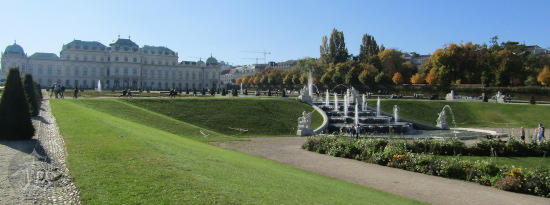
A huge garden with a palace in the background. The garden is artificial in a way, with perfectly-trimmed grass, fountains, and bushes.

The Baroque entrance to the lower Belvedere palace, a stone gate with sculptures on top. It looks like it wants to stare you down. The palace peers through the three open doors in the background

Then I headed off to the centre of the city to see the Winterpalais des Prinzen Eugen (Winter Palace of Prince Eugene), which was not the best thing ever but hey it came within the three-museum combo.

A Neoclassical palace with flags hanging over the door

Then I headed off to Domkirche St. Stephan (St. Stephen’s Cathedral), which is the gothic Catholic cathedral. It is not Baroque but Gothic. The entrance was free, but it also had a paid area, including the catacombs. Unfortunately I was too late for the current tour and too early for the following one, so I decided not to stick around, else I would have got the combo for the catacombs, the tower and the treasure.
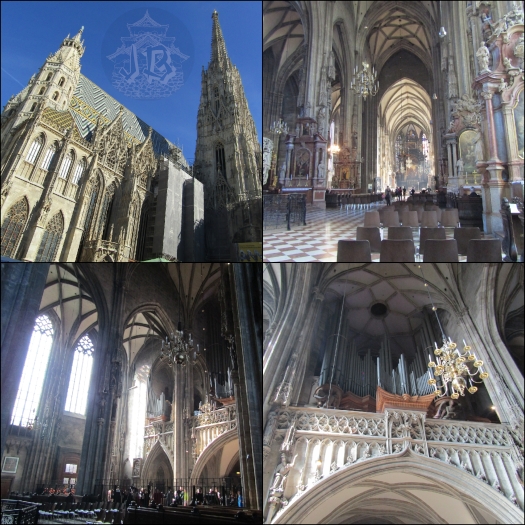
A gothic cathedral. Collage showing the outside, with the tower and the ornate windows, and the inside showing the pointed arches inthe nave, and the organ.

As it was, I saw the cathedral and then headed off down different streets and saw the outer area of Katholische Kirche St. Peter (Catholic Church of St. Peter).
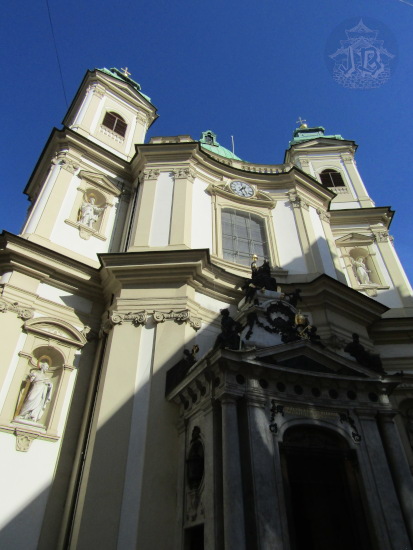
Façade of a Neoclassical church

And then headed out to the Michaelerplatz to check the inside of the Michaelskirche (Catholic Church of St. Michael).

Neoclassical church, showing the white and pointy bell tower. The image is tilted so the tower fits in the frame

I checked the Spanische Hofreitschule (Spanish Riding School) for tour tickets, but I was late for that and it was all sold out, so I decided to go to the station and buy some food in the supermarket for both lunch and dinner. On the way I crossed the Stadtpark to see the floral clock and the Johann Strauss monument – Johann Strauß Denkmal.

Finally, I headed off to get some rest at the hotel, and have a shower. At 18:15 I walked down to the cinema at the corner of my hotel building, the Gartenbaukino, because in the end that was the reason I was there – to attend the Austrian premiere of the X JAPAN documentary We are X as Yoshiki was going to be around for a Q&A session afterwards.

There had been a small mix-up with the ticket numbering (all of them had been printed out with the same seating number!), which was solved efficiently. We watched the documentary We are X and then there was a Q&A with Yoshiki himself. There were emotional moments as the fans thanked him for everything he had done and for his music.
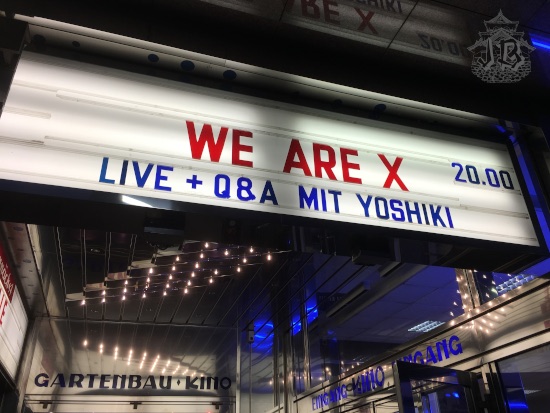
Entryway to the cinema. It reads We are X Live + Q&A mit Yoshiki 20.00

Yoshiki sitting in front of a burgundy curtain. He is wearing his sunglasses and a black suit, boots and a golden blouse

After the Q&A some of us stayed talking at the cinema gate and the manager, who had solved the ticket problem, came out to close – and he told us where Yoshiki would be leaving from. And that’s… the story of how I got to talk to Yoshiki, I got his autograph and took a picture with him and I will never, ever, ever forget the rush of that.

I have to say I did not sleep much that night. All the excitement caught up with me and I kept replaying the scene in my head over and over again. in the end I think it was around 2:30 that I could turn the lights off.

16th October 2017: Airport Monday morning

After checking out of the hotel I walked back to the train station and took the CAT towards the airport. I had taken an earlier train than I had already planned and boy was I glad to do so when following arrows at the airport took me as much as 20 minutes. Something I learnt in this trip is how friendly Austrian people are, and that they have a great sense of humour, as apparently one of their star souvenirs is “no kangaroos in Austria”. The return flight was not as good as the first, but it was on time and I could arrive to work smoothly for a crazy week.
23rd & 24th September 2017: San Sebastián Film Festival (Spain)

23rd September 2017: Let’s go!

Overnight, I headed off to San Sebastián as a Weekend Escapade to the Festival de Cine de San Sebastián International Film Festival that is held over there because they were projecting a Japanese film and the main actor and the director were coming over to present it. The film was “Sandome no Satsujin” [三度目の殺人], the director is Hirozaku Kore-eda and the actor in question was Fukuyama Masaharu, of whom I am a big fan.

I started off at 22:00 on Friday as I had to take a bus to go to Intercambiador de Avenida de América, which is one of the bus hubs in Madrid. My bus to San Sebastián left at 00:30, so in the end I had to wait for almost two hours until I could board. I was dozing for most of the trip so it did not feel too long. I arrived in San Sebastián bus station at around 6:50 in the morning and I had decided that I would go to the so-called Shell Beach, Playa de la Concha, to watch sunrise. I had been told that cafeterias would be open at that time, but not even the one in the bus station was ready.

A beach at night. The sea is calm and it reflects the city lights

My plan of watching a sea sunrise was trumped by the fact that the sea is towards the west, but I still could take a couple of nice pictures.

The sun rising, tinting the sky and the sea blue and orange

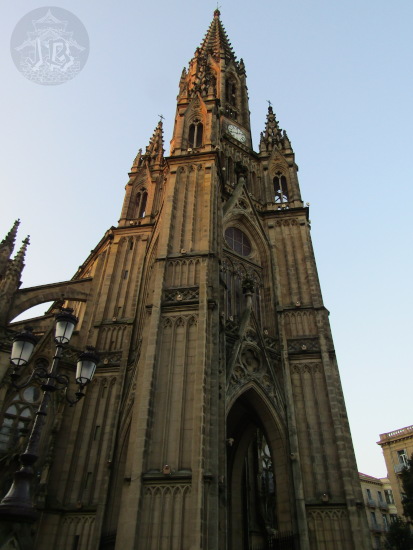
Among them were the beach itself, the “skyline” and the Catedral del Buen Pastor (Good Shepherd Cathedral).

A gothic or neogothic church clock tower, spiky with pointy arches

I wandered around, found the theatre where the film was going to be projected and as the sun started warming up, I started feeling less like a homeless dog.

The sun rising along a promenade

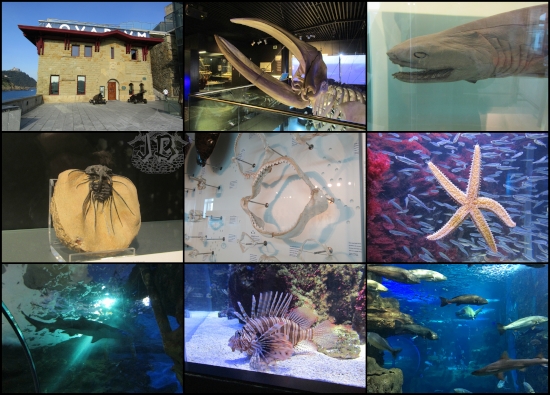
I found the local Starbucks at around 9:00 to get some rest, a coffee, and a cookie before I went to the Aquarium, which opened at 10:00. The Aquarium de San Sebastián is a bit more of a museum than anything else. The first part (second floor) is dedicated to the history of ocean commerce, with different types of ships, and rooms focused on the local harbour, companies, traditional boat racing and whaling. This includes an actual right whale skeleton and several sperm whale teeth and some baleens. The second part (first floor) is dedicated to general fishing and the local oceanography society, including machinery and live specimens.

Finally, after all this, you get to the actual aquarium (yay). There are several small tanks and then a big tank with a walk-through tunnels. The inhabitants are pretty standard, with lots of small fish and several magnifying-glass tanks to make the animals look bigger than they are. The third floor hosts the tropical fish including the piranha and the clown fish. All in all it is a nice place, however, it was under construction and some tanks were covered by dark plastic. After that I left the aquarium and I decided to go up Mount Urquil, which hosts a castle and quite nice views of the city and the ocean.

A small building entrance which yields to the aquarium. Collage showing different exhibits inside: a whale skeleton, a seven-grilled shark in alcohol, a trilobites fossil, a shark jaw, a starfish, a shark swimming above through an aquarium tunnel, a lionfish, sarks swimming in the aquarium

I walked by John Malkovich while heading there, but he did not look like he was in the mood (or the clothes) to be recognised, so I did not bug him. Then I started my climb up the mount towards the the local castle, Castillo de La Mota, along the batteries of cannons. The castle has a small history museum, and a look-out balcony, and the top has been transformed into a church, with a giant Christ overlooking. The truth is I was mostly improvising on my visits as the week was hell between work and the death of a family member.

Views from and of the ruins of the castle - the sea, the wall, and the old cannons

After that I had lunch and headed off to the theatre to check out the coming out of people. At this point I planned to wait for the actor and the director to come into the theatre, but for some reason I checked out the schedule, and the name of the actor had been taken out of the presentation! That made me sad for a little while, but I decided that I was okay with it, that it would not be a drama. I had taken my chance, and at least I had gotten some air after all the pain and drama throughout the week. I guess that helped relativise the sadness. I went to a park near the beach to get some sun and enjoy the last days of summer.

A 19th century building with large windows. A banner on the façade reads Festival de San Sebastián 65

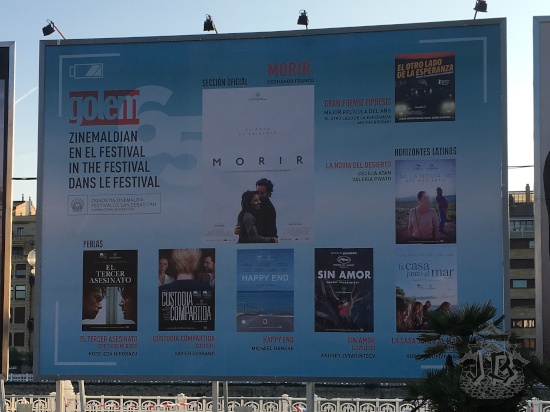
A banner for the cinema festival, showing posters for different films. The third murder is on the bottom left

Around 15:00 I returned to the theatre, Teatro Victoria Eugenia to start lining as I wanted a seat close enough to see the subtitles- and I found a place on sixth row which was pretty good. As this was a special people’s vote session, we got a ballot to give our opinions. Then I settled to wait, and eventually at 16:00 the presenter came in, and to my surprise, she announced Kore-eda and Fukuyama. That made me so happy I could have died right there and then, and the best was still to come. Kore-eda told us about the film. Apparently several people consider that he has changed genre, but he told us that he disagrees and that he still tried to make a human drama. However, he thought that we should judge. Then Fukuyama told us that he enjoyed San Sebastián and that they had been having pinchos and that he was happy to have returned. I was shaking so hard I could barely hold the phone as I recorded.

The stage inside the theatre

Director Kore-eda and actor Fukuyama Masaharu on stage

Promo of the film The Third Murder from the Festival Webpage

All this would have made me very happy already, but there is more. “Sandome no Satsujin”, or “The third murder” tells the story of a lawyer whose job is to defend a man accused of murder. As this would be the defendant’s third murder, if found guilty he will be handed the death penalty. The film is a complex story, completely unpredictable – or I was too enthralled to see the ending coming – but when everything fell into place I felt like gawking.

Furthermore, there was more to come – at the end of the film both Kore-eda and Fukuyama had stayed behind. as I was coming out I looked up and told them “otsukaresama deshita”, and both of them bowed and replied “arigatou”. Then we waited for them to come down from the second floor, from where they had taken the ovation. I dropped my vote and rushed through the red carpet. As other people talked to the director I made a beedive towards Fukuyama. It was then or never, and it turned out to be then.

Director Kore-eda and actor Fukuyama Masaharu waving for a picture on the street after the film

I was shaking inside but I managed to tell them that I had been a fan of his since Galileo times and I asked for his autograph. He told me thank you (at some point the interpreter tried to help, but I was busy dying and trying to get my meaning across). He signed my Galileo booklet and I asked him to take a picture with me, to which he also agreed. And thus I fulfilled my wildest dreams (and look horrible in the picture). After Fukuyama had continued on the red carpet I managed to sit down on a curb and I was on the phone with my friend C*****, who prevented me from going completely hysterical in fanby bliss.

After I told her everything, I was pretty dead so I headed off to he hotel (pension) that I had booked for the night, and pretty much giggled and crashed, and uncrashed and giggled some more. At 23:00 I was completely zonked out, not without realising that I had headed to get some rest without grabbing my freebies and some merchandising I wanted from the festival.

Fukuyama Masaharu's autograph on a DVD booklet

24th September 2017: And back

I left the hotel early, around 8:30 to head towards the cinema area and buy the short Festival guide (not the big one for 22€ but the little one for 1.5€) and get the free newspaper. I bought a coffee to go and headed back to the bus station, when my bus was at 10:00. I could not sleep and the Wi-Fi was not working, but I could watch Youtube videos on the seat screen. I managed to get home around 17:00 after a couple of buses, and I was pretty much dead. However, it was totally worth it. I think this is why I was hyper enough to decide to go to Vienna next month…

11th & 12th June 2017: Highlights of London (England, Great Britain)

As part of my day job, I took a group of customers on a trip to London. Not the best decision in my life, but one that I would repeat a couple of times before I had enough. This was a short getaway – we took off on a red-eye flight on Saturday and we came back on Sunday evening.

Our first stop was The Tower of London, officially called “Her Majesty’s Royal Palace and Fortress of the Tower of London”. The main Tower, “White Tower”, was built in the 11th century, and additions to it were made up to the 1400s. It was designated Unesco World Heritage Site in 1998. The Tower holds an armoury, some treasure, documentation offices, a few shops and the Crown Jewels of England. And, according to the legend, quite a few ghosts.

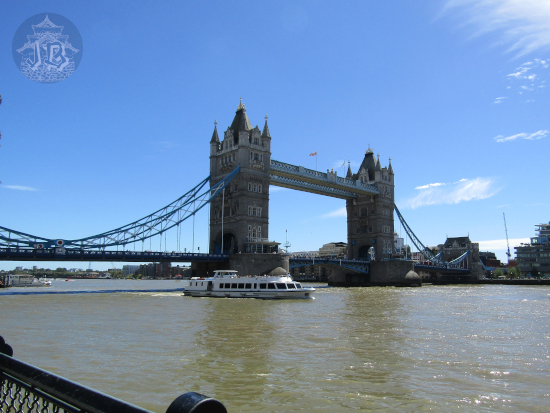
After the Tower, we took a moment to see the Tower Bridge.

We had a hotel basically at the end of the world, and we decided to go to drop our things off before we continued on the visit. We saw the Wellington Arc in Hyde Park on the way to the royal palace.

Then we fooled around Buckingham Palace.

Finally we went to Chinatown to have dinner…

… and rounded up the day at Piccadilly Circus.

The next morning we headed off to the British Museum. We had breakfast outside because of course it was one of those times when it’s all warm in London. Waffles = ♥

The British Museum was established in 1753, and opened to the public, in its current location, in 1759. It focuses on human history and art, having branched the natural history items to the Museum of Natural History and all the documentation to the British Library. The museum holds the awe-inducing number of 150 million of artefacts from dozens of cultures of the world, both ancient and modern, with amazing Grecian and Egyptian collections (albeit having disputed ownership…)

Inside the British Museum we separated. I left them to have a walk around the most important areas and I walked into my favourite spots (although the Japanese galleries were still closed. I also got a ticket to see the Hokusai – beyond the Great Wave exhibition, which presents a number of Hokusai’s works organised in series or topics. One is waves, and it shows how Hokusai experimented with textures, shapes, swirls and foam until he found the “perfect” wave – his most famous work, the Great Wave. There is a series on people, another one on mythology, and another one on himself and his family.

After I was done and we had met up again, I helped them found some stuff that they had not seen but still wanted to. Then, we headed off to the Westminster area to see the Big Ben, and although there was some scaffolding already visible, we managed to see the whole thing.

Finally, we headed off to the airport to get back home.

6th & 7th May 2017: Cuenca (Spain)

If I ever go missing, especially with my car, don’t go around looking for me in Cuenca . I would have a nervous breakdown trying to drive through the streets and slopes. I’m not sure what time we arrived, maybe mid-morning. We had a reservation to have lunch at the Parador. However, to get there we had to drive up a horrible, horrible hill with a terrible paving and park too close to the cliff so #no.

Cuenca is considered a World Heritage City. It has a classical, mostly Medieval area, and a normal / standard area surrounding that. The inner cluster is virtually carless as the streets are narrow and steep. It is perched on the Huécar Gorge and as you can see, a vertical rock wall.

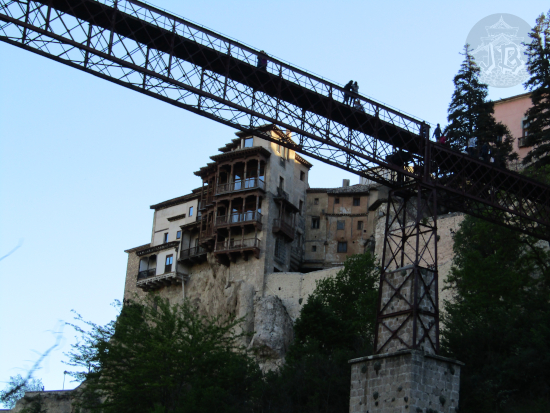
We had some time before we had to go for lunch, so the first thing we did was go have a look at the Casas Colgadas, the hanging houses that overlook the Huécar Gorge. Inside there is a contemporary art museum that I visited once already so there was no incentive to look again – you know, the kind of abstract art that showcases a plus-symbol and you’re supposed to interpret.

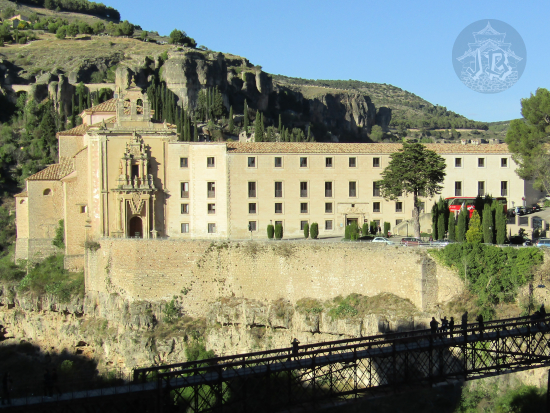
We had lunch at the Parador de Cuenca. A Parador is a high-end state-owned hotel usually with a good restaurant. More often than not, a Parador is located in a renovated historical building. This one is a former monastery, and the restaurant is located, if I remember correctly, where the original dining room would have been.

Main dishes were forgettable (and not photogenic) but the curd or “cuajada” for dessert was to die for – and it came with a lot of extra goodies.

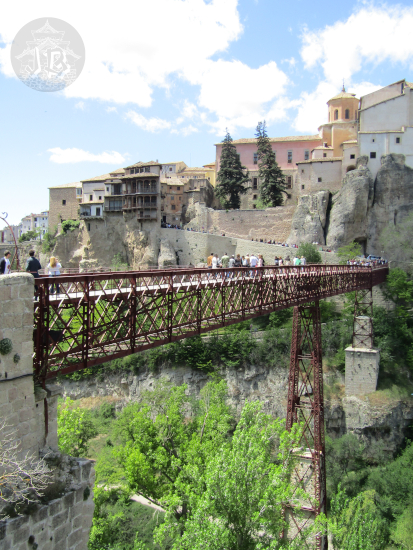
In order to get to the town centre you have to cross the scary, scary bridge aka the Puente de San Pablo, St Paul’s Bridge, over the gorge, but I survived – without a freak-out (≧▽≦) and you might be aware that I am not a fan of heights.

We had lunch, then moved (over the scary scary bridge) on to see the Museo de las Ciencias de Castilla la Mancha, the Science Museum of Castilla La Mancha – unfortunately the dinosaur area was closed, so we “only” got to see the super steampunk clock and the energy wards, and the tornado simulator, along to some kind of reproduction of the International Space Station.

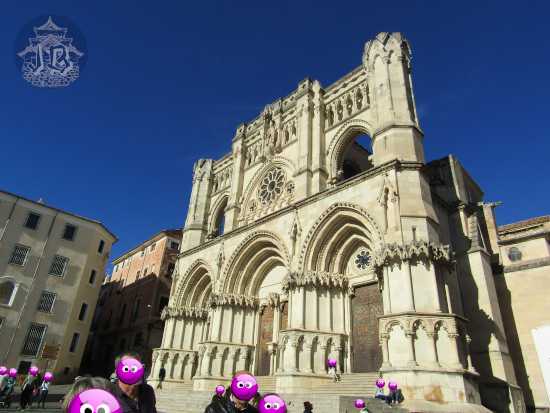
After the museum we walked a little around the town. We went to the cathedral, Catedral de Santa María y San Julián de Cuenca, but it was closed due to some religious service or another. I mean… that’s its main purpose I guess? (≧▽≦)

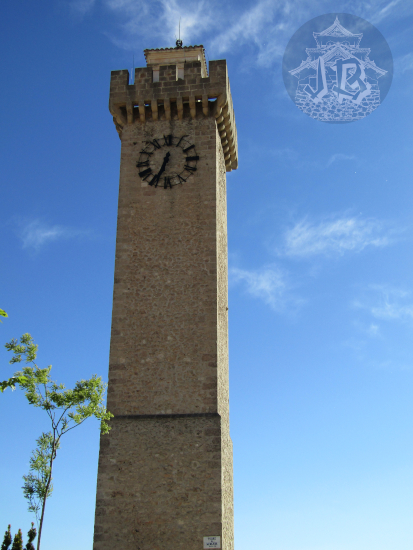
Then we found the Torre de Mangana, Mangana Tower, a clock tower dating from the Sixteenth Century. From underneath the tower there is quite an impressive sight of the area surrounding the city.

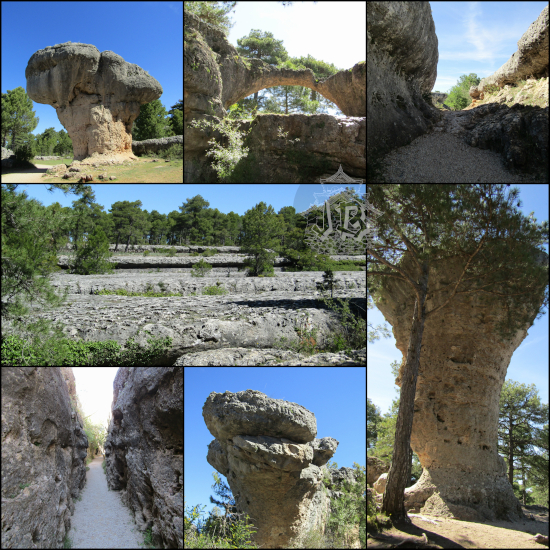
We went back to the car and we had a drive around the city. Cuenca is located in the middle of a karst area. Karst is a type of landscape formed by the dissolution of soluble rocks e.g. limestone or gypsum. You can see how the rock seems to be “molten” among all the pines.

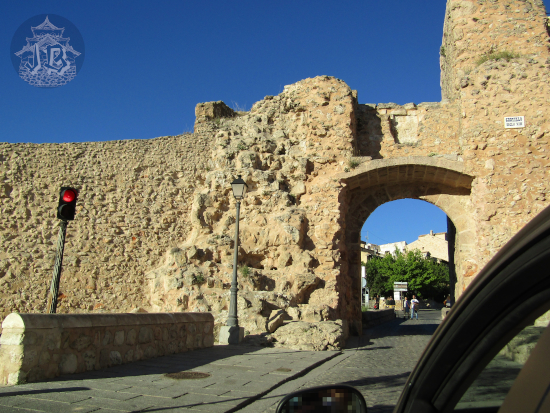
We reached the Castillo and Murallas (castle and walls) on the other side of town but we had to drive back due to the streets being cut for the same religious event we had run into before.

Thus, on our way back, we drove at the bottom of the Huécar Gorge and headed back to the hotel.

This was about six or seven in the evening, and we did not go out again because we were way outside town. We had dinner in the hotel and called it a day eventually. I ordered the kids’ menu because everything else was too fancy and abundant.

The next morning we woke up early to visit the Ciudad Encantada / Enchanted City. This is another karst topography which has somehow become very famous. Some of the rocks have interesting forms, and have been given names. It is a sort of geological park formed by rain falling on the rocks and dissolving them for millions of years. The original rocks were a mix of of limestone and dolomite in different proportions, which ended up dissolving in different shapes.

After walking around for a couple of hours we went on our return trip.

11th March 2017: “TAO: The Samurai of the Drum” show in Guadalajara (Spain)

More than a trip, this one is focused on an event I attended. There was a Drum Tao performance in Guadalajara, to which I was invited. The fun part the person who had invited me used to work at the theatre. As he still had “contacts”, I was allowed to peek a little into the backstage, so I could take a few special pictures.

There is not much of a description that you can write of a percussion performance, to be honest. TAO focuses on drumming, the Japanese taiko style, with bigger and smaller drums, but they also play traditional flutes, koto and samishen (traditional harp and three-string guitar). The show also displays a few acrobatics. It was pretty fun. In the end you could take pictures and get autographs from some of the staff members.

Aaand I own up that I did a little bit of trolling by speaking Japanese to random staff in the merchandise area…

Collage: the big drum, the back curtain reading Tao, and a CD with the booklet autographied

3rd – 5th March 2017: #XDAY in London (England, Great Britain)

The X JAPAN concert in Wembley was scheduled for the 12th of March 2016. Unfortunately, on the 15th of January, guitarist PATA was admitted to the ICU in Japan, which set back the date a whole year. For the record, I’m very happy that PATA made a full recovery.

Since January 2016 I had been trying to arrange one of the VIP packs that were being offered and which included transportation, but the promoter ONTOURS had been skittish. The postponement did not come as a surprise. In the end these packages blew up and there was a different kind of VIP upgrade arranged, that my friend C***** and I chose to buy. This included half of the merchandise and access to the sound-check. Later on, it was announced that the band would be signing copies of the “We are X” album at hmv in Oxford street. My friend C***** and I also managed to get tickets for that one, so we were elated.

Friday, 3rd of March 2017: We Nailed It

C***** and I met at the airport on the 3rd of March, Friday, for an early afternoon flight, and everything went smoothly. The only minor bump was that she was carrying a trolley and the lady at the gate decided that there were already more than fifty trolleys being loaded as carry-on – there were not, I had counted them and that she had to check in. She tried to protest (literally, the attendant started tagging the line when she saw us) to no avail. I was not having it, so as soon as we walked past the boarding pass check, I ripped off the “check at gate” tag and produced a copy of the boarding pass (without the check-in sticker), and we were allowed in without problem.

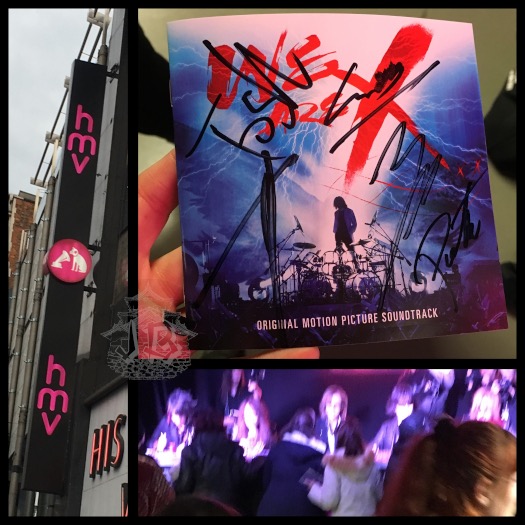
We arrived in London Stansted, went through immigration without any impertinent agent bugging us, and we took the Stansted Express, then changed into the underground. It was all smooth once more, we got to the Oxford Street stop, alit, and found the hmv building. When we reached the queue, sheshe stayed and I went in to buy the CDs for the autographs. I also bought a bottle of water, and the cashier actually got a chuckle out of my face when they gave me a new £5 note, which are sort of plastic-y, and have a transparent part. After this, we settled to wait. It took a long time to finally get to the signing area, but the weather was reasonable and there were no weird people around.

You could take pictures on the approach to the band, but as you arrived at the front, you had to leave all your things. As you approached the band, one of the assistants would take the booklet from you and handed it over to the first artist, guitarist Sugizo, who did not look too awake. Then ToshI, who was smiling all the time. Yoshiki was happy as he tends to be when he is the centre of attention. Patatried to look like nothing had to do with him. Finally Heath handed (what you hoped was) your booklet back to you.

All in all you might be seeing them for 3 or 4 minutes top as the hmv staff kept yelling at you to hurry up. It was however worth every second, although all my pictures ended up being horrible.

hmv building outside, autographied CD and a very blurry image of the band signing

And here is my not-so-little secret: I froze. I had practised so much what I wanted to tell each and every one of them, but I just froze and I couldn’t get the words out except a mumbled thank you to Heath when he gave me my booklet back. I remember looking at Sugizo and Yoshiki thinking “they’re real, they’re here, it’s happening…”
We knew that there would be a crowd after the event, and we wanted to avoid that, as C***** has a bad back, so we decided against waiting for them after the fact. Instead, we headed off for the hotel we had booked just next to Wembley Arena. On the way, we stopped at a Salisbury supermarket to get some stuff that we might need – aka some drinks and snacks for the following day – we needn’t have worried though as when we turned the corner we found a whole shopping centre with restaurants.

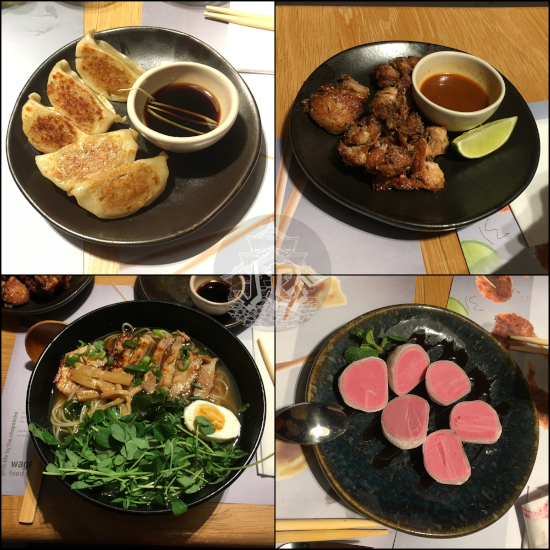
We checked in, left our things, had a shower, and headed off for dinner. She had never been in a Wagamama before, so I thought it was a great idea to try it for dinner. I think she enjoyed it – and so did I, I might have eaten a bit too much.

Dinner: dumplings, fried chicken, ramen with a lot of veggies, sweet buns

Saturday, 4th of March 2017: The Actual #XDAY

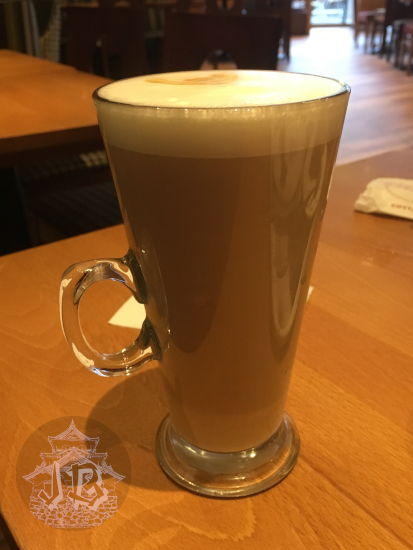
On Saturday morning, the actual #XDAY, the fourth of March 2017, we had breakfast at a Costa Coffee – I have to say that I really enjoyed introducing her to a bunch of “my favourite British things”.

Tall coffee latte mug

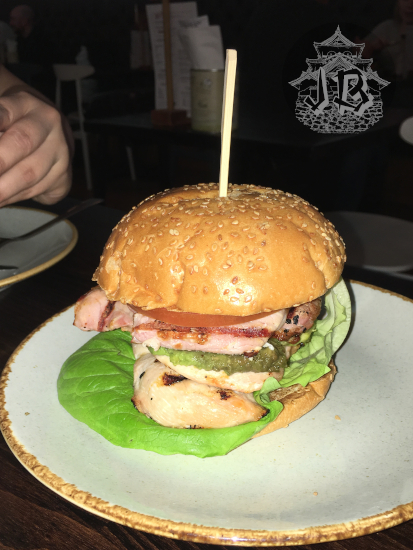
We hung out at the outside of the venue all morning until we could get our VIP accreditations and be admitted. Before everything started, though, we had some burgers for lunch.

Fancy burger with overflowing lettuce and avocado sauce

After lunch, we went to the VIP line. I saved up the space while my friend made a run to the merchandise booth to check if they had the We are X soundtrack CDs – yes, exactly the same one that we had bought the day before, except that this time they had a special cover – blue, red, or purple. And with each CD you got a set of “trading cards”. We were not lucky at this time.

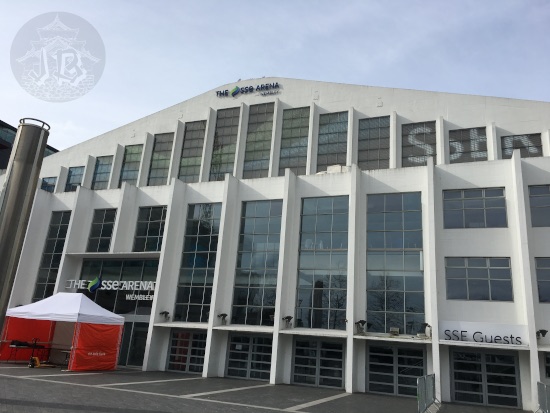
The venue, with lots and lots of windows

The whole experience once within the venue started with watching the rehearsal, at least what we were allowed to – to this day I don’t understand why we were let in late and escorted out early so we only caught about 50% of it. Highlights of this are Yoshiki in pink sweatpants, and ToshI waving his hand at us whenever “nobody” was looking.

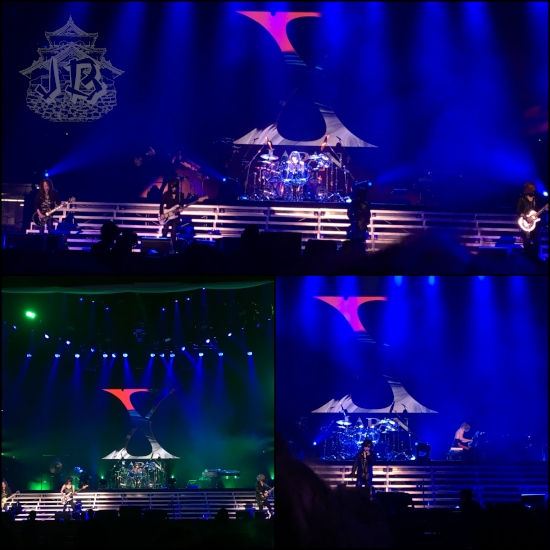
The band rehearsing

We were chased out to wait in the halls and I used the time to slither towards the merch booth, where I got the CDs – all three colours (twice, actually, for both myself and C***** as she kept the spot). Eventually, the doors opened again and we took the picture on the stage – unfortunately without the band – as the arena started filling up with people. After this we found our seats. I made a run to the ticket booth again because I had won an extra set of tickets and we needed to check whether by any chance they were better than what we had. Through this process, I ended up having a riff-raff with the security staff at Wembley that lead me to file a complaint letter. Of course, I had to run into my least favourite things about British people.

Late, of course, everything started. First, we were shown the documentary “We are X”, and it hurt every bit as much as the first time in Barcelona. And as the documentary was coming to an end, the music rose up and we got started with the chords of Rusty Nail. The concert was fantastic – we had had to wait for over a year but we were finally there. This was my first real X Japan concert, and my heart was soaring all through the event. Everything was magnificent: all the members, the music, the crowd… It was so amazing I wished it never ended.

Unfortunately, though, everything comes to an end, and so did the concert, though I hope the memories never fade away.

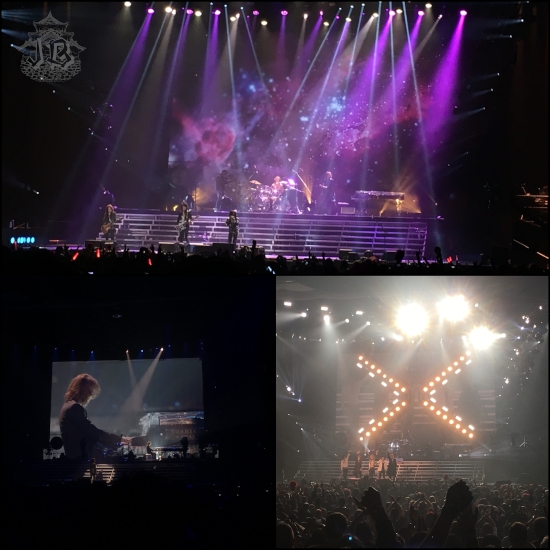
Stills of the concert

Sunday, 5th of March 2017: Excitement Hangover

The next morning, we woke up and went to find the Costa again, because Costa is amazing. It was raining, cold, and I was not feeling too well as I had hit a wall, but coffee revived me a little. We got into the underground to go to the commuting point to the train and kept an eye out for any We Are X posters that we could find (we decided against trying to find the billboards because that would mean a big detour and we did not feel comfortable with the flights timing).

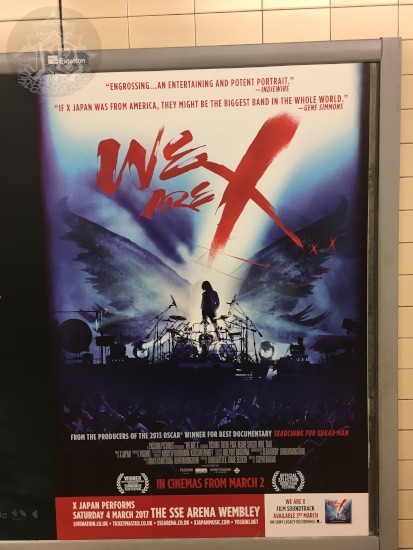
We eventually found some posters at Baker Street and… after a quick Instagram check we realised that we had stumbled upon the very same poster in front of which ToshI had taken his pictures, and we had a laughing flash.

The concert promo in the underground.

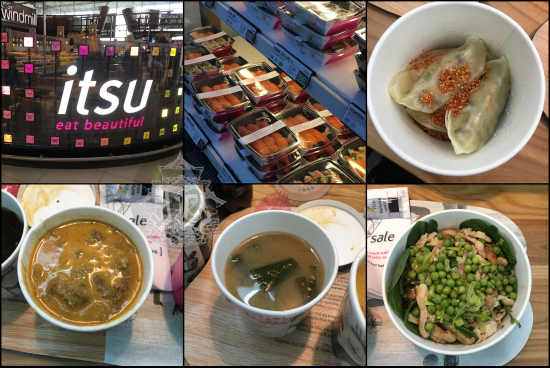
When we reached the airport we had some hot food at the Stansted Itsu – not the best but it was warm and it helped me feel a bit better.

Lunch - containers of fast food: gyoza, miso soup, turkey with peas, and meat broth. The logo says itsu eat beautiful

We separated at the airport because C***** had a better connection to her town to return than she had for arriving in London. All in all, this was one of the best weekends of my life and it all worked almost perfectly – all the important things anyway.

Also, I made a promise to myself after this – that I would not freeze again in front of a star. I hope I can keep it.

5th & 6th of November 2016: Barcelona (Spain) for We are X

I was supposed to have travelled to London in March 2016 to see X Japan’s concert, where they were also going to project the We Are X documentary premiere. Unfortunately, that was postponed to 2017 due to PATA’s health issues. I really hope it works out next year. However, the decision was made to start premiering the documentary in different music festivals, and the second I heard that it would be shown at the Beefeater In-Edit festival in Barcelona I got a ticket for it. Furthermore, I actually won two more tickets in a giveaway.

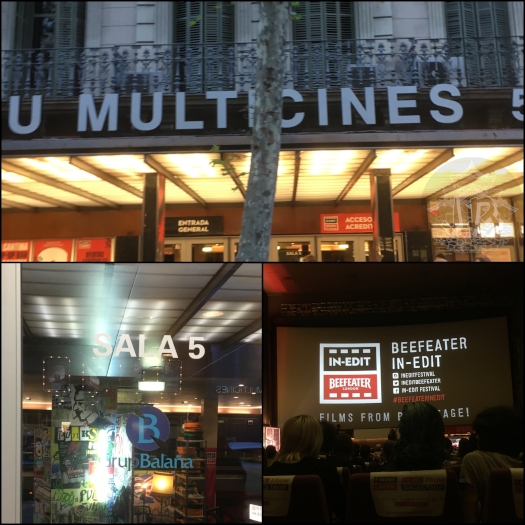
These two tickets I got I gave to a couple-friend of mine who had been so nice as to let me stay over at their place. I took a train around 8 am and was in Barcelona mid-morning. I went directly to their place and we just hung out until it was time to go to the Multicines Sala 5, where the documentary was going to be shown. We were actually the first and, press aside, we were the first ones in. We sat dead in the middle of the cinema and a group that walked in ten minutes later wanted us to move. And sorry, random person, but the answer is not. We were not really a “queue” but we were waiting for a couple of hours, so I was not going to give my chosen “best seat” out of the whole theatre for a group of ten people.

This was a Saturday evening, and there had already been a premier on the 1st of November so there might be more fans there, but in general I was a bit taken down by how few fans there were, most felt like people who had a whole-festival ticket.

The documentary tells the story of X JAPAN, one of my favourite Japanese bands, from the point of view of its founder, drummer and pianist Yoshiki. The band crumbled at the height of its popularity when guitarist Hide died by hanging, and the singer ended up brainwashed by a cult. Everything is told from Yoshiki’s own point of view, which makes the film biased, but still poignant.

After the film we went back to my friends’ place and had dinner. The next morning, they wanted to show me their little orchard in the outskirts, and I was treated to the best paella (Spanish rice) that I have ever had in my life – so awesome I even forgot about taking pictures! It was sad that I had to leave by 8pm, so I was only in Barcelona for about 32 hours, but it was so well worth it.

Collage showing the entrance to Multicines 5 and the Beefeater In-Edit screen before the film started

16th September 2016: Some Madrid (Spain) Museums

I woke up one morning, a silly weekday that I did not have to work for some reason and I decided to wander off and take a day trip to Madrid to see some museums, just because I could.

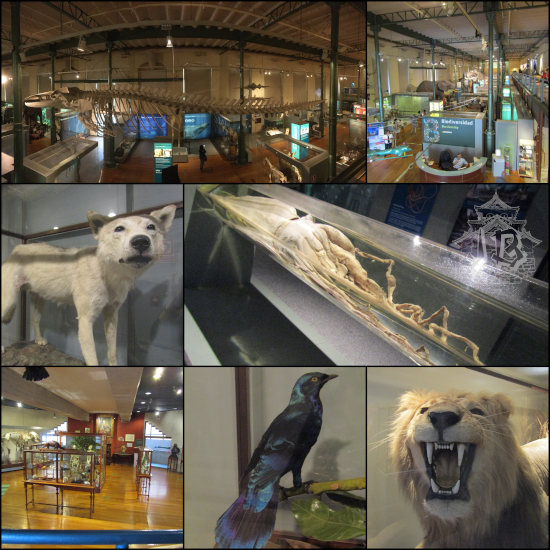
My first stop was the Museo Nacional de Ciencias Naturales, the museum of natural science. The museum is divided into several buildings. The first building holds the “Biodiversity” collection. This includes preserved specimens – in better or worse shape, mostly stuffed, and some skeletons.

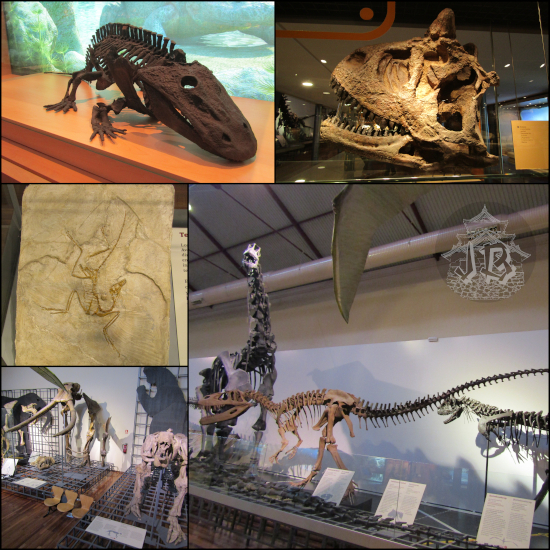
Then I walked over to the palaeontology and mineral museum, where at the moment most of the collection is composed of replica, sometimes it feels that you see the same diplodocus or arsinoitherium (two-horned rhino) skull everywhere. Of course, however, I hunted down every megalodon tooth on site and sight.

After this, I walked around the mineral collection and walked down Castellana Avenue until Colón Square, where I had lunch somewhere before I walked around to see the Museo Arqueológico Nacional – National Archaeological Museum. There were a few things that interested me there.

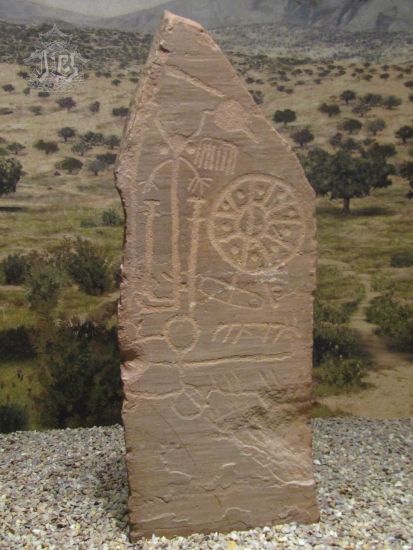
My first goal was to study the Iberian stelæ . Nobody really knows what they are or what their meaning is, but it is thought that they were funerary monuments, maybe of fallen warriors.

An interesting thing to see in this museum is the sculpture of La Dama de Elche, the Lady of Elche, the limestone bust of an Iberian lady dated back to the 4th century BC. It is supposed to be a woman who belonged to the aristocracy that was later revered as a goddess, or maybe a reinterpretation of the Goddess Tanit of Cathage. The back part has an opening, which suggests that it could have been a funerary urn. It was originally polychromated, but it has lost its colours. I really like her expression, and probably due to the Hellenistic influence. I have a thing for Greek sculpture, after all.

A second “lady”, the Dama de Baza (Lady of Baza), stands next to the first. This one still keeps some of its colours. This one is full-body, also carved out of limestone, and it traces back to the fourth century too. This lady seems to have been designed in pure Iberian style, without Hellenistic influences.

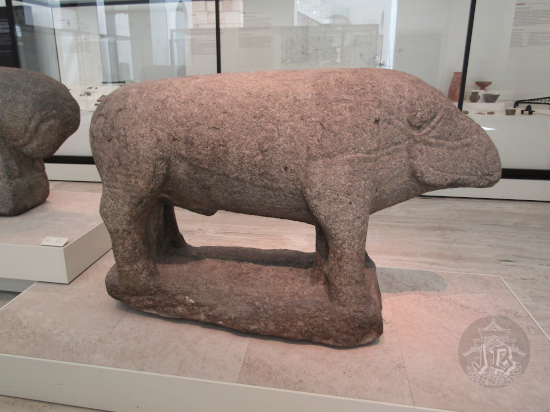
The last key pieces of Iberian sculpture in this museum are the verracos – sort-of headless boars, pigs or bulls (depending on the interpretation), but it is commonly accepted that they are symbols of protection of cattle routes. Most of them are… visibly male.

Once I had seen what I really wanted to see I wandered over the rest of the museum, stumbling upon the currency exhibition, which was strangely interesting.

I walked past the Medieval rooms and then I found the Egyptian area, which is humble, but has some interesting things like the X-rays of a mummified falcon. Finally, I checked out the classical Greek area before calling it a day and making it back home.

22nd May 2016: Kabuki at the CBA (Madrid, Spain)

I made a short escapade to the theatre Teatro Fernando de Rojas in the Círculo de Bellas Artes, in Madrid. It was my first time watching kabuki [歌舞伎], a type of Japanese theatre. The play was called Tsumoru koi yuki no seki no to [積戀雪関扉], something akin to “The Snowbound Barrier” and translated into Spanish as “En los límites de Osaka, bajo la nieve del amor” (In the Outskirts of Osaka, under the love snow). It is a dance-drama kabuki written in the 9th century, and deals with the spirit of a black cherry tree turning into a courtesan to extract revenge. Before the play, there was a small conference to explain some details about kabuki and that was really interesting.

Afterwards I just had to run for the trains so… no much time to hang around.

14th May 2016: Ikebana & Taiko in Madrid (Spain)

I went to the Royal Botanical Garden Real Jardín Botánico in Madrid because they were holding an exhibit of Ikebana and Japanese culture “X Gran Exposición de Ikebana y Semana Cultural Japonesa”. There were several activities, and I wanted to watch the ikebana and listen to the taiko players.

I was very amused when it turned out you could actually attend an ikebana class. Ikebana [生け花] is the Japanese art of aranging flowers, and it is one of the three classical Japanese arts of refinement (the other two are calligraphy and tea ceremony, I’m doomed).

To my surprise, the ikebana scene in Spain is heavily dominated by elderly ladies who take the whole thing Very Seriously ™, so in the end the workshop was more like two of them giving instructions to each attendee and one of them just taking the flowers from you and rearranging them if you failed to heed the instructions within a couple of seconds. It was interesting though, and behold my creation:

They almost made me late for the taiko – Japanese drums – demonstration, which turned out to also be a workshop, my first time playing the drums. I’m not that good at that one, either, but let me tell you better than the flowers…

Afterwards, I wandered about the rest of the exhibition before I headed off… and this sounds really fast, but it was a good half day!