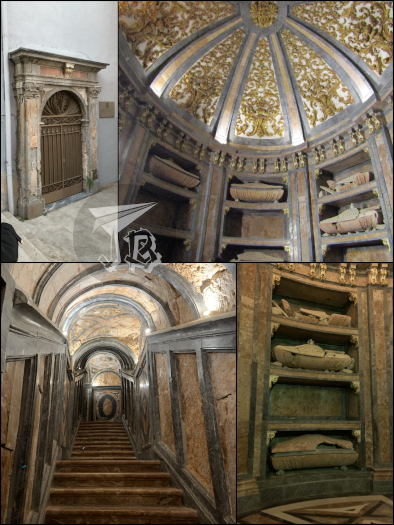
15th April 2025: Kinetic art and Egyptian replicas (Guadalajara, Spain)

Rain and school holidays having thwarted my hiking plans yet again, I decided to make the most of half a non rainy morning when I was going to be around Guadalajara to check out a free exhibition and the museum of a local artist.

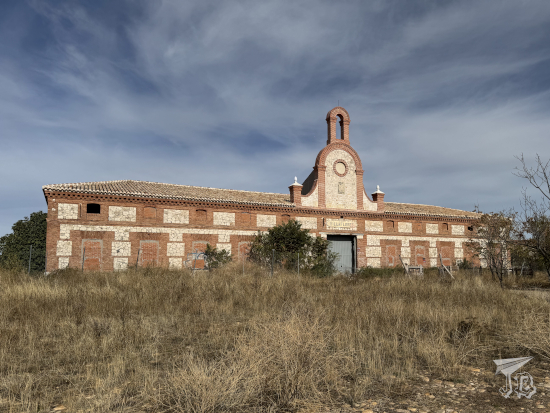
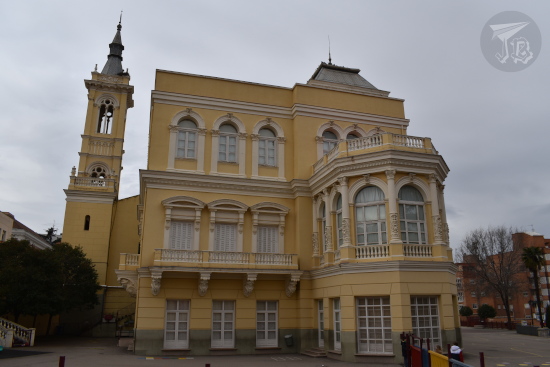
Francisco Sobrino (1932 – 2014) was a conceptual artist whose sculpture can be framed into the kinetic art and constructivism styles. The museum Museo Francisco Sobrino hosts some of his smaller works, mostly in colourful vinyls and experiments with materials, textures and light. Pretty colours and shapes, but I guess you need more knowledge of art than I have to appreciate the works and see… something different from pretty colours and shapes. But the museum is free and it is hosted in a historical building, the former slaughterhouse, built in traditional brick and stone. Though I’ve been around a few times, I’d never visited it before…

Francisco Sobrino Museum Guadalajara

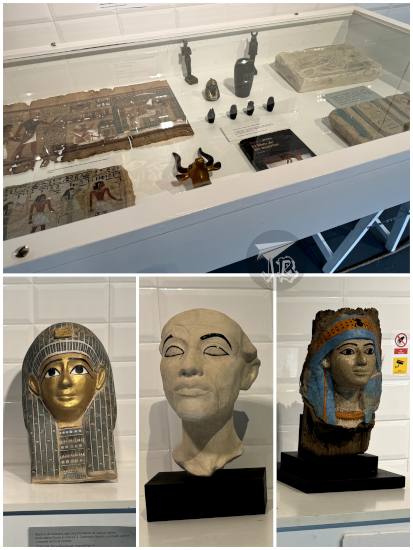
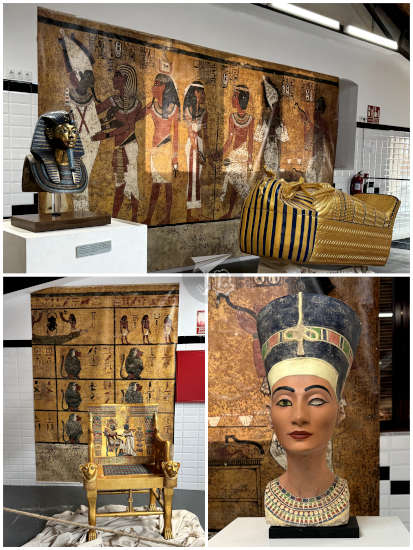
The exhibition on Ancient Egypt and King Tutankhamen’s tomb Tutankamón Secretos Revelados: La Exposición (Tutankhamen Secrets Revealed: The Exhibition) was endearing but lacking. It was located in another historical building, the traditional market Mercado de Abastos. It used to be a very successful local market, but the vendors lost most their clientele when it was closed for a few years to turn the place into a culture and bar hub. It was not successful at all, and now it’s a sad-looking place. The top floor hosted the exhibition, with a few posters with information and pictures, one of them being a very buff Anubis from the video-game franchise Assassin’s Creed. There were a few display cases with reproductions of Egyptian antiquated from private collections and books on Egypt. The largest part of the exhibition was a reproduction of several items found in Tutankhamen’s tomb: the wall paintings, a golden chair and the gold-plated sarcophagus. There were also a reproduction of the funerary mask, a brass tray and anything golden the curators seemed to have at hand, including a scarf. And the bust of Nefertiti for some reason.

Tutankhamun Exhibit Guadalajara

Tutankhamun Exhibit Guadalajara

I’m not going to say I was disappointed or that I expected more, it was a cute little exhibition that tried to do its best. Unfortunately, some of the information was inaccurate or outdated – they were showing a video from the 1980s, and archaeology has evolved a little since then.

However, I am still cackling at the low-resolution buff Anubis…

22nd March 2025: The Historical Flow of River Henares (Guadalajara, Spain)

The presence of the anticyclone over Great Britain created an unusual rainy March in the centre of Spain, with four storms hitting almost back to back. An average March in Guadalajara sees 4.9 days of rain. Between the 1st and 25th of March 2025, it rained for 21 days. Storms Jana, Konrad, Laurence and Martinho delivered rainfall not seen in the area for 30 years or so.

Rain is measured using gauges and in a unit of “millimetres” – one millimetre of rain is equivalent to one litre of water per square metre. The average rainfall in the Guadalajara area is around 46 litres per square metre for the whole month of March. This four-storm period left over 150 litres per square metre. That’s a lot of rain on rain – dark clouds, soaked soil, wind blowing off the cherry plum blossoms (Prunus cerasifera).

Prune flowers in the storm

Guadalajara was built on the river Río Henares a tributary of a tributary of river Tagus. The Henares sprouts out of the mountain range Sierra Minsitra and runs about 160 km with a variable average flow between 10 and 40 cubic metres per second. The flow of the river and its tributaries is heavily regulated by the presence of a network of reservoirs in the area, designed to fight the cyclical droughts in central Spain, an arid plateau known as La Meseta (The Plateau). There are sixteen reservoirs in the province of Guadalajara, ten of them actively monitored. In March 2025, it rained so much that six of them (Alcorlo, Atance, Beleña, El Vado, La Tajera and Pálmaces) reached critical capacity and their floodgates had to be open, which dumped more water into the already “fattened” river. Furthermore, it was already thawing season, and the little snow that was on the peaks had started melting…

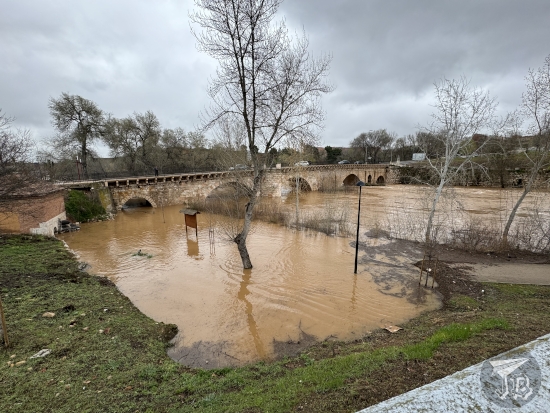
The result? The flow was up to over 300 cubic metres per second. That… is a lot. Official sources say that the water level increased by 40 cm, which of course caused the river to jump its usual banks. Along Guadalajara, this was mostly seen around the 10th century bridge Puente Califal (though other rivers were scary to cross). The structure was originally an Arab bridge, probably dating to the times of Abd al-Rahman III (Abd al-Rahmán ibn Muhámmad [عبد الرحمن بن محمد‎], 891 – 961 CE), though it was repeatedly damaged and repaired later on, particularly during the reign of Carlos III in the 18th century.

The bridge was built in ashlar masonry using a common technique from Al-Andalus architecture, stretcher and header soga y tizón, which means laying a layer of ashlar so the long side is outwards, then a layer so the short side is outwards, with the widest area always horizontal. The structure is almost 120 metres long, with five arches and four pillars, so thick that one of them allows for a spillway. Normally, only three of these arches are above water, allowing for most of the arch to be seen. This is a 2021 photograph which shows the usual situation underneath the bridge.

The normal state of the bridge - the low areas are dry, and only three arches have water running underneath

The humble bridge became the city’s most important tourist attraction during the storms period, as the river swelled and the water rose. Since I was in the area for work, I decided that I had to take a look. It was impressive. The water roared, and it had jumped the banks around the “park” area that has been built, along the footpaths.

Stone structure alongside the bridge, with water covering everything

Puente Califal Guadalajara during the March 2025 floods

River Henares underneath the Arab bridge

River Henares underneath the Arab bridge

Wideview of the Bridge, banks burst

22nd February 2025: Architecture in Madrid, and folklore in Guadalajara (Spain)

By now, reaching Madrid by train without anything remarkable to comment on is actually remarkable all by itself – there were actually no problems for once. I had booked a spot for a visit at noon, but since I don’t trust the rail service, I hopped on a train to be at Atocha Station around 10:00, and for once I was there right on time, maybe even a minute early!

As I walked up the street Paseo del Prado, I passed by the exhibition centre CaixaForum, where the Patagotitan still stands. Since it was still winter, the trees on both sides had little to no leaves, and I could see it from the opposite side. I of course said hi.

Patagotitan skeleton

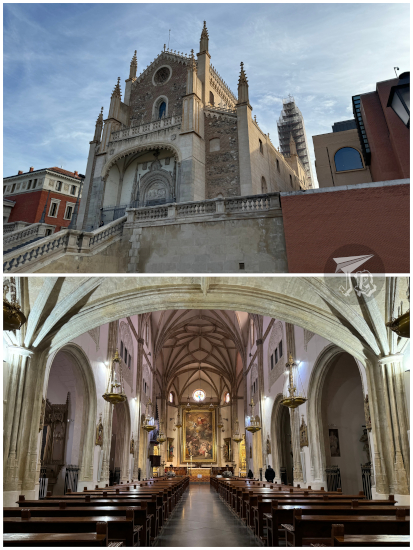
My first stop was the church Iglesia de San Jerónimo el Real, dedicated to St. Jerome, a late Gothic – early Renaissance building erected between 1502 and 1505. It belonged to a monkhood whose original monastery stood near the river. The stagnant waters caused illnesses among the brethren, who asked the Catholic Monarchs for a new location. The church for the new community was created from brick and masonry, and towers were added in the 17th century. The interior is decorated with two gothic altars to the sides, but no main altarpiece, as the original one has been lost to time. Instead, there is a painting by Rafael Tegeo La última comunión de San Jerónimo – Saint Jerome’s last communion – created in 1829.

Monastery Monasterio de Jerónimos

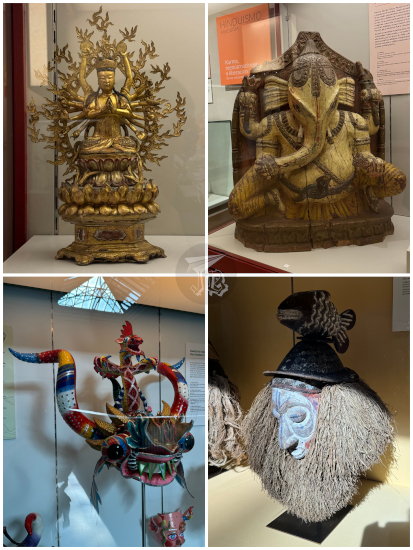
Afterwards, I headed towards the National Museum of Anthropology Museo Nacional de Antropología, a small museum dedicated to the diversity of cultures in the world, particularly the Americas, Philippines, Africa and the “Far East”, focusing on traditions, culture and religion. It is covered by my national museum card.

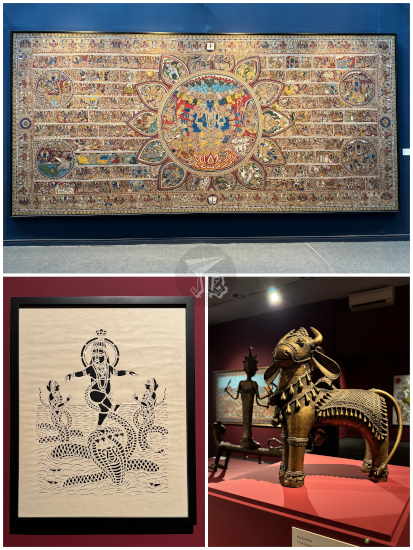
At the moment, the museum is running a temporal exhibit on art based on myths, legends, and sacred texts from India, Caminos místicos. Tradiciones vivas del arte de la India – Mystic Paths. Living Traditions of art from India. I was curious about it, but not expecting how much I liked it in the end. The pieces of the exhibit were mostly based on Hinduism (Sanātana Dharma, सनातन धर्म), the oldest religion in the world. According to Hindu tradition, the Supreme Being Brahma exists as themself, but also as the manifestation of the deities Brahma the Creator, Vishnu the Sustainer and Shiva the Destroyer, all of who at the same time have different avatars (avatāra, अवतार) or incarnations. One of the core principles of Hinduism is the concept of cosmic cause-and-effect justice, karma [कर्म]. Another is reincarnation (saṃsāra, संसार), an eternal cycle of life and death until the individual is liberated from it through self realisation or illumination. The religion is based on values like righteousness, truth, love, peace, and ethical conduct, and it is quite open to other beliefs and ethics.

Religious Indian Art pieces

The Museum of Anthropology’s permanent exhibition has a lot of items from the Philippines on the ground floor, probably due to how long(1565–1898) the islands were a Spanish colony. There are clothes, tobacco items, ritual objects, and a small sample of how the local culture was throughout the 1800s. To the back, there is a room dedicated to the religions of Asia and the Middle East – Hinduism, Buddhism and Islam. The first floor is dedicated to Africa, combining a number of traditional exhibits with modern photographs of the traditional people’s way of life – baskets, pottery, leather and wooden objects, ritual masks… The second floor holds items from the Americas, especially from South America. Some of them include a Mexican Día de los Muertos (Day of the Dead) altar, Andean Carnival masks, Sioux-Lakota clothes, Inuit coats…

Religious icons and traditional masks

I remember visiting the museum when I was a child, and then feeling disappointed in it when I returned as an adult. This time around, I found the permanent and temporal exhibitions quite interesting, so it’s a good thing I headed there. It also helped make time until noon, when my next visit was due, to the only Ministry that can be visited – albeit not freely, by appointment and paying a fee – as it is a historical building.

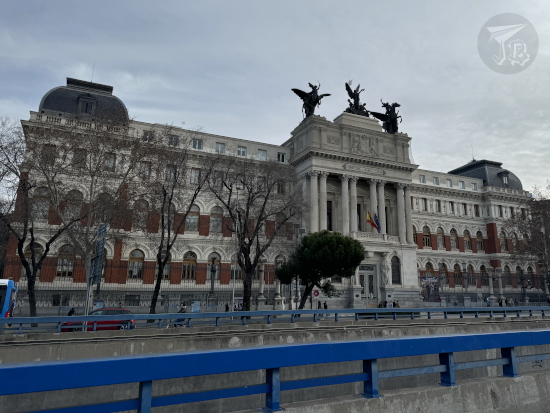
The current Agriculture Ministry is housed in the historical building known as Palacio de Fomento – Palace of Development. Its plans were originally drawn by architect Mariano  Belmás y Estrada, aiming for an Arts and Craftwork School. Later, Eduardo Saavedra y Moragas took over to turn the design into a university. Finally, the project ended in the hands of architect Ricardo Velázquez Bosco, who erected the building between 1893 and 1897 to house the then Ministry of Development.

The Palace is an impressive construction. The original design had three floors, which have now been turned into five. From the outside, the building looks white and orange-brown, but a more focused look reveals decorative tiles by Daniel Zuloaga, who also collaborated with Velázquez Bosco in the ETSIME. The entrance is flanked by two caryatids and roof above there is a sculpture group – Glory and Pegasi La Gloria y los Pegasos, a bronze copy of an original marble by Agustín Querol.

Palacio de Fomento, outside

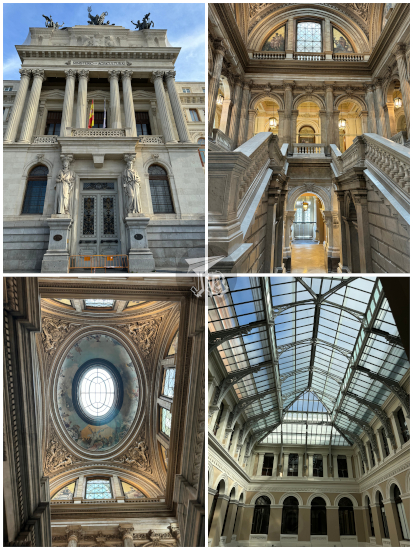
Once you enter, you find yourself in a huge majestic hall, where we had to check in, since the building is a working Ministry. The email said to be there at 11:45 to go through security. I got there at 11:40 and went in at 11:44. They took my name (they did not care about the ticket) and they put my stuff in the X-ray machine. I had to go through the metal detector and when I asked whether I had to remove my belt, I was just told to put my hand over the buckle… So much for security, I thought, because I did not beep. Then I realised that I must look quite non-threatening as quite a few people were thoroughly searched as they set off the machine.

Beyond the hall where we were checked in, there is an imperial staircase in marble, and a vaulted frescoed ceiling. From there, we visited some offices and meeting rooms, and the portrait gallery – from which the ministers who held office during the Franco dictatorship had been removed. Finally, we visited one of the side inner courtyards, covered in a skylight with some ironwork.

Palacio de Fomento, inside

After the visit was over, the security guards saw us out and locked the doors. I walked around the building, because I had honestly never realised it was square. As the place was next to the Retiro Park, I had been considering looking for some archaeological spot they had opened. However, there were more ideas – Guadalajara was having the Botarga parade, and it was the fair weekend in Tendilla, though, a phone call informed me that traffic was horrid and that it was not a good idea to head there so late in the afternoon.

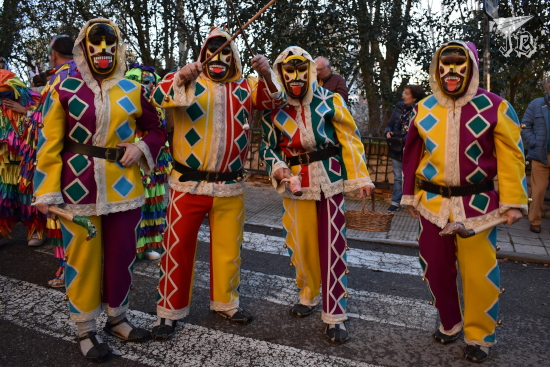
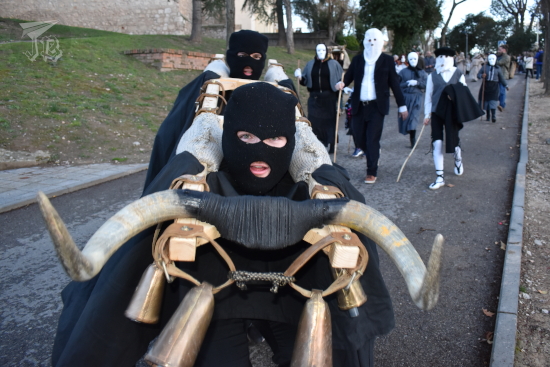
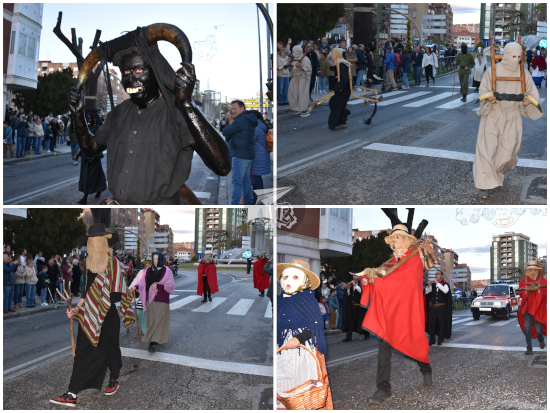
Eventually, I decided on the Parade. I bought some sandwiches and headed for the train. Though I got rained upon, it cleared up, and at 18:00 I was in Guadalajara to have a look at the traditional Parade of Carnival characters Desfile de Botargas – “creatures” from the whole area which meet up in the capital the Saturday before carnival, despite each character having its own schedule wherever it is rooted. The parade was a bit late, so I could talk the local botarga group – El Manda (the Order-giver), Los Mandaneros (the Order-receivers), and the Botarguilla (Little Botarga) – into posing for me. I watched and took pictures from two spots, but the parade moved really fast because they only had thirty minutes to do the route – last year they took well over an hour for that. I decided I did not want to run for it that much… I have to remember to find myself a vantage point next year, instead of trying to get the beginning of the parade…

Guadalajara Botargas

Heifferette from Riba de Saelices

Botarga Parade 2025

I got “attacked” a few times, and ended up with soot all over my face, but at least I avoided the guy painting people with mustard… The botargas seemed to zoom in on children and cameras, and so did the devils Diablos (from Luzón) and the heiferettes Vaquillas and Vaquillones (Villares de Jadraque, Robledillo de Mohernando, Luzaga, Riba de Saelices). It was fun. One of these days I might have to try to follow the botargas in their own villages…

6th December 2024: Knowing people gets you places – Church of the Virgin Mary, Guadalajara (Spain)

Knowing people who know people is cool. It opens doors, too. I was in Guadalajara for personal reasons and an acquaintance of an acquaintance offered to show us around the co-cathedral of the Virgin Mary Santa María de la Fuente la Mayor. The church, built in the 14th century in the Mudejar style, shares rank with the co-cathedral of Sigüenza. The whole structure is made or covered in brick, with some traces of coloured ceramic tiles around the horseshoe arch entrance.

Santa María Guadalajara

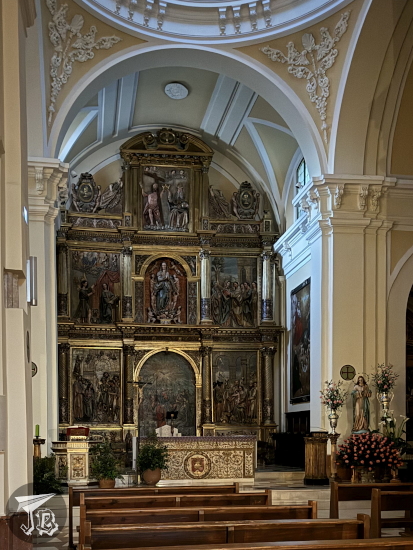
The interior is covered in plaster, hiding away the original stonework. Golden decoration was added afterwards. The main altarpiece was built by Francisco Mir in the late Renaissance style, with scenes of the life of the Virgin Mary. It was designed in 1622 and decorated in more gold.

Altarpiece at Santa María in Guadalajara

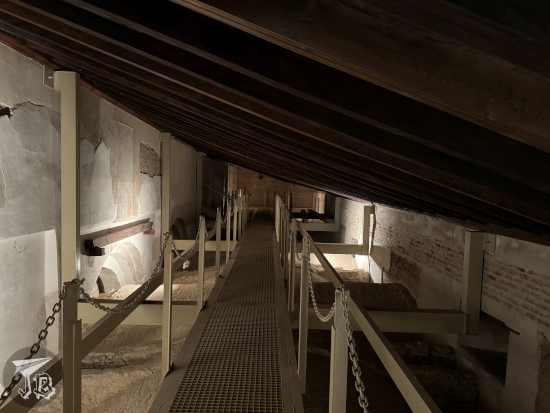
The church has a Mudejar artesonado or Spanish ceiling (a ceiling structure halfway between support and decoration, made out of wood, usually decorated). The artesonado was covered up during the Baroque renovations of the church and recently restored. Furthermore, if you know people, they show it to you. Up the high choir we went, and past a narrow staircase, through a small walkway that has been built for the few privileged visitors who are admitted (a bunch of people apparently tried to emulate us but were declined). We “floated” above the ceiling and underneath the wood for a while, and it was really interesting. Though of course the wood has been restored, most it is the original one. You can also see the Baroque vaults from above, along the original brick ceilings and walls, hidden away in the nave.

Spanish celiling at Santa María in Guadalajara

Spanish celiling at Santa María in Guadalajara

We were invited to climb the bell tower, too. The structure has also been restored, following the original brickwork. The tower is narrower at the top than at the bottom, and the ascending path has vaulted ceilings in brick. On top, there are eight bells. One of them dates from the 18th century, two of them from the 19th century and the rest are newer. There was also a view of the city, but Guadalajara does not really have dramatic backdrops, I fear…

Bell at Santa María Guadalajara

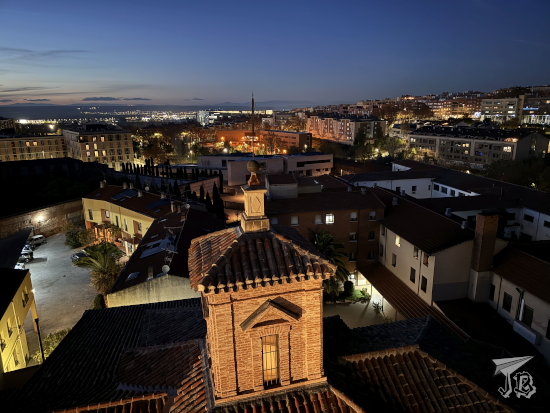
Guadalajara skyline of sorts

It was not a big trip or anything, but apparently you have to know someone to get there. Thus, I guess it is worthy of its own mention, right?

17th November 2024: Ha·Ya·To Drum Masters in Guadalajara (Spain)

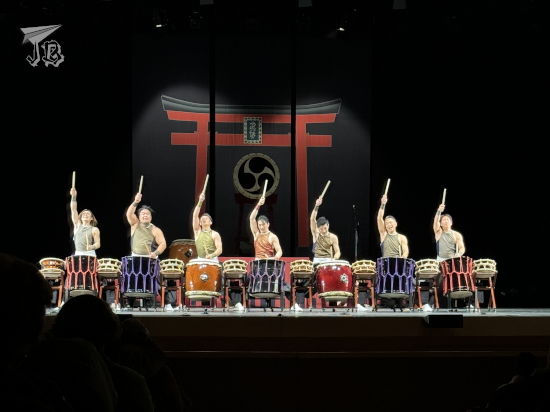
A while back, I read on Keita Kanazashi’s Instagram that Ha·Ya·To Project was going to come back to Spain for a small tour with their show Ha·Ya·To: Drum Masters. The most convenient place for me to see them was Teatro Buero Vallejo in Guadalajara. I got tickets as soon as I realised they were out, and still I did not beat the local crowd who buy tickets for any and everything.

Ha·Ya·To Drum Masters promo

Ha·Ya·To: Drum Masters is a Japanese percussion show wadaiko [和太鼓]. While Ha·Ya·To is officially formed by the three Kanazashi brothers, Keita Kanazashi, Ryota Kanazashi, and Yuta Kanazashi, for Drum Masters they are joined by Koji Hada, Takayuki Hashiguchi, Makoto Sekine and Shunichiro Kamiya, along with special guest stars Chieko Kojima (first female wadaiko master) and Masato Shibata (Japanese guitar shamisen world champion).

The show depicts the seasons of the year. It starts in Spring, with flowering cherry blossoms and a slow build up that yields to a super-energetic Summer, full of bouncing and strong beats. Then there comes the break and afterwards there is Autumn, where Chieko Kojima really shines, though the rhythm is a bit lower and more melancholic. Finally, energy picks up again for Winter – because it’s cold and one needs to warm up.

Ha·Ya·To Drum Masters

Ha·Ya·To Drum Masters

Ha·Ya·To Drum Masters

Ha·Ya·To Drum Masters

The show was absolutely fantastic. Afterwards, there was a “collective M&G” with pictures with the musicians. I did not get any autographs, though Ms Kojima did notice that I was carrying the DVD I bought in 2018. That lead to her, Keita and myself talking a little. I also had a photograph with Keita from an event in 2019. Their manager is very strict, and once she decides picture time is over, she really ushers them away. I did manage to sneak a selfie with Makoto Sekine after the rest of the group had left though.

Ha·Ya·To Project

I love taiko. It really energises me, and it was a great way to spend the evening. I could’ve combined it with something else, but I had plans for the next couple of days. I was off to see Apocalyptica the following day.

8th September 2024: Dinosaur FOMO (Guadalajara, Spain)

Whenever I’m reasonably close to dinosaur stuff, I have to check it out, I just can’t help myself. About a year ago, I attended DinoExpo XXL in Guadalajara, which turned out to be rather disappointing. Apparently, the town hosts dinosaur exhibits in time with the yearly festivals – they must be profitable. I read about Dinosaurs Tour (or Jurassic Expo, according to the banners), and I thought I would skip it, but in the end… in the end I just had to go and see it, because the Fear of Missing Out was strong. Maybe this time over it would be cool…

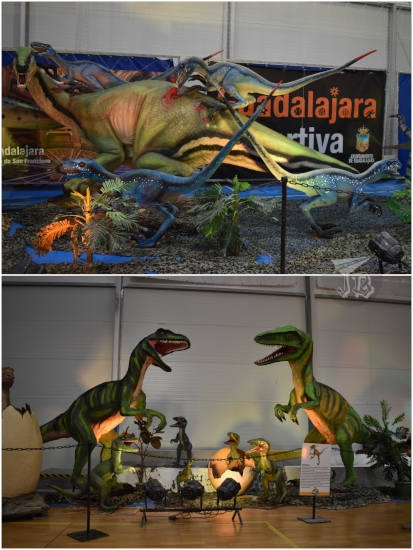
The exhibit was small, and while some of the models were correctly covered with feathers, a few were mislabelled to conform to the popular imaginary (way more of a cash cow than anything scientific). The usual suspects were Tyrannosaurus Rex, brachiosaurus, pachycephalosaurus, iguanodon, parasaurolophus… For some reason, there was a stegosaurus half climbing a tree, and a few Jurassic Park inspired reproductions: questionably-represented dilophosaurus and too-big velociraptors. Something new was a sarcosuchus, a giant crocodile ancestor. Oh, and something I was completely unable to identify… like a diplodocus with a beak and spikes… Maybe it tried to be a homage to Littlefoot?

Dinosaur Tour Guadalajara

The lights made everything look weird, too, because there was a lot of colourful – pink, blue, green – lighting which made it for a very disco-like atmosphere. It was not a big or good exhibit – not even the toddlers were extremely impressed, but as I said: Fear Of Missing Out gets the best out of me when it’s about dinosaurs. Next time though, I’ll try to get over the FOMO, because I think they’ll just bring a wall lizard and call it a Velociraptor.

3rd February 2024: The Botarga Parade (Guadalajara, Spain)

There is no reason to doubt the folk / pre-Christian origins of Carnival (Shrovetide). Scholars trace it back to Greek Anthesteria to honour Dyonisius and the Roman Saturnalia – Romans liked adapting everything from everyone after all, especially if a party could be had. It might even be related to Imbolc, an ancient Irish festival celebrated halfway between Winter Solstice and Spring Equinox (similar to how Hallowe’en is the night between Autumn Equinox and Winter Solstice). In the European Middle Ages, it was around this time when people consumed all the meat they had from the winter slaughter before it went bad – and then they would have no “good” food for a while. This eventually led to the idea of fasting during Lent, when the Christian church decided to hijack the celebrations.

A lot of what we consider “Carnival” today can be traced back to Medieval Italy – it started the masquerade balls, dressing up, and the carnal parades. The most important event was the Carnival of Venice. From there, it spread into Europe and with the Spanish and Portuguese empires to the Caribbean and Latin America.

Going back to its origins, it seems clear that the celebrations were rooted in nature, especially the coming of spring. Just as Hallowe’en marks the beginning of winter, it is around Imbolc (Christians call it Candlemas, and celebrate it on the 2nd of February) that you start really noticing that the days have grown longer. They are about an hour longer than on the Winter Solstice – at Stonehenge, one of the most natural / mystical points in the world, sunset on the 2nd of February 2024 was at 16:59, while on the Winter Solstice it was 16:02. Like Hallowe’en brings out spirits and monsters, Inbolc starts conjuring spring and nature-related folklore “creatures”.

Looking at Europe, there seem to be a lot of analogous characters in Carnival traditions. The German characters Hooriger Bär (hairy bear) and Strohbär (straw bear) wear a… camouflage / leaves suit covering all its body which looks eerily similar to the English Whittlesea, the Polish niedźwiedź zapustny, the Italian Hermit (tree-man), or even the Slovenian Korant. When one looks at the Korant, it can be seen the “leaves” are actually fur (sheepskin to be precise), which would make it in turn similar to the Hungarian busós, horned and more animal-like. All these appear to represent a connection to nature, only enhanced by the German Hopfennarr, which looks like one would draw a spirit of spring. It would be easy to reach the conclusion that all these characters are indeed related to the advent of spring – both for plants and animals.

As Italy (and especially Venice) made carnival a thing in Medieval Europe, they “exported” the concept of costumes “done right” and “proper” masks. This influenced older characters, giving them a more similar look to the archetypes in the Commedia dell’arte, with colourful clothes and expressive masks. These are more generic, masked, characters as those found in Venice, though in this city every character has its own name and story.

Some of these characters – both newer masked and older nature-linked characters – seem to have their representatives in the current Spanish Carnival folklore. They seem to have been especially important in the centre of the country, more dependent on agriculture and nature cycles than those areas close to the sea. They were popular in the past, and switched from the pagan festival to the Christian one. They were stifled during Franco’s Dictatorship (with the ban on Carnival), and have been recently re-popularised by folklore enthusiasts – some of them have been “rescheduled” to more touristic times than around Carnival. It is considered that the origin of these characters lies in fertility rituals and symbols – such as the orange – and dances from pre-Roman Spain, with some authors daring to call them Neolithic.

I attended the parade Tradicional Desfile de Botargas in Guadalajara which gathered these characters from the town and several other villages in the province. The main and more general name of the characters in this area is botarga. However, there are different characters according to what they look like: botargas, vaquillones, diablos, mascaritas, chocolateros, danzantes, and mascarones. These characters and their recovered traditions were declared Intangible Cultural Asset in 2022. The parade was a big day when most of the characters in the region came together. The parade used to take place on a Thursday before, and it was changed to the Saturday before Carnival so more people could enjoy it.

The term botarga derives from the Italian bottarga, which refers to colourful clothes related to Medieval performances and the Commedia dell’arte (aside from fish roe). The original clothes seem to have taken their name from the 16th-century actor Stefanello Bottarga, who used to wear wide pants, and play one of the archetypical characters, the vecchi (old geezers or masters). Under the name “botarga”, the province has recovered (or reinvented) a few traditions, and up to 36 single characters and groups walked the parade in Guadalajara.

The proper botarga is a usually single character, who wears a mask and garish clothes in bright colours. The masks can be made of many materials, some of them even esparto. The botarga usually carries some kind of staff, and it chases the onlookers, and sometimes pokes them for luck or fertility. Vaquillas (heiferettes) and vaquillones (literally, big male heiferettes) are characters which cover their faces with sackcloth or a similar material; they carry horns, and often cowbells; they represent cattle and are sometimes accompanied by “shepherds” (with staffs – there is a pattern there). The danzantes are dancers, and Diablos means Devils, pretty self-explanatory – some of the latter also wear horns, and a few are covered in black soot, and enjoy “marking” the onlookers with black smudges. Mascaritas and Mascarones both derive from the word mask, and could be translated as “small masks” and “big masks”; the mascaritas are the most common character, usually women in traditional clothes covering their faces with plain white masks.. Finally, the chocolateros or chocolatiers offer the treat (which they… carry in a chamberpot) to whomever they meet – and if they are declined, they use it to “attack” their victim.

There is actually a project called The Botarga Route, with a calendar so one can see each botarga in the original village. Most come out between New Year’s Day and the end of February, but some have been “moved” to the main day of the summer festivals. The great thing about the parade I attended in Guadalajara was that it concentrated a lot of the region’s botargas and further characters, and one “guest” from another region – it was the Desfile de Botargas, Vaquillones, Diablos, Mascaritas, Chocolateros, Danzantes y Mascarones de la Provincia de Guadalajara.

Characters posing in front of Espacio TYCE Guadalajara

The host botarga, Botarga from Guadalajara (Botarga de Guadalajara) is a team of four. They chase teens and and lightly hit them when they catch them. They play a traditional Carnival game similar to bobbing-for-apples, alhiguí. A dry fig is hung from a sort-of fishing pole, and onlookers can try and catch the fruit – the trick is that one has to use their mouth, not their hands hands. Meanwhile the botargas sing “tothefig, tothefig, not with the hands, yes with the mouth” (alhiguí, alhiguí, con las manos, no, con la boca, sí). Originally, there was only one character that came out on the 17th of January and played alhiguí with the children around the church of Santiago – El Manda (the Order-giver). Later, two more were added – Los Mandaneros (the Order-receivers), and since the custom was recovered in 1998, a new character, Botarguilla (Little Botarga) carries the basket with the figs.

First, all the characters met at Espacio TYCE, then they marched down to the Main Square in front of the town hall Plaza Mayor for the Carnival opening speech, and back.

The host botarga opened the parade. Music was provided by three teams of musicians: Grupo Dulzaineros from Guadalajara, Dulzaineros Pico del Lobo (their main instrument being the dulzaina, an instrument similar to an oboe) and Gaiteros from Villaflores (pipers). Although the parade did not take long to devolve into a lot of chaotic fun, it was organised in three bodies – single botargas, couple botargas, and teams. The signs reading “individual”, “couples” and “teams” were carried by characters wearing full-body costumes that made them look like walking grass-made men. Since I know the town a little, could I watched the parade from three spots, short-cutting from the TYCE area to the square Plaza de Bejanque , and then to Main Street Calle Mayor. Then I walked along towards Plaza Mayor Main Square, where the botargas one by one, or group by group, came on stage as the character was explained.

Botargas de Guadalajara

Aside from the music, there was a very distinctive sound – a lot of the botargas carry cowbells on their belts. The local botargas that participated in the parade are (in alphabetical order of the village they come from, and how they were called onto the stage):

  • Botarga de Alarilla: Botarga from Alarilla. It comes out on the 1st of January to greet the new year and send the evil spirits away. When it is not scaring little kids or getting frisky with the single ladies, it gives out little satchels of nuts.
  • Botarga de Aleas: Botarga from Aleas. The character used to come out on the 3rd of January, now it comes out on the 15th of August, for the village’s festival. The botarga and a number of dancers go around asking for money and food – especially sweets and wine.
  • Botargas y Mascaritas de Almiruete: Botargas and Little Masks from Almiruete. They come out on Shrove Saturday. The botargas throw straw and the mascaritas confetti. There are three other characters – the bear, its trainer, and the heiferette.
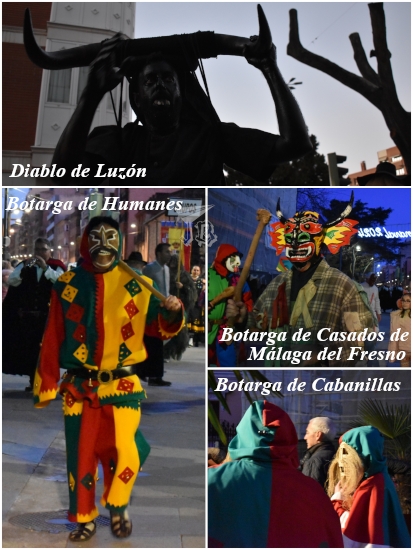
  • Botarga de Cabanillas del Campo: Botarga from Cabanillas del Campo. The two characters come out on the 3rd of February, sounding bells and cowbells to bother people and summon spring.
  • Chocolateros de Cogolludo: Chocolatiers from Cogolludo. They come out on Ash Wednesday to tempt people to break the religious fast. They carry a chamberpot with creamy chocolate, and sponge cakes dipped in it. If they don’t manage to tempt the onlookers, they smear the chocolate on their faces.
  • Botarga de Fuencemillán: Botarga from Fuencemillán. On the closest Saturday to the 25th of January, it dances in front of the image of Saint Peter, and chases people to get rid of the bad spirits.
  • Vaquillas de Grajanejos: Vaquillas from Grajanejos. They look more like shepherds and farmers than actual cattle.
  • Botarga de Hita: Botarga from Hita. Though today the two characters come out during the town’s Medieval festival in July, they are clearly Carnival characters. They represent the struggles of personified Carnival and Lent – though they dress so similarly, I could not tell who’s who.
  • Botarga de Humanes: Botarga from Humanes. It comes out on the 1st of January and knocks on doors to wish a happy new year. It wears a colourful costume with 31 tinker bells and seven bells. It blocks entry to the church unless it is given a coin.
  • Diablo y Vaquillas de Luzaga: Devil and Heiferettes from Luzaga. Nowadays, they come out on Shrove Saturday. The heiferettes wear red capes, a mask of sackcloths, a hat, and carry bull horns. They toll the cowbells and chase the onlookers. The devil throws straw to symbolise riches and fertility.
  • Diablos y Mascaritas de Luzón: Devils and Little Masks from Luzón. The devils carry horns on their heads and cowbells on their waists. They paint their body black and use a piece of potato to feign huge teeth. They “attack” onlookers with a mixture of ash and oil. They are accompanied by the Little Masks, who are safe from their actions, wearing the typical clothing of the area and white face coverings. They come out on Shrove Saturday.
  • Botarga de Majaelrayo: Botarga from Majaelrayo. This is one of the characters that comes out “off season”, on the first weekend of September, though the original festival was the third Sunday of January. It is one of the few (if not the only) unmasked ones, and it leads traditional dancing on Sunday.
  • Botarga de Casados de Málaga del Fresno: Botarga of Married Couples from Málaga del Fresno. The original botarga came out on the first of January. It stopped for a while and when the tradition was picked up, the festival moved to the 24th of January, and two more masked characters, the mojigangas were added. The botarga carries a staff and a bag of candy and chases people who go and come out from mass.
  • Botarga de Mazuecos: Botarga from Mazuecos. On the 23rd of January, they chase the young and hit them with their poles.
  • Vaquillas de Membrillera: Heiferettes from Membrillera. They wear two tunics in different colours, a collar of bells, and horns on their waists. They come out on Shrove Saturday to chase the youth.
  • Botarga de Mohernando: Botarga from Mohernando. This duo of botarga and buffoon come out on the closest Sunday to the 20th of January. Though they participate on the religious activities in a serious fashion, they chase kids and teens, and play pranks.
  • Botarga de Montarrón: Botarga from Montarrón. It comes out around the 20th of January, and panhandles through the village for food and drink that is later consumed by the inhabitants. It is one of the few botargas to attend mass, leaving its bells and mask outside.
  • Botarga de Muduex: Botarga from Muduex. This botarga has just been recovered, so it is writing its own tradition. It will come out on the local festival in July.
  • Botarga de Peñalver: Botarga from Peñalver. It chases young men and if it caches them, it will ask them a question, and only let them go if it likes the answer. It comes out the first Sunday after the 3rd of February.
  • Botarga de Puebla de Beleña: Botarga from Puebla de Beleña. This horned character takes part in the religious ceremonies to honour Saint Blaise (3rd of January) and chases people to hit them with its staff. He also knocks on doors and makes its cowbells toll to call people to mass.
  • Botarga de Razbona: Botarga from Razbona. Considered a symbol of prosperity and fertility, it comes out on the closest Saturday to the 25th of January. It picks up donations for charity and cultural acts. It used to attack people who did not cooperate with ash, now it gives out candy for those who donate. However, as it is regarded as a pagan character, it won’t step into the church.
  • Botarga de Retiendas: Botarga from Retiendas. It comes out on the closest Sunday to Candlemas. It dances and chases people to the beat of a drum, and takes part in the religious ceremonies.
  • Vaquilla de Riba de Saelices: Heiferette from Riba de Saelices. It comes out on Carnival Saturday (though originally it was Shrove Tuesday), charging people and getting mock-stabbed in return.
  • Vaquilla de Ribarredonda: Heiferette from Ribarredonda. The heiferette comes out on Shrove Sunday, tolling its cowbells. In the village, shepherds who cover their faces with sackcloth masks keep it in check with their staffs – the person playing the heiferette wears a helmet for protection.
  • Botarga de Casados de Robledillo de Mohernando: Botarga of Married Couples from Robledillo de Mohernando. It comes out on the 1st of January and enters the houses to wish a happy new year and wake people up with tolls and chimes from the bells it carries.
  • Botarga Infantil de Robledillo de Mohernando: Child Botarga from Robledillo de Mohernando. The only child group in the area, they come out on the closest Sunday to the 24th of January. There is a child botarga, musicians and basket-carriers. They don’t wear masks and they perform traditional dances.
  • Vaquillones de Robledillo de Mohernando: Big-Male-Usherettes from Robledillo de Mohernando. Completely clad in sackcloths and carrying horns and cowbells, they charge the onlookers on Shrove Saturday.
  • Botarga de Romanones: Botarga from Romanones. They come out on the last Saturday before Carnival (which was technically the day of the parade so… not sure when). The Little Masks throw confetti or flour at the ladies. They are accompanied by a shepherd and a bull – the bull is “fought and killed” a few times, as it can come back to life with a sip of “magic wine”.
  • Botarga de Salmerón: Botarga from Salmerón. A group of Little Masks comes out on Shrove Saturday. They throw confetti as a fertility charm. A botarga, Tío Alhiguí (Uncle Tothefig) comes with them to play the game with children.
  • Botarga de Taracena: Botarga from Taracena. It comes out on the 23rd of January. Alongside musicians, it walks through the town streets, chasing people towards the church.
  • Botarga de Tórtola de Henares: Botarga from Tórtola de Henares. It comes out in the morning of Christmas Eve, knocking on doors for food. It also comes out on the 6th of January and, along the Little Masks, during Carnival.
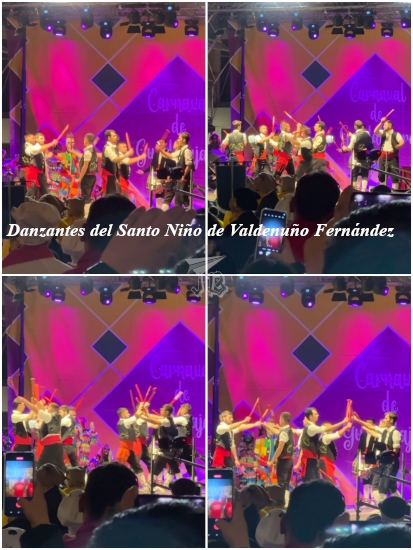
  • Botarga y Danzantes del Santo Niño de Valdenuño Fernández: Botarga and Danzantes of the Holy Child from Valdenuño Fernández. They come out the first Sunday after the 6th of January. There are records that a child got lost in 1721 everyone in the village looked for him. The botarga and the dancers recreate this event, and dance in exchange of oranges. One of the dances, the paloteo, involves the group of eight dancers clashing batons with each other.
  • Botarga de Valdesaz: Botargas from Valdesaz. This group chases each other and onlookers on Shrove Saturday.
  • Vaquillones de Villares de Jadraque: Big-Male-Usherettes from Villares de Jadraque. They come out on Shrove Saturday, wearing orange capes, horns and a hat, chasing anyone they come across.
  • Botarga de Villaseca de Uceda: Botarga from Villaseca de Uceda. Recovered in 2023, this botarga comes out the first Saturday after the Epiphany. Its design is modern, and it has mane-looking hair.
  • Botarga de Yélamos de Abajo: Botarga from Yélamos de Abajo. It is the only botarga that comes out during Holy Week (Easter) – but it actually looks a bit like a devil. On Spy Wednesday, villagers light a bonfire in front of the church, and summon the botarga with rattles. The botarga uses the bonfire to light its broom, and dances until the broom goes out. On Holy Thursday the botarga is summoned again, and asks for money. The money-giver says a prayer, the botarga kneels and a coin is inserted in the money-box hidden in the botarga’s hump. On Black Saturday, a dummy botarga is burnt in the bonfire.

Botargas from different villages

Vaquillones de Villares de Jadraque

Furthermore, the four botargas from Guadalajara walked (and ran) after the kids and teenagers at the head of the parade. The Mascarones (Big Masks) from Guadalajara – a cultural association which has worked really hard on the recovery of the botargas – were clad in colourful rags – a lot of them were accompanied by their kids and toddlers in marching suits, with the children handing out candy to both enthusiastic and terrified onlooking kids. The botarga from Muduex, just recovered, received a lot of attention. The kids who were part of the parade often went to give child onlookers candy.

Every year there is a “guest botarga” in the parade. In 2024, the guests are the Hamarrachos de Navalacruz, a group of very druidic-like characters, preceded by their very own flagpole. Navalacruz is a village in the Ávila region, and they have a whole party of creatures – three types: the ones covered in oak leaves, the ones covered in a hay sack, and the ones covered in fur. They seem to represent ancient winter spirits (big Hogfather vibes).

Hamarrachos de Navalcruz Characters

Funnily enough, I was “attacked” three times – twice by the Devils from Luzón Diablos de Luzón. They paint their bodies black and carry cowbells on their belts, horns on their heads and big teeth made from potatoes – they painted my forehead and jawline black in two different occasions. Another time, one of the Vaquillones from Robledillo de Mohernando Vaquillones de Robledillo de Mohernando mock-charged at me. I startled and he was mortified. But it was all good. Oh, and at some other point one of the Mascaritas dumped a handful of confetti on me – I had found a great spot to take pictures: right in front of a potted plant on main street. I was not in the way, since they had to ditch the plant, but I could take pictures of the characters up front.

Botargaas Parade, different characters

Once the parade made it to Main Square, they were called by groups onto the stage. The child botarga did a little dance to show off their skills. The most impressive moment on that stage came with the exhibition of the Dancers of the Holy Child Danzantes del Santo Niño de Valdenuño Fernández. They carry batons that they use when they dance, slamming them against the batons that others carry in a very impressive display of coordination.

Botargas on the stage

Danzantes del Santo Niño clashing batons

The speech of the major had nothing of interest, just the usual political stuff. Mementos were handed to the recovered botarga, and the guests, and then came the Proclamation to open up the Carnival period. The speaker was someone I’ve never heard of – Pepe Sanz, president of a local Vespa and Lambretta motorbikes club. I think.

Unfortunately, as I had been following the parade, I had a horrible spot in Main Square, I could not see the stage at all – but I could use my phone above my head for pictures and videos, while the people in front of me blocked the barriers and played with their phones. I can’t even. After all the speeches, welcoming the Carnival and so on, all the botargas and characters headed back to where came from. I did not stay for the backtracking, because it was cold and it was time to get back home.

24th January 2024: Williams & Zimmer by the Hollywood Symphony Orchestra (Guadalajara, Spain)

I had a good day planned, but it turns out that life sometimes does not go as one wants, so in the end the fun part of it was reduced to attending a concert in the theatre Auditorio Buero Vallejo in Guadalajara. The Hollywood Symphony Orchestra was touring Spain with a repertoire of film soundtracks by Hans Zimmer and John Williams.

Williams And Zimmer promo

The Hollywood Symphony Orchestra (HSO), from Los Angeles, comprises some musicians who record original soundtracks for films. Originally just a recording orchestra with works dating back to 1953, from 2006 they hold concerts and radio broadcasts. Today it is dedicated to perform “live to picture” concerts, playing live music in synch with the original material from the film. I think it would be really cool to watch a whole film with them playing the score!

However, this is not what they brought this time. It was more “snippets” of films with a remix of the main themes. The “Best Cinema Music” La mejor música de cine comprised several pieces by probably two of the most famous composers ever.

John Williams was born in 1932 and is still considered “an active composer and conductor”. Since his career started in 1954, he has been nominated for an Oscar 54 times, and he won five times – Fiddler on the Roof, Jaws, Star Wars, E.T. the Extra-Terrestrial and Schindler’s List. Hans Zimmer, a German film score composer and music producer, has been “only” nominated twelve times, with two wins – one for The Lion King and another for Dune. But he is more than 30 years younger than Williams, so I guess there is still time. Both of them have written film music I enjoy a lot (along with Howard Shore and Jerry Goldsmith), so I really wanted to go. I was even ready to brave the awful Guadalajara crowds and head to the theatre there.

The whole concert lasted about two hours, in two parts with one interlude, and two pieces of encore – a total of 15 songs. The director was not introduced, but he looked nothing like the main director that the HSO webpage introduces. As set up, the orchestra was on stage and behind them, a screen showed scenes from the films whose soundtracks they were playing. They were not too well planned, though, because most of them had to run a time and a half before the music piece ended. I like this set up though, because it gives me something visual to look at while the music plays. For me, it is perfect – it is the same thing they’ve done before at the Final Fantasy live concerts.

Setlist:

Part 1
  1. Main Title from Star Wars (Williams, 1977)
  2. The Lion King soundtrack medley (Zimmer, 1994)
  3. Superman Main Title Theme (Williams, 1978)
  4. Schindler’s List Theme (Williams, 1993)
  5. Pearl Harbor Suite (Zimmer, 2001)
  6. Now We Are Free, Gladiator main theme (Zimmer, 2000)
  7. The Raiders March, Main theme of the Indiana Jones films (Williams, 1982)
Part 2
  8. E.T. the Extra-terrestrial main theme (Williams, 1982)
  9. Main Theme from Jurassic Park (Williams, 1993)
  10. Molossus, Batman Begins main theme (Zimmer, 2005)
  11. Hymn to the Fallen, Saving Private Ryan main theme (Williams, 1998)
  12. Harry Potter Main Theme (Williams, 2001)
  13. He’s a Pirate, Pirates of the Caribbean main theme (Zimmer, 2003)
Encore
  14. Imperial March from Star Wars: Episode V – The Empire Strikes Back (Williams, 1980)
  15. The Raiders March, Main theme of the Indiana Jones films (Williams, 1982).

Hollywood Symphony Orchestra standing in front of an Indiana Jones photogram

All in all, the day did not pan out as I had planned it, but it did have a bit of an epic ending, and I was glad that I managed to squeeze the outing. I did miss hearing the theme of Jaws, but I got Jurassic Park, Pirates of the Caribbean and Indiana Jones. I have to admit that The Lion King was way intense (hello, inner child!). And I did not like the Gladiator film, but the rendition was epic. Most of it was. Except for E.T., which felt a bit too long, I thoroughly enjoyed the performance. A great way to end a not-so-good day.

Hollywood Symphony Orchestra in front of a Star Wars poster

Edit in January 2025. It seems this was not the Hollywood Symphony Orchestra at all, but a group of musicians impersonating them. During the 24/25 tour, the performance so bad that there were complaints and musicians got sacked and quit left and right. This rendition was good, to be honest, but I feel ripped off. Isn’t this fraud, technically? The reports of what happened in 2025 are surreal, with the ensemble impersonating two different orchestras for different repertories. Note to self: never trust promotor NK Prodarte.

13th January 2024: Commemoration of Ricardo Velázquez Bosco in Guadalajara (Spain)

In general, I’m not a fan of guided visits, but I’ve learnt to accept that they are sometimes the only way to get access to several monuments. Thus, I signed up for the free* “themed visit” about Ricardo Velázquez Bosco in Guadalajara. The route was organised by the town hall to commemorate the centennial of the architect’s death in 1923 (I know it’s 2024, the activities started in 2023, but they spread through January).

Velázquez Bosco is considered one of the most important architects in the Spanish late-1800s – early-1900s. Among his works are the Spanish Crystal Palace and the Madrid mining school. His style has been called “emphatic eclecticism” and described as eclectic historicism with academicist tendencies – which basically means that he did not like Modernism, and preferred combining historical styles instead.

In Guadalajara, he worked for the most important noblewoman of the period – the Duchess of Sevillano and Countess of La Vega del Pozo, María Diega Desmaissières y Sevillano (Duquesa de Sevillano y Condesa de la Vega del Pozo). The Duchess lived in Madrid, but was connected to Guadalajara through her aunt, Catholic Saint Maria Micaela, founder of the nun order known as Handmaids of the Blessed Sacrament. The Duchess of Sevillano (known in town as “the countess”) had a lot of buildings erected in Guadalajara and around it, most of which are now private property and have a very-limited-to-inexistent visit regime. The town loved its countess since she commissioned (also to Velázquez Bosco) the farming hamlet Poblado de Villaflores – the construction and subsequent agriculture and livestock activities created a lot of work in the area.

To honour her aunt’s charity work, the Duchess ordered Velázquez Bosco to build a school and an asylum, and though she never really lived in Guadalajara, she commissioned him to build her a palace when her Madrid home was expropriated. She never got to live there, as her heart failed in Bordeaux at the age of 64. She was buried in Guadalajara, in a pantheon that she had also ordered the architect to erect for her.

Today, both the asylum and the palace are schools, and cannot really be visited. The pantheon is privately managed by a private foundation Fundación San Diego de Alcalá, which also manages one of the schools, the adjacent gardens, and the church of the former convent.

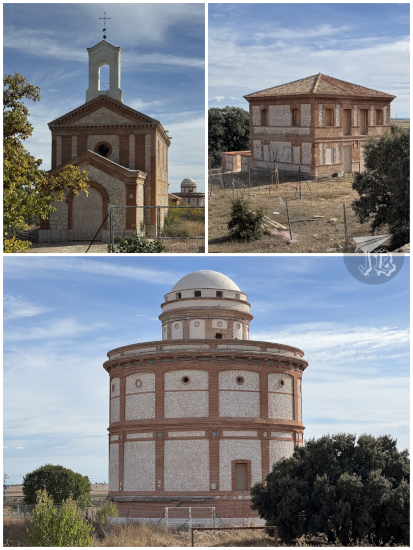
The first stop of the visit was the pantheon Panteón de la Duquesa de Sevillano. It is a small eclectic building, the inside is a Latin cross, the outside is a homage to the First Romanesque buildings, with neo-Gothic ornamentation. The characteristic purple dome and the interior mosaics are of Byzantine influence. The crypt is a false one, as the pantheon is reached by climbing up a monumental staircase, so when you “go down” to the crypt, you are actually at ground level. The Duchess’ sepulchre, carved in marble by modernist sculpture Ángel García Díaz, represents the funeral procession. We had to pay 1 € in order to visit the pantheon, as there was no agreement between the town hall and the foundation.

Ducchess of Sevillano's pantheon

Ducchess of Sevillano's Pantheon

We then were taken to another of the foundation’s buildings, the school Colegio Niña María Adoratrices. Today is a semi-private Catholic centre run by nuns from the congregation founded by Saint Maria Micaela. The school cannot generally be visited, so I was glad this worked out. The school building was erected in red brick, with a white limestone façade echoing the Renaissance building of the University in Alcalá de Henares. The school used to be a convent, and there is a restricted cloister. Legend has it that the cloister is only open for wedding photographies to brides who studied at the school. It is square, with two stories of neo-Romanesque arches and columns with vegetal decoration. We were also shown the chapel, with neo-Mudéjar panelling on the ceiling, and the monumental staircase.

Adoratrices School Guadalajara: Façade and cloister

Adoratrices School Guadalajara

Finally, we walked to what was built as the Duchess’ palace in Guadalajara, Palacio de la Condesa de la Vega del Pozo, today another school, Colegio de los Hermanos Maristas, also Catholic and semi-private, and extremely difficult to visit. We were shown inside and got to see the actual outline of the palace. Inside, we saw the panelling and the ceramic decoration before we reached the inner patio, a mix between Castilian and Andalusian styles.

We then visited the smoking room upstairs, an astonishing ward with ceramic tiles decoration and wooden floors. As a last snoop, we could peek into the balcony, which keeps the original cement-tile (baldosa hidráulica) floor. It was extremely impressive – and one can forgive the horrible pale yellow exterior the palace has been painted. Ricardo Velázquez Bosco was one of architect Antonio Palacios’ teacher, and I had the feeling that Palacios took his ideas for the Fundación San Diego de Alcalá, Panteón de la Duquesa de Sevillano, Colegio Niña María Adoratrices, Colegio de los Hermanos Maristas, Maudes hospital from the walls and floors of this palace.

Maristas school, former Duchess of Sevillano's Palace

Maristas school, former Duchess of Sevillano's Palace inside

The visit took around two hours, and it was free except for the pantheon. Being able to see the inside of both schools was the best, because it is rare that visitors are allowed in either. Thus, I am glad I signed up for this, especially as the weather held – we had a tiny bit of drizzle, but not much, and the clouds kept the cold at bay.

26th October 2023: Groove& in Guadalajara (Spain)

This was a short-enough trip that I could just fit in within half a day. Not that Guadalajara has many things that interest me, but it is close enough to Madrid that now and then there is a good show or artist coming. This time around, the South Korea Cultural Centre Centro Cultural Coreano, sponsored a small tour by the Korean percussion group Groove&, as part of its Korea Sound Festival. One of the stops was the Centro Ibercaja Guadalajara.

Korea Sound Festival poster

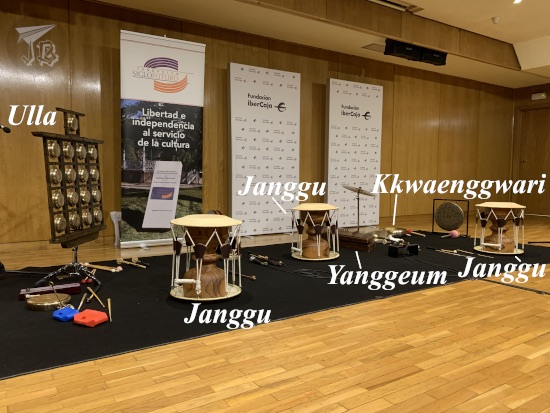
Based in Seoul, Groove& defines itself as a female percussion ensemble team based on traditional music. It is formed by three women: Sang-kyung Lee [이상경], Min-ju Sohn [손민주] and Ha-gyeong Kim [김하경]. All of them play the janggu [장구], which is the most traditional Korean drum – it has two heads (each with a different pitch) made from animal skin and the body is hourglass-shaped.

Sang-kyung Lee also plays the yanggeum [양금], a percussion instrument similar to a hammered dulcimer, but with metal strings which are hit with a bamboo stick to produce the music. Min-ju Sohn plays the ulla [운라], a set of ten small gongs hanging vertically from a wooden frame, the gongs are struck with a small beater. Finally, Ha-gyeong Kim plays the kkwaenggwari [꽹과리] a small brass gong which is held from a string with one hand and struck with a hard stick with the other. There were also cymbals and gongs.

Groove&'s Korean percussion instruments

I arrived at the cultural centre about half an hour before the show. There were a few people waiting, and it was a very weird crowd. Entry was free, and the act was sponsored by a local cultural association, which attracted a number of people who had absolutely no idea about what they were going to see. When doors opened, I found a seat on the third row, behind the authorities and the associates, but rather in the centre. The introduction was a little bit embarrassing though. The person introducing the band could not pronounce their name, and she sneered that “Korea is more than we know from the films and series that are a fad”. Well, of course. I’ve never been to Seoul, but I am rather sure people do not squid-game through life.

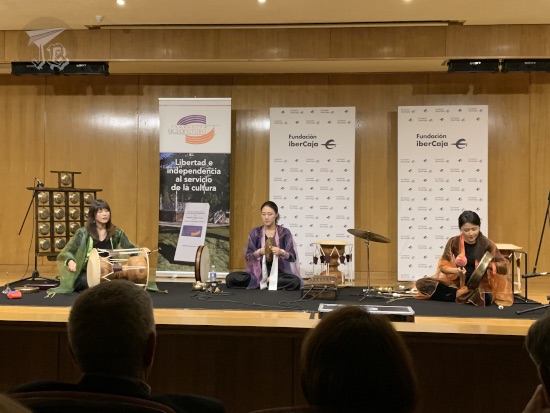
The concert lasted for about an hour and it was very interesting. Unfortunately, the venue was extremely small and the metal instruments reverberated a lot. For the first song, Kim walked out dressed in a folk costume and played around the audience, I think in a bit of a recreation of a pungmul [풍물] – a Korean folk music tradition that includes drumming, dancing, and singing, with performers wearing bright colours. Lee did all the talking, and she tried some Spanish along with English. The Korean she spoke was translated into Spanish by someone from the Korean Embassy I think. There were eight songs, a few emcees, during one of which Lee introduced the instruments. This was extremely funny, especially the ulla, as Sohn offered us a rendition of Under the sea from The Little Mermaid.

Groove& playing in Guadalajara

Setlist:

   1. Groove&
   2. Get!
   3. Wave
   4. Chaser
   5. Dodang-gut [도당굿]. Dodang-gut is a shamanic festival / ritual to call the spirits so they bring welfare, and well-being to the village, with a special importance given to female shamans.
   6. Pray
   7. Dusk
   8. Matt-Jang-Gu [맞장구]. This is a word that means agreement or listening to the other person, and also the position of two people playing the janggu drum face-to-face.

The show was extremely energetic considering these three women barely even move from their siting points on the floor. I had a lot of fun, despite the weird public – and the fact that apparently people in Guadalajara just love talking during shows, providing commentary.

Despite the metallic sounds being extremely high and echoing, the drumming was fantastic, you could feel it in your belly, and I really enjoyed it. I had never thought I would end up in a traditional Korean drumming show, but the opportunity presented itself and I took it up. A while back I participated in a Japanese drumming (taiko) workshop, and had a blast. I did not expect this to be similar – different countries and all – but I’m starting to suspect I like folk percussion in general.

20231026 Groove& greeting after the concert in Guadalajara

After the concert, the three drummers met with attendees. They took pictures with people and had some merchandising on sale. I bought a signed CD for 10€, said “thank you” in Korean (literally the only thing I can say that is not a food… and I don’t even like Korean food) and we took a picture together.

Groove& posing in Guadalajara

I headed off after that, just in time to get caught in the rain, because what is a concert without a little adventure?

9th September 2023: DinoExpo XXL (Guadalajara, Spain)

When I heard that this was going to happen nearby, in Guadalajara, I was mildly excited. I mean, I did not expect a Jurassic World Exhibition level event, more similar to Dino World Expo. Not even.

In any case, I decided to attend DinoExpo XXL to have a look. There, I had the pleasure to see a bunch of dinosaur models cramped in an obviously-too-small area, a few fake skeletons and bones, and some “Ice Age” representation. Some of the dinosaurs swayed their tails and necks, and there were roaring sounds. It is obvious that someone agreed to place the exhibit there without thinking it through. The models were extremely close to each other, to the point that a lot of their tails were basically in another one’s snout.

The kids were thrilled though, except the ones who wanted to actually ride the available dinosaurs and their parents told them that it was too expensive – on top of the ticket – for a photo-op. A bigger area would have been more enjoyable, but the way it was crammed in the auxiliary tent took of a lot of its lustre. Not sure about the legality of the Jurassic Park logo either… The models were a bit on the old side – some of them a bit damaged, and others inaccurate, such as a Spinosaur with the old tail, and Nanotyrannus has been deemed a juvenile T-rex for a while now.

Two dinosaurs on jeeps that remind of Jurassic park

DinoExpo XXL general view

A hunt scene and a family scene - with dinosaurs

A model of smallish T-rex and a fossil cast.

I stayed for about forty minutes, then left when the area started crowding up. I really did not feel like doing anything else, so I just drove home.

14th December 2021: Navilandia (Guadalajara, Spain)

Back when I visited Torrejón de Ardoz in November, they were already preparing their Christmas display, which is famous in the area. In a smart way to curve attendance though, this year the town hall decided to charge non-locals to enter. Towns around quickly noted this and decided to organise their own magnificent displays, and in the case of Guadalajara, give a hand to the people who live off the carnivals and fairs, as most regional summer festivals have been cancelled for the last two years. They called it Navilandia (Christmasland), the biggest “Christmas Theme Park” in the region.

The “theme park” is divided in several areas. The first one is the palace Palacio del Infantado, its gardens and the adjacent square. The Palace features the same Christmas tree as last year, and the gardens have been decorated with lights, Disney characters, a Zeus sculpture, music and… dinosaurs. I have no idea what dinosaurs have got to do with Christmas, but you won’t hear me complaining about dinosaurs. They are called the magical gardens Jardines Mágicos del Infantado. There is also a small flea market.

A gothic façade with a Christmas Tree made out of green and gold lights in front, along with some more decorations: Felices Fiestas, another tree, a reindeer made out of light

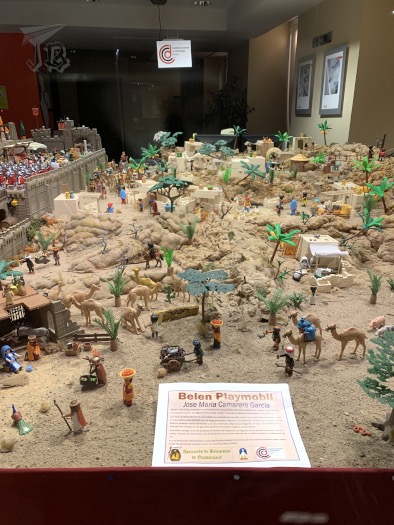
As I walked up Main Street I saw the traditional Playmobil Nativity they always set in one of the shops. However… I’ve never been able to spot the actual Nativity scene here. It is rather cool, though.

A Nativity made out of Playobil figurines, the stable is on the left and a bunch of toys are coming towards it through the desert. There a lots of dromedaries.

The second “Christmas hotspot” is the town hall square Plaza Mayor had a tasteful light decoration, a childish representation of the Three Wise Men, and a very beautiful – and lit up – carousel. I really wanted to ride it, but there were too many toddlers. It would have looked… weird. I need to find out when it closes so I sneak in after the kiddies have gone home (≧▽≦).

A caroussel with bright lights on in a square. Hanging above the square there are lots of lights and stars in gold colours. There are also four Christmas trees

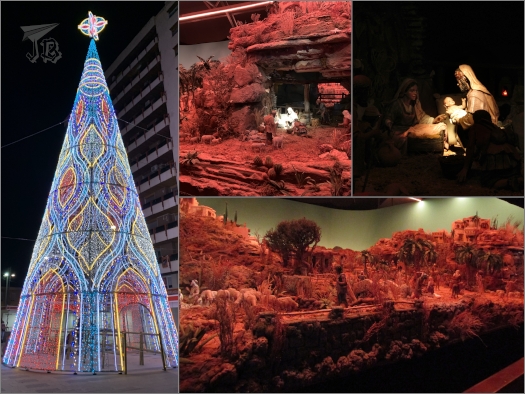
Third spot was half-closed but that is okay. The square Plaza de Santo Domingo hosts another flea market, that was not open – they are setting three rotating markets there, basically one each weekend, and we were between them. There was a big walk-in Christmas tree and the “monumental Nativity” there.

Collage: A Christmas tree made out of eye-shaped lights in blue, purple, red and yellow. A picture of the classical nativity with realistic figures. The Holy Family is illuminated in white - Joseph is placing the Child on a crib that Mary is holding.

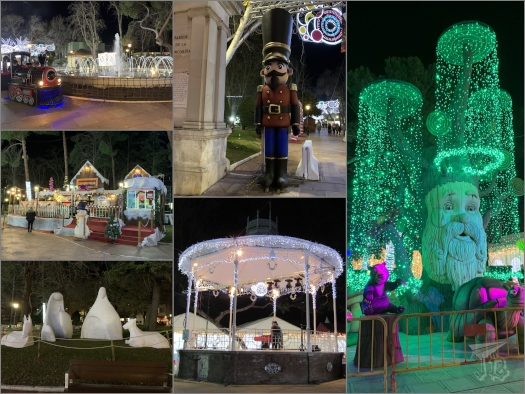
The final area extends along the parks Parque de la Concordia and Parque de las Adoratrices. The entrance is flanked by two nutcrackers; it hosts a talking tree, lights, food trucks, yet another flea market, and rides that again… are only Christmassy by name. There is another Nativity, this time an “abstract one”, a cute train and a “Polar Express” ride, some lights and… a “talking tree”, which broke into telling some tales out all of a sudden. Then, there was a bunch of rides, but they looked like your average travelling carnival rides, and I was not going to go onto any of those, so I made my way back. Also, I was strong and did not buy any cotton candy nor similar treats, though I was tempted to get some roasted chestnuts.

Bizarre Christmas decorations and motifs in the park: A giant nutcracker / soldier, an abstract nativity, some gingerbread-house-shaped shops, a Polar Express mini train, and a... something that looks like a tree with a face on the trunk and leaves made from green lights.

It was weird because for the second time in a couple of months I’ve been asked if I’m an actual photographer. True, this time it was a drunk guy who then proceeded to yell fascist slogans. I decided it was the right time to call it an evening and go home for the day…

6th November 2021: Torrejón de Ardoz & Guadalajara (Spain)

No matter how much some people demonise it, one true thing is that a great chunk of the Spanish general income is dependent on tourism. That’s why when the 2008 recession hit the country, many areas or municipalities tried to fabricate tourist attractions where there used to be none. Torrejón de Ardoz is one of these places – despite shouldering a huge debt, it gambled a couple of tourist lure. One is a huge winter lights (Christmas) display, which runs from November through January. The other is a huge park in a former slum, called Parque Europa, Europe Park.

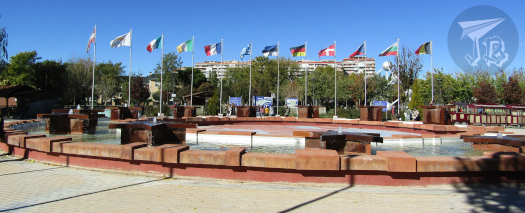
Parque Europa was described as “Pharaonic” upon its inauguration in 2010. It covers a whooping 23 hectares of trees, bushes, ponds, rides for kids and replicas of different European monuments and landmarks, both real and art depictions. I can’t be sure if in the end the park managed to break a profit, but the reviews online do sound like it did.

In winter, the park opens at 9.00 am, and I thought that if I managed to get there relatively early in the morning, I might find a free parking spot around the area. Online reviews do talk about limited parking space aimed to fill the pay-per-car parking lot close to the entrances, so I thought I’d try to leave the park in the streets of the industrial complex nearby. After a couple of Sat-Nav mishaps – human-caused aka I forgot the adapter for it to work in the car (≧▽≦) – I was on my way and I reached the neighbourhood a bit before 10.00 am. As I was driving towards my intended parking spot I caught a glimpse of the Eiffel Tower, so when I turned and found a random parking spot, I decided to just ditch the car. There were many double-parked cars ahead so I thought the rest of the street would be packed. At that time in the morning, I could have just parked in front of one of the access gates without problems, apparently. So I had to walk two whole extra minutes!! In the end though, that parking spot was even closer than the ones I planned to look for – so it was all good.

I wanted something to do in the morning outside the house so I did not have a plan per se (to be honest, I had long made the afternoon plans and I wanted something to do in the morning to make the most out of the disposable contacts). However, as the fountains were turned on at noon, I wanted to leave them for last. Fortunately, most of them are in the same area of the park – which is shaped like a ham of sorts. At that time most of the children rides were closed, and I was mostly alone except for people jogging or walking their dogs, and it was rather chilly. But I wanted to see the replicas, so that was all right.

These are the monument replicas that are hosted in the park, in the order I saw them, turning clockwise from the entrance I used:

  • Puerta de Alcalá (Gate to Alcalá), Madrid, Spain. Neoclassical gate to the former walls in Madrid. Today it is considered World Heritage as part of the “Paisaje de la Luz”.
  • Torre de Belém (Belém Tower), Lisbon, Portugal. Officially named Torre de São Vicente (Tower of Saint Vincent), a 16th-century port fortification for Portuguese explorers, with high symbolism and ceremony.
  • Tower Bridge, London, United Kingdom. Crossing the River Thames, it is one of the most iconic London landmarks.
  • Kinderdijkse molens, the Windmills of Kinderdijk, Netherlands. The original windmills were designed as part of water drainage to drain the excess water in the Alblasserwaard polder.
  • Brandenburger Tor (Brandenburg Gate), Berlin, Germany. It is one of the most characteristic landmarks in the country, a monument built in the place of a former wall gate in the 18th century.
  • Den lille Havfrue (The Little Mermaid), Copenhagen, Denmark. This small sculpture is displayed on a rock in the a promenade in Copenhagen, and depicts the mermaid in Hans Christian Andersen’s tale becoming human.
  • La tour Eiffel (The Eiffel Tower), Paris, France, built for the entrance to the 1889 World’s fair and one of the most visited monuments of the world.
  • Michelangelo’s David, Florence, Italy. One of the masterpieces of the Renaissance sculpture, standing 5.17 m of white marble. This replica I didn’t get to see because it had been either stolen or taken away for restoration.
  • Fontana di Trevi (Trevi Fountain), Rome, Italy. Dating back from 1762, the fountain is a “more dramatic” version of a previous one at the end of one of the Roman aqueducts. The fountain was turned on at noon and it had just a little water.
  • Manneken Pis (“Little Pissing Man”), Brussels, Belgium. It is a bronze fountain sculpture depicting a naked little boy peeing into the basin, dating back from the 17th century.
  • Atomium, Brussels, Belgium. This stainless steel building was constructed for the 1958 Brussels World’s Fair, and renovated between 2004 – 2006. It stands 102 metres high and some of the spheres are open to the public and hosts exhibitions.

There are also “adaptations” or monuments that you can “sort of” identify but have been more freely reproduced.

  • Greek Theatre, based on the Athens one, with the Winged Victory of Samothrace watching over in a bit of an artistic license move I guess, considering it was a ship figurehead. The actual one is in the Louvre Museum in Paris. The theatre is built into the slope of the central pond of the park so visitors can see the light and sound show in said pond when they are held.
  • Plaza de España (Square of Spain). The centre of the square is the famous “Puerta del Sol” in Madrid and the older Post office. Its back represents the Main Square of the city. Other houses represent different regional buildings throughout Spain that I was unable to recognise.
  • Viking Ship fountain. There is not much I can say about this. It was one of the fountains, and this one was turned before any of the others.

Inspired by paintings, there are two other monuments.

  • The Three Graces. While the park’s webpage claims that the sculpture is a copy of the one that Antonio Canova created, it looks like it was sculptured using Ruben’s painting as inspiration. This one was the first monument I saw.
  • Van Gogh’s bridge”, a wooden bridge inspired by Vincent van Gogh’s painting “The Langlois Bridge at Arles”. I missed it at first so I had to backtrack and I did not find a good angle to see it from the side.

An original piece is the fountain called Plaza de Europa, Europe Square, a circular square with stars forming little fountains. This was one of the fountains I had to wait till noon to see and to be honest, I was… underwhelmed, expecting way more by the pictures on the website. I’m not sure if it was just “winter fountain” or whether the sprouts were set on low because it was a bit windy.

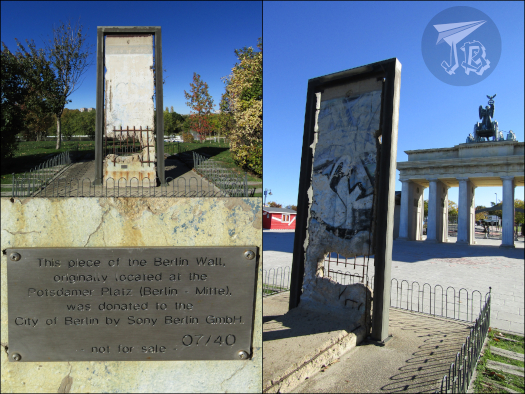
What was interestingly impressive was the original piece of the Berliner Mauer, the Berlin Wall. During the Cold War, after WWII, Berlin was partitioned into West Germany and East Germany with the erection of the wall in 1961 (in what was called the Berlin Crisis of 1961). It was all built within the eastern border as it was the USSR who decided to put it up. The Wall separated the city halves for decades, there were even deaths as people from the east tried to defect to the west. The wall officially but metaphorically fell in November 1989 as the political powers who had driven its building agonised. The piece that stands in Parque Europa originally stood in Postdamer Platz and was ceded to Torrejón by the city of Berlin and it stands behind the Brandenburg Gate.

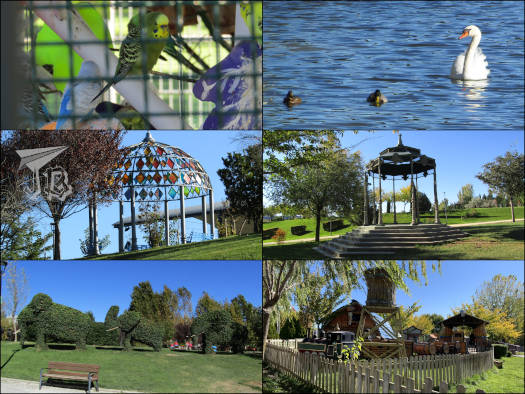
There are many other areas and activities for kids. A number of them were already opening up by the time I left, others seemed to be on hold due to pandemic concerns. The park has different things to draw attention too, such a giant bird cage (mostly full of parakeets), three life-sized elephants made out of bush, gardens, or an artificial waterfall – which did not get turned on. I saw a lot of birds too – magpies, swans, mallards and some very territorial Egyptian geese (I think that they were Egyptian geese. I’m absolutely sure they were territorial).

I left Torrejón at around 12:30, I think. I took care of some errands on the way, had lunch, and then I headed off to the second part of my self-imposed day off. A late-Halloween activity that ran throughout the month of November: Arquitectura y escultura funeraria in Guadalajara: a walking tour with a focus on the funerary architecture and sculpture in town. Well, at least with a stop at those places that are directly controlled by the town hall, missing those that are not. Yes, I voluntarily signed up for a guided visit! Unfortunately, information on Guadalajara is rather difficult to find, so I thought there might be interesting knowledge to be gathered (Narrator’s voice: there wasn’t).

The tour started at the local cemetery Cementerio Municipal Virgen De La Antigua, where we saw several tombs and pantheons dating from the 19th century and the early 20th century. These included:

  • Panteón de la Tropa, the “Troop mausoleum”, a communal grave for soldiers who died in the African campaigns, where supposedly some of the Civil Wars victims were buried. It actually is not the place, but legends are legends, I guess.
  • Panteón de los Marqueses de Villamejor – a neoclassical mausoleum where a noble family was interred.
  • Monumento funerario de la Familia Cuesta Sanz, a creepy obelisk-looking tomb.
  • Some smaller mausoleums (or big graves) Panteón de María Luisa García Gamboa, Panteón de la Familia Chavarri, Panteón de Josefa Corrido de Gaona, and Panteón de la familia de Ripollés Calvo. All these are stone tombs with a rounded roof that drains off rainwater.
  • Panteón de los Condes de Romanones, the place of eternal rest of another noble family, whose head was the son of the previous one.
  • Kittens

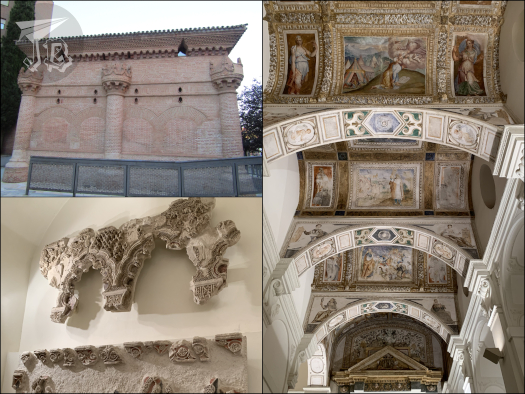
We then walked off towards the chapel Capilla de Luis de Lucena. Luis de Lucena was a doctor and a priest who was born in the 15th century. He died in Rome as he worked as a doctor for the Pope, but he expected to be buried in this chapel, adjacent to a now-disappeared church. The outer area is built in brick, and the inner ceilings have several frescoes, even if they are rather deteriorated as the town had no money to take care of the art during the 90s and the early 2000s. The chapel was never used as a burial place, and now it is a tiny museum that keeps rests of other disappeared churches in town, especially the funerary sculptures.

The final spot was the crypt of the church of St. Francis – Cripta de la Iglesia de San Francisco, built in dark marble and similar to the one in El Escorial. This is where the Mendoza duchy family members were buried, but the area was ransacked by the French during the Napoleonic wars and the remains were taken to Pastrana afterwards, so the crypt is currently empty. Which is good considering the way some of the tombs are shattered…

This concluded the tour so I was free to go. I saved up the entry fee on the chapel and the crypt as the tour was free. Most of the tour was just crawling from one point to the other and there was not that much new information to be learnt. Maybe there is jut not enough information to be found…

Driven distance: around 83 km.
Walking distance: 13.14 km

8th & 9th January 2021: Guadalajara & Filomena (Spain)

Since 2017, Spain (alongside Portugal and France) has taken up the custom of naming bad storms, and this season we are up to ‘F’, the 6th bad storm. In this case, the storm, named Filomena, entered Spain from the south west and collided with a polar air mass that happened to be coming from the north. The result – snow. Lot’s of it, with low temperatures and snow-heights not seen in a very long time. Some call it “the snowfall of a lifetime”.

As Covid-19 has made travelling impossible – or at least pretty unsafe / irresponsible (choose your pick), plans have been pushed back again, and plain cancelled. While truth be told I still hold tickets for the Saint Seiya event in Paris in late May, I have no hope I will be able to attend. Even if the Covid crisis fades away, there’s the extra issue of the economic blow 2020 caused.

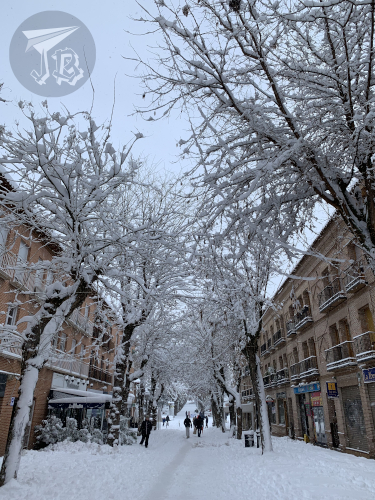
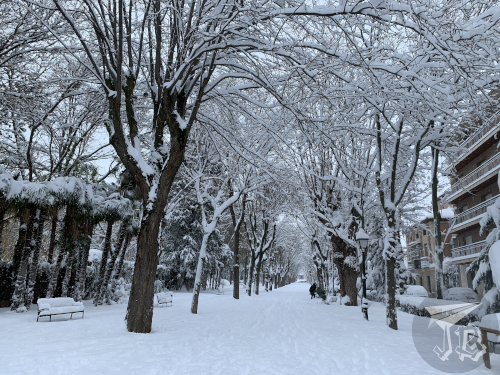
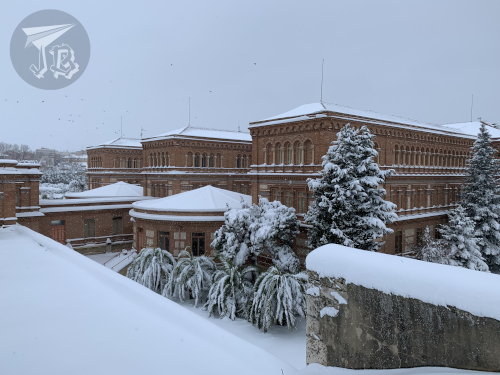
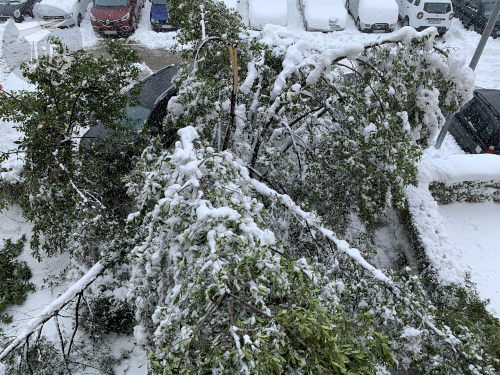
Anyway, back to Filomena – it brought something that is rarely seen in these parts. Snow. Lots of it. So before everything went to hell, I just decided to ignore the stay at home recommendation and took a couple of walks around Guadalajara for a rare sight – the monuments covered with snow. Furthermore, as the snow is expected to freeze into ice plates, I had to go out when the snow was still fresh.

I took two different walks. On the eight of January, Friday, as soon as I got out of wok I put on my snow boots (perks from the time living in Scotland) and winter coat, then threw my raincoat over it – it was a tricky movement, but I managed not to dislocate my shoulder doing so. By this time there was a coverage of a few centimetres, and I decided to head out to the outer area of town where I could sneakily take my mask off if my glasses fogged too much, which I had to do when I crossed the road, because there’s no actual crossing.

There was a surprising amount of people around! Fortunately I was able to keep my distance, especially at the times when I tried to breathe – even if I went out with the smaller glasses, at points I had to take them and the mask off to be able to breathe and see anything.

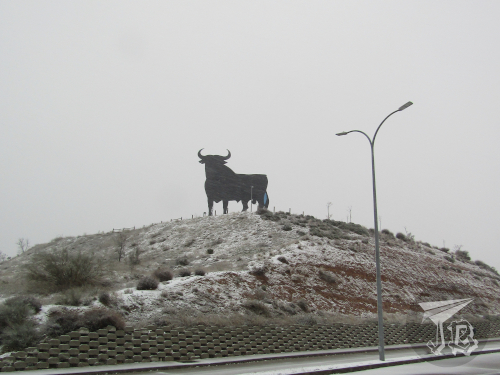
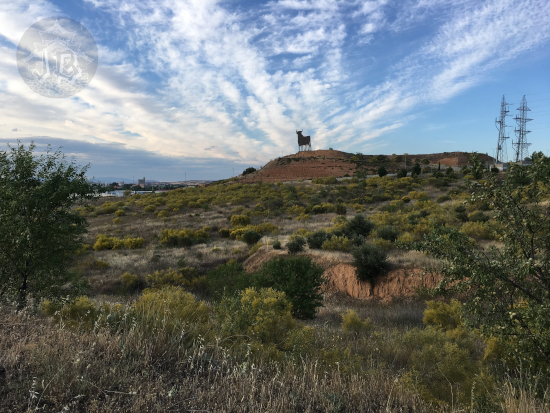
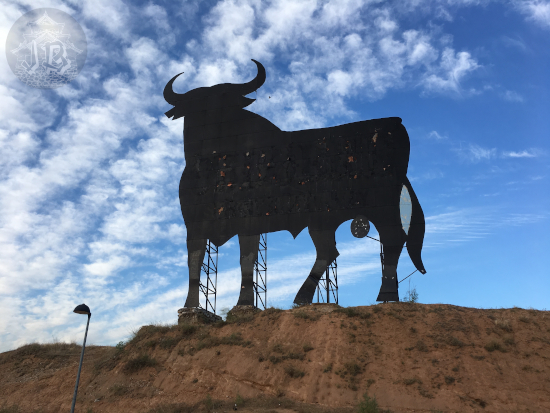
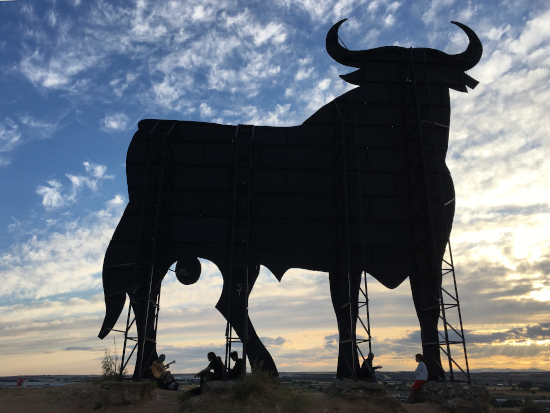
I walked up to the Toro de Osborne a winery-billboard-turned-item-of-cultural-and-visual-interest which as you can see is shaped as a bull – representing the species used in bred for bullfighting, because the Osborne winery is located in an area also famous for the livestock. It is made of metal and measures around 14 metres high, one of the 91 that remain around Spain. It stands in an area that was supposed to become urbanised but never did, so it has several unfinished alleys and corners. There has been a statue there since 1975, called El Abrazo, (The Hug), which has always reminded me of a decomposing DNA strand. It was erected by Francisco Sobrino, the most famous sculptor from the town.

I went back right before sundown, and the roads were already difficult. It continued snowing throughout the night, and when I woke up on Saturday morning, no cars could run, there were no buses, trains had been stopped and some trees had collapsed under the weight of the strongest snowfall in decades. But… temptation won. I only wanted to peek around the corner a little, but then I decided that as there was a good chance I would run into people, I could not cheat on mask policy – so I put my contacts on. That warranted for a longer walk as those are disposable, and… not cheap (≧▽≦).

First I walked down the Avenida del Ejército, one of the main arteries in town, which had already been somewhat cleaned of snow, which was good, because… well, there was a bit more of a cover than the day before

I reached the park built after the ancient Arab structure, Parque de la Huerta de San Antonio. To the left stands one of the towers of the old walls, Torreón de Alvar Fáñez.

I saw the snowed Palacio del Infantado. This palace was built in the late Renaissance style, designed by Juan Guas and commissioned by the Marquis of Santillana. Although the main construction happened between 1480 and 1497 but has been reformed in several occasions, even recently as it was turned from public library into monument and museum. Infantado is a name related to the concepts of infante or infanta, which are the Spanish terms that designate the children of monarchs who are not the direct heirs (so no the crown prince or princess). The most important feature is the main façade built with sand-coloured rocks and diamond protuberances as decoration. It was suspected to have suffered from aluminosis concrete a couple of years back, but after a small political struggle, it the palace was deemed healthy again. Magic, I guess.

Up the central street of the old town, I took a small detour to check the Iglesia de Santiago Apóstol to the left. The church, built in bricks, used to belong to a now-gone convent.

In front of the church stands the convent-turned-palace-turned-high-school Convento de la Piedad / Palacio de Antonio de Mendoza. The convent-palace represents the start of the Renaissance influence in Spain, especially the former grand entrance.

At the end of the street stands the main square and Ayuntamiento, the town hall, and main square, where the street turns into the main street, Calle Mayor. The town hall, built at the beginning of the 20th century, sports an interesting bell tower in iron.

The square Plaza del Jardinillo (square of the little garden) where the Baroque church Iglesia de San Nicolás el Real stands. You can’t really recognise him under all the snow, but there is a Neptune standing in the middle of the fountain in the square.

Main Street continues until the square Plaza de Santo Domingo. The square is half park-like, half built, and one of the trees that died in the park area was carved into a book-stash sculpture.

On the other side of the road stands another church, Iglesia de San Ginés, built in the 17th century with two towers and a Romanesque-looking entrance.

The police tape around the main town park, Parque de la Concordia, had been partially taken down and I interpreted (wrongly) by the sheer number of people inside that it was allowed to walk in. Only when I reached the other side I realised that the park was considered unsafe, and of course I did not risk any other trespassing. The park dates to mid-19th century, and hosts a gazebo-like structure built in brick and iron by Francisco Checa in 1915.

I went on to the Paseo de San Roque, only on the street area, as the more park-like one was taped off. This is one of the most diverse parks in town, and some say that it could / should have been considered a botanical garden.

I walked alongside, peeked into the park Parque de las Adoratrices, but it was packed, so I continued on. Although this park is rather recent, opened in 2009, the walls and fences were built a century earlier. The town festival used to be celebrated here, but it was moved away to the outskirts as the town grew.

At the end of the street stands the chapel Ermita de San Roque , which originally was outside the town when it was built in the 17th century, in the typical brick of the area.

I walked around the walled area of the Colegio de las Adoratrices, with some really cool views of the pantheon that stands there, Panteón de la Duquesa de Sevillano, the school building and the church Iglesia de Santa María Micaela. This whole area used to belong to the Duchess, who commissioned the architectural complex in the 19th century. The pantheon is a particular example of the eclectic architecture, with a purple dome. The church is a mixture of different styles, out of which maybe neo-Gothic would be the most prominent one.

The street I wanted to go along next was a) taped off and b) waaaay too steep for a safe climb-up, so I decided to turn towards another of the important squares in town, Plaza de Bejanque. You can guess the old fortress Fuerte de San Francisco behind it, but it was also full of people, so I walked fast.

One of the features of the square is the old gate from the walls, Puerta de Bejanque, one of the access gates through the 14th century wall. This used to be part of a house that was built around it, and it was unearthed, so to speak, in the 90s.

I went down towards the co-cathedral Concatedral de Santa María. Originally built in the 13th century, this catholic church has been redesigned and rebuilt in several styles. It is best characterised by the horse-shoe arches in the main façade.

And sneaked up towards the chapel Capilla de Luis de Lucena, a small and compact chapel built like a tiny fortress that used to be an oratory part of a larger church.

I walked past the old palatial house Palacio de la Cotilla, a palatial house from the 15th century.

The convent Convento de las Carmelitas de San José. This convent, where cloistered nuns still live (tradition says that couples that are going to marry should bring them eggs for sun on the day of the wedding) was built in 1625, and the inside is decorated in the Baroque style.

And finally reached the lookout over the park built within the old torrent, Parque del Barranco del Alamín.

I finally saw the former church Iglesia de los Remedios. Today it is used as the grand hall for the nearby university, but it was originally a Renaissance temple, with three characteristic arches guarding the entrance.

And turned back towards the Palacio del Infantado from the square Plaza de España.

It had started snowing more heavily by then and my legs were getting tired. The sloshy snow on the roads had become frozen so it was slippery, and when I was walking on the actual snow, it was up to my mid-shins, so I was feeling the strain in my legs and my back. Thus, I decided to go back home and not to return in the afternoon again because the trees had lost more and more branches under the weight of the snow. The temperature going down also meant that the snow was going to freeze and it would be more slippery as it became ice…

I mean, this is the tree that used to stand in front of my balcony… So better safe than sorry. But all in all, the snowfall of a lifetime in these latitudes!

9th June 2019: Gold fields and bull billboard (Guadalajara, Spain)

A friend was over and she was curious about the huge black bull billboard that stands next to the entrance to Guadalajara, so we headed there. We had a big Chinese late lunch, and afterwards we decided to walk to the bull.

The so-called Toro de Osborne (Osborne bull, and… hm… you can tell… he’s a male, right?) was conceived as a publicity billboard for the Osborne winery. The bulls were originally designed in 1956 as by-road advertisement for one of the winery’s drinks. The first set of bulls was installed in 1958, and the current ones date back to 1962, made with metal, and around 14 metres high. In 1988 the lettering was removed. Although in compliance to the 1994, laws the bulls should have been removed, but a motion was filed to keep them as ‘cultural items’ as people had grown fond of them. In 1997 a law was passed ordaining that the bulls were to remain due to “cultural and visual interest”. There used to be about 500 bulls throughout all of Spain, but today only 91 remain, although there are others around the world. For example, there is one in Japan, because… Japan, I guess. The area with most of them is the one where the winery headquarters stand.

The Guadalajara bull stands next to the N-320 exit number 53. you can reach it by car or on foot. We took a walk around the area and we got to see the wheat and barley fields that give the area its typical brown / gold colours in summer. These are called the Calstillian fields, Campos de Castilla.

When we finally got to the bull, we were expecting nobody around, but there were a bunch of people, mostly drinking and smoking weed. Apparently it had also been vandalised and used for target practice, because people are civilised and all that. If you squint, you can actually see the word “Osborne” on the billboard.

21st January 2018: Zoology at the Zoo (Guadalajara, Spain)

This was just a stroll down the Zoológico Municipal de Guadalajara, the local town zoo. I just thought I could look up some of the animals I came across and see if I learn any interesting facts. It was not as easy as I thought!

Eurasian otter (Lutra lutra): it is a semiaquatic mamal that is fortunately not threatened. It lives near rivers and coasts in Europe and Asia. It mainly eats fish. They are pretty smart and playful, but they are also very territorial, so they usually live alone. They have webbed claws for swimming and catching fish. Mother otters teach the kits to fish by a game of “catch and release” the fish.

Peafowl (Pavo cristatus ): technically “peacock” is the male (colourful) and “peahen” is the female (brown). The male has long tail feathers that he displays when he wants to impress a female or another male. In India, it was used as ‘guardian animal’ as it screams when tigers approach and it can eat young cobra snakes. Now, that’s pretty cool, and here I thought he was just a pretty tail!

Fallow deer (Dama dama): Fallow deer are native to Europe, and have been introduced to many other places. The bucks (males) are very aggressive and competitive during mating season, and they use their horns to fight. The does (females) do not have horns.

Iberian red deer (Cervus elaphus): The imagery of the red deer has been so powerful in the human psyche that some it can be found in paintings dating 40,000 years back. Normally the males and the young create big family groups. Males create smaller groups that cooperate.

Barbary sheep (Ammotragus lervia). Also called arrui, it is an African mountain goat which lives in arid mountains and canyons and graze grass, bushes and lichens. They were artificially introduced in Southern Europe and became a bit of an invasive species. However, the truth is that they look super chill and zen.

European mouflon (Ovis orientalis musimon): It was originally a mountain creature but it moved to the forest when humans started bothering them. They thrive in rocky areas, though. They tend to live in herds with a lead female.

Wild boar (Sus scrofa): This is the omnivore animal by its own right. It can and will eat anything – from fruit to berries to even baby deer (O_O)!. Many old Indo-European cultures considered the boar a symbol of warrior virtues. In Greek mythology, the hero Herakles had to capture a boar as one of his Labours. In the east, it is considered a symbol of determination and even recklessness.

Iberian wolf (Canis lupus signatus): Unfortunately, the Iberian wolf is a vulnerable species and culling is still legal in Spain (•̀ω•́ ). The Iberian wolf is brown-grey and had a characteristic white area around its mouth. They also have black vertical lines along the front legs, and other dark marks on the leg and the tail. They are predators and prefer hunting big animals, especially deer. Wolves are social creatures, they live and hunt in groups.

Something really cool about wolves in general is that when they run, they place their hind legs on the footprint created by the front paw. Talk about coordination. Wolves have a very bad reputation in Spain, but there have not been confirmed attacks on cattle, much less on people, in recent years. Pictograms of the Iberian wolf have been found in archaeological artefacts from the tribes that lived in Spain before the Romans.

Emu (Dromaius novaehollandiae): Yay for another non-threatened animal. Emu originated in Australia, and are the second-biggest bird in existence after the ostrich. They are flightless, and they eat plants, grasses, insect and arthropods, depending the seasonal availability. Because females can lay several clutches of egg in one season after mating with different males, the male takes care of the incubation, and the chick-rearing. According the mythology of some aboriginal tribes of what now is called New South Wales, the sun had been created by throwing an emu egg into the sky.
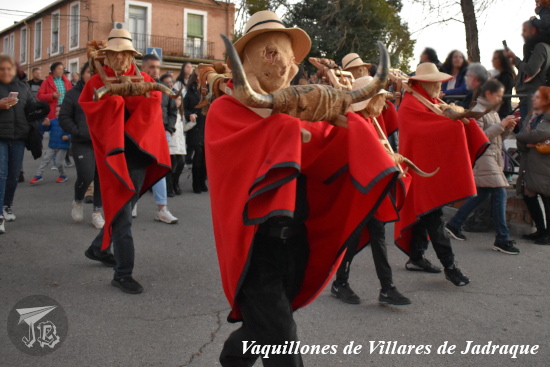
Eurasian lynx (Lynx lynx): Native of Europe and Asia, it is widely distributed, which lowers its conservation concerns. The Eurasian lynx is mainly a nocturnal predator, and tends to live solitarily as an adult, although hunting areas may overlap for several individuals. They can hunt small animals, but they are known to prefer bigger prey, such as roe deer and common deer. Conversely, they may be hunted by wolves.

Red fox (Vulpes vulpes): The red fox is one of the animals with the widest habitat range in the whole world. It can be found almost everywhere in the northern Hemisphere, including many cities in Europe. It is an invasive species in Australia, where it was introduced in the 19th century. In European mythology it’s considered symbol of deceit. In Asian mythology it has two-faces, some of them are messengers of the gods, some are tricksters and dangerous. Arab folklore considers the fox cowardly and weak. Native American mythology considers it a crafty creature that steals the coyote’s food – in all cultures however, it seems to be intellingent and able to trick other animals or people. Interesting.

Griffon vulture (Gyps fulvus): A scavenger bird of prey, it feeds mostly off the carcasses of dead animals. It tends to live in flocks or colonies and makes nests on rocky walls. Even if they have a bad rep, they are very cool animals.

White stork (Ciconia ciconia): Credited with bringing babies from Paris, storks used to be long-distance migrants, which lived in North Africa in winter and returned to Europe in summer to breed. For the last twenty years or so, the storks have stayed, at least in Spain. They are also famous for making nests on belfries and other man-made structures, and because they are considered a good omen they have rarely been chased away – until the weight of the nest has made belltowers collapse!

Common kestrel (Falco tinnunculus), I think. Feel free to correct me if I’m wrong. The best thing about the small zoo is the work they carry out recovering injured birds of prey. The birds are nursed back to health and if everything works out they are released into the wild. I really hope this little guy can leave soon! ⋛⋋( ‘◇’)⋌⋚

8th December 2017: Ferrari in Guadalajara (Spain)

There was a tiny (five) Ferrari sport cars exhibition in Guadalajara, Spain, so I thought I would drop by, just to be able to appreciate what they call “Ferrari red”. I loved the cars, but I don’t think that I would ever be able to get in and out of them. You could not sit down at the wheel though, so I can’t say if I would be able to drive them (≧▽≦).

Ferrari was established in 1939 by Enrico Ferrari out of the racing car division of Alfa Romeo. In 1947, the first Ferrari-branded car was completed – there had been a racing car in 1940, but WWII stopped most competitions at the time. After the war, the racing team, called Scuderia Ferrari, was rebuilt, and went on to become the most successful Formula One Team.

Ferrari produced its first road car in 1949. the original road cars were two-seaters and usually customised. Throughout the 50s and 60s, customers used to personalise their cars, which would eventually become one of the brand’s selling points. Since 2011 clients have been able to work directly with designers so the cars are completely personalised.

The exhibition was organised by the car-maintenance watchdog, and the cars shown were recent models, such as the Ferrari F430 Scuderia (2007), the Ferrari 458 Speciale (2014), or the Ferrari 355 berlinetta (1994).

11th March 2017: “TAO: The Samurai of the Drum” show in Guadalajara (Spain)

More than a trip, this one is focused on an event I attended. There was a Drum Tao performance in Guadalajara, to which I was invited. The fun part the person who had invited me used to work at the theatre. As he still had “contacts”, I was allowed to peek a little into the backstage, so I could take a few special pictures.

There is not much of a description that you can write of a percussion performance, to be honest. TAO focuses on drumming, the Japanese taiko style, with bigger and smaller drums, but they also play traditional flutes, koto and samishen (traditional harp and three-string guitar). The show also displays a few acrobatics. It was pretty fun. In the end you could take pictures and get autographs from some of the staff members.

Aaand I own up that I did a little bit of trolling by speaking Japanese to random staff in the merchandise area…

Collage: the big drum, the back curtain reading Tao, and a CD with the booklet autographied

8th March 2015: Saint Seiya Legend of Sanctuary in Guadalajara (Spain)

When I was young I used to love the anime Saint Seiya. Then, as I grew older, I read the manga, then I sort of drifted away from it, until somehow new fandoms and old fandoms collided – and it as announced that YOSHIKI was writing the theme song for the film Saint Seiya Legend of Sanctuary. That grabbed my attention, and eventually Selecta Visión announced that they would release them in cinemas in Spain.

When it was announced that it would be showing in the shopping centre cinemas in Guadalajara for a couple of sessions only, I decided to buy my ticket online. It was strange for me for several reasons – the main of them was that I rarely go to the cinema to watch something dubbed. Also, the online shopping was weird -instead of getting a ticket, you got a number and then you had to input that number on a machine to get your actual traditional ticket printed.

I drove to the shopping centre, which was rather dead as it was a Sunday at half past six, the shops were closed and the restaurants not open yet. The audience of the cinema was comprised by a class of special needs kids and a lot – and I mean a lot of super-excited fathers with their young sons, who had no idea what the whole fuss was about. I enjoyed the film – I had resisted watching it bootleg although it had leaked on the Internet. It was a different, lighter take on the Battle of Sanctuary. I did, however, miss the Virgo Shaka vs Phoenix Ikki battle – because after all they’re my favourite characters. When the film ended, I stayed behind for the whole credits and YOSHIKI’s song “Hero”, beautifully sang by Katie Fitzgerald. I was literally the only person left in the cinema through it, and I had to apologise to the cleaning crew, who told me no problem. And hey, I got to see the mid-credit scene on my own!

Saint Seiya Legend of Sanctuary

After the film, I walked to the car and drove home to watch it again in its original version, because I am that kind of geek, and I was not too impressed with the dubs – but hey, that’s me, I’ve always preferred the originals.

27th December 2014: A stroll in the cold (Guadalajara, Spain)

I had a couple of friends over for that silly blursday period between Christmas and New Year’s and we decided to get to Guadalajara for a walk or two. Not that there is much to see, but it has a small zoological park. The Zoológico Municipal de Guadalajara had a rocky start, with small cages and sad animals, but it seems to be trying to do better. The main activity that goes on in the zoo is the recovery of birds of prey, and there are some education programs too.

We had lunch in an all-you-can-eat Asian restaurant that I enjoy because it is one of the few places where I can get myself some sushi.

Afterwards, we visited the Palacio de la Cotilla, Cotilla Palace – whose name ‘palace’ is more than overrated. It is a 17th century is a downtown manor in Guadalajara, Spain, formerly owned by the Marquis of Villamejor. One of the rooms, named the “Chinese Room”, Salón Chino de la Cotilla, is decorated with hand-painted rice paper, brought from Beijing, and several Japanese Edo-period paintings which were probably purchased in France from Dutch sailors or merchants.

Finally we took a stroll towards a silly spot in the middle of nowhere that has a Japanes-like bridge over… nothing, really, but it is a cute bridge, in the Parque de las Esculturas, Sculpture Park.

After that we just headed back home because it was dark and cold and pizza could be ordered (≧▽≦).