
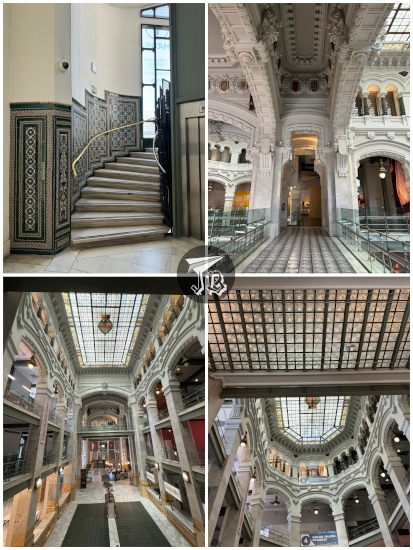
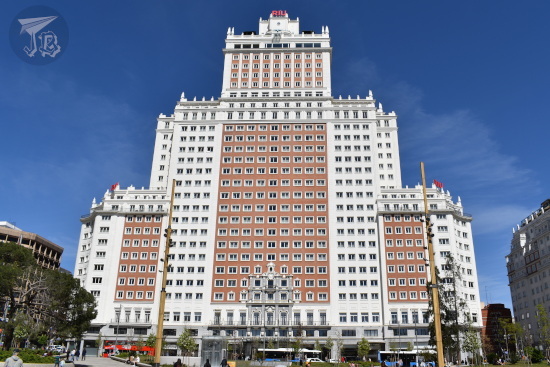
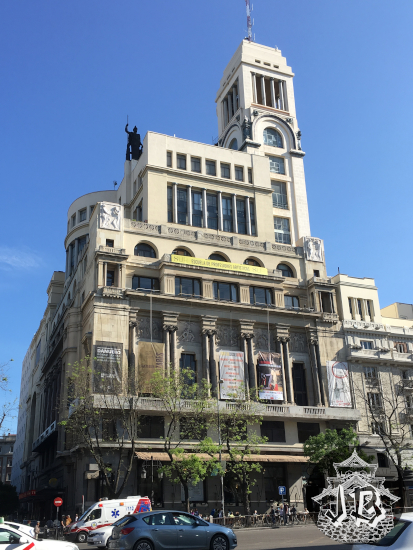
Since I was meeting my sibling for the yearly event of Naturaleza Encendida in Madrid in the evening, I decided get there early and make the most out of the day. As I arrived, I headed to the Círculo de Bellas Artes (literally “Fine Arts Circle”). The CBA is a sort of NGO dedicated to culture and the arts. Its headquarters host many activities such as exhibitions, theatre plays, concerts, lectures… The building was designed by Antonio Palacios, one of my favourite architects. It has seven floors, some of them used for events, others for offices. There is even a small theatre.
The CBA was running an exhibition called “Messenger Species” Especies Mensajeras, by artist Álvaro Soler-Arpa. It is a collection of pieces created from animal bones and items found in dumps. Born in Gerona in 1974, Soler-Arpa is a multifaceted artist who does publicity illustration and creates distressing sculptures using animal bones as its medium to make the viewer to think about waste and pollution. This exhibition of modern art is described as “ecological art for reflection”. I thought that it could be either really good or a holier-than-thou approach, but my curiosity was piqued.
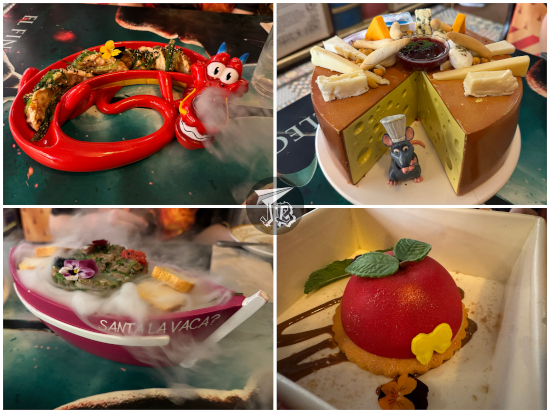
The exhibit collects selected pieces from four series of sculptures: “Toxic Evolution” (Evolución tóxica), “Devastated Nature” (Naturaleza devastada), “Design-methastasis” (Diseño-metástasis) and “Sculptures from the End of the World” (Esculturas del fin del mundo). It was… disturbing, but in a good way. It did not feel preachy. The idea is that nature is affected by the consumerism in current society, but not dying – adapting to it. The imagined futuristic animals are a warning sent through time – nature is resilient and it will survive. Us humans? Maybe not if we do not get any better.

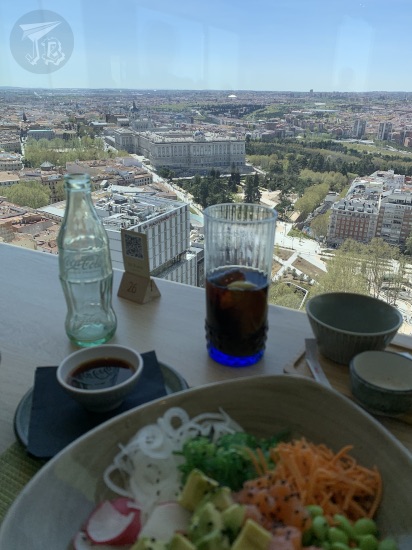
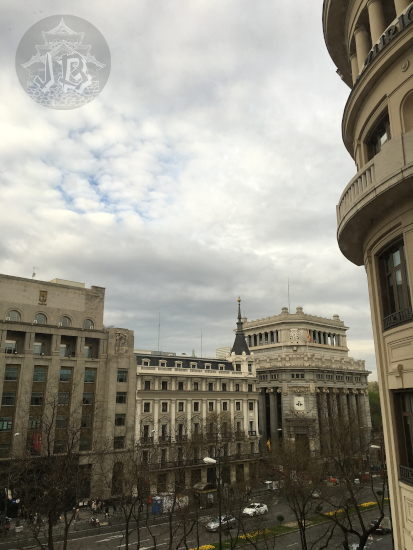
There was another exhibition in the building about the consequences of war, but I decided I could not stomach that one. However, I had the access ticket, so I could take the glass lift to the famous terrace of the building – the one that kicked off a trend of opening terraces in Madrid to watch the skyline while having a drink. It was too cold and too closed to have anything, but I did get a nice view, especially of the Palacio de Telecomunicaciones and the Spanish language Institute Instituto Cervantes, both designed by Antonio Palacios too. The terrace is mostly flat, with a bar and an impressive sculpture of Minerva made in bronze by Juan Luis Vassallo. Minerva – Roman goddess of wisdom and art – is the symbol of the CBA. There is also a smaller and higher structure that looks like it could hold an even better view, but that was closed off.

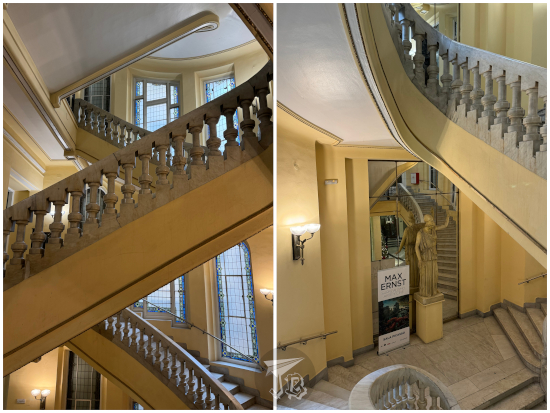
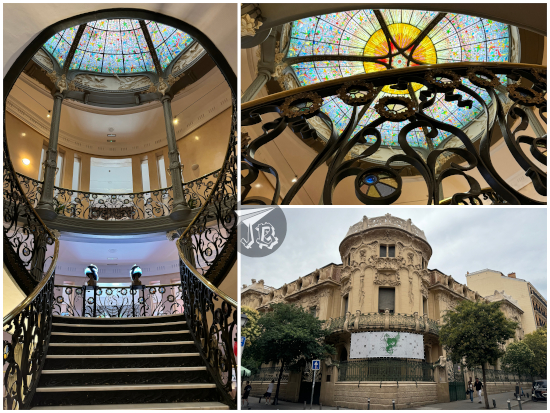
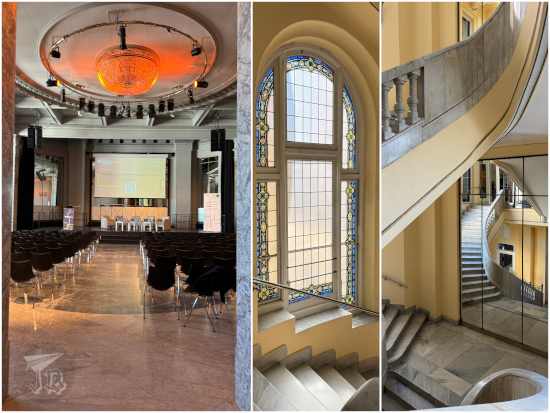
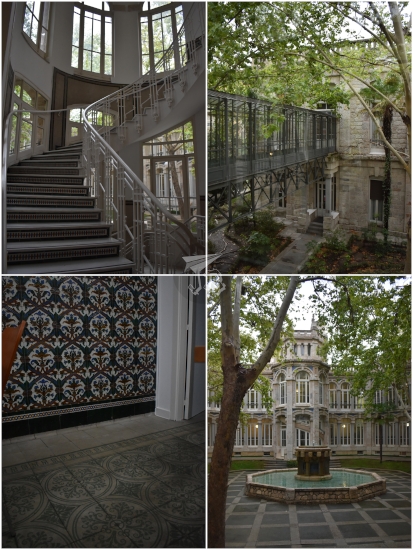
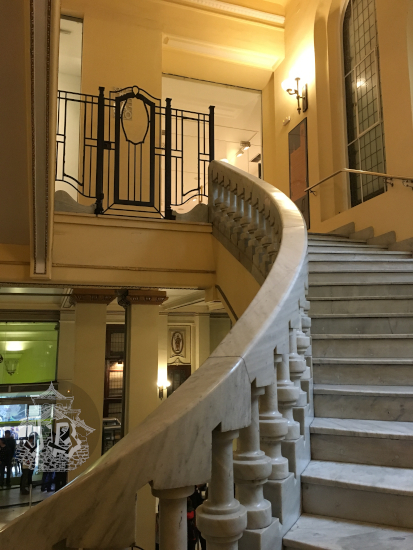
The CBA building has many cool spaces, such as the ball room (Salón de Baile) or the colonnade room (Sala de Columnas). However, my favourite part of the building are.. the stairs. They are designed as a double staircase with mirrors at the landings, and coloured windows alongside the steps. One of the sides is less bright now, because a building was erected and blocks the sun. I still find the staircase superb, so I hung around there for a while until the security guard gave me a weird look.
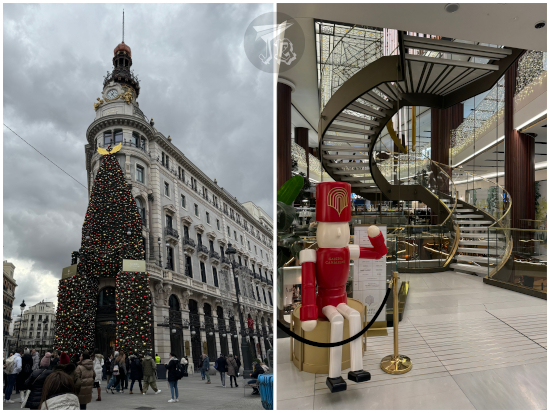
I left the CBA and walked down the street Calle Alcalá and stopped at Galerías Canalejas just to see what kind of decorations they had. It turned out to nutcrackers and elves inside and a huge Christmas tree outside. I still cannot afford anything they sell there.
I continued down towards the square Plaza de Oriente, where there was a classic merry-go-round – empty and ready to be ridden. Thus, since I have no shame, I went on it. The salesperson was incredibly kind, since I was the only rider – and an adult at that – and yet they directed me to a horse which moved up and down and showed me how to climb on it.

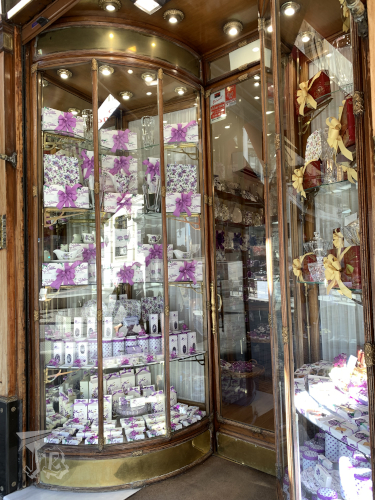
Then, I backtracked to the shop Turrones Casa 1880 in the street Calle Arenal, which hosts a small Museo del Turrón. Turrón is a typical Spanish confectionery eaten mostly at Christmas. It is mainly made out of processed almonds, and 1880 is probably the most famous brand – and it prides itself on the most expensive one. I am not a fan of turrón, to be honest, but it was almost Christmas, and if I was ever going to do it, that was the right time frame. The museum is mostly an audiovisual in a decorated cellar, with a photo-op, but the staff was really nice.
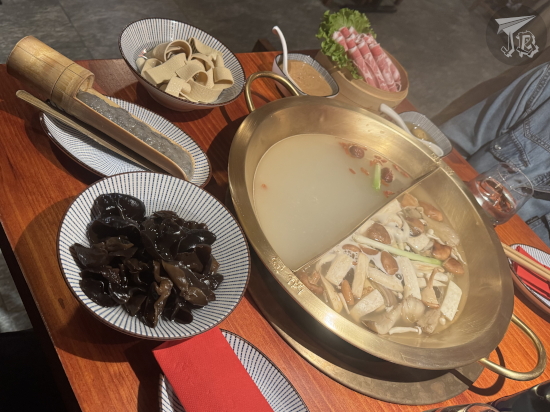
At 14:30 sharp, I met up with my sibling for a restaurant that I’ve been wanting to try for a while 壹锅火锅 Hotpot de Sichuan. Hotpot [火锅, huǒguō] is a Chinese type of stew based on a stock or soup that is kept simmering in the table itself, and you just grab the raw ingredients and dip them in the broth to cook them – imagine a fondue with broth instead of cheese. We ordered a menu for two, a pot with two broths, one mushroom-based and one meat-based. The dips were spring onion, coriander (which was not used, because I hid it), shrimp mince, thin beef slices, tofu stripes, Chinese black mushrooms, cabbage, and rice noodles, along with two sauces – one slightly spicy, and my beloved sesame and peanut sauce. The food was great, but at 15:40, the waiters popped up to tell us that they wanted to close the restaurant, and then stood up next to us until we finished and left. It was more than a bit awkward, so we hurried up to do so. While the food was great, the situation spoilt our experience a little, I think. We were still eating, not slouching around. I am not sure I would want to go back…
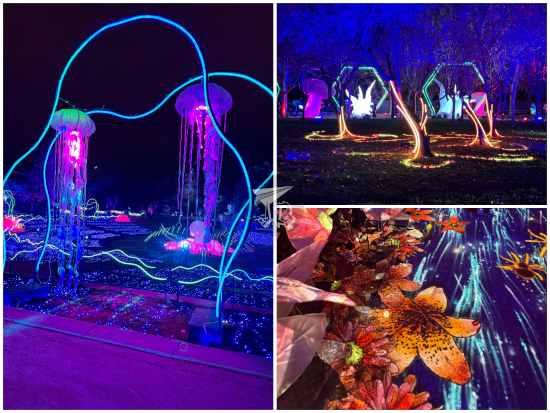
Afterwards, my sibling had to do some shopping, so we spent a while going up and down some shops and a department store, before we headed out to Naturaleza Encendida in the park Parque Enrique Tierno Galván. This is a yearly light show organised in Madrid parks – it used to take place in the Botanical Gardens, before it was moved to a larger area. The 2024 edition is titled Naturaleza Encendida: Life.

To be fair, I was a little bit disappointed, as “Life” turned out to have mostly figures reused from the last few events. Though the organisers tried to build a narrative of water, land and air topics, the novelty had worn off. It was not bad, but the show keeps getting more and more expensive every year, with fewer and fewer perks for the VIP tiers. Furthermore, the new larger location does not imply more light sculptures – they’re just spread farther apart so they can fit more people without it feeling crowded, so it simply takes longer to walk it through. This has its advantages and disadvantages – it was good last year when we had to go on a weekend but this time around it just felt… colder. They also tried to give the whole thing an ecologist spin, and this time it did come out preachy… I mean, it is a show of lights, which technically could count as light pollution, without any actual… purpose… but charging you to watch pretty lights.

That was the end of the day, and we just headed home afterwards, but aside having to wait for the train for over half an hour, nothing to report on that end.






























 JBinnacle – A Travel Logbook