30th December 2024: A planned and packed day {Vienna, Silvesterkonzert 2024}

It was a crisp morning in Vienna when we got up. We went down for breakfast and it was not particularly well stocked. The coffee was… weak, so I decided to mix a cappuccino and a black coffee to get me the energy I needed for the day. I tried some local cake, but I did not enjoy it, so I decided to stick to bread and croissants. Thankfully, I did run into the lady from the day before, and her husband, during breakfast, and told her about our plans – that way at least someone in the group would know not to wait for us and we would not delay anyone. Apparently, we were not the only ones who had made their own plans either, as the excursion had been marketed as “optional” and yet it seemed to be “a given”. Even better, we came across the driver from the day before (despite him saying he had nothing to do with the trip), and we could tell him that we were not coming, either. As we stepped out, it was freezing – literally below zero – but sunny during the whole day.

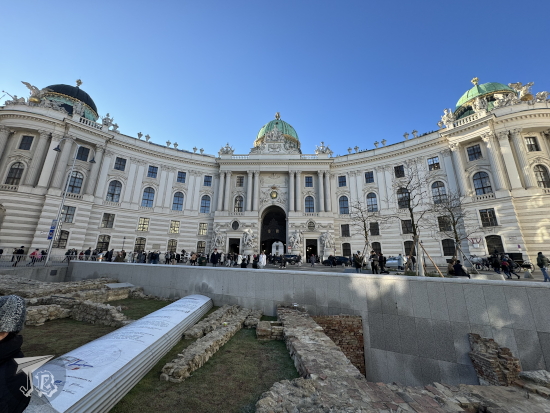
We took the underground at Zieglergasse and headed towards the city centre. I asked my parent to use their phone for GPS and maps in order to keep my battery for as long as I could so I could be taking pictures throughout the day, so they would be guiding. Our first stop was the Hofburg – the former imperial palace – and the Sisi Museum. Empress Elisabeth of Austria (1837 – 1898) was the wife of Emperor Franz Josef I of Austria. She married the Emperor when she was just 16 years old, and was stifled by court life. She spent most of her time travelling and avoiding royal duties. Her perceived eccentricity – today we would call it depression – and assassination in 1898 helped create an image of a romantic heroine in the media that has reached today, especially through actor Romy Shenider’s portrayal in the 1950s.

Hofburg

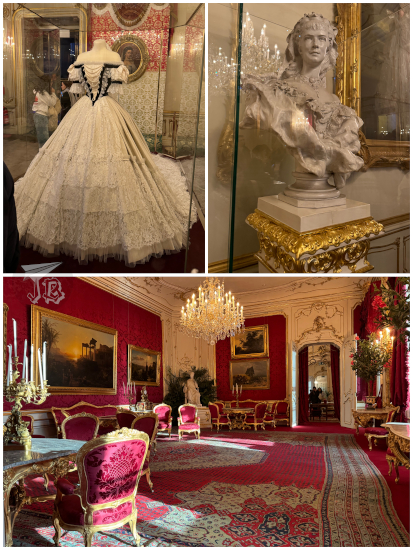
The museum tells about her life by showing objects, portraits and reproductions of her clothes. Then, you step into the former imperial apartments, which have been refurbished with furniture from the 19th century to make them look real. The audioguide was… corny to say the least, and I kind of skipped most of it because I got bored.

Sisi Museum and Royal Apartments Vienna

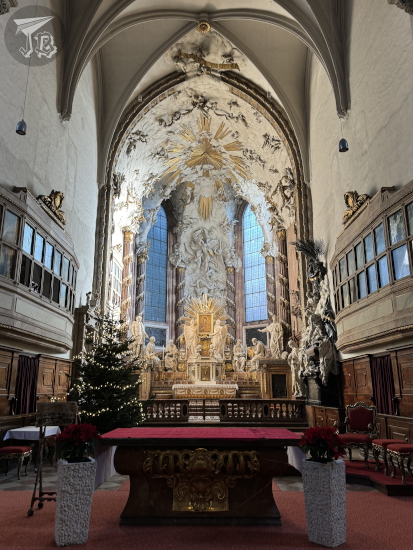
I proposed the church of Saint Michael first, and then the National Library. However, my parent had been intrigued by the church that stood at the exit of the underground. Thus, we headed there. The Wiener Minoritenkirche, Friars Minor Conventual Church, is officially the Italian National Church of Mary of the Snows Italienische Nationalkirche Maria Schnee. The church was erected between 1276 and 1350, and it was one of the first gothic churches in Vienna, following a French pattern. There were many subsequent reforms, including rebuilding the bell tower and the spire again and again – today the bell tower is flat and the spire is gone. The interior altar is Neogothic, by Ferdinand Hohenberg. Since it was still around Christmas time there were Nativities and Christmas trees.

Wiener Minoritenkirche

Afterwards, we headed towards St. Michael’s Church Pfarre St. Michael. It started as a late Romanesque or early Gothic building, maybe in 1221. The following two centuries saw Gothic annexes added. The crypt was built in the 16th century. The organ was built in 1714. The Rococo high altar was sculpted by Karl Georg Merville, and it represents the Fall of the Angels after the War in Heaven, when Lucifer was banished; underneath, there is a Byzantine Virgin Mary from the Cretan school. The outer façade was rebuilt in a classicist style in 1791. Construction officially finished in 1792. The crypt is accessible in a guided tour, but considering it has about 4,000 bodies, some of them mummified and on display, I think I’m happy we did not take it.

Michaelkirche Vienna

I proposed going to the Library again, because it was cold and there would be toilets there. My parent took over guiding with their phone, and my sibling and I got distracted as we passed by the Stallburg, where we caught a glimpse of the Lipizzan horses chilling out.

Instead of reaching the Library, my parent decided that we wanted to see the Augustinian church Augustinerkirche, a mix of 14th century Gothic and 18th century Neogothic. The original church was engulfed by the Hofburg as it expanded, and in 1634 it became the official imperial church. May Habsburg weddings were officiated there, and a chapel to the side, called the Herzgruft (Heart Crypt), contains the hearts of the members of the dynasty, from Ferdinand IV in 1654 to Archduke Franz Karl in 1878.

Augustinerkirche

I did not get to go to the Library, but we walked past the Hotel Astoria, which opened in 1912. it was built in the a late Art nouveau style known as fin de siècle (end-of-century). At the time it opened, the hotel was the latest, with electricity, bathrooms and all!

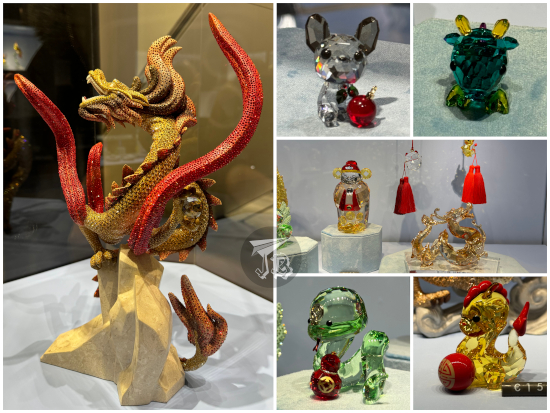
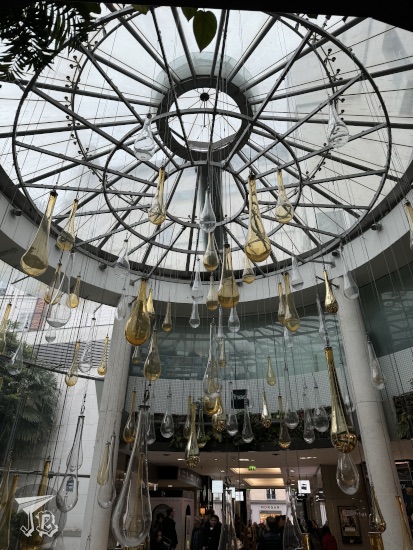
We reached the pedestrian / shopping street Kärntner Straße, the neuralgic centre for Vienna shopping. There we… met the card-not-working lady and her husband again, in what would become a funny number of encounters. We also saw the Swarovski shop. We entered it because we thought it would be warm – and hey, it had a toilet, which was handy, considering we had left the hotel over four hours before. Swarovski is an Austrian glass producer, known for its crystal glass, used in jewellery, decoration, watches, accessories. The company was founded in the late 19th century with the idea of “making a diamond for everyone”. Since then, it has produced thousands of items – from Christmas decorations to sculptures to collectible tiny figurines to whole dresses for the Vienna Opera. The place was halfway between a shop and a museum – and we might have spent a bit more than we had planned there, especially considering we were not planning to spend anything.

Swarovski flagshop Vienna

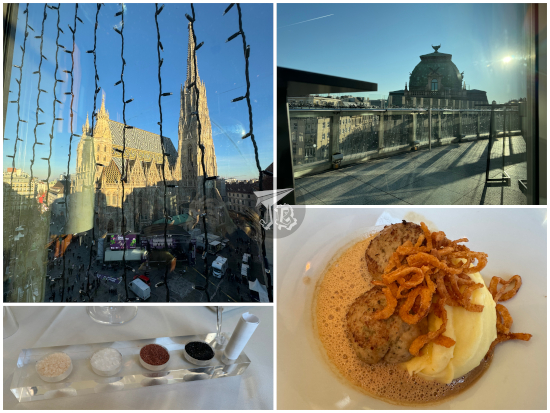
We reached DO & CO Restaurant Stephansplatz, located on the top floor of the post modernist structure Haas House, constructed in 1990. Most of the building is a hotel now. The restaurant has a fun view of the cathedral Domkirche St. Stephan. My parent and I discovered the restaurant because the opening scene of Austrian TV series Kommissar Rex, which ran between 1994 and 2004. It follows the story of German Shepherd Rex, a police dog which is “transferred” to the homicide department after his original handler dies… at the DO & CO terrace. It is such a naïve series, I just love it. Think The A-Team ingenuity with an adorable GSD saving the day every time and stealing sausage rolls as a self-reward. In a later series, Rex would move to Italy, and there is currently a Canadian reboot too…

There were no doggies in DO & CO, but both service and food were superb. They had butter and bread, and small receptacles with different types of salt, and a note on how they should be used. For lunch, I ordered kalbsbutterschnitzel – delicious minced veal butter patties with cream, accompanied with mashed potatoes, fried onion rings and a small leaf salad. For dessert, I had an ice latte that I should not have had, but I saw it pass by and I was smitten. We snuck a number of pictures from the restaurant, too.

DO & CO Vienna

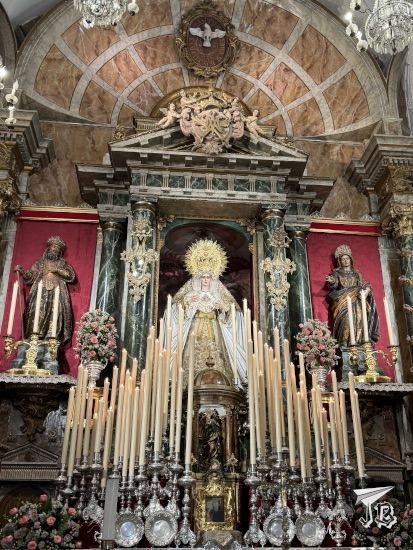
After lunch, we went into St Stephan’s cathedral Domkirche St. Stephan. The building is a mixture of Romanesque and Gothic, and it was initiated around 1137 and completed 1578, and as many as four construction stages can be seen – the first Romanesque towers, the later Romanesque church, the Gothic Choir, and the outer, newest additions. The roof is tiled with as many as 230,000 pieces, one side shows the mosaic of a double-headed eagle, and the other the coat of arms of the city and the country. The bell tower has twelve bells, and the interior hosts as many as 18 altars (plus the ones in chapels). The cathedral was built in limestone, so it looks darker than other churches its size (107 metres long, 70 metres wide and 137 metres high).

The high altar was built in marble by Tobias Pock in the 1640s in the Baroque style. It depicts the stoning of Saint Stephen, church patron and the first Christian martyr. He was stoned to death by the Israelites after a rather inflammatory speech in front of the Sanhedrin, defending Christ’s teaching versus the traditional Jewish ones. According to the Bible, this would have happened a couple of years after Jesus’ death, and before the Roman persecution.

St Stephan’s cathedral

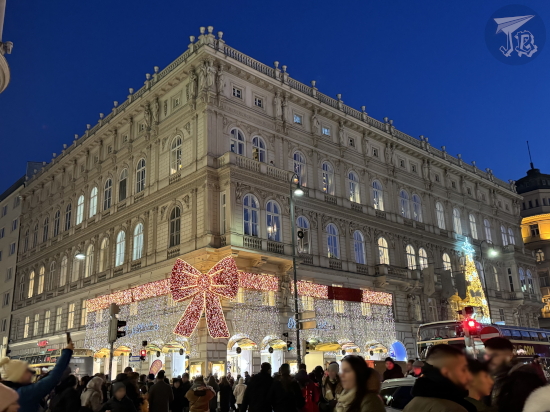
My parents were tired and they decided to head off towards the hotel, while my sibling and myself stayed behind. We wandered around Stephansplatz, Rotenturmstraße, and Kärntner Straße, checking out the Christmas lights and decoration until we reached the Popp & Kretschmer fashion store. They are a luxury women’s clothes firm, which draw tourist crowds during Christmastime to see their huge bow decoration, which makes the whole building look like a present. They call it the Vienna Bow.

Christmas decoration - Vienna Bow

We also looked at the Vienna State Opera Wiener Staatsoper, which was prepared to celebrate the new year, with a neon display saying (in English) “Hello 2025”. It was stupidly cold though, so we might have stayed in an underpass for a few minutes longer than necessary.

Afterwards, we headed towards the Sacher Hotel. The five-star hotel was founded in 1876 by the son of a famous confectioner. When the founder died, his wife, Anna Sacher, became manager. She turned the hotel into one of the most refined in the world, catering exclusively to the aristocracy. This management lead the hotel to bankruptcy, and she had to sell the business to new owners, who restored it to its former glory. The hotel serves “the original Sacher-torte”, a chocolate cake coated with dark chocolate icing, and a thin layer of apricot jam in the middle, served with unsweetened whipped cream. It was reportedly invented by the father of the founder, and the recipe is kept a secret. There are other versions of Sacher-torte, but the hotel is the only one with legal standing to call theirs original.

We had a 17:30 reservation at Café Sacher, in the hotel. Sacher Hotel actually has two cafés. The more modern one faces Kärntner Straße and is called Café Bel Étage. It had a long queue – Christmas is peak season in Vienna, as we were quickly learning – but I had been informed that reservations accessed through a particular door. However, that was not where our reservation was – I swear, I did not see the different name anywhere. The historic Café Sacher had an even longer line, and no special door. I dared ask the doorman at the hotel how to get there, and he gave me a huge grin and said “skip the line, go through the exit”. Boy, that was… awkward. Very, very awkward. I though the people just outside would lynch us!

Staff came to check on us, and since our reservation at the Café Sacher was valid – I made the reservation in July, literally as soon as the spots open – we were shown into one of the small salons. The café has a perfect offer – Sacher Sweet Treat: a perfect slice of original Sacher-torte with whipped cream, a non-alcoholic hot beverage and a bottle of Römerquelle mineral water for 22.5 € (31.5 € with a glass of the in-house champagne, Original Sacher Cuvée). I ordered mine with sencha senpai, Japanese green tea. I enjoyed the cake more than I had thought I would, and the tea was great. The staff was incredibly nice, too. They must have been used to silly tourists.

Sacher & Sachertorte

We left the Café Sacher and headed towards the Spanish Riding School Spanische Hofreitschule. For my sibling, this was a core-memory event, so they insisted we got really, really good seats for the Gala Performance Galavorführung at 19:00, on the parterreloge – the box at ground level. The Gala performance is the longest exhibition the Riding School has, and it lasts 90 minutes, with a break. The horses were gorgeous, and the riders looked very cold, but everything felt strangely… cold. I think I liked the exhibit in Jerez Riding School better.

The Spanish Riding School, considered the oldest horsemanship school in the world, was established during the Habsburg Monarchy in 1565. It is dedicated to the breed and training of Lipizzan horses. Lipizzaners are a breed of riding horses developed during the Habsburg empire. It derives from Arab, Bavarian, Spanish and Neapolitan breeds. They were selectively bred so most of them are grey with white coats – albeit there is always a bay stallion in the Spanish Riding School. The breed itself might be traced to eight stallions in the late 1700s, and it was developed in Slovenia. The horses are considered so precious that they were evacuated during WWI, and “rescued” by the US army during WWII. “Lipizzan horse breeding traditions” has been considered Unesco Intangible Cultural Heritage since 2022.

Once bred, foaled and fledged, the Lippizaners are trained. This is done at the Spanish Riding school. The traditional horse training methods used by the school can be traced back to Ancient Greece, and like many other things, they re-flourished during the Renaissance period in the 16th century. The goal of Classical training was to prepare horses for warfare as part of the calvary. Horses train for six year after they turn four.

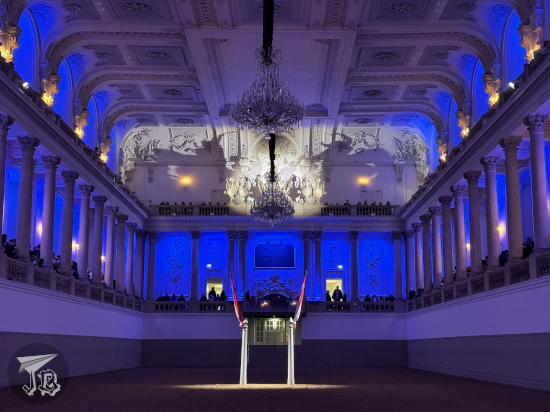
In Vienna, the Lippizaners are housed at the Stallburg, which is technically part of the Hofburg Palace. It is a Renaissance building from around 1560, originally conceived as a residence but that was later converted into the Imperial Stables. The Winter Arena was built in 1735, and has remained unchanged since then – including the chandeliers. The arena is presided by a painted portrait of Emperor Charles VI.

Vienna Riding School - winter Arena

There was something weird in the atmosphere that made it not feel all that… fun. Before every performance, a lady walked to the centre of the arena to introduce the exercises movements in German and English. The performance was pretty though. I tried to sneak a picture or two, but I was unsuccessful – and a bit worried they would kick me out if the venue. There were a total of six different numbers, and the show, including the introductions, was organised as follows:

  1. Alle Gänge und Touren der Hohen Schule – “All Steps and Movements of the High School”: four riders and stallions in individual choreographers, including the one dark stallion in the stable, with classical movements.
  2. Am Langen Zügel “Schools on the Ground: On the Long Rein” – the riders guide the horse from the ground, they are not on top of the horse, with movements such as piaffe and pirouette.
  3. Pas de Deux “Step by Two” – two riders-horses pairs work in tandem, mirroring each other.
  4. Arbeit an der Hand und Schule über der Erde “Working Hand and Airs Above the Ground” – with three main movements: levade, capriole and courbette. Four horses work with their riders on the ground, and two of them with the riders on the saddle, but without stirrups. When horses perform well, they get a sugar treat from the rider.
  5. Am Zügel “Schools on the Ground: Curb Reins” – only one horse and his rider, who only holds two out the four reins in their left hand, and they hold the riding crop upright in their right hand, a commemoration of the military heritage of the horse riding tradition.
  6. Schulquadrille “School Quadrille” (or Das Ballett der weißen Hengste “Ballet of the Eight White Stallions”) – eight horse-rider pairs have to coordinate with each other for a choreography, ending in the Radetzky-Marsch.

When the exhibition came to an end, we tried to go to the toilets. You had to scan your tickets and pay 50 cents. Really. Two hundred quid for the tickets and they charged fifty cents for the toilets, which were filthy on top? A total rip-off.

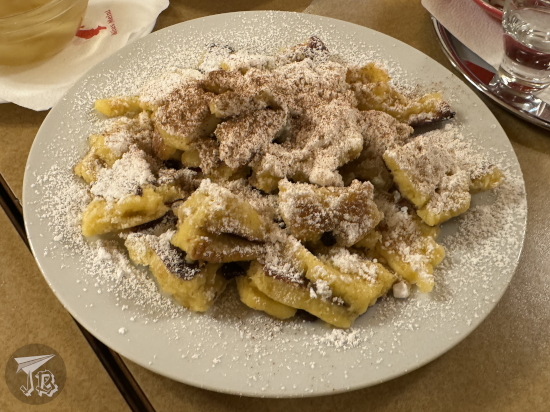
I got my sibling to the hotel, and then I left again to meet up with my friend D****e and her father Fr***, who were also in Vienna for a few days. They were even staying in a hotel close to ours, so it seemed that we had planned it in advance. We spent a couple of hours in a small eatery – Gschamster Diener – where they introduced me to kaiserschmarrn, fluffy shredded pancakes with raisins, powdered sugar and cinnamon.

Kaiserschmarrn

I eventually had to go back to the hotel and my room. There, I spent an hour trying to find a place to book lunch for the following day. After deciding not to plan anything on the 31st, my parents had a change of mind and suddenly I found myself tasked with planning and finding a place for lunch. Most restaurants were either closed or booked off. I was not a happy camper, but in the end I managed to find something… somewhat decent. My sibling suggested the Natural History Museum, the Butterfly House and the Library before lunch. I was absolutely sure that was impossible to cram three things in the morning. We would not even do the entire Natural History Museum, but at least we would be somewhere warm. I resigned myself not to see the Library, had a shower and went to bed.

23rd October 2024: Brussels & Charleroi Terminal 1 {Belgium October 2024}

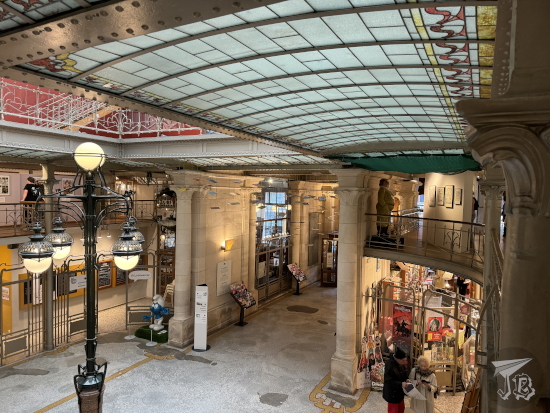
Whilst part of me wanted to stay in Antwerp [Anvers | Antwerpen] and visit the chocolate museum Chocolate Factory, it opened too late for me to be comfortable with the later flight schedule. Beside, I had my Art Nouveau Pass. Thus, I headed off back to Brussels [Bruxelles | Brussel], to visit the Musical Instruments Museum Musée des instruments de musique | Muziekinstrumentenmuseum. The museum is located in the former Old England department store, built by Paul Saintenoy in 1899 in the Art Nouveau style, mostly out of glass and girded steel. The building itself was pretty interesting and I found the idea of an “audioguide” with the sounds of each instrument endearing. I spent longer than I thought I would there.

Musical Instrument Museum building

Musical Instrument Museum Brussels

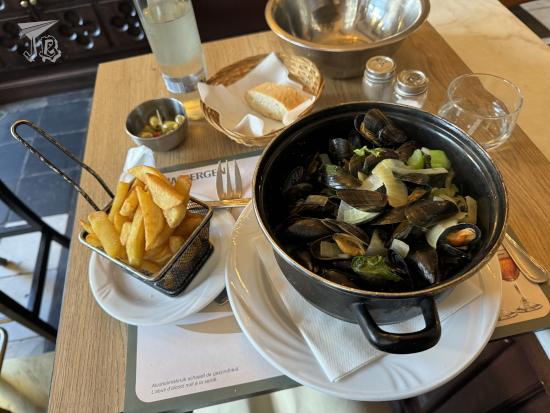
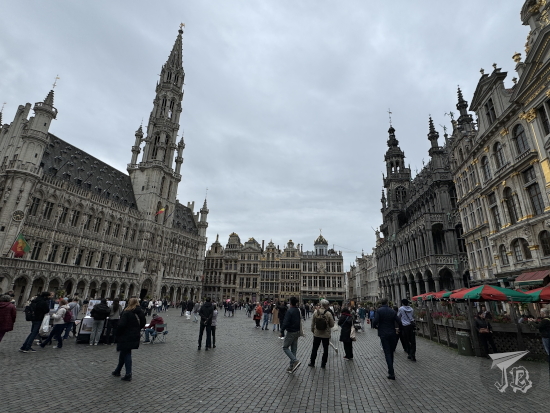
I then headed off towards the central square Grand-Place | Grote Markt to find the third of the typical Belgian foods I wanted to try – moules frites. This dish comes in two servings: one of Belgian fries and another one of boiled mussels. I chose a restaurant called Brasserie Le Cerf that I had checked online the previous night. Since it was still early, I was alone in the place. The mussels can be prepared with a number of add-ons and sauces, but ordered mine plain. I thought it was adequate for the first time. The mussels came boiled with a little celery and leek, and I really liked them. I passed on the Belgian beer, because I’m not a drinker of alcohol. As an appetiser, the restaurant provided bread and butter and everything was lovely.

Moules frites

I wandered a little around the area and I found the shopping area Galeries Royales Saint Hubert, where I saw some lovely chocolate in a cute little Art Nouveau shop – but way out of my budget. I also saw a giant smurf, and considered a second comic exhibition in Horta Gallery. However, I was weary of the fact that my bus had to go around Brussels at the after work rush, so I decided to give myself a wide berth of time to get to the airport Brussels Charleroi. After all, I had been there before and there were plenty of shops and things to do. Unfortunately, that was Terminal 2. This time around my flight left from Terminal 1, which lacks even decent seating space. Whoops. At least there was a toilet and a fountain to get some water.

Around the Grand Place

The flight was on time, but once again I had been assigned an emergency exit seat. I approached the flight attendant to explain that I have reduced mobility on my right arm, and she found someone to exchange seats with me – the biggest guy on the plane, it seemed. He probably enjoyed the extra room and empty seat next to him, and I did not have to stress. Not that I actually expected anything to go wrong, but just in case…

Since I had no checked luggage, once we landed I was out of the terminal quite quickly. I had to wait for the bus to the parking lot for a while, but I was on my merry way and home without issues and with having had great experiences, talked to great people, and met fun artists. And I’ve got a new guitar pick for my very modest collection of (now three) picks!

20th October 2024: Heroes Comic Con & Art Nouveau in Brussels and the Medieval Centre of Bruges {Belgium October 2024}

Just before going to bed to grab a couple of hours’ sleep on the 19th, I did a last check that I had everything ready, and I realised that my parking reservation at the airport had not been processed. It is a good thing that being an Aena member, the price had not gone up outrageously from when I had done it the first time a few months back. I have no idea why it did not work the first time, but I am glad I caught it before I left, because non-reserved parking is three times as much.

I did sleep for a few hours and the alarm clock went off around 3:00 for my 6:20 flight. The drive was uneventful, I found an awesome parking spot, and I had the bus just for myself after a minute of waiting. Security was fast, and it was weird to be in the Schengen side of the terminal for a Ryanair flight. I got on the plane and got some sleep. We landed in Brussels [Bruxelles (French) | Brussel (Dutch)], Belgium [Belgique | België] early, but deplaning took a while. Once outside, I followed the signs for the train and there was one there already. I settled until I got to Brussels Central station, where I bought a coffee, a drink, and a sandwich. I then walked towards the underground station – the coffee was gone even before I was there.

I knew I was in the correct underground line when I started seeing cosplayers and kiddos with superhero merchandise along with their resigned parents. My backpack was not heavy, but I was glad to have a seat both on the train and the underground. I reached the area of Brussels Expo a few minutes before the convention Heroes Comic Con opened for general admission. There was a queue, but instead of getting in line, I walked up to the nearby Atomium.

The Atomium was built as the centrepiece of the Brussels Expo’58. It is credited to architects André Polak and Jean Polak from a project by civil engineer André Waterkeyn. It was designed as a homage to scientific advance, especially nuclear physics, and thus resembles an atom or a molecule. It is 102 metres high, and it comprises nine spheres with a diameter of 18 metres each, joined by tubes and escalators. The Atomium was not designed to survive the Expo it was built for, though. In the mid 2000s, it had to be renovated, and a lot of the original aluminium was replaced by stainless steel.

Brussels Atomium

I contemplated going up the building. However, when I looked at the time, I realised that if I went in, I would be able to get into the first of Misha Collin’s photo shoots. When I decided to buy the tickets, I only bought one picture in the afternoon, because I was not sure what time I would make it to the convention, considering the plane, the train and the underground. But I was there on time so I used my phone to buy an extra ticket for the photo shoot in which Collins would be wearing the outfit from Supernatural’s character Castiel. This also gave me the chance to get the photograph signed during the time between photo shoots. Furthermore, I was still within budget – because I had decided to indulge myself with the money I had originally set aside for a balloon ride in Cappadocia.

I walked into Brussels Expo. The exhibit was huge, but I had a map downloaded on the phone. I was a bit confused when doing my original research, because it turns out that there were actually three conventions going on at the same time – Heroes Comic Con, Made In Asia and Gameforce. However, once there, it was easy to get around. Heroes Comic Con is “a big feast dedicated to pop culture”, so basically a one-size-fits-all big merchandise fair with graphic artists, cosplayers, the whole nine yards, nothing too different from Paris Fan Festival. Heroes Comic Con’s biggest selling point, however, was having invited a number of popular actors – along Misha Collins (real name Dmitri Tippens Krushnic, for the record), other guests were Bob Morley, Eliza Taylor, Ian Somerhalder and Paul Wesley. Some of them… rang a bell. I might even have seen a few of them somewhere – I must have, because I did watch the newer Star Trek. However, I find it great that they had a large following and there were queues for them.

I followed my map towards the photo booths, where they checked my ticket and gave me a bright-coloured chip – they give you a chip per ticket, as you can have two people in one photograph. I was on my own, so no problems there. I actually got two photographs out of the first shoot – so I’ve got three though I paid for two, yay me. I had brought a customised jacket with a pair of angel wings, and the goal was to have them in the photographs, so I would be facing Misha but looking over my shoulder. The first photograph did work out too well, so Misha called me back for a re-shoot. He was very friendly, and much more approachable than my usual Japanese artists. Either that or I was less strung up. The pictures were printed on-site, so I took mine to the autographs area to wait. I had bought an official book beforehand – the lightest thing I had found, to be honest – in case I could not get a photograph signed, but since I this had worked out so well, I had our recent picture – and in the character outfit – to be signed.

Since I had been towards the end of the photograph queue, I did not have to wait long for Misha to come. A staff took my name on a post-it note and attached it to the photograph. When it was your turn, you paid for the autograph (I decided not to get a selfie, because I still had another photograph bought), and I told him about the pure chance I was there. He was “glad I could make it”. As I said, nice and approachable.

By the time I was out of the autograph area it was around 11:40. I decided to wander around. I gravitated towards Made in Asia, and was very strong reminding myself I wanted to keep my luggage light and not pay for any extra. Thus, I managed not to buy anything despite finding a bunch of Saint Seiya merchandise – which I now regret, but that’s FOMO speaking. I had a chuckle or two out of young people complaining about the official good stuff being “too expensive” when I found the shops cheaper than the stands I see in the Spanish counterparts.

Brussels Hero Comic Con

I returned to the photo booth for the second photograph, and I thanked Misha for the chance – I look silly in the picture, but that’s okay. It was great. There was a Q&A with Collins an hour or so later, but I decided to forego that and leave the convention. If I stayed, I would have no time to do anything in Brussels that day. I also wanted to keep on the move because else my body would remember how little slept it had gotten, and I would crash. Thus, I bought an online Art Nouveau pass, and I left the convention.

Brussels’ Art Nouveau Pass is 20 € and it covers entry to three museums, historical places, or exhibitions in a long list, all of them related to – obviously – Art Nouveau. The pass can be value for money even if you only visit two of the “big ones”. Since the pass is valid for nine months, I might be able to use it for a third time in the near future. The original idea was to buy one from the beginning and hit the Comic Museum, the Horta Museum and the Solvay House – things I had not had the time to visit the previous time because in the end I spent a lot of time walking to different spots (read: the Natural History Museum). However, the Solvay House was under renovation, and the Horta Museum was a bit out of the way, so I ended up being flexible

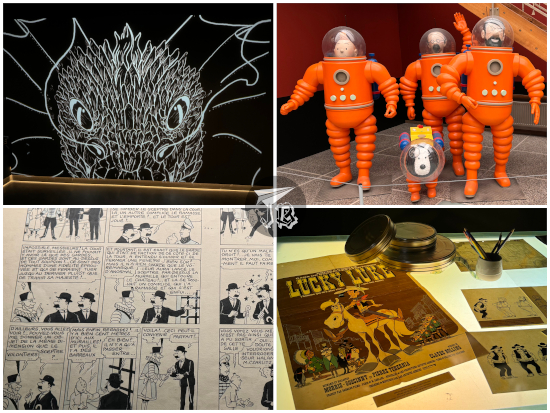
I rode back to Central Station and walked out towards the Cathedral of St. Michael and St. Gudula Cathédrale des Saints Michel et Gudule | Kathedraal van Sint-Michiel en Sint-Goedele, which was beautiful in the flurry of autumn leaves. It was cold, so I hastened towards the Comics Art Museum Musée de la Bande Dessinée | Stripmuseum (Belgian Comic Strip Center). The museum is located in the former textile store Magasins Waucquez, an early 1900s commercial building designed by architect Victor Horta. Horta is considered one of the founders Art Nouveau, with his use of curved forms and use of steel, skylights and open floor plans with abundant decoration.

Brussels cathedral

After the department store closed in the 1970s, the building was listed as a historical site, and it was bought by the Belgian Government to be used in the promotion of comic strips. The museum itself was founded in 1984 as a non-profit, and it opened in 1989. It runs a new permanent exhibition on the history of comics in Belgium and Europe (free from the American Comics Code Authority and censorship – I mention this because I had tickets for a Marvel exhibition the following month, and the CCA had a lot of impact in the development of American comics). The person at reception told me to watch out for a very first-print Tintin which had been recently added to the exhibit. There are items and print issues related to most of the great Belgian comic artists – there were a lot of things I had never even heard about. I found a big lack of Morris’ Lucky Luke though.

Comics Art Museum Brussels

Comics Art Museum Brussels

Something I had decided to do in this trip was trying the typical foods, so once out of the museum I headed towards the central square Grand-Place | Grote Markt and Manneken Pis, which was not wearing any costume this time around, even if Brussels is still under a lot of construction (when I saw it in 2023, it was wearing a reflective jacket). I remembered that there were a lot of places that sold local street food – I don’t tend to be much of a foodie, especially with street food or fish. I figured out that Belgium could be a safe place to experiment without risking an upset stomach.

Brussels Grand Place

Manekken Pis

Thus I got some frites, Belgian fries, at a chain called La Friterie. I had seen a few of the establishments with queues outside, so when this one was almost empty, I jumped at the chance. Belgian fries are sourced from local potatoes and cooked in two goes, traditionally in beef fat. I got them with just salt, and they were really good. And warm. That was a great point.

Belgian Frites

It was around 17:00 by this time, and things had started to close down. I headed off towards the station to take a train to Bruges [Bruges | Brugge], in the north west area of West Flanders. The historic city centre is a Unesco World Heritage Site – Historic Centre of Brugge – and it is criss-crossed with canals. The area has been inhabited since Prehistory, but its importance peaked during the Middle Ages, between the 12th and 15th centuries. It became a commercial hub due to its strategic location between Flanders and France, though it later opened to other countries, like the Portuguese. The first stock exchange in the world probably opened there in 1309.

The Medieval architecture and brick Gothic constructions are exceptionally well preserved, including the pattern of streets intertwined with waterways. I was curious about northern Europe canals, which was one of the reasons why I chose the city. The other one was that it is a city to walk and see from the outside, which was great for a Monday morning. Unless it’s raining and about 7 ºC colder than cool – I had prepared for 13 – 17 ºC and drizzle, and got 9 – 13 ºC and rain. Whoops.

I bought some snacks at the station and went down to the platform. The train was late. I knew it was late, and I knew when it was expected, because the board told me. It was refreshing, considering the uncertainty around Madrid’s trains this last couple of years. I had booked a hotel close to the railway station, and I got there around 19:00. It was quite a basic place, with a toilet, and a shower closed off, and a washbasin column in the middle to separate the wet area from the bed area. Functional, and all right. The heating worked and they spoke English, so all good.

I did not rest for long. I ate the snacks, grabbed my umbrella and an extra layer of clothing, and headed out. It was dark outside already, and I hoped to get to see the city centre lit up for the night. My first stop was the Church of Our Lady Onze-Lieve-Vrouwekerk. Mostly built between the 13th and the 15th centuries, it is one of the highest Gothic brick structures in the world.

Our Lady, Bruges

Then I headed towards Saint Salvator’s Cathedral Sint-Salvatorskathedraal, a curious mixture of neo-Romanesque and neo-Gothic, with a bell tower that looks more like a defence tower than anything religious. This tower, however, was the result of a 19th-century modification of the original tower. Of course, both churches were closed at this time, but they would open the next morning.

Bruges cathedral

I continued towards the Market Square Grote Markt, featuring the Gothic Provincial Court Provinciaal Hof, the Historium, and the Belfry of Bruges Belfort van Brugge. The Medieval bell tower is doubly World Heritage – it belongs to the Historical Centre Unesco site, but it is also key in the Unesco Belfries of Belgium and France serial property. And while it is not part of the Manual bell ringing intangible Cultural Heritage, Bruges takes a lot of pride in its carillon and its bell ringing. At the centre of the square stands the statue of Pieter de Coninck and Jan Breydel Pieter de Coninck en Jan Breydel, who participated in the Flemish resistance against the French King in 1302.

Bruges Grotemarkt

I also wanted to explore a large park I had seen on my way. It turned out to be two of them, Poertorenpark and Minnewaterpark – which later I found means “Lake of Love Park” – before it was too late in the evening. There I found the Gunpowder Tower Poertoren – built between 1398 and 1401 by Jan Van Oudenaarde, and used as gunpowder store for almost five centuries. Beyond it, the Lake of Love itself Minnewater, the Lovers’ Bridge Minnewaterbrug, “very romantic” stone bridge. I noticed the part about it being stone. It also yielded to a beautiful night view.

Bruges Love Lake park at night

I did not want to stay out too late. Thus, I crossed the Barge bridge Bargebrug to get back to the busy street area. Bargebrug is a modern construction, barely 20 years old, in bold red curves. On the other side there was a “reception area” in the same style, apparently a sort of bus station, and then there was the main road. Afterwards, I just headed back to the hotel and turned in for the day. I watched some TV, but to be honest, I had woken up before 3:00 am, so I zonked out rather quickly.

Bruges Love Lake park at night

12th September 2024: Cádiz {Escapade to Cádiz, September 2024}

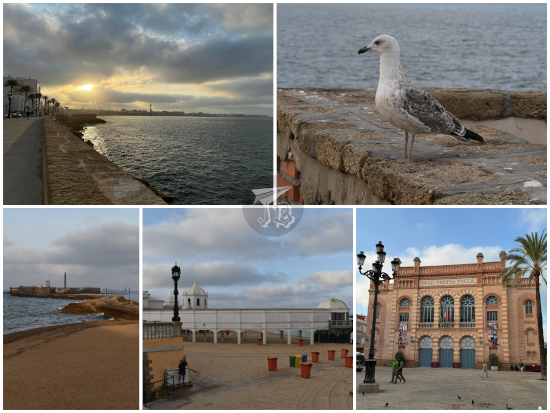
My paperwork-related appointment was at 9:30 in Cádiz itself, and I got up around 7:30. I left the hotel, but unfortunately the café where I had expected to have breakfast was closed. Thus, I instead headed out towards the promenade Paseo del Vendaval to see the ocean again. I turned to my right, in the opposite direction from the previous night, and I walked towards the central beach in town – Playa de la Caleta, a mostly-rocky area with tidal ponds and a long bridge called Puente del Hierro which leads to an old castle Castillo de San Esteban. I chased a few birds on the way for photographs. They were not at all cooperative.

I reached the former bathhouse Balneario de Nuestra Señora de la Palma y del Real, built in 1926 from an original design by Enrique García Cañas with one main access and two corridors that form a semicircle towards the ocean, and end in domes. It was build directly onto the beach, in reinforced concrete, with a style gravitating among Art noveau, eastern historicism and local decoration with azulejo tiles. It was abandoned in the 1970s, but restored for administrative use in the 1990s.

I ventured away from the ocean into the narrow streets of Cádiz downtown until I got to the town’s theatre Gran Teatro Falla, in the Neomudejar style. It was built between 1884 and 1905, on and off due to lack of funds, after a design by Adolfo Morales de los Ríos and Adolfo del Castillo Escribano. The theatre is one of the key spots during Carnival festivities. The Cádiz Carnival is one of oldest and most famous in Spain, known for its groups of people who parade the town in costume to sing simple songs that make fun of every- and anything, normally current affairs – coros, cuartetos, comparsas and chirigotas. The great Carnival contest is celebrated in the theatre, and prizes are awarded in each of the categories. The carnival brings in about 400,000 visitors each year. I tried to get to visit the theatre, but I did not manage to do so.

Paseo del Vendaval & Gran Teatro Falla Cádiz

Around 09:15 I decided to try my luck with the paperwork issue, even if it was early for my appointment, and I was successful. Since it was an important document, I ran back to the hotel to drop it there, and then headed off to the square Plaza de La Mina, where the local museum Museo de Cádiz stands.

It is said that Cádiz is the oldest Western city, founded around the 9th century BCE. Mythologically, it is associated with Hercules’ Columns and the city of Tarsis. The oldest archaeological remains date back to the 7th century BCE. The now-peninsula was originally a small archipelago where the Phoenicians settled down as it was a strategic point for commerce and mining of copper and tin, naming the settlement Gadir. It was later conquered by Carthaginians, whose march to Rome led by Hannibal started there. When Carthage lost the war, the city was taken over by Romans and became Gades in the 2nd century BCE.

As the Roman Empire declined, the city was invaded by the Visigoths, then the Byzantine Empire, and again by the Visigoths. In the year 710 CE, it was the first stronghold to fall to the Moorish conquest of Spain. After the Christians took it over again, it became a key point in commerce with the American territories.

In 1755, Cádiz was damaged by a three-wave tsunami caused by the so-called “Lisbon Earthquake”, 8.5 degrees in the Richter scale. In 1812, during the Napoleonic Wars, the Spanish patriots wrote the first Spanish Constitution, and throughout the 19th century, it was key in the numerous wars and battles through the return of Alfonso VII, the Republic and the Restoration of the Monarchy periods. However, during the 20th century, the city decayed suffering from lack of infrastructures, and rampant unemployment. Thus, it is happy to focus on tourism and the money it brings.

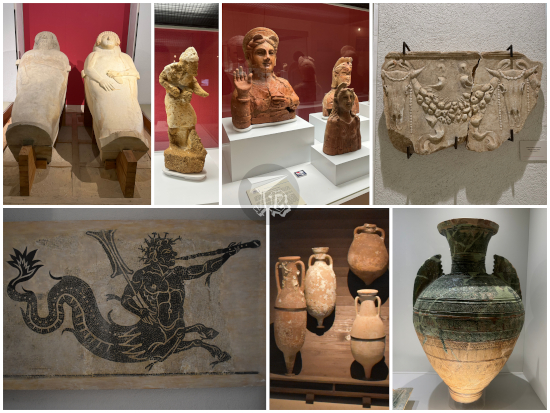
The Museo de Cádiz tries to follow this trail of history, but only the archaeological floor was open. The most important artefacts date from the Phoenician, Roman and Moorish periods. Of particular interest are two Phoenician sarcophagi which were found in completely different areas, but are presented as a couple of sorts, and a complete dowry. From Roman times, they exhibit a few dozen amphorae, sculptures and columns. Finally, the remains from the Moorish domination are quite colourful in comparison with everything else. The second floor of the museum was closed, so I was done earlier than expected.

Cádiz Museum

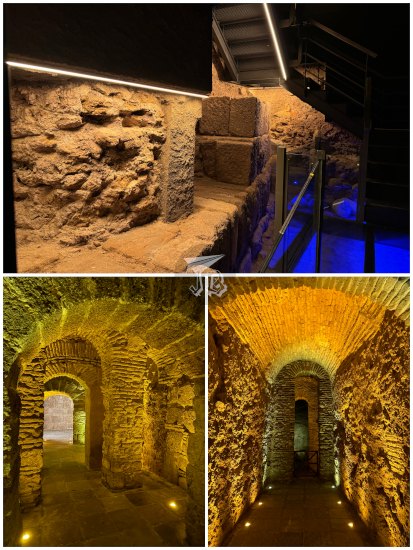
Thus, I decided to push my luck a little and try to get to the archaeological site called Cueva del Pájaro Azul for the 10:30 visit in English. The place is a former flamenco tavern built within the repurposed dry docks of the Phoenician Gadir. Most of the structure has been covered in brick and barely the original shape can be traced back, enough to calculate that the dry docks served war ships. While building new stairs, they did find part of the original Phoenician harbour though, the most important remain that survives. The tavern itself might be considered of minimal historical importance as it was a considerable cultural hub in the 1960s.

Archaeological site Cueva del Pájaro Azul

To keep in the mood, I decided to visit the archaeological site Yacimiento Arqueológico de Gadir, making a stop for a coffee first. Unfortunately, the site was closed that day. Thus, I decided to check out the Roman Theatre Teatro Romano de Cádiz – it might feel a little back and forth, but distances in central Cádiz are small and I wanted to prioritise Phoenician remains (I said I lived in the area, but all these archaeological remains are newly discovered). The theatre is the second largest one in what was Hispania, and dates from the 1st century BCE. It could host up to 10,000 people, and the stage, stands and the vomitorium (corridor underneath the seats) can be visited. There is an extra room with miniatures of the different stages of the history of the theatre.

Roman Theatre Cádiz

I left behind something called “The Elf’s Alley” Callejón del Duende, the narrowest street in town, now closed off. Very near both the alley and the theatre, I found the old cathedral Catedral Vieja de Cádiz officially Parroquia de Santa Cruz. This was the original cathedral of the town, commissioned by king Alfonso X around 1262. The original building was destroyed during the scuffles between the Spanish and the English at the end of the 16th century, and a new one was erected a few years later in a mixture of the Renaissance and the Baroque styles.

Former cathedral of Cádiz

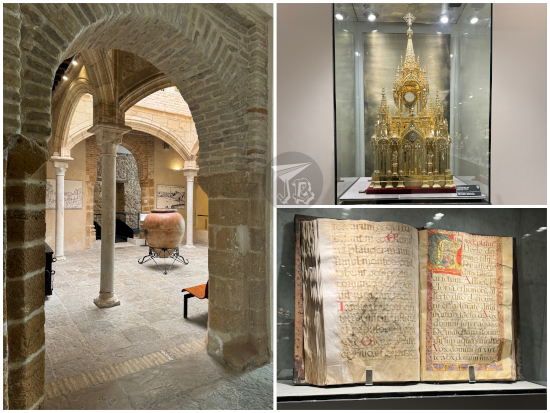
Next to the old cathedral stands the museum of the cathedral Casa de la Contaduría. The museum comprises a number of rooms disseminated in a conglomerate of buildings dating back from the 16th century – including the tower of the old cathedral and a Mudejar courtyard. The museum holds – obviously – religious items: paintings, sculptures, mass paraphernalia, codexes…

Cathedral Museum Cádiz

Afterwards, I crossed the city centre all over again, and reached the park Parque Genovés, a sort of botanical garden and the largest park in the old town. It has a small lake with a waterfall and a man-made cave with a lookout of the town and the ocean.

Park Parque Genovés in Cádiz

Then, I had booked lunch in the café of the Parador de Cádiz – Hotel Atlántico, a cute not-so-little place called La Tacita del Atlántico. I had set my heart on a grilled urchin dish – erizo de mar relleno y gratinado con huevos de arenque ahumado which I combined with a salmorejo (a creamy soup with a base of tomato and bread, garnished with ham and hard boiled eggs), though the dish had a local twist salmorejo cordobés, huevo y mojama. The urchins were delicious, but the salmorejo was lacking. I liked the idea of exchanging the ham for salt-cured tuna (mojama), but overall I found the food overpriced and the service mediocre. On my way out, I stopped by reception to get my stamp for the Red de Paradores rally.

Lunch at La Tacita del Atlántico

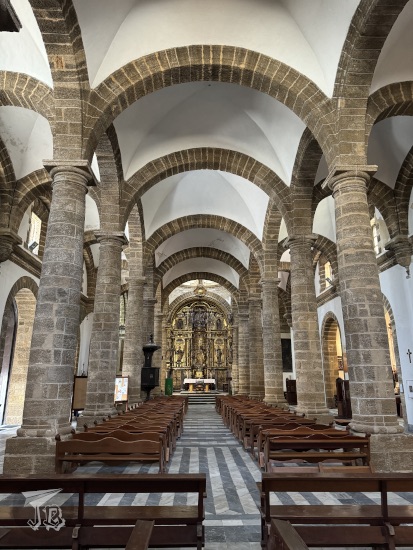
I stayed at Parque Genovés for a bit after lunch, then headed out towards the “new” cathedral Catedral de la Santa Cruz. The cathedral was built between 1722 and 1838, in a mixture of styles – Baroque, Rococo and Neoclassicism. It was erected in an assortment of materials, from noble marble to the humble local piedra ostionera, a sedimentary rock with a high concentration of seashells (biocalcarenite). The interior has three naves, and a Latin cross floor plan, over whose crossing there is a has dome, covered by golden tiles on the outside. The main altar is neoclassical.

Underneath the cathedral stands the crypt, and one of the towers can be ascended, leading to a great view of the town. The tower has very few stairs, most of the way is done on a ramp. Unfortunately, though, the cathedral is in rather poor state, and a net is cast under the ceiling to prevent debris from falling. I also climbed the tower since it was included in my combo ticket.

Cathedral of the Holy Cross in Cádiz

View of Cádiz from the cathedral tower

Behind the cathedral, I found myself back at the promenade Paseo del Vendaval, and I walked towards the beach Playa de la Caleta. In historical times, it was the natural port for Phoenician, Carthaginian and Roman shops, now it is a small-ish beach in the heart of the city. It is located between two of the castles of the old city, and its most characteristic structure is the bath house I saw in the morning.

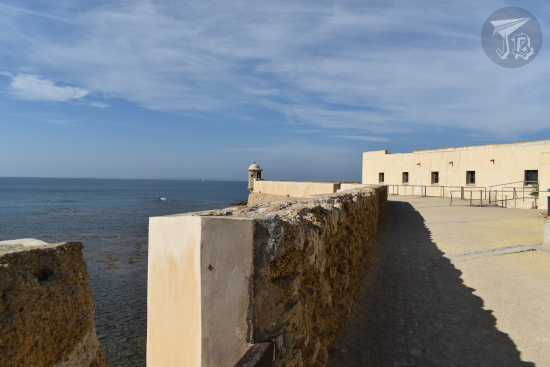
The beach has a sand area where most people sunbathe, but there is a long bridge separated in two sections – one directly built upon rock, Puente de Hierro and the other with arches to let the water flow through, Puente Canal. At the end of the half-kilometre of bridges, stand the ruins of the castle Castillo de San Sebastián, which today includes a working lighthouse, and an archaeological site. The first structure in the ancient island dates back from 1457, and the castle itself was built in 1706. Though it was warm and sunny, I walked the bridges and around the castle walls.

La Caleta Beach Cádiz & San Sebastián Castle

Upon my “return to mainland”, I passed by the bath house again and I reached a second castle, Castillo de Santa Catalina. The outpost, in the shape of a five-point star, was built towards the end of the 16th century to defend the city form sea warfare. In later years, a church and a sacristy were added, and from the 18th century onwards it was used as a prison. Today, it mostly hosts cultural or cinema-related events.

Santa Catalina Castle, Cádiz

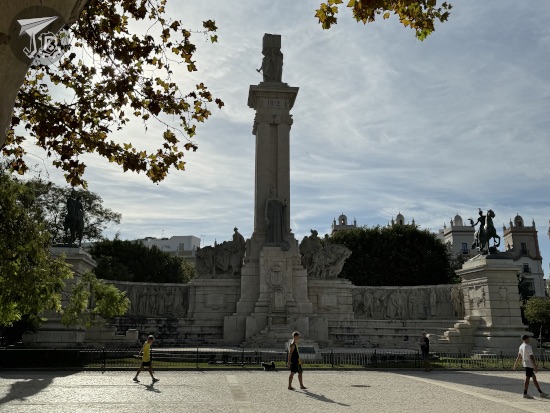
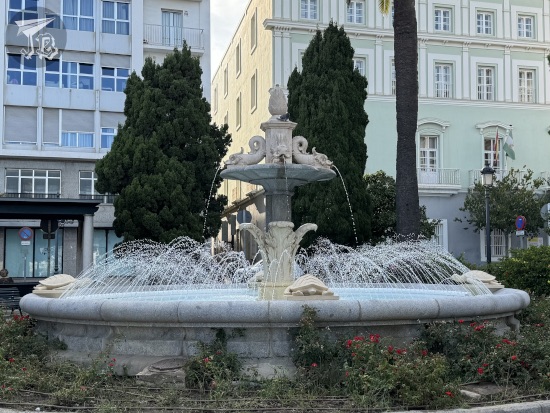
I continued on my walk around the city, left behind a knee cramp, the Parador de Cádiz and Parque Genovés until I reached the bulwark Baluarte de la Candelaria and the park Jardines Clara Campoamor. From there, I went on towards a second bulwark and the remains of the city walls Baluarte y Murallas de San Carlos. The bulwark was built towards the end of the 18th century to protect the harbour. Not far from there stands the square Plaza de España with the monument to the 1812 Constitution Monumento a la Constitución de 1812, the political response to the Napoleonic invasion. A bit further away stands the fountain Fuente de la Plaza de las Tortugas, with lots of cute turtles as decoration.

San Carlos Bulwark and Walls Cádiz

Monument to the 1812 Constitution Cádiz

Turtle fountain in Cádiz

At this time I decided to get an early dinner around 18:30, so I bought some fast food to take to the hotel. That is when the ant invasion started. It was something I was not expecting – one or two bugs is workable, but this was a whole nest out for my fries. It was not nice. I decoyed them into bathroom and decided to have the room cleaned the next morning.

I set off again about 20:15 to look for a place to watch the sunset at the beach Playa de la Caleta, which did not disappoint, and I sat there until the sun disappeared beyond the water line. Luckily, I made it today, as it would be ridiculously windy the following day.

Sunset at La Caleta, Cádiz

I then found the street Calle the la Virgen de la Palma, at whose end stands the small church Parroquia de Nuestra Señora de la Palma. It was built in the 18th century and it hosts a sculpture of the Virgin Mary credited with stopping the waters during the 1755 tsunami. In the street, there is a signal marking the highest water point, but there were so many restaurants and people that it was impossible to find it!

Sculpture of the Virgin Mary

I went back to the hotel afterwards to have some sleep – I was beat. I did manage to make a stop at a supermarket to buy coffee and pastries for breakfast the following morning though. Because one late latte per trip is enough.

23rd July 2022: Plateresque Salamanca {Salamanca, July 2022}

Officially in western Spain, Salamanca stands next to the Tormes river and sports a Unesco World Heritage title for its old town. I was five or six the first time I was there, so it’s not like I remembered anything from it, except memorising excerpts from the book El Estudiante de Salamanca (José de Espronceda), my favourite Spanish Romantic poet.

Salamanca is known due to its university, which is considered one of the best in the teaching of Spanish as a second language, the oldest Spanish university and one of the oldest in Europe, founded in 1218. There are actually two universities, but we shall get to that later.

There is a period in Spanish history referred to as the Gold Century, Siglo de Oro (Not an actual century, the given dates are between 1492 – the year when the Catholic monarchs finished conquering the country, Europeans realised America existed, and the first book on Spanish grammar was published – and 1659 – when the Pyrenees treaty was signed after the war with France). It was throughout this period when Salamanca thrived, especially late-time Gothic styles and early Renaissance ones. Then of course Baroque later on, but you know my stance on Baroque by now I guess… The mixture of late-gothic and Renaissance gave way to a unique style, Plateresque – with a strong Gothic base and a blend of Mudéjar, Flamboyant Gothic, Lombard and Tuscan Renaissance elements and decorations. Plateresque is characterised by heavy decorations sculpted onto the main architecture, especially in the typical fusion of doors and altarpieces. The motifs are plants, animals, shields and medallions… All and all, an impressive style considering we are talking about carving stuff on stone – in the case of Salamanca, a lot of it is sandstone, which gives the old city a golden tone.

We had to take a couple of trains, but and made it to Salamanca around 10:30, and were in the city centre a few minutes later. After dropping the luggage at the hotel – I had been requested the hotel to be near the cathedral and I found one which was literally across the street from one of the flanks. Then again, here’s the thing – Salamanca has not one but two cathedrals: the Old Cathedral Catedral Vieja de Santa María and the New Cathedral Catedral Nueva de la Asunción de la Virgen. Apparently, instead of building over the old one, they decided to keep both, making the historical complex unique in the country.

The New Cathedral was built mainly in Gothic style with later Baroque add-ons, with an ornate Plateresque façade. It was commissioned by king Ferdinand V of Castile, and built between the 16th and 18th century, in the Gothic style, even though this was at time when Gothic was already in decline. However, the town authorities wanted it to “match” the old Romanesque cathedral. A cupola and a choir were added in the Baroque period, and the façades were decorated in the Plateresque way (in a 20th-century restoration, someone thought it would be funny to add an astronaut to the decoration, causing some hoaxes to pop up afterwards). The most important architect who worked in the new cathedral was José de Churriguera, one of the leading Baroque architects / sculptors / urbanists.

A very ornate Gothic cathedral. The entrance has so many carvings that it actually looks organic, if not for the fact that it is made out of golden / reddish stone

The New Cathedral connects to the old Cathedral, which is late Romanesque / early Gothic in style (I know, it’s confusing. Historically, the old cathedral is between Romanesque and Gothic, and the new one between Gothic and Renaissance – and this is the reason why the Gothic makes the two cathedral “match”). It was built between the 12th and 14th centuries. The most impressive thing in the Old Cathedral is the altarpiece, in which the highest-quality paintings were made by the Italian Dello Delli. On the way out, I let myself be tempted by a paper guidebook of the city – which was helpful because we had to remake all of our plans a couple of times.

Interior of a Romanesque church - the nave has very high and severe-seeming columns

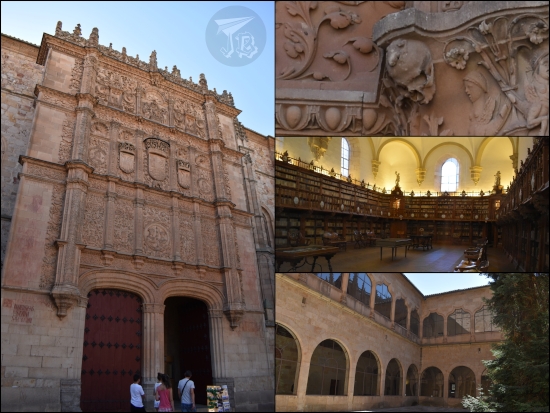
Afterwards, we headed off to the main university building Universidad de Salamanca, the first university building. The university was founded by King Alfonso XI in 1218, which makes it the oldest university in the whole Spanish-speaking world. The most important building today is the Escuelas Mayores, the upper school, built between 1411 and 1533. The façade, which looks towards the newly-discovered New World is sculpted in the Plateresque style, with a ton of decoration – and the most famous motif is the frog that stands on top of a skull. The university was built around a cloister for the students of old, and it has the most amazing library I have seen in a long while – selfishly (I’m joking of course) closed to the public. There is also a chapel and the classroom where the Spanish academic Fray Luis de León, who was famously jailed for four years, and picked up his lectures with “as we were saying yesterday”. The cloister has two floors since the 19th century, and in the centre there is a small giant sequoia (which I thought was a simple fir). There are chapels, and halls, and areas where university holds events.

Very ornate entrance to a building. there are two doors (four or five times as tall as a person) and the decoration, all carved in stone, is on top. Three floors of decoration, with columns and shields. A close-up shows a frog on top of a skull.

The problem with Salamanca is that the entries and exits of the building make you have to backtrack a lot (and the horrible street lights), but I love Gothic so I did not mind wandering around anyway. After the Escuelas Mayores, we went to another university building the lesser school or Escuelas Menores. Today, there is a cloister which dates from 1428 with a Baroque upper veranda. In one of the side halls there is a fresco panting that used to be in the library and that was moved over in 1950. The fresco represents a night sky was used in teaching.

Gothic patio and a suck picture of a fresco painting, showing stars and the representation of constellations

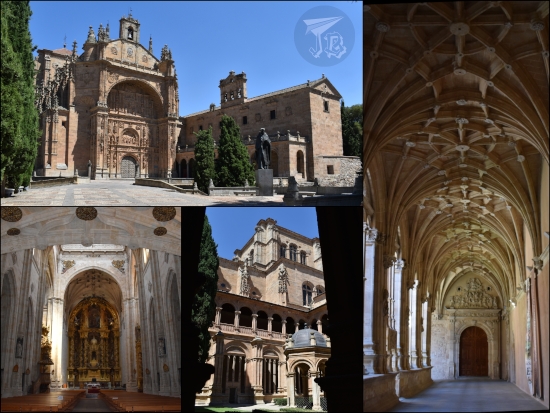
We had lunch, then we went to the Dominican monastery Convento de San Esteban and its church. The current monastery dates from 1524-1610, and it was built over the previous one. The façade of the church is considered the best example of Plateresque, and José de Churriguera also worked in the main altarpiece. The monastic building has a portico with Italian loggias, typical of the Renaissance. The cloister is mainly Renaissance with Gothic features, and a small temple in the middle. The ambulatory in the cloister has beautiful Gothic columns and nerves on the ceiling.

A convent, built in ornate gotic style. The covered corridor around the cloister shows pointed arches and rich decorations

Right in front of the monastery stands the Dominican convent Convento de las Dueñas. The building is Baroque, and before being a convent it used to be a palace – which has caused the convent to have some eclectic elements of architecture, such as the Mudéjar arch mosaic or doors. The inner cloister is Plateresque and full of roses and flowers.

A Baroque building. The inner patio is decorated with plants and Moorish-seeming blinded arches

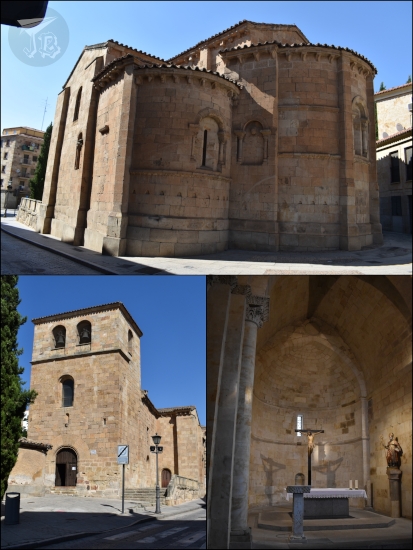
Next, we found the tiny Romanesque church Iglesia de Santo Tomás Cantuariense, where I happily sicced the oh-so-bored guide onto my companion.

Small Romanesque church in reddish-gold stone. It has a tiny bell tower.

After a stop for a cold drink we went to the Art Nouveau and Art Déco Museum Museo de Art Nouveau y Art Déco Casa Lis, which is one of those places that takes itself very seriously and does not allow photographs. I got scolded for having my camera to my side even closed – but I have to admit that I did sneak up a few things with the phone, mostly because I wanted a record of the central hall with the glass ceiling, and the green windows from the inside, more than the decorative details, though some of them were pretty nice. The Lis house was built by Andalusian architect Joaquín de Vargas towards the end of the 19th century for the first owner, Miguel de Lis.

A Modernist building with brightly-coloured glass in the ceiling and walls.

We headed to the main square Plaza Mayor for dinner, and then to see the pretty lights. On the way we found the other university Universidad Pontificia and the palace Casa de las Conchas, which we would visit the following day.

The main square was another of the city landmarks first designed by Alberto Churriguera, and later one of his nephews – it seems that the Churriguera family claimed dibs on doing stuff in Salamanca. The square is fantastic by day but when night fell and the lights were turned on, it was unbelievable. We had some local sausages and cheese for dinner at one of the street tables in the square.

A plate of sausages and cheese, and two views of the Main Square in Salamanca, one in daylight, one at night, and lit up. The square buildings have a lot of windows and arches on the ground floor

Afterwards, I wandered alone for a while, to revisit some of the sights at night, and a couple of new ones.

Salamanca at night. The cathedral is lit and the ornamets almost shine. The Modernist house is lit in green and blue lights.

I headed off to the riverside of Río Tormes, which as any river has bridges. The first one I found is the Puente de Enrique Estevan, commissioned in 1891 in order for the town to be ready for the new cars. It has six iron arches and at night it is lit in bluish light. A few minutes downstream stands the older stone bridge Puente Romano, which according to the legend was built by Hercules – it dates back to the first century, but it has been heavily rebuilt and reconstructed through the years, especially after it was damaged by a flood in the 17th century.

A collage showing an iron bridge, and a stone bridge, both lit in the dark

Finally, around midnight, I went back to the hotel for a shower and sleep.

Walking distance: 17269 steps / 10.76 km