5th August 2020: Monforte de Lemos {Spain, summer 2020}

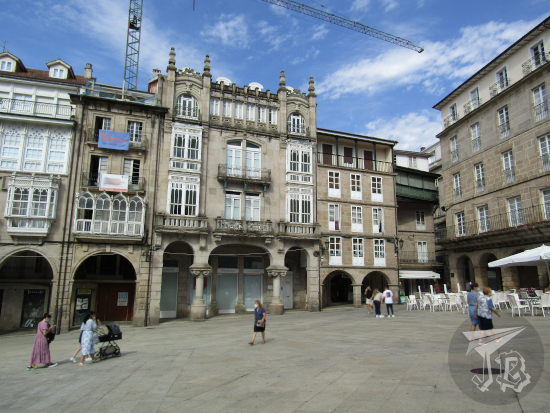
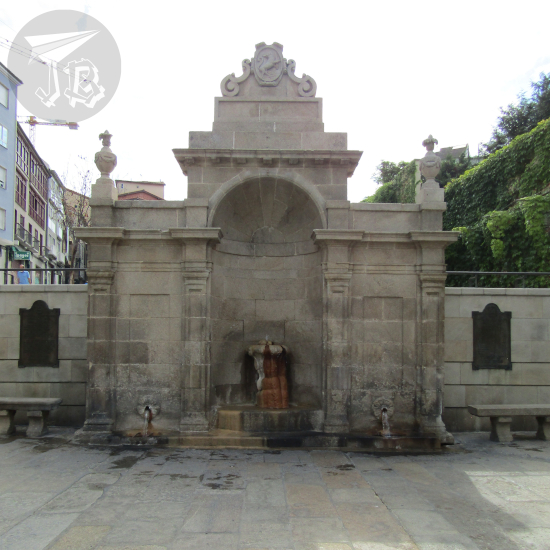
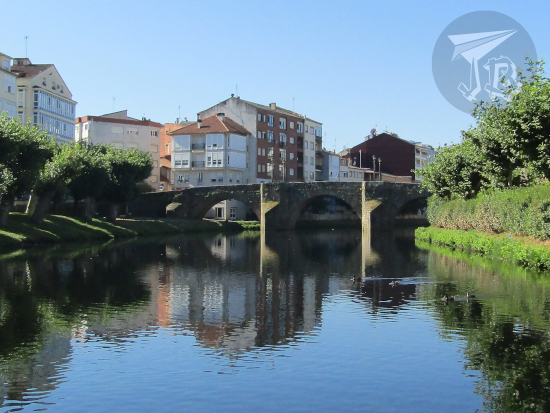
After so many curves, we deserved a calm day, which included some art in Monforte de Lemos . We started off at the river Cabe, crossing the bridge Ponte Vella and the newer iron one.

We had booked to visit the Christian Art Museum in the Clares’ convent Museo de Arte Sacro / Convento de las Clarisas, which features some interesting pieces of art, among them a dead Christ by Gregorio Fernández, and hundreds of reliquaries with supposed remains of Saints.

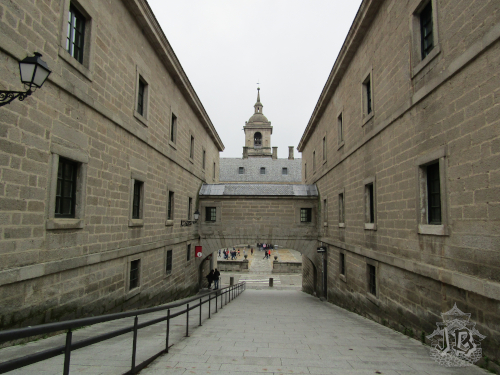
Then we moved to the Piarists School, the church, and their painting collection Colegiata de Nuestra Señora de la Antigua / Pinacoteca de los Escolapios . The school is built in a Renaissance Herrerian style and the guide constantly tried to one-up San Lorenzo del Escorial.

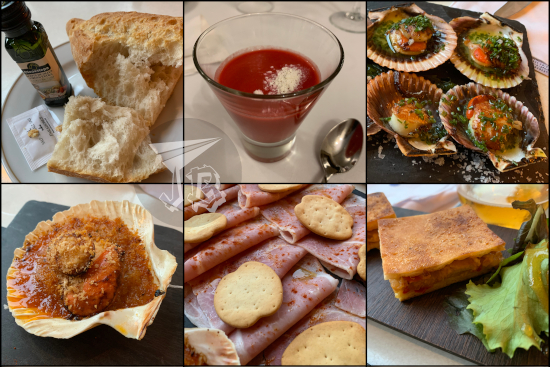
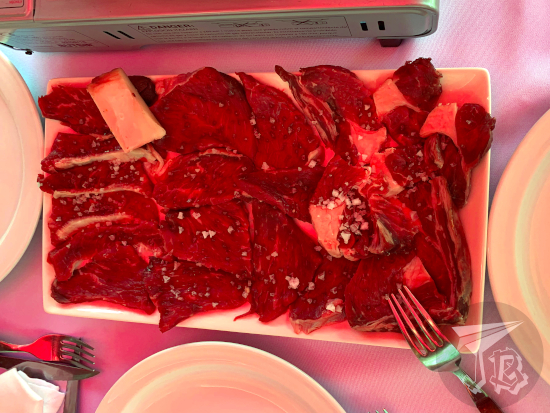
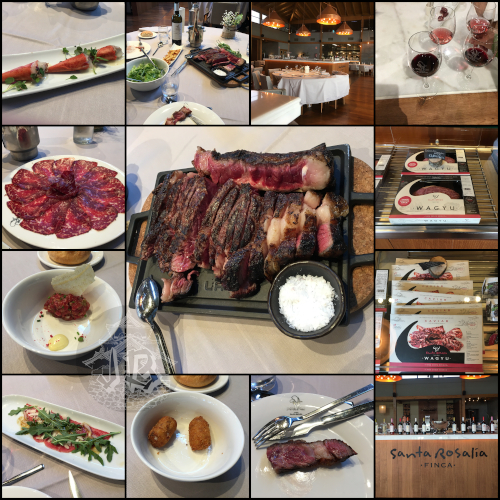
Then we found a good meat restaurant, Mesón JM for some local beef T-bone that we could prepare ourselves, although I get the nagging feeling they actually short-served us as they never showed us the meat piece. Please excuse the reddish tint of the pictures. It was the parasol and at the time I did not notice (≧▽≦).

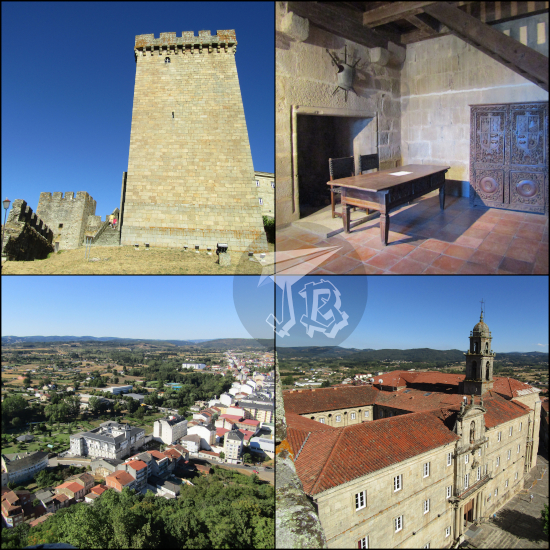
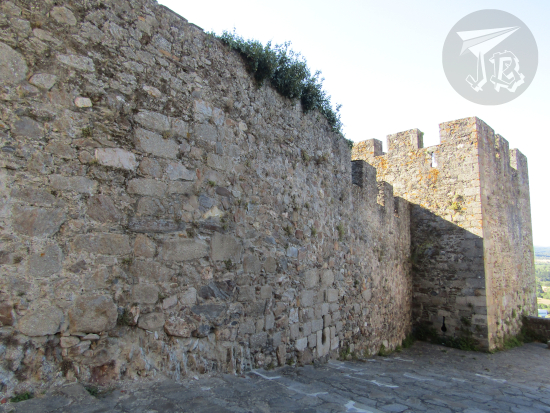
After lunch and a break, we took a climb into the old castle keep Torre del Homenaje, and walked around for a little.

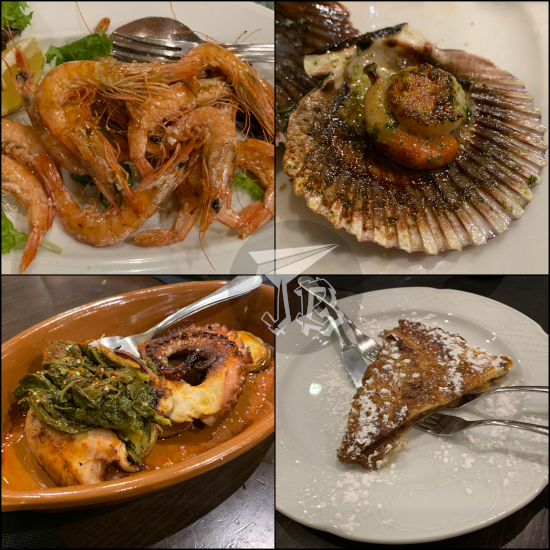
We ended the day at the tapas bar La Fábrica for some seafood.

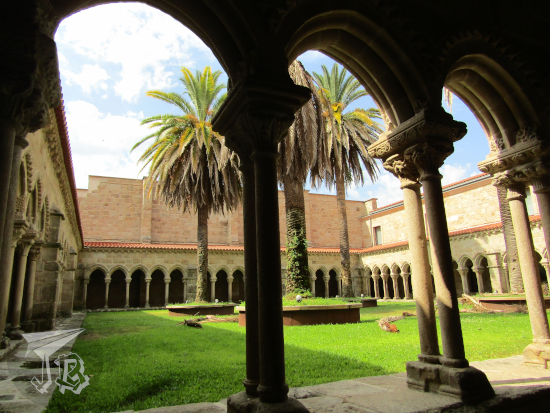
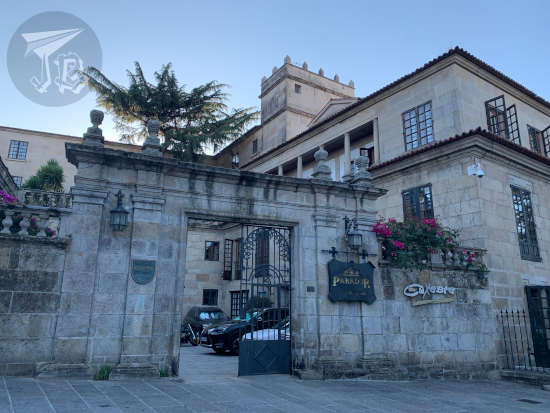
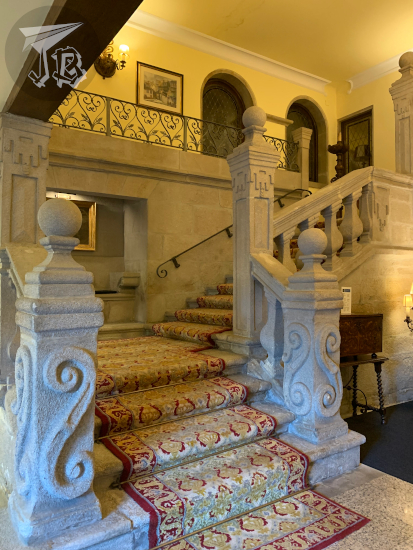
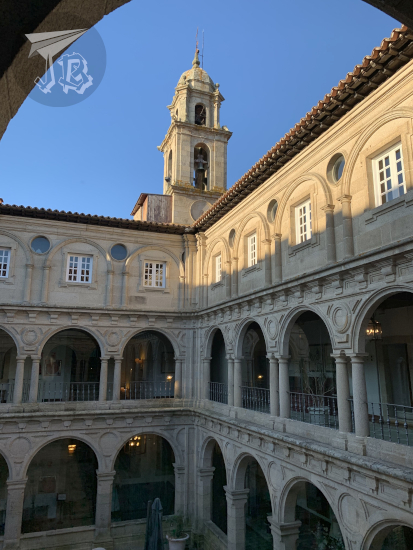
And finished the day with some in-accomodation exploration at the Parador de Monforte de Lemos.

Walked distance: 9.03 km
3rd August 2020: On the road again {Spain, summer 2020}

After having to cancel London and Greece, we decided to try to at least take a few-day’s worth road trip within Spain as some sort of consolation prize. We were, of course, very careful, using a lot of hand-sanitizer and never taking off our face masks except within the car, hotel rooms or when we were eating – strictly so.

We started off just in time so we surrounded Madrid right after rush hour so we did not get caught in any traffic jams. We drove northwards towards Medina del Campo, a town which played an important role in Spanish history, specially around the time of the Catholic Monarchs and their direct descendants. We were there at 11:00 sharp, right at the time when the castle Castillo de La Mota opened to visitors. Mota is the Spanish word for motte, which is a raised area of ground where a castle keep, and a walled courtyard or bailey, are built. They are protected by a ditch and a palisade. These castles are thus called motte-and-bailey castle. In particular, the castle of La Mota is made of red brick, typical to the area, but it is heavily restored today. The visit included the outer building, the yard and the chapel of St. Louise.

We stopped for a quick lunch at the Parador de Puebla de Sanabria. Paradores is a Spanish brand of state-owned hotels and restaurants which have a good reputation all around the country. In our lunch stop, I got my stamp passport because I can find stamp rallies wherever they are (≧▽≦), and Paradores has launched one.

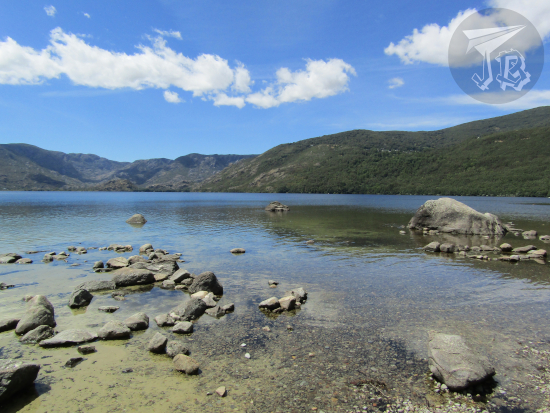
Then, as we were a couple of hours ahead our very informal schedule, we decided to take a small detour and check out the Parque Natural del Lago de Sanabria y alrededores, the natural park that surrounds the biggest natural lake in Spain, Lago de Sanabria. It is also one of the few, if not the only glacier-origin lake in Spain. It was full of people swimming and sunbathing, but the landscape was still beautiful.

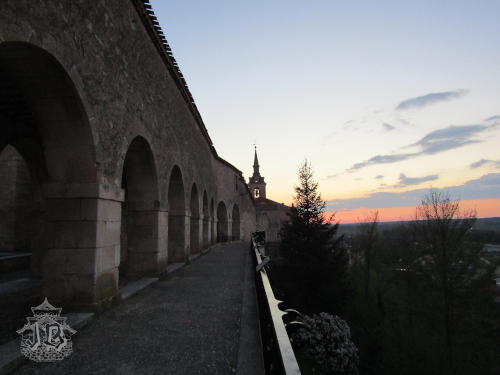
After lounging for a while we continued on our way towards Galicia and our destination, Monforte de Lemos. We stayed at the Parador de Monforte de Lemos, situated in the Monastery Monasterio de San Vicente do Pino at the top of a hill. It is part of a monumental compound, along with the former castle Keep and the palace of the former Count’s family, Palacio de los Condes de Lemos . Due to some kind of fluke, my room was doubled as “supreme” and the door came out to the actual cloister of the monastery, which was super-cool! (Also: Stamp number two)

We took a short stroll down the village, and we passed by the small sanctuary to the Virgin Mary’s image Santuario de la Virgen de Monserrat.

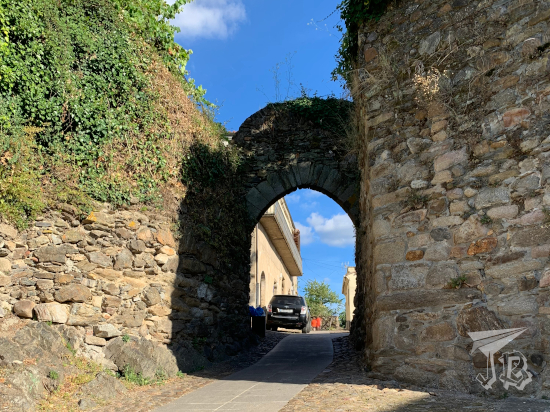
Then we saw the walls and the old gates.

Finally, we went back to the hotel to have dinner over there. Our choices included trying a species of scallop I had not tried before, the zamburiña, variegated scallop (Chlamys varia). We also tried the local pie, empanada. For dessert, they had a ‘variety of chocolates’.

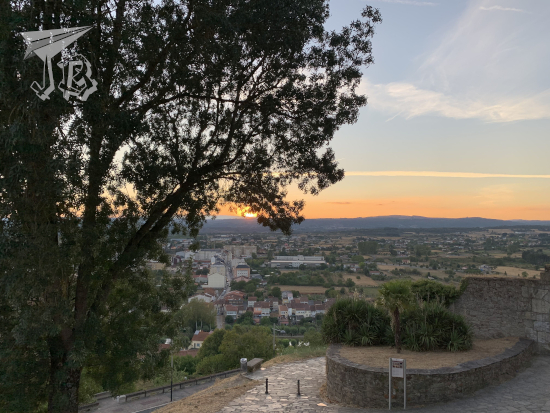
The day finished watching the sunset before turning in for the night.

Driving distance: Aprox. 600 km
Walking distance: 5.02 km

26th January 2020: Royal Palace and Norwegian salmon (Madrid, Spain)

A friend was over visiting for the weekend and we headed off to Madrid. It had been raining and the weather the previous evening had been rather miserable. Actually, when we left home it was rather foggy and dark, but upon stepping out the Avenida de América bus station, it had become sunny and not cold at all.

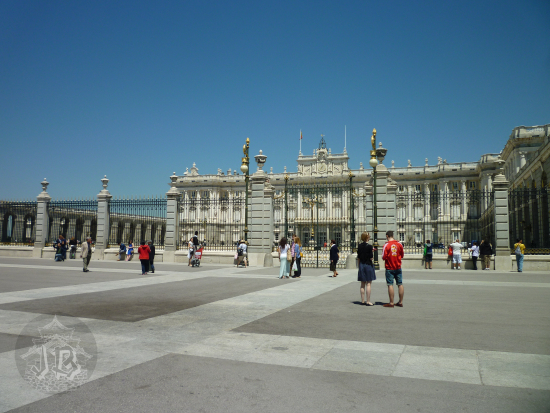
My friend wanted to see the Palacio Real de Madrid, the Royal Palace – we had been playing Madrid Cluedo the day before and she had mentioned that she had never been there. At first, we only wanted to see building. As it was Chinese New Year, the blunt of tourists was somewhere else watching the Parade, and we had a short queue to go inside, so she decided to wait as it was not expensive, either.

You can’t take pictures in most of the palace, but the yard looked really nice and you could see the cathedral from there. We also heard all the bells tolling at noon, which was fun. When you go into the palace you see several rooms, including the throne room and the old sleeping quarters. One of my favourite rooms is the one with the Stradivarius violins and other instruments.
While there aren’t that many pictures taken inside, here is a shot of the cathedral, Catedral de la Almudena .

After visiting the Palacio Real, we went to have lunch. She wanted ham, and I wanted a poke bowl I had seen announced in El Corte Inglés cafeteria, so it was a win-win situation. I had a “Poke bowl de salmón noruego”, Norwegian salmon poke bowl that was amazing – a sushi rice base with avocado, spring onion, purple onion, wakame, a soft-boiled egg and Norgweian salmon marinated with soy sauce, rice vinegar and kimchi.

She declared that she was happy after this, so we called it a day.

4th May 2019: Museo Naval & TeamLab in Madrid (Spain)

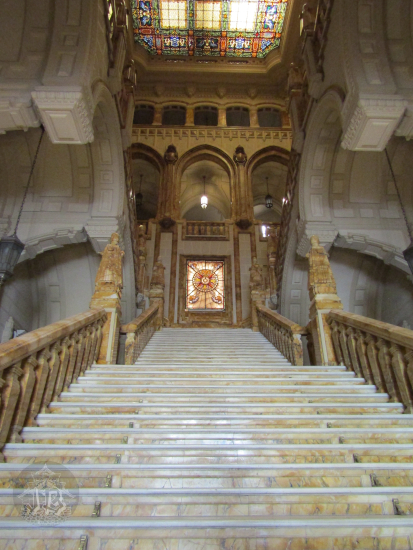
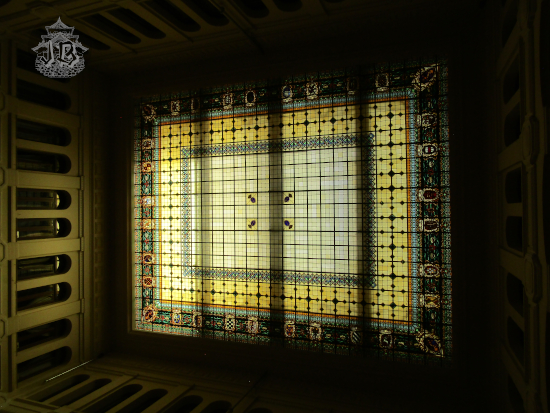
There were a couple of exhibitions in Madrid that I wanted to see, and my mother decided to tag along. We took a train and walked to the Museo Naval, the Navy museum, which was being renovated – so the permanent connection was not being shown. In the end, that turned out to be awesomely lucky because it allowed us to see the marble staircase and stained glass of the classical building, which is very rarely shown.

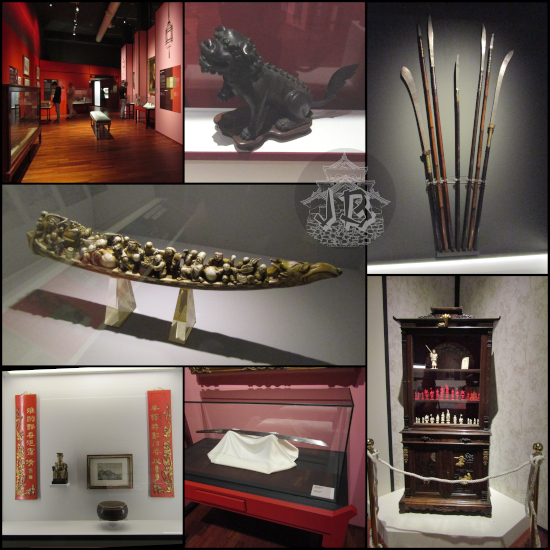
The exhibition that I wanted to see was related to the trips to Asia, mostly China, Japan and Philippines, and it was interesting for 3€. one of these days I would like to come back to see the whole museum when the renovations are over. It’s on the bucket list, I swear. One of these… I’m not sure, months, because I’d been saying I want to go to the Museo Naval for years.

After seeing the “Asia in the Naval Museum” exhibit and the ceiling, we walked towards the Telefónica Building. There, there was an Exhibition by TeamLab, the museum of virtual art from Tokyo! I really want to see it.

There were three exhibits:

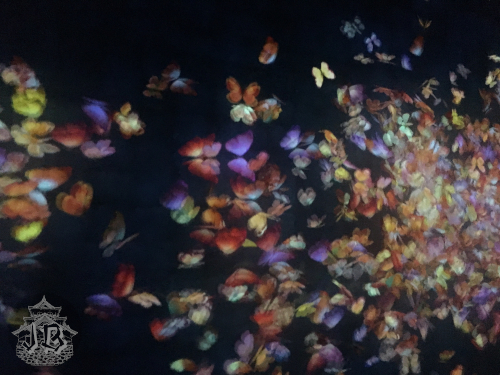
  • Flutter of Butterflies, Born from Hands (2019), a magical wall where you can rest your hands for butterflies to come up.

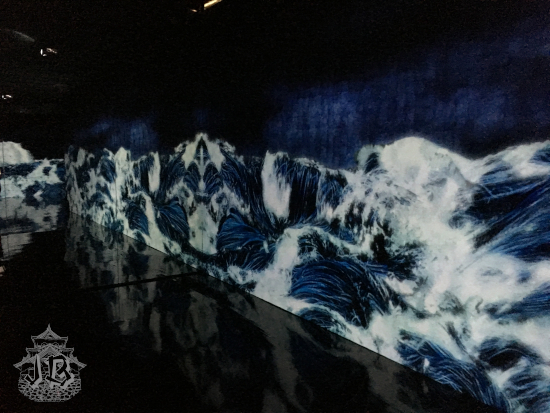
  • Black Waves: Lost, Immersed and Reborn (2016), an amazing scenery of breaking waves.

  • Enso – Cold Light (2017), a self-tracing enso (perfect circle traced with one stroke in calligraphy).

I was very happy to see this, and then we walked around the “Evolution of phones” exhibition- however, I apparently have not taken pictures of that one. I think it was too nostalgic, because god did it make me feel old (≧▽≦).

Before we returned home, we had lunch at a De María restaurant – an Argentinean meat-grill where we got a glass of rose champagne to go. Another place I want to return! However, this time I did not take pictures because the atmosphere did not feel adequate to do so.

23rd & 24th April 2019: El Escorial, Vizmalo & Lerma (Spain)

23 April 2019: El Escorial

The Royal Site of San Lorenzo de El Escorial aka Monasterio y Sitio de El Escorial is located a shy hour away from Madrid. It is most known for the Monastery that used to be an official residence of the King of Spain. The Monastery was built between 1563 and 1584. It is the masterpiece of the Spanish architect Juan de Herrera, after whom the Herrerian style, a sub-style in the Spanish Renaissance, was named. The building is a sober building made of a granite, and it is the burial place of most of the Spanish kings and queens. Some urban legends say that it was based off the descriptions of the Temple of Solomon.

We drove in around 9:00, dropped off the luggage, and went out, as we had tickets for 10:00 – although the hotel did not want to let us in. Contrary to the nice weather that we had been enjoying, it was cold as hell. The whole town felt grey and sober, and the cloudiness helped the mood – we had breakfast at a nearby bar (the only one open) and headed off to the monastery. The building hosts many artworks, along with a chapel, the royal pantheon and the most amazing library ever. Pictures in the inner areas are forbidden, unfortunately. The Monastery is a Unesco World Heritage site.

At lunchtime we walked out of the Monastery and headed off to the Royal Carriage House / Cocheras del Rey, a museum / restaurant. We had lunch, then visited the museum as the entry was free with lunch. It was raining like mad by then so we headed to the hotel to finalise the check in.

After an hour or so the rain had stopped so we decided to walk to the Prince’s House and Parks / Parque y jardines de la Casita del Príncipe. By the time we arrived it had started raining again – pictures were not allowed inside of the house either, but OMG was the inside Baroque, with flashy wallpapers.

On the way back, we could catch a glimpse of the monastery through the park. By now it was raining like crazy, so we spent the rest of the evening indoors.

24 April 2019: Vizmalo & Lerma

We left El Escorial early in the morning and we headed north for lunch. Yeah, well, let me explain. We had a reservation for lunch some two-and-a-half hours away, in Vizmalo (Burgos). This was a bit of a silly whim, but we were going to visit an estate / farm and have lunch there – the St. Rosalia Estate / Finca Santa Rosalía breeds wagyu for meat, and holy are they yummy. We had a booking to see the estate first.

While it was still cold, the weather was slowly improving, and in evening we had some sun. We saw the orchards, the grapevines, the cattle, the trees and so on. Then we moved into the wine cellars and saw the barrels, before we tried the wine and some of the meat-dishes that they prepare and sell. The selling point of Finca Santa Rosalía are the wagyu, cattle of Japanese origin. Wagyu meat is completely different from any other beef because it is soft and tender, and in general delicious.

Lunch was brilliant, based, of course on the wagyu meat. The T-bone was scrumptious and even if it was on the “a lot of money” side, it did not feel too expensive for a once-in-a-lifetime experience considering the amazing quality.

After lunch we drove off towards Lerma, a city which was revamped by the Duke of Lerma back in the 17th century. After finding our hotel and dropping our stuff off, we walked to the Duke’s Palace turned luxury hotel: Palacio Ducal & Parador de Lerma.

We walked around and came across the Mirador de los Arcos / Archway Viewpoint.

Then we saw Colegiata de San Pedro / St. Peter’s Collegiate church, where there was a religious exhibition being held (“Las Edades del Hombre”), with the topic of angels. Pictures were not allowed, or we would have shown you a few… interesting representation.

Sunset crawled upon us and it was nice view. We had dinner somewhere around the town centre, and called it a night before we drove home the following day.

17th April 2019: La Almudena & Mercado de San Miguel (Madrid, Spain)

A Japanese friend had a layover in Madrid, so I took the day trip to see her and stay with her until she moved on to her final destination. We dropped off her luggage at the coin lockers in Atocha station and I asked her what she wanted to see.

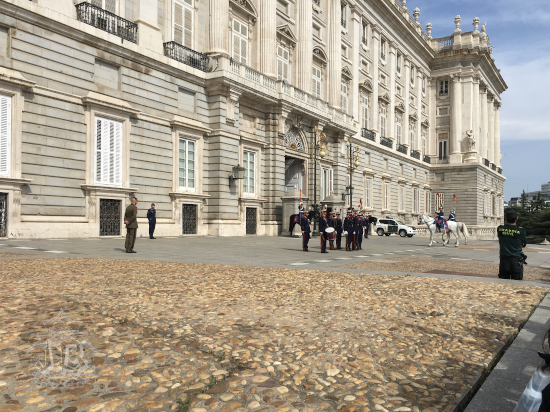
Our first destination was quite accidental. We were heading towards La Almudena cathedral when we stumbled into the Changing of the Guards in front of the Royal Palace of Madrid, the Palacio Real de Madrid.

The Catedral de la Almudena, Madrid’s cathedral, is right next to the Palace, and we were there a few minutes later. We walked around the upper area. It was a nice, sunny day so the coloured windows made neat reflections on the walls and floors.

Afterwards we found our way to the cathedral crypt.

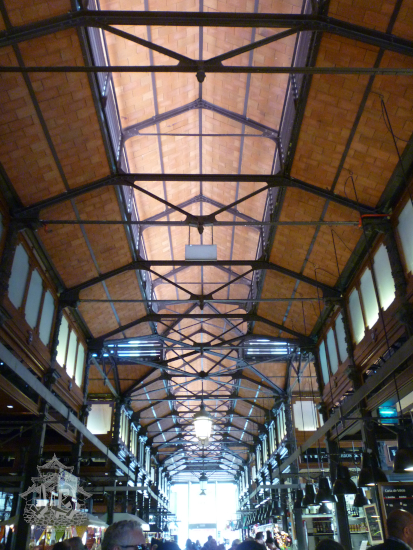
Then we moved on towards Mercado de San Miguel, St. Michael’s market, a bit of high-end foodcourt. I’m still traumatised due to the 6€ we paid for four lousy croquettes, but that’s life and she really wanted to go there.

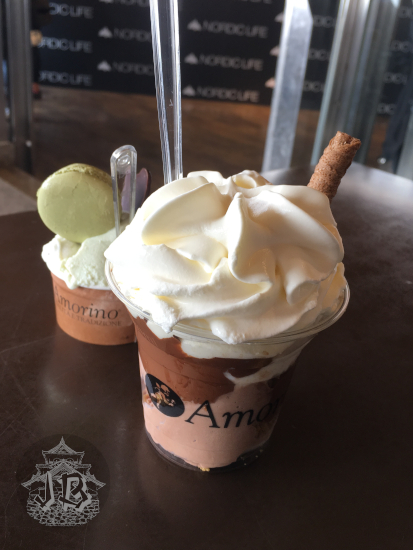
It was very hot, so we took shelter in some of the shops and then we headed off to have some ice-cream in the Callao Gourmet Experience and enjoy the view. Afterwards I dropped her off at her train so she could go on her merry way and I went back home.

2nd January 2019: Jurassic and 19th Century Madrid (Spain)

I was in the middle of winter holidays and a couple of family members asked me if I had plans – I said I was getting tickets for a dinosaur exhibit in Madrid, and they jumped in. We made arrangements to head over there on the 2nd of January and spend the day in Madrid. I don’t think they really realised what it meant to be around me and the “terrible lizards” (≧▽≦). But off we went.

General entry ticket for 2nd January 2019

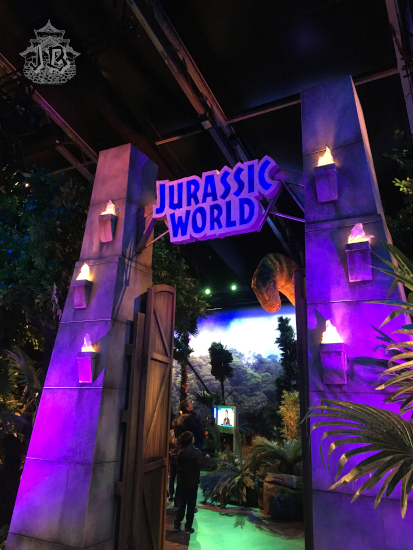
The Jurassic World: Exhibition was held in Madrid. The whole thing is organised in-verse, as if you actually visited the island.

Jurassic World the Exhibition logo and title

After you walk in, there is first a small introduction on the “boat” as you travel towards Isla Nublar. There you are given the instructions (mainly, keep your hands to yourself), the boat makes dock and you are let into the Park. Keeping in touch with the spirit of the films (not the book though *giggles*) there’s a Brachiosaurus there to greet you, just like the first animal you see in Isla Nublar (and later the last).

Pretencious gate with two columns on the side, reading Jurassic World. A brontosaurus head peers down at you

You also catch a glimpse of a Parasaurolophus.

The head of an herbivore dinosaur (parasaurolophus) peering through the bushes

Then you get to the “stables” where you get to see a Triceratops mama with her baby.

Mom and baby Triceratops behind a fence that reads Gentle giants petting zoo

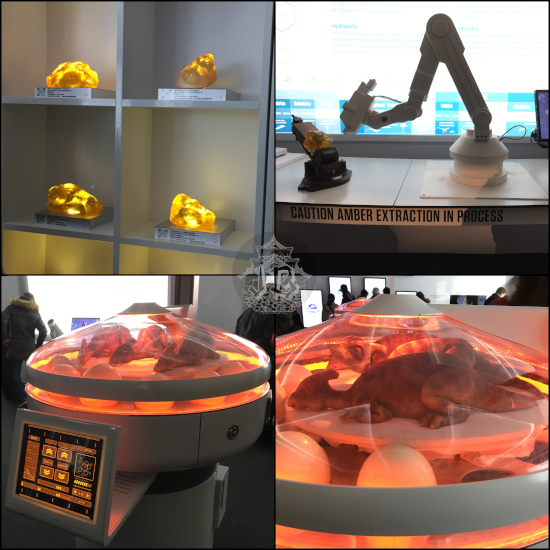
Afterwards, there is a small room that represents the laboratory where the dinosaurs are made – I could have made it out with a critter but there were only baby Iguanodon.

Fake amber pieces and DNA extactor along with an incubator with eggs and baby dinosaurs

Next, you walk into a tiny museum with some fossil reproductions and actual scientific information…

Reproduction of carnivore dinosaurs skull and bones, along with the drawing of a huge T-rex fooot print drawn on the ground to compare it to a human one

… right before everything goes to hell and back when you’re shown a hologram of Owen Grady talking to his velociraptor Blue and you get a… guy in a velociraptor costume prancing around (≧▽≦).

Person disguised as a verlociraptor

The next room shows the Tyrannosaurus rex cage (by the way #TeamTRex here, in case you did not know) behind her cage, menacing and staring.

T-rex animatronic, showing the huge head behind a fence

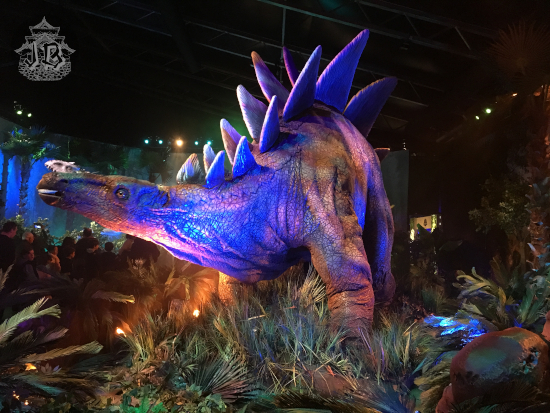
The final room is another garden in which you get to see a Stegosaurus being stalked by the made-up Indominus rex.

Stegosaurus

Head of the Indominus rex, looking like it's stalking prey

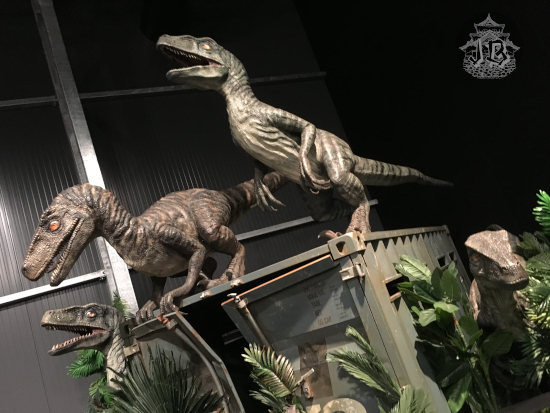
And at the end of the exhibition, after the shop even, you find the velociraptors, which have apparently escaped and are ready to attack!

Jurassic world velociraptors on a wrecked crate

All in all, being the dinosaur geek I am, I had a blast. I’m not sure that my poor family members that had wanted to tag along with me knew what they were bargaining for (≧▽≦).

However, they were still willing to put up with my for a little longer, and together we drove off to the centre of Madrid, and somehow ended up at the Museo Cerralbo. They asked if there was something I wanted to see, and the Cerralbo Museum was running a couple of Japan-related specials I was curious about. The museum stands in the Palace of the same name, and it holds the collection of the late Marquis Cerralbo.

The museum is… crammed and chaotic, but interesting in its own way. It holds thousands of pieces, from worthless-looking mementos to priceless paintings by masters such as El Greco. Art experts say that the Cerralbo collection was the most valuable of its time.

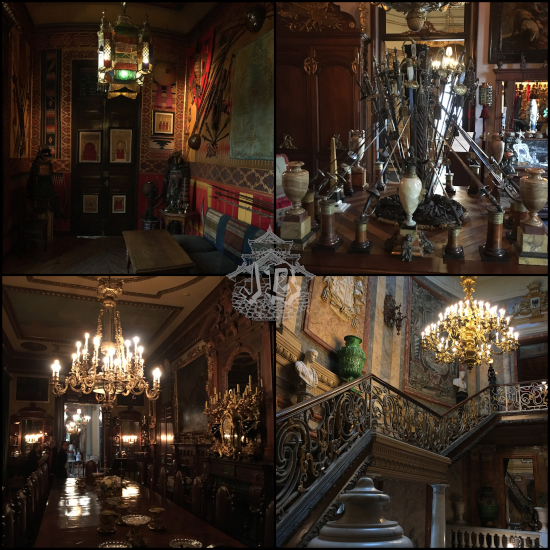
Collage of cerralbo museum. A room with two samurai armous. A centrepiece made with swords. A long table, set, with chairs along and an ellaborate lamp hanging from the ceiling. The hall of the museum, with a staircase with an ellaborate balaustrade and a glass lamp hanging from the ceiling.

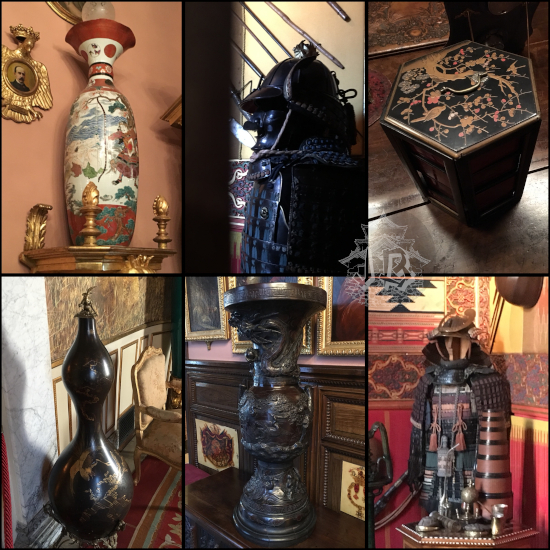
The museum was holding a designated route focused on the Japanese pieces it has, including samurai armours.

Collage of Asian and Japanese pieces of the museum: hars, a samurai armour, and an hexagonal carey box

Furthermore, there was an origami exhibition on the lower floor.

Origami pieces: a phoenix, a snake, an orca, corals, and a life-sized hippo

After the museum we sat down for lunch at a fusion Asian-Japanese restaurant, because the family members “wanted to try” – although they were rather scared of the food. Eventually they managed to enjoy it too, and even have seconds – however I needed to make a run to get my tablet serviced.

Lunch. Sushi, chicken skewers, rice dish and noodles dish

Once it was up and running, and family had come to find me, we walked towards the shopping centre in Principe Pío for dessert – yoghurt ice cream with berries and smarties. A great way to end the day!

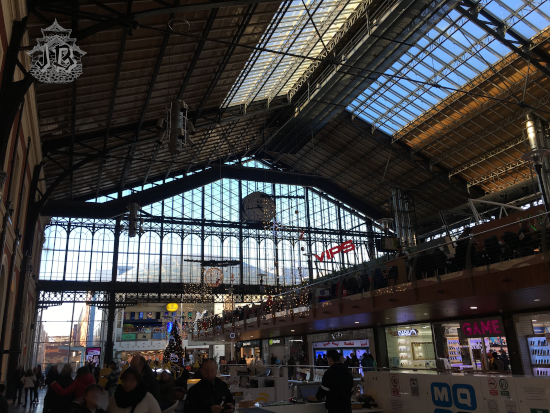
An old station from iron architecture epoch repurposed into shopping centre

Frozen yoghurt with berries sauce and smarties

3rd November 2018: Samurai Spirit in Madrid (Spain)

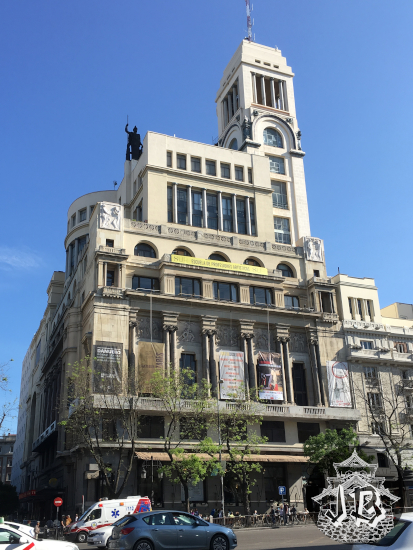
I booked tickets to see the show Kamui x Mika Kobayashi: Utakatana Sekai – Samurai Spirit in Madrid. In a last-minute change, my parents decided to tag along, so we just drove there in time for the show. It took place in the theatre Teatro Fernando de Rojas, one of the halls in the Círculo de Bellas Artes building.

Publicity poster with the show's date

Samurai Artist Kamui [剱伎衆かむゐ, Kengishuu Kamui] is a “samurai sword artist troupe” . They perform stories through “samurai communication” using music, sound and light to work on the atmosphere, along with of course, Japanese sword – katana – performances. The founder and leader of the troupe is Tetsuro Shimaguchi [島口哲朗], who played a part in Quentin Tarantino’s Kill Bill vol.1, a film for which he also served as choreographer for the swordfighting.

Mika Kobayashi [小林未郁] is a singer, pianist, and songwriter from Hiroshima. She is known for her vocals on anime, such as Attack on Titan or Gundam UC, and video games like Final Fantasy XI. She established her own style and record label in 2016 and has been doing her own thing since then.

The collaboration Kamui x Mika Kobayashi: Utakatana Sekai – Samurai Spirit seems to be designed for touring overseas as there is no trace of that name in Japanese. Utakatana Sekai would roughly translate as “the world of singing swords”. It features Kobayashi as singer and pianist providing the background voice for the show.

Through artistic sword-fighting and music, the performance conveys a story about the old samurai ways giving way to a new world. Short self-contained scenes tell the story of a samurai warrior who gives way to the new generation – played by a lady. A bit subversive from the Japanese traditional way, I guess.

The show has three parts. The first act comprises fights and individual actors showing off their individual skills. Younger or less experienced fighters, who get “swordsman #4” roles end up being killed two or three times. I liked a short story about a blind samurai better than the romantic ones. Unfortunately, I was a bit to the side – I only bought the tickets with a week or so when I found out – and my angle was awkward at times. I could see the gaps between the swords when they did not clash for real.

During the interlude / break, they brought two volunteers from the public to learn some moves and get the mood lightened up. This showed off Shimaguchi’s language and teaching skills, along with a flair for the dramatic, and it was really funny.

Different scenes from the show

The last part was more spectacular, full of stunts and coordinated exhibition acts. That was the part I enjoyed the most. All in all, the whole ninety-minute show was very fun. Mika Kobayashi’s melodic voice and piano tunes fit really well with the whole theme, and everybody seemed to have fun, and at the same time take their jobs very seriously. However, I’d need a better seat next time, in order to keep the suspension of disbelief and not see all the stunts as… stunts.

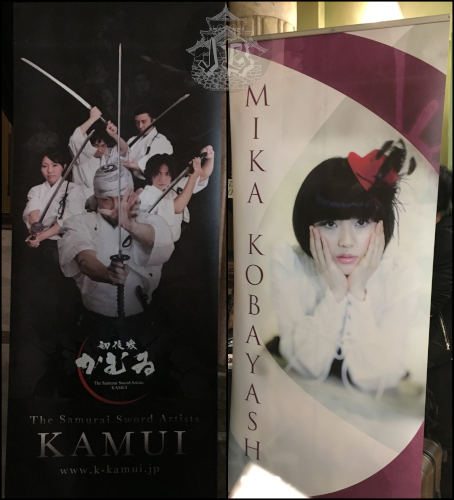
Artists’ publicity banner

Afterwards, many artists came out to take pictures with the audience. We got to take pictures with Mika Kobayashi too, and I bought a signed CD of hers.

Mika Kobayashi's signed CD

21st & 22nd July 2018: Swan Lake in Madrid (Spain)

21st July: The housefront

This Saturday/Sunday getaway was a birthday present, and I have to admit that I was super excited about it – the main part of the present was a hotel night in Madrid and tickets to watch the (British) Royal Ballet in the Spanish Royal theatre, the Teatro Real. And I mean stall tickets, I was over the moon.

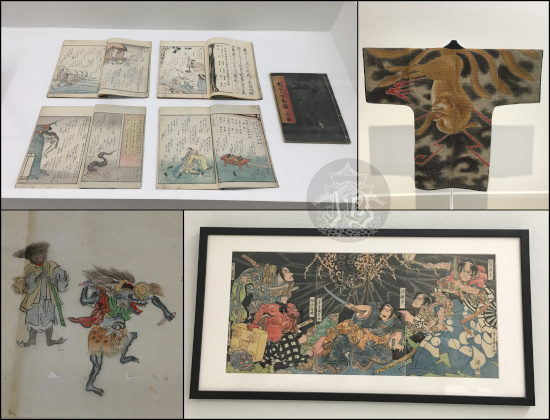
The day started at the Museo de la Real Academia de Bellas Artes de San Fernando, where there was an exhibition about yokai, the Yumoto Koichi Collection (Miyoshi, Hiroshima). It was called Yokai: Iconografía de lo Fantástico (Iconography of the fantastical), and it was rather interesting. It holds a collection of different items related to mythological creatures of Japan, yokai [妖怪] – there are scrolls, woodprints, games, pottery, even clothes and accessories. This was an interesting exhibition, and having seen it would later save me a trip to Miyoshi, allowing me to discover Takehara instead.

Rolls of paper, kimojo jacket and blookwood painting, showing different scenes and beings from Japanese mythology

After the exhibition, we went to the Green Tea Sushi Bar & Cocktail Room, which turned out to have the most overpriced mediocre sushi ever. The place was ridiculously expensive but fortunately we had booked with a special 50% discount, which made it bearable. However, fair is fair, and the tataki was delicious, and the chocolate coulant turned out to be amazing.

Lunch. Sushi boat, sald, tuna tataki, edamame, and an ice cream scoop

The hotel was in the right smack of Madrid, a short walk away from the “royal theatre” Teatro Real and we had tickets for 17:00 – to watch Swan Lake performed by British The Royal Ballet. Before sitting down we took a small exploration walk through the different rooms, including the ball room. I really loved the whole building and in particular the blue room and the ball room.

Royal theatre snippets - the main hall, the stage, the stands. Most curtains are a rich burgundy colour.

Swan Lake happens to be my favourite ballet – I love Tchaikovsky in general, though the stars have always aligned against me watching Sleeping Beauty. In Swan Lake, the evil sorcerer Rothbart turns maidens into a swan during the day, and they turn back to women at night as long as they are near the enchanted lake. The ballet officially opens with Prince Siegfried celebrating his birthday. He receives a crossbow as present, and he is later told by his mother that he needs to choose a bride the next night. As he becomes upset his friend suggest going hunting. In the forest, Siegfried becomes separated from the group and meets Odette, one of the swans. She explains of her predicament, and they eventually fall in love, and Siegfried invites her to the ball in which he needs to choose his bride. The next night, however, Rothbart sends Odette’s magical doppelgänger, to whom Siegfried swears love. Witnessing this in swan-form breaks Odette’s heart. As he realises his mistake, Siegfried makes it back to the lake.

The ending of the ballet changes. Sometimes it is a happy one when the spell is broken. The original ending has both Siegfried and Odette dying together to break the spell. Another alternative is that only Odette dies, but Siegfried manages to kill Rothbart and break the spell – this was the one that the Royal ballet played, and it managed to make me a puddle of happy goo. As Siegfried raises Odette’s inert body over his head, I shuddered all over. It was magnificent.

Snapshot of the credits, Showing Akane Takada as Odette and Odile, William Bracewell as Prince Siegfried, and Thomas Whitehead as Rothbart

The cast after the play taking their bows.

After the performance was over, we had dinner in the Plaza Mayor and then walked towards Puerta del Sol, then back went to the hotel to catch some sleep.

Square Plaza del Sol lit by night

22nd July: The backhouse

On Sunday we went back to the Teatro Real because we had booked one of the visits they offer, the technical one. During this visit you walk through the inner areas of the theatre, and even more interestingly, the upper area.

We saw the main hall, and afterwards we went first onto the backstage, then the backstage, and finally onto the stage where the Swan Lake props still stood, so that was really cool. The visit finished climbing up to the upper area of the theatre to see the views and the theatrical rigging system.

Empty royal theatre, showing the stalls from the stage, the backstage, and the view of the cathedral and the royal palace from the upper windows.

Finally, we had a bite to eat and we headed home for the weekend, and I have to say, I was happy as a skunk.

26th March 2018: Dinosaur bones and Lover mummies {Dinosaurs in Teruel, 2018}

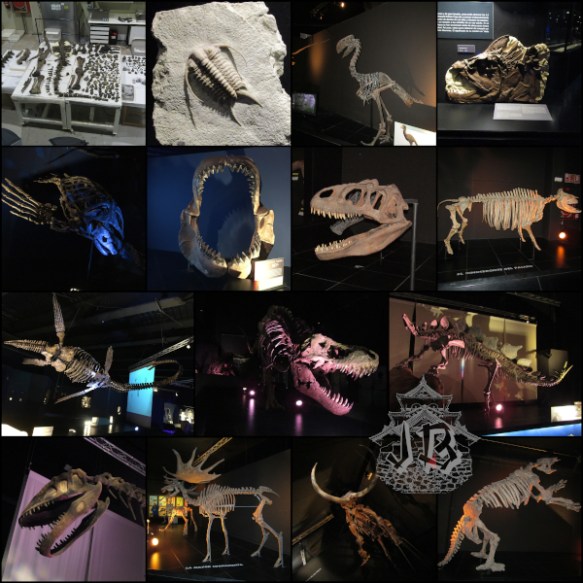
We got to Dinópolis so we could be there when they opened in hopes to ditch the families-with-kids crowds, but to our confusion, we were told that even if the park was open, the palaeontology museum would not be for another hour. Furthermore, the only option to see the museum was with a guided tour. We did not care much about the 3D cinema, but there was literally nothing else we could do until they opened the museum part. We spent the morning in the park. We had to watch the first film, and somehow ended up doing two rides (Viaje en el tiempo & Último Minuto) and a show (the T-rex one), but the big things we cared about were the museum and the so called “Tierra Magna”, where the 1:1 reproduction stand.

The museum has a direct view to the lab, and while it has very few original and unique exhibits, is really good and informative. The big problem was, in my opinion, that it was only guided-access and those stress me out. Why can’t I just roam to my heart’s content and have to listen to a poorly-trained guide? We somehow managed to ditch the tour when the second and third groups came in and a bunch of people mingled around.

A collage showing different fossils and replicas from Dinopolis

It was cold outside, so we only had a quick stroll around “Tierra Magna”. We had lunch and decided we were done. If I had to rate this, I’d say it is a decent palaeontology museum with a lot of kid-friendly stuff around it – the latter is completely skippable, too, but I guess it brings money.

Life-size reproductions of dinosaurs outside Dinópolis Teruel

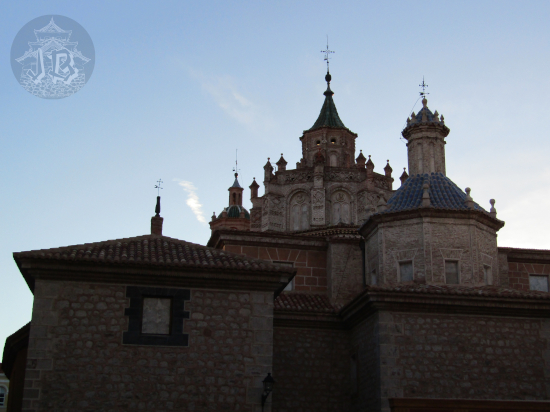
In the afternoon we headed off to see the cathedral, Cathedral of Santa María de Mediavilla, but I did not manage to sneak a picture of the famous wooden ceilings.

Outside view of the Cathedral

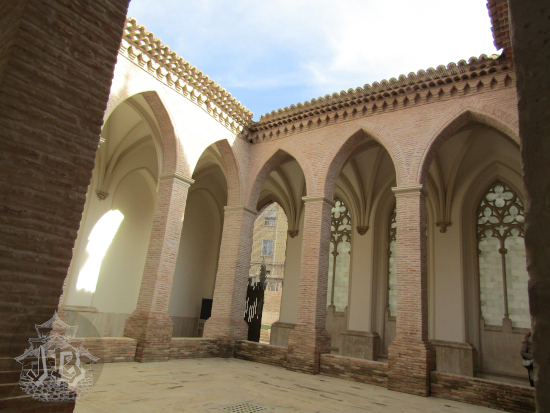
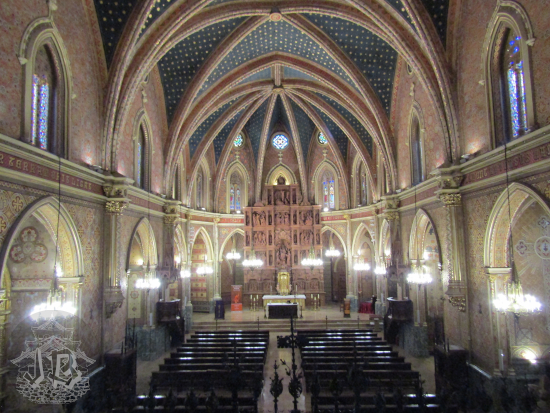
Later, we had a reservation to see the Complex of the Lovers of Teruel, which included the Iglesia de San Pedro (Church of St. Peter), its cloister, and the gardens.

Nave in Saint Peter church

Cloister in Saint Peter Church

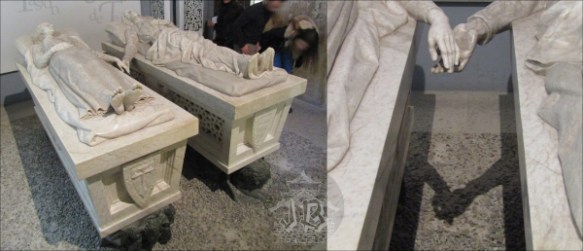
Finally we got to the Mausoleum, el Mausoleo de los Amantes. The story tells that she was a rich heiress and he was a poor man, so he left to gain riches. While he was away, she was given off to another man and married, and when he came back she could not be with him because she was loyal to her husband. He died of a broken heart after she refused him a kiss, and she died after kissing his dead body. The bodies of the lovers were buried together afterwards. The two mummified bodies were found in the church of St. Peter, and they were thought to be the lovers, so the tombs were sculpted – if you crouch, which by the way I didn’t, you can see the mummies through the marble. The tombs were designed so that the lovers’ hands are very close, but they don’t really touch, albeit their shadows superimpose, as if they did.

Mausoleum of the lovers - they lie next to each other, hands reaching for the other one, but only the shadows touch

After this, we walked around town for a while and found the third tower, the Torre del Salvador.

Salvador Tower

We finished the tourist day at the monumental Escalinata de Teruel (the Grand Staircase).

Monumental Staircase

As we walked back to the hotel, we saw a beautiful sunset.

Golden sunset

25th March 2018: Main roads that feel like secondary {Dinosaurs in Teruel, 2018}

We arrived in the Albarracín area after driving for about three hours. Some of the roads were horrid and I was secretly glad my offer to drive had been rejected. We arrived in Albarracín around 11:00 and our first stop was the first Dinópolis mini museum, called the Mar Nummus (Nummus Sea).

As this mountain range used to be sea bead (like 150 million years ago), a bunch of marine fossils can be found in the area. Dozens of ammonites fill up the museum, along with the skull of a Liopleurodon, a marine reptile of the order of the family Pliosauridae, quite obviously a carnivorous one judging by the teeth. As a matter of fact, it was the apex predator of the Middle and Late Jurassic oceans.

Mar Nummus building, featuring a life-size liopleurodon + the skull of the liopleurodon + a lot of ammonite fossils

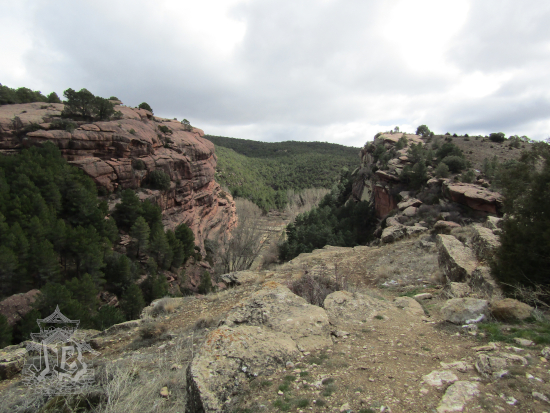
The visit did not take long, and then we moved on to drive to the Mirador de la Escombrera (Slagheap Viewpoint, don’t ask me) to watch the pineforest Pinares de Rodeno. We decided against walking through the forest because the shortest route was a couple of hours already.

Sandstone cliffs + pine trees

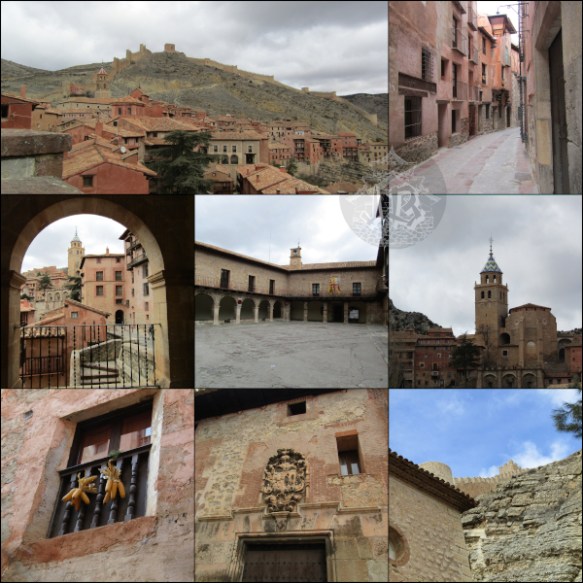
Instead, we drove back to Albarracín and walked throughout the historical centre, a medieval nucleus of streets and houses dedicated to shops and restaurants catering to tourists.

Albarracín, a Medieval city in reddish tones. It is surrounded by a wall

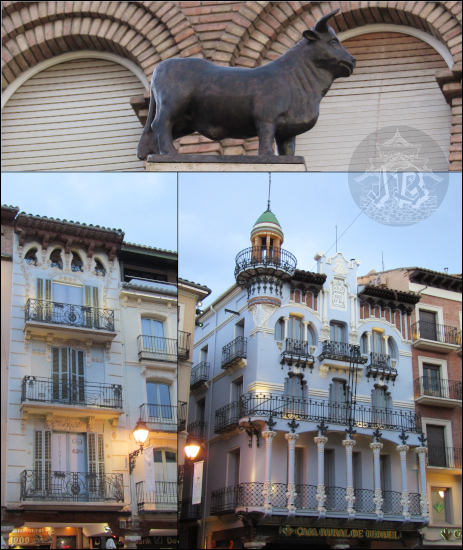
We had lunch, then drove the short 40 minutes to Teruel, where we found our hotel. After dropping our things off, we walked to the centre of the town – which was barely a ten-minute stroll away. Carlos Castel Square is widely known as the “little bull square”, Plaza del Torico.

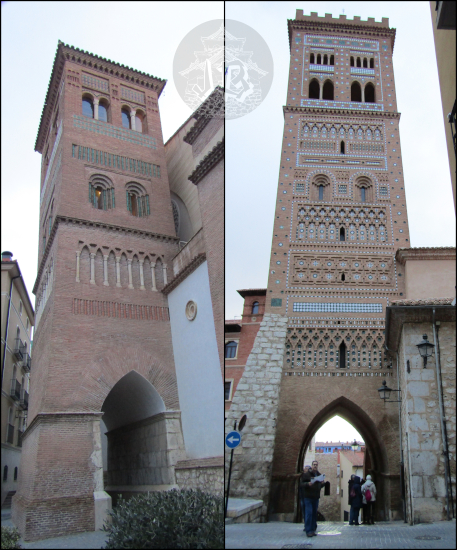
Teruel is known, aside from dinosaurs, from its Mudéjar style buildings, such as the Towers or the Cathedral. Mudéjar style was used by Iberian Christians between the 13th and 15th Century. It incorporates motifs, decorative elements and construction techniques that were common in Muslim Al-Andalus (such as archways, porcelains, bricks, and so on…). On the first day we saw two of the Towers: Torre de San Pedro (left) and Torre de San Martín (right).

Mudéjar Towers

The second architectural characteristic of Teruel are the Modernist houses, built in the 1910s, such as the ones in the Plaza del Torico – Casa La Madrileña (left) and Casa del Torico (right).

Plaza del Torico: a little bull standing on top of a column. Behind it stand two Modernist Houses at dusk

After this we had dinner and we headed back to the hotel.

24th March 2018: The day I saw Hatsune Miku (Madrid, Spain)

“Vocaloid Opera – The End” is an opera for an in the digital world. It was written by Keiichiro Shibuya and performed by Hatsune Miku. Hatsune Miku [初音ミク] is a vocaloid idol. In case you’ve never heard of vocaloids, the idea is a bit complicated. A voicaloid is a singing voice synthesizer software product, basically a computer-generated singing voice. The software was released in 2004 and it exploded with popularity in Japan. Hatsune Miku was given a humanoid shape when it was released in 2017 – and it was definitely a she. So, in a way, Hatsune Miku is a voice synthesiser with a cartoon-female-human form.

Yeah, weird. I have always thought so too. But it was dirt-cheap (8 quid), and there was a session at 18:00 on Saturday that I could attend without a late train back. So I dyed my hair purple (because no, I’m not showing up to a blue-haired character’s show in blue hair), got out my thick faux-fur-neck coat and off I went.

The show was being held at Naves Matadero is a former slaughterhouse turned arts centre. It has turned the buildings into theatres, showrooms and so on. As I walked around the area, looking for my theatre I saw a hell of a lot of families with kids under ten, there to see “the doll” or “the cartoons”. I’m not kidding, during the first ten to fifteen minutes of the show, about twenty families left (≧▽≦).

Entrance to the venue, showing the sign of Naves Matadero Nave 11 and Vocaloid Opera the end

“Vocaloid Opera – The End”, composed by Keiichiro Shibuya [渋谷慶一郎], explores the concept of an artificial being obsessing about death. The whole show is digital, just like Miku, as she wanders the world wondering about “the end”. She seems trapped in a surreal nightmare, with several scenarios that don’t make that much sense. Miku is followed in her trip by a plush rabbit (Alice much?), she talks on the phone and there is a multiple-eye monster around.

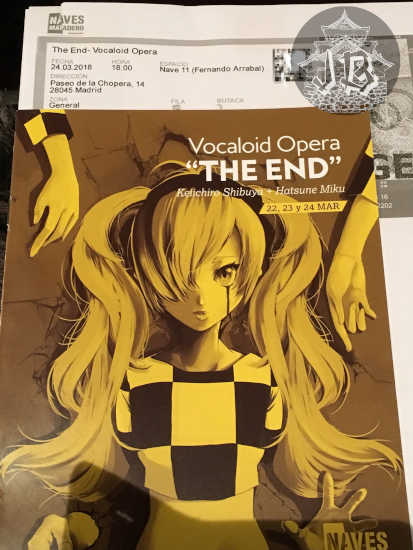
Booklet and ticket. Both read Vocalod Opera the end, with the dates. The booklet shows an image of Hatsune Miku, crying blood, the whole booklet is tinted yellow

The music has an electronic flavour, and at times repetitive. It’s loud and you feel it more than hear it. There warnings about bright and strobe lights all around and I understood why – the whole thing relied heavily on CGI and lighting. The chosen topic, along the images were claustrophobic, and I think that was on purpose – there are different “dying” options: drowning, gas masks, withering off.

The climatic “aria” peaks with Miku asking the spectator “Am I dead? Or just asleep? You decide. It makes little difference to me.” In the end, she is a human creation so, like humans, she will “die” sometime too (aaaaand I have opinions about this because I believe that some human creations transcend their authors). And a final downside: knickers. Seriously, what’s with Japanese people and knickers?! She’s a CGI doll – true, wearing CGI clothes designed by the former artistic director of Louis Vuitton, Marc Jacobs, but a CGI doll!

That was all that I did, but here are some pictures I managed to snatch a few pictures, including of the actual 3D rendering of Miku.

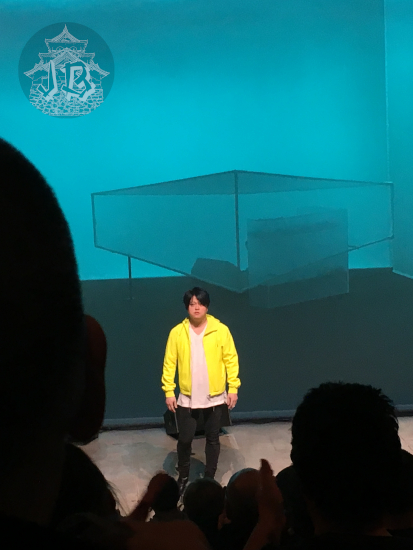
Picture of the composer, dressed in yellow

Life-sized sculpture of Hatsune Miku, wearing a chequered dress that shows her waist, and heels. Her hair is flying as she turns.

11th March 2018: An old-fashioned museum and a strike in Madrid (Spain)

I was looking at a work-related trip and wanted to use up Sunday morning to visit “a couple” of museums, then meet some relatives for lunch. Unfortunately, I was caught in the middle of a public transportation strike, so in the end I had to walk for a long while instead of doing what I wanted! Anyway, what I managed to do was getting to the Museo Geominero Nacional, the “Geomineral Museum” in Madrid. It is located in the headquarters of the Geological and Mining Institute of Spain, in a classical-looking building finished in 1925. It was designed by Franciso Javier de Luue. It is a classical-looking museum with wooden cases and an impressive stained glass ceiling, comprised by a central room and three surrounding balconies.

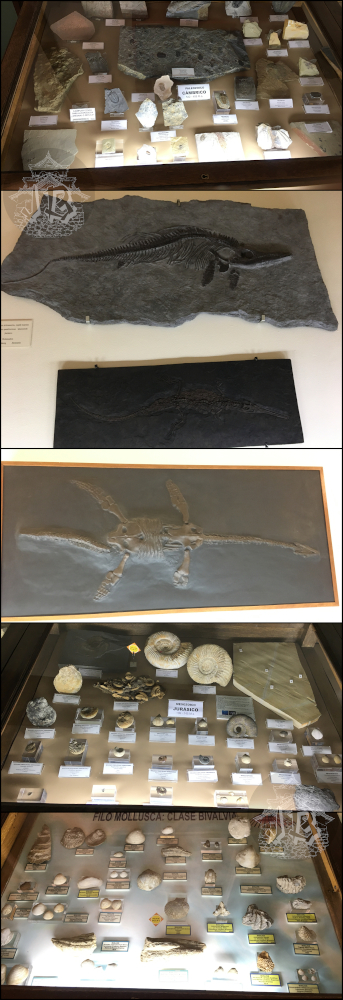
The access is through a marble staircase and the first corridor is already packed with display cases, even before you get to the main area. These cases show small and not-so-small fossils and replicas, displaying the first taste of the evolution of life on earth.

Once in the main room, most of the floor is taken up by the standing cases holding minerals, fossils and meteorites.

In the centre of the room lie the remains of a mastodon, located in the area of Ciudad Real in the 20th century, one of the crown jewels of the museum.

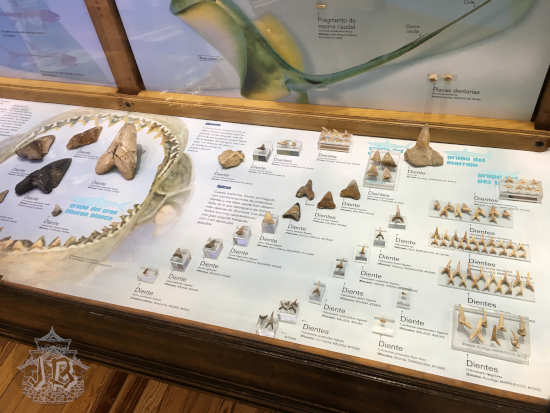
Of course I have been able to locate the collection of megalodon and shark teeth that are on display on the balcony.

Other displays on the upper floors include Spanish mountain goats, cave bears, and a human-evolution collection. Unfortunately, those did not photograph well due to the sun reflection.

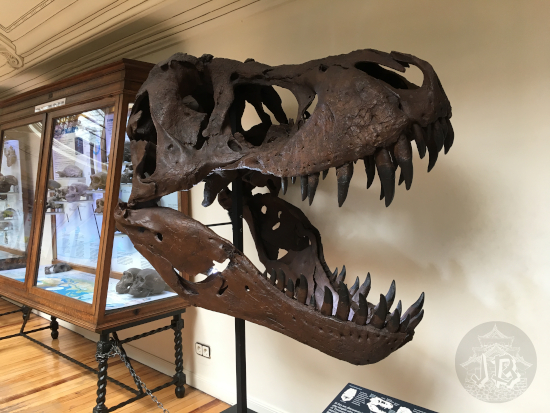
And finally, my favourite piece of the collection is the Tyrannosaurus rex skull replica that presides the museum for the second floor.

When I came out, public transport was not running any more, so I had to walk through the Madrid backstreets until I got to the area where we had arranged to meet, and we went to a restaurant called El Escarpín, where I had an awesome pan of… wait for it… gratin meatballs with molten cheese on a bed of potatoes (Albóndigas gratinadas con queso de tetilla sobre cama de patatas). Amazing! Either that, or I was really ravenous after my hour and a half walking. Serves me right for not keeping up with the news! I learnt my lesson!

6th & 7th May 2017: Cuenca (Spain)

If I ever go missing, especially with my car, don’t go around looking for me in Cuenca . I would have a nervous breakdown trying to drive through the streets and slopes. I’m not sure what time we arrived, maybe mid-morning. We had a reservation to have lunch at the Parador. However, to get there we had to drive up a horrible, horrible hill with a terrible paving and park too close to the cliff so #no.

Cuenca is considered a World Heritage City. It has a classical, mostly Medieval area, and a normal / standard area surrounding that. The inner cluster is virtually carless as the streets are narrow and steep. It is perched on the Huécar Gorge and as you can see, a vertical rock wall.

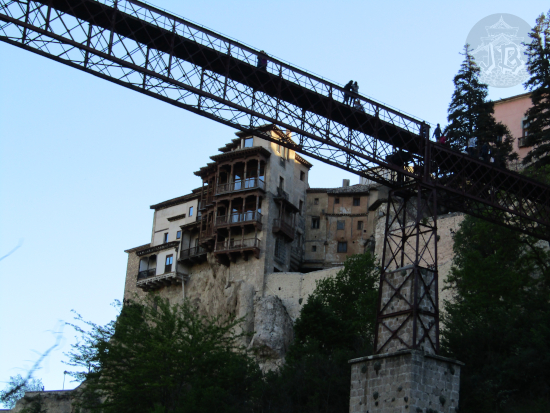
We had some time before we had to go for lunch, so the first thing we did was go have a look at the Casas Colgadas, the hanging houses that overlook the Huécar Gorge. Inside there is a contemporary art museum that I visited once already so there was no incentive to look again – you know, the kind of abstract art that showcases a plus-symbol and you’re supposed to interpret.

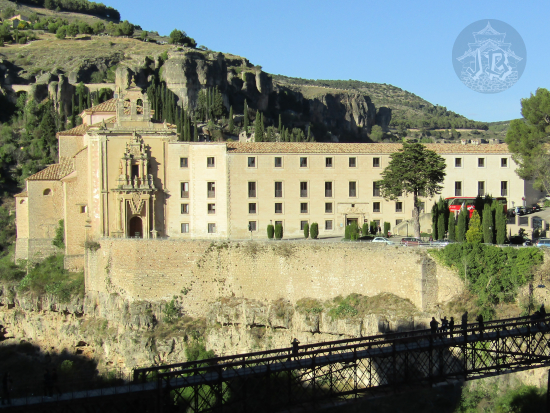
We had lunch at the Parador de Cuenca. A Parador is a high-end state-owned hotel usually with a good restaurant. More often than not, a Parador is located in a renovated historical building. This one is a former monastery, and the restaurant is located, if I remember correctly, where the original dining room would have been.

Main dishes were forgettable (and not photogenic) but the curd or “cuajada” for dessert was to die for – and it came with a lot of extra goodies.

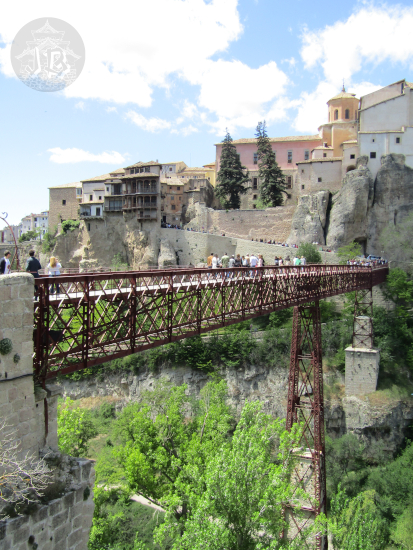
In order to get to the town centre you have to cross the scary, scary bridge aka the Puente de San Pablo, St Paul’s Bridge, over the gorge, but I survived – without a freak-out (≧▽≦) and you might be aware that I am not a fan of heights.

We had lunch, then moved (over the scary scary bridge) on to see the Museo de las Ciencias de Castilla la Mancha, the Science Museum of Castilla La Mancha – unfortunately the dinosaur area was closed, so we “only” got to see the super steampunk clock and the energy wards, and the tornado simulator, along to some kind of reproduction of the International Space Station.

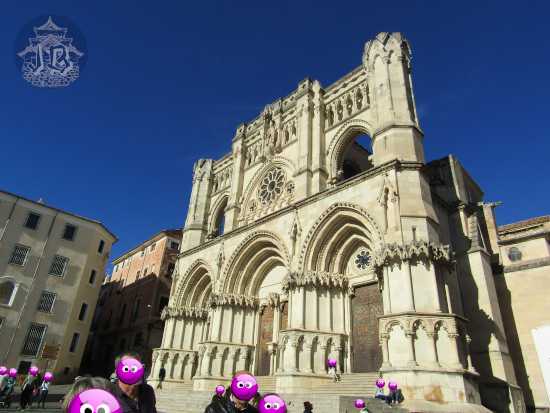
After the museum we walked a little around the town. We went to the cathedral, Catedral de Santa María y San Julián de Cuenca, but it was closed due to some religious service or another. I mean… that’s its main purpose I guess? (≧▽≦)

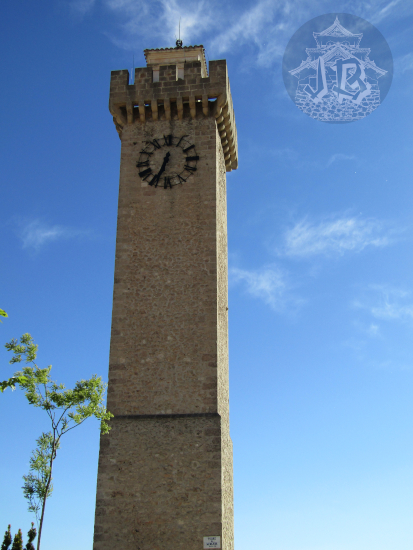
Then we found the Torre de Mangana, Mangana Tower, a clock tower dating from the Sixteenth Century. From underneath the tower there is quite an impressive sight of the area surrounding the city.

We went back to the car and we had a drive around the city. Cuenca is located in the middle of a karst area. Karst is a type of landscape formed by the dissolution of soluble rocks e.g. limestone or gypsum. You can see how the rock seems to be “molten” among all the pines.

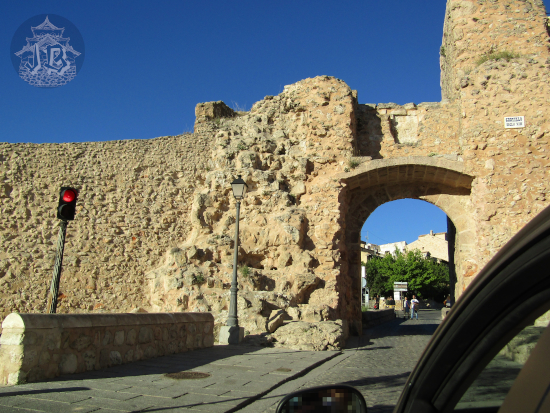
We reached the Castillo and Murallas (castle and walls) on the other side of town but we had to drive back due to the streets being cut for the same religious event we had run into before.

Thus, on our way back, we drove at the bottom of the Huécar Gorge and headed back to the hotel.

This was about six or seven in the evening, and we did not go out again because we were way outside town. We had dinner in the hotel and called it a day eventually. I ordered the kids’ menu because everything else was too fancy and abundant.

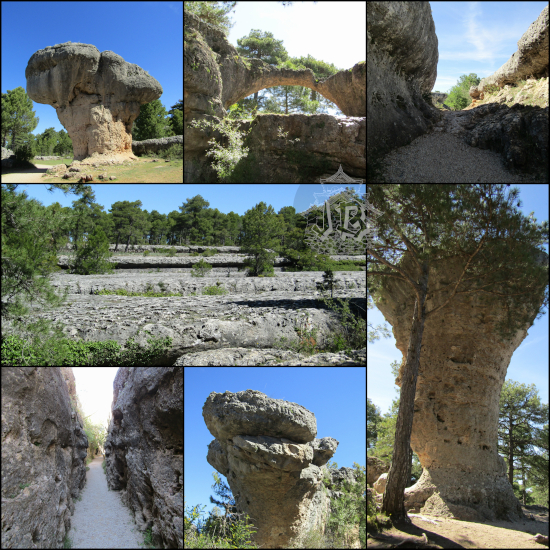
The next morning we woke up early to visit the Ciudad Encantada / Enchanted City. This is another karst topography which has somehow become very famous. Some of the rocks have interesting forms, and have been given names. It is a sort of geological park formed by rain falling on the rocks and dissolving them for millions of years. The original rocks were a mix of of limestone and dolomite in different proportions, which ended up dissolving in different shapes.

After walking around for a couple of hours we went on our return trip.

16th September 2016: Some Madrid (Spain) Museums

I woke up one morning, a silly weekday that I did not have to work for some reason and I decided to wander off and take a day trip to Madrid to see some museums, just because I could.

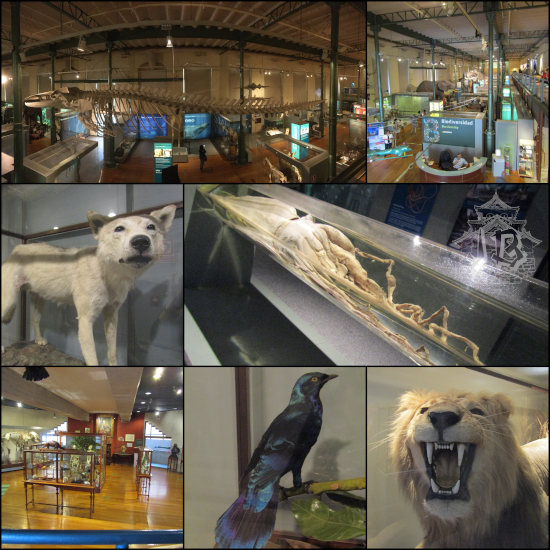
My first stop was the Museo Nacional de Ciencias Naturales, the museum of natural science. The museum is divided into several buildings. The first building holds the “Biodiversity” collection. This includes preserved specimens – in better or worse shape, mostly stuffed, and some skeletons.

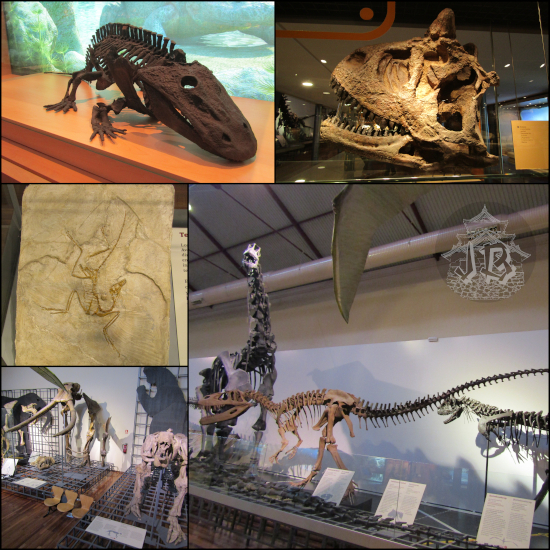
Then I walked over to the palaeontology and mineral museum, where at the moment most of the collection is composed of replica, sometimes it feels that you see the same diplodocus or arsinoitherium (two-horned rhino) skull everywhere. Of course, however, I hunted down every megalodon tooth on site and sight.

After this, I walked around the mineral collection and walked down Castellana Avenue until Colón Square, where I had lunch somewhere before I walked around to see the Museo Arqueológico Nacional – National Archaeological Museum. There were a few things that interested me there.

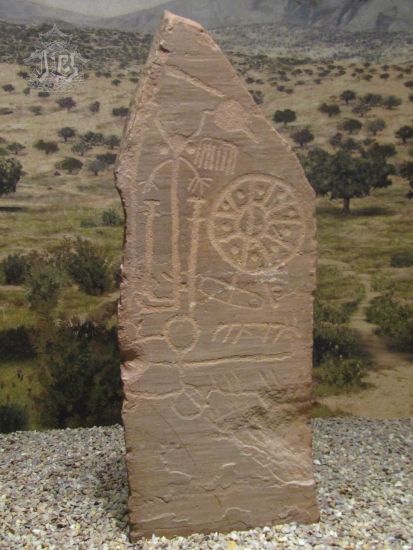
My first goal was to study the Iberian stelæ . Nobody really knows what they are or what their meaning is, but it is thought that they were funerary monuments, maybe of fallen warriors.

An interesting thing to see in this museum is the sculpture of La Dama de Elche, the Lady of Elche, the limestone bust of an Iberian lady dated back to the 4th century BC. It is supposed to be a woman who belonged to the aristocracy that was later revered as a goddess, or maybe a reinterpretation of the Goddess Tanit of Cathage. The back part has an opening, which suggests that it could have been a funerary urn. It was originally polychromated, but it has lost its colours. I really like her expression, and probably due to the Hellenistic influence. I have a thing for Greek sculpture, after all.

A second “lady”, the Dama de Baza (Lady of Baza), stands next to the first. This one still keeps some of its colours. This one is full-body, also carved out of limestone, and it traces back to the fourth century too. This lady seems to have been designed in pure Iberian style, without Hellenistic influences.

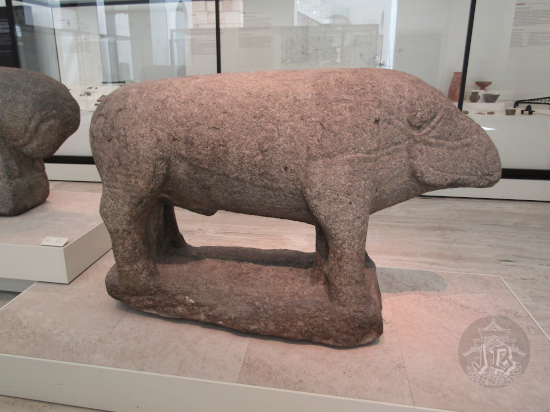
The last key pieces of Iberian sculpture in this museum are the verracos – sort-of headless boars, pigs or bulls (depending on the interpretation), but it is commonly accepted that they are symbols of protection of cattle routes. Most of them are… visibly male.

Once I had seen what I really wanted to see I wandered over the rest of the museum, stumbling upon the currency exhibition, which was strangely interesting.

I walked past the Medieval rooms and then I found the Egyptian area, which is humble, but has some interesting things like the X-rays of a mummified falcon. Finally, I checked out the classical Greek area before calling it a day and making it back home.

22nd May 2016: Kabuki at the CBA (Madrid, Spain)

I made a short escapade to the theatre Teatro Fernando de Rojas in the Círculo de Bellas Artes, in Madrid. It was my first time watching kabuki [歌舞伎], a type of Japanese theatre. The play was called Tsumoru koi yuki no seki no to [積戀雪関扉], something akin to “The Snowbound Barrier” and translated into Spanish as “En los límites de Osaka, bajo la nieve del amor” (In the Outskirts of Osaka, under the love snow). It is a dance-drama kabuki written in the 9th century, and deals with the spirit of a black cherry tree turning into a courtesan to extract revenge. Before the play, there was a small conference to explain some details about kabuki and that was really interesting.

Afterwards I just had to run for the trains so… no much time to hang around.

14th May 2016: Ikebana & Taiko in Madrid (Spain)

I went to the Royal Botanical Garden Real Jardín Botánico in Madrid because they were holding an exhibit of Ikebana and Japanese culture “X Gran Exposición de Ikebana y Semana Cultural Japonesa”. There were several activities, and I wanted to watch the ikebana and listen to the taiko players.

I was very amused when it turned out you could actually attend an ikebana class. Ikebana [生け花] is the Japanese art of aranging flowers, and it is one of the three classical Japanese arts of refinement (the other two are calligraphy and tea ceremony, I’m doomed).

To my surprise, the ikebana scene in Spain is heavily dominated by elderly ladies who take the whole thing Very Seriously ™, so in the end the workshop was more like two of them giving instructions to each attendee and one of them just taking the flowers from you and rearranging them if you failed to heed the instructions within a couple of seconds. It was interesting though, and behold my creation:

They almost made me late for the taiko – Japanese drums – demonstration, which turned out to also be a workshop, my first time playing the drums. I’m not that good at that one, either, but let me tell you better than the flowers…

Afterwards, I wandered about the rest of the exhibition before I headed off… and this sounds really fast, but it was a good half day!

2nd April 2016: Círculo de Bellas Artes & Tsugaru-shamisen music (Madrid, Spain)

Círculo de Bellas Artes (CBA) is a Spanish cultural and artistic association founded in 1880, and they had partnered with The Japan Foundation to hold a concert by Kenichi Yoshida [吉田 健一], a famous Tsugaru-shamisen [津軽三味線] player / artist.

I got to Madrid in the late afternoon, with enough time to get to one of the most hidden Starbucks in the city, which was rather crowded as it was Saturday. Fortunately I found myself a table to spend the extra time (public transport transport paranoia, maybe. But it’s not paranoia if they’re really after you and you have been stuck in Spain commuter trains for hours already). And well, a Starbucks a year and all that… And I mean, I was planning to skip dinner so a Vanilla Frappuccino would keep me going.

The concert was to be held at the Círculo de Bellas Artes building, located in downright in the middle of Madrid. It was designed by the Spanish architect Antonio Palacios and erected in the early 1920s. From the outside, I had always thought it looked pretty weird.

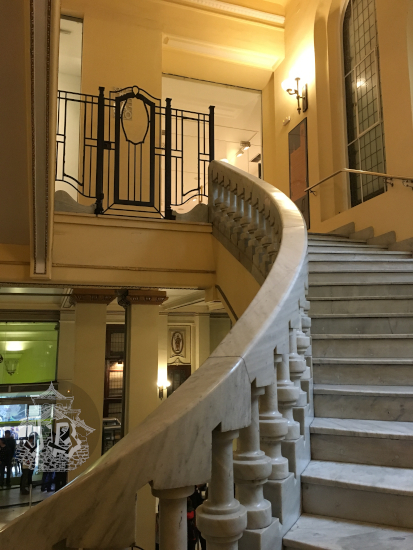
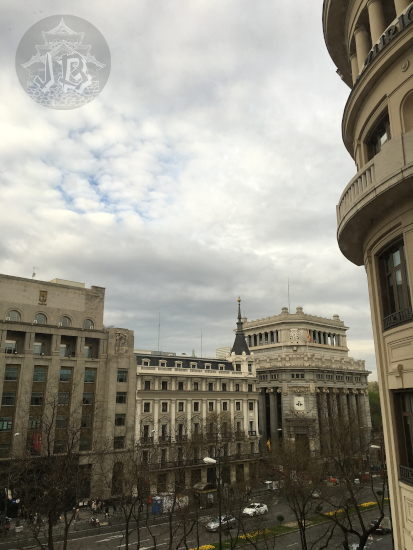
Inside, however, it was a different feeling. I had never imagined the inside of the building was going to be this neat! The CBA Headquarters has a neat staircase, an impressive ballroom, and a reportedly-cool observatory at the top. Unfortunately, getting to the observatory required lining and I was not willing to do so either before or after the concert. However, I did get some views from the second-floor windows!

The concert was in the inner theatre Teatro Fernando de Rojas, a fully-functioning theatre on that second floor, with about 400 chairs, and I had got a fairly good seat so I was happy and could sneak up a couple of pictures.

The concert in itself was amazing. Kenichi Yoshida, the younger brother in the Yoshida Brothers band, comes regularly to Spain to teach shamisen – a classical Japanese string instrument – in Barcelona. Oftentimes he makes the most out of his time and organises recitals and other activities. The concert was a mixture of old and new melodies, played along some drumming. The concert lasted for about an hour, and it felt very short. As Yoshida is a frequent visitor, he can speak a tiny bit of Spanish, too, and he tried that. It was a lovely touch.

24th – 27th March 2016: Easter in Barcelona (Spain)

I think this has been the first time I’ve been to Barcelona without a concert. However, one of the first times I did take a long touristing tour, so this time round my friend and I took it rather chilly – in the literal sense. As we were there there was a drop in temperature and I had to run to get myself a long-sleeved T-shirt.

24th March: Gaudí afternoon

Through different means and from different origins, my friend and myself arrived in Barcelona at around the same time mid-afternoon. We met at the station and dropped our things off at the hotel, then we took the underground towards Monte del Carmelo, Carmel Hill, where Parc Güell, the Güell Park, stands. The park, which was supposed to be a urban area originally, was designed by Antonio Gaudí. It became a Unesco World Heritage Site in 1984.

Visiting some areas of the park is charged, but the whole park is accessible starting in the late evening. We decided to climb up first and then visit the paid-but-free area. Thus we got to the summit of Carmel Hill and saw the Turó de les tres creus, the Three-Cross hill, that offers a great view of the city, including the Tibidabo area with the Cathedral and the amusement park.

We went down and we walked into the architectural area. Although there is no artificial lighting in the area, as the sun went down we were treated to a bit of a magical area, also away from the tourist crowds.

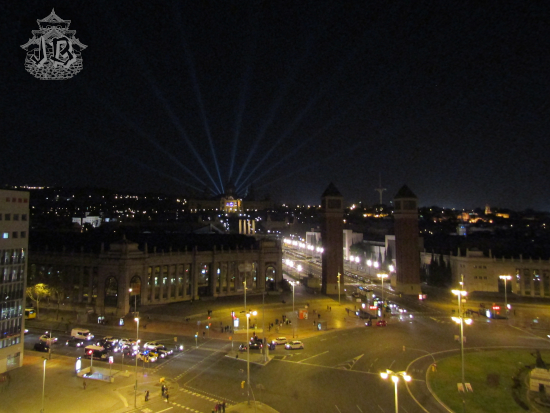
We had dinner at Arenas de Barcelona, the old bullfighting ring now turned shopping and dining centre, then we went up to the roof for some night views.

25th March: Gaudí morning & Gaudí night

We woke up and had breakfast – coffee inception!!

Then we headed off to see the Casa Batlló, the Batlló house, one of Gaudí’s Modernist masterpieces. It is also called the “house of bones”, and it’s kind of wobbly and organic. The roof is designed to look like the back of a dragon. An interesting detail is that the building was not really erected on Gaudí’s orders – it was a renovation of a previously-existing building.

After the house, we went to the harbour area. We hung out for a while (with a stop to buy an extra T-shirt because it was cold), had lunch and eventually purchased tickets for the Museu Marítim, the Maritime Museum, located in the former Royal Shipyard.

The sun was setting when we came out, and we headed towards the Basílica de la Sagrada Família, the church of the Holy Family, also designed by Gaudí. Both of us had already seen it, so we were happy to see it from the outside. When they finish it, I would like to come back though.

26th March: No Gaudí!

We had a walk around the Gothic Neighbourhood of Barcelona, and we made a stop at the Iglesia de La Purísima Concepción, the church of the Conception to visit the cloister.

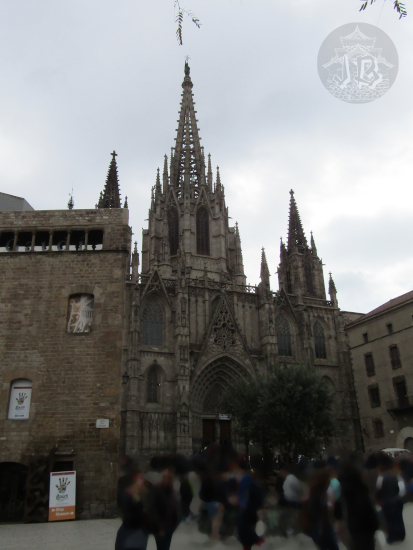
We saw the cathedral Cathedral of the Holy Cross and Saint Eulalia, Catedral de la Santa Creu i Santa Eulàlia.

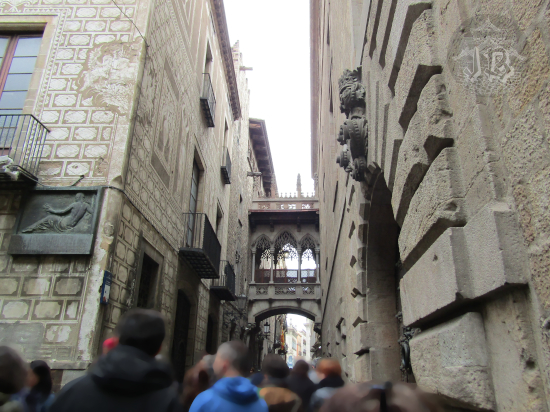
We also walked under the Bisbe Bridge, Pont del Bisbe, in the street of the same name.

We had lunch in a Japanese restaurant, then walked around the Port area for a while.

As we had visited the Maritime Museum the previous day, we had a free pass to the sailboat Santa Eulàlia.

We ended the day in the L’Aquàrium Barcelona, the local aquarium.

After that, we backtracked to our hotel. The following morning, on the 27th, we met up with another friend who had a free while for breakfast and then everybody went home.

16th January 2016: Un Planeta Enloquecido: Fantasmas, Monstruos, y Alienígenas en el Manga (Exhibition in Madrid, Spain)

Naves Matadero in Madrid was holding a free exhibition on Japanese “monsters, ghosts and aliens” in manga and Japanese pop culture, and since I was around I decided to drop by. Here are some pictures.

I did not stay over but took a bus right back home because it was too cold for anything else.