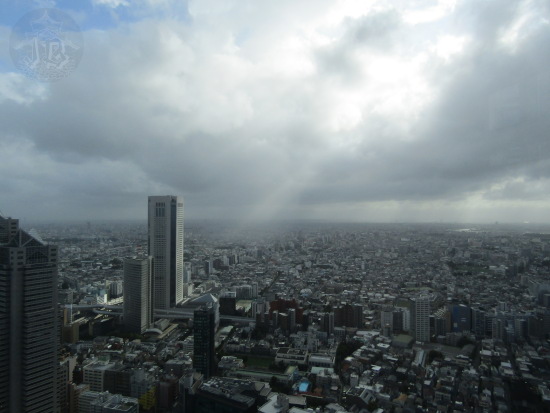
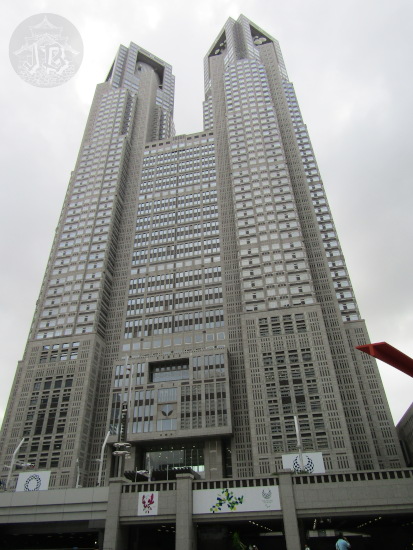
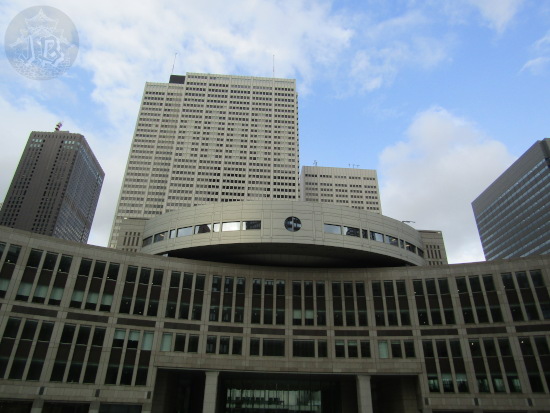
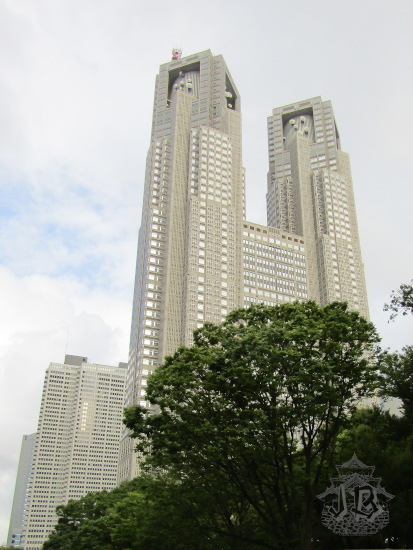
15th August 2019: Downpour Shinjuku {Japan, summer 2019}

Once more in Shinjuku [新宿], I stepped out at Tochomae station to go to the Tōkyō Tochō [東京都庁] aka the Tokyo Metropolitan Government Building. To my surprise, there was a line for the observatory! Apparently they have closed the North Observatory for renovations (possibly 2020 preparation). When I got to the observatory there was a piano, and at that time, visitors were allowed to play it. I thought “Wouldn’t it be cool if someone did X Japan?”. And then two guys do 紅 with three hands. I was very impressed.

I hoped I would be able to walk around Shinjukucho Teien [新宿中央公園] before it started raining.

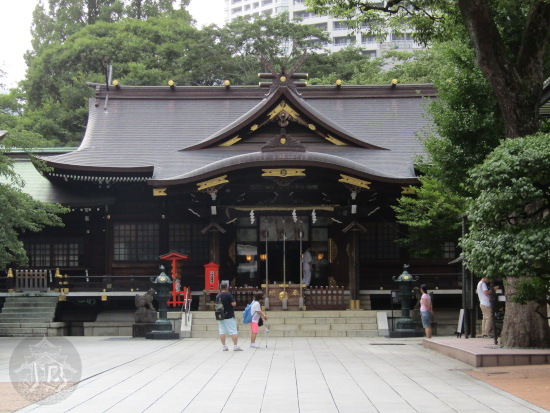
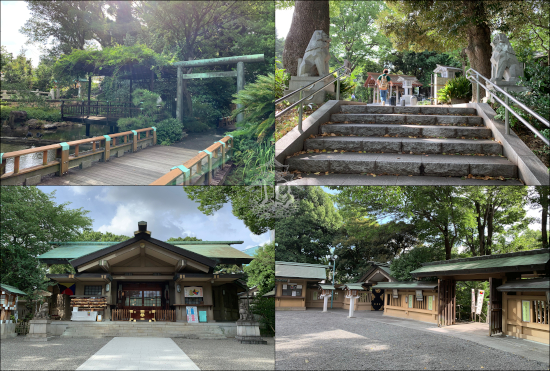
As I was in Shinjukujunisha Kumano Jinja [新宿十二社 熊野神社], where I got a shuuin, it started pouring.

Thus, I went back to the covered station underpasses as fast as I could and then tried to get my way round the inner passages… with dubious success. I did find the Shinjuku tourist office, because they had Coke packs there, but I could not find one that had sakura and Tokyo bottle in it (ó_ò).

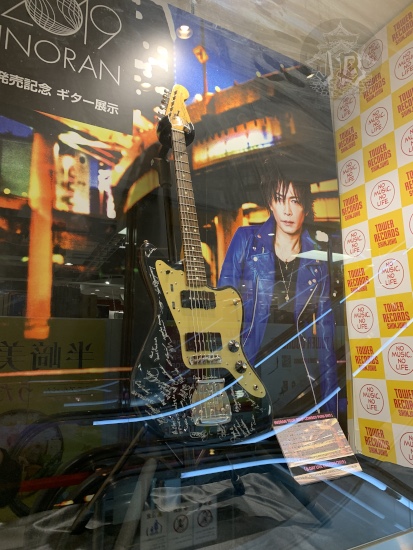
Then I went to Tower Records to see INORAN’s guitar, which was on display prior to his tour.

And then I headed off to Roppongi [六本木]. And you know what I found in the first random vending machine I came across? The freaking Tokyo Coke bottle, which turned out not to be only in Shinjuku! I had been looking for it for days (;¬_¬)

Afterwards, I met D****e and M*****san for a nice shabu-shabu dinner.

Walked distance: 10978 steps / 7.85 km.

14th August 2019: The other side of Harajuku {Japan, summer 2019}

After a sweep around the V-kei shops in Shinjuku [新宿], I dropped by Shibuya [渋谷区] (finally) to go to the big Tsutaya there, along with the Mandarake and Tokyu Hands. And there, in the most random vending machine in a backstreet, I managed to find the Shibuya coke bottle (which I drank with glee as I had approached the vending machine as I was thirsty). Then I walked towards Harajuku [原宿], but instead of Takeshita Doori, this time I turned towards the other side. I wanted to see the LemonEd flagship shop, as the Nagoya one did not convince me. LemonEd is a brand created by the deceased X Japan’s guitarist Hide, known for his bright colour combinations and hearts. I wanted to see the shop at least once, I guess, even if “bright” is probably not my thing (≧▽≦). There were many items, T-shirts and so on and I sneaked a couple of pictures.

I went on a little and arrived at Tōgō Jinja [東郷神社], which I really liked. I got a shuuin there too, and almost lost my shuuincho there because the miko would not call my number to give it back (;¬_¬).

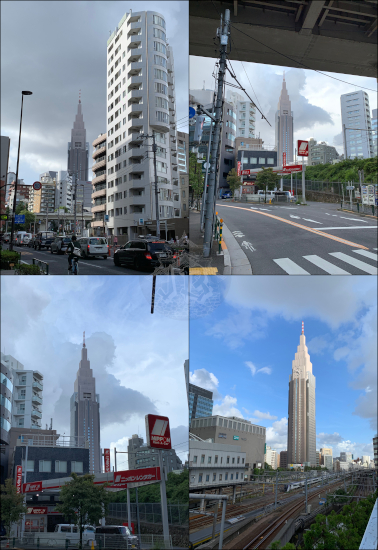
I walked from Harajuku back to Shinjuku via Yoyogi [代々木], and I pretty much went around the NTT Docomo Yoyogi Building [NTTドコモ代々木ビル] from all angles (and weather backgrounds).

When I arrived at Shinjuku station [新宿駅] though, I came across… the Salamander God in a Takashiyama Window… I’m not kidding you.

Once I was in Shinjuku I tried to find the Tokyo Coke bottle in another random vending machine… It did not work, but I found the Kabukichō Benzaiten [歌舞伎町弁財天], which I had seen in passing, and wanted to snoop around.

After kushikatsu dinner, we called it a day.

Walked distance: 19234 steps / 13.7 km.

13th August 2019: Steamy steamy Tokyo {Japan, summer 2019}

Following recommendations from some Japanese acquaintances, I headed off to the Shinagawa [品川区] area to visit Hebikubo Jinja / Kamishinmeitenso Jinja [蛇窪神社 / 上神明天祖神社], a pretty shrine where I got a pretty shuuin (aaaand discovered another stamp rally).

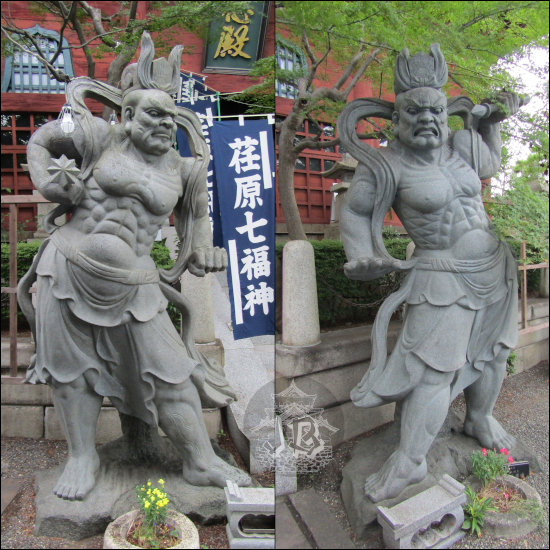
Among rain, sun and drizzle it was exhaustingly hot. I continued on to find Kimyozan Yogyokuin Nyorai [帰命山養玉院如来寺], a temple with amazing guardians.

And then I found an obviously very dangerous and aggressive tiny pond, I mean, look at those meshes (yes, I know that it’s probably for children safety, but I shall still make jokes about it). It was the Hara no Suijin-ike [原の水神池].

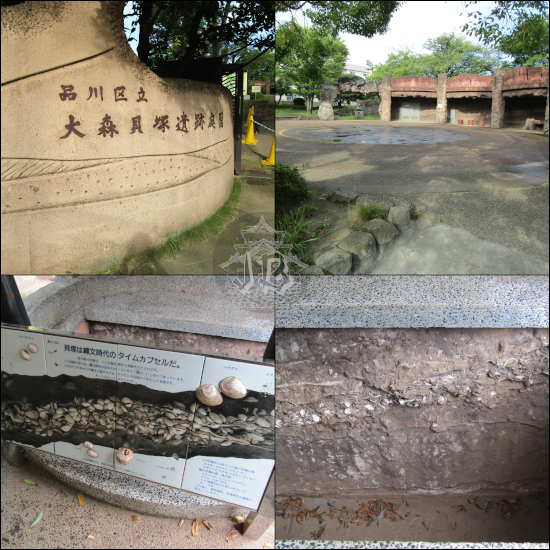
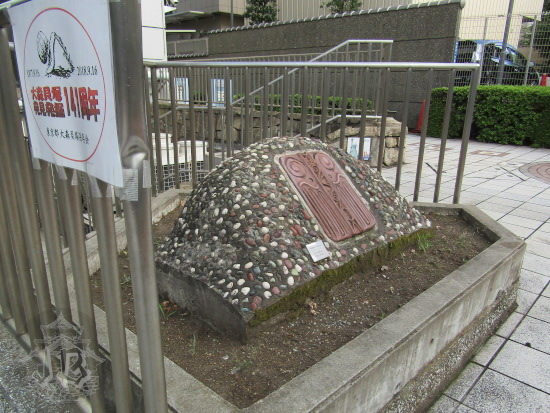
Checking how to come back I came across Ōmori Shell Mound Ruins Garden, Ōmori Kaidzuka Iseki Teien [大森貝塚遺跡庭園] and the Statue of Ōmori Shell Mound, Ōmori Kaikyo no Ishibumi [大森貝墟の碑]. The Ōmori Shell Mound was apparently the first archaeological excavation in Japan. They dig out a seaside village from the Jomon period (14,000 to 300 BC).

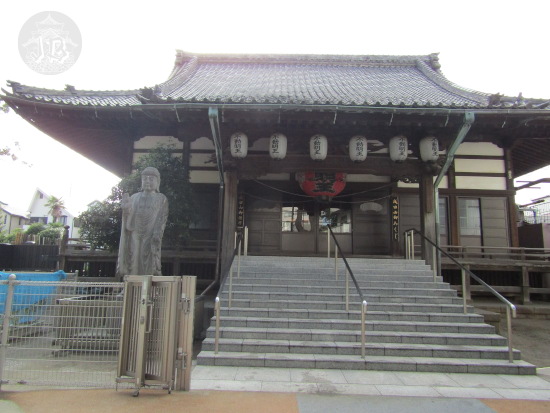
Opposite I found Naritasan Ennoji [成田山圓能寺].

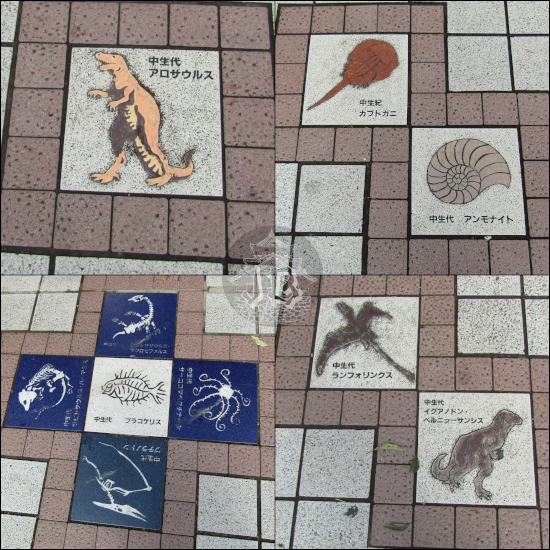
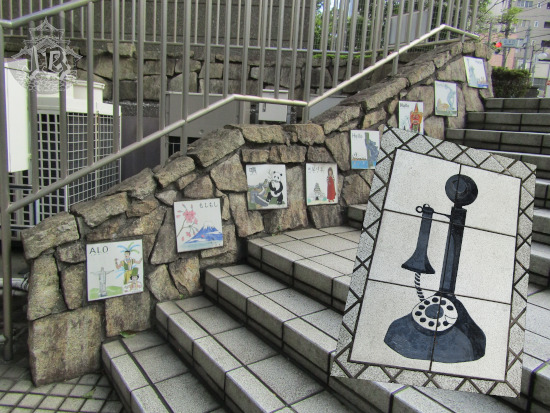
And before I left I noticed the ground decoration on the pavement – life evolution and… telephone greetings. Because Japan, I guess…

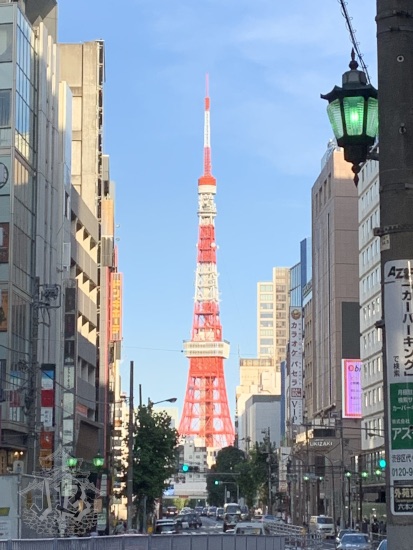
Then I looked at Tokyo Tower [東京タワー] from Roppongi [六本木], as I checked the Don Quijote for Tokyo Coke bottles, without success.

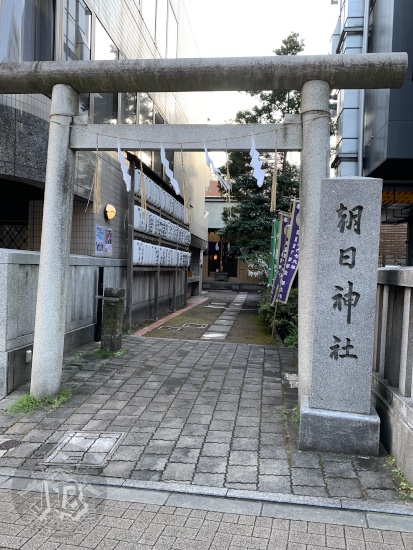
I also came across tiny Asahi Jinja [朝日神社].

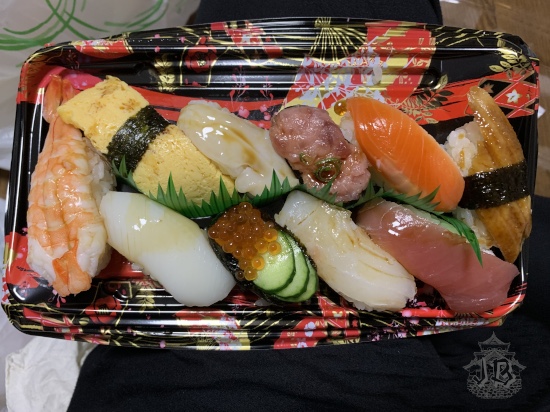
Then dinner was supermarket sushi, which was very, very yummy.

Walked distance: 14009 steps / 10.0 km

12th August 2019: The Surviving Fuji thing? Think twice {Japan, summer 2019}

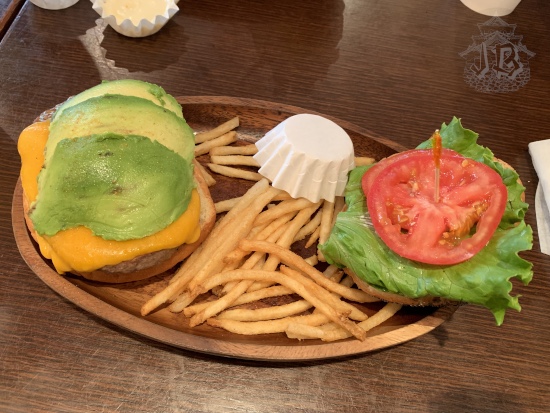
We didn’t sleep in, because why would we? We had only climbed a mountain – a volcano – the day before. We went to Shinjuku [新宿] for an avocado burger at Kua’aina, and then we did a sweep over Tower Records and Tokyu Hands.

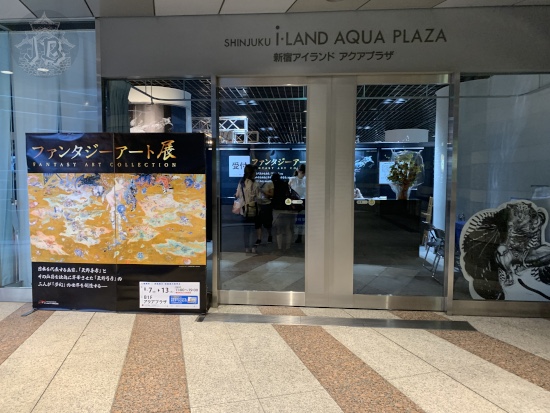
Then we went to see the Amano’s Fantasy Art Collection [ファンタジーアート展] exhibition / sale at Shinjuku I-Land Tower [新宿アイランドタワー].

Later we sang some karaoke and then had a bit of a Hokkaido dinner – kanimiso yummy!

Walked distance: 16580 steps / 11.8 km. And every damn step – especially on stairs – hurt. Throughout the whole day, legs were on fire. But my back withstood, which was good. We whined a lot about being sore though, because we could (≧▽≦)

10th & 11th August 2019: Once in a lifetime – The Great Fuji-san Adventure {Japan, summer 2019}

Mount Fuji aka Fuji-san [富士山] is a special mountain in Japan, both geologically and culturally. Japanese and tourists enjoy Fuji-san in different ways – contemplating it, visiting it, climbing it, going around it… Well… Guess who got into their thick head that they wanted to climb it? raises hand Exactly! Yours truly. I was already toying with the idea back in 2018, but I chickened out. However, as I mentioned before, this one time I wanted to scratch as many things off the bucket list as possible, so… There I went – kinda pushed by a feeling that if I did not do it, by the time I were back in Japan it might be too late as my health is not.… complying lately. But I had not hiked up a mountain before in my life…

Mount Fuji is the most famous mountain in Japan. Its iconic image is everywhere – enamel pins, t-shirts, postcards, classical art… Located around 100 kilometres south-west of Tokyo, it is 3,776.24 metres high, which makes it the highest peak in the country. It was declared a UNESCO World Heritage Site in 2013.

Technically, Fuji-san is neither a mount nor a mountain, but a type of volcano known as a stratovolcano. Its current morphology was shaped by consecutive layers (“strata”) of lava hardening. It is mainly composed by a rock called basalt, and it is one of the few large basalt volcanos in the world. Basaltic lava is rather thick and slow-moving, so there are many lava tunnels and tree moulds created by the eruptions.

Fuji-san, as we know it today, was formed from a previous volcano (Komitake), and became active around 5,000 years ago. Around 2,300 years ago, there was a mud landslide (Gotemba mud flow [御殿場泥流, Gotemba deiryū]) that can still be identified. There have been several historical eruptions, twelve of them between the years 800 and 1083. There was a ten-day eruption of ashes and cinder in the year 864 (Jōgan 6 in the Japanese calendar, based on the different Emperor’s reign; 2019 is Reiwa 1, as current Emperor Naruhito just ascended the throne). In the year 1707 (Hōei 4 in the Japanese calendar), a few weeks after a big earthquake, the last known eruption took place. In the current Japanese Volcanic Alert Level, Mount Fuji is categorised as “Level 1: Potential for increased activity”, which is the lowest level.

Mount Fuji has frequently been depicted in Japanese art, most famously in Katsushika Hokusai’s [葛飾 北斎] Thirty-six Views of Mount Fuji [富嶽三十六景, Fugaku Sanjūrokkei] by, a series of ukiyo-e block prints (which are actually 46). Probably the best known among these is The Great Wave off Kanagawa, one copy of which is displayed at British Museum in London (actually, in 2017 they ran a whole exhibit around it and Hokusai).

Fuji-san is also an important element in the collective spirituality of Japan. In Shinto mythology, the goddess of Mount Fuji is Konohanasakuya-hime [木花咲耶姫]. She is enshrined in Fujinomiya town Fujisan Hongū Sengen Taisha [富士山本宮浅間大社]. Technically, this shrine has owned Mount Fuji since 1609, though there are no current records of ownership. The volcano stands at the boundary between the prefectures of Shizuoka and Yamanashi, and in order to manage the natural area, the Fuji-Hakone-Izu National Park [富士箱根伊豆国立公園, Fuji-Hakone-Izu Kokuritsu Kōen] was established.

Depending on the actual weather, Fuji-climbing season extends from late June or early July to early September. It is not allowed to climb Fuji “off-season” without a permit. However, people do not usually climb the whole mountain, but start quite closer to the summit. There are roads leading up Mount Fuji up to around 3,200 metres, to an area called the Fifth Stations However, no private cars are allowed on those roads.

From the Fifth-Stations there are four trails or paths to the summit, colour-coded to help people find their way, especially on the way down:

  • Yoshida Trail [吉田ルート] (yellow). It starts at the Fuji-Subaru Line 5th Station [富士スバルライン五合目] (Yamanashi Prefecture). This is the trail recommended to “beginners” and thus the most crowded.
  • Subashiri Trail [須走ルート] (red) Head. It starts at the Subashiri Trail 5th Station [須走口五合目] (Shizuoka Prefecture).
  • Gotemba Trail [御殿場ルート] (green). It starts at the Gotemba Trail New 5th Station [御殿場口新五合目] (Shizuoka Prefecture).
  • Fujinomiya Trail [富士宮ルート] (blue). It starts at the Fujinomiya Trail 5th Station [富士宮口五合目] (Shizuoka Prefecture).

When I told D****e that I was planning to try to organise the climb, she did not believe me at first. As she realised I was being serious, she decided that she was crazy enough to want to come with me as “she could not let me do such a thing alone” and actually took over most of the planning, since she had done it before. I would have just found an agency, but I think she was better.

So off we went. As she was working, we organised our hike on a Saturday-Sunday trip weekend trip – and we did not realise until afterwards that we would be climbing during Mountain Day – Yama no Hi [山の日]. We packed snacks, water, and everything we thought we might need – in my case, also gloves which I eventually lost, and a ridiculous amount of layers. D****e was chill, but I was a little worried about all the equipment the Official webpage for Mt. Fuji Climbing said that was needed, including oxygen and helmets. There were also warnings in place, such as your mobile phone battery dying super-fast, or the need for an evacuation plan in case altitude sickness got too much. I was also worried about weather (especially rain) and temperature changes – thus all the layers. She insisted we would be fine.

After a big lunch, we took the Shinjuku Expressway Bus around 16:00 on Saturday the 10th, and arrived at the Fuji Subaru Line Gogōme [富士スバルライン五合目] / Fuji Subaru Line 5th Station at 2,300 m around 17:30. We (she) had booked a mountain hut at the Seventh station so we “only” had to climb two stations, right? Right. Read: wrong.

Approaching Mount Fuji: the mountain looms half-hidden by the clouds.

Right about the time of taking this picture it had sunk on me how much of a bad idea this had been (≧▽≦). I really wondered if it was too late to turn back and go home.

A date banner at Mount Fuji 5th Station, reading 2019 08 10

My first step was buying a staff – that we nicknamed the “Fuji-climbing stick”. The idea is that you use it to feel your way around and make sure that you step on solid ground, and especially when you hike down. However, (you’d never guess), you can get stamps burnt into the wooden stick as you hike up – usually for 300 ¥. Climbing Fuji can get expensive… D****e had chosen the Yoshida Trail [吉田ルート] for our ascending side (noborigawa [登り側]). And so… off we went.

From the Fifth Station, looking up at the summit.

From the Fifth Station, looking down at the car park and a sea of clouds underneath

We started off climbing at around 18:00. Between the Fifth (2,300 m) and the Sixth Stations (2,390 m), you walk along some dirt paths in the forest, and there isn’t really that much “ascension”. As there was also light, the first hour was easy enough. This area is crowded due to all the “visitors” going for a “walk” from one of the Fifth Stations to another. We actually saw someone using up their oxygen at this point. That was weird.

From the Sixth Station there was a first zig-zag upwards, with paths held up by some dams. This is one of the parts I found the hardest, as it is the same inclination all the time and I was not warmed up yet. Then, sunset came, and while it was pretty, it brought darkness upon us (yeah I’m being literary on this). Not that I had a problem with actual darkness, but other people’s torches and headlights kept blinding me, which made the most difficult parts hard to climb – because some people are idiots who point their lights forward and not downwards, where the ground is. Sheesh. There were parts that were just a gentle incline up, while others were stuck rocks or lava flows that you had to climb with your hand and feet.

At the Seventh Station (2,700 m), the path changed and we started. Though there were some slopes, there were also stuck rocks and lava flows that I had to climb with my hands and feet. Fortunately, I could make use of the short stops we made to stamp my staff. Workers of the Mountain Huts use hot irons to burn the stamp into the wood. I think I got all the ones I could on my way up (no stamps on the way down).

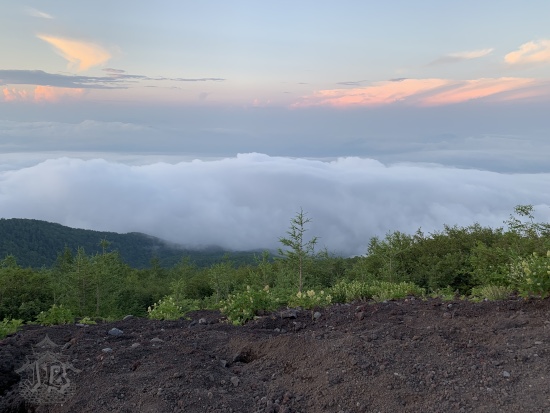
The sea of clouds at the foot of Mount Fuji

Distant lights in the night, down

Mountain huts [富士山の山小屋, Fujisan no yamagoya] are tiny establishments where you can get some food or spend the night for around 10,000 ¥. They often require reservations, usually in Japanese, that is why D****e took charge of that part. Some of them have a bin for rubbish – because you can’t dispose of trash on the slopes, you have to take back what you brought in. They have toilets too, and require a tip. Most of them follow an “honour system” with a small coin box, but some have a guardian to collect the money.

We continued upwards until we made it to our Mountain Hut, Shichigōme Torii sō [七合目 鳥居荘], the Seventh Station’s Torii-so at around 21:00. We had been told it was the one with the red torii, and it was a sight for sore eyes. It stands at 2,900 metres high, closer to the Eight Station than the Seventh – we had expected to find it sooner due to the name.

A torii gate lit up in the dark

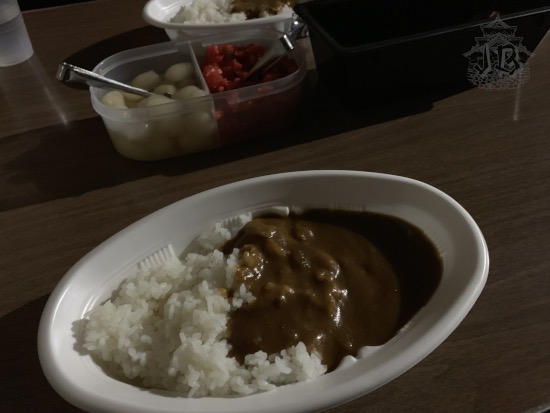
D****e had booked a bed and a meal. As we came into the hut, our staffs and backpacks were hung over the door, and we were given bags for our shoes and personal effects. We had a small riff-raff with the owners, because they claimed that we had arrived too late for food. However, D****e argued that the webpage said nothing about a time limit. Thus, we got some curry and rice as the dinner we had booked.

A dish of curry and rice.

Around 22:00, we used the toilet, and then we were shown to the common dormitory – the bed bunks are basically a line of futons put together so you share a blanket with the person next to you. The idiot I had to share with decided to lie on the blanket instead of under it, so she had me uncovered half the time until she left.

Thankfully, at around 23:00 there was a call for people who wanted to set off in time to see sunset from the summit, and she got going. Between getting uncovered, and lying down too soon after food, I started feeling queasy. I freaked out a little. I started turning in my head that I was going to get sick and not get to the summit and have to be evacuated. D****e helped me calm down and I managed to get a few hours of sleep.

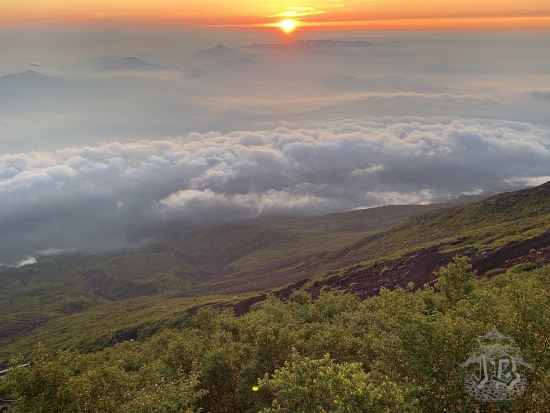
But just a few. We were woken up by the noise around us around 4:15. I felt strangely not tired, and D****e indulged me. Thus, we got up and went outside to see sunrise. Sunrise from Mount Fuji!!! I mean… I can’t even. Unfortunately (and ironically) we left too early to get the stamp from our own hut! We continued our way and had breakfast at the next big rock where we could sit down.

Sunrise from the slopes of Mount Fuji.

After coffee (yes, I’m addicted enough to carry coffee to Mount Fuji), we went on hiking. To be honest this second day was not as bad as I had imagined – as in I was rather convinced that I was not going to be able to make it, especially during the night freak-out. My painkillers kicked in and I only felt a small buzz in my ears as pressure changed.

It did not take too long to arrive at the New Eighth Station (3,100 m). Once again the trail became irregular, which on one hand was tiresome, but at the same time, it was not tedious, so it did not feel as hard. Gloves were useful for this part of the hike, as I could hold on to things. We continued up to the Original 8th Station (3,400 m).

After the Original Eighth Station the trail became path-like again, with torii and stairs and fewer rocks you had to climb over, but a bunch of smaller ones that you had to step up on. Here I learnt to appreciate the actual usefulness of my staff. Vegetation disappeared gradually until the ground was barren.

I think I lost my gloves at the Ninth Station. We saw a group of people evacuating an injured / ill climber – we mentally awarded them like a million karma points, and after getting the injured person to help, they happily went back up again. One of them told us their group does it every year. I remember hugging some torii on the way, and a thousand thoughts twirling in my head.

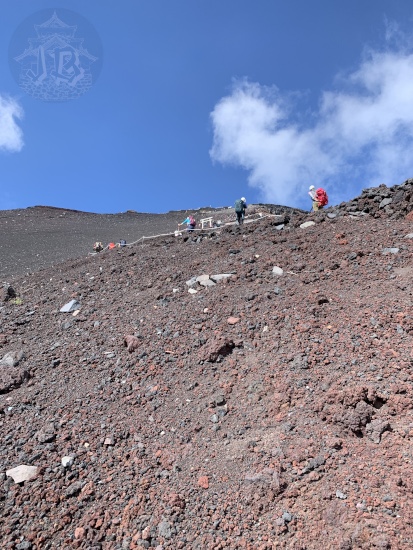
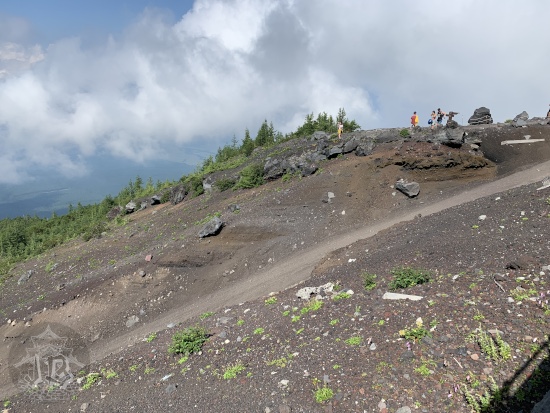
Area closer to the summit of Mount Fuji. There is no vegetation and the ground looks reddish and more like gravel than actual rock.

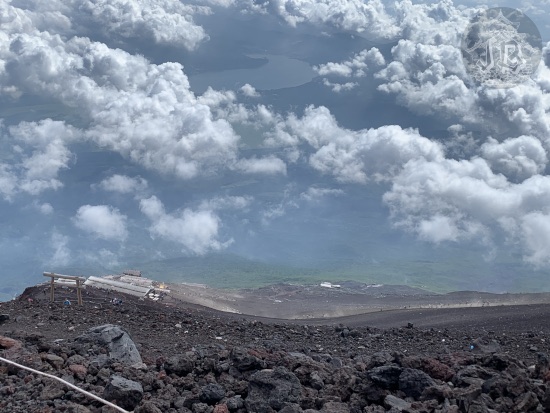
Looking down from the barren area, there are clouds and a river at the foothill

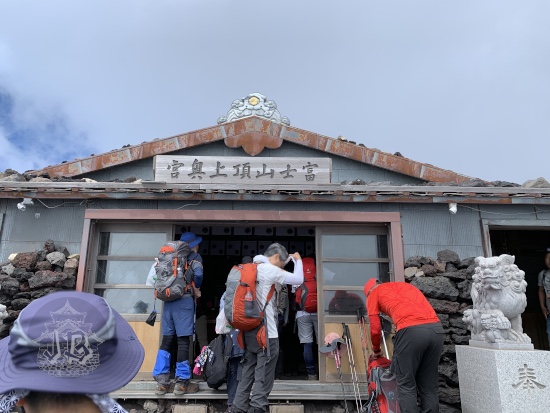
And then we made it. Around 11:00 we reached the rim of crater. I could not believe my own eyes when I stepped in front of the shrine Asama Taisha Okumiya Kusushi Jinja [淺間大社 奧宮 久須志神社] and Fuji-san Chōjō Yamaguchi-ya Honten [富士山頂上 山口屋 本店] aka Top of Mt. Fuji Yamaguchi Shop. I had made it. I had beaten my own limits, and reached the crater.

Entrance to the Temple on the Summit of Mount Fuji

Online certificate that you can download using a QR from the Top. It has the date as August 11 2019

Of course I needed to get all the stamps and the shuuin and the exclusive Coca-Cola bottle. We decided not to go around the crater to the highest point, just a handful of metres higher, because it would add some 90 minutes to our trek, and we preferred to just hang around where we were for that long. Because I was at the freaking crater of Mount Fuji! I was the Kami of the Mountain.

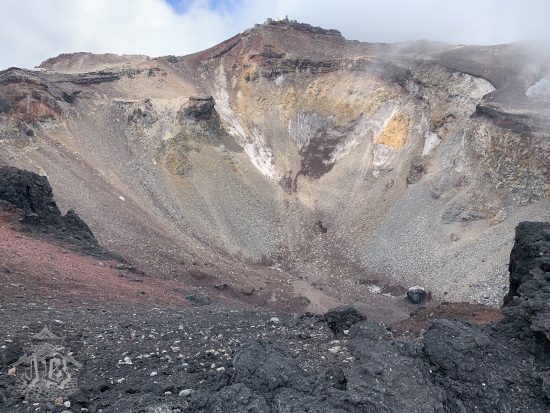
Brim of the crater of Mount Fuji

Crater of Mount Fuji

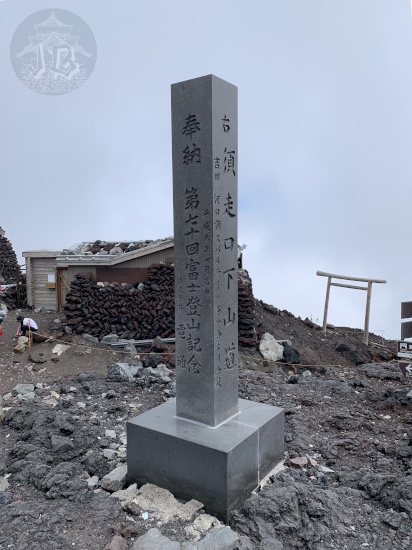
Stone marker at the summit

Cheers with two Mount Fuji exclusive Coca-Cola bottles

Walking around the crater would have been great, but we would be hard-pressed for time for our bus if we took too long. D****e asked me what I wanted to do, and I was happy staying around the crater taking pictures and enjoying the feeling. After an hour or so, we set on our way back down – the trail was a bulldozered zig-zag of gravel, boulders and volcanic sand, and it was even more exhausting than the way up.

It was tricky not to slide and fall. It took us about three hours until we were back to the forest area and the Sixth Station. We reached our Fifth Station around 15:30. I did not fall even once – thank you, Fuji-climbing boots from the Decathlon Children Section for not letting me down, literally!! I also acknowledge that we were super-lucky with the weather, we only had a few clouds just under the crater, and it was not too cold even for me – and no rain, which would have made the experience miserable.

The path down, bulldozered into a straight line.

We actually made it with some time to catch our bus, so we looked at the souvenir shops and Fujisankomitake Jinja [冨士山小御嶽神社].

A colourful and crowded shrine. A lot of the tourists in front of it are wearing shoes that were definitely not made for climbing.

My made-for-climbing shoes, and lower jeans, which were originally blue, looking orange due to the volcanic dust.

As we left, we could see Mount Fuji in all its glory, and I could not believe that I had actually been up there! The total experience had taken a bit over 27 hours, and it was exhausting but exhilarating.

View of Mount Fuji from the bus

However, the downfall had to come, and it came in the bus, about 20 minutes into the ride home – once I stopped moving, my body completely shut down in pain. My back cramped, headache hit, left knee got stuck, and the road trip was horrible. I did not want to have any dinner even if I knew I needed it, but a hot pot in the conbini managed to draw me and it was exactly what I needed!

Hot pot with vegetables, mushrooms and pork

Walked distance: 10th: 9988 steps / 7.14 km; 11th: 21107 steps / 15.1 km. However! The damn watch does not take into account that I CLIMBED A VOLCANO!! I mean, come on! Some of those steps had a 70 cm difference in height! I managed to do it, and I feel damn proud of myself for it, and I will forever proudly display my Fuji-climbing stick as proof of the feat. Also, just so you know 11th of August is Yama no Hi [山の日] (Mountain Day) so this was ironically well-timed, even if by pure chance!

The walking cane I used, covered in hot-iron stamps.

I know that hundreds of people climb Fuji-san every year, but for me those almost 3,776 metres represent something special. It was my very own challenge, something I never thought I would be able to do, and yet I managed. I was extremely proud of myself. I think it helped me become more adventurous, as I found out that I could really push my limits. There was a price to pay afterwards, yes. But I had made it and I don’t regret it (I did regret it a bit the following day going down the stairs though. But not much). I was the Kami of the Mountain.

6th August 2019: Tokyo & Yokohama Book Off Rally {Japan, summer 2019}

To be honest, this was a weird day because my mind was full with some personal stuff, so I just wanted to keep busy. I did a Book Off marathon and I found a lot of interesting things, both in Tokyo and Yokohama [横浜市]. I wanted to visit the Tower there, but it was closed for renovation!

At 6pm I met up with Sr-san for way beyond amazing sushi! Lots of new things to try too!

In the end what I was worried about was solved ε-(´・`) フ and I went back without any problems (on the way out the regular train line was down).

Walked distance: 17438 steps / 12.4 km.

4th August 2019: Gastronomy Day {Japan, summer 2019}

I took an early shinkansen back from Nagoya to Tokyo [東京] because I was out early the day before and thus up at an insane hour. I was on the train before 9AM for sure (≧▽≦). I have witnesses!

And in Tokyo… basically I had lunch with D****e, curry soup, in Nakano [中野]:

We said hi to the Doraemon [ドラえもん] in Roppongi [六本木].

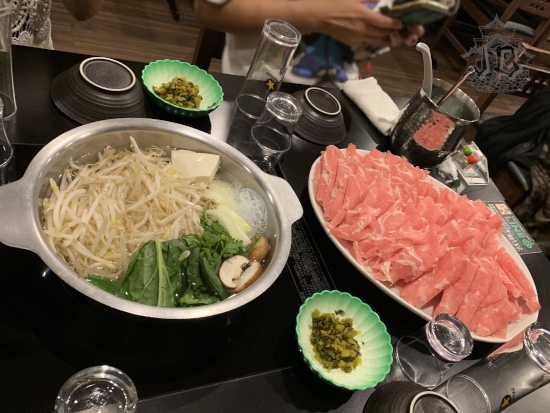
Then we went for lamb shabu-shabu for dinner…

And that was it. There went my diet.

Walked distance: 17978 steps / 12.8 km… somehow. From the hotel to Nagoya station, and then from Nakano Station to D****e’s house (oh, wait, I got lost on the way, that explains a lot). Then back to Nakano Station area for lunch, and once more to D****e’s house, and then to the station? Yes? Okay (≧▽≦).)

3rd August 2019: Higashiyama Sky Tower and ELL {Japan, summer 2019}

In the morning I headed out of the Nagoya centre and to Higashiyama Sky Tower [東山スカイタワー]. This was a bit far out and I had slept in – did I mention tiredness catching up? I also considered the zoo/aquarium but in the end I decided against it.

A collage of the Higashiyama Sky tower, a rectangular building with a cylindrical core, mostly built in glass and metal. The smaller pictures show the view of the park, and the earthquake damper

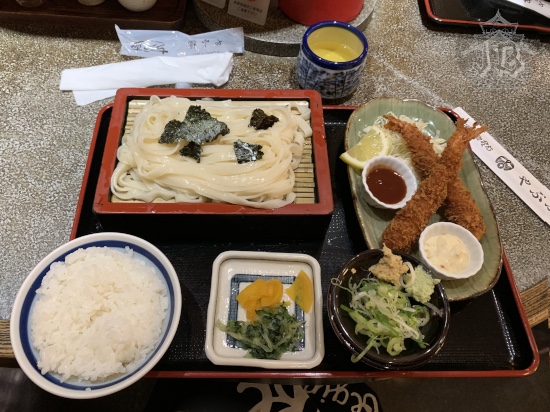
I had an amazing lunch set in the shopping mall underneath / connected to Nagoya Station on my way back.

Lunch set: cold soba, white rice, breaded prawns, pickles, and green tea

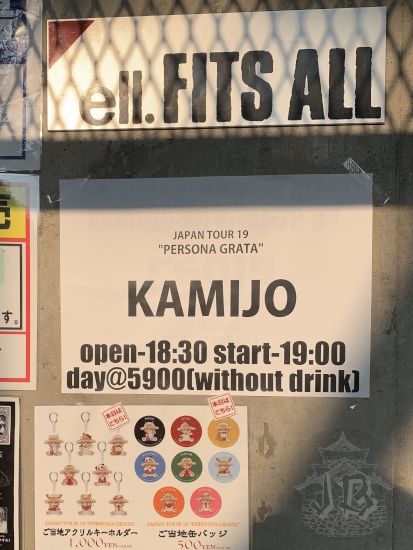
Then I headed out for Electric Lady Land. To increase my chances of actually seeing KAMIJO this summer, I balloted for two concerts of the 2019 Japan Tour Persona Grata through the fanclub Rose-Croix international. I was lucky enough to hit for both. When I arrived at the venue, I queued to buy goods – I only wanted the collectible badge, but ended up getting way too many. I waited around, and this time, the Japanese members of the fanclub were let in before the international ones. We did not get a physical ticket, either, just the passport and the reference ticket were enough.

Notice reading ell. Fits all. Japan Tour 19 Persona Grata. Kamijo. Open 18:30, Start 19:00

ELL is a small venue and we were not many people there for the concert – it was strange that there were so much people in Tokyo to fill up the Blitz, but not enough in Nagoya to fill ELL. It was a more humble concert, with a smaller screen for the projections, but it was fun none the less. I was able to stand close to the stage, but I chose the wrong side – I stood left while KAMIJO donned right. I shall learn from that. The set list was the same as the opening concert, which gave me the chance to appreciate the new songs even better. Even if the hall was smaller (tiny, actually) and thus held fewer people, it felt more energetic as attendees were jumping and yelling further – it seemed like the Blitz opening had felt more formal. Glad I got to attend both concerts, never mind how different and similar at the same time they were.

Kamijo Persona Grata poster

Walked distance: 16231 steps / 11.6 km. We don’t trust this measure either as it counts the furutsuke as walking (≧▽≦).

30th July 2019: Journey to the East (1): Sakaiminato → Okayama {Japan, summer 2019}

For the second part of my Sakaiminato adventure, I got breakfast on the go, and around 9:00, I set off to the Yumeminato Tower in the park of the same name. I had a plan of things to watch and walk around that unfortunately fell through due to, again, a perceived temperature of over 42 ºC and bright sun. But the Yumeminato Tower [夢みなとタワー] could not be skipped as it is part of my still ongoing All Japan Tower Stamp Rally. Aside from the customary observatory, the Tower featured an anthropology exhibition about the cultures of “countries historically related to Sakaiminato in matters of trading” such as Korea or China.

Yumeminato Tower and views from it. There is also a betobetosan (a… white ball with teeth).

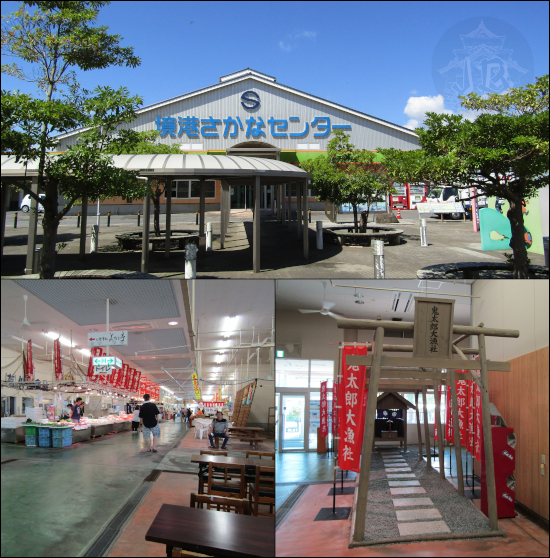
At the feet of the tower is the Sakaiminato Fish Center [境港さかなセンター], a fresh fish market – remember that Sakaiminato is “The City of Kitarō and Fish”. Here is where the homage to fish starts. Sakaiminato is both a trading and fishing key point in western Japan, so this spot is quite important for local business. They have even built a small shrine to give thanks to the ocean for providing the catch.

Sakaiminato fish market, outside and inside, including a small shrine.

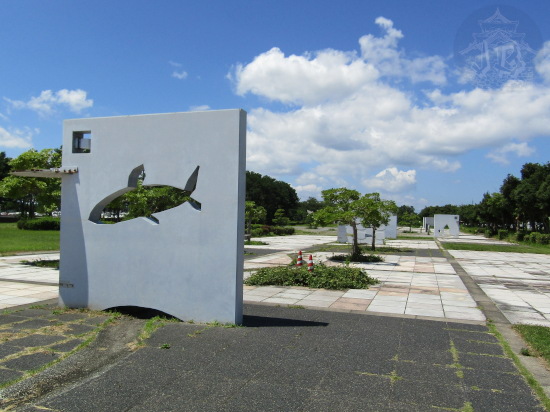
Both the tower and the market buildings are encased in Yumeminato Koen [夢みなと公園], a huge – and shadowless – park. It was quite hot, to be honest, and looking back I should have probably just taken the tourist shuttle, but the schedule was inconvenient.

Park with sculptures that depict silhouettes of fish.

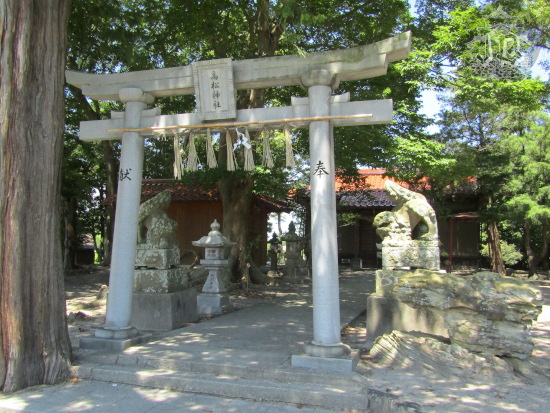
When I arrived at the Takematsucho station, my train had just left, so I snooped around Takematsu Jinja [高松神社], a small shrine next to it.

The torii of a small shrine, next to a sacred tree

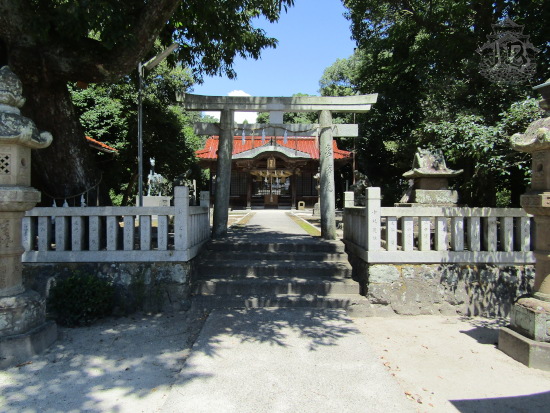
Having to wait forty minutes further, as there is only a train per hour, I decided to walk over to the following station, where I visited Amariko Jinja [餘子神社].

A shrine. The entrance torii frames the main building.

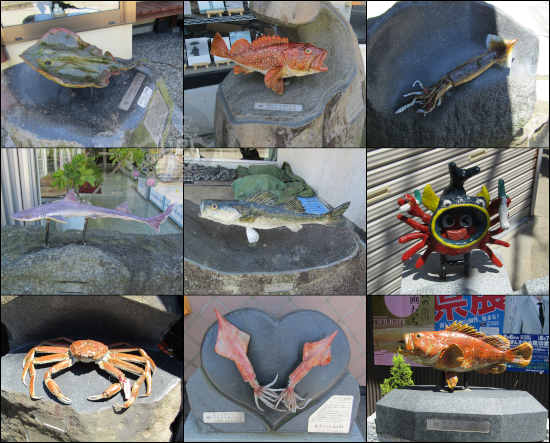
Then, I just sat down to wait and have a drink till the train came. Once back in the centre of Sakaiminato, I realised that even if it was a Tuesday, the Museum of Sea and Life was closed. That did not stop me from hanging around Osakana Road [おさかなロード], the Fish Road, which follows the same ideas as Mizuki Shigeru Road – it has little sculptures here and there. Only these are not yōkai, but fish.

Life-like fish, squids, crabs and sharks from Osakana Road, along a cartoonish mix of them all.

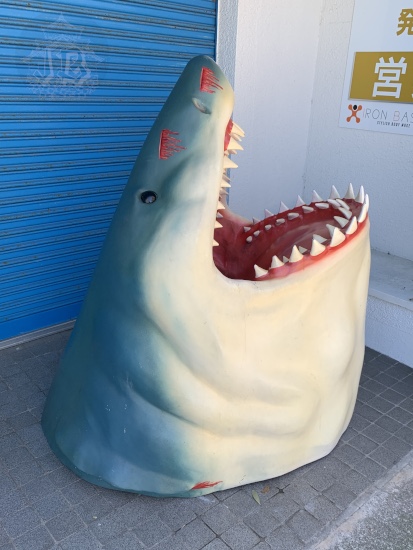
Oh, and I found a… photo-op / trash can shark on the way ʅ(・ω・。)ʃ?? I have no idea, but I could have fit inside. Unfortunately, I would not have been able to climb out.

Head of a white shark

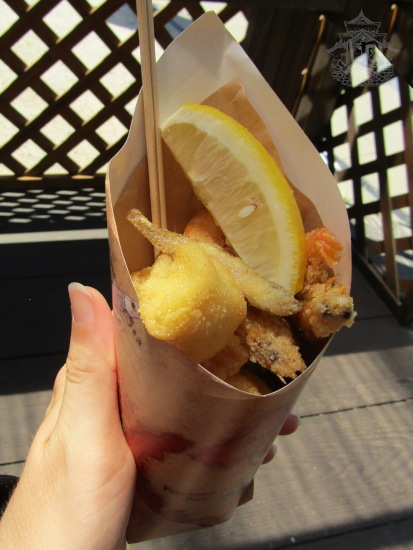
And speaking of fish, I had a great fish-fry snack in Mizuki Shigeru Road as I did an extra sweep to make sure I was not missing any yōkai. I chose this place because the owners seemed nice, and they were. They tried to make some conversation and they were very friendly.

Fish fry with a slice of lemon.

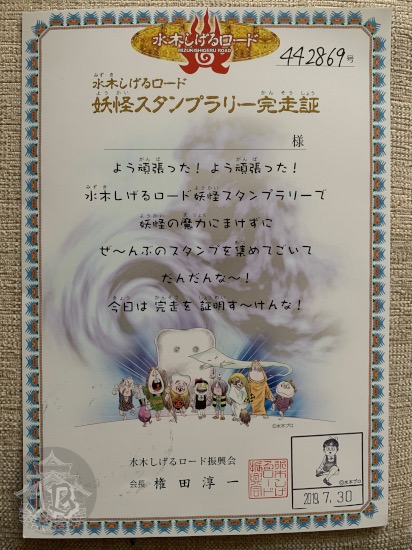
After that, I claimed my certificate at the Tourist Information Centre next to the station Sakaiminato-eki [境港駅]. Although I had done it the previous day, by the time I finished, the office was closed. Of course, nobody had any issue with that – they happily gave me my certificate, dated July 30th and not July 29th (≧▽≦).

Certificate of having finished the Yokai Stamp Rally, dated 30 July 2019.

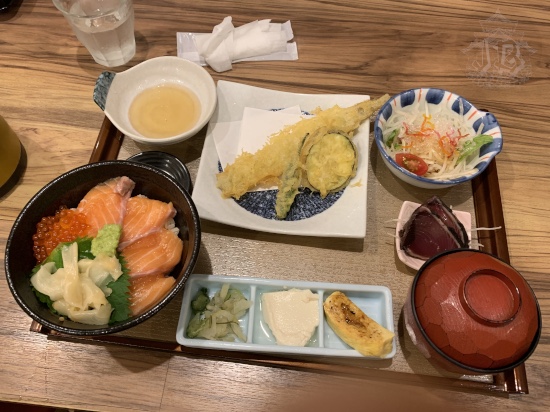
I finally said goodbye to Sakaiminato, and I took the train back to Yonago, and from there to Okayama, the capital of the Prefecture of the same name. This took around three hours, and I was in Okayama [岡山] around 18:00 or 19:00. I dropped my things off at the hotel and headed off for dinner. I ended up ordering a salmon set in a semi-traditional restaurant in a Takashiyama shopping centre, and although the staff was not the nicest, the food was delicious!

Japanese dinner with fried fish, salad, miso soup and a bowl of raw fish on rice.

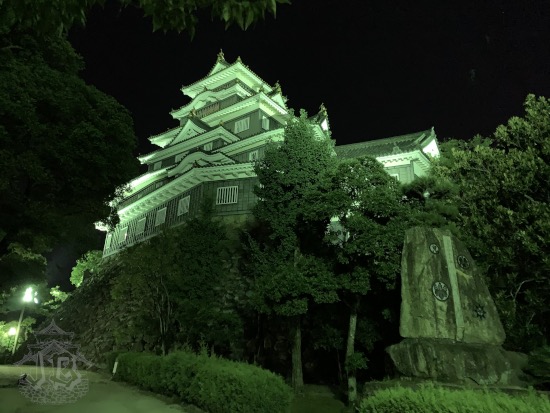
Right after dinner, I walked to the castle, Okayama-jo [岡山城], hoping it would be lit, and it was. They were also rehearsing some summer light show, with music and stuff.

Okayama Castle at night

Afterwards, I went back to the hotel – unfortunately I had a smoking room (yuck), so I had to spray everything with freshener so I could breathe. But I left the window open as I showered, and I slept rather well afterwards. I had started to feel the tiredness.

Walked distance: 22899 steps / 16.3 km. Most under the sun (soooo sunburnt!)

29th July 2019: Journey to the West: Osaka → Sakaiminato {Japan, summer 2019}

I was determined to cross as many things on my bucket list as I could in this trip as I could, and that involved some crazy travelling – in this case, two hundred eighty-something kilometres, four trains, and a bit over five hours. In order to make it work, I needed to leave Osaka around 7:00. From the hotel I took the Midosuji underground line from Doubutsuen-Mae Station to Shin-Osaka station, where I took the Tokaido-Sanyo Shinkansen to Okayama – the first 2.5 hours. There, I took the Yakumo Limited express to Yonago [米子市] (a bit over an hour). There, I had to change to, the JR Sakai Line which would finally take me to Sakaiminato [境港市] in Tottori prefecture – it took 45 minutes to travel the last 18 km.

Sakaiminato is “The City of Kitarō and Fish” – Fish is quite self-explanatory. Kitarō is the main character in the manga Ge Ge Ge no Kitarō [ゲゲゲの鬼太郎], often quoted as the reason why yōkai and other elements of Japanese folklore and mythology became popular in the 20th century. Yōkai [妖怪], literally “strange apparition”, are mythological creatures unique to the Japanese islands. They tend to represent nature or societal phenomena, some of them have animal features or are part-human part-animal, or anthropomorphised animals. Many others are rooted on the Japanese idea that inanimate objects have or can develop a spirit. Some yōkai are benevolent, others are evil.

The creator of the manga was Mizuki Shigeru [水木 しげる] (1922 – 2015). He was born in Osaka, but his family moved to Sakaiminato when he was young, and he grew up there. After being drafted to fight in World War II, he became interested in travelling and mythology. Back in Japan, he started the manga in the 1960s. Aside from writing and drawing Ge Ge Ge no Kitarō [ゲゲゲの鬼太郎] (Ge Ge Ge being an onomatopoeia of creepy grave yard noises), he was also a great connoisseur of Japanese folklore, especially monsters, ghosts, and yōkai.

Ge Ge Ge no Kitarō went through a few names and formats to its final form – and there have been anime adaptations as recent as 2018. Kitarō, the main character, is a young yōkai boy who lives between the worlds of humans and yōkai. His usual adventures involve protecting people from both evil yōkai and monsters of western origin. Other characters appear through the story, such as Medama-Oyaji, the “ghost” of Kitarō’s father, incarnated in his eyeball, the Rat-Man (Nezumi Otoko) or the Cat Girl (Neko-Musume).

Most of Kitarō’s adventures happen in or around Sakaiminato, and the town has decided to honour Mizuki’s yōkai legacy – or turn it into a tourist attraction. The inhabitants embraced its yōkai fictional legacy with glee… and stamps. Sakaiminato is all and everything about yōkai.

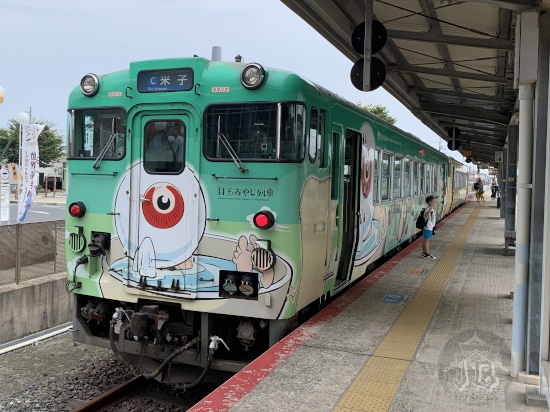
The magic started when I reached Yonago [米子市] Station: there, the platform is decorated with sculptures and statues, a prelude of what one finds when arriving in Sakaiminato. The train in the JR Sakai line [境港線] was also decorated with some of the characters of the manga. Furthermore, a lot of stops of the Sakai Line, aside from their actual name, are nicknamed after a yōkai.

Sign of Yonago station, featuring the character Nezumi Otoko from Ge Ge Ge no Kitaro.

Train to Sakaiminato, featuring the character Medama-Oyaji from Ge Ge Ge no Kitarō, taking a bath.

I finally reached the Sakaiminato station, Sakaiminato-eki [境港駅]. Upon exiting the train, the first thing I saw was a mural with all the recurrent characters in the manga. The second, that the street lights were shaped like Medama-Oyaji, Kitarō’s eyeball-shaped father.

Mural of Ge Ge Ge no Kitarō characters. The street lights in front of it are shaped like eyeballs, and the irises have different colours.

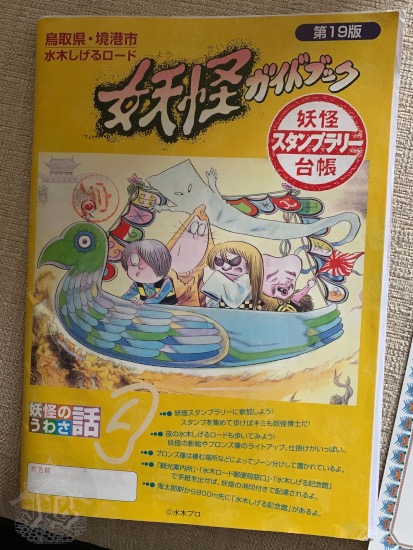
As I came out of the station, I was greeted by a bronze statue of Mizuki Shigeru writing among his characters, and a themed postbox. At the end of the block there was a mall-like building (actually, a cultural centre) which holds the Tourist Information Office. There, I got a copy of the yōkai booklet to carry out the Yōkai Stamp Rally [妖怪スタンプラリー]. The booklet was 120 ¥, of course I could not let it go – there are 35 stamps to collect, and if you get all the stamps of the main rally, you get a small certificate. There are extra stamps for day trips, too. I wish I had known beforehand, I would have planned two days out there to try and complete it.

In order to complete the stamp rally, you have to go down the main street and stop at the many shops which have a small stand out front with a stamp and an ink pad. It was stupidly fun to do, even if there were a few parents who thought nobody but their kids should get stamps and a certificate. Some of the stamps were “hidden” away from the main street and the documentation is in Japanese, so some effort is required – or just use the convenient interactive map.

Stamp Rally booklet

Booklet acquired, I could go forth and explore (and stamp). I backtracked towards the bronze statue of Mizuki Shigeru writing among his characters Mizuki Shigeru-sensei Shippitsu-chū no Zō [水木しげる先生執筆中の像], and the Kitaro postbox [鬼太郎ポスト].

Statue of a character writing with his mouth open. Two manga characters are looking at him, hearing his stories.

Kitaro sitting on top of a post box

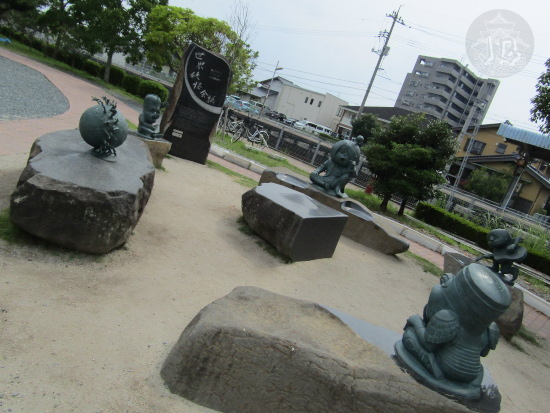
And as you follow the road and turn the corner you directly go into Mizuki Shigeru Road. However, when have you read me going into something directly without getting distracted? First I had to see the Yōkai World Summit, Sekai Yōkai Kaigi [世界妖怪会議].

The bronze statues that comprise the Yokai World Summit.

Finally I got down to Mizuki Shigeru Road [水木しげるロード], which features dozens of small and not-so-small bronze statues representing yōkai as they appear in the manga, alongside the characters designed for the story itself. The Tourist Information claims that there are 177 statues in total. I honestly did not count. Shops line to the sides, and a bunch of them have the stamps that you ink on your booklet – and it was hard to get to them, it was so crowded!

I walked the right side to the end, then I decided to come back to check into the hotel, which was close to the station, and drop the luggage. Why didn’t I do that from the beginning? Either it was too early for check-in, or I was eager to get started with the stamps, or maybe both. I reached my hotel and it was gorgeous! It was actually the most expensive hotel in the whole trip, but it was amazing! Outside, it was just a brick building. Inside, it was full of wood and tatami, and so was the room. There was an onsen (artificial hot spring) on the uppermost floor, which I decided I would visit later.

I actually felt a bit bummed that I only had a night there, because I would have really stayed in that room for hours just lounging around – and there were more stamps to collect… But as soon as I thought about the stamps I realised I just had to go out again to continue my adventure. There were lots of things to see and do! Thus, I headed out again, and realised I needed to find myself some food as it was close to 15:00 and I had only had a coffee and a cracker at around 8:00. Then, I set off to walk the left side of the Mizuki Shigeru Road. Of course, every time I went up and down the street I took photographs…

Collage showing Japanese mythological characters as depicted in the Ge Ge Ge no Kitaro manga. They include a Medama-Oyaji, Betobetosan, a dragon, a nurikabe, a giant skeleton…

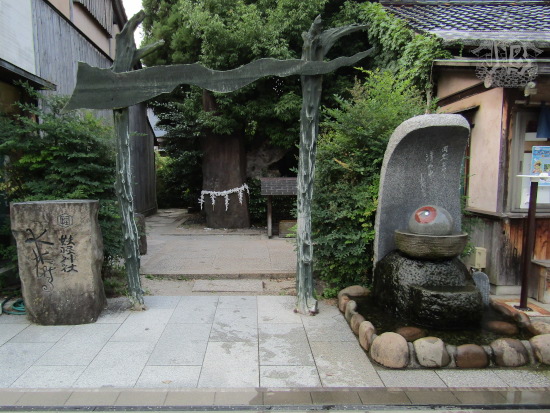
Of course, I also had to visit Yōkai Jinja [妖怪神社] on the way (the amount of time and times I had to wait till I was able to take a picture of this without anybody in it was ridiculous (≧▽≦)).

Japanese shrine entrance, depicting the torii as something ghostly. There is a sacred tree just behind the torii.

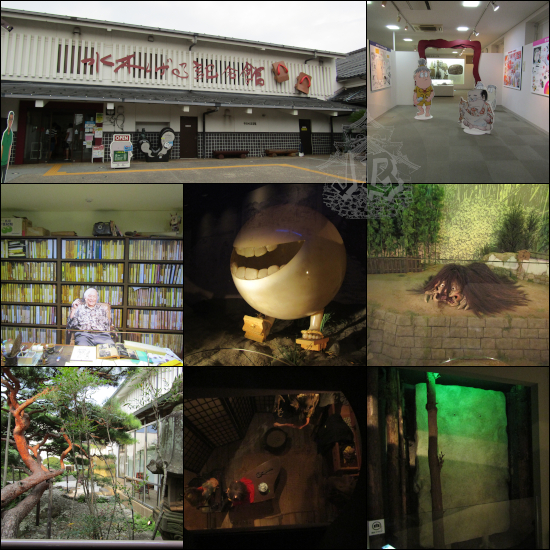
At the end of the road, I had seen the Mizuki Shigeru Museum, Mizuki Shigeru Kinen-kan [水木しげる記念館] and I knew that it was open (on a Monday!) until late (in Japan!). I actually had put Sakaiminato on the schedule like this so I could make the most out of the Monday. I decided to enter before I had finished the stamp rally, because I keep getting distracted by shiny new things. The Museum features some of the original manga strips, a replica of Mizuki’s office, some items of his mythology-artefact collection and personal library. You can peek at haunted house and see a lot of “domestic” yōkai that that may lurk in a traditional home. There are also replicas of different yōkai – big, moving, and trying to be creepy but only managing to be awfully cute: Nurikabe, Shirouneri, Otoroshi, Azukihakari, Betobetosan, Suiko, Akaname, Miagenyudou. There are also photo spots to compensate that more than a few items cannot be photographed. The museum also had a nice garden for the “wild” yōkai.

The Shigeru Mizuki Museum and garden

I still had a few stamps to go, so after I left the museum, I diverted towards the harbour to find them. That is how I ended up at Ominato Jinja [大港神社], a much more traditional shrine, not for tourist but actual practising.

Japanese Shrine. Pretty standard in comparison to Yokai Jinja.

It was time to look for the “hidden” stamp spots. The very last one I found was at the Sakaiminato Ekimae Police Box, Sakaiminato Ekimae Kōban [境港駅前交番]. I had completed the booklet in one afternoon! However, it was just around 18:00, so the tourist office was already closed. I saw something called “Kitarō Haunted House”, but I did not enter – it seemed to be for kids, and I did not want to brave too many hyper-protective fathers.

Open Yokai stamp booklet showing the stamped characters.

Instead, I went to the harbour to have a look at the setting sun. This was my first time in the west of Japan, so I thought I could see the sun going under the maritime horizon. I had not counted on the bay, but it was overall pretty.

Sunset at the harbour. It looks pastel.

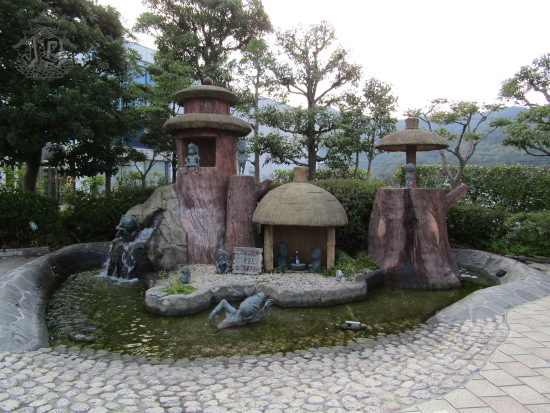
As it was “after hours”, I went to look at the fountain Kappa no Izumi [河童の泉]. That day, the city employees had been cleaning it, and I did not want to take pictures with the workers in them, or disturb their work and power-washing. The fountain was still not running, but the city officials had left.

Dry fountain with Ge Ge Ge no Kitarō characters.

Afterwards, I tried to grab a bite to eat, but most places had either shut down or were not taking customers any more by 18:00. Thus, I found myself some conbini food, and headed back to the hotel. I had a nice traditional bedroom and a fantastic shower, but honestly, I ignored it in favour of the onsen. I went there to enjoy a long soak. As night falls and the shops close down, it looks like this small Japanese town would go quiet. Nothing further from reality! The Mizuki Shigeru Road displays a creepy illumination complete with sound effects. This is probably an incentive for people to stay overnight. I had read about it on the brochure, so of course I walked out again to see the town at night.

The whole Mizuki Shigeru Road had been completely overtaken by the wannabe creepy atmosphere – at least. There was music, and some of the shop windows had shadows. The Medama-Oyaji street lights flickered. Suddenly, as I was walking down the road, there was a thunderclap sound and all the lights went out at the same time. I jumped! They got me good! Well, me and everyone who was just experiencing it for the first time. Part of the fun became identifying when the lights would go out and watching out for people getting as startled as you had been. I plead guilty of doing it.

Mizuki Shigeru Road, with creepy lighting.

I went back to the hotel around 21:00. However, as part of the stay-in-town incentive, my hotel also offered a free bowl of ramen between 22:00 and 23:00. I wondered if it would be greedy to go and have it, but I decided to take full advantage of the offer. Thus, to finish the day, I got free ramen at the hotel for dinner! Indeed, I could have stayed in that hotel for days on end!

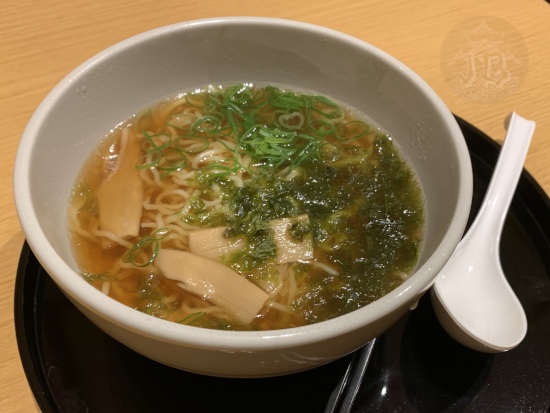
Bowl of free ramen with algae and bamboo sprouts.

I went to bed soon after. But remember, Sakaiminato is “The City of Kitarō and Fish”. I had done the Kitarō part. The following day, I needed to focus on the fish.

Walked distance: 13641 steps, 9.76 km in one afternoon/evening. It was bloody amazing and I had a blast!

27th July 2019: Osaka by drizzle and twilight {Japan, summer 2019}

After the KAMIJO concert, I set off again, this time over to Osaka (where I was a train-challenged idiot and this time I can’t even blame it on the chaotic Osaka transport) and my first stop was Namba Yasaka Jinja [難波八阪神社], one of whose buildings is shaped as a lion-dog head. It was a very nice and fun shrine.

On the way to the station I walked through Namba Koen [浪速公園].

Then I rode to the hotel to drop off my things – and of course gotout the wrong station at Shin-Imamiya station (I also held a little prayer so I did not end up at a love hotel again – I had chosen wisely!). I had a bit of a rest and then I headed back towards Dōtonbori [道頓堀] and after once again checking the map before getting my butt there, I was able to find all the spots I wanted too – count me out of the Donki ferris wheel though.

The plan was waiting until sunset to see all the lights, but I miscalculated again and I did see the lights, but only against the twilight. Oh. But I made some time eating takoyaki [たこ焼き].

I got some rest on the way, so I was rested enough to have a stroll down Shinsekai [新世界] at night – including Tsūtenkaku [通天閣] and Billy Ken.

Afterwards, before going to sleep, I watched a NHK TV special on one of the bands I like – but have never seen live – LunaSea. I was in my hotel in Osaka, but I watched “with” my friend E**chan, as we both kept messaging each other about what we were listening to at the moment.

Walked distance: 19319 steps / 13.8 km.

26th July 2019: KAMIJO’s Persona Grata {Japan, summer 2019}

I woke up, and had some coffee from the convenience shop on my way to the station. I took a train to Tokyo [東京] – the great thing about the JR Pass is that you can ride back and forth as much as you want. The itinerary I have for this time over might not the most efficient in terms of optimising time, but it does maximise the number of concerts I can attend. This was the day of KAMIJO’s the opening concert of his 2019 Japan Tour Persona Grata.

When I arrived in Tokyo, I headed off towards Roppongi Hills. There, I met up with D****e and we had some some delicious yakiniku together for lunch.

Lunch set. Salad, white rice and some raw meat for the grill, along with the sauces to dip

I first saw KAMIJO in Barcelona in 2018. He is a visual-kei rocker from the old school – with the costumes, the backstory and lots of theatricality. He is basically pretending to be Lestat de Lioncourt during the stint he becomes a rock star. I mean, we are the same age. We must have read the book around the same time, so I know where he is coming from.

Since, aside from vampires, KAMIJO is also obsessed with France, a while back he opened a European fanclub. Unlike most Japanese artists’ international fanclubs, Rose-Croix international allows for very real benefits. Since the European chapter is actually located in France, everything was much easier in terms of payments and so on. I was able to ballot for tickets for the Japan tour, and I actually hit for Premium tickets for Persona Grata’s opening night at Mainabi Blitz Akasaka. The tickets included “seating in front of the stage” and special presents. To prevent tickets getting lost in the post, you have a reference number and need to drop by the ticket booth to receive your physical ticket on the day of the concerts you hit for. I was lucky enough to buy the tickets for the two concerts I wanted.

Kamijo Persona Grata poster

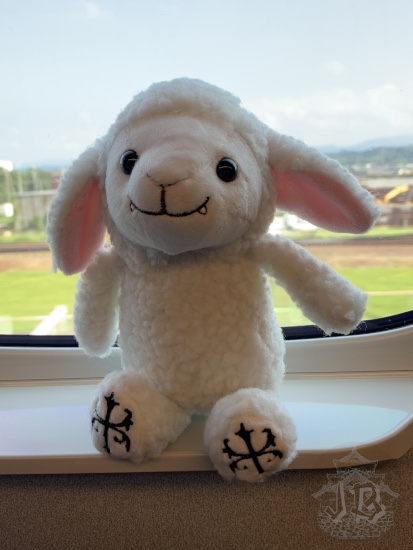
After lunch, I went to D****e’s to drop off my backpack and changed, then I set back out. I arrived at the venue around 16:30, and the shop to buy merchandise was already open, but the ticket booth was still closed. I could not claim my Premium goods without the physical tickets, but I looked at the merchandise. I decided that I needed the small lamb plush with vampire fangs Hitsuji Vampire [羊ヴァンパイア], along with some other items, the more important being the booklet.

Around 17:30 I was able to retrieve my ticket – I only had to show my passport to get it. The premium seat guaranteed a “front seat”, which was second row – better than expected. Afterwards, I went to collect my premium “goodies” – a jewellery pouch (I really thought it was a wallet at first), an autographed board, and a mug, all inside a limited-print plastic bag that was given out for purchases over 3,000¥. I think that between second row and the presents, the ticket price was fair in comparison to the regular one.

Kamijo Persona Grata Premium gifts
The tour doubled as an introduction to the new songs for the upcoming singles. Aside from the new compositions, I discovered a few songs I really liked (a lot of my Book Off shopping this year had to do with trying to build KAMIJO’s entire discography)., The concert felt quite special. I enjoyed every second, and having a chair really helped to get some rest when he was off stage and we had the “film” instalments. Unfortunately, the fandom is not too open so I did not get to make any new friends.

There was a large screen on stage where the conducting story was projected. This is another thing that some v-kei artists do, have “plots” for their concerts, and big stories for tours / releases. This is usually done in the form of short films shown throughout concerts, and snippets written on the CDs or DVDs (it’s the original transmedia strategy, I guess – and reading the booklet helped figure things out). It also works to give the musicians a break during high-energy concerts. The story of Persona Grata takes the viewer back to the times of Louis XVII of France. The Count of Saint Germain – whom is never seen, but is voiced by famous voice-actor Tomokazu Seki [関 智一] – is a vampire masquerading as alchemist. He created the Émigré, a system to obtain energy from the blood of resurrected corpses. These corpses are a sort of sentient human “battery” who are allowed to meet their beloved ones once more before their final, eternal death. Émigré created an “ideal world” with infinite energy. Time passes and in the present day, the Émigré is working in Japan and being exported to America. The film opens with the Secretary of Energy in the USA killed, delves into the investigation, and culminates with a meeting between the President and the Count, after which the Count’s car is blown up.

After the first instalment of the film, KAMIJO came on stage along with the musicians – Meku (guitar), Yuki (drums) and Masashi (bass).

Setlist:

Intro: Sang-epilogue- (recorded)
    1. [New song]
    2. [New song]
    3. Nosferatu
    4. Emblem (recorded)
    5. Émigré
    6. Vampire Rock Star
    7. Ecstasy
    8. 闇夜のライオン [Yamiyo no lion]
    9. Delta -Interlude-
    10. Castrato
    11. [New song]
    12.The Star-Spangled banner (recorded)
    13. [New song]
    14. Eye of Providence
Encore
    15. BASTILLE
    16. 第四楽章 – Dying Table – [Dai shi gakushou – Dying Table –]
    17. Moulin Rouge
    18. 追憶のモナムール [Itsuoku no mon amour]
    19. Louis ~艶血のラヴィアンローズ~ [Louis, Enketsu no La Vie en Rose]
Ending + Eye of Providence (recorded)

I like KAMIJO because he is fun. He tries really hard to stay in character all the time, but he does not manage, and keeps slipping into being a goof ball. However, he is a great singer. Furthermore, I also like vampires, I’m not going to lie, and he makes for a very pretty one. One of the things I find hysterical is that he uses a goblet to drink at concerts, a member of the staff keeps it full of water all the time.

The Blitz show was pretty powerful and really good. There was something special about it, something magical. Artistically, KAMIJO showed everything he can do. He did not miss any cue, his voice never wavered, he never hesitated. Every line and twirl and drop were timed perfectly. He hit all his crazy highs and the husky lows, and did not have any issues with songs with completely different tempos back to back. He jumped, made the audience jump, made the musicians jump and fake-bit all the guitarists’ necks. During the emcee, he announced the final October tour, a “trilogy of singles” that would complete the Émigré story arc.

The audience struck me as pretty rather quiet, in comparison with the HYDE concerts I had just attended, where the crowd is a bit… overenthusiastic. In this case, everybody just clapped, but did not scream or speak.

Out of the new songs, I really liked Ecstasy, for which KAMIJO had practised his English a lot. Lyric-wise, I think Eye of Providence hit hard. Of the not-so-new songs, I absolutely adored Bastille. He sadly did not sing Mystery, but it probably did not fit the ongoing theme. Neither did Moulin Rouge, I think, but it is a staple of his. At the end of the nine-minute concert, he said that we all were a family, and coached us to hold hands and jump together with him and the musicians.

Night view of the venue, reading Mainabi Blitz Kamijo

After the concert finished, I headed back towards D****e’s place, and I had some dinner on the way. I must have. I don’t really remember…

Walked distance: 13515 steps / 9.66 km. I don’t believe this for a second, the watch is totally messing up between moving arms doing furutsuke, and walking.

24th July 2019: Morning in Kyoto, afternoon in Nagoya {Japan, summer 2019}

After waking up early again (what can be done? Early night → early morning) I walked out the hotel and took another stroll in Maruyama Kouen. Only this time, instead of heading towards Yasaka Jinja and Gion, I continued straight and I found Daiunin [大雲院].

The roof of a pagoda, in oxidized green colour

I continued on to Nene no Michi [ねねの道], which has temples left and right. These temples have little statues that you have to touch for luck, wealth and so on. As I have been feeling so lousy this last year, I decided to find the health one.

Statuettes of the Buddha and local gods

On my way I climbed up the Daidokoro-zaka [台所坂], a bunch of gentle stairs that lead up to Kōdaiji [高台寺], a fun temple with a lot of yokai folklore. It also held some healing sutras, so I took the liberty to make them spin.

Temple with funny-looking lanterns decorated with yokai and ghost faces

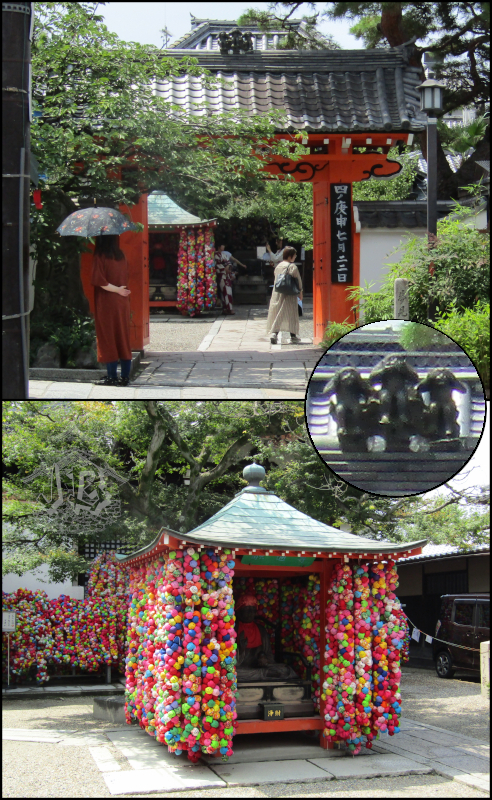
From there, I went to Kongoji (Yasaka Kōshindō) [金剛寺(八坂庚申堂)], which is a temple with… colourful balls where people write their wishes. They are supposed to entertain the ‘good faith monkeys’ (Hear no evil, speak no evil, see no evil) that guard the temple, I guess.

Buddhist temple with a decoration of thousands of brightly coloured pompoms

After that, I walked towards the Hōkanji (Yasaka no Tou) [法観寺 (八坂の塔)], a five-story pagoda.

Five story pagoda

A bit farther, I also found Rokuharamitsuji [六波羅蜜寺].

Buddhist temple exterior

I went down towards the river Kamogawa [鴨川], where I saw some more wildlife – ducks, cormorants, herons (cranes? Have I told you I can’t tell cranes and herons apart?).

Black cormorant standing in the river

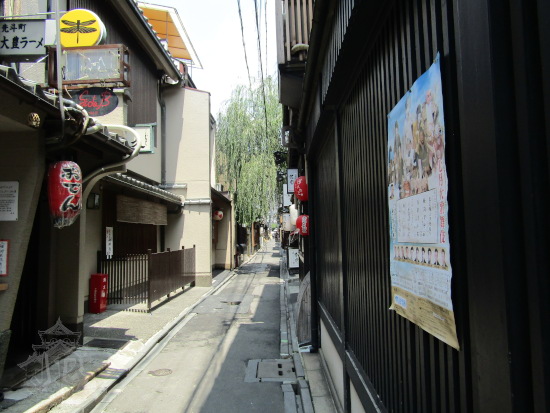
Finally – for my Kyoto trip – I walked down the Pontocho [先斗町] Alley before I headed for the station. It is renown for its restaurants, but everything was too expensive for my budget.

Narrow alley with restaurant lanterns and signs

Then I took a Shinkansen to Nagoya [名古屋] as I was going to attend HYDE’s 2019 tour that afternoon. As I arrived too early for 15:00 check in, I headed off to Zepp Nagoya to see whether the goods were out. They were. A girl passed out at the queue a bit behind me due to heatstroke, and that was a bit creepy, but the staff took good cafe of her.

After buying goods, I went to leave my stuff and have a shower at the hotel, then I met up with several friends and even new friends. I enjoyed HYDE Live 2019 much better than the 2018 shows, which felt… somewhat disappointing at the time, almost clumsy and disarranged. Since then, HYDE put out the album Anti in May 2019, so he has found his grounds again. Last year he seemed to be rehearsing / perfecting a few of the songs, and combining them with the echoes of L’Arc~en~Ciel and VAMPS, which only emphasised what we did not have any more – I am still not too happy with the covers of VAMPS songs, especially Ahead, where I miss KAZ’s guitar. And honestly? Not a fan of Duran Duran’s Ordinary World.

Setlist:
    1. Who’s gonna save us
    2. After light
    3. Inside of me
    4. Underworld
    5. Fake Divine
    6. Two face
    7. Set in Stone
    8. Zipang (Japanese version)
    9. Out
    10. Mad Qualia
    11. Sick
    12. Don’t hold back
    13. Lion
    14. Another moment
    15. Midnight Celebration II
– break –
    16. Duality (Slipknot cover)
    17. Devil Side
    18. Ahead
    19. Ordinary World (Duran Duran cover)

As his solo goals, HYDE has set his heart in in the US. Thus, his new music is heavily influenced by American producers and musicians, and completely in English. Though he is mainly a vocalist, HYDE started off as a guitarist, so there is a heavy reliance on powerful strings. To emphasise the fact that he is solo now, he has given his support musicians masks to cover their faces. Or maybe he’s just decided he likes masks as he himself wears a half-mask for the first few songs. He was very active and engaging with the audience, which always makes lives more fun. In general, I enjoyed the act, it was powerful and engaging.

Zepp Nagoya logo

When the concert was over I met up with Sr-san for dinner. We had misokatsu [味噌カツ] in a famous shop, and had a long conversation about the concert and HYDE’s new songs.

Dinner: breaded pork on rice and shredded cabbage

Walked distance: 23305 steps / 16.6 km.

26th May 2019: “Komeko Sin Gluten” event in Madrid (Spain)

After almost literally everybody and their dogs ditched me for a cooking workshop in Madrid, literally the day before I decided to bite the bullet and go by myself, so I bought my ticket on Saturday night, barely 12 hours before the event, a promotion of a Japanese-Spanish shop and its products based on rice flour. The shop is called “Komeko Sin Gluten”, which translates as “Gluten-Free Rice Flour”.

Evenbrite ticket for the event: Taller de Cocina de Komeko: crepe, helado y tarta 10 euro

The event happened in a venue-for-hire in Madrid, and consisted in three distinct parts: a small market in which I would have spent a lot if I had not got a few samples with my ticket, a cooking workshop and a taiko concert. I arrived early due to Sunday having awful public-transport connections, and I arrived in Madrid an hour before the event even opened, and then we got a delay with the start of the workshop because someone was missing. During that time I got to sit around among aaaall the Japanese people around, including the head drummer of the taiko group, , whom I admired a lot since I watched him in HA·YA·TO: Drum Masters.

The small market was comprised, of course, of gluten-free products, especially Japanese ones, most of them can be found online, yay. I decided not to buy things upfront as the workshop included a sample of products, and I wanted to buy what I did not get. In the end, I did not have to buy anything because I got next to everything!

Pictures of the rice flour items - flour, noodles, snacks...

Anyway, the cooking workshop:

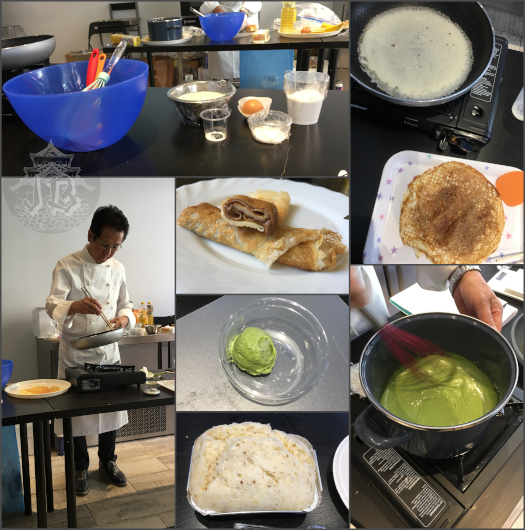
  1. Komeko crêpes: We made the crêpes on portable pans. There was a mini drama as the cook refused to start until we had chopsticks to flip the crêpes, and I was amused at first until I realised how convenient they actually were. While he was worried that I ahd any problems with the chopsticks, I’m happy to report that I was not the clumsiest in the class! After they were cool, we filled one up with ‘pastry cream’, banana and whipped cream for presentation – but we got to take the rest home and I tried them with chocolate. Serious improvement!
  2. Steamed banana sponge cake: this was really interesting to make, and also really easy – it involved mixing all the ingredients in a plastic bag, and then cutting a corner off the bag to pour that into little trays so we could steam it. That was… neat, and a team effort.
  3. Japanese green tea (matcha) ice-cream: Double team effort! (≧▽≦). As the paste needed time to freeze, we actually observed the chef prepare the ingredients and ate the one that had been prepared in the previous workshop.

Collage. Chef preparing crepes, and a picture of the materials, the matcha ice cream and my own creppes and banana spongecake

We had a snack with our crêpes and the matcha ice-cream. Then we got the haul of goodies: ramen and spaghetti noodles, komeko, komeko with glutinous rice, and komeko with cocoa, well worth the price (10€) I had paid for the whole workshop… Talk about promotion ☆⌒(ゝ。∂).

Different flours and noodles I got as present

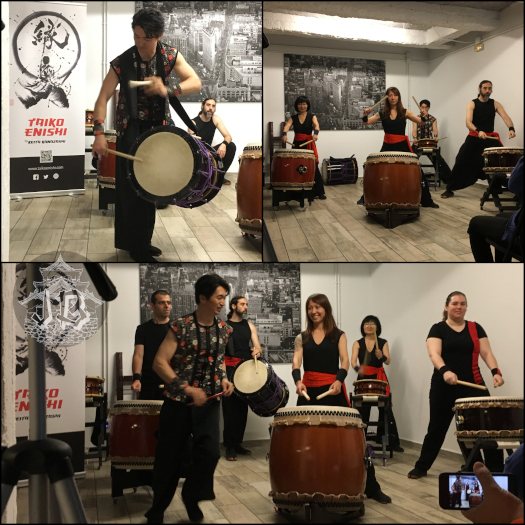
Afterwards, I headed downstairs for the taiko concert. Enishi Taiko is a Spanish group, and Keita Kanazashi usually collaborates with them rather often. The concert was, of course, more humble than the one with HA·YA·TO, but it was still a lot of fun.

Taiko group playing and having a lot of fun

Afterwards, I got Kanazashi to sign the HA·YA·TO DVD and the picture I had with him from that time, which was really cool. Furthermore, the main drummer in Enishi Taiko remembered me from the X Gran Exposición de Ikebana y Semana Cultural Japonesa session, and another session I took at their headquarters.

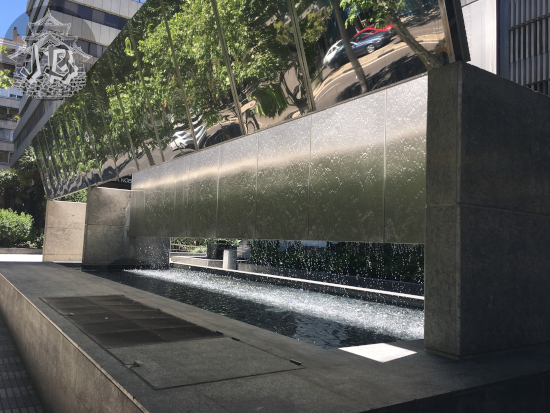
I had thought that I would be eating in Madrid but as I had snacked on the komeko products I was not hungry at all, so I decided to head home. On the way towards the station I found this really cool fountain.

Urban waterfall. The fountain looks like a massive bench, with a thin layer of water dripping from the top

18th & 19th May 2019: Madrid (Spain) for Jupiter (and fesFE[M]!)

The weekend started extremely early on Saturday, when I took the first bus out to Madrid, and I think I was there around 7:30 to meet my friend C*****. She had been having a rough time and she had asked me to “keep her head off things”. Up until a couple of days before, we did not even know whether she would be able to come to the concert, so I had a whole plan up my sleeve. Unfortunately, a couple of steps backfired slightly. The main event – which we had been planned since the previous December – was Jupiter’s concert for the ZEUS Europe Tour on Sunday the 19th, but we made a whole weekend out of it. I was not actively following Jupiter at the time of the announcement, but C***** and I decided to attend because Madrid is easy and convenient, well-communicated and an opportunity to spend a weekend decompressing somewhere. As the time drew near and we could access more material, the excitement built up – I also managed to find the album they were promoting and it sounded really well, actually.

Her bus arrived earlier on Saturday than mine, and when we met, we decided to have breakfast at the coach station, to catch up and to give shops and so on the time to open up. When it was a reasonable time, we took the underground to drop our luggage at the hotel – the lovely EXE Moncloa. I had selected it because it was near the concert venue, and I hoped that we could hang out the terrace and the swimming pool, which unfortunately did not open until June. After getting rid of the luggage, we rode the underground towards the neighbourhood of Chueca, where I had looked up a bunch of Goth apparel shop which were right up her alley and… did not open at 10:00 as the internet said, but at 12:00.

Fortunately, other shops were already open and we were able to pass the time amicably. We were actually close to the Telefonica building, so I suggested we headed up there for the TeamLab exhibit, which I had already seen, and I thought she might like the digital art.

Teamlab logo and digital art: Waves, butterflies in red and green, and a dripping circle as if it were painted with a brush. All of them are light or bright colours on black.

Afterwards, we moved onto Callao Gourmet Experience for a snack. I wanted to introduce C***** to the Niji Mochi shop, and we also shared a chocolate ice-cream shake.

Mochi and coffee with whipped cream

Afterwards, we were shopping for a little longer before we moved on to have lunch. I had a surprise for her. While I care little to nothing about Korean food, she is a fan of everything Korean. Thus, we hit one of the best Korean restaurants in Madrid, called Seoul. I gave her free reign to order for both of us and we shared, though being honest, the only thing I enjoyed was the green tea at the end.
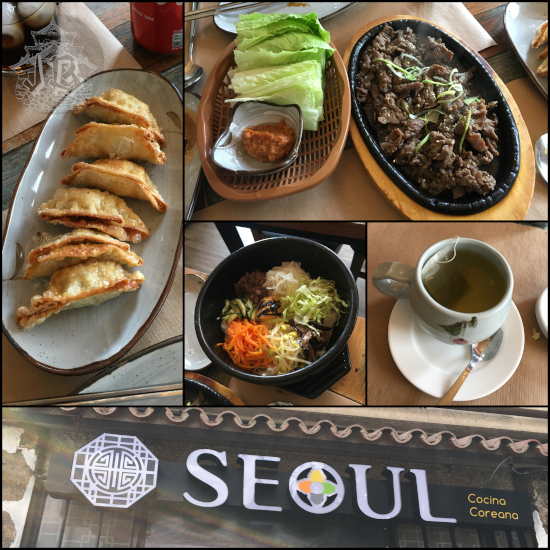
Lunch: fried dumplings, roasted meat, rice with vegetables, and green tea.

After lunch, we went on and found an underground station. We rode towards the Museo Arqueológico Nacional, National Archaeological Museum, although we had not realised that it was museum day so instead of a quiet exhibition I was used to, we had to deal with a ton of families! On the bright side, it was free, though. The museum, which shares a building with the national library Biblioteca Nacional, was founded in 1867, at a time when creating national museums had become popular among European governments. It was the start of the development of archaeology in Spain. I remembered it from the time I was a kid, dark and with wooden floors, but it was recently renovated with wide spaces and modern interiors.

Exhibits at the archaeological museum: bones from a mastodon, boar statue, lady statue, Neanderthal skull, Roman mosaic of an octopus, Horus statue, Iberian stelae, primitive animal that looks like a boar or a bull carved out of stone, Grecian vase

C***** was tired from spending all night in the bus, so we left the museum and headed back to the hotel to finish our check in process and then catch a break. On the way, we stopped and bought a few snacks for the following day because you always have to be ready for a post-concert low.

We had to look for a place to have dinner, and I found a few interesting places. There were not one, but three Japanese restaurants in the area where we were staying. One of them required queueing and sounded quite self-important, so we were left with two options. We decided to try one in the evening and the next for lunch the following day. Thus, I booked a table at the nearby Naniwa. We had some decent sushi, chicken, and takoyaki… then ordered takoyaki seconds because we had a discount (and I was hungry because I barely picked on lunch).

Dinner: sushi, fried chicken, octopus balls, chicken skewers

The next morning, we headed to the venue Sala Copérnico door around 9:00 and upon seeing nobody queueing yet, we went to have breakfast at a nearby café. Then, we walked around the Moncloa park area, mostly chatting, until we went back to the venue – no queue. And later went back to the venue – no queue. And afterwards, we went back to the venue again, just to find there were still no people in the queue.

Coffee and bread breakfast

In the end we ran into the supporting bands went to have lunch to the second Japanese restaurant in the block, Morikaen. It was around 13:30 as we were heading there, and I said something along the lines of “I feel sorry that they’ll arrive and there’s nobody here to greet them”, and as we turned the corner we almost literally ran into the whole crew coming out of the bus. Talk about timing. They looked tired so we just walked by, but we were rather sure that we had been noticed. On our way to the restaurant, we walked past a family all clad in “Sunday church clothes”, and their small girl wearing aaaall white just stared at us – in rock-goth black clothing – with pure envy in her eyes. Here’s to you, little one. You’ll get there too.

Lunch was all right – tuna tataki, tonkatsu, takoyaki. A bit more expensive than the previous day’s dinner, but we also ordered higher-class ingredients and more complicated dishes.
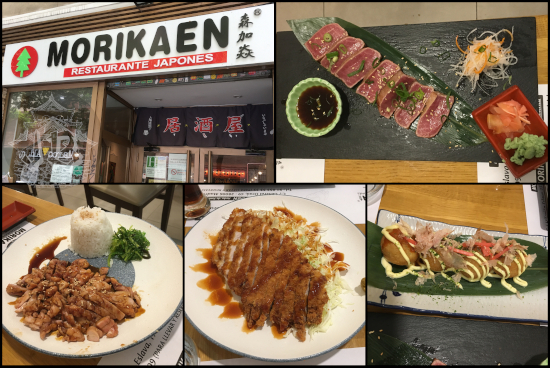
Lunch. Tuna tataki, rice and chicken, breaded pork, octopus dumplings

Jupiter is a Japanese band who define themselves as “melodic metal band”. It could be said that it is a visual kei symphonic power metal, which means they combine a very particular image (or a bunch of images, the most iconic being Hizaki’s Baroque-inspired dresses) with a subgenre of metal that combines hard drumming, metal guitars, and elements of classical music. On the 22th November 2018, Jupiter announced their new album, a Japanese Tour, and a European Tour, ZEUS Europe Tour. Bassist Rucy left between the announcement and the album release due to creative differences, and I really thought they would cancel the tours, but luckily everything went ahead. The remaining members – guitars Hizaki and Teru, current vocal Kuze, and drummer Daisuke were joined by support bassist Shoyo.

Schedule for the tour

There were two promoters involved for this concert. The local promoter, which in Spain was Madness Live, sold general admission tickets – they have a clean and neat webpage and buying from them is easy; I got ours on the 12th of December. The other, Editions Hikari, was in charge of coordination of the European tour, general information, and ticket upgrades. I think they are one of the worst organisers I have ever come across.

Hikari announced those upgrades in January. There would be VIP experiences, on sale on the 14th of February. Besides that there would be two kinds of upgrades, there was no real information about them until a few days before the sale. The best tickets were called “Venus Premium” (40€ face value + 5€ reservation costs) included autographs + handshake + backstage access before or after the show or soundcheck access (if possible) + photo with 1 member taken by a professional photographer (sent by e-mail later after the tour) + priority access to the merchandise, and there were five per show. The “Venus” upgrade (25€ VIP + 3€ reservation costs) comprised autographs + handshake + priority to the merchandise, there were 20 available per show. Getting the tickets was chaotic, but in the end, C***** managed to buy the two Venus Premium tickets we wanted – luckily. A lot of people did not even find out about the option to upgrade. In the end, the backstage pass / soundcheck was not available for any concert in the tour, and the priority access to the merchandise was impossible in Madrid due to the two independent promoters. Either of the VIP upgrades granted the option to buy an “Instax” (Polarid) photograph with the whole band at extra cost.

Hikari’s Facebook instructions were that Venus and Venus Premium ticket holders had to go to the merch booth – to which they supposedly had priority access – at the beginning of the concert. However, as the access to the actual venue was controlled by the local promoter ticket, there was no way they would access the merch booth with any kind of priority unless the managed to somehow skip the queue. Any kind of communication with Hikari was impossible as “they could not check emails, Facebook messaging, nor reply to comments.” However, they still made posts, and that is how we found that the CDs which Jupiter brought to sell at the merchandise booth were confiscated by customs’ officers before the first concert!

On the 10th of May, we received an email form the local promoter, Madness Live, informing us that the door timing had been changed and they were nice enough to send us the following schedule: Doors at 19:00, VII ARC (German support band) at 19:15; fesFE[M] (Japanese support group) at 20:20; Jupiter at 21:30. There was no information on the upgrades, because they had no clue about those, as Hikari was in charge. The day of the concert thus arrived and we had no actual about that, except for rumours and comments of what had happened in previous concerts. That was why, even if there was no queue, we had decided to stick around Sala Copérnico instead of heading into the city centre.

Eventually, after lunch, I decided that I was too tired to keep going up and down the streets, so around 16:00 we settled at the venue doors until they opened so we could get into the chaos that was the concert. At 16:30, other people arrived, so we got talking – that was how we found out that many people had never even heard about the upgrades. Doors opened around 19:00 – without any kind of priority access to the merchandise, nor separating VIPs and GA. C***** and I decided to divide and conquer – she went to secure a spot on the first row, while myself checked in at the merch booth to get the Instax tickets with the whole band.

That is when I saw the lousy, half sheet of paper taped there saying “Venus and Venus Premium ticket holders, gather at the merchandise booth at 20:00”. That placed the “Venus experience” in the middle of the support act, which meant either having very good friends who saved you the first row spot, or sacrificing it. We decided to give the place up and find somewhere more convenient so we could move about. Without holding spots for the VIPs, this was totally unacceptable in my opinion, especially since there had been no early entry, or priority merchandise. A bunch of people who did not want to buy anything missed out on what they had paid for.

The first support band was VII ARC. They were okay, a bit of stereotypical German heavy metal. I can see how they might appeal to the general metalhead crowd, but it feels that they were chosen because “they dress up sometimes”, and Hikari thought they would fit. It is formed by Kay (vocals), Fū (lead guitar), Bena (guitar, screaming), Grazel (Bass) and Z’ev (drums), and they could probably fit a bit on the “visual” style, but they did not bring any distinctive gear.
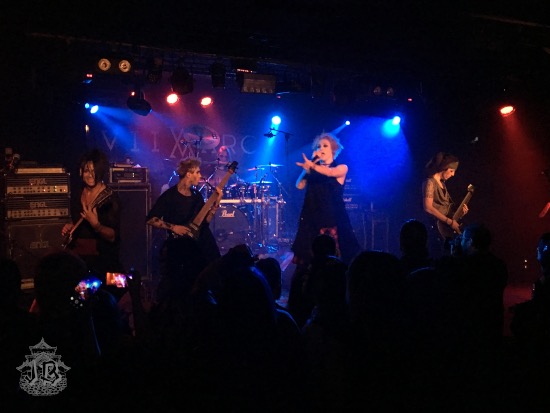
VII Arc playing in Madrid

At 20:00, as fesFE[M] prepared to take the stage, the Venus Premium and Venus ticket holders gathered around the merch booth and we were ushered past a barrier, towards the bar. There, we had to wait for about 10 minutes while the second support act started. A Japanese staff lady with little to no English came to “check” the Premium tickets and “sort of explain” to us the whole thing. First the Venus Premium would be shown backstage one by one for the one-on-one photograph – there were four of us, we never knew if the fifth was never sold, they did not come, or they missed the whole experience. Afterwards, we would come out again and joined the regular Venus for the autographs and handshake, then the Polaroid would be taken for the ones who had bought it. We were ushered past a curtain and the backstage door towards the mess room where the remains of the lunch buffet were.

As I entered, I caught sight of Shoyo, the support bassist, who was sitting down on a low mattress in a room to the left, looking bored. I greeted him in Japanese, and he greeted back. C***** turned to see whom I was talking to and her eyes were wide. I asked Shoyo if he felt lonely, he said a little. Another attendee who also spoke Japanese asked for a picture (beating me to it, actually) but he said he was not allowed.

The conversation died out when it was time to go into the private band area for my picture with one of the members. As I walked in, there was Kuze to my left, Daisuke to my right and Teru and Hizaki in front of me, Teru dead centre and Hizaki a little to the right. I was asked whom I wanted my picture with and chose Teru, as I had long ago decided that I would if I could. He smiled and posed with me, then he shook my hand. I have got to learn to look into Japanese musician’s eyes when I talk to them.

We said good-bye to Shoyo on the way out, and almost left, but it was now time for autographs, handshakes and Instax. I pulled out the CDs I had brought for C***** and myself, and I got to shake hands with all four of them and receive the band’s autographs. Since the CDs the band brought had been seized, we might have very well been the only ones in the whole country that produced some official material for signing. Then, we took the Instax and the staff would ask with a thumbs up sign “okay?” to check the picture was good, before we left.

CDs signed by Jupiter members

All in all, the band was very friendly and amazing, but the timing and organisation was horrid. We lost out first row – despite having “priority access”, and we missed half of the fesFE[M] concert. As Copérnico has two levels though, we found a nice spot at the stairs that connect both, and I could lean against the handrail to watch the rest of the act.

fesFE[M] is a relatively new visual kei band where all the members take up “doll” personas. Their career in 2017 and released their first mini-album in May 2019, just in time to come over to Europe for Jupiter’s tour. For each album / season, the band dons a doll theme, and they were currently on the “horror genre” dolls. The members and their doll types are: Lion [リオン], vocal, Distress Coppelia doll (from the namesake ballet, dressed as a bloody bride); Aito [アイト], guitar, Apathetic Prince doll; Zeno P [ゼノP], guitar, Bloodthirsty Child Killer doll; Toru [徹], bass, Emotional Princess doll; Rensa [蓮沙], drums, Psycho Butler doll; and Jun, keyboards, Scalded Dollmaster doll (dressed as a nun because… reasons?).

The first time I heard a song by fesFE[M], I was not extremely impressed – the PV was a bit too creepy. However, they are really good in person, even with the bad sound quality and reverberation in the venue – and the fact that we missed about half of their act. They were really engaging. The whole visual part was amazing, and the coordination was great! Their music was much more powerful live. The band played some songs from their mini-album enseMble autoMata: Doll in blueberry jam [Doll in ブルーベリィジャム], Arachne ni haitoku wo [アラクネに背徳を], Psychological stolen heart, and Freiya [フレイヤ].
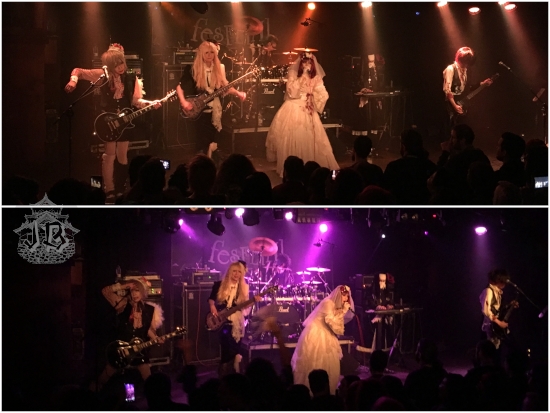
Fesfem live in Madrid

The Jupiter concert was as expected, very energetic and fun – it actually went beyond expectations. Our spot was really good in he end, a bit raised, without getting pushed, and we actually watched the concert next to fesFe[M]’s bass Toru. Sometimes he smiled and waved at us, and we waved back without fail.

Kuze, Jupiter’s vocalist held his ground better than I thought he would be able to. I was kind of impressed when I listened to the Jupiter single Theory of Evolution and later to the album Zeus: Legends never die. While we were expecting the guitar and metal power, Kuze’s voice range in the recording was rather wild, and I did not think that he would be able to keep it up live, especially on a final concert after touring both Japan and Europe. He proved me wring, and he held all his notes and his vocal range, just like the recording. He had practised his English a lot and learnt the MCs, but he switched to Japanese quite often, and he spoke too fast for me to get! He did a great job even with songs that had been released in the previous vocalist’s time.

Daisuke was pretty much hidden by his own drums from where we were, but we did see him bounce a couple of times. Hizaki was on the other side of the stage from us, and he looked divine in his Baroque dress. I don’t understand how he can even move in those clothes, much less play guitar or crouch, which he did so a few times in order to interact to first-row fans. A couple of times I did fear for his safety as someone grabbed either him or the guitar. Most of the songs that were played were his. It’s fun to imagine what he would be thinking when writing “die, die, die, go fuck yourself”, when he presents as such a beautiful and innocent lady, but it surely was fun to yell.

And finally, Teru had a blast. He kept twirling around as he played, his stud-leather coat swirling around him. He played with a huge smile on his face all the time and he gave off the vibes that he was having a lot of fun. He also interacted with fans a lot.
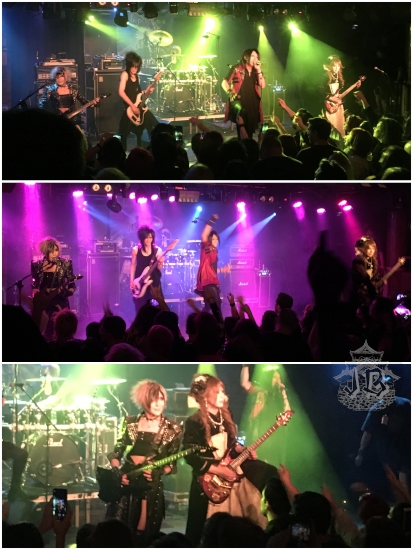
Jupiter Live in Madrid

Setlist:

  1. Arcadia
  2. Last Moment
  3. Angel’s wings
  4. Drastic Night
  5. Bring me out
  6. Show Must Go On
  7. No cry no more
  8. The spirit within me
  9. Tears Of The Sun
  10. Memories of you
  11. B.L.A.S.T
  12. Blessing of the Future
  13. Zeus: I. Legends Never Die / II. Conversations with God
  14. Symmetry Breaking [Encore 1]
  15. Theory of Evolution [Encore 2]

While the concerts were a lot of fun, the whole event was stressful due to the abysmal organisation. I actually feel a bit ripped off, because they did not deliver a lot of what they had sold in the upgrades. At least C***** and I are lucky enough that we managed to get our pictures, autographs, and saw the concert from a relatively good place. All in all, Jupiter are amazing, they were super nice, and so were the guys from fesFE[M]. The concert was great, and we don’t regret going for a second.

After the event, waved at Toru for what we thought was the last time. When lights went on, we also saw Rensa, who stopped for us when we told him he had done a good job. C***** and I decided to pool our money together to buy the CDs fesFe[M] had brought – and not got seized. Apparently, it is typical that the entry-level bands hang around merchandise booths after concerts, and we were lucky enough that they agreed to sign the CDs and take a photo with us. Lion was extremely surprised and nice – or acted so. He complimented me on my poor attempt of Japanese and complied with what we requested.

CD signed by Fesfem members

Finally, C***** and I headed back to the hotel, and we went home the next day – fortunately we left from the same bus station so we could maximise our time together.

Hikari took a few days to send out the VIP pictures, but they eventually arrived on the 1st of June. Getting them was also hard, and amateurish – they wanted to put them in a Google Drive link and post that on Facebook. At least we got them to send them via email, citing European Data protection laws at them… I really, really hope to avoid this promoter in the future, but if I do, I’ll be on the lookout in order not to miss anything.

23rd & 24th April 2019: El Escorial, Vizmalo & Lerma (Spain)

23 April 2019: El Escorial

The Royal Site of San Lorenzo de El Escorial aka Monasterio y Sitio de El Escorial is located a shy hour away from Madrid. It is most known for the Monastery that used to be an official residence of the King of Spain. The Monastery was built between 1563 and 1584. It is the masterpiece of the Spanish architect Juan de Herrera, after whom the Herrerian style, a sub-style in the Spanish Renaissance, was named. The building is a sober building made of a granite, and it is the burial place of most of the Spanish kings and queens. Some urban legends say that it was based off the descriptions of the Temple of Solomon.

We drove in around 9:00, dropped off the luggage, and went out, as we had tickets for 10:00 – although the hotel did not want to let us in. Contrary to the nice weather that we had been enjoying, it was cold as hell. The whole town felt grey and sober, and the cloudiness helped the mood – we had breakfast at a nearby bar (the only one open) and headed off to the monastery. The building hosts many artworks, along with a chapel, the royal pantheon and the most amazing library ever. Pictures in the inner areas are forbidden, unfortunately. The Monastery is a Unesco World Heritage site.

At lunchtime we walked out of the Monastery and headed off to the Royal Carriage House / Cocheras del Rey, a museum / restaurant. We had lunch, then visited the museum as the entry was free with lunch. It was raining like mad by then so we headed to the hotel to finalise the check in.

After an hour or so the rain had stopped so we decided to walk to the Prince’s House and Parks / Parque y jardines de la Casita del Príncipe. By the time we arrived it had started raining again – pictures were not allowed inside of the house either, but OMG was the inside Baroque, with flashy wallpapers.

On the way back, we could catch a glimpse of the monastery through the park. By now it was raining like crazy, so we spent the rest of the evening indoors.

24 April 2019: Vizmalo & Lerma

We left El Escorial early in the morning and we headed north for lunch. Yeah, well, let me explain. We had a reservation for lunch some two-and-a-half hours away, in Vizmalo (Burgos). This was a bit of a silly whim, but we were going to visit an estate / farm and have lunch there – the St. Rosalia Estate / Finca Santa Rosalía breeds wagyu for meat, and holy are they yummy. We had a booking to see the estate first.

While it was still cold, the weather was slowly improving, and in evening we had some sun. We saw the orchards, the grapevines, the cattle, the trees and so on. Then we moved into the wine cellars and saw the barrels, before we tried the wine and some of the meat-dishes that they prepare and sell. The selling point of Finca Santa Rosalía are the wagyu, cattle of Japanese origin. Wagyu meat is completely different from any other beef because it is soft and tender, and in general delicious.

Lunch was brilliant, based, of course on the wagyu meat. The T-bone was scrumptious and even if it was on the “a lot of money” side, it did not feel too expensive for a once-in-a-lifetime experience considering the amazing quality.

After lunch we drove off towards Lerma, a city which was revamped by the Duke of Lerma back in the 17th century. After finding our hotel and dropping our stuff off, we walked to the Duke’s Palace turned luxury hotel: Palacio Ducal & Parador de Lerma.

We walked around and came across the Mirador de los Arcos / Archway Viewpoint.

Then we saw Colegiata de San Pedro / St. Peter’s Collegiate church, where there was a religious exhibition being held (“Las Edades del Hombre”), with the topic of angels. Pictures were not allowed, or we would have shown you a few… interesting representation.

Sunset crawled upon us and it was nice view. We had dinner somewhere around the town centre, and called it a night before we drove home the following day.

2nd January 2019: Jurassic and 19th Century Madrid (Spain)

I was in the middle of winter holidays and a couple of family members asked me if I had plans – I said I was getting tickets for a dinosaur exhibit in Madrid, and they jumped in. We made arrangements to head over there on the 2nd of January and spend the day in Madrid. I don’t think they really realised what it meant to be around me and the “terrible lizards” (≧▽≦). But off we went.

General entry ticket for 2nd January 2019

The Jurassic World: Exhibition was held in Madrid. The whole thing is organised in-verse, as if you actually visited the island.

Jurassic World the Exhibition logo and title

After you walk in, there is first a small introduction on the “boat” as you travel towards Isla Nublar. There you are given the instructions (mainly, keep your hands to yourself), the boat makes dock and you are let into the Park. Keeping in touch with the spirit of the films (not the book though *giggles*) there’s a Brachiosaurus there to greet you, just like the first animal you see in Isla Nublar (and later the last).

Pretencious gate with two columns on the side, reading Jurassic World. A brontosaurus head peers down at you

You also catch a glimpse of a Parasaurolophus.

The head of an herbivore dinosaur (parasaurolophus) peering through the bushes

Then you get to the “stables” where you get to see a Triceratops mama with her baby.

Mom and baby Triceratops behind a fence that reads Gentle giants petting zoo

Afterwards, there is a small room that represents the laboratory where the dinosaurs are made – I could have made it out with a critter but there were only baby Iguanodon.

Fake amber pieces and DNA extactor along with an incubator with eggs and baby dinosaurs

Next, you walk into a tiny museum with some fossil reproductions and actual scientific information…

Reproduction of carnivore dinosaurs skull and bones, along with the drawing of a huge T-rex fooot print drawn on the ground to compare it to a human one

… right before everything goes to hell and back when you’re shown a hologram of Owen Grady talking to his velociraptor Blue and you get a… guy in a velociraptor costume prancing around (≧▽≦).

Person disguised as a verlociraptor

The next room shows the Tyrannosaurus rex cage (by the way #TeamTRex here, in case you did not know) behind her cage, menacing and staring.
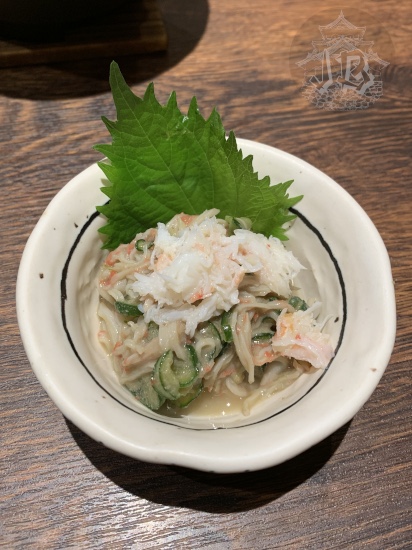
T-rex animatronic, showing the huge head behind a fence

The final room is another garden in which you get to see a Stegosaurus being stalked by the made-up Indominus rex.

Stegosaurus

Head of the Indominus rex, looking like it's stalking prey

And at the end of the exhibition, after the shop even, you find the velociraptors, which have apparently escaped and are ready to attack!

Jurassic world velociraptors on a wrecked crate

All in all, being the dinosaur geek I am, I had a blast. I’m not sure that my poor family members that had wanted to tag along with me knew what they were bargaining for (≧▽≦).

However, they were still willing to put up with my for a little longer, and together we drove off to the centre of Madrid, and somehow ended up at the Museo Cerralbo. They asked if there was something I wanted to see, and the Cerralbo Museum was running a couple of Japan-related specials I was curious about. The museum stands in the Palace of the same name, and it holds the collection of the late Marquis Cerralbo.

The museum is… crammed and chaotic, but interesting in its own way. It holds thousands of pieces, from worthless-looking mementos to priceless paintings by masters such as El Greco. Art experts say that the Cerralbo collection was the most valuable of its time.

Collage of cerralbo museum. A room with two samurai armous. A centrepiece made with swords. A long table, set, with chairs along and an ellaborate lamp hanging from the ceiling. The hall of the museum, with a staircase with an ellaborate balaustrade and a glass lamp hanging from the ceiling.

The museum was holding a designated route focused on the Japanese pieces it has, including samurai armours.
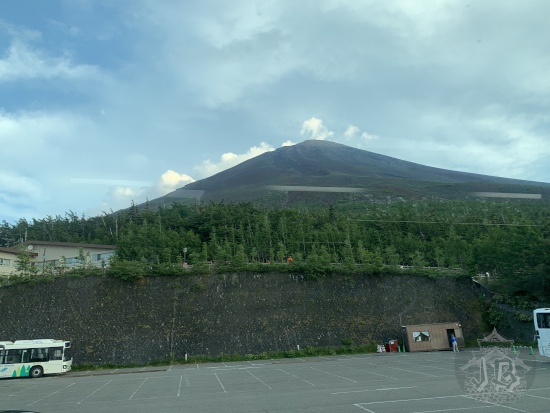
Collage of Asian and Japanese pieces of the museum: hars, a samurai armour, and an hexagonal carey box

Furthermore, there was an origami exhibition on the lower floor.

Origami pieces: a phoenix, a snake, an orca, corals, and a life-sized hippo

After the museum we sat down for lunch at a fusion Asian-Japanese restaurant, because the family members “wanted to try” – although they were rather scared of the food. Eventually they managed to enjoy it too, and even have seconds – however I needed to make a run to get my tablet serviced.

Lunch. Sushi, chicken skewers, rice dish and noodles dish

Once it was up and running, and family had come to find me, we walked towards the shopping centre in Principe Pío for dessert – yoghurt ice cream with berries and smarties. A great way to end the day!

An old station from iron architecture epoch repurposed into shopping centre

Frozen yoghurt with berries sauce and smarties

4th September 2018: また今度 with a red rose petal (HYDE LIVE 2018, Strike 3) {Japan, summer 2018}

First thing in the morning, after D****e left for work, I got packed (hoping that my suitcase did not get lost again). Later, I went to Odaiba [お台場] on my own as she was working. It was my last HYDE live for the season, and my last day in Japan, too. It was windy and it rained on and off, but it was not bad especially considering that there was a super typhoon in Osaka that had slammed a ship against a bridge and cut down communications to the airport… I mean, compared to that I won’t even complain that my hairdo went to hell because woah there. I just had to not worry about my own flight a few hours later.

I checked out the Venus Fort to check if there were any new goods, but as there were not, I moved on. There are two exhibit rooms about cars in the area. One deals with newer and racing cars – MegaWeb Toyota City Showcase [メガウェブ トヨタ シティ ショウケース].

A collage with some cool and futuristic-looking car. The logo reads MegaWeb Toyota City Showcase

The other one is quite the opposite, and focuses on classic and historical cars – History Garage [ヒストリーガレージ].

History Garage classic cars.

It was at this time 12:55, so I hurried to the giant Gundam that stands in front of the Diver City. I wanted to check whether it moved at 13:00 and I was lucky. It changed its helmet and all (≧∇≦).

Gundam robot looking up to the sky. it is white and taller than the two-story shopping centre behind it.

After that, I went to eat get some food. The food court in the shopping centre was not too busy as it was a weekday, so I decided to sit down and have some ramen. I really love the way they prepare eggs for ramen, so I wanted ramen with egg. Unfortunately, could not read the super long name of the ramen to save my life, so I just asked for it using the number. The girl just turned to the kitchen and ordered ‘tamago’ (egg), which was pretty frustrating.
Ramen bowl with algae, chasuu (pork), spring onions and noodles

Once I had eaten, I went to see the waves, because even if the typhoon was making its effect known, and I am still fascinated by hot storms. Odaiba is, in the end, an artificial island in the middle of the bay, so it makes strange patterns sometimes.

A cargo harbour with unsettled sea

And I got a drink at Starbucks.

Starbucks plastic cup. It says thank you and it has a smiley face and a heart

I joined the people wait for HYDE to come in, waved hi at him, and thought that he did not look too awake. Afterwards, I decided that I had not spent enough in this trip (sarcasm). Thus, I went to buy something else: since I liked HYDE’s opening act STARSET, I wanted to get their CD and M&G experience, which included a handshake and an autograph. I felt that they had done an awesome job and deserved the credit and the cheering.
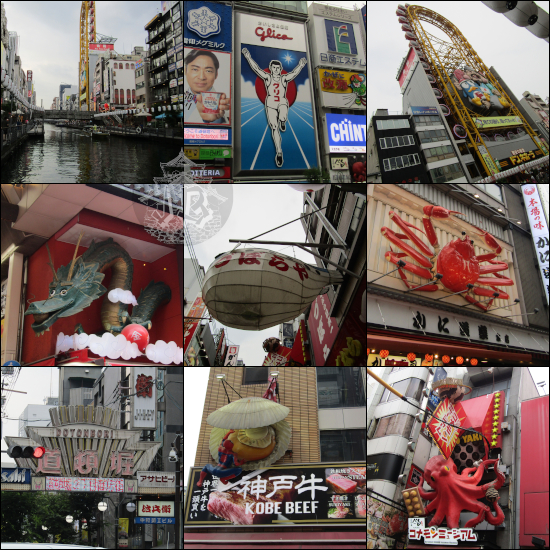
Once D****e made it, we went inside. By now, I had figured out what I had found amiss on Saturday and Sunday regarding HYDE’s live 2018 and made peace with it. Or maybe it was just my last day, and I really wanted to enjoy myself. I found a good spot in Zepp Tokyo – one thing I really like about going to converts there is that they keep the barriers up to separate the areas of the floor. That allows me to lean onto something and I don’t need to stay back to have something to hold on to, so I can get rather close even when I’m tired or sore. This time it was even better – since I was closer than usually, I managed to find a petal from one of the roses HYDE threw as goodbye at the end.

STARSET’s setlist:
1. Frequency
2. Carnivore
3. Gravity Of You
4. Telescope
5. Monster feat. HYDE
6. Ricochet
7. Bringing It Down
8. My Demons

HYDE’s setlist:
1. Fake Divine
2. After light
4. Out
5. Set in Stone
6. Don’t hold back
7. Zipang
8. Who’s gonna save us
9. 監獄ロック [Kangoku Rock]
10. Rise or Die
11. Lion
12. Two Face
13. Devil’s side
14. Midnight Celebration II
(pause)
15. Kiss of Death
16. Ahead
17. Rise up
18. Ordinary World (Duran Duran cover)

After HYDE’s concert was over, I put my rose petal away, and I found my way towards the STARSET M&G. They were were extremely nice. We were around ten people, and they paid attention to each of us and they shook our hands (whoops, I forgot to take my wristband off). They were pretty patient and nice to everybody. Even after they left the venue, they were willing to sign items for people who had not purchased their merchandise (even though 3,500 ¥ for CD and signature is almost a gift).

Zepp Tokyo Venue from above

Starset CD with the band's autographs

A red rose petal

Finally we got home and D****e helped me so I got my trains sorted out to go to the airport the following day.

Night view of Tokyo, with Tokyo Tower lit up

3rd September 2018: More friends, less tourism {Japan, summer 2018}

I walked towards Nakano [中野] again – realising that Nakano Broadway [中野ブロードウェイ] is in walking distance has been a problem – and the Aoyama Daiso where I got some stupid things, basically fake nails, stickers to put them on and blue mascara.

On my way I reaffirmed the existence of Tōkō-ji [東光寺]:

Then I came across Araiyakushi Baishōin [新井薬師梅照院]:

Once in the Nakano Broadway [中野ブロードウェイ] building I checked out the shops and jumped on the train to meet B**** for sushi (not killed in front of us, thankfully), and drinks and talking. This time we were not at Starbucks spending my voucher, but at Tully’s spending hers. Afterwards we were having a look at the make up shops in Shibuya 109 and Super-Donki. It ended up with me buying some red eyeliner.

Four our last dinner B****, D****e and I got shabu-shabu. In all honesty, I wanted curry but it has not sat well on my stomach the last few times, so now I’m afraid to try 。゚(゚´Д`゚)゚。 ← most of the tears are because I had to say goodbye to B**** anyway.

2nd September 2018: HYDE LIVE 2018 @ Odaiba, Strike 2, and Pretty Lights, Strike 3 {Japan, summer 2018}

It was raining that morning when D****e and I walked out and headed towards Shin-Okubo [新大久]. The weather actually turned so bad for a while that around halfway, we just walked under a bridge to wait the worst of the downpour out. By the time we arrived at our destination, though, it had cleared out. We were walking to Kaichū Inari Jinja [皆中稲荷神社], also called Minna Ataru no Inari.

Entrance to a Shinto sanctuary through a back alley, and main altar

The shrine is dedicated to the kami [神] Inari [大稲荷], one of the most important deities of the Shinto mythology, the kami of fertility, rice, tea, sake, agriculture, and worldly success. Inari is said to use foxes as messengers. Shrines dedicated to Inari often have a lot of torii gates, usually offered by business in search of that success, and stone fox guardians. The most famous Inari Shrine is Fushimi Inari Taisha in Kyoto.

The legend surrounding Kaichū Inari Jinja tells that after the introduction of firearms in Japan during the Edo Period, a battalion was stationed near the shrine. The captain could not shoot well, no matter how much he trained. The deity Inari appeared to him in a dream, and after he went to the shrine to say thank you, he became a great shooter. Not only him, all of the battalion went to the shrine and they became good shooters. Both “Minna Ataru” and “Kaichū” translate as “hit all the targets” and at the same time “everybody hits”. Kaichū Inari Jinja became “the Inari shrine of everybody hits the target”, Minna Ataru no Inari Jinja. The news spread, and eventually people from the whole country started visiting so their wishes came true. The shrine’s relation with firearms was constant until it was burnt down in WWII.

Nowadays, Japan does not have firearms, but people still want to hit… for concerts! And thus Kaichū Inari has become the fan-shrine, where people go to pray to hit for lotteries for concerts and events!

I’m not even kidding. Kaichū Inari Jinja is also known as “the fan shrine”. In Japan, you do not queue for concerts. Instead, your ticket has a number printed on it, and you enter when it is called. However, there are different series of numbers. The best tickets are offered within the artists’ fanclubs, and if there are more requests than tickets, these are assigned lottery-style. Fanclubs also have lotteries for other privileges such as attending trips and exclusive events, VIP meet&greets or special merchandise – when I belonged to Gackt’s fanclub I hit for fanclub tickets for the Last Visual Live and his birthday dinner. People want to “hit” for these tickets, and somehow Minna Ataru no Inari became the shrine to go to pray for that. Fans go to the shrine to offer a prayer, then they write what they want in volition tablets called ema [絵馬], which are then hung in the shrine premises. Much nicer “hits” that the ones which kill people.

An offering wall with tons of votive wooden tablets

Close up of the votive offerings with names of bands on then

After visiting the shrine, we headed off to Odaiba [お台場] again, to meet with N***chan for lunch. We made a short visit to the Unicorn Gundam beforehand, but it was not moving.

Gundam robot statue. It is white and taller than the two-story shopping centre behind it. People can walk under its legs

Then we went to have lunch at an “Osaka delicatessen” restaurant at the Venus Fort. I ordered Takoyaki (buried in katsuomi (≧∇≦)) and kani koroke (octopus dumplings with bonito flakes, and crab dumplings). Yummy! Apparently other people’s orders were not as great though…

Dish of octopus dumplings that cannot be seen because there are a lot of bonito flakes on top

Afterwards, we headed to Zepp Tokyo for the second concert of HYDE’s Live 2018 concert, again with STARSET. Impressions were similar to the previous day. I really enjoyed STARSET, who played the same songs, and I again had mixed feelings about HYDE’s – not bad but… could have been better. I had not figured out my problem with the disconnected act yet.

Setlist:
1. Fake Divine
2. After light
4. Out
5. Set in Stone
6. Don’t hold back
7. Zipang
8. Who’s gonna save us
9. 監獄ロック [Kangoku Rock]
10. Rise or Die
11. Another Moment
12. Two Face
13. Devil’s side
14. Midnight Celebration II
(pause)
15. Kiss of Death
16. Ahead
17. Rise up
18. Ordinary World (Duran Duran cover)

Hyde's tour truck reading his name

After the concert we had tickets to visit the MORI Building DIGITAL ART MUSEUM EPSON teamLab ★ Borderless. This is a pretty much interactive museum that relies on technology and light to create art – or at least pretty things for you to play with. D****e, N***chan and I were very lucky that it was open late, so we could go after the concert. There were few people there and we could be silly around it. Part of the museum was closed because some TV station was there doing interviews though, and even then it was worth the visit.

Most of what you see in the Digital Art Museum are light projections. You’re encouraged to interact with them, even create some of them that they will project for you. We saw a butterfly and flower area, pink elephants, kangaroo, waves…

I enjoyed a couple of the exhibits particularly – one of them was a light water fall, in a room that had kanji shadows on the walls. If you touched them, they turned into what they represented. I also liked the whales made of light and how peacefully they moved and floated. There were some other interactive exhibits that were very fun, like the… egg-balloons thingies which you could prance through or make float.

Collage of Mori interactive and light art – a walking elephant made of projected lights, it's pink with white flowers. Many rays of white light coming from everywhere in the dark. Waves. Giant purple-pink balloons. Flowers projected on the walls – sunflowers, daisies in different colours

Dancing whale with flowers, projected with light

Afterwards we had some dinner and left for home.