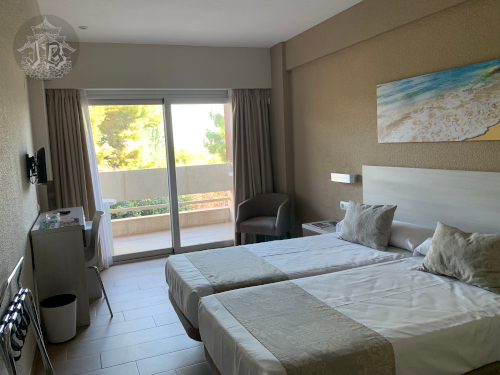
12th September 2020: Sigüenza (Spain)

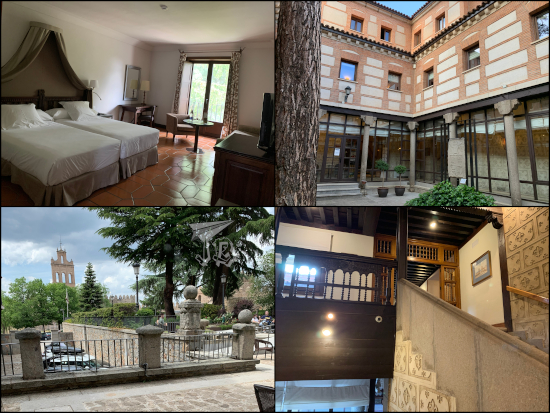
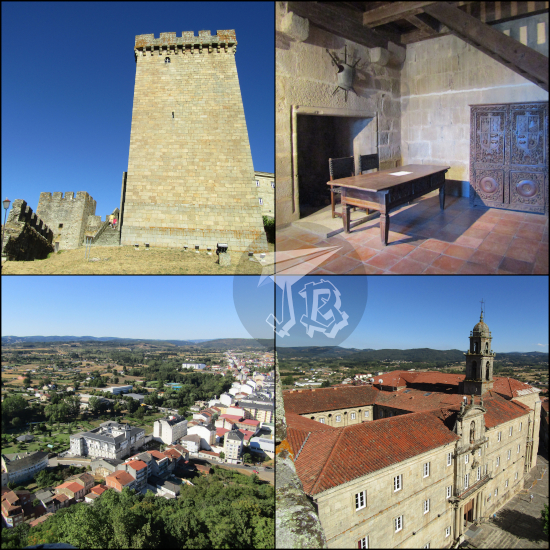
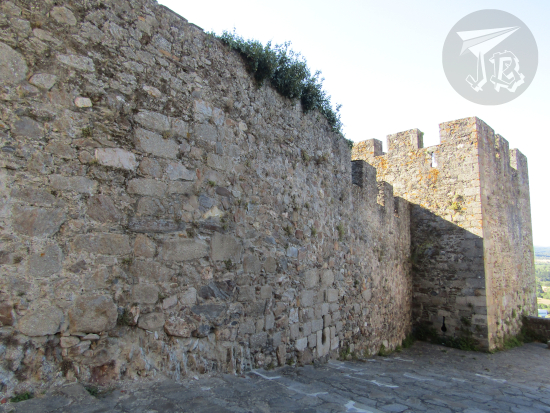
We took a drive to Sigüenza, in Spain. This medieval town? big village? had a big relevance through the Middle Ages, and the historical centre reflects that. The most prominent point is the castle on top of a hill. The Castillo de los Obispos is a fortress that can be traced to Roman times. However, the actual castle was a Moorish alcazaba. After the Christians took it over in the 12th century, it was remodelled and enlarged. Due to its vantage point, the castle was a key element in different wars and strife, including the Napoleonic invasion and the Civil War, thus resulting pretty damaged. In the late 20th century it was decided to restore it turn it into a Parador with around 50 rooms.

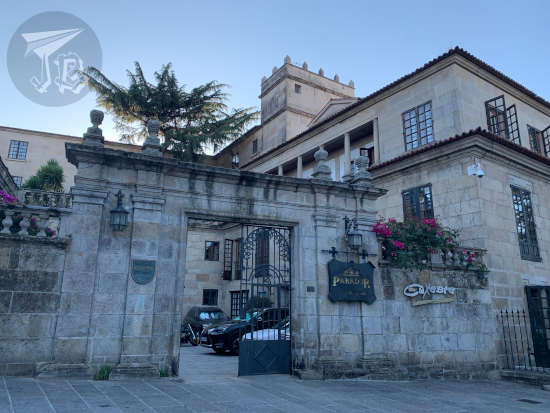
During our planning stage we called and tried to book a restaurant for lunch, and we were told they were not taking them, we had to call on the same day. Of course, when we got there, it was impossible to book – there was a course and the celebration of a communion (seriously, people, learn to say no so others can get organised). Unfortunately, you could not see the interior or even the yard if you had no reservations, so I can only share a picture from the parking lot, where we left the car.

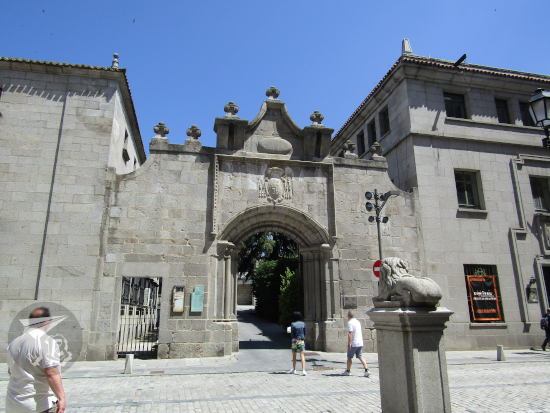
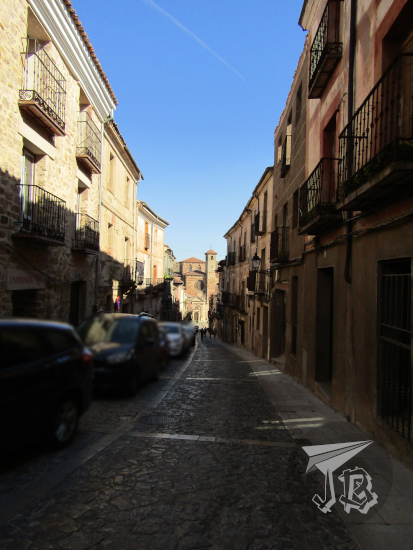
We walked down the main street Calle Mayor, a clobbered slope that ends (well, technically begins) at the town’s main square.

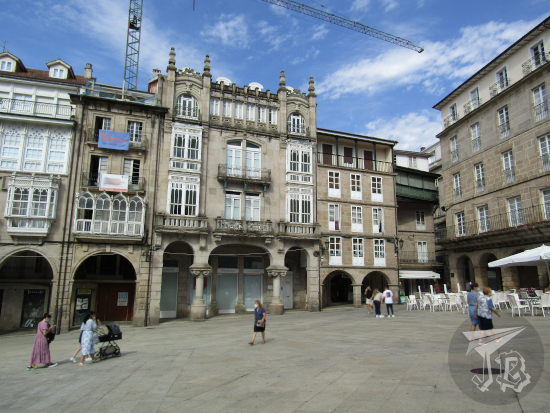
Main Square or Plaza Mayor is home to the Town Hall or Ayuntamiento de Sigüenza, an old palace with a typical Castillian inner yard or patio.

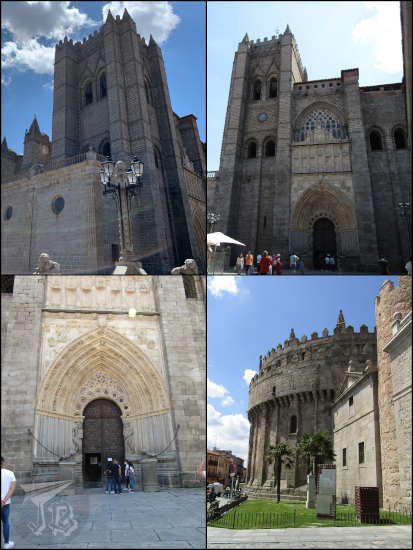
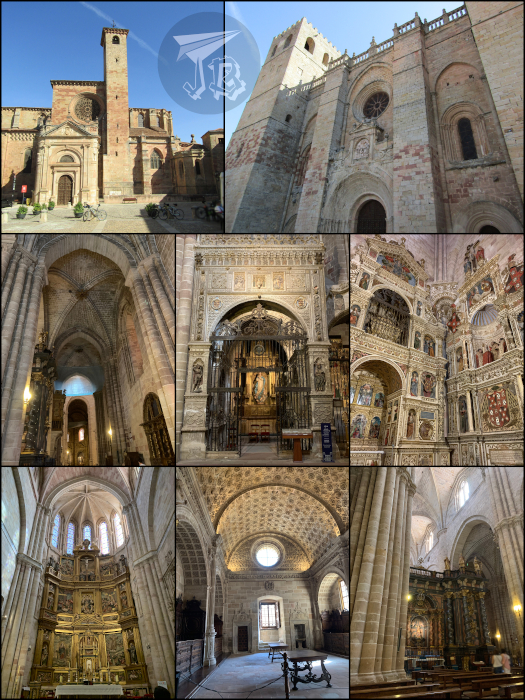
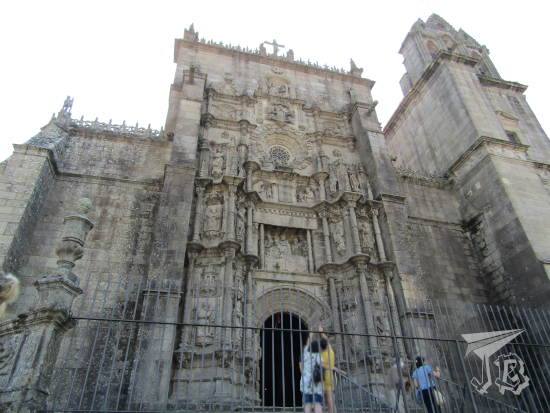
Opposite the town hall stands the cathedral Catedral de Santa María La Mayor de Sigüenza. The Gothic building was built upon a previous Romanesque one and it had some Neoclassical and Baroque additions. Thus, the façade sports Romanesque doors and rose window, and the main body is Gothic. The altar and the choir are awfully Baroque too, and some of the chapels sport Cisneros, Plateresque and Renaissance decorations. All in all, an interesting pout-pourri of architectural and decoration styles.

The most important piece of art of the cathedral, however, is a funerary piece to the right of the altar. It is the sepulchre of Martín Vázquez de Arce “El Doncel” (“The Young Man”). The chapel holds him, his parents and grandparents, but the sculpture on his sepulchre is the most impressive one. The Vázquez de Arce family were vassals of the Mendoza family, the most important family in the area during the Middle Ages. During the war to conquer Al-Andalus, the Vázquez de Arce males followed the Mendoza to the war in Granada, where Martín died in a trap set by the Arabs, which consisted on damming the River Genil to a creek, and then releasing the dam so the water took over the enemies crossing (which… kinda sounds like something out of the Lord of the Rings, doesn’t it? At least, it makes me think of Arwen and Treebeard). The sepulchre, commissioned by Martín’s brother, presents him taking a break during training and reading a book. He even has pupils, so if you could climb up, you’d see what he’s reading!

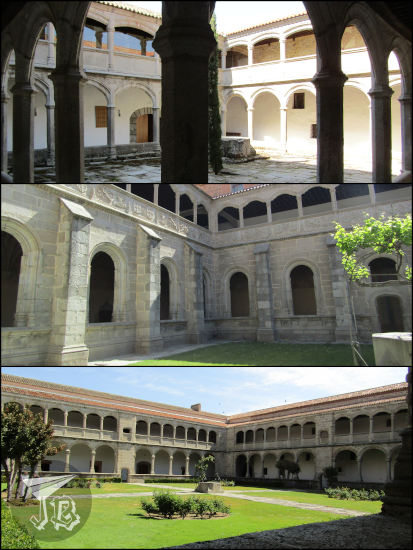
The cloister is also Gothic, as the previous Romanesque one was torn down. It holds a central garden and a number of side rooms where there is a collection of mythology-themed tapestries. In one of the chapels, there is also a painting by El Greco, a Greek painter rooted in Spain who was one of the key artists during the Spanish Renaissance.

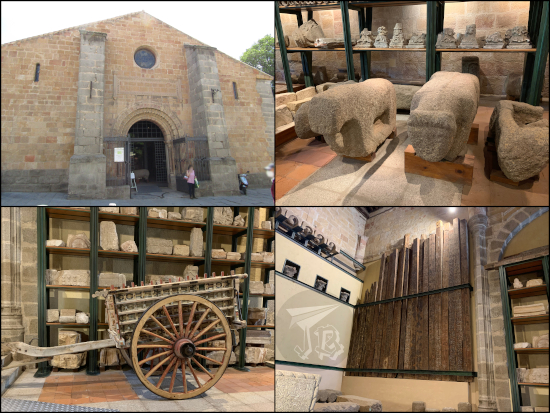
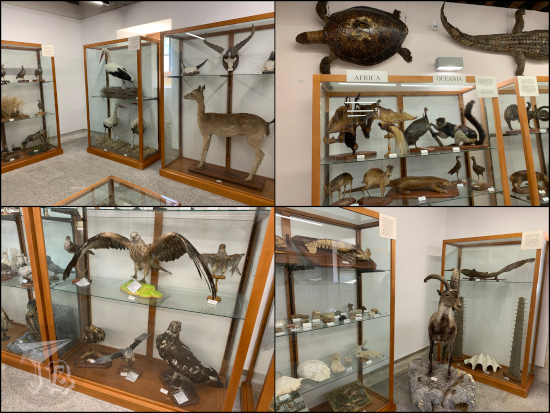
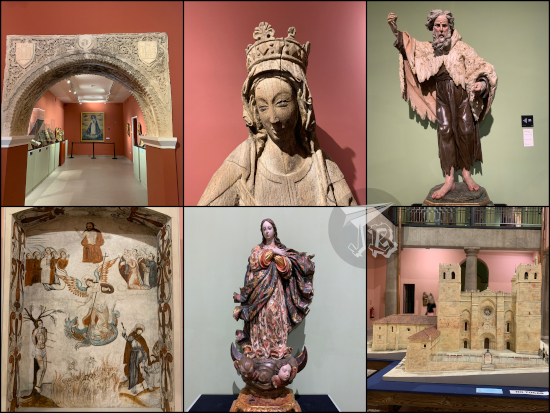
The cathedral ticket also allows a visit to the Diocesan Museum Museo Diocesano, which holds many pieces of religious art, along with a few models of the cathedral in its different construction stages. These days I’m trying to learn some hagiography, which means how to identify religious figures by how they’re presented. Getting there, three out of ten times or so, because half the time they cheat.

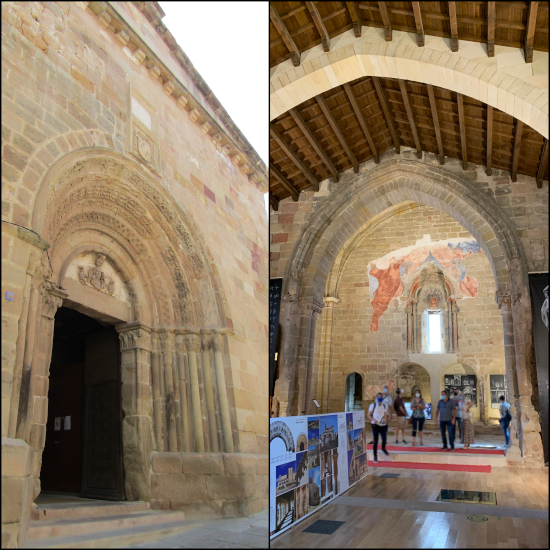
After the cathedral we climbed up towards the castle, and we stopped at the former church Iglesia de Santiago, now transformed into a mini-introduction centre for all the “hidden” or “unknown” Romanesque in the area. The church itself had some beautiful paintings, but it was destroyed during the Civil War.

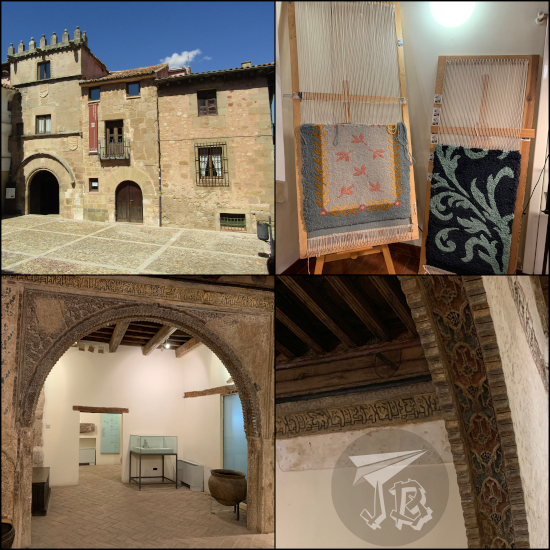
Continuing our way up, we turned a little to see the house where the Vázquez de Arce family used to live, now turned in a museum, Museo Casa del Doncel. There is a little paintings exhibition and a guitar museum, along with some ancient artefacts such as vases or looms. The most interesting part are the Moorish “Mozárabe” decoration. Here is a bit of historic trolling: when the Christian “conquerors” hired Arab craftsmen to do decoration, one of the things the Arabs did was decorate using Quran verses.

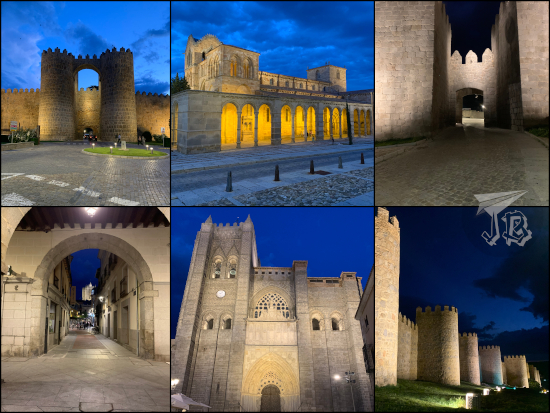
Then we saw the outside of the church Iglesia de San Vicente Mártir, Romanesque to boot.

Afterwards, we ended up at the square Plazuela de la Cárcel, where the old gaol jail stood.

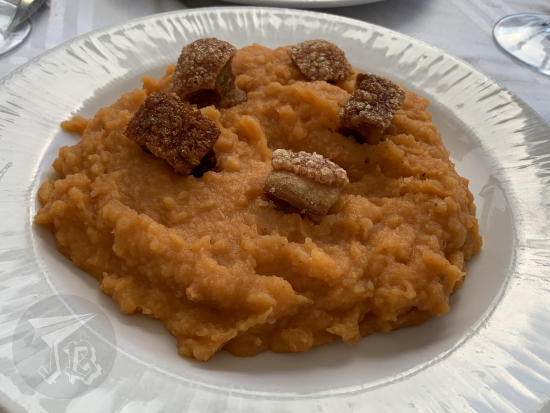
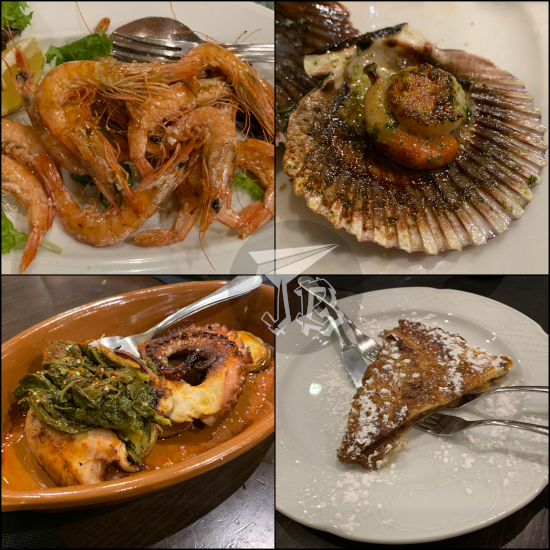
Finally, we headed over to the restaurant where we had booked a lunch table, a traditional grill called La Taberna Seguntina where I chose to have a “summer menu” with salmorejo (a thick soup or purée made with tomato, oil, and bread and sprinkled with boiled egg and cured ham) and roasted cochinillo (suckling pig, roasted whole) with potatoes and herbs. For dessert I had a pudding!

And that was it, really – Medieval Sigüenza has nothing else to see. As the façade of the castle was being restored, we did not even take pictures of it as we drove away.

4th September 2020: Alcalá de Henares (Spain)

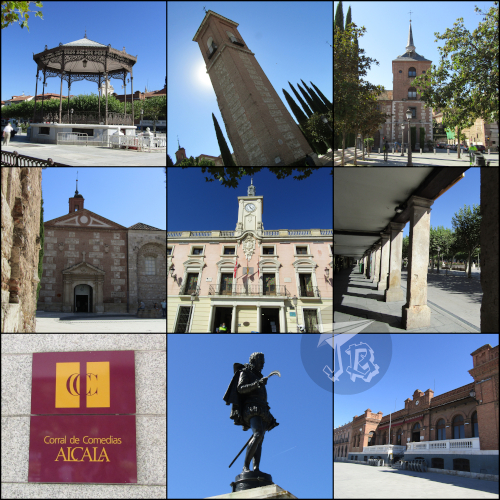
After looking for a place to park the car for 12 minutes, I left the car and I went off on foot towards the centre with a relative who is living in Alcalá de Henares. The town centre has been a Unesco World Heritage Site since 1998.

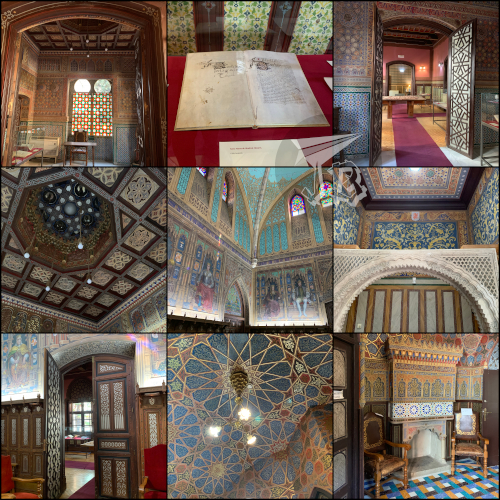
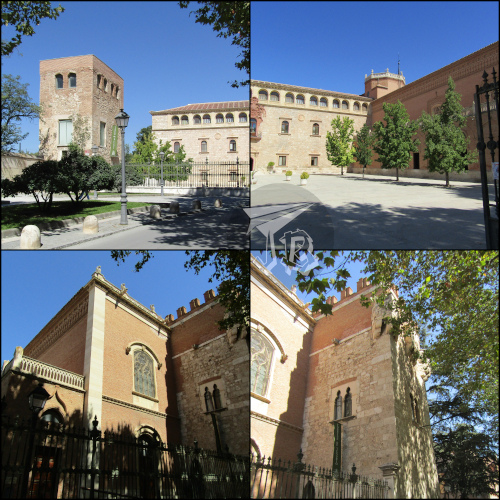
Our first stop, at 10:30 almost sharp was the Palacete Laredo, a small palace built in the Neo-Mudéjar style, a type of Moorish Revival architecture. It was designed and built between 1880 and 1884 by the Spanish artist Manuel José de Laredo y Ordoño. After a century in private hands, it passed to the town hall, which allows the university to use it as a museum, showing a collection of ancient documents.

The palace is built in brick, it has two floors and a minaret-like tower. The inside is decorated with coloured-glass window, tiles and paintings. The visible ceilings on the first floor are wooden artesonado (decorative beams joined together). There is also a garden, but it was closed.

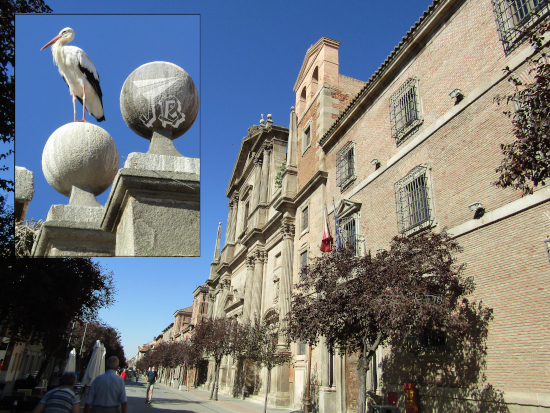
Afterwards, we headed off towards the centre. We walked by the church Parroquia de Santa María la Mayor and is inhabitant the stork on photo duty.

We had tickets to see the Corral de Comedias, a theatre built in the site of an ancient “theatrical courtyard”. These were open-air theatres that were common during the late middle ages and exploded in popularity in the 16th century. The Corral in Alcalá de Henares was built in 1601 by Francisco Sánchez, member of the Carpenters Guild. It suffered several changes – the ceiling was built in the 18th century, then it became a cinema, and eventually was “lost” in the 1970s. In the 1980s, it was rediscovered, restored, and finally opened as working theatre in 2003.

Alas, we were too late for the 12:00 visit to the university, so we wandered around the town’s main square Plaza de Cervantes – Alcalá de Henares was Cervantes’ birthplace. Miguel de Cervantes was a 16th century Spanish writer, most renown for his novel “The Ingenious Gentleman Don Quixote of La Mancha”, which many authors consider “the first modern novel” and “the best literary work ever written” (though… I disagree). The square features a bandstand, the statue of Cervantes, and is surrounded by several buildings of importance – the ruins of the church Iglesia de Santa María, the Town Hall and the Círculo de Contribuyentes, former casino, and the Corral de Comedias.

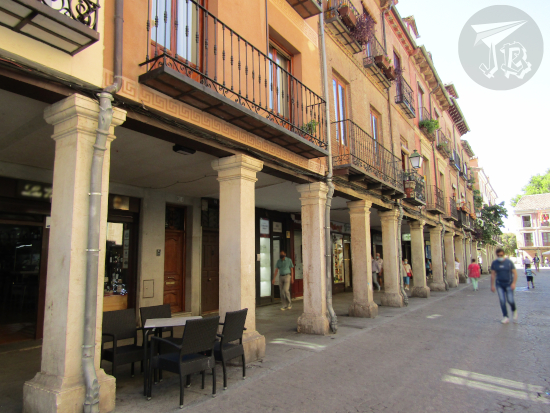
Then we walked down Main Street Calle Mayor, until we got down to the Obispado de Alcalá de Henares, the bishopric, with two towers from the former wall at their sides. That reminds me – we did not visit the cathedral or any religious buildings because they were all closed to tourism.

At 13:00 we took the guided visit to one of the university buildings, the Colegio Mayor de San Ildefonso. The university was established in 1499 by Cardinal Cisneros, an influential Spanish religious and statesman in the time of the Catholic Monarchs. A colegio mayor is basically a dignified “classic” dormitory. The façade was built between 1537 and 1559 in the Plateresque style, an architectural style that developed in Spain between the late Gothic and the early Renaissance. The architect was Rodrigo Gil de Hontañón.

Inside, we saw the cloisters and yards, the gate of honour (from where the successful students left the university), the classroom where the students defended their final thesis, and the chapel, with the tomb of the founding Cardinal (but not his body, which is in the cathedral).

We had a reservation to have lunch at the Parador de Alcalá de Henares, which is a rather modern building and not a historical one, but a stamp was needed (≧▽≦). Lunch was a looong affair because our waiter might not have been the… most efficient. We tried the combos with a little bit of everything to share (entrées and desserts), and some bull tail. Oh and coffee. Yay coffee. (Also, kudos to me for cutting that nut in half.)

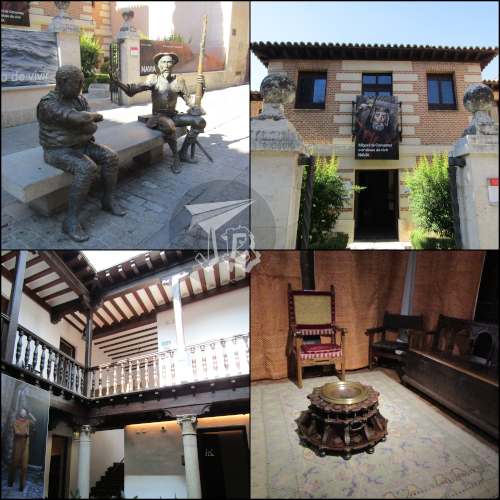
After lunch, we walked down the Calle Mayor again and we made a stop at what is supposed to be the house where Cervantes was born, or at least a reconstruction, with a bunch of ancient objects thrown in – the Museo Casa Natal de Cervantes. There was also a photography exhibition. To be honest, it had a great quality-price relation. It was free, and the quality was… lacking. Or maybe I’m old and I have seen most of the stuff they showed in action, and used a few.

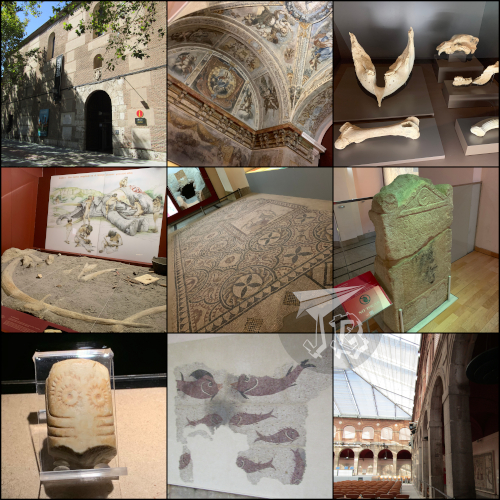
We continued on to the regional archaeological museum Museo Arqueológico Regional, located in the old Archiepiscopal palace. That was unexpectedly good, with the fossil record and the old Roman mosaics.

Pending for a future visit to Alcalá de Henares: Roman and Medieval areas, and the religious buildings, as the day finished up doing some necessary and work-related shopping before I drove back home.

Driven distance: Around an hour? I dumped the car as soon as I could and we walked the hell out of the town (≧▽≦)
Walked distance: 14.61 km

8th August 2020: Astorga {Spain, summer 2020}

We left Pontevedra in the morning and we drove off towards Astorga, in León. It should have been an all-motorway trip, except half the motorway was under construction so it took us a while longer than we thought to arrive.

The hotel was… shabby – and I’ve been in “bad” hotels before, but I’d never before been to one where there was food from the previous (?) guests in the mini-fridge, nor one with such… untrained staff.

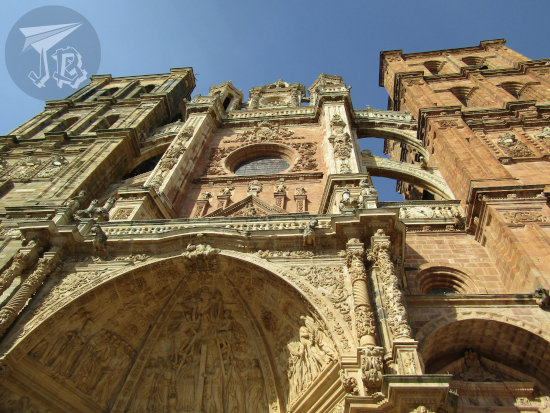
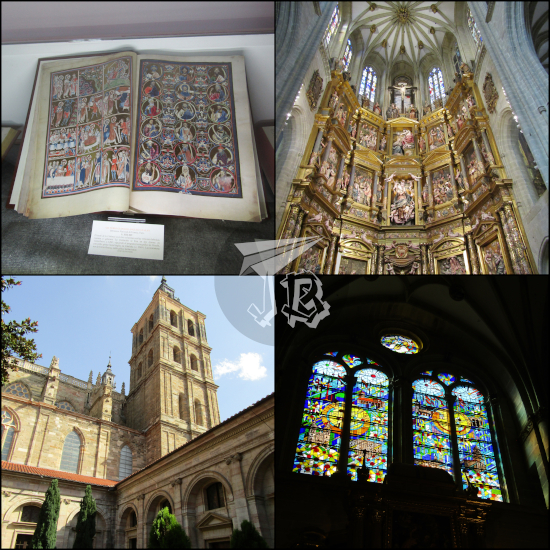
After checking in, we went to see the cathedral Catedral de Santa María de Astorga and its religious artefacts museum, including some neat codices.

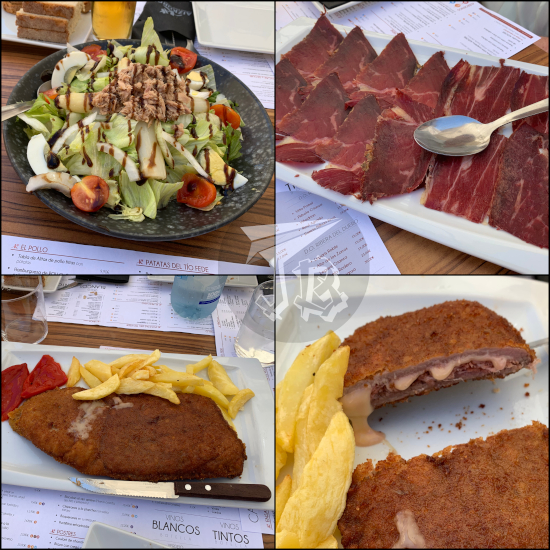
Then we had lunch – and did not die out of trying the local cachopo (huge stuffed and breaded fillet that we shared (≧▽≦).)

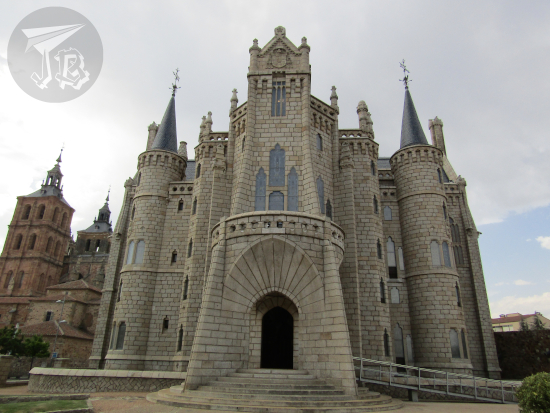
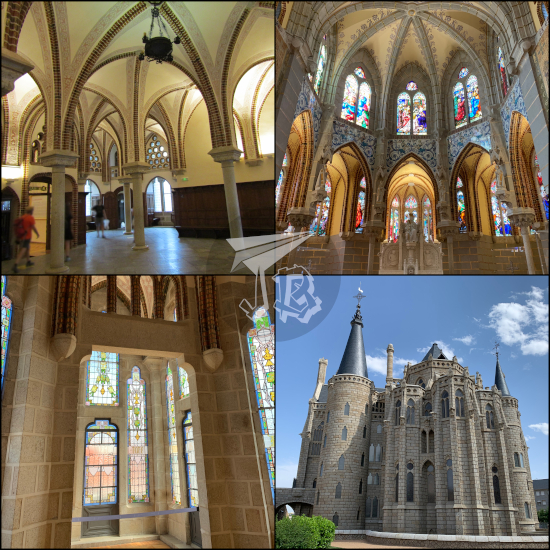
After lunch, we went to visit the palace that a bishop had commissioned Gaudí with, the Episcopal Palace of Astorga, or Palacio Episcopal de Astorga, also called Palacio de Gaudí, built within between 1889 and 1913, and obviously Modernist. I’d been wanting to visit this for a while now, so finally!

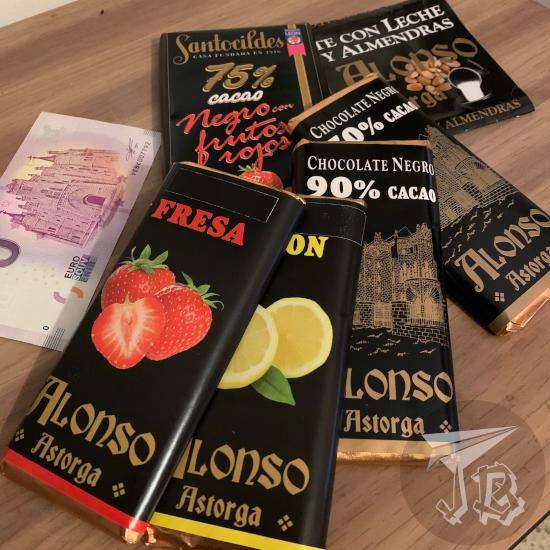
Later, we went out to buy “souvenirs” – namely local beef jerky cecina and chocolate! Although the chocolate museum was briefly on the plan, we forsook it because it was not significantly different from the one in Villajoyosa. and in the end the final product is what is important (≧▽≦).

Driving distance: 301 km
Walking distance: 5.89 km

7th August 2020: Seafood {Spain, summer 2020}

We headed out for a guided visit around Pontevedra (personally, not a fan, but the downsides of travelling in a group…). These are some of the monuments / places we visited:

Alameda de Pontevedra and Monumento a los Héroes de Puente Sampayo.

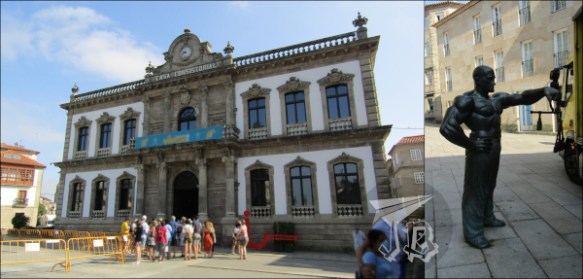
Casa Consistorial (Town Hall) and Fiel Constraste sculpture by Ramón Conde.

Casa de Campás (palace house where a local pirate used to live).

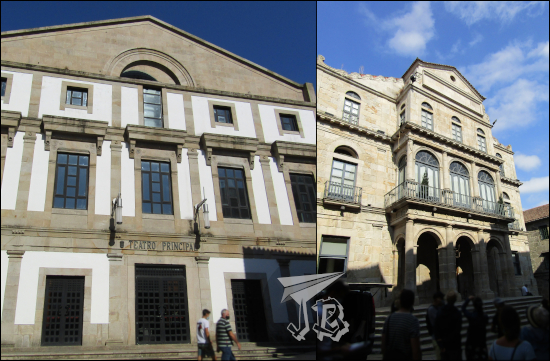
Theatre and Liceo.

Plaza del Hospital (square).

Monument to the Parrot Loro Ravachol

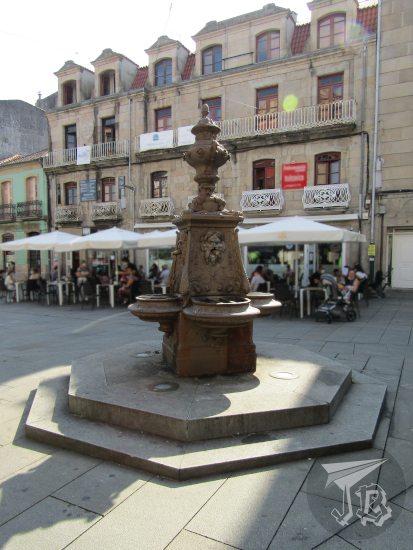
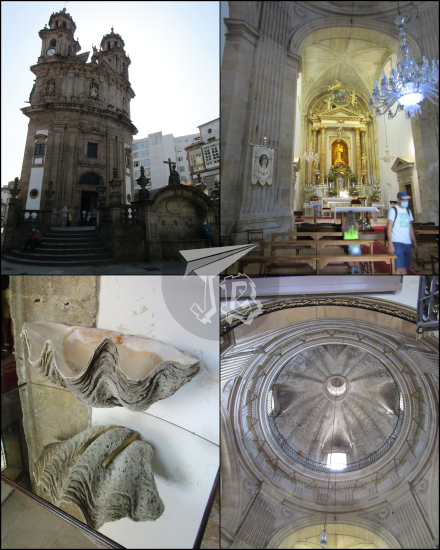
Santuario de la Virgen Peregrina, church and fountain.

Plaza de la Herrería (Blacksmiths’ square), along with the convent Convento San Francisco and Wall Gate; Jardines de Casto San Pedro (gardens), with another fountain, and the other squares around: Ourense, Estrella, Casto San Pedro.

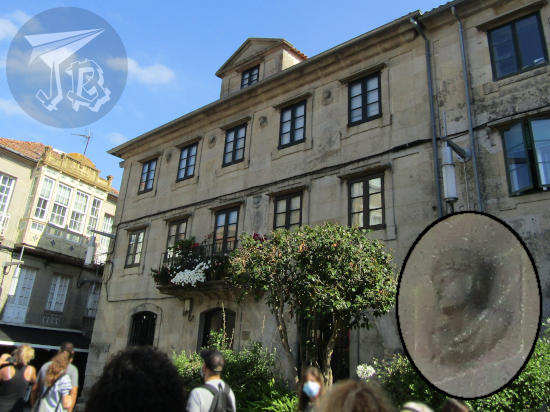
Casa de las Caras (House of the Faces).

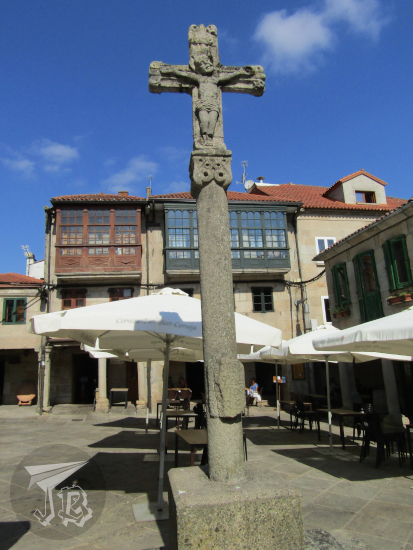
Plaza de la Leña (Firewood Square), a cruceiro (stone cross) and García Flórez Building.

Iglesia San Bartolomé (St. Bartholomew’s church).

Plaza Verduras (Greengrocers’ Square).

Statue to Valle Inclán, who was an important Spanish writer born in 1866.

Plaza de Teucro (Teucro Square) along with the powerful family shields (Montenegro Family) on the buildings.

Casa Valle Inclán, where the writer used to live, and cruceiro.

Basílica de Santa María la Mayor (basilica).

Ruinas del Monasterio de Santo Domingo (ruined monastery).

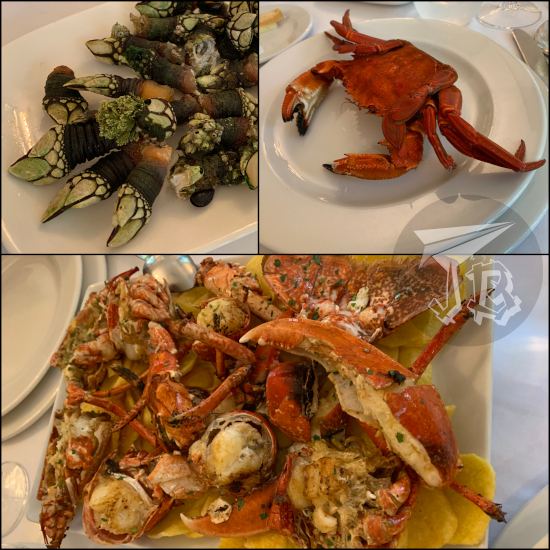
After the visit, we headed off to a restaurant called Casa Román for some seafood, which is typical of the area. We had Goose barnacles (Pollicipes pollicipes), which are supposed to be an amazing delicacy of the area – I had never tried them before, not the real thing. Then we ordered velvet crab (Necora puber) and a fried lobster (Homarus gammarus) on a potato bed.

Can you say food coma? Yeah. Me too, because we did nothing else that day except going out for a salad dinner, that turned out to be this:

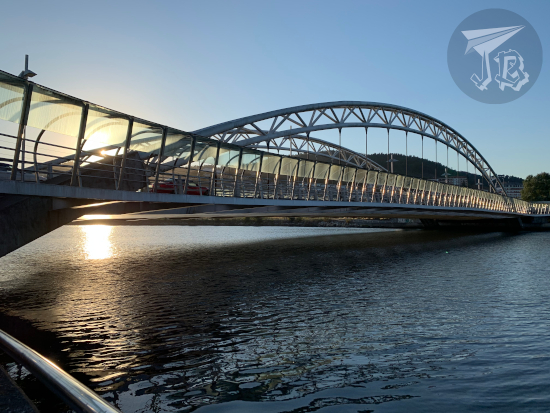
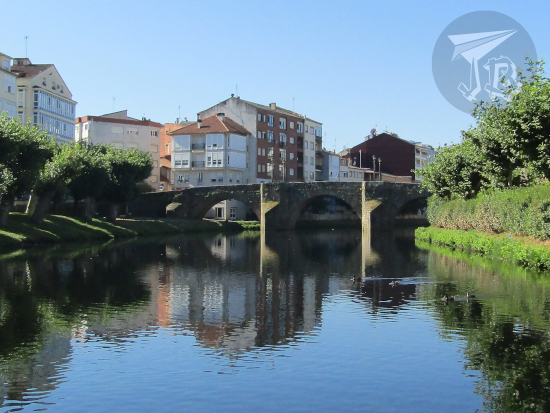
To be honest we did some walking around beforehand, and came across a couple of bridges over the river Lerez: the modern Puente de las Corrientes and the Medieval Puente del Burgo.

Then we went back to the Ruins of the convent Ruinas de Santo Domingo to see them at night.

Walking distance: 7.20 km

6th August 2020: Monforte → Ourense → Pontevedra {Spain, summer 2020}

We left behind Monforte de Lemos and drove off to Ourense, one of Spain’s thermal cities. Unfortunately most of the thermal water stuff is closed due to Covid and it was 40ºC anyway (≧▽≦). Upon arriving we left the car, and walked to the cathedral Catedral de San Martín de Ourense, an amazing piece of Romanesque / Gothic art with an amazing 13th-century chromatic Portico of Paradise [Pórtico del Paraíso] and a horrible Baroque Chapel of Christ [Capilla del Santo Cristo].

Ourense: Romanesque portico with wooden figures painted in bright colours (by JBinnacle)

We walked past Plaza Mayor or main square.

And we reached the area called As Burgas, where the old Roman baths and fountains of thermal water stand.

Then we took a stroll upwards and found an interesting church – the Iglesia de Santa Eufemia, very, very Baroque and climbed about five hundred stairs.

After arriving at the cloister of Francis, Claustro de San Francisco, we took a walk around and then went back to the car to drive off to Pontevedra.

On our way out we could spot the Roman bridge, Ponte Romana, but could not take any nice pictures due to the railing of the actual bridge we were on.

It did not take long to Pontevedra, where we had lunch, rested for a while, and then took a stroll around the town centre. Oh, and I got stamp number four as we stayed at the Parador de Pontevedra, which is an old city palace. Pontevedra is the town of a thousand squares, or so it feels. The truth is that the following morning we had booked a guided visit, so just a few highlights here.

Santuario de la Virgen Peregrina, a shell-shaped church in the centre of the town:

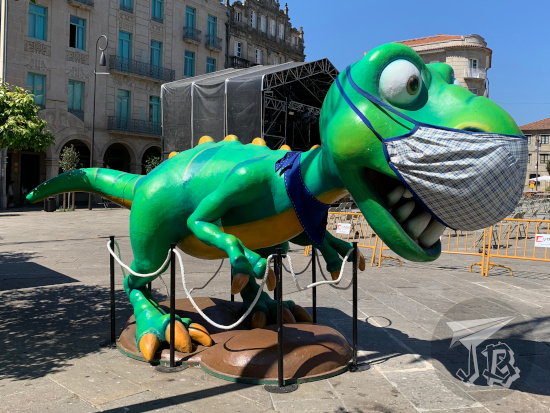
Plaza de la Herrería (and a few others surrounding it), with a friendly mask-concerned dinosaur (don’t judge, their hands might not be too good for the knot-tying).

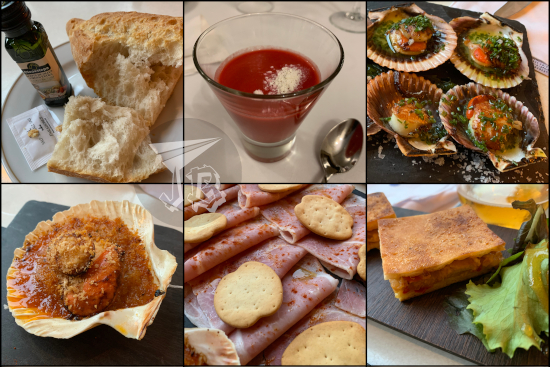
We had dinner a splendid dinner: scallops (both zamburiñas and vieiras, or king scallops (Pecten maximus), empanada(pie) and lacón (pork. Not quite ham, but yummy anyway).

Driving distance: 168 km
Walking distance: 6.28 km

5th August 2020: Monforte de Lemos {Spain, summer 2020}

After so many curves, we deserved a calm day, which included some art in Monforte de Lemos . We started off at the river Cabe, crossing the bridge Ponte Vella and the newer iron one.

We had booked to visit the Christian Art Museum in the Clares’ convent Museo de Arte Sacro / Convento de las Clarisas, which features some interesting pieces of art, among them a dead Christ by Gregorio Fernández, and hundreds of reliquaries with supposed remains of Saints.

Then we moved to the Piarists School, the church, and their painting collection Colegiata de Nuestra Señora de la Antigua / Pinacoteca de los Escolapios . The school is built in a Renaissance Herrerian style and the guide constantly tried to one-up San Lorenzo del Escorial.

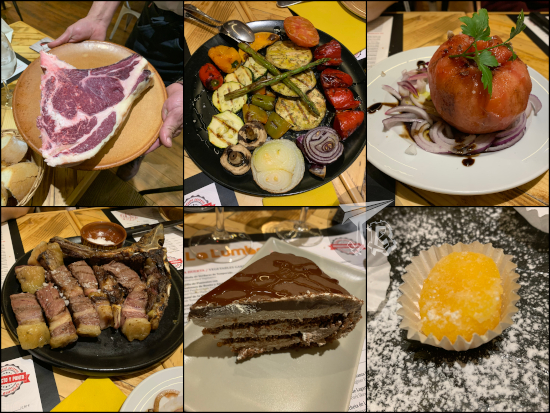
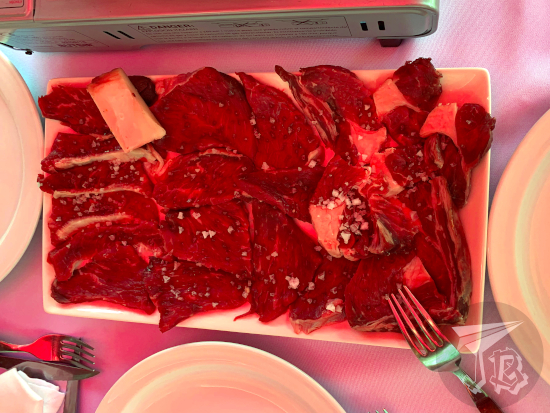
Then we found a good meat restaurant, Mesón JM for some local beef T-bone that we could prepare ourselves, although I get the nagging feeling they actually short-served us as they never showed us the meat piece. Please excuse the reddish tint of the pictures. It was the parasol and at the time I did not notice (≧▽≦).

After lunch and a break, we took a climb into the old castle keep Torre del Homenaje, and walked around for a little.

We ended the day at the tapas bar La Fábrica for some seafood.

And finished the day with some in-accomodation exploration at the Parador de Monforte de Lemos.

Walked distance: 9.03 km

4th August 2020: Meanders and Curves {Spain, summer 2020}

The area we were visiting that day, called Ribeira Sacra, is sprinkled with Christian monasteries [mosteiros] and churches [Igrexas] in the Romanesque and Gothic styles. These religious sites became commonplace during the Medieval times, along the way that leads up to Santiago de Compostela, an important Christian pilgrimage site. The route is called Camino de Santiago (St. James’ Way).

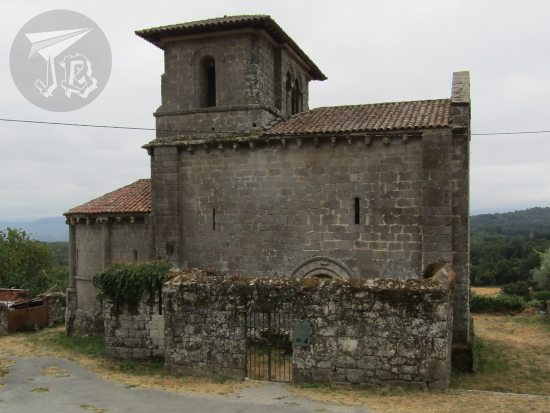
We started off with a fierce battle against the car’s sat-nav as it refused to take us to our first stop, the church of St. Michael in a tiny hamlet. I managed to trick the navigator and we arrived at the Iglesia de San Miguel de Eiré only a little later than expected. The church is small and it was built in the Romanesque style, which is common the Ribeira Sacra. The church was built in the second half of the 12th century, and has a remarkable archway. Back in the day, it belonged to a monastery.

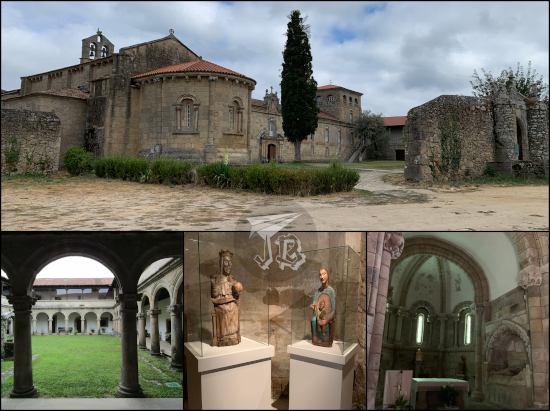
Afterwards we backtracked to what is probably its successor – another monastery, the Monasterio Cisterciense del Divino Salvador in Ferreira, which was built in three styles – the church is Romanesque (12th century), the main building and the walls are Baroque (18th century) and the inner cloister is Renaissance (16th century). There are also two Romanesque wooden sculptures.

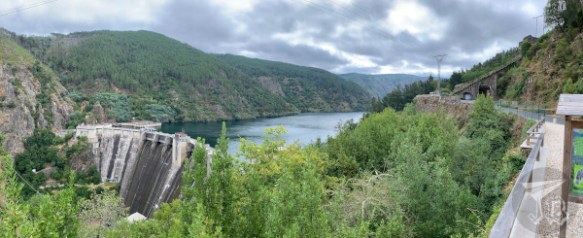
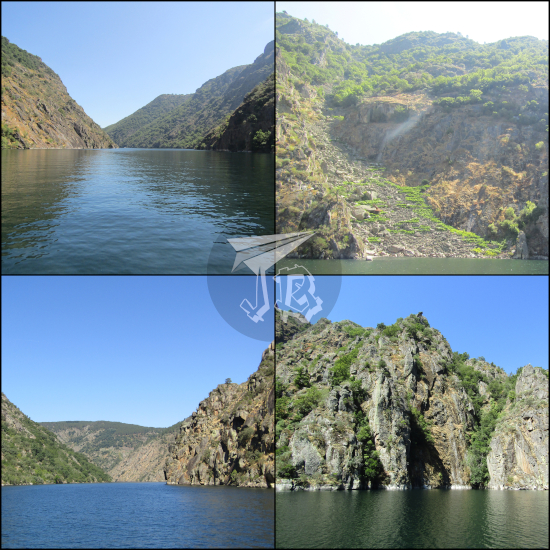
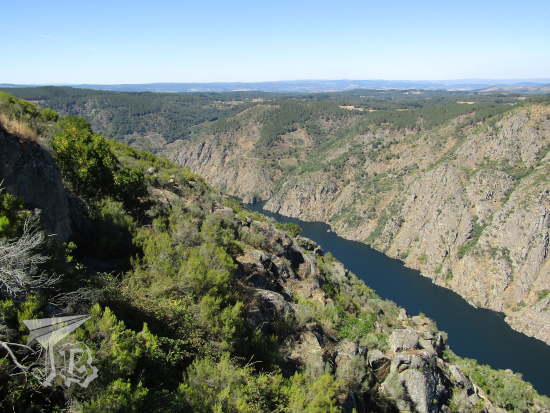
Then we set off towards a salad of curves the heart of the Ribeira Sacra, the area of the River Sil where the water has excavated a deep canyon – well, ish. There was a lot of tectonic activity going on in the area a long time ago that helped the development of the river canyon, the Canón do Sil. It is dammed at the moment, which has made the river depth increase.

We had booked a “cruise” in a “catamaran” that turned out to be a plain-old boat and way too packed for my peace of mind. Fortunately everybody wore masks, we had the N-95 that protect both ways ones, and used a lot of hand sanitiser – my nails are really, really off due to the use and abuse of hand sanitiser. We sailed off the wharf Embarcadoiro do Santo Estevo and the views were pretty nice. Both the narrator and narration not so much, though the bit about the “special” vineyards perched on the canyon walls was interesting.

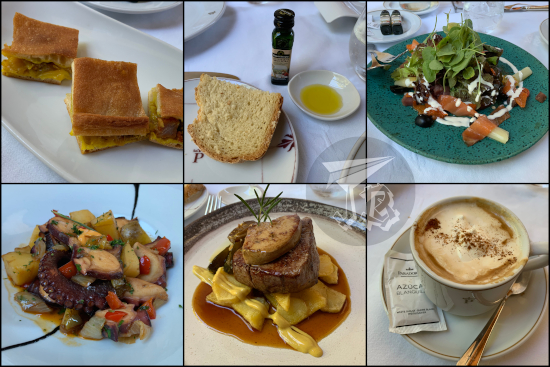
After a ninety-minute sail, we disembarked and took the car again to drive to the Parador de Santo Estevo to have lunch (cue stamp number three), where I tried the local beef with foie, while the rest went for the octopus.

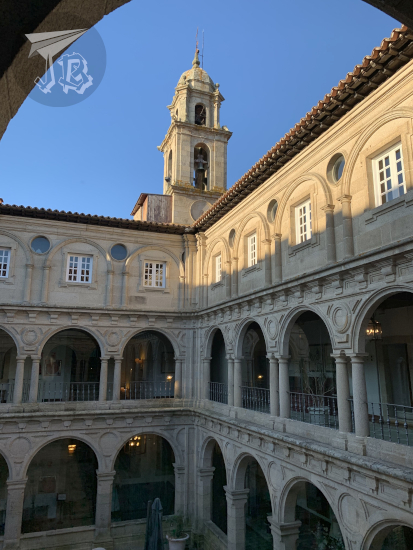
Then we took a stroll down the Parador, which is an old monastery that has not one but three cloisters, as the Monasterio de Santo Estevo de Ribas de Sil has existed since the tenth century and buildings have been added. Two of the cloisters are Renaissance and the third is Baroque / Gothic.

Finally we stopped over at the church, whose interior is late Romanesque but with a later façade (and a very Baroque altar).

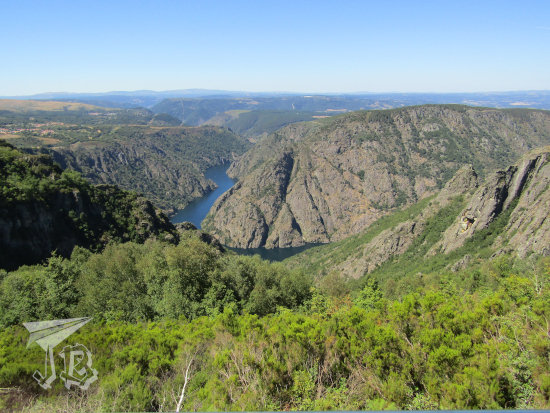
And then we went back to the curves. Lots and lots of curves. The road ran along the canyon, so we stopped over at a couple of viewpoints to observe the canyons – Miradoiro de Cabezoás:

Miradoiro Balcones de Madrid:

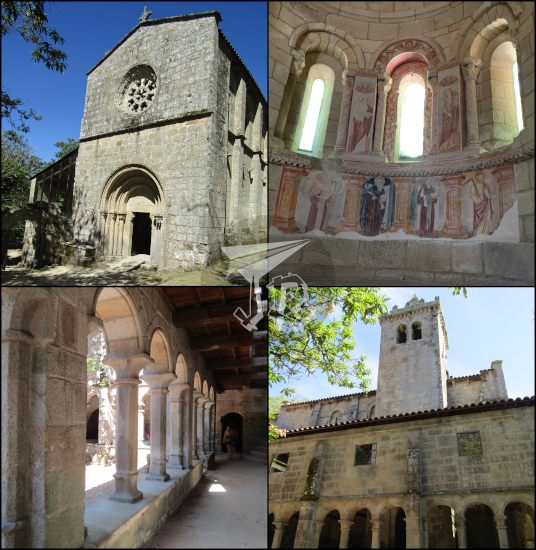
Then we continued onto the ruins of another Romanesque Monastery, Mosteiro de Santa Cristina de Ribas de Sil, with some very nice paintings and a very pretty cloister.

Afterwards we drove back up the road and we found another viewpoint Miradoriro Xariñas de Castro (a.k.a. Miradorio A Mirada Maxica) for more views of the canyon.

We continued to the monastery Mosteiro de Santa María de Montederramo, where we had booked at 19:00 but could join the 18:00 visit instead. Shifty, I know, but we were there at 18:04 and… yeah. Not really worth the wait, even though the Gothic church and cloister were neat, even if a bit unkempt.

And as we were finally driving back towards Monforte de Lemos, we came across the castle Castelo de Castro Caldelas, which was actually on the planning for the next day but we thought we would… how to put this… avoid some curve-driving if we took the stop.

All in all: 135 km driving; 6.96 km walking; around 20 km sailing; hundreds of curves.

3rd August 2020: On the road again {Spain, summer 2020}

After having to cancel London and Greece, we decided to try to at least take a few-day’s worth road trip within Spain as some sort of consolation prize. We were, of course, very careful, using a lot of hand-sanitizer and never taking off our face masks except within the car, hotel rooms or when we were eating – strictly so.

We started off just in time so we surrounded Madrid right after rush hour so we did not get caught in any traffic jams. We drove northwards towards Medina del Campo, a town which played an important role in Spanish history, specially around the time of the Catholic Monarchs and their direct descendants. We were there at 11:00 sharp, right at the time when the castle Castillo de La Mota opened to visitors. Mota is the Spanish word for motte, which is a raised area of ground where a castle keep, and a walled courtyard or bailey, are built. They are protected by a ditch and a palisade. These castles are thus called motte-and-bailey castle. In particular, the castle of La Mota is made of red brick, typical to the area, but it is heavily restored today. The visit included the outer building, the yard and the chapel of St. Louise.

We stopped for a quick lunch at the Parador de Puebla de Sanabria. Paradores is a Spanish brand of state-owned hotels and restaurants which have a good reputation all around the country. In our lunch stop, I got my stamp passport because I can find stamp rallies wherever they are (≧▽≦), and Paradores has launched one.

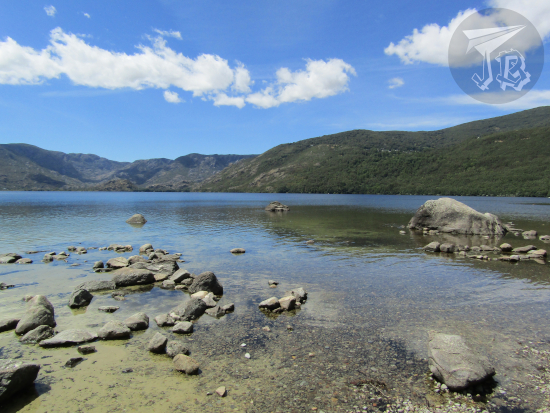
Then, as we were a couple of hours ahead our very informal schedule, we decided to take a small detour and check out the Parque Natural del Lago de Sanabria y alrededores, the natural park that surrounds the biggest natural lake in Spain, Lago de Sanabria. It is also one of the few, if not the only glacier-origin lake in Spain. It was full of people swimming and sunbathing, but the landscape was still beautiful.

After lounging for a while we continued on our way towards Galicia and our destination, Monforte de Lemos. We stayed at the Parador de Monforte de Lemos, situated in the Monastery Monasterio de San Vicente do Pino at the top of a hill. It is part of a monumental compound, along with the former castle Keep and the palace of the former Count’s family, Palacio de los Condes de Lemos . Due to some kind of fluke, my room was doubled as “supreme” and the door came out to the actual cloister of the monastery, which was super-cool! (Also: Stamp number two)

We took a short stroll down the village, and we passed by the small sanctuary to the Virgin Mary’s image Santuario de la Virgen de Monserrat.

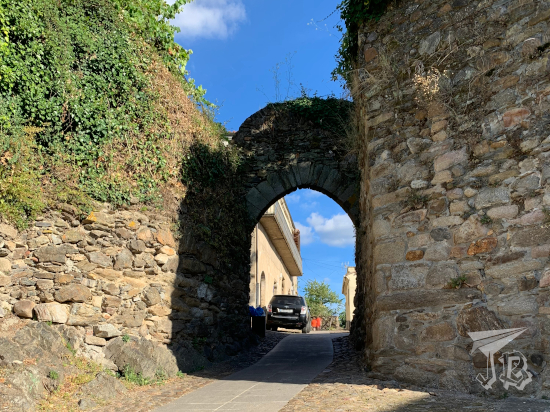
Then we saw the walls and the old gates.

Finally, we went back to the hotel to have dinner over there. Our choices included trying a species of scallop I had not tried before, the zamburiña, variegated scallop (Chlamys varia). We also tried the local pie, empanada. For dessert, they had a ‘variety of chocolates’.

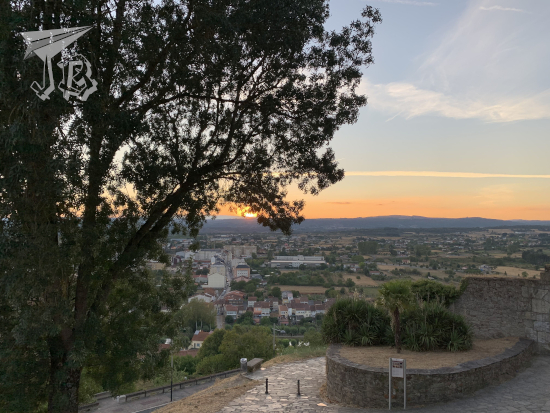
The day finished watching the sunset before turning in for the night.

Driving distance: Aprox. 600 km
Walking distance: 5.02 km

26th January 2020: Royal Palace and Norwegian salmon (Madrid, Spain)

A friend was over visiting for the weekend and we headed off to Madrid. It had been raining and the weather the previous evening had been rather miserable. Actually, when we left home it was rather foggy and dark, but upon stepping out the Avenida de América bus station, it had become sunny and not cold at all.

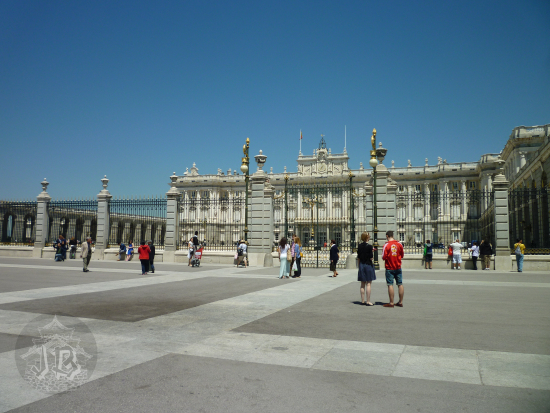
My friend wanted to see the Palacio Real de Madrid, the Royal Palace – we had been playing Madrid Cluedo the day before and she had mentioned that she had never been there. At first, we only wanted to see building. As it was Chinese New Year, the blunt of tourists was somewhere else watching the Parade, and we had a short queue to go inside, so she decided to wait as it was not expensive, either.

You can’t take pictures in most of the palace, but the yard looked really nice and you could see the cathedral from there. We also heard all the bells tolling at noon, which was fun. When you go into the palace you see several rooms, including the throne room and the old sleeping quarters. One of my favourite rooms is the one with the Stradivarius violins and other instruments.

While there aren’t that many pictures taken inside, here is a shot of the cathedral, Catedral de la Almudena .

After visiting the Palacio Real, we went to have lunch. She wanted ham, and I wanted a poke bowl I had seen announced in El Corte Inglés cafeteria, so it was a win-win situation. I had a “Poke bowl de salmón noruego”, Norwegian salmon poke bowl that was amazing – a sushi rice base with avocado, spring onion, purple onion, wakame, a soft-boiled egg and Norgweian salmon marinated with soy sauce, rice vinegar and kimchi.

She declared that she was happy after this, so we called it a day.

22nd – 26th August 2019: Food at San Juan and Alicante

This was a quick three-day trip for my father to have some diving time, and even if I had just landed from Japan I tagged along to make sure that my mother was not alone. I was understandable a little beaten from the big exiting trip, so there was not much that I was up to visiting. However, somehow we had a bit of a gastronomy splurge at the hotel and around.

For example, one day we had some awesome arroz caldoso con bogavante , Spanish rice with lobster for lunch:

For another lunch, I discovered that I could actually eat poke bowls in Spain – behold the Poke bowl de atún rojo de Almadraba , almadraba-caught tuna poke bowl. An almadraba is an ancient Mediterranean fishing technique in which nets are suspended mid-water that lead the fish to a central trap from where they are caught – as a curiosity, let me tell you that somehow orcas in the Strait of Gibraltar have learnt to use the almadraba to fish too! Anyway, the poke bowl had a rice base with avocado, spring onion, red onion, wakame, poached egg, and tuna marinated with sesame oil and soy sauce.

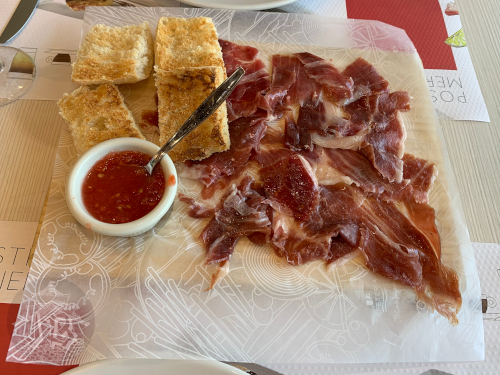
We shared some Spanish ham with that.

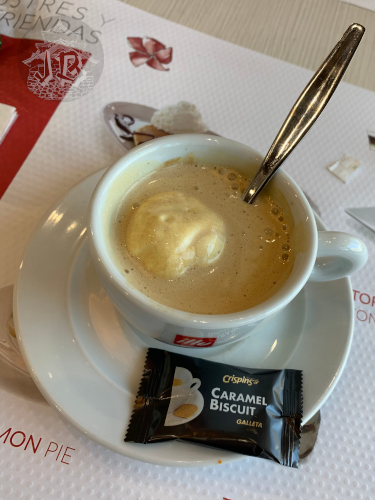
And finished the meal with a latte with vanilla ice-cream and a caramel biscuit because… yes, I needed something to prevent me going into a food coma.

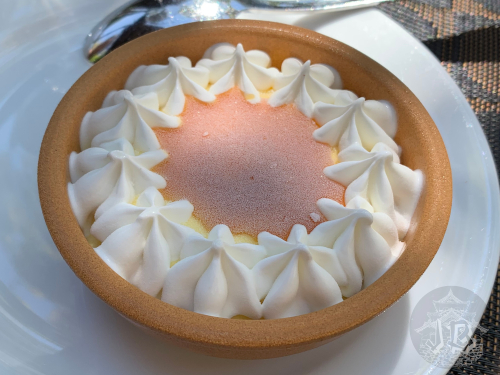
We had granizados mid-afternoon – behold my lemon almost shaved-ice.

And one of my desserts was whiskey-cake ice-cream.

Not that much of an exciting trip, but there were some nice things to take from it.

19th & 20th August 2019: Bye-bye for a while, Japan {Japan, summer 2019}

For my last day full day in Japan, I dropped my luggage off at Shinjuku station and met with D****e for lunch to say goodbye for now. I also got to say goodbye to Tokyo Tower [東京タワー] from Roppongi Hills [六本木ヒルズ].

Lunch was a bit sad, but the yakiniku was very yummy. After she had to come back to work I met with B**** for drinks and wandering around for a while in Shinjuku [新宿]. We mostly sat at Wendy’s, talking and drinking… whatever this is…

And then she took me to CocoCurry for goodbye-curry.

Then she came with me to Nippori station to help me carry my luggage to the train. I was so mentally exhausted that I did not even stop for a stamp at Narita Terminal 1. I had booked myself a hotel for the night at the airport because I felt that was the best thing for my mental health at that time, and I am glad I did. It was very handy and the transport to the terminal was very smooth.

I had been worried about my Fuji-climbing stick, but I had been told I could check it in. I bought a suit-cover which I sewed, and had no problems with it – I mean, I saw people checking-in kayaks, for fuck’s sake. My stick was tiny in comparison to that! The flight back was a-okay, unremarkable, mostly.

Walked distance: 19th: 11099 steps / 7.94 km. 20th: 5045 steps / 3.60 km. The displacement was a bit longer though… something around the 11000 km (≧▽≦)

The 2019 trip was a long one, full of awesome experiences that I won’t forget any time soon. I hope to gather experience from what went wrong, but not cling onto the bad feelings. I chose not to write about that, and look for the best in every day. Also, I did not really feel it, but a bunch of Japanese friends told me that my language skills had improved, so that made me happy. Now it’s time to go back to the real world and do adulty things, and start dreaming about the next adventure. また今度ね。

17th August 2019: Oblivion Dust in Ebisu {Japan, summer 2019}

I spent the day at Ebisu [恵比寿], where I got to say hi and meet a lot of known and new people . First, I had arranged a late lunch with my friend with E**chan. Unfortunately, her trains had problems and she was forced to drive to another line station to get from her village outside Tokyo to Ebisu – so in the end it was a very late lunch we had. I spent the time wandering the malls and the Ebisu Skywalk [恵比寿スカイウォーク], which is basically a long corridor without anything to see – the train service was disrupted and we did not know when she would arrive, I did not want to leave the area. She finally made it, and we managed to find some super-nice place in the Ebisu Atre building. By that time, we were starving, and when we caught sight of a traditional restaurant, we went for it. We ordered a katsudon [カツ丼] each, because it looked fantastic – and it was delicious..

Katsudon lunch set: miso soup, a bowl of rice with meat and egg on top, a cup of tea and grated cabbage to share between two people

A scoop of vanilla ice cream and a cup of green tea

Afterwards, we went to the Oblivion Dust’s Gods Of the Wasteland Tour 2019 Gods Of Reborn concert at Ebisu Liquidroom. Oblivion Dust, shortened as “Oburi”, is a three-man Japanese rock band. The current members (none of whom are founding members) are Kentaro “Ken” Lloyd (vocals), Iwaike Kazuhito “K.A.Z” (guitar) and Rikiji Masuda (bass). They usually work with two supporting musicians:Yuji (guitar) andArimatsu / Arly (drums). I’ve often seen both K.A.Z. and with VAMPS.At present, they are touring with guitarist Ryo, as K.A.Z. has broken his hand. Reportedly, he “remains behind the scenes, doing synthesiser work”.

Despite K.A.Z’s broken hand, Oblivion Dust has carried out a sixteen-concert tour during summer, Gods of the Wasteland. There are four different setlists, each played four times:Gods Of Elvis, Gods Of Misery, Gods Of Reborn and Gods Of Butterfly.

Gods of Reborn setlist:

    1. Goodbye
    2. Girlie Boy Imitation #6
    3. Ghost That Bleeds
    4. Sugar Free
    5. Under My Skin
    6. Death Surf
    7. Come Alive
    8. Plastic Wings
    9. Alien
    10. No Medication
    11. Nightcrawler
    12. Crazy
    13. In Motion
    14. Haze
    15. Lolita
    16. Sail Away
    17. Evidence
    18. You

After checking out the merchandise boot, E**chan and I had our numbers called and we went into the floor. We found good spot on the left,, just on the edge of the “mosh pit”, the central area where people jump and dance, and elbow you if you are not careful.

The concert lasted for about two hours, and it was full of energy. Vocalist Ken always amazes me because he does not drink anything, he just grabs bottles of water, dumps the liquid on his head, and then throws them at the crowd.Bassist Rikiji is probably a relative of the Duracell Bunny, and he does not stay still whatsoever. He mimics shooting at people with the neck of his bass, or is busy jumping around. Ryo was all right, but he was… not K.A.Z, which also showed as Ken and Rikiji did have their fun and trolling moments – Ken stole Rikij’s “bass microphone” and and Rikiji just offered him the bass to go with it. Ken also went to “visit” Arimatsu, who was having too much fun to be bothered, and just made some more noise. I mean, Ken seemed to be everywhere at once.

After the concert, everybody was happy-exhausted.I for sure was absolutely drained. E**chan invited me to tag along her and some of her friends for dinner, and we went to a typical izakaya. The food was great, but a bit (all right, a lot) on the expensive side.

The logo of Liquid Room, styled to look like an organic chemistry molecule, with hexagons for Q and Os

Walked distance: No idea, I forgot the watch. But most of what I walked was on the Ebisu Skywalkas I was bored waiting for E**chan since I was early but her train was super-delayed due to the accident (≧▽≦).

15th August 2019: Downpour Shinjuku {Japan, summer 2019}

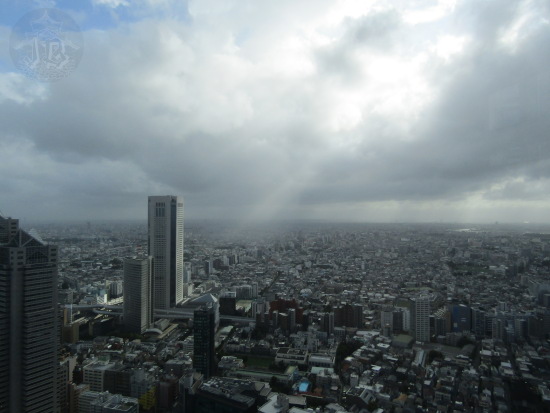
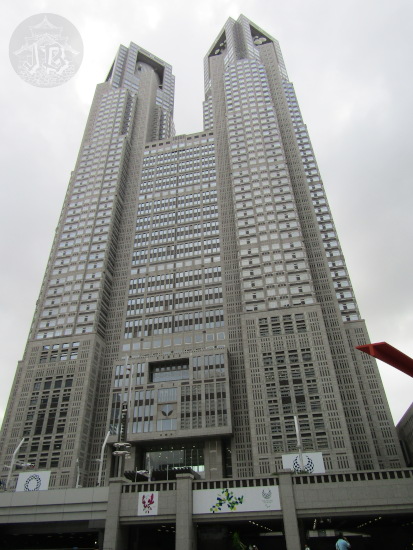
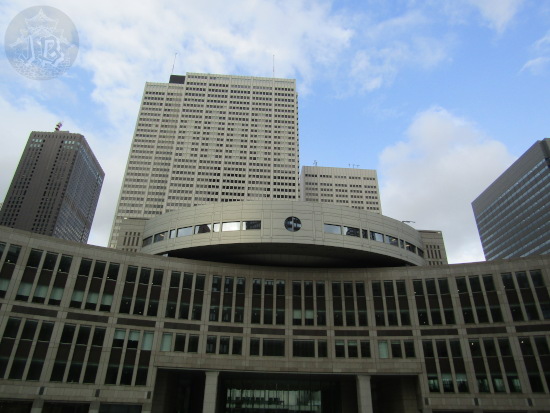
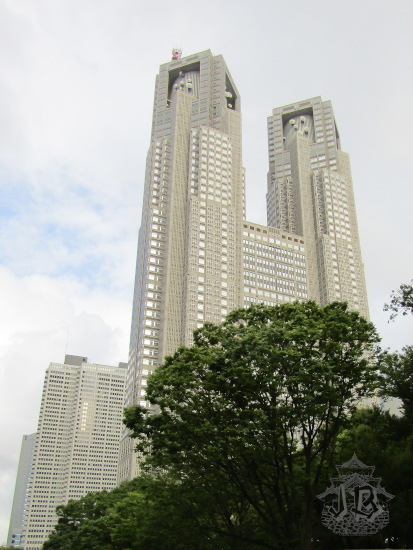
Once more in Shinjuku [新宿], I stepped out at Tochomae station to go to the Tōkyō Tochō [東京都庁] aka the Tokyo Metropolitan Government Building. To my surprise, there was a line for the observatory! Apparently they have closed the North Observatory for renovations (possibly 2020 preparation). When I got to the observatory there was a piano, and at that time, visitors were allowed to play it. I thought “Wouldn’t it be cool if someone did X Japan?”. And then two guys do 紅 with three hands. I was very impressed.

I hoped I would be able to walk around Shinjukucho Teien [新宿中央公園] before it started raining.

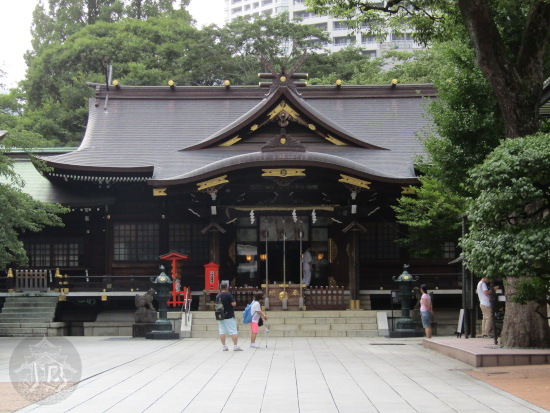
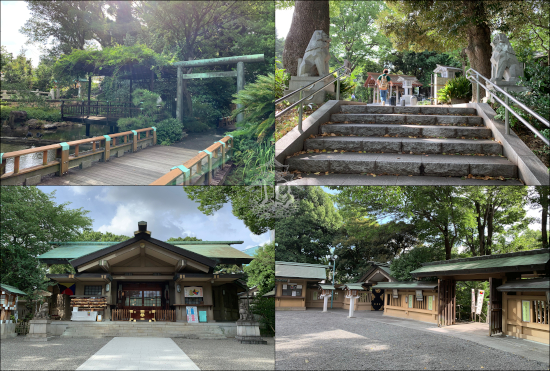
As I was in Shinjukujunisha Kumano Jinja [新宿十二社 熊野神社], where I got a shuuin, it started pouring.

Thus, I went back to the covered station underpasses as fast as I could and then tried to get my way round the inner passages… with dubious success. I did find the Shinjuku tourist office, because they had Coke packs there, but I could not find one that had sakura and Tokyo bottle in it (ó_ò).

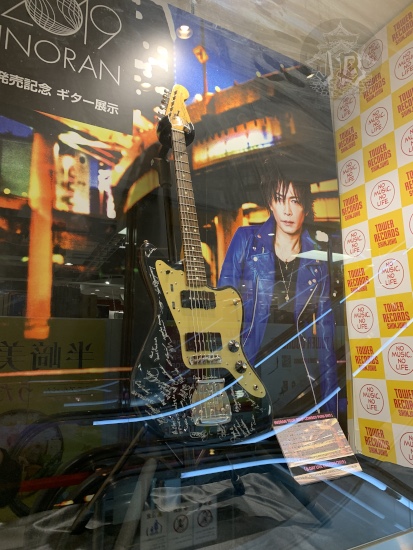
Then I went to Tower Records to see INORAN’s guitar, which was on display prior to his tour.

And then I headed off to Roppongi [六本木]. And you know what I found in the first random vending machine I came across? The freaking Tokyo Coke bottle, which turned out not to be only in Shinjuku! I had been looking for it for days (;¬_¬)

Afterwards, I met D****e and M*****san for a nice shabu-shabu dinner.

Walked distance: 10978 steps / 7.85 km.

14th August 2019: The other side of Harajuku {Japan, summer 2019}

After a sweep around the V-kei shops in Shinjuku [新宿], I dropped by Shibuya [渋谷区] (finally) to go to the big Tsutaya there, along with the Mandarake and Tokyu Hands. And there, in the most random vending machine in a backstreet, I managed to find the Shibuya coke bottle (which I drank with glee as I had approached the vending machine as I was thirsty). Then I walked towards Harajuku [原宿], but instead of Takeshita Doori, this time I turned towards the other side. I wanted to see the LemonEd flagship shop, as the Nagoya one did not convince me. LemonEd is a brand created by the deceased X Japan’s guitarist Hide, known for his bright colour combinations and hearts. I wanted to see the shop at least once, I guess, even if “bright” is probably not my thing (≧▽≦). There were many items, T-shirts and so on and I sneaked a couple of pictures.

I went on a little and arrived at Tōgō Jinja [東郷神社], which I really liked. I got a shuuin there too, and almost lost my shuuincho there because the miko would not call my number to give it back (;¬_¬).

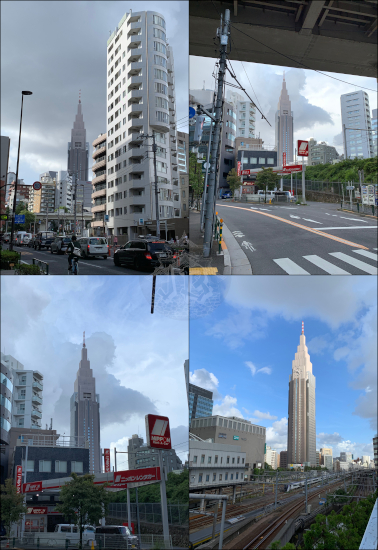
I walked from Harajuku back to Shinjuku via Yoyogi [代々木], and I pretty much went around the NTT Docomo Yoyogi Building [NTTドコモ代々木ビル] from all angles (and weather backgrounds).

When I arrived at Shinjuku station [新宿駅] though, I came across… the Salamander God in a Takashiyama Window… I’m not kidding you.

Once I was in Shinjuku I tried to find the Tokyo Coke bottle in another random vending machine… It did not work, but I found the Kabukichō Benzaiten [歌舞伎町弁財天], which I had seen in passing, and wanted to snoop around.

After kushikatsu dinner, we called it a day.

Walked distance: 19234 steps / 13.7 km.

13th August 2019: Steamy steamy Tokyo {Japan, summer 2019}

Following recommendations from some Japanese acquaintances, I headed off to the Shinagawa [品川区] area to visit Hebikubo Jinja / Kamishinmeitenso Jinja [蛇窪神社 / 上神明天祖神社], a pretty shrine where I got a pretty shuuin (aaaand discovered another stamp rally).

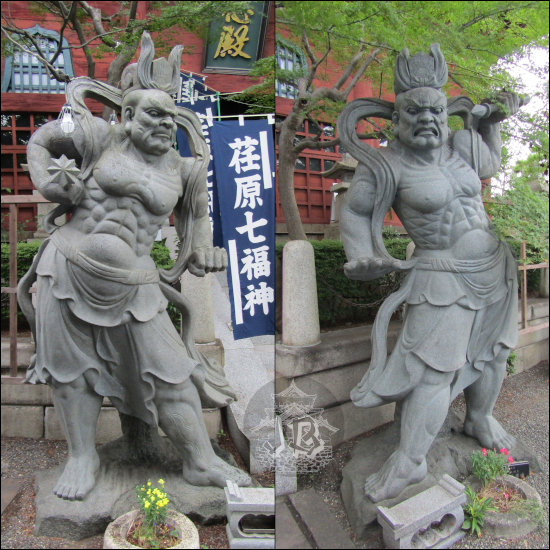
Among rain, sun and drizzle it was exhaustingly hot. I continued on to find Kimyozan Yogyokuin Nyorai [帰命山養玉院如来寺], a temple with amazing guardians.

And then I found an obviously very dangerous and aggressive tiny pond, I mean, look at those meshes (yes, I know that it’s probably for children safety, but I shall still make jokes about it). It was the Hara no Suijin-ike [原の水神池].

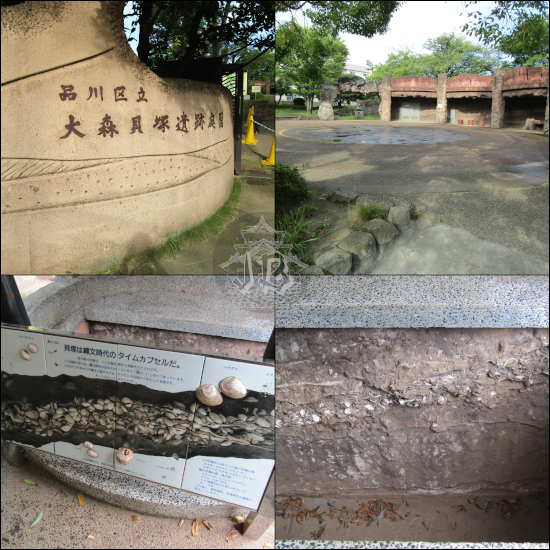
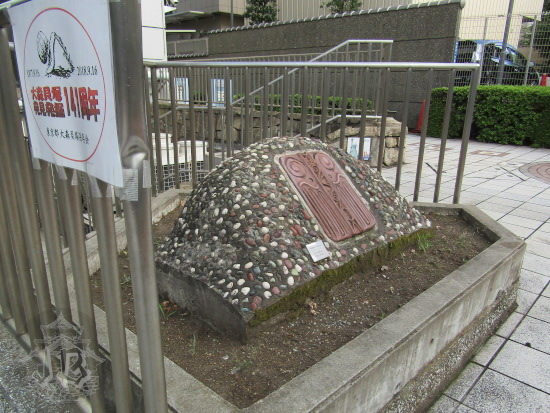
Checking how to come back I came across Ōmori Shell Mound Ruins Garden, Ōmori Kaidzuka Iseki Teien [大森貝塚遺跡庭園] and the Statue of Ōmori Shell Mound, Ōmori Kaikyo no Ishibumi [大森貝墟の碑]. The Ōmori Shell Mound was apparently the first archaeological excavation in Japan. They dig out a seaside village from the Jomon period (14,000 to 300 BC).

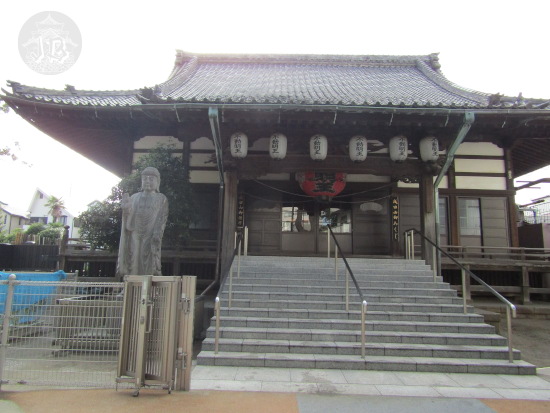
Opposite I found Naritasan Ennoji [成田山圓能寺].

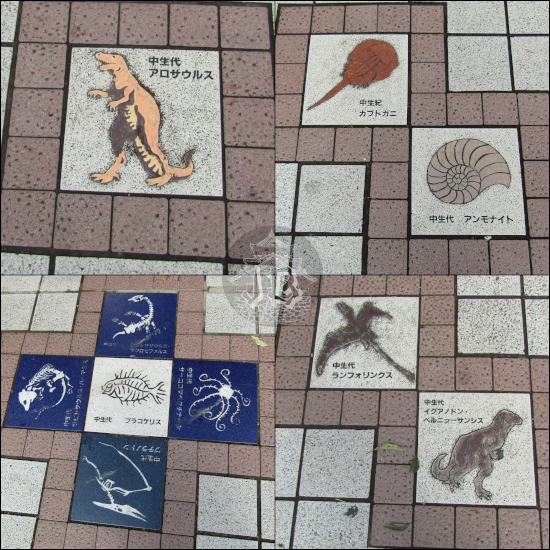
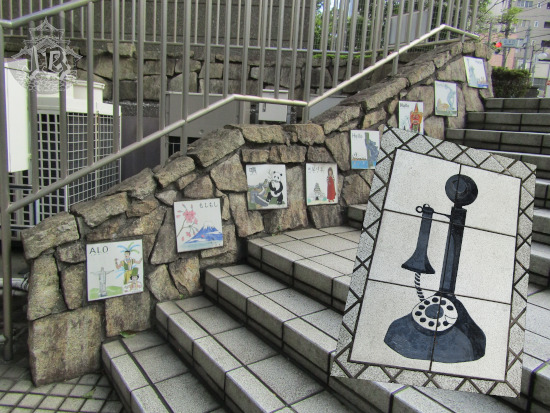
And before I left I noticed the ground decoration on the pavement – life evolution and… telephone greetings. Because Japan, I guess…

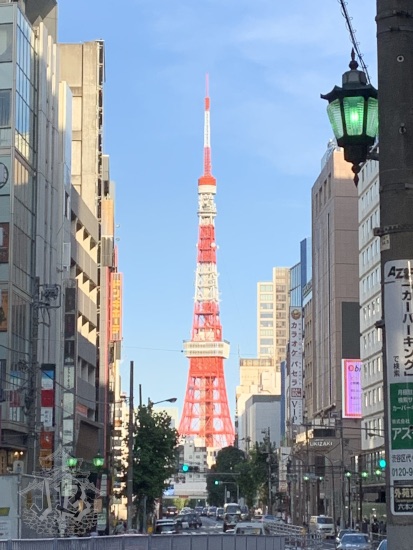
Then I looked at Tokyo Tower [東京タワー] from Roppongi [六本木], as I checked the Don Quijote for Tokyo Coke bottles, without success.

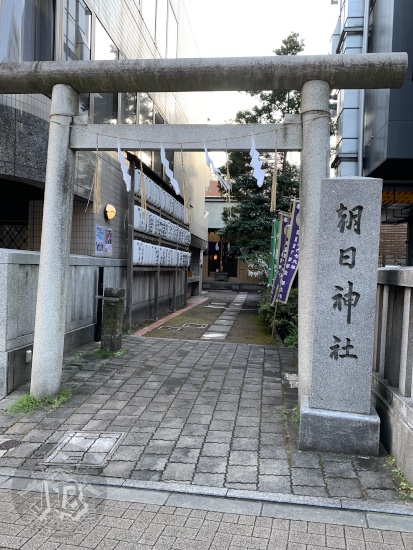
I also came across tiny Asahi Jinja [朝日神社].

Then dinner was supermarket sushi, which was very, very yummy.

Walked distance: 14009 steps / 10.0 km

12th August 2019: The Surviving Fuji thing? Think twice {Japan, summer 2019}

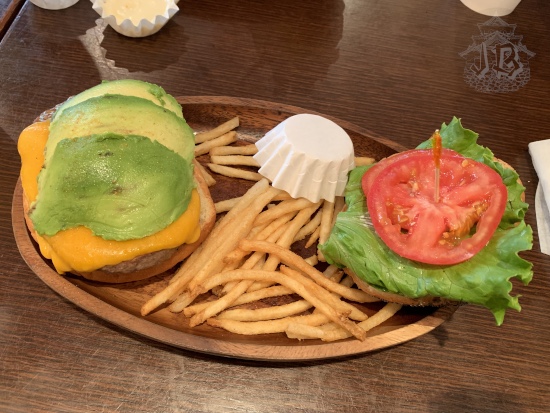
We didn’t sleep in, because why would we? We had only climbed a mountain – a volcano – the day before. We went to Shinjuku [新宿] for an avocado burger at Kua’aina, and then we did a sweep over Tower Records and Tokyu Hands.

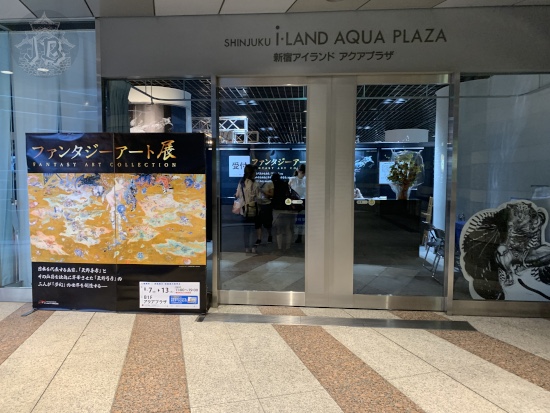
Then we went to see the Amano’s Fantasy Art Collection [ファンタジーアート展] exhibition / sale at Shinjuku I-Land Tower [新宿アイランドタワー].

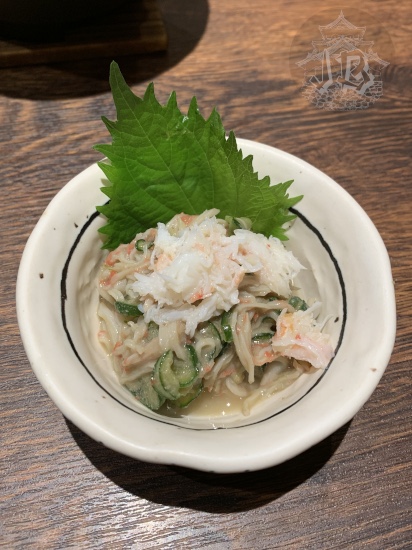
Later we sang some karaoke and then had a bit of a Hokkaido dinner – kanimiso yummy!

Walked distance: 16580 steps / 11.8 km. And every damn step – especially on stairs – hurt. Throughout the whole day, legs were on fire. But my back withstood, which was good. We whined a lot about being sore though, because we could (≧▽≦)

10th & 11th August 2019: Once in a lifetime – The Great Fuji-san Adventure {Japan, summer 2019}

Mount Fuji aka Fuji-san [富士山] is a special mountain in Japan, both geologically and culturally. Japanese and tourists enjoy Fuji-san in different ways – contemplating it, visiting it, climbing it, going around it… Well… Guess who got into their thick head that they wanted to climb it? raises hand Exactly! Yours truly. I was already toying with the idea back in 2018, but I chickened out. However, as I mentioned before, this one time I wanted to scratch as many things off the bucket list as possible, so… There I went – kinda pushed by a feeling that if I did not do it, by the time I were back in Japan it might be too late as my health is not.… complying lately. But I had not hiked up a mountain before in my life…

Mount Fuji is the most famous mountain in Japan. Its iconic image is everywhere – enamel pins, t-shirts, postcards, classical art… Located around 100 kilometres south-west of Tokyo, it is 3,776.24 metres high, which makes it the highest peak in the country. It was declared a UNESCO World Heritage Site in 2013.

Technically, Fuji-san is neither a mount nor a mountain, but a type of volcano known as a stratovolcano. Its current morphology was shaped by consecutive layers (“strata”) of lava hardening. It is mainly composed by a rock called basalt, and it is one of the few large basalt volcanos in the world. Basaltic lava is rather thick and slow-moving, so there are many lava tunnels and tree moulds created by the eruptions.

Fuji-san, as we know it today, was formed from a previous volcano (Komitake), and became active around 5,000 years ago. Around 2,300 years ago, there was a mud landslide (Gotemba mud flow [御殿場泥流, Gotemba deiryū]) that can still be identified. There have been several historical eruptions, twelve of them between the years 800 and 1083. There was a ten-day eruption of ashes and cinder in the year 864 (Jōgan 6 in the Japanese calendar, based on the different Emperor’s reign; 2019 is Reiwa 1, as current Emperor Naruhito just ascended the throne). In the year 1707 (Hōei 4 in the Japanese calendar), a few weeks after a big earthquake, the last known eruption took place. In the current Japanese Volcanic Alert Level, Mount Fuji is categorised as “Level 1: Potential for increased activity”, which is the lowest level.

Mount Fuji has frequently been depicted in Japanese art, most famously in Katsushika Hokusai’s [葛飾 北斎] Thirty-six Views of Mount Fuji [富嶽三十六景, Fugaku Sanjūrokkei] by, a series of ukiyo-e block prints (which are actually 46). Probably the best known among these is The Great Wave off Kanagawa, one copy of which is displayed at British Museum in London (actually, in 2017 they ran a whole exhibit around it and Hokusai).

Fuji-san is also an important element in the collective spirituality of Japan. In Shinto mythology, the goddess of Mount Fuji is Konohanasakuya-hime [木花咲耶姫]. She is enshrined in Fujinomiya town Fujisan Hongū Sengen Taisha [富士山本宮浅間大社]. Technically, this shrine has owned Mount Fuji since 1609, though there are no current records of ownership. The volcano stands at the boundary between the prefectures of Shizuoka and Yamanashi, and in order to manage the natural area, the Fuji-Hakone-Izu National Park [富士箱根伊豆国立公園, Fuji-Hakone-Izu Kokuritsu Kōen] was established.

Depending on the actual weather, Fuji-climbing season extends from late June or early July to early September. It is not allowed to climb Fuji “off-season” without a permit. However, people do not usually climb the whole mountain, but start quite closer to the summit. There are roads leading up Mount Fuji up to around 3,200 metres, to an area called the Fifth Stations However, no private cars are allowed on those roads.

From the Fifth-Stations there are four trails or paths to the summit, colour-coded to help people find their way, especially on the way down:

  • Yoshida Trail [吉田ルート] (yellow). It starts at the Fuji-Subaru Line 5th Station [富士スバルライン五合目] (Yamanashi Prefecture). This is the trail recommended to “beginners” and thus the most crowded.
  • Subashiri Trail [須走ルート] (red) Head. It starts at the Subashiri Trail 5th Station [須走口五合目] (Shizuoka Prefecture).
  • Gotemba Trail [御殿場ルート] (green). It starts at the Gotemba Trail New 5th Station [御殿場口新五合目] (Shizuoka Prefecture).
  • Fujinomiya Trail [富士宮ルート] (blue). It starts at the Fujinomiya Trail 5th Station [富士宮口五合目] (Shizuoka Prefecture).

When I told D****e that I was planning to try to organise the climb, she did not believe me at first. As she realised I was being serious, she decided that she was crazy enough to want to come with me as “she could not let me do such a thing alone” and actually took over most of the planning, since she had done it before. I would have just found an agency, but I think she was better.

So off we went. As she was working, we organised our hike on a Saturday-Sunday trip weekend trip – and we did not realise until afterwards that we would be climbing during Mountain Day – Yama no Hi [山の日]. We packed snacks, water, and everything we thought we might need – in my case, also gloves which I eventually lost, and a ridiculous amount of layers. D****e was chill, but I was a little worried about all the equipment the Official webpage for Mt. Fuji Climbing said that was needed, including oxygen and helmets. There were also warnings in place, such as your mobile phone battery dying super-fast, or the need for an evacuation plan in case altitude sickness got too much. I was also worried about weather (especially rain) and temperature changes – thus all the layers. She insisted we would be fine.

After a big lunch, we took the Shinjuku Expressway Bus around 16:00 on Saturday the 10th, and arrived at the Fuji Subaru Line Gogōme [富士スバルライン五合目] / Fuji Subaru Line 5th Station at 2,300 m around 17:30. We (she) had booked a mountain hut at the Seventh station so we “only” had to climb two stations, right? Right. Read: wrong.

Approaching Mount Fuji: the mountain looms half-hidden by the clouds.

Right about the time of taking this picture it had sunk on me how much of a bad idea this had been (≧▽≦). I really wondered if it was too late to turn back and go home.

A date banner at Mount Fuji 5th Station, reading 2019 08 10

My first step was buying a staff – that we nicknamed the “Fuji-climbing stick”. The idea is that you use it to feel your way around and make sure that you step on solid ground, and especially when you hike down. However, (you’d never guess), you can get stamps burnt into the wooden stick as you hike up – usually for 300 ¥. Climbing Fuji can get expensive… D****e had chosen the Yoshida Trail [吉田ルート] for our ascending side (noborigawa [登り側]). And so… off we went.
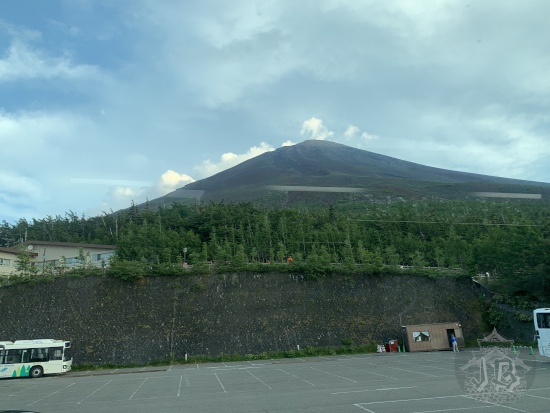
From the Fifth Station, looking up at the summit.

From the Fifth Station, looking down at the car park and a sea of clouds underneath

We started off climbing at around 18:00. Between the Fifth (2,300 m) and the Sixth Stations (2,390 m), you walk along some dirt paths in the forest, and there isn’t really that much “ascension”. As there was also light, the first hour was easy enough. This area is crowded due to all the “visitors” going for a “walk” from one of the Fifth Stations to another. We actually saw someone using up their oxygen at this point. That was weird.

From the Sixth Station there was a first zig-zag upwards, with paths held up by some dams. This is one of the parts I found the hardest, as it is the same inclination all the time and I was not warmed up yet. Then, sunset came, and while it was pretty, it brought darkness upon us (yeah I’m being literary on this). Not that I had a problem with actual darkness, but other people’s torches and headlights kept blinding me, which made the most difficult parts hard to climb – because some people are idiots who point their lights forward and not downwards, where the ground is. Sheesh. There were parts that were just a gentle incline up, while others were stuck rocks or lava flows that you had to climb with your hand and feet.

At the Seventh Station (2,700 m), the path changed and we started. Though there were some slopes, there were also stuck rocks and lava flows that I had to climb with my hands and feet. Fortunately, I could make use of the short stops we made to stamp my staff. Workers of the Mountain Huts use hot irons to burn the stamp into the wood. I think I got all the ones I could on my way up (no stamps on the way down).
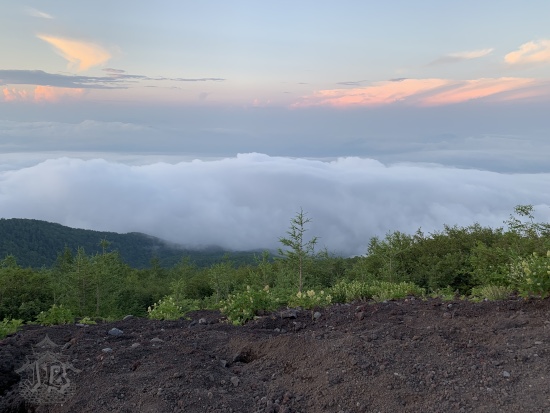
The sea of clouds at the foot of Mount Fuji

Distant lights in the night, down

Mountain huts [富士山の山小屋, Fujisan no yamagoya] are tiny establishments where you can get some food or spend the night for around 10,000 ¥. They often require reservations, usually in Japanese, that is why D****e took charge of that part. Some of them have a bin for rubbish – because you can’t dispose of trash on the slopes, you have to take back what you brought in. They have toilets too, and require a tip. Most of them follow an “honour system” with a small coin box, but some have a guardian to collect the money.

We continued upwards until we made it to our Mountain Hut, Shichigōme Torii sō [七合目 鳥居荘], the Seventh Station’s Torii-so at around 21:00. We had been told it was the one with the red torii, and it was a sight for sore eyes. It stands at 2,900 metres high, closer to the Eight Station than the Seventh – we had expected to find it sooner due to the name.

A torii gate lit up in the dark

D****e had booked a bed and a meal. As we came into the hut, our staffs and backpacks were hung over the door, and we were given bags for our shoes and personal effects. We had a small riff-raff with the owners, because they claimed that we had arrived too late for food. However, D****e argued that the webpage said nothing about a time limit. Thus, we got some curry and rice as the dinner we had booked.
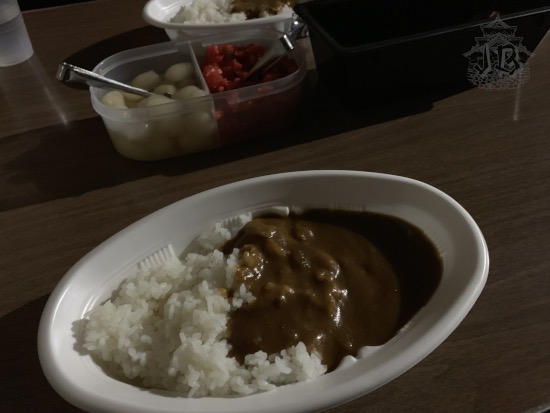
A dish of curry and rice.

Around 22:00, we used the toilet, and then we were shown to the common dormitory – the bed bunks are basically a line of futons put together so you share a blanket with the person next to you. The idiot I had to share with decided to lie on the blanket instead of under it, so she had me uncovered half the time until she left.

Thankfully, at around 23:00 there was a call for people who wanted to set off in time to see sunset from the summit, and she got going. Between getting uncovered, and lying down too soon after food, I started feeling queasy. I freaked out a little. I started turning in my head that I was going to get sick and not get to the summit and have to be evacuated. D****e helped me calm down and I managed to get a few hours of sleep.

But just a few. We were woken up by the noise around us around 4:15. I felt strangely not tired, and D****e indulged me. Thus, we got up and went outside to see sunrise. Sunrise from Mount Fuji!!! I mean… I can’t even. Unfortunately (and ironically) we left too early to get the stamp from our own hut! We continued our way and had breakfast at the next big rock where we could sit down.
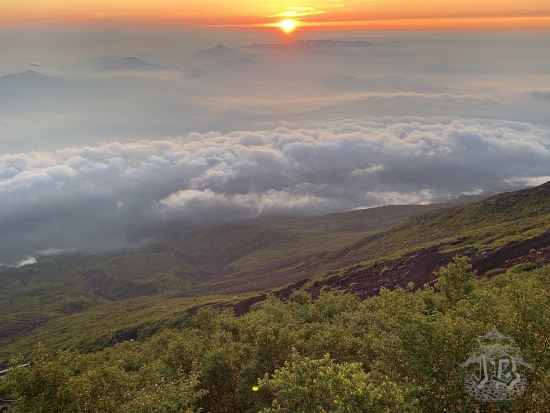
Sunrise from the slopes of Mount Fuji.

After coffee (yes, I’m addicted enough to carry coffee to Mount Fuji), we went on hiking. To be honest this second day was not as bad as I had imagined – as in I was rather convinced that I was not going to be able to make it, especially during the night freak-out. My painkillers kicked in and I only felt a small buzz in my ears as pressure changed.

It did not take too long to arrive at the New Eighth Station (3,100 m). Once again the trail became irregular, which on one hand was tiresome, but at the same time, it was not tedious, so it did not feel as hard. Gloves were useful for this part of the hike, as I could hold on to things. We continued up to the Original 8th Station (3,400 m).

After the Original Eighth Station the trail became path-like again, with torii and stairs and fewer rocks you had to climb over, but a bunch of smaller ones that you had to step up on. Here I learnt to appreciate the actual usefulness of my staff. Vegetation disappeared gradually until the ground was barren.

I think I lost my gloves at the Ninth Station. We saw a group of people evacuating an injured / ill climber – we mentally awarded them like a million karma points, and after getting the injured person to help, they happily went back up again. One of them told us their group does it every year. I remember hugging some torii on the way, and a thousand thoughts twirling in my head.
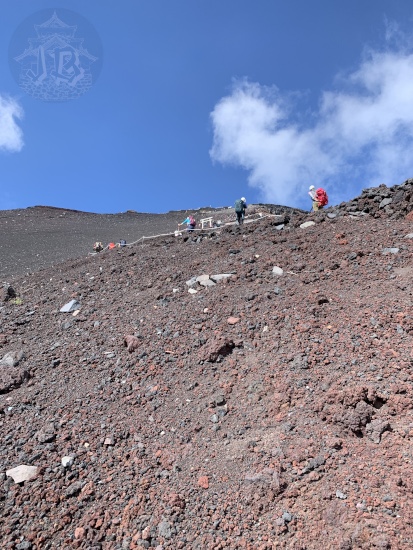
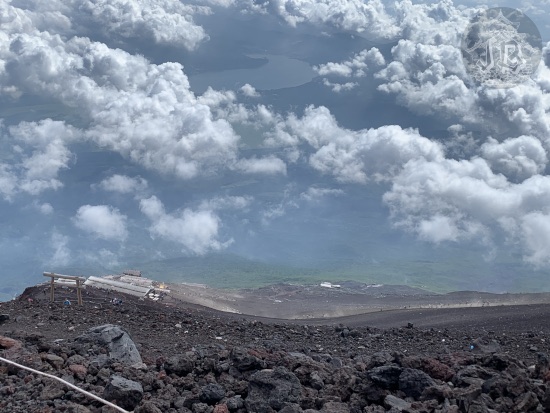
Area closer to the summit of Mount Fuji. There is no vegetation and the ground looks reddish and more like gravel than actual rock.

Looking down from the barren area, there are clouds and a river at the foothill

And then we made it. Around 11:00 we reached the rim of crater. I could not believe my own eyes when I stepped in front of the shrine Asama Taisha Okumiya Kusushi Jinja [淺間大社 奧宮 久須志神社] and Fuji-san Chōjō Yamaguchi-ya Honten [富士山頂上 山口屋 本店] aka Top of Mt. Fuji Yamaguchi Shop. I had made it. I had beaten my own limits, and reached the crater.
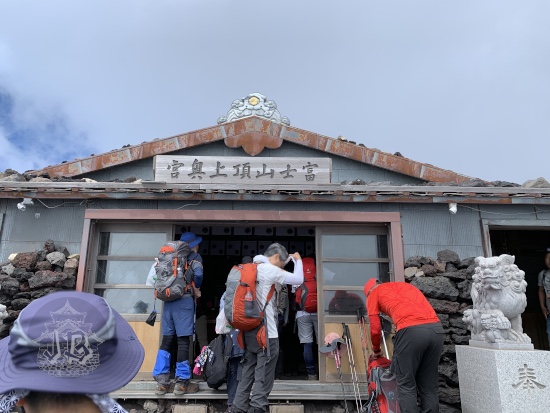
Entrance to the Temple on the Summit of Mount Fuji

Online certificate that you can download using a QR from the Top. It has the date as August 11 2019

Of course I needed to get all the stamps and the shuuin and the exclusive Coca-Cola bottle. We decided not to go around the crater to the highest point, just a handful of metres higher, because it would add some 90 minutes to our trek, and we preferred to just hang around where we were for that long. Because I was at the freaking crater of Mount Fuji! I was the Kami of the Mountain.

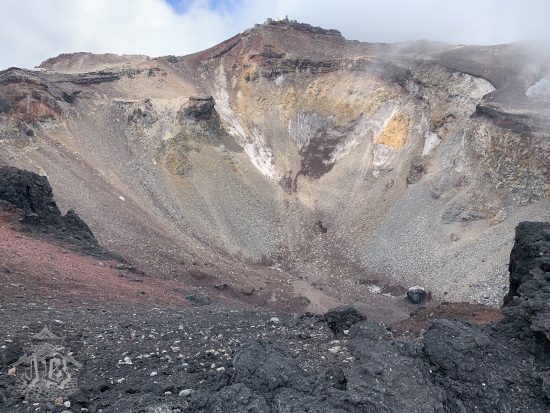
Brim of the crater of Mount Fuji

Crater of Mount Fuji

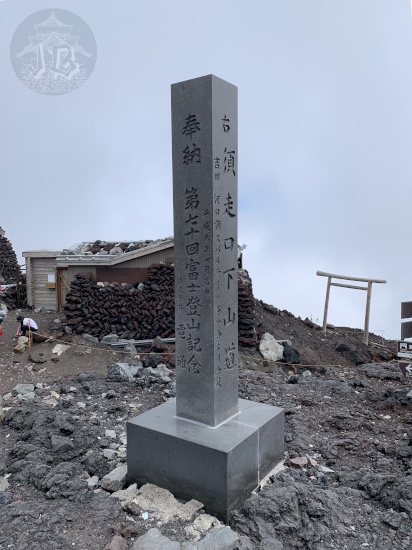
Stone marker at the summit

Cheers with two Mount Fuji exclusive Coca-Cola bottles

Walking around the crater would have been great, but we would be hard-pressed for time for our bus if we took too long. D****e asked me what I wanted to do, and I was happy staying around the crater taking pictures and enjoying the feeling. After an hour or so, we set on our way back down – the trail was a bulldozered zig-zag of gravel, boulders and volcanic sand, and it was even more exhausting than the way up.

It was tricky not to slide and fall. It took us about three hours until we were back to the forest area and the Sixth Station. We reached our Fifth Station around 15:30. I did not fall even once – thank you, Fuji-climbing boots from the Decathlon Children Section for not letting me down, literally!! I also acknowledge that we were super-lucky with the weather, we only had a few clouds just under the crater, and it was not too cold even for me – and no rain, which would have made the experience miserable.
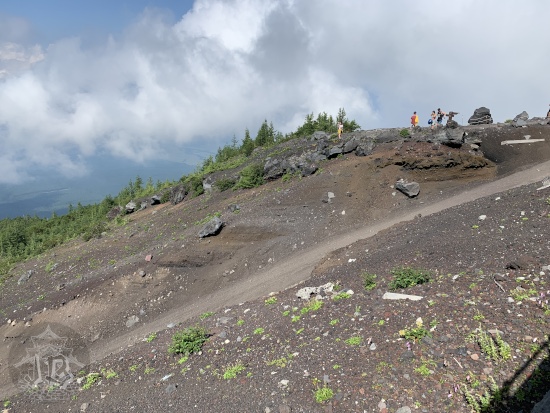
The path down, bulldozered into a straight line.

We actually made it with some time to catch our bus, so we looked at the souvenir shops and Fujisankomitake Jinja [冨士山小御嶽神社].

A colourful and crowded shrine. A lot of the tourists in front of it are wearing shoes that were definitely not made for climbing.

My made-for-climbing shoes, and lower jeans, which were originally blue, looking orange due to the volcanic dust.

As we left, we could see Mount Fuji in all its glory, and I could not believe that I had actually been up there! The total experience had taken a bit over 27 hours, and it was exhausting but exhilarating.

View of Mount Fuji from the bus

However, the downfall had to come, and it came in the bus, about 20 minutes into the ride home – once I stopped moving, my body completely shut down in pain. My back cramped, headache hit, left knee got stuck, and the road trip was horrible. I did not want to have any dinner even if I knew I needed it, but a hot pot in the conbini managed to draw me and it was exactly what I needed!

Hot pot with vegetables, mushrooms and pork

Walked distance: 10th: 9988 steps / 7.14 km; 11th: 21107 steps / 15.1 km. However! The damn watch does not take into account that I CLIMBED A VOLCANO!! I mean, come on! Some of those steps had a 70 cm difference in height! I managed to do it, and I feel damn proud of myself for it, and I will forever proudly display my Fuji-climbing stick as proof of the feat. Also, just so you know 11th of August is Yama no Hi [山の日] (Mountain Day) so this was ironically well-timed, even if by pure chance!

The walking cane I used, covered in hot-iron stamps.

I know that hundreds of people climb Fuji-san every year, but for me those almost 3,776 metres represent something special. It was my very own challenge, something I never thought I would be able to do, and yet I managed. I was extremely proud of myself. I think it helped me become more adventurous, as I found out that I could really push my limits. There was a price to pay afterwards, yes. But I had made it and I don’t regret it (I did regret it a bit the following day going down the stairs though. But not much). I was the Kami of the Mountain.

6th August 2019: Tokyo & Yokohama Book Off Rally {Japan, summer 2019}

To be honest, this was a weird day because my mind was full with some personal stuff, so I just wanted to keep busy. I did a Book Off marathon and I found a lot of interesting things, both in Tokyo and Yokohama [横浜市]. I wanted to visit the Tower there, but it was closed for renovation!
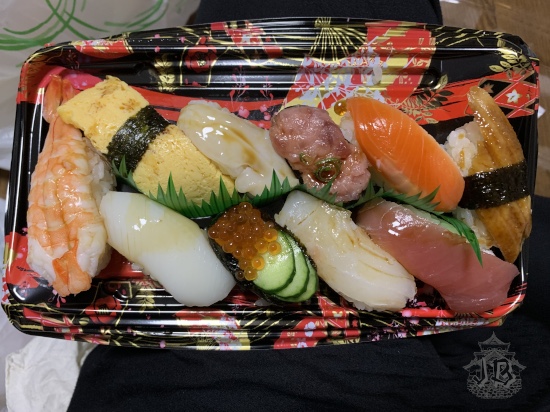
At 6pm I met up with Sr-san for way beyond amazing sushi! Lots of new things to try too!

In the end what I was worried about was solved ε-(´・`) フ and I went back without any problems (on the way out the regular train line was down).

Walked distance: 17438 steps / 12.4 km.

4th August 2019: Gastronomy Day {Japan, summer 2019}

I took an early shinkansen back from Nagoya to Tokyo [東京] because I was out early the day before and thus up at an insane hour. I was on the train before 9AM for sure (≧▽≦). I have witnesses!

And in Tokyo… basically I had lunch with D****e, curry soup, in Nakano [中野]:

We said hi to the Doraemon [ドラえもん] in Roppongi [六本木].

Then we went for lamb shabu-shabu for dinner…

And that was it. There went my diet.

Walked distance: 17978 steps / 12.8 km… somehow. From the hotel to Nagoya station, and then from Nakano Station to D****e’s house (oh, wait, I got lost on the way, that explains a lot). Then back to Nakano Station area for lunch, and once more to D****e’s house, and then to the station? Yes? Okay (≧▽≦).)

3rd August 2019: Higashiyama Sky Tower and ELL {Japan, summer 2019}

In the morning I headed out of the Nagoya centre and to Higashiyama Sky Tower [東山スカイタワー]. This was a bit far out and I had slept in – did I mention tiredness catching up? I also considered the zoo/aquarium but in the end I decided against it.

A collage of the Higashiyama Sky tower, a rectangular building with a cylindrical core, mostly built in glass and metal. The smaller pictures show the view of the park, and the earthquake damper

I had an amazing lunch set in the shopping mall underneath / connected to Nagoya Station on my way back.

Lunch set: cold soba, white rice, breaded prawns, pickles, and green tea

Then I headed out for Electric Lady Land. To increase my chances of actually seeing KAMIJO this summer, I balloted for two concerts of the 2019 Japan Tour Persona Grata through the fanclub Rose-Croix international. I was lucky enough to hit for both. When I arrived at the venue, I queued to buy goods – I only wanted the collectible badge, but ended up getting way too many. I waited around, and this time, the Japanese members of the fanclub were let in before the international ones. We did not get a physical ticket, either, just the passport and the reference ticket were enough.

Notice reading ell. Fits all. Japan Tour 19 Persona Grata. Kamijo. Open 18:30, Start 19:00

ELL is a small venue and we were not many people there for the concert – it was strange that there were so much people in Tokyo to fill up the Blitz, but not enough in Nagoya to fill ELL. It was a more humble concert, with a smaller screen for the projections, but it was fun none the less. I was able to stand close to the stage, but I chose the wrong side – I stood left while KAMIJO donned right. I shall learn from that. The set list was the same as the opening concert, which gave me the chance to appreciate the new songs even better. Even if the hall was smaller (tiny, actually) and thus held fewer people, it felt more energetic as attendees were jumping and yelling further – it seemed like the Blitz opening had felt more formal. Glad I got to attend both concerts, never mind how different and similar at the same time they were.

Kamijo Persona Grata poster

Walked distance: 16231 steps / 11.6 km. We don’t trust this measure either as it counts the furutsuke as walking (≧▽≦).