16th June 2024: Southwark, the National Gallery and Kamijo at The Garage {London, England, June 2024}

According to the weather forecast, there was a chance of rain in London in the morning. When I got up and drew the curtains open, it was actually pouring, so I decided to wait the rain out. When I left the hotel around 9:00 to head to the queue, there was still a bit of drizzle which cleared as I was walking. However, when I reached the venue, I was surprised to find a notice on the door “We reserve the right to refuse entry. Anyone queueing before 16:00 will be refused entry.” Ho-kay, that sign had not been there the evening before – or I would have planned accordingly. I shrugged it off and resolved to make the most out of the morning and early afternoon, and be back at 16:00 sharp. I mean, what else could I do, mope at the hotel?

I took the Underground to the London Bridge stop, in Southwark. The first thing I came across was Borough Market, which had never even been in my radar before – I tend to stay on the other bank of the Thames. The market is an Art Decó building designed by Henry Rose in 1851. As a business, it had been in operation for centuries at the time though, and the building would get many refurbishments in the following years. Borough Market claims to be place for sustainable products with a short supply chain. There were wholesalers, coffee brewers, tapas bars and for some reason a bunch of guys yelling that everyone should try their mushroom risotto. The area was packed, and it was almost impossible to get a good picture.

Borough Market

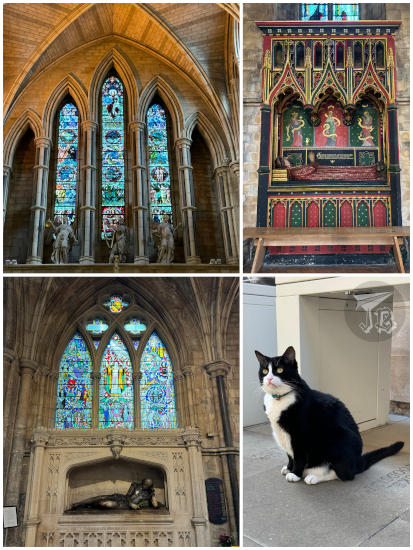
Next to the market, stands Southwark Cathedral, officially Cathedral and Collegiate Church of St Saviour and St Mary Overie. London has four cathedrals: St. Paul and Southwark are Anglican, and Westminster and St. George are Catholic. Southwark Cathedral has stood in place for at least a thousand years. However, there is a legend that places its foundation in the early 600s, and there is archaeological evidence of a Roman road dating even further in time. The current structure is gothic, erected after the previous building was damaged in an area-wide fire in 1212, then transformed with the passing centuries. In the 19th century it was “remedievalised”, and in the 20th it became damaged by the Blitz and requited restoration. Today, it prides itself in being LGTB-friendly and having a resident cat, Hodge. It is also common that a fox, nicknamed Richard, visits the garden. Not sure either keeps the cathedral mouse- or rat-free, or they are too full with treats from the congregation.
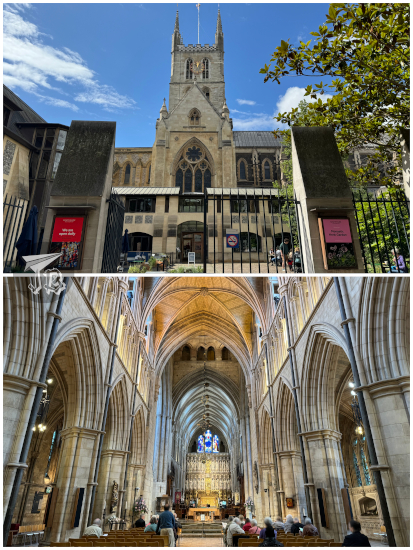
Southwark cathedral - outside and nave

Southwark Cathedral details

After the cathedral, I headed to the actual reason I was in Southwark, The Old Operating Theatre Museum and Herb Garret. The museum is located in the attic of a former church – in other to access it, you have to climb up a spiral staircase with 52 steps, up the bell tower. The church was attached to a medieval hospital, in whose attic (or garret) the apothecaries dried medicinal herbs and stored medicines. In 1822, this garret became an operating theatre, with a huge skylight built in order to let light in – we are talking about a time when surgery was performed without anaesthetics, painkillers or antibiotics. The hospital was abandoned some 40 years later, and the theatre was lost to time, until it was rediscovered in 1952 – it is considered the oldest surviving operating theatre in Europe.

The museum has a small collection of pathology specimens, a bigger one of nightmarish medical tools, and a reconstruction of an apothecary shop, with a counter and a lot of herbs, and informative panels. Funnily enough, it also runs through the history of medicine, and the great London epidemics using… rubber duckies. Not collecting rubber duckies is becoming more and more difficult… Anyway, these particular rubber duckies have been painted and modelled over, and next to them there is a list of symptoms. From those, you need to diagnose the duckie with “silent killers of the past” – measles, tuberculosis, cholera…

The duckies were a good comic relief of sorts from the pathology collection and specimens, the pre-science artefacts, and the history underlying at the theatre itself. The theatre had several rows of stands where people watched / learnt from the operation while the patients were awake – allowing the procedures to be public was the only way poor people had access to medical treatment and the good surgeons. Honestly, the idea of surgery is scary enough, but just thinking about amputation without anaesthetics makes me shiver. Especially when you see what was used for it – basically a handsaw – with spectators.
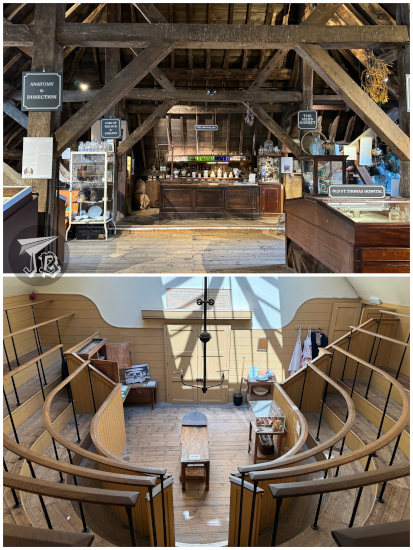
The Old Operating Theatre and apothecary

It was still early afternoon, so I hopped onto the Underground towards Charing Cross and Trafalgar Square. I had not seen The National Gallery London since I was a child, and I remembered next to nothing of it, so I wanted to revisit it. The National Gallery, in the City of Westminster borough, dates back from 1824, when the government bought 38 paintings from a private collector – and it has been continuously expanding since then. The current building was designed by William Wilkings in 1832, and opened in 1838. the collection comprises over 2,000 paintings by 750 artists, among them Giotto, Leonardo da Vinci, Dürer, Michelangelo, Raphael, Tintoretto, Veronesse, El Greco, Caravaggio, Velázquez, van Dyck, Rembrandt, Vermeer, Canaletto, Goya, Constable, Delacroix, Degas, Monet, van Gogh…

Here’s the fun thing, I always thought I liked the impressionists, but it turns out that seeing Monet’s Water Lilies myself was rather underwhelming. Conversely, I found myself enjoying British landscapers a lot, especially Constable. I spent a few hours in here, looking for the masterpieces, but a lot of them were on loan to other sites.
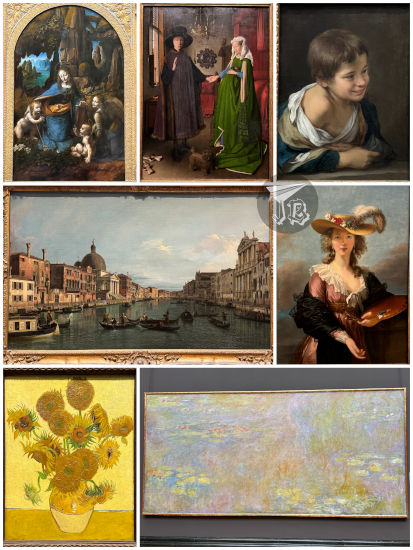
National Gallery London

At one point I was taking a photograph and a gentleman thought he was on my way. When I reassured him he was not bothering me, he said something akin to “That’s because you’re a professional”. I wonder, a professional what? I was not carrying a camera or anything, just the phone…

I did a run throughout the whole gallery, and I was considering staying at the café for a bite, but… I was rather close to Leicester Square… so I thought I could walk there and check if I could have lunch at Coco Curry or somewhere in Chinatown. The line at Coco was rather short – surprisingly, since the Chinatown Coco is always pretty full. Thus, I decided to wait it out and have lunch there – after all, it is the “iconic” one, and the previous time I had only visited the Bond Street shop. I’m not sure when Coco became the feeling of a taste of Japan, but it is one of my favourite food places.
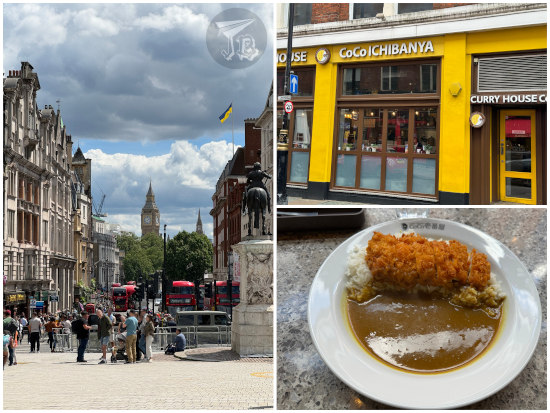
Coco Curry Leicester Square

I had a bit of extra time. Not much for exploring, too long to just stay at the restaurant. I wandered Chinatown a little, and then got to Leicester Square. I’ve been to the Lego store, and the M&Ms place, but there is also a tea boutique, the TWG Tea Shop which I had never stepped into. I did it this time, and I was really tempted by a few of the green teas in pretty tins. I however talked myself out of buying any, since it would be silly to take them to the concert, and if a water bottle is a hazard, I cannot imagine what would be thought of a metal box.

Instead, I headed back to Trafalgar Square and stepped into the church Saint Martin-in-the-Fields. This ancient church was rebuilt in the 1720s by James Gibbs – though it was originally “in the fields”, in the outskirts, by this time it was already part of the city. It is a simple rectangular nave with Corinthian columns and a vaulted ceiling. The church holds choir concerts every Sunday afternoon, and I sat there listening to the music for a bit. I then I headed off to Charing Cross to take the underground towards the venue and the surprise of my life.
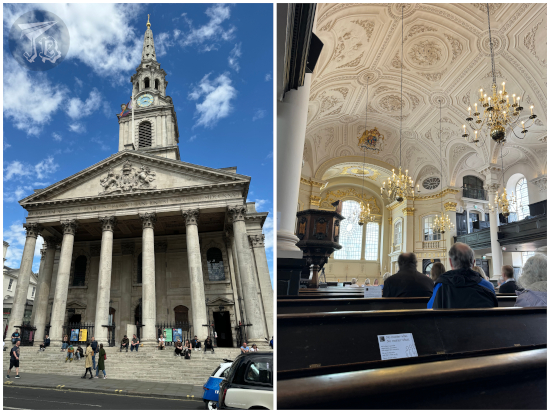
The church of St Martin in the Fields

I arrived at The Garage for Kamijo’s Europa Tour 2024 “The Anthem” at 16:00 sharp thinking the queue would be assembling, but no. Apparently there was some “secret parallel queue” going on somewhere – there were between 40 and 50 people there already, so I only got the 18th place due to my type of ticket. I was a bit disappointed, but oh well, what can you do? Nothing any more, so I did not dwell on it. The promoter had actually sent a schedule in advance, saying that doors would be at 19:00 for the VVIPs and showtime at 20:30. Of course, it would not be followed, but it was good having an approximate timetable.

Queuing was okay, not extremely long since we actually went in around 18:30. There was a lady organising the line and giving out the numbers, and the venue staff were willing to go along that, so even if there was a “secondary queue”, there were no issues that I know of. The venue was a bit weird. There were a couple of stairs and a small hall before the actual concert hall. In that tiny hall, all painted black and stuck between the two fire doors, and under horrible lighting, stood Kamijo and his dazzling smile, ready for the meet and greets and pictures for the VVIPs and handshakes for the VIPs.
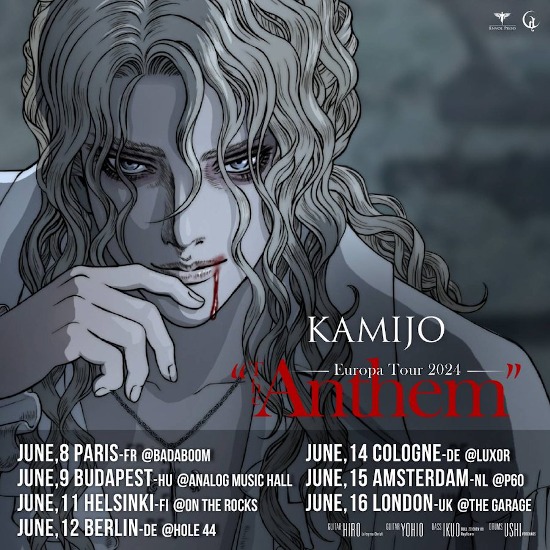
Kamijo The Anthem poster

I walked in, he gave me a warm smile, and said ‘bonjour’. I smiled back. I don’t know whether I’m getting old, or that sitting on the floor with Yoshiki was a game changer for my brain. And despite the fact that I’ve been neglecting my Japanese, I was able to convey my message. He was adorable. I said something like “There is no ‘I’ve missed you’ in Japanese, but it’s really been a long time.” A staff took our picture, he said thank you again, I said thank you back, then walked into the venue. I received my signed poster – a grey A4 signed in black. Apparently, gold or silver markers were out of the budget…

The barrier was almost completely full, but I was able to squeeze on the left, amongst the people I had queued with, closer to the centre of the stage than I had even hoped. Truth is that Kamijo tends to go to the right more often than to the left than the right, but since he holds his microphone with the left hand, you don’t see his face, so I was happy with my place. However, the hour and a half until concert started felt pretty long, since I was quite squeezed in. Maybe I should have sat, I don’t know. The concert started around 20:00, and it was no pictures of videos allowed.

The supporting musicians were Hiro on guitar – Hiro was also the guitar in La’cryma Christi, one of the most important V-kei bands in the 90s. Also on guitar came Yohio, a Swedish artist who managed to break into the Japanese scene a few years back – he actually got a lot of hate at the beginning, so good that he received some love. On bass came Ikuo (Bykk Zeichen 88, Rayflower), and on drums Ushi (Vorchaos). I’m not sure who the sound tech was, but he or she deserves to be yelled at – for about the first third of the concert Kamijo’s microphone was powerless, to the point that his voices was inaudible at times. There were a few songs I did not know (or was unable to identify due to the noise), amongst them the song that gives the tour its name: The Anthem.

Sound was so bad that at times I could not hear what Kamijo was saying, much less understand it. However, he sang two of my favourite songs, Moulin Rouge and Eye of Providence, and I was lucky enough that he repeated my favourite line twice. Despite my being amused by his idealisation of Napoleon, there is a line in Sang I (it took me stupidly long to realise that sang is French for ‘blood’) that resonates a lot with me: ‘Just like flying with the wind: no pain, only gain’. He started the song and interrupted himself halfway to make the musicians greet the audience in English. He either forgot he was going to do an emcee, or since he said it was his favourite song, he wanted to sing it twice.

He had fun, and unlike other times I’ve seen him, he indulged in a lot of “fan service” with the musicians, which sent the crowd screaming. Aside from the sound issue, there was one other hiccup during the concert. At one point Kamijo tripped over a wire, stumbled and ended up almost sitting down on the drums, but he did not fall, which was good.

Setlist:
  1. 闇夜のライオン (Yamiyo no lion)
  2. Conspiracy
emcee, with Kamijo saying he was glad to be back in London, and inviting the audience to go to Paris with him.
  3. Moulin Rouge
  4. The Anthem
  5. Louis 〜艶血のラヴィアンローズ〜 (Louis ~Enketsu no la vie en rose)
  6. 運命 (Unmei)
  7. Eye of Providence
  8. Habsburg
  9. mademoiselle
  10. CRIMSON FAMILY
  11. Castrato
  12. Beautiful Rock’n Roll
  13. 薔薇は美しく散る (Bara wa Utsukushiku Chiru; song by Lareine, Kamijo’s first band)
  14. Sang I & emcee, where the musicians said what the tour had meant for them
  15. Sang II
  16. Nosferatu
emcee
  17. Avec toi〜君と共に〜
  18. NOBLESS OBLIGE part 1
  19. Throne
  20. NOBLESS OBLIGE part 2
  21. Vampire Rock Star

During the emcees Kamijo said that he was glad to be back to Europe / the UK, and that he was especially happy to be in London. He talked about how great the tour had been, and how amazing an audience we were – though he tells that to everyone anyway. All in all, I had a lot of fun, enjoyed myself, clapped during mademoiselle and even jumped (once, I’m not that crazy) during Vampire Rockstar. Whenever his musicians or himself sing / yell the chorus, the words ‘vampire rockstar’ come out as ‘vampire lobster’. This time, he made the audience yell them all, so considering this was London, it sounded correctly for once.
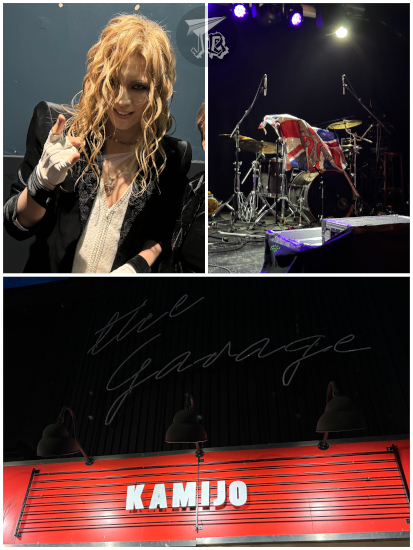
Snippets pre and post Kamijo's The Anthem concert

After the concert, which lasted a bit over two hours, I bought a sandwich at the open-late supermarket next to The Garage, and headed to the hotel for a shower and sleep. I kind of… forgot to go to bed though. God, I love concert highs, as short as they are. It is always hard to come back to reality, but there was still half a day before that.
1st October 2023: The City and North Greenwich {Miyavi in London 2023}

As I was going to drive myself to the airport, I had a parking reservation at 5:00 for my 7:00 flight – you have to love those wee hours of the morning wake-up calls. I reached the airport around 4:55, just as the shuttle was leaving. I didn’t worry too much because there were people at the bus stop though. I found a nice parking spot under cover, but did not see the number on top, so I tried to memorise where I had parked. The shuttle arrived again around 5:25. Security was not a problem, but then I was sent to the automatic passport control, which did not work, and I had to go through manual control. The plane took off and landed on time, and despite the strike warning, the Stansted Express was only delayed 10 or 15 minutes, so I reached London a little after 9:30 – much earlier than I had expected.

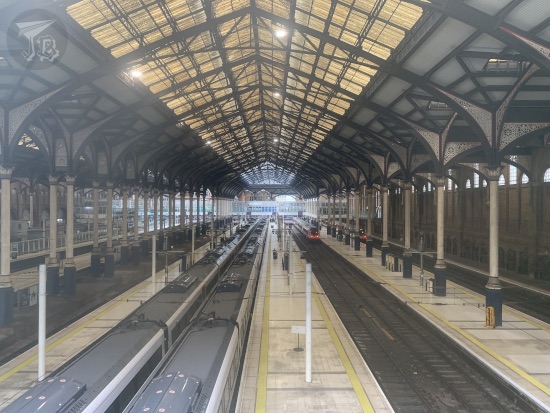
Since I had time – for once – I decided to hang around London Liverpool station, where the Stansted Express terminates. Though I’ve always liked this building, which is actually listed for its historical importance, it is “just” a train station – I somehow have never had the time to explore as I seem to always be in transit. Construction was decided in the early 19th century, and development of the project displaced around 10,000 residents. The station was designed by engineer Edward Wilson, in a Gothic-inspired style in brick and bath stone. He added a trainshed in wrought iron and glass which was restored and expanded in 1894. The Victorian station survived the Blitz, a subsequent renovation in 1975, and it’ll hopefully will make it through the refurbishing proposed in 2022. I went around the station once, and then moved on – they had not cleaned the windows though.

Liverpool street station trainshed ironwork

Well, I went to have a vanilla latte at Costa Coffee, because I love that blasted beverage. I then decided to kill some time around the City of London. I went to Aldgate Square, home to the Church of Saint Botol, a school, and a very fun fountain with lights.

I found The Gherkin and Saint Helen’s Church, which I wanted to visit, but unfortunately they were about to start a service, so in the end I did not go in – I find interrupting religious acts disrespectful, and this was one of those “we welcome you at the door” community services… It would have made it awkward. I realised I had not wandered around The City for a long time (since… 2011), so I checked out some interesting buildings, such as Saint Michael’s Church or The Counting House or the Shanghai Commercial Bank.

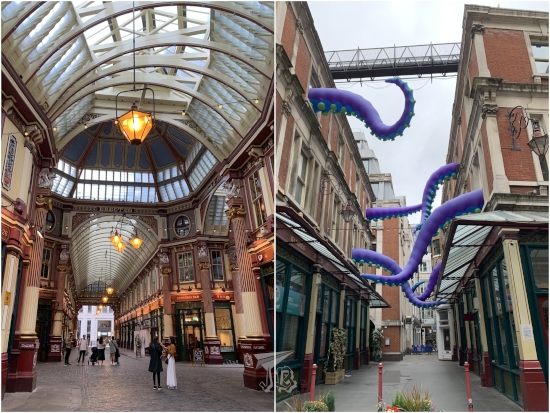
There was a modern-art exhibit going on in the area, but the only work that drew my attention ended up not being even a piece of art. I walked by Leadenhall Market, which was sporting… purple tentacles. It turns out that since 2021 the area has “dressed up” for Hallowe’en! I was not expecting that… Though I have to admit, it’s a fun idea.

Leadenhall market and the purple tentacles

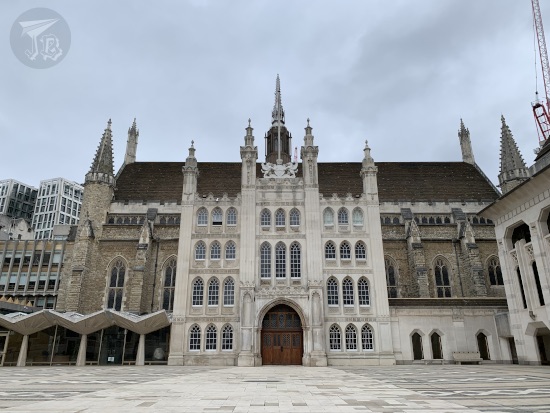
I went towards Bank station, which hosts Mansion House, where the Mayor of London lives, the Royal Bank of Scotland and the Equestrian statue of the Duke of Wellington. I finally reached London’s Guildhall, the old town hall still used for ceremonies and so. It was built between 1410 and 1440, though only part of it remains today. It was damaged in the Great Fire of London, and the façade that can be seen today was added in 1788 in the neo-Gothic style. I did not expect anything to be open, but the Guildhall Art Gallery was. I had less than an hour to my timed ticket somewhere else, so I decided not to go in.

The main façade of the old Guildhall building

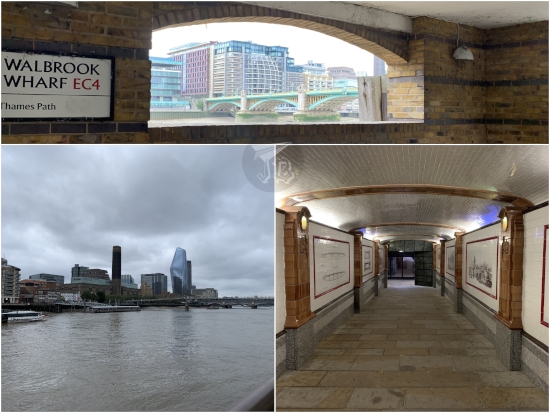
Instead, I walked towards River Thames, passing by Saint Stephen Walbrook church, 1 Queen Victoria building and No 1 Poultry. I reached Walbrook Wharf and the Thames Path / Riverside Walk, including Fruiterers Passage and Millennium Bridge.

Thames Walk in London

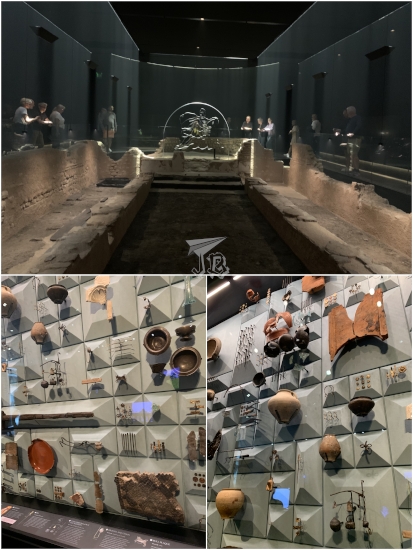
At noon, I had a ticket to London Mithraeum Bloomberg Space. The Roman ruins of a Mithraic temple were found in London. The cult of Mithras flourished throughout the Roman Empire between the 1st and 4th centuries CE. It “recycled” the the Persian god of the sun and justice into the patron of loyalty to the emperor. Mithras is usually representing slaying a bull (tauroctony), though archaeologists are not really sure why. The London temple was discovered in 1952 in a construction area, transported off-site, then brought back to its original position in 2010. Today, it lies in an underground ward in the European HQ of the Bloomerg company. When I connected to the Wi-Fi to read up on the items on display, I received an email that my car had not been detected at the parking lot – and for a second I worried that I had parked in the wrong place, but I knew I had not.

The visit consists on a glass case display with several objects from the Roman era, including sandals, jewels, glassware, even a cabinet. Then there is an audiovisual show that does not make much sense since everybody is walking around wondering what is going on. Finally, you are admitted into the temple, which yields to an “immersive experience”, with a projection of lights and shadows and a few chants in Latin. When the lights go out, you finally get to see the temple. The remains are barely a few foundational stones and a little of the altar. Apparently the actual Mithras sculpture was also dug up, but it is in the Museum of London, closed until 2026. To be honest, it was a bit underwhelming, but after all, I’ve recently done an Italy trip, so I might be hard to impress in that sense at the moment.

London Mithraeum temple and artefacts

I headed to the hotel, but I decided to make a stop at Leicester Square to find two of the Scenes in the Park I had missed last time. I might have also dropped by The LEGO Store Leicester Square because I discovered that there is a Lego Stamp Rally. Of course, I needed to get myself a Lego passport to try and get some stamps. I thought about buying a mug from the M&M’s store, but I decided that I did not want to be carrying it around, and I would get it on my last day if I had the time.

Batman and Laurel & Hardy from LEicester Square Scenes in The park, and a Lego passport

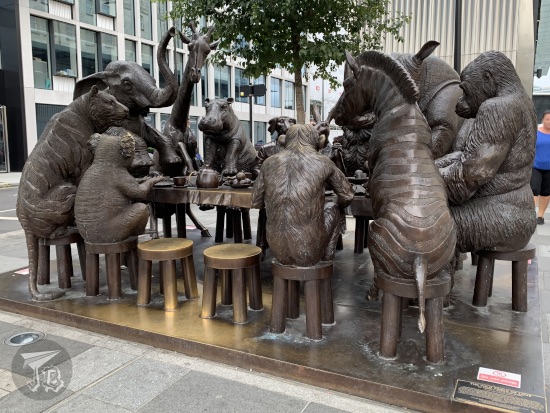
I took the underground to Paddington Station and I stumbled onto the bronze sculpture Wild Table of Love by public art creators Gillie and Marc. Their characters, Rabbitwoman and Dogman, have invited several endangered animals to their table – giraffe, elephant, tiger, koala, chimpanzee, zebra, gorilla, rhino and lion – and there are two free spaces for onlookers to sit and become part of the banquet.

The Wild Table of Love sculpture

I went to my hotel and took a short break before I set off to catch the Jubilee line towards the Greenwich Peninsula in south-east London. I had been there to attend a L’Arc~en~Ciel concert in the O2 Arena a lifetime ago, and I was surprised how much the area had developed. This time over, I was not going to an event but to the building itself, the Millennium Dome, one of the largest structures of its kind in the world. The exterior of the Dome is a huge tent-like construction that pays tribute to the concept of “time” in its design – 365 metres in diameter (for the year’s days), 52 metres high at its highest point (the weeks) and twelve support towers (the months). It was originally built as an exhibition centre to host a number of shows and activities throughout the year 2000. Eventually, the inner structure was built. Today it has the arena and a smaller concert venue for events and concerts, there is a shopping centre and it offers dozens of activities…

One of the experiences that can be carried out is Up at the O2, which takes you on the marquee to the top of the dome and then back again. You are not allowed any bag or rucksack of any kind, and you can only “carry your phone in a jacket zipped jacket pocket”. I cheated and took my wallet in the other pocket. They have shoes to let, vests and jackets if you are not dressed appropriately. You have to sign a waiver and provide an emergency contact

As instructed, I was there fifteen minutes before my scheduled time, 17:30. I was offered a spot at the 17:15 climb and I shrugged into it. I was okay with that. First, you watch a “preparation” video that is more of a self-promo. Then, you are given a climbing harness and a tether, and told to never ever ever get your phone out during the climb – probably to avoid having to pick any little device up from the tent structure, or risking getting sued if they decline to do so. The harness is easier to put on than I thought, and it holds your upper legs and your torso. The first few metres are ascended on a plain outside staircase and the rest on a PVC catwalk that has a railing for you to get tethered to. The guide pranced up and down providing mostly funny commentary, but you could only hear him if you were close.

The steepest point at the catwalk has a thirty-degree inclination, but it did not feel extremely demanding. From the upper platform there are some cool views, especially of Greenwich and Canary Wharf, along with the Thames. The views were cool, and something very different from what you get from places in the city like the Sky Garden. I think I was expecting a bit of a further thrill / exertion though, so even if it was fun, I did not get as much from the experience as I thought.

Up the O2 experience

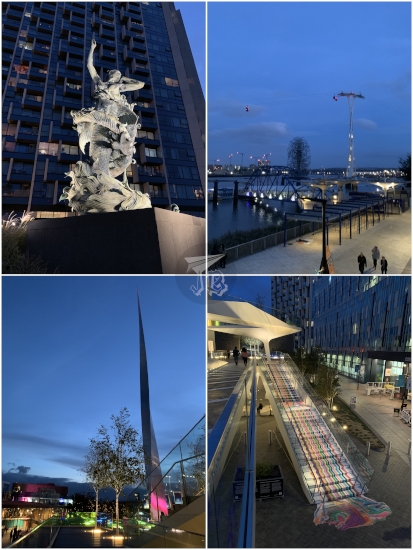
Some staff members take pictures of you that you can buy at the end. You ascend on the front area of the O2 and descend on the rear, so you need to walk all around the inner area to exit – and boy was it crowded with concertgoers (Muse) and dinners. After I walked out, I turned to the side of the O2 Arena where an area called The Tide has been developed. This is a public walkway, sort of an elevated platform with endemic plants sprinkled with public art installation, including The Mermaid by Damien Hirst, or the psychedelic stairs named Poured Staircase by Ian Davenport.

The Tide Greenwhich, showing the Mermaid, the Thames, the Spire and the Melting Staircase

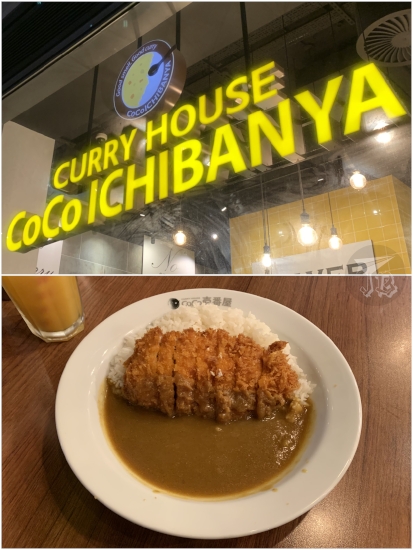
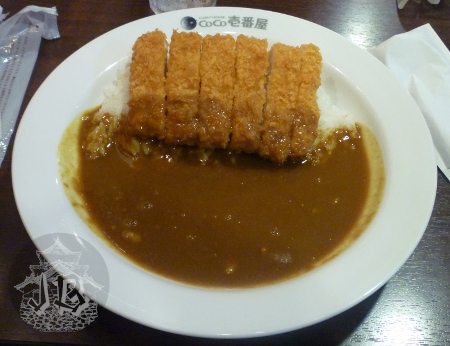
I went back to the underground. I wanted to go to back to Chinatown to try the British version of Curry House CoCo Ichibanya, one of my favourite Japanese chains. Whenever I’ve walked by it around food time, there was a big line. However, when checking online if you can book a table, I discovered that there was another location in Bond Street, which I thought might be less busy. I am not sure it was, or I was lucky with timing, but I did find a spot in that shop within minutes. I was happy to enjoy a hand made chicken katsu curry (手仕込チキンカツカレー), the equivalent to my usual choice in Japan, and be on my way.

London Curry House CoCoICHIBANYA chicken katsu curry

While the hotel bathroom was tiny, it was more than enough for a shower and a change of clothes. Also, despite being so close to the station that one could feel the trains pass by, I slept pretty well until around 7:00.

19th & 20th August 2019: Bye-bye for a while, Japan {Japan, summer 2019}

For my last day full day in Japan, I dropped my luggage off at Shinjuku station and met with D****e for lunch to say goodbye for now. I also got to say goodbye to Tokyo Tower [東京タワー] from Roppongi Hills [六本木ヒルズ].

Lunch was a bit sad, but the yakiniku was very yummy. After she had to come back to work I met with B**** for drinks and wandering around for a while in Shinjuku [新宿]. We mostly sat at Wendy’s, talking and drinking… whatever this is…

And then she took me to CocoCurry for goodbye-curry.

Then she came with me to Nippori station to help me carry my luggage to the train. I was so mentally exhausted that I did not even stop for a stamp at Narita Terminal 1. I had booked myself a hotel for the night at the airport because I felt that was the best thing for my mental health at that time, and I am glad I did. It was very handy and the transport to the terminal was very smooth.

I had been worried about my Fuji-climbing stick, but I had been told I could check it in. I bought a suit-cover which I sewed, and had no problems with it – I mean, I saw people checking-in kayaks, for fuck’s sake. My stick was tiny in comparison to that! The flight back was a-okay, unremarkable, mostly.

Walked distance: 19th: 11099 steps / 7.94 km. 20th: 5045 steps / 3.60 km. The displacement was a bit longer though… something around the 11000 km (≧▽≦)

The 2019 trip was a long one, full of awesome experiences that I won’t forget any time soon. I hope to gather experience from what went wrong, but not cling onto the bad feelings. I chose not to write about that, and look for the best in every day. Also, I did not really feel it, but a bunch of Japanese friends told me that my language skills had improved, so that made me happy. Now it’s time to go back to the real world and do adulty things, and start dreaming about the next adventure. また今度ね。

10th & 11th August 2019: Once in a lifetime – The Great Fuji-san Adventure {Japan, summer 2019}

Mount Fuji aka Fuji-san [富士山] is a special mountain in Japan, both geologically and culturally. Japanese and tourists enjoy Fuji-san in different ways – contemplating it, visiting it, climbing it, going around it… Well… Guess who got into their thick head that they wanted to climb it? raises hand Exactly! Yours truly. I was already toying with the idea back in 2018, but I chickened out. However, as I mentioned before, this one time I wanted to scratch as many things off the bucket list as possible, so… There I went – kinda pushed by a feeling that if I did not do it, by the time I were back in Japan it might be too late as my health is not.… complying lately. But I had not hiked up a mountain before in my life…

Mount Fuji is the most famous mountain in Japan. Its iconic image is everywhere – enamel pins, t-shirts, postcards, classical art… Located around 100 kilometres south-west of Tokyo, it is 3,776.24 metres high, which makes it the highest peak in the country. It was declared a UNESCO World Heritage Site in 2013.

Technically, Fuji-san is neither a mount nor a mountain, but a type of volcano known as a stratovolcano. Its current morphology was shaped by consecutive layers (“strata”) of lava hardening. It is mainly composed by a rock called basalt, and it is one of the few large basalt volcanos in the world. Basaltic lava is rather thick and slow-moving, so there are many lava tunnels and tree moulds created by the eruptions.

Fuji-san, as we know it today, was formed from a previous volcano (Komitake), and became active around 5,000 years ago. Around 2,300 years ago, there was a mud landslide (Gotemba mud flow [御殿場泥流, Gotemba deiryū]) that can still be identified. There have been several historical eruptions, twelve of them between the years 800 and 1083. There was a ten-day eruption of ashes and cinder in the year 864 (Jōgan 6 in the Japanese calendar, based on the different Emperor’s reign; 2019 is Reiwa 1, as current Emperor Naruhito just ascended the throne). In the year 1707 (Hōei 4 in the Japanese calendar), a few weeks after a big earthquake, the last known eruption took place. In the current Japanese Volcanic Alert Level, Mount Fuji is categorised as “Level 1: Potential for increased activity”, which is the lowest level.

Mount Fuji has frequently been depicted in Japanese art, most famously in Katsushika Hokusai’s [葛飾 北斎] Thirty-six Views of Mount Fuji [富嶽三十六景, Fugaku Sanjūrokkei] by, a series of ukiyo-e block prints (which are actually 46). Probably the best known among these is The Great Wave off Kanagawa, one copy of which is displayed at British Museum in London (actually, in 2017 they ran a whole exhibit around it and Hokusai).

Fuji-san is also an important element in the collective spirituality of Japan. In Shinto mythology, the goddess of Mount Fuji is Konohanasakuya-hime [木花咲耶姫]. She is enshrined in Fujinomiya town Fujisan Hongū Sengen Taisha [富士山本宮浅間大社]. Technically, this shrine has owned Mount Fuji since 1609, though there are no current records of ownership. The volcano stands at the boundary between the prefectures of Shizuoka and Yamanashi, and in order to manage the natural area, the Fuji-Hakone-Izu National Park [富士箱根伊豆国立公園, Fuji-Hakone-Izu Kokuritsu Kōen] was established.

Depending on the actual weather, Fuji-climbing season extends from late June or early July to early September. It is not allowed to climb Fuji “off-season” without a permit. However, people do not usually climb the whole mountain, but start quite closer to the summit. There are roads leading up Mount Fuji up to around 3,200 metres, to an area called the Fifth Stations However, no private cars are allowed on those roads.

From the Fifth-Stations there are four trails or paths to the summit, colour-coded to help people find their way, especially on the way down:

  • Yoshida Trail [吉田ルート] (yellow). It starts at the Fuji-Subaru Line 5th Station [富士スバルライン五合目] (Yamanashi Prefecture). This is the trail recommended to “beginners” and thus the most crowded.
  • Subashiri Trail [須走ルート] (red) Head. It starts at the Subashiri Trail 5th Station [須走口五合目] (Shizuoka Prefecture).
  • Gotemba Trail [御殿場ルート] (green). It starts at the Gotemba Trail New 5th Station [御殿場口新五合目] (Shizuoka Prefecture).
  • Fujinomiya Trail [富士宮ルート] (blue). It starts at the Fujinomiya Trail 5th Station [富士宮口五合目] (Shizuoka Prefecture).

When I told D****e that I was planning to try to organise the climb, she did not believe me at first. As she realised I was being serious, she decided that she was crazy enough to want to come with me as “she could not let me do such a thing alone” and actually took over most of the planning, since she had done it before. I would have just found an agency, but I think she was better.

So off we went. As she was working, we organised our hike on a Saturday-Sunday trip weekend trip – and we did not realise until afterwards that we would be climbing during Mountain Day – Yama no Hi [山の日]. We packed snacks, water, and everything we thought we might need – in my case, also gloves which I eventually lost, and a ridiculous amount of layers. D****e was chill, but I was a little worried about all the equipment the Official webpage for Mt. Fuji Climbing said that was needed, including oxygen and helmets. There were also warnings in place, such as your mobile phone battery dying super-fast, or the need for an evacuation plan in case altitude sickness got too much. I was also worried about weather (especially rain) and temperature changes – thus all the layers. She insisted we would be fine.

After a big lunch, we took the Shinjuku Expressway Bus around 16:00 on Saturday the 10th, and arrived at the Fuji Subaru Line Gogōme [富士スバルライン五合目] / Fuji Subaru Line 5th Station at 2,300 m around 17:30. We (she) had booked a mountain hut at the Seventh station so we “only” had to climb two stations, right? Right. Read: wrong.

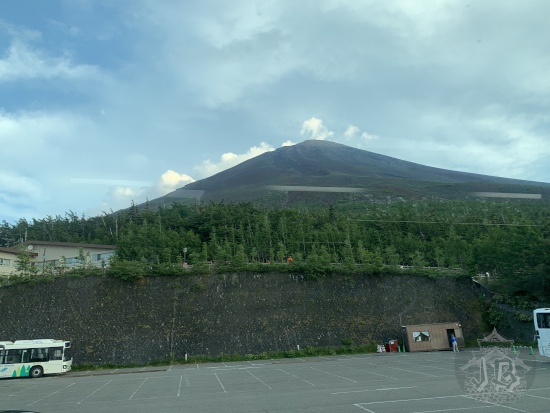
Approaching Mount Fuji: the mountain looms half-hidden by the clouds.

Right about the time of taking this picture it had sunk on me how much of a bad idea this had been (≧▽≦). I really wondered if it was too late to turn back and go home.

A date banner at Mount Fuji 5th Station, reading 2019 08 10

My first step was buying a staff – that we nicknamed the “Fuji-climbing stick”. The idea is that you use it to feel your way around and make sure that you step on solid ground, and especially when you hike down. However, (you’d never guess), you can get stamps burnt into the wooden stick as you hike up – usually for 300 ¥. Climbing Fuji can get expensive… D****e had chosen the Yoshida Trail [吉田ルート] for our ascending side (noborigawa [登り側]). And so… off we went.

From the Fifth Station, looking up at the summit.

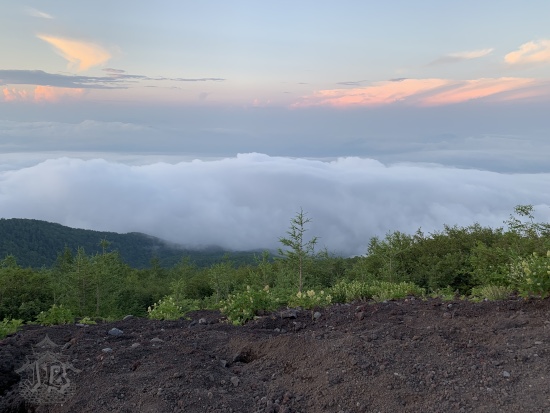
From the Fifth Station, looking down at the car park and a sea of clouds underneath

We started off climbing at around 18:00. Between the Fifth (2,300 m) and the Sixth Stations (2,390 m), you walk along some dirt paths in the forest, and there isn’t really that much “ascension”. As there was also light, the first hour was easy enough. This area is crowded due to all the “visitors” going for a “walk” from one of the Fifth Stations to another. We actually saw someone using up their oxygen at this point. That was weird.

From the Sixth Station there was a first zig-zag upwards, with paths held up by some dams. This is one of the parts I found the hardest, as it is the same inclination all the time and I was not warmed up yet. Then, sunset came, and while it was pretty, it brought darkness upon us (yeah I’m being literary on this). Not that I had a problem with actual darkness, but other people’s torches and headlights kept blinding me, which made the most difficult parts hard to climb – because some people are idiots who point their lights forward and not downwards, where the ground is. Sheesh. There were parts that were just a gentle incline up, while others were stuck rocks or lava flows that you had to climb with your hand and feet.

At the Seventh Station (2,700 m), the path changed and we started. Though there were some slopes, there were also stuck rocks and lava flows that I had to climb with my hands and feet. Fortunately, I could make use of the short stops we made to stamp my staff. Workers of the Mountain Huts use hot irons to burn the stamp into the wood. I think I got all the ones I could on my way up (no stamps on the way down).

The sea of clouds at the foot of Mount Fuji

Distant lights in the night, down

Mountain huts [富士山の山小屋, Fujisan no yamagoya] are tiny establishments where you can get some food or spend the night for around 10,000 ¥. They often require reservations, usually in Japanese, that is why D****e took charge of that part. Some of them have a bin for rubbish – because you can’t dispose of trash on the slopes, you have to take back what you brought in. They have toilets too, and require a tip. Most of them follow an “honour system” with a small coin box, but some have a guardian to collect the money.

We continued upwards until we made it to our Mountain Hut, Shichigōme Torii sō [七合目 鳥居荘], the Seventh Station’s Torii-so at around 21:00. We had been told it was the one with the red torii, and it was a sight for sore eyes. It stands at 2,900 metres high, closer to the Eight Station than the Seventh – we had expected to find it sooner due to the name.

A torii gate lit up in the dark

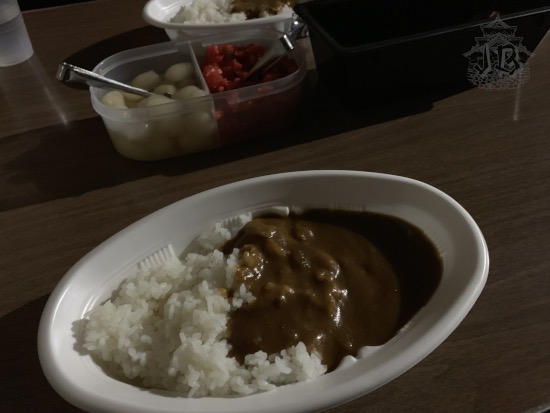
D****e had booked a bed and a meal. As we came into the hut, our staffs and backpacks were hung over the door, and we were given bags for our shoes and personal effects. We had a small riff-raff with the owners, because they claimed that we had arrived too late for food. However, D****e argued that the webpage said nothing about a time limit. Thus, we got some curry and rice as the dinner we had booked.

A dish of curry and rice.

Around 22:00, we used the toilet, and then we were shown to the common dormitory – the bed bunks are basically a line of futons put together so you share a blanket with the person next to you. The idiot I had to share with decided to lie on the blanket instead of under it, so she had me uncovered half the time until she left.

Thankfully, at around 23:00 there was a call for people who wanted to set off in time to see sunset from the summit, and she got going. Between getting uncovered, and lying down too soon after food, I started feeling queasy. I freaked out a little. I started turning in my head that I was going to get sick and not get to the summit and have to be evacuated. D****e helped me calm down and I managed to get a few hours of sleep.

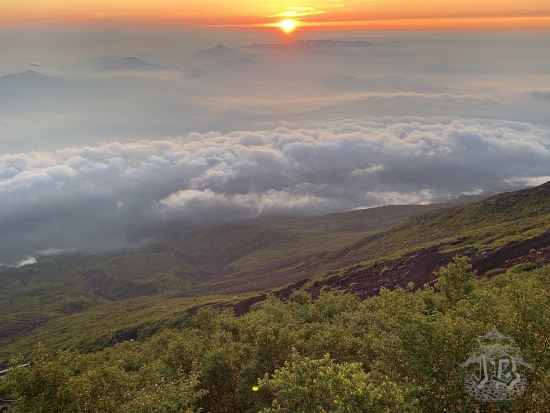
But just a few. We were woken up by the noise around us around 4:15. I felt strangely not tired, and D****e indulged me. Thus, we got up and went outside to see sunrise. Sunrise from Mount Fuji!!! I mean… I can’t even. Unfortunately (and ironically) we left too early to get the stamp from our own hut! We continued our way and had breakfast at the next big rock where we could sit down.

Sunrise from the slopes of Mount Fuji.

After coffee (yes, I’m addicted enough to carry coffee to Mount Fuji), we went on hiking. To be honest this second day was not as bad as I had imagined – as in I was rather convinced that I was not going to be able to make it, especially during the night freak-out. My painkillers kicked in and I only felt a small buzz in my ears as pressure changed.

It did not take too long to arrive at the New Eighth Station (3,100 m). Once again the trail became irregular, which on one hand was tiresome, but at the same time, it was not tedious, so it did not feel as hard. Gloves were useful for this part of the hike, as I could hold on to things. We continued up to the Original 8th Station (3,400 m).

After the Original Eighth Station the trail became path-like again, with torii and stairs and fewer rocks you had to climb over, but a bunch of smaller ones that you had to step up on. Here I learnt to appreciate the actual usefulness of my staff. Vegetation disappeared gradually until the ground was barren.

I think I lost my gloves at the Ninth Station. We saw a group of people evacuating an injured / ill climber – we mentally awarded them like a million karma points, and after getting the injured person to help, they happily went back up again. One of them told us their group does it every year. I remember hugging some torii on the way, and a thousand thoughts twirling in my head.

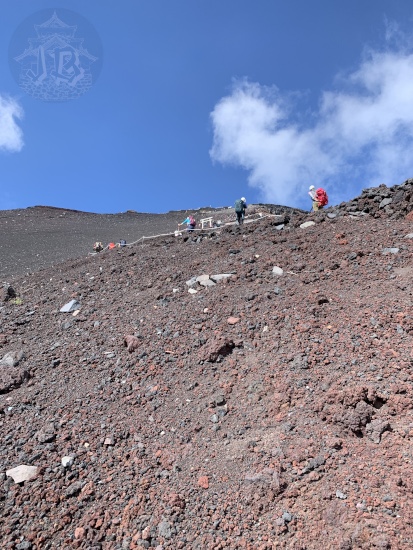
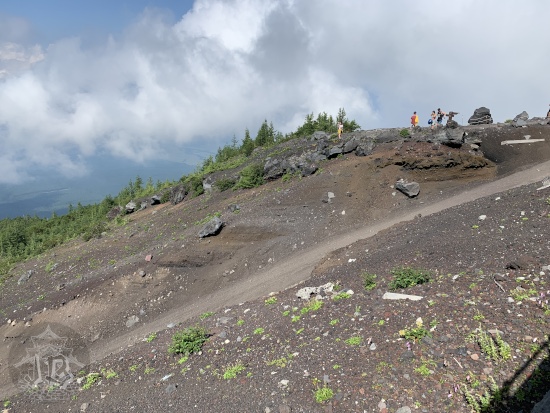
Area closer to the summit of Mount Fuji. There is no vegetation and the ground looks reddish and more like gravel than actual rock.

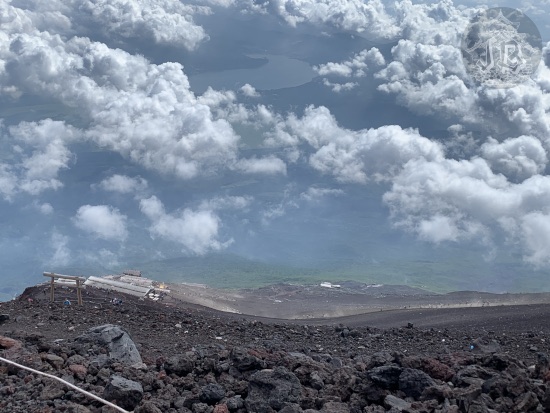
Looking down from the barren area, there are clouds and a river at the foothill

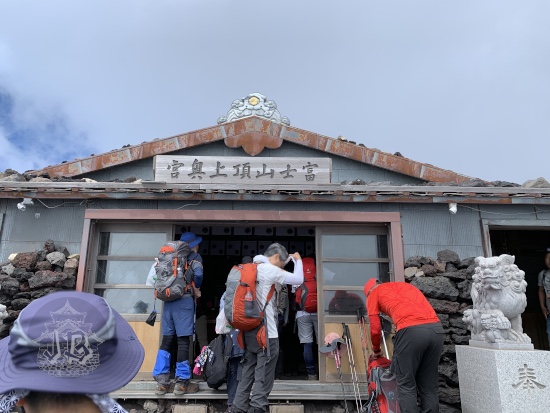
And then we made it. Around 11:00 we reached the rim of crater. I could not believe my own eyes when I stepped in front of the shrine Asama Taisha Okumiya Kusushi Jinja [淺間大社 奧宮 久須志神社] and Fuji-san Chōjō Yamaguchi-ya Honten [富士山頂上 山口屋 本店] aka Top of Mt. Fuji Yamaguchi Shop. I had made it. I had beaten my own limits, and reached the crater.

Entrance to the Temple on the Summit of Mount Fuji

Online certificate that you can download using a QR from the Top. It has the date as August 11 2019

Of course I needed to get all the stamps and the shuuin and the exclusive Coca-Cola bottle. We decided not to go around the crater to the highest point, just a handful of metres higher, because it would add some 90 minutes to our trek, and we preferred to just hang around where we were for that long. Because I was at the freaking crater of Mount Fuji! I was the Kami of the Mountain.

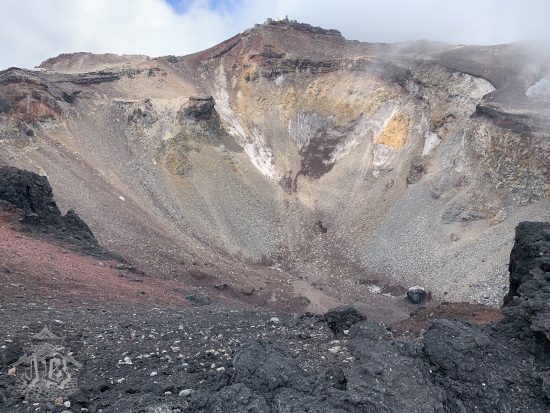
Brim of the crater of Mount Fuji

Crater of Mount Fuji

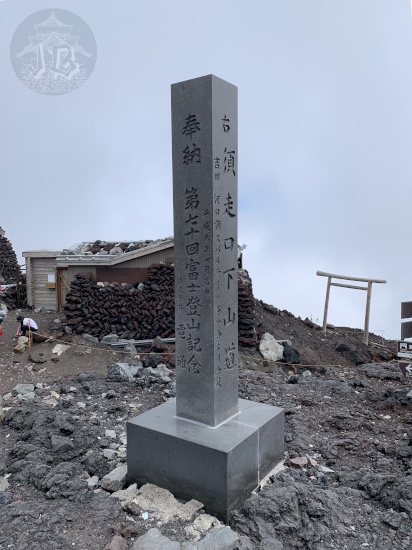
Stone marker at the summit

Cheers with two Mount Fuji exclusive Coca-Cola bottles

Walking around the crater would have been great, but we would be hard-pressed for time for our bus if we took too long. D****e asked me what I wanted to do, and I was happy staying around the crater taking pictures and enjoying the feeling. After an hour or so, we set on our way back down – the trail was a bulldozered zig-zag of gravel, boulders and volcanic sand, and it was even more exhausting than the way up.

It was tricky not to slide and fall. It took us about three hours until we were back to the forest area and the Sixth Station. We reached our Fifth Station around 15:30. I did not fall even once – thank you, Fuji-climbing boots from the Decathlon Children Section for not letting me down, literally!! I also acknowledge that we were super-lucky with the weather, we only had a few clouds just under the crater, and it was not too cold even for me – and no rain, which would have made the experience miserable.

The path down, bulldozered into a straight line.

We actually made it with some time to catch our bus, so we looked at the souvenir shops and Fujisankomitake Jinja [冨士山小御嶽神社].

A colourful and crowded shrine. A lot of the tourists in front of it are wearing shoes that were definitely not made for climbing.

My made-for-climbing shoes, and lower jeans, which were originally blue, looking orange due to the volcanic dust.

As we left, we could see Mount Fuji in all its glory, and I could not believe that I had actually been up there! The total experience had taken a bit over 27 hours, and it was exhausting but exhilarating.

View of Mount Fuji from the bus

However, the downfall had to come, and it came in the bus, about 20 minutes into the ride home – once I stopped moving, my body completely shut down in pain. My back cramped, headache hit, left knee got stuck, and the road trip was horrible. I did not want to have any dinner even if I knew I needed it, but a hot pot in the conbini managed to draw me and it was exactly what I needed!

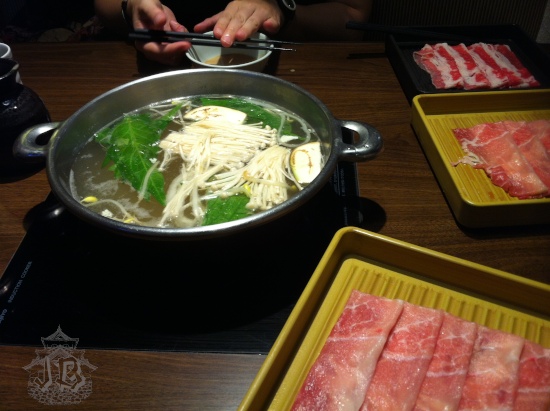
Hot pot with vegetables, mushrooms and pork

Walked distance: 10th: 9988 steps / 7.14 km; 11th: 21107 steps / 15.1 km. However! The damn watch does not take into account that I CLIMBED A VOLCANO!! I mean, come on! Some of those steps had a 70 cm difference in height! I managed to do it, and I feel damn proud of myself for it, and I will forever proudly display my Fuji-climbing stick as proof of the feat. Also, just so you know 11th of August is Yama no Hi [山の日] (Mountain Day) so this was ironically well-timed, even if by pure chance!

The walking cane I used, covered in hot-iron stamps.

I know that hundreds of people climb Fuji-san every year, but for me those almost 3,776 metres represent something special. It was my very own challenge, something I never thought I would be able to do, and yet I managed. I was extremely proud of myself. I think it helped me become more adventurous, as I found out that I could really push my limits. There was a price to pay afterwards, yes. But I had made it and I don’t regret it (I did regret it a bit the following day going down the stairs though. But not much). I was the Kami of the Mountain.

4th August 2019: Gastronomy Day {Japan, summer 2019}

I took an early shinkansen back from Nagoya to Tokyo [東京] because I was out early the day before and thus up at an insane hour. I was on the train before 9AM for sure (≧▽≦). I have witnesses!

And in Tokyo… basically I had lunch with D****e, curry soup, in Nakano [中野]:

We said hi to the Doraemon [ドラえもん] in Roppongi [六本木].

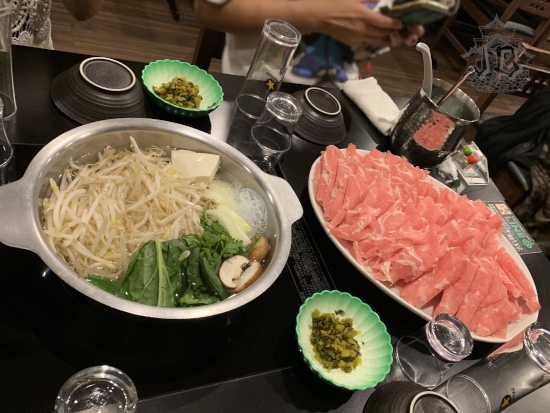
Then we went for lamb shabu-shabu for dinner…

And that was it. There went my diet.

Walked distance: 17978 steps / 12.8 km… somehow. From the hotel to Nagoya station, and then from Nakano Station to D****e’s house (oh, wait, I got lost on the way, that explains a lot). Then back to Nakano Station area for lunch, and once more to D****e’s house, and then to the station? Yes? Okay (≧▽≦).)

18th July 2016: Shopping spree (I) {Japan, summer 2016}

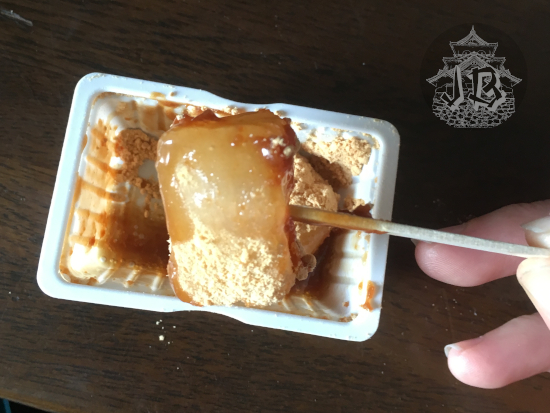
I started the week off with a mochi breakfast that I had received as omiyage (typical present / detail from a particular area). It was delicious!

Japanese sweet pastry on a toothpick

This day I took my first real shopping spree and I headed off for Shinjuku [新宿] and Closet Child & Pure Sound. I ended up in the Pure Sound buying quite a few things, including but not limited to VAMPS DVDs. I had made a friend at Gackt’s Birthday party and she needed to be shown to the shops, so it was the perfect school.

The entrance to Kabukicho district

We also went to Ikebukuro [池袋] for some more shopping and we had lunch at CocoCurry, where I tried the kanikoroke as I was feeling adventurous. As much as I love the chicken, this was an amazing choice!

A curry dish. The sauce is spread at the bottom, and two croquettes stand on the rice

To be honest, I was sore from my fall the previous day and I was staring to feel the tiredness of “doing all the things”, so I took it slow and I just went home after school.

10th July 2016: To the sea {Japan, summer 2016}

I was debating between Nikko and Kamakura, but when I woke up for some reason I felt more like Kamakura [鎌倉]. The day was as awesome as the previous one had been miserable and I headed off to Shinjuku to get myself an Enoshima-Kamakura pass.

Just as I had not liked the sales lady from the museum, the Odakyu sales lady was adorable. She cheered me up (≧∇≦) with her “Woah, you speaking Japanese surprised me” for me, which was quite sincere, by her eyes. After getting the pass, I headed off to the train and got ready for the trip. I was lucky because I could do both parts sitting down in preparation of what was to come. I know Kamakura/Enoshima, you walk a lot.

My first stop was Hase-dera [長谷寺], a temple I had not seen the previous time I had been there. They had a very pretty garden, and I really enjoyed the view and the buildings. It holds a standing Buddha, and they make yummy dango, which I tried.

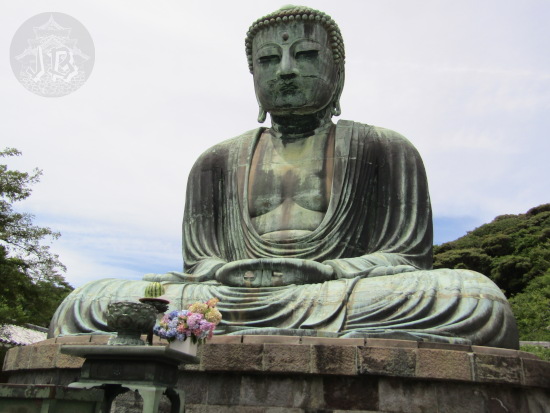
After that I headed off towards Kotoku-in [高徳院], which holds (or does not hold, as the building was long ago destroyed) the Kamakura Daibutsu [鎌倉大仏] (Great Buddha). As impressive as Nara is, I think I like this one more, as the serenity it transmits is quite amazing. Two university students came to ask me a few questions and they were horribly nice, they wanted to know how I knew Kamakura, and what was the best / worst about service in Japan. I think I broke their stats, but they treated me to a sweet.

I really wanted to go back to Tsurugaoka Hachimangu [鶴岡八幡宮], which is a Shinto Shrine in Kamakura, a bit away from the other two, so I used my unlimited-trips-in-the-area pass and went to the corresponding station. The shrine was just as I remembered. The fun part now is hunting down the Shrine and Temple seals. While I do love the omamori, the calligraphy is more affordable and keeps better.

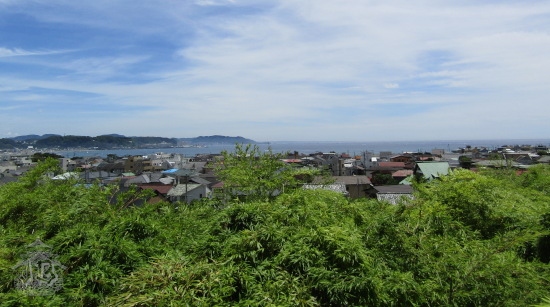
Finally, I decided to head off to Enoshima over one of the temples I was considering, just because I wanted to go to Enoshima. And Enoshima [江の島] delivered with the best view of Mount Fuji, Fuji-san [富士山] I’ve ever had. Repeatedly. Changing with time as sun set. And it was amazing.

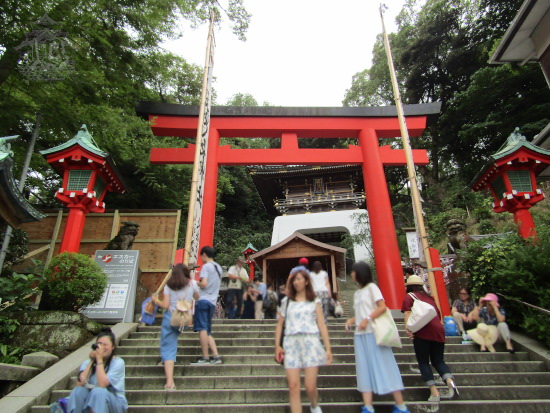
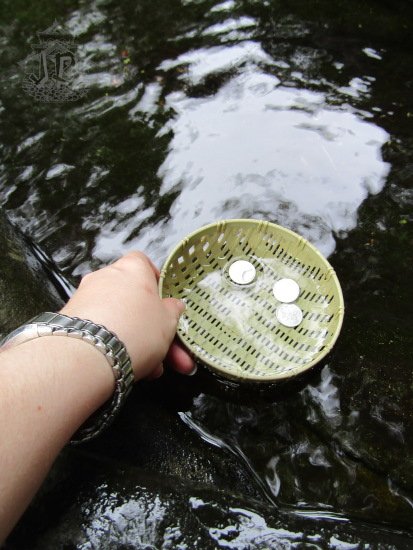
In Enoshima I climbed up to the Enoshima Jinja [江の島神社], I – you guessed it – got my calligraphy, and laundered money.

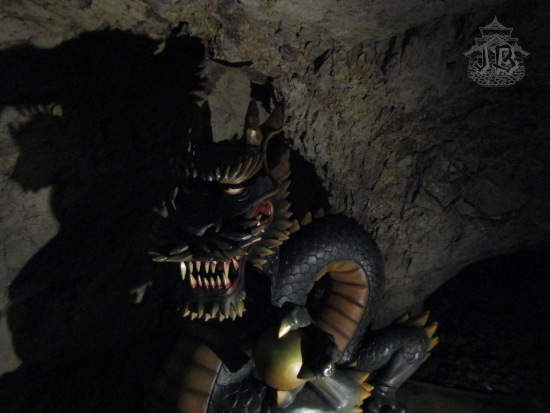
Then I walked around the whole rock until I reached Enoshima Iwaya [江の島岩屋], the Enoshima caves, to visit the dragon – an invoke him with a taiko drum, that you had to hit nikkai (twice) as the girls behind me informed me. They were also very impressed with my technique. If I got something from my taiko workshop, that was how to hold the baton and hit.

There is one thing I did not confess though, and that was that I miiiiight have skipped lunch that day (must see all the things? I ate dango and ice cream! And some yakitori!) so when I came back to Komagome [駒込] I stopped at CocoCurry and had a good dinner, because I was a bit on the ravenous side. Unfortunately, however, the ride back was standing, albeit it was good that I could leave the backpack on the floor.

1st September 2015: Downpour Shibuya {Japan, summer 2015}

D****e and I headed off to Harajuku [原宿] to check out the idol shops, but I wanted a quick visit to Meiji Jingu [明治神宮] to get the calligraphy from there. I had never been able to find out where they did it, and it was good to have some Japanese-speaking person around. We were surprised to walk into some kind of religious parade I still have got to research.

Afterwards, through a downpour, we had a look at Takeshita Doori shops. When it was almost noon we headed off towards Hachiko in Shibuya [渋谷] as we had agreed to meet a friend for lunch – shabu shabu in Shibuya’s Nabezo and then headed off to Cosmo Planetarium Shibuya [コスモプラネタリウム渋谷], which is a really neat place with very comfy chairs that lean back… yep, you guessed it, I zonked out. In my defence, I shall say that… all Japanese and a talk about gravity and I was getting dizzy with the 3D screen…

After a quick visit to Tower Records for a magazine I was looking for (and in the end got a wrong one, but oh well…) we had yet more karaoke (in a huge room) and eventually headed off home to have some CocoCurry.

21st August 2015: Shibuya and Shinjuku {Japan, summer 2015}

I was to meet with D****e in Shibuya [渋谷] as she was coming directly from Haneda that day and we had arranged to meet in Tsutaya – there would be Hachiko meeting point later on, but we wanted something covered, just in case the skies opened.

As it takes a bit to get from Satte to any place downtown Tokyo, I organised myself to be out of the door with enough time to find myself a shrine to visit. Because yes, I can find shrines anywhere in Tokyo and beyond and after a while walking through skyscraper-type buildings, I turned a corner to the Konnō Hachiman-gū [金王八幡宮], which I had not been able to find the previous year due to an Internet failure. I’m still torn about going to Yasukuni Shrine, by the way, which would have been another of my options. On one hand, I would like to come back and get a calligraphy seal; on the other, it would feel like condoning the whole thing Yasukuni means and… I don’t know, I think I have to think harder about that, especially with Abe’s whole revisionist attitude. Meanwhile, this is Konnō Hachiman-gū (which was being repaired so loop-sided picture not to bother the workers), and the little Inari altar located next to it.

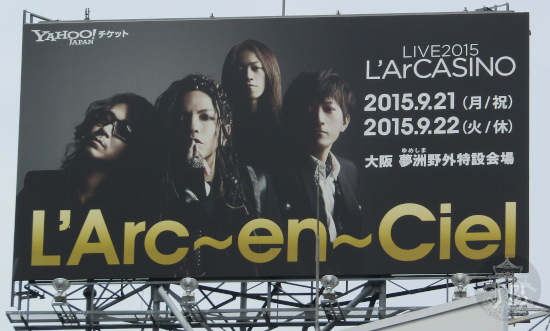
Once the shrine fix was achieved – come on, it was my third day already!! – I headed back to Shibuya [渋谷] to meet with D****e and as I walked back I saw something I had not noticed before, as it had been on the opposite side of the direction I was heading. However, now I could see it straight ahead.

The L’Arc~en~Ciel’s L’ArCasino billboard. Pictures happened. Maybe some inner fanbying too. Did I mention I love my new camera? Cause I do, a lot.

After a while doing experiments with the zoom, I headed off for the Tsutaya floor we were going to meet in, and barely had the time to check out the stuff before she arrived. Afterwards we headed off for the Book Off (which… is changing names?) because we could, and afterwards to the BIC Camera so she could pick up her own SIM card.

She wanted to check out a Shinjuku [新宿] kimono store to see if she found VAMPS’ bat yulata, but we were out of luck and it was already gone. And then there was karaoke, because for some reason there’s always karaoke with her in Shinjuku?

And then there was home and CocoCurry. Finally CocoCurry ♥

22nd August 2014: Re-discovering Zojo-ji {Japan, summer 2014}

After spending the morning with D****e waiting for her suicase to be picked up, we headed off downtown Tokyo. We would separate for a few hours and then meet up to go visit a Japanese friend.

I decided to spend my time revisiting the Zojo-ji [増上寺] and Tokyo Tower [東京タワー] area, because the last time I had passed by I had glimpsed a part of Shiba Koen [芝公園] park that I had not seen before and that seemed open. It actually was, and I got access to the back of the temple. The graveyard was closed down, so I only snooped over the fence.

After this I met with D****e again to go to our Japanese friend’s house, and she made us curry! Actual Japanese homemade curry!

Oh yeah, and we watched VAMPS videos and she gave us a lot of food-presents!

14th August 2014: When trains took forever {Japan, summer 2014}

It started with the train stopping for a few minutes that in the end turned out to be over an hour. Then there was an unexpected train change, and my Internet going crazy which got me lost. In the end my sightseeing morning was crushed to 10 minutes of walking around Shibuya [渋谷] and a Book Off visit.

Lunch was good as we met in the Book Off and headed for a great shabu-shabu. That was very yummy and I probably ate too much of it. But come on! There was wakame to spare and then some!! XD

Afterwards we headed off towards Shinjuku [新宿] to browse Kinokuniya Book Store to buy JLPT study material and, in my case, GACKT’s novelised version of MoonSaga, because I am weird like that. It was raining like crazy, too, so not much stuff to do outdoors, and shrines would already be closed by that time, so I was feeling rather unaccomplished.

We ended up heading off to the Tokyo Metropolitan Government Building, Tōkyō Tochō [東京都庁], to watch sunset – which did not work as it was cloudy – and the pretty lights – which were fewer than usual because some of the buildings were not as full since it was Obon and many people had head home for the holidays.

Day was finished with CocoCurry. CocoCurry is always good, although I was so intent on reading kana correctly that I ended up messing up the order XD

16th July 2012: Umi no Hi! {Japan, summer 2012}

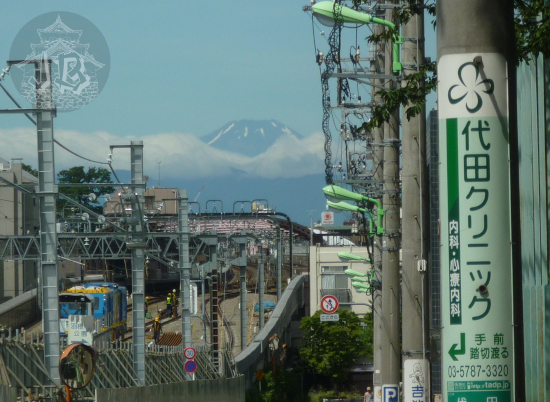
Monday 16th was the third Monday of June, and thus Umi no Hi [海の日], The Day of the Ocean, and it started great – the sky was super clear. That means we were able to see Mount Fuji, Fuji-san [富士山]! I had not seen him since I was here, not even on my way to Osaka because it was cloudy. It is difficult to see Fuji in Summer, so I was really happy to catch him.

The summit of Mount Fuji peering up through the clouds at the end of a downhill street under construction

The morning, however, was to be spent in Yokohama [横浜]. The first stop was Chinatown, where I got to meet an old ‘friend’ of mine, whom I had been craving to see for a long time, in one of the temples. But that is its own story. (Basically: I got to see a dragon sculpture I loved).

The entrance to Chinatown - an ellaborate gate with Chinese characters, decorated in bright colours - red, blue, gold, green...

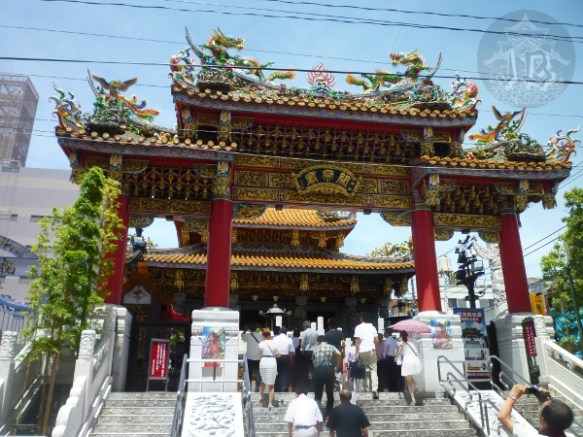
In Chinatown we visited Kwan Tai Temple [関帝廟]

An ellaborate temple with guarding dragons on top, over a flight of stairs. The colours are very bright, but the stairs are white.

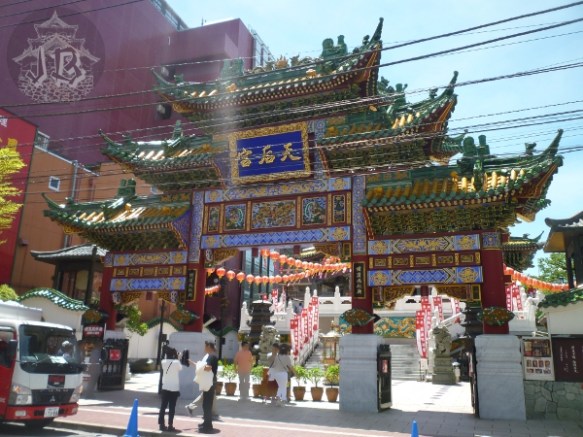
And Kanteibyō / Kuan Ti Miao Temple [関帝廟 / 中華会館].

An ellaborate temple entrance, with lots of peaks and lanterns behind it

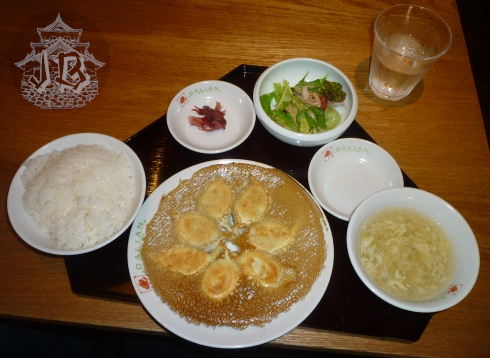
We had lunch in one of the many Chinese restaurants in the area.

Chinese food - rice, dumplings, soup, pickles

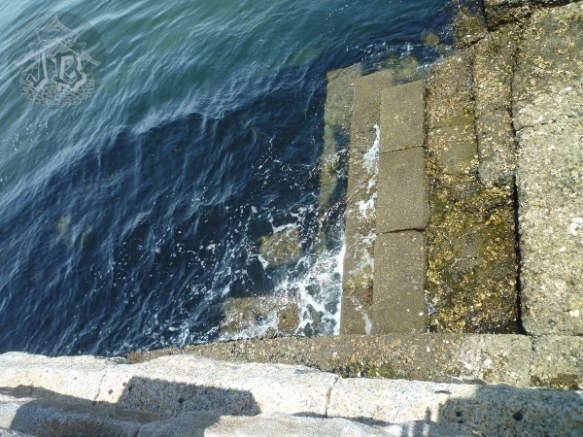
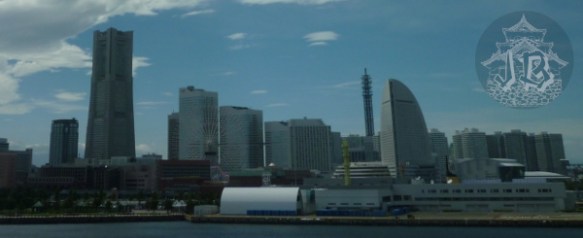
Afterwards we moved to the Port of Yokohama to see waves!! the famous skyline and the Yokohama Bay Bridge, along with lots of pretty ships which were open to visit in celebration of Umi no Hi.

Stairs that disappear into the ocean

Yokohama skyline

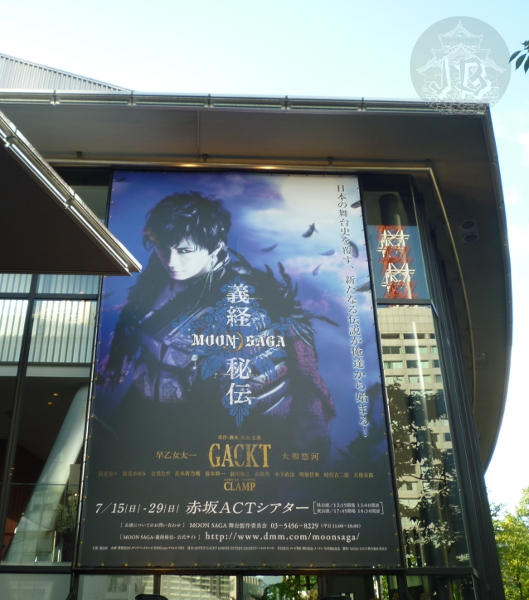
By 5pm, however, we were back in Tokyo because we had tickets to the theatre, more particularly GACKT’s Butai “MOON SAGA ~Yoshitsune Hiden~” at the Akasaka ACT Theater.

Being guionised by CLAMP, I expected a high body count [Spoilers from here] but I was surprised. The play is prepared as part of the whole Moon Saga project, so it does not focus in GACKT, who has surprisingly little stage time playing Yoshitsune. The play has all the elements of a CLAMP story – tragic love, honour debt, child with preternatural power, a few deaths, a character who randomly changes sides but in his heart he still belongs to the original side, main character forced to kill a friend, lots of angst… The butai tells the story of a group of fighters as they embark themselves in a war against the evil mononoke who are destroying Japan. Yoshitsune’s character himself is a half-oni or has an oni inside him, something along.

As I said, GACKT did not have much screen time, and to be completely honest, his spotlight was completely stolen by Saotome Taichi, a barely legal actor who plays Kage (Shadow), one of the good mononoke and who has a beautiful CLAMPian on-stage death.

Yoshinaga, one of the original companions, loses the love of his life, changes sides and tries to kill Yoshitsune, awakening the demon in him. GACKT flies through the stage during the fight and in the end Demon-Yoshitsune kills his old friend. The curtains fall soon after GACKT desperately cries over Yoshinaga’s body. Very sad. Very CLAMP.

The actors come back onstage, they are ovationed. The curtains fall again, the lights remain off. The curtains are drawn, and we are back to the beginning, the companions are alive and well, has it all been a dream? A foreshadow? Is this the companions’ destiny? But no, they are not companions… they are family…

Moon Saga board, showing singer and actor Gackt staring upwards, his eyes are red

[End Spoilers] It seems that when GACKT talks of the Moon Saga project, it means that you need to know all the pieces of the puzzle to understand the story. Each of the pieces seems to be part of a great jigsaw that will come together to form something absolutely amazing.

Well played, GACKT, well played. Now shut up and take my money, because this is going to be EPIC.

After the play, we had some curry at CocoCurry House.

A pork cutlet, breaded, with curry sauce and rice around it