4th January 2025: Bye Bye, Murderbird. MARPA, Alcalá de Henares (Spain)

While it was great to have the Concavenator fossil (a.k.a. Murderbird in my headspace) in the Dragon Hunters exhibit in Alcalá de Henares close enough to visit at will, the time had come to see it move on. Just in case there was any information I was missing, I decided to book a guided visit to the exhibit. As it was scheduled for 12:00, I decided to look for something to do beforehand, and I found guided visits to the monastery Monasterio de San Bernardo at 10:00. I had seen the building before, as it stands next to the MARPA, I just had never given it much of a thought.

The monastery was established under the patronage of Cardinal Bernardo Sandoval y Rojas around 1620. He bought land cheap because it was near the Moorish quarter. The church was erected in brick with decoration in stone on the outside. The inside has an elliptical dome, and it was heavily damaged in a fire during the Civil War, so it had to be restored – the work on it was a Rehabilitation prize in 2019. Most of the decoration of the church was lost and today walls and roof are just white and gold. The building is attributed to architect Juan Gómez de Mora.

There is a free-standing ciborium in gold, with a number of sculptures of Saints instead of an altarpiece. Behind the altar and ciborium, there are a number of paintings – they were created by Italian artist Angelo Nardi. Nardi was born in the late 16th century, and studied in Venice before moving to Madrid, where he became a Court Painter. His style evolved from late-Renaissance (mannerism) to Baroque, and he is known for his expressive faces. He was friends with Velázquez, and famous for being quite kind, though his style eventually fell out of grace. He painted most of the pictures in the church, although some of them are now out of order as they were moved during the Civil War.

The visit was interesting albeit a little underwhelming. It felt a bit weird to be the only visitor and having the whole thing explained to me – that has only happened once before, in Recópolis. However, that was epic, because I ended up getting the whole archaeological place for myself. The monastery was more of a serious experience – and it did not rain on me. But still it felt… colder. And like being in an exam, the guide kept asking me questions about history, architecture and hagiography.

Monastery of San Bernardo in Alcalá de Henares

I had a bit of time before my following visit, so I decided to run to the Sala Museográfica de la BRIPAC, a tiny museum about the history of the Army’s Parachuting Brigade. The Brigade was created in 1953, and the parachuters participated in combat for the first time in 1957. In its origin, it was established in Alcalá, so there is a historical connection there. The hall hosts uniforms, flags, medals, and reports about the peace missions in the 1990s. I am not much of a fan of Armed Forces museums, but today the BRIPAC is considered a peace corps. The museum opened in February 2023, on the 70th anniversary of the foundation.

BRIPAC exhibit

I still had a bit of time, so I dropped by Plaza Cervantes, which was full with Christmas lights and shoppers at the small market. There were food stalls, a small bookshop, some rock shops… Nothing really caught my eye though.

Plaza de Cervantes Christmas

I finally headed back towards the Archaeology and Palaeontology museum MARPA Museo Arqueológico y Paleontológico de la Comunidad de Madrid. It was one of the last chances to see the exhibition on the history of palaeontology “Dragon Hunters” Cazadores de Dragones with a guided visit, and I figured out that maybe I could learn anything new – despite the fact that I’ve been there a few times and bought the book. We had a nice fun guide who relied a lot on asking questions to her audience. Apparently I was the only one with… some knowledge of… anything she asked – what’s with guides in Alcalá de Henares trying to have you do their job? I felt a bit sorry for her so I answered her questions – with a higher success rate than the ones from the Monastery, to be honest. She did not impress me with the depth of her knowledge, to be honest. She actually looked at me a bit panicky when I asked her t confirm that the T-Rex replica was a cast of the famous Stan.
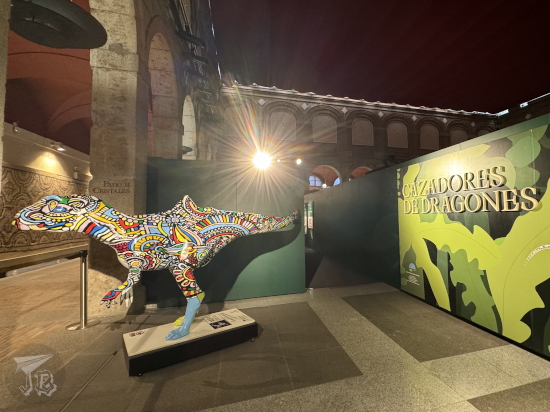
Cazadores de Dragones entry in the cloister of the MARPA

I stayed back for a bit longer after the visit ended. I’ve ranted on and on about the Concavenator before, both the fossil slab and the actual-size reconstruction. I just loved having both so at hand. When I was young, the scientific community came to the conclusion that “birds descend from dinosaurs” but today it is actually believed that birds are actual dinosaurs. And since the poor beast has such a ridiculous name, I’ve just been calling it “Murderbird” or “Murderchicken”, for kicks and giggles.

There were these two little kids who kept grilling their dad about the skeletons, and the poor man was a bit overwhelmed. I decided to give him a hand with the questions and explained a little. I thought that was it, but the smallest child pointed at the Concavenator and blurted out “can you tell us more things about that one??” He was so eager that I just took the family to see it and told them a few things further. The family was on their merry way in five minutes – four-year-olds only have so much attention span. The kids were happy, the parents were relieved and I got to geek out about dinosaurs with appreciative public. I think the interaction was an all-around win.
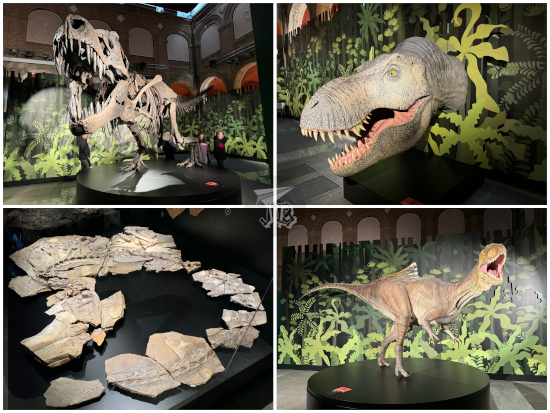
Murderbirds: T-rex and Concavenator

At first I had thought that I would be staying in Alcalá for an exotic lunch, but I was not really feeling up to it. With great sadness, I said goodbye to the Concavenator and moved on to drive home.
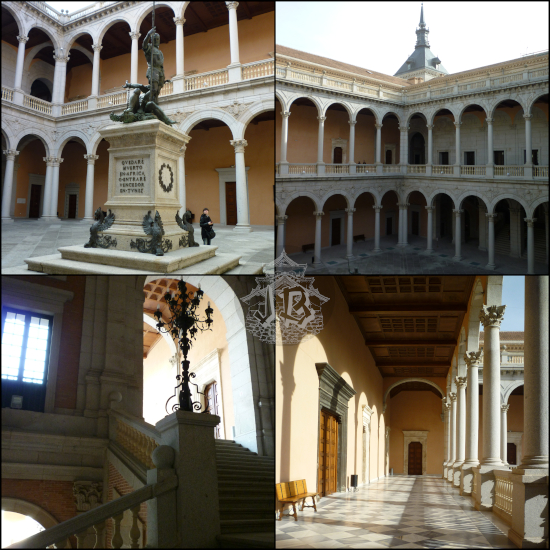
30th December 2013 – 1st January 2014: New Year’s in Toledo (Spain)

30th December 2013: Arrival in Toledo

We took an early train to get to Madrid, and transferred to the high-speed line (AVE) to get to Toledo – the ride from Madrid was barely half an hour. Toledo is known as “the city of the three cultures” as during the Middle Ages, Christians, Muslims and Jews managed to live in peace there, and make it prosper. Today it is a tourist hub in the centre of Spain.

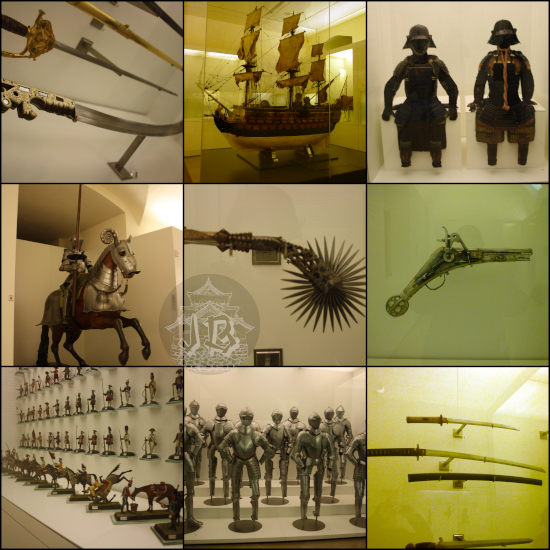
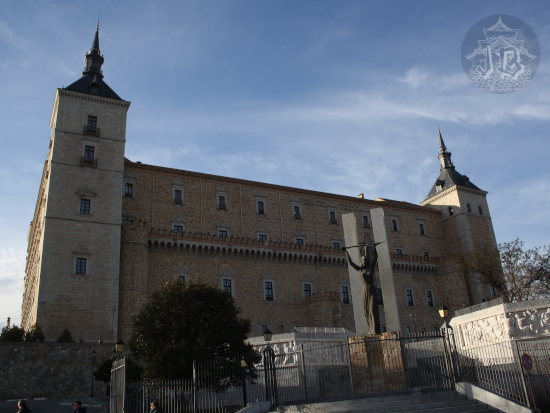
The first thing that we did was head off to the Alcázar (Muslim castle) – although it was originally built by Romans in the third century, its current look is owed to the restoration carried out in the 1540s. However, it had to be restored after the Spanish Civil War. The Siege of the Alcázar was one of the most symbolic victories on the Nationalist band. The Alcázar was under siege during the whole summer by Republicans trying to take it over, but in the end, Nationalist reinforcements arrived, chasing the Republicans away. Today, the Alcázar is an important cultural building (where the bullet holes can still be found) and hosts the Museum of the Army, Museo del Ejército.

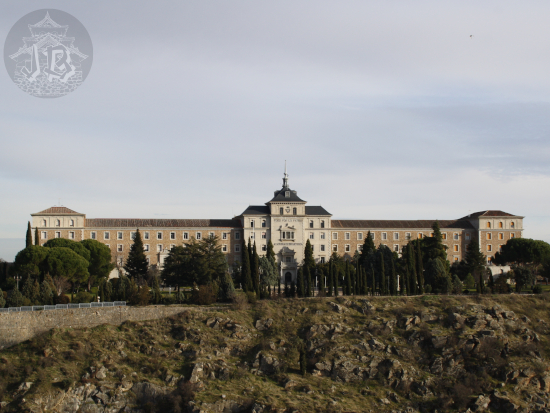
From the vantage point of the Alcázar, we could see the Academia de Infantería (Toledo Infantry Academy), built in the 20th century in imitation of the Renaissance and Herrerian style.

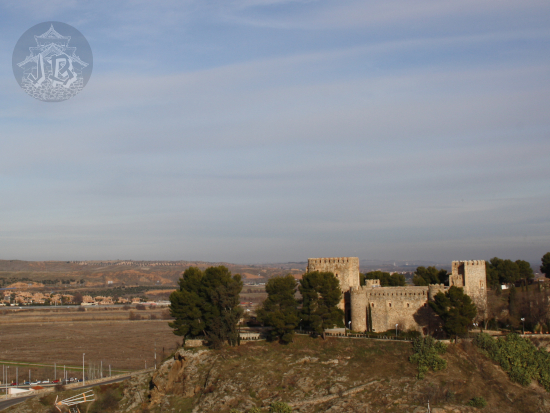
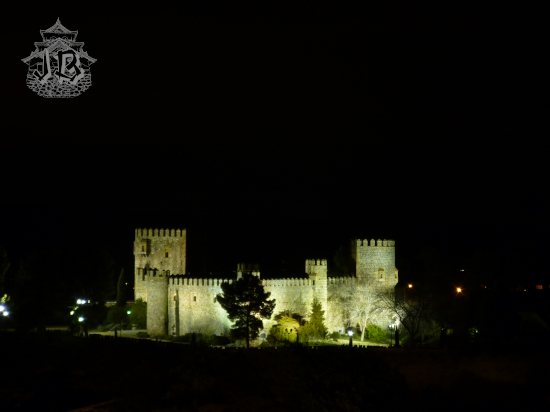
We also saw the Castillo de San Servando, the Castle of San Servando, a fortified Knights Templar enclave. Fine, it started off as a regular monastery, but it was later given to the Knights Templar in order to protect the city.

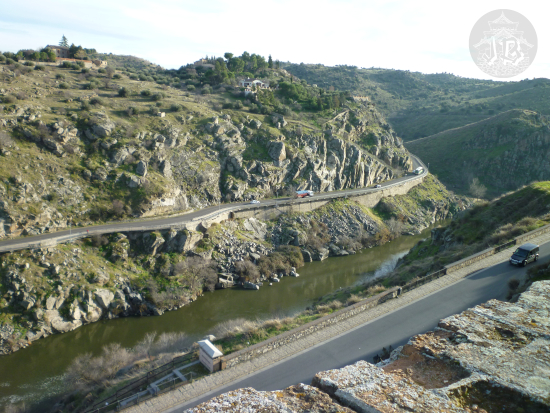
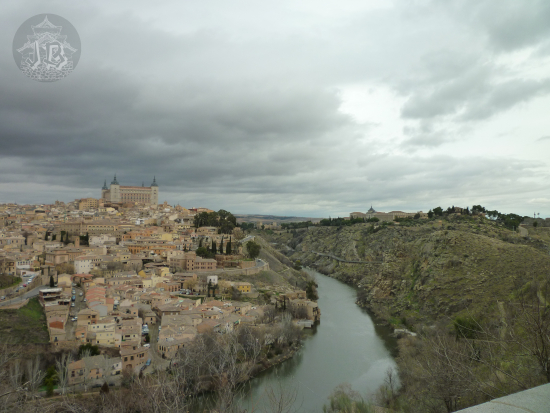
Both buildings are on the other side of the Río Tajo, the Tagus river, the longest river in Spain.

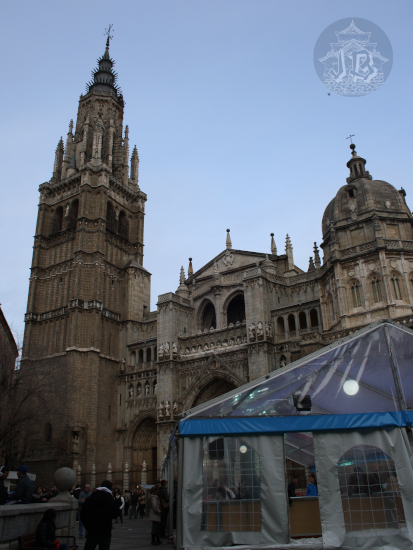
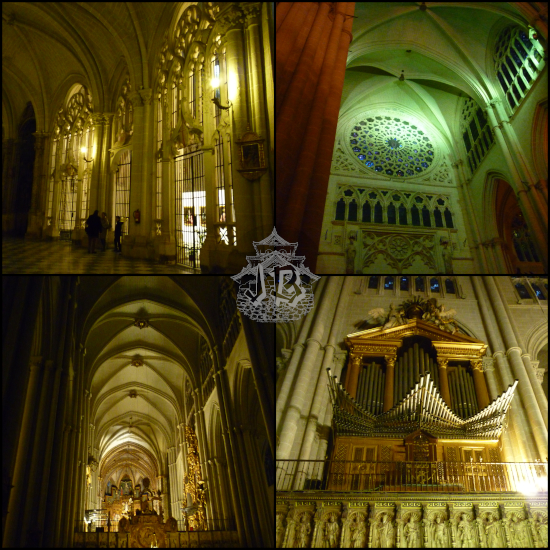
After having lunch and checking into the hotel, we visited the cathedral Catedral Primada Santa María de Toledo (Primate Cathedral of Saint Mary of Toledo). The cathedral, built in Gothic Style, was erected mainly throughout the 13th century, even if it was only finished in the 15th century. It sports two asymmetric towers, well, one tower and a small Mozarabic chapel in place of the other one.

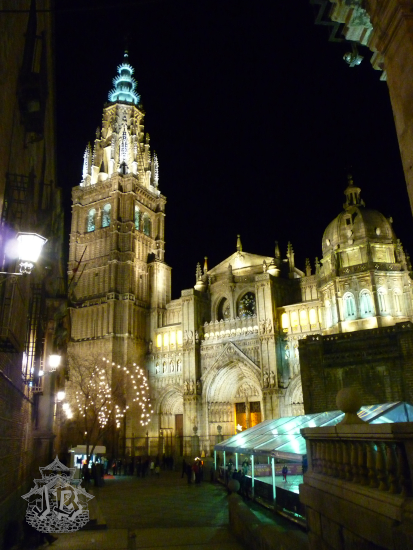
By the time we came out of the cathedral, night had fallen – truth is that we missed a little on the pretty windows due to it being darkish outside already. Nevertheless, this treated us to some nice night views. First of all, of course, the cathedral itself…

The Alcázar once again…

… and the Castle of San Servando.

We then walked through the Plaza de Zocodover, one of the city squares, where the old Muslim for cattle and horses was. The current layout was set in the 16th century after it burnt down in a fire.

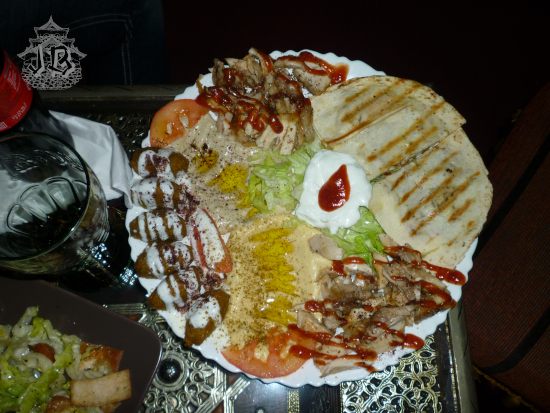
We walked around the old town for a while until we found a place to have dinner, a Middle-East restaurant called La Casa de Damasco, one of the few times I’ve had real food from this area. I have to say I really enjoyed it.

31st December 2013: Churches and Birds

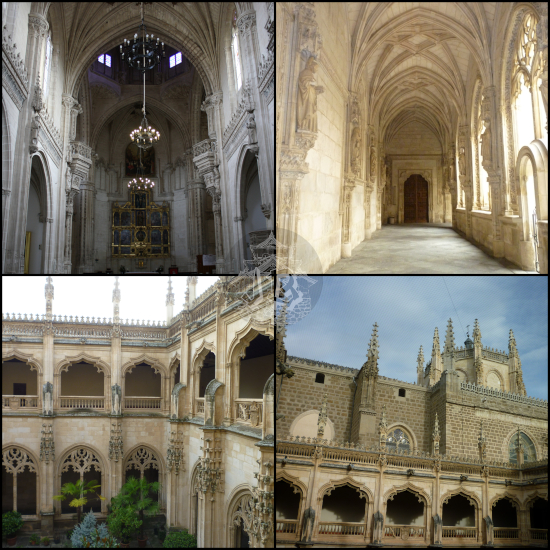
We started off the day at the Monasterio de San Juan de los Reyes (Monastery of Saint John of the Monarchs) is an Isabelline style Franciscan monastery. It was founded by the Catholic Monarchs to celebrate the birth of their son along with their victory in the Battle of Toro, in the late 15th century. It has a beautiful Gothic cloister.

Our next stop was one of those things that breaks my brain, a Christian Mosque, Mezquita del Cristo de la Luz. It was built in the year 999 as Bab-al-Mardum mosque, but it was turned into a Christian Church in 1085. I’m torn between rolling my eyes at Religions needing to assert dominance and being grateful the Mosque was preserved for us to visit.

Close to the Mosque stands one of the gates of the old walls, the Puerta del Sol, the Sun Gate, of the city walls.

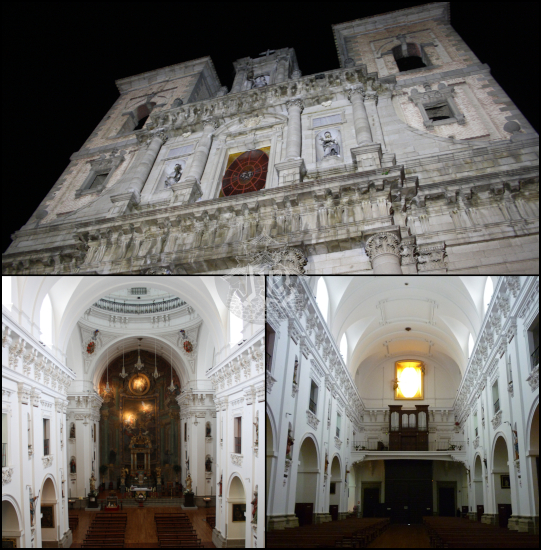
Our next stop the Iglesia Jesuita de San Ildefonso, a church dedicated to Saint Ildefonsus, the patron saint of the city. Construction started in the early 17th century and ended in the mid 18th century, in the Baroque style.

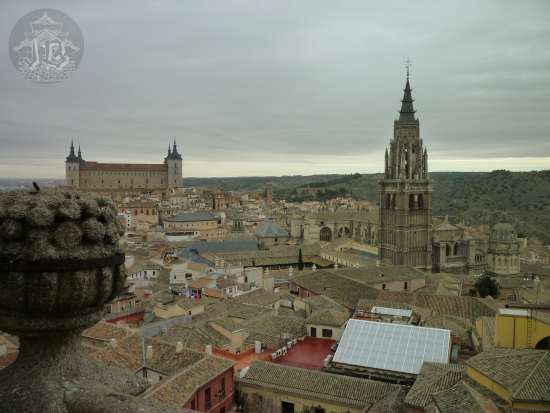
From the upper towers of the church, there was a great view of Toledo.

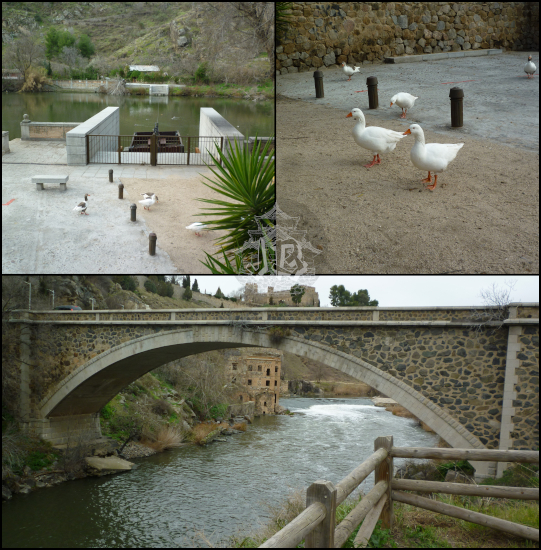
We decided to walk down towards the river, Río Tajo, where we met a flock of geese (which I’m happy to report had not lost their heads to any kind of stupid animal-hurting tradition).

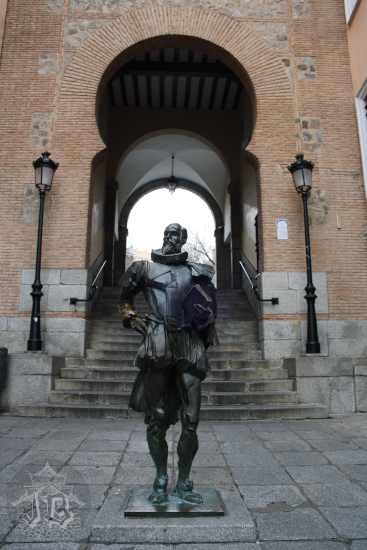
As we continued, we walked past a sculpture to Miguel de Cervantes, Estatua de Miguel de Cervantes, the author of the acclaimed “Don Quijote” book. The statue is placed beyond the Arco de la Sangre , the Blood Archway, that leads into the Zocodover Square.

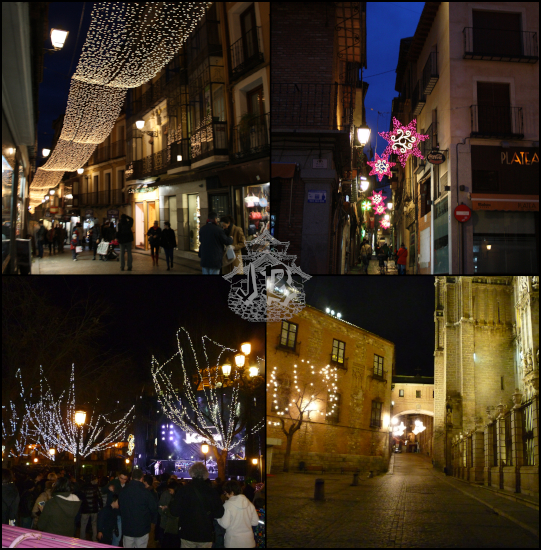
As darkness rose, we had dinner in a Chinese restaurant. While we did, the lights turned on, and the city got ready to welcome the New Year with fireworks.

1st January 2014: Views of Toledo

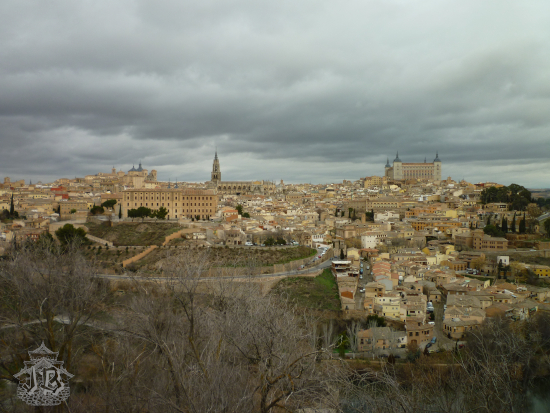
We slept in, and after an early lunch (Chinese, again, as we were feeling decadent), we booked a ride in the “tourist train” that took us to see some of the most amazing views of the Medieval Town from the vantage points on the other side of the Río Tajo.

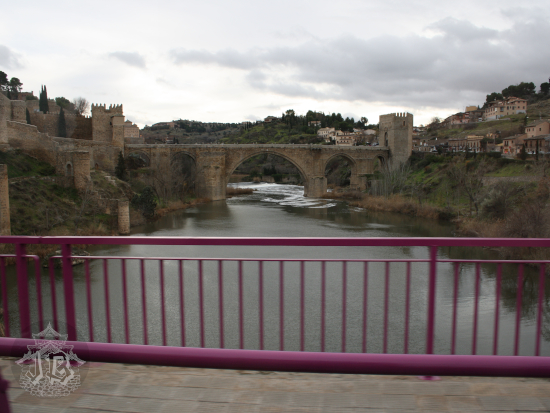
On the way back we saw the Puente de Alcántara, a Roman arch bridge built upon the foundation of the city after the Celtic settlement was taken over.

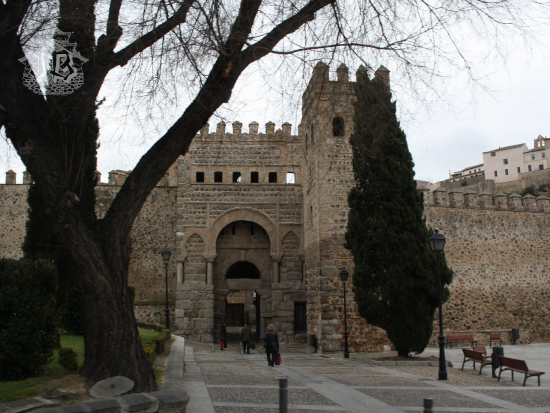
The ride ended up on the other side of the city than the one we had been favouring, so we just walked round the walls that fortify the city, the Murallas de Toledo, which are of Muslim origin over Roman foundations. King Alfonso VI is credited with finishing off the walls, and he named one of the gates after him: Puerta de Alfonso VI.

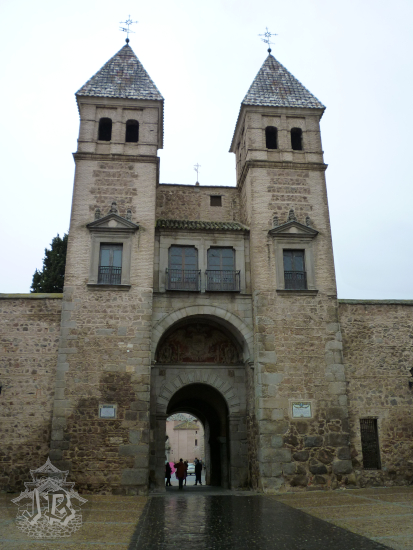
Another of the gates is the Puerta de Bisagra, the last of the monuments we visited before we headed back home the following morning.

One of the creepiest moments in this trip was realising that our key could open a room which was not ours – we got off on the wrong floor and we went down the corridor to the room door, and opened it. It was not our room. We were very quite put off by this, and it turns out that we had a master key. Finding this was a little freaky, and we tried to complain to the hotel. Furthermore, they wanted to charge us for keeping our luggage for a few hours.

Oh, and I caught a cold during our 31st at night escapade. Because of course I did.