22nd January 2026: The workshop that wasn’t (Madrid, Spain)

A while back I visited the printing museum Imprenta municipal in Madrid. I’ve since learnt that they have book-binding workshops, and I would very much like to attend one. So would at least one of my parents, and I was asked to sign them up online for one on the 22nd of January, a day when I was supposed to be at work. My project got delayed, so I ended up workshop-less and a bit envious. Just a bit. There’ll be other chances.

On the 21st, I received a notification that I could pick up some paperwork in town, so we arranged we would have lunch together after I had my documentation and they were done. We would all be taking the train, and I was a bit uneasy. I’ve complained about the railway system before, but just a few days before there had been a horrible train accident that killed over 40 people, and a slightly less horrific one that killed one person.

Though it did feel a bit uncomfortable when the train shook within the rails, we reached Madrid just a few minutes late, and I hopped off. It was extremely cold, not only because it was January, Spain had been hit with a string of storms just one after the other. After getting my documents, I realised I was rather close to the fountain I had missed when I was in the Bravo Murillo area exploring after Expogema, Fuente del Río Lozoya, which honours the river Lozoya, the source of the city’s drinking water. It was my third time trying to find the fountain and… it was getting cleaned, and thus empty and fenced off. I felt it was hilarious.
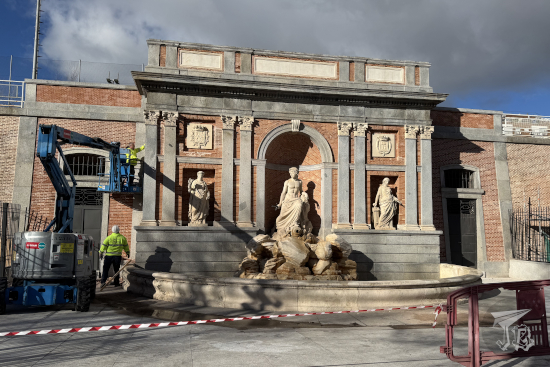
A fountain with female allegory decorations

I headed towards the underground and headed towards Tirso de Molina station. The station opened in 1921, and one of the halls retains the original tiling and decoration, the historical hall – Vestíbulo Histórico de Tirso de Molina, which is considered part of the underground museum network Museos de Metro de Madrid. The station has a bit of a black urban legend / history. It is located underneath the square Plaza de Tirso de Molina, which honours a Spanish friar, dramatist and poet. The square named after him used to be home to his own convent, a building that was expropriated and demolished during the Ecclesiastical confiscations in the 19th century. Apparently, there was a small graveyard associated to the convent, and human remains were found (and quietly reburied behind the walls) during the construction of the station. Creepy.
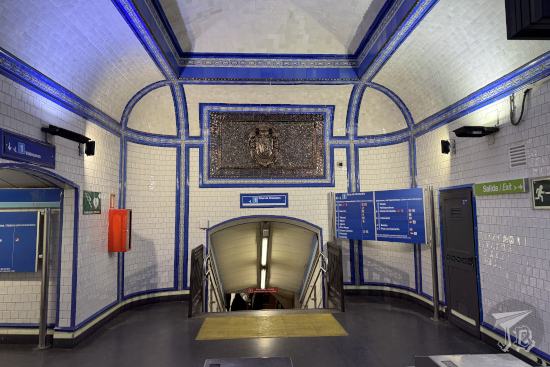
The historical access hall to the underground station - white with blue decorative tiles

Quite close stands the manor known as Palacio de la Duquesa de Sueca, an Age of Enlightenment building which was for a while featured in one of the most successful fictions on Spanish TV – El Ministerio del Tiempo (The Ministry of Time). It has been abandoned forever, it seems, and nobody quite knows what to do with it, so it is slowly wasting away.
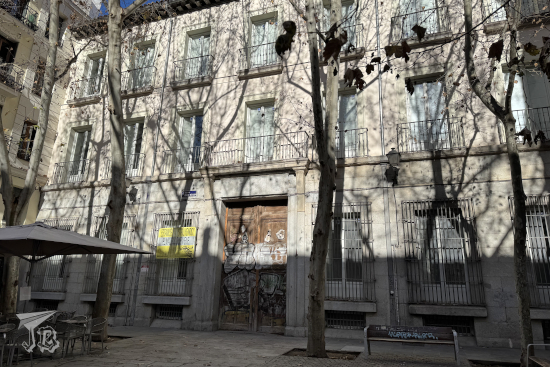
Façacde of a manor with many windows and balconies

I walked to the small metropolitan museum Museo de San Isidro, which was running a special exhibition about the Temple of Debod and the town it used to stand on, fittingly called Debod. 1954-1964. Debod is the only free-standing Nubian temple outside Egypt. The building was dismantled during the International campaign to Save the Monuments of Nubia between 1960 and 1980, as the rising waters from the Nile, turning into Lake Nasser, swallowed them.

The exhibition did not only focus on the temple Templo de Debod, but put a lot of emphasis on the town of Debod itself, whose people were forcibly relocated to Kom Ombo. The region of Nubia stood between today’s Egypt and Sudan. It was home to the Kerma culture from around 2500 BCE until the area was conquered and incorporated to the New Kingdom of Egypt around 1500 BCE. Kerma culture is regarded as one of the earliest civilisations of Ancient Africa. A lot of knowledge about the region, including culture and customs, was lost with the move. It was a bit heart-wrenching, surprisingly even more than hearing about it in Egypt itself. The exhibit comprised a lot photographs and videos that showed the people who left, and you could see the desperation in their eyes.

A good part of the items shown were photographs of how the temple stood and how it was documented before getting dismantled in order to rebuild it – which in the end, they did wrong, as one of the entrance pillions was placed backwards. The building was originally erected in the 2nd century BCE, dedicated to the God Amun, creator and King of the Gods. He would later be merged with Ra, hence the Amun-Ra denomination for the Sun God. The small structure would be later expanded by Kings and Roman Emperors. It reached the Nile through a processional walkway that ended at a quay.

The temple was gifted to Spain in 1970, dismantled in 2,300 pieces. The whole thing was reconstructed as well as it could be, filling up the gaps with newer material in a process called anastylosis, and experts say it’s not even a good one. Today, the Templo de Debod stands in a park in the middle of Madrid, and can be accessed at weekends. Unfortunately, the sandstone is getting weathered, which threatens the integrity of the whole structuture. What is surprising is the contrast between all the photographs in the exhibition, and the complaint that there was not enough good documentation to re-erect the building.
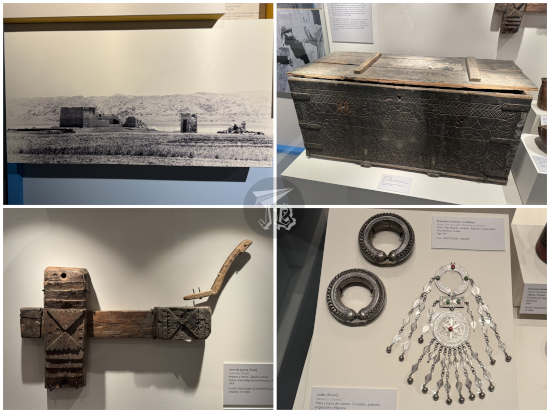
Numibian archaeological artefacts (a chest, a hammer, bracelets and necklaces), and a b/w photograph of a small temple next to the Nile

After the exhibition, I walked around the museum once, then went out in the cold again. At least it was sunny, and after noon, so not that bad. During a conversation about Madrid must-dos, someone had mentioned two churches I did not know, which happened to be rather close. The first one I found was the Cathedral Church of the Armed Forces Iglesia Catedral de las Fuerzas Armadas (also known as Church of the Sacrament Iglesia del Sacramento). Though Spain is technically a non-religious country, this has not always been so. For a long time it was an officially Catholic country, and there is a strong catholic tradition amongst the armed forces. As a matter of fact, there is even a Military Archbishopric of Spain (Arzobispado Castrense de España), with seat in this cathedral. I am not sure how one can be an soldier and a priest, much less a bishop / colonel, but I am not an expert.

The cathedral is a Baroque building designed by Juan Gómez de Mora, with a Neoclassical altarpiece and many frescoes. It was built between 1671 and 1744 to be the church of a convent that has since disappeared. The main façade was built by Pedro de Ribera towards the end of the construction period. Today it belongs to the Ministry of Defence – I did not know state agencies could own churches in Spain.
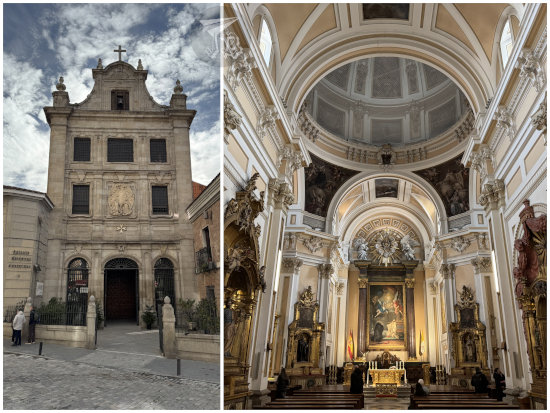
Inside and out of a Baroque church

Nearby stands another important church, the Pontifical Basilica of Saint Michael Basílica Pontificia de San Miguel, another Baroque structure – actually it is considered one of the most important buildings in the Spanish Baroque. It is attributed to Italian architect Giacomo Bonavia and dates from the 1730s. Unfortunately, it closed at 13:15 and it was 13:13, so I could not come in.

In front of the church there is a sculpture called The Reader El Lector, a bronze statue by Félix Hernando García. The statue was recently moved there as part of the urban sculpture program, since a library was installed there in 2011. It is apparently a homage to Carlos Cambronero y Martínez, apparently one of the first “Madrid Historians”.

I headed back towards where I had to meet with my parents, and though I was early, so were they. Their workshop, which was scheduled to finish at 14:00, wrapped up at 13:20, so in the end I had to head there in a bit of a hurry. Once I picked them up, we walked to “a random restaurant” in theory. In practice, one of them had a very specific place in mind – Museo del Jamón. Self-described as a “family chain of restaurant”, the idea of a ham-focused restaurant was born in 1978. Since then, they have opened seven different eateries specialising in ham and other pork products, alongside several typical tapas.

The Spanish word for ham is jamón. It is obtained from the hind leg of a Black Iberian pig, usually. The ideal ham-producing swine lives range-free in oak groves (the dehesa) so it can feed on acorns, as they lead to the best meat, apparently. After the animal is slaughtered, the hind legs are salted and left to dry, in a curing process that may take up to 48 months. How much acorn the pig consumes as part of its diet, and whether or not this is supplemented, determines the quality of the final product, with the best hams being “100% acorn fed” – jamón 100% ibérico de bellota, marked with a black label.

Of course, many other products might be obtained from a pig – the most important sausages are lomo, chorizo and salchichón. Lomo refers to the tenderloin, the piece of meat underneath the ribs and along the spine, cured for about four months after being marinated in spices – normally oregano, garlic and paprika. Chorizo is a sausage made from pork meat and fat with added garlic, and can be either cured or fresh (the former is eaten as is, the latter is usually cooked). The meat is seasoned with smoked paprika (pimentón), which determines how spicy it becomes, and gives it a bright red colour. The best chorizo comes in natural casings, usually the intestines of the pig, and the curing process can take several months. Salchichón is similar to cured chorizo but there are more spices added – salt, pepper (often black grains), oregano, nutmeg, and garlic – and curing can last for three months. If the animal was an acorn-fed black Iberian pig, the monicker ibérico de bellota is added to the name.

We shared a salad (Ensalada de tomate y ventresca de atún), with tomato, tuna and orange – because my parents are unable to be in a restaurant without ordering a salad. We also ordered some battered squid Calamares a la andaluza, and a dish called “Recorrido Ibérico Bellota” – with bits of the different pork cuts: jamón de Bellota 50% Ibérico, chorizo Ibérico de Bellota, salchichón Ibérico de Bellota and lomo Ibérico de Bellota. Despite Madrid being dead in the centre of Spain, battered squid is an extremely typical dish, especially in sandwich form.
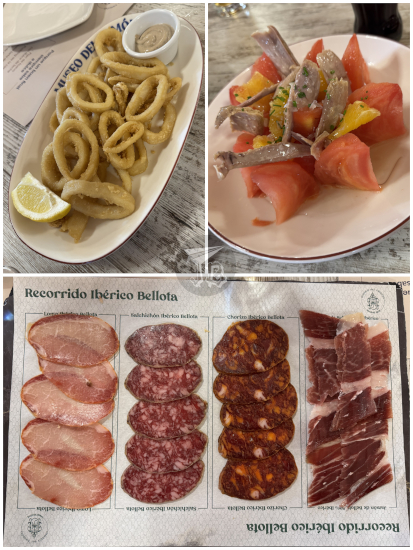
Lunch - breaded squid, salad, sausages and ham

I had been extremely lucky that the rainy weather had given a reprieve and I could carry my paperwork around safely, but it was windy and not that nice. Thus, after lunch we headed back towards the train, and we were rather lucky with the connections, so we were home rather early. During the train ride, I learnt hat someone from the binding workshop had decided to leave in a huff because it was “too basic”. I could have totally taken that spot!

4th January 2025: Bye Bye, Murderbird. MARPA, Alcalá de Henares (Spain)

While it was great to have the Concavenator fossil (a.k.a. Murderbird in my headspace) in the Dragon Hunters exhibit in Alcalá de Henares close enough to visit at will, the time had come to see it move on. Just in case there was any information I was missing, I decided to book a guided visit to the exhibit. As it was scheduled for 12:00, I decided to look for something to do beforehand, and I found guided visits to the monastery Monasterio de San Bernardo at 10:00. I had seen the building before, as it stands next to the MARPA, I just had never given it much of a thought.

The monastery was established under the patronage of Cardinal Bernardo Sandoval y Rojas around 1620. He bought land cheap because it was near the Moorish quarter. The church was erected in brick with decoration in stone on the outside. The inside has an elliptical dome, and it was heavily damaged in a fire during the Civil War, so it had to be restored – the work on it was a Rehabilitation prize in 2019. Most of the decoration of the church was lost and today walls and roof are just white and gold. The building is attributed to architect Juan Gómez de Mora.

There is a free-standing ciborium in gold, with a number of sculptures of Saints instead of an altarpiece. Behind the altar and ciborium, there are a number of paintings – they were created by Italian artist Angelo Nardi. Nardi was born in the late 16th century, and studied in Venice before moving to Madrid, where he became a Court Painter. His style evolved from late-Renaissance (mannerism) to Baroque, and he is known for his expressive faces. He was friends with Velázquez, and famous for being quite kind, though his style eventually fell out of grace. He painted most of the pictures in the church, although some of them are now out of order as they were moved during the Civil War.

The visit was interesting albeit a little underwhelming. It felt a bit weird to be the only visitor and having the whole thing explained to me – that has only happened once before, in Recópolis. However, that was epic, because I ended up getting the whole archaeological place for myself. The monastery was more of a serious experience – and it did not rain on me. But still it felt… colder. And like being in an exam, the guide kept asking me questions about history, architecture and hagiography.

Monastery of San Bernardo in Alcalá de Henares

I had a bit of time before my following visit, so I decided to run to the Sala Museográfica de la BRIPAC, a tiny museum about the history of the Army’s Parachuting Brigade. The Brigade was created in 1953, and the parachuters participated in combat for the first time in 1957. In its origin, it was established in Alcalá, so there is a historical connection there. The hall hosts uniforms, flags, medals, and reports about the peace missions in the 1990s. I am not much of a fan of Armed Forces museums, but today the BRIPAC is considered a peace corps. The museum opened in February 2023, on the 70th anniversary of the foundation.

BRIPAC exhibit

I still had a bit of time, so I dropped by Plaza Cervantes, which was full with Christmas lights and shoppers at the small market. There were food stalls, a small bookshop, some rock shops… Nothing really caught my eye though.

Plaza de Cervantes Christmas

I finally headed back towards the Archaeology and Palaeontology museum MARPA Museo Arqueológico y Paleontológico de la Comunidad de Madrid. It was one of the last chances to see the exhibition on the history of palaeontology “Dragon Hunters” Cazadores de Dragones with a guided visit, and I figured out that maybe I could learn anything new – despite the fact that I’ve been there a few times and bought the book. We had a nice fun guide who relied a lot on asking questions to her audience. Apparently I was the only one with… some knowledge of… anything she asked – what’s with guides in Alcalá de Henares trying to have you do their job? I felt a bit sorry for her so I answered her questions – with a higher success rate than the ones from the Monastery, to be honest. She did not impress me with the depth of her knowledge, to be honest. She actually looked at me a bit panicky when I asked her t confirm that the T-Rex replica was a cast of the famous Stan.

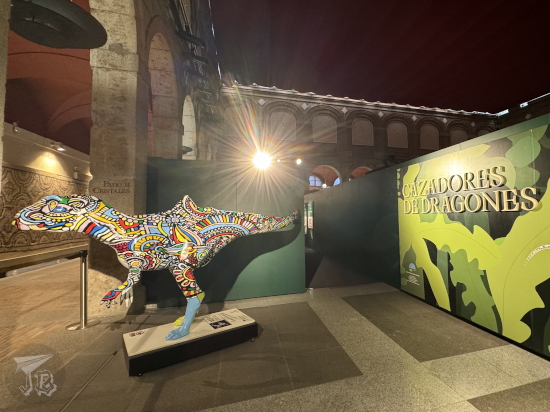
Cazadores de Dragones entry in the cloister of the MARPA

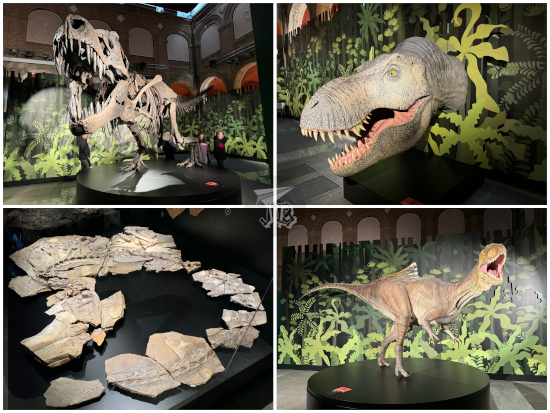
I stayed back for a bit longer after the visit ended. I’ve ranted on and on about the Concavenator before, both the fossil slab and the actual-size reconstruction. I just loved having both so at hand. When I was young, the scientific community came to the conclusion that “birds descend from dinosaurs” but today it is actually believed that birds are actual dinosaurs. And since the poor beast has such a ridiculous name, I’ve just been calling it “Murderbird” or “Murderchicken”, for kicks and giggles.

There were these two little kids who kept grilling their dad about the skeletons, and the poor man was a bit overwhelmed. I decided to give him a hand with the questions and explained a little. I thought that was it, but the smallest child pointed at the Concavenator and blurted out “can you tell us more things about that one??” He was so eager that I just took the family to see it and told them a few things further. The family was on their merry way in five minutes – four-year-olds only have so much attention span. The kids were happy, the parents were relieved and I got to geek out about dinosaurs with appreciative public. I think the interaction was an all-around win.

Murderbirds: T-rex and Concavenator

At first I had thought that I would be staying in Alcalá for an exotic lunch, but I was not really feeling up to it. With great sadness, I said goodbye to the Concavenator and moved on to drive home.

17th March 2024: Council Houses & Royal Collections (Madrid, Spain)

Madrid’s town hall opened a new season of their “walking Madrid” Pasea Madrid to show off some of the usually closed-off monuments in the greater area of the city. I’ve signed up for a few before (also under the name of open for restoration); while I am not a fan of guided visits, the program grants access to otherwise closed off places. This time I was lucky enough to get a spot for the old town hall Casas Consistoriales.

The original council house was built around 1645, following the plans by Juan Gómez de Mora, in the Herrerian style – the exterior is sober and barely decorated, erected in bare brick, with towers in the corners. The interior used to host a square courtyard, around which the whole dependences were designed. Subsequent remodellings closed off that patio, gave the construction a balcony overlooking Main Street, and exchanged the wooden roof for black slate. Even later, the structure was connected to the nearby palace Casa de Cisneros, a Plateresque palace built round 1537, by a passageway on the second floor. The two buildings were the main site of the town hall until 2011. Nowadays, the complex hosts some offices and is used for special events.

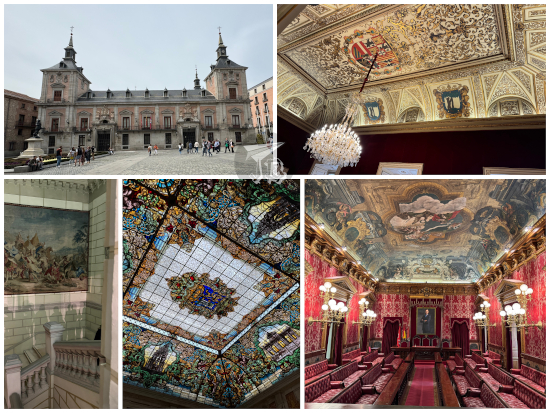
After going through the metal detector / X ray machine, we gathered at the entrance. The visit took one hour, and we were shown some of the most important points in both buildings, permanently followed by an armed security guard. In the actual Casa Consistorial, we saw the monumental staircase, the “royal room” with a fantastic glass lamp and frescoed ceilings, the so-called “crystal courtyard”, whose ceilings is a stained glass window, and the room where the council meetings used to take place, now used for formal events.

Old council Houses, Madrid

We crossed over to the palace Casa de Cisneros, where we saw the library, several meeting rooms and the “Andalusian staircase” with ceramic tiles, until we finally reached the actual yard, built in brick, but with some original decorations similar to those found in the palaces of Guadalajara (Infantado and Condesa de la Vega del Pozo).

Old council houses, Madrid

The whole thing took about 50 minutes, including checking in, security and introductory explanation. It was extremely rushed, and I still find being followed by a guard a bit unnerving. However, I got to see the two buildings, which is what I wanted.

Afterwards, I went to a new museum recently opened by the Spanish Heritage service Patrimonio Nacional, called the “Royal Galleries” – Galería de las Colecciones Reales. The massive space was built into the ground of the terraces that separate the upper area of the Royal palace from its gardens (Jardines del Campo del Moro), and consists of three floors. The building is completely accessible by wheelchair, having ramps instead of stairs. The collection comprises part of the art pieces owned by the State that were originally purchased by the Royal Families before the 1975 Constitution and the 1982 Law. The uppermost floor contains the pieces collected by the early monarchs, especially the Catholic Monarchs and the Habsburg Dynasty. There are a lot of tapestries, armours and so on, as we are talking the Middle Ages. I also found some Last Wills and Testaments, and the first ever Spanish Grammar, by Antonio de Nebrija (1492). During construction of the building, the archaeological remains of the foundations of the first Royal Palace in Madrid were found, so those have been incorporated into the exhibit.

Royal Collection Galleries - Hausburg collection

The second underground floor, deeper below, holds the Bourbon collection, from Felipe V (king 1700 – 1746, he abdicated on his son, who died, and he had to go back to the throne) to Alfonso XIII (king 1886 – 1931, when went into exile upon the start of the Second Republic). This is more… French-style, of course, with paintings, decorative items, chariots, and actual objects of everyday use. Here are exhibited works by Goya and Velázquez, musical instruments, and the first photographs.

Royal Collection Galleries - Bourbon collection

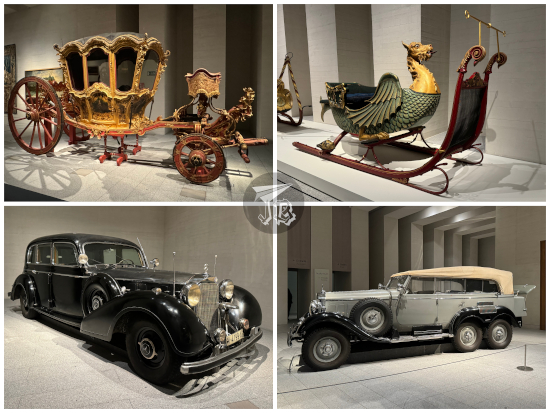
The third floor is a temporary exhibition of royal chariots and cars, including a Rolls Royce, a couple of sleighs, and a sedan chair. It kind of looks that it’s going to be a forever temporary exhibitions though…

Royal Collection Galleries - chariots and cars

The Galleries were rather… underwhelming. After all, there are quite a few royal palaces and sites in Spain, all lavishly decorated, and most of the paintings are in the museum Museo del Prado, one of the largest painting galleries in the world. This felt a bit of a haphazard collection of “stuff we did not know where to host”. I really struggled to find any link or logic beyond “this king bought this”. And even if it was chaotic of sorts, it felt quite short of other places like the Victoria & Albert museum in London. I am not sure they will “fill it up” eventually, or if the main items will remain in their dedicated locations.

Oh, and in case you are wondering why I did not check out St. Patrick’s parade… It was the day before…