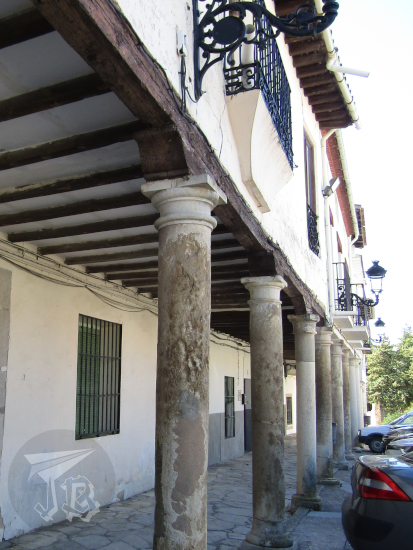
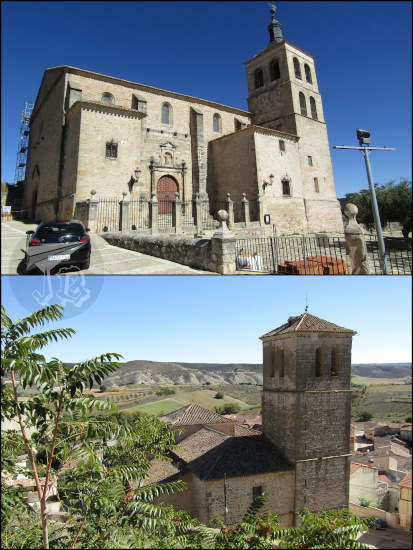
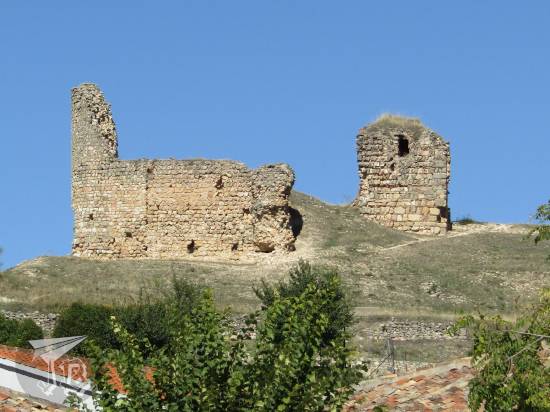
21st September 2025: Alarcos on the way back {Road Trip & Almadén, September 2025}

The lady in Almadén had recommended a pretty hermit-church-castle place in the nearby village of Chillón, but when I reached there, it turned out to be closed and expecting a bike race, so if I stayed… well, I would have to stay till the race was over. I left as fast as I could, so I was not able to see the church Ermita Virgen del Castillo and the Bronze-Age paintings nearby. I just stopped for a quick picture of the mining park Parque Minero de Almadén.

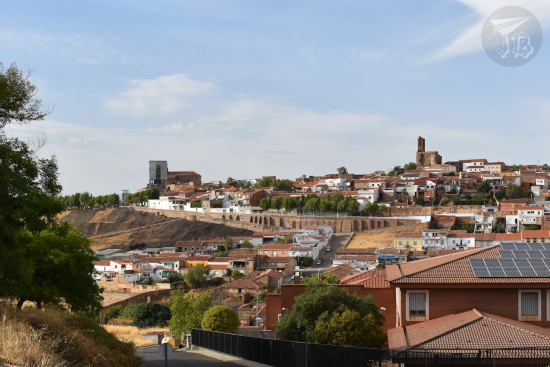
A general view of the town of Almadén. It shows that it is located on a hilltop. The main structures seen are the mining complex on the left (a grey mass on top of a black gorge) and the castle at the very top.

I stopped for fuel, then went onto the road. It took a couple of hours until I reached the village of Alarcos. Nearby stands the archaeological site Parque Arqueológico de Alarcos, which displays three historical periods – there are remains of an Iberian town, a ruined castle, and a Reconquista battlefield. The Iberian town was built around the 6th century BCE, located all over the hill. There are remains of a neighbourhood, a sanctuary, and further away, a necropolis.

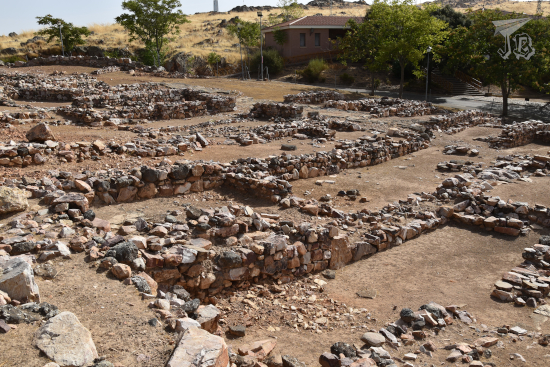
Remains of house blocks in the Iberian village - foundations built in rock.

Remains of the Iberian sactuary with the Medieval wall in the background.

During the Middle Ages, there was a project to build a town and a castle. The town would have been protected by a wall, and the castle would have stood at the highest point. However, Alfonso VIII decided to fight a battle against the Almohad Caliphate there before the castle was finished. The battle of Alarcos happened in 1195, and the Christians lost miserably. The castle was then turned into an Almohad town until the battle of Las Navas de Tolosa recovered the whole area in 1212. However, nobody wanted to live in the town any more, so eventually its population would be moved to “The Royal Villa”, later the Royal Town – Ciudad Real, the current capital of the region.

Alarcos Battlefield with the sign that positions the troops.

Ruins - more like just the foundations, actually - of the 11th century Medieval castle. It would have been huge, perched atop a hill, but the most one sees is the intention of a tower, and it's not even the keep.

There is also a small hermit church, but that was locked away behind a fence. The castle is extremely derelict, though some of the Moorish houses can be guessed on the blueprint. Any archaeological findings have been taken to the museum in Ciudad Real – which I still have to visit, but timing was not on my side today. Fortunately, that is doable on public transport – if I ever decide to trust Spanish long-distance trains again.

On my way out, the nice person at reception gave me a bag of goodies – a booklet about the site, some brochures, a magnet and a Medieval music CD. She recommended my trying to reach a hermit church on the other side of the motorway to find the interpretation centre about the prehistoric volcanos in the area, but that is for another, focused trip.

I just hit the road to get home. There was an accident on the way and the subsequent traffic jam added an hour to the drive. The last 40 minutes or so, I felt very tired, so even if I had wanted to have lunch somewhere, I also had the feeling that if I stopped, it would be harder to keep driving. I made it home around 15:30 and had a very late lunch.

I consider the trip was a success. I saw the Mine, which is something I have been wanting for years. Food in Almadén was horrible, and maybe future road trips should be broken with a night in-between, so lessons were learnt. More supermarkets, more overnight stops. But I only had a long weekend, so I made the most of it. And splurged on a mercury vial for my mineral collection.

20th September 2025: The Mercury Mine in Almadén {Road Trip & Almadén, September 2025}

My lodging in Almadén included breakfast, so I had a coffee and a toast – better than dinner the previous night, but this time there was the hotel lady working the bar. Afterwards, I just grabbed my things and redid half of my tour from the previous night, and re-visit all the spots inscribed as World Heritage Heritage of Mercury. Almadén and Idrija.

The former mining school, the first one created in Spain, Antigua Escuela de Ingeniería de Minas was still closed – it is not open to visitors due to its poor conservation state. It is a Baroque building erected in the 1780s, with a sober façade and wooden interior with basements and semi-basements to deal with the steep street outside, the whole building designed around a master staircase.

I climbed up towards the castle Castillo de Retamar. Historically, the Romans were the first to intensively exploit the mines, as they used cinnabar for pigments. Later, the Moors started distilling mercury, which they used for decoration. There are testimonies of fountains of mercury running in Al-Andalus – let’s face it, quicksilver is a fascinating thing. As the Moors wanted to protect their dominion over the mine – and the whole territory, including the water sources – they erected the castle in the 12th century. The building was later reinforced by the Order of Calatrava, but today there are only a few remains: the brick foundations of what could have been the keep, topped with a 14th-century bell tower.

I finally headed out towards the mining complex Parque Minero de Almadén. When the mine closed down in 2003, it had been the largest producer of mercury in the world throughout the current era – it is calculated that one third of the mercury used in the world comes from Almadén. The catch? Several of them, actually. First of all, mercury is toxic. Second, the exploitation of the mine was less than stellar – at a point in history, digging in the mine was a punishment for capital crimes, considered worse than being sent to row in the navy, with workers being little more than slaves. Third, the mine is surrounded by underground water reservoirs that percolated slowly into the tunnels, which reach 700 metres deep, threatening to inundate them. If breaking down rock was hard, so was carrying the mineral, along with bags of never-ending water, up and out. Since the mines closed, the water has flooded most of the 19 under-levels of the mine, rising up until the third one.

With the mine closed, life in Almadén dwindled down. The area opened to visitors in 2008. When the Unesco Heritage Declaration came in 2012, it breathed a bit of a new air into the town, turning it into a tourist destination, but lack of management makes it, in the end, barely worth a day’s visit. Visits to the mine are only guaranteed at the weekends, when the museum located in the university is closed down. Reservation of activities is confusing, and unless you’re a whole group there is no way to book a complete visit. I had booked the guided visit to the mine at 10:30 in the morning and a visit to the museums in the afternoon. I was not sure that I could do both before Spanish lunch time, but figured out I would be able to talk my way into the museums early if both things could be combined in one go. It was actually the cashier’s idea to have me do so, even better. One of the museums was closed and there was no warning about it anywhere but Google Maps, which feels a bit like cheating.

The main entrance to the mining complex Parque Minero de Almadén is locked down. There is a side building with an open door and a sign reading “we don’t have any information about tourist visits”, which leads to the Visitors’ Centre. That was confusing. As I came in, there was a large group who had not booked in advance because they were afraid they’d feel claustrophobic, and now they had no tickets. The cashier managed to fit them into the afternoon visit. I talked to him about my bookings and he told me to go to the museums after my mine visit, and to wander around while the rest of the group came together.

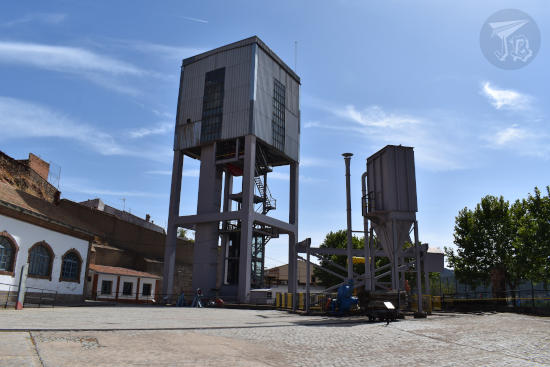
The lift that reaches inside the mine (modern lift in old encasing)

Of course, there was a family with young children absolutely in the wrong mind frame to get into a poorly-lit underground tunnel for a couple of hours. Fortunately, there were two groups organised and I made sure to insert myself into the child-free one. I didn’t want a repeat of the Cueva del Viento, where a bunch of information was lost due to kids being kids. And I understand that kids are kids but… for me it’s hard enough to focus on the information from a guide without the added distractions.

The visit into the mine only goes down to the first floor and an upper sub-gallery, after which you ride out in the “mining train”. Before starting, you need to get your helmet, and some lanterns are dealt out to each group to improve visibility in the tunnels. The rules are simple: distribute the lanterns throughout the group, keep light pointed at the floor. Apparently, those pointers are too hard to follow – my group had three lights together in the middle of the group, pointed upwards all the time. Good thing phones have torches now.

The descent to the mine is done through a modern-times lift installed in a former shaft Pozo de San Teodoro, down 50 metres to the gallery. It did not feel claustrophobic to me, and surprisingly, I was more impressed about knowing about the water creeping up than the rock above my head. The visit took about two hours and a half. Along the walk we saw areas that were worked on from the 17th to the 19th centuries, along some of the machinery that came into play in the 20th.

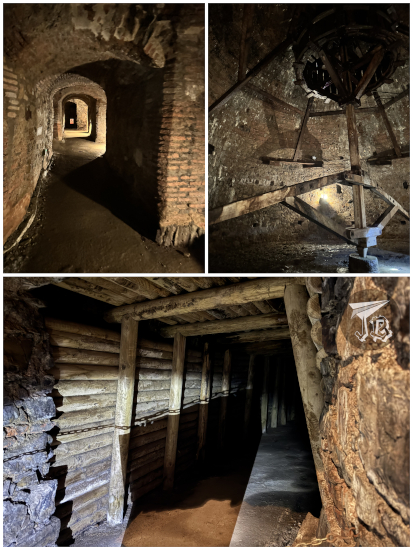
Inside the Almadén mine - corridors and mining galleries and a well to extract the water.

Inside the Almadén mine - corridors sustained by brick. In one of the pictures there is a bat flying but you can't see it.

Don’t get me wrong, back in the day mining those tunnels must have been beyond horrible. It is impossible to describe the history of mine without considering the harsh conditions the workers had to endure, especially the prisoners that were all but enslaved there for decades. The most intense exploitation of the mine happened during the age of the Spanish Empire and its expansion to America. Mercury became a key ingredient in the production of gold and silver in the New World.

Inside the Almadén mine - corridors sustained either by brick (newer) or wood (older).

Inside the Almadén mine - corridors and an image of the Virgin Mary.

Throughout the works in the mine, various exploitation strategies were used, digging both horizontally and in angles. We saw different methods and tools, from plain old pickaxes to modern hydraulic hammers, and the room where the mules would work to help extract the cinnabar. We were shown corridors held up by wooden beams – which were discontinued after in the mid 1750s there was a fire that lasted two years – and later brick ones. We saw shafts that had water at the bottom, and in the end we rode a little mining train to come up to street level. The visit ended with a brief lookout and explanation of the furnaces used to purify the mercury.

A piece of cinnabar embedded in the rock within the Almadén mine.

The mining train that used to transport cinnabar and now transports tourists out of the mine.

Rusted distilling equipement, metres high, where mercury was produced from cinnabar when the mine was in operation.

Afterwards, I had my visit to the museums. One of them has an explanation of the mining procedures, the same thing we had heard within the mine itself. The second held the former workshops, which displayed machinery to keep up with the maintenance of all the apparatuses used within the mine. I was the only person who had booked those tickets, so it was a quiet visit. I was also allowed to amble around the outer part of the mining park, seeing all the heavy-duty machines.

I left the mining park and tried to find the historical gates. The entrance to the mines has always been walled off – historically to protect the valuable resources it held. I could see the restored Puerta de Carlos IV. This gate would have taken me to the Mercury Museum, currently closed. There was another gate, but the overgrown vegetation made it impossible to do more than glimpse it.

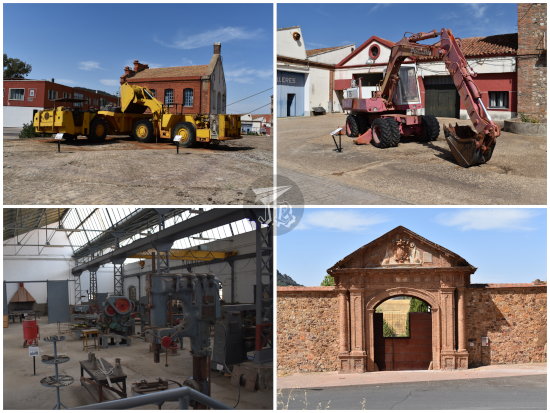
Mining equipment and buildings on the outer part of the mine in Almadén, including an excavator, the mechanical shop and the classic door, in red brick.

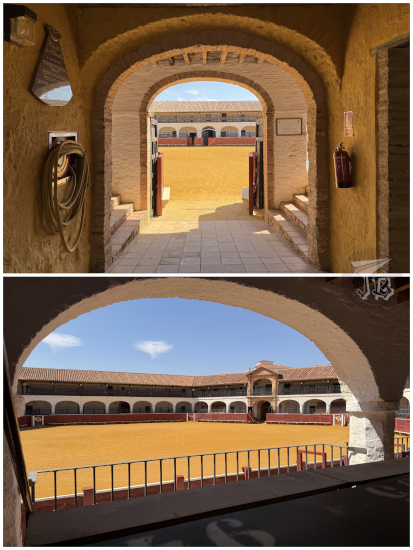
My next step was heading back downtown until I reached the bullfighting ring Plaza de Toros de Almadén. During thirty-month fire of the mine, which started in 1755, the miners had to work on anything, anywhere, to raise some money. One of their ways to get income was converting the communal garden into a bullfighting ring – at least that is one theory. Today, it is considered the second-oldest ring in the world, with the characteristic that the coso (the actual bullring) is not a circle but a hexagon. It is an important national monument and part of the Heritage Site.

Bullfighting ring in Almadén. The sand pit is hexagonal, which is its main characteristic.

In front of the entrance to the bullring stands the Monument to the Miner Monumento al Minero, which takes a new meaning after having visited the mine itself and heard about all the hardships and dangers within its galleries.

And then came the hard job to find a place to grab a bite. I wanted to try a typical dish from a restaurant with a typical name, but they had run out… For real. At least they let me have lunch at the bar… It made me decide to buy something from the local supermarket to have dinner later on. After lunch, I went back to the hotel to wait for 17:00, when the last monument would open.

This was the former hospital Real Hospital de Mineros de San Rafael. It was built between 1755 and 1775 – started during the fire – in order to treat miners who became ill or had an accident in the mine. The most common malady was hydrargyria – mercury poisoning – though of course there were physical accidents, especially loss of fingers after dynamite was introduced.

The visit has three parts of sorts. On the right there is a bit on the history of mining medicine and mercury poisoning. On the left, a very humble display of what is called “the archive” – documentation related to the mine and mining operations. Upstairs, a ward with some archaeological items and an exhibition about how the layman lived outside the mine, with a chilling panel explaining that the work in the mine was considered so dangerous that children would not be allowed to play when there was a relative in the galleries.

Mining hospital - a baroque building with some exhibits inside, amongst them cinnabar, mercury (sealed away) and a wagon

Afterwards, I moved towards the current university, which has been built around and over the former prison Real Cárcel de Forzados, but there was nothing to see from the outside, and the campus was closed as it was a weekend. However, I was on a small hill, so I decided to continue upwards and see if I could get a general view of the mining park. I ended up at a small forest-park, but did not get a great view.

A general view of the town of Almadén. It shows that it is located on a hilltop. The main structures seen are the mining complex on the left (a grey mass on top of a black gorge) and the castle at the very top.

I headed downtown again and I headed towards a tobacco shop I had seen in a small side street. They had souvenirs in the window, so I hoped that they would sell some mercury. Technically, you cannot buy mercury in Europe – both the Mining Park and the Hospital staff had told me so – but this little shop had a little for sale. So yay me, now I officially own some Almadén mercury.

I found the side entrance to the church Iglesia de Santa María de la Estrella, but no other shops open – I wanted to buy some local cheese. Not even the supermarket had anything that I would not find in my local one. I did buy some dinner and snacks though, and a thermally insulated bag because mine is old and is not working that well any more. It helped keep dinner fresh until I reached the hotel and could use the small fridge there. Pity about the cheese though.

Baroque church in Almadén, showing the exterior in and the main altar.

I turned in afterwards to decide what I would do on my way back, and study the routes.

19th September 2025: A knot of roads {Road Trip & Almadén, September 2025}

I woke up early – way before the alarm clock went off, so I decided to hit the road. I first topped up the fuel tank at the cheap petrol station near my place. Afterwards, I drove off to the motorway and the morning rush hour. As I was caught in the traffic jam, there was a pretty rainbow in front of me – no pictures, though, for obvious reasons. Traffic dwindled a lot when I left the A2 behind and merged onto M50. From there, I took a couple of hours to reach my first stop, the village of Consuegra. On the mountaintop of the so-called Cerro Calderico, in the outskirts of this ten-thousand inhabitant, stand some the best examples of restored traditional windmills.

During the Middle Ages, the area in central Spain known as La Mancha proved a challenging place for watermills, the dominant technology at the time. The rain regimes cause irregular river flow, with a lot of the currents drying up in summer. As demand for flour grew, windmills were built near but outside towns, on high ground. They provided clean flour, cheap enough to be affordable, without being subjected to draught or flood seasons changing. The windmills lived its golden age from the second half of the 16th century until almost the 20th. Towards the end of the 1800s, most of the cereal crops were exchanged for vines in order to supply wine to France, leading to the decay and progressive abandonment of wind-milling. The Industrial Revolution and the appearance of fossil fuels and electricity finished off whatever little remained in the early 20th century.

However, besides their practical function, there was something else about the La Mancha windmills. They had gone viral centuries before the Internet was a thing. In the year 1605, Miguel de Cervantes – considered the greatest writer in the Spanish language – wrote his masterpiece El Ingenioso Hidalgo Don Quijote de la Mancha, worldwide known as “Don Quixote”. The novel is amongst the most translated literary works in the world, and tells the tragic story of a minor nobleman, the title character, who goes crazy from reading too many chivalric romances. He decides to leave his home and become an errant knight, having great adventures in his mind, which are more misadventures in real life. He is accompanied by a farmer-turned-squire, Sancho Panza.

During one of his delusions, Don Quixote fights giants with long arms – which the reader knows, from Sancho’s warnings, that are in reality windmills. Of course, the madman is “defeated” by the blades, which shatter his spear on impact. It is one of the most famous passages of the book, even if it is barely a page or two in the eighth chapter. Throughout the novel, which starts “in a village of La Mancha, the name of which I have no desire to call to mind”, several locations are explicitly mentioned, others are implied, and some have completely imaginary names. Experts have placed this fictional encounter with windmills either in Consuegra or Campo de Criptana – which was not on my route.

Thirteen windmills were built in the 19th century on the Cerro Calderico, and twelve have been restored and turned into tourist attractions – one even works. They stand in a row alongside the ridge and next to the local castle Castillo de la Muela (or Castillo de Consuegra). After all, both castles and windmills need the higher ground to be effective, in a way. The castle already existed in the 13th century, with roots in a 10th century previous fortress.

I parked at the foot of the hill and walked up to see the castle and the windmills. The castle was closed as it was a local holiday, and the fortress is managed by the town hall. I stayed around for an hour or so, walking from one end of the hill to the other. I had a snack as I snooped around, then I moved on.

Consuegra - a line of windmills with a castle in the background

My next stop was the National Park Parque Nacional de las Tablas de Daimiel, a weird place. I call it weird because despite its status as a protected area, it has been on the brink of collapse for the last century or so. The wetlands have been drying out for decades.

The area is the literal last of its kind in Spain, a kind of wetland generated when rivers break their banks in their middle course on flat terrain. In the middle of the de facto Spanish Inner Plateau desert, it is formed by the rivers Guadiana (fresh water) and its tributary, the Cigüela (brackish water), and fed by a number of underwater aquifers. These have been exploited for farming, which seems to be the cause for the dessication. So out of what it should be, there is only one medium-sized pond, Laguna de Navaseca (usually referred to the “permanent pond” Laguna Permanente), where a number of birds, fish and amphibians live either seasonally or all year round. The area was designated a national park in 1973. Later, it received other protections, especially regarding the bird population.

I parked in the allocated space and had a sandwich before I went in. The visitors’ centre was manned by a very disgruntled employee who explained the dessication to me as if I were personally responsible for it. I really felt like apologising. The truth is that the first place I visited was the pier, which has not seen water for at least a decade. I could do two of the three walking routes, but in the end I only did one and a half, as the second I tried was way hot and dry and I gave it up three-quarters in, as there was no water any more.

In the end, I stayed around the main pond Laguna de Navaseca, where wooden walkways have been built. I felt horribly guilty whenever the wood cracked under my feet and I scared the ducks away, but the local guides could be heard from across the whole pond. On the banks, there are bushes of common reed (Phragmites) and rushes (Juncus). The only tree in the area is the tamarix (Tamarix gallica), small and brime-resistant.

In the pond – and flying over it – I found a flock of greater flamingoes (Phoenicopterus roseus) – which are for some reason not listed anywhere that explains the park. I also saw herons, ducks, geese and I swear ibises – the latter are not mentioned either, but my bird identification book suggest a glossy ibis (Plegadis falcinellus). I was hoping that autumn had modulated the temperatures a bit, but it was extremely hot. It was also… stupidly dry for wetlands… That is why I gave up on the second route halfway.

Doñana National Park - view of the main pond, surrounded by low bushes

Doñana National Park - view of the main pond with flying flamingoes

An ibis waddling for food

A flock of flamingoes flying

I went back to the car and drove to a small parking lot at the entrance of the park which allows you to see the watermill. It was closed, and again dry, but it was an interesting structure.

I continued on the road towards the archaeological site Yacimiento Visitable de Calatrava la Vieja in Carrión de Calatrava, which has a very nice and shaded parking area, where I had my second sandwich as I was there 30 minutes before schedule – read: they had not opened yet.

The archaeological site is considered one of the most important of Moorish origin in Spain – a city and a castle from that period, erected on older remains, probably Iberian. Back during the Arab vs Christian wars in Spain, the fortress was right in the middle on the way between Toledo and Córdoba, along with other important commercial routes, so it became a key defence point. It is known that the castle already existed before the 8th century, on the Guadiana riverbank. When it fell to the Christians around 1150, it became the first line of defence, and it was entrusted first to the Knights Templar and then to the Cistercians. It became the birthplace of the first Spanish military order, the Order of Calatrava Órden de Calatrava.

Calatrava castle from the outside - a ruined fortress with a roundish shape, built in clay-coloured rock, with no vegetation whatsoever around it

The castle was built on a plateau, defended by the river itself and the walling structure, which included at least 44 flanking towers. There were four fortified corridors (corachas) that protected access to the water. The entrances to the inner fortress had several turns to make them easier to protect. Between the inner core and the walls stood the medina, the Islamic city, and the alcázar rose as a sort of triangular keep, accessed through a triumphal arch. The inner castle itself is the best-preserved area, having even rebuilt furnaces to make clay. During the Templar times, part of the alcázar was repurposed into a budding church which was never finished. On one of the inside walls there are carved drawings of vessels.

Calatrava castle, collage: The inside of a room with a Templar cape as sole decoration, the inside of a pottery oven, a view of the mdina arched entrance and two inner archways.

As I climbed the walls, clouds had started gathering and the wind had picked up. I decided to get going, trying to outdrive the storm. At first I thought I had been lucky, but about 20 minutes away from Almadén, the skies opened and there was a torrential downpour. I was lucky enough to find a parking spot where I hoped, down the corner from the hotel, and I have an umbrella in the car. A few minutes after parking, the storm stopped though, albeit the rain did nothing to cool down the evening. I checked in, and the hotel lady gave me a map with all the spots that have been inscribed as World Heritage Heritage of Mercury. Almadén and Idrija.

Mercury (chemical symbol Hg) is a native metallic element, the only one which is liquid under normal temperature and pressure conditions. In nature, it is usually found as cinnabar (mercury sulphide, HgS), a bright scarlet mineral. Its formation is linked to volcanic activity and alkaline hot springs (the area of Ciudad Real comprises the extinct volcanic field called Campo de Calatrava, which I drove through, but found no way to stop anywhere to explore). Liquid mercury, also called quicksilver, is extracted from cinnabar by heating it, as sulphur evaporates with heat.

Mercury is toxic to the nervous system, dissolves gold and silver, and has long been associated with “mystical” powers and sites – the first emperor of China was buried in a tomb with rivers of mercury, there is mercury under one of the Teotihuacan pyramids in Mexico, and in the end it carries the name of the Roman God of Messengers and Travellers. It has fascinated humans throughout history.

The name of the five-thousand-inhabitant town, Almadén, comes from the Arabic Al-maʻdin [المعدن], which means “The Mine”. The site was already exploited in times of the Romans – the extracted bright-red cinnabar was used to create vermilion paint for the walls of Pompeii and Complutum. When I was a child, my history book had some information on Almadén, and the accompanying photograph showed someone who had thrown a cannonball into a mercury pool, but the cannonball was floating on it. I have wanted to see the mine since then, even knowing that there was no way I would ever see that one pool any more, due to the legislations that have deemed mercury as “too toxic for anything”.

I went to have a look around town. It was dusk and everything was closed – not that many things would open the next day anyway. I did a small circular walking tour which included the main church Iglesia de Santa María de la Estrella, and down the main street the central square with the town hall Ayuntamiento de Almadén and the church Iglesia de San Juan. I continued on and found the the old mining school Antigua Escuela de Ingeniería de Minas. To the side of the street stands the former castle point Castillo de Retamar, where only a turret remains. Up a little, I reached the third church, Iglesia de San Sebastian and the ruins of the manor house Casa de la Superintendencia.
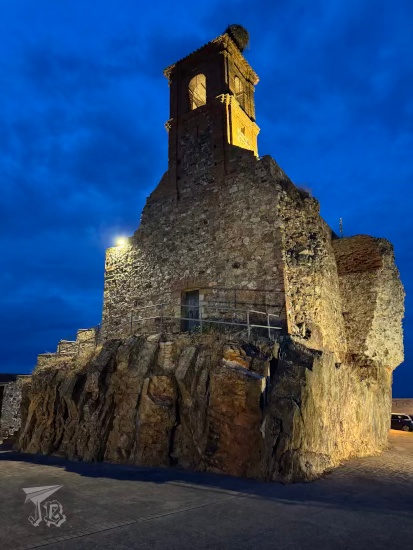
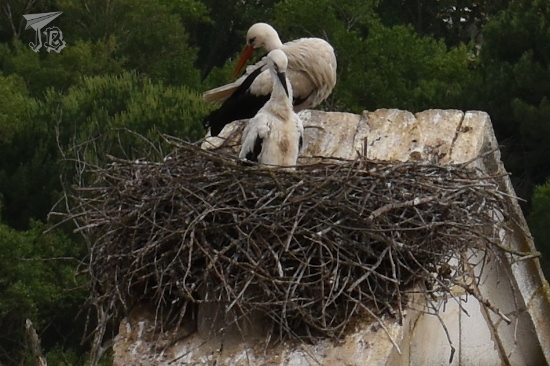
Almadén Castle - a derelict tower in brick, with a stork nest on top

I undid my path and headed to the other side of town. In a secondary square there is a monument to miners Monumento al Minero, and across the street the bullfighting ring Plaza de Toros de Almadén. My final stop was the former hospital Real Hospital de Mineros de San Rafael. I had dinner at the hotel restaurant, which honestly was a little disappointing.

Almadén: monument to the miner at night; a huge sculpture in metal that represents miners. Two of them have picks and are breaking a rock, two others are pushing a wagon. The miners have helmets with actual lights.

I headed back to the room to have a shower and some rest, and get ready for the following day – and try to digest dinner.
17th July 2025: Hands on in the lab! {Dinosaur Eggs Loarre & Zaragoza, July 2025}

I got up around 7:30 and got dressed. I finished packing and before breakfast I took my luggage to the car, as I was leaving Loarre in the evening and I had to clear the room. Since I was outside, and the sky was clear, I went to explore the village a little more. There were some fountains and older farmhouses – one of them had been transformed into the rural hotel which never replied to my query. Some buildings had decorated their windows with cute homemade mascots.

Old Loarre Townhall, turned hotel (this is where I stayed)

Walk around Loarre: rhino mural, fountain, old house, wash house

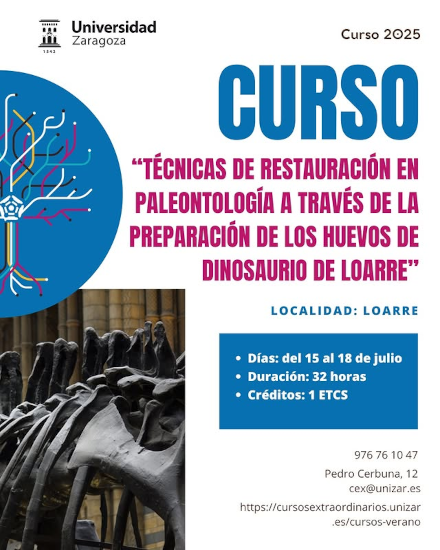
At 8:30 I went back to the Hospedería de Loarre for breakfast. Since there was nobody at reception, I asked the lady at the restaurant what to do with the key when I left the room. I had my coffee(s) and toast, grabbed what I needed for the day, dropped off the key, and headed to the museum-lab for the third day of the course Técnicas de restauración en paleontología a través de la preparación de los huevos de dinosaurio de Loarre: Palaeontological Restoration Techniques through the preparation of Loarre dinosaur eggs. Today was the day when we would work hard at the laboratory.

The Restoration Lab in Loarre

Once again we got divided in three groups. One group opened a cast jacket using a radial saw – no way I was going to try and operate heavy machinery. Opening the jacket is the first step to study what it has been protecting, now that it is safe in the lab. The cast is removed in layers, and the rock is processed so the matrix (everything which is not actual fossil) is removed from around the eggs. Afterwards, there are two jobs. One is going through the discarded matrix / sediment for any and every interesting thing that can be found. The second is cleaning up the fossilised egg or eggs from any extra sediment to reveal their actual shape and colour.

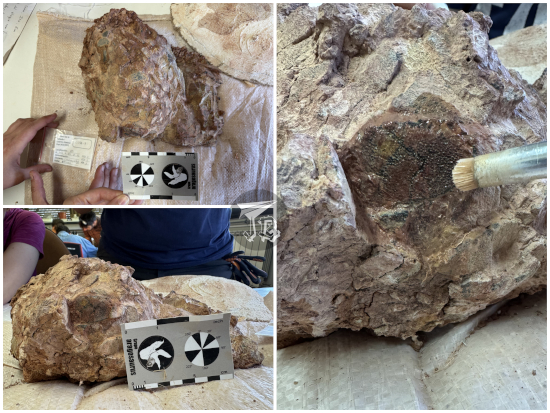
I started with the cleaning crew (again). Under Ester Díaz Berenguer’s guidance, we worked on chemically removing sediment from a fossilised egg using alcohol diluted in water and brushes. It was a slow but very Zen work – wax-on-wax-off kind of thing. The others in my group sounded a bit frustrated with the task, but I guess it’s because they were younger people and more impatient? I know that I did not finish cleaning one shell fragment after an hour, but I was just… aware that fossil prep was a slow process?

Chemical clean up of fossil egg using a brush

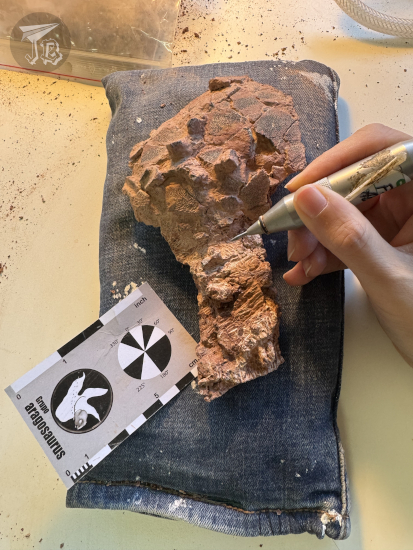
My second activity was also cleaning, but this time mechanically, using an air pen to remove as much of the remaining matrix as possible without damaging the general structure. This step would actually happen before chemical clean-up. The air pencil is a pneumatic tool so you really don’t have to press against the rock, to see the sediment peel away. It’s even more Zen than the chemical clean up – unless you’re working on a fragile bit. The important thing is to always clean away from the shells. I worked on that for another hour or so, and I even got to use some gluing materials to make sure a crack did not cause a problem – that was the bit that was more stressful, worrying I might damage the fossil.

Mechanical cleaning of fossils using an air pen

We had a short break which I used to go to the car to organise the car boot – I had thrown all my things there, but a classmate had asked me to drive him to Saragossa, and I had to adjust for his luggage to fit too. Then my group moved onto studying the removed matrix from a jacket, under the direction of Manuel Pérez Pueyo. This consists on checking bags upon bags of broken rock bits to find anything that could be an eggshell. Though the main find of the Santa Marina site are the sauropod eggs, there are eggs belonging to other species – crocodilians and theropods. You weigh some sediment, spread it on a tray and move it around until you’ve taken out anything that can be useful to science. You have a microscope handy in case you need it. I am proud to report that during my three rounds, I did not miss anything key (before you discard your sediments, you call an expert to recheck). I did not find anything out of the ordinary, but I pulled out a couple dozen egg shell fragments.

Sediment being checked for loose egg shells

At the end of the morning, I snooped around what they were doing on the opened cast jacket, and someone was using the air pen on it, trying to locate the eggs. The jackets are opened upside down, so there’s a bit of detective work to find the fossils again. In order to protect the eggs, the casts are made big enough to protect them from any saw, so casts may be huge (and of course heavy). Thus, a lot of cleaning work is required at the lab, which translates in an insane amount of time. The palaeontologists must find an equilibrium amongst protection, weight, and lab-work when deciding on the size of the cast.

Upside down cast jacket that has just been opened. The job is cleaning out all the sediment around the eggs.

For lunch, all of us went to Casa Lobarre, the village restaurant, I think a concession from the town hall, as it is in the same building. The inside is decorated with reproductions of Romanesque frescoes and painted to look like a castle, as it was used as the set in a film some time ago (Kingdom of Heaven, 2005 I think. Don’t quote me on it). They offered a set menu with the choice of a (hearty) starter, a main course, and a dessert, drinks included. It was a big lunch! I ordered stuffed courgette and assorted grilled meats. The food was quite all right, especially for the price, and the desserts were handmade.

Afterwards, we had two lectures. One was given by Manuel Pérez Pueyo, who explained to us the hard science data of the Garum facies, which could be the key to understanding the last dinosaurs surviving in Europe. He also talked about the K-Pg limit and dinosaur extinction. He also made a comparison between the little Santa Marina site with the American Hell Creek formation – as the presentation said… size matters. That’s why there have been so many dinosaurs found there, compared to the more humble sites in Spain.

The final lecturer was José Ignacio Canudo Sanagustín, the director of the University of Saragossa’s Natural Science Museum Museo de Ciencias Naturales de la Universidad de Zaragoza. He explained how a museum works (I was reminded me of the visit to the inner works of the geomineralogical museum in Madrid), and the museum-lab status. The Saragossa Museum, as an institution, is the custodian of the Loarre fossilised eggs, even if they stay in the Laboratorio Paleontológico de Loarre. This is not unique to this village, as there are several similar schemes in place all throughout Aragón, known as “satellite sites” or “remote halls”.

Canudo also talked about counterfeit fossils – a reason why I only buy my fossils during Expominerales or Expogema, I don’t trust random vendors. Then, he moved onto the topic of the Museum itself – how it works, what kind of items they hold, how they came into the museum, and a little pride-flex, that they are home to a whooping 319 holotypes (the specimen that is used to describe a species), mostly from the Aragón region. The museum only exhibits a tiny proportion of the treasures that are deposited there for their protection and research.

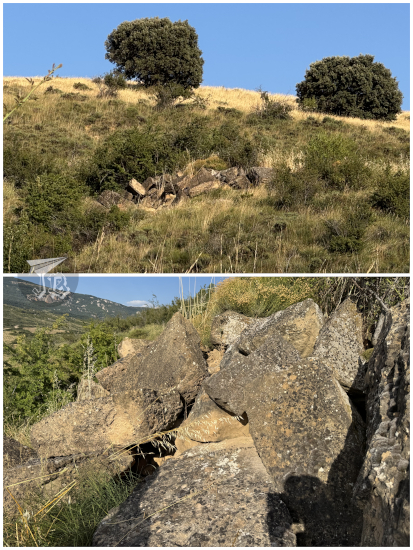
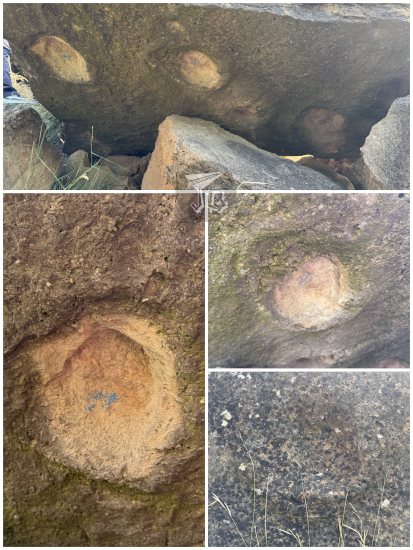
Towards the end of the evening, we hopped onto the vans yet again to head to the middle of nowhere for some amazing views of the castle. No, really. We were headed to another “palaeontological site”. It turns out that a few years ago, a farmer was ploughing his land and found a few slabs of rock which he discarded to the side. These slabs held footprints from hornless rhinoceros from maybe 15 – 10 million years ago. The slabs are haphazardly stacked with the footsteps on the underside, which is great for conservation. Also, the way is so unkempt that nobody would get there to damage them for kicks and giggles, which is good too. We had to waddle through thistles and dry plants about hip-height to get there, then climb up the rocks so all of us could get a look. Afterwards, we found a shaded spot to talk – and the professors brought cold drinks (and chocolate) again for the hike. They were crazy prepared.

Loarre castle

Here’s the thing with the rhino footsteps – scientifically, they’re out of place, so they have lost a good part of their intrinsic / purely scientific value. But legally, they must be protected and conserved. So, what to do with them? It would be expensive to move them, and once they were transported, where would they end up? Neither the lab nor the museum were willing to take them on… Each of the coordinators told us about pros and cons of different actions. In the end, what we were brought to realise was the big discrepancy between what must be done (considering the law), what should be done (considering the science) and what can be done (considering the money). The museum-lab has an idea or two about what to do with them, and I wish they succeed. I really hope the rhino footsteps become well-known some day. That way I can boast I knew them before they became famous…

Slabs of rock in the middle of a hill.

Ancient rhinoceros footsteps

Technically, the day was over then, but the coordinators asked for our help with some stuff – getting the jacket we had extracted from Santa Marina into the lab, and moving one of the display cases to change the exhibit inside. We happily complied with both, being the first to see the new display in the museum. Are we special or what?

New exhibit in Loarre, which has exchanged a jacket for two prepared eggs

Afterwards, my classmate and I set off towards Saragossa Zaragoza. We arranged that I would drive him to my hotel and he would get a taxi from there. The drive from Loarre to outer Zaragoza takes about an hour, but once you get into the city itself, all bets are off. Furthermore, Google Maps had given me some strange instructions to enter Saragossa, but fortunately, traffic was light, as I had predicted / hoped. The hardest part getting to the hotel parking lot – I had to go to the hotel first (and find a parking spot for that) to check in, and get the key to the parking lot, then drive there. Of course, the only place I could drop off the car near the hotel was a one-way street in the opposite direction from what I needed, with no convenient turns allowed. In the end, it took 20 minutes to be able to leave the car, but it was really the most convenient option. Zaragoza is really not made for visitors to park in the streets, even if the hotel was far from the centre. It was the closest to the university as I had been able to find so the next day was nice and easy.

It was insanely hot, sticky hot, and I needed some dinner. I found a nearby fast food place and headed back to the hotel room with take-out. I finally had a long shower – this was a bit of a theme during this trip, wasn’t it? The room was small and a bit claustrophobic (honestly, it reminded me a little of a prison cell), and the air-conditioning machine was right above the bed, so it was a bit tricky to find the correct temperature / fan combination. I was tired, but stupidly alert, so it took a while to fall asleep.

Palaeontological Restoration Techniques through the preparation of Loarre dinosaur eggs

16th July 2025: Santa Marina Palaeontological Site {Dinosaur Eggs Loarre & Zaragoza, July 2025}

In our second morning in the Loarre course Técnicas de restauración en paleontología a través de la preparación de los huevos de dinosaurio de Loarre: Palaeontological Restoration Techniques through the preparation of Loarre dinosaur eggs, we met at 9:00 in the museum-lab Laboratorio Paleontológico de Loarre. The first thing we did was pick up our PPE – glasses, earplugs, facemask and work gloves. For the day we would be cared for by Miguel Moreno Azanza, Lope Ezquerro Ruiz, Ester Díaz Berenguer, Manuel Pérez Pueyo and Laura De Jorge i Aranda.

Miguel Moreno Azanza and Lope Ezquerro Ruiz are the course coordinators. The former is holds a PhD in Geology and is a Postdoctoral fellow in the Saragossa university Universidad de Zaragoza. He is the egg expert and the leader of the works in Loarre. Ezquerro Ruiz is now a Lecturer at another University, Universidad Complutense (Madrid), but he has not lost contact with the dino-egg world. He is the expert sedimentologist, described as an “all-terrain geologist”. Ester Díaz Berenguer did her doctorate about ancient manatees, once dug a sauropod skeleton all by herself, and is the Natural History collection curator in the Natural Science Museum of the University in Saragossa. Manuel Pérez Pueyo holds a postdoctoral position in the university Universidad del País Vasco and is currently away in Romania, studying the same kinds of sediments the Loarre eggs are found in – he is the K-Pg Limit expert. And finally, Laura De Jorge i Aranda is the de facto boss – she is the main restorer and conservation expert in the lab, so what she says, goes. If she ever stays still for long enough to finish saying it, because she must be related to the Duracell bunny…

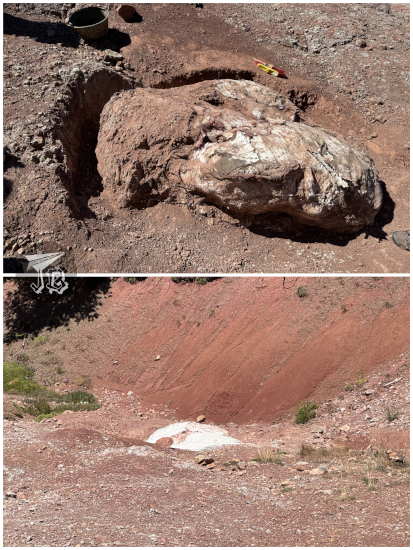
We hopped onto the vans, and drove / bounced off towards the actual palaeontological site: Yacimiento de Santa Marina, the outcrop where the eggs were first found. Around 6 km away from the village, the area of the site is around 500 square metres, and eggs could be found from the surface (originally, those have been excavated now) to almost 2 m deep. It is mainly comprised of red clays hardened into actual rock, whose age is disputed between around 70 and 66 million years ago. Fragments of egg shells can be found on the surface, easy to tell apart. While the clays are mainly reddish, the egg shells are dark grey / blue, three millimetres wide, clearly rounded and with clearly-visible pores on the outer surface. And no, finding one of the dozens of them that we saw never got old. They have found six or seven groups of eggs there, so the upcoming steps are extracting them and working out if the groups are actual nests or just casual accumulations due to transport or other causes.

Yacimiento de Santa Marina - red hard unforgiving rock full of dinosaur eggs if you dig hard enough

There were three jobs to do around the site – cleaning up an area where eggs had already been found to check for more, repairing a cast jacket which had been damaged, and extracting a cast jacket which was ready to be transported to the laboratory. I started with the clean-up team. There, we used the “small” equipment (cleaning brushes, paintbrushes, and screwdrivers) to remove sediment and small rocks trying to see if there were more eggs around or underneath the one that had been removed. It was a definite maybe.

A spot in the ground where an egg was found. It has to be cleaned (swept) to check if there are more eggs or eggshells

The professors had brought Coke, Aquarius and pastries for breakfast at the mountain hut next to the hermit church Ermita de Santa Marina, which lends its name to the site, and thus we had a break around noon – the museum-lab team had brought us snacks and drinks. Afterwards, my group moved onto recasting a jacket which protects what could be a whole nest inside. The whole thing is massive and thus heavy, so difficult to move. While the logistics for that are being taken care of, the cast jacket protects the fossils inside, and the whole thing is kept buried to prevent weathering.

In Spanish, the cast jackets are called momias, mummies, as they are wrapped in gauze or similar before. Unfortunately, that degrades with time and weather. In order to protect the fossils, three of us applied a layer of cellulose (read: wet toilet paper) first, while the other two made burlap stripes that would go between the cellulose and the plaster. Later, another group would make and apply the new cast, and the following day the professors came back the next day to rebury it for extra protection.

Giant cast protecting fossil eggs before and after getting some TLC and new plaster

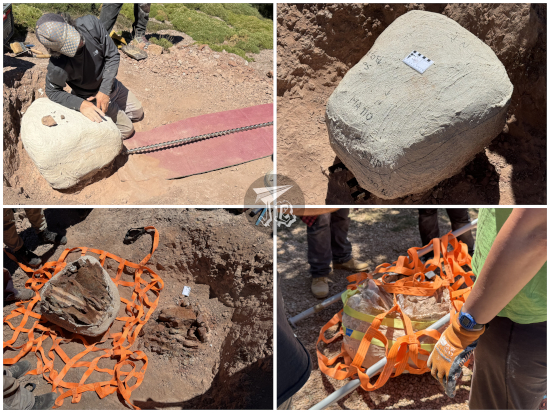
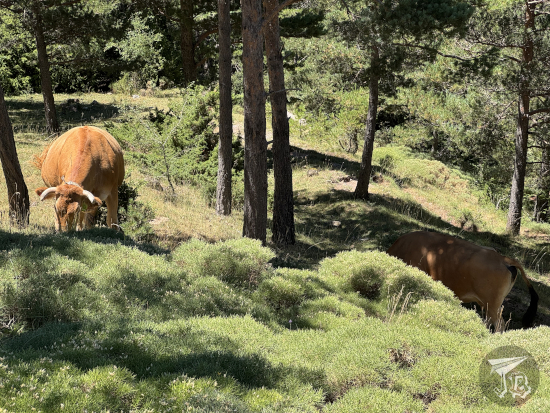
My group’s final job was breaking a plaster cast off the ground. As we worked on the other two spots, the other groups had taken a hydraulic hammer and a giant drill to the rock surrounding the cast to get it ready for extraction.. I got to work on the drill – while one of my peers pushed the tool into the rock, I was in charge of keeping the drill bit steady. Afterwards, I could hammer one of the stone-splitting wedges into the holes we had drilled, and a group-mate hammered in the other two. The cast was labelled and extra information was written on it: level, north, which side was up. After that, the whole thing was torn off the stand (by sheer blunt force, aka someone pushing it) and rolled onto a net that had to be hauled up the outcrop and then into the van, all that under the incredulous look of a herd of free-range cows which grazed nearby.

Jacket cast of a fossil being broken off the ground with a giant drill, and then transported using a net.

Two cows grazing

The strongest people around loaded the cast and carried it out, then put it in the van. They needed someone to take pictures of the process and I volunteered for that. By then, it was way past 14:30, which meant we were too late to have lunch in Loarre, where apparently it is only served between 14:00 and 15:00. Calls were (sort of desperately) made to find somewhere which would feed our large group lunch. We ended up in the restaurant at the campsite Camping de Loarre, which happily let us have some food there. They offered stuff to share, but we preferred to have individual plates. I think we all wanted something we really… wanted, so we just chose from the main dish options.

I ordered fried eggs with ham and chips. While I prefer my eggs runny, they were adequate. Since I had drunk a Coke for breakfast, I had an isotonic drink instead, and some of the communal water. As I was finishing, I overheard that they had ice cream inside… watermelon ice cream. It was exactly what I needed for dessert. While I was paying, the waiter asked something about whom to charge for the water, so I took care of that. It was still cheaper than buying all the soda and snacks the professors ended up providing.

Camping de Loarre: eggs with ham and a view of the castle

After lunch, we headed back towards the village, where we had a lecture by Laura De Jorge i Aranda on the theory of fossil restoration, conservation and preservation. One of the most important things she mentioned was documentation – as we had seen with the cast we had broken off. Once in the laboratory, the plaster is opened, the sediment classified for later study, the eggs cleaned mechanically and chemically, and any crack sealed with special glue. Every step of the way is documented. Finally, the fossils have to be packed for transport or preservation, and the sediment must be combed for anything of interest it might be hosting, such as loose egg shells (from either titanosaurs, crocodilians or theropods).

We moved then to the museum-lab to apply what we had just learnt in our first hands-on visit to the restoration laboratory. We were provided with a bunch of fossils (newly-discovered spinosaurid bones, so new that they are unpublished and thus cannot be shown) and Ester Díaz Berenguer guided us to make fossil beds with polyethylene covered with tissue. These were to go into fireproof drawers for conservation in the Natural Science Museum in Saragossa. The fossils are laid out on the polyethylene, traced, and the bed is carved for them with scalpels and cutters – remembering to also carve spaces for fingertips, so picking up the item is easier in the future.

A tray with cuts to fit the different fossil bones that we cannot show for scientific reasons, so it just looks like we cut a bunch of holes with weird shapes

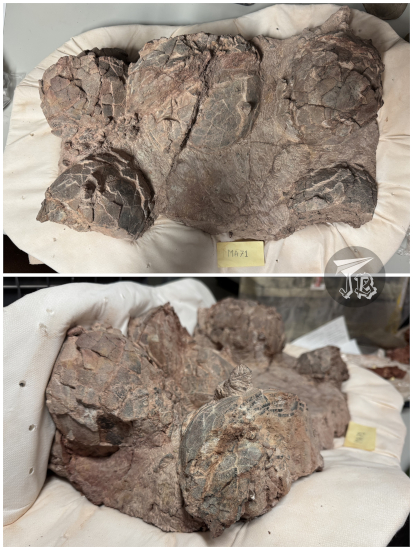
After that, Miguel Moreno Azanza showed us some of the prepared eggs. One of the specimens was a couple of eggs stored together (one of them might have a baby inside!). These were found in another site, Collado de la Tallada, which apparently is “easier to dig in”, but we were playing level pro in Santa Marina. Another was a group of five eggs together, which could have been a nest. They are criss-crossed by mini-faults. We were able to snoop around other eggs, as the professors chuckled something like “Don’t worry, you’ll work on them tomorrow”.

Two titanosaur sauropod eggs in a case. They look about as big as the palaeontologist's hands each. They are deformed and broken but have a vague egg shape.

When I signed up for the course, I expected that the “practice” would be standing there while an expert did something. Maybe we would all get one egg shell to touch and share amongst us. That would have been really cool already. But by now I had dug, protected, drilled, pushed, and held fossils. I was ecstatic. The course had blown up my mind already, and there were still two and a half days left.

A titanosaur sauropod egg nest with five or six eggs, deformed and cracked by the passing of time.

I went back to the hotel Hospedería de Loarre to shower, have a snack, and pack all my things as I had to clear the room the following morning. I also studied off the route to get to Saragossa in the evening after the course. During the planning stage, I had considered whether I wanted to go to Saragossa on Friday morning before the lessons or Thursday evening after them, and in the end I decided to drive on Thursday.

On the one hand, it meant driving after the whole day of class, probably tired, and around dusk. On the other hand, it allowed me to do the drive without a time limit constraint, park directly at the hotel, and it might mean less traffic. Furthermore, sunset was at 21:00, and it should be bright enough for a bit still after class. In the end, I decided in the end that it would be less stressful. Thus, Wednesday was my last night in Loarre.

Palaeontological Restoration Techniques through the preparation of Loarre dinosaur eggs

14th June 2025: The road to Loarre {Dinosaur Eggs Loarre & Zaragoza, July 2025}

The closer the day came, the more nervous I got. First, there was the drive. It would be a long drive on my own, during the pre-holiday rush, and I had to go around Zaragoza (Saragossa), which has a notorious knot of connections. I had studied the route up and down with both Google Maps and my Sat-Nav. However, I could not control traffic nor other drivers. And secondly, that weekend there had been torrential rain alerts in the area. The last thing I needed was a flash flood.

I pumped fuel before I went to work in the morning as I had a cheap petrol station on the way. When I finished at 15:00, wrapped up, said my goodbyes, and headed off. I had a swing of water and set on the road, with the goal of taking a break in an hour or so. I had over 360 km to drive through, most on the A2 speedway, then a national road, and a final local road. The first 20 km or so were the worst, with lots of traffic and lorries because I was right in the middle of a logistics hubs. For the next 100 km or so, as I went north, I had the pleasure of getting caught in a few “lorry overtaking lorry” instances (sometimes even “lorry overtaking lorry overtaking lorry” ones, when there were three lanes), with the slowest lorry going at 110 kph and the overtaking one at 111 kph on a 120 kph speed limit.

I was surprisingly not tired, but I forced myself to make a stop around 17:30 to have a caffeinated drink and one of the sandwiches I had prepared, then continued on. I found some construction work which created a traffic jam that got us to a near stop for about 20 minutes around 18:00, maybe. I managed the Zaragoza exchange and drove successfully onto the following speedway (A-23) – from there, it was about another hour. When I reached Huesca, the exchange was easier, just a turn left into the national network (A-132). The last 34 km were on the local road (A-1206 – the lower the number, the “better” the road is), and took a bit longer than expected due to getting stuck behind a tractor and a harvester for the last stint. I finally reached Loarre around 19:20. I found a convenient (and legal) parking spot in one of the outer streets, and walked to my accommodation.

The hotel Hospedería de Loarre is located right in the Main Square of the village, roughly a three-minute walk away from the street where I had parked, and four minutes from the main road. When I checked in, the worker made some conversation and asked me why I was in town. Upon explaining that I had come for the course Técnicas de restauración en paleontología a través de la preparación de los huevos de dinosaurio de Loarre: Palaeontological Restoration Techniques through the preparation of Loarre dinosaur eggs, I was told that I was “the one from close-by”. Considering that I had driven for over 360 km, that shocked me. The worker explained that the previous people who had checked in before me, who were also there for the course, came from Chile and Mexico! I was the one from close-by indeed, and one of the three people from the course staying at the Hospedería. The network Red de Hospederías de Aragón comprises a group of hotels in historical buildings within areas with high tourism potential. The Loarre one is located in a palatial house, the former town hall, which was rehabilitated recently.

After check-in, I went for a walk for an hour or so. I saw the church Iglesia de San Esteban and the cross that marks the end of the village Cruz de Término. I also found the laboratory or “museum-lab”, Laboratorio Paleontológico de Loarre, which is a tiny building painted in bright colours and silhouettes of sauropods (though it shall soon move to a bigger one).

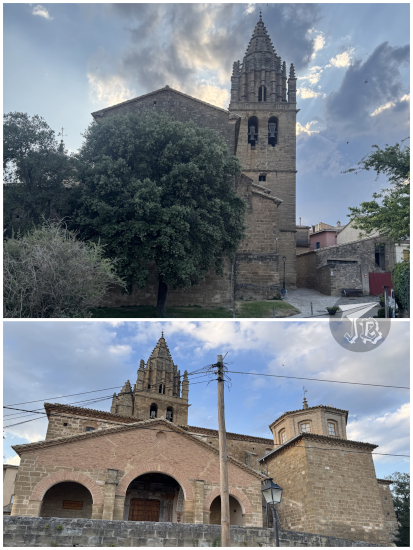
Romanesque church

Building with dinosaurs painted on it, the museum-lab in Loarre

The castle Castillo de Loarre was not too far away (walking route was about an hour). I had visited it before, so I did not need to see it again, but I would have liked a picture of the walls that I was unable to get due to a lack of perspective. Unfortunately, as I considered the hike, a storm cloud rolled by. There was ominous thunder, and a few raindrops fell. If I continued on my walk, I was sure I would get drenched. If I decided to go back, the second I got out of the shower and into the pyjamas, it would stop raining. The area had been on alert due to rain and flash floods all weekend too…

Loarre castle from the valley

A huge thunderclap helped me decide to head back.

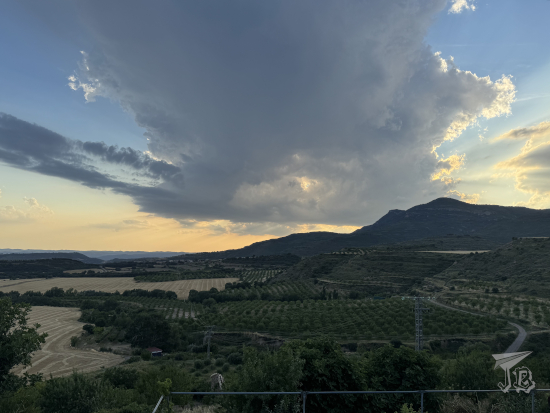
Storm rolling in over the cultivated fields near Loarre

When I pulled up my toiletries, the sun lotion had not been well-closed, so I had to wash all the stuff. At least my chapstick wouldn’t get sunburnt? Then, I headed into the shower, and when I came out, it had indeed stopped raining. However, the cloud was still there, and I did not trust it… Oh, well. There would be other chances, I thought.

Palaeontological Restoration Techniques through the preparation of Loarre dinosaur eggs

24th September 2023: Hiking to the Castle of Zafra (Spain)

An association in my town organises monthly hiking outings. I decided to give it a try – if it worked out, I could go out every month at least once for a cool day trip, and I would not have to be alone for a bunch of difficult trails. And if I got to make some friends, even better. I signed up for the first hike: Sierra de Caldereros, Pico Lituero y Castillo de Zafra. It was described as a moderate route of roughly 17.5 km and an altitude gradient of 916 metres. The main reference points were: Cubillejo del Sitio (drop-off) → Pico del Águila → Pico Lituero → Castillo de Zafra (highlight) → Hombrados (pick-up).

The group met on Sunday the 24th at 8:00, and we got on the coach. It took two hours to get to the drop-off point. I quickly realised that the group was already established and not too open to first-time newcomers. That did not deter me though, and I found my pace between the faster and the slower walkers. What I did not like was that a good deal of the route was not through a track. The description mentioned a path, which I did not see. It was a bit riskier than what I enjoy on a hike, for more experienced adventurers.

Ridge Sierra de Cubilleros track

I found the hike too energy-demanding to be able to enjoy the landscape, except when the walking stopped so we could regroup. I was able to spot a few animal tracks and some cool karst and sandstone structures. Underneath our route, the never-ending Castilian plains got lost in the distance. There were a lot of insects, especially horseflies, trying to suck us dry. We reached Pico del Águila in a bit over an hour.

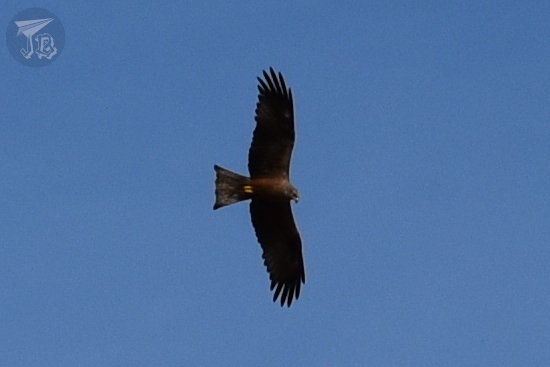
The climb to Pico Lituero was hard because it was done off track, but once on top the first part of the group could catch a breather. There was a bird of prey circling over head, so I might have sneered a little about it hoping for lunch. I sat down at the summit for a little while and snacked on a cereal bar while waiting for the second part of the group.

Castilian plain from Sierra de Caldereros

The highlight of the hike was the castle Castillo de Zafra. It is believed that the original fortress was erected by the Visigoths in the 8th century. It was built upon by the Moors, and eventually taken by the Kingdom of Aragón. The castle itself was built in the late 12th or the early 13th century and today it is part of the municipality of Campillo de Dueñas. The castle was built and integrated on a sandstone outcrop in the ridge Sierra de Caldereros. It was a key defensive outpost which was never conquered, neither by the Moors nor the Castilians. However, it lost importance when the marriage between the Catholic Monarchs joined both the Castile and Aragón Kingdoms, and eventually it became derelict. It was bought and restored in the 20th century by a descendant of the last castellan on duty before the castle was given to the Catholic Monarchs. It was used as the Tower of Joy in the sixth season of Game of Thrones. We stopped there for a while to have lunch, but we could not visit the fortress as it is private property.

Castle of Zafra

After the break, we continued off to the village of Hombrados. We were back on a track, flat enough even for cars. There was not a shadow, and it was very hot – I got a sunburn, and most of the walkers ran out of water – which made find a small fountain joyful. On both of our sides, barley and wheat had been harvested. Around 16:00 we reached the village bar, which opened for us. We had a drink and a toilet break and left around 17:00. While in the coach, my nose started dripping and I realised that between the little straw in Puy du Fou a few days before, and the freshly-reaped fields, my allergies were playing up. It was a miserable couple of hours, to be honest.

In the end, I decided that these day-trips are too demanding for me, and that I had not enjoyed myself as much as I hoped. Glad I went, though, so I could judge instead of wondering.

16th September 2023: Archaeological Site of “Los Casares” (Spain)

I took an almost two-hour drive to the municipality of Riba de Saelices, which involved having to fill up the tank in the middle of nowhere – ouch. It was early in the morning, and once I got off the motorway I saw a bunch of roe deer grazing dawn away. A couple of them got spooked by the noise of the engine and jumped towards the road, and another was uncomfortably close to the asphalt, but I was careful not to run any of them over – of course!

I went past the village and took a turn at an unpaved road, and reached the parking spot of the site, 3.5 km later, around 9:10, which was great for my free 9:30 visit. . My main interest in the archaeological site Conjunto Arqueológico de Los Casares was the cave Cueva de los Casares, which can only be visited by appointment and in small groups. Post Covid recovery plans have made some archaeological sites free until the end of the year, and I wanted to visit before the end of good weather. The cave holds important carvings from the Upper or Median Palaeolithic period. However, the site also comprises the remains of a Muslim village, a defensive tower, and an ancient oven, with the latest findings dating from the 14th century.

I found the parking spot – a clearing at the foothill of the area. The whole place was empty except for a kettle of griffon vultures (Gyps fulvus) circling up above. It was a bit creepy, I’ll be honest, and I joked with myself that maybe the webpage for the archaeological site was just the way the vultures ordered food. From the parking lot I saw a small clearing with tables, and up the hill, a small tower, which I thought was the tower from an old Muslim castle. Since I had some time I decided to climb up and I found the entrance to the cave, with a notice that visits started there. By then it was already 9:30 so I thought maybe my ticket was wrong and the winter timetable had already started so the visit was at 10:00. A bit before 9:40 I saw two cars approaching – yay.

Vultures flying

Archaeological site Los Casares: cave, ruins, and tower

Finally, the guide arrived and she told me that the visitors in the other car had lost their way, so she had had to guide them down the track. We started late as the group also took a while to come up. We stayed at the entrance of the cave for a little as the guide explained about the civilisation that inhabited the area in the Palaeolithic, and a bit about the cave bears that used it as a lair before them.

The cave Cueva de los Casares was inhabited by Neanderthals some 60,000 to 40,000 years ago. The stonework and industry have been classified as the European Mousterian; among objects found inside the cave there are flint points, arrow tips, scrapers, and even pottery. Animal remains, both from predatory events and human consumption have also been recovered. The most important archaeological items found in the cave are the carvings on the walls. Though there are carvings from later periods, some experts think that the cave holds the oldest anthropomorphic carvings in the Iberian peninsula – not carved by Homo sapiens (modern humans) but the previous Homo neandertalensis.

Entrance to the cave Cueva de los Casares

Only the first third of the cave can be visited, and we got to see horses, cattle and the human-like figures. Once you know what you’re looking for, it gets easier to identify the shapes. One characteristic about the human depictions of the period is that humans are represented to have weird heads, though nobody really knows why – possibly animal attributes to represent their qualities. The humanoids are represented alone and in groups, and sometimes they are one above another. There are families, activities – such as diving – and copulation (apparently this is important because the carving in question might be the first ever recorded). It is an interesting experience, though no pictures are allowed inside, there are some on the official page – you don’t get to see half of them anyway. I’m disappointed we were not shown any mammoth carvings either, those are restricted to the expert-only area, but at least I saw something, and it was original.

After the cave, I climbed up the gully to the hilltop and the Berber tower – called Torre atalaya (“Watchtower tower”) – which hangs above the entrance to the cave to look at it. On the way up I also had a good view of the Muslim settlement underneath, Poblado Hispano-musulman. I also looked down the gorge and the valley called Valle de los Milagros, which I may or may not hike in the near future in search for fossils. However, I really did not feel like staying at that point, so I just drove back.

Watchtower Los Casares

Muslim village of Los Casares

Valley Valle de los Milagros from above

18th July 2023: Naples from below and above {Southern Italy, July 2023}

Naples [Napoli] was waking up when I walked out into the heat. It was a bit after 8:00 because I was… not really planning, just expecting to get lost. My hotel was right next to the Porta Capuana and Castel Capuano, remains of the Medieval times and ancient walls. There is where I took my first wrong turn – the nice receptionist at the hotel had tried to explain to me how to get there, and I tried to follow his instructions – which meant I did not follow my original route and I got disoriented. Fortunately, phone GPS came to my aid and I eventually made my way to the Historic Centre of Naples Centro storico di Napoli. While on principle I understand the protection of a Unesco Heritage Site, it did not feel like one, mostly due to the smell – a mixture of human urine, cooked flour and raw fish – and the crazy traffic. I don’t think “pedestrian” means the same thing in Italian as in any language I speak.

I was around the area I wanted to be about 9:30 for my 10:00 visit, and I took the time to wander up and down Via del Tribunali. Off to one side stands the metal sculpture Busto de Pulcinella – a character of the early theatre school called Commedia dell’arte, where different characters wear masks to be identified as an archetype. Pulcinella is an opportunistic anti-hero from the lowest social strata recognised by the black mask. Italians like rubbing body parts of different statues for luck, that’s why his nose is polished off.

Napoli Storico - the centre of Naples

I had a booked guided tour at 10:00 for a place called Napoli Sotterranea – Underground Naples. It is just one of the companies that give tours through the hundred of kilometres of tunnels that cross the Historic Centre. The city of Naples was built on and out of tuff, a volcanic rock made out of compacted ash, with a yellowish colour in this area. Tuff is easy to dig and excavate, and the Greeks used it to build an aqueduct to serve the city – that later the Romans expanded – 40 metres under the ground. When I arrived at the gate, there was a crowd – and even if I had a “skip the line” reservation, my English tour did not start till 10:20. The whole thing was a bit chaotic, and I later realised that as convenient as online pre-booking is, it is not covered by the Naples Tourist Card, so a lot of people had no option but to call at the attractions to get their discounted tickets – I decided not to get the card because I had booked or planned to book most things in advance so it was not value for money for me.

Napoli Sotterranea starts off going down over 150 steps into the excavated tuff to visit the aqueduct. There are a number of galleries where the water used to run, and at some points you can even glimpse the original paint to help prevent the water filtering into the rock. Then the guide explains that during the WWII bombings, the tunnels were used as air raid shelters and you are shown the “showers” and “latrines”, followed by a morbid recall of the stench and the conditions, and some art exhibits and objects from the time. It was at this point I started thinking that the Neapolitans had a thing for the macabre.

Fortunately, we moved over soon, to a tiny garden that is not watered nor lit by sun, and yet it thrives in the tunnels due to humidity and artificial lamps. Then we went further into the earth – you have to walk along a very narrow tunnel, sometimes only practicable sideways. They used to give you a candle for it, but now they tell you to use your phone torch. It was a bit claustrophobic, but at least you did not need to crouch like in the pyramids. At the end of the tunnels there are several underwater ponds and fountains.

Napoli Sotterranea: tunnels and underground water reservoir

As you come out from the tunnels, there is a small “museum of war” with some uniforms and so on, and then they take you to see “the Roman Theatre”. Here’s the thing – the theatre is kind of there. Throughout the centuries, it has been incorporated into the rest of the architecture of the city, so only bits and pieces are visible, mostly those that remain underground, like the actors’ tunnels, and a hall which holds a collection of Neapolitan nativity scenes or presepe.

After the guide set us loose, I walked towards the Montesanto funicolare cable car station. Naples’ rope way is a tourist attraction in its on right, some people say. I’m not a fan, but I really did not want to climb up Vomero Hill Collina del Vomero in the sun and heat. The ride did not take longer than a few minutes, and after a short stroll I reached one of the city’s castles – Castel Sant’Elmo.

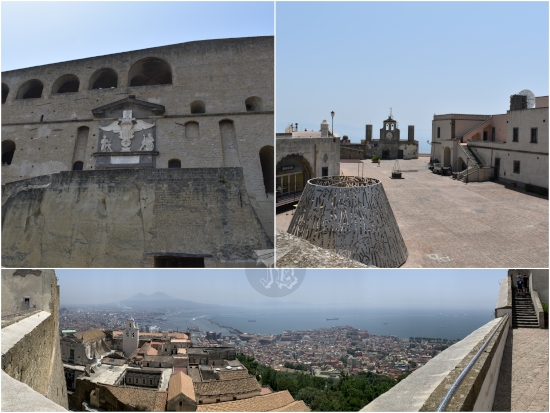
This fortress and former prison dates from the late 13th century. It was built in volcanic tuff, and the structure was mostly developed throughout the 14th century, though it was severely damaged in an earthquake in 1456. Construction continued, and then in 1587 lightning struck the ammunition depot and the explosion destroyed several parts of the castle, including the church. Throughout Naples’ convoluted history, Castel Sant’Elmo has been a stronghold for war, and a prison. Today, it’s a monument, a museum, and a viewpoint of the port and Mount Vesuvius Il Vesuvio in the distance.

Naples Castel San Telmo

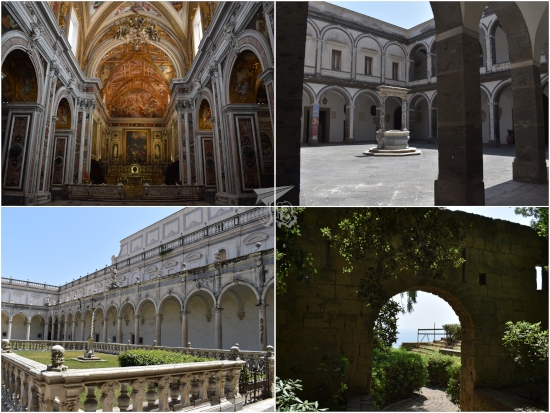
Next to the the castle stands the monastery-museum Certosa e Museo di San Martino. It originally was a Carthusian monastery inaugurated in 1368 and dedicated to St. Martin of Tours. The monks were expelled by French soldiers in 1799, and they were never allowed back. In 1866, it was taken over by the state. The monastery has a Baroque church – Naples is after all the birthplace of the style, but in a different way from the Spanish one, so I don’t dislike it as much. The monastery also has two cloisters – one of which with a cemetery in the middle. There are also hanging gardens and orchards and the different rooms of the building host religious artefacts, items from the Bourbon times, and one of the best presepe in the world.

Naples Monastery of San Martino, showing the church, the cloisters, and the entrance to the hanging gardens

Then I went back downhill, again using the funiculare. My next spot was Naples Cathedral, dedicated to the Assumption of Mary, known as Cattedrale di Santa Maria Assunta, Cattedrale di San Gennaro in honour of Saint Januarius, the patron saint of Naples. However, the most common name it receives is simple Duomo di Napoli. The current building was built in the Angevin Gothic style (gotico angioino) back in the 13th century, over palaeo-Christian buildings. The interior is strongly Baroque, though there are still some 14th century frescoes.

Collage. Duomo the Napoli: façade and main nave

For reference, Italian churches claim that walking into them showing shoulders or knees is disrespectful – so they encourage visitors to show “decorum and modesty” because “it demonstrates respect in the house of god”. I think their obsession with joints is exaggerated (especially considering the heat), and there was a certain event that highlighted the hypocrisy of it all. I visited the palaeo-Christian baptistery, one of the parts of the cathedral that you need to pay in order to access – and all tickets in Italy have been increased 1 € as part of the recovery plan of the area of Emilia Romagna, affected by heavy floods in May 2023.

The Baptistery of San Giovanni Battistero di San Giovanni in Fonte is a basic round pool on the ground, but the mosaic above it is super-detailed. It dates back from probably the late 4th century. The centre has the Chi-Rho symbol, and it is surrounded by scenes from the Bible, animals and plants, and allegories. Well, while I was admiring the art, the guy from the ticket booth came over, pulled his zipper down and urinated into the remains of the original wall. Talk about Catholics and respect in the house of God…

Next I went to the side chapel Reale cappella del Tesoro di San Gennaro (Royal Chapel of the Treasure of St. Januarius) and the Museo del Tesoro di San Gennaro (Museum of the Treasure of St. Januarius). San Gennaro / Saint Januarius is the patron saint of Naples. He was a Catholic martyr in the 3rd century, who died during the persecution of Christians by Emperor Diocletian. After his beheading, his blood was saved and it is said that the blood liquefies three times a year. The chapel holds a reliquary, and the museum some religious artefacts, including the “treasure” – reliquaries, jewels and other religious paraphernalia in noble metals and gems.

Collage: Baptistery of San Giovanni and Royal Chapel of the Treasure of St. Januarius

After the cathedral, I found Via San Gregorio Armeno, an alley that is famous because it concentrates the sells of handmade figurines for the nativity scenes presepe. However, as I walked I could only find cheaply-made expensively-sold figures of politicians, footballers and so on. I have to say that I know or understand nothing about football, but apparently Naples’ city team has won the national championship, and that’s a big thing? Everything was full of football references, posters, banners… and the alleyway was not an exception. It felt a bit… disappointing as I had heard so much about it, and I saw very few things that were “classical” there – I would come back another day and found the real thing though.

I made a visit to a local supermarket to find something to drink, dinner, breakfast and snacking the following day – because I had packed some, but I had forgotten that I had. Italian people don’t believe in either sandwiches or refrigerated coffee, which was a bit of a bummer. They have a lot of stands to grab something on the go, and they are keen on cafés, but I really did not feel comfortable sitting around in the city.

I went back to the hotel with my “groceries” because I did not want to be walking around after sunset, and I spent the rest of the evening watching British Museum’s documentaries about Pompeii and Ercolano to get ready for the following day. One of the things that drew my attention was how the documentaries kept emphasising the “importance” of the archaeological sites, and that it was important to respect them. I did not understand why, as I felt that is quite obvious. I would later discover… yes, people need to understand their importance.

10th June 2023: La Alberca & Plasencia {WNW Spain, with a splash of Portugal, June 2023}

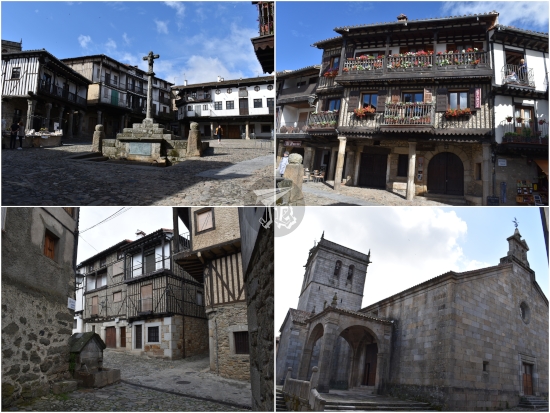
We left off the castle to have breakfast at the village of La Alberca, a municipality known for two things. The first one is the timber framing of its houses. The buildings have a stony ground floor and a lime-white second floor with the post-and-beam style in dark wood.

La Alberca

The second one is the tradition of the whole village raising a piglet together. The swine is freed mid-June (we missed it by a couple of days) and everybody in the village keeps track of it – feeding and sheltering the animal – until it is auctioned for charity when the time for slaughter draws near, in January. There is a sculpture as homage to the animal in the middle of the church square, yielding to what I’d say is the most iconic sight. However, the amount of butcher and delicatessen shops makes the whole thing a little… weird.

Monument La Alberca pig

We drove through the natural area of Sierra de Francia, and stopped over at the viewpoint Mirador del Madroñal. From there we could see the abundant vegetation – oaks, chestnuts, and vine-fields. A bit further, we reached a second viewpoint Mirador Las Juntas.

Viewpoint Mirador del Madroño

Viewpoint Mirador de las Juntas

Our road was closed, so we had to take a detour, but we eventually reached Plasencia with a lot of big plans. Unfortunately, when we arrived at the Parador de Plasencia, built in the former convent Convento de Santo Domingo, we learnt that the town was in the middle of the local festival. Such thing meant outdoor bars and music – almost rave-like, and most monuments being closed. It had never even crossed our minds that we might run into such a thing, and it was a bit of a bummer that not even the cathedral Catedral de Plasencia was open.

Former convent turned Parador in Plasencia

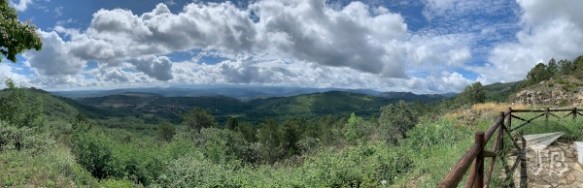
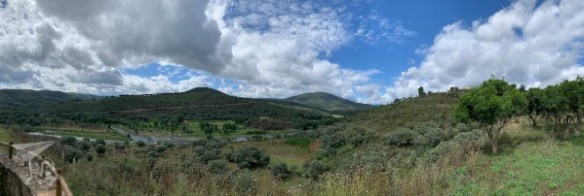
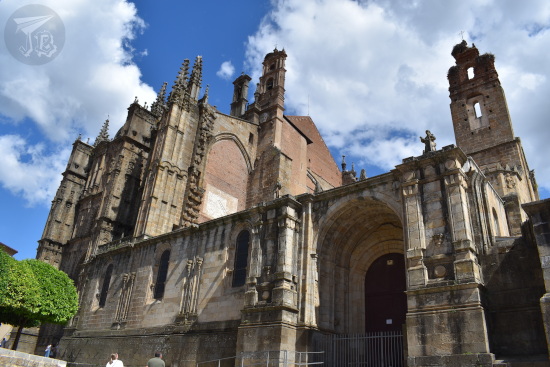
Cathedral in Plasencia

We walked around for a while, and eventually we found the walls and their mini-museum Centro de Interpretación de la Ciudad Medieval de Plasencia. They reminded me of the wall in Ávila, but in a much-smaller scale.

Buildings in Plasencia

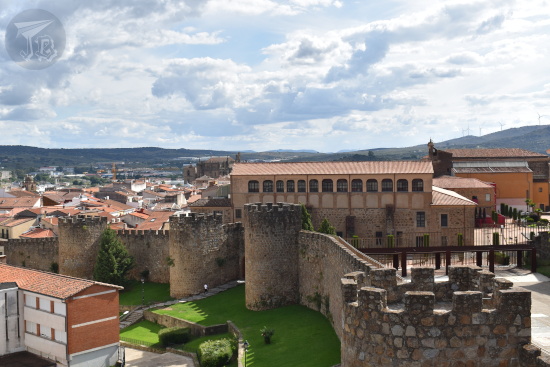
Wall in Plasencia

Plasencia

Plasencia is also a bird-protection area and nestling zone of the lesser kestrel (Falco naumanni), so that is what I guess we got to see (but it could totally have been an eagle…). We had lunch and dinner at the Parador as it was the least busy place, and they took forever both times. We did not feel like going out to check out the town in the evening considering how busy everything was even in the afternoon. Probably it was the first full-blown post-COVID festival, but it was a tad disappointing for me.

Krestel

8th June 2023: Tordesillas & Zamora {WNW Spain, with a splash of Portugal, June 2023}

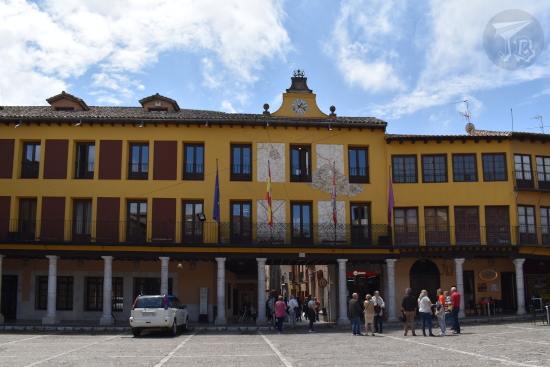
Tordesillas used to be one of the Spanish Crown’s strongholds throughout the Middle Ages, starting around 1340 when Alfonso XI ordered the construction of a palace. In 1494, the Spanish and Portuguese monarchs signed a Treaty which divided the lands “discovered” by Columbus among them – of course, this Treaty was largely ignored by any other European powers which wanted to explore America, and never acknowledged by any indigenous people. In 1519, the town was part of the rebellion against Carlos I, naming his mother – and daughter of the Catholic Monarchs – Juana as queen, despite the rumours that she was insane. After the defeat of the revolts – and beheading of the instigators – the town lost importance.

We left early in the morning to try and ditch the traffic, but we were not successful – driving around Madrid, we ran into a couple of jams traffic caused only in part by the intermittent storms, which made the beginning of the road trip stressful. Thankfully, we parked at the outskirts of Tordesillas and the sun was shining again, as we had to cross the village on foot. Our first stopover was the Main Square Plaza Mayor. In the Castilian Main Square fashion, it is actually square in shape, with the main buildings supported by columns, where cafés and shops stand today. The current plaza dates back from the 16th century, and has been painted in a questionable bright mustard colour.

Main Square in Tordesillas

In the end, most of the history in Tordesillas is linked to Alfonso XI’s palace, known today as the Convent of Saint Clare Convento de Santa Clara, which stands a few minutes’ walk from the square. It was home, and later prison, to royal women, both loved and unwanted ones. It became a convent of the Order of Saint Clare in 1363, and the nuns living there were tasked with praying for the health and salvation of the Royal Family. Today, it is managed by the Spanish National Heritage Foundation Patrimonio Nacional. It can only be visited under supervision – seriously, aside from the guide, you get a security guard following you around – and photography is forbidden in all the interior areas.

The castle-convent was built throughout the 13th to 18th centuries. The oldest part of the building is a chapel dating from the 11th century, and the bulk of the construction was carried out in the 14th century. The monarchs employed Mudejar builders, a fact that yielded to multifoil arches, ceramic decorations, and Quran verses (officially “decorative nonsense”) in some of the chapels and the façade of the building.

Inside the palace there is a Baroque cloister and the gothic church, with a wooden ceiling painted gold and the emblem dragons of Carlos I’s shield. Truth be told, the church had been pretty much hyped up on me, so I found it a bit underwhelming.

Santa Clara convenent in Tordesillas

The party separated for a bit so I could explore on my own for a while. I got to the stone bridge over the River Douro Río Duero, just called “the bridge” el Puente, right at whose ends stands a monument to the fighting bull Toro de Tordesillas. The associated bullfighting festivity was one of the oldest in Spain until it was vetoed by the regional government – the fighting bull was set loose in the meadow, chased by horsemen and lanced to death. Today, the festivity is controversial and it’s trying to find its place in the midst of new sensitivities.

Tordesillas

I climbed up the medieval wall Muralla de Tordesillas to the park where the monument to Queen Juana Monumento a la Reina Juana I de Castilla stands, in front of the museum dedicated to the Treaty Casas del Tratado, and the church Iglesia de San Antolín.

Monuments in Tordesillas

We walked back to the car to drive off to the next spot in the route, and Tordesillas became the first spot where we spotted birds of prey during this trip, maybe a golden eagle Aquila chresaetos. Or, you know. Anything else.

Eagle

We drove off towards the municipality of Zamora, a Medieval town and villa by the Douro, known for its Romanesque churches. We reached the Parador de Zamora in the middle of a horrible downpour that was over as quickly as it had started. The Parador hotel is a former noble family’s Renaissance palace, with a military style and a middle patio with a glass-window gallery

Parador in Zamora

We had a late lunch and walked to the manor Palacio de los Momos, near the Main Square Plaza Mayor, home to a church Iglesia de San Juan de Puerta Nueva which has a sculpture representing two figures of the local Holy Week celebrations Monumento al Merlú. Other buildings include the old and new town halls Ayuntamiento Viejo and Nueva Casa Consistorial, and blocks of colonnaded buildings.

Buildings in Zamora

The first Romanesque building we came across was the church Iglesia de Santa María Magdalena, which contrary to many other places has got rid of the Baroque add-ons, and stands severe and naked in its stony glory. It is considered one of the most important and pure Romanesque constructions in Europe, sparsely decorated save for the tomb to the side.

Church of Saint Mary

From a side stop I overlooked the river Río Duero and the medieval bridge Puente de Piedra.

Zamora Medieval Bridge

We continued off to the cathedral Catedral del Salvador de Zamora. It is considered the first cathedral in the “Douro Romanesque” style. After the original cathedral was destroyed during the Muslim conquest of Spain, the reconstruction began around 1151. It must have been finished towards the beginning of the 13th century. The building has two particularities – the thick tower, and the umbrella dome, in a style that travelled from Byzantium to the Islamic architecture and reached Spain with the Nasrid artists. The inside holds a cloister and two small museum – one of religious art and the other of archaeology.

Zamora Cathedral

Afterwards, we visited the ruined castle Castillo de Zamora – a purely-defensive Romanesque fortress built around the 11th century. The castle has a moat, and you can wander up the walls and defensive towers. The interior is ruined, but the ancient structure can be guessed by the arches and different walls that would have separated the fortress’ halls.

Castle in Zamora

Finally, we explored a few more religious Romanesque buildings: Iglesia de San Pedro y San Ildefonso, Convento de Clarisas El Tránsito and Iglesia de San Cipriano. From the viewpoint next to this last church, we got to see a stork nest with a baby chick in it.

Zamora churches

Stork nest

We had dinner at a restaurant called El Horno, a traditional places that offers tablas – wooden trays full of treats to share. We shared a serving of tabla de fiambres – Iberian sausages (ham, loin, chorizo…) and cheese on a bed of crisps.

Zamora at night

1st January 2023: The Lotus Flower {Egypt, Winter 2022-2023}

I read somewhere once that you should start the year doing what you love, that is why I decided to go out on the 1st January 2022. I could have never imagined 2023 would start as it did, in Cairo [القاهرة] of all places. As a settlement, Cairo can be traced to the Babylon Fortress, built around the 1st century BCE, but its real foundations were laid in the second half of the 7th century by the Fatimid dynasty. The city survived the Caliphate and kept spreading. Today, it is the largest metropolitan area in Africa, and the 12th in the world with 22 million people.

After waking up around 7:00, I was the first in my group to go down to have breakfast, and when I did, I saw that the breakfast buffet had added a ‘hangover’ buffet – Ibuprofen, Strepsils, painkillers in general… I thought it was hysterical. To be honest, I was tired and sore from the pyramid climbs, and probably a bit hungry since dinner had been… strange. One out of three was dealt with after some coffee and a very… British breakfast somehow – scrambled eggs, potato wedges, roasted tomato, a sausage… this gave me energy for the day, which we were to spend in the Unesco World Heritage Site Historic Cairo.

Departure was scheduled for 9:00 – too late, in my opinion. First, we got caught up in the horrible traffic. Then, when we arrived at our first destination, we had to turn around because the bus parking lot was full. On the way we caught a glimpse of the City of the Dead (Cairo Necropolis, or Qarafa [القرافة]). In this area, tombs, mausoleums and houses cramp together, up and down. Some people have made their houses out of the mausoleums due to Cairo’s crazy urbanisation. The City of the Dead was created almost at the same time as the city of the living.

Cairo, City of the Dead from the moving bus. A bunch of low constructions with flat celings or domes, with some trees sprinkled inbetween.

We also saw the ending of the Cairo Citadel Aqueduct [سور مجرى العيون]. Though originally designed during the Ayyubid period between the 12th and 13th century, it was later reworked by several Mamluk sultans (13th – 16th century) to expand water provision to the city. Today, it does not carry water, and it is under ‘redevelopment’ in order to display it as a heritage monument.

Aqueduct. Built in dark grey bricks, it has been buried by the sands of time so only the upper part shows.

Finally, after way too many scares with the bus, we reached the area called Coptic Cairo. It is located in what used to be the fortress of Bayblon, and in order to access it you have to go down a flight of stairs that feels way too long due to the pyramid climb. I do know a thing or two about soreness, and as I was hopping down the stairs as fast as I could, someone complained that it was unfair that I was ‘fresh like a lotus flowers’ while they were sore. That made me laugh – I guess I’m more used to being in pain than others.

The Coptic Catholic Church is the main branch of Christianity in Egypt. The Coptic Church seceded from Catholicism in the 5th century due to disagreements about the “nature of Christ”. Coptic Catholics believe the same general things as other Christian faiths, and fast a lot – 40 days before Christmas (7th of January), and 55 before Easter. They have a different Pope and rules for priests. Copts are a minority in mostly Muslim Egypt.

Our first stop there was the Church of Saints Sergius and Bacchus [ϯⲉⲕⲕⲗⲏⲥⲓⲁ ⲛ̀ⲧⲉ ⲛⲓ⳥ ⲥⲉⲣⲅⲓⲟⲥ ⲛⲉⲙ ⲃⲁⲭⲟⲥ ϧⲉⲛ ⲡⲓⲥⲡⲉⲗⲉⲱⲛ]. Christian traditions tell that the Holy Family fled the Massacre of the Innocents. In the nativity narrative, Herod, King of Judea, ordered the killing of all male children under two years near Bethlehem, in order to get rid of the “King of the Jews”. Having been alerted by an angel, Joseph took Mary and infant Jesus to Egypt. According to the tradition, they rested in the cave underneath the church, now turned into a crypt. The church is dedicated to the two martyrs, who died for their faith in Syria in the 3rd century CE. The building, erected in the 4th century, has a central nave and two side aisles, with 12 columns, probably quarried from Ancient Egyptian monuments and temples.

Collage. The upper part shows the Coptic chruch. The walls are made out of red brick, and the altar is hidden by a wooden structure. The lower picture shows a crypt with a small wooden altar, brick ceilings, and white columns

We then made a small stop at a Roman Tower, one of the Roman emperor Trajan’s addition to the original Fortress of Babylon (not that Babylon, the name was probably corrupted from the Pharaonic name). Trajan also created a quay back to the Nile, which has now dried out.

Ruins of a rounded tower built in white and red bricks. The colours alternate to create horizontal patterns.

We had a small stop at a bazaar shop, then we went into the so-called Hanging Church [الكنيسة المعلقة or ϯⲉⲕⲕⲗⲏⲥⲓⲁ ⲉⲥⲓϣⲓ], officially Saint Virgin Mary’s Coptic Orthodox Church [ϯⲉⲕⲕⲗⲏⲥⲓⲁ ⲛ̀ⲧⲉⲑⲉⲟⲇⲟⲕⲟⲥ ϯⲁⲅⲓⲁ ⲙⲁⲣⲓⲁ ϧⲉⲛ ⲃⲁⲃⲩⲗⲟⲛ ⲛ̀ⲭⲏⲙⲓ]. It is called the Hanging Church because it would have been suspended over the water gate of the Roman Babylon fortress – though today the ground is higher and the view is less impressive. It was built somewhere between the 7th and 9th centuries, and holds over a hundred icons. It is built in a basilica style, with 13 pillars representing the apostles and either Christ or Judas – depending on where you read. The rich decoration, with mosaics and reliefs, especially on the outside, mixes Arabic and Coptic motifs.

Collage of the Hanging church. The façade is sandstone, carved with Coptic and Arabic designs. Then there is a courtyard with a staircase that yields to a white building with two bell towers and a wooden porch. The lower picture shoes the interior, with the altar behind a wooden structure, very decorated ceilings and bare stone columns

That was all for Coptic Cairo, as we moved on towards what should have been our first stop – the Citadel of Saladin | Qalaʿat Salāḥ ad-Dīn [قلعة صلاح الدين الأيوبي]. There was going to be a high price to pay for all that time in the bus that morning, we just didn’t know yet. The Citadel was built by Saladin in the 12th century CE. Saladin was the founder of the Ayyubid dynasty. He became Sultan of Egypt in 1171, fought the Christian Crusaders, and conquered Syria. He was considered smart and noble, even by his enemies.

A sand-coloured wall with two minarets peering from the background

In the Citadel, we visited the Mosque of Muhammad Ali [مسجد محمد علي] in the Southern Enclosure, also called the Alabaster Mosque. It was built in the first half of the 19th century in the Ottoman style, and had to be completely restored in the 1930s due to cracking. It has two minarets, and a metal clock tower – the Cairo Citadel Clock, which apparently was a gift in return for the Luxor Obelisk that currently sits in Paris. The mosque has a courtyard for ablutions, and although the interior is usually carpeted, the carpets were out for cleaning, which created an interesting effect. It was my first time in a mosque, and I was pretty impressed by the huge glass lamps. Most of the courtyard and the interior are covered by alabaster – the upper part of the interior is only wood – and the mausoleum of Muhammad Ali is built in Carrara marble.

Muhammad Ali Mosque collage: from the outside, it has two domes and two minarets. It is built in stone, brick and slate. The inside courtyard is built in white-grey alabaster, with an ablution fountain in the middle and a metal clock tower that feels out of place. The interior of the mosque is also built in alabaster, and the lights reflect on the floor, creating a dizzying effect. Everything inside is carved and decorated with tiny motifs

Before leaving, the Citadel, we went towards the wall to catch a view of what is modern Cairo, in what we were told is called the Wall of Saladin, which is basically the limit of the Citadel. Looking very carefully, one could spot the pyramids in the background, among the high rises.

A ruined medieval wall, with a view of Historic and modern Cairo in the background. A floating image superimposed shows a high-contrast close-up of the skyline, making the pyramids visible through the haze

Afterwards, we went back to the bus to find the restaurant we were supposed to have lunch at – a “luxury boat” on the Nile that tried to short-change two of us – a travel-mate for 20 EGP and me for almost 60 EGP. We had nothing of it, though I had to be a bit more forceful than he did. We finally got into the most interesting part of the day at 15:17 – The Egyptian Museum in Cairo [المتحف المصري]. Considering that the museum closed at 17:00, this was outrageous. We had to run through the museum, with the tour guide complaining that we were not fast enough – he actually grunted that I was not there when I was. Considering how many people there were, we spent time trotting behind the guy, trying not to lose him.

We saw – thankfully – the Tutankhamun Galleries, with his sarcophagus and mask. I say thankfully because at this time, the treasures were scheduled to move onto the Grand Egyptian Museum next to the pyramids within the same month – and the tour guide could not even tell us where exactly the treasure was. We also saw most of the masterpieces:

  • Galleries of Yuya and Tuya (18th Dynasty), containing most everything regarding this couple, including the Book of the Dead
  • Statuette of Khufu (Cheops) in ivory, a tiny representation of the pharaoh, the only sculpture of his in existence
  • Scribe statue CG 36 (Fifth Dynasty)
  • Menkaure triads, in alabaster (Fourth Dynasty). Statues of deified Menkaure.
  • Narmer Palette, a cosmetic palette considered the “first historical document in the world”, documenting the union of Lower and Upper Egypt by Narmer (Dynasty 0, 3000 BCE) with the first hieroglyphs
  • Bust of Akhenaten, Amonhotep IV
  • Sphinx statue of Queen Hatshepsut
  • Small wood sculpture compositions from different tombs
  • Sarcophagi from several pharaohs and noblemen
  • Rahotep and Nofret (26th century BCE)
  • Statue of Seneb and his Family (25th century BCE)
  • Face of Queen Hatshepsut

Cairo Museum Collage: a view of the building, striking pink; the first gallery showing the top of a few pyramids and some colossal statues; sarcophagi.

Cairo Museum Collage: Close up of a black basalt sarcophagus, showing colourful hieroglyphs; canopi jars; a sitting scribe; a spynx.

Cairo Museum Collage: Face and Sphynx of Queen Hatshepsut; bust of Akhenaten; mummy

By the time he actually cut us loose, it was almost closing time, 16:40. I managed to wander a little on my own, and at least catch a glimpse of some colossal statues and the exhibited pyramidia (tops of the pyramids). I am not going to lie, I was miffed. We should have gone out of the hotel earlier, and if the bus could not enter the Citadel, we could have walked for ten minutes rather than waste an extra hour driving around Cairo. The best, though, was still to come. My travel-mates had come later than me, but they left earlier than me – almost 12 hours earlier. Back in Aswan I had tried to organise a day trip for myself for the second, and throughout the bus rides, I insisted thrice about organising something, but was just told that my pick-up was 14:00.

We were driven around Cairo for a little while after the museum until we reached the area known as Islamic Cairo | Al-Mu’izz’s Cairo [قاهرة المعز], the heart of the Unesco Heritage Site – it is also known as Historic Cairo or Medieval Cairo, and it existed before the current city expansion, built throughout the Middle Ages around the Citadel. It is surrounded by a wall, that can be crossed through a number of monumental gates. We had a walk down Al-Muizz li-Din Allah al-Fatimi Street [شارع المعز لدين الله الفاطمي], the most important artery of the historical city, with a number of historical buildings, such as the Qalawun complex [مجمع قلاون] and the Mosque-Madrasa of Sultan Barquq [مسجد ومدرسة وخانقاه الظاهر برقوق]. At the end, there is a tourist market that we were told was Khan al-Khalili, but I was not able to find the historical part of this famous souk, and to be honest, I did not feel too comfortable hanging out alone – we were given an hour of time to ‘do shopping’ here. Though the street itself was quite neat, and the buildings were nicely lit, again, I was not in too much agreement with the timing, and the shopping area was not welcoming at all – at one point I was sent a child to beg me for a pound, and she kept crying around me. One should never give money to beggar children, as it encourages the practice, but it was hard to force myself to ignore her.

A collage of Medieval Arabic buildings at night, lit in pink and green lights. The decoration is rich and ellaborate. The street is full of people.

When we came back to the bus, we got on route towards Al-Azhar Park [حديقة الأزهر], and a supposedly famous restaurant with views. Though it has very neat views from the terrace, the set menu was weird. The barbecued meat was okay, but it came after way too much rice and fries. I’m not sure how much the restaurant got from the extra trip price (60€ per person) though.

A collage. The biggest picture shows the Mosque of Muhammad Ali in the background, lit in purple for the night, with a darkened garden leading up to it. Two other pictures show the entrance to the restaurant, and a small Arabic fountain. The other two picrures show Cairo skyline, and the food we were served: Egyptian bread, hummus, and a barbecue of chicken and lamb meat

Most of the group was exhausted and they had to leave at 3:00, so we just bailed out on the rest of whatever was planned. I insisted on the following day and I was told I’d receive a call to my room the following morning. We said goodbyes to the tour guide, and I said my goodbyes to the rest of the group.

I went to bed wondering what time I would get that call. I set my alarm clock for 7:00 just in case.

15th October 2022: The castle in Olite and the cathedral in Tarazona {Aragón & Navarra Oct. 2022}

Today, Olite is not much of an impressive town – but it has a dream castle Palacio Nuevo de Olite. The original fortress is reported to be a first-century Roman building where the Old Palace stands now. The first mention that we have of the old castle dates from the 13th century. In 1388, as Carlos III of Navarra (whose grave we had seen the previous day in Pamplona ) starts the process of clearing the area surrounding it, buying houses and so. The official ampliation of the palace started in 1399, and the actual construction of the new castle in 1402. First, the keep was erected, then the surrounding towers, without much planning, giving was a capricious space with staircases, yards, and even a hanging garden. Construction ended in 1420.

When Navarra was annexed to Castille, the decline of the castle started. Later, during one of the several Spain-France wars, soldiers’ distraction caused the first fire in 1794. later, in 1813, the castle was intentionally burnt down in 1813 to avoid that the French made a stronghold out of it. The wood-decorated room were completely destroyed and only the stone walls remained, although barely. The castle was used as makeshift quarry from then on, until in 1902 the modern regional government bought it. In 1925, after considering three proposals, it was decided too restore the castle using Jose Yárnoz Larrosa, who became the main architect. He chose a restoration style known for aiming to make things “as they should have been” – so rather idealistic. And one has to admit that the castle does look pretty cool, even though apparently it does not preserve the original structure too much. Throughout this time, a mulberry tree might have thriven for about 500 years.

The point of this is that the castle is cool. Pretty much fake, but cool.

After having breakfast, I set off for a few pictures. It was not too early in the morning, even, but at least the square was empty and clean, unlike the evening before. I stopped to examine the entrance of the church Iglesia de Santa María la Real. The church dates back from the 13th century, and is famous because of the decoration of its main façade and the sculpture around the portal, though personally, I was more taken by the atrium just in front of the church. While it does obstruct the view of the façade, the architectural ensemble ends up looking super cool – except for the little porch built in the 2015 restoration that… well… might be necessary but does not allow for the best view.

Church Santa María la Real: Gothic façade with an arched atrium in front of it. The portal is decorated with religious figures

I went around the complex formed by the two Medieval castles Palacio Viejo and Palacio Nuevo de Olite, the walls and the old egg-shaped building that used to work as a snow-powered fridge of sorts.

Collage with different sights of the new Olite palace. The walls, archs and merlons are shown, brown-gold colour. Some of the pinnacles have grey slate pinnacles.

We went in. The restoration of the palace is “in style” so you cannot tell what is new from what it is not. The inner area includes access to the towers, the keeps, the so-called King’s gallery, the hanging garden, and the centennial mulberry tree. I climbed about half of the towers and the keep itself, and I have to say it was pretty fun.

Palace of Olite - Gothic archways, one bare, one full of vegetation, and views from the towers, showing the merlons, pinnacles, and the rest of the towers

Palace of Olite - looking from the interior, the structures show vegetation and the pinnacles. The last part of the collage shows the mulberry tree

Unfortunately, when we left the castle, we were not allowed into the church Iglesia de Santa María la Real as there was going to be a wedding – despite being no notice outside but the normal opening times, within which we were. Sometimes I feel tempted to take pictures even when I know it’s not completely okay, in order not to miss opportunities later. Before we left town, we found a nice viewpoint to try to catch site of the whole castle.

Palace of Olite from afar. It looks like a fairytale castle with pinnacles, walls, merlons and flags.

Afterwards, we drove southwards towards Tarazona, back in the region of Aragón. It is not a big town, with but an interesting point to get to know – the cathedral Seo de Nuestra Señora de la Huerta de Tarazona. Built throughout the evolution of Gothic art, between the 13th and the 15th century, it was later enriched in the 16th century with Renaissance decoration and interior, and sprinkled with Mudejar details. The cathedral is in the middle of restoration, and the organ is fenced off. The cloister shows lots of panels on the works being done, too.

Tarazona cathedral - outside. The façade looks weirdly grey, and the belltower is on the right, darker. A close-up of the dome shows its Mudejar influences

Interior of the Cathedal of Tarazona, showing Gothic columns and the Baroque altarpiece. The cloister is modified Gothic with arcs and spikes. A close-up of the Mudejar-style bell tower.

We had lunch after visiting the cathedral, but we did not feel like staying around until the archaeological gardens. Thus, we just took the car back home, even though we might have been better off checking out some more places in town. Lesson learnt then, more planning is required in this kind of escapades…

14th October 2022: Pamplona, the city of the bulls, and Olite {Aragón & Navarra Oct. 2022}

In order to avoid crossing Zaragoza, we tried to go around it. Unfortunately, trying to save up 30 minutes, we ended up wasting an hour at the entrance of the highway, and we reached the city of Pamplona or Iruña. Today, it is the capital of the region of Navarra, which is roughly the size and shape of the old Kingdom of Navarra, which existed roughly between 1162 and 1512, when it was conquered by the Catholic King Fernando.

There had been a slight misunderstanding on who was going to plan the day – I was convinced my father had not wanted me to do it, but when we arrived he turned to me and I was supposed to know. In summer, I had drafted a small itinerary, but as he was supposed to have taken charge, I had not gone further. It turns out, I should have. Fortunately, I still had the map on my phone and the opening schedules on my travel notebook. Unfortunately, I had not really delved into all that the city has to offer and we missed a few interesting thing

Thus, I tried to take charge, but not too much because it’s hard to balance that with my parents. Even if we have travelled together before, I tend to let them do the planning and only insist on some stuff I want to do or see, and that’s how they end up at dinosaur parks (≧▽≦).

We left the car in a parking lot underneath the congress centre and walked towards St. Nicholas Church Iglesia de San Nicolás de Bari Eliza. The first building dates from the 1100s, and it was built along the now-disappeared walls, as a defensive construction at the same time as a religious one. It was demolished and rebuilt location makes the building awkward, and to add insult to injury, we arrived almost at the same time as mass started, so we just took a quick look.

Iglesia de San Nicolás de Bari Eliza - exterior with pointed arcs, and inside, showin the altar

We walked to the next church dedicated to St. Lawrence Iglesia de San Lorenzo, actually associated to the Unesco World Heritage Site Routes of Santiago de Compostela: Camino Francés and Routes of Northern Spain Caminos de Santiago de Compostela: Camino francés y Caminos del Norte de España. The current building is Neoclassic, and the façade was rebuilt at the beginning of the 20th century when the original was damaged during war. On the right of the main nave, a side chapel holds the famous sculpture of St. Fermin, the patron saint of the town. The chapel was built between 1696 and 1717, when the sculpture was placed there. Every 7th of July, the sculpture is taken out in the religious procession. From the 6th of July and for a week, Pamplona celebrates its local festivals, famous around the world for the encierros, or running of the bulls. While there are similar runnings all throughout Spain, the encierro in Pamplona was popularised by Ernest Hemingway, the American novelist, in his work “The Sun also Rises” (1926).

Church of Saint Lawrece - Neoclassical façade and interior, with the sculpture to Saint Fermin, the patron saint, in a red cape and a mithra, surrounded by red and precious metals.

We continued onto main street Calle Mayor, which ends at the main square Casa Consistorial de Pamplona, which opens to the main square Plaza Consistorial. The building was erected between 1951 and 1953, though the project kept the 18th century façade, halfway between late Baroque and Neoclassic.

Pamplona town hall / council hall, with flags hanging from the balcony.

We continued onto the cathedral dedicated to the Virgin Mary Catedral de Santa María la Real de Pamplona. The building is Gothic (French Gothic, actually), with a Neoclassical façade designed by Ventura Rodríguez (who also worked on the Basílica del Pilar in Zaragoza). One of the most interesting things in the cathedral are the paintings on the walls and columns themselves, just non-religious decorative motifs. In front of the altar lie the tombs of King Carlos III of the Kingdom of Navarra, and his wife Leonor of Trastámara (or Castille).

Cathedral of Pamplona, including a close-up of the bright polychromy in red and blue, and the altar, from far away and a close-up. The most distinctive feature are the pointed arched and the very clean masonery.

In the inner area, there is a beautiful cloister, and you can climb into the false ceiling, see the kitchen of the former convent. And, let’s not forget – they have a stamp, because it is one of the “official” starting points of St. James Way, Camino de Santiago, and also part of the Unesco World Herirage Site related to it.

Collage: Cloister in Pamplona cathedral. The gothic ars are pointed and ornate, standing on bright green grass. One of the corners shows a fountain, the other the iner walkways

We stopped for lunch, then we walked by one of the “iconic” points of the bull-running, the corner at one of the streets of the route – Esquina de la Estafeta, and continued on until we reached the bullfighting ring Plaza de Toros de Pamplona, but since we are not big into the culture, we did not enter.

We did stop by the sculpture to the bulls and runners Monumento al Encierro, a huge bronze composition with a number of real-life pieces: nine bulls (six fighting bulls and three guiding bulls) and ten runners.

This bronze sculpture represents several life-sized bulls and runners. The runners are in front of the bulls, and one of them has been trampled.

Finally, we went to have a stroll alongside the walls of the former citadel Ciudadela de Pamplona. Although now it is a park, and only the foundations are left, the Citadel was one of the most important defensive constructions in the Spanish Renaissance, in the shape of a five-pointed star.

Several angles of the Ciudadela of Pamplona park. Not much is seen except for the building foundations, though they stand two or three metres high.

After that, we took the car and drove towards the town of Olite also known as Erriberri , where we were going to sleep. The town was home to the Monarchs of Navarra, and today there are two distinctive buildings – the old palace Palacio Viejo de Olite, where the Parador de Olite stands, and the new palace Palacio Nuevo de Olite. Originally the most extravagant Gothic castle in Europe, it burnt down during the war against the Napoleonic troupes, and was rebuilt in 1937 using the philosophy of bigger, cooler more teeth. We checked in at the Parador and I collected my stamp. From our room, we could see the main structure of the old palace, as we had a very long balcony.

Old palace of Olite. There is a tower on the right and an old Medieval house to the left. The building is made of irregular masonery and the windows are perfectly rectangular.

We went for a walk, and were surprised at how many people there were in the area. We sneaked into the church Iglesia de Santa María la Real, but did not take any pictures as (once again!) mass started. We planned to come back the following morning as it was barely a 30 seconds away from the door of the Parador.

On the left, a modern red-brick house stands on older arcs. The façade sports a protection made of intricate white ironwork.
On the left, a Romanesque church, blocked by construction and a tractor.

We walked around for a little and were not too impressive by the Medieval city centre, but we did find the typical balconies and the Romanesque church of St. Joseph Iglesia de San José.

We were beat, to be honest, it had been a stressful day after a short night’s sleep, so we turned in early after dinner. I did not even think to wander round to see if I could get any cool pictures of the area, because the area was packed and I was exhausted.

24th September 2022: Manzanares el Real & Alcalá de Henares (Spain)

My friend, whom I had not seen since January 2020 as the pandemic kept us apart, dropped by for a visit as she was in the area. Since the weather forecasting had not been promising, I had not booked anything, but given her a bunch of options to do. She was particularly taken by the castle in Manzanares El Real, a town in the Madrid area, so we drove there.

The palace-castle Castillo Nuevo de Manzanares El Real was built in the late 15th century as a replacement of the previous one by the House of Mendoza. The noble family was given control over the area the previous century, and after a hundred years living in the older castle, the new one was commissioned to Juan Guas, who designed the building in a on a Romanesque-Mudejar style. It was built in granite stone, with Isabelline Gothic decoration, mixing defensive / military, palatial and religious architecture. It was inhabited for about a century before it was abandoned. The castle was declared a Cultural Monument in 1931, and it has undergone several restorations. In 1961, it was used as shooting location for Charlton Heston and Sophia Loren’s “El Cid” film.

Considered one of the best-preserved castles in the Madrid area, the building it has four towers, six floors, and a central patio. It holds a collection of tapestries, and most of it can be walked. Unfortunately, the towers cannot be climbed, but you can walk around the walls, both in the terraced gallery and outside. It was a bit overpriced, but well-worth the visit.

Collage showing the castle. It is reddish with hard corners and rounded towers. The decoration is white and ornate.

We made a pause for lunch and tried the best wild asparagus (Asparagus acutifolius) that I have had in ages – just grilled with salt and lemon. We had some croquettes too.

Plate of perfectly-round croquettes and some crisps in the middle + plate of roasted green wild asparagus

As we had walked into the village for lunch, we only had to walk a little further to find the ruins of the original castle Castillo Viejo de Manzanares el Real. At the moment, only the foundations can be seen, though it is similar to the new one. The archaeological excavation started in the year 2022, but nothing much is known of it, except this one was an actual military fortress that predates the new castle. From there, the views of the new castle and the local church make a nice skyline of sorts.

Foundations of the old castle. Not much is seen, there is a sign reading "Old Castle Archaeological Excavation"

View of Manzanares el Real, showing modern roofs, the church tower, and the castle in the furthest background

It was still early in the afternoon, so I suggested stopping by Alcalá de Henares. I wanted to make a stop at a shop to check for something, but after a quick visit to the shopping centre, we moved on to what is, in my opinion, one of the most interesting buildings in town – the small palace house Palacete Laredo. Built in the Neo-Mudejar style, it is a bizarre combination of mosaics, moorish-like decorations, and vibrantly-coloured windows that somehow work, somehow. Though only about half of the building can be visited, I just find it bizarrely alluring. My friend loved it. Furthermore, the building has a few Complutensian Polyglot Bibles in display – the first polyglot edition of the Christian Holy book, published in the 16th century under the patronage of the Cardinal Cisneros, a key figure in local history.

Palacete Laredo: exterior and interior decorations + close up of the open bible, in Latin and Hebrew

We continued on, and walked round the city. We saw two back-to-back weddings at the cathedral Santa e Insigne Catedral-Magistral de los Santos Justo y Pastor – that meant we could not snoop into the cathedral, but we did see one of the brides arrive in a Rolls Royce.

Finally, we dropped by the archaeological museum Museo Arqueológico Regional, which has opened a very interesting new palaeontology ward – holding reproductions and real fossils of animals that used to live in the Madrid area, with a few coming from the palaeontological site of Cerro de los Batallones – most interestingly a Tetralophodon longirostris and a Machairodus aphanistus sabretooth cat.

Skeletons and skulls: mastodon, giant prehistoric giraffe that looks similar to a humongous goat, and sabretooth cat

We did a little more shopping afterwards, and eventually we drove off into the sunset… and the traffic. We ended up walking for 12.47 km (19078 steps), and driving for a good three hours, though M40 was so busy it actually felt like much much longer.
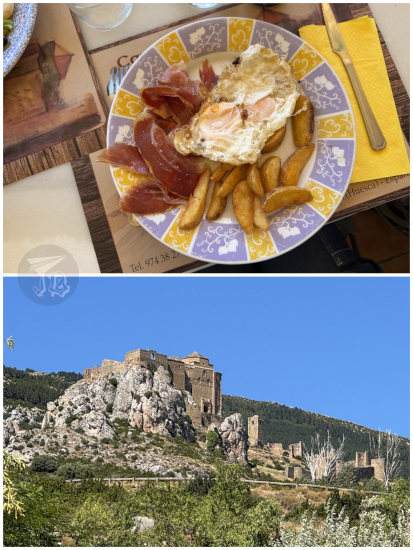
28th May 2022: San Cristóbal de la Laguna, Bajamar & Santa Cruz de Tenerife {Tenerife, birthday 2022}

I had a four-day weekend that happened to overlap with my birthday, so I decided to get myself a present and I booked the four days out – I wanted to visit the Spanish island of Tenerife. I seemed to have a streak of luck finding a decent flight, a couple of good hotels and a free permission to visit the peak of Mount Teide, a non-extinct volcano that happens to be the highest peak in Spain. I also decided to rent a car for the first time so I could travel around the island and do different activities in different places.

The plane left on time at 8:15 on Saturday – and I have to say that I love my IKEA travel bag, because it has a huge capacity but the perfect size to place under the seat, therefore I do not need to queue up for boarding to make sure I can stow the carry on. We taxied at the correct time, but when we got to the runway, we stopped. It turned out that one of the sensors was giving a warning of a 400 ºC temperature on one of the wheels. It turned out to be a false alarm, but we ended up with an hour-long delay that ended up cascading.

I reached the airport and got my rental – Volkswagen Polo I had to learn how to reverse. Once I was done with that, it was surprisingly easy to get by. I drove off to San Cristobal de la Laguna and went off to visit the historic quarter, which is a Unesco World Heritage site as an example of colonial architecture – Centro Histórico de San Cristobal de la Laguna. Most of the buildings date back to the 15th century, and the design was then copied in different colonial cities in South America. The houses are painted in different colours and most of them sport amazing woodwork in their doors or balconies.

It gave me a pretty distinct “Disneyland” feeling as the pedestrian streets are plagued with cafés, brand shops and bars. It was packed with tourists like myself flocking in guided tours from the tourist office, which seemed to only open to gather groups in order to hold those tours. As the week before my trip had been work-crazy, I had not been able to plan in detail, so my plan was to hit the tourist office, gather information and move on. This did not work out, and on top of that, the cathedral Catedral de Nuestra Señora de los Remedios was already closing down when I arrived – due to the delay. Other interesting but closed buildings included the church Iglesia Matriz de la Concepción, and several palaces including Casa de los Capitanes and the reconstructed Palacio de Salazar.
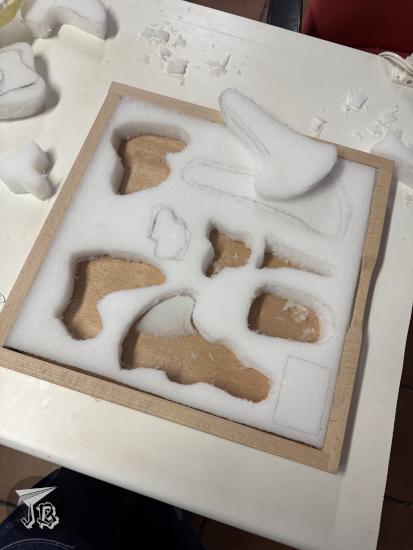
Typical buildings from Canary Islands. They are colonial in style, with big doors and windows. The façades are painted with different colours.
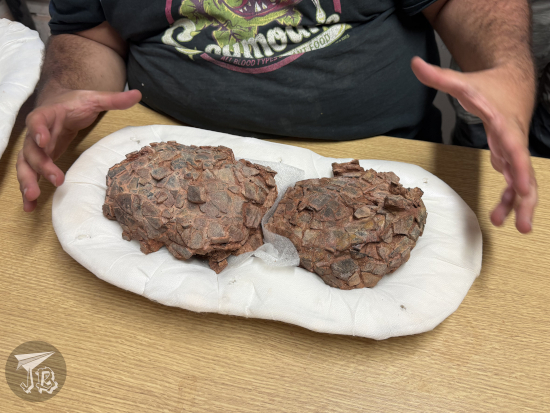
Typical buildings from Canary Islands. They are colonial in style, with big doors and windows. The façades are painted with different colours. The streets are wide and full of people.

I’m not going to say that I was disappointed, but I was really not digging the atmosphere, so I decided to move on. Instead of following the initial rough plan, I decided to head off to the tiny village of Bajamar to see the “sea pools”. Built in the petrified lava coast, the Piscinas de Bajamar are swimming pools fed by ocean water that keep swimmers safe from the rocks and the waves. I was lucky enough to find a very good and easy parking spot.

I wandered around the promenade Paseo Marítimo de Bajamar, saw the pools, the beach, and the mini lighthouse Faro de Bajamar.

Waves coming into the volcanic beach, which does not have sand but big black blocks of rock.

I moved onto Santa Cruz de Tenerife afterwards, ditched the car and checked into the hotel, then went off to explore. I walked by the market complex La Recova, also called Mercado de Nuestra Señora de África.

A bright orange building. It has a low, wide wall, and in the centre a clock tower

The tower of the church Iglesia Matriz de la Concepción (yes, again, but another one). The church has been repeatedly rebuilt and renamed between the 15th and 18th centuries. The current building is Canarian Baroque / Tuscan style.

A church with a bell tower. The building is white clay with black rock; this style is typical in the area

My first real destination was Plaza de España where the defensive castle Castillo de San Cristóbal used to stand. Now there is a fountain / pond and you can see the foundations of the castle.

Collage. The former site of the castle, now converted into a fountain or lake. On the other side, the castle foundations, and a cannon.

Next, I found another important square, Plaza de la Candelaria, but it was unfortunately under construction.

A grey building with construction work being done on it

So I moved on to the science and anthropology museum Museo de Ciencia y Antropología de Tenerife. It was rather underwhelming at first, as most of the “exhibit” were photographs. Eventually I reached the “good” stuff, with reconstructions of ancient and extinct animals such as the Canarian giant rat and the Goliath Giant lizard – we’ll come back to those eventually. There were butterfly collections, reproductions of marine animals, rocks and meteorites. In the archaeology ward there were mummies – that was a little unnerving to be honest, I thought we had learnt a little more respect about the ancient cultures.

Before the Europeans arrived in the Canary Islands in the 15th century, there was a previous civilization in Tenerife, called the guanche. The guanche settled in the island around the 6th century. While it is not clear where they came from it is thought that they came from the north of Africa, as their language was similar to those in the Berber language group. They lived off the cattle and the land, and their economy was clearly based on the goat, which they used for everything – food (meat and dairy), clothing, bone tools, and mummification material.

Collage of the museum: a prehistoric carved rock; preserved giant rat and lizard; models of fish; a meteorite; rests of mummies (a foot and an arm)

After the museum, I walked along the harbour and saw the modern concert hall Auditorio de Tenerife, designed by the famous architect Santiago Calatrava, whose style is easily recognised – even though in recent years he has drawn criticism for going way beyond budget and his building having problems due to “over innovation”.

The auditorium. It looks like the sail of a yacht, all white.

A few steps further stands the tiny fortress Castillo de San Juan Bautista, built between 1641 and 1643, and rebuilt the following century. I would have loved to see the botanical garden, but it closed early – as most things seemed to do.

Small castle surrounded by a moat that fills up in high tide.

I took a small detour to see the former arsenal Casa de la Pólvora, built in masonry in the 18th century. Eventually, I went to the supermarket to buy some dinner and snacks for the upcoming adventures, and called it a day after 14 hours on the go.

Armourine building. It looks like a treasure chest, built in grey rock

13th March 2022: The outskirts of Madrid (Spain)

I’m usually rather enthusiastic when I visit new places, but if there is a place that I’ve found kind of over-hyped, that has been the park Parque del Capricho, in Madrid. “Capricho”, which means whim or folly – in its architectural meaning of an often extravagant picturesque building erected to suit a fanciful taste, or building erected for decoration, typical of the French and English decorative gardens from the 18th century. The park is located in Madrid, and the only romantic garden that remains in Madrid. It was promoted by the 12th Duchess of Osuna between 1787 and 1839, and became a recreational area for the nobility of the time. Some of the most important gardeners and landscapers of the time worked on its design. It was declared Historical Garden in 1934 and restored in 1999.

So it is a garden, with some plants, some flowers, and a bunch of weird-looking decorative items, that takes itself a bit too seriously. It won’t accept pets and you can’t bring any food inside (it has some cage-looking “lockers” were you can leave your stuff). There is a strict capacity control which does nothing for it not to feel ridiculously crowded on a regular nice-weather Sunday. Maybe it improves in spring / summer, and with fewer people, but I had some stuff to do in the area and that is why I made time to visit today.

It had been raining all week, so I had mostly scrapped my plans. It was a great sunny day though so in the end I decided to get there. Parking the car was ridiculously easy – though the parking spot was maxed out, I found a very easy one in the avenue next to the park – good, it was close as I would not put my sandwich in the crappy-looking lockers and preferred taking it back to the car. Then I walked in, and explored for a couple of hours – and don’t tell anyone, but I ate a piece of candy, just to be rebellious (≧▽≦) (and to make sure I did not sugar crash without any food around, but that does not really make for a good story).

While I of course did not expect everything to be blooming and colourful and green… I hoped that it would have at least maintained through winter. No such luck. A bunch of areas were fenced off, the footpaths were swamped with puddles, and the water in the ponds was not as clean as it should have been. Exploring the 14 hectares took me about an hour and a half, considering that I did go into all the little paths, but all the buildings were closed and / or under constructions. There is a Civil War bunker in the park too, but that is only open through pre-booked guided visit and I did not know I was going to do this 30 minutes before I jumped on the car. The few flowers that had already bloomed included the garden pansies (Viola × wittrockiana, which are after all winter flowers), and the yellow and white daffodils (narcissus, maybe the subspecies jonquil Narcissus jonquilla). There were a couple of black swans (Cygnus atratus) at the main pond, and mallards (Anas platyrhynchos) on every second water body, including fountains.

Pond in the park. There are some flowers and buildings around it, and a black swan sunbathing.

Collage of different park decoration: a bush labyrinth, a fountain, and some decoration reminding of Greek temples.

Afterwards, I took a small detour to see if any of the Japanese cherry trees in the park opposite the street Parque Juan Carlos I had started blossoming. The answer was not at all. But the point was heading to the restored castle Castillo de la Alameda. The castle dates back to the 15th century, though there are older remains underneath, and it is thought that its presence is the one that got all the aristocrats to flock to the area, as it switched from defensive castle to palace.

The remains of the castle feature an irregular moat with lobe-like structures in the corners, and the restored keep, which stands up to the first floor, though it must have been much higher. An interesting characteristic of the castle is that it was built using a kind of mortar made from flint. I have to say it was a nice surprise, free to visit.

A clover-shaped castle ruins, all white. There is not much of the castle left, but the moat is almost intact, though empty

To the side of the castle there is a casemate – a fortified machine gun emplacement from the Spanish Civil War, called Nido de Ametralladoras (Machine gun nest), a semi buried cement block for snipers of sorts to defend the position.

Concrete block that was used as a machine-gun base

Then I moved onto Mejorada del Campo a little town near Madrid that only has one tourist attraction – a… handmade cathedral. Of sorts – Catedral de Justo Gallego .

Justo Gallego was born in 1925. Deeply Catholic, he became a young monk-in-training but had to leave the monastery when he contracted tuberculosis. He made a vow to erect a cathedral to the Virgin Mary in her “Lady of the Pillar” avocation, and he sort of did. Throughout the next 60 years he worked on building the cathedral, using recycled material, and on his own. His work came to fame when a soft-drink company made him the star of an advertising campaign, which made him and his work famous.

The cathedral has 12 towers, a crypt, two cloisters, a baptistery, and the main nave is 20×50 metres, with a 35 metres high dome. Most of it was done by hand, using discarded items such as tubes and bicycle wheels. It is garish and childish in its decoration, but I found it to have some strange allure. The cathedral has drawn the attention of international artists and institutions, and apparently Gallego built it without any blueprints or knowledge of construction. Upon his death, an architectural studio started working on “legalising” the cathedral (from an urbanistic point of view; it is not an official Christian building) and is it is now under management from an NGO. It was just a bizarre thing to see, but interesting since I was in the area (sort of. Construction made the route stupidly long), glad I’ve visited it at least once. I did catch a European white stork (Ciconia ciconia ciconia) coming home to one of the towers.

Cathedral made out of recycled items: pipes, plastic bottles, irons... there is a dome and a nave, in bizarre colours.

A stork approaches one of the towers of the cathedral

I drove off afterwards, and I have to say the weather that day was amazing – just in-between two piss-poor ones, so yay spring escapade.

Walking distance: 11.18 km (16916 steps)

22nd & 23rd October 2021: Zaragoza Getaway (Spain)

We had a silly day-and-a-half and it turned out that for some reason a commuting train to Madrid took about as long as a high-speed train to Zaragoza, a town in the area of Aragón that we scratched off our summer route because there are lots of curves in the Pyrenees and time was limited.

22nd October 2021: Churches, Museums and a Palace

The train to Zaragoza arrives at the Delicias station, which is a bit away from the centre of the town, so we took a taxi to the hotel. This was around 9 am so we were of course not expecting any room, what with check-in being 2 pm – we just wanted to drop off the overnight bag. Not being able to give us a room seemed to upset the receptionist quite worried, and he promised to call as soon as a room was available. Honestly, I just set my phone to flight mode because we were starting to visit monuments right away, as the hotel was just by the most important square in town Plaza del Pilar.

Zaragoza is home to one of the most important Christian icons in Spain, the Virgin Mary of the Pillar, Virgen del Pilar. The image is hosted in Catedral-Basílica de Nuestra Señora del Pilar. The bulk of the current cathedral-basilica was built between 1681 and 1686 in the Baroque style, but was later modified quite a few times and it was finalised in 1872. Interesting items in the church include, aside from the virgin image, some frescoes painted by Goya, the main altarpiece, and two bombs that fell within the church during the Spanish Civil War (1936-1939). Zaragoza is very anti pictures inside so I had to sneak them in. Sorry, not sorry.

A collage showing the Baroque Basilica, including unexploded bombs, and two of the altars

Virgin of the Pillar, wearing a mantle

After a small detour to say good morning to the river, Río Ebro, and the Puente de Piedra (stone river), the second building we visited was the Old Market Exchange building – Lonja de Zaragoza. This was the first Renaissance building erected in Zaragoza, dedicated to commerce, with an amazing Gothic-imitation ceiling. Today it is used for exhibits, such as paintings or sculptures.

Coming out, we almost walked into one of the fountains in the square, Monumento a Francisco de Goya, featuring the artist – a brilliant Spanish painter from the Romantic times. He was as brilliant as bad-tempered though. Behind the fountain stands the cathedral, for which we had tickets for 11 am, and it was still early for that.

Thus, we started the route of the Caesaraugusta Museums. Zaragoza was founded in Roman times under this name (where an Iberian dwelling used to be) and in the latest decades, this Roman past has started being dug up. We first visit the museum focused on the original forum, Museo del Foro de Caesaraugusta where we could see the foundations of the old city and walk into the sewers (yeah, it’s cooler than it sounds). The Roman ruins date back from emperors Augustus and his successor Tiberius’ reigns.

After that it was almost time for our reservation to visit the Catedral del Salvador also known as La Seo de Zaragoza, the other cathedral of the town, literally at the end of the same square as the other one. The cathedral mixes several architectonic styles: Romanesque, Gothic and Mudéjar, these last tow being among my favourite styles, so a total win – Renaissance and Baroque elements were added, including the towers. The cathedral has a tapestry museum with a lot of works, not exactly “pretty” but rather impressive.

Following the cathedral we walked towards the rest of the Roman museums, but we made a small detour to look at the Mudéjar tower of the church of Mary Magdalene, Iglesia de Santa Magdalena.

Then we reached the museum of the Bathhouse, which was open but closed – let me explain. They run an “Audiovisual” and close the museum door for as long as it runs. It runs every half hour so finding the thing open seems to be hard. Thus, we moved onto the next archaeological site, related to the old Roman Theatre Museo del Teatro de Caesaraugusta. The theatre was apparently discovered by accident in the early 1970s, and it is apparently one of the biggest Roman theatres in Spain.

We tried our luck with the Bathhouse Museum again Museo de las Termas Públicas de Caesaraugusta. Unfortunately, just like before, we walked up to it while the audiovisual was running, and the concierge made a very studious effort not to see us – so we just peered over the glass roof to see what is left of the main bath.

More impressive was the river port museum Museo del Puerto Fluvial de Caesaraugusta, which keeps the foundations and some of the clay amphorae that were used for import / export.

And believe it or not, we did all that before lunch!! Therefore, we decided it was the right time for a break. We headed back to the hotel to see if we could wash our hands (and take off our facemasks for a while). To our surprise, the hotel had given us an upgrade to a junior suite, so we had a sitting room, a full bathroom and a bedroom – and a balcony that went all along the three. When I opened the window I could hear people playing the piano on the street, as there was some kind of festival going round. Believe it or not… I got to listen to Queen’s Bohemian Rhapsody and Rufus Wainwright’s Hallelujah.

We had lunch outside in a place that my companion enjoyed called La Lobera de Martín – not a cheap place, honestly! However, we splurged a little. We shared a smoked fish salad and I had a side of fresh Foie. As a main, ordered steak tartare, which to my surprise, was prepared for me next to the table! For dessert I tried the home-made berry yoghurt. I have to admit that I was totally planning on having a tiny dinner (or completely skip it!) at that time.

After lunch we walked along one of the main arteries of the town, Paseo de la Independencia, to find the Basílica Menor Parroquia de Santa Engracia, to at least see the outside, since we could not fit visiting the interior and the crypt with our tight schedule. One of the most interesting things about this church is how its façade is built like an altarpiece.

Next to the church stands the neo-Mudéjar post office, built in typical bricks from the area – Oficina de Correos de Zaragoza.

And finally, we looked at the current Science Museum, Museo de Ciencias Naturales, the former Medicine University. Why? Because that’s where my parents met *cue romantic music*!

We did not go in though, because we needed a break and had booked a ticket for 5pm somewhere else, so we decided to raise our feet a little for a while in the hotel room – the sitting area was nice though unfortunately there was no more sun on the balcony, else I would have totally impersonated a lizard there (I did scare a pigeon away though, even if the startle was mutual). Our next target was the Medieval palace called Palacio de la Aljafería – a fortress that combines Islamic architecture and ulterior Christian elements. The Moorish palace was built around 1065 – 1081, and it holds a magnificent garden called the Golden Hall with a portico made out of interlocking mixtilinear arches (I totally looked the word up, and will forget it promptly). The palace was taken over by the Christians 1118 and became a palace for the monarchs of Aragón. It was not modified until the 14th century, and in the 15th Century the Catholic Monarchs extended it further into the Mudéjar Palace. Today it is the meeting site for the local government. I adored it, to be honest, I loved the Golden Hall most of all, but the original ceilings in the Christian palace were also really cool.

We walked back towards the Plaza del Pilar (probably through some streets we probably shouldn’t have, hindsight is 20/20 they say), and we reached the church of St. Paul Iglesia Parroquial de San Pablo. The restored interior leaves a bit to be desired, but the exterior, built between the 13th and 14th centuries in the Mudéjar style – it has an octagonal tower in dark tones, with the upper roof added in the 17th century with richly decorated with tiles and windows. It is worth mentioning here that several Mudéjar buildings in Zaragoza, along with others of singular architecture, are declared Unesco World Heritage Site.

Between the church and the square we walked by the central marketplace Mercado Central de Zaragoza in the late 19th and early 20th century, in a combination of stone and iron-and-glass architecture.

Close to it we could see some of the ruins of the original Roman walls Antiguas Murallas de Romanas de Zaragoza, which are actually sprinkled all through the town and mixed with the Medieval ones at points. There, a lady was happily chatting on the phone while her child climbed the walls – so in case it is not evident, here’s a social clue: if there is any kind of barrier / signage around something, it should not be climbed on.

To finish off the day we visited the Museum dedicated to Goya Museo Goya. Goya, whose complete name was Francisco José de Goya y Lucientes (1746 – 1828) was a painter and printmaker from the Romantic age. He is probably one of the most important artists in Spanish history. He was a royal portraitist, fresco decorator, and also painted and printed many critical and fantasy works. To be honest, the museum was a bit underwhelming – with few of the minor works, and one of the least impressive major works, the Christ portrait. There was however a whole room full of prints.

After one more visit to the square, where I managed my only complete picture of the whole (night-lit) Basílica del Pilar from that angle, we just headed to the hotel. There was a sandwich shop at the entrance, so we took one each and had a late light dinner as we watched Night at the Museum in the hotel bathrobes – because it was cozier than turning up the heating. I did not sleep too well as the fire alarm was right on top of the bed and it kept flashing – at one point I thought that an electric storm had hit, but it was just the alarm…

23rd October 2021: Papercraft and walks

The next morning we had breakfast and headed off to the origami museum and workshop EMOZ: Escuela Museo Origami Zaragoza, located in the “Stories Museum” Centro de Historias. I remembered the exhibition from a few years back in Museo Cerralbo in Madrid, with an actual-size hippo, so I have to admit this time I was a little… underwhelmed, probably because the temporary exhibit ended up being “abstract” paper folding…

However, in the very same building there was a very fun exhibition about the evolution of household appliances throughout the 20th century. That was cute!

As we got ready to draw a close to our day-and-a-half getaway we went to say goodbye to the river Río Ebro. We walked by the modern Puente de Zaragoza bridge, and crossed over the Puente de Piedra, the traditional stone river of the town. The current one dates back (although reconstructed) from 1440, but there are records that a previous Roman one stood in its place and was destroyed in the 9th Century. Between the two bridges a flock of cormorant seemed to be sunbathing.

From Puente de Piedra I took my last picture of the Basílica del Pilar before we had a nice milkshake, then headed back to the station to take our train back. By the way – I find it ridiculous that the stations have blocked 60% of the seats while they’re filling up the platforms and the trains as normal…

Total walked distance: 8.69 km

15th October 2021: Torija & Brihuega (Spain)

The castle of Torija is another of those things I’ve regularly driven by and thought ‘I have to visit one day’. Even though I had been warned that it might be disappointing as it had nothing inside but some touristic promo. Boy, was I in for a ride.

I arrived in Torija at around 10:30 in the morning and upon entrance I saw the demand that a reservation had to be made using a QR – the thing was free but it did not allow for 10:00 or 10:30 reservations – you had to pick it up for 11:00.

The castle Castillo de Torija was built in the 14th century, during a time of strife among all the factions and kingdoms of Spain. Later, in the 19th century, it was taken over by the French during the so-called Peninsular War against Napoleon’s troops, after basically the king Ferdinand VII gave Napoleon Spain wrapped in a bow. Napoleon made the king abdicate and installed his brother on the Spanish throne. There was a popular uprising in 1808 to fight off “the French”, who did not like this new attitude. During the war, the castle was occupied and then blown up. The current reconstruction dates back from 1962.

So there I was. The castle was empty – literally – but nobody was allowed before the reservation time because of ‘capacity rules’. So everybody in the castle was in the hall – yours truly, two other tourists, and four employees. All in the hall. Rules are rules again, but in the times of Covid, it feels utterly stupid to do this to ‘control capacity’ – since the rest of the castle was empty.

There was nothing really worthwhile to see in the castle – none of the interiors were even interesting and some of them were almost embarrassingly bad. Just a few pictures and models and mentions of the famous regional honey. I had been warned that it was going to be ‘disappointing’ but this was utterly ridiculous.

Thus, I continued off on my drive and I reached the village of Brihuega, which aside the lavender fields has a number of historical buildings and curiosities and was declared historical site in 1973. I had left the visit to this village for Friday because there were online tickets for the castle on sale, and therefore I had gathered that it was visitable that day. Right? Wrong, but that comes later.

After being unable to find the spot I wanted my Sat-Nav to take me due to blocked streets, I dropped the car at a public parking lot at the edge of the village, then I walked towards the medieval core of the city. The first item I came across was one of the gates to the medieval wall Puerta de la Cadena.

I strolled towards the centre but after a block or so I saw an archway that drew my attention. Upon turning towards it I found myself in front of the church of Saint Philip, Iglesia de San Felipe, which I had seen in my previous flash-trip. The church dates back from the 13th century, and it is a ‘transition’ church from the Romanesque to the Gothic building styles.

I backtracked towards the main street and reached the main square where the tourist information office stands. Here I learnt that there was going to be a popular festival the following day and that explained why some of the streets were blocked. After a quick stop at the tourist information office, where I got a map and a pamphlet, then I check about the process I had read for visiting the Arab caves – Cuevas Árabes. What the Internet told me was that I had to go to the butcher’s and ask the owner to let me in.

It was true – it turns out that the caves are private property and only he has decided to open up his. The Cuevas Árabes are a number of tunnels excavated into the rocky bed in the 10th and 11th centuries. They run around 8 km underneath the village, but only around 700 metres can be visited. The temperature is constant throughout the year at around 12ºC, so it is thought that they were used for food storage, and several sites say for wine. There are a number of large earthenware jars that are indeed used by winegrowers, but Arabs historical Arabs wouldn’t be drinking wine? I’d put my money on oil, but I really don’t have information to make more than a guess.

The butcher asked me what I wanted, I answered that I wanted to visit the caves. Then he proceeded to ask if I wouldn’t be scared – I paid (2.50€) and I went in after reassuring the guy I would be okay and he explained that I would also find some Visigoth archways, older than the Arab caves themselves and probably a starting point for them. The caves were the highlight of the day, really cool and mystifying, although I kept half-expeciting the owner to jump at me and try to scare me.

After the caves I headed out to the castle area, for which I had to cross another of the wall gates Arco de la Guía.

I found myself in a small square with the castle Castillo de la Peña Bermeja to my left. The castle is mixed with the graveyard in a very strange organisation. Unfortunately, it was closed (despite the fact that the website was selling tickets for the day – so glad I did not want to pay almost double in advance!). The castle is of Arab origin, built between the first and third centuries, and it gathers its name from the reddish colour of the mountain it stands on (Peña Bermeja means Vermillion Crag).

I also got to visit the inside of the church of Saint Mary, Iglesia de Santa María de la Peña by pure chance. The church was built during the 13th century, and it hosts the image of the patron virgin of the village.

Then I walked back towards the car, passing by the corridor they were building for the running of the bulls, I saw some more buildings, such as the convent of Saint Joseph, and the traditional fountains. Then I deviated towards the medieval walls Murallas de Brihuega, which was the last spot for my three-day on-and-off adventure.

Driving distance: Around 68 km (without counting the Sat-Nav merry-go-round)
Walking distance: 7.33 km

8th October 2021: Tamajón & Cogolludo (Spain)

When I went to the waterfalls of the Aljibe I drove past a little village I had never heard of before – Tamajón, and a side sign reading “Pequeña Ciudad Encantada de Tamajón”. The term “Cuidad Encantada”, meaning Enchanted or Magic City, is used in Spanish to refer to karst formations. Karst is the name of a particular topography, created by the dissolution and chemical weathering of soluble rocks, chiefly but not just limestone.

The particular Spanish karst landscapes were formed by precipitation of salts – calcium carbonate – in the quiet waters of the Tethys Ocean during the Mesozoic Era (251-66 million years ago). Plate tectonics made central Spanish arise during the Cretaceous (the later subdivision of the Mesozoic, 140-66 million years ago) emerge, and the calcium carbonate became exposed to the elements, which started the erosion process. The most famous karst landscape in Spain is the Ciudad Encantada near Cuenca, which I guess spread the name.

Tamajón has a short hiking route around its karst formation, and while it is true that they are on the relatively smaller size, there are different shapes. I started my hiking route at the Ermita de la Virgen de los Enebrales, hermitage church dedicated to the Virgin of the Juniper Forest – the current building was reformed in the Renaissance style, thought the actual dates are shaky.

I started on the hiking route from the hermitage, along the road, and there were no markings there, so I kind of winged it for a while. After I took the first turn and started going up the rocks, I found the painting marking the routes – I had a handmade map because someone had shared it online, so I just went along it, and when I finished I redid about a fourth of it to take a detour to the other side of the road. There are cracks, arches, caves, cavities and capricious forms. I spent about an hour and a half walking around almost completely alone, which was awesome.

On my way back I stopped by the Church of the Assumption Iglesia de la Asunción, also a Romanesque – Renaissance mixture. The porch is typical of Romanesque churches in the Camino de Santiago (St. James’ Way), to shelter pilgrims.

As it was still early and I was relatively close, instead of driving home I headed off to another village called Cogolludo. I parked the car at the edge of the village and walked towards the main square, where there is a famous Renaissance palace Palacio de los Duques de Medinaceli. It is considered the first Renaissance Palace built in Spain, and it is reported to have been finished in 1492. The palace was designed by Lorenzo Vázquez de Segovia, with exquisite decoration, and the blaring lack of towers, which were very popular at the time. If I’m ever in the area again I might want to try to see the interior, which is only open in the guided visits.

The Palace stands in the main square Plaza Mayor which has a typical Castilian arcade with stone columns (unfortunately workers, sun and cars made it hard to take a good picture of it).

Cogolludo has two churches, Iglesia de Santa María de los Remedios (Our Lady of Remedies) and Iglesia de San Pedro (Saint Peter), both dating from the 16th century, but both completely closed down.

Finally, there are also the ruins of the Medieval Castle Castillo de Cogolludo, but there was not much incentive to climb up. All in all, it was a short but interesting morning – though I glad I teamed the two visits up, going to Cogolludo on its own would have not felt productive.

Driven distance: around 115 km
Walking distance: 7.27 km