23rd August 2014: Tea Ceremony, Imperial Gardens and Sushi! {Japan, summer 2014}

For my last day I had thought about trying to go to see Gackt as Uesugi Kenshin in Joetsu, but (un)fortunately I realised late Friday evening that he would not be there. Good that at least I noticed before I was there and had spent four hours on the train XD

Thus I talked my friend into coming to a tea ceremony with me near Tokyo Station in Chiyoda [千代田]. This was very fun because the tea-lady (Tea master? Tea mistress??) allowed us to participate and actually bat the matcha to make it bubble up. There are no photographs of that, but I have one of the delicious takoyaki we snacked on as we were waiting for our timeslot, along the guy making them.

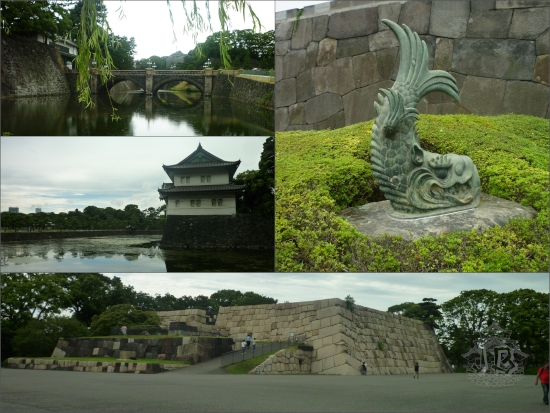
Then we headed off for the Imperial Palace East Gardens, Kōkyo Higashi Gyoen [皇居東御苑], which I had not been able to visit last year. The gardens run alongisde the Imperial Palace and hold the ruins of what used to be the Edo Castle, Edo-jo [江戸城].

Then she indulged me in a very stupid desire I had, and that was having something sitting down in the Shibuya Starbucks, and taking a few pics from there. It was silly but it made me intensely happy.

As we headed back we rode by surprise fireworks.

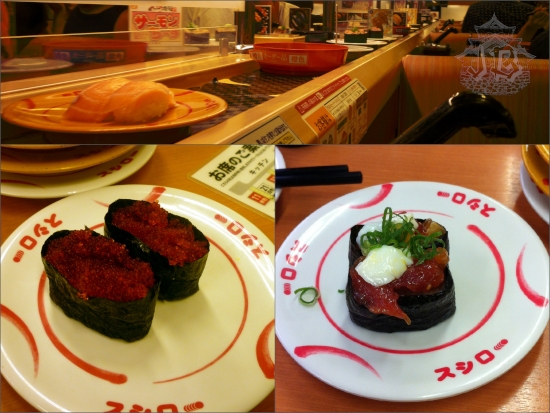
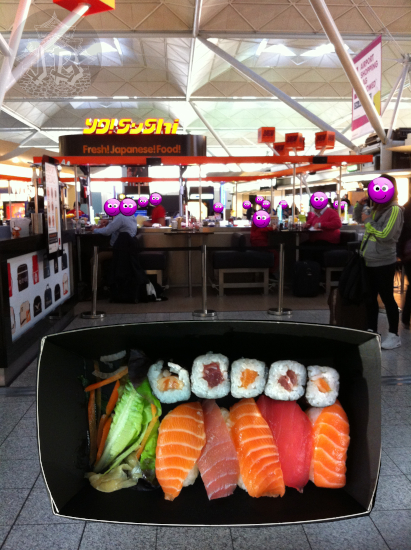
The day ended with sushi, and the trip too. It was over for this year, and I don’t know when I’ll come back, but I know I will. Somehow.

It has to happen.

18th August 2014: In Osaka, we stand on the right {Japan, summer 2014}

Armed with my JR pass I headed off to Kansai via Shinkansen. I would be staying in a Kyoto hotel for a couple of days, but my first stop was Osaka [大阪]. Hereby, by the way, I need to remind myself that next time I have to do Kobe. And get a hotel close to Fushimi Inari so I can bloody make it to the top for a change.

Arriving in Osaka, once again, I felt an overwhelming sensation of being home, and that was once again the feeling I got upon remembering that I was to stay on the right on the escalator (in Tokyo, you keep to the left). My visit was carefully planned, even considering transportation times and queues. Yes, it was not the most… travel efficient one if you look at a map, but had to be done like that in order to work, time wise.

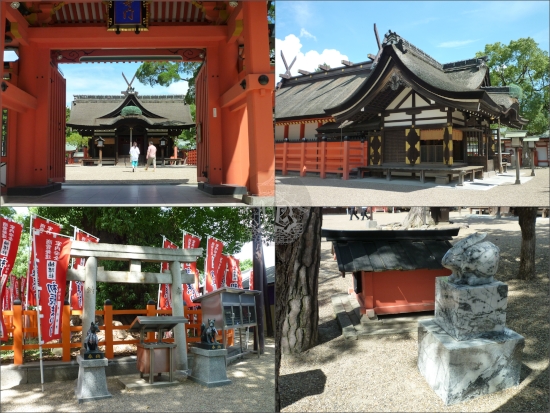
My first stop was at the Sumiyoshi Taisha [住吉大社] compound. Sumiyoshi Taisha is one of the oldest Shinto Shrines in existence, so of course I had to go there this time over.

After the shrine I headed off to downtown Osaka to visit the Ōsaka Rekishi Hakubutsukan [大阪歴史博物館], the Osaka Museum of History which features exhibitions depicting the evolution of the city from ancient times to the occupation period and the start of Western influence.

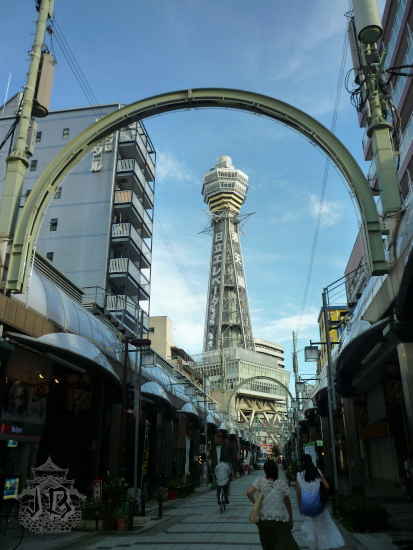
Although this was close to Osaka-jo [大阪城] (Osaka Castle), after I was done I headed back to the train station and backtracked half the way I had previously advanced in order to go to Shinsekai [新世界], the New World. there was something else I had pending here, and that was going up the Tsutenkaku [通天閣] Tower to get a view of the city and, of course, to visit Billy Ken, the God of Things as They Ought to Be, and his sidekicks.

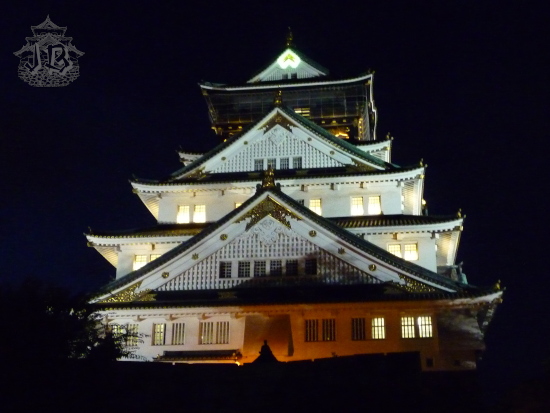
After that I headed back to Osaka Castle area to be up when the sun set, and thus be able to see it lit up, which I had not managed the previous time I had been there either.

Finally I took the Shinkansen to Kyoto and checked in my hotel for the night.

28th & 29th March 2014: London (England, Great Britain) for VAMPS

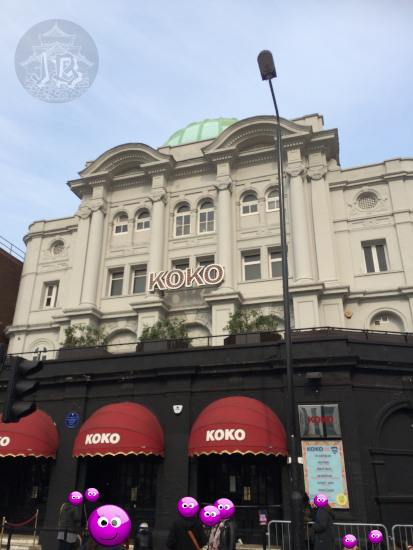
A friend convinced me to attend this VAMPS concert in London by paying for the VIP upgrade in advance. I took a red-eye flight on Saturday morning to Gatwick and went directly to Camden, where the venue, Koko live house, stood.

The venue, a neoclassical building with a marking reading Koko

Aside from the run to the hotel, I spent most of the day in the queue, which was rewarded when I got an autograph from HYDE himself on the Sex Blood Rock ‘n’ Roll album.

Hyde's autograph on the Sex Blood Rock n' Roll CD

It was probably due to the high of the autograph, but this is one of the best concerts that I’ve ever attended, with lots of amazing songs, and I had a great time. I did not freeze during the Meet and Greet, and I shook hands with both members, mumbled something along the lines of “thanks for the autograph” to Hyde and “thanks for the pick” to K.A.Z, referring to the one I got in Barcelona. Then I bounced off the evening with most of the songs:
  1. Devil side
  2. Redrum
  3. The past
  4. Secret in my heart
  5. Replay
  6. Dolly
  7. Sweet Dreams
  8. Life on Mars?
  9. Hunting II
  10. World’s end
  11. Angel trip
  12. Trouble
  13. Midnight celebration
  14. Revolution II
  15. Memories
  16. Love addict
  17. Sex Blood Rock N’ Roll

The venue at night

The next morning my friend went off to the airport first thing in the morning. I was not travelling back till the evening, so I took the chance to… Well, first things first, I took the chance to get myself to a Costa Coffee and get a vanilla latte.

A Costa coffee dispossable glass

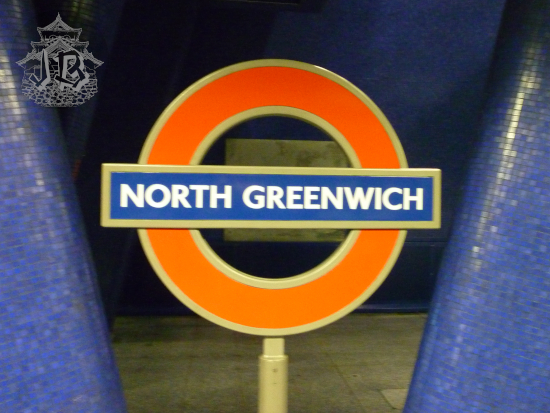
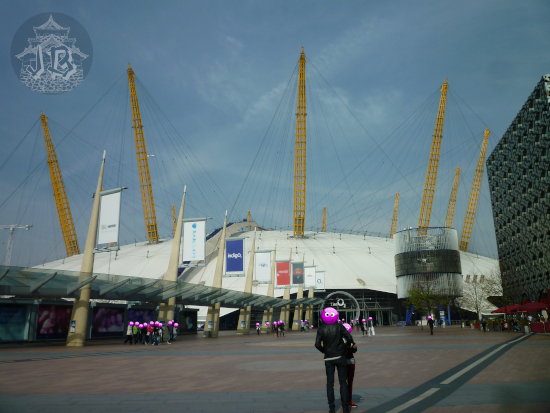
Then I took the underground towards the end of the world, or more precisely the end of the Jubilee line – to North Greenwich. I took the O2 Arena exit, to say hi the IndigO2, where I had been once back in 2012 to attend the L’Arc~en~Ciel World Tour, the first and only time I’ve ever seen them.

North Greenwich undergrond station

The O2, a huge tent with crane-looking structures that reminds one of a giant hedgehog

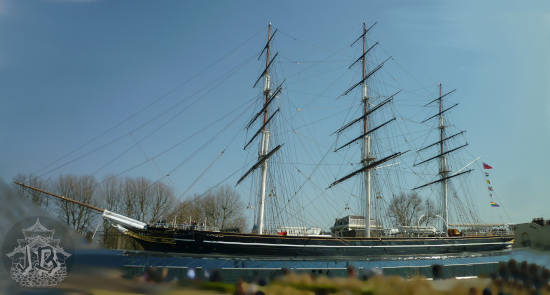
I left the O2 Arena behind, and walked about 20 minutes towards the Cutty Sark, a tea clipper built in Dumbarton in 1869. It took eight trips to China to trade for tea and other items. Its history involved mutinee, murder, trampling of cargo and travels to Asia and Australia. In the 1880s it was considered one of the fastest ships if not the fastest sailing the ocean.

A landed sailboat

The Cutty Sark’s figurehead is the witch Nannie Dee, created by Robert Burns – in the poem a man falls in… love or lust… with a witch during a coven meeting that he’s spying, and the witch chases him away, getting away with the tail of his horse, that you can see in her hand.

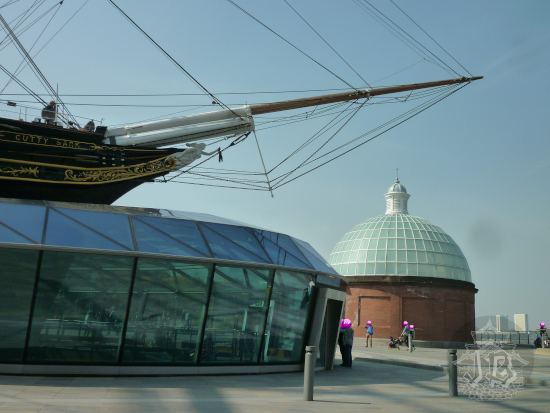
Close up of the ship. It is perched on a glass structure that gives away tot he museum

The steam engines made sail-ships obsolete, but the Cutty Sark was active until the 1950s, when it was rammed by another ship on the Thames. In 1954 it was moved to a custom-dock in Greenwich to become a museum.

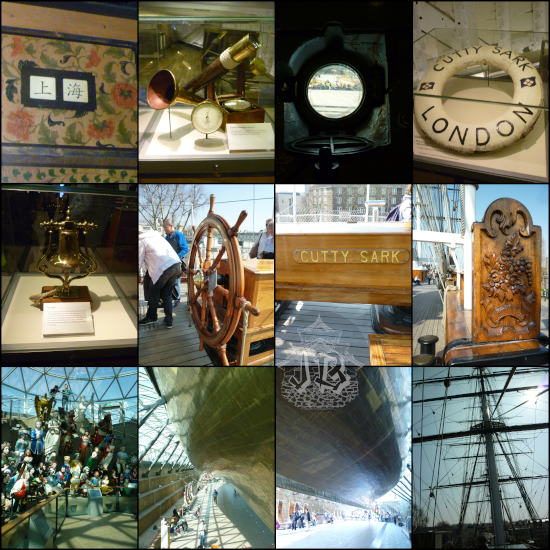
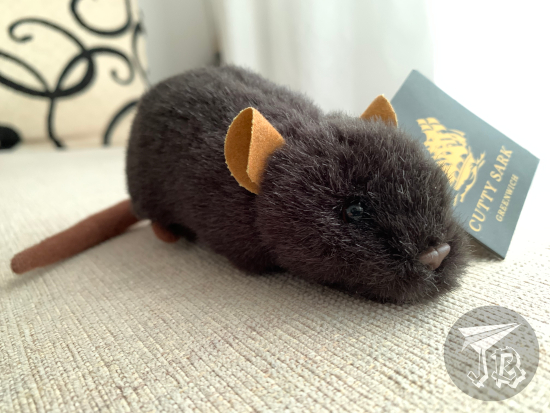
I wanted to see the exhibition inside, which turned out out be about Chinese tea and the history of the ship, which was not unexpected. I bought a pet-rat souvenir plush because I found it adorable. In 2007 it was ravaged by a fire, and extensive rebuilding works were undertaken, which included building a new support of glass and steel that would also become the new visitor centre when the museum reopened in 2012 (when I was there in 2012 it was not yet open. I guess this was an itch I had to scratch).

Different objects in the Cutty Sark museum - tea boxes, sailing instruments, the steering wheel, marionettes, one of the original floaters

A small black rat plush with the Cutty Sark tag

Oh, and by the way… here’s the binnacle!

An actual binnacle compass

I walked back towards the underground and by the Thames riverbank.

Thames and riverbank

There stands the Old Royal Naval College, a Unesco World Heritage site build between 1696 and 1712 – it was originally conceived as a hospital and it became the Royal Naval College in 1873.

Naval college. A symmetric Neoclassical building, with columns and a green lawn

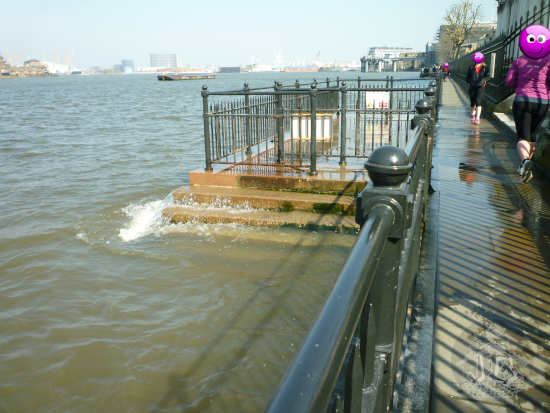
Continuing on the riverbank, you can see the floodgates in the background.

Small waves at the walk near the river

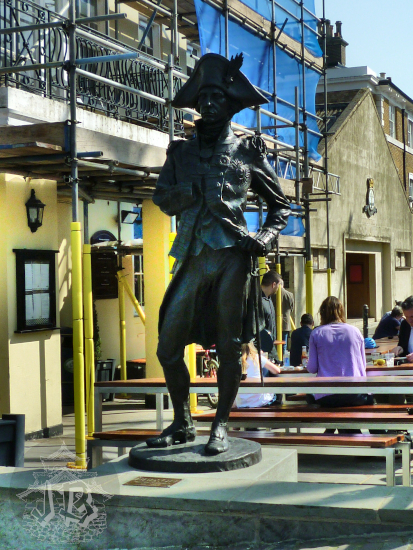
I paid my respect to Admiral Lord Nelson Statue and went on.

A sculpture of Nelson, with his right hand

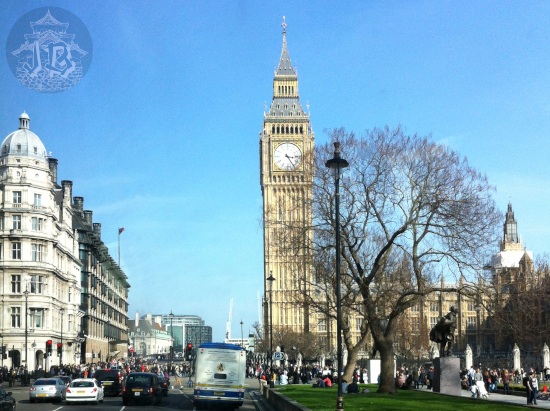
I had to take a bus at Victoria Coach Station to go to the airport, and I got a very nice tour of the city, with the Big Ben and Houses of Parliament

The Big Ben or Elizabeth Tower

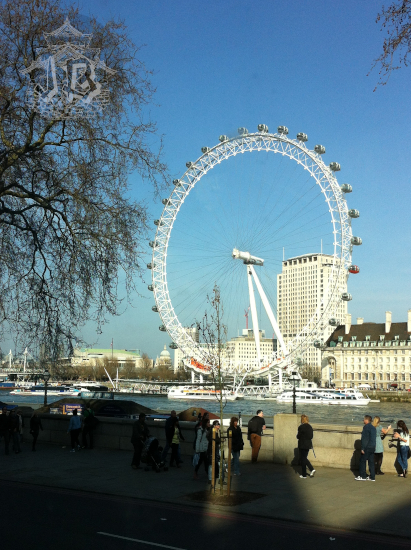
… the London Eye

The London Eye, a giant ferris wheel

… and the Tower of London.

The Medieval Fortress Tower of London

Once at the airport, I had some Yo!Sushi dinner – not the best, but hey I take sushi wherever I can find it because yay sushi.

Sushi dinner

30th December 2013 – 1st January 2014: New Year’s in Toledo (Spain)

30th December 2013: Arrival in Toledo

We took an early train to get to Madrid, and transferred to the high-speed line (AVE) to get to Toledo – the ride from Madrid was barely half an hour. Toledo is known as “the city of the three cultures” as during the Middle Ages, Christians, Muslims and Jews managed to live in peace there, and make it prosper. Today it is a tourist hub in the centre of Spain.

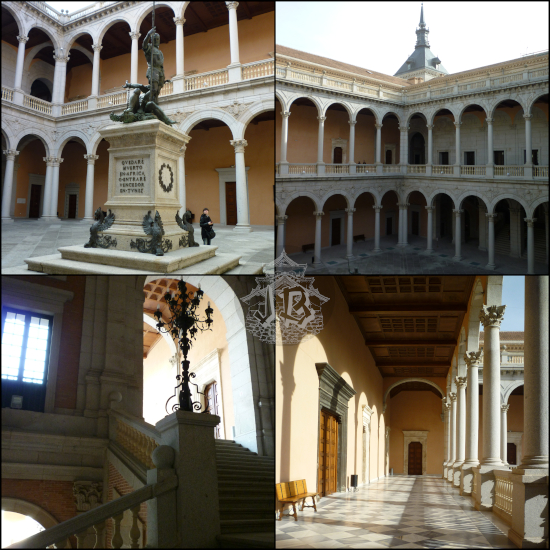
The first thing that we did was head off to the Alcázar (Muslim castle) – although it was originally built by Romans in the third century, its current look is owed to the restoration carried out in the 1540s. However, it had to be restored after the Spanish Civil War. The Siege of the Alcázar was one of the most symbolic victories on the Nationalist band. The Alcázar was under siege during the whole summer by Republicans trying to take it over, but in the end, Nationalist reinforcements arrived, chasing the Republicans away. Today, the Alcázar is an important cultural building (where the bullet holes can still be found) and hosts the Museum of the Army, Museo del Ejército.
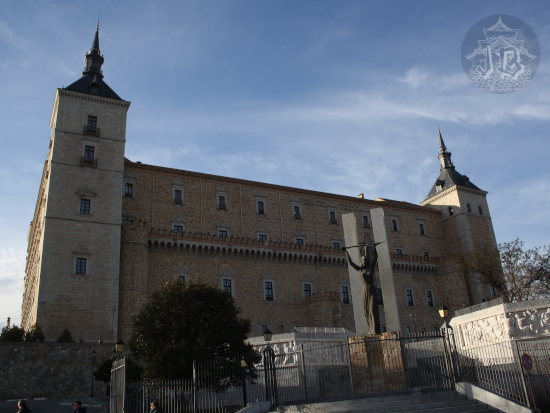
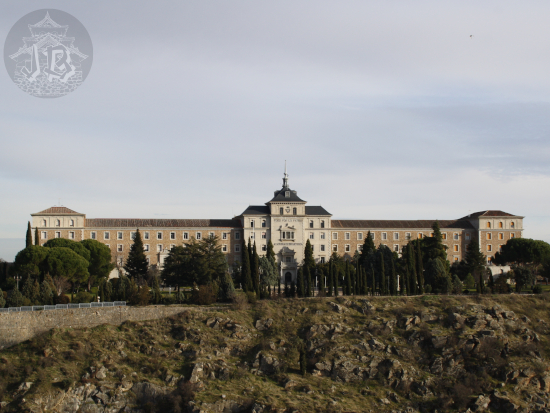
From the vantage point of the Alcázar, we could see the Academia de Infantería (Toledo Infantry Academy), built in the 20th century in imitation of the Renaissance and Herrerian style.
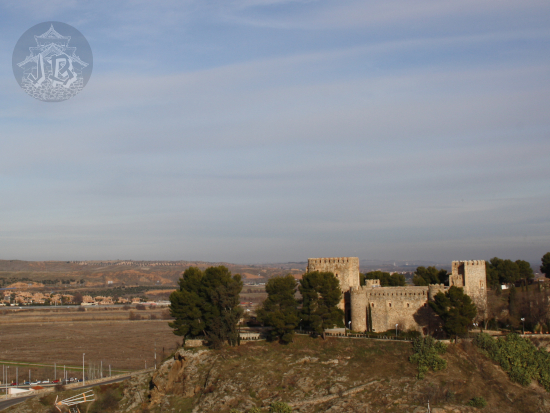
We also saw the Castillo de San Servando, the Castle of San Servando, a fortified Knights Templar enclave. Fine, it started off as a regular monastery, but it was later given to the Knights Templar in order to protect the city.
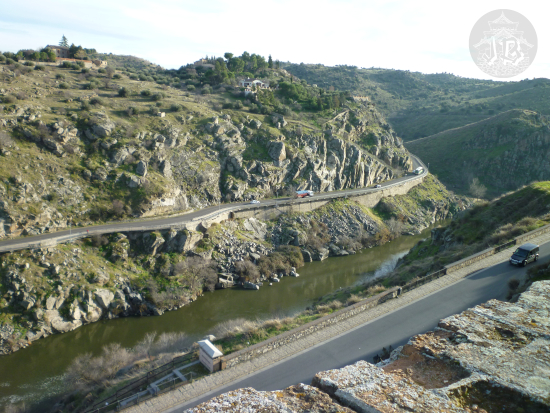
Both buildings are on the other side of the Río Tajo, the Tagus river, the longest river in Spain.
After having lunch and checking into the hotel, we visited the cathedral Catedral Primada Santa María de Toledo (Primate Cathedral of Saint Mary of Toledo). The cathedral, built in Gothic Style, was erected mainly throughout the 13th century, even if it was only finished in the 15th century. It sports two asymmetric towers, well, one tower and a small Mozarabic chapel in place of the other one.
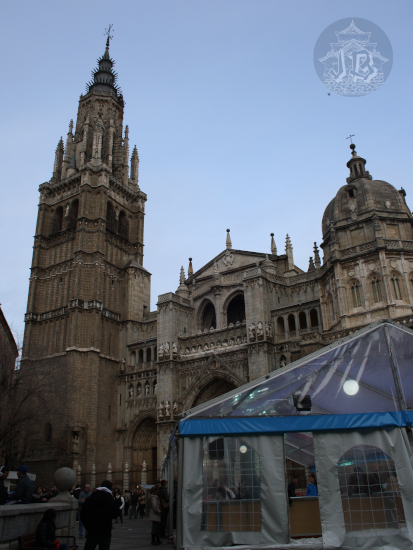
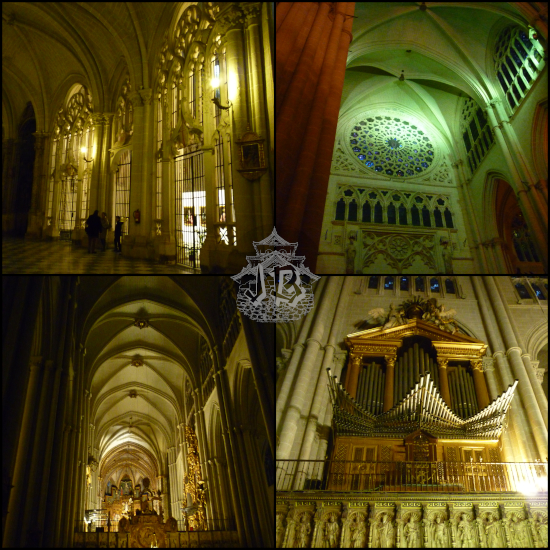
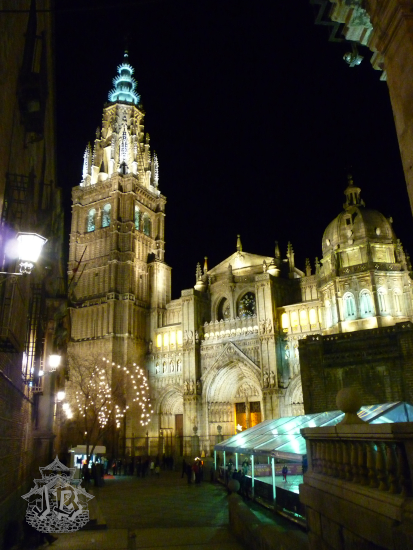
By the time we came out of the cathedral, night had fallen – truth is that we missed a little on the pretty windows due to it being darkish outside already. Nevertheless, this treated us to some nice night views. First of all, of course, the cathedral itself…
The Alcázar once again…

… and the Castle of San Servando.
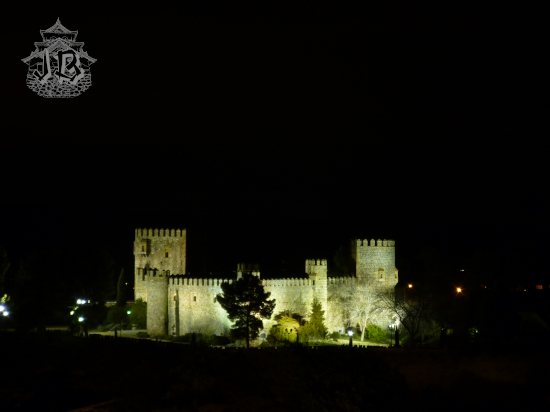
We then walked through the Plaza de Zocodover, one of the city squares, where the old Muslim for cattle and horses was. The current layout was set in the 16th century after it burnt down in a fire.

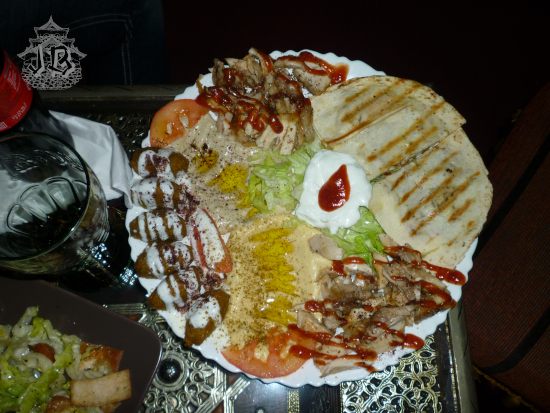
We walked around the old town for a while until we found a place to have dinner, a Middle-East restaurant called La Casa de Damasco, one of the few times I’ve had real food from this area. I have to say I really enjoyed it.

31st December 2013: Churches and Birds

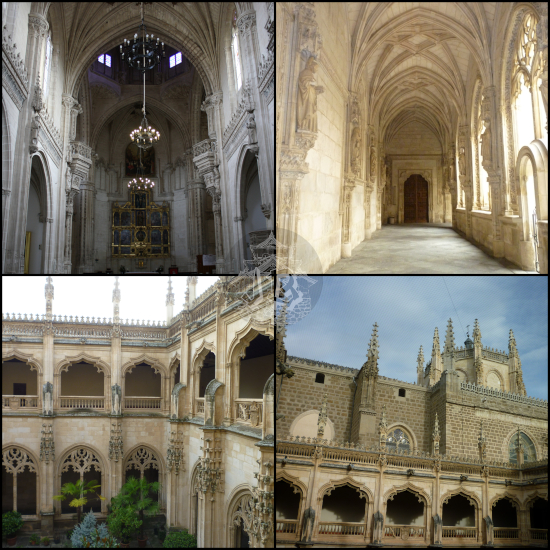
We started off the day at the Monasterio de San Juan de los Reyes (Monastery of Saint John of the Monarchs) is an Isabelline style Franciscan monastery. It was founded by the Catholic Monarchs to celebrate the birth of their son along with their victory in the Battle of Toro, in the late 15th century. It has a beautiful Gothic cloister.
Our next stop was one of those things that breaks my brain, a Christian Mosque, Mezquita del Cristo de la Luz. It was built in the year 999 as Bab-al-Mardum mosque, but it was turned into a Christian Church in 1085. I’m torn between rolling my eyes at Religions needing to assert dominance and being grateful the Mosque was preserved for us to visit.

Close to the Mosque stands one of the gates of the old walls, the Puerta del Sol, the Sun Gate, of the city walls.

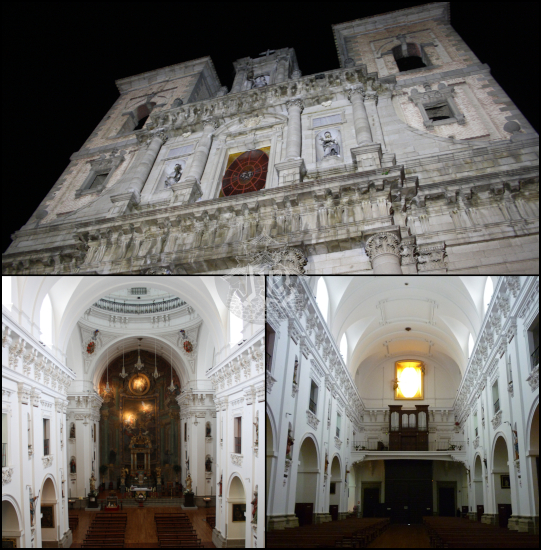
Our next stop the Iglesia Jesuita de San Ildefonso, a church dedicated to Saint Ildefonsus, the patron saint of the city. Construction started in the early 17th century and ended in the mid 18th century, in the Baroque style.
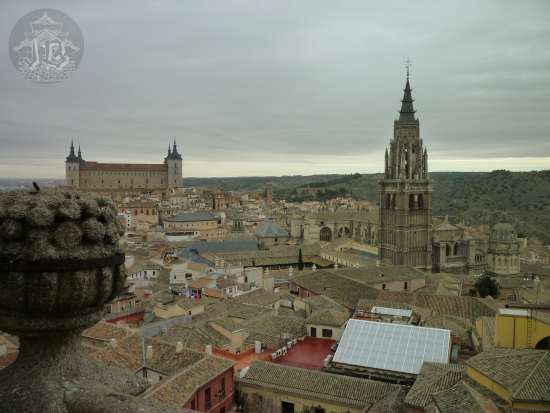
From the upper towers of the church, there was a great view of Toledo.
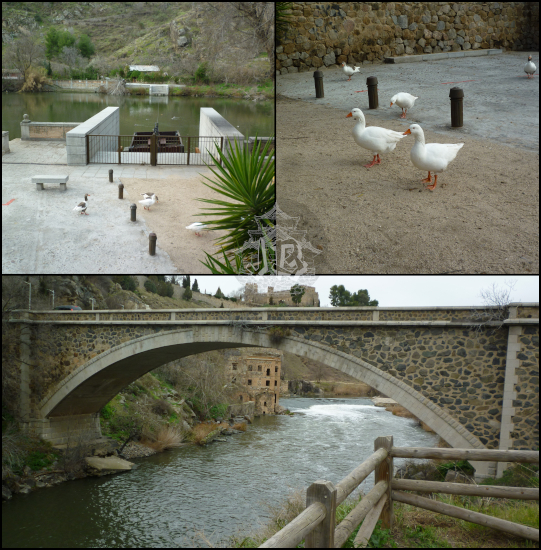
We decided to walk down towards the river, Río Tajo, where we met a flock of geese (which I’m happy to report had not lost their heads to any kind of stupid animal-hurting tradition).
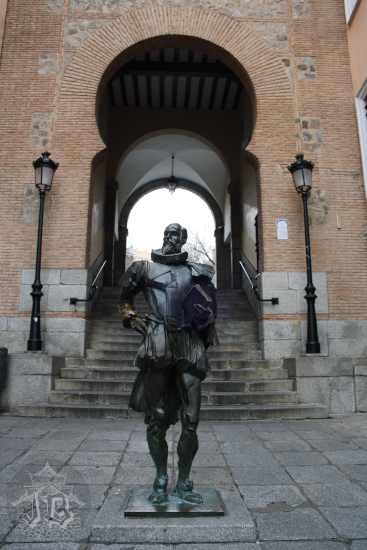
As we continued, we walked past a sculpture to Miguel de Cervantes, Estatua de Miguel de Cervantes, the author of the acclaimed “Don Quijote” book. The statue is placed beyond the Arco de la Sangre , the Blood Archway, that leads into the Zocodover Square.
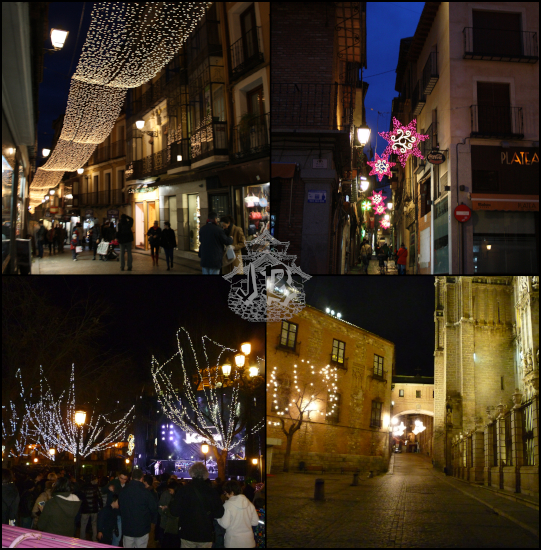
As darkness rose, we had dinner in a Chinese restaurant. While we did, the lights turned on, and the city got ready to welcome the New Year with fireworks.
1st January 2014: Views of Toledo

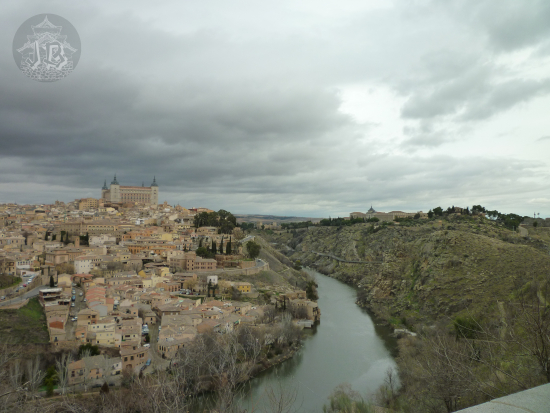
We slept in, and after an early lunch (Chinese, again, as we were feeling decadent), we booked a ride in the “tourist train” that took us to see some of the most amazing views of the Medieval Town from the vantage points on the other side of the Río Tajo.
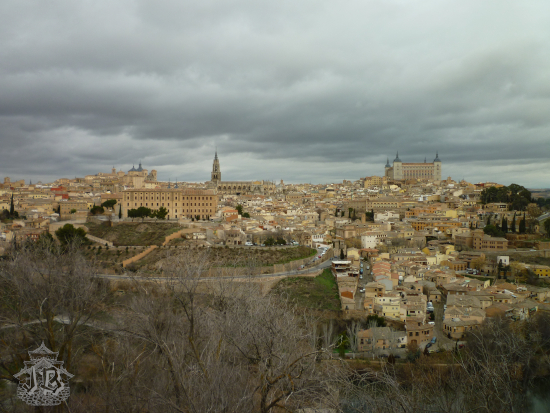
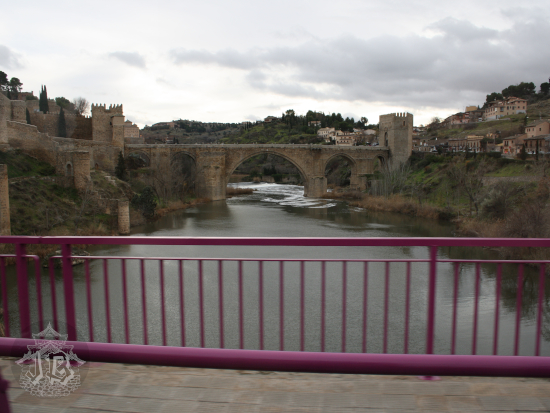
On the way back we saw the Puente de Alcántara, a Roman arch bridge built upon the foundation of the city after the Celtic settlement was taken over.
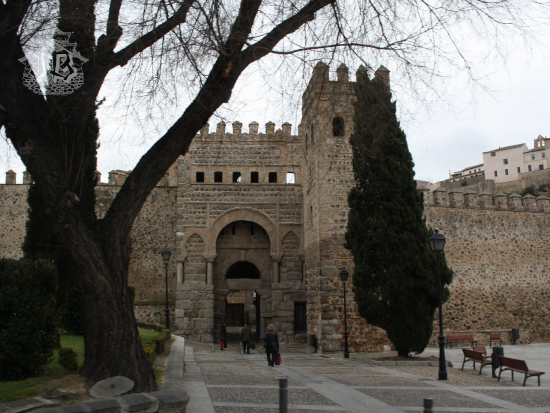
The ride ended up on the other side of the city than the one we had been favouring, so we just walked round the walls that fortify the city, the Murallas de Toledo, which are of Muslim origin over Roman foundations. King Alfonso VI is credited with finishing off the walls, and he named one of the gates after him: Puerta de Alfonso VI.
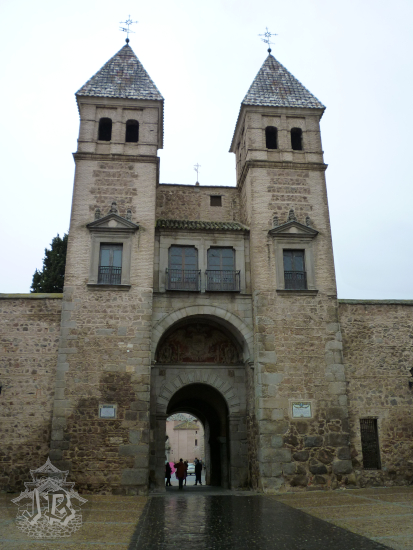
Another of the gates is the Puerta de Bisagra, the last of the monuments we visited before we headed back home the following morning.
One of the creepiest moments in this trip was realising that our key could open a room which was not ours – we got off on the wrong floor and we went down the corridor to the room door, and opened it. It was not our room. We were very quite put off by this, and it turns out that we had a master key. Finding this was a little freaky, and we tried to complain to the hotel. Furthermore, they wanted to charge us for keeping our luggage for a few hours.

Oh, and I caught a cold during our 31st at night escapade. Because of course I did.

27th & 28th July 2013: Segovia (Spain)

27th July 2013: Echoes of a Roman Past

We took the train early on Saturday and arrived in Segovia in mid-morning. Segovia is a Spanish city of the Inner Plateau, located in the autonomous community of Castilla León. It has gained fame because of its many monuments and landmarks, the main being the Roma aqueduct in almost perfect condition, the cathedral and the castle (which may have served to inspire certain mouse-company for the Cinderella Castle). The city centre has been a world Heritage site from 1985 and the aqueduct received the title of International Historic Civil Engineering Landmark in 1999.

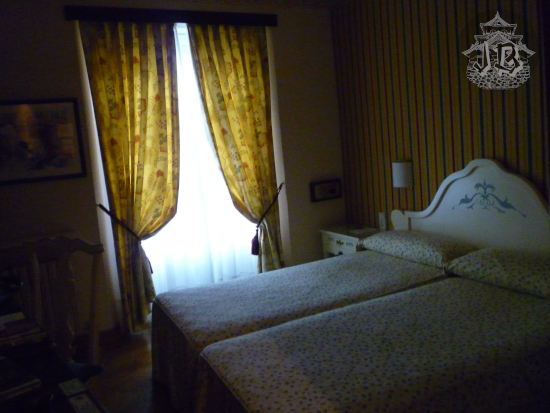
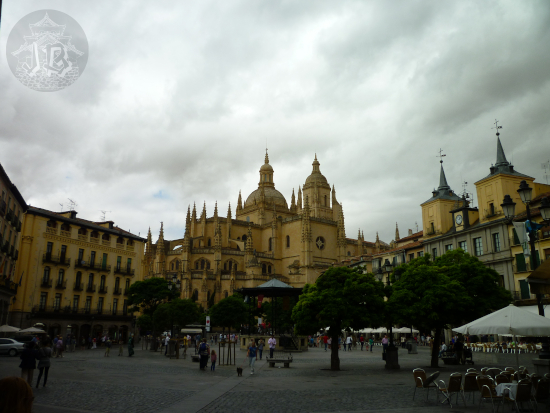
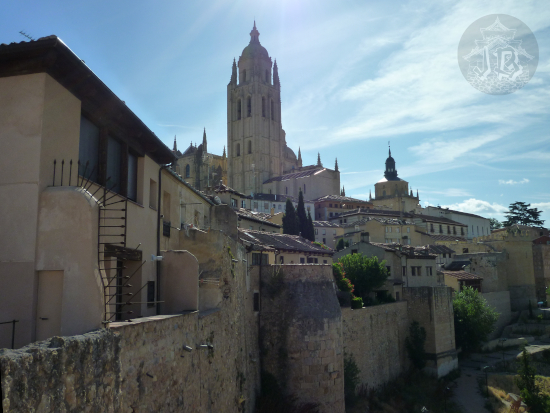
We checked into the hotel, which was dead in the centre of the Main Square and then we visited the Catedral de la Virgen María, the cathedral. The building was constructed between 1525 and 1577 in a late Gothic style that had already phased out in the rest of Europe. We saw the cloister, the chapels and the apse.

Then we moved onto the Iglesia de San Martín, St Martin’s church, built in the 12th century in the Romanesque style, with a Romanesque-Mudejar tower bell.

We then took a walk around the city centre, and we came across the Palacio de Cascales, a 15th century palace that belonged to the Alpuente Count.

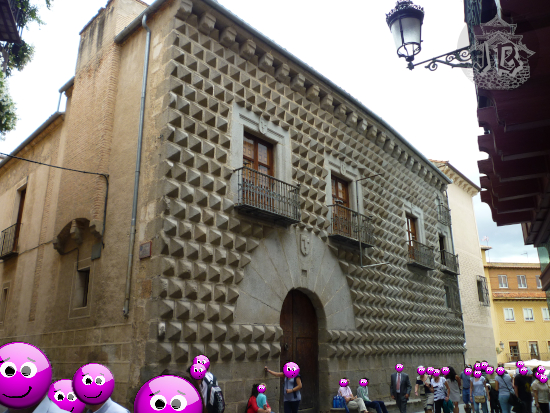
We passed by the Casa de los Picos, the “House of Peaks”, also built in the 15th century.

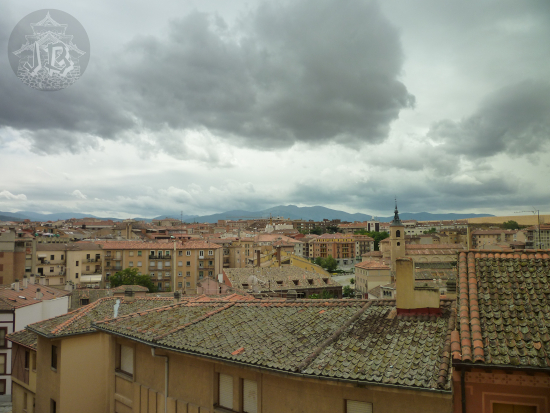
We somehow ended having these nice views of the rooftops of the city, too.

And passed by a very interesting house.

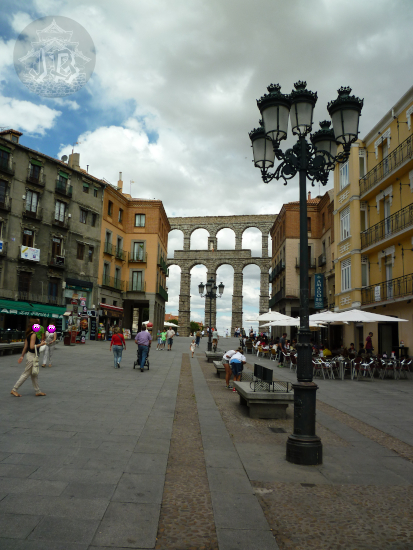
We finally got to the main event, the Aqueducto, the aqueduct. An aqueduct is a “water bridge”, a construction designed to carry water from one side of a valley or a ravine to the other. The Aqueducto was built by the Romans in the late first or early second century. It once transported water from the Frio River into the city, and it ran for a whooping 15 kilometres. It is one of the best preserved aqueducts in the world, as it was reconstructed several times through history, and it was working to get water to the city up to the 19th century.

We passed by the Casa de Ejercicios del Seminario one of the buildings of the Seminary.

We reached the Main Square, the Plaza Mayor again.

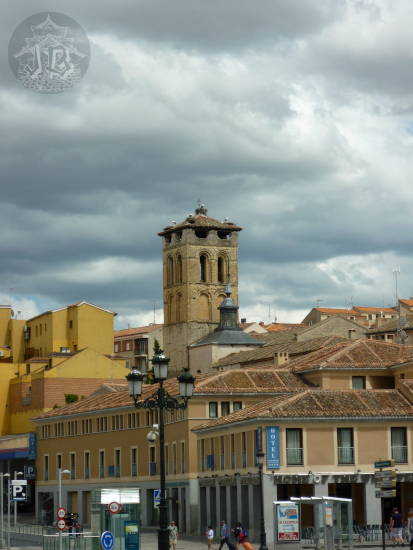
And saw the Romanesque Iglesia de San Andrés, St Andrew’s church, with a particularly nice bell tower.

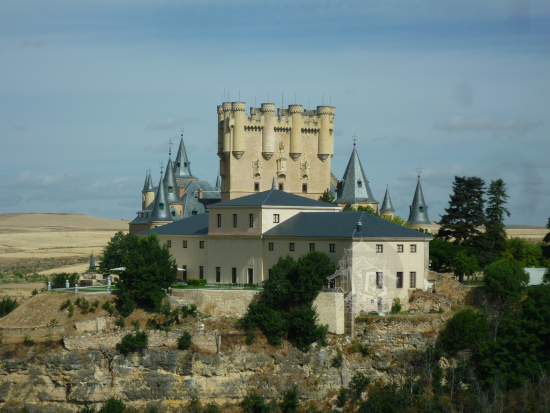
After this we decided to take a break and have the typical pork meat lunch. Then we moved on towards the Alcázar. An alcázar is a type of castle or fortress built during the Muslim rule in Spain and Portugal. The Alcázar of Segovia has been through several redesigns and renovations, but it is a pretty impressive building. The current form was reached during the reign of King Alfonso VIII, so it dates from the 13th century, but it was retweaked by several kings and queens after that. It was the royal residency until the Spanish court moved to Madrid in 1561.

On the way we could see some views and the Iglesia de la Vera Cruz, the True Cross Church.

The Alcázar is quite an impressive building, in Herrerian style, with impressive towers. Part of it is a history museum the other part is a military museum.

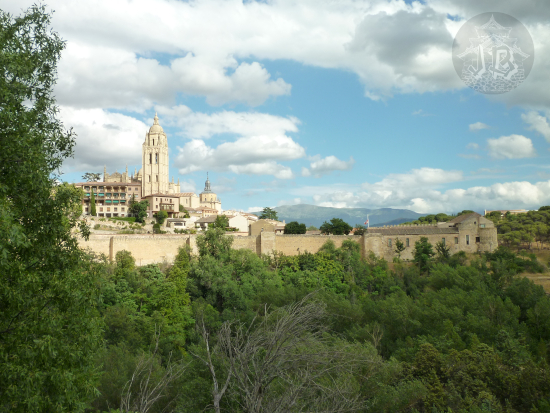
It also offers nice views of the cathedral from the other side.

We walked back to the city centre and along the aqueduct again.

This trip was in July, and scorching hot back home, so we had not considered much of a temperature change. Unfortunately, Segovia in the late afternoon became more than chilly and we had to walk into a random shop to buy a thin jacket, then headed off to the Plaza Mayor.

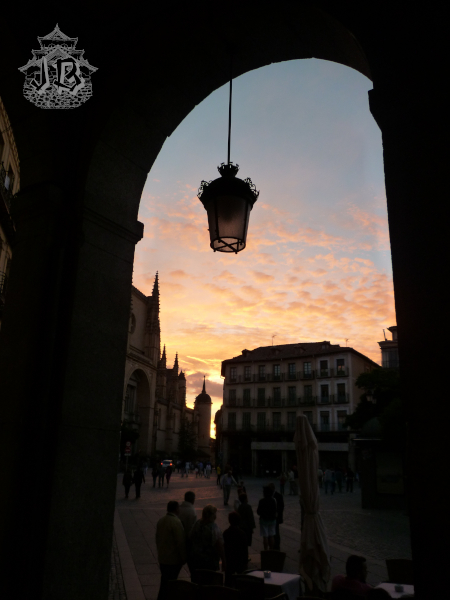
Funnily, when we were having dinner there, someone warned us that the shop assistant had left the alarm tag on my jacket! That was amusing. We called it a day heading off to the hotel, and being duly impressed by the illumination put in place for the cathedral.

28th July 2013: Churches while the city sleeps

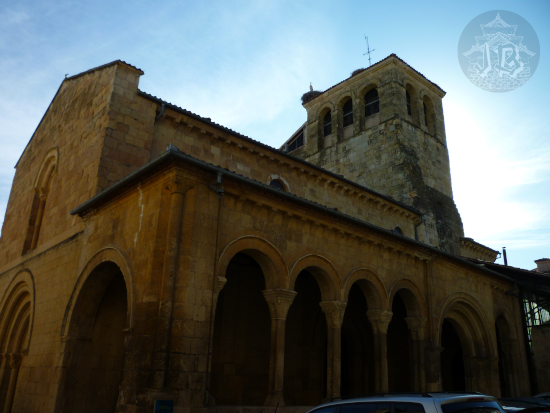
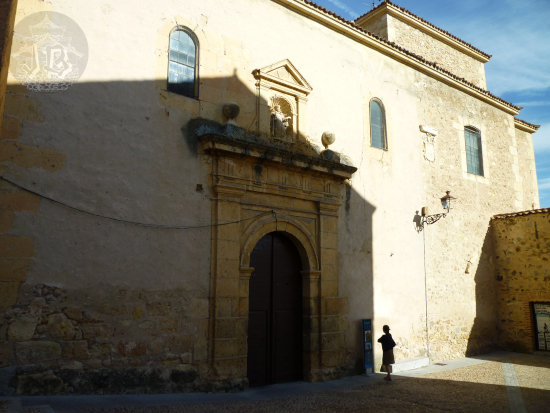
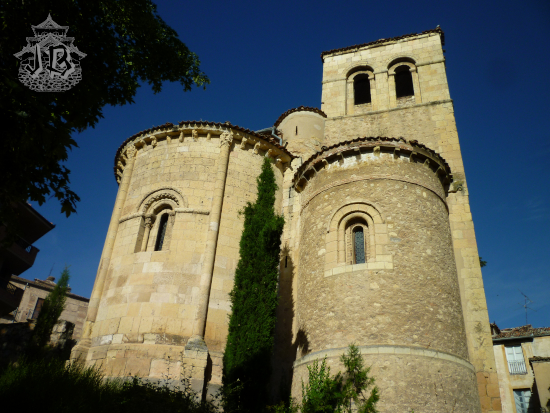
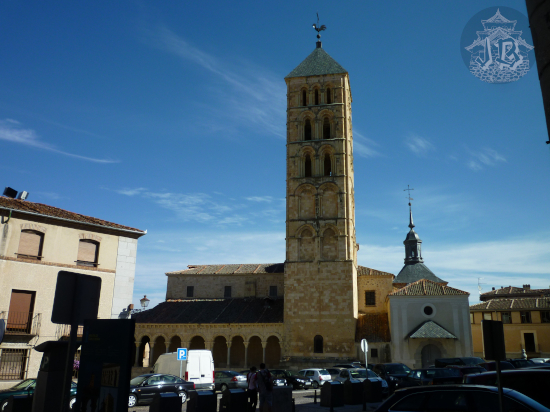
On Sunday morning, most everything was closed, so we took a strolling tor if the Medieval area, and saw a bunch of churches from the tenth and eleventh centuries:

Iglesia de la Trinidad (Trinity Church).

Convento de las Carmelitas Descalzas (Barefoot Carmelite Monastery).

Iglesia de San Nicolas (St. Nicholas’ Church)

Iglesia de San Quirce (St. Quirce’s Church)

Iglesia de San Esteban (St. Stephen’s Church)

We also had yet a different view of the Cathedral.

And we could see the Alcázar in all its glory.

Then we returned to the city centre, where we caught a glimpse of the Iglesia de los Santos Justo y Pastor (St. Just and St. Pastor’s Church).

We had lunch and said one last good-bye to the Aqueduct before we headed back to the train station.

22nd & 23rd June 2013: Odawara and Hakone {Japan, summer 2013}

One of the few perks about a tectonically-active area is the volcanic landscapes, and Hakone has plenty of those. We headed off to Odawara [小田原] early on Saturday morning to visit the local Castle, Odawara-jō [小田原城].

Then we headed off to Ashi no Ko [芦ノ湖], Ashi Lake, which formed in the caldera of a supervolcano after a huge eruption millions of years ago. We crossed the Hakone Sekisyo [箱根関所], the Hakone Checkpoint, which back in time prevented undesired people from moving around – which meant anyone who was not friends with the shogun.

We made it to the city of Hakone [箱根] later in the day. There, we visited Hakone Jinja [箱根神社], which has a torii set within the lake itself. This torii is called the Torii of Peace, Heiwa no torii [平和の鳥居]

Then there was onsen – Japanese hot springs. No pictures of that XP.

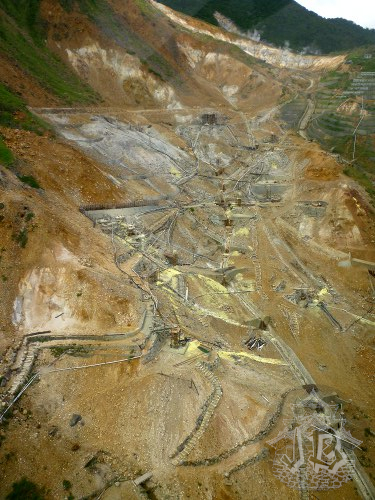
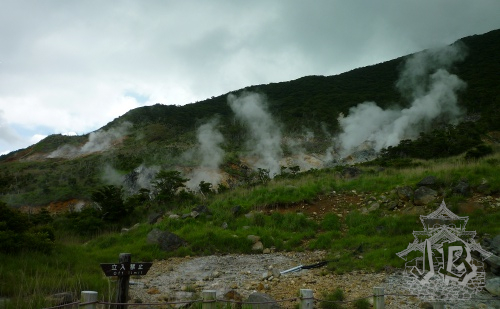
The following morning we went up one of the mountains, to an area called Ōwakudani [大涌谷] via murderous device called the Hakone Ropeway [箱根ロープウェイ] to watch the sulphur mines, the volcanic gases eruptions and to eat the famous black eggs, kurotamago [黒卵], which are normal eggs cooked in naturally-boiling sulphurous water puddles.

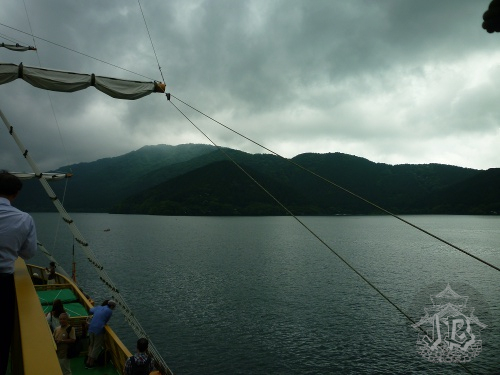
Finally, we crossed the Ashi no Ko in a “pirate ship” before heading back to Tokyo [東京] to karaoke the last hours of the weekend away. Unfortunately it was too cloudy to see the supermoon.

29th May – 2nd June 2013: San Juan & Alicante (Spain)

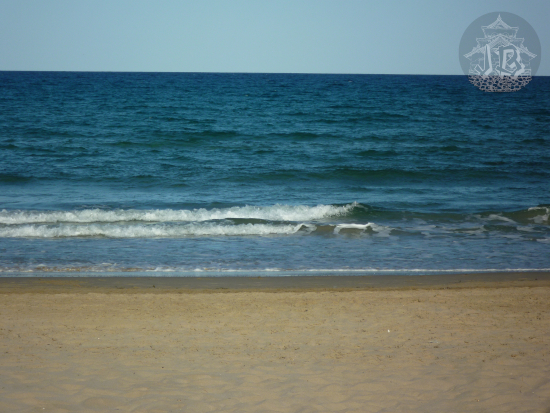
San Juan de Alicante is a small village in the east of Spain. It does not really have much by my parents use it as a base for my father’s diving trips. I sometimes tag along. We usually drive there and believe it or not, I found the Windows XP background.
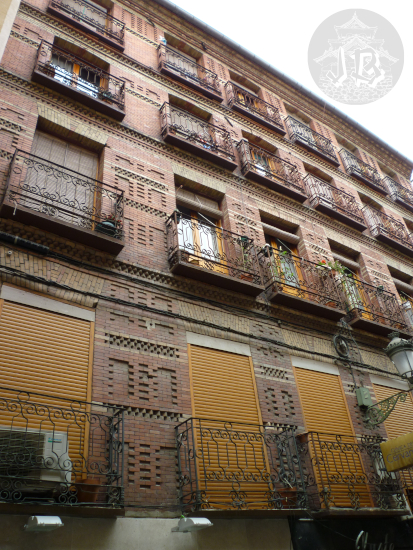
We usually stay in something akin to a resort that is not stupidly expensive because it is not close to the beach. It has a big garden and a swimming pool and it is generally quiet, especially when it’s not school-holiday period.
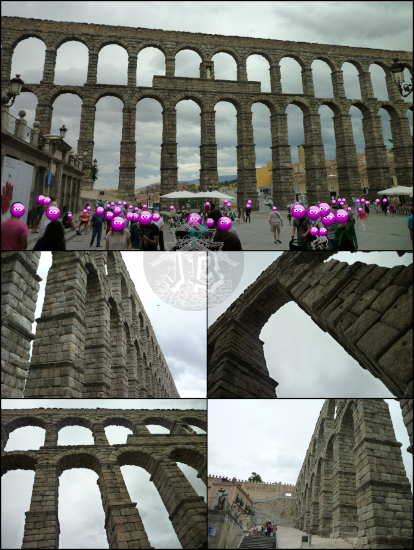
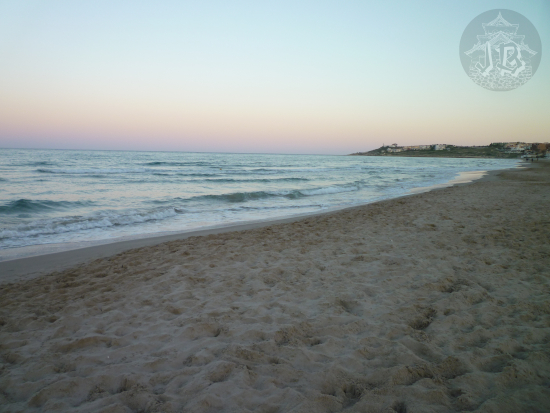
On the 30th we went to have dinner near Playa de San Juan, the town’s beach, and we were treated to a pretty sunset.

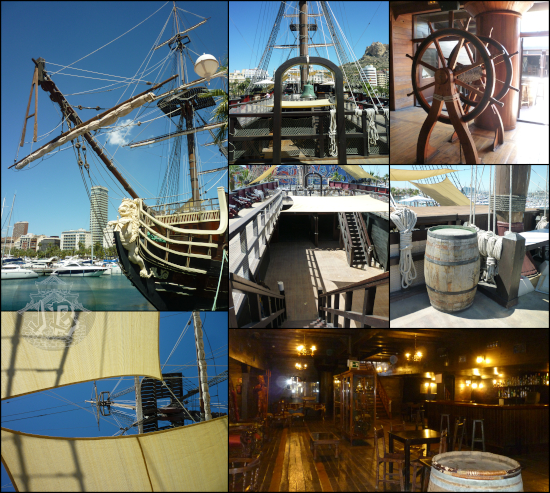
There is not much more to do there, so on the 31st we went to Alicante, to visit the Santísima Trinidad, Holy Trinity vessel, which was anchored at the harbour. The original Santísima Trinidad was a galleon built in Cuba in 1769. It had three decks, but a fourth was added during a later restoration after it was severely damaged in 1797. In 1803 it was put in action again with 140 cannon guns. On the 21st of October 1805, the ship took place in the Battle of Trafalgar against the English, and it was eventually made prisoner and sunk with all the wounded and defeated soldiers on board. The galleon moored in Alicante is a replica, which dubs as café and restaurant, of the three-dock Holy Trinity.

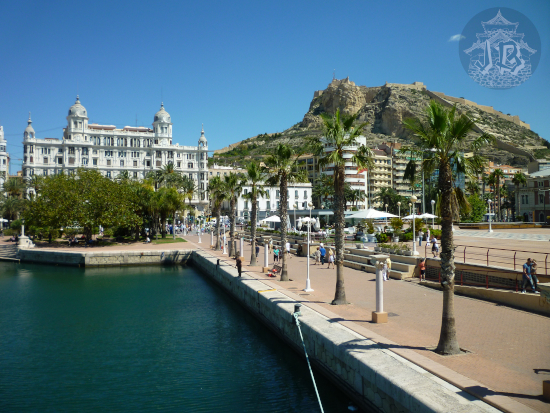
The ship also offers some nice views of the city of Alicante and the Castillo de Santa Bárbara (Santa Bárbara’s castle).

We walked around the Paseo Marítimo, Seaside Walk.

On the 1st we took a walk around San Juan (and I floated like a seal in the swimming pool).

Not an exciting trip but mostly a laid-back, relaxing weekend.

11th July 2012: Kyoto in 9.5 hours: Mission Impossible {Japan, summer 2012}

My express visit to Kyoto [京都] on the 11th was fueled by a jump into a rabbit hole – the first time I drank canned coffee. It would not be the last, definitely.

A can of Georgia Café au Lait

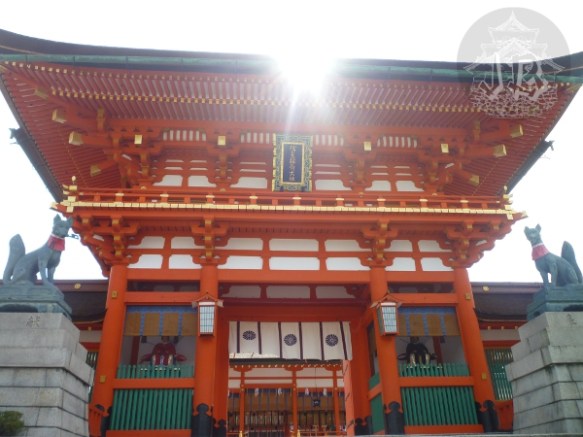
I started off with Fushimi Inari Taisha [伏見稲荷大社] and is dedicated to Inari, the God of Rice, whose messengers are considered to be the foxes or kitsune [狐]. It is a temple with a gazillion plus one torii, since in early Japan Inari was seen as the patron of business. Thus each of the torii is donated by a Japanese business. Sorry for the sun reflection, this was the best picture of the main building I could take:

A shrine building, in powerful orange. The sun is shining at the rim of the roof, and there are two sculptures of foxes sitting on the sides.

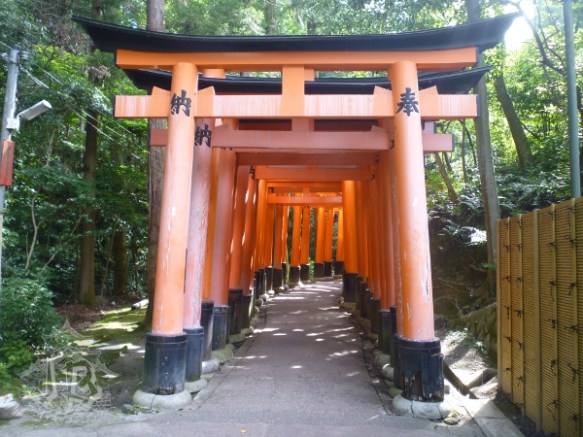
A line of torii (have I mentioned that I looove torii?) the Senbon Torii [千本鳥居], or line of a thousand torii:

A torii in the foreground. Beyond it, so many others that you cannot tell them apart. All of them are orange, but the outermost ones have been burnt by the sun and are less bright

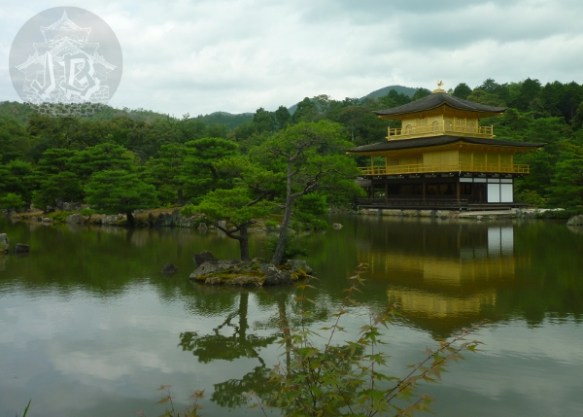
After Inari, I crossed the whole of Kyoto via bus and train and visited the Kinkaku-ji [金閣寺], the Temple of the Golden Pavilion. While I went to visit it because it was a must-see I found it amazing, and liked it more than I wanted to admit.

A pond with a pine tree at the centre. To the side, a three-story pavillion that looks similar to a pagoda. The first floor is built in wood and plaster, the upper ones have been covered in gold

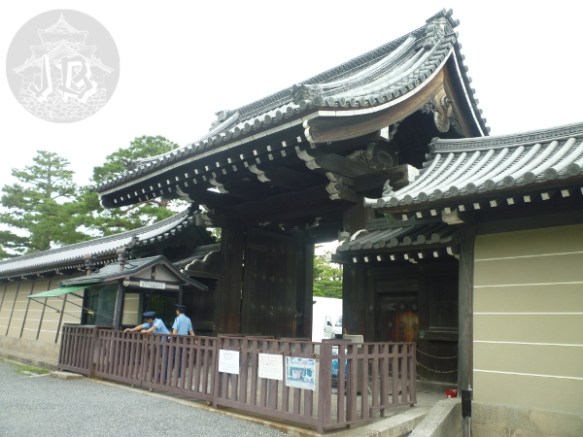
Bus again, towards the Imperial Palace, Kyōto-gosho [京都御所], of which you see… the outer wall and the cops that guard the door XD

The entrance to the Imperial palace - a gate through the walls. Two police officers in blue are chatting at the fence

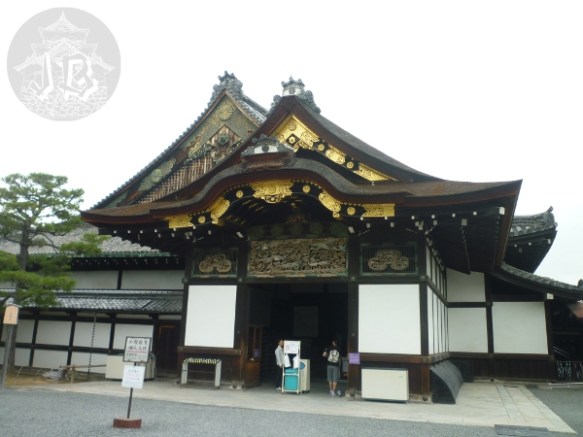
And a thirty-minute walk after that, I found myself entering the castle Nijō Jō [二条城]. Can you feel the rush? XD

The main building to the old castle. Is is built in dark wood with gold ornaments and carved details showing animals and plants, painted in bright colours

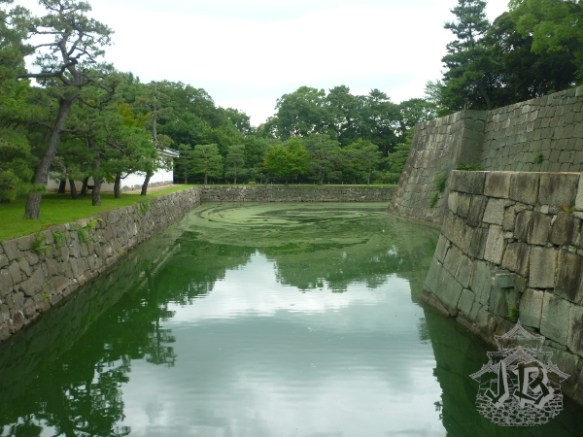
A view of the moat. The water is green.

Two buses later I was in Chion-in [知恩院] which was being repaired, so you can only see park entrance gate, which technically might belong to a nearby temple. I mean… there are too many temples to keep track of them! (Edit: after a bit of processing, that’s actually the entrance to the Yasaka Jinja [八坂神社] complex.)

A bright orange and white building at the top of some some stone stairs.

And going down those stairs to the left there was… Gion [祇園], the traditional geisha district. Found no geisha though D:

Traditional Japanese houses in dark wood, burnt by the sun. The entrance has a paper lanter and a menu

Finally, after another temple or twenty, or among them, I managed to sneak into Kennin-ji [建仁寺] just before it closed to see the twin dragons:

A ceiling painting of two dragons. The background is dark and the dragons are coloured in light shades, gold, white and red

By then I was so dead that I headed back to the station and was catatonic for the Shinkansen ride to Tokyo. This is not by far all I saw, but I lost track of the names for a bit. By the end of the day I was exhausted, but this is the gist of what I did that day. I would need more time to sort out the pictures, and I am trying to keep you guys generally updated, not write a thesis on ancient Japan XD (ETA 2017: Wow, that frame of mind changed a lot)

9th July 2012: Osaka, day 1 {Japan, summer 2012}

Monday 9th had me doing something I never thought I would do – riding a Tokyo train during rush hour, and survived too!

My first destination was Shinagawa station to catch the Hikari Shinkansen bound to Osaka [大阪]. With a speed of almost 300 km/h, the Hikari Shinkansen covered the 454 km between Tokyo and Osaka in abuout three hours, with some stops in between, Nagoya being one of them.

A train station platform with the train arriving in the background. The train locomotive is white and looks like a duck bill

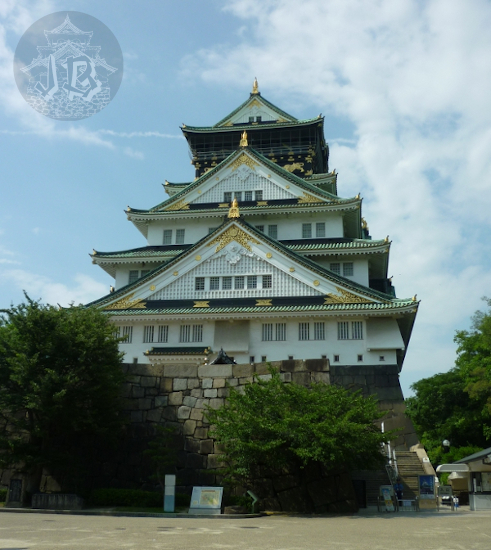
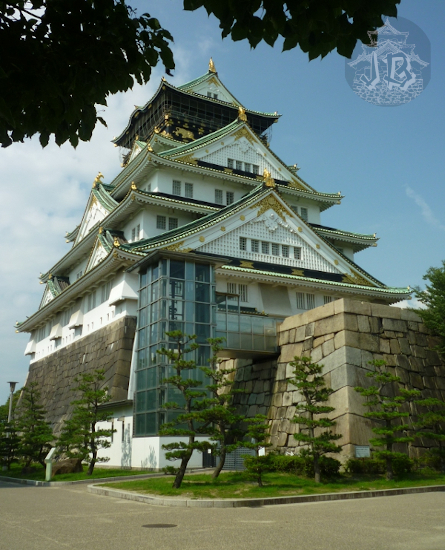
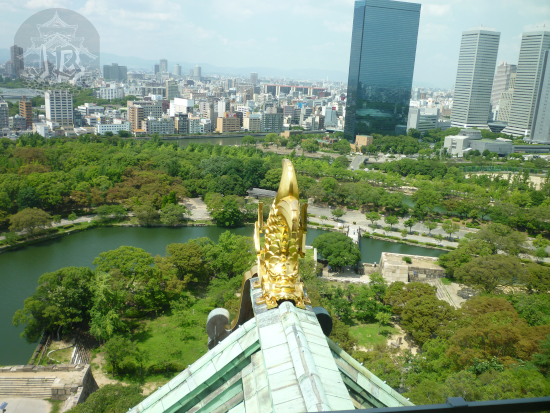
Upon arriving I headed towards the city’s Castle, Osaka-jō [大阪城]. There are no words to describe Osaka-jō, and no picture would make it justice. Have some that try anyway:

Osaka Castle. It stands on a rock base, and it has four floors. The roofs are green/grey and the main walls are white with golden decoration

Osaka castle from the side, showing the accessible lift for wheelchair users

View from the top of Osaka Castle. In the foreground there's the roof decoration, a gold fish-monster. In the background, Osaka highrises. In between the park and the moat

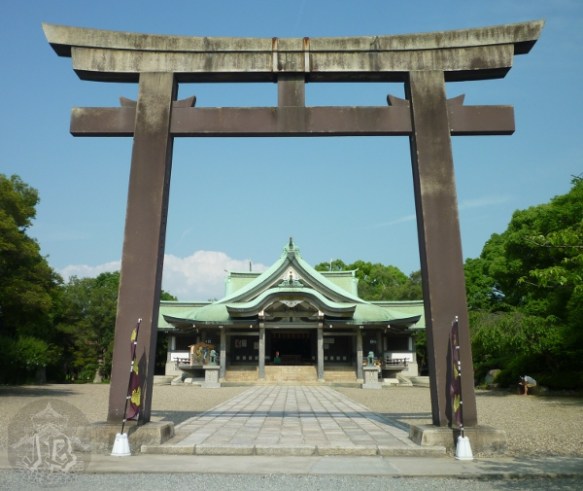
Next to the castle is the Hōkoku Jinja [豊國神社], which I visited too.

A severe grey torii in front of a white and green shrine building

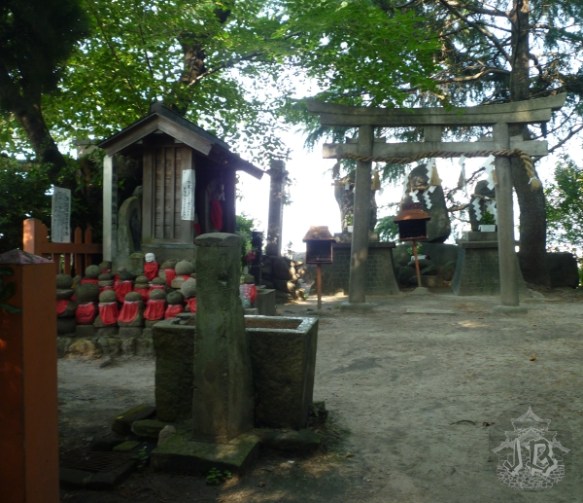
Then I walked back to the castle to undo all the way towards the station – as some monuments close at 3pm I wanted to make sure to go in the tower museum. Now I had the chance to take pictures and explore. By chance I noticed some stairs by the edge of the park surrounding the tower so I climbed up to discover a mini temple to one side of the castle. The small statues symbolize dead or stillborn babies, and I find them incredibly creepy.

Inside a shrine grounds - a little fountain, a stone torii, and a number of small human-like statues wearing red bibs

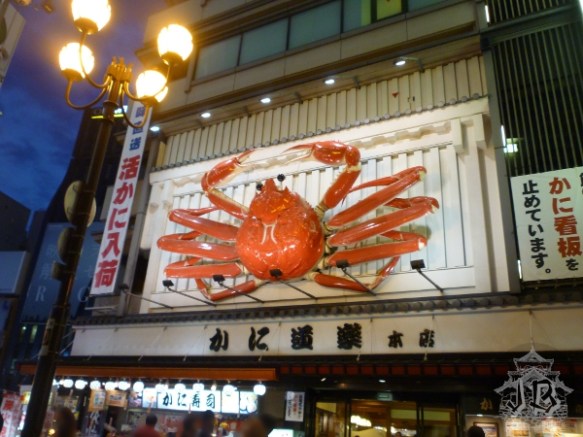
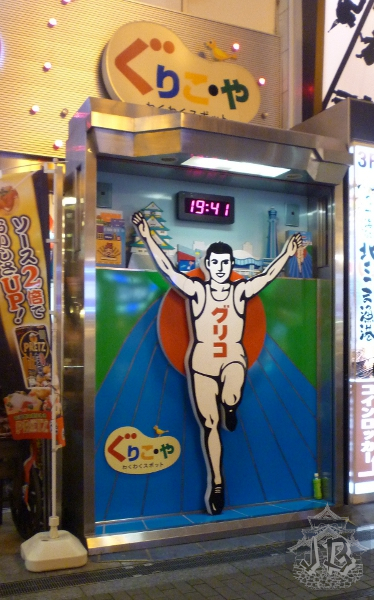
I explored the area and went back to the main path to find the station and head off to Namba, where my hotel was. Now, Osaka has two main entertainment districts: Namba and Shin Sekai. Namba [難波], where I went, has the Glico man (which somehow I missed, mistaking it for this little shop) and the giant blowfish and crabs.

Giant snow crab adverstisement for a restaurant

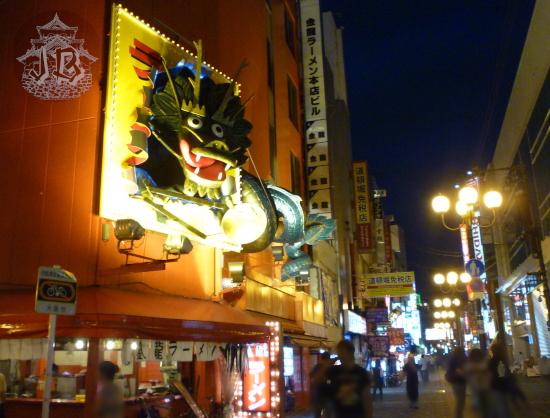
Giant dragon advertisement for a ramen restaurant

A billboard of a man reaching the end line of an athletic course, raising his arms in victory. His shirt reads グルコ

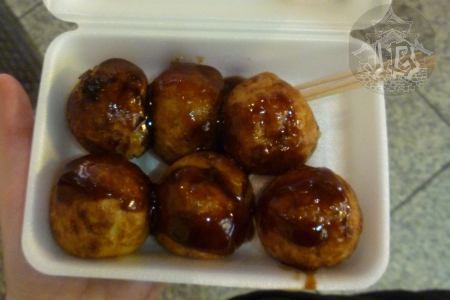
In Namba I bought myself some takoyaki – octopus dumplins – for dinner from one of the street stands. This was one of my first interactions completely in Japanese, and I felt stupidly proud of it. And of course, the takoyaki were delicous, albeit scorching hot.

A box of six round dumplins covered with brown sauce

Flashback to 28th December 2010 – 2nd January 2011: New Year’s in London

  • Hyde Park
  • Piccadilly Circus
  • Sherlock Holmes Museum
  • London Eye
  • Houses of Parliament
  • Big Ben
  • River Thames
  • Tower Bridge
  • Tower of London
  • St Paul’s Cathedral
  • Globe Theatre
  • London Aquarium
  • British Museum
  • London Natural History Museum
  • Buckingham Palace

Note: This is a flashback post, which means it is just a collage regarding a trip I took before I started the blog in 2012. Tags may be incomplete or slightly off.

Flashback to 11th – 14th August 2010: Granada & the Alhambra

  • Catedral de la Encarnación de Granada (Cathedral of the Incarnation)
  • Alhambra de Granada (Granada Muslim fortress)
  • Jardines de la Alhambra (Fortress Gardens)

Note: This is a flashback post, which means it is just a collage regarding a trip I took before I started the blog in 2012. Tags may be incomplete or slightly off.