26th May 2025: Sliema & the return {Malta, May 2025}

It was my last day in Malta. My return plane was mid-afternoon, so I had to head towards the airport at noon the latest. For that morning, I had planned a leisure stroll along the beaches towards the east of Saint Julian’s | San Ġiljan and Sliema. I had breakfast, grabbed my backpack, and set out along Ballutta Bay, Exiles Bay and St Julian’s Bay.

Balluta bay - a tiny sand beach with buildings on both sides

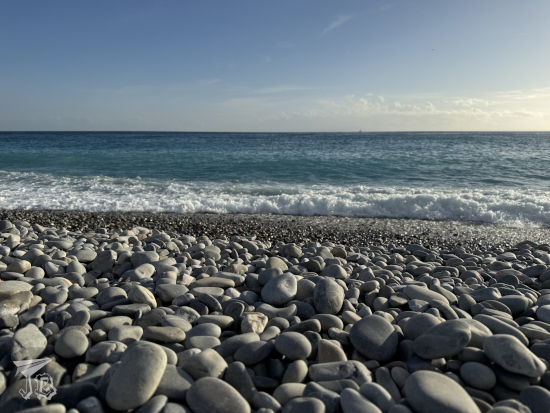
Limestone beach with waves breaking against it

There is a watch tower at the edge between both towns Saint Julian’s Tower | Torri ta’ San Ġiljan, built to protect the bay in 1658, though today it is a restaurant. After looking at the waves for a while, I walked along the coastline until I found the Roman Baths, which to my disappointment, are not Roman but Victorian artificial pools, from the time Malta was a British colony – they were upfront about this though, unlike the Birżebbuġa ones.

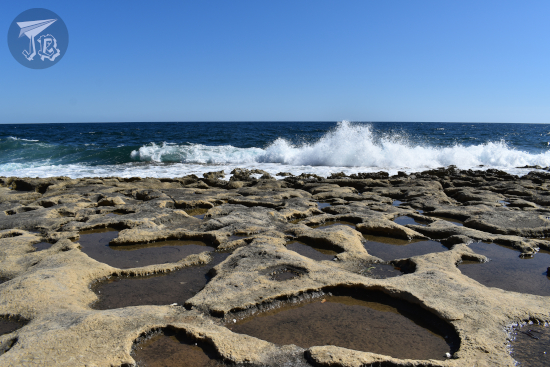
Sliema Roman baths - rectangular pools carved into the limestone

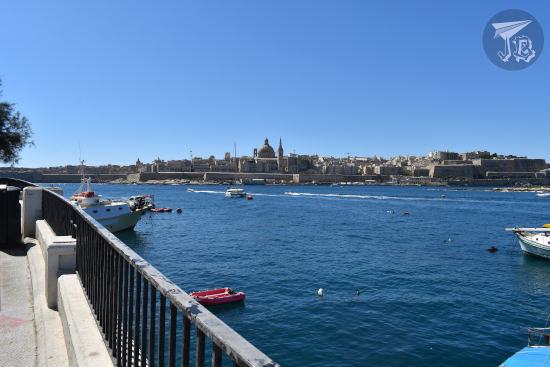
I can look at waves for hours, and that’s exactly what I did. I passed by Sliema Point Battery (now also a restaurant; I would have liked to try it to be honest, just because it looked cool) and eventually reached the Sliema Promenade. There, the scenic ferries leave to take tourists around the bay, and the actual ferries sail off to Valletta, which can be seen across the water from the Panoramic View Of Valletta point. There is a cute little building, the Sea water distilling monument, the remains of Malta’s oldest water distillation plant, used after its construction in 1881 to provide drinking water to the population. Fresh water was obtained by boiling sea water to separate the actual water from the salt.

Views of Valletta across the bay

I still had a little bit of time, but I was next to the correct bus stop, and it was almost time for it to pass. Thus, I decided to take it, get to the airport, grab a coffee, and visit the Observation deck.

As I stopped by the airport’s Costa Coffee I got talking to a couple who had just landed and were figuring their way out after a change of plans. When they heard I was going home, they immediately asked where my next adventure was. I found it both endearing and hilarious – do I look that travel-minded? I should have told them that I planned to go dig dinosaur eggs or something…

I drank my vanilla latte at the Observation deck, then I went through Security and checked the book shops for a copy of The Little Prince in Maltese for my parent. I found a quiet place to sit – and damn it was freezing, so I ended up wearing all my layers until I boarded the plane.

In the end, I carried my bathing suit for nothing, but I have to admit that despite the inconveniences on Saturday, I had a blast in Malta. While it had never been on my radar as a potential destination beforehand, I am really glad I chose it. I did not miss having a car, because the public transport was convenient enough, and the weather was superb. Gozo was not as spectacular as I expected, but I wouldn’t mind coming back to the country to explore the rest of the temples – especially the Ħal Saflieni Hypogeum – and the one main city I did not visit – Mdina. Next time around though, I don’t think I’ll book any tours and organise everything myself. Given some time, I think I can make a great itinerary for a second visit. Oh, and I will try to find a hotel in a non-party area or destination.

25th May 2025: Gozo Tour {Malta, May 2025}

I had booked a second tour, in order to get to know the Island of Gozo. This time around though I had a very clear pick-up point, which I hoped would work out, unlike the previous day. Fortunately, the instructions from Gozo Tours were extremely clear and I knew exactly where the pick up point was, without any non-working links. There were other people from my same hotel, so we got nervous together. The driver was not too late though. We were driven in a mini-van towards the passenger terminal in the north of the island, Cirkewwa. There, we waited for pick-ups from other parts of the island. We had a charter high-speed boat that crossed the Gozo Channel and dropped us off at the Mgarr Harbour terminal in the second-biggest island of Malta (country).

Gozo | Għawdex is less urban than the Island of Malta, so I had decided that maybe the Full Day Jeep Safari Of Gozo could be a good way to get a feeling of the island, without having to plan much and depend on public transport. In hindsight, it was probably unnecessary but it eliminated the need to plan. All in all, the tour was convenient, but not something I would choose again – the landscapes were beautiful and dramatic, but not as crazy as I had expected.

I became really amused at how many people (read: most everyone) were unaware of the speed a speedboat reaches. I was glad that the boat was so fast; it glided over the wind-waves, and there was no swaying. That was good, because said wind would have made the trip miserable at a slower speed. However, there was a group of Italian girls who were absolutely petrified.

We reached Mgarr Harbour in Gozo and separated into small groups for the different jeeps. I was placed with four Londoners and an English guide, which suited me just fine. I don’t remember whether I actively chose the English-speaking tour, or I got assigned to one because I used the English webpage. There must have been tours in other languages. Apparently, all the jeeps go to the same spots at different times of the day so they don’t run into each other, so we followed a bit of a zigzagging route, with specific spots in different cities and towns. The information said there would be a “swim stop” during summer, I was just not sure whether the 25th of May would count as summer. I carried my swimsuit and towel anyway.

The first stop was barely five minutes in: Qala Belvedere, a panoramic spot in the town of Qala, which allowed us to catch sight of Comino, the third-biggest island in the archipelago. Afterwards, we got back on the jeep and headed off towards Ramla Bay in Xaghra. As he was describing the landscape, the guide at some point mentioned volcanic rock, which threw me off, as I believed that the islands were sedimentary. I thought maybe he meant there was some tuff. However, everything I have read about the geology of the islands agrees – the whole of them is sedimentary rock, in five main strata. From oldest, at the bottom, to newer, these are coralline limestone (Żonqor), globigerina limestone (Franka), blue clay mudstone (Tafal), greensand sandstone (Ġebla s-Safra) and coralline limestone again (Qawwi ta’ Fuq).

The Upper Coralline limestone formation (the most recent) is pale and grey, and it is embedded with biological structures. The most important rock is the globigerina limestone, which is golden and between 23 and 14 million years old. It is called so because it contains a lot of globigerina – a type of plankton – fossils (I did see a lot of shells in the rocks, but I was not carrying anything to dig the fossils out). This is the majority of building material in the country, even in a lot of the prehistoric temples. It has been designated a Global Heritage Stone Resource, something I did not even know existed until now. The blue clay is also key in Gozo as it is the one that allows for the creation of freshwater aquifers through the filtration of rainwater. The thing with limestone is that it erodes very dramatically, creating very capricious forms which are the base of the striking landscapes in the island.

The shore of Ramla Bay is one of the few sand beaches in the country. It is called Ramla il-Ħamra (Red Sands) because of its reddish colour due to the presence of iron clay in the area. The beach is locked by two rocky formations / cliffs that protect it from the waves – unfortunately, not from real estate developers.

Ramla Bay - a small reddish sand beach inbetween rocky cliffs

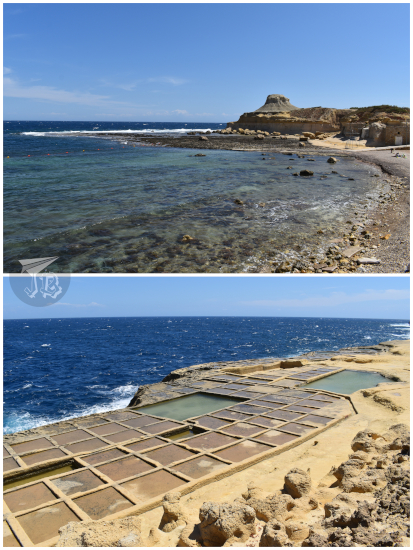
We continued towards Xwejni Bay in Żebbuġ. It has a small beach of pebbles, with a promontory to one of the sides, and a dramatic walk along the other side which leads to the salt pans. Unlike the ones from Birżebbuġa, these pans are commercially exploited. Between May and September, each pool is filled, individually and manually, with sea water which proceeds to evaporate and leave behind the dry salt crystals. With good weather, salt can be harvested once a week, and it is sold as flakes without further processing – rather nice, I’d say. We also were shown to a small shop that had tastings in hopes you bought stuff, and I did try the salt and the oil.

Xwejni - a beach made by the erosion of limestone, with salt pans excavated into it

We drove by Basilica of the Blessed Virgin Of Ta’ Pinu | Santwarju Bażilika tal-Madonna ta’ Pinu, though we did not stop. The current building is Neo-Romanesque – construction started in the 1920s – and it looks like something from a fantasy cartoon. However, it is a serious Catholic temple, dating back from the 16th century at least, even if it kind of stands in the middle of nowhere.

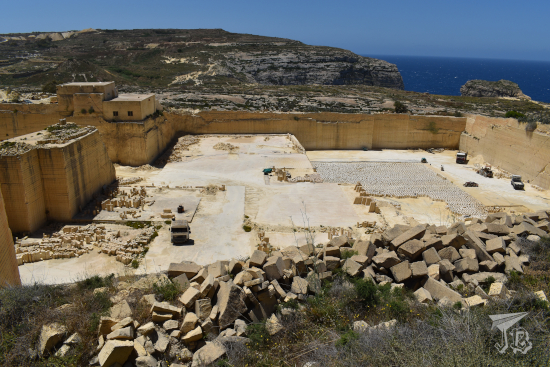
We crossed the town of Għarb and made a short stop at the SG 8 globigerina limestone quarry. It made me sad that the SG did not stand for “Stargate” but what can you do? The quarries through the island extract the rock which is used as construction material in many buildings through the country.

Limestone quarry

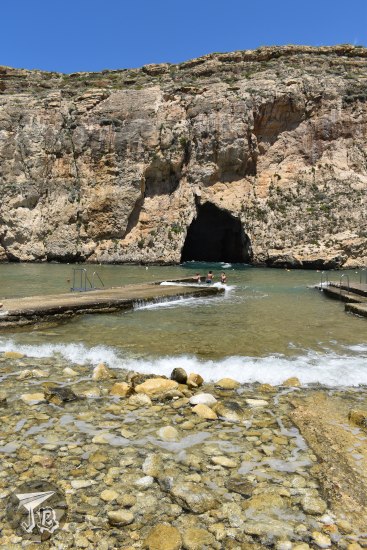
Instead of going to the other side of the galaxy, we headed off to San Lawrenz to see the Inland Sea | Qawra, a lagoon connected to the sea through a cave fault in the cliffs. When the weather is nice, there are boats giving you a ride past the archway and out to the sea, but not this time around – there were some pretty decent waves coming in, so it was too dangerous to sail the crossing.

Small lagoon connected to the ocean by a cave

We drove through Għarb again, where I could catch a glimpse of the Basilica and Collegiate Parish church of the Visitation of Our Lady, and continued towards Xewkija where we were to have a “three-course course light lunch”. This consisted on a Ricotta Pastizz (pastry stuffed with ricotta cheese), Maltese Bragioli | Beef Olive (stuffed beef roll), and vanilla ice-cream, along with wine that I did not have, I went for water instead. Food was all right, I was not hungry so it was fine. Afterwards, the guide offered to take us to a gelateria to have “the best ice-cream ever”.

Pastizzi (pastry filled with cheese), and a meatball with potato wedges

Before that, we crossed the scorching square to see the Rotunda St. John Baptist Church | Basilika St. Johannes der Täufer, which had recently been struck by lightning. This is a Baroque church established in 1678, though the building was erected in limestone in the mid-20th century. The new building actually encased the original church, which now is a small chapel to the left side of the main altar. St John is the Spiritual Seat of the Knights Hospitaller.

Neoclassical church with a dome

The next stop was Xlendi Bay and the beach town of Xlendi. There stands Xlendi Tower, built by the Knights in 1650, restored in 2010. The natural landscape was stunning, but the town itself was just a touristy beach town. The promised ice-cream parlour was a chain called Gelateria Granola, where I decided to try the cookie ice-cream, because it was something I had never come across before, and I had next to no time to choose, it felt – I have no idea how I ended at the front of the crowd.

Xlendi: cliffs and breaking waves

Ice-cream happily consumed, we drove off. We stopped in Fontana where there is a natural water spout called the Knight’s Wash House, halfway between a historical landmark and a local fountain. As a curiosity it was all right. We continued to Victoria, whose historical seed is called The Cittadella | Iċ-Ċittadella, the Citadel. The area comprising the Cittadella was first inhabited during the Bronze Age, and it probably went on to become the Roman acropolis and eventually a castle in the Middle Ages. The castle defences were reconstructed in the 17th century, but they were not considered the best – the Cittadella actually surrendered in the 1798 French invasion and counterstrike, without much resistance either time.

Our allotted time there felt too long for just a walk and too short to the whole thing, unfortunately, so I could not snoop around the museums. Furthermore, the Cathedral of the Assumption – The Matrix, Parish Church, Sanctuary, Collegiate and Cathedral of the Assumption of the Blessed Virgin Mary into Heaven | Parrocca Matrici, Arcipretali, Santwarju, Kollegjata Insinji u Katidral ta’ Santa Marija Assunta was closed. The whole area looked like it would be awesome to be able to sleep over there – especially because walking uphill to visit it would be hard in the sun.

Fortification made in limestone with a baroque cathedral

The hour approached to head back to the quay. We started making our retreat with two short stops on the way, in the town of Għajnsielem. The first one was for the guide to take our pictures with the Monument to the bench in the village square, a metal bench showcasing a pair of grandparents, a young woman with a smartphone and a cat begging for attention. The bench is located in front of the Għajnsielem Parish Church. The second stop was a panoramic view of Gozo Straight and the Church of the Madonna of Lourdes | Knisja tal-Madonna ta’ Lourdes. There was no swim stop in the end, so late May is not summer yet. All in all, we started off around 10:00 and were done by 16:00, and it cost 80 €.

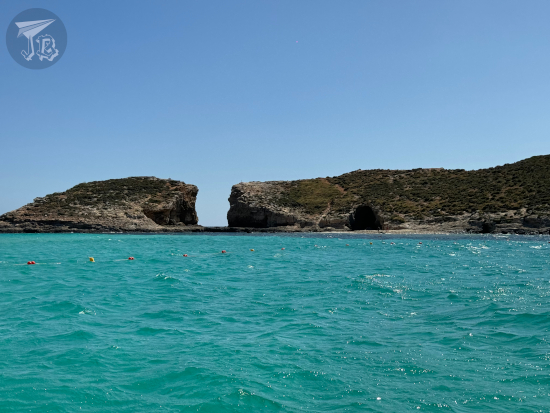
We made it back to Mgarr Harbour, where we took the speedboat back, first to drop off some passengers in Comino, which gave us a peek into the Blue Lagoon there. Again, I was glad for the speed, because the waves would have made a leisure trip miserable. Afterwards, we were driven back our points of origin. Back in my hotel, I snacked on some salt-and-vinegar crisps from my favourite British brand that I had found in the supermarket.

The turquoise water of the blue lagoon in front of the island of Comino

Around sunset, I went out to explore Saint Julian’s | San Ġiljan a little further. I had considered some of the typical restaurants there, but since I ate the crisps I was not hungry. What I did was walk around Spinola Bay, along Spinola Slipway and Saint Julian’s Promenade, and past the Fisherman Monument – with yet another cat begging. I tried to reach the marina, but it was all uphill and taken over by the luxury hotels.

A sculpture of a fisherman cleaning the nets while a cat looks eagerly at him, and a view of an urban bay front

Instead of dinner, I had another snack, and then headed off back for a shower, some sleep and… yes, another 5:00 wake up call. Talk about jet lag without changing your time zones!

22nd May 2025: Blue Grotto, Tarxien & Saint Julian’s / Sliema {Malta, May 2025}

My flight departed at 9:55 from Madrid-Barajas, which is actually a very bad time for a flight, as you have to drive to the airport through the daily rush-hour traffic jam. However, for a change, I was given a lift there instead of driving myself – my car failed a few days before and I was not feeling too trusting. The inbound plane was delayed, and we ended up landing at Malta International Airport around an hour late.

It turns out that Malta has done a smart thing – the airport is also a coach hub, and there was a bus which went directly where I wanted to go first 20 minutes afterwards – that was lucky because the bus only comes every hour. It did not take long to reach the Blue Grotto | Taħt il-Ħnejja in the village of Qrendi | Il-Qrendi.

I got off in an aptly-named bus stopped called Grotto, next to which stands Xutu Tower | Torri Xutu. The history of Malta cannot really be understood without mentioning the Order of Knights of the Hospital of Saint John of Jerusalem, the Knights Hospitaller, today also known as the Sovereign Order of Malta. This Catholic military order was founded during the Crusades in the 12th century and the knights were established in Malta between 1530 and 1798, acquiring the name. They fortified the island and created the city and defences of Valletta, so-named after Grand Master La Valette. The knights built hospitals – along with medicine schools – and turned Valletta into a centre of art and culture with a university, a school of navigation, and a school of mathematics. Through the centuries, the order transitioned from a warring and defensive army to an organisation centred in humanitarian, medial and social assistance.

Xutu Tower | Torri Xutu was one of the towers built during the operation to fortify the coastline of Malta, probably around 1650. It is a two-story tower with a square ground plan and vaulted ceilings inside, setting the example of the towers that would be built afterwards. As many buildings in the island, the tower was erected using limestone, and restored in 2014 using the same type of material. It also yields to impressive sights – even without climbing it – of the ocean and the islet of Filfla, uninhabited and turned a bird sanctuary.

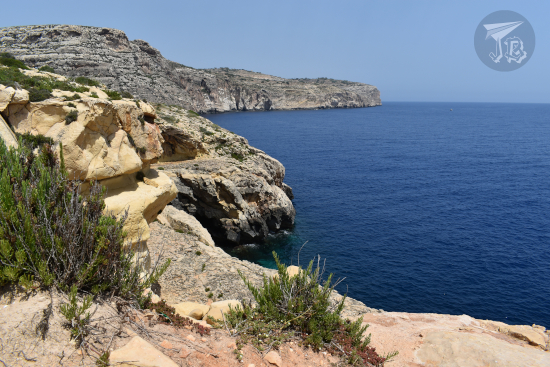
Qrendi cliffs, made if whiteish - grey rock, over a calm dark-blue ocean

I bought a ten-euro ticket to sail to the Blue Grotto | Taħt il-Ħnejja from the Blue Grotto Boat Service. This is just a way to amalgamate all the captains and boats who do trips to the caves, I think, and not a bad one. It is a quick trip that does not even take half an hour and charters you to snoop the different caves, created by the erosion of sea water and waves against the cliffs. Each has its name: Blue Window Cave, Circle Cave, Calscave, Honeymoon Cave, Cat’s Cave, Reflection Cave and the main archway which gives the name to the whole area, the Blue Grotto. The water is very clear and since the sun was out, there were extremely beautiful reflections. I stuck my hand in the ocean a few times when I was not taking pictures.

Blue Grotto: Sea level caves with bright blue water

Afterwards, I decided to stop for food. I was not really hungry, but I wanted to tackle the walk to the viewpoint, which was 15 minutes. I thought it would be more efficient to have a late lunch first. There were a couple of restaurants and I chose Step in Malta. It had a terrace, was less than half full, and most importantly: offered calamari fritti. When I researched Maltese food, I read about this dish – fried squid with garlic and parsley mayonnaise , and I really wanted to try them.. I think I broke the poor waiter’s brain when I told him I did not need the menu and ordered directly. They were delicious.

Calamari fritti: a plate of breaded and fried squid

I then did the short walk to the Blue Grotto Viewpoint – and though I won’t be mentioning it much, just assume I just used a lot of sun lotion all the time. It did not take as long as I expected, even if the shortcut was closed down. It yield to pretty views, but not as impressive as expected.

Blue Grotto viewpoint, showing the cliffs from above

I was about to go back towards the original spot to wait for the 201 bus again, when a Valletta-bound bus stopped by. I hopped onto that one to use the Wi-Fi and replan the rest of my evening. An idea had been to head towards Valletta indeed, but instead I decided to try my luck to reach my first Megalithic temple in Tarxien | Ħal Tarxien. The Blue Grotto is actually quite near another archaeological complex, but that one was covered by the tour I had booked on Saturday.

The trip to Tarxien turned out to be a great idea. When I arrived, I was surprised by the sheer amount of Christian images that were in the streets. That weekend the Catholics celebrated the Feast of the Annunciation. Malta is officially a Catholic country with over 80% of the population adhering to the religion, so while it was slightly surprising to see so much decoration, it is not shocking. I wanted to get to the Ħal Tarxien Prehistoric Complex | Il-kumpless Preistoriku ta’ Ħal Tarxien because it had a closing time.

A street crossing in Tarxien, with a movable Catholic altar brought out. The houses on the corners have flags with religious motives, and the altar is guarded by angels carved in wood

The Megalithic Temples of Malta are considered amongst the oldest free-standing structures in the world. They were erected between 4100 and 2500 BCE (making them older than Stonehenge, whose rocks were placed between 2600 and 2400 BCE), though the remaining structures probably date from the 3600 – 2200 BCE. In 1980, the UNESCO created the Heritage protection for one of the temples, and in 1992, the Site expanded to six temples / structures in total.

The Ħal Tarxien Prehistoric Complex | Il-kumpless Preistoriku ta’ Ħal Tarxien has been dated between 3000 – 2500 BCE, and it is considered the greatest example of the Temple Period (4100 – 2500 BCE). It was first excavated by Maltese archaeologist Themistocles Zammit around 1913 following complaints of a local farmer that he kept hitting stone while ploughing. The main excavation and restoration took place between 1915 and 1920, and some of the most delicate structures were moved to the Malta Museum of Archaeology to protect them from weathering. The site is covered by a protective tent that makes it look a bit alien, and being alone made it even more magical.

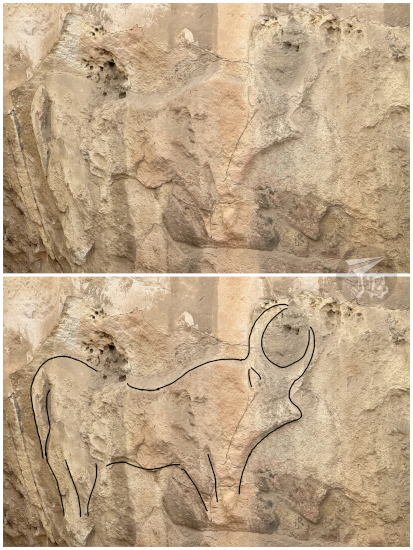
The temple is built in limestone, showcasing three constructions which are independent but attached to one another. The rooms are round, and there is evidence that they had a roofing. There are several chambers, and in some of them there are spiral decorations and domestic animals carved into the rock. There is even a small hearth where fire could be lit. I spent about an hour there, nearing closing time, which meant I was almost alone. I was extremely happy to be there.

Hal Tarxien temples - ruins of Neolithic temples with round rooms and trilithon entrances, from outside

Hal Tarxien temples - ruins of Neolithic temples with round rooms and trilithon entrances, from inside, showing spiral decorations and areas that have been restored, such as a hearth

Relief of a bull on a limestone wall

I could not visit the related Hypogeum of Ħal-Saflieni because tickets are released – and sold – months in advance, and this whole trip was planned in a couple of weeks. But I could explore around.

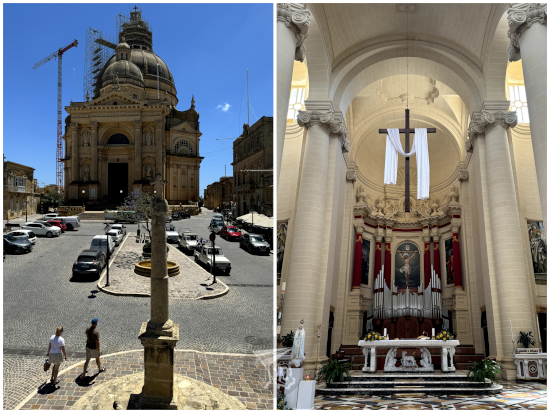
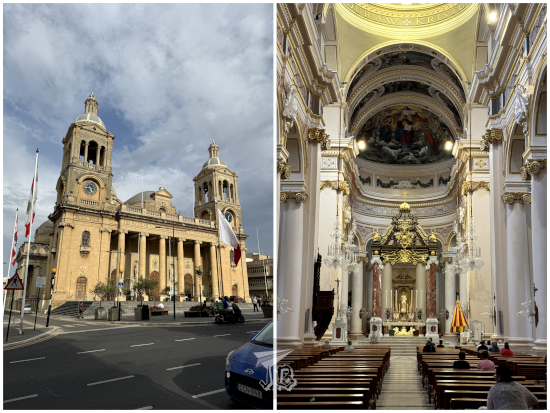
Due to the festivities, some of the bus stops were out of order, so I followed the bust route until I found one that was in use. At some point there I crossed my first “invisible frontier” between the village of Tarxien and Paola. Still in Tarxien, I stopped to look at the Catholic sculptures, and in Paola, I came across the Minor Basilica of Christ the King | Il-Bażilika ta’ Kristu Re. The church was erected at the beginning of the 20th century and, compared to the buildings around it, it feels huge – over 80 metres long, 40 metres wide and 60 metres high. It was full, which I found strange for a weekday at 18:00, but then I thought it might be part of the Feast of the Annunciation programme.

Minor Basilica of Christ the King: a Neoclassical basilica with two towers on the outside, and a sober interior design

I took a bus again and after a few changes I reached my hotel in the town of Saint Julian’s | San Ġiljan. Though I was driven through a few towns, it felt like a huge stride of buildings one after the other, with no real break. It was weird, that the whole area is just one big urban sprawl. I found changing buses easier than I expected, even not knowing the layout of the area. I got to my stop, Ballutta and checked into my hotel.

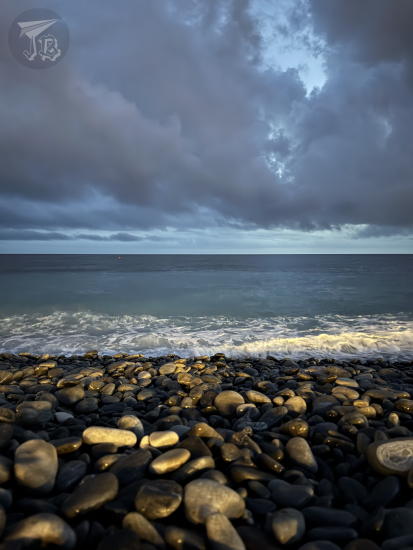
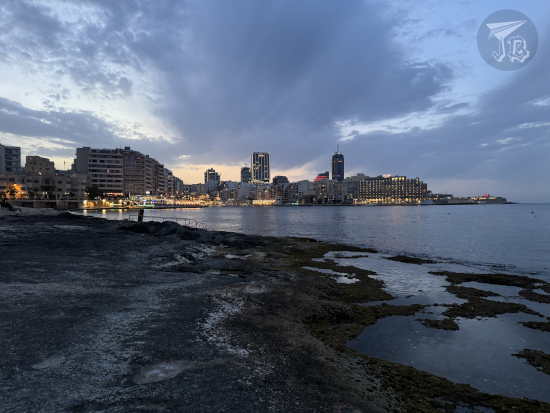
Aaand at that point I realised that there was a consequence of “British colonisation” that had not even crossed my mind – Malta has Type G plugs. So on my supermarket run I had to add an adaptor (despite having a few at home) to my bottled water and sandwich shopping list. I dropped the groceries at the room and then I went off to explore the coastline. That way, I inadvertently crossed to Sliema. I walked along Ballutta Bay and Exiles Bay, two of the three lobes that make up the larger St Julian’s Bay. I was a bit surprised when all the beaches were made of rock and limestone, which made them great to walk on. I had a lovely walk – except at one point, when I slipped and realised that my totally-sensible-for-airport shoes were not the best choice for limestone beaches. Eventually, I went back to the hotel to eat my supermarket-bought dinner.

Balluta Bay at dusk. The ocean is calm, and the buildings at the other side of the water have started turning on their lights

9th October 2024: The Asclepieion & the beach {Türkiye, October 2024}

We left around 8:00 towards Pergamon Ancient City Pergamon Antik Kenti, another of Türkiye’s World Heritage sites – Pergamon and its Multi-Layered Cultural Landscape, still in the city of Izmir | İzmir (in Türkiye, “city” and “province” are interchangeable, apparently). The origin of the city dates back to the 8th century BCE – though there were legends about a mythological foundation by the son of Heracles. Pergamon flourished and became the capital of its own kingdom, until it eventually fell in Roman’s hands. The most important archaeological area is the acropolis – though the Great Altar, which is currently located in the Pergamon Museum of Berlin, in Germany. I had had a tired / silly moment the night before and packed the camera battery charger with the battery still in it, and I almost had a heart attack when the camera would not work. Fortunately, it made a lot of sense after I opened the battery receptacle.

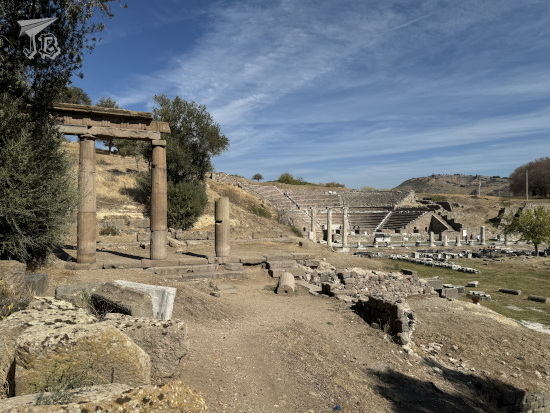
We did not get to go to the Upper or Lower Acropolis, but we could see the theatre, one of the steepest theatres in the world – built in the 3rd century BCE with capacity for about 10,000 people. We stayed down at the foot of the acropolis, in the Sanctuary of Asclepius Asclepieion [Ἀσκληπιεῖον] – a healing temple dedicated to the demigod Asclepius, the demigod who learnt the art of medicine from the centaur Chiron and became the first doctor in “history”.

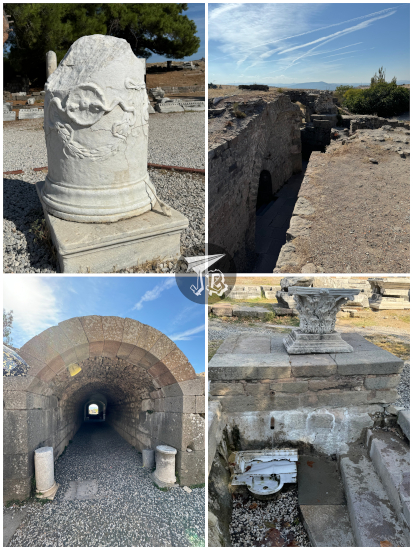
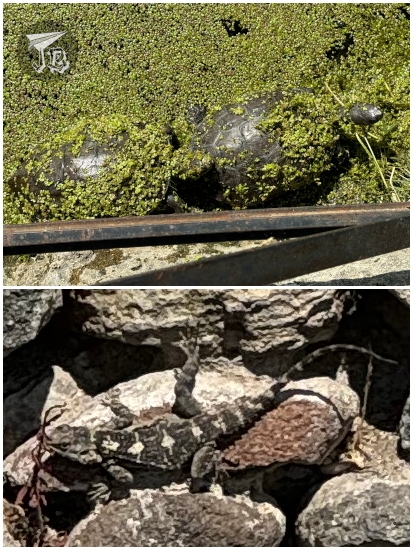
The Asclepieion worked with a holistic approach to patient care, giving thought to tranquillity, water, and activities such an art and theatre performances. The theatre is one of the best-preserved structures in the Asclepieion of Pergamon, though there are many others – such as 70 metre long cryptoporticus a tunnel that connected the baths, sacred pools – with a healthy population of frogs and tortoises – and fountains. I also found a lizard chilling out – or baking out, considering the temperature (remember, I had packed for… autumn, not for almost 30 ºC at noon every day…). Some famous ruins include

Pergamon Asclepieion ruins

Pergamon Asclepieion tortoises and lizard

Pergamon Asclepieion theatre

I wandered around for as long as I could, but again here was no time to explore everything – though this time I came pretty close. We left at around 12:30. This was the only visit we had on the day, as we were directly driven to the hotel in Çanakkale. On the way, we saw the Red Basilica Kızıl Avlu just before leaving Izmir, and glimpsed the island of Lesbos from the bus.

Iris Hotel was in the middle of a residential area – to the point that the bus barely passed through some of the streets. There was nothing interesting around to see in kilometres, so to… compensate, I guess, the hotel had a small mini zoo of deer and fowl.

Sunset at Çanakkale beach

Behind the hotel there was a private beach with a stunning sunset, but nothing around to explore or do. Çanakkale is located to the west of Türkiye, at the end of the Dardanelles Çanakkale Boğazı, the natural straight that joins the Aegean Sea with the Sea of Marmara, just south of Istanbul. The sea was warm, but I only got in up to my knees. At night, I watched a monster movie in Turkish. That… was an experience.

8th – 12th July 2021: Beach weekend (El Campello & Elche, Spain)

The sea is far, far away and due to a number of situations coming together, we rented an apartment near the ocean for a couple of days. Our usual summer destination was not a good option this year due to – as everything that is going less than great these days – to Covid, so we gave a try to the town of El Campello. The town likes boasting itself as a beach paradise-resort, while it’s barely a standard Mediterranean village eaten which boomed along other, bigger resorts such as Benidorm. The apartment was not anything marvellous, but it was extremely close to the ocean – just beyond the waterfront promenade, Paseo Marítimo.

8th July 2021: The arrival

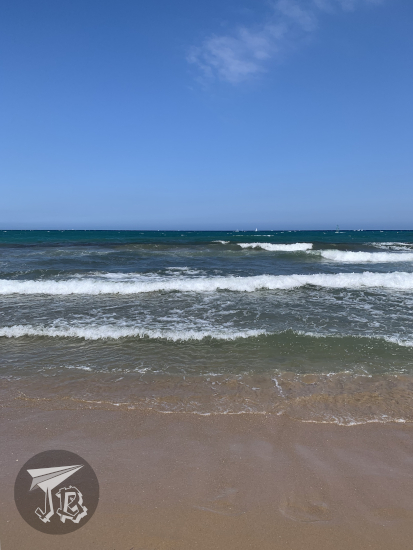
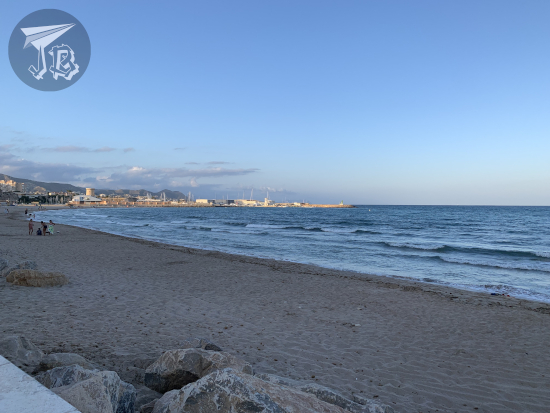
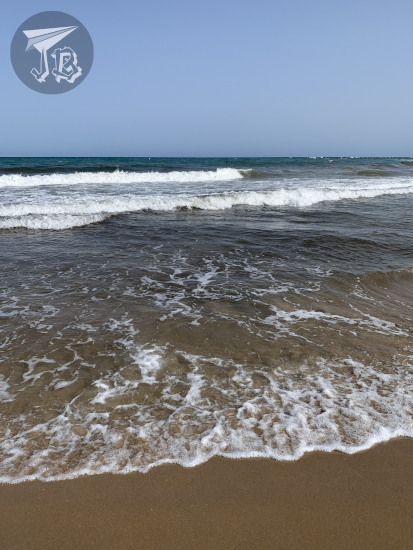
We arrived in El Campello at around 4pm, did a fast sweep of the apartment in order to feel safer Covid-wise and I decided to go for a walk at the beach, jeans and all. There were surprisingly fewer people than expected, and not as hot as I thought it would be – all in all we were pretty lucky, weather-wise.

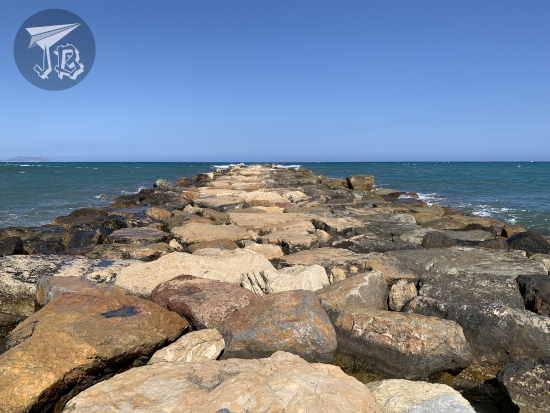
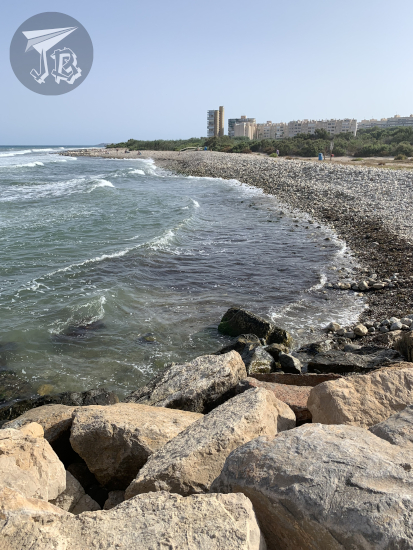
El Campello is built parallel to the coastline. The more traditional area has a small marina Puerto de El Campello to the north, and then a sand beach that extends towards the south divided into Platja de la Illeta and Platja del Carrer de la Mar. Though the beach has a couple of breakwaters, they are for protecting the beach against erosion and not to separate the different areas – the east of Spain has a reputation for building quite close to the beaches. Over the years, that caused the winds and waves to shift and the once amazing and long beaches started being washed away – now all those groins are necessary to keep the sand in place, and are liberally built along the Mediterranean coast.

I climbed on one, of course, more than once – and more than one too (≧▽≦).

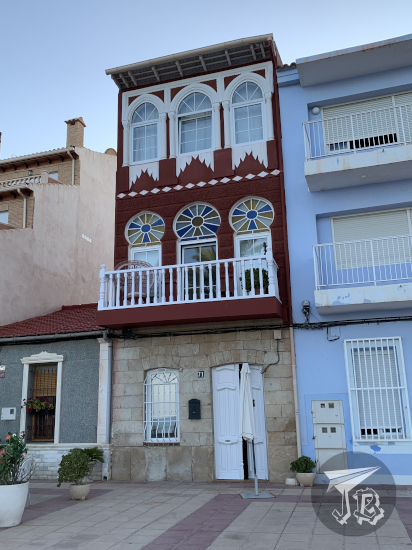
In the evening we walked along the waterfront promenade. While most of it is fronted by restaurants and souvenir shops, I did see this cute little house.

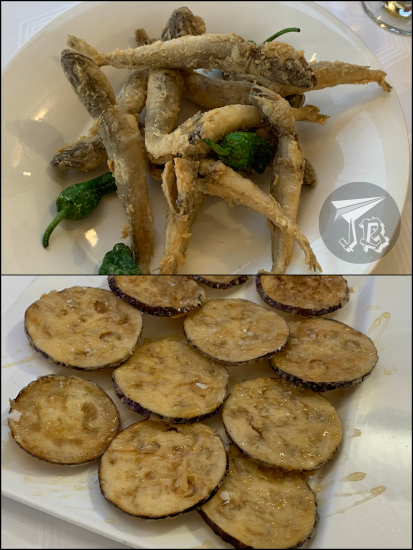
Eventually, we chose a place to have dinner – some fish and the area speciality: honey-soaked aubergine (berenjenas con miel), which is not actually made with honey, but a type of molasses – which actually makes this a vegan dish, as bees are not involved in making the “honey”, what do you know? The first time I tried this I was not too convinced, but if prepared well, this dish is absolutely delicious.

9th July 2021: The lady’s town

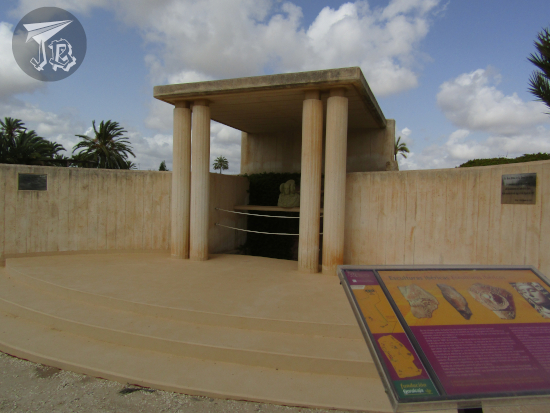
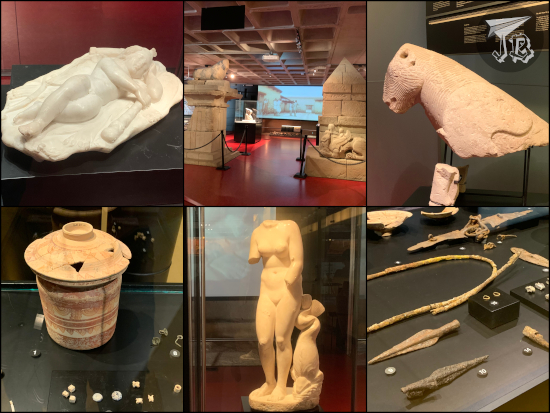
Elche is a nearby town a bit inland, and the third most populated in the area. It is famous due to the Iberian sculpture bust found nearby and because of its palm grove. The history of the town can be traced back to the current archaeological site Yacimiento Arqueológico de La Alcudia, whose stratigraphic sequence dates to the Bronze Age. There are ruins and artefacts, mostly from the Iberian and Roman ages, though there are findings until the Islamic era.

In 1897, a young farmer found the bust named La Dama de Elche, the Lady of Elche, which can be seen in Madrid’s archaeological museum Museo Arqueológico Nacional – it is the limestone bust of an Iberian woman, probably with funerary purposes, what was carved around the fourth century BCE. Since that time, a great deal of work has been carried out in the area of La Alcudia, and today is a full-fledged archaeological site with a Roman wall, several Iberian and Roman houses, a Roman temple and an Iberian one, a basilica, and hundreds of sculptorical and clay artefacts.

We visited the site in the morning, hoping to finish the stroll before it became too hot. There are still works carried out in the site, but you can visit and walk around the area – as long as you don’t step on the red ground. There are two museums on site, aside from the outer ruins. In one of them there is a reproduction of the lady, which yields to easier pictures than the glass protection in the National museum. There are also interpretations and reconstructions about what the Lady may have looked like when she had her colours. Unfortunately, reaching the site is hard, and probably not worth the detour unless you’re an expert in archaeology, but it turned out interesting to see.

… Except for the “commemorative site” of where they found the Lady. That was hideous.

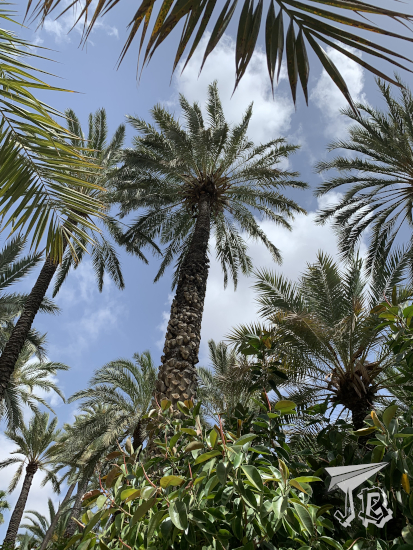
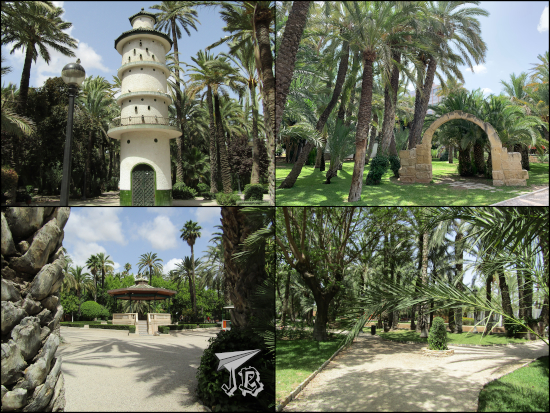
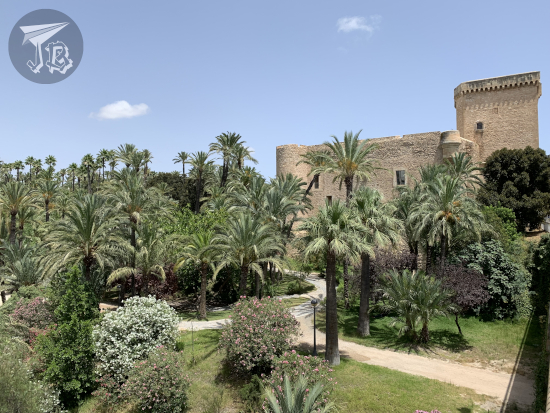
After La Alcudia, we drove off to the town centre to walk around Palmeral de Elche, the biggest palm grove in Europe, with around 200,000 – 300,000 trees, most of the date palm species, Phoenix dactylifera. The palm tree grove originates in the 10th century CE (planted by the Caliphate of Cordoba conquerors), and it has been a Unesco World Heritage Site since the year 2000. The most important palm grove is in the centre of the town (and we missed the dragon that stands on one of the trees 。゚(゚´Д`゚)゚。).

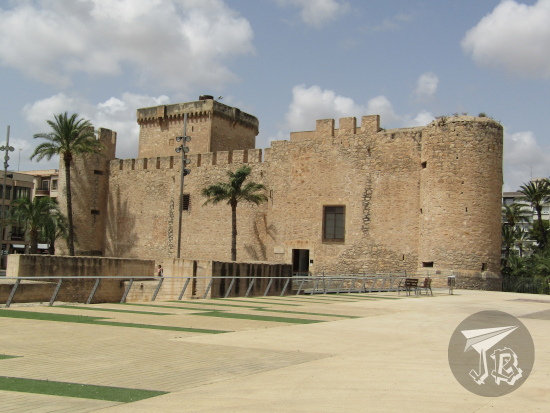
Close to the grove stands the local archaeological museum, Museo Arqueológico y de Historia de Elche, divided between the new building and the old Moorish castle or alcázar, Palacio de Altamira, which drinks from La Alcudia and other findings from the area.

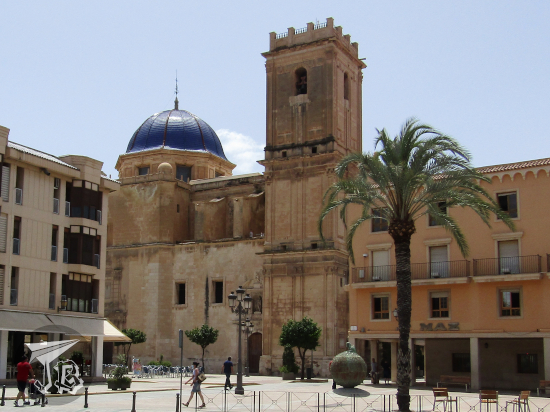
After the museum, we headed off to see the main church Basílica de Santa María, but we had just missed opening times. It stands on the place of the original mosque, and the current building – the third church that has been built – is Baroque. The bold blue dome is typical of the area, found all over the region on towers and churches.

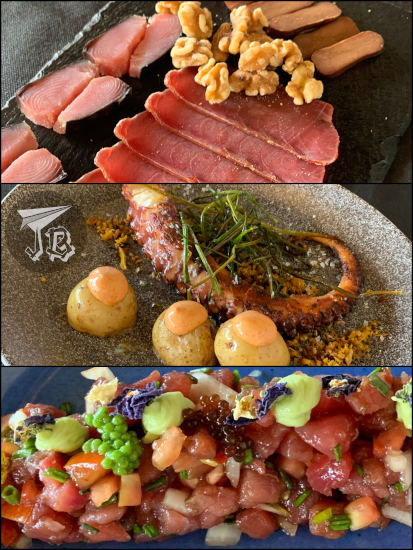
As we could not see the basilica, we just had lunch! After a bit of a banter with an over-friendly waiter we had some fish-based lunch to share – salt-preserved fish bits, grilled octopus and tuna tataki.

On the way back we got to see a different view from the palm grove and the castle and the palm grove – maybe it looked like this in the old Arab times?

It was too hot to stick around and wait for the museums and church to open up again, so we drove back and after a while I headed back to the beach. This time I reached the end of the sand beach and got to the boulder one at the end of the waterfront promenade.

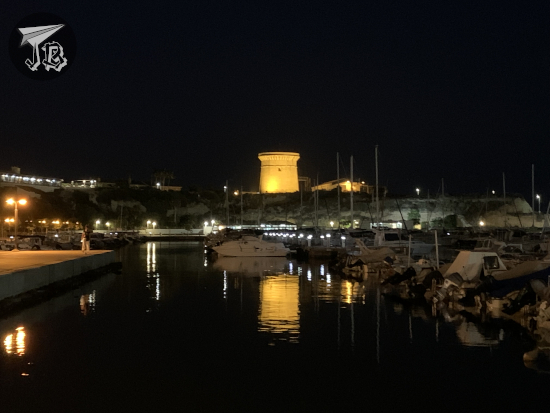
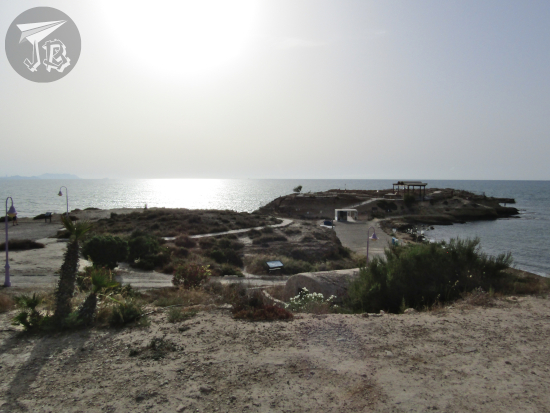
We had a quiet dinner at the apartment, then went out for ice-cream. We ended up walking to the marina, Port d’El Campello and caught sight of the Torre Vigía De La Illeta in the background.

10th July 2021: Not much to report

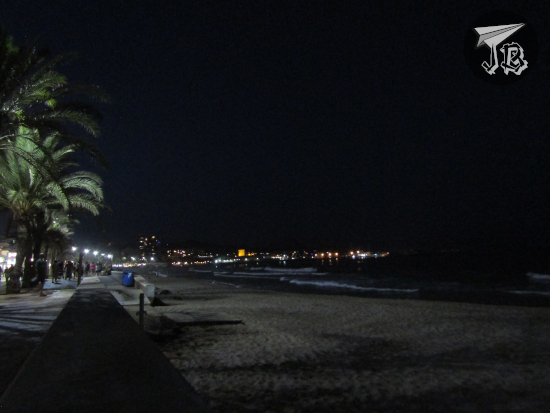
Just some pizza and a night-time walk along the waterfront promenade yielding tries to take artistic pictures without much success.

11th July 2021: The Tower

I woke up with a lovely reaction to the sun – not a sunburn, more like an allergy flare-up (here’s the plausible explanation for that), so we went out rather early for a walk, to then shield from the sun.

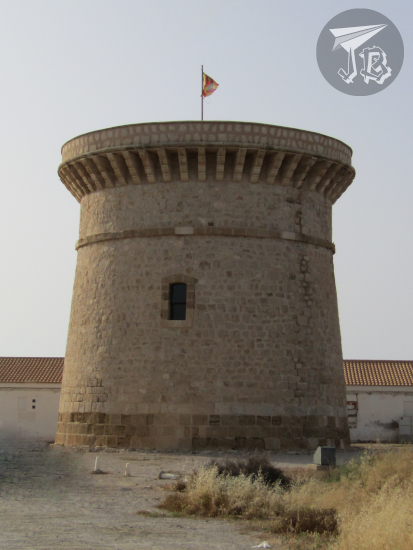
From the Roman times, a number of watchtowers were build along the Mediterranean coast to be on the lookout for pirates. The tower in El Campello, Torre Vigía de la Illeta was built between 1554 and 1557 (and restored in the 1990s), was part of a watch system commissioned by the Viceroy of Valencia at the time. The tower was manned by two infantry and two mounted soldiers – in case a pirate ship was spotted, the former would make smoke signals and the latter would ride to raise alarm in town.

The tower overlooks the marina, the town, and the archaeological site Yacimiento Arqueológico La Illeta dels Banyets, with ruins and artefacts dating from the Iberian and Roman times, but we did not walk to them as it was early in the morning and it was not even open.

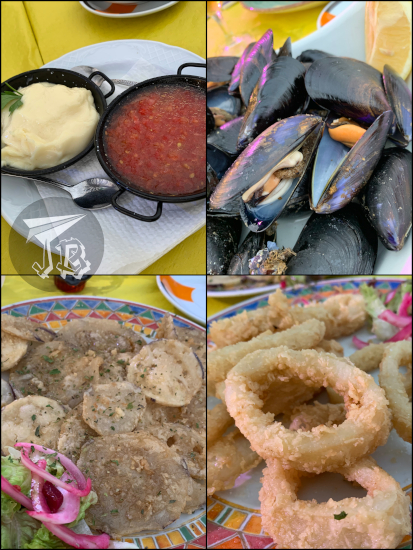
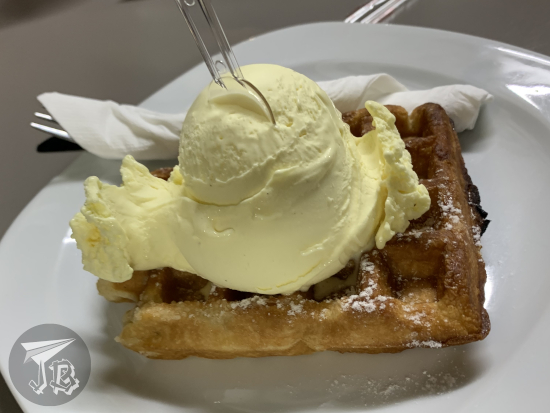
It was hot, so most of the day was spent under the air-con, to later have dinner out – some mussels, more aubergine with honey (not so good this time), and squid rings. But the highlight of the night was the final ice-cream waffle, which is a great, great idea.

And that was it, as we left early in the morning the following day, as soon as we could check out, as the trip is – as mentioned – long.

29th May – 2nd June 2013: San Juan & Alicante (Spain)

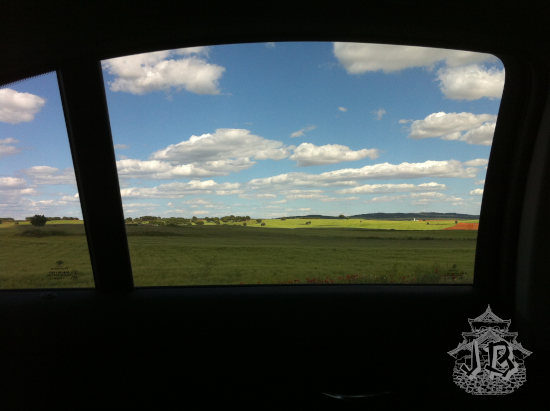
San Juan de Alicante is a small village in the east of Spain. It does not really have much by my parents use it as a base for my father’s diving trips. I sometimes tag along. We usually drive there and believe it or not, I found the Windows XP background.

We usually stay in something akin to a resort that is not stupidly expensive because it is not close to the beach. It has a big garden and a swimming pool and it is generally quiet, especially when it’s not school-holiday period.

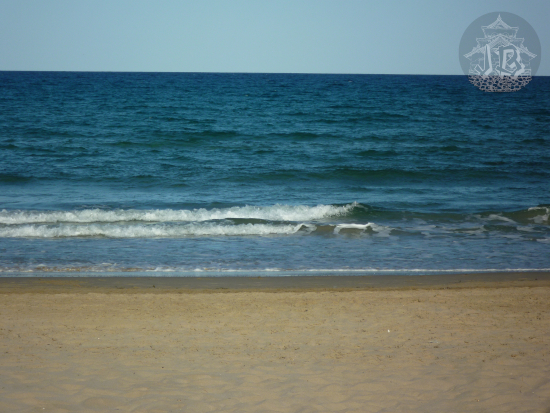
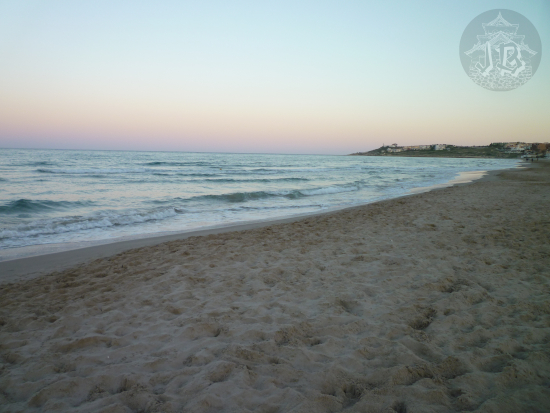
On the 30th we went to have dinner near Playa de San Juan, the town’s beach, and we were treated to a pretty sunset.

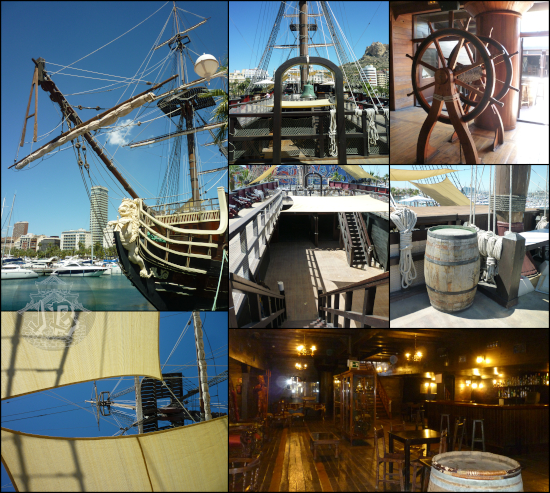
There is not much more to do there, so on the 31st we went to Alicante, to visit the Santísima Trinidad, Holy Trinity vessel, which was anchored at the harbour. The original Santísima Trinidad was a galleon built in Cuba in 1769. It had three decks, but a fourth was added during a later restoration after it was severely damaged in 1797. In 1803 it was put in action again with 140 cannon guns. On the 21st of October 1805, the ship took place in the Battle of Trafalgar against the English, and it was eventually made prisoner and sunk with all the wounded and defeated soldiers on board. The galleon moored in Alicante is a replica, which dubs as café and restaurant, of the three-dock Holy Trinity.

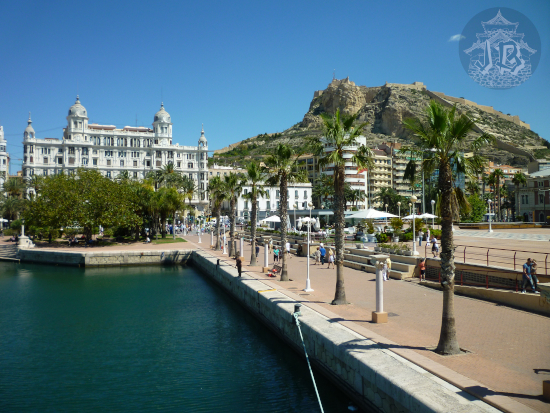
The ship also offers some nice views of the city of Alicante and the Castillo de Santa Bárbara (Santa Bárbara’s castle).

We walked around the Paseo Marítimo, Seaside Walk.

On the 1st we took a walk around San Juan (and I floated like a seal in the swimming pool).

Not an exciting trip but mostly a laid-back, relaxing weekend.