17th March 2024: Council Houses & Royal Collections (Madrid, Spain)

Madrid’s town hall opened a new season of their “walking Madrid” Pasea Madrid to show off some of the usually closed-off monuments in the greater area of the city. I’ve signed up for a few before (also under the name of open for restoration); while I am not a fan of guided visits, the program grants access to otherwise closed off places. This time I was lucky enough to get a spot for the old town hall Casas Consistoriales.

The original council house was built around 1645, following the plans by Juan Gómez de Mora, in the Herrerian style – the exterior is sober and barely decorated, erected in bare brick, with towers in the corners. The interior used to host a square courtyard, around which the whole dependences were designed. Subsequent remodellings closed off that patio, gave the construction a balcony overlooking Main Street, and exchanged the wooden roof for black slate. Even later, the structure was connected to the nearby palace Casa de Cisneros, a Plateresque palace built round 1537, by a passageway on the second floor. The two buildings were the main site of the town hall until 2011. Nowadays, the complex hosts some offices and is used for special events.

After going through the metal detector / X ray machine, we gathered at the entrance. The visit took one hour, and we were shown some of the most important points in both buildings, permanently followed by an armed security guard. In the actual Casa Consistorial, we saw the monumental staircase, the “royal room” with a fantastic glass lamp and frescoed ceilings, the so-called “crystal courtyard”, whose ceilings is a stained glass window, and the room where the council meetings used to take place, now used for formal events.
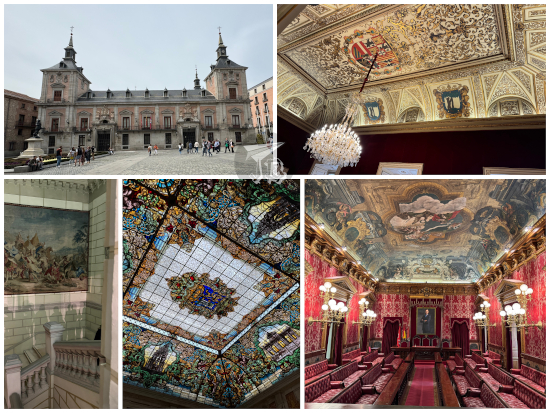
Old council Houses, Madrid

We crossed over to the palace Casa de Cisneros, where we saw the library, several meeting rooms and the “Andalusian staircase” with ceramic tiles, until we finally reached the actual yard, built in brick, but with some original decorations similar to those found in the palaces of Guadalajara (Infantado and Condesa de la Vega del Pozo).

Old council houses, Madrid

The whole thing took about 50 minutes, including checking in, security and introductory explanation. It was extremely rushed, and I still find being followed by a guard a bit unnerving. However, I got to see the two buildings, which is what I wanted.

Afterwards, I went to a new museum recently opened by the Spanish Heritage service Patrimonio Nacional, called the “Royal Galleries” – Galería de las Colecciones Reales. The massive space was built into the ground of the terraces that separate the upper area of the Royal palace from its gardens (Jardines del Campo del Moro), and consists of three floors. The building is completely accessible by wheelchair, having ramps instead of stairs. The collection comprises part of the art pieces owned by the State that were originally purchased by the Royal Families before the 1975 Constitution and the 1982 Law. The uppermost floor contains the pieces collected by the early monarchs, especially the Catholic Monarchs and the Habsburg Dynasty. There are a lot of tapestries, armours and so on, as we are talking the Middle Ages. I also found some Last Wills and Testaments, and the first ever Spanish Grammar, by Antonio de Nebrija (1492). During construction of the building, the archaeological remains of the foundations of the first Royal Palace in Madrid were found, so those have been incorporated into the exhibit.

Royal Collection Galleries - Hausburg collection

The second underground floor, deeper below, holds the Bourbon collection, from Felipe V (king 1700 – 1746, he abdicated on his son, who died, and he had to go back to the throne) to Alfonso XIII (king 1886 – 1931, when went into exile upon the start of the Second Republic). This is more… French-style, of course, with paintings, decorative items, chariots, and actual objects of everyday use. Here are exhibited works by Goya and Velázquez, musical instruments, and the first photographs.

Royal Collection Galleries - Bourbon collection

The third floor is a temporary exhibition of royal chariots and cars, including a Rolls Royce, a couple of sleighs, and a sedan chair. It kind of looks that it’s going to be a forever temporary exhibitions though…
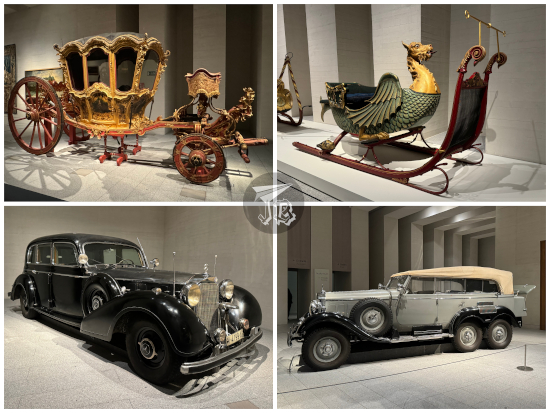
Royal Collection Galleries - chariots and cars

The Galleries were rather… underwhelming. After all, there are quite a few royal palaces and sites in Spain, all lavishly decorated, and most of the paintings are in the museum Museo del Prado, one of the largest painting galleries in the world. This felt a bit of a haphazard collection of “stuff we did not know where to host”. I really struggled to find any link or logic beyond “this king bought this”. And even if it was chaotic of sorts, it felt quite short of other places like the Victoria & Albert museum in London. I am not sure they will “fill it up” eventually, or if the main items will remain in their dedicated locations.

Oh, and in case you are wondering why I did not check out St. Patrick’s parade… It was the day before…
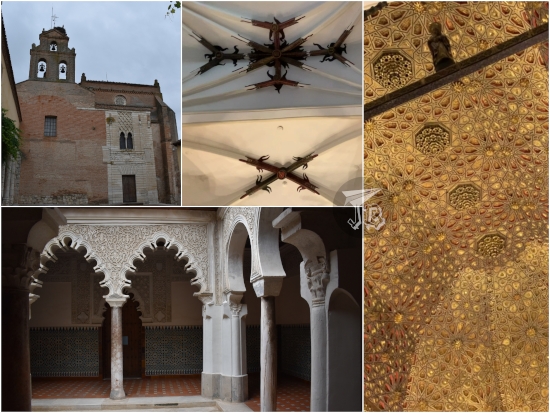
8th June 2023: Tordesillas & Zamora {WNW Spain, with a splash of Portugal, June 2023}

Tordesillas used to be one of the Spanish Crown’s strongholds throughout the Middle Ages, starting around 1340 when Alfonso XI ordered the construction of a palace. In 1494, the Spanish and Portuguese monarchs signed a Treaty which divided the lands “discovered” by Columbus among them – of course, this Treaty was largely ignored by any other European powers which wanted to explore America, and never acknowledged by any indigenous people. In 1519, the town was part of the rebellion against Carlos I, naming his mother – and daughter of the Catholic Monarchs – Juana as queen, despite the rumours that she was insane. After the defeat of the revolts – and beheading of the instigators – the town lost importance.

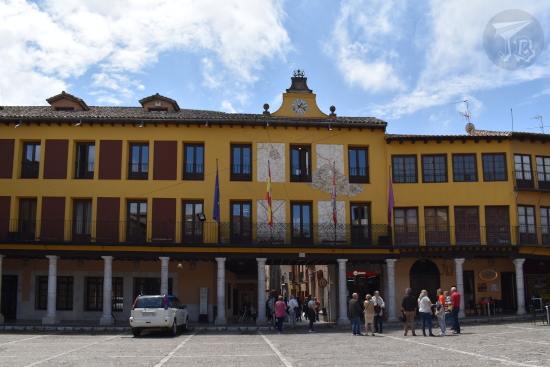
We left early in the morning to try and ditch the traffic, but we were not successful – driving around Madrid, we ran into a couple of jams traffic caused only in part by the intermittent storms, which made the beginning of the road trip stressful. Thankfully, we parked at the outskirts of Tordesillas and the sun was shining again, as we had to cross the village on foot. Our first stopover was the Main Square Plaza Mayor. In the Castilian Main Square fashion, it is actually square in shape, with the main buildings supported by columns, where cafés and shops stand today. The current plaza dates back from the 16th century, and has been painted in a questionable bright mustard colour.

Main Square in Tordesillas

In the end, most of the history in Tordesillas is linked to Alfonso XI’s palace, known today as the Convent of Saint Clare Convento de Santa Clara, which stands a few minutes’ walk from the square. It was home, and later prison, to royal women, both loved and unwanted ones. It became a convent of the Order of Saint Clare in 1363, and the nuns living there were tasked with praying for the health and salvation of the Royal Family. Today, it is managed by the Spanish National Heritage Foundation Patrimonio Nacional. It can only be visited under supervision – seriously, aside from the guide, you get a security guard following you around – and photography is forbidden in all the interior areas.

The castle-convent was built throughout the 13th to 18th centuries. The oldest part of the building is a chapel dating from the 11th century, and the bulk of the construction was carried out in the 14th century. The monarchs employed Mudejar builders, a fact that yielded to multifoil arches, ceramic decorations, and Quran verses (officially “decorative nonsense”) in some of the chapels and the façade of the building.

Inside the palace there is a Baroque cloister and the gothic church, with a wooden ceiling painted gold and the emblem dragons of Carlos I’s shield. Truth be told, the church had been pretty much hyped up on me, so I found it a bit underwhelming.

Santa Clara convenent in Tordesillas

The party separated for a bit so I could explore on my own for a while. I got to the stone bridge over the River Douro Río Duero, just called “the bridge” el Puente, right at whose ends stands a monument to the fighting bull Toro de Tordesillas. The associated bullfighting festivity was one of the oldest in Spain until it was vetoed by the regional government – the fighting bull was set loose in the meadow, chased by horsemen and lanced to death. Today, the festivity is controversial and it’s trying to find its place in the midst of new sensitivities.

Tordesillas

I climbed up the medieval wall Muralla de Tordesillas to the park where the monument to Queen Juana Monumento a la Reina Juana I de Castilla stands, in front of the museum dedicated to the Treaty Casas del Tratado, and the church Iglesia de San Antolín.

Monuments in Tordesillas

We walked back to the car to drive off to the next spot in the route, and Tordesillas became the first spot where we spotted birds of prey during this trip, maybe a golden eagle Aquila chresaetos. Or, you know. Anything else.

Eagle

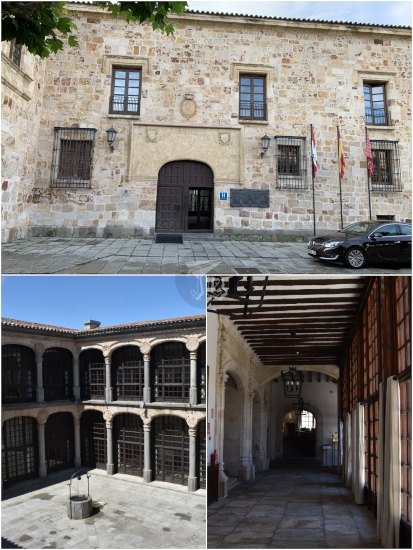
We drove off towards the municipality of Zamora, a Medieval town and villa by the Douro, known for its Romanesque churches. We reached the Parador de Zamora in the middle of a horrible downpour that was over as quickly as it had started. The Parador hotel is a former noble family’s Renaissance palace, with a military style and a middle patio with a glass-window gallery

Parador in Zamora

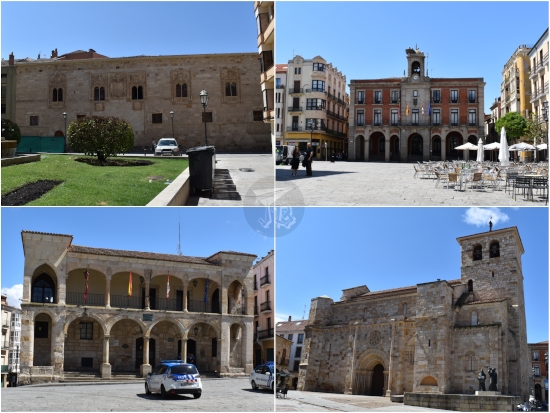
We had a late lunch and walked to the manor Palacio de los Momos, near the Main Square Plaza Mayor, home to a church Iglesia de San Juan de Puerta Nueva which has a sculpture representing two figures of the local Holy Week celebrations Monumento al Merlú. Other buildings include the old and new town halls Ayuntamiento Viejo and Nueva Casa Consistorial, and blocks of colonnaded buildings.

Buildings in Zamora

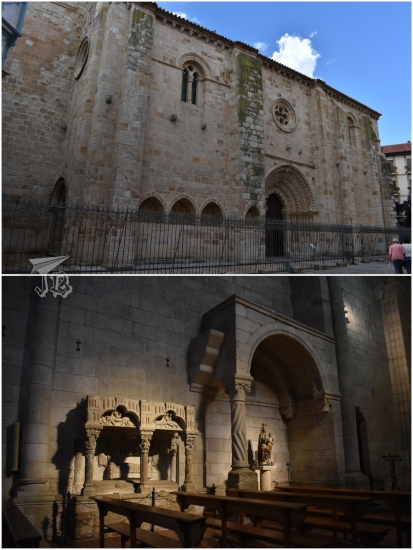
The first Romanesque building we came across was the church Iglesia de Santa María Magdalena, which contrary to many other places has got rid of the Baroque add-ons, and stands severe and naked in its stony glory. It is considered one of the most important and pure Romanesque constructions in Europe, sparsely decorated save for the tomb to the side.

Church of Saint Mary

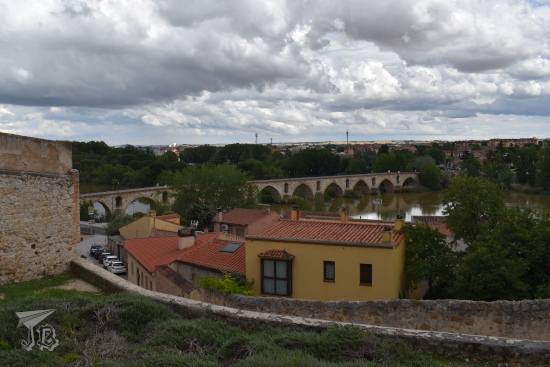
From a side stop I overlooked the river Río Duero and the medieval bridge Puente de Piedra.

Zamora Medieval Bridge

We continued off to the cathedral Catedral del Salvador de Zamora. It is considered the first cathedral in the “Douro Romanesque” style. After the original cathedral was destroyed during the Muslim conquest of Spain, the reconstruction began around 1151. It must have been finished towards the beginning of the 13th century. The building has two particularities – the thick tower, and the umbrella dome, in a style that travelled from Byzantium to the Islamic architecture and reached Spain with the Nasrid artists. The inside holds a cloister and two small museum – one of religious art and the other of archaeology.

Zamora Cathedral

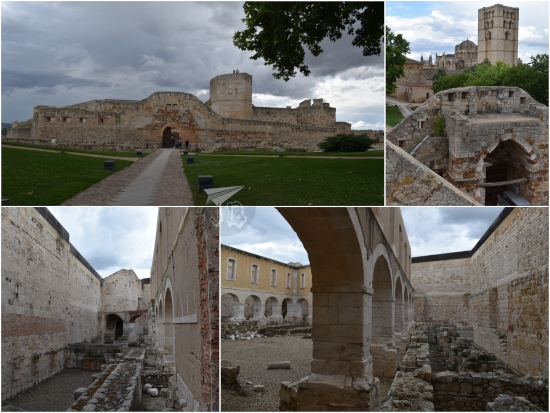
Afterwards, we visited the ruined castle Castillo de Zamora – a purely-defensive Romanesque fortress built around the 11th century. The castle has a moat, and you can wander up the walls and defensive towers. The interior is ruined, but the ancient structure can be guessed by the arches and different walls that would have separated the fortress’ halls.

Castle in Zamora

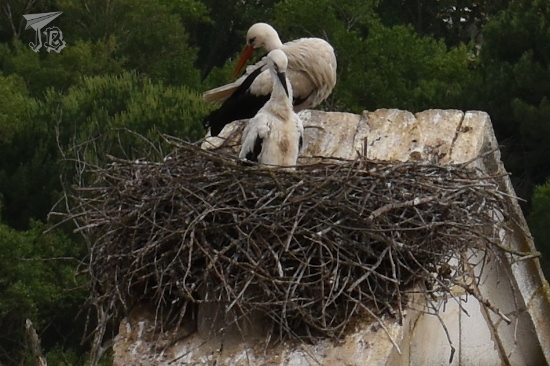
Finally, we explored a few more religious Romanesque buildings: Iglesia de San Pedro y San Ildefonso, Convento de Clarisas El Tránsito and Iglesia de San Cipriano. From the viewpoint next to this last church, we got to see a stork nest with a baby chick in it.

Zamora churches

Stork nest

We had dinner at a restaurant called El Horno, a traditional places that offers tablas – wooden trays full of treats to share. We shared a serving of tabla de fiambres – Iberian sausages (ham, loin, chorizo…) and cheese on a bed of crisps.

Zamora at night

4th April 2023: La Granja and Riofrío (Spain)

King Felipe V of Spain was born Philippe, Duke of Anjou, in France. He was appointed successor to the throne by his great-uncle Carlos II, who died childless. He was never very interested in being a monarch, or at least King of Spain, which he became in 1700. Around 1718, he fell in love with a hunting area and decided to buy it. Today, this area has become the municipality of Real Sitio de San Ildenfonso (Spain), the Royal Site of Saint Ildephonse. He ordered a palace be built “without disturbing what was already built”. The result was the palace known as Palacio de La Granja de San Ildefonso (The Farm at San Ildefonso), in honour of the hermit church and farm that were there when the King bought the hunting grounds.

Legend has it that the palace is extremely uneven because the King ordered that no parts of the church were demolished, so the walls were built around the old construction – however, it is such a massive building that seeing the irregularities from the inside is hard. The palace, built between 1721 and 1724, was commissioned to Spanish architect Teodoro Ardemans. Later, the garden façade was remodelled by Italians Filippo Juvarra and Giambattista Sacchetti. A fire destroyed part of the building in the 20th century and a lot of the paintings were lost. The gardens – the most famours feature of the site – were designed by Frenchman René Carlier in 1721 and finished by Étienne Boutelou when the former died in 1722.

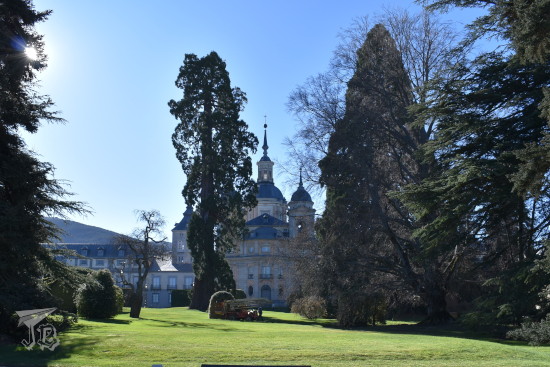
Today, the palace is managed by the Spanish Heritage Network Patrimonio Nacional – which means that photography is not permitted inside. It is technically one of the royal residences, so of course you have to go through security and X-rays and whatnot. We headed there on what was technically a working day before Easter break, so we were not sure how much traffic we would find, or how many visitors there would be. Thus, we had booked our tickets online for 11:00, anticipating a two-hour-and-a-half drive. In the end, we were in front of the palace around 10:15 and were able to enter at 10:30. Before that, we saw some impressive trees, including a sequoia, which I don’t think I had ever seen before.

Baroque Palace of La Granja peering behind a few large trees

The palace is Baroque, showing the likings of the time in which it was built. A monumental staircase gives access to the first ward, rebuilt after the fire into an area to display part of the royal tapestry collection – Museo de Tapices. The oldest tapestries date from the 16th century, before the Spanish tapestry school was founded. Tapestries are not my favourite form of art, but these were pretty impressive. A collection of nine pieces allegorise some of the virtues, mixing classical mythology with Christianity and historical figures.

The interior of the palace displays the private rooms of the monarchs, on the first floor, and the different ballrooms and social rooms on the ground floor. The private areas are decorated with paintings, and the public ones try to emulate the Palace of Versailles (France). They are furnished with marble and mirrors, and decorated with sculptures and statues.

La Granja: Dizzingly-decorated large hall in golden and white marble, with large open wooden doors

The ground floor opens to the well-known gardens Jardines de La Granja. These are considered the best “French gardens” in Spain. They cover almost twenty thousand square metres. Sprinkled throughout paths, hedges, parterres and trees, there are 21 fountains, most inspired by characters taken from classic mythology. The fountains are made out of lead, painted in bronze colour, and even if built 300 years ago, they still work and are indeed turned on during the summer season, fed from local reservoirs. They were not running during our visit – except for one dragon which leaked a bit. Spring seemed not to have arrived in the gardens yet, and it looked strangely like autumn.

La Granja: Italaian façade of the pakace from the top of the waterfall fountain, which was turned off. A number of bronze statues representing mythology characters line the waterfall

From the top of one of the fountains, called “the waterfall” Fuente de la Cascada Nueva, there is a good view of the Italian façade of the palace. Other fountains include “The Fame” Fuente de la Fama and “Diana’s bath” Fuente de los Baños de Diana. One of the most complex fountains is Fuente de las Ocho Calles (Fountain of the Eight Streets), a complex of eight fountains in a sort of “square” created by the intersection of eight garden paths. The fountains were built to only run when the King approached them, and today they are turned on in a rolling schedule, and very rarely all at the same time. This is to take care of the pipe system, still the original one, and because some of them need a lot of water to function.

La Granja, outside. Two large fountains crammed with bronze figures representing mythological beings. Both are turned off.

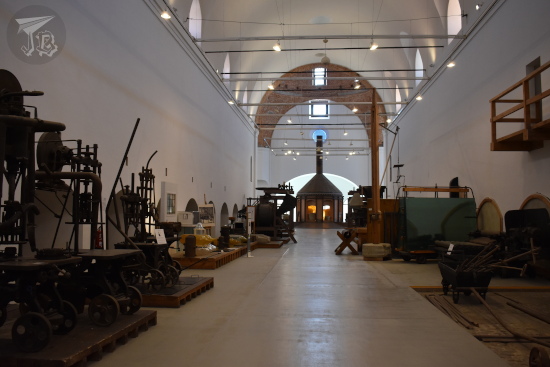
After we were done with the palace, we continued off to what I found the highlight of the day, the Royal Factory of Glass and Crystal of La Granja Real Fábrica de Cristales de La Granja. It was also established by Felipe V in 1727, and even today people use the old techniques to make glass items there! Even though it is called a “factory”, the process is completely artisan. The place also doubles as a museum to explain the how glass is (and was) made, exhibiting different traditional instruments. Of course, it has a shop. However, the coolest thing is that you can visit the furnace workshop to see how glass is blown, and the decoration workshop to see the engraving process. We hung around the furnace area and the experts can make a whole goblet in three minutes and a half, from incandescent blob to ready-to-engrave product.

Glass museum: diferent machines used to process glass in the 20th century, and a reproduction of the original glass furnace

Workers at the Glass factory: making and engraving a glass

After the factory, we headed towards the Parador de La Granja, a mix of a modern and historical building where we were to have lunch. We shared some cured beef cecina de León, and I tried the local speciality judiones de La Granja, a hearty bean-and-pork stew.

Collage of the inner patio of the Parador building + lunch: dried meat and a bean stew

When we finished lunch, we took the car to the secondary palace in the area, called Palacio Real de Riofrío, a hunting pavilion also managed by Patrimonio Nacional (though apparently, pictures are okay here, which is cool). The building is surrounded by 600 hectares of forest and hunting grounds. It was originally commissioned by Felipe V’s wife Isabel de Farnesio, who actually never got to live there since when she became “queen mother”, her son Carlos III had her move to Madrid.

We drove past the forest, where some storks were happily wandering around. The SatNav flipped on us because it could not find the correct gate, but we managed to make it on time to spend an hour or so there. Also, the entrance was weird – it is actually closed, and there is a guard inside. If we had not arrived just as another car was exiting, we would have thought it was closed and left.
Baroque palace of Riofrío. It's large and pink, with lots of archeways

The palace is also Baroque, and the areas which can be visited include some bedrooms, dining rooms, and the areas where the servants waited to be called. The palace has been organised as a Romantic museum Museo Alfonsino, that honours King Alfonso XII, who mourned his first wife there. It was actually decorated by his father, King Consort Francisco, Isabel II’s husband, and later “enriched” with paintings from other Royal Sites. The most interesting item was the billiard room, because it actually felt rather unexpected.

Another area of the palace has been transformed into a “hunting museum” Museo de la Caza, to honour the fact that these were the King’s hunting grounds. It mostly hosts taxidermy representations and a collection of pelts and skulls. To be honest, some exhibits were a bit unsettling.

Collage showing the inside of Riofrío: the hyper-decorated rooms, the staircase and taxidermy of local deer

As we left, the SatNav warned us of a 40-minute jam on the way back, so we forgave its previous flop. The warning allowed us to take a detour to avoid it – we had to pay the toll but it shaved off almost an hour.

8th September 2021: Impromptu Madrid Run! (Spain)

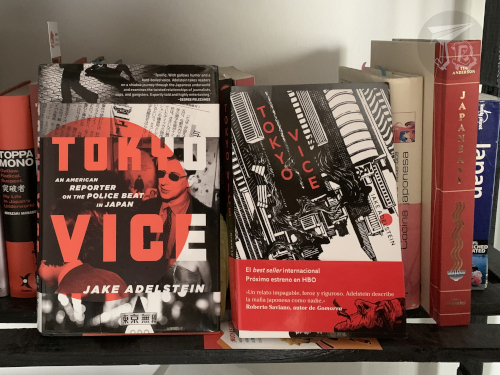
This was oh my god so unplanned that I kept improvising throughout the whole day! It all started because a Spanish publisher decided to translate a non-fiction book I’ve loved for ages – Tokyo Vice by Jake Adelstein. The publisher flew the author in for interviews, and I guess I was disappointed that no signing event was organised. I asked the author once and the publisher another time, then shrugged it off when I got no answer. There were some interviews scheduled for him, and a book fair coming up. I guessed it was just not meant to be, but I did feel disappointed.

And then, on the 7th, Mr Adelstein shot me a message that he would sign my book if I could go to Madrid and meet him at one of his breaks. As you can imagine I just… said yes (I could not meet him that very same evening because of travel times, but I could make it on the 8th. And there I went).

It was the first time taking the train since the whole pandemic thing (hell, I had not even been on a train since Paris 2020), and a weekday so I chose the times carefully to hopefully get close to as few people as possible – it worked, as both rides nobody sat next to me.

I arrived in Madrid and transferred easily, then got out at a new station in the area of Gran Vía. The Tokyo Vice book came out that day, so I wanted to go to a big book store that would hopefully have it already. My first stop, FNAC, failed miserably, so I went to La Casa del Libro, where they told me I would find the book in a completely different section where I actually did. But at least I had it in my hands, even if I had apparently not used my credit card for so long, I got the right PIN for the wrong card (≧▽≦).

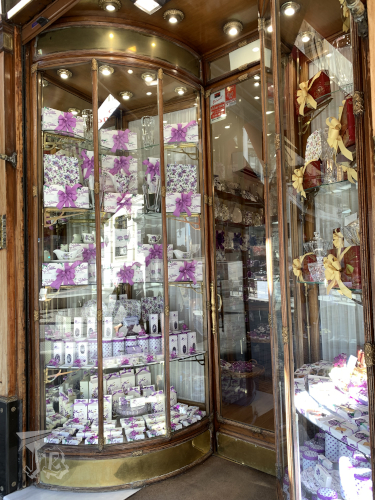
After I had the book in Spanish – I’ve owned a first edition copy in English since 2010 – I had thought that I should get a small detail for the author as he was making time for me. As he had to continue on his travelling, I decided to do something small and “consumable”, so I came up with buying some typical Madrid candy – violet sweets from La Violeta. I’d never been inside the shop, but it’s an adorable little place dating back to 1915.

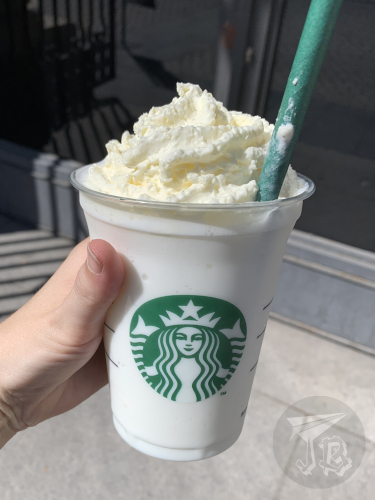
It was still early for my appointment at 14:00, so I decided to head towards a square that hosts an Egyptian temple of all things. On the way I made a stop at a Starbucks for a Vanilla Frappucino, I figured out that the amount of calories would get me going and I would not have to eat until I was back – looking back it was a weird thing, but it made sense in my head at the time. I strolled around the park next to the palace Palacio Real.

The way to the temple was completely blocked off due to construction, so I decided to backtrack. I walked up the great avenue in the middle of the city Gran Vía. As I walked around, minding my business and listening to music, I kept remembering a comic by Sarah Sanders, in which she makes fun of how people won’t leave you alone when you’re wearing headphones and, well, minding your own business.

I reached the square with the fountain to the goddess Cybele Fuente de la Cibeles and the related Palace Palacio de Comunicaciones (by Antonio Palacios). The fountain dates back to the 18th century, when king Carlos III revamped a lot of Madrid trying to make it more beautiful and similar to other European capitals.

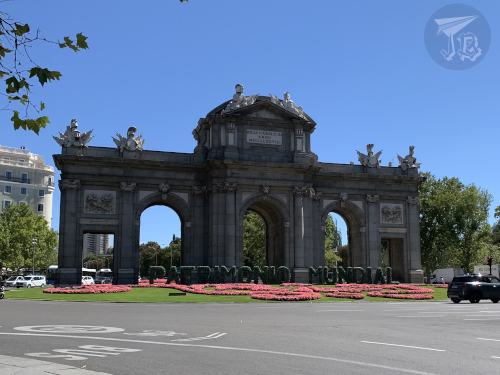
Carlos III is also responsible for the design of the modern version of one of the former wall gates, called the gate to Alcalá, the nearby town, Puerta de Alcalá. This area was declared Unesco World Heritage Site in summer 2021 as Paisaje de la Luz, so Madrid was in a celebratory mood.

I headed into the park Parque del Retiro, which is also included in the Heritage declaration. The park was initially built in the first half of the 17th century, as part of the royal recreational areas. Carlos III opened it up as public park a hundred years later. Aside from the obvious green areas, the park features fountains, palaces and sculptures. I walked past some of them. First I came across the fountain “of the turtles” Fuente de los Galápagos.

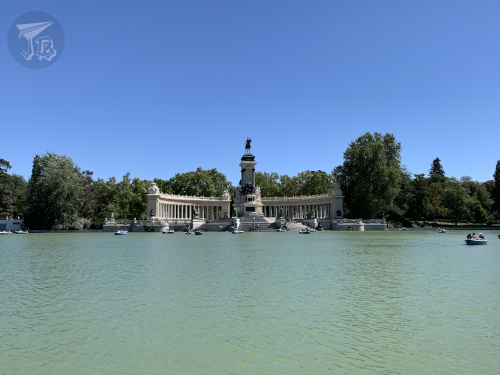
There is also a large pond, aptly called the big pond Estanque Grande del Retiro populated by carps, to whose side stands the monument to Alfonso XII – Monumento a Alfonso XII.

Nearby the pond stands the fountain called the artichoke fountain, Fuente de la alcachofa.

I walked to the fountain that depicts the fall of Lucifer from Heaven, Fuente del Ángel Caído. The fountain itself was built in order to exhibit the sculpture by Ricardo Bellve, who originally created it in plaster. The figure would then be cast in iron for the World Exhibit of 1878 in Paris, and eventually placed in the Retiro.

I strolled back towards one of my favourite points in the park, but that’s because I like iron-and-glass architecture – a little building called Palacio de Cristal, which has a small pond around.

Finally I headed over the little café where I had arranged to meet with Mr Adelstein. He arrived shortly after. He signed my book, but truth be told, I had also brought my first-edition copy, which happens to be full of post-its from the first time I read it. He was happy to sign that one too, and to my eternal mortification… he went over all the notes. I almost died right then and there. We chatted for a little, I gave him the violet candy and he had some umeboshi sweets for me too. I babbled that I was very happy that he had made some time for me, and he told me “but you were so polite on twitter and the publisher said no signatures!” and I kind of died again.

In the end, our meeting was only 15 minutes, but I have not felt so happy in a very long time – that he specifically took time felt amazing. We took pictures and even had a safe mask-hug. Afterwards I headed towards the nearest train station so I could be on my way before the afternoon rush came through, so that was it for the day.

Walking distance: 12.39 km

9th August 2020: The Cross-Roads {Spain, summer 2020}

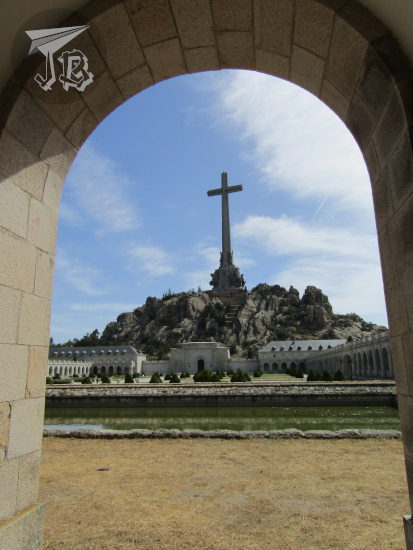
When driving around Madrid, a great cross can be seen from several kilometres on the road. It belongs to the monument to the fallen during the Spanish Civil War, the so-called Valle de los Caídos (later, in 2022, the name would be officially changed to Valle de Cuelgamuros). It was built during the dictatorship times, and the regime forced political prisoners to do so.

During the last couple of decades, the site has been the centre of a lot of polemics, and in 2019 Franco, buried there, was exhumed and taken somewhere else. There is no doubt that it is a symbol of… something. Of course it is. More and more voices, however, claim it should be torn down and in case they ever succeeded I thought that I should, at least, have visited it once. It is after all a piece of history.

And it was literally a ten-minute detour away on our way back. After we left Astorga, there was nothing else on the route plan, so it was a good stop for a quick visit. The monument stands in San Lorenzo del Escorial, in the valley of Cuelgamuros and it is comprised of a basilica, a monastery, and a 150-metre-high monumental cross

The valley is mainly accessible by road. You drive into the valley through a barrier-gate where you buy your tickets (at the moment, only through credit card), then you go up some curves and you can turn left for the monastery and right for the abbey. There used to be restaurants and cafés but at the moment only the toilets are in working order. The monastery has a hostel but I’m not sure whether that works.

As of 2020 the access to the cross, both on foot and by cableway are closed. The basilica, built into the rock, is where the main core is. Entering the basilica there is X-ray security and there are no pictures allowed. We visited between masses so there were lots of people.

The project in itself is… megalithic. I was asked if it was what I had imagined and I said no. The basilica is bare and huge and after walking through a damp-feeling tunnel with some chapels to the sides, you go up some stairs and reach the pews and altar, with two chapels to the sides.

The outside esplanade is made of white granite, and it was scorching hot, but at least I can bring you some pictures of it, along with the cross.

After that, we just took the car and drove back home.

Driving distance: 405 km
Walking distance: 4.37 km

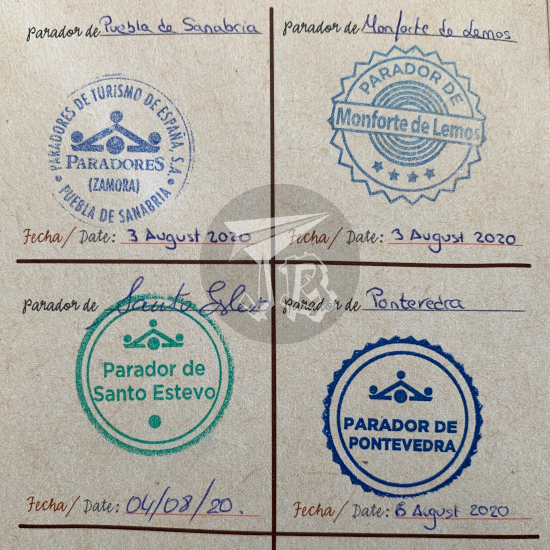
All in all… no, this was not the greatest trip ever, but we were lucky to be able to take it. Of course, there was the stress about the virus. We tried to be careful, overused hand sanitizer (my poor nails), never let go of face masks except when strictly eating, and there were extra stress factors involved that made it hard to enjoy. But although I would very much have preferred taking my trip to Greece, I am grateful that we were able to at least take a bit of a breather this summer. And got myself some stamps.

23rd & 24th April 2019: El Escorial, Vizmalo & Lerma (Spain)

23 April 2019: El Escorial

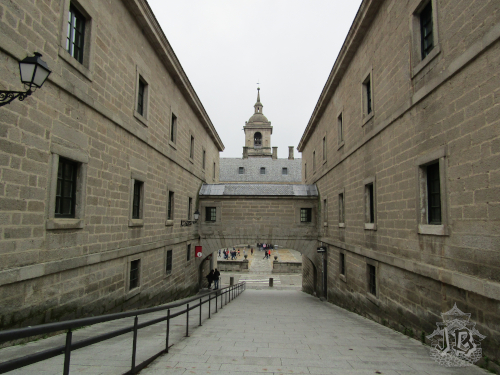
The Royal Site of San Lorenzo de El Escorial aka Monasterio y Sitio de El Escorial is located a shy hour away from Madrid. It is most known for the Monastery that used to be an official residence of the King of Spain. The Monastery was built between 1563 and 1584. It is the masterpiece of the Spanish architect Juan de Herrera, after whom the Herrerian style, a sub-style in the Spanish Renaissance, was named. The building is a sober building made of a granite, and it is the burial place of most of the Spanish kings and queens. Some urban legends say that it was based off the descriptions of the Temple of Solomon.

We drove in around 9:00, dropped off the luggage, and went out, as we had tickets for 10:00 – although the hotel did not want to let us in. Contrary to the nice weather that we had been enjoying, it was cold as hell. The whole town felt grey and sober, and the cloudiness helped the mood – we had breakfast at a nearby bar (the only one open) and headed off to the monastery. The building hosts many artworks, along with a chapel, the royal pantheon and the most amazing library ever. Pictures in the inner areas are forbidden, unfortunately. The Monastery is a Unesco World Heritage site.

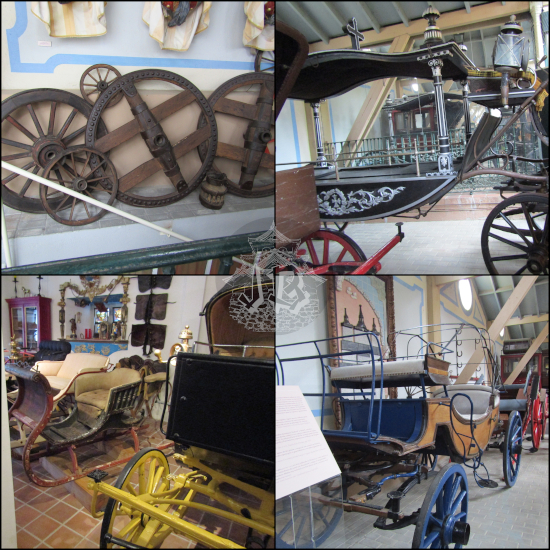
At lunchtime we walked out of the Monastery and headed off to the Royal Carriage House / Cocheras del Rey, a museum / restaurant. We had lunch, then visited the museum as the entry was free with lunch. It was raining like mad by then so we headed to the hotel to finalise the check in.

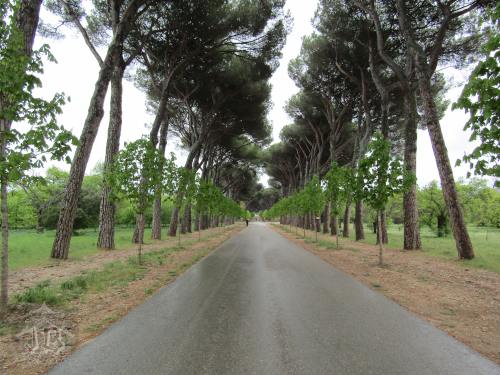
After an hour or so the rain had stopped so we decided to walk to the Prince’s House and Parks / Parque y jardines de la Casita del Príncipe. By the time we arrived it had started raining again – pictures were not allowed inside of the house either, but OMG was the inside Baroque, with flashy wallpapers.

On the way back, we could catch a glimpse of the monastery through the park. By now it was raining like crazy, so we spent the rest of the evening indoors.

24 April 2019: Vizmalo & Lerma

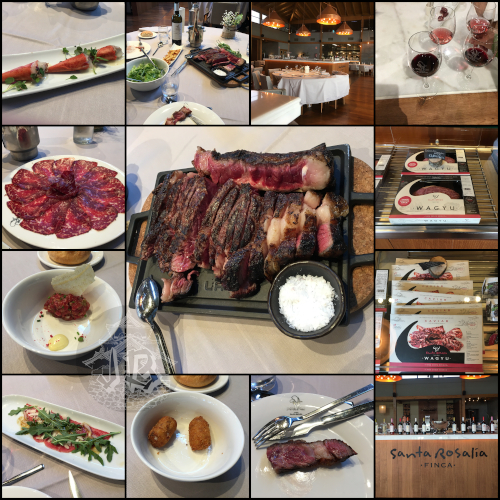
We left El Escorial early in the morning and we headed north for lunch. Yeah, well, let me explain. We had a reservation for lunch some two-and-a-half hours away, in Vizmalo (Burgos). This was a bit of a silly whim, but we were going to visit an estate / farm and have lunch there – the St. Rosalia Estate / Finca Santa Rosalía breeds wagyu for meat, and holy are they yummy. We had a booking to see the estate first.

While it was still cold, the weather was slowly improving, and in evening we had some sun. We saw the orchards, the grapevines, the cattle, the trees and so on. Then we moved into the wine cellars and saw the barrels, before we tried the wine and some of the meat-dishes that they prepare and sell. The selling point of Finca Santa Rosalía are the wagyu, cattle of Japanese origin. Wagyu meat is completely different from any other beef because it is soft and tender, and in general delicious.

Lunch was brilliant, based, of course on the wagyu meat. The T-bone was scrumptious and even if it was on the “a lot of money” side, it did not feel too expensive for a once-in-a-lifetime experience considering the amazing quality.

After lunch we drove off towards Lerma, a city which was revamped by the Duke of Lerma back in the 17th century. After finding our hotel and dropping our stuff off, we walked to the Duke’s Palace turned luxury hotel: Palacio Ducal & Parador de Lerma.

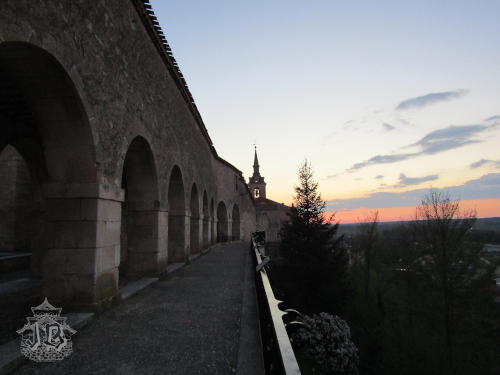
We walked around and came across the Mirador de los Arcos / Archway Viewpoint.

Then we saw Colegiata de San Pedro / St. Peter’s Collegiate church, where there was a religious exhibition being held (“Las Edades del Hombre”), with the topic of angels. Pictures were not allowed, or we would have shown you a few… interesting representation.

Sunset crawled upon us and it was nice view. We had dinner somewhere around the town centre, and called it a night before we drove home the following day.